




Abstract
This study investigates the complex interactions between acoustic pressure and mass diffusion in a non-local polymer composite thermoelastic medium subjected to a thermal laser source (laser pulse), analyzed using normal mode analysis. The focus is on understanding the coupled effects of thermal, mechanical, and chemical actions within the medium. The thermal laser source induces thermal waves that interact with the thermoelastic and diffusive properties of the material. The analysis reveals that acoustic pressure influences the mass diffusion process through a chemically potential mechanism, which in turn affects the overall thermoelastic response of the composite. The non-local theory accounts for the microstructural effects, more accurately representing the material behavior under thermal loading. Numerical simulations demonstrate the significance of non-local effects and chemical reactions on the coupled field interactions, highlighting their impact on the stability and performance of polymer composites in advanced engineering applications.
Introduction
For advanced engineering uses, it’s important to understand how acoustic pressure, chemical reactions that change mass diffusion, and the thermoelastic response of non-local polymer composite materials when they are exposed to a thermal laser source work together to get the best performance and durability. The use of a thermal laser causes localized heating, which generates acoustic waves that interact with the polymer matrix. Because thermal gradients and acoustic pressure can speed up or slow down chemical reactions inside the composite, this interaction changes how mass diffusion works. Due to these interactions, the non-local polymer composite, characterized by its spatially dependent thermal and mechanical properties, experiences complex thermoelastic behaviors. Understanding these dynamics is crucial for applications such as laser-based manufacturing, smart materials, and aerospace engineering, where precise control of thermal and mechanical responses is essential for enhancing material performance and reliability.
Biot, 1 Lord and Shulman, 2 Green and Naghdi,3–5 and Tzou 6 initiated a significant development in thermoelasticity over the years. The last-mentioned scientist made a significant contribution to the thermoelastic field by studying diffusion, a phenomenon that is crucial to many life processes. Now, there is great interest in studying this phenomenon due to its wide-ranging applications in various industries. Atwa et al. 7 introduced a three-phase lag model and discussed the effect of diffusion with two-temperature theory. Atwa and Ibrahim 8 discussed the rotation effectiveness on a thermoelastic plate, taking into account the diffusion phenomena. Li et al. 9 studied the application of non-local theory on a diffusive material. Singh and Kumari 10 discussed Rayleigh wave propagation with two-temperature, diffusion, and three-phase lags.
Current research focuses on the propagation of acoustic waves in thermoelastic media and the impact of various phenomena such as magnetic fields, rotation, and heat sources. These waves have a wide range of applications in many life-worlds, including medicine and communication technologies. Mandelis 11 studied the photoacoustic and thermal wave phenomena in semiconductors. In 12, Youssef talked about the state space on generalized thermoelasticity for an infinite material with a spherical cavity and variable thermal conductivity that is heated in a ramp-type way. Lotfy 13 conducted a study on photo-thermal-elastic waves in a semiconductor material, examining the effects of pulse heat flux and thermal memory, and derived analytical solutions. Abbas et al. 14 discussed the photothermal interactions in a semiconductor medium with a cylinder cavity. Lofty et al. 15 studied the effect of rotating and magnetic fields on a semiconducting material during photo-excited processes. 16 Photo-thermal excitation waves solved the thermal-piezoelectric problem of a semiconductor medium. 17
One of the nonlinear absorption processes is the ultrashort laser pulse. Abbas 18 conducted a study on the impact of a thermal source and mass diffusion in a transversely isotropic thermoelastic infinite medium. In 19, researchers conducted a finite element analysis of a nonlinear bioheat model in skin tissue, which was influenced by external thermal sources. Lofty et al. 20 conducted a study on the photothermal excitation process in a hyperbolic two-temperature theory for a magneto-thermo-elastic semiconducting medium. In 21, we studied the thermal-optical mechanical waves of an excited microelongated semiconductor layer in a rotational field. El-Sapa et al. 22 studied the photothermal excitation process in semiconductor materials as a function of moisture diffusivity. It was first used by Ibrahim et al. 23 to study a four-phase lag model in a rotating diffusive thermoelastic plate with laser pulse emission. Hobiny et al. 24 confirmed the eigenvalue method for studying how living tissues react to heat and mechanical forces when they are exposed to laser light.
The non-locality thermoelasticity was introduced by Edelen et al.,25–27 They introduced the total internal energy as a function of the strain. Zenkour et al. 28 discussed the thermoelasticity theory for the vibration of nanobeams induced by ramp-type heating. In 29, we studied thermomechanical interactions in a non-local thermoelastic model with two temperature- and memory-dependent derivatives. Said et al. 30 talked about what happens when you put initial stress and rotation on a thermoelastic medium made of fibers that aren’t localized and have a fractional derivative heat transfer. Lotfy et al.,31–33 introduced a new model of non-local photoacoustic and plasmaelastic heating by laser pulsed excitation of nanoscale semiconductor medium and discussed the effects of rotation and hydrostatic pressure.
Thermoelastic models play a crucial role in the study of advanced materials subjected to mechanical and thermal loads, with applications spanning various engineering fields. In biomedical engineering, thermoelasticity is used to model tissue behavior in laser-based treatments and non-invasive diagnostic techniques such as photoacoustic imaging. 34 In aerospace engineering, polymer composites with thermoelastic properties are critical for designing heat-resistant materials used in thermal protection systems and structural components exposed to extreme temperature fluctuations. 35 Additionally, laser-induced thermoelastic effects are widely studied in laser-based manufacturing processes, where precise thermal control is necessary for microfabrication and additive manufacturing. 36 Recent advances in non-local thermoelasticity have further enhanced our understanding of material behavior at micro and nanoscale levels, enabling improved predictive models for polymer composite structures subjected to coupled thermal, acoustic, and diffusion effects. 37 These applications highlight the importance of developing accurate and comprehensive thermoelastic models, such as the one proposed in this study, to optimize material performance in modern engineering applications
This essay looks at what happens to non-local thermoelastic plates when they are heated up and cooled down, taking into account the effects of the diffusion parameter. Nowadays, there is a significant focus on studying the behavior of elastic mediums under various external effects. Here, we are very attentive to understanding the behavior of elastic plates, taking into consideration the propagation of diffusion with the emission of laser pulses. We establish the structural equations for the problem and solve the system exactly. We graphically show how the parameters affect the system through numerous comparisons. The insights gained can lead to advancements in fields such as material science, structural health monitoring, and acoustic engineering. By comprehensively analyzing how these variables impact wave behavior, we can better predict and control the responses of thermoelastic materials, paving the way for innovative applications and enhanced material performance.
The governing equations
Here, we will introduce the control system in Cartesian coordinates (Figure 1) of a non-local acoustic diffusive thermoelastic plate with a thermal source. The schema of the problem.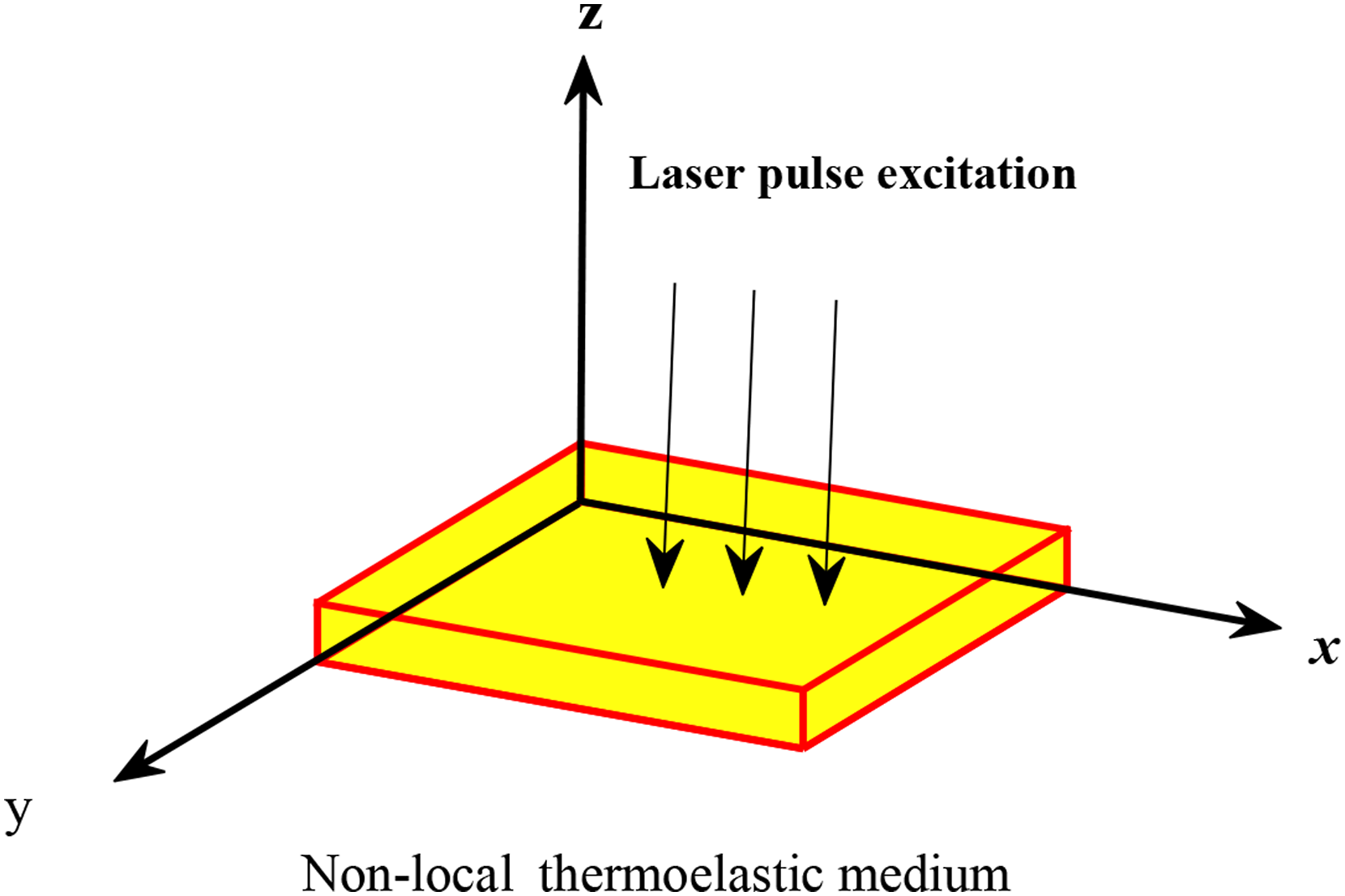
The equation of motions will be in the absence of body forces
38

The coupled heat conduction equation with concentration

The laser pulse illuminated the plate surface is given by the heat input
40
:




The constitutive equations are
37
:


The coupled mass diffusion and temperature equation is
40

The coupled thermoacoustic equation for polymer material is given by
39


The equations of motion will be


To ease the solution, we identified the next dimensionless quantities

Defining two potential functions

The equations controlling the system are five equations. The equation of motion is represented in equations (12) and (13), the coupled heat conduction equation (2), the coupled mass diffusion equation (9), and the acoustic heat processes equation (10).
These equations can be simplified with the aforesaid dimensionless and potential functions as the following (with the primes removed for simplicity):







Solution of the problem
Now, we will use the Normal mode method to solve the problem, as it is the best way to get the exact solution. So, the main variables will be defined in the following form:

Now, the equations From (16)–(20) will be written, with the aid of equation (21) as





Equations (22), (24)–(26) are dependent differential equations, and can be simplified as




Factorizing equations (27)–(30), we get




Then the solutions of equations (31)–(34) are




Equation (23) is an independent differential equation, where its solution will take the form:

Using equation (21), equations (35)–(39), can be written as





The displacement functions are


The constitutive equations defined in equations (7) and (8), with the aid of dimensionless quantities defined in equation (14), can be written as




Substitute from equations (40)–(46) in equations (47)–(50), we get:






Boundary conditions
To complete the solution and get the value of the variable, we introduce the following boundary conditions at

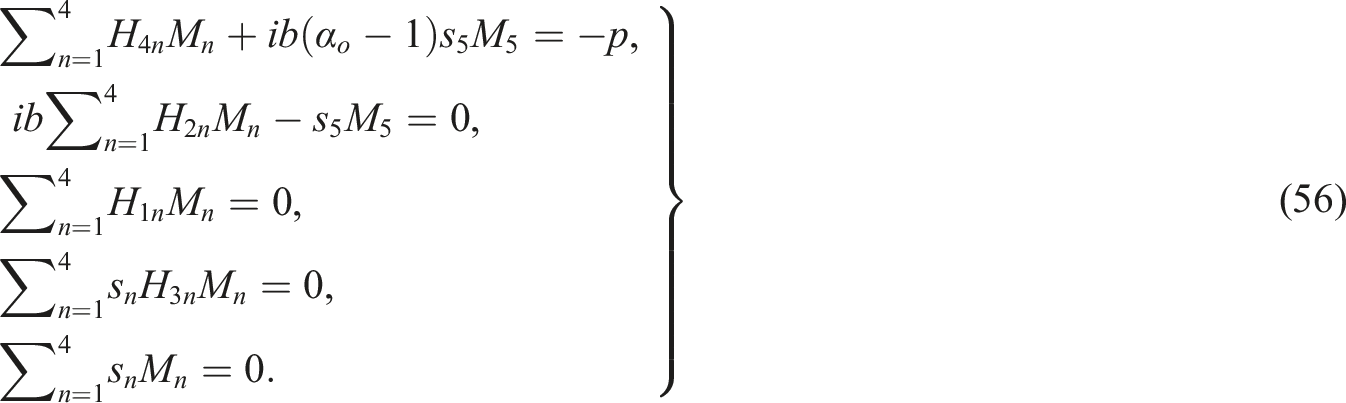
Applying equation (55) on the mentioned physical quantities, we get the following:
Numerical results
For numerical calculations, and completing the comparisons between different parameters, the values of pertinent parameters in the case of copper are defined as37,38:
The last-mentioned constants belonging to copper (Cu) material will be used in completing the behavior study of the main physical quantities of non-local diffusive thermoelastic plates under the influence of the thermal source. Comparisons are made to show the effect of the non-local parameter, the time, the displacement, and the propagation of diffusion.
The second figure (Figure 2) shows how the non-local parameter is effective on the main quantities of the system in the presence of the effect of diffusion and the heat source. This figure illustrates how different values of the non-local parameter The propagation of the quantities with different values of the non-local parameter.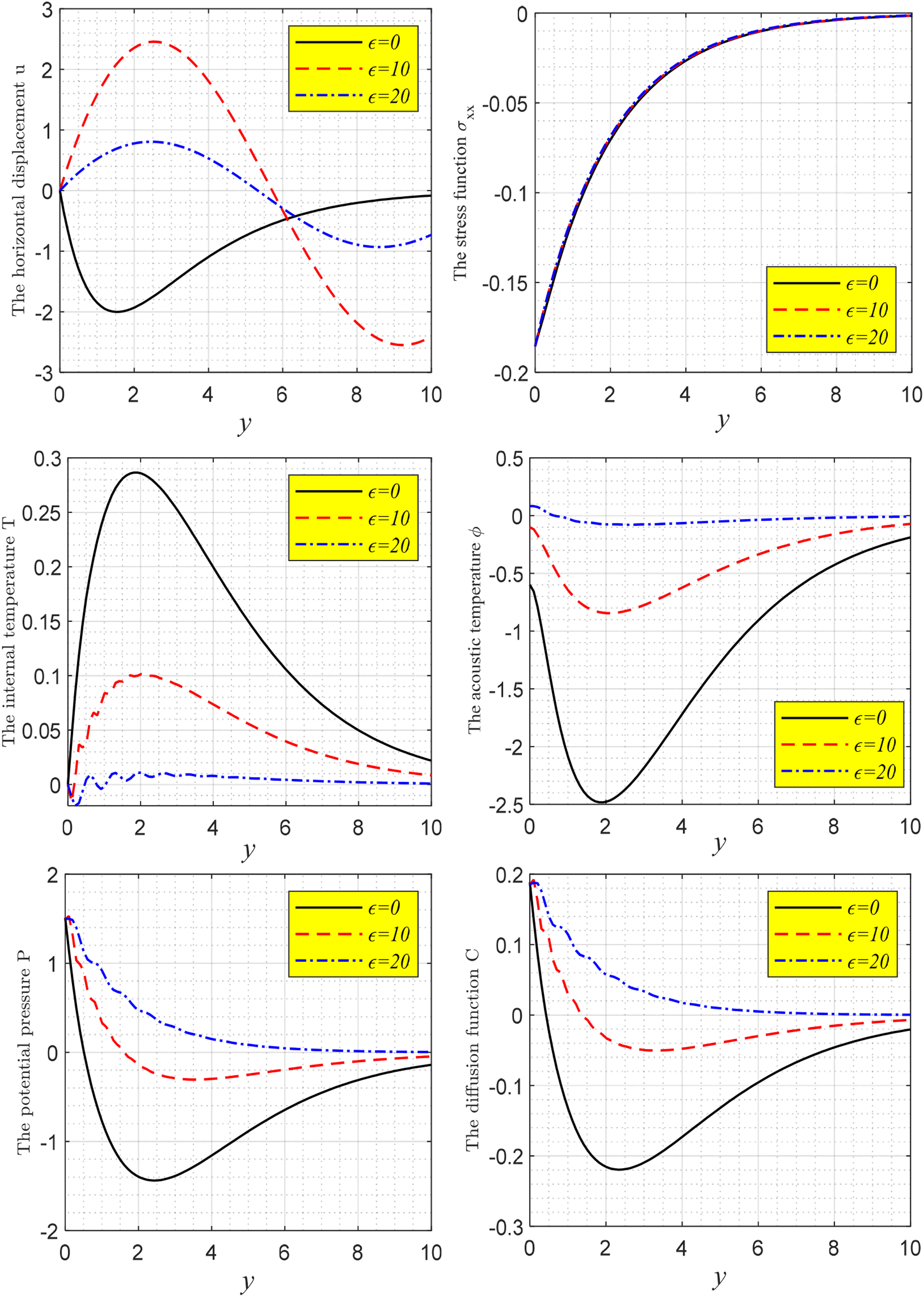
The third figure (Figure 3) observe the variation of the parameters with different values of The propagation of the quantities with different values of the horizontal displacement (depth).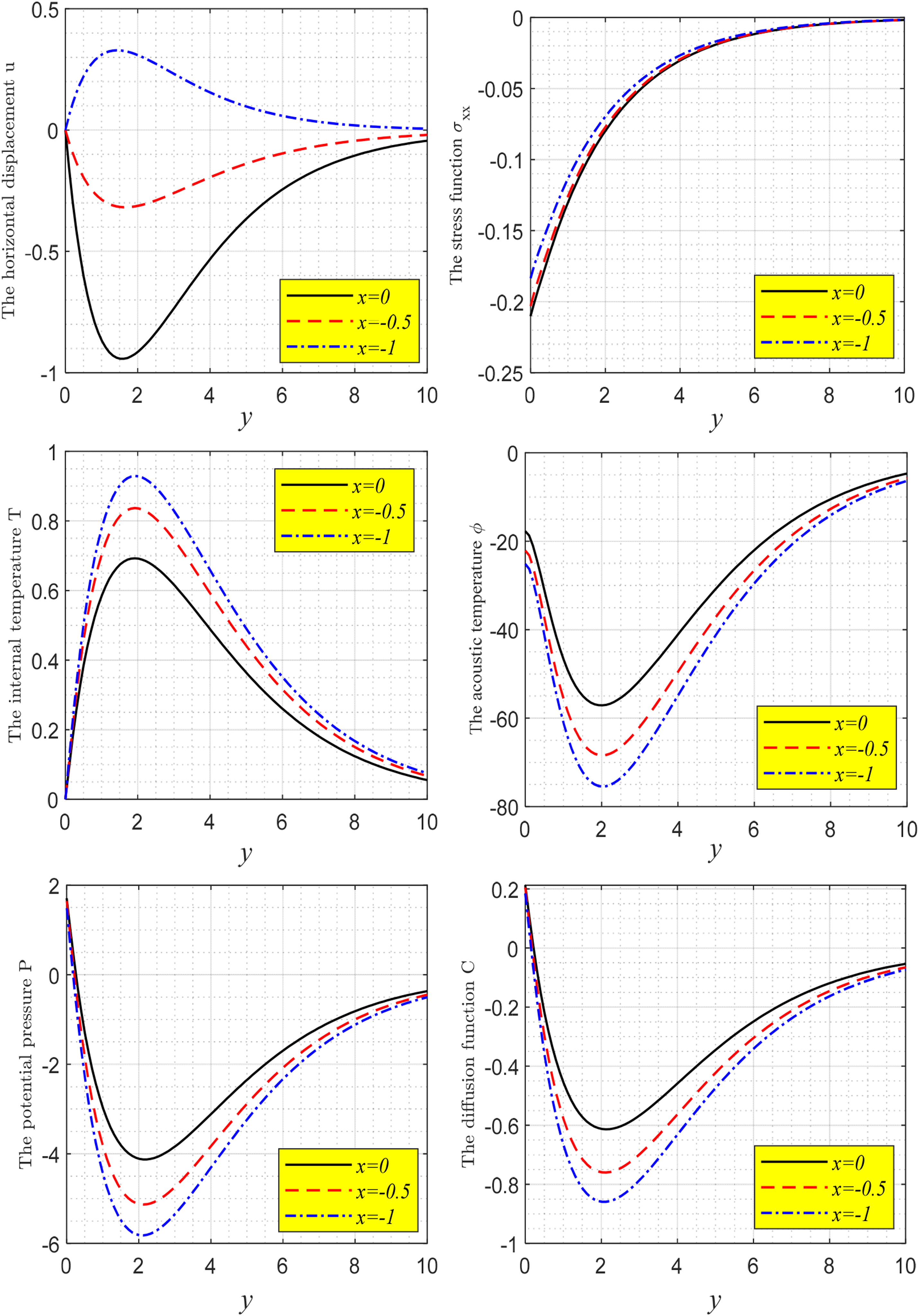
The fourth figure (Figure 4) shows the effect of time passing on the parameters having in mind the effect of the diffusion parameter and the existence of an external thermal source with the The propagation of the quantities with different times.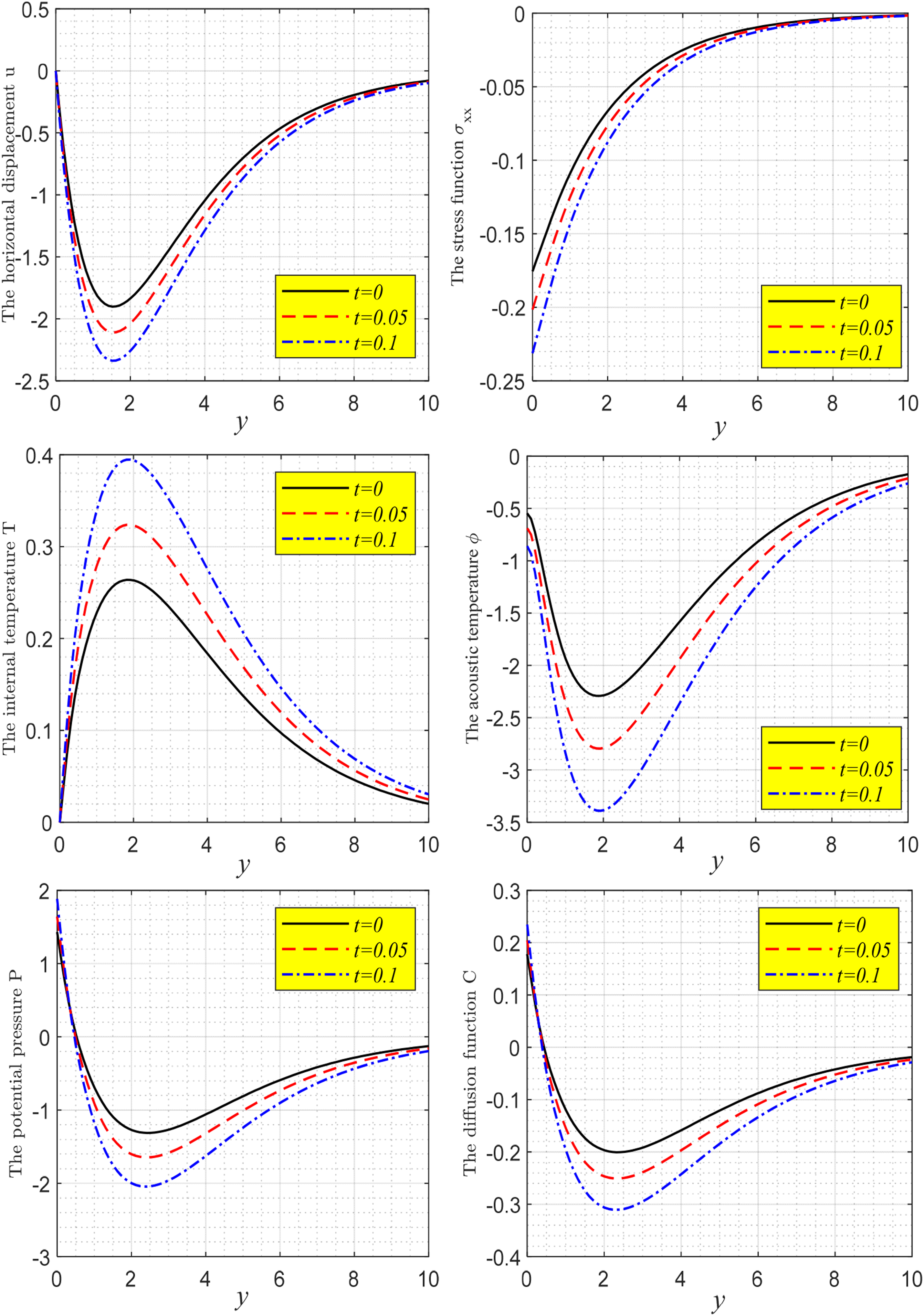
The fifth figure (Figure 5) indicates the variation of parameters with The propagation of the quantities in the absence and presence of diffusion.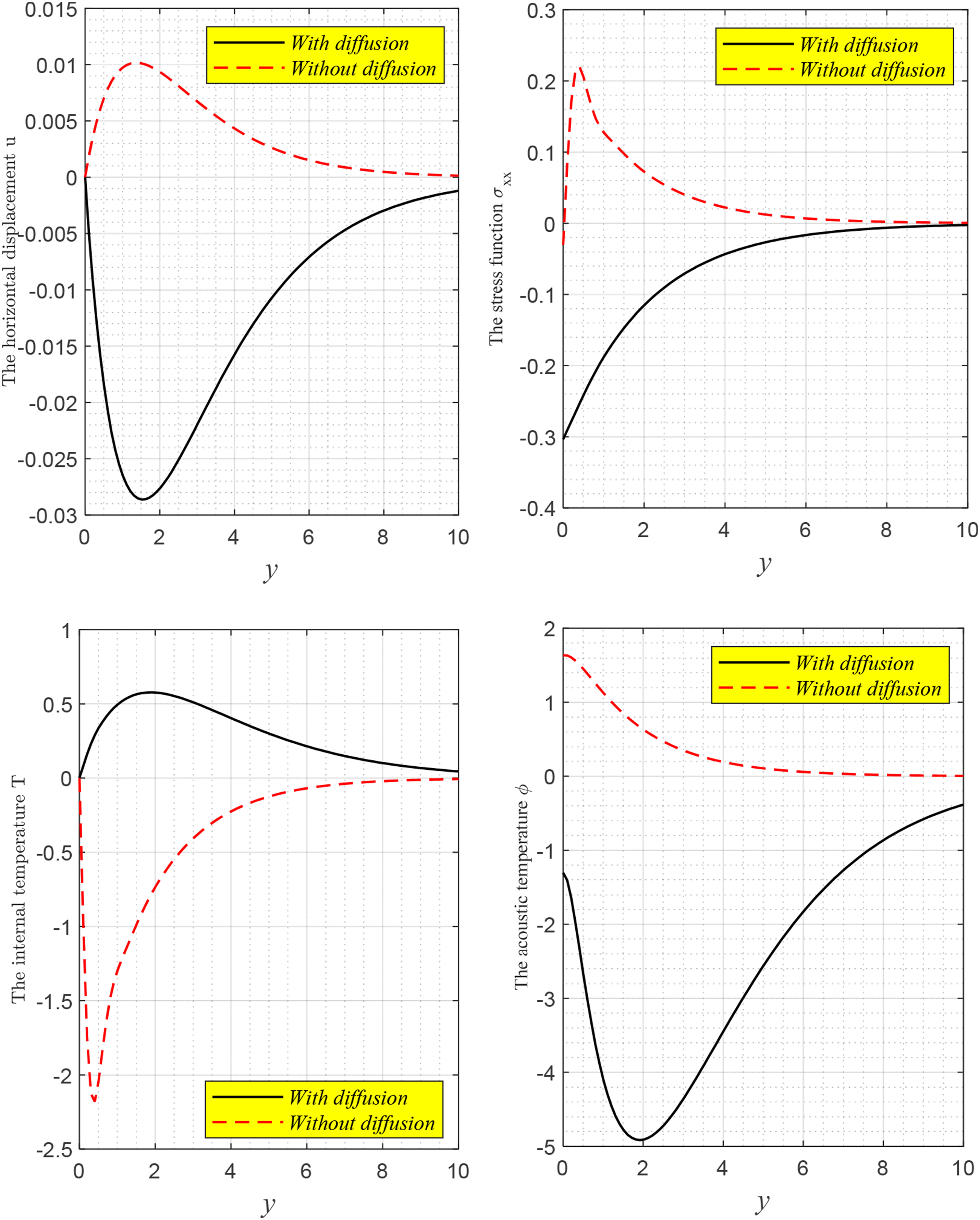
The findings of this study have significant implications for various real-world applications, particularly in biomedical engineering, aerospace materials, and polymer composite design. In biomedical engineering, understanding the propagation of acoustic and thermal waves in non-local polymer composites can enhance the development of advanced medical imaging techniques, such as photoacoustic imaging, where laser-induced acoustic waves help visualize biological tissues. The role of diffusion and chemical potential in this study aligns with heat and mass transport mechanisms in biological tissues, which are critical in laser-based medical treatments and drug delivery systems.
In aerospace applications, materials exposed to extreme thermal and mechanical conditions, such as heat shields, turbine blades, and spacecraft structures, require precise control over thermoelastic responses. The study’s insights into non-local thermoelastic behavior and diffusion effects can guide the design of high-performance, heat-resistant polymer composites capable of withstanding thermal shock and acoustic vibrations in harsh environments.
Moreover, in polymer composite design, laser-assisted manufacturing techniques, including 3D printing and laser welding, rely on accurate modeling of thermal and mechanical interactions. The numerical results of this study provide a foundation for optimizing material processing conditions to enhance mechanical stability and diffusion properties in next-generation composite materials.
These applications highlight the broader impact of this study beyond theoretical advancements, demonstrating its relevance in improving modern engineering materials and technologies.
Comparison with previous studies and novel contributions
Comparison between previous studies and the current study on non-local thermoelasticity, laser-induced diffusion, and acoustic interactions.
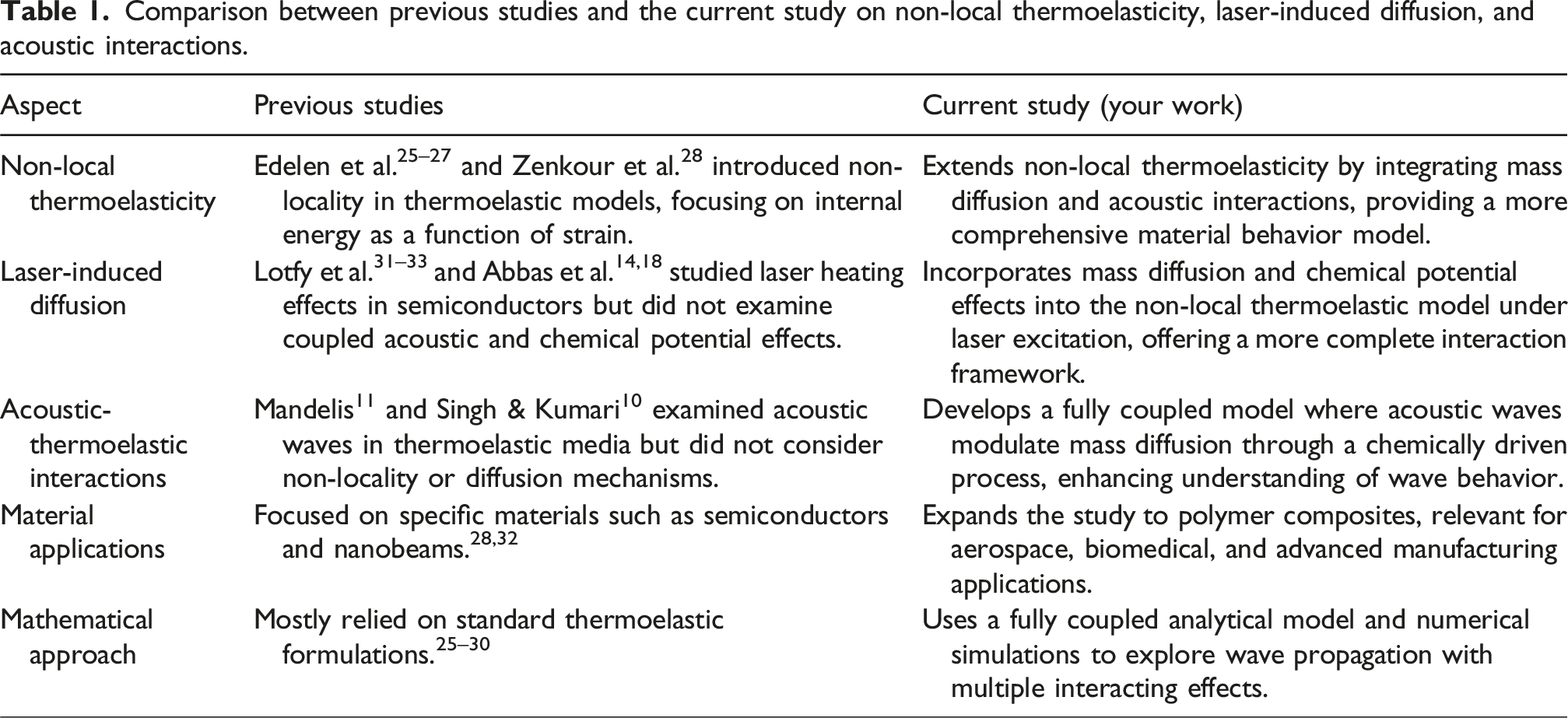
This table provides a clear comparison, emphasizing the novelty of your study.
Conclusion
This study investigates the complex interactions between non-local thermoelasticity, acoustic pressure, and mass diffusion in a polymer composite medium subjected to laser thermal excitation. By integrating chemical potential effects into the non-local thermoelastic framework, we provide a more comprehensive understanding of how thermal, mechanical, and diffusive processes interact under laser-induced conditions. The numerical analysis demonstrates that the non-local parameter significantly influences stress and strain distributions, revealing the impact of microstructural effects on wave propagation. Furthermore, the results highlight the role of diffusion in modifying the thermoelastic response, which is particularly relevant for applications in advanced manufacturing, aerospace engineering, and laser-based material processing.
The graphical results show that the horizontal displacement, internal temperature, and diffusive function are highly sensitive to changes in the non-local parameter, demonstrating the importance of incorporating non-local effects in material modeling. The findings also suggest that acoustic pressure modulates mass diffusion through a chemically driven process, a phenomenon that has not been extensively explored in previous studies. The analysis provides insights into optimizing polymer composite materials for high-performance applications where precise control of thermal and mechanical properties is essential.
While this study provides a detailed numerical analysis of non-local thermoelastic, acoustic, and diffusion interactions under laser excitation, it does not include validation against experimental data or benchmarking with existing models. Future work should focus on experimental investigations or comparative studies with well-established analytical solutions to further assess the accuracy and applicability of the proposed framework.
Footnotes
Acknowledgments
The authors extend their appreciation to Princess Nourah bint Abdulrahman University Researchers Supporting Project number (PNURSP2025R229), Princess Nourah bint Abdulrahman University, Riyadh, Saudi Arabia.

Author contributions
KL: Conceptualization, Methodology, Software, EI: Writing—Original draft preparation. WA and KL: Supervision, Visualization, Investigation. AE: Software, Validation. All authors: Writing—Reviewing and Editing, Data curation.
Funding
The authors disclosed receipt of the following financial support for the research, authorship, and/or publication of this article: The authors extend their appreciation to Princess Nourah bint Abdulrahman University Researchers Supporting Project number (PNURSP2025R229), Princess Nourah bint Abdulrahman University, Riyadh, Saudi Arabia.
Declaration of conflicting interests
The authors declared no potential conflicts of interest with respect to the research, authorship, and/or publication of this article.
Use of AI tools declaration
The authors declare they have not used Artificial Intelligence (AI) tools in the creation of this article.
Data Availability Statement
The information applied in this research is ready from the author at request.