




Abstract
This study investigates the sound absorption properties of shredded recycled plastic particles, with a focus on how particle size influences low-frequency acoustic performance. Given the growing environmental challenge posed by plastic waste, this research aims to repurpose such materials into effective, sustainable sound absorbers, contributing to both noise reduction and waste minimization efforts. The sound absorption coefficients and normalized surface impedances of different size fractions, ranging from 45 µm to 3 mm, were measured using the standard two-microphone impedance tube method in accordance with ISO 10534-2. The analysis revealed that smaller particle sizes significantly enhance low-frequency absorption, though at the expense of the maximum absorption coefficient across a broader frequency range. This trade-off underscores the importance of particle size in designing materials tailored to specific acoustic applications. Results indicate that optimal sound absorption shifts towards higher frequencies for larger particle sizes, while finer particles are more effective at lower frequencies. The ability to customize the acoustic properties of shredded plastic particles by selecting appropriate particle sizes is a key outcome of this study. Microscopic examination of the particles revealed a correlation between particle morphology and acoustic performance, with irregular shapes contributing to enhanced sound energy dissipation. The findings suggest that shredded recycled plastic particles are a viable and sustainable option for creating customizable sound-absorbing materials, particularly in applications where low-frequency noise reduction is critical. This research not only advances the understanding of acoustic performance in recycled materials but also supports broader sustainability goals by offering an innovative use for plastic waste in industrial and architectural noise control solutions. In conclusion, this study provides a foundation for the development of eco-friendly, effective sound-absorbing materials from recycled plastics, emphasizing the importance of particle size in achieving desired acoustic properties.
Keywords
Highlights
• Low-frequency sound absorption is optimized by controlling particle size in shredded recycled plastics. • Smaller particles enhance low-frequency performance, while larger particles achieve higher broad-spectrum absorption. • Recycled plastic particles offer a sustainable and customizable solution for noise control applications.
Introduction
The increasing global concern for sustainability and environmental protection has motivated research into alternative materials for various applications, including noise control. Traditional sound absorption materials often rely on synthetic fibres, which can be harmful to human health and the environment. 1 Furthermore, the disposal of plastic waste poses significant environmental challenges.2–6 Therefore, exploring the use of recycled materials as sound absorption presents a promising solution that addresses both noise pollution and waste management.
Recycled materials, in particular, have garnered attention for their potential in acoustic applications. These recycled materials typically exhibit a porous structure that allows sound waves to enter and dissipate their energy through viscous and thermal effects.5,7–9 For instance, recycled polyurethane foam, a common waste product of the textile industry, has demonstrated good sound absorption properties. Studies have investigated the acoustic behaviour of recycled polyurethane foam using various models7,10 to predict sound absorption characteristics.
Previous studies explore the use of other recycled materials for sound absorption, such as denim shoddy,3,11 coffee waste,12,13 nanofibers, 14 and natural materials.15–18 These materials have shown promising results in terms of their sound absorption coefficients. Researchers have also investigated the influence of various factors on the acoustic performance of recycled plastic absorbers, such as material thickness,3,5,8,9,19 bulk density,11,19,20 resin content, 11 and perforations.1,10,19 In particular, recycled plastics have garnered attention for their potential in acoustic applications, as the reuse of plastic waste not only diverts significant quantities from landfills but also contributes to the development of sustainable acoustic materials.
Granular and particulate materials have unique properties that can be exploited for sound absorption. The irregular shapes and sizes of these particles create a complex internal structure, which enhances their ability to dissipate sound energy. Studies on granular materials, such as expanded clay granules, 21 tyre-derived rubber particles,8,22,23 polymer microparticles,24,25 and recycled plastic granules, 26 have highlighted their effectiveness for sound absorption across a wide range of frequencies.
New studies on flame-retardant coatings for flammable foams 27 could enable reliable use of recycled materials as sound absorption in various environments, including architectural spaces, machinery, and urban settings.
This study focuses on the low frequency absorption coefficient of loose microscopic shredded recycled plastic particles, measured using the standard two-microphone impedance tube method. This method, standardized by ISO 10534-2, 28 provides a reliable means of determining the absorption coefficient of materials by measuring the sound pressure at two fixed locations along a tube filled with the test material. The measurement results for both the absorption coefficients and normalized surface impedances are compared to the widely adopted Delany–Bazley–Miki (DBM) model29,30 to analyse the mechanisms contributing to the acoustic performance of the shredded plastic.
By investigating different size fractions of shredded recycled plastic, the aim of this study is the better understanding of the influence of particle size on low frequency sound absorption performance.
By combining sustainability with acoustic efficiency, this research contributes to the development of eco-friendly sound-absorbing materials. The findings offer valuable insights into optimizing the acoustic properties of recycled plastics, paving the way for their broader use in industrial and architectural noise control.
Material and methods
The recycled plastic particles used in this study were obtained from post-consumer plastic waste, which was mechanically shredded into microscopic particles. The shredded material was then separated into different size fractions using a set of standard laboratory test sieves (ASTM E11) and a mechanical sieve shaker.
The shredded plastic particles were first dried to remove any moisture content. The dried particles were then placed on a stack of sieves with varying mesh sizes: 1 mm, 710 µm, 500 µm, 355 µm, 250 µm, 125 µm, 63 µm, and 45 µm. The sieve stack was subjected to mechanical agitation using a sieve shaker for 10 minutes to ensure thorough separation of the particles into distinct size fractions.
Each size fraction of the loose shredded recycled plastic particles was carefully packed into a sample holder to ensure uniform density and thickness. The sample holder was sealed inside the impedance tube using a dense paste. The thickness of the sample was maintained at 40 mm, as this is a common dimension used in similar studies to facilitate comparison. Care was taken to avoid any air gaps or uneven packing of the shredded plastic particles, which could affect the measurement accuracy.
The sound absorption coefficients of the separated plastic particles were measured using the standard two-microphone impedance tube method, as outlined in ISO 10534-2:2023 with a microphone spacing of 30 mm and the tube diameter of 49 mm. The impedance tube setup consisted of a cylindrical tube with a loudspeaker mounted at one end and a sample holder at the other. The impedance tube was mounted vertically so that measurements of loose materials were possible. The schematic of the experimental setup is shown in Figure 1.
The atmospheric temperature during the measurements was 295.7 K and the atmospheric pressure was 102.1 kPa. A predetermined calibration factor was used for the two microphones and a cross- and auto-spectra–based estimate was used to calculate the transfer function.
The loudspeaker generated pink noise, which was propagated through the tube towards the sample. The incident and reflected sound waves were captured by the microphones, and the data was processed using a data acquisition system and specialized software. Experimental setup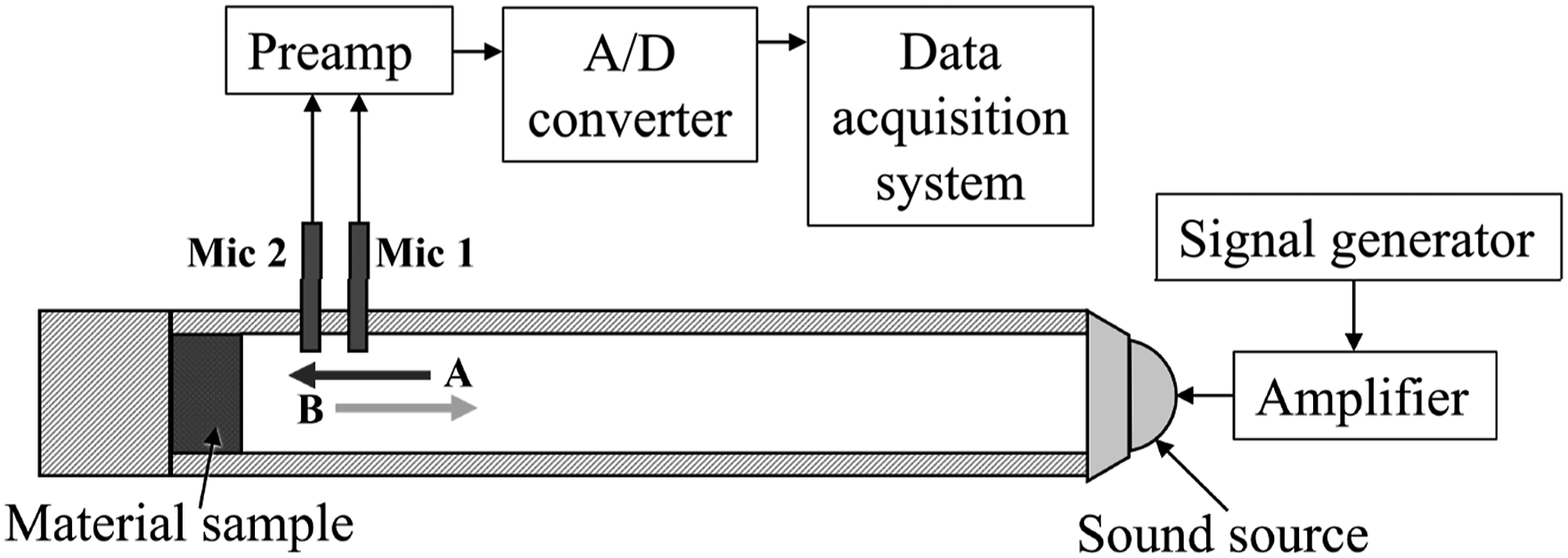
The sound absorption coefficient (α) was calculated as a function of frequency using the transfer function method. The frequency range of interest was 100 Hz to 4000 Hz, where the lower frequency limit is determined by the signal-to-noise ratio of the signal processing equipment and the high frequency limit is determined by the tube diameter to avoid the occurrence of non-plane wave mode propagation. The sound absorption coefficients were plotted against frequency for each particle size fraction to analyse the influence of particle size on acoustic performance.
The reflection coefficient r was calculated according to equation (1), where x
1
is the distance between the reference plane of the sample and the further microphone location, k
0
is the complex wave number, H
12
is the complex acoustic transfer function, H
I
is the transfer function for the incident sound wave and H
R
is the transfer function for the reflected wave.

For the calculation of H
12
, equation (2) was used, where s
12
is the cross-spectra between the two microphone signals and s
11
is the auto-spectra of signal 1

The transfer functions for the incident and reflected sound wave were calculated using equations (3) and (4), where x
1
-x
2
denotes the distance between the two microphones


The absorption coefficient is defined by equation (5)

The normalized surface impedance of the samples is defined by equation (6)

Materials Used: • Recycled Plastic Particles: Sourced from post-consumer ABS plastic waste. • Laboratory Test Sieves: ASTM E11 standard, mesh sizes: 1 mm, 710 µm, 500 µm, 355 µm, 250 µm, 125 µm, 63 µm, and 45 µm. • Sieve Shaker: Retsch AS 200. • Impedance Tube: Cylindrical tube, compliant with ISO 10534-2:2023. • Signal generator: Brüel & Kjær Sine Random Generator Type 1027. • Power amplifier: Brüel & Kjær Power Amplifier Type 2706. • Speaker: Visaton R 10 S loudspeaker. • Microphones: PCB Piezotronics 130F20. • A/D converter: Data Translation DT9837C.
The setup for sound absorption measurements is shown in Figure 2. The impedance tube used in this study is a custom-designed, modular 3D-printed system. It consists of a speaker holder, tube extensions, a microphone holder, a sample holder, and a termination block made of 60 mm thick milled aluminium. To prevent vibration transmission, the walls of the tube are at least 10 mm thick at all locations, ensuring structural rigidity. The tube’s inner surface, printed in ABS material, was chemically smoothed using acetone to minimize surface irregularities and ensure accurate acoustic measurements. All tube components and microphone mounts were carefully sealed to maintain airtightness throughout the measurements. Impedance tube setup and sample holder cup.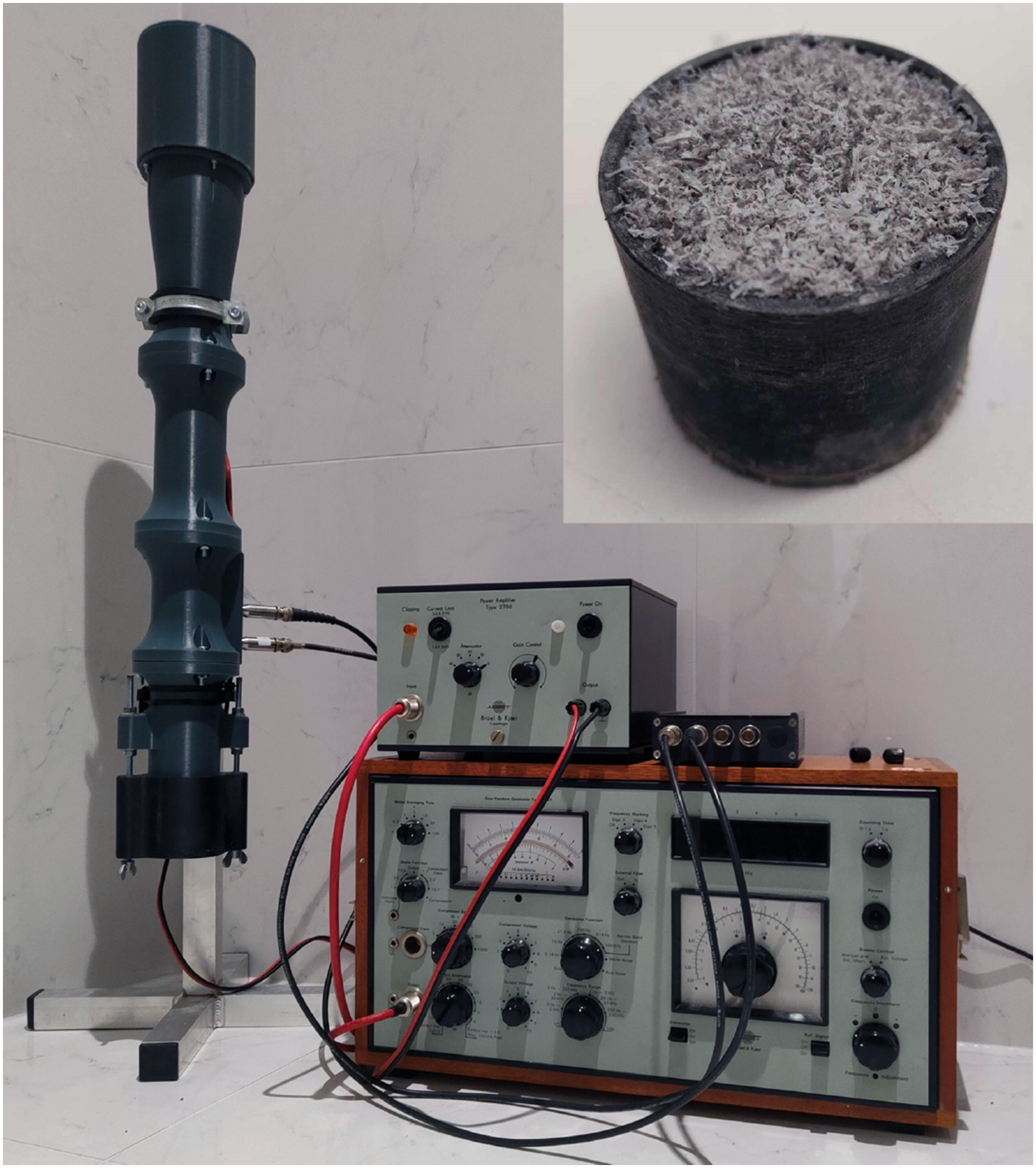
The sample holder cup was designed with a thin 3D-printed wall and a back surface made of a permeable nylon fabric to simplify sample preparation while maintaining negligible impact on the acoustic results. The samples, composed of shredded recycled plastic particles, were gently tapped to ensure uniform distribution and homogeneity before placement in the tube. During measurements, the cup was sealed with a dense sealing paste to ensure complete airtightness. The vertical configuration of the impedance tube facilitates accurate and repeatable measurements of the normal incidence absorption coefficient of loose granular materials, adhering to the standards specified by ISO 10534-2:2023.
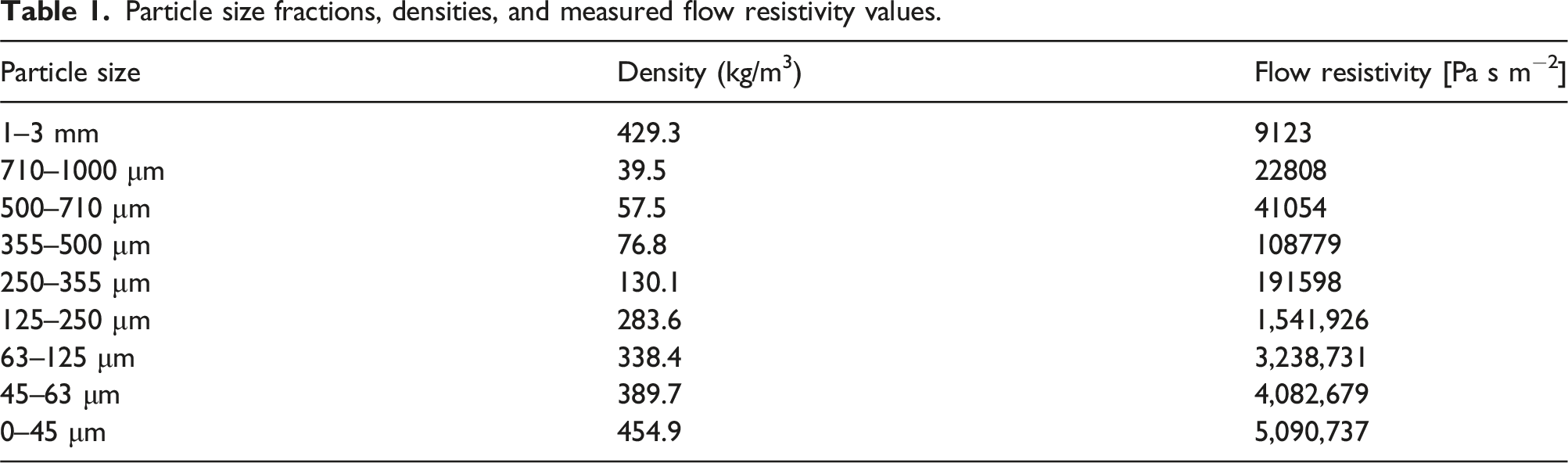
The flow resistivity values required for calculating the absorption coefficients using the Delany–Bazley–Miki model were determined in accordance with the standard direct airflow method (ISO 9053-1:2018). The same sample holders used for the impedance tube measurements were employed for the flow resistivity measurements, ensuring consistency. During testing, the holders were securely sealed within the apparatus using a dense sealing paste to prevent air leakage and maintain accuracy.
A constant airflow was generated using a diaphragm pump connected to a 20-L pressure reservoir to provide a stable and uniform airflow. The pressure difference across the granular material samples was measured using a precision pressure gauge, while an airflow metre was used to accurately quantify the airflow passing through the samples. This setup ensured reliable and repeatable measurements of the flow resistivity, which were then applied in the Delany–Bazley–Miki model for acoustic property calculations.
Results and discussion
Figure 3 presents microscopic images of the different size fractions of shredded recycled plastic particles used in this study. Each subfigure (a to i) corresponds to a distinct size range, providing a visual representation of the particle morphology and distribution within each fraction. Microscopic images of shredded recycled plastic particles across different size fractions: (a) 1–3 mm, (b) 710–1000 µm, (c) 500–710 µm, (d) 355–500 µm, (e) 250–355 µm, (f) 125–250 µm, (g) 63–125 µm, (h) 45–63 µm, and (i) 0–45 µm.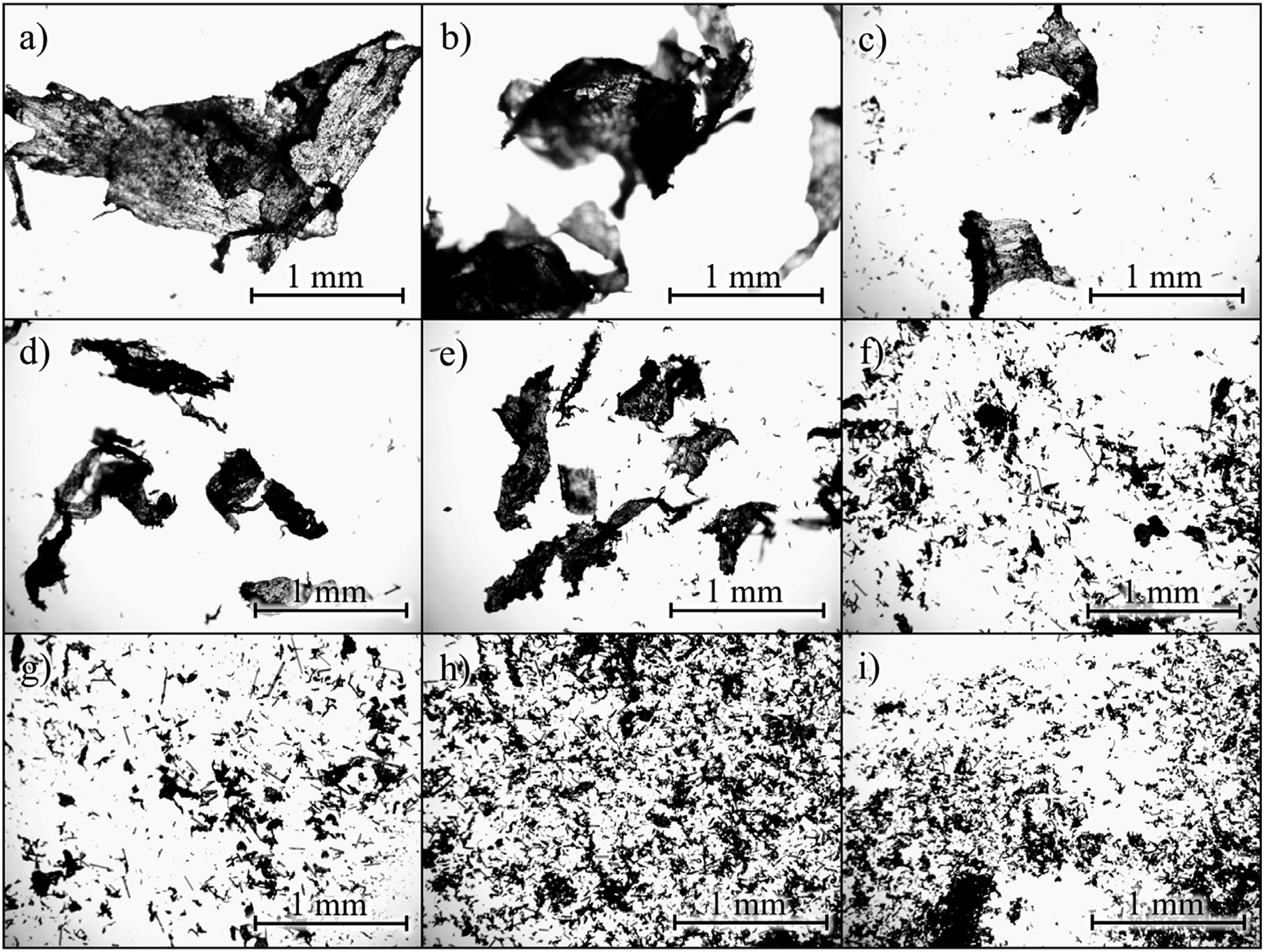
Across all size fractions, the particles retain irregular leaf-like shapes with varied surface textures. This irregularity is beneficial for sound absorption as it creates complex internal structures that enhance sound energy dissipation. The largest particle size fraction contained solid pieces of plastic as well as irregular leaf-like particles. Smaller fractions contained no fully solid particles, only thin flexible particles. As particle size decreases, the particles become more homogeneous in size and shape. This uniformity can influence packing density and the overall acoustic performance of the material. These microscopic images provide a comprehensive view of the particle morphology across different size fractions, highlighting the variability and potential acoustic benefits of using shredded recycled plastic particles for sound absorption applications.
Particle size fractions, densities, and measured flow resistivity values.
The sound absorption coefficients of the different size fractions of shredded recycled plastic particles were measured using the two-microphone impedance tube method. The results are presented in Figure 4, which illustrates the frequency-dependent absorption coefficients for each size fraction compared to the sound absorption given by the Delany–Bazley–Miki model. Absorption coefficients (left column) for different particle size fractions (40 mm thick samples): (a) larger fractions compared to melamine foam and (b) smaller fractions compared to the absorption coefficients given by the Delany–Bazley–Miki model (right column).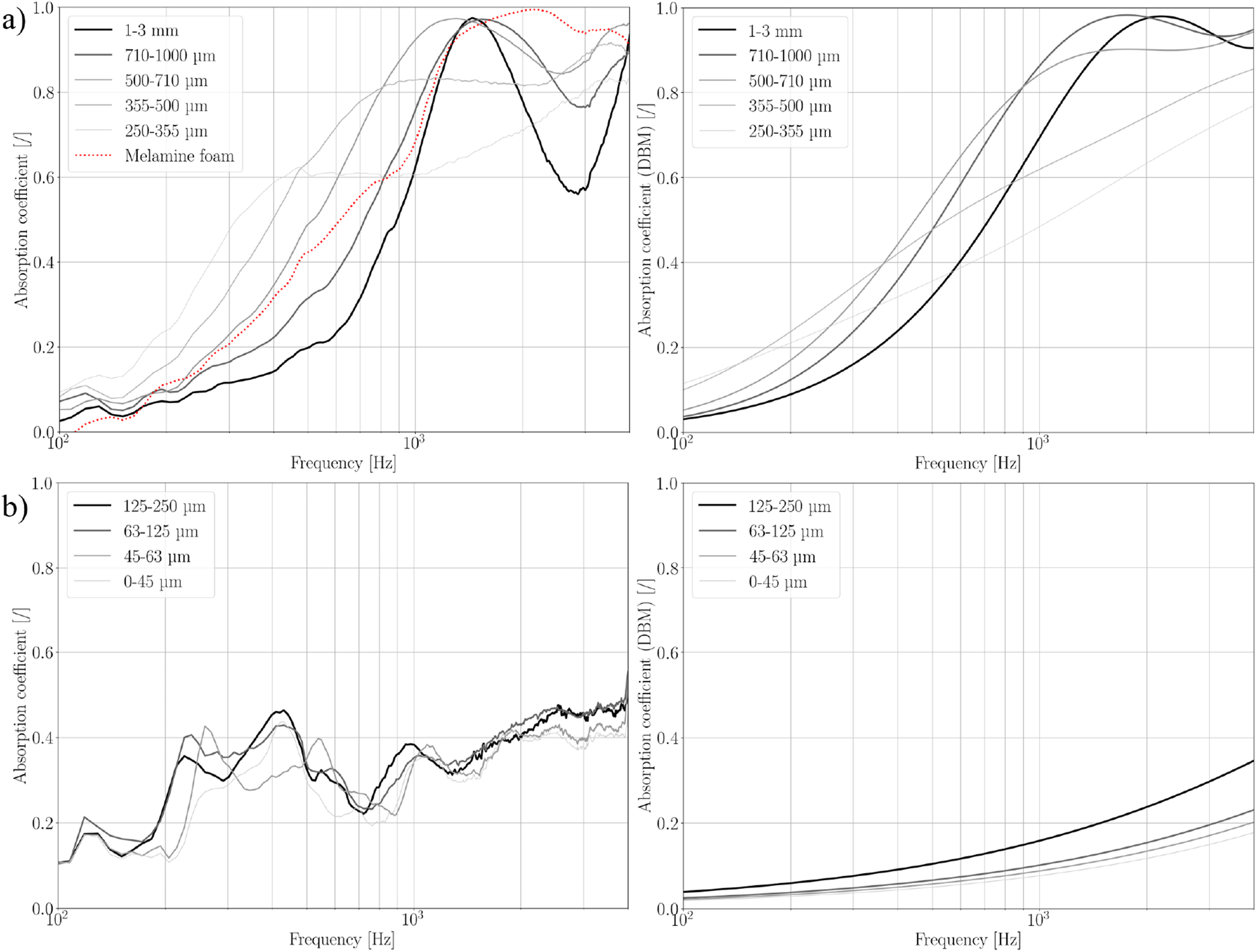
Figure 4(a) shows the absorption coefficients for larger particle size fractions ranging from 1–3 mm to 250–355 µm, and Figure 4(b) focuses on the smaller particle size fractions from 125–250 µm down to 0–45 µm.
The absorption coefficients for the larger particle size fractions exhibit distinct trends across the frequency spectrum. The 1–3 mm fraction (black line) shows a gradual increase in absorption coefficient, reaching a peak of at around 1400 Hz. This fraction exhibits good absorption characteristics at the resonant frequency around 1400 Hz. The 710–1000 µm fraction (dark grey line) follows a similar trend but with a slightly wider absorption peak and improved low-frequency sound absorption. The peak occurs at a similar frequency range. The 500–710 µm (medium grey line) fraction has the highest sound absorption above 1 kHz. The 355–500 µm (light grey line) fraction shows similar behaviour, with absorption coefficients increasing at lower frequencies and decreasing at around 1–2 kHz. The 250–355 µm fraction (lightest grey line) has the lowest peak absorption coefficient among the larger fractions. This fraction exhibits less effective sound absorption overall compared to the larger particle sizes, although it has the highest sound absorption coefficient at frequencies below 500 Hz. Compared to melamine foam (11 kg/m3), the shredded plastic particles with sizes below 710 µm offer an improvement in sound absorption at lower frequencies. For frequencies above 1500 Hz, the melamine foam has a higher absorption coefficient compared to all the size fractions of shredded plastic.
The absorption coefficients for the smaller particle size fractions show different characteristics. The sound absorption characteristics are similar between these fractions, with slight absorption peaks between 200 and 700 Hz. These fractions are slightly less effective in sound absorption compared to the larger particles but maintain consistent performance.
The results indicate that larger particle sizes tend to have higher peak absorption coefficients, particularly in the higher frequency range (around 1000–1500 Hz). The 1–3 mm and 710–1000 µm fractions exhibit the highest sound absorption peaks due to resonances. In contrast, smaller particle sizes (below 250 µm) show relatively lower and more consistent absorption coefficients across the frequency spectrum. The reduced performance of smaller particles may be attributed to their reduced ability to create the complex internal structures necessary for effective sound energy dissipation.
The observed trend of higher peak sound absorption coefficients for larger granules can be attributed to resonance effects. Larger particles (above 1 mm) tend to reflect a significant portion of the incident sound waves, leading to pronounced resonances that enhance absorption at specific frequencies. These resonances are caused by the interaction between the sound waves and the surface irregularities of the particles, as well as the voids and interparticle spaces in the material. For smaller particle sizes, the absorption tends to occur more through viscous and thermal dissipation mechanisms, with less pronounced resonances due to the reduced particle size and corresponding surface area. While this work provides insight into these size-dependent effects, further experimental studies and modelling would be required to isolate and quantify the contributions of each mechanism more precisely.
The influence of particle shape and material properties on sound absorption performance is multifaceted. Irregularly shaped particles, such as the shredded ABS plastic used in this study, create a higher packing density and increased tortuosity, which elevate the flow resistivity of the material. These factors directly contribute to enhanced sound absorption, particularly at mid and high frequencies. Additionally, the material properties, such as stiffness and density, govern the extent of structure-borne sound transmission within the sample. For example, stiffer particles are more prone to generating resonances due to vibrations, which can enhance absorption at specific frequencies but may also reduce the overall performance at others. The interaction between airborne sound and structure-borne vibrations becomes more pronounced for particles with certain material characteristics, particularly in the case of granular media. These findings underscore the importance of carefully considering particle shape and material composition when designing absorbers, especially for applications requiring targeted frequency-specific performance.
The Delany–Bazley–Miki model predictions match the general trend of increasing absorption with frequency but underestimate absorption peaks for larger particles as resonances are more pronounced in the measured sound absorption coefficients. Additionally, the model fails to capture the sharper transition zones in absorption behaviour seen in the measured results, especially for larger particle sizes. The model underestimates the sound absorption of the smaller particles, especially at lower frequencies where additional resonances increase the sound absorption.
Overall, these findings highlight the potential of using shredded recycled plastic particles for sound absorption applications, with the particle size playing a significant role in determining the acoustic performance. Larger particles are more effective in high-frequency sound absorption, while smaller particles provide more uniform absorption across a wider frequency range and offer improved sound absorption at lower frequencies.
The normalized surface impedances of all particle size fractions are compared to the predictions of the Delany–Bazley–Miki (DBM) model in Figure 5, where the model predictions are shown in dotted lines. The results show that the model consistently overestimates the surface impedance at low frequencies for all particle sizes. Additional discrepancies arise at specific frequencies where resonant behaviour is evident in the measurements but is not captured by the model. For larger particles, these discrepancies due to resonances are evident above 1 kHz and for smaller particles, resonances are present in the entire frequency range. For smaller particle fractions (0–250 µm), the surface impedance exhibits highly resonant behaviour, characterized by pronounced peaks and oscillations. These resonances are likely caused by a combination of factors, including reflections of airborne sound waves within the granular material and potential vibrations of the particles themselves, emphasizing the need to account for these effects when modelling the acoustic properties of granular media. Comparison of measured normalized surface impedances and the Delany–Bazley–Miki model: (a) 1–3 mm, (b) 710–1000 µm, (c) 500–710 µm, (d) 355–500 µm, (e) 250–355 µm, (f) 125–250 µm, (g) 63–125 µm, (h) 45–63 µm, and (i) 0–45 µm.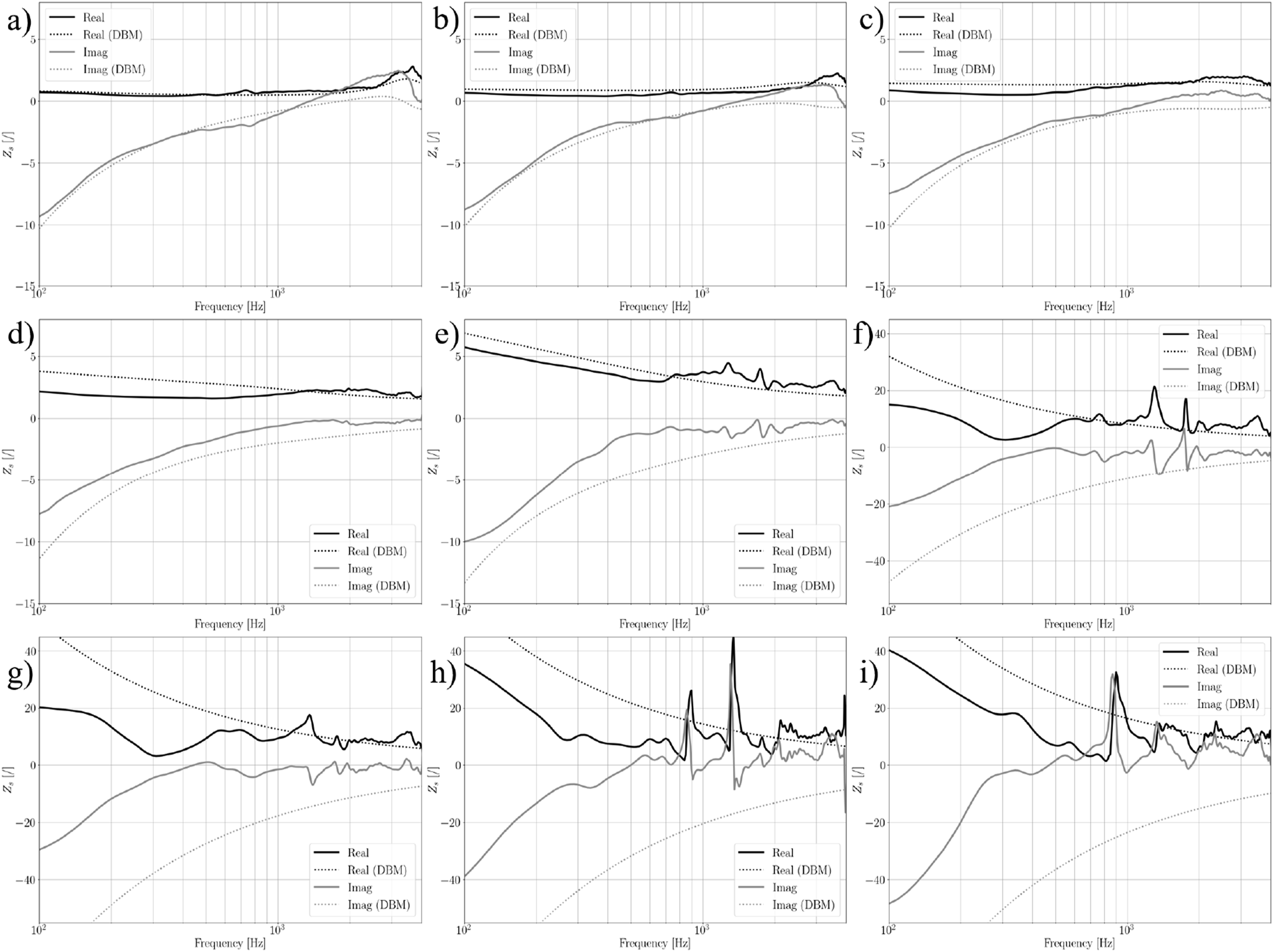
Figures 6(a) and 6(b) present the absorption coefficient results of shredded recycled plastic particles as a function of average particle size for various frequencies, below the resonant frequencies of the measured samples. These figures provide insights into the relationship between particle size and sound absorption efficiency at different frequencies. Absorption coefficient in relation to particle size for various frequencies: (a) measured data and (b) smoothed characteristics and marked maximum absorption values.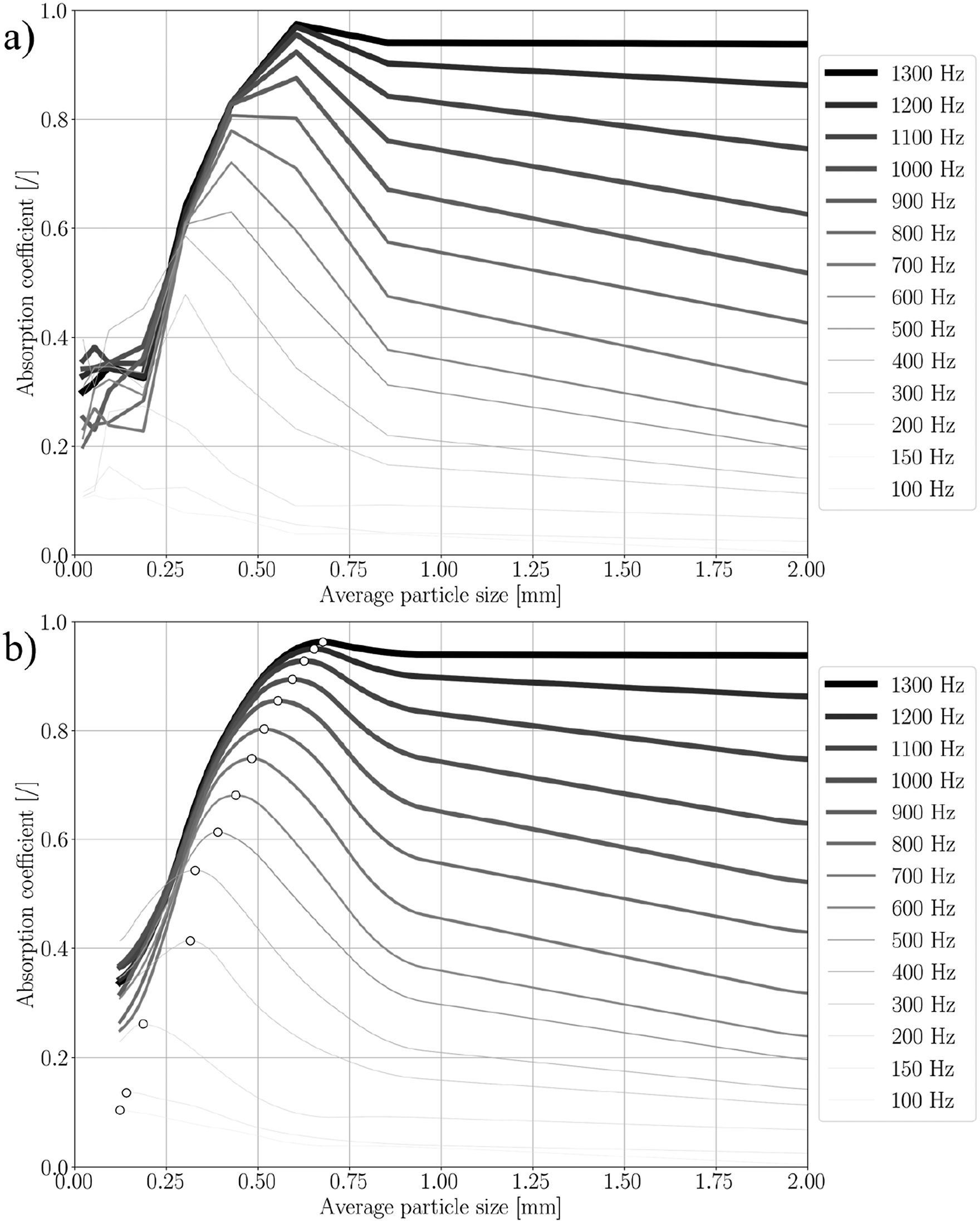
Figure 6(a) displays the raw data showing the low-frequency absorption coefficients for frequencies ranging from 100 Hz to 1300 Hz, plotted against the average particle size (0.045 mm to 2 mm). Because the number of measured particle sizes is limited, the resolution needs to be increased to determine the optimal particle size for the highest sound absorption at each frequency. Figure 6(b) shows the same data after upsampling and applying an averaging filter to smooth out the results, highlighting the highest absorption for each frequency.
In Figure 6(a), the absorption coefficients are plotted for discrete frequency values. At lower frequencies (100 Hz to 400 Hz), the absorption coefficients are relatively low across all particle sizes, indicating limited sound absorption capability in this range. As the frequency increases, the absorption coefficients also increase, peaking between 1200 Hz and 1300 Hz for larger particle sizes (around 1-2 mm). The highest absorption coefficient is observed for at 1300 Hz. For particle sizes below 0.25 mm, the absorption coefficients remain relatively low for all frequencies, demonstrating that smaller particles are less effective for sound absorption compared to larger particles.
The upsampled and smoothed data is shown in Figure 6(b) to better identify the optimal absorption characteristics. The smoothed curves confirm the trends observed in the raw data, with absorption coefficients increasing with frequency and particle size up to a certain point. The optimal particle size for maximum absorption appears to be around 0.6–0.7 mm for frequencies above 1000 Hz, yielding absorption coefficients between 0.9 and 1. For lower frequencies (100 Hz to 400 Hz), the optimal particle size is smaller (0.2–0.3 mm), but the absorption coefficients are generally lower. The application of the averaging filter helps to highlight the general trends and optimal particle sizes more clearly, smoothing out the variability present in the raw data.
Figure 7 illustrates the optimal particle sizes and the corresponding maximum absorption coefficients at various frequencies, extracted from the data in Figure 6(b). These figures provide a clear visualization of the trade-offs and potential strategies for optimizing sound absorption using shredded recycled plastic particles. Figure 7(a) shows the relationship between the average particle size at which the maximum absorption coefficient is observed and the frequency. Figure 7(b) depicts the maximum absorption coefficient values corresponding to those optimal particle sizes as a function of frequency. Optimal particle size for the highest absorption in relation to frequency (a) and (b) highest absorption at each frequency (α
max
).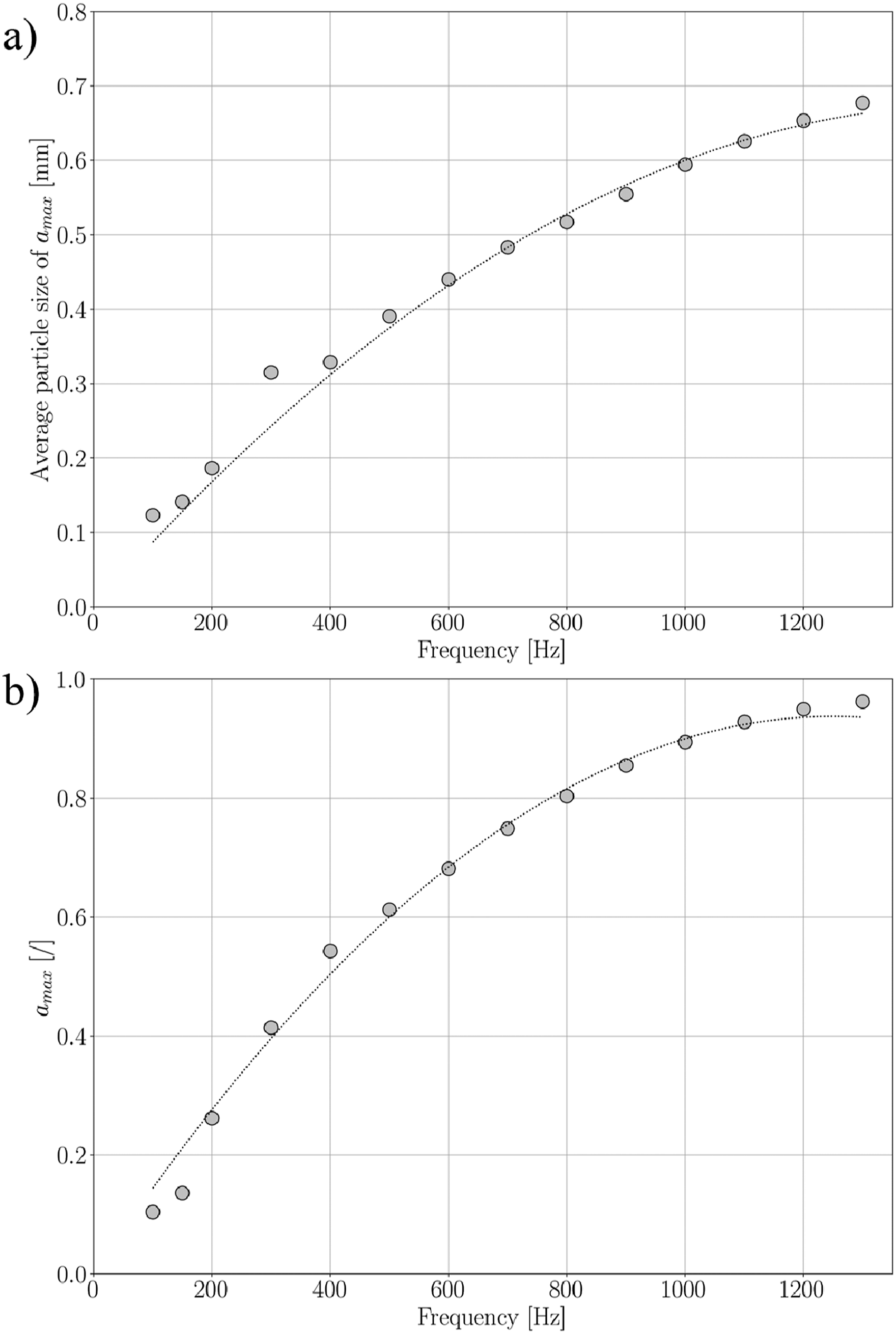
The optimal particle size for maximum absorption at low frequencies increases with frequency, following a square polynomial trend. At lower frequencies (below 200 Hz), the optimal particle size is relatively small, around 0.1–0.2 mm. As the frequency increases to around 1300 Hz, the optimal particle size increases to approximately 0.7 mm. This trend indicates that larger particles are more effective for absorbing higher frequency sounds, while smaller particles perform better at lower frequencies.
The maximum absorption coefficient increases with frequency, also following an approximately square polynomial trend. At 200 Hz, the maximum absorption coefficient is around 0.25, indicating limited absorption effectiveness. As the frequency increases to 1300 Hz, the maximum absorption coefficient approaches 1, demonstrating significant absorption improvement. This highlights that achieving higher absorption coefficients is more feasible at higher frequencies with appropriately sized particles.
The analysis of Figure 7 reveals important trade-offs and customization possibilities for optimizing sound absorption using recycled plastic particles. Smaller particles are required for effective low-frequency absorption, but this comes at the cost of a lower maximum absorption coefficient overall. This trade-off suggests that while smaller particles can be used to target low-frequency sounds, their absorption performance is generally lower compared to larger particles at higher frequencies at the same material thickness.
By using different fractions of particle sizes, it is possible to customize the sound absorption properties of the material. Increasing the thickness of the material or adding an air gap can further enhance low-frequency absorption. Thicker layers of particles create more pathways for sound energy dissipation, improving absorption at lower frequencies. This strategy can be combined with particle size optimization to achieve the desired acoustic performance.
The recycled ABS plastic particles studied in this work demonstrate strong potential for architectural noise control solutions due to their irregular shapes, which enhance sound absorption compared to regular, more uniform particles like sand.31,32 However, certain limitations need to be considered. For optimal sound absorption performance, a porous structure is necessary, and the particle size plays a critical role in determining absorption efficiency across the frequency spectrum. Additionally, the use of shredded plastic particles in architectural applications requires enclosing them in porous, breathable fabric or barriers to prevent the release and potential inhalation of microplastics into the environment. While the focus of this work is on ABS plastic, it is expected that other common plastics, when processed to similar shapes and sizes, could also provide comparable absorption performance, though material-specific studies would be required to verify this.
The findings demonstrate that the optimal particle size for sound absorption increases with frequency, and larger particles are more effective at absorbing higher frequencies. However, for applications requiring enhanced low-frequency absorption, smaller particles should be utilized despite their lower maximum absorption coefficients. By customizing the particle size fractions and adjusting the material thickness, it is possible to design versatile and effective sound absorbers using recycled plastic particles. This approach not only provides an environmentally sustainable solution but also offers flexibility in meeting diverse acoustic requirements.
Conclusions
This study explored the sound absorption properties of shredded recycled plastic particles, focussing on the relationship between particle size and low-frequency absorption performance. The findings demonstrate that the size of the particles significantly influences the acoustic behaviour of the material, particularly at low frequencies.
Smaller particle sizes were shown to be more effective in absorbing low-frequency sound waves, although at the cost of a lower maximum absorption coefficient across the frequency range. This indicates that fine particles can be strategically utilized in applications where low-frequency noise reduction is a priority.
The study highlighted that the optimal particle size for achieving maximum sound absorption increases with frequency. Larger particles were found to be more efficient for higher frequencies, while smaller particles performed better at lower frequencies. This insight enables the design of customizable sound-absorbing materials by mixing different size fractions to target specific frequency ranges.
The study compared the measured normalized surface impedances of different particle size fractions to the predictions of the Delany–Bazley–Miki model. While the model captured general trends in the absorption behaviour, discrepancies were observed at low frequencies and at frequencies where resonances were prominent. Larger particles exhibited resonances that enhanced absorption at specific frequencies, which the model failed to fully predict due to its simplifications regarding granular material behaviour. For smaller particles, highly resonant behaviour was observed across the frequency spectrum, likely caused by a combination of interparticle vibrations and reflections of airborne sound. These findings highlight the need for refined modelling approaches that account for the complex interactions between particle shape, material properties, and sound waves in granular media. The impedance analysis reinforces the importance of particle size and morphology in designing effective sound absorbers using recycled materials.
The use of recycled plastic particles for sound absorption not only provides an effective acoustic solution but also contributes to environmental sustainability. By repurposing waste materials, this approach offers a practical and eco-friendly alternative to traditional sound-absorbing materials, aligning with global efforts to reduce plastic waste and promote recycling.
The findings suggest that by varying particle size and material thickness, recycled plastic particles can be engineered to meet diverse acoustic requirements. The shredded plastic microparticles enable high acoustic energy dissipation in pores and in particle contacts due to random irregular shapes of shredded particles and a wide distribution of pore sizes. Whether for low-frequency noise reduction or broad-spectrum sound absorption, this material offers flexibility and effectiveness, making it suitable for a wide range of industrial and architectural applications, as acoustic panels containing shredded plastic particles with various shapes, sizes, and thicknesses can be easily constructed.
In conclusion, the study underscores the potential of shredded recycled plastic particles as a sustainable and versatile material for sound absorption, particularly in low-frequency applications. By carefully selecting and combining different particle sizes, it is possible to optimize acoustic performance while contributing to environmental sustainability through the reuse of plastic waste.
Footnotes
Declaration of conflicting interests
The author(s) declared no potential conflicts of interest with respect to the research, authorship, and/or publication of this article.
Funding
The author(s) disclosed receipt of the following financial support for the research, authorship, and/or publication of this article: The authors acknowledge support by the Slovenian Research Agency [grant P2-0401 (B) - Energy engineering].
