




Abstract
This investigation aims to study the effect of dust pressure anisotropy, self-gravitational forces, and magnetic forces on the gravitational instabilities and associated low-frequency rogue wave (RW) profile as well as oblique interaction characteristics of low-frequency dust-acoustic (DA) solitary waves (DASWs) in an electron-depleted dusty plasma. The current plasma model comprises inertial warm, positively and negatively charged massive dust grains and non-extensive ions. Following the quasi-linear theory, the extended Poincaré–Lighthill–Kuo (PLK) perturbation technique, and Jean’s criterion, the two-sided Korteweg-de Vries (KdV) equations and corresponding analytical phase shifts due to collision are derived and analyzed. The critical configuration of the current plasma model that renders the KdV compressive or rarefactive DASWs invalid and leads to the formation of the modified KdV (mKdV)-type solitons is determined. The findings from computational simulations unequivocally demonstrate that parallel and perpendicular dust pressures do not exhibit the same behavior rigorously. Furthermore, the presence of the magnetic field and dust pressure anisotropy has been found to inhibit gravitational instabilities and significantly modify DA RW triplets, which can evolve into super rogue waves through the superposition of triplets. The collision scenarios involving solitons of both similar and opposite polarities traveling toward each other, as well as the influential roles played by the crossing angle, magnetic field, gravitational field, ion entropic index, and dust pressure along and across magnetic field lines on phase shifts and DA RWs, are extensively discussed in detail. The possible applications of the present work for various space plasma scenarios, including dense molecular clouds and interstellar medium, are anticipated. This study will contribute to understanding the dynamics of the generation and propagation of both RWs and the collision of solitons. Once the mechanics of their generation and propagation are understood, these waves can be devoted to many industrial and medical applications.
Keywords
Introduction
Since the intriguing observations made by Pioneer, Voyager, Giotto, and Vega space missions1,2 in the interstellar medium, revealing for the first time the presence of submicron-sized metallic (graphite, magnetite, amorphous carbons) or dielectric particles (ices, silicates), knowledge about dust and dusty plasmas, as well as their pivotal roles in laboratory processes and their implications in the formation of various astrophysical objects such as Jupiter’s, Saturn’s, and Neptune’s ring systems3,4 has undergone a profound expansion. These particles exhibit dynamics never observed before and can absorb and scatter light, resulting in dark spokes observed within gas clouds and planetary rings. By competitive mechanisms like secondary electrons or ions capturing, secondary emission of electrons,
5
photoemission under ultraviolet (UV) radiation6,7 and thermionic emission induced by radiative heating,
8
dust grain can attain quickly or not
9
exceedingly high positive or negative charges and strongly interact with the adjacent plasma, either via the mediation of long-range electromagnetic fields only (dust size lower than 1 μm) or through the conjoined effects of long-range gravitational and electromagnetic fields (dust size between 1 μm to 15 μm), depending to their mass-to-charge ratio.10,11 An exceptional case is that of equally important gravitational and electric forces, or self-gravitational plasma
A rogue wave (RW) is a high-amplitude excitation that appears out of nowhere and disappears without a trace. These waves were first observed in the oceans 27 and later in various fields such as optics, Bose-Einstein condensates,28,29 and subsequently by Bailung 30 in plasmas. The interest in these waves stems from their ability to locally concentrate a very large amount of energy, which can be either an advantage or a disadvantage for their applications. Rogue waves (RWs) can be modeled using the nonlinear Schrödinger equation (NLSE),31–38 which provides a hierarchy of solutions. The first-order rational solution of the NLSE is called the Peregrine soliton 52 or the first-order RWs. The nonlinear interaction of first-order RWs can produce second-order RWs, with the RW triplet 53 being an exceptional case. This triplet consists of three Peregrine solitons at the corners of a triangle, which can superimpose under appropriate conditions to form super RWs. Many different and diverse studies were conducted on different plasma models to study the distinctive properties of first and super RWs and breathers that described by different forms of NLSE. During these studies, the researchers reduced their plasma models’ fluid governing equations to different NLSE forms, including planar NLSE,31–38 nonplanar NLSE,39–46 and damped NLSE.47–51 Accordingly, the researchers studied the properties of the planar RWs and breathers, 53 nonplanar RWs and breathers when the effect of the curvature is considered, as well as the damped RWs and breathers when the impact of the collisions between plasma charges is considered.
Plasmas exhibit extreme dilution in various plasma situations where significant gravitational effects lead to infrequent particle collisions, rendering the fluid approximation inadequate and standard (MHD) equations inapplicable. However, strong magnetic fields generated by magnetic stars or other astrophysical sources induce the Lorentz force on charged particles, causing them to move around the magnetic field lines in circular or helical paths. This confinement effectively aligns particle motion perpendicular to the direction of the magnetic field. Consequently, the plasma demonstrates anisotropic behavior with distinct pressures parallel and perpendicular to the magnetic field lines. Under these conditions, the fluid-like description remains applicable, and the Chew–Goldberger–Low (CGL) equations 54 obtained from the moment equations of the collisionless Vlasov equation must be incorporated into the standard MHD equations (as in the present paper) to get a more comprehensive and accurate representation of plasma’s behavior. The effects of pressure anisotropy on wave propagation have been discussed by several researchers using CGL. Bhatia 55 demonstrates that the critical wavelength of gravitational instability is strongly influenced by pressure anisotropy, magnetic field, and plasma rotation speed. Prajapati et al 56 have discussed self-gravitational instability of a magnetized rotating, anisotropic plasma medium in the presence of heat flux corrections and found that increasing the pressure anisotropy decreases Jean’s instability. Gliddon et al. 57 analyzed the gravitational instability of anisotropic plasma and revealed that because of anisotropy, the spiral arm galaxy plasmas can exhibit hose instability as well as gravitational instability. Moreover, he suggested that gravitational instability occurs at smaller wavenumbers in transverse propagation than longitudinal ones for a given frequency. Ariel 58 extended this work by adding Hall’s effect. Khalid et al. 59 show that the dynamical behavior of ion-acoustic (IA) cnoidal waves (IACWs) is more sensitive to parallel ion pressure rather than perpendicular ones. Chatterjee et al. 60 demonstrated that the presence of solitary waves (SWs) in obliquely propagating dust-ion acoustic waves (DIAWs) is greatly influenced by perpendicular and parallel pressures. The study conducted by Bashir et al. 61 examined the impact of anisotropic dust pressure and superthermal electrons on the propagation of dust-acoustic SWs (DASWs). The findings revealed that dust anisotropy influences both the amplitude and polarity dust-acoustic waves (DAWs). The impact of parallel and perpendicular ion pressures on the propagation of nonlinear electrostatic shock wave structures in anisotropic magnetoplasmas were examined by Albalawi et al. 62
After Zabusky and Kruskal 63 made the remarkable observation that during the interaction of two solitons, both structures remain unperturbed retaining their original amplitudes, widths, and velocities, yet undergo a phase shift between pre-collision and post-collision trajectories, extensive research efforts have been dedicated to exploring wave collisions to gain a comprehensive understanding of energy and transport mechanisms in plasmas, along with resonance phenomena.64,65 Thus, by adopting a one-dimensional (1D) approach, which leads to two distinct types of interactions, namely, overtaking collisions (angle between wave vector θ = 0) studied using methods like inverse scattering transformation, 66 and head-on collisions (θ = π) analyzed using the PLK method, 67 Ikezi et al. 68 experimentally demonstrated that waves do not add up during the overtaking collision process, whereas the opposite is observed during a head-on collision. Lonngren 69 experimentally identified the critical collision angle that leads to the phenomenon of resonance. Kuldeep Singh 70 demonstrated that dust concentration significantly affects phase shift between trajectories of dust acoustic 71 waves. Tiofack et al. also emphasized the impact of self-gravitational field on head on collision. 71 However, the three-dimensional (3D) approach offers a more realistic and comprehensive framework, enabling the exploration of oblique interactions (0 < θ ≤ π). Using the 3D geometry, El-Shamy et al. 72 revealed that the magnitude of the phase shift between the trajectories of two ion acoustic SWs is directly dependent on the electron nonextensive parameter. However, it is inversely proportional to their number density and the strength of the applied magnetic field. Xu et al. 73 addressed the interaction of two SWs in quantum electron-positron-ion plasma and reported that, for a given value of the quantum parameter, the magnitude of the phase shift decreases as the collision angle increases. Irfan et al. 74 presented the influence of pressure anisotropy on 3D IA rogons emerging in magnetoplasmas with trapped and untrapped electrons. Liang et al. 75 elaborated on the phase shift after the collision of two solitons with an arbitrary angle in a magnetized complex plasma. Ju-Kui 76 provided insights into the interaction of DASWs, considering dust charge fluctuations. The oblique collision of two dust-ion acoustic (DIA) solitons in a collisionless magnetized plasma consisting of dynamic ions, static charged dust particles (positive/negative), and inertialess kappa-distributed electrons was investigated by Parveen et al. 77 El-Labany et al. 78 investigated the phenomenon of oblique collision of dust-acoustic (DA) solitons within a plasma composed of micron-sized dust particles with a negative charge, Boltzmann distributed electrons, and two temperature ions. In their investigation, they disregarded dust pressure anisotropies and gravitational effects. The results indicated that increasing the magnetic field (colliding angle) strength led to a decrease (increase) in phase shifts. Later, El-Labany et al. 79 extended the study and incorporated the influence of dust pressure anisotropy. They demonstrated that the dust pressure ratio affects the phase shifts. Kuldeep et al. 80 demonstrated that the polarization force enhances the amplitude of dust-acoustic RW (DARW) triplets, whereas a decrease in ion superthermality results in a reduction in the amplitude of DA super RWs. Shimin Guo et al. 81 analyzed dust ion-acoustic waves and identified the conditions necessary for the formation of RW triplets in a collisionless, unmagnetized plasma. Based on the literature review, it is revealed that the essential physics underlying the oblique collision between two counter-propagating DASWs in a self-gravitating anisotropic plasma remains unexplored. As a result, the main goal of this work is to shed light on impacts of dust pressures anisotropy, self-gravitational and magnetized forces on gravitational instabilities, and oblique interaction features of DASWs in a self-gravitating anisotropic electron depleted dusty plasma consisting of inertial warm positively and negatively charged massive dust grains in addition to non-extensive ions.
The paper is structured in the following manner: Section II presents the fundamental equations of the model, whereas Section III examines the dispersion relation. In Section IV, the dynamics of DASWs and their related phase shifts following a collision are modeled using the two-sided KdV equation and the two-sided mKdV equation. These equations are calculated for the generic case and the critical case, respectively, using the PLK approach. Section V is dedicated to the analysis of RW by reducing the mKdV equation to the NLSE using a suitable transformation. Section VI provides a concise summary of the study’s primary findings.
Governing equations
This study examines a three-dimensional self-gravitating EDDP plasma that exhibits dust pressure anisotropy. This plasma model is composed of inertial warmed positively and negatively charged large dust grains, with a mass of (m
i
/m
j
≪ 1), moving at a slow velocity (T
j
/T
i
≪ 1) in an electron-depleted background that contains nonextensive ions. The symbol Ti,j(mi,j) represents the temperature (mass) of the ion and the dust. The subscript i denotes ions, while j = n, p represents negative and positive dust grains. The system exhibits charge neutrality, ni0 + Z
p
np0 = Z
n
nn0. Additionally, it is subjected to a strong and uniform external magnetic field that is directed along the x-axis: (








Linear dispersion relation
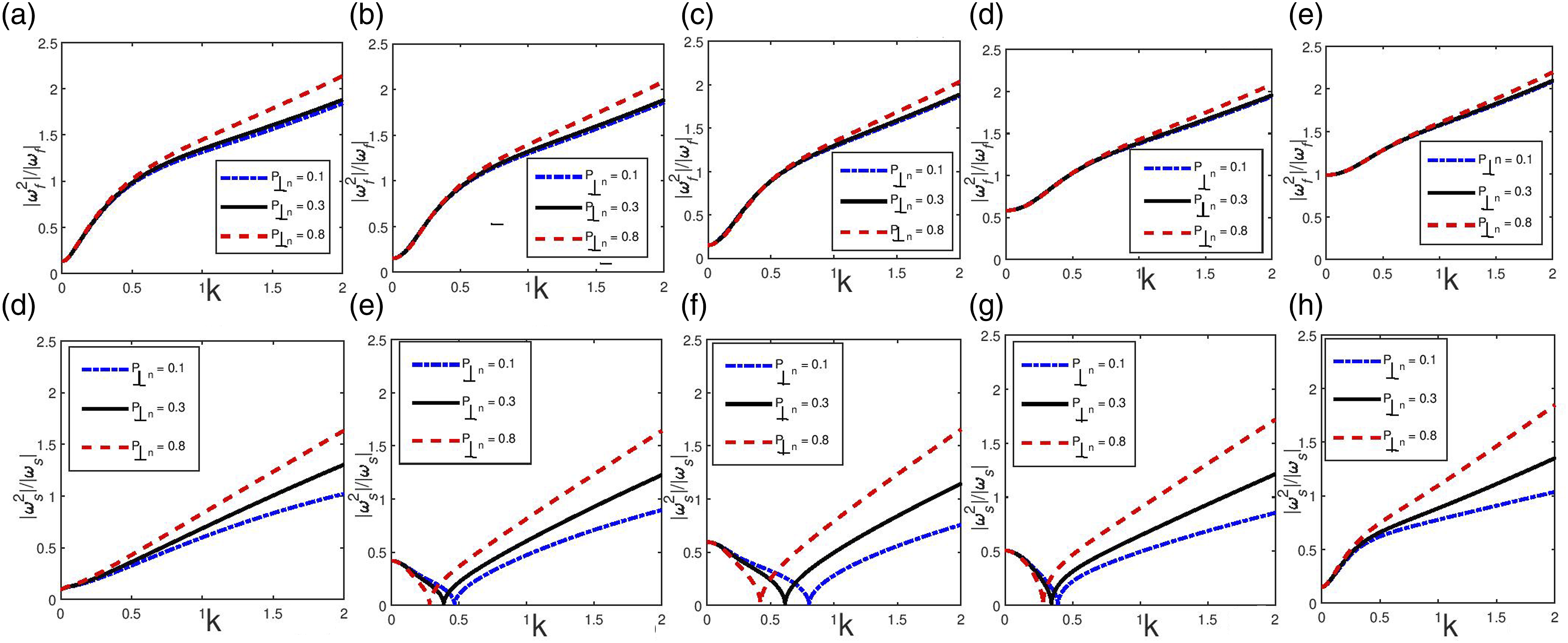
Consider that the plasma is slightly disturbed from its equilibrium position, generating a low-frequency disturbance and propagating in the form of a plane wave. All the dependent quantities can, therefore, be expressed in terms of their equilibrium and their perturbed parts as Evolution of the longitudinal dispersion relationship associated to the fast mode (a–c) and the corresponding slow mode (d–f) for different values of P‖n. When (a) γ = 0, (b) γ = 0.3, and (c) γ = 0.6. Along with α = 1.5, β = 2, P⊥n = 0.3, P‖p = 0.6, P⊥p = 0.4, μ
p
= 0.53, and q = 0.7. Evolution of the transversal dispersion relationship associated to the fast mode (a–e) and the corresponding slow mode (d–h) for different values of P⊥n. When (a) γ = 0 and ω
cn
= 0.1, (b) γ = 0.3 and ω
cn
= 0.1, (c) γ = 0.6 and ω
cn
= 0.1, (d) γ = 0.6 and ω
cn
= 0.4, (e) γ = 0.6 and ω
cn
= 0.7. Along with α = 1.5, β = 2, P‖n = 0.3, P‖p = 0.6, P⊥p = 0.4, μ
p
= 0.53, and q = 0.7.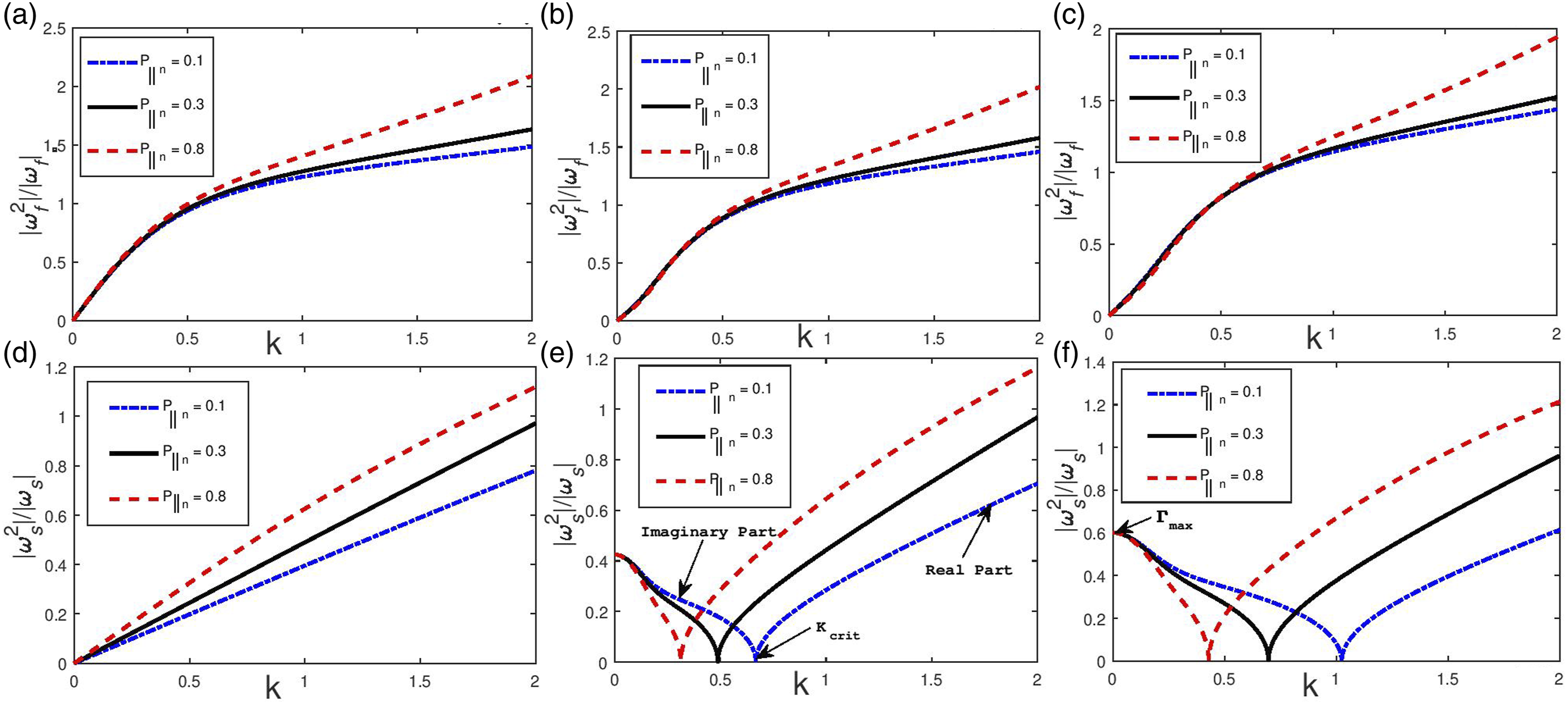


Derivation of wave interaction equations
Two small amplitude dust acoustic excitations, namely R and L, generated in two asymptotically distant plasma regions in the initial state and traveling obliquely toward each other, are assumed. After a finite time, they meet and interact quasi-elastically so that the only memory of their past overlap is the measurable phase shift between the pre-and post-collision trajectories. The approximate study of this exchange mechanism can be examined using the PLK method,
67
which skillfully combines the strained coordinates technique and standard reductive perturbation method. Accordingly the stretched coordinates ξ, η, and τ are introduced as




where ɛ ≪ 1 is a small dimensionless parameter, ξ, and η, respectively, denote the trajectories for the right and left moving wave. At P(η, τ) = Q(ξ, τ) = 0, solitons, respectively, follow the directions r(= L
x
x + L
y
y + L
z
z) and r′(= M
x
x + M
y
y + M
z
z). The unknown functions P(η, τ) and Q(ξ, τ) are the phase records of the interacting waves induced by collision. λ
ξ
and λ
η
refer to the wave’s phase velocity moving, respectively, to the right and left. The phase records and velocities are to be determined subsequently. Initial wave trajectories are characterized by vectors

By eliminating


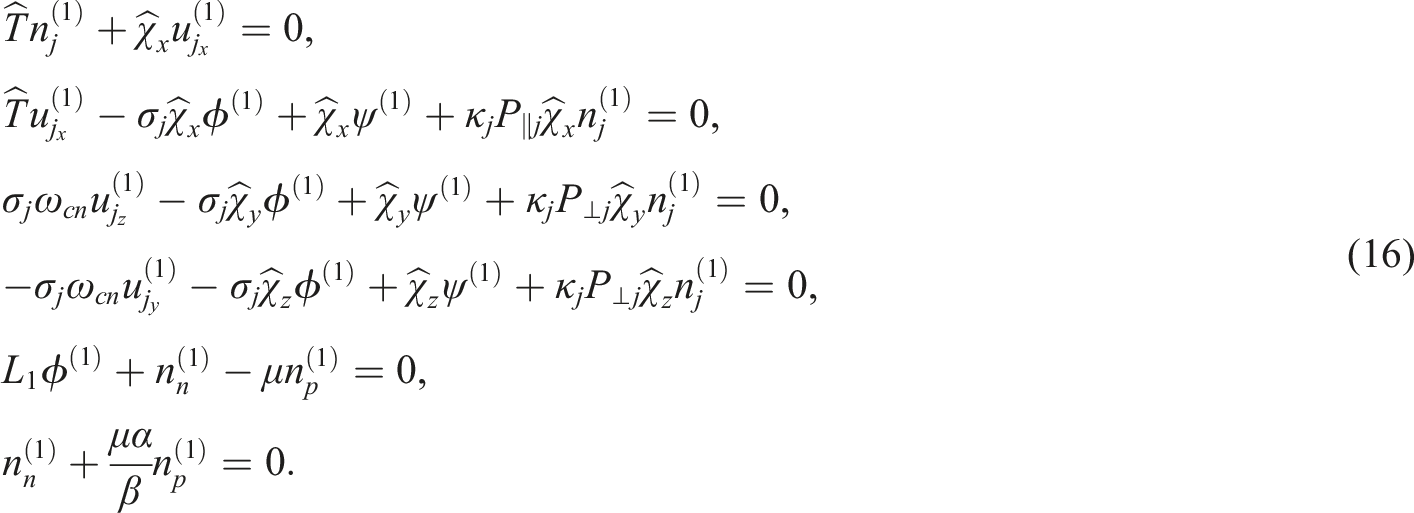
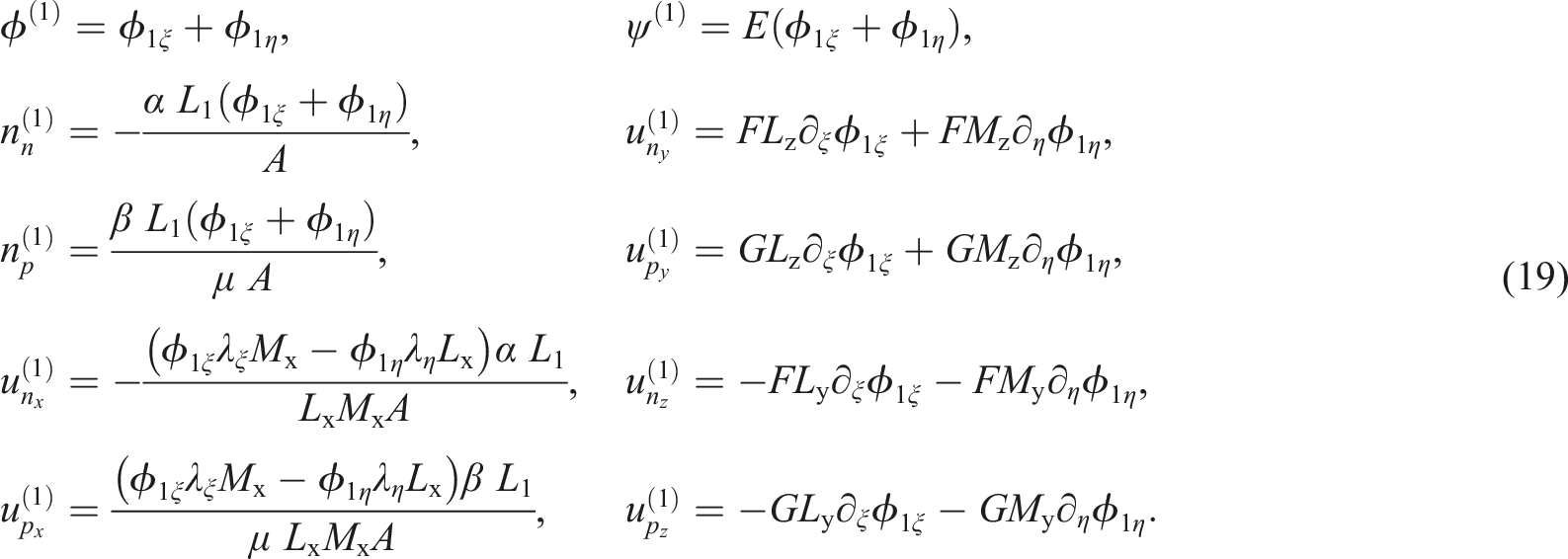
To the leading order, equation (17) indicates that two DA waves are expected to propagate towards each other because ϕ(1) can be expressed as the combination of two functions: one (ϕ1ξ ≡ ϕ1ξ(ξ, τ)) depends on ξ and τ, and the other (ϕ1η ≡ ϕ1η(η, τ)) depends on η and τ. Consequently, solutions of the set of equation (16) consistent with the requirements of equations (17) and (18) are as follows
To the next higher-order, the governing equations (3)–(8) generate the new system
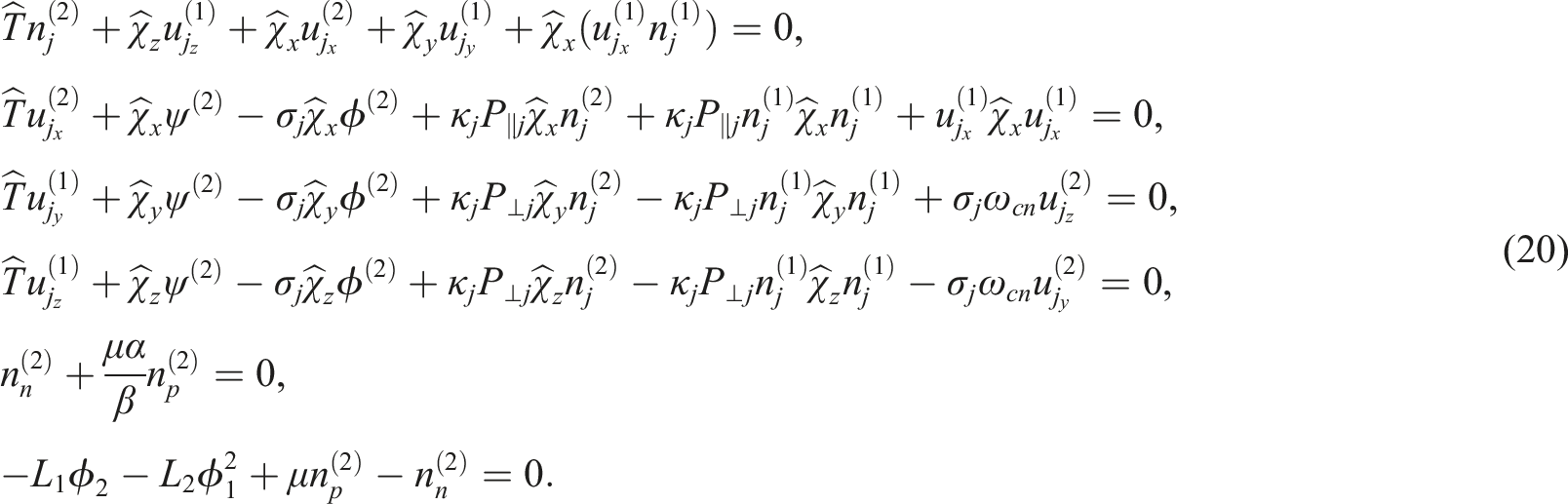
By eliminating


Equation (21) suggests that ϕ(2) has a term

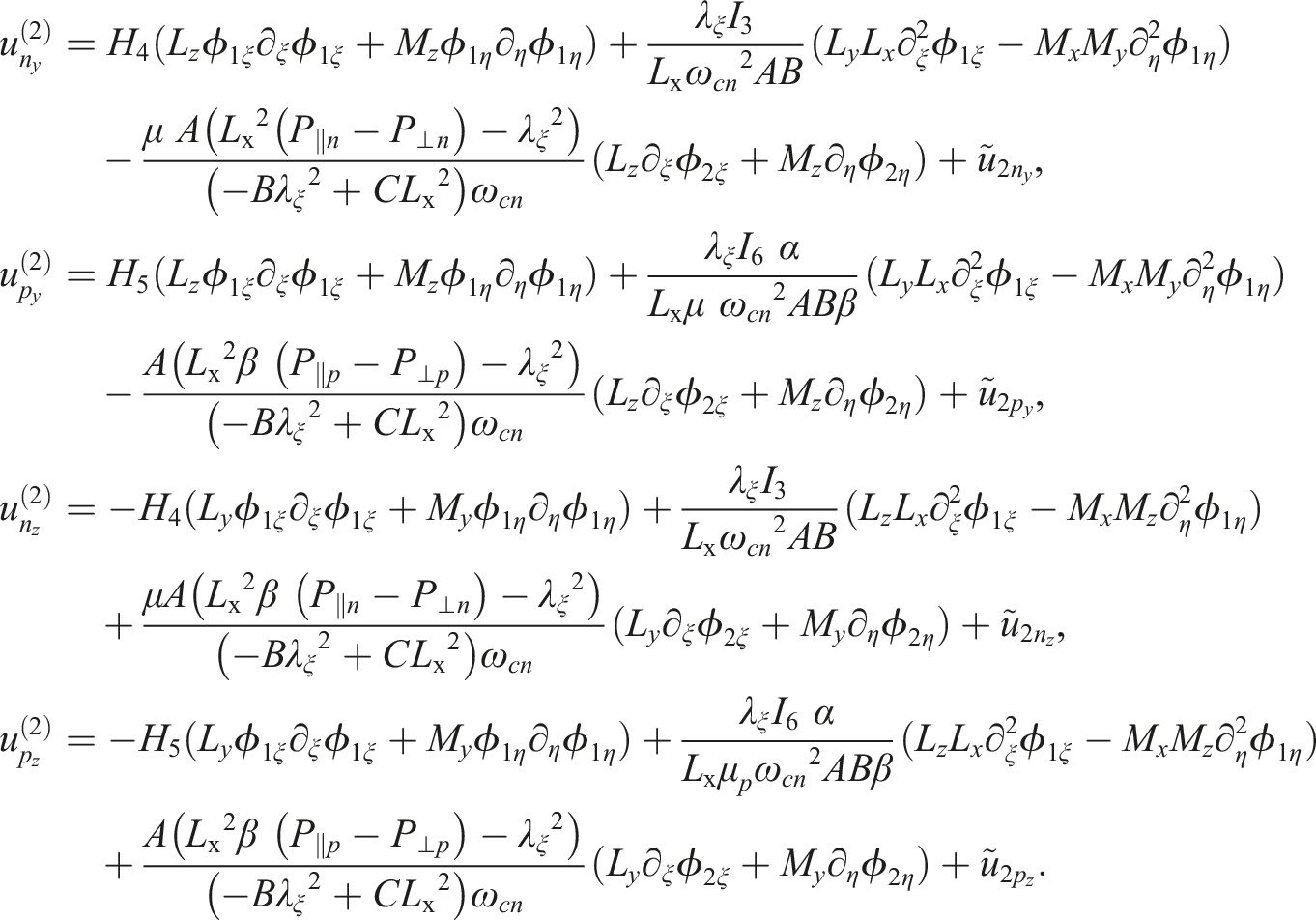
Equation (22) generates two independent situations; the first is where ϕ1ξ = ϕ1η = 0 and leads to the KdV equation, the second invalidates the KdV equation and results from an exceptional composition of the plasma (L2 = δ), this state gives rise to the mKdV equation. Coefficients H1−7 and I1−6 are available in the appendix. The following subsections are devoted to the in-depth study of these eventualities.
Two-sided KdV equations and phase shifts
Let’s first look at the generic case (ϕ(1) = 0) thus the first-order state variables as well as the second-order mixed terms cancel; the calculations are therefore shortened, and the third-order gives
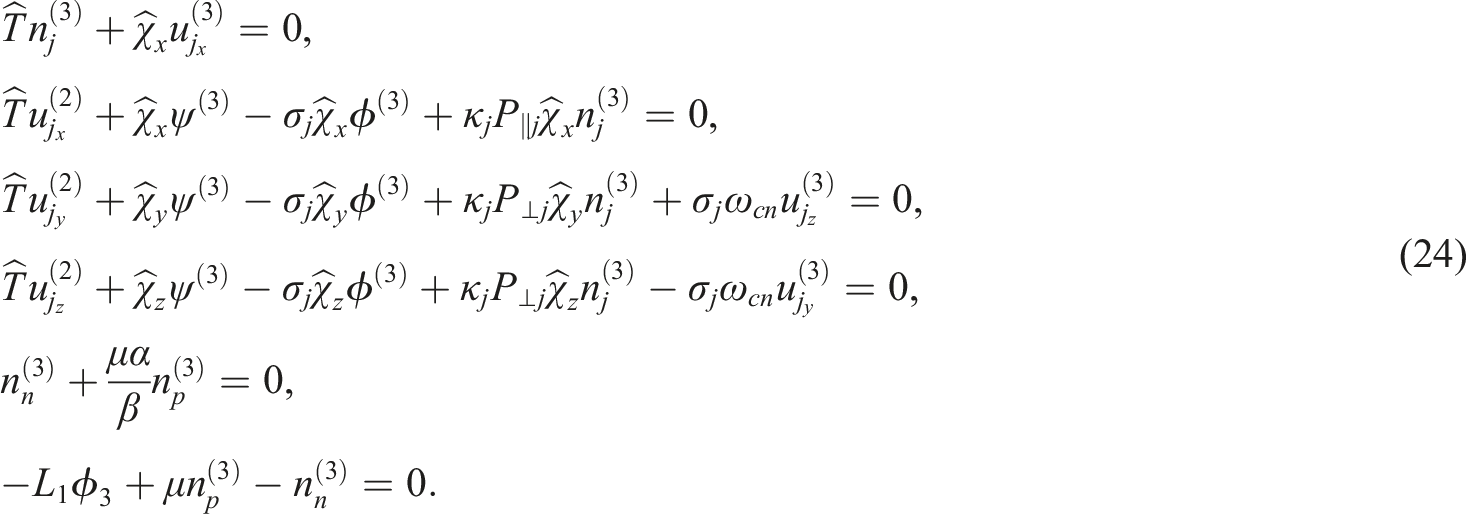
A hasty comparison between equations (16) and (24) shows that the third-order presents, just like, the first-order equations of linear form. Moreover, the state variables of this order do not occur at the next order; one can choose
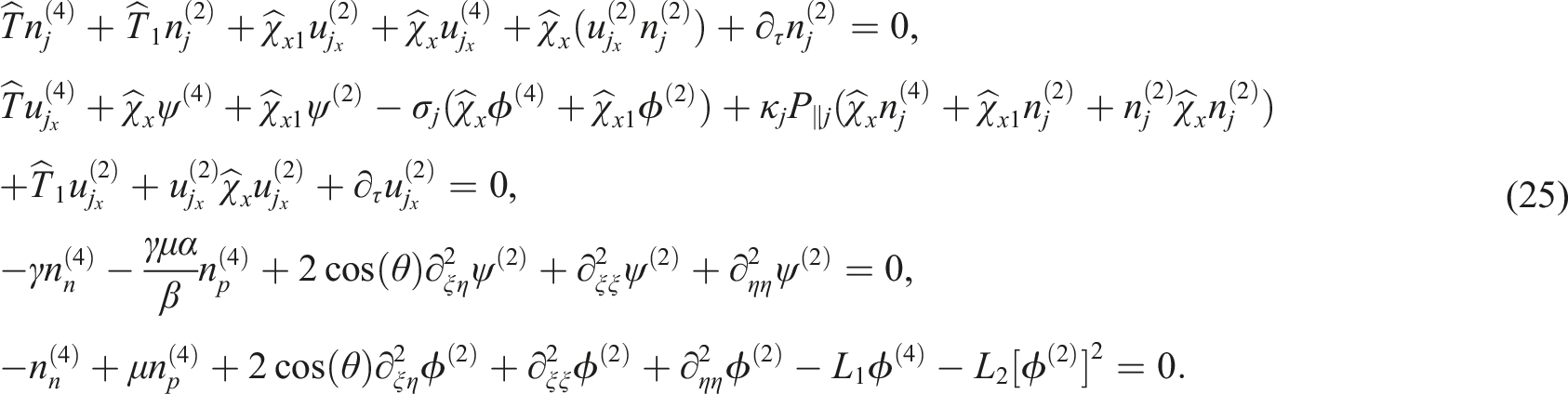
Using equation (25) with the suitably simplified solutions of equation (23), one obtains after some straightforward calculations the two-sided KdV equations which, respectively, control the oblique dynamics of the right- and left-going DAWs in addition with phase functions equations (a) Coefficient of dispersion, T1 against γ for different values of P‖n, with β = 2 and q = 1.6 (b) Coefficient of nonlinearity, S1 against β for different values of q with γ = 0.6 and P‖n = 0.5. Along with α = 1.5, P⊥n = 0.3, P‖p = 0.6, P⊥p = 0.4, and μ
p
= 0.53.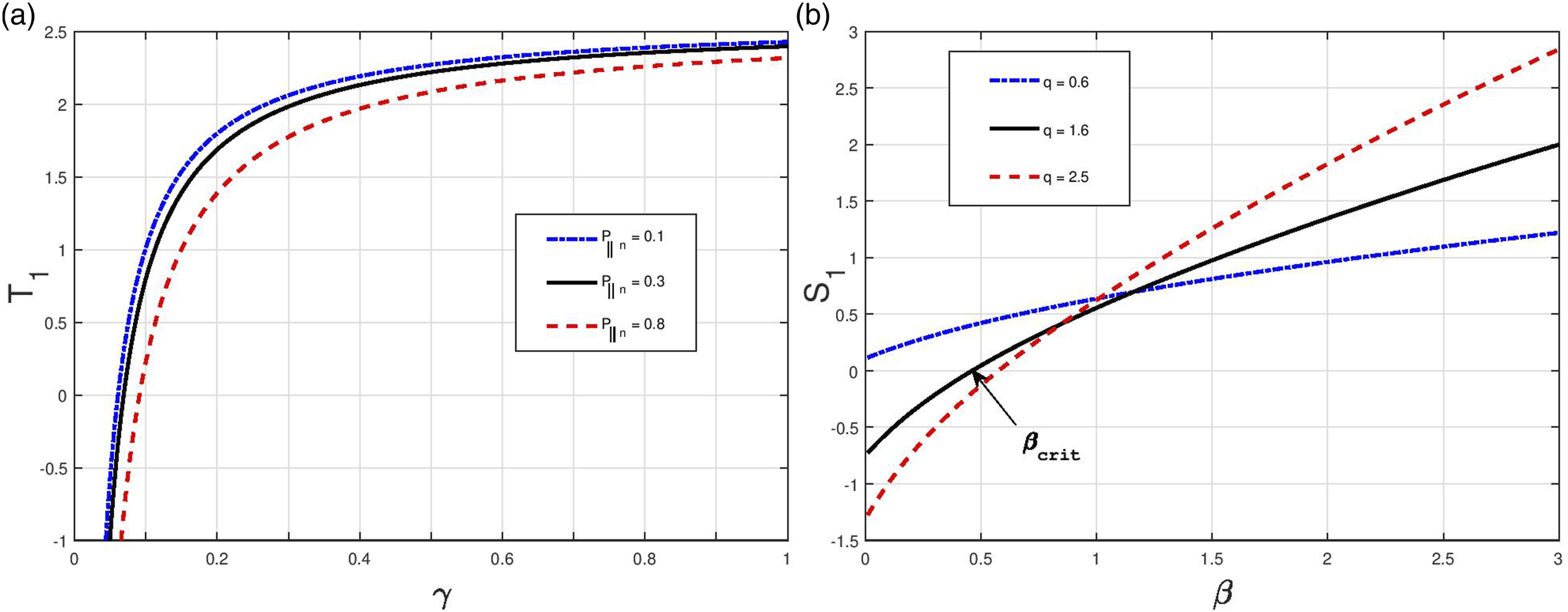





ΔP and ΔQ are witnesses of the energy exchanged during the colliding process, for this purpose, they can also be expressed in terms of the right or the left soliton energy (E
R
, E
L
) by evaluating integral

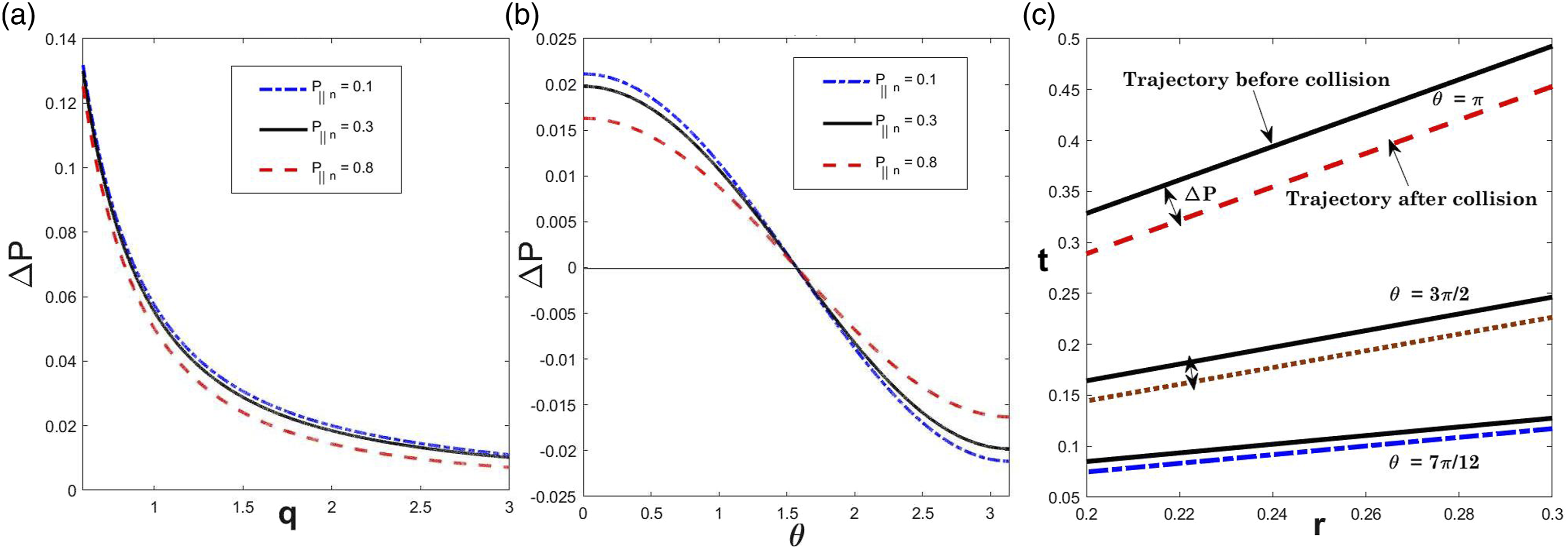
Equation (31) instructs us that overlapping solitons of the same energies undergo deviations of the same magnitude concerning their initial trajectories. Recalling that a positive (negative) phase shift means a loss (gain) of soliton velocity so that the postcollisions parts of the soliton lags behind (move ahead) the initial trajectory. Figures 4(a) and (b) elaborate the impact of dimensionless parameters γ, P‖n, and β on the phase shift. From Figure 4(a), it is found that the phase shift overgrows to reach a maximum for weak gravitational fields; this peak remains unchanged for any further growth in gravity intensity. The figure also indicates that the phase shift decreases in magnitude as the parallel dust pressure increases. Moreover, inspecting Figure 4(b) reveals that on either side of the critical point previously identified in Figure 3(b), the monotony of the phase shift is reversed. Specifically, when β < βcrit, the phase shift increases sharply as the negative dust grain mass increases, while it drops suddenly and is canceled when β > βcrit. As expected, the model loses its relevance near the critical point (ΔP → ∞). Figure 5 highlights the sensitivity of ΔP to parameters q and θ. Figure 5(a) shows that excess of nonextensivity thins the phase shift. Furthermore, as the angle between wave vectors involved in the collision increases within 0 < θ < π/2 (acute oblique interaction), the interaction generates a positive and ever-decreasing phase shift, conversely as the crossing angle increases between the bounds π/2 < θ ≤ π (obtuse oblique interaction) a negative phase shift, whose magnitude increases and reaches its peak during a frontal collision (θ = π), is observed. A zero phase shift is noted at θ = π/2 (see Figure 5(b)). These findings are consistent with both experimental and theoretical studies on soliton collisions.64,85 It should be noted that the figure exhibits an inherent symmetry as supplementary crossing angles result in the same absolute phase shift. Altogether, the exchanges of energy during impact are minimal in the vicinity of the right angle. For the sake of completeness, Figure 5(c) has been drawn; it gives a more enlightened overview by exposing three distinct angles (7π/12, 3π/2, and π) the evolution of the difference between the trajectories very long time before the collision and very long time after the collision. Variation of colliding phase shift (Δ
p
) (a) against γ with β = 2, (b) against β with γ = 0.6 for different values of P‖n. Along with α = 1.5, P⊥n = 0.3, P‖p = 0.6, P⊥p = 0.4, q = 1.6, μ
p
= 0.53, Variation of colliding phase shift (Δ
p
) (a) against q with θ = π/2.55, (b) against θ with q = 1.6 for different values of P‖n. (c) Evolution of the shift between incoming and outgoing trajectories of the right-running soliton against the crossing angle. Along with γ = 0.6 α = 1.5, P⊥n = 0.3, P‖p = 0.6, P⊥p = 0.4, μ
p
= 0.53, 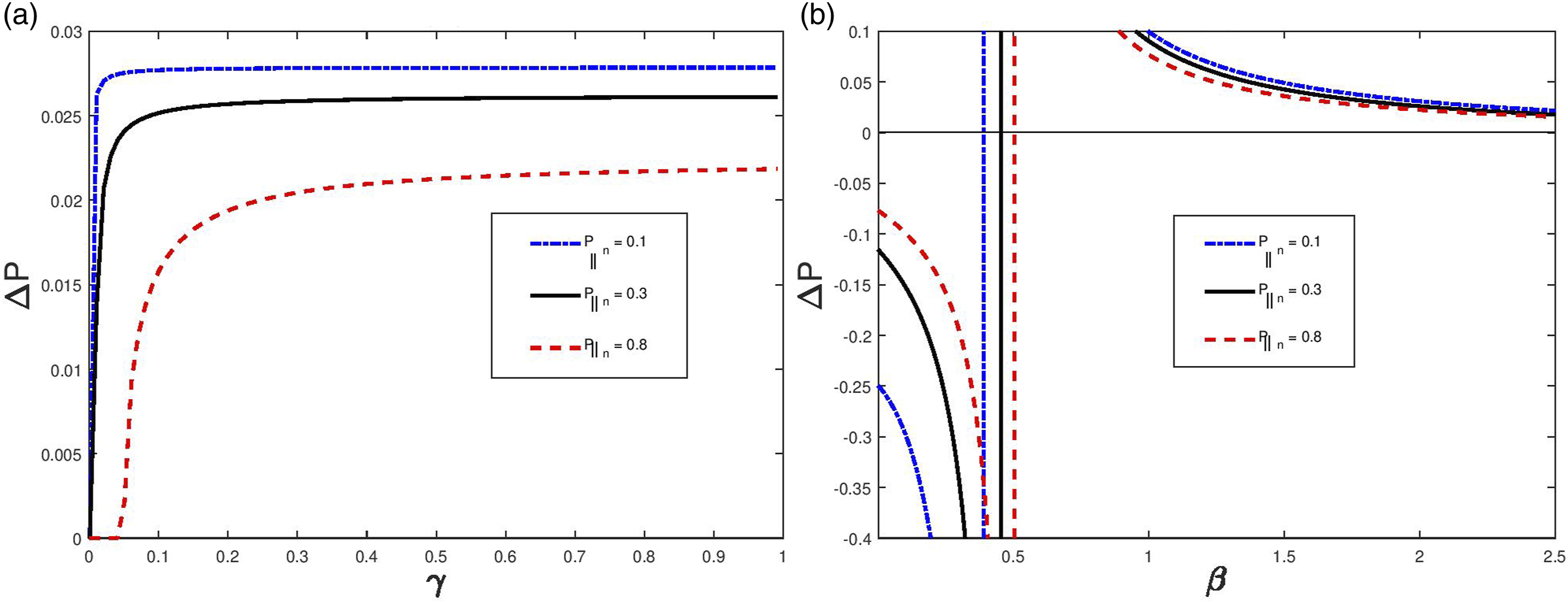
Using the parameters conducive to the propagation of hump or dip type solitons as identified in Figure 3, Figure 6 presents the oblique interaction scenario of compressive-compressive (rarefactive-rarefactive) solitons moving with different amplitudes when the collision angle is π/2.55. It is observed from Figure 6(a) that far from the interaction zone, the two solitons propagate towards each other with a constant profile (amplitude and width), and velocities Time evolution and corresponding colliding profiles of two compressive DASWs (a, c) for β = 2 and two rarefactive DASWs (b, d) for β = 0.1. The parameters are set as α = 1.5, P‖n = 0.5, P⊥n = 0.3, P‖p = 0.6, P⊥p = 0.4, q = 1.6, μ
p
= 0.53, γ = 0.6, 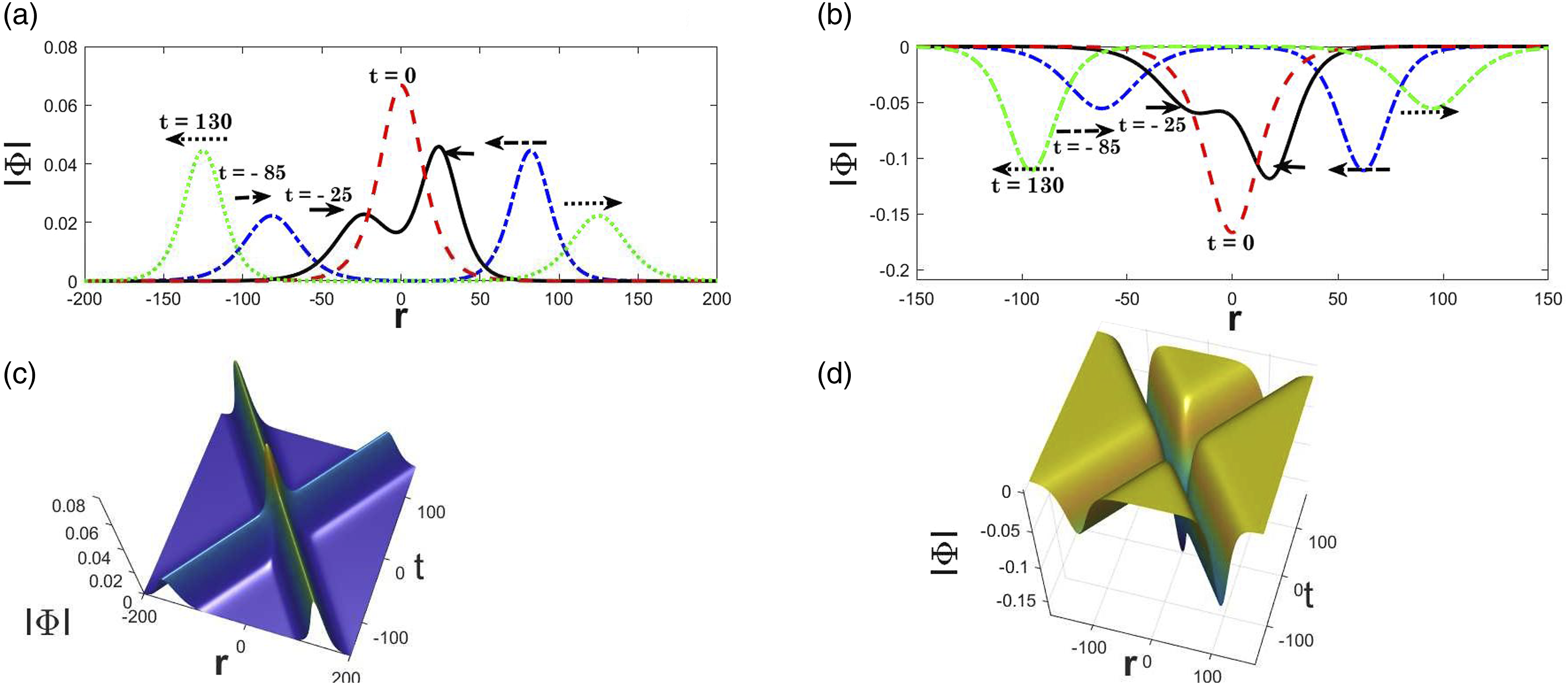
Two-sided mKdV equations and phase shifts at the critical composition
The formation of K-dV solitons is not valid for the parametric regime corresponding to L2 = δ, because for this eventuality,
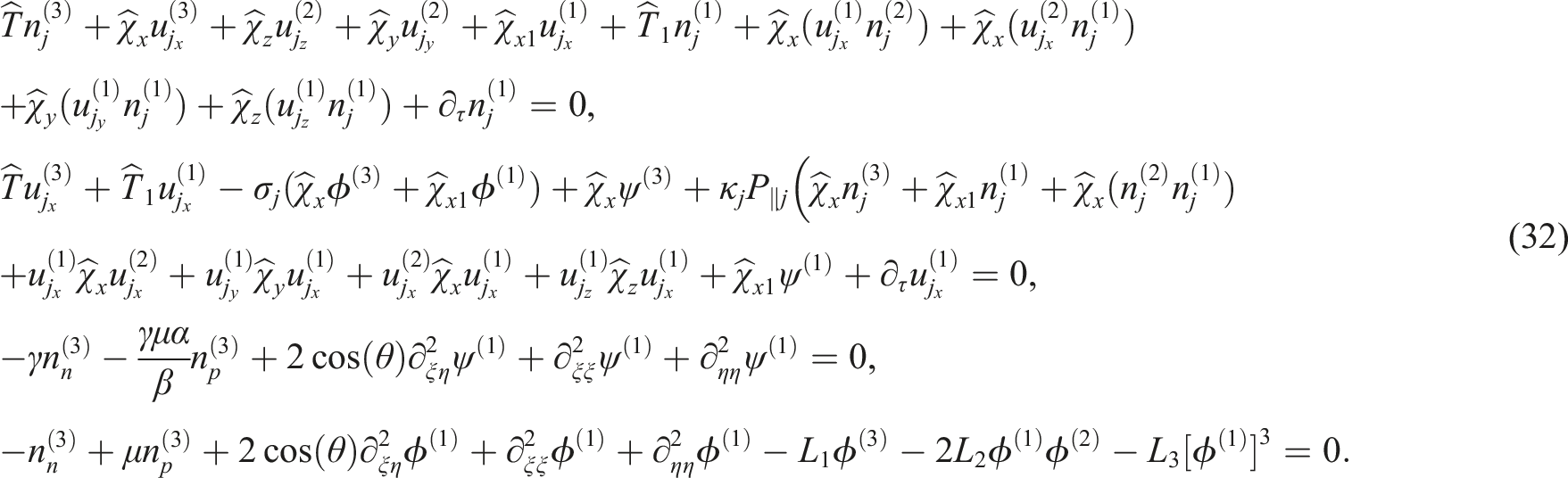
By applying the constraints mentioned above


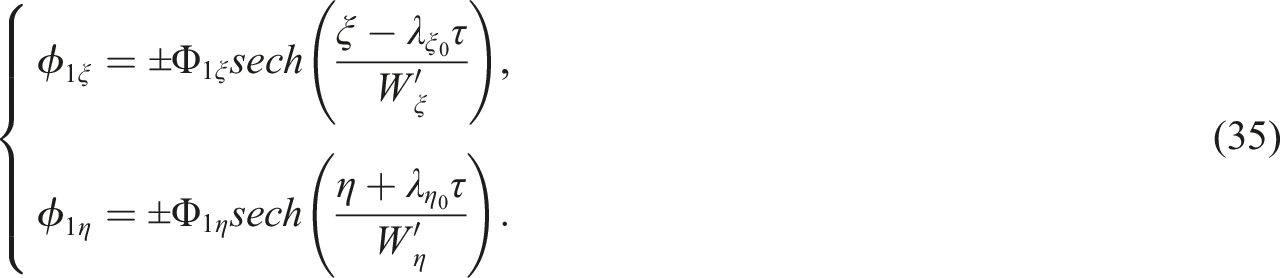


In contrast to the phase shift experienced by KdV-type solitons, the phase shift of mKdV-type solitons depends on the perpendicular dust pressure and magnetic field. Hence we have constructed Figure 7 to access the effects of parameters γ, P‖n, P⊥n, ω
cn
, q, and θ on ΔP′ under critical plasma conditions. The selected parameters β
crit
= 0.45, q = 1.6, align with the scenario depicted in Figure 3(b)). As already mentioned, when gravity increases, the phase shift rapidly escalates for weak field intensities, reaching a maximum value that remains unaltered regardless of further increases. Conversely, as parallel or perpendicular dust pressure intensifies, the phase shift between trajectories grows. Yet, parallel pressure induces a more pronounced phase shift compared to perpendicular pressure (see Figures 7(a) and (b)). The magnetic field’s effects are not to be underestimated, as it engenders a reduction of the path separation, as indicated by Figure 7(c). This result aligns with that of El-Labany et al.
78
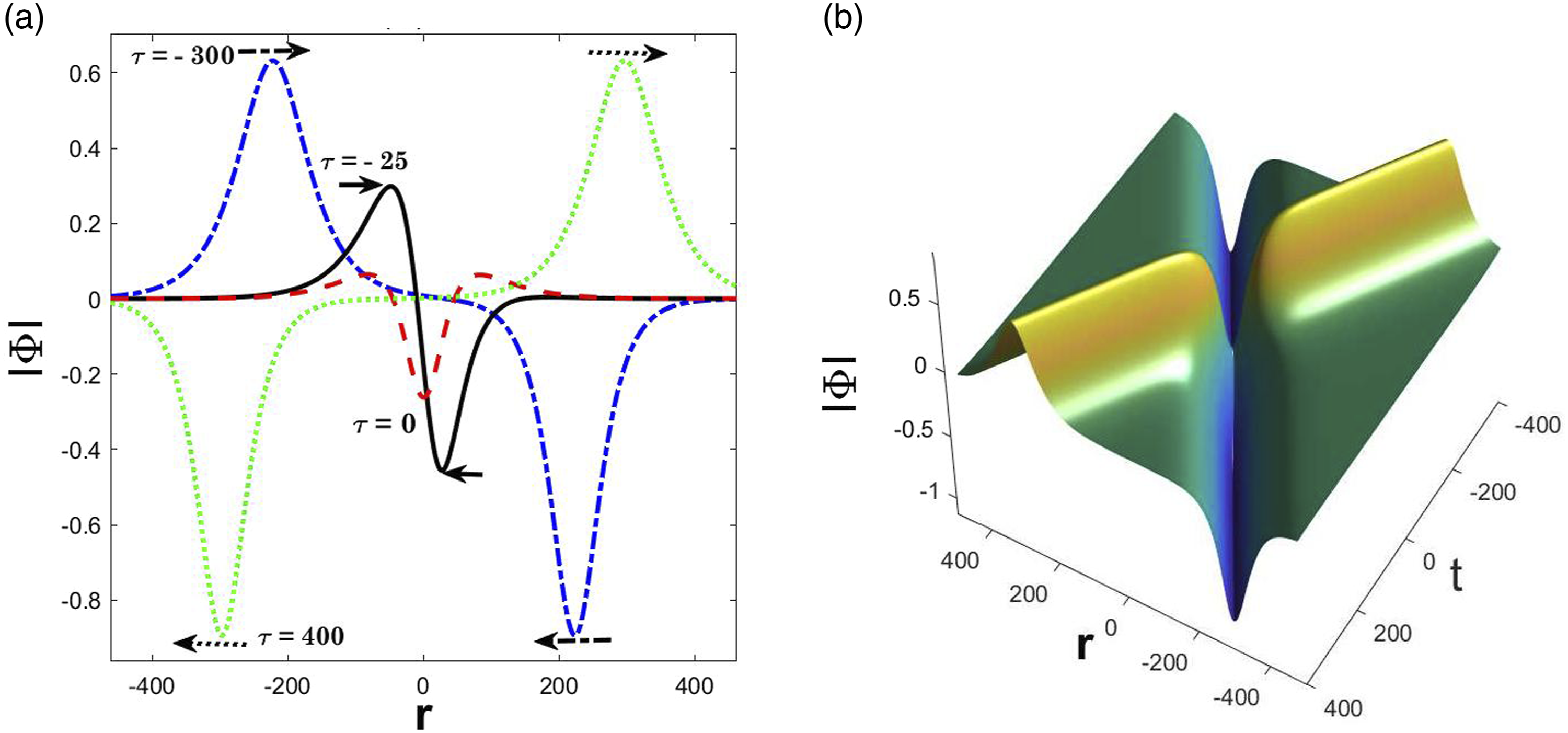
Furthermore, Figure 7(d) unveils an increase in the phase shift with an increase of ion nonextensivity. Moreover, as previously observed, two supplementary collision angles result in phase shifts of opposite signs but with identical magnitudes. Crossing angles in close proximity to the right angle, whether slightly greater or smaller, tend to result in phase shifts approaching nullification. It increases as one deviates from these angles, reaching its maximum at non-zero but small angles or angles near π. Undoubtedly, critical composition unveils a wealth of phenomena, allowing for not only the conventional collisions between solitons of the same polarity but also the collisions between solitons of opposite polarities, as indicated by the non-coupling of signs elucidated in equation (35). Figure 8 depicts such a situation, where a compressive and a rarefactive soliton of different velocities Variation of colliding phase shift Time evolution and corresponding colliding profile of a compressive and a rarefactive DASWs. The parameters are set as β = 0.45, α = 1.5, P‖n = 0.5, P⊥n = 0.3, P‖p = 0.6, P⊥p = 0.4, q = 1.6, μ
p
= 0.53, γ = 0.6, ω
cn
= 0.6, 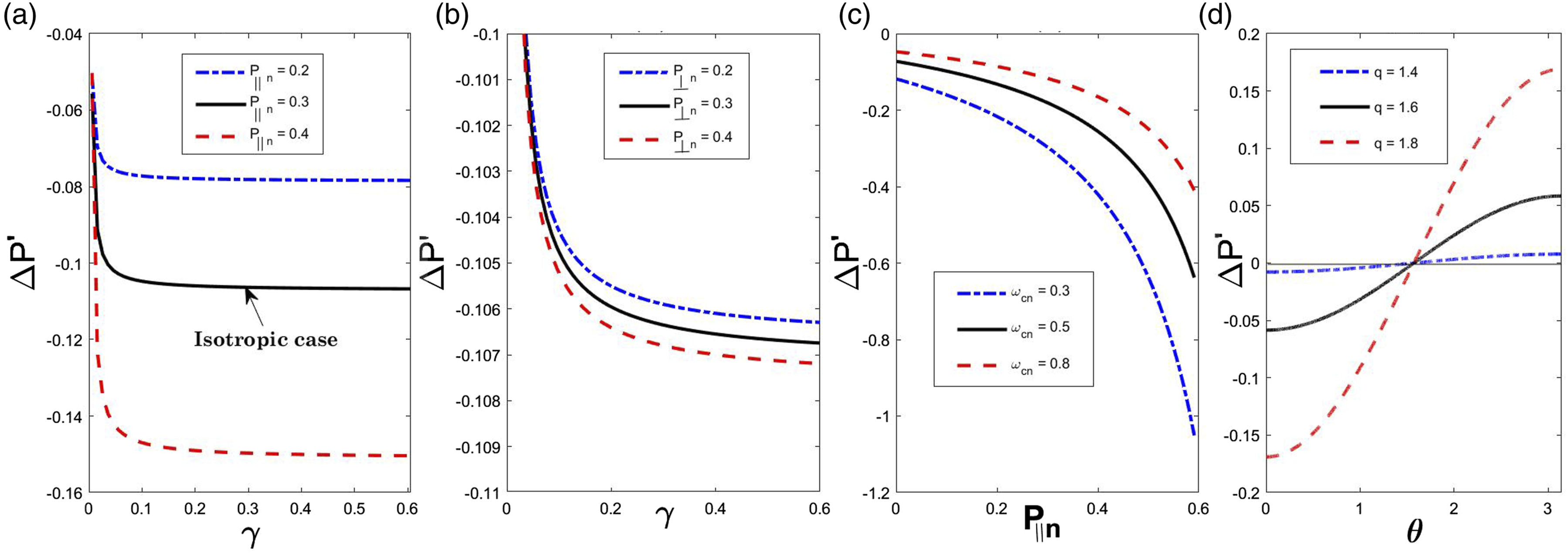
Dust-acoustic RWs at the critical composition
The critical composition allows exploring nonlinear modulated acoustic excitations, focusing on the RWs phenomenon. By virtue of equation (26) and (33), one can derive the nonlinear Schrödinger equation (NLSE) through a suitable variable transformation. Notably, the NLSE derived from the mKdV equation fulfills the essential conditions required for the RWs formation.
86
In this context, the following expansions are adopted



It is important to underline that applying transformations (38) to equation (26), yields a NLSE which does not support RWs solution, as Variation of 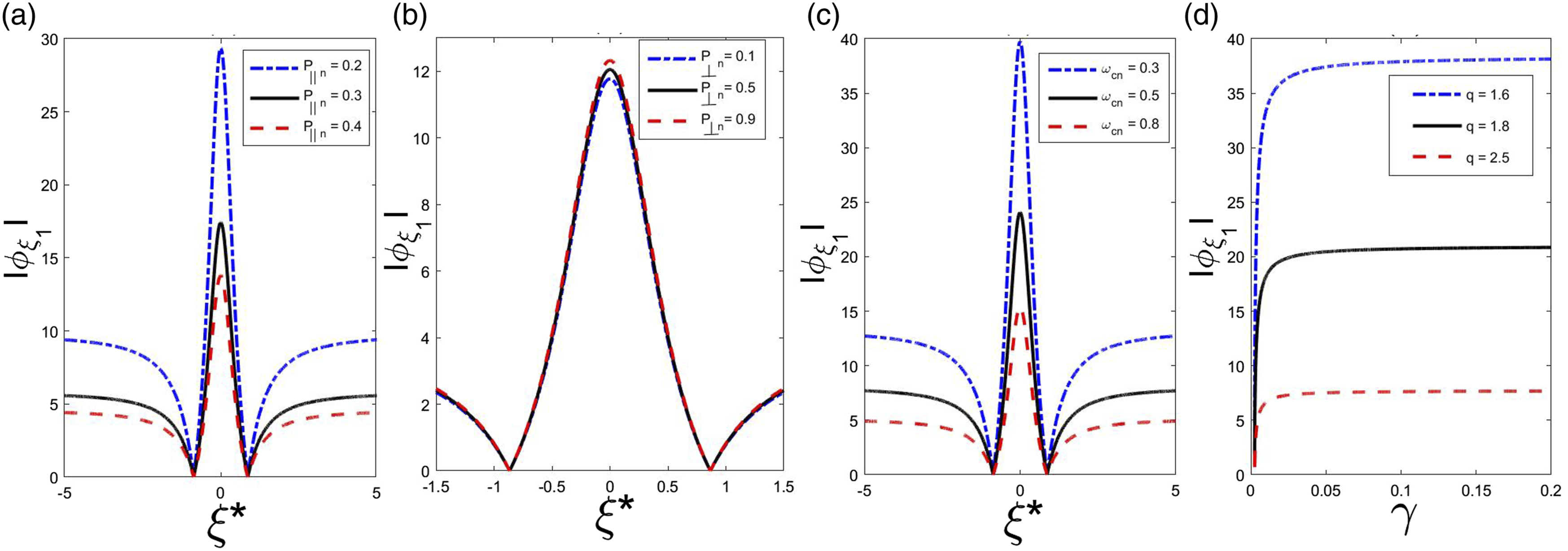
Figure 10(a) provides a more detailed view of the Peregrine soliton. The nonlinear interaction of a first-order RW can lead to the formation of higher-order RWs, a surprising case being the DARW triplets. This second-order RW, composed of three Peregrine solitons arranged at the corners of a triangle, can also be interpreted as a set of first-order RWs with phase shifts (θ1 and θ2) that allow the relative positions of the peaks to be adjusted. The DARW triplet solution of equation (39)
53
is (a) The Peregrine soliton profile for the wave potential, (b) DA Rogue wave triplets profile for θ1 = 1000 and θ2 = 0, and (c) DA super RW profile get for θ1 = θ2 = 0. Along for P⊥n = 0.3, P‖n = 0.5, ω
cn
= 0.6, P‖p = 0.6, P⊥p = 0.4, β = 0.45, α = 1.5, μ
p
= 0.53, and q = 2.5.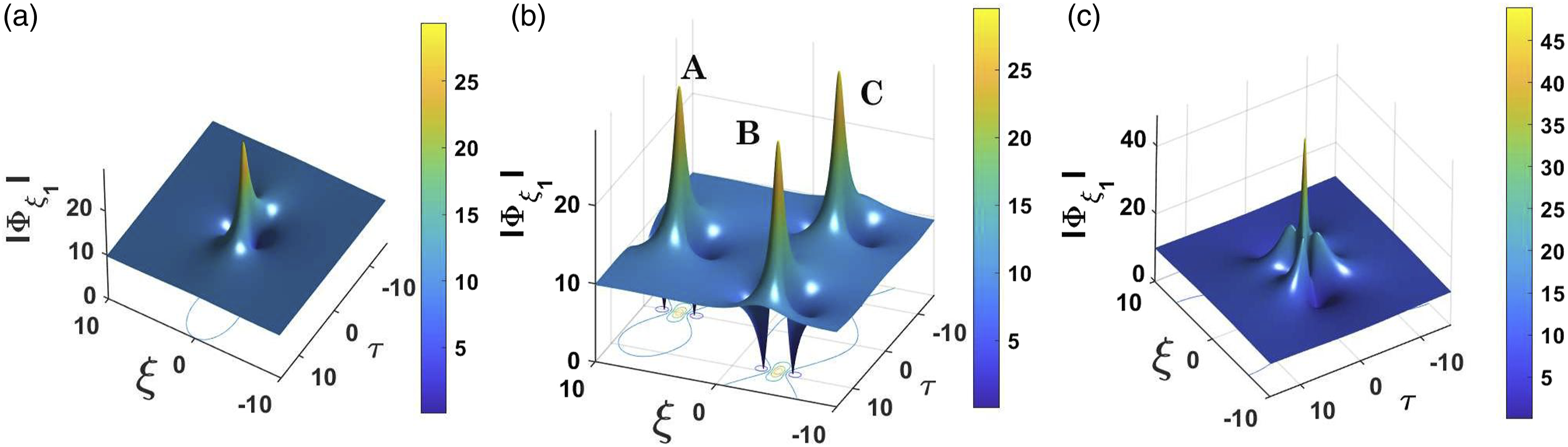


The amplitude of DA RWs, triplets, and super RWs (×10).

Summary
In this paper, the effects of dust pressure anisotropy, gravitational and magnetic fields on linear and nonlinear wave propagation, as well as oblique collisions of dust-acoustic solitary waves (DASWs) in an electron-depleted dusty plasma composed of massive dust grains with opposite polarities and non-extensive ions, were investigated through the linear analysis, and the Poincaré–Lighthill–Kuo (PLK) perturbation technique. Respectively, the two-side Korteweg-de Vries (KdV) and two-side modified KdV (mKdV) equations were successfully derived for the generic and the critical cases, along with their corresponding phase shifts. Numerical analysis was performed using representative data for dust molecular clouds. 82 Computations revealed that gravitational forces introduced the possibility of gravitational instabilities characterized by a critical wavenumber and a growth rate. Moreover, magnetic field and dust pressures combine to quench instabilities by attenuating gravitational forces. However, it should be noted that despite the parallel and perpendicular dust pressures showing qualitatively similar impacts on dust-acoustic wave oscillations, their quantitative effects differ. Specifically, it has been shown that perpendicular dust pressures promote less instability. Additionally, we have determined the critical radius and mass beyond which the dust cloud becomes unstable and may fragment, leading to star formation. Ranges of physical parameters conducive to the emergence, propagation, and collision of solitons of identical (opposite) polarities have been identified. The analysis also reveals that parallel pressures induced a more intense phase shift between trajectories compared to perpendicular dust pressures. An intensifying gravitational field has been observed to enhance the phase shift, while the presence of a magnetic field diminishes this effect. It has been demonstrated that during the collision process, the slowest soliton undergoes the most significant phase shift, primarily due to its extended interaction time. Notably, two distinct collision processes, characterized by supplementary crossing angles, induce phase shifts of opposite signs but equal magnitude. On the other hand, as the collision angle gradually becomes acute or obtuse, the phase shift increases and reaches its maximum value at non-zero but small angles or angles near π. Finally, a detailed investigation into the hierarchy of solutions to the nonlinear Schrödinger equation has been undertaken, with particular emphasis on the Peregrine soliton, the DA rogue wave triplets, and its transformation into super rogue waves through the superposition of triplets. Specifically, an increase in parallel pressure drastically reduces DA rogue waves triplets amplitude, whereas an increase in perpendicular pressure leads to a modest amplitude growth. Additionally, the gravitational field amplifies RWs while the magnetic field attenuates them. The findings presented here are valuable in providing relevant prediction concerning wave stability, propagation, and oblique collisions of solitons in self-gravitating magnetized EDDP containing massive dust grains and non-extensive ions found in astrophysical media such as dust molecular clouds 82 and interstellar medium 89 where, gravitational and magnetized effects, along with pressure anisotropy, are supposed to be significant. 57
Future work
In some collisional plasma models, the collisional force between plasma charges with each other or with some neutral particles inside the plasma cannot be neglected because this effect will significantly impact the behavior of nonlinear structures propagating in the studied model. Thus in this case, and after applying the extended PLK method, the fluid equations to a model under consideration will be reduced to the following the two coupled damped KdV equations

Moreover, in many plasma cases, the impact of nonplanar geometry on the behavior of different waves that arise and propagate in different plasma systems must be addressed, which in this case, the following two coupled nonplanar KdV/mKdV equations are obtained

Thus, when these effects are considered in specific plasma models, the governing fluid equations of the model will be reduced to non-integrable evolution equations (43)–(46). Consequently, to examine the features of these waves and their interaction, it is necessary to analyze and solve these equations using some numerical or semi-analytical methods (e.g., HPM, ansatz method, and so on) to provide semi-analytical solutions that facilitate the analysis of these wave aspects. The HPM has effectively analyzed various evolution equations,90–97 making it a highly regarded tool for studying multiple non-integrable wave equations.98,99 Therefore, the HPM/ansatz method can be used to analyze some derived evolution equations, such as the coupled damped/nonplanar KdV and coupled damped/nonplanar mKdV equations, to study the properties of waves/waves interaction that propagate at phase velocity, such as solitary waves, solitons collision, shocks, and shocks collision.
Moreover, if the fluid equations of the studied model are reduced to one of the non-integrable nonlinear Schrödinger equations (such as the below nonplanar NLSE39–46 or the damped NLSE47–51), in this case, the HPM/ansatz method can also be applied to study the properties of modulated waves that propagate at group velocity, such as RWs or dark/bright modulated SWs:the damped NLSE reads

Footnotes
Acknowledgments
The authors extend their appreciation to the Deanship of Scientific Research and Libraries in Princess Nourah bint Abdulrahman University for funding this research work through the Research Group project, Grant No. (RG-1445-0005).
Author contributions
All authors contributed equally and approved the final version of the current manuscript.
Declaration of conflicting interests
The author(s) declared no potential conflicts of interest with respect to the research, authorship, and/or publication of this article.
Funding
The author(s) disclosed receipt of the following financial support for the research, authorship, and/or publication of this article: This work was supported by the Deanship of Scientific Research and Libraries in Princess Nourah bint Abdulrahman University; RG-1445-0005.
Use of AI tools declaration
The authors declare they have not used Artificial Intelligence (AI) tools in the creation of this article.

Data availability statement
Data sharing is not applicable to this article as no new data were created or analyzed in this study.
Appendix