




Abstract
The free oscillations of a functionally graded (FG) porous vertical cantilever beam in the frame work of Euler–Bernoulli beam theory is investigated. The beam is subjected to the gravity-load and the properties of the FG material such as the modulus of elasticity and the density are supposed to change through the thickness of the beam according to power-law relations. The equation of motion is derived using Newton’s second law. The Numerical Chebyshev collocation method is utilized to determine the transverse frequencies of the FG porous hanging and standing cantilever Euler–Bernoulli beams. A parametric study is conducted to determine the effects of various factors such as the transverse functionally graded index, the porosity factor, and the elastic and the mass density ratios on the natural frequencies and the mode shapes of the FG porous vertical hanging and standing cantilever thin beams under their self-weight. The accuracy of the proposed numerical method is evaluated through comparisons of the frequencies obtained from the present approach with those available in previous literature. In general, it was observed that the elastic ratio has a softening impact on the frequencies except for the fundamental frequency which remains constant as the elastic ratio increases. Moreover, the porosity parameter and the power-law index may have a softening or hardening impact on the frequencies, and the behavior of these frequencies depends on the values of the elastic and the mass density ratios.
Keywords
Introduction
Due to their superior mechanical and thermal properties, Functionally Graded Materials (FGMs) have gained widespread attention and use in mechanical, aeronautical, and civil engineering. 1 The FGMs are a unique kind of composites where two or more constituent materials are combined to have properties that gradually vary through the dimensions of the structure. Moreover, porous materials are commonly utilized in several fields to manufacture light weight, stiffened, and energy-absorbing structures.1,2 Besides, these materials are outstanding candidates for mitigating oscillations produced by wave propagation in sensitive applications such as the protection of electronic panels in spacecraft.3,4 Therefore, the FG porous members have achieved the consideration of several scientists due to their excellent characteristics. 5
It is known that vertical structures can be used to model many systems such as heavy columns, stiff rods, offshore structures, tall buildings, space shuttles, and water towers. As these structures are in a gravitational field, their self-weight will introduce a linearly varying axial tension, and as a result, they will undergo more oscillations. 6
Many articles were devoted to investigating the dynamic behavior of structures with uniformly distributed axial load. For example, Paidoussis and Des Trois Maisons 7 adopted the Galerkin approach to determine the fundamental natural frequency of a standing and hanging prismatic cantilever beam. Lakin 8 utilized the method of matched asymptotic expansions to study the oscillations of a marginally stiff pendulum with a small bounce mass. Schafer 9 employed the Ritz–Galerkin method, the series approximation, the regular perturbation theory, and the matched asymptotic expansions to determine analytical solutions for the eigenfrequencies of a vertical cantilever Euler–Bernoulli-beam. Yokoyama 10 examined the dynamic behavior of uniform hanging Timoshenko beams under gravity. The finite difference approach was employed and the impacts of the self-weight, shear distortion, and rotary inertia on the vibration behavior. Naguleswaran 11 carried out the natural vibrations of a vertical uniform cantilever beam under the self-weight effect. The standing and hanging cases were considered and a solution that involves the superposition method was applied to derive the frequency equations.
Moreover, Lee 12 conducted the stability analysis of a rotating vertical cantilever beam. Hamilton’s principle was utilized to formulate the equation of motion. The assumed mode and Bolotin’s methods were used to determine the regions of instability. Wang et al. 13 investigated the primary and secondary resonance of hanging cantilever beam under the condition of three-to-one internal resonance caused by gravity. The performance was discussed numerically and analytically. Additionally, Bizzi et al. 14 used the “Hankel-Airy” relations to obtain the analytical solutions for the natural vibrations of a Rayleigh–Timoshenko beam under its self-weight. Virgin et al. 15 examined the influence of self-weight on the oscillations of vertical cantilever beams, where it was shown that in the hanging case the beam will be stiffened by the beam’s weight, whereas for the standing orientation, the beam will undergo a de-stiffening impact. Wang 16 explored the stability and free vibrations of a standing non-uniform cantilever beam, where an initial value numerical technique was applied to compute the first three frequencies. It was shown that the properties of the cross section and the taper have remarkable influence on the frequencies.
Li et al. 17 presented an integral equation approach to develop expressions for the fundamental frequencies of vertical cantilever Rayleigh beams with a tip mass where the result of gravity on the frequency is specified explicitly. Hijmissen and van Horssen 18 exploited a method of multiple time-scales to obtain the natural frequencies of a vertical Timoshenko beam. Abramovich 19 studied the natural vibrations of hanging composite thick beams in the framework of Timoshenko beam hypothesis. The impacts of gravity, shear distortion, and rotary inertia on the natural frequencies of the hanging beam were examined.
Based on the above literature review, it is noticed that studies with specific emphasis on the natural oscillations of functionally graded porous hanging and standing cantilever Euler–Bernoulli beams are scarce. Hence, the purpose of this study is to fill this gap in literature. Therefore, the main contributions of this study consist of the utilization of the spectral collocation technique to analyze the free vibration characteristics of FG porous hanging and standing cantilever beams. The rest of this research is arranged as follows. In Section 2, the numerical Chebyshev Spectral Collocation Method (CSCM) is introduced. In Section 3, the equation of motion is presented, and the CSCM is utilized to formulate the eigenvalue problem. The suggested method is verified, and the findings are displayed and examined in Section 4. In Section 5, the conclusions are stated and further developments are suggested.
Chebyshev Spectral Collocation Method (CSCM)
As shown in Figure 1, the Chebyshev points are given on the range of [-1, 1] as
20
The Chebyshev points.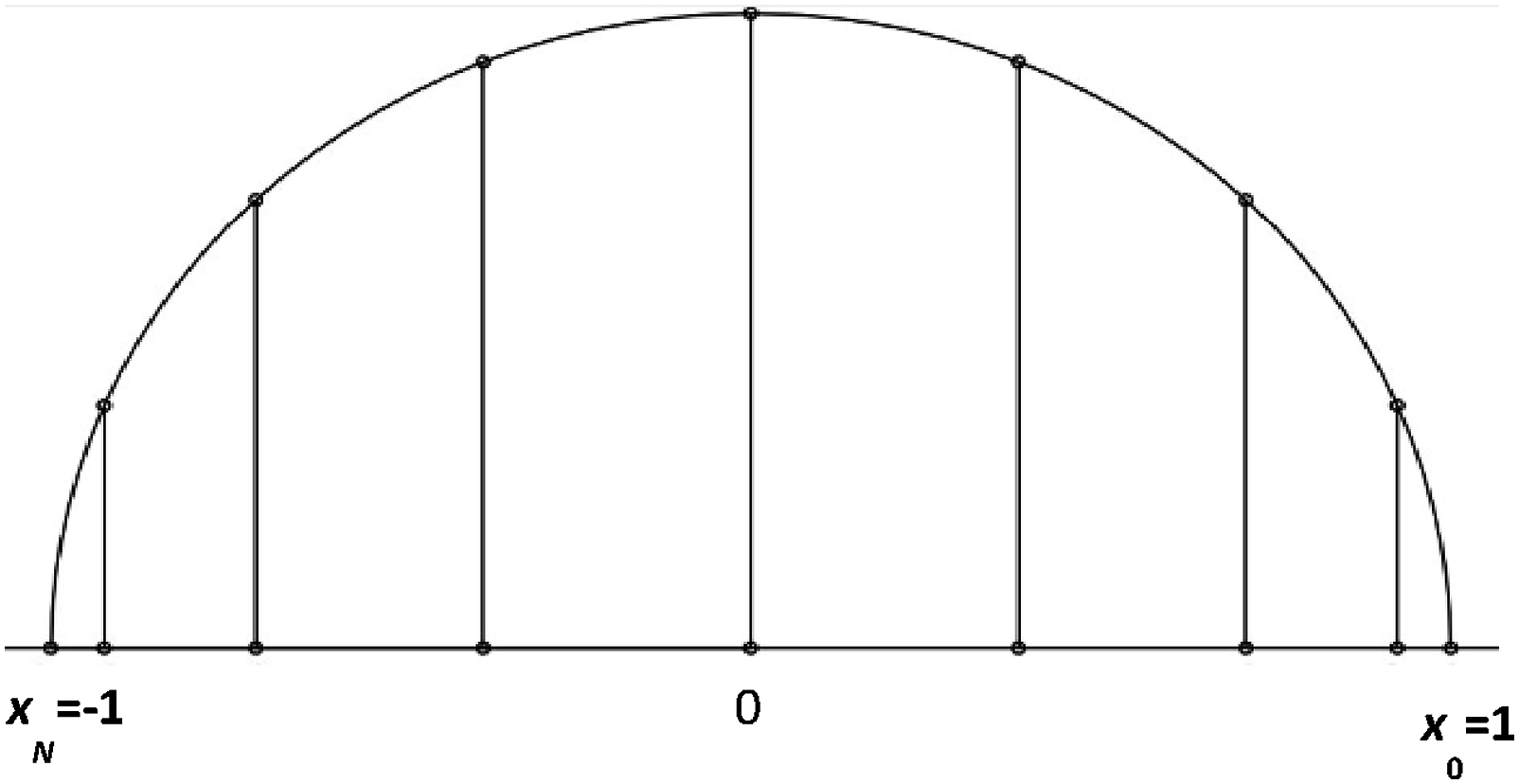

The elements of the Chebyshev differentiation matrix,

The nth derivative of a function is defined as
Theory and problem formulation
Mathematical model
A functionally graded porous cantilever bean with length L, thickness h, and width b is shown in Figure 2. In this article, the modulus of elasticity The functionally graded porous gravity-loaded cantilever (a) hanging and (b) standing beam.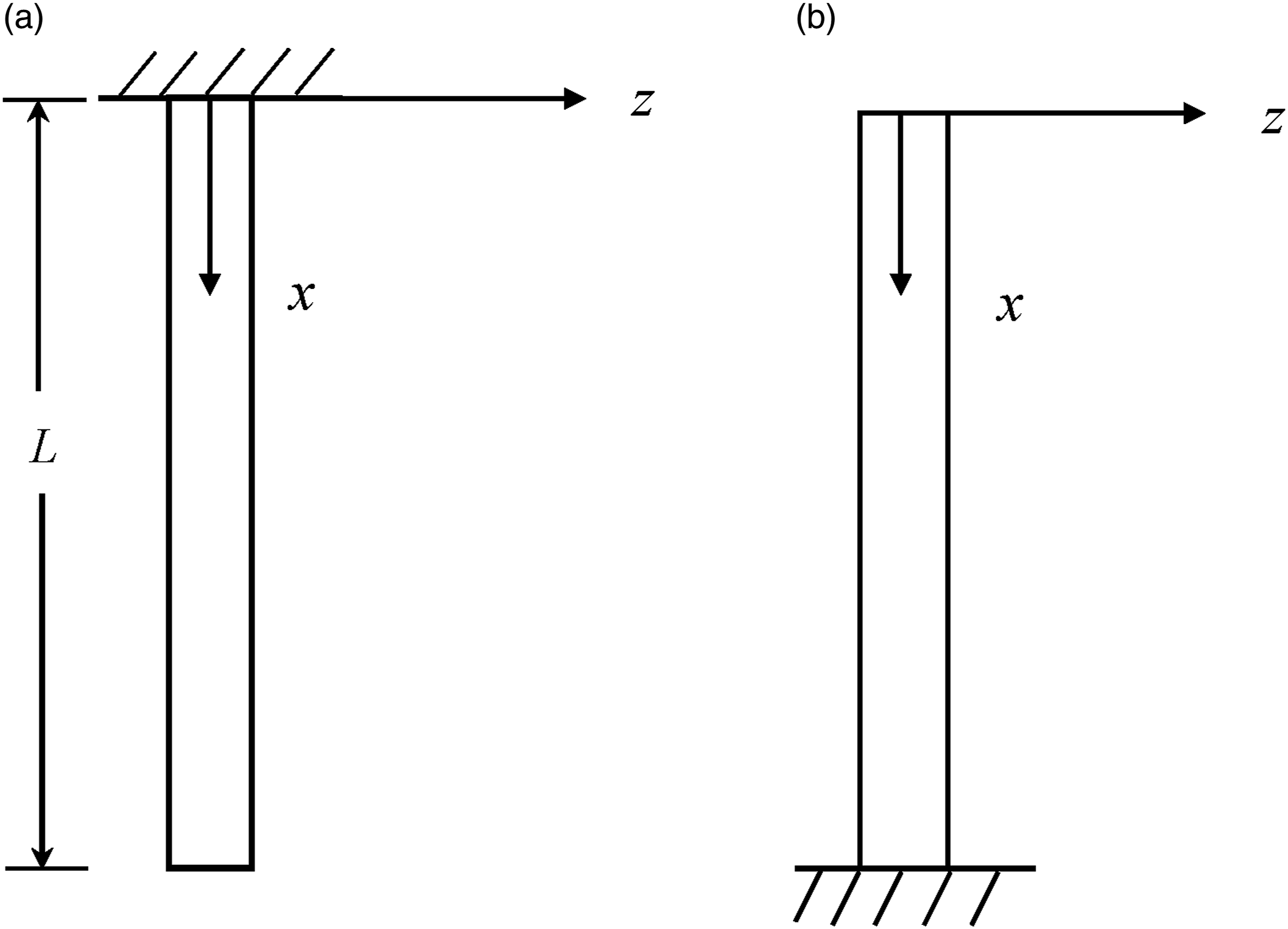



Following Naguleswaran,
11
the bending moment





Following Naguleswaran, the summation of forces on a beam element in the z-axis yields
11

Substituting equations (4), (6), and (7) into equation (9), yields


In view of the non-dimensional variables, the governing equation of motion is obtained as



For harmonic free vibrations, the separation of variables is used, and the transverse displacement is given as
23

Accordingly, equation (12) can be given as

The boundary conditions are given as 11
Clamped end

Free end

Solution procedure
The CSCM is employed to discretize equations (18)–(20). For a hanging cantilever beam, the boundary conditions are given as
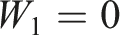



Equation (21) can be expressed as
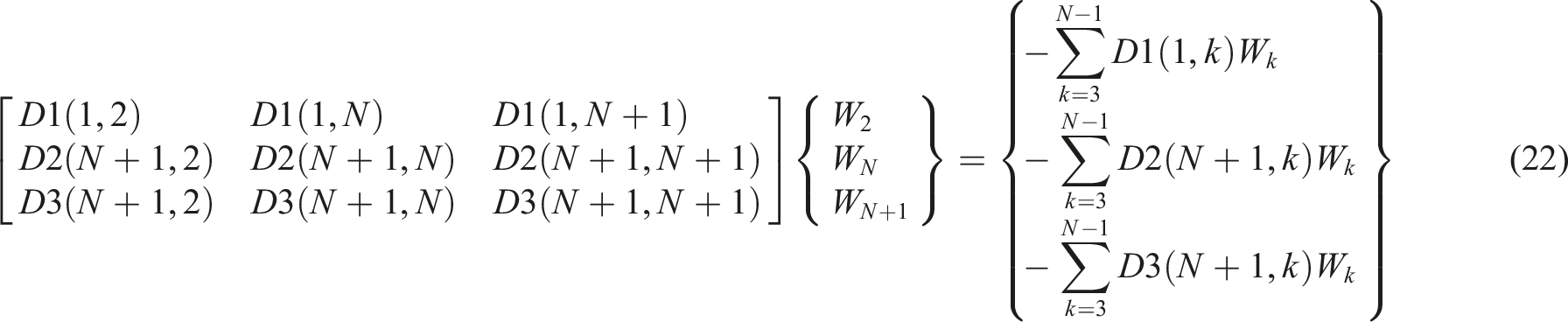
The displacements

Equation (23) is rewritten as







i = 3, 4 …, N-1.
In a similar manner, the boundary conditions for a standing cantilever are presented as
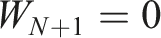






Equation (32) is expressed in matrix-vector form as
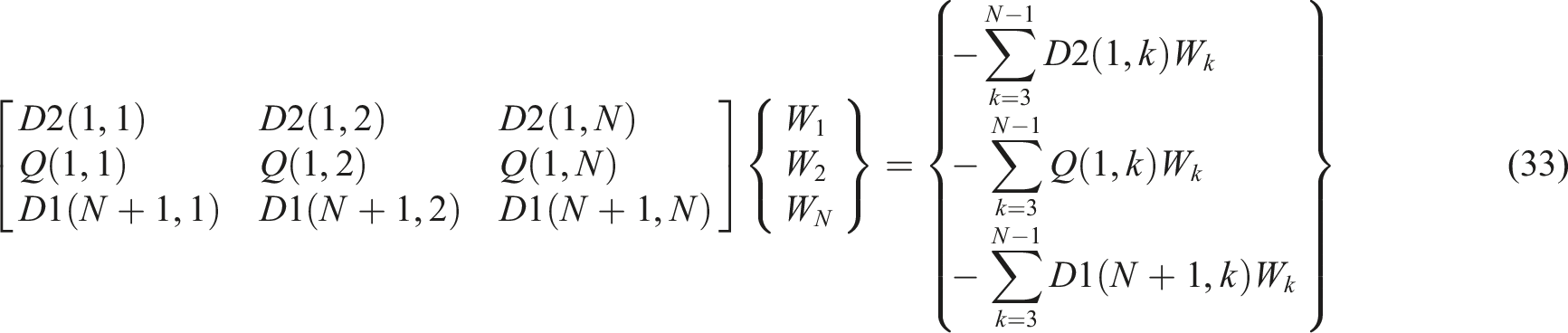
The displacements
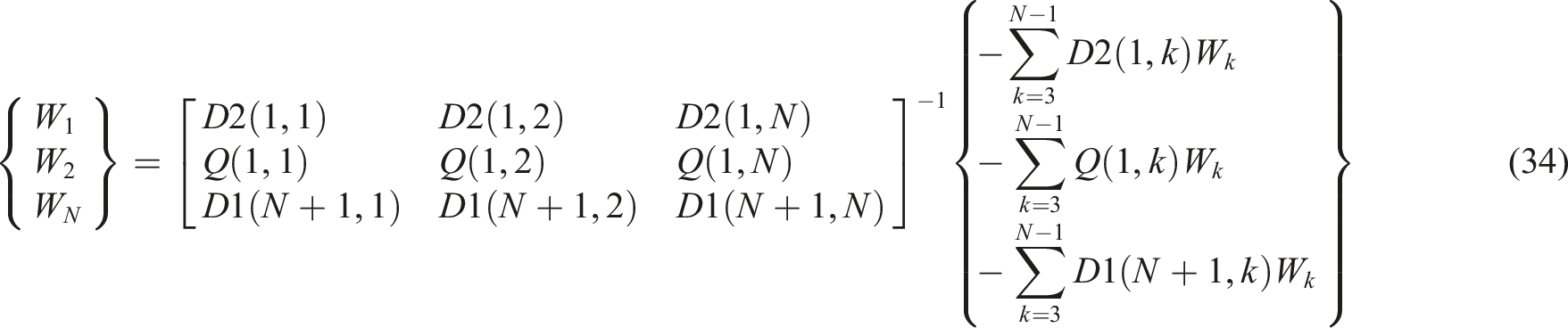
The displacements








The equation of motion for a FG porous gravity-loaded cantilever beam is given using the presented method as

Results and discussion
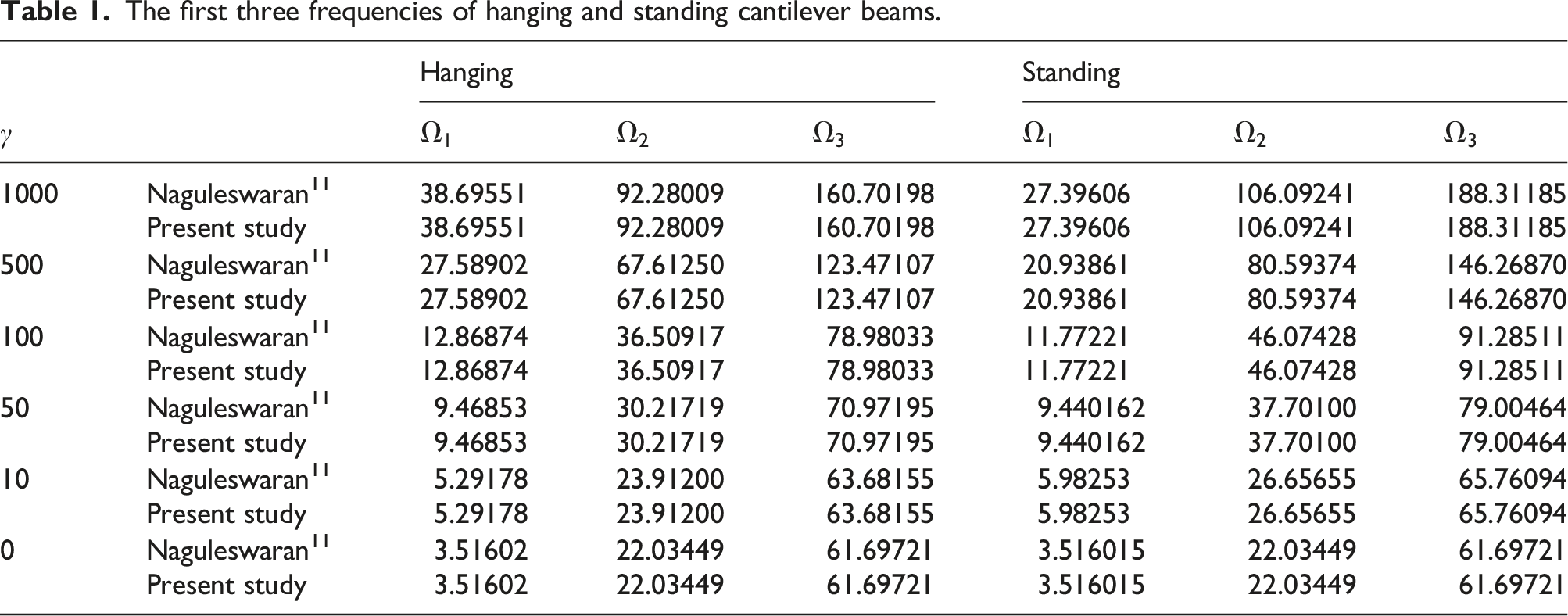
The first three frequencies of hanging and standing cantilever beams.
The variations of the first four dimensionless frequencies of a hanging cantilever FG porous beam versus the elastic ratio The variations of the first four dimensionless frequencies of a hanging cantilever Euler–Bernoulli FG porous beam with the elastic ratio 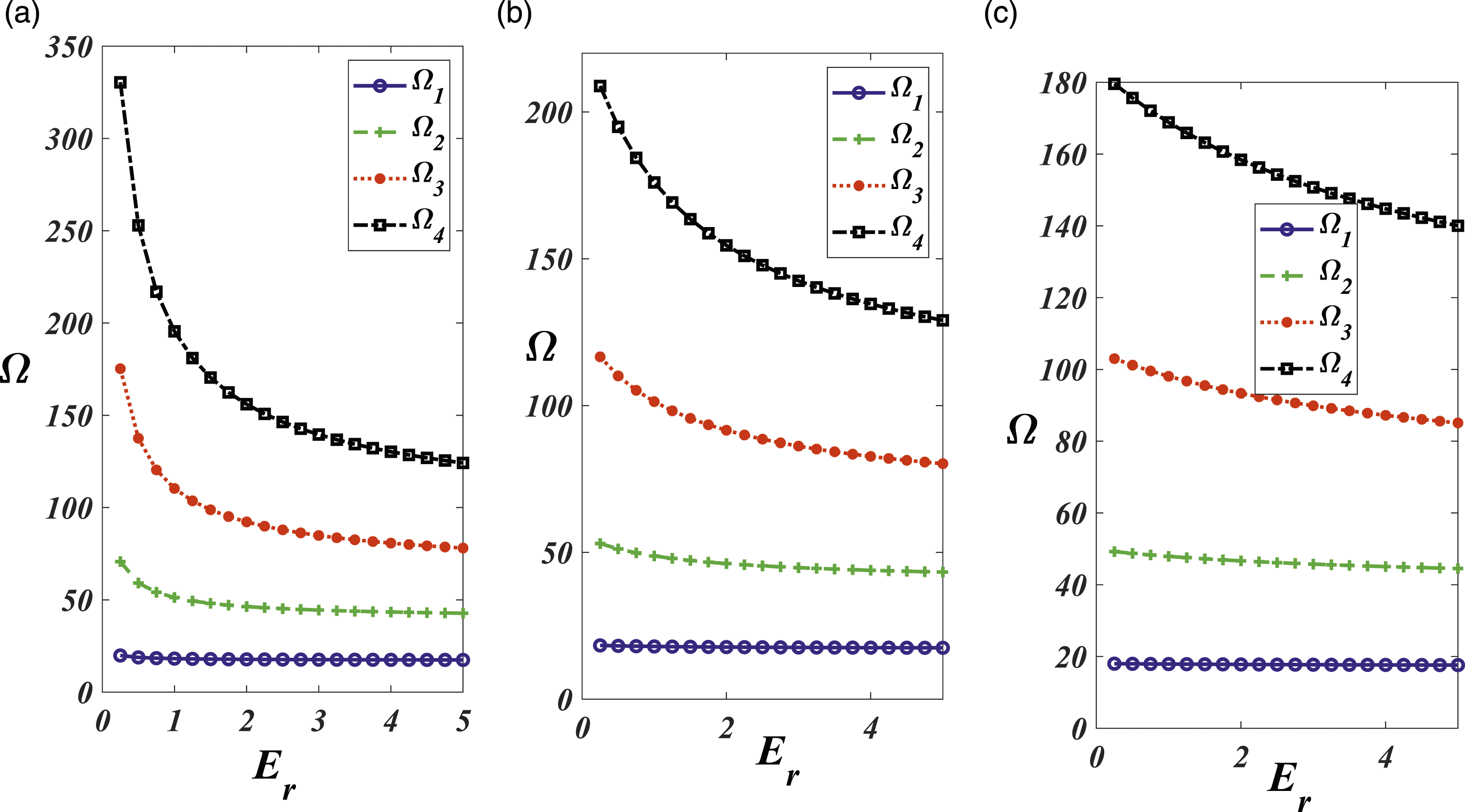
The influence of the porosity parameter The first four dimensionless frequencies of a Standing cantilever Euler–Bernoulli FG porous beam as functions of the porosity parameter for 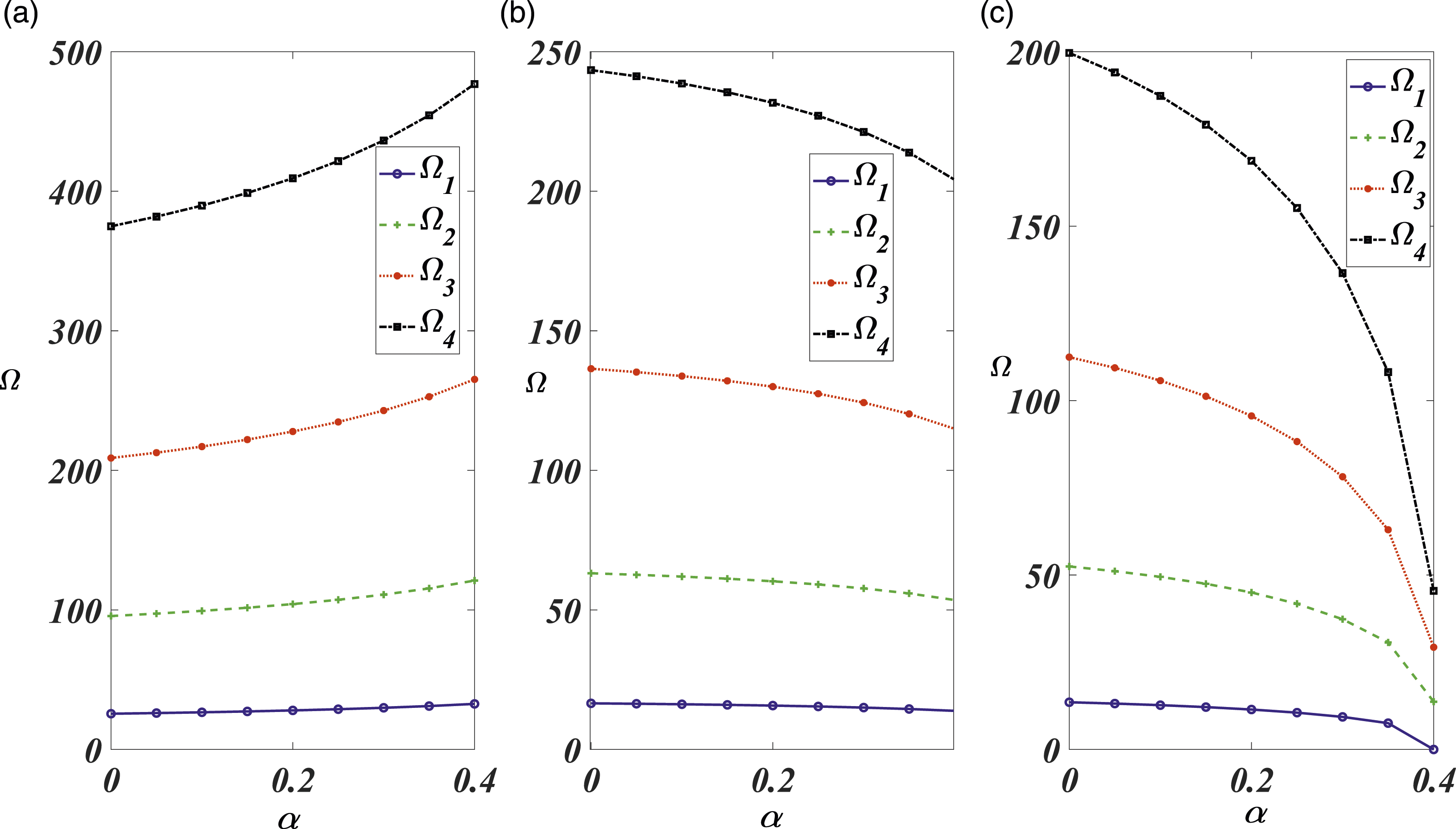
Figure 5 illustrates the effects of the porosity factor on the first four dimensionless transverse frequencies of a standing cantilever Euler–Bernoulli FG porous beam with The first four dimensionless frequencies of a Standing cantilever Euler–Bernoulli FG porous beam as functions of the porosity parameter for 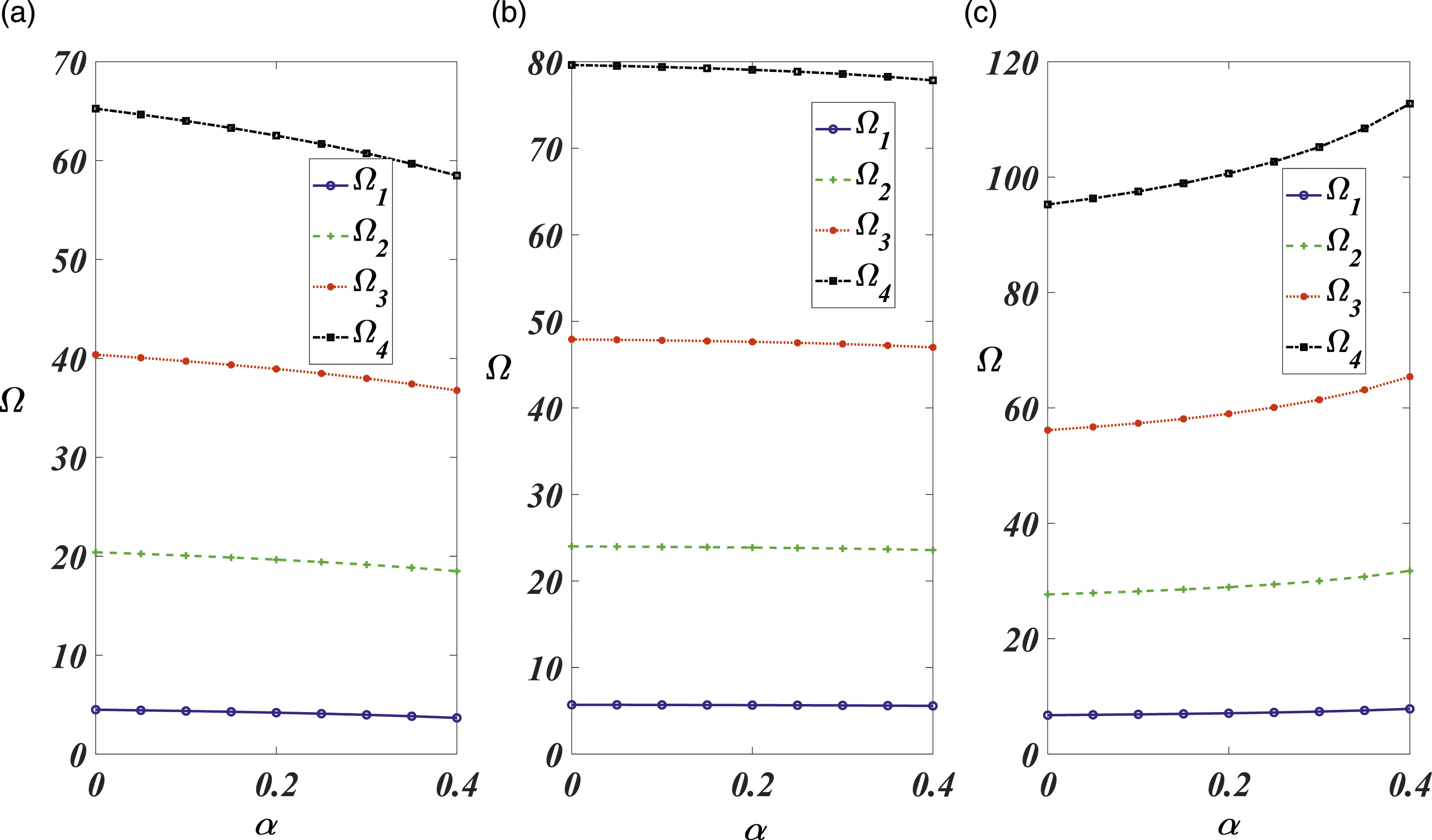
The variations of the first four dimensionless frequencies of a standing cantilever FG porous beam with The influence of the porosity factor 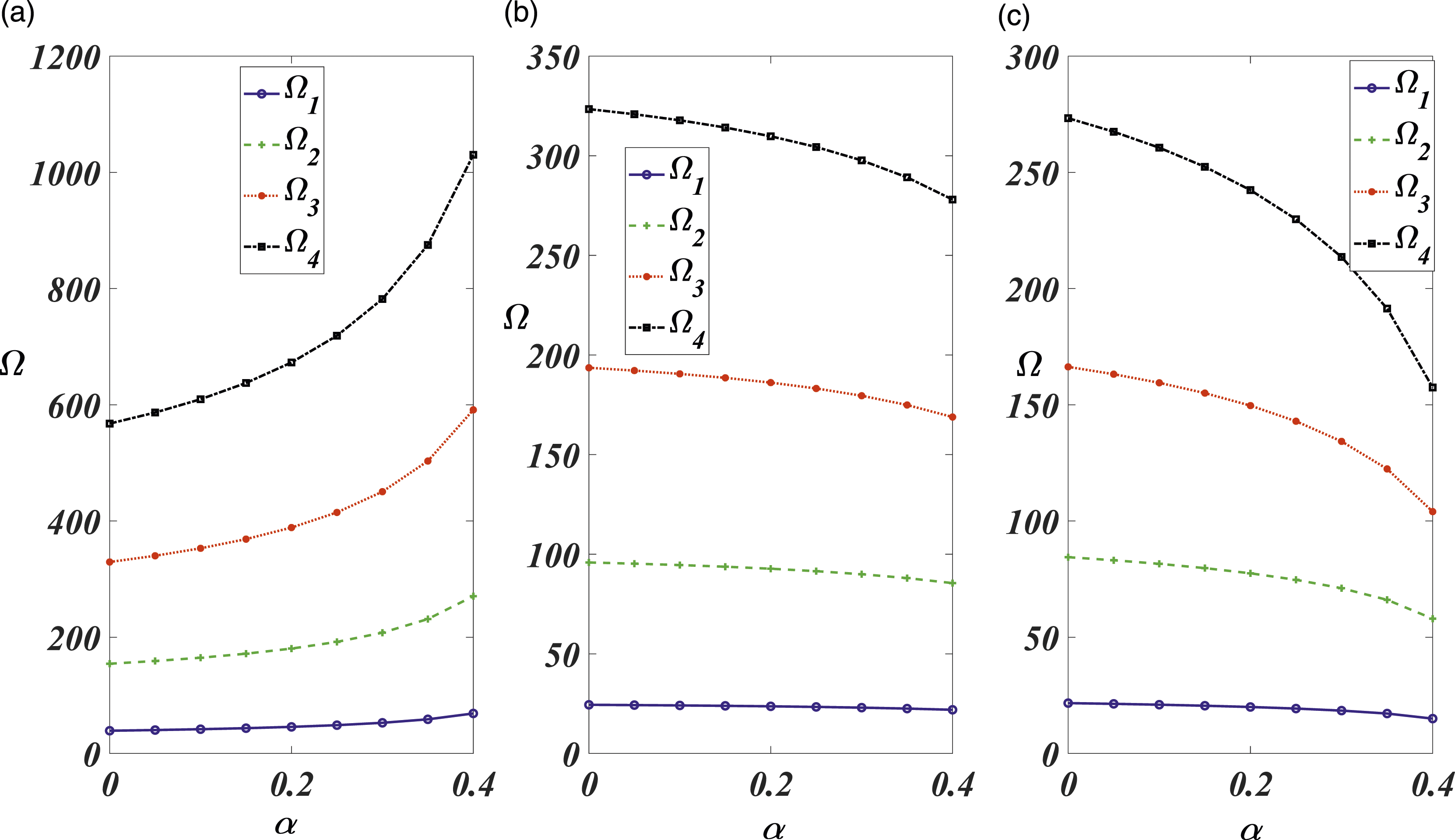
In Figures 7 (a)–(c), the dimensionless frequencies of a standing Euler–Bernoulli cantilever FG porous beam with The Alterations of the first four dimensionless transverse frequencies of a standing Euler–Bernoulli FG porous cantilever beam with the porosity parameter 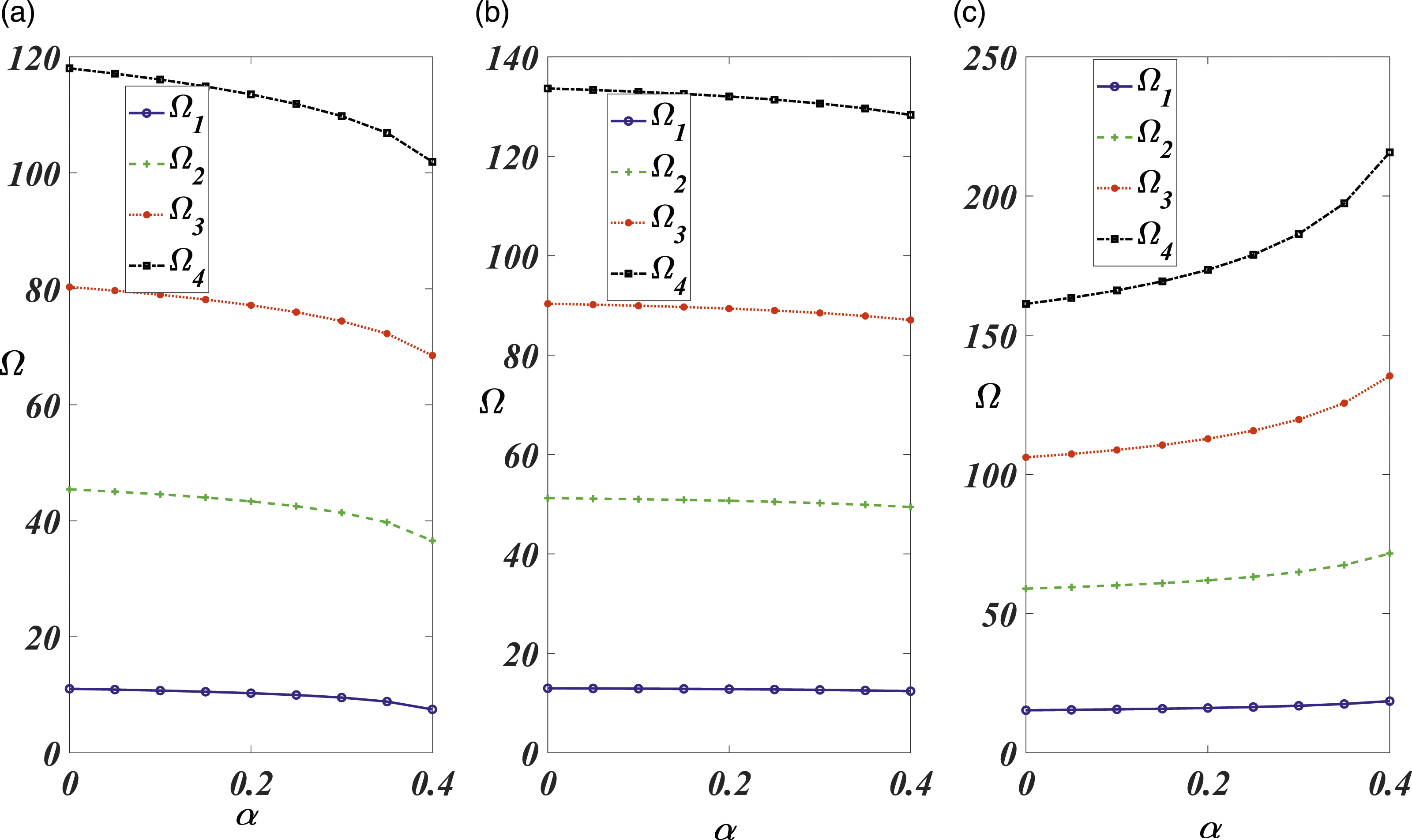
The impact of the FG index n on the dimensionless transverse frequencies of a hanging Euler–Bernoulli cantilever FG porous beam with The influence of the FG index n on the 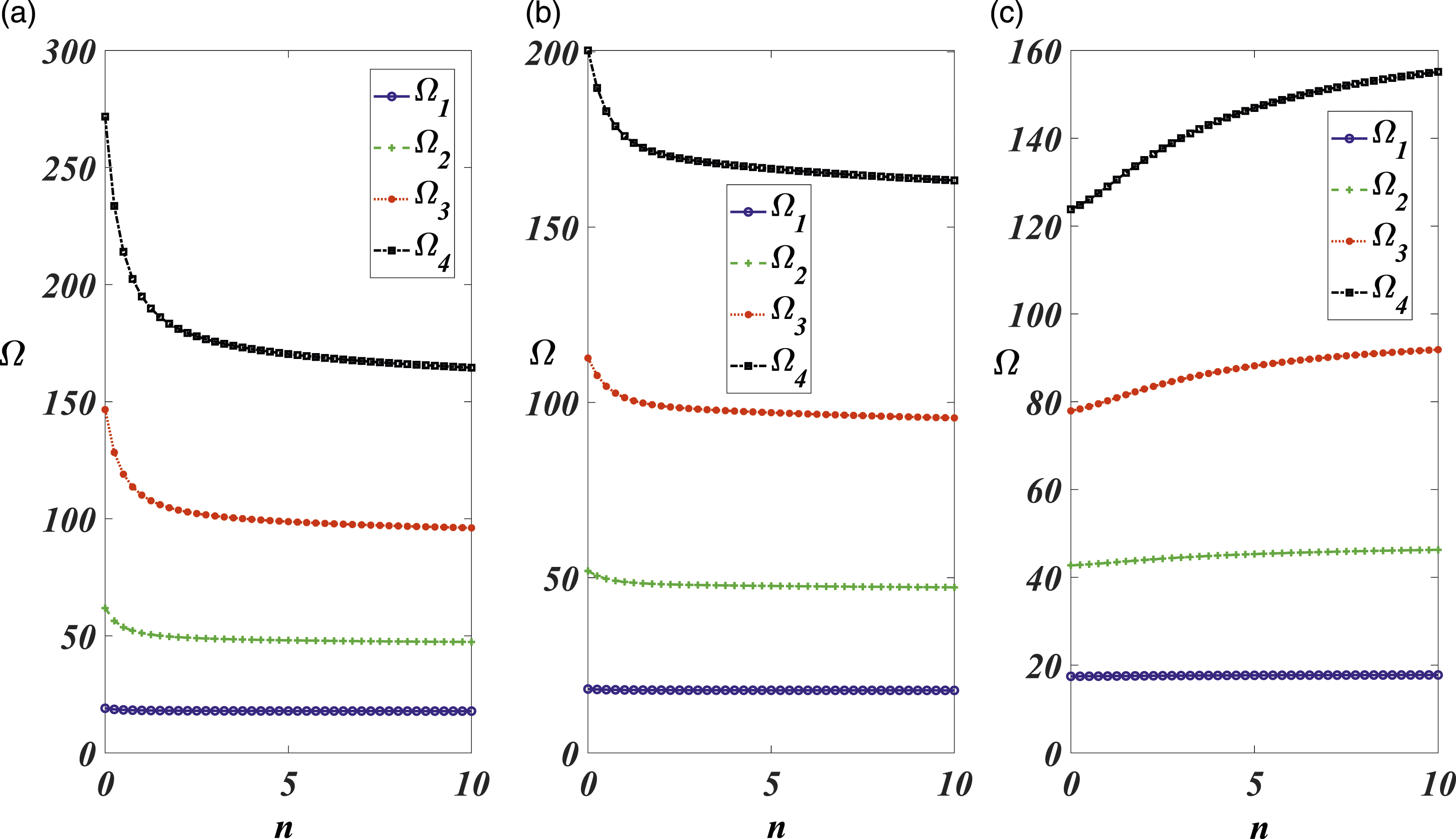
In Figures 9(a)–(c), the first four frequencies of a of a hanging cantilever FG porous beam with The impact of the FG index n on the dimensionless transverse frequencies of a hanging Euler–Bernoulli cantilever FG porous beam with 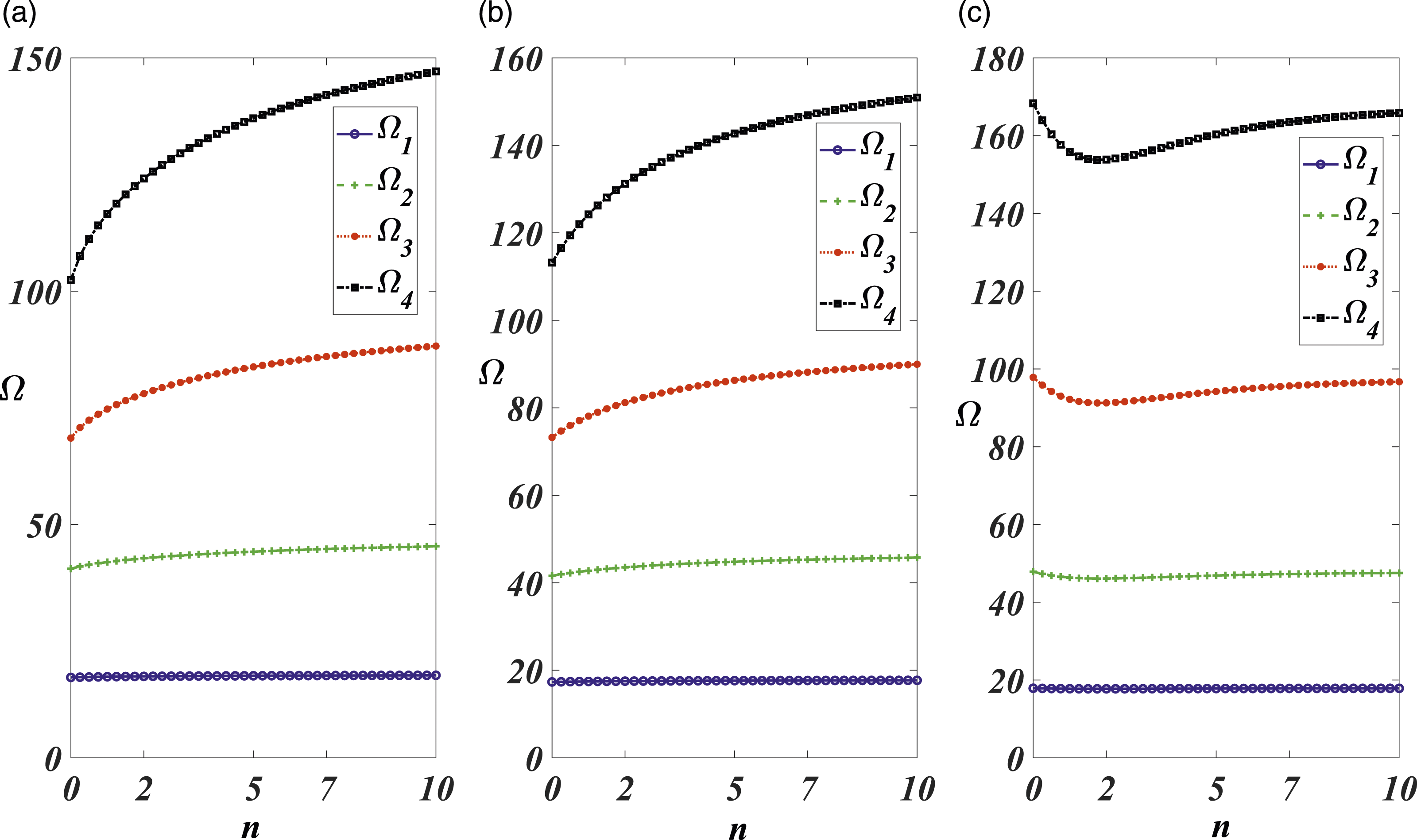
Figures 10 (a)–(b) shows the first two mode shapes of a hanging Euler–Bernoulli cantilever FG porous beam with The first two mode shapes for a hanging Euler–Bernoulli cantilever FG porous beam with The third and fourth mode shapes for a hanging Euler–Bernoulli cantilever FG porous beam with 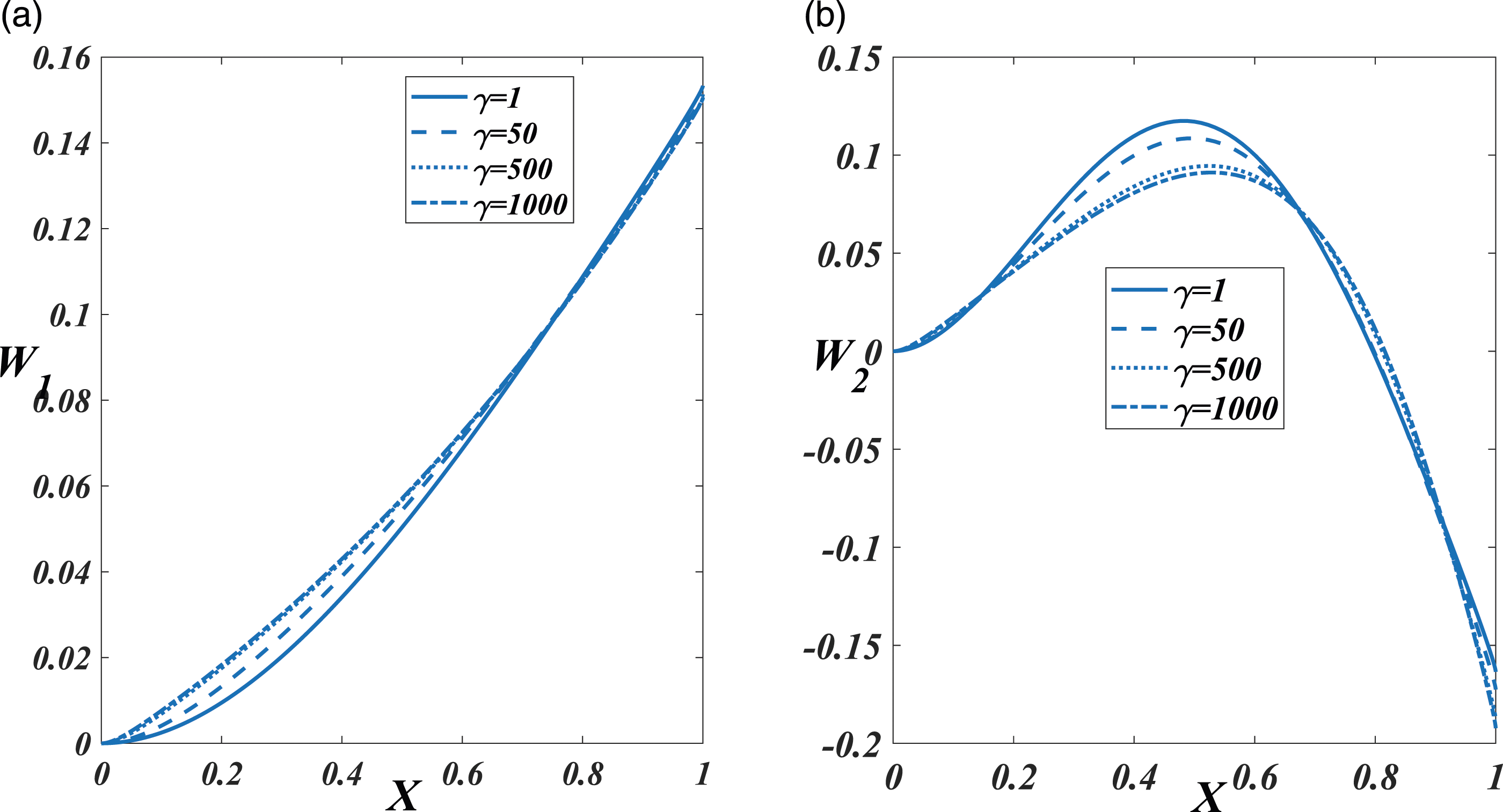
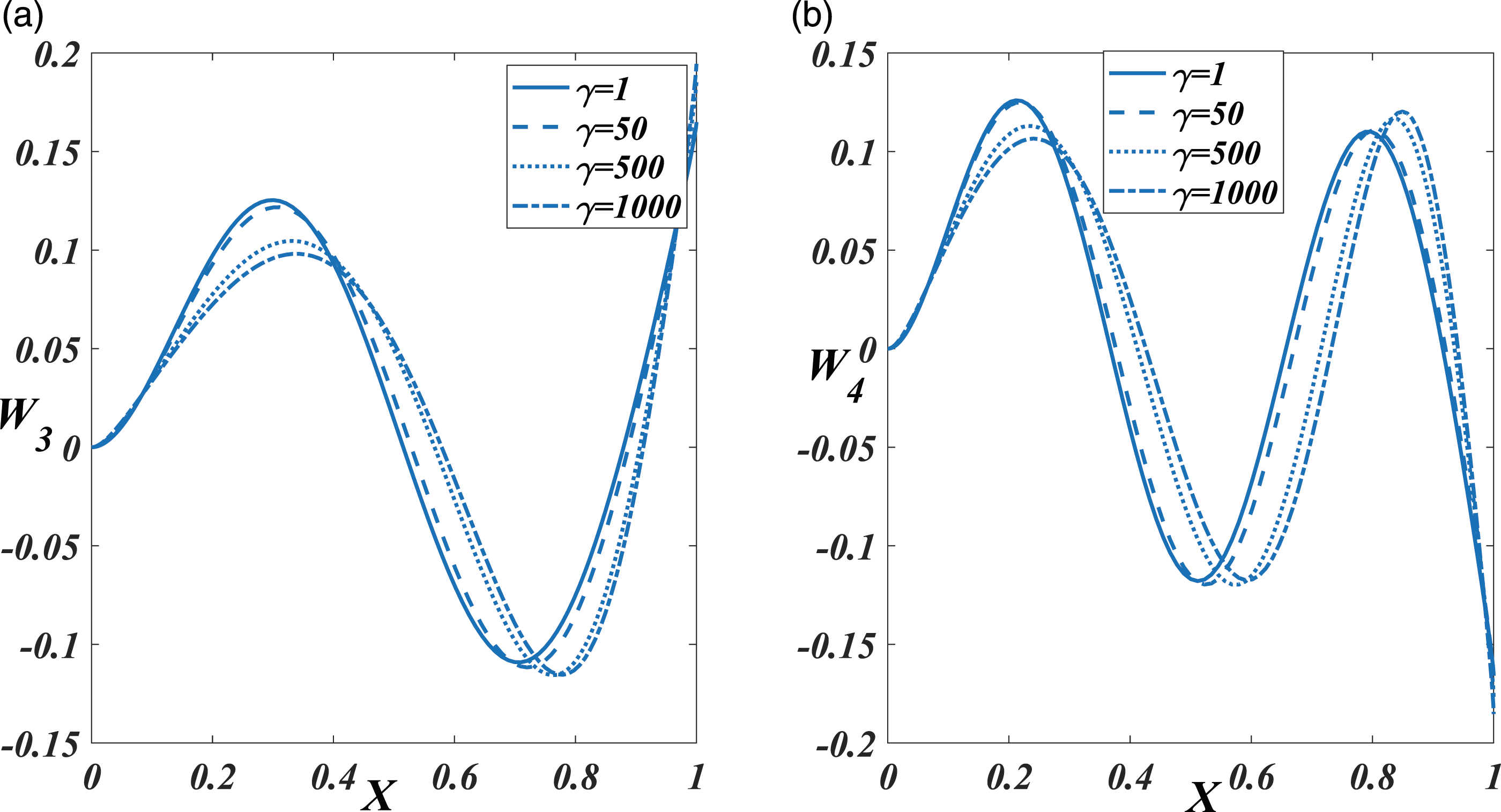
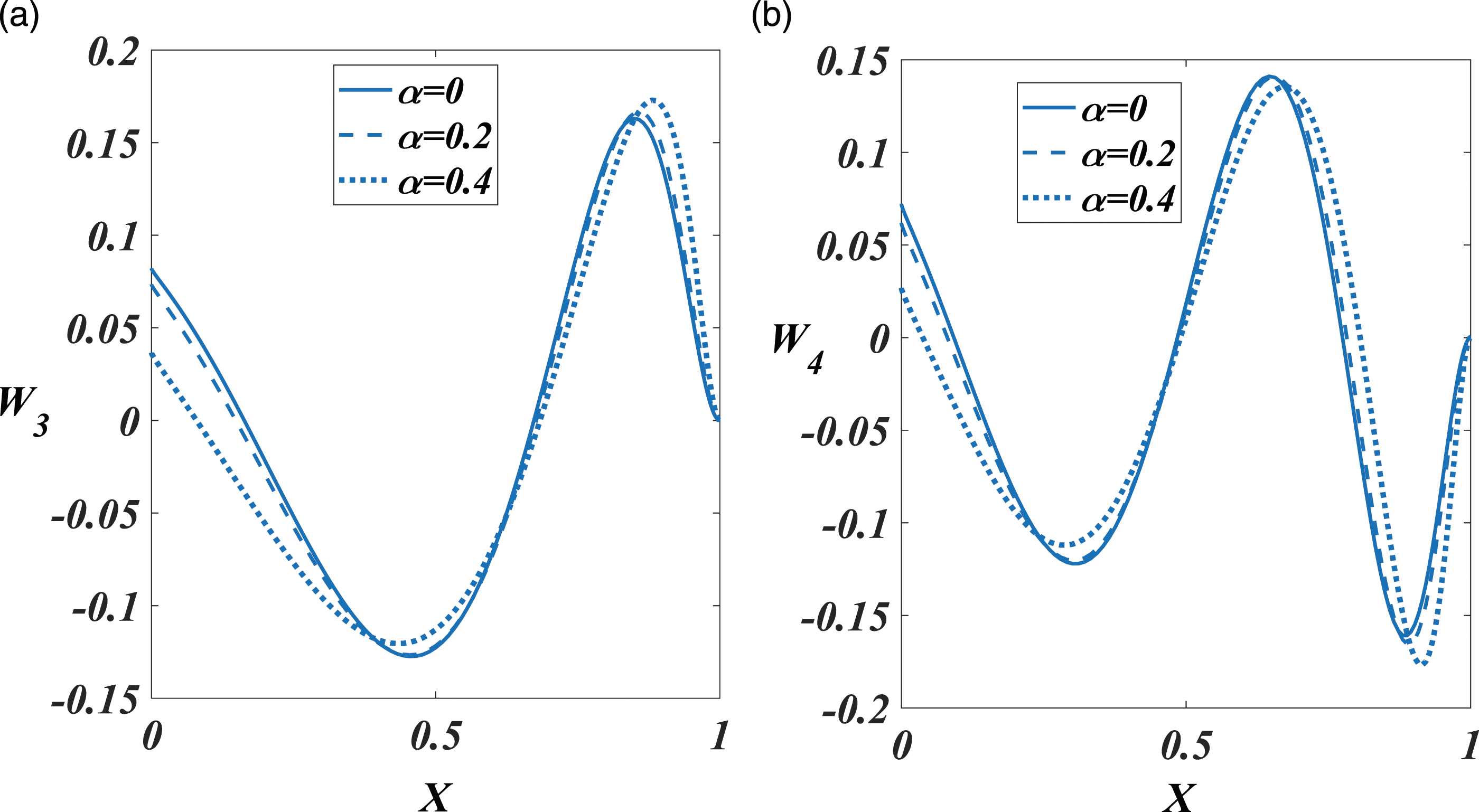
In Figures 12(a)–(b), the first two mode shapes of a standing Euler–Bernoulli cantilever FG porous beam with The first two mode shapes of a standing Euler–Bernoulli cantilever FG porous beam with The third and fourth mode shapes for a standing Euler–Bernoulli cantilever FG porous beam with 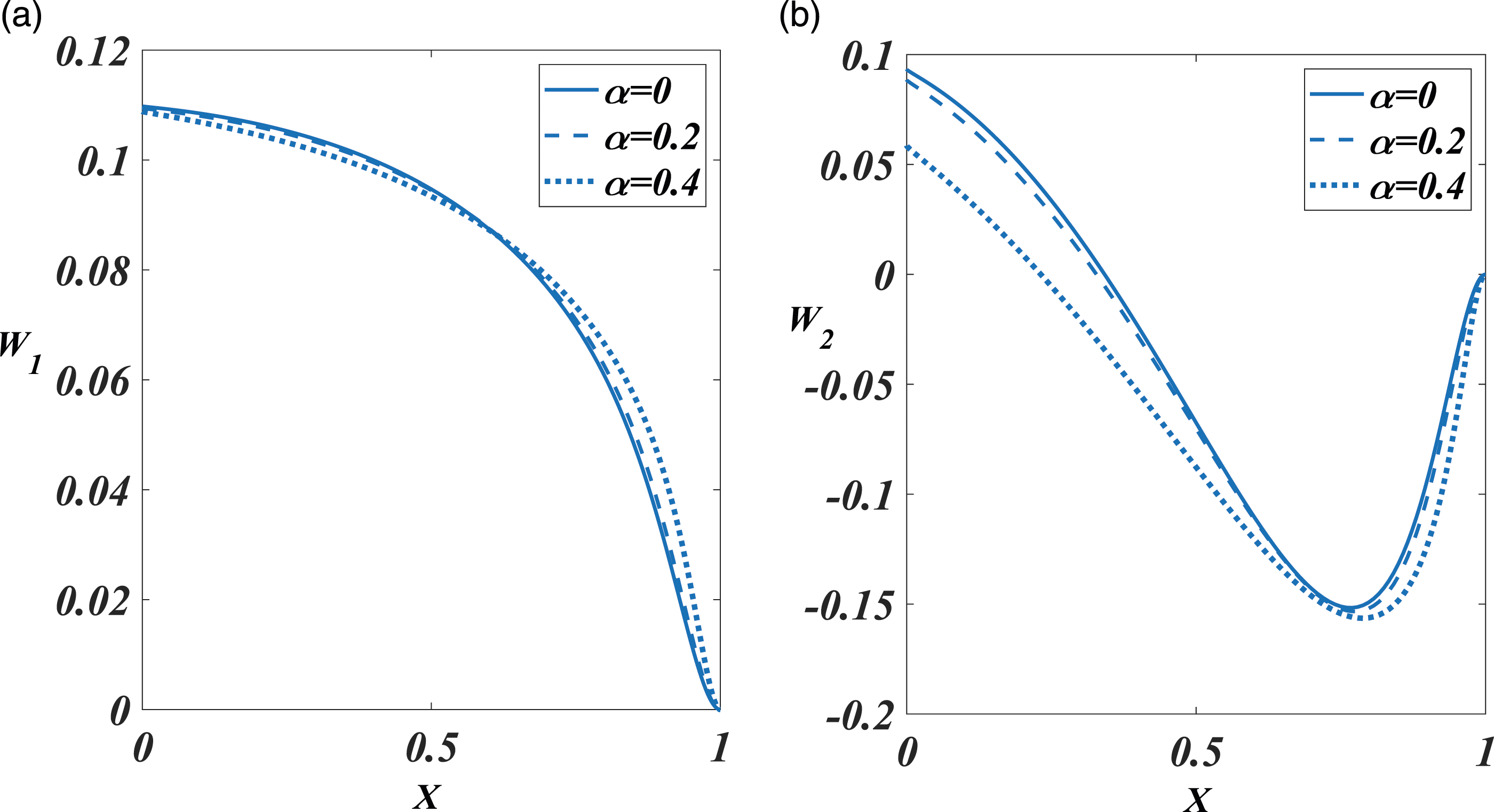
Conclusions
In this article, the free oscillations of FG porous hanging and standing cantilevers were analyzed. The modulus of elasticity and the density of the material are graded through the thickness of the beam following a power-law relation. The mathematical model was obtained using Newton’s second law of motion, and the numerical CSCM was applied to convert the differential governing equation of motion and the corresponding boundary conditions into algebraic relations. The impacts of the transverse FG index, the porosity factor, the elastic and mass density ratios and the gravity parameter on the transverse dimensionless frequencies and mode shapes were examined. It is believed that the results and the proposed approach may be useful for the researchers investigating the dynamic behavior of FG porous members. The main conclusions are: • The elastic ratio has a softening impact on the frequencies except for the fundamental frequency which remains constant as the elastic ratio increases. • Depending on the values of the elastic and the mass density ratios, the porosity parameter and the power-law index may have a softening or hardening impact on the frequencies. • For the cases considered in the current study, the mass density ratio has a softening impact on the frequencies. • For hanging and standing cantilevers, it was found that the higher mode shapes are more sensitive to the change in the gravity parameter than the lower ones.
For the future work, it is suggested to carry out the free and forced vibrations of FG porous Timoshenko and Rayleigh cantilever beams, and to investigate the dynamic behavior of two-dimensional structures such as plates and shells. Additionally, it is suggested to perform the natural and forced dynamic behavior of uniform and tapered FG porous structures.
Footnotes
Declaration of conflicting interests
The author(s) declared no potential conflicts of interest with respect to the research, authorship, and/or publication of this article.
Funding
The author(s) received no financial support for the research, authorship, and/or publication of this article.
