




Abstract
Tire acoustic cavity resonance (TACR) noise is one kind of low-frequency and narrowband noise that particularly annoys passengers, especially becomes more prominent in electric vehicles. This paper demonstrates a numerical investigation on the TACR noise via the acoustic-structural coupling finite element model. The accuracy of this coupling finite element model is validated both by the analytic method based on the superposition theory of traveling waves and experimental modal tests of tire cavities. According to the simulated models, the influences of external factors including the inflation pressure and road load on the TACR noise are studied. Meanwhile, as the main constituent component in the tire model, the effect of belt cord is also discussed. To design the low-TACR noise tire, various design parameters of the inner contour in tire cavity are analyzed. By the orthogonal test and range analysis, it is found that the contour parameters can slightly affect the modal frequency and sound pressure of TACR noise. Among these, the curvature radius of the tire shoulder ρ 4 , tire sidewall ρ 5 , and half-section height H have a more obvious influence on the TACR noise than the curvature radius of the tire crown region ρ 2 and transition region ρ 3 . Meanwhile, it also illustrates that increasing the curvature radius at the tire shoulder ρ 4 and reducing the half-section height H has a reduction effect on the TACR noise. This study can contribute to the design of low road noise tires.
Keywords
Introduction
Tire noise has been regarded as a tough and important problem in the noise, vibration, and harshness (NVH) issues of vehicles.1–3 With the extensive use of electric vehicles nowadays, this kind of noise problem becomes more prominent with the cancellation of the powertrain system including the engine and transmission. Due to the interaction between the tire and pavement, the tire noise is induced and then amplified by the transfer path in the vehicle, which finally transmits to the interior and irritates the passengers. 4 There is a great variety of noise sources for a tire including aerodynamic noise, air pumping, organ pipes, stick/slip noise, and so on. But for electric vehicles, tire cavity resonance (TACR) noise is one of the major noise sources affecting passengers. As the frequency band ranges from 150 Hz to 300 Hz, the human being is very sensitive to this kind of noise. 5 Meanwhile, due to the low-band characteristics, TACR noise is susceptible to be magnified by other structural components in the vehicle. According to various research, 6 TACR noise poses a major threat to comfortable driving at low and medium speeds, a typical condition that is frequently adopted in urban driving.
Since the first description of TACR noise in 1990 by Sakata et al., 7 the formation mechanism and dynamic characteristics of TACR noise are continually investigated in detail. Hayashi 8 investigated the coupling effect between the tire cavity mode, wheels, and suspension. It has been found that the TACR noise is mainly related to the first-order mode of tire cavity. Nakajima et al. 9 and Tanaka et al. 10 studied the characteristics of TACR noise from the perspectives of boundary element analysis and experimental measurement, respectively. Meanwhile, different analytic and numerical models are established to study the mechanism of acoustic cavity resonance. Gunda et al. 11 proposed the analytical model by the variational principle to calculate the modal frequency of tire cavity under the static state. According to the theory of pipeline acoustics, Thompson et al. 12 developed an analytic solution to predict the natural frequency of TACR noise. Combining the deterministic methods with statistical energy analysis, Mohamed and Wang13–15 conducted a thorough study on the coupling phenomenon between the tire and acoustic cavity. Yang et al. 16 presented a novel tire/cavity coupled model including the tread layers and sidewall in an analytical form, which can better reflect the actual tire structure. Moreover, various factors that influence TACR noise are researched. Yamauchi and Akiyoshi 17 investigated the effect of road load on the modal frequency of TACR noise. Yi et al. 18 established a finite element model of tire cavity coupling and studied the effect of road roughness on TACR noise. Liu et al.19,20 studied the effect of rotation on the TACR noise both by the finite element method (FEM) and the superposition theory of traveling waves. They discovered the splitting phenomenon in the natural frequency of TACR noise caused by the tire rotation. A similar phenomenon is also validated by Hu et al. 21 according to the experimental results. Based on these investigations, these revealed intrinsic complex characteristics in the evolution mechanism of TACR noise indicate that this kind of noise cannot readily be attenuated.
To reduce the TACR noise, various reduction methods have been studied. The main approaches in this research can be divided into three: the acoustic resonator or sound absorption material, the active noise control system, and the optimized type-wheel assembly. Porous material such as polyurethane foam was adopted by Tanaka et al.10,22 to reduce TACR noise, which now has been widely utilized in the tires of electric passenger cars. Different kinds of resonators and multi-porous structures,23–26 such as the Helmholtz resonator and quarter-wavelength tube are also investigated as they can efficiently reduce the narrow band frequency.27,28 In recent years, the technology of active noise cancellation has drawn a great deal of attention and has begun to be implemented in the vehicle. 29 These methods promote the development of suppressing the TACR noise. However, these add-on instruments would somehow increase the mass and cost of the vehicle, which is against the lightweight and low-cost trend in industrialized production. Moreover, the active noise cancellation system often faces unstable issues.
To avoid these problems, the tire-wheel assembly with lower TACR noise based on the design and optimized strategies has been researched. Yamauchi et al. 17 proposed an elliptical tire cavity to break the stable acoustic field, which has an obvious reduction in TACR noise. Helium gas was adopted by Waisanen et al. 30 as the inflation gas to reduce TACR noise, but it proved to be a little more expensive. Subbian et al. 31 and Zhao et al. 32 exploited the potential of the coupling effect between the tire cavity and wheel in reducing TACR noise. Considering the tire itself, the discussions on the constituent composite material and tire contour design factors were conducted by Yoon et al. and Kim et al.33,34 to develop the low-TACR noise tire. Patel et al optimized the tread pattern to reduce the aeroacoustic noise level of tire noise at a high speed by using CFD methods.35,36 The influence factors of tires can be mainly divided into two parts: the external factor and the internal factor. However, there still remains an ambiguity on what and how these parameters influence the TACR noise. Traditionally, the tire cavity is always simplified by a circular ring with the neglect of its detailed structural shape. Therefore it is essential for us to confirm whether this assumption is correct. On the other hand, not only is it a scientific problem, but the tire and wheel industry always face this issue in engineering application. For a fixed tire specification, how to adjust various parameters on the tire cavity to reduce TACR noise is essential but has yet to be studied. To clarify the various effects on the modal and dynamic characteristics of TACR noise, these parameters are studied and compared in this paper, which is helpful for the design of low-noise tires.
The rest of this article is organized as follows. Firstly, the specific tire model and FEM modeling are introduced. With the established FEM model, numerical methods and analyses are conducted and also validated by the theoretical method. Then the effects of different parameters including the external and internal factors on TACR noise are investigated. Based on these investigations, conclusions arefinally drawn.
FEM modeling of tire and acoustic coupling cavity
In this section, based on the tire of type specification 245/45 R19, an acoustic-structural coupling assembly model of the tire cavity is established and finite element analyses are conducted. Firstly, the modal characteristics of the tire cavity under static conditions have been investigated, mainly focusing on the splitting phenomenon of the first natural frequency of TACR noise with a load of road, in order to determine the frequency distribution range of TACR noise under loading conditions. Subsequently, the simulation analysis of TACR noise response under a certain excitation is conducted to investigate the effect of external factors (inflation pressure, road load) and internal factors (belt cord, inner contour shape of tire) on the TACR noise.
Simplification of the tire cavity and establishment of its FE model
For the specification of tire 245/45 R19, the key dimensional parameters of the tire can be obtained from the “European Tire and Rim Technical Organization Standard Manual” (ETRTO-2010). As our main concern in this paper is the modal characteristics of the tire cavity and its internal sound field distribution, the structural features such as transverse grooves on the tire surface are ignored. The simplified cross-section of the tire is shown in Figure 1. This tire is mainly made of three parts: the rubber matrix, air, and cord skeleton. Specifically, the rubber matrix mainly includes the tread, sidewall, shoulder, carcass, triangular rubber, belt layer, wire bead, etc. In the simulation model, Mooney Rivlin and Yeoh models are adopted to characterize the hyperelasticity of the rubber material. Meanwhile, the cord skeleton section includes body cords of tire, belt cords, and tire crown cords. Additionally, a reinforcing rib model is used to simulate the state of tire rubber embedded with steel wire cords. Simplified cross-sectional structure of tire.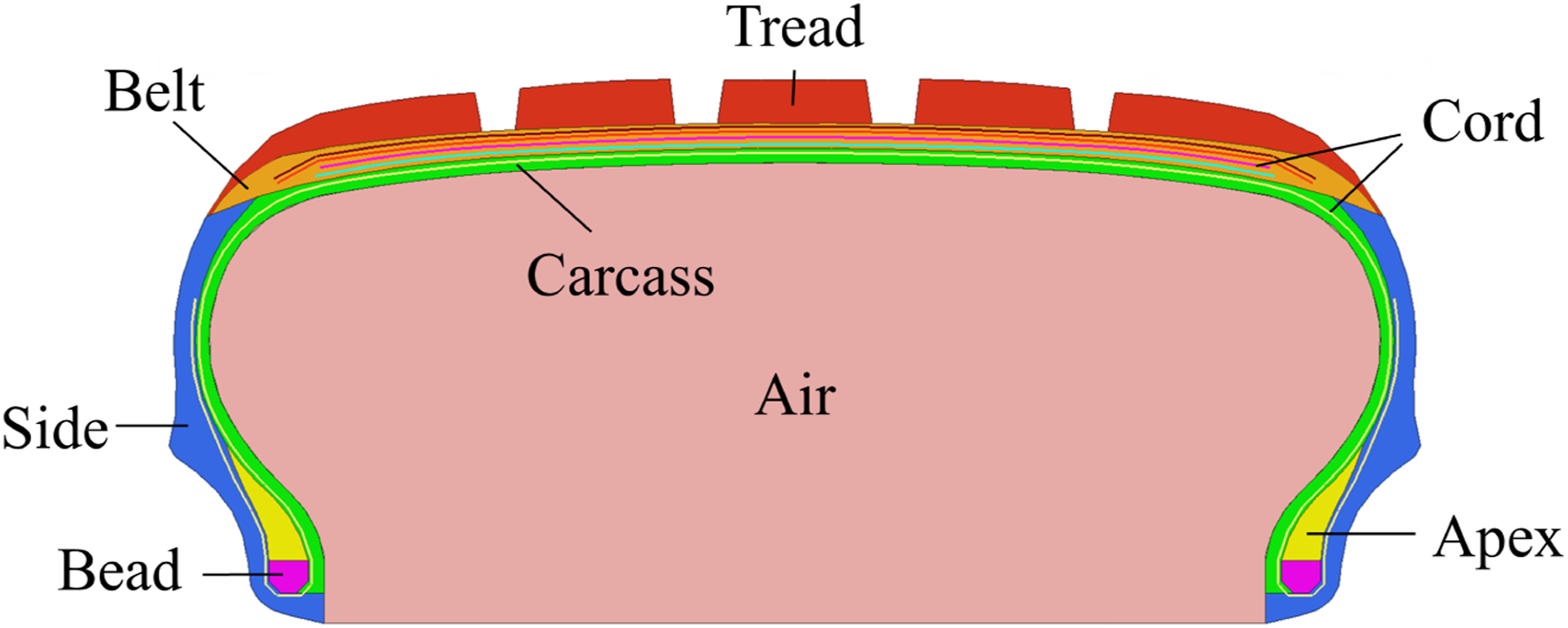
The procedure of FE modeling is two steps: firstly, establishing a two-dimensional finite element model of the tire, and then rotating around the axis to obtain the final three-dimensional finite element model of the tire. The process of establishing the tire model is shown in Figure 2. The finite element model of structural coupling with the acoustic medium is developed in commercial HyperMesh and Abaqus software. In the two-dimensional finite element model of cross-section, the cord skeleton is simulated by the axisymmetric and torsional Wire elements, while the rubber matrix and air components are simulated by the axisymmetric and torsional Shell elements. In the two-dimensional finite element model of the cross-section part, CGAX3H and CGAX3H elements are adopted here to discretize the rubber matrix part of the tire. After the rotation, the element types of this part automatically change to C3D6H and C3D8H elements in the three-dimensional tire model. The main reason for using these element types is that it can obtain high-precision solutions, as the nonlinear contact and large deformation problems caused by loads exist in the FEM analyses. These element types can effectively simulate the loading characteristics of tire rubber. The air part of the tire cavity is discretized by ACAX3 and ACAX4 element types, and the air element types in the 3D model after the rotation are automatically converted to AC3D6 and AC3D8 element types. Meanwhile, the cord skeleton is discretized by SFMGAX1 element type, and then converted to SFM3D4R element type after rotation. The 2D model of cross-section is established with a total number of 712 nodes and 624 units, and the three-dimensional model of the tire is obtained with a total of 42,662 nodes and 37,441 units. Establishment of tire acoustic coupling finite element model.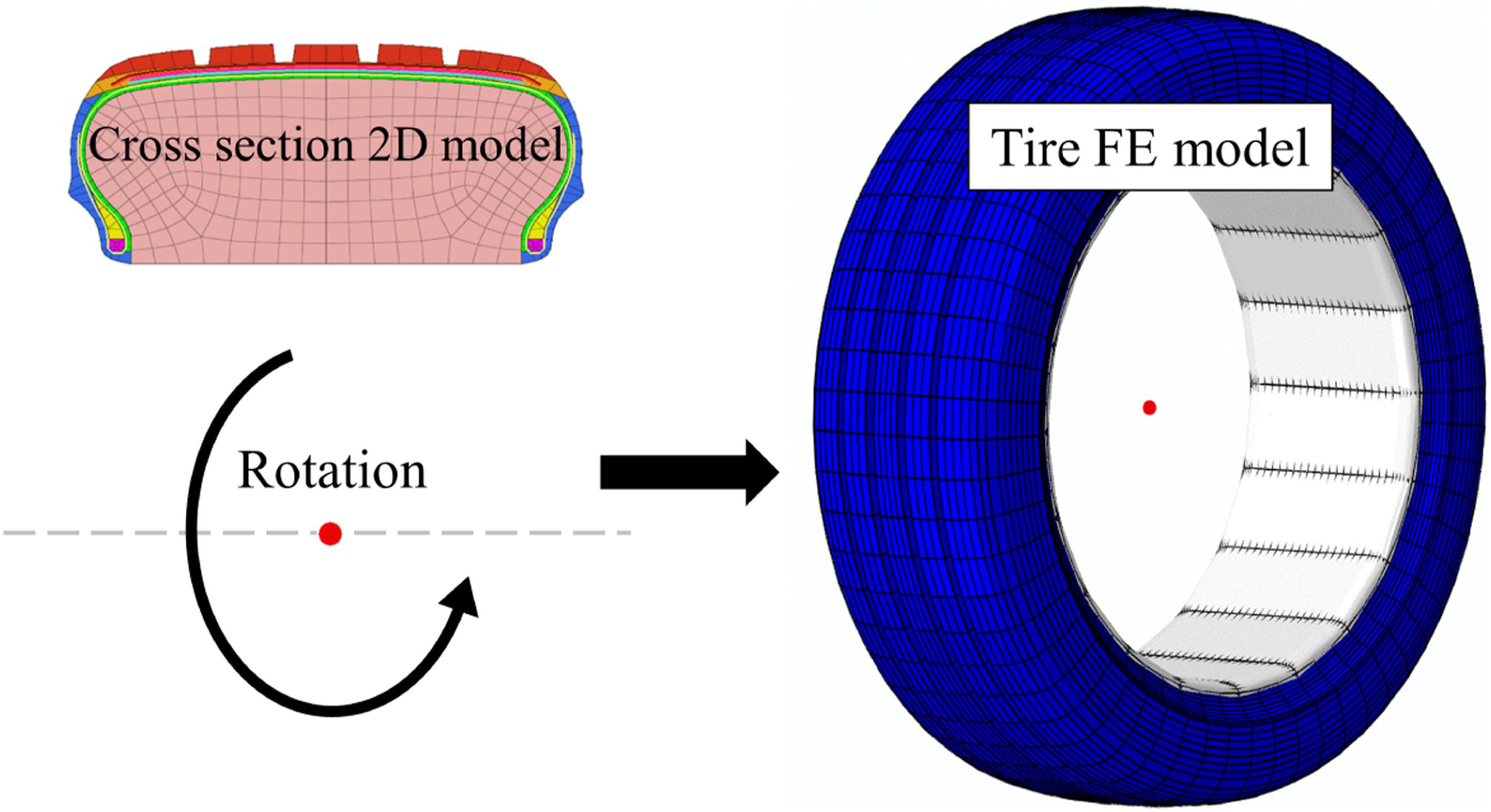
In the subsequent analyses, the modal and vibro-acoustic characteristics of the tire cavity are investigated. Compared with the tire and air, the wheel and road surface are much more rigid, so the shapes of the wheel and road surface are simplified and set as non-deformable rigid bodies. For a steadily rotating tire, considering that the air in the cavity rotates with no slip between tire surface and air and between rim and air, the binding constraints are applied to the sound chamber air and the inner surface of the tire, and the sound chamber air and the rim. To improve the computational efficiency, the binding constraints are also used to simulate the contact characteristics between the tire and rim bead seat.
FEM simulation method
The vertical load is now applied to the established model to simulate the real case. The load process is divided into three steps. Step 1: inflate the tires. To simulate the inflation state of tire, a uniformly distributed air pressure load of 0.25 MPa has been applied on the inner surface of the tire. Step 2: road displacement. After full restraint has been applied to the wheels, the vertical upward displacement is exerted on the rigid road surface to ensure a 1–2 mm interference contact between the road surface and the tire tread. This can ensure that the load applied to the road surface can be transmitted to the tire model. Step 3: road loading. Apply a static vertical upward radial load to the road surface to simulate the road load. Figure 3 shows the deformation results of the tire under a road load of 5000 N. Based on the FEM results of static road load, the modal analysis of the acoustic-structure coupling model is conducted by using the LANZOS method. FEM results of tire deformation under 5000 N road load.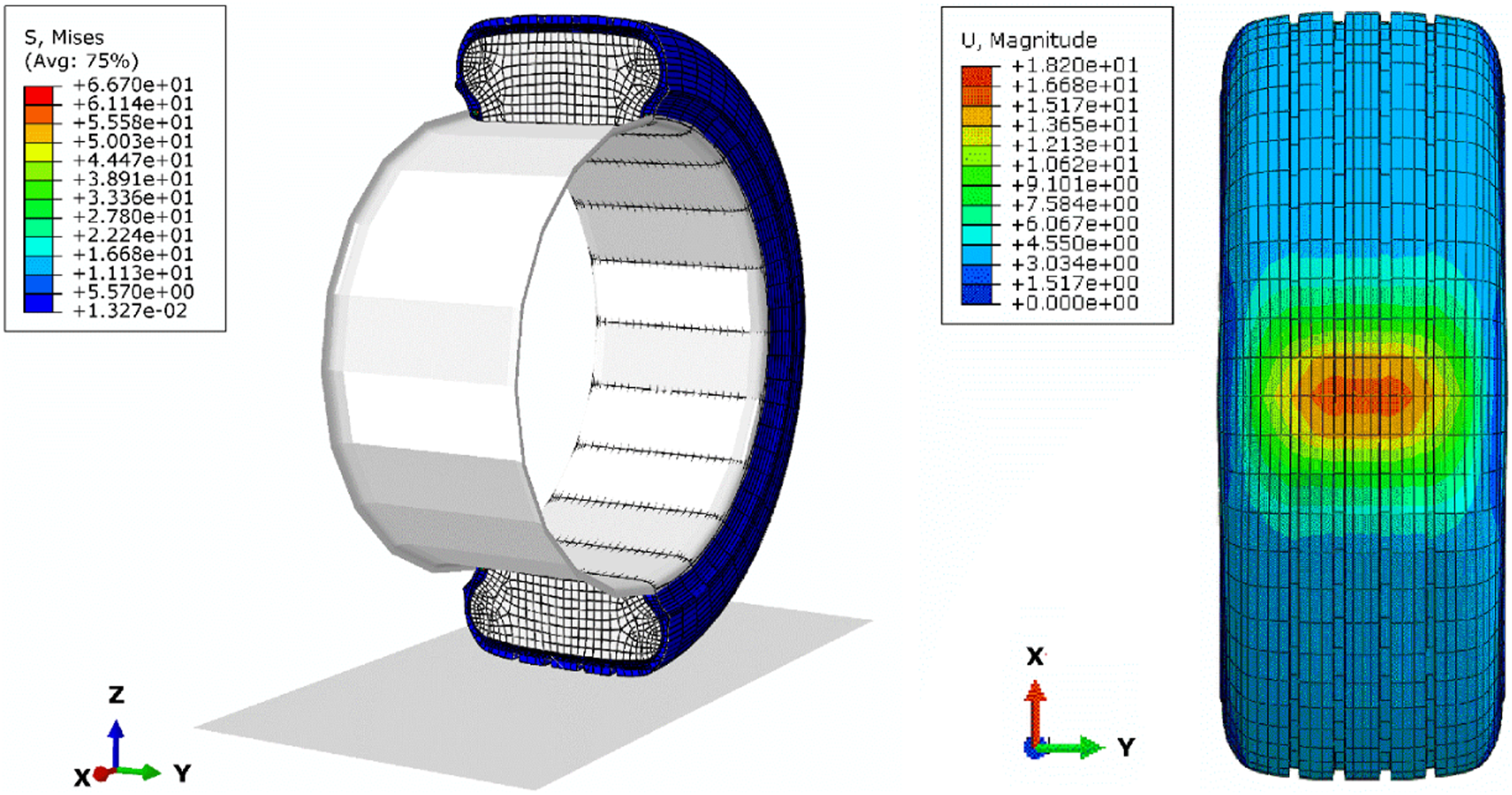
Numerical model on tire cavity resonance noise
Modal characteristics
FEM simulations of first two modal characteristics of 245/45 R19 specification tire cavity.
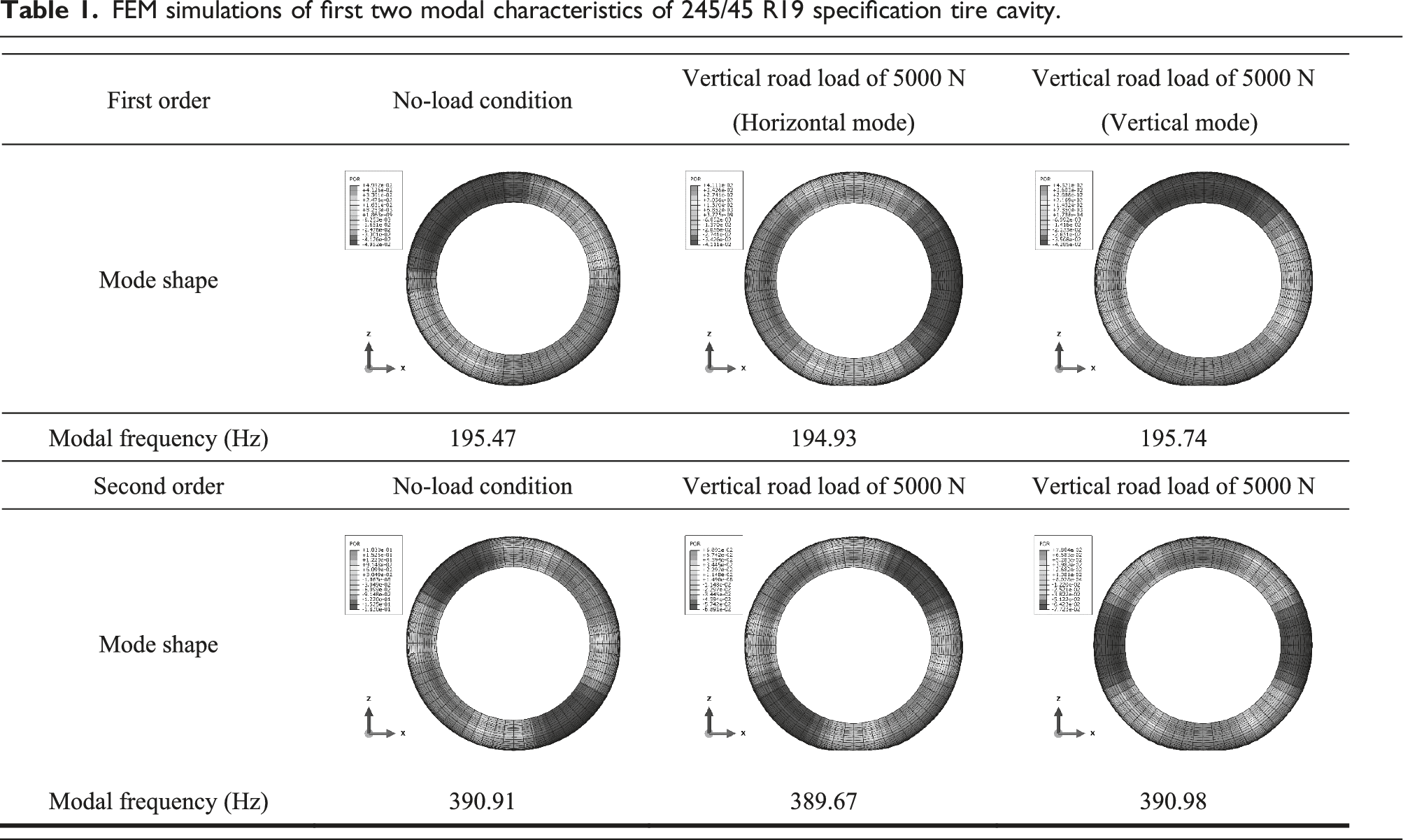
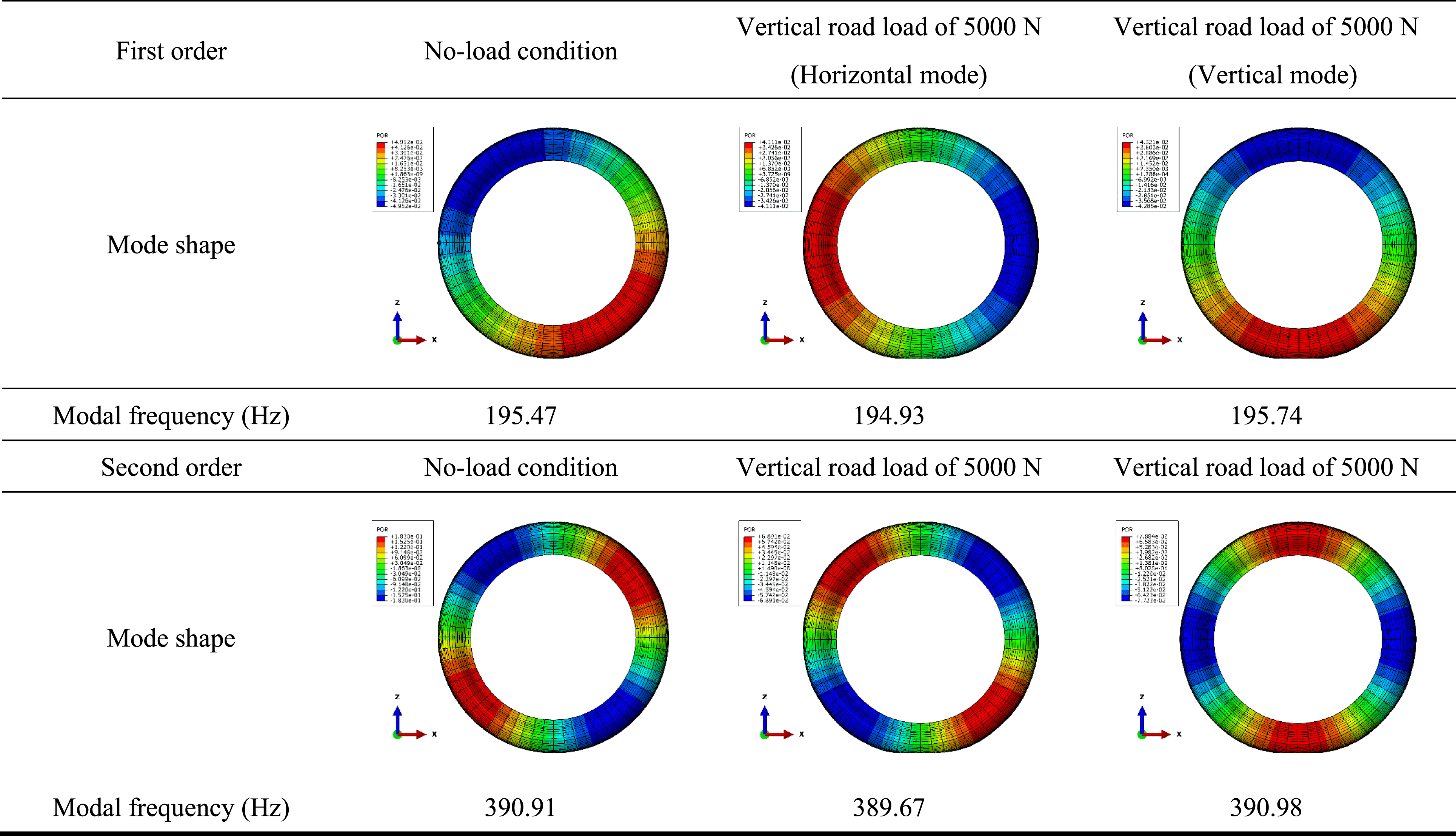
It can be seen that the first-order mode shapes of tire cavity can be evolved into two perpendicular modes under the vertical load of the road surface, namely, horizontal and vertical modes. The natural frequency of tire cavity also splits as the load is introduced, which is lower/higher than the natural frequencies in the no-load state. The horizontal mode corresponds to a lower natural frequency, while the vertical mode corresponds to a higher natural frequency. These are consistent with the conclusions in Sakata’s work 7 and Thompson’s work. 12 The same thing happens in the second-order natural frequency. It can also be seen that the load condition has a certain effect on the resonance frequency of TACR noise. Since the noise inside the cabin is determined by the first-order mode, the first-order TACR noise is our main concern in this paper.
Theoretical and experimental validation
To validate the precision of FEM simulation, the analytic method on the resonance frequency of TACR noise has been introduced here.
19
According to the theoretical model based on the superposition of traveling waves, sound pressure in the tire cavity can be expressed as

Here the position of the contact patch for excitation is set at the polar angle θ = 0. 
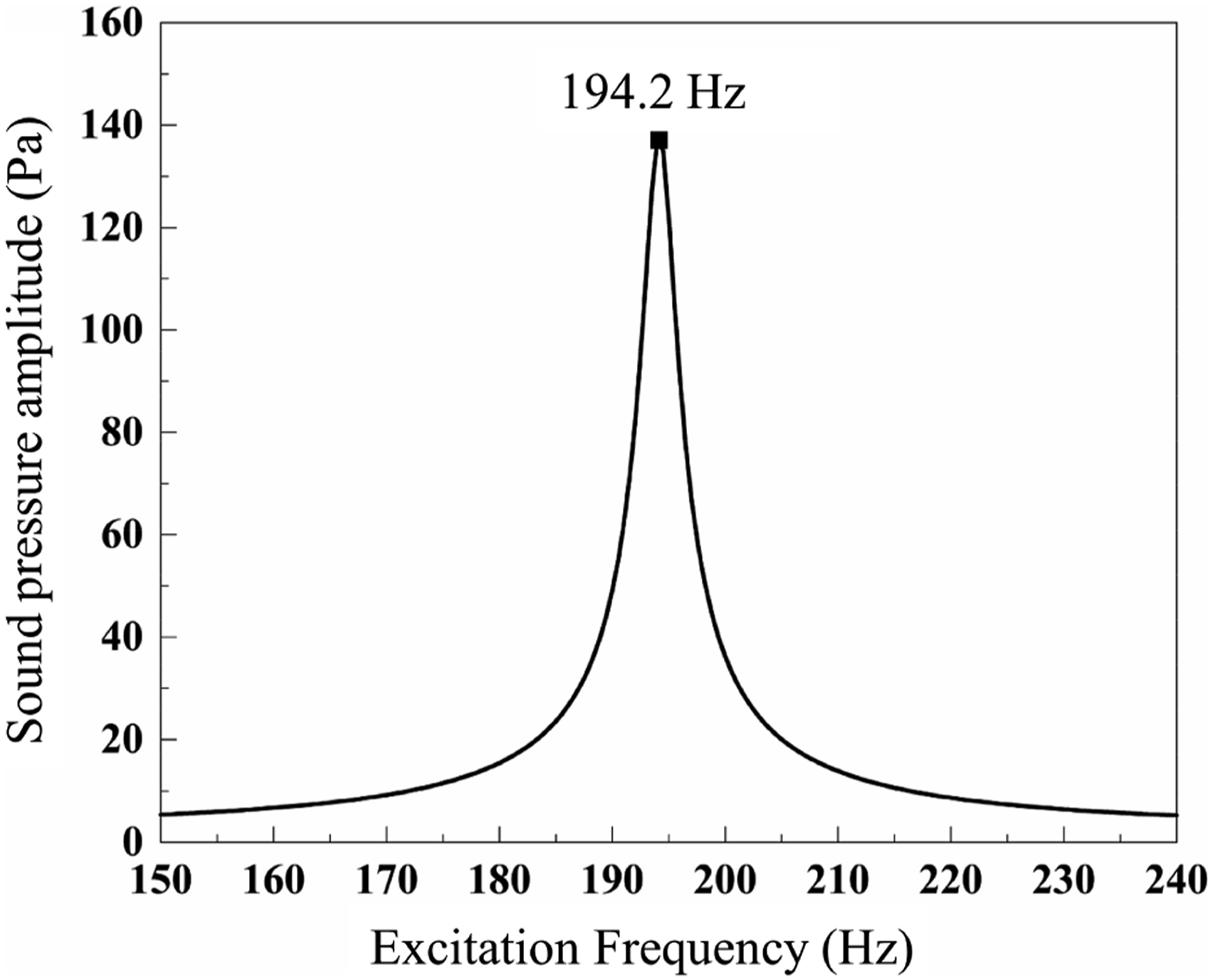
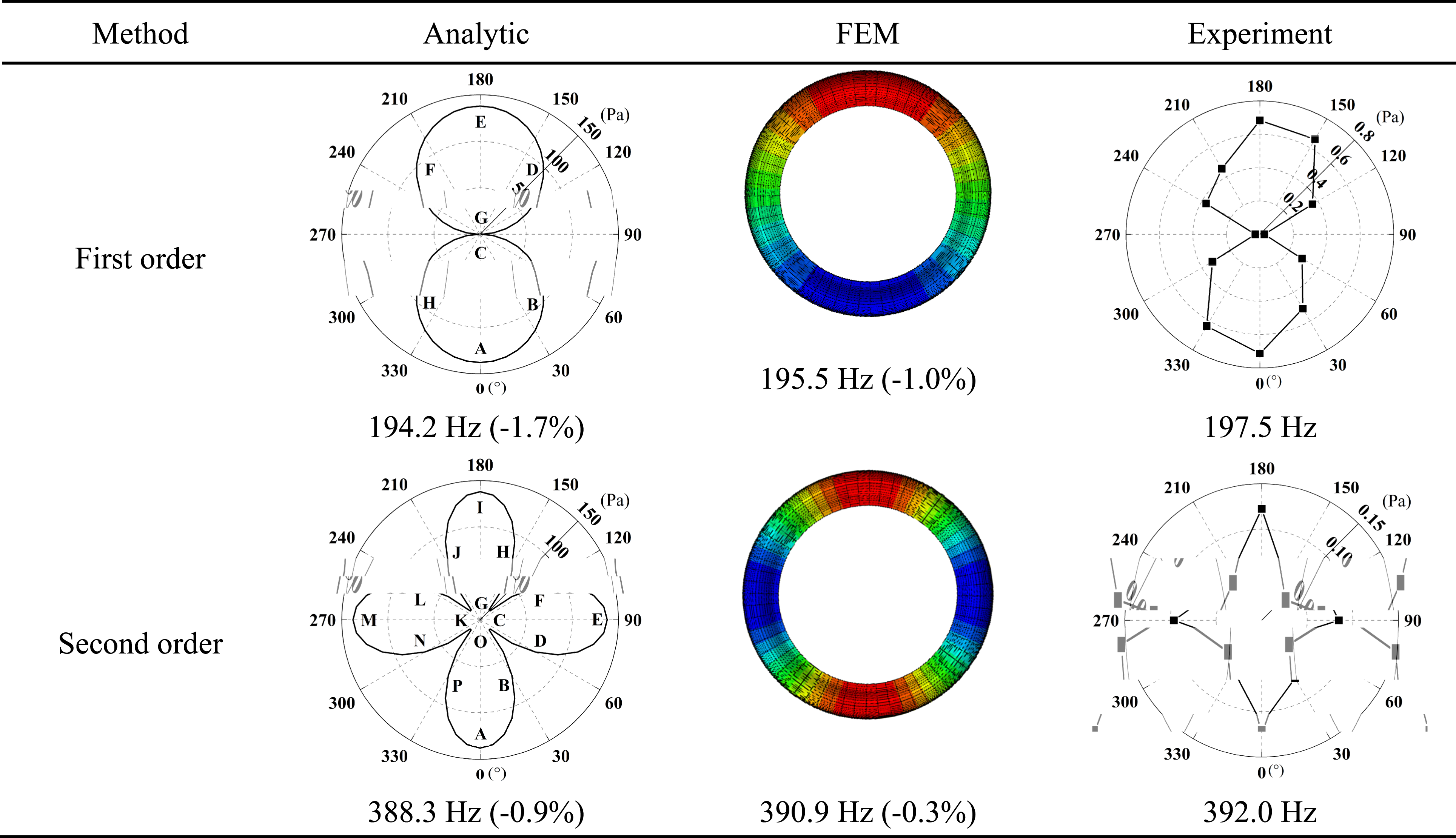
Accordingly, the expressions of the parameters in backward traveling waves are Analytic results of frequency response of TACR noise, the first-order resonance frequency for tire cavity is 194.2 Hz.
Meanwhile, the experiments are also conducted here to verify the results. The test setup and diagram are shown in Figure 5. The volume velocity source generates the white Gaussian noise to excite the tire cavity resonance noise. The sound pressure field inside the cavity can be obtained by the microphone array installed on the tire (245/45 R19 specification) and microphones are calibrated by a standard calibration box (124 dB at 250 Hz) before the experiment.
37
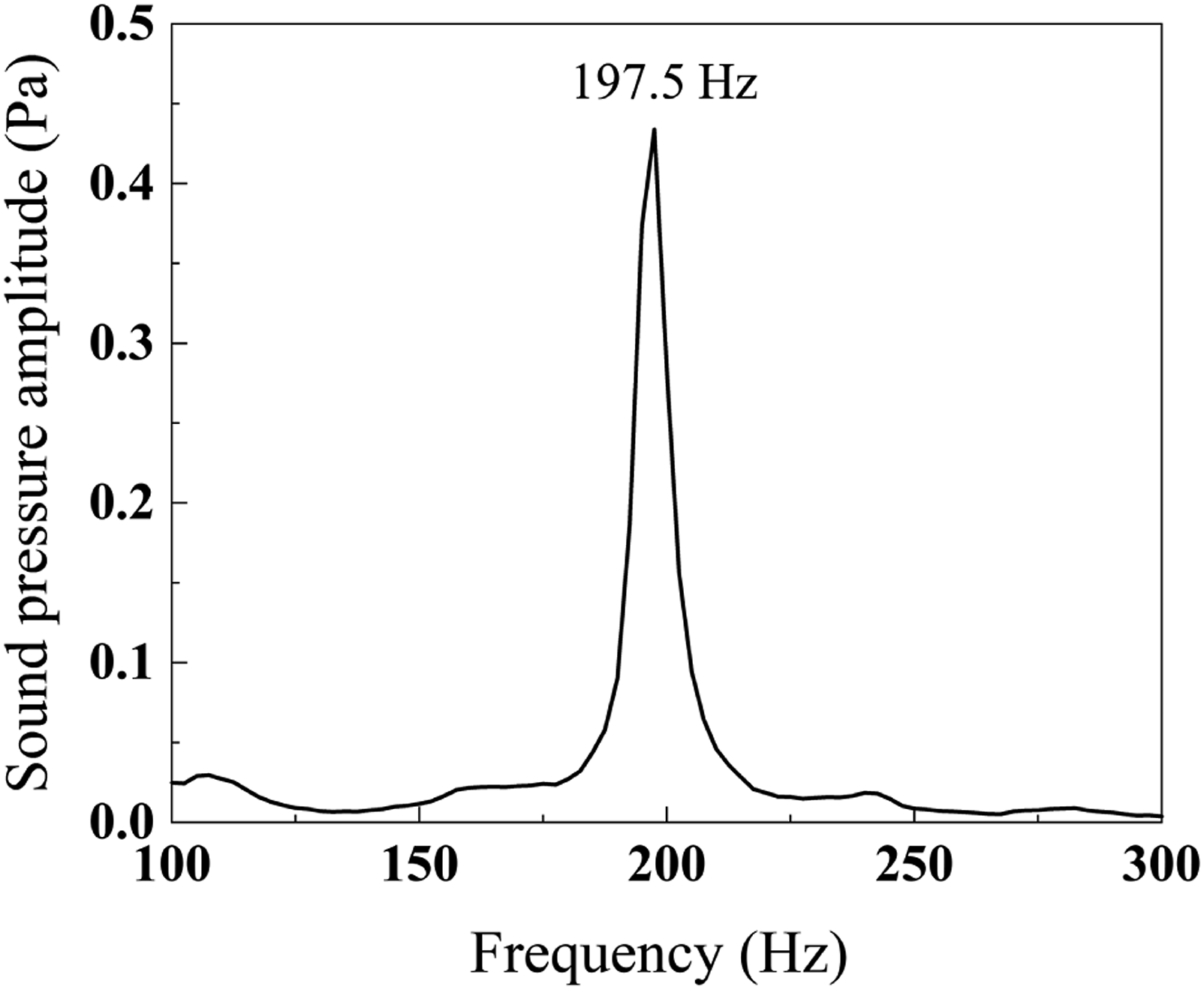
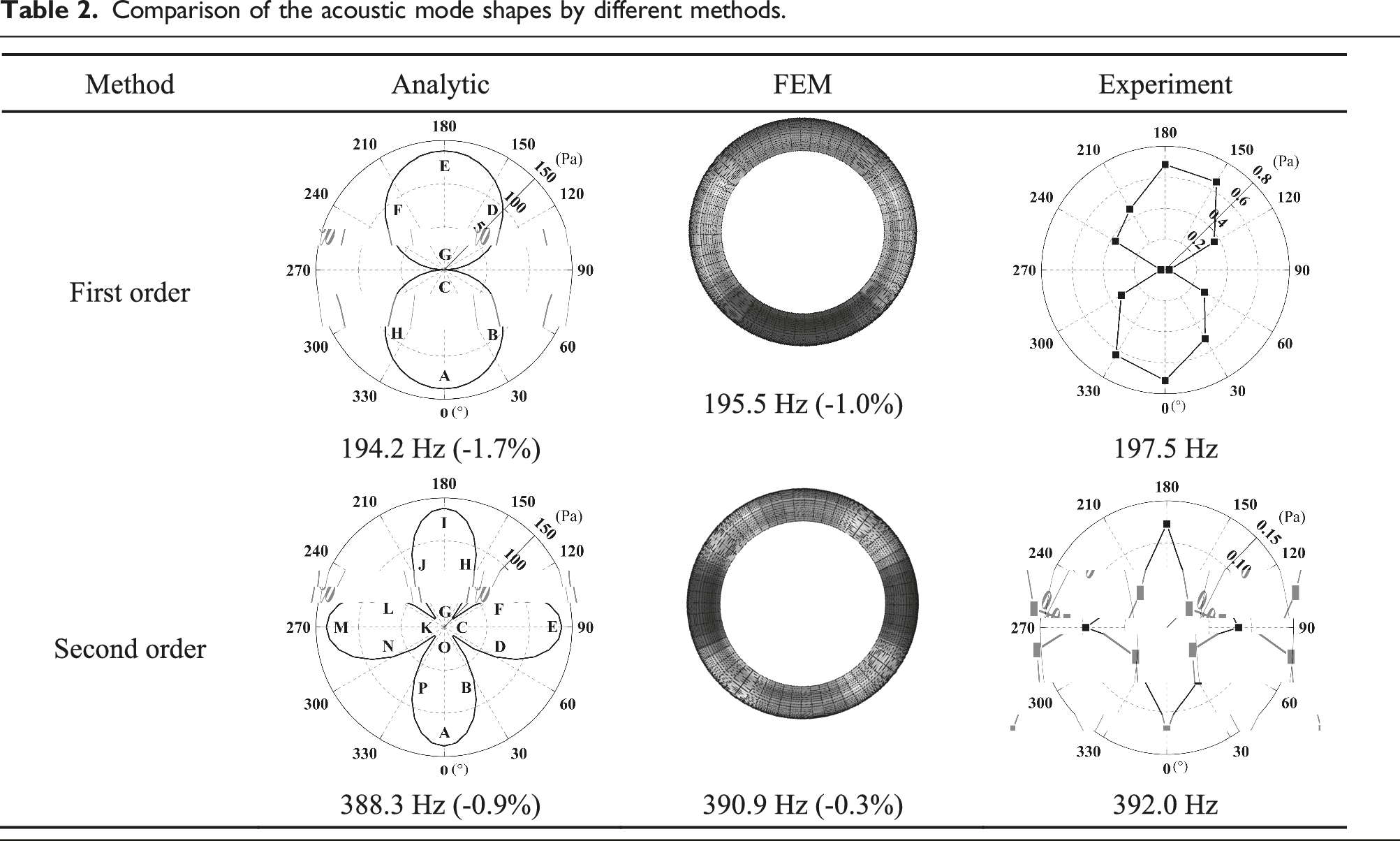
The experimental data are recorded by the data acquisition instrument and computer for post-processing. According to the spectrum of sound pressure, the resonance frequencies of TACR noise can be measured. In this paper, the measured point 7 has been selected as the observation point. The spectrum result is shown in Figure 6. It can be seen that the experimental modal frequency of first-order TACR noise is around 197.5 Hz, which is very close to the FEM result of 195.5 Hz. The slight error is mainly from the slight decrease in the effective radius of tire cavity, that is, in the experiment, the flat tire causes a slightly smaller tire cavity effective radius, causing a slight increase in the modal frequency of the tire cavity. Experiment setups of tire cavity modal test. Experimental results of frequency response of TACR noise, the first-order resonance frequency for tire cavity is 197.5 Hz.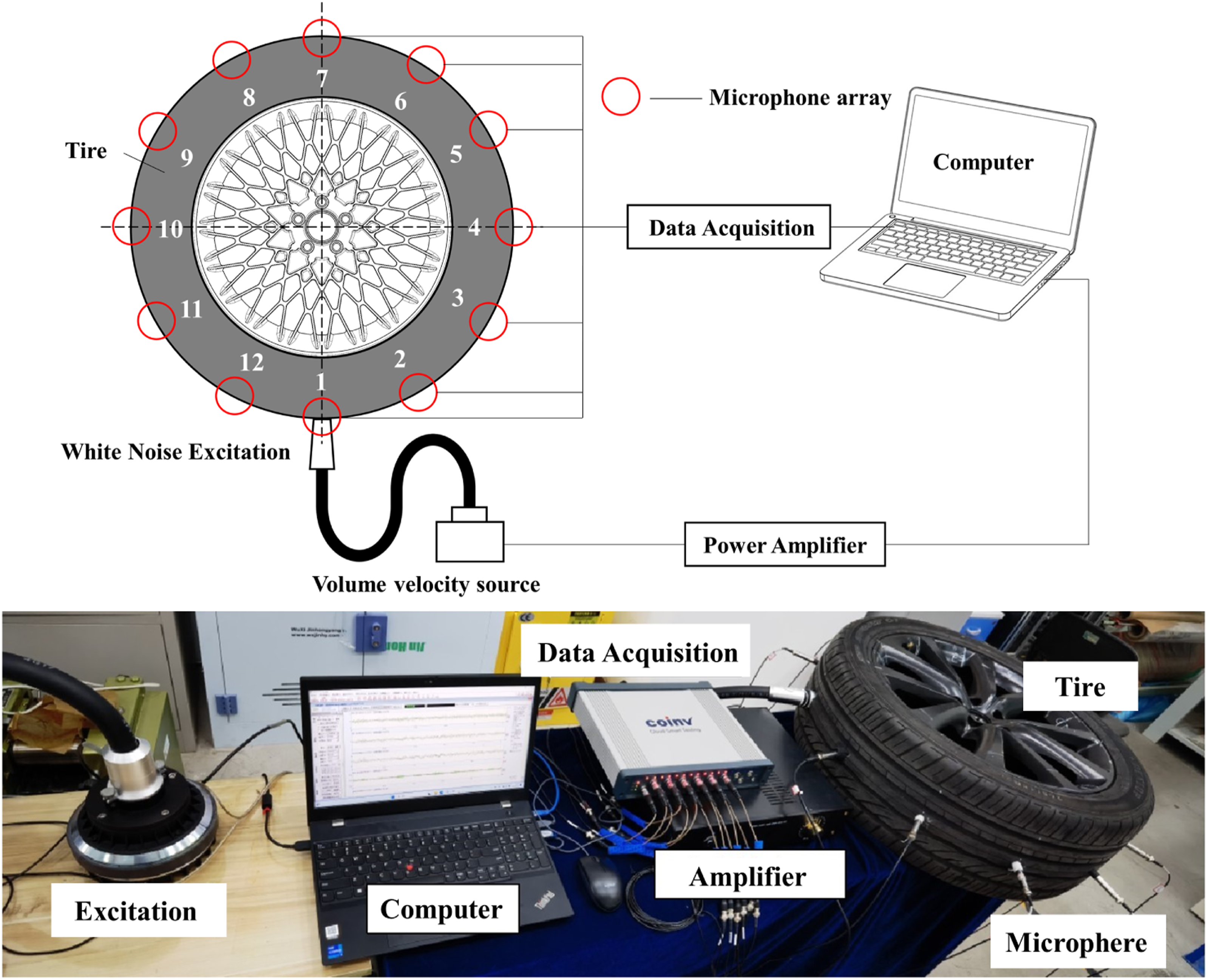
Comparison of the acoustic mode shapes by different methods.
Frequency response analysis
To analyze the influences of different parameters on the TACR noise, the frequency response analyses of TACR noise are conducted. A static vertical road load of 5000 N has been applied to the model mentioned before. The excitation condition is the point force with the amplitude of 1 N in the frequency range of 0–400 Hz, which is applied at the center of the wheel. The direction of the excitation is perpendicular to the road surface. Actually, this excitation is applied to the wheel structure. The point opposite to the contact patch in the tire cavity (see Figure 7) is adopted as the referenced sound pressure response point (where the sound pressure amplitude is also the highest), which is used to evaluate the noise level in the tire cavity. Frequency response analysis of tire cavity noise.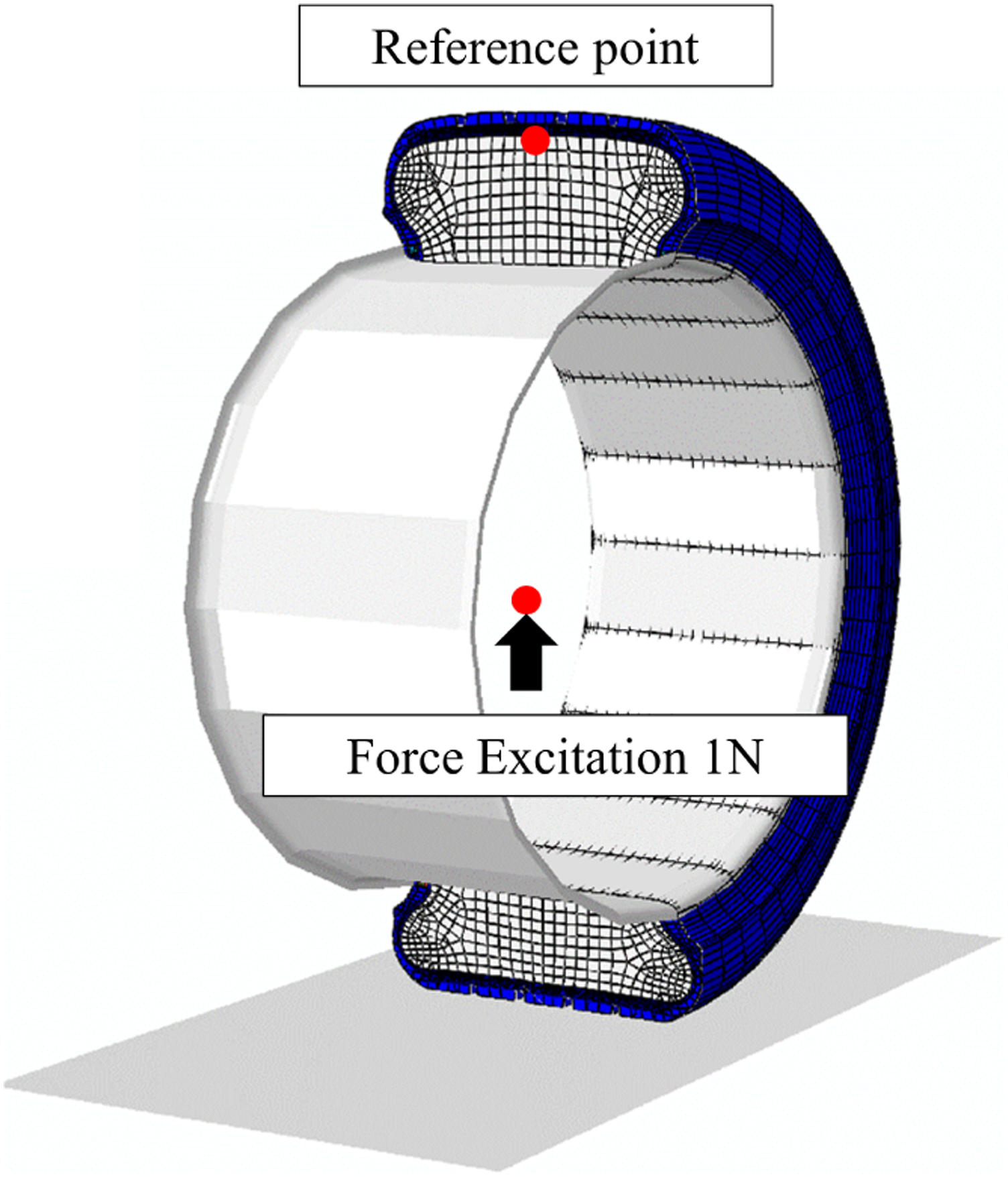
Effect of tire parameters on tire cavity resonance noise
The factors affecting TACR noise can be divided into external and internal factors. The external factors mainly include the tire inflation pressure and the road load; the internal factors mainly include the parameters of the belted cord (cord density, cord modulus, and cord angle), and the shape of the tire’s inner contour. In this section, these parameters are discussed.
External factors
Tire inflation pressure and road load.

As shown in Figure 8, it can be seen that with the increase of inflation pressure, the first-order natural frequency of TACR noise gradually increases. Specifically, the natural frequency corresponding to the no-load case (marked as Free in Figure 8) increases from 194.9 Hz to 195.9 Hz, which is a slight increase. Meanwhile, the peak value of the sound pressure increases from 5.6 × 10⁻⁵ Pa to 8.1 × 10⁻⁵ Pa. As the increase in inflation pressure actually enhances the stiffness of the tire cavity and the density of air, the comprehensive effect generates a slight increase in the modal frequency. Meanwhile, due to the increase in the density of the air medium, the attenuation coefficient becomes less and the loss in acoustic wave decreases. As shown in Figure 8(b), it can be seen that reducing the inflation pressure can contribute to the reduction in TACR noise. Modal frequency (a) and peak value (b) comparison of TACR noise under different tire inflation pressures.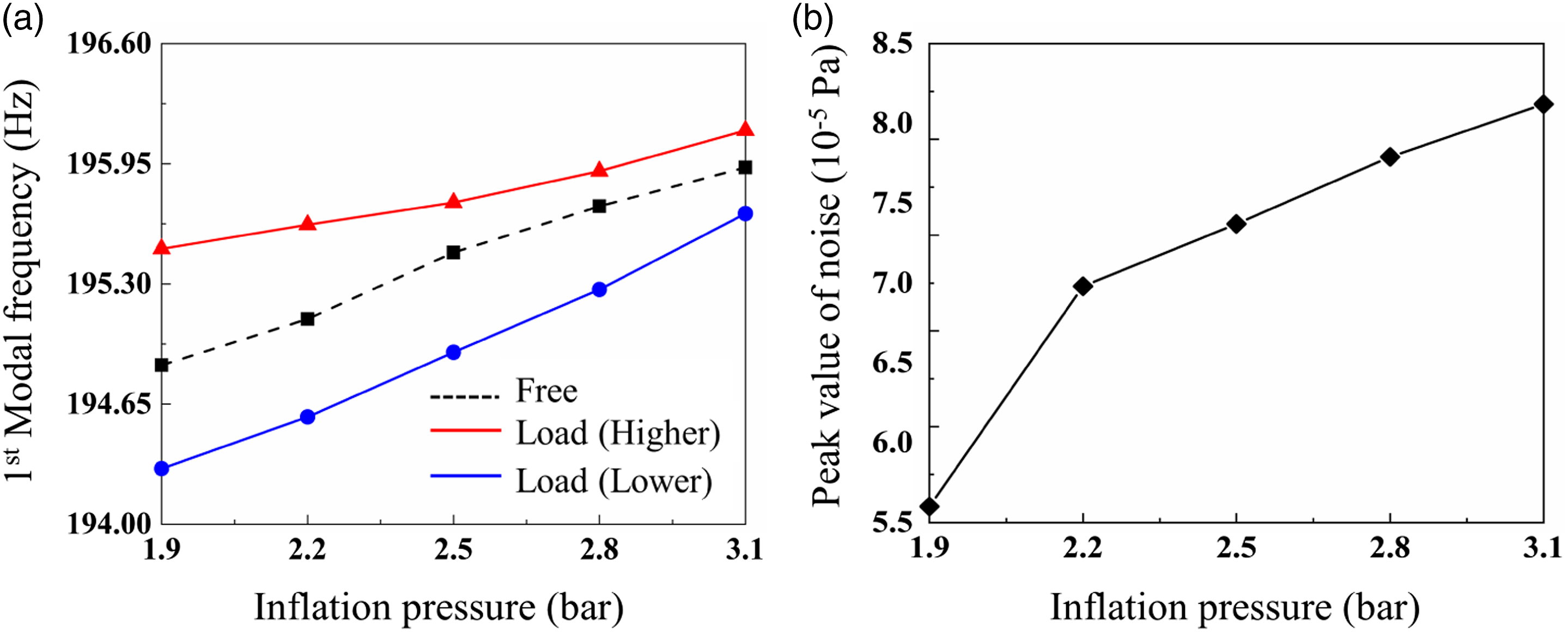
The effect of different road loads on the TACR noise under 2.5 bar inflation pressure is shown in Figure 9. It can be seen that as the road load increases, the splitting phenomenon of the first natural frequency of the tire cavity becomes more obvious, and the gap between high and low frequencies increases from 0.5 Hz to 1.0 Hz. As the road load increases, the deformation of the tire cavity becomes larger and the modal frequency changes. The mode-splitting in the horizontal and vertical directions is more pronounced. By contrast, the peak sound pressure of TACR noise slightly decreased from 7.5 × 10⁻⁵ Pa to 7.3 × 10⁻⁵ Pa, which almost remains at the same level. Overall, the changes in road load have a relatively small impact on TACR noise. Modal frequency (a) and peak value (b) comparison of TACR noise under different road loads.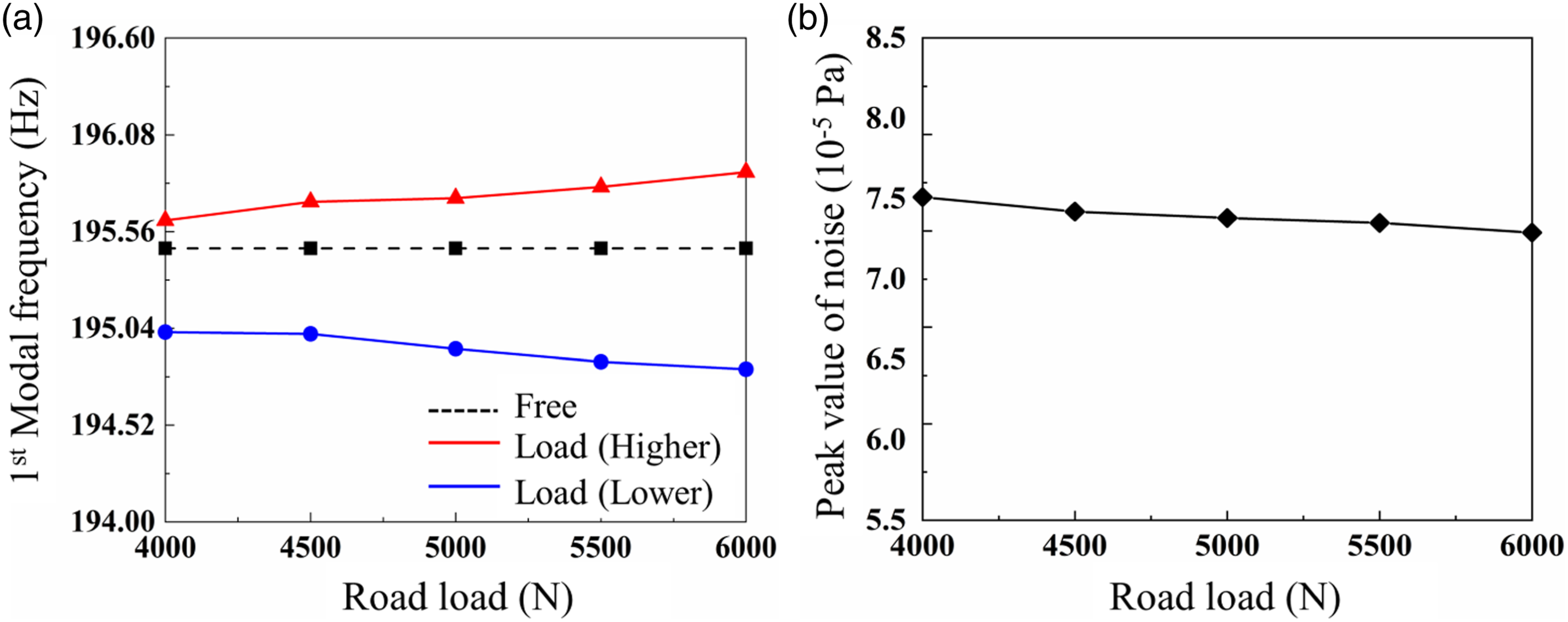
Internal factors of tires
In this section, the effects of internal factors of tires on the TACR noise are investigated. The effect of tire rubber material is very slight on TACR noise which has been mentioned by the previous study. 34 However, considering the main component and skeleton structure of tire, the belt cord is the most important load-bearing component in tires which plays an important role in mitigating road impact. Therefore, the influence of the belt cord on the TACR noise is needed to be analyzed. Meanwhile, the parameters in the interior contour of tire may also influence the modal characteristics of tire cavity and will be investigated as follows.
Tire belt cord
The variation range of parameters of belt cord.

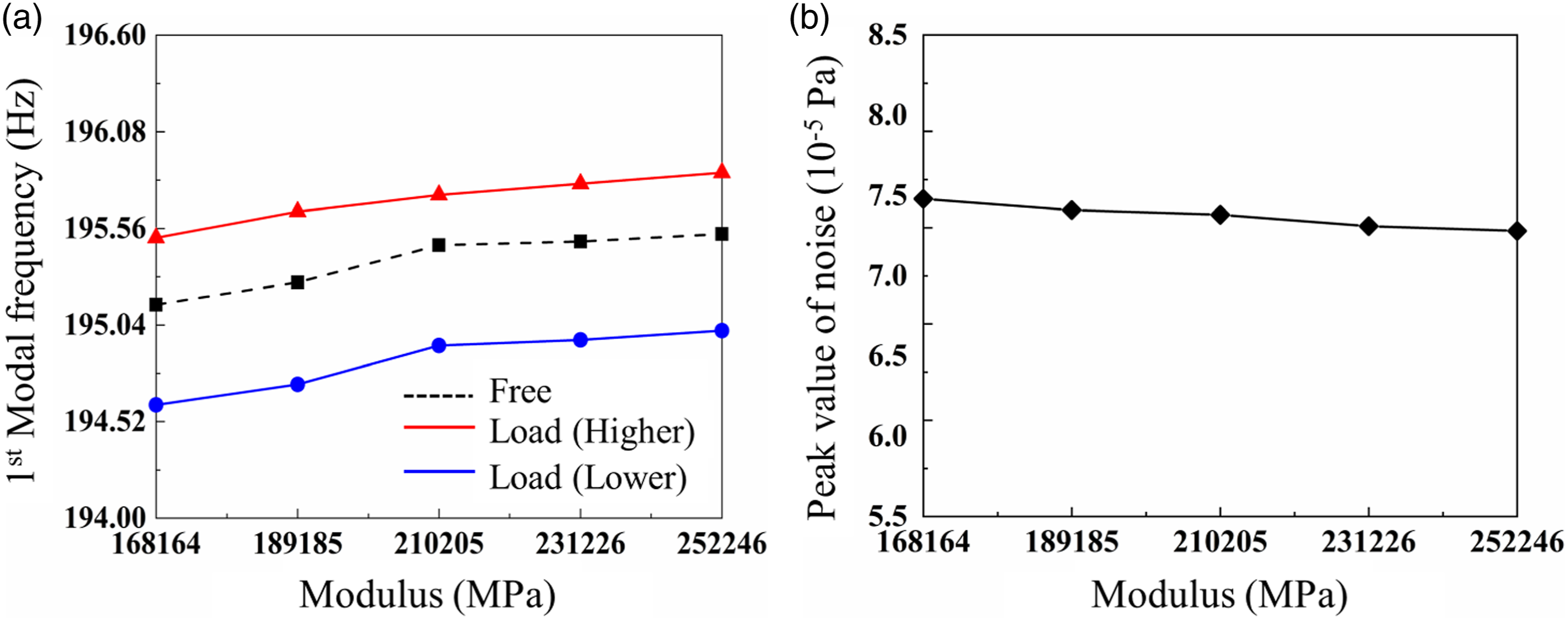
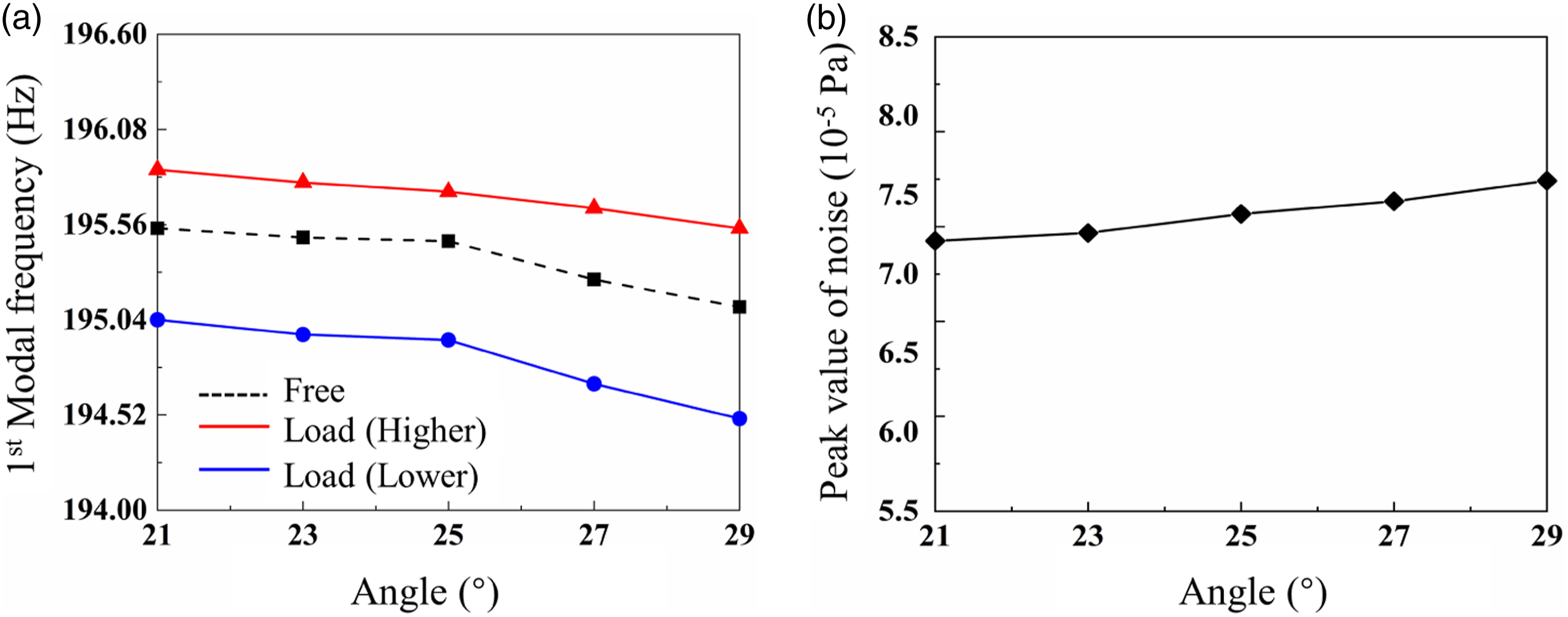
The effects of the design parameters of belt cord on the TACR noise are shown in Figures 10–12. From Figure 10, it can be observed that with the increase of cord density, the first natural frequency of the tire cavity decreases slightly from 195.9 Hz to 194.8 Hz, while the peak value in the sound pressure of tire cavity increases from 7.04 × 10⁻⁵ Pa to 7.73 × 10⁻⁵ Pa. This is due to the increased mass effect inside the tire. Meanwhile, as shown in Figure 11, with the increase of modulus, the first natural frequency of the tire cavity has a slight increase from 195.2 Hz to 195.5 Hz, while the peak value of TACR noise gradually reduces from 7.48 × 10⁻⁵ Pa to 7.28 × 10⁻⁵ Pa. The effect of cord angle is also illustrated in Figure 12. As the cord angle increases, the first natural frequency of tire cavity decreases slightly from 195.5 Hz to 195.1 Hz, while the peak value of TACR noise increases from 7.21 × 10⁻⁵ Pa to 7.59 × 10⁻⁵ Pa. In fact, the influence of different designed parameters of the belted cord can be attributed to the stiffness and mass of the cord. Overall, as the stiffness of the belt cord increases, the first natural frequency of the tire cavity slightly increases while the damping coupling between the tire and the acoustic cavity increases, it can be seen that the peak sound pressure of TACR noise also has a slight reduction. By comparison, the mass effect has an inverse trend. Meanwhile, we can also find that the growth in the angle of the belt cord aggravates the mode-splitting phenomenon and increases the sound pressure of TACR noise. However, these influences are relatively small. The reason for this is that the tire and the acoustic cavity are coupled systems, and the acoustic characteristics of the tire-cavity coupled system are dominated by its sound cavity acoustic mode. Taking into account that structural parameters directly affect the acoustic cavity through the coupling effect, we discuss the impact of these factors in the next subsection. Modal frequency (a) and peak value (b) comparison of TACR noise with different density of belt cord. Modal frequency (a) and peak value (b) comparison of TACR noise with different modulus of belt cord. Modal frequency (a) and peak value (b) comparison of TACR noise with different angle of belt cord.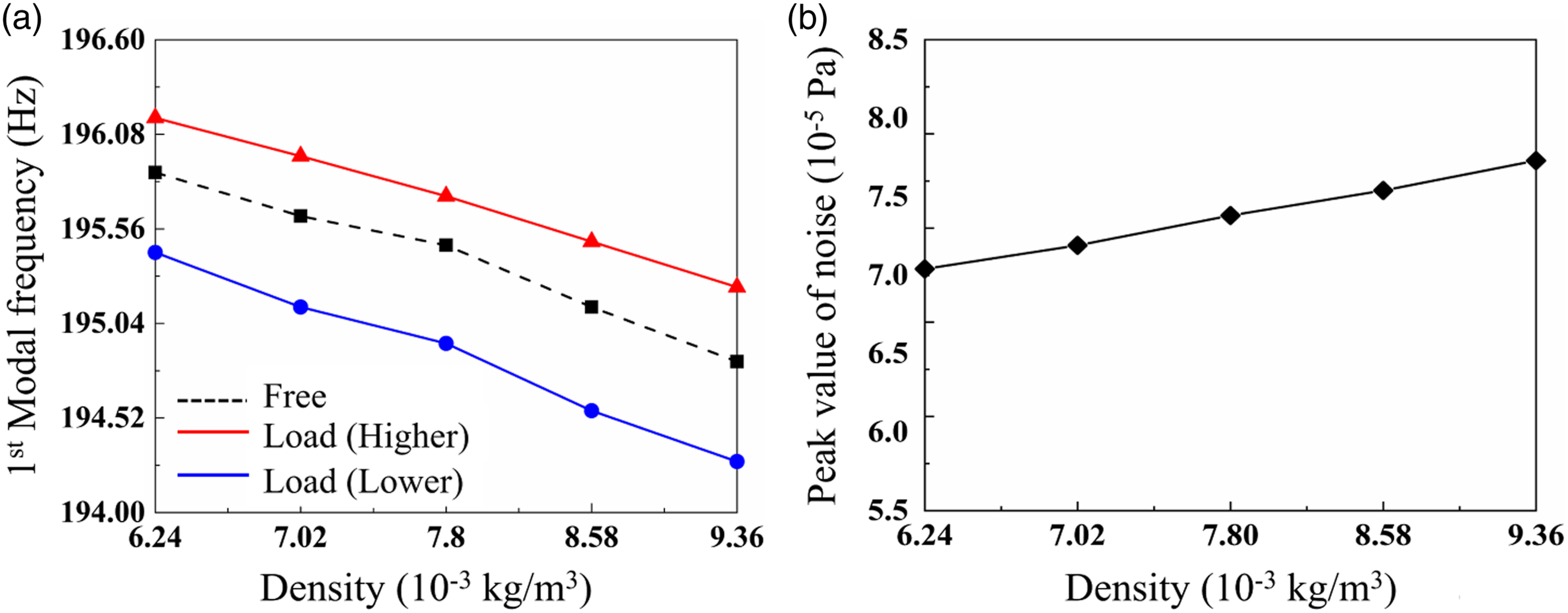
Shape parameters of the inner contour in tire cavity
In this section, to obtain the low-noise tire cavity, the discussions about the effects of the parameters of inner contour shape on the TACR noise are conducted here. Figure 13 shows the shape parameters to be analyzed. Schematic diagram of inner contour design parameters for tire cavity.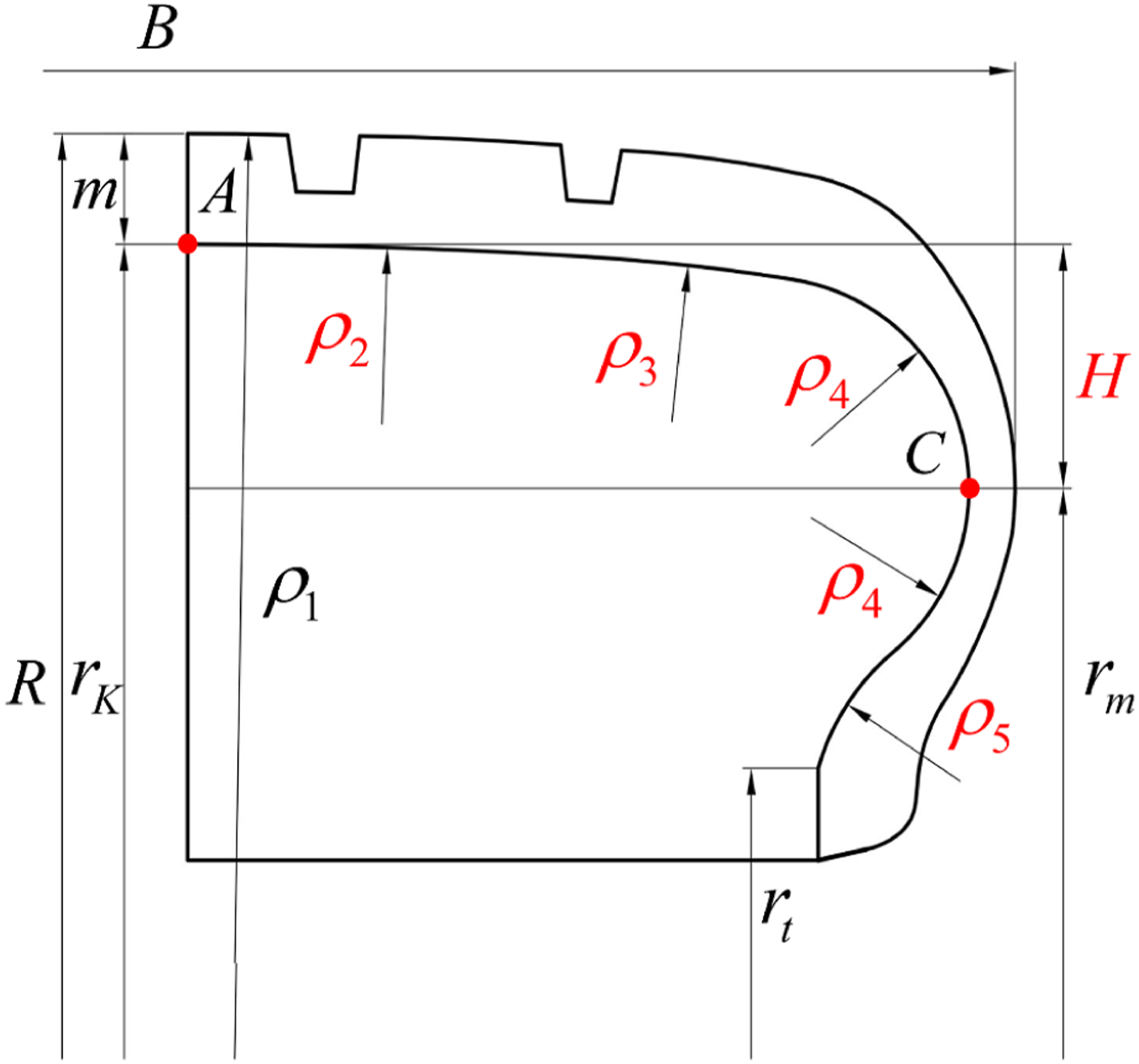
To improve the efficiency of analysis, when adjusting the shape of the inner contour of the tire, the inner contour has been simplified.
38
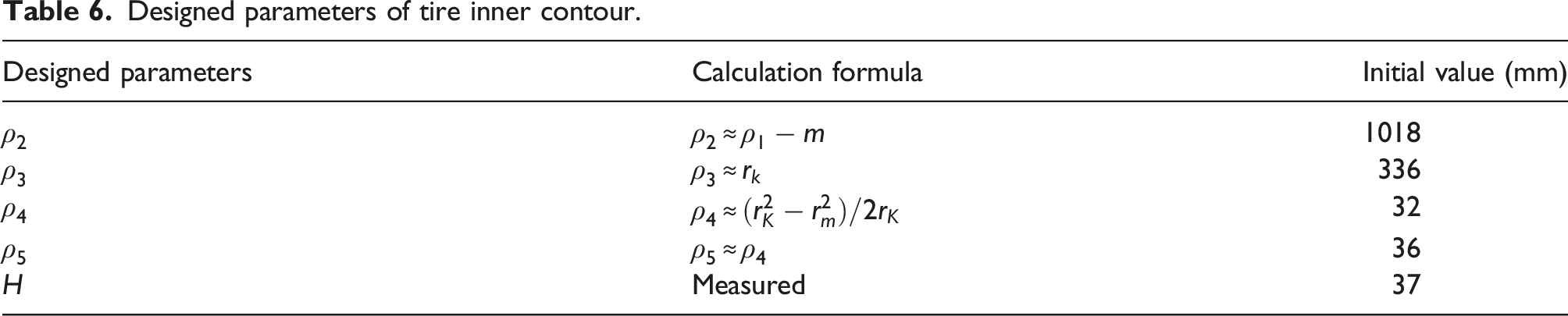
The contour curve is obtained by applying the mathematical model calculation formula of thin-film network theory called as equilibrium contour theory. According to the static mechanical equilibrium equation of thin-film network theory, the equilibrium internal contour curve of the diagonal tire can be obtained. The curvature radius on the contour can be calculated using the following formula:

Determined parameters for tire contour.

Designed parameters of tire inner contour.
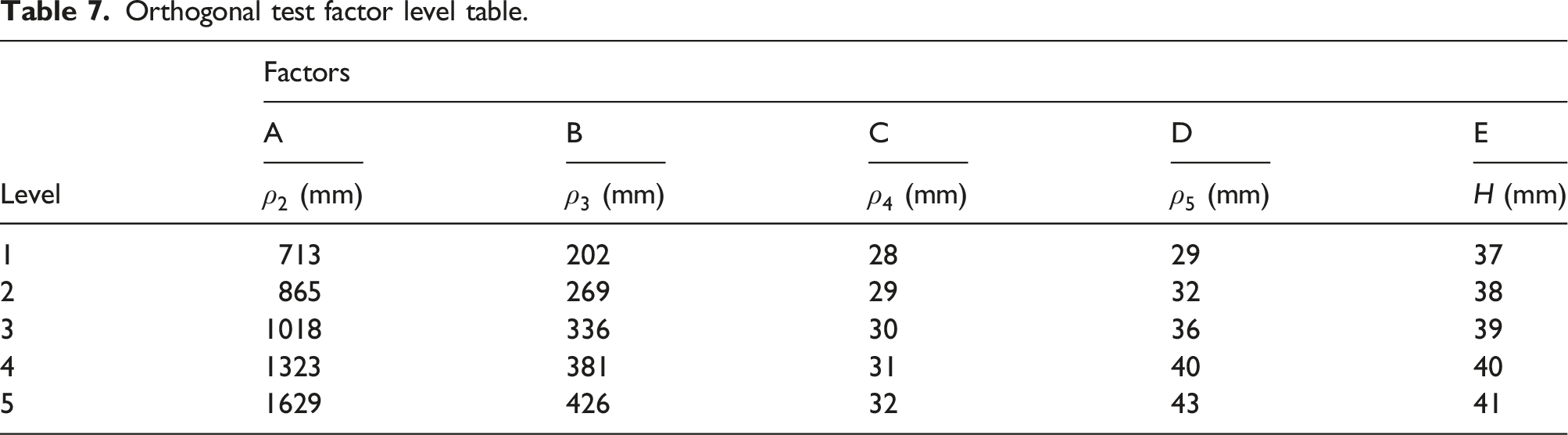
Orthogonal test factor level table.
Considering the complexity in the simulation process of the acoustic-structural coupling FEM model, as the outer profile and constituent materials do not affect the inner contour of tire cavity, a new FEM model only including the tire cavity is established here to greatly enhance the efficiency of calculation. As the greater difference of elastic modulus between the air cavity and the tire or wheel leads to weak coupling between them, the tire and wheel are assumed to be rigid bodies to clearly describe the influences of the shape parameters of the inner contour of tire. To ensure simulation accuracy, the deformation caused by road load is also taken into account in the simplified tire cavity model. The road excitation is simulated by applying a vertical upward vibration velocity of 1 mm/s on the contact patch. At the same time, the acoustic impedances of rubber and aluminum materials are considered as the boundary conditions on the outer surfaces of the tire cavity model. The referenced response point is the same as that in Figure 7, which is also at the top of the cavity, as shown in Figure 14(a). (a) Simplified FE model of tire cavity and (b) frequency response curve of TACR noise.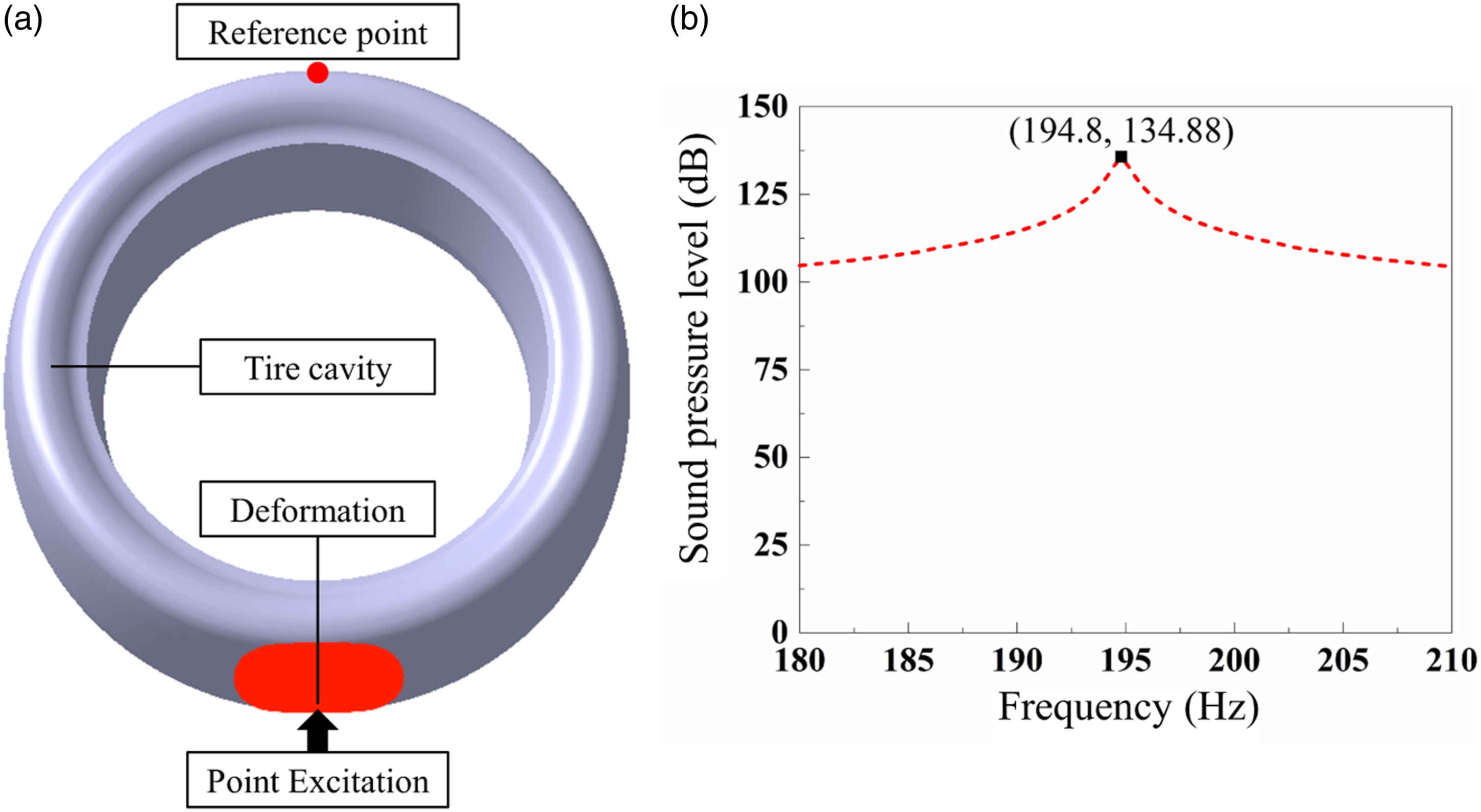
Orthogonal test scheme and test results table.
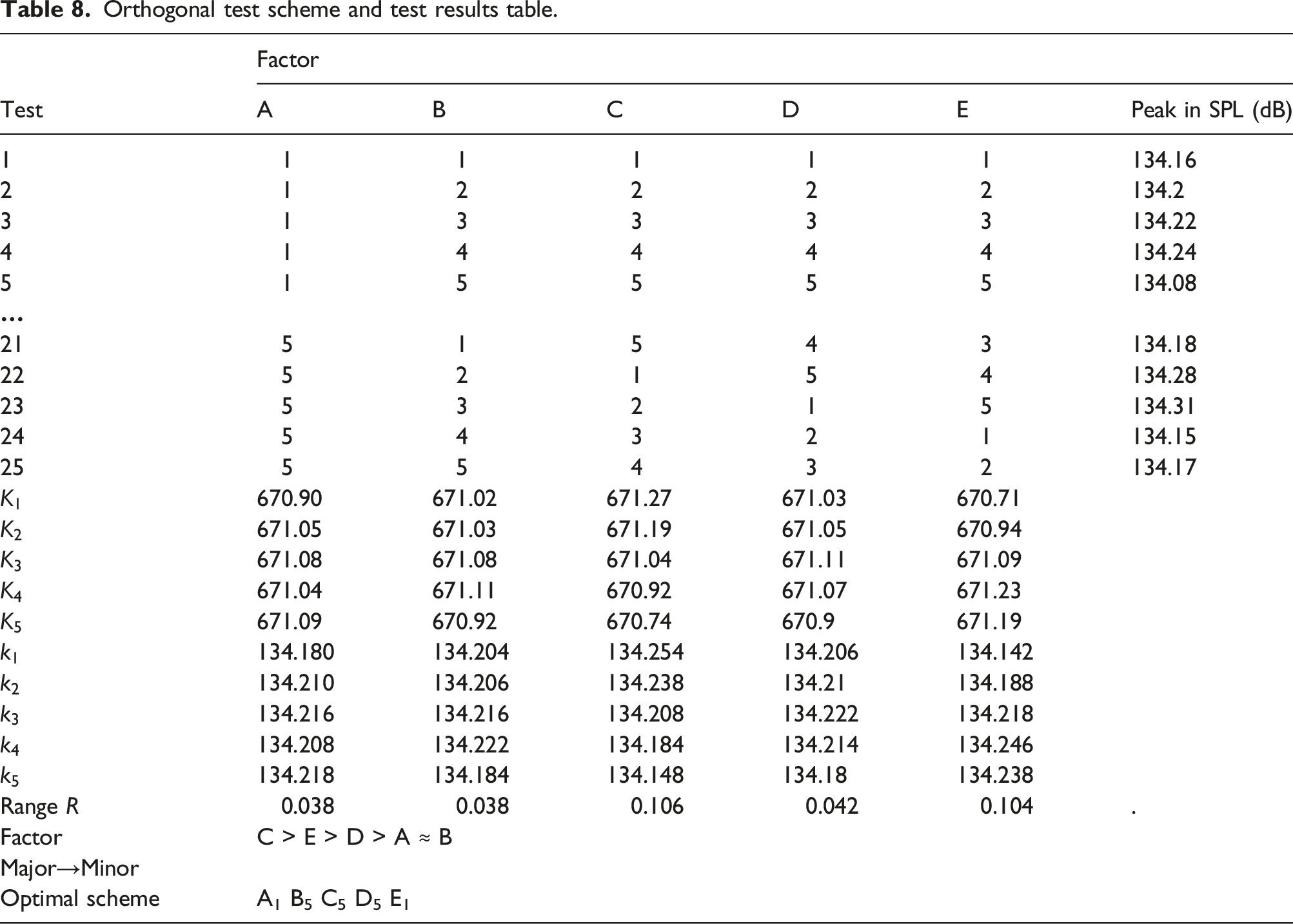
In Table 8,
From Tables 8, it can be observed that the sequence of factors influencing TACR noise is
Moreover, to explore the influences of different design factors on TACR noise, the trend chart is depicted in Figure 15. The different design parameters of the inner tire contour are compared with each other. Corresponding to the range analysis, it can be seen that the curvature radius Effects of inner contour designed parameters on TACR noise.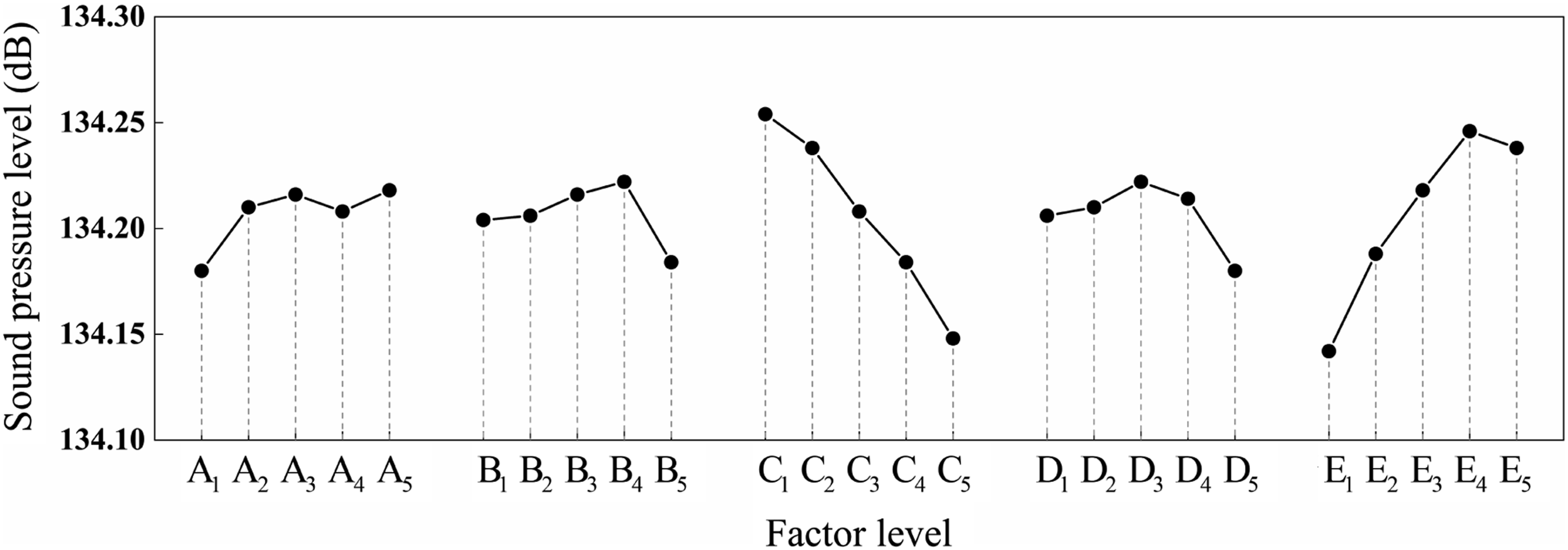
According to the investigations in this paper, the influences of external and internal factors on TACR noise are basically clarified and compared, which is helpful in designing the low-noise tire. Meanwhile, in terms of tire with the fixed specification, although adjusting the inner contour parameters can affect the shape of the tire cavity, it does not have a significant influence on TACR noise. It verifies the well-known assumption that the approximate model of tire cavity can be simply recognized as the regular rectangle tube,12,40 and the propagating acoustic wave can be recognized as the plane wave in tubes. 41
Conclusions
In this paper, the FEM model of acoustic-structural coupling structure for 245/45 R19 tire is established, and modal characteristics and frequency response of tire cavity under road load are investigated. Based on the FEM simulations, the influences of different parameters on TACR noise are also discussed and analyzed. The relevant conclusions are as follows: (1) The accuracy of the established FEM model is validated by both the theoretic and experimental results. A good match among the FEM simulation, theoretic and experimental results can be found. (2) The effects of external factors on the TACR noise are studied. It is found that increasing the inflation pressure raises the first-order natural frequency of the tire cavity and the sound pressure of TACR noise. Meanwhile, increasing the road load can exacerbate the splitting phenomenon of the first natural frequency, and slightly increase the sound pressure of TACR noise. (3) To clarify the inner factors directly affecting the characteristics of tire cavity, the influences of main constituent component belt cord and structurally designed parameters of inner contour are discussed, respectively. The results reveal that enhancing the stiffness of the belt cord can increase the first natural frequency and reduce the sound pressure of TACR noise. On the other hand, increasing the curvature radius at the tire shoulder and reducing the height of the section can reduce the TACR noise. But in general, in terms of tire with the fixed specification, adjusting the shape of the inner contour of the tire does not have a significant influence on the sound pressure of TACR noise. In order to achieve the significant TACR noise reduction, besides optimizing the structural parameters itself, the introduction of sound mufflers is also essential. Future works will concentrate more on the development of sound mufflers in the commercial vehicle application to achieve significant tire/road noise reduction.
Footnotes
Declaration of conflicting interests
The author(s) declared no potential conflicts of interest with respect to the research, authorship, and/or publication of this article.
Funding
The author(s) disclosed receipt of the following financial support for the research, authorship, and/or publication of this article: This work is finically supported by the National Natural Science Foundation of China (Grant No. 51675021).
CRediT authorship contribution statement
Yue Bao: Formal analysis, visualization, and writing—original draft. Qizhang Feng: Conceptualization and methodology. Wei Zhao: Investigation, data curation, and software. Yue Zhang: Validation. Jintao Luo: Formal analysis. Xiandong Liu: Resources, writing—review and editing, supervision, and funding acquisition.
