




Abstract
Dynamic behaviors of turbine blades are important for the dynamic design of whole-bladed disk systems. The bladed disk systems with shrouds are used to achieve advanced functions in operation. The shrouds are used to connect several blades as a bladed packet, and several bladed packets are assembled as a bladed disk. Previous researches mainly focus on the mistuning of the bladed disk. However, in operation, the shrouds often suffer damage and wear, and it will lead to shrouds mistuning. The shroud is a critical component for adjusting the coupling strength of the blade to the blade. The innovation of this paper is to study the coupling dynamics problem caused by blade mistuning and shroud damage. The localized vibration of the bladed disk is caused by the blade mistuning, and the shroud damage can also cause the localized vibration of the bladed disk. The coupling dynamic behaviors of bladed disk caused by blade mistuning and shroud damage are important. Therefore, the dynamic behaviors of a mistuned bladed disk with the shroud are important for the bladed disk. A numerical method is conducted to investigate the dynamic characteristics of the whole bladed disk with shroud. The coupling effect between shroud and blade mistuning on the dynamic behaviors of the bladed disk is researched. The numerical model is validated by assuming the shroud and blade mistuning is zero. The coupling effect of shroud and blade mistuning leads to the characteristics being more complicated. Bladed packet is the basic part of the bladed disk with shroud. In order to study the modal characteristics of bladed packets due to shroud, an experiment is conducted. It is worth noting that the first sub remains invariable with the increasing of stiffness ratio.
Introduction
Bladed disk systems with shrouds are used in turbo engines in which several blades are connected creating a bladed packet through lacing wire. Its modal characteristics are more complex compared with general bladed disk systems and have attracted much attention of researchers. The schematic diagram of each part of the bladed disk is shown in Figure 1. The first part is a blade. The second part in Figure 1 is the shroud and the third part is the disk. Schematic diagram of each part of the bladed disk.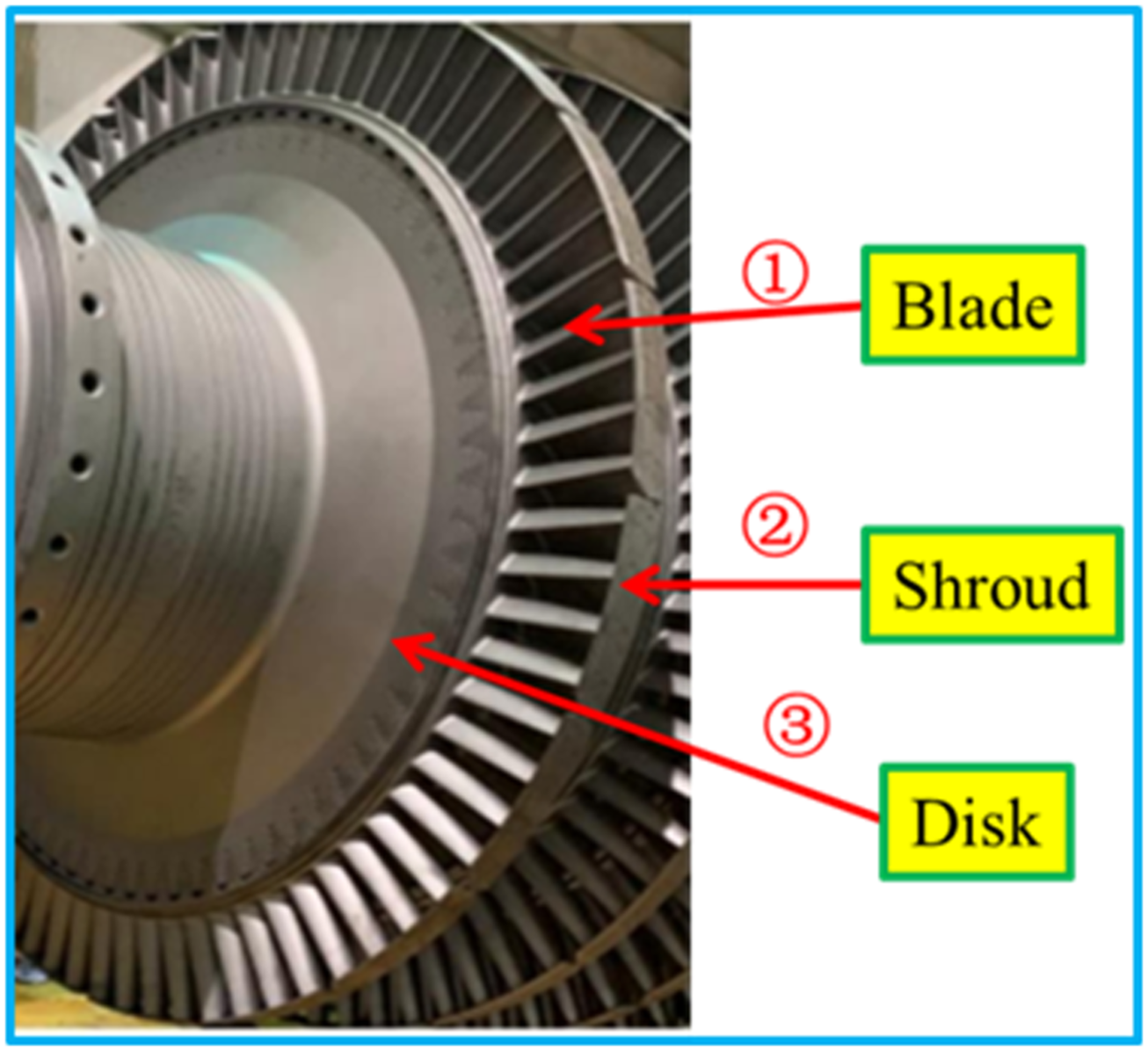
The design of a bladed packet is different from a single blade. Dynamic behaviors of bladed packets are studied.1,2 In order to investigate the different number of groups on the dynamic behaviors of bladed disk, finite modeling is used to study the difference in dynamic behaviors of two structures with different groups of bladed packets. 3 A modeling method is used to analyze the bladed disk with shroud. 4 Their results indicated that the modal characteristics are significantly affected by the shroud. In order to increase computational efficiency, reduced-order model is developed to investigate the transient dynamic behaviors of the bladed disk with shroud. 5
However, the works mentioned above focuses on the dynamic behaviors of tuned-bladed packet. In practice, mistuning is inevitable during operation.6–10
The mistuning will lead to more complicated vibration localization.11–14 The mistuning may cause vibration localization leading to premature high-cycle fatigue. 15 A perturbation method is proposed to study mode localization and vibration localization.16,17 Their results showed that forced response localization and mode localization can be introduced by a small mistuning in weakly coupled systems. An FRF matrix method is conducted to obtain the forced response of mistuned structure. 18 A fundamental mistuning model is used to analyze the effect of mistuning on the dynamic characteristics of the bladed disk. 19 In recent years, the mistuning of blades due to blade damage has been discussed. A Galerkin’s method is used to study the mode localization phenomenon with the crack defect considered in the blade. 20 Their results indicated that an additional unstable zone was introduced and the unstable zone varies with the crack size. A numerical model is proposed to study the effect of blade crack on the vibration localization of a mistuned bladed disk. 21 A developed reduced method is applied to investigate the effects of single and multiple cracks on the local dynamic behaviors of centrifugal impellers.22,23
Previous studies have mainly investigated mistuning due to blade damage. However, in practical applications, it should be noted that the shroud often damages in blade disk system. Few works,24–26 have been focused on bladed packets due to shroud damage. Distributed parameter model is applied to investigate the effect of lacing wire damage-induced mistuning on modal characteristics. 24 In order to research the effect of damage on the natural characteristics of bladed packet, an index is introduced. In order to establish the relationship between the damage and shift in the modal of mistuned bladed packet due to shroud and blade damages, a lumped parameter model is developed. 25 The shroud is used to reduce the vibration localization is researched. 26 Other ways of reducing the vibration of the structure are conducted. 27 Aero-engines are developing towards high power and high reliability. Therefore, higher requirements are placed on the performance of aero-engines. The premise of designing a high-performance engine is to have a very deep understanding of the dynamic system of the aero-engine. The bladed disk system is the core component of the aero-engine. The mistuning problem is unavoidable in the bladed disk system. Therefore, the coupling dynamic behaviors of bladed disks caused by blade mistuning and shroud damage is interesting and important for many engineers in the field of rotary systems.
Blade mistuning can result in localized vibration of the bladed disk. At the same time, shroud damage is inevitable in operation and the shroud damage can also cause the localized vibration of the bladed disk. Therefore, the coupling dynamic behaviors of bladed disks caused by blade mistuning and shroud damage is interesting and important for many engineers in the field of rotary systems. The biggest contribution of this paper is to study the coupling dynamics of the bladed disk caused by the blade mistuning and the shroud damage.
In this article, a numerical model is used to discuss the local dynamic behaviors of the whole bladed disk with shroud. The coupling effect between shroud and blade mistuning on the dynamic characteristics of the bladed disk is researched. An experiment is performed to study the natural characteristics of the bladed packet due to the shroud. Based on the experimental setup, the effects of coupling stiffness on the modal characteristics of bladed packets are researched.
Dynamic characteristics of mistuned bladed disk due to coupling effect between blade and shroud damage
The bladed disk with shroud is demonstrated in Figure 1. Shroud is vital for the coupling between blade and blade in the bladed disk in Figure 1. It can be seen that every four blades are connected by a shroud as a bladed packet and several bladed packets are connected as a bladed disk. The design of this bladed disk with a shroud is different another bladed disk without shrouds.
The design of a bladed disk with a shroud is often applied in operation due to its outstanding functions. Therefore, the dynamic behaviors of vibration localization caused by shroud damage are critical for the design of the bladed disk. In order to discuss parameters on the dynamic behaviors of bladed disks with shroud, a numerical model is applied as shown in Figure 2. Numerical model of bladed disk with shroud.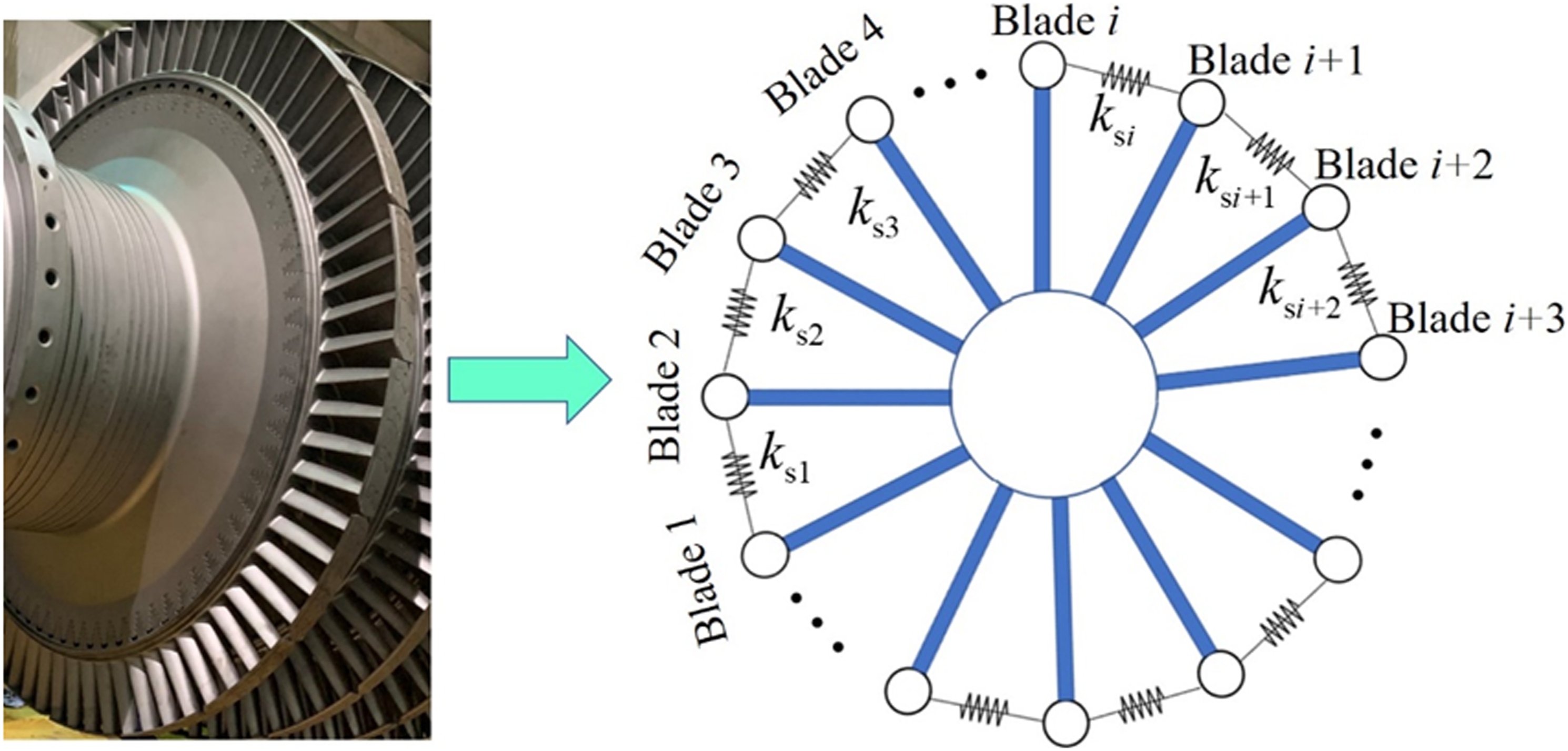
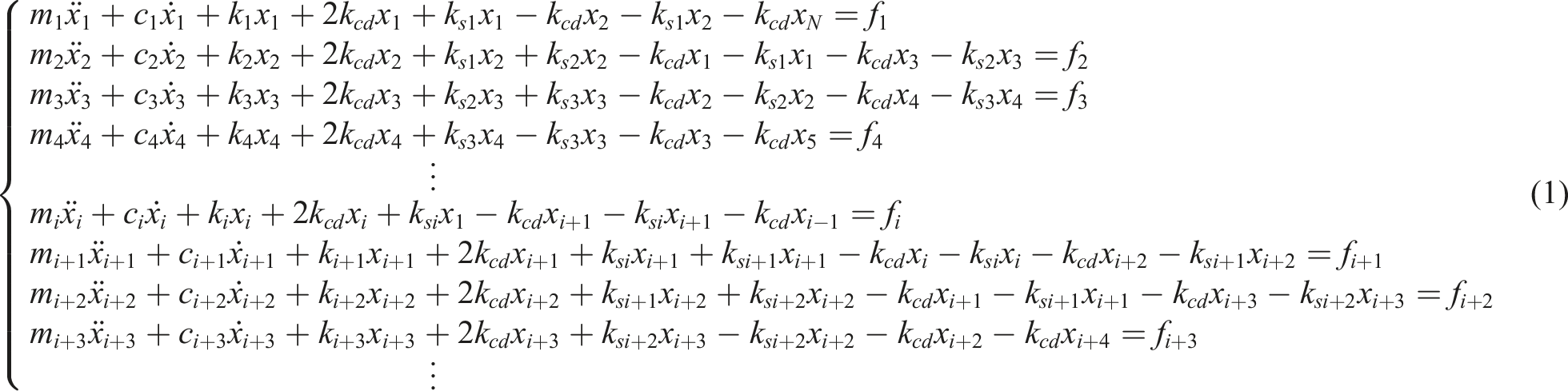
Equations of forced vibration of the bladed disk with a shroud are established based on D’Alembert’s principles
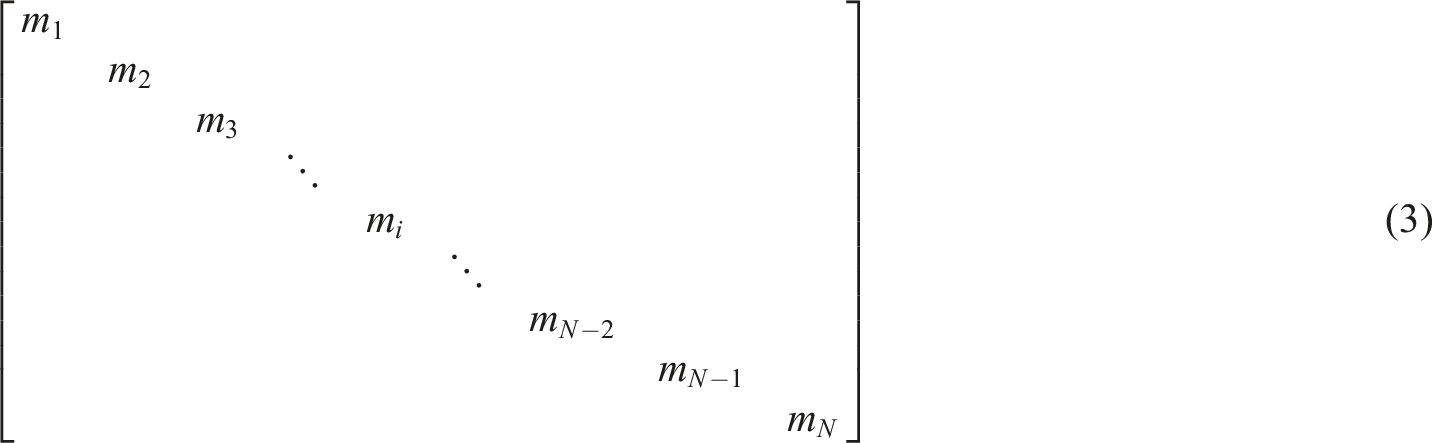
The mass matrix of the whole system is depicted as
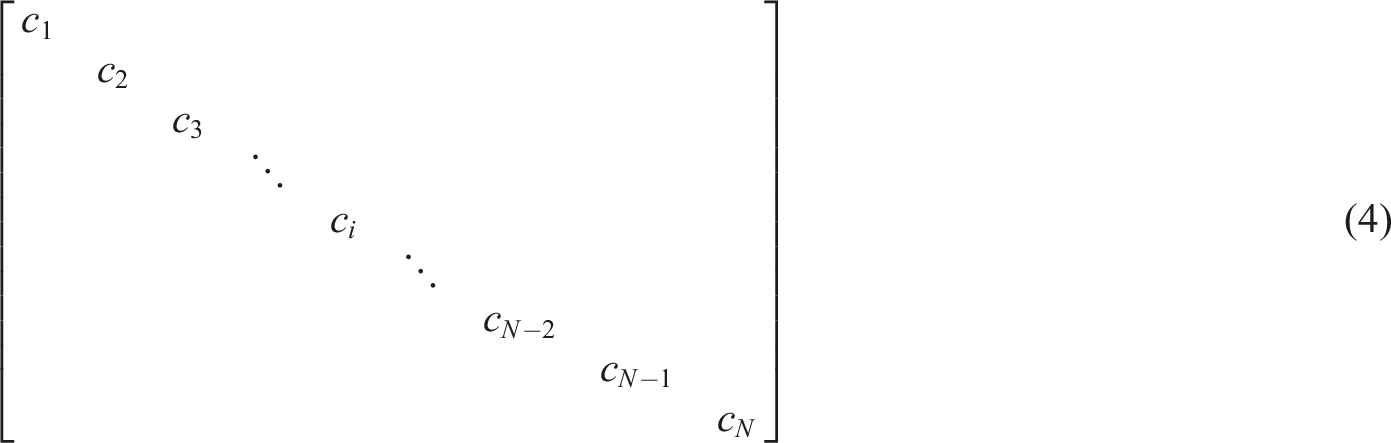
The relationship between a mistuned shroud and a tuned shroud can be described as following
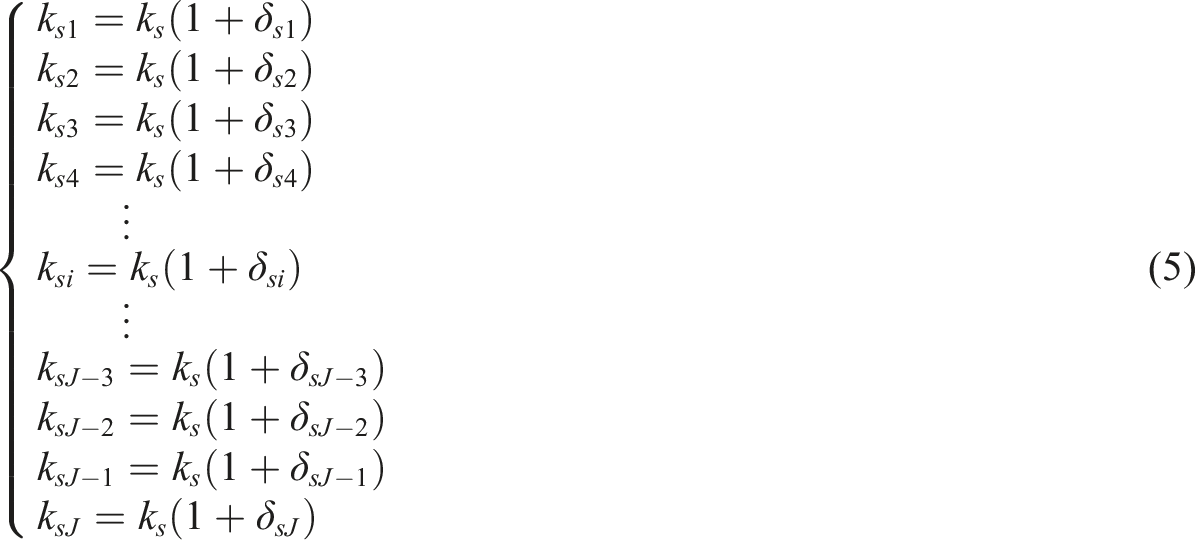

In this paper, the bladed disk contains 36 blades and each 4 blades are connected by a shroud as a bladed packet. Therefore, the system contains nine bladed packets. The bladed disk contains 27 shrouds.
Mistuning parameters are random in actual operation. Therefore, in this paper, the mean value of a mistuning parameter of the shroud is zero and the standard deviation is 0.01. The mistuning parameters of the shrouds of this bladed disk are illustrated in Figure 3. The mistuning parameter of shrouds.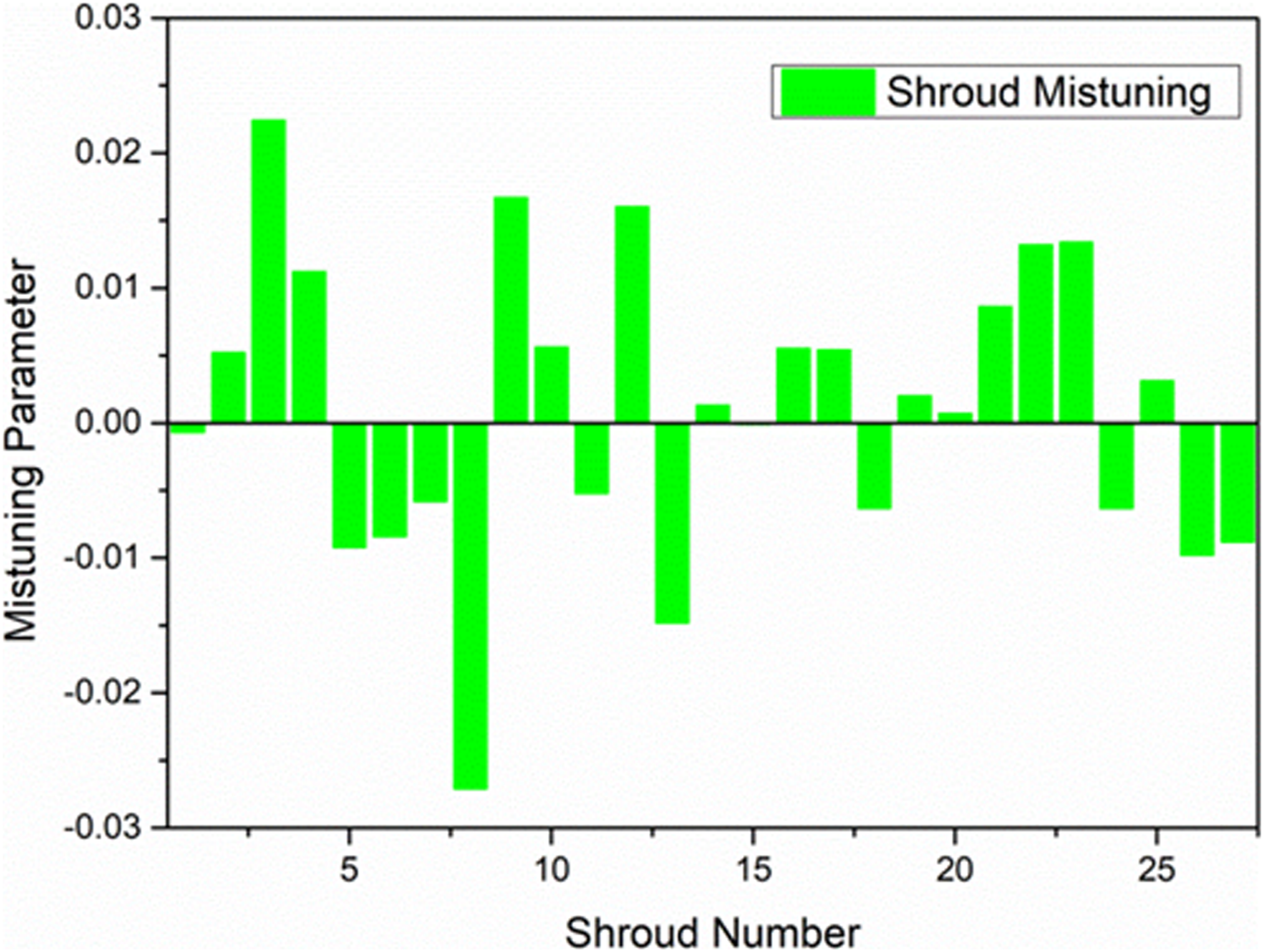
The relationship between the mistuned blade and a tuned blade can be described as follow The mistuning parameter of blade.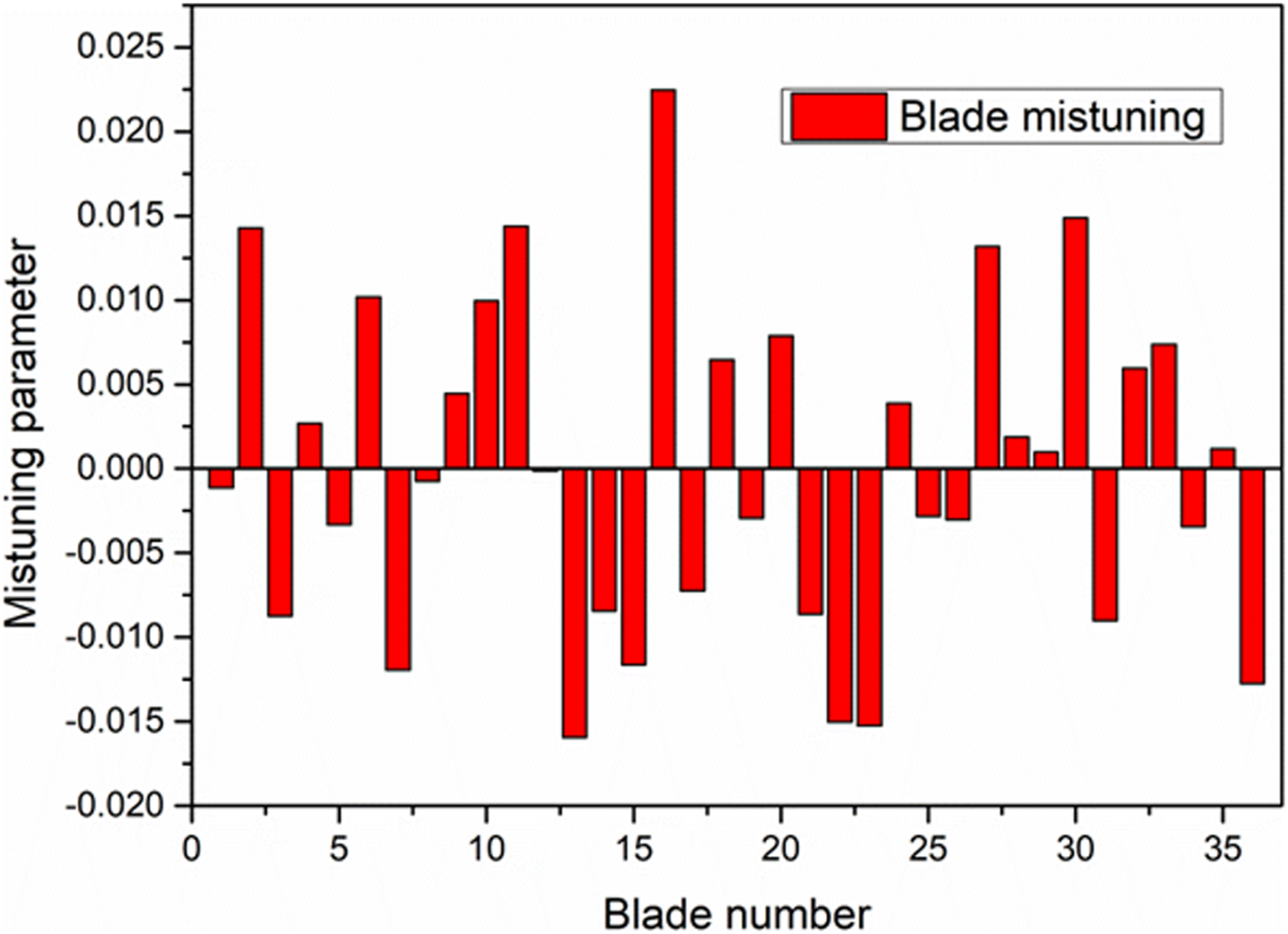
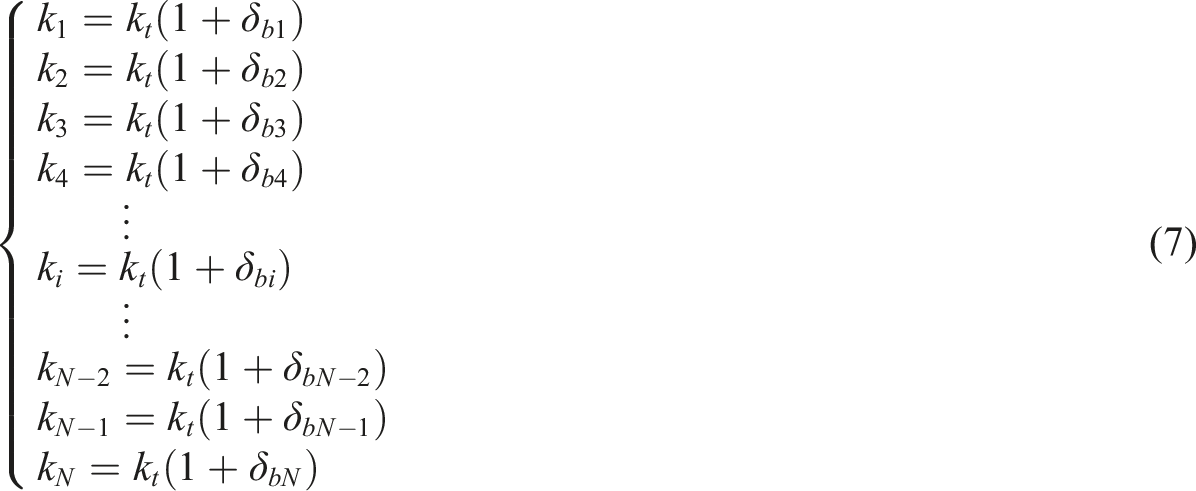

Validation model
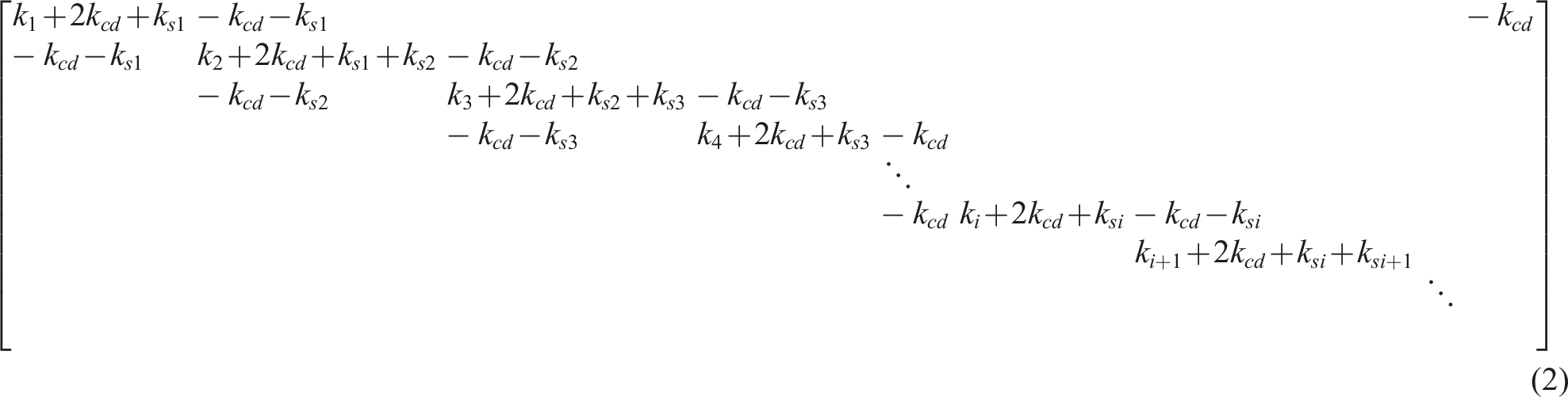
In order to verify the numerical model of the bladed disk system, the damaged blade and shroud are assumed zero. The stiffness matrix of the whole system is depicted as
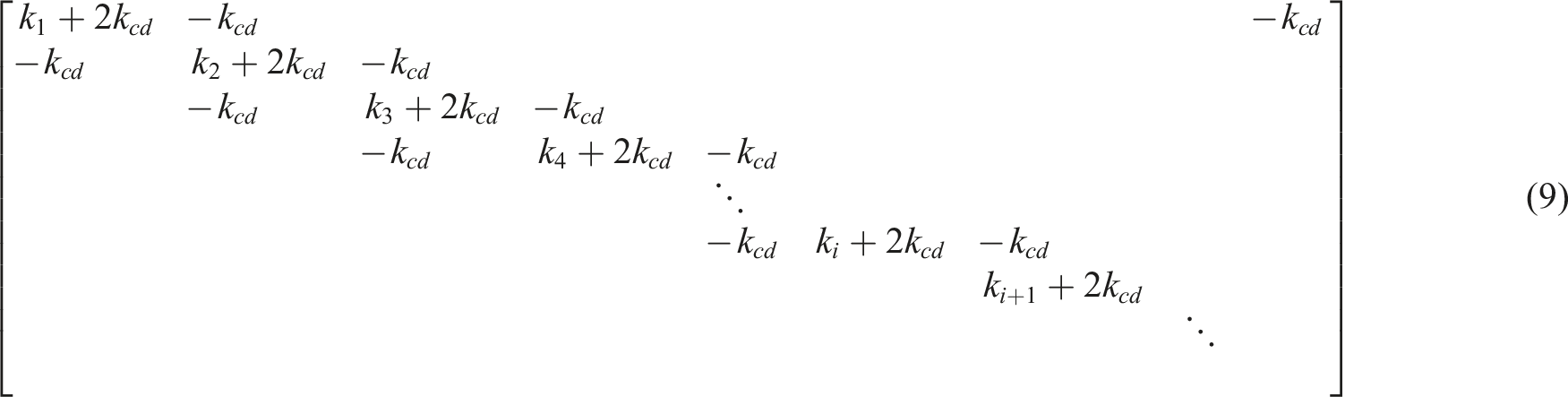
The aim of this manuscript is to study the coupling dynamic characteristics of the whole bladed disk with a shroud considering the damage. The difference in the original equation appears in stiffness with and without damage. The Runge–Kutta method is used to calculate the forced response of differential equations of motion of a whole bladed disk with shroud. Solving process is conducted in MATLAB. The curves between frequency and amplitude are obtained and shown in Figure 5. The response of every blade is identical to each other. There is a peak in the curves between frequency and amplitude. Therefore, it can illustrate the validity of the numerical model. Curves between frequency and amplitude of bladed disk.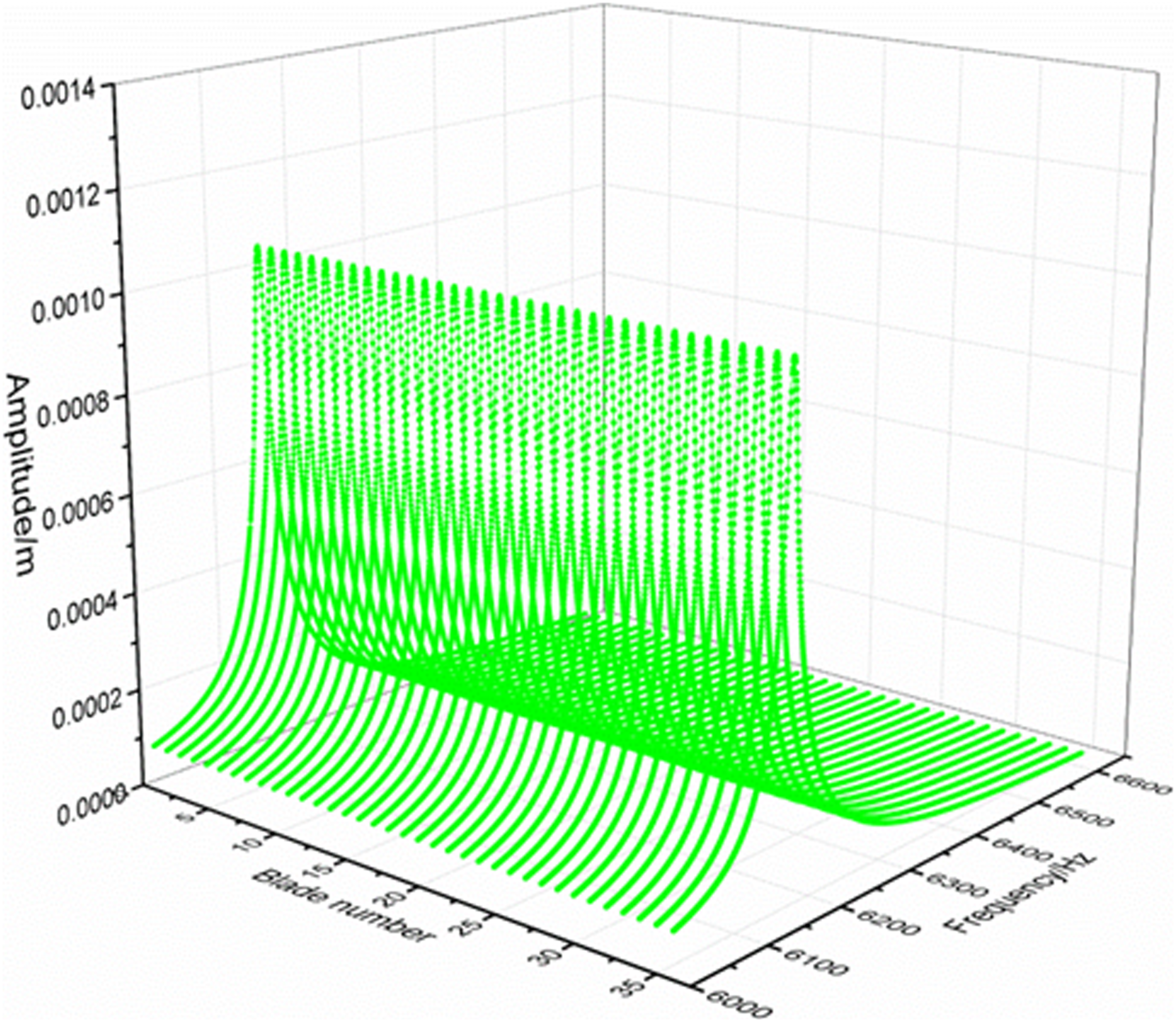
From the above numerical method, the parameters on the dynamic behaviors of bladed disks with shroud can be investigated due to shroud damage. The Runge–Kutta method is used to calculate the forced response of differential equations of motion of a whole bladed disk with shrouds. The curves of frequency and amplitude of a bladed disk due to the coupling effect between shroud and blade mistuning are shown in Figure 6. Curves between frequency and amplitude of bladed disk.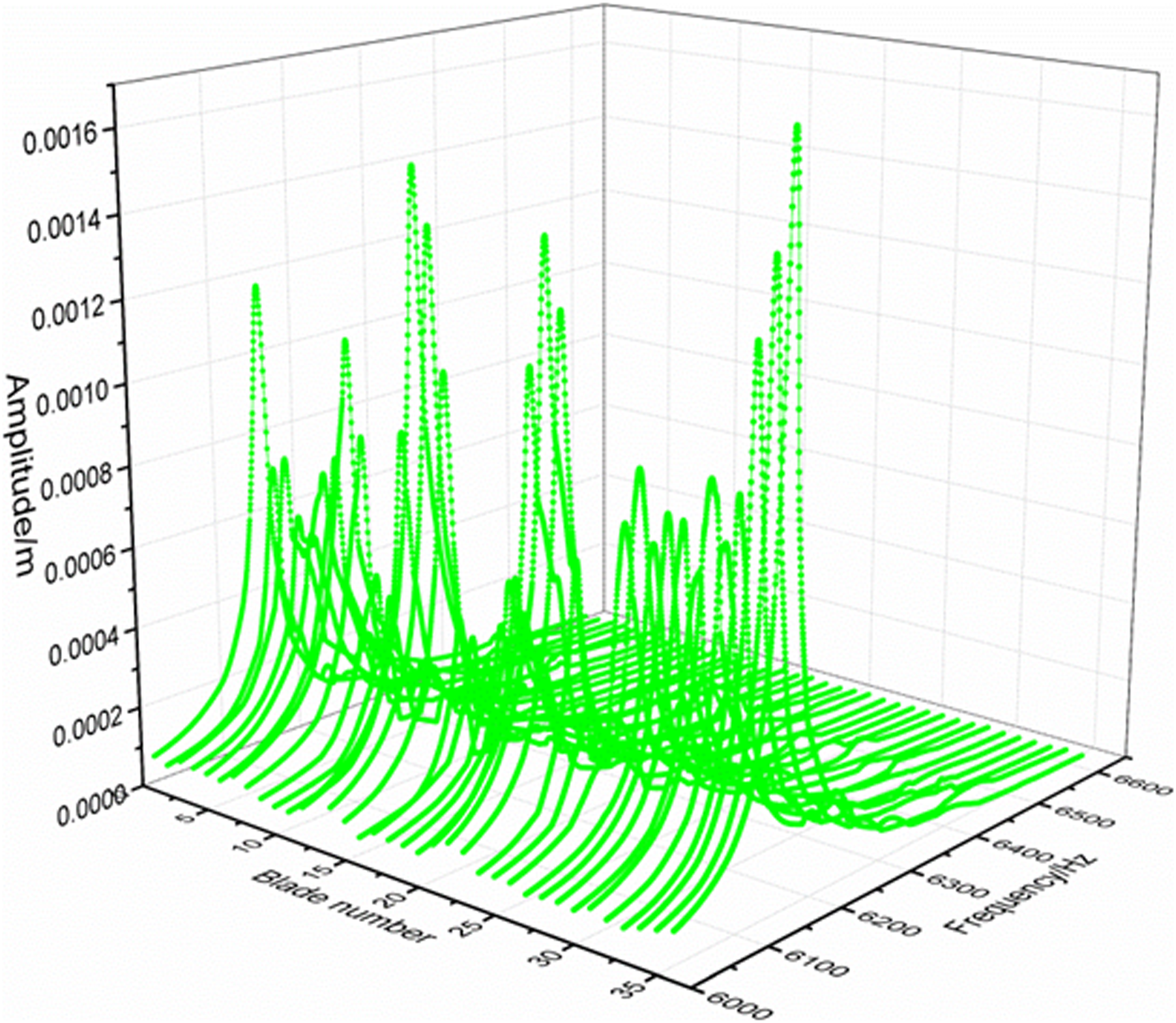
Firstly, the curves of frequency and amplitude of the bladed disk due to the coupling effect between shroud and blade mistuning are shown in Figure 6. It is shown that the response is not identical with each other in Figure 6 due to mistuning. The cyclic symmetry of the bladed disk characteristic is destroyed by mistuning. Therefore, the dynamic behavior of each blade is not the same compared with the tuned system.
The amplitudes of each blade are shown in Figure 7. The distribution of these amplitudes is complicated. Some amplitude of blades is closed to each other in the bladed disk system. The reason is relative to the structural features. The bladed disk with shroud has an obvious feature is that the shrouds are used to connect several blades as a bladed packet, and several bladed packets are assembled as a bladed disk. The design of the shroud increases the coupling degree and the energy can transfer in the bladed disk. The amplitude of every blade of the bladed disk with shroud.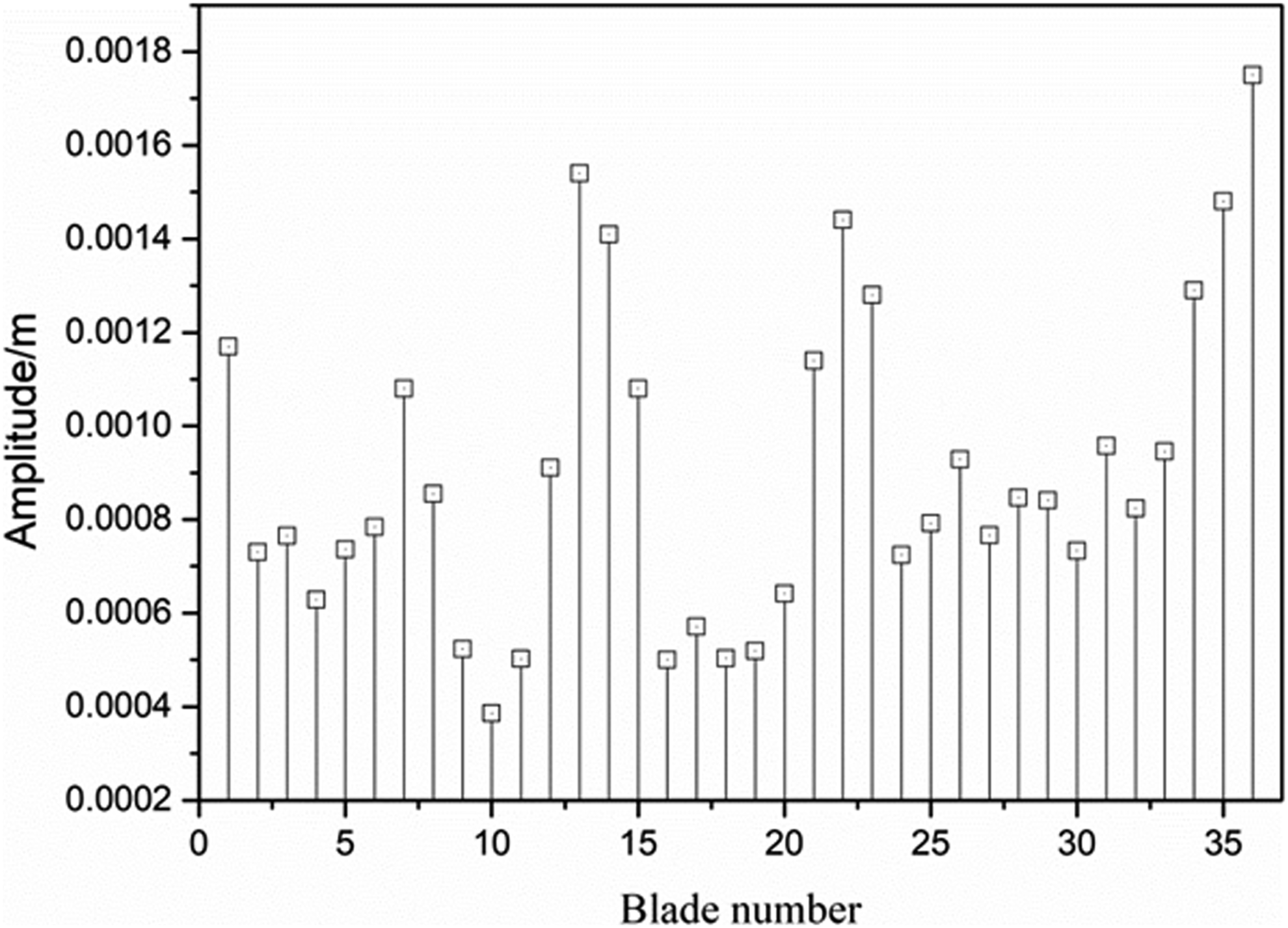
Different nominal shroud stiffness
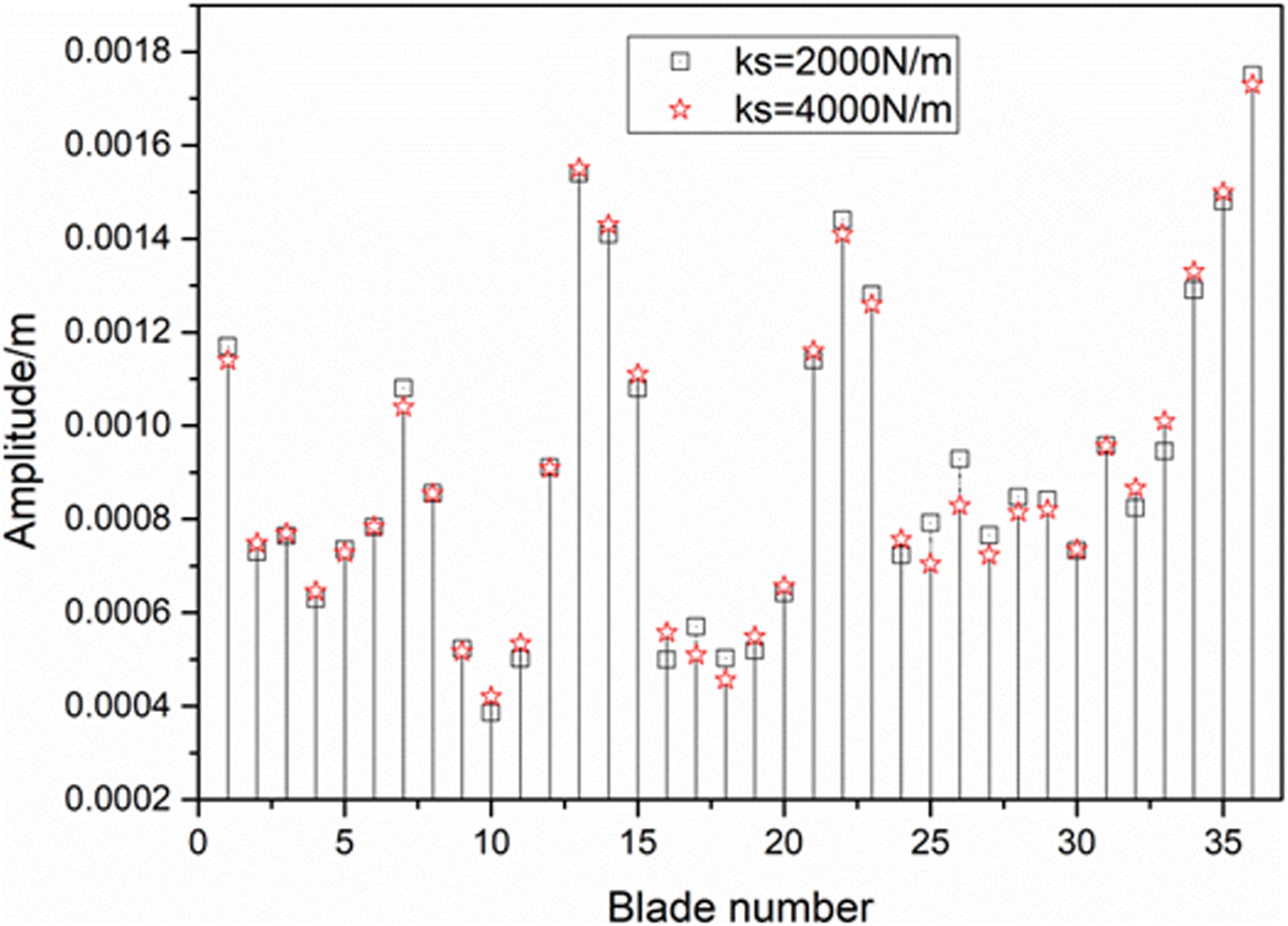
In order to research the different nominal shroud stiffness on the dynamic behaviors of the mistuned bladed disk due to shroud and blade mistuning, the nominal shroud increases to 2 times. The curves of frequency and amplitude of the bladed disk due to shroud and blade mistuning are illustrated in Figure 8. The 3D curve of frequency and amplitude of the bladed disk will change due to the increased nominal stiffness of the shroud. The amplitude of every blade with different nominal shroud strength is shown in Figure 9. The ks will determine the coupling strength between the blade and the blade. Therefore, it will result in different localization of the bladed disk. We can see that the ks has an obvious effect on the coupling dynamic behaviors of bladed disks due to blade mistuning and shroud damage. ks is directly given in this manuscript. In reality, we can measure the ks. Curves between frequency and amplitude of bladed disk. The amplitude of every blade with different nominal shroud strength.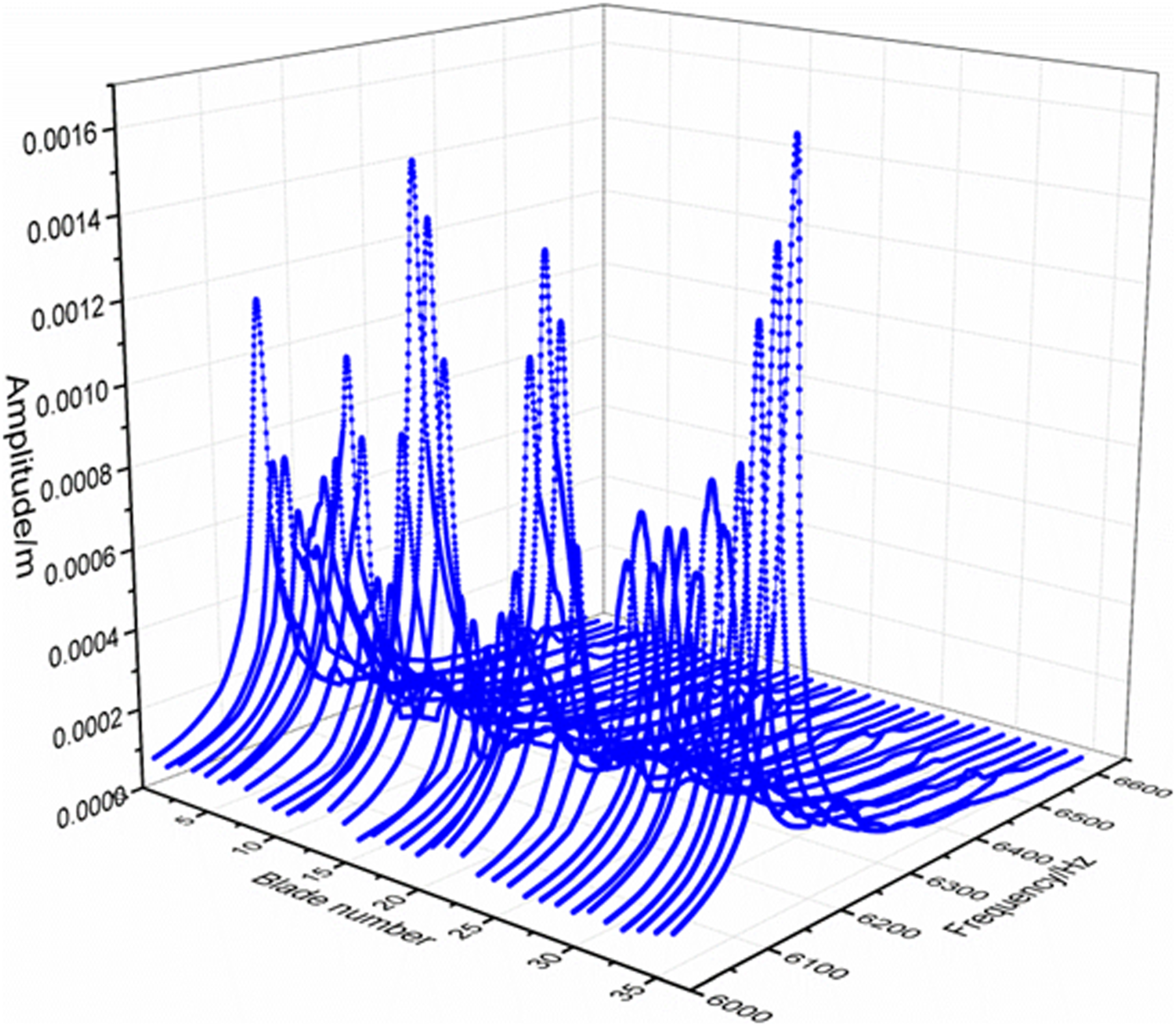
Experimental setup
The purpose of the experiment in the article is to study the inherent characteristics of grouped blades. Grouped blades are an important component of the bladed disk system. The blade group is installed circumferentially as a complete disk system, and the blade group is an integral part of the entire disc system. Therefore, the paper used experiments to study the characteristics of grouped blades.
The bladed packet is a critical part of the whole bladed disk with a shroud. Therefore, modal characteristics of bladed packets are important. The experimental setup for measuring the modal characteristics of the bladed packet is designed as shown in Figure 10. Firstly, the clamp is fixed on the test bed. The springs are used to connect the blades as a bladed packet. Then, the bladed packet is constrained at the blade root with the clamp. Experimental setup of bladed packet.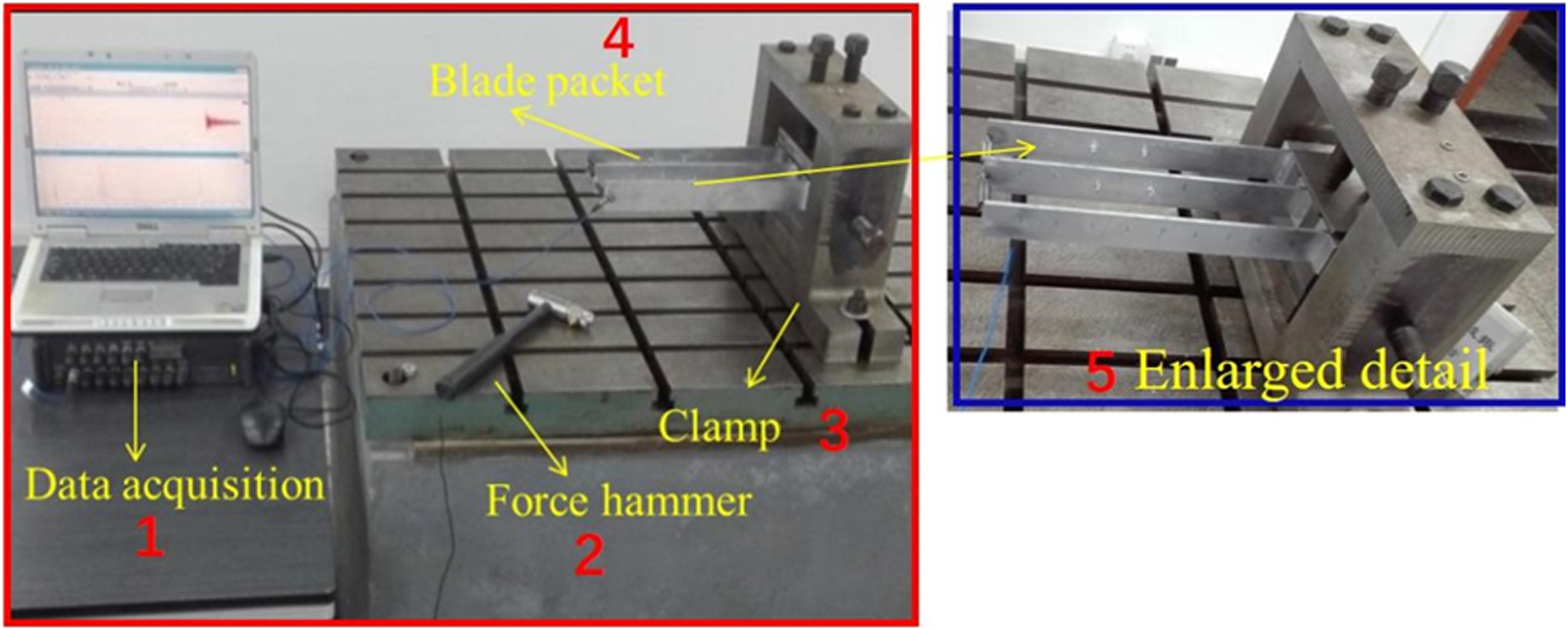
Natural frequencies and mode shapes of the bladed packet are obtained by applying the hammering method. An acceleration sensor is used to sense the vibration of the bladed packet. The weight of the acceleration sensor is 0.1% of the plane blade and it locates in the blade tip. The data acquisition system (B&K: 3050-B-040) is conducted. The force hammer is used to trigger the vibration in the bladed packet. Finally, time-domain vibration response and frequency-domain curves are derived from the data acquisition instrument. The poly-MAX method is used to extract the modal parameters.
Three plane blades have the same dimensions and are connected by the springs. The material of the plane blade is 45Cr and its density of the blade is 7890 kg/m3. The length of the blade is 302 mm, width 39.9 mm, and thickness 5.00 mm. Natural frequencies of the bladed packet are measured. The springs are used to connect the three blades creating a bladed packet. The stiffness of the springs is one of the most important parameters. In this paper, the stiffness of springs is changed by changing the cross-sectional area of the springs.
Modal characteristics of bladed packet
The mechanical model of the bladed packet is shown in Figure 11. In the case of tuned the bladed packet as shown in Figure 11, the stiffness of Schematic of bladed packet with lacing wire located in the blade tip.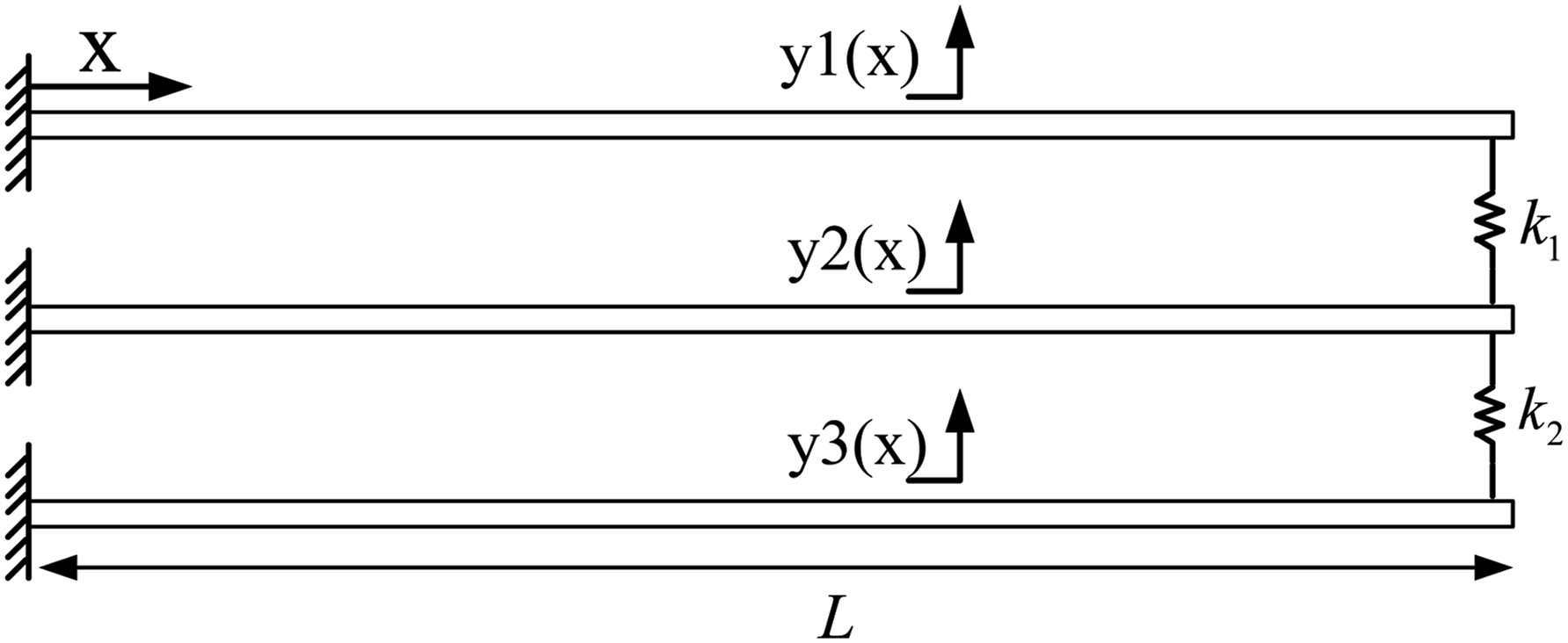
Modal characteristics of tuned bladed packet
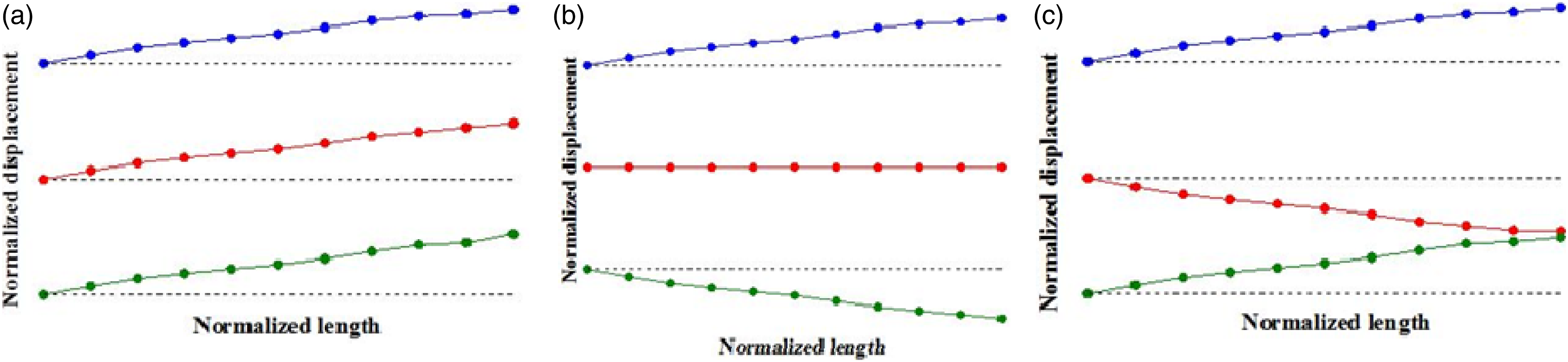
The natural frequencies of the tuned bladed packet for a range of stiffness ratio ( Natural frequencies of three sub modes with shroud. Mode shapes of three sub modes: (a) Sub mode I (b) Sub Mode II (c) Sub Mode III.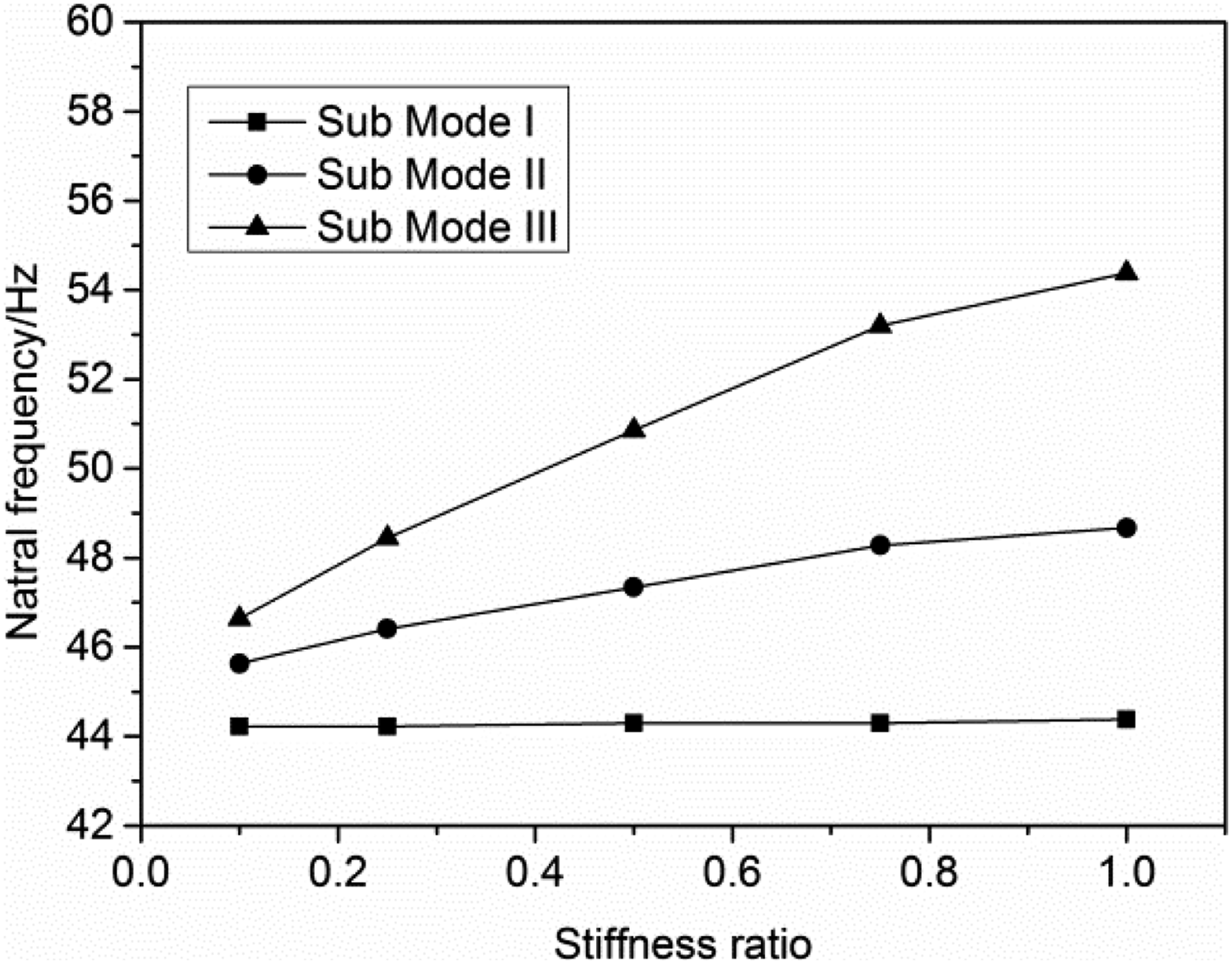
It is worth noting that the first sub-frequency remains invariable with the increase of the stiffness ratio. The third sub-mode natural frequency increases more than that of the second sub-mode with the increasing of coupling strength.
This is because that the bladed packet is vibrating with the first sub-frequency in the same phase, thus springs are not subjected to deformation meaning that springs are not contributing any restraints on the blades as shown in Figure 13. However, when the bladed packet is vibrating with the second sub-frequency, the intermediate blade keeps still, but the first and third blades are vibrating in the opposite phase as shown in Figure 13. Similarly, when the bladed packet is vibrating with the third sub-frequency, the first and second blades are vibrating in the opposite phase, and at the same time, the second and third blade are vibrating in the opposite phase as shown in Figure 13. Hence, the deformation of the springs for bladed packet vibrating with the third natural frequency exceeds the deformation of the springs for a bladed packet vibrating with the second natural frequency. When the coupling strength increases, the third sub-mode natural frequency increases more than that of the second sub-mode.
Modal characteristics of mistuned bladed packet due to lacing wire damage
In operating conditions, the lacing wire damages with different severity are more frequent. The damages to lacing wire reduce the stiffness of the lacing wire which will induce mistuning in the bladed packet. The changes in spring stiffness are used to simulate the different damage severity of lacing wire. A damage severity factor

Natural frequencies of bladed packets with different damage severity ( Mistuning effect due to lacing damage on sub mode frequencies for 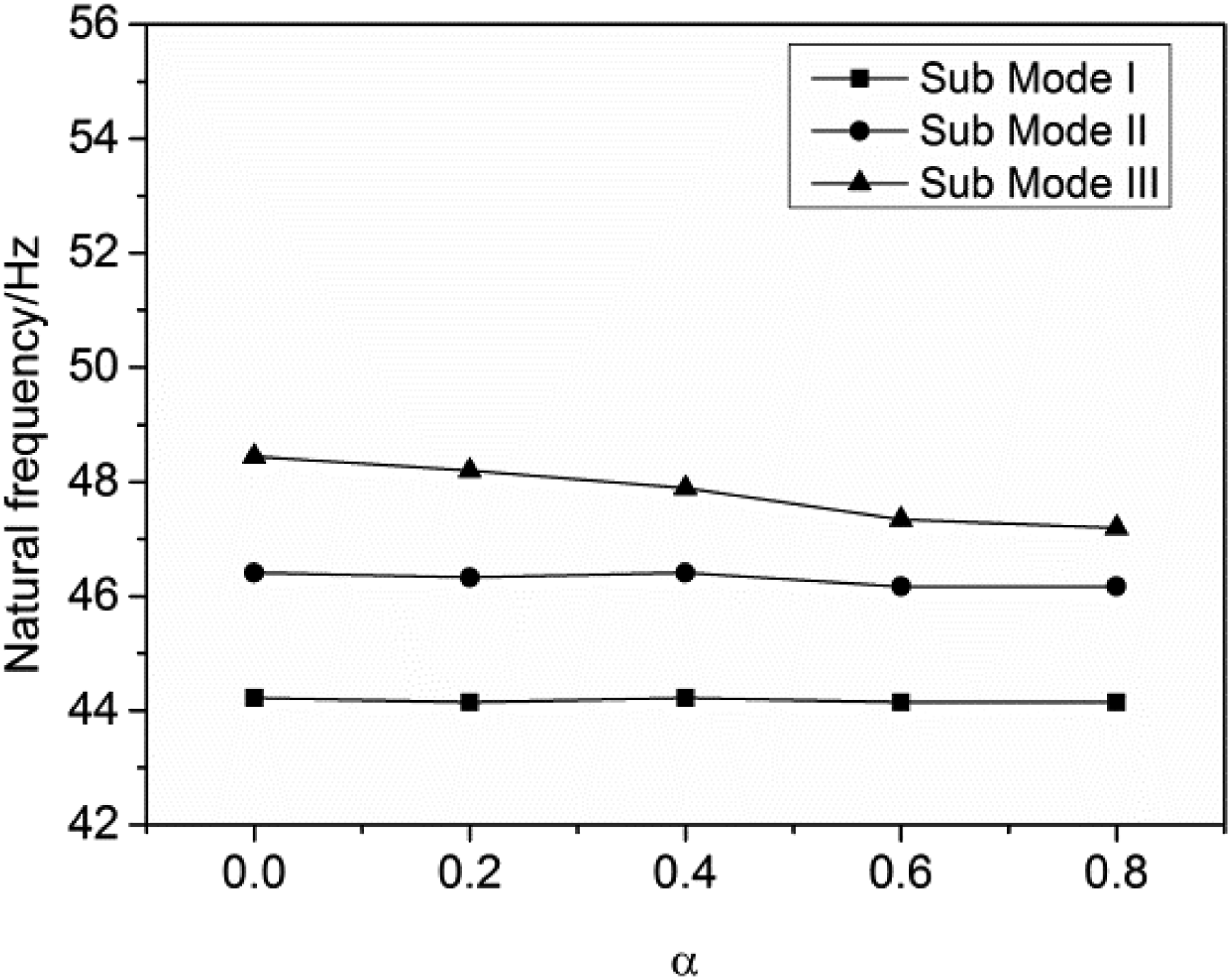
All the blades with the first sub mode natural frequency vibrate with the same phase, thus stiffness of springs is not subjected to deformation meaning that spring are not contributing any restraints on the blades. Thus, the first sub-mode natural frequency remains invariable with the increasing of the damage severity.
Firstly, in operating conditions, the lacing wire damages with different severity are more frequent. The damages of lacing wire reduce the stiffness of the lacing wire which will induce mistuning in the bladed packet. Therefore, we conduct the experiment for investigating the modal of bladed packets. The results show that it has a significant difference with the tuned-bladed packet. Based on this point, we conduct the coupling dynamic characteristics of vibration localization of the whole mistuned bladed disk due to shroud and blade damages with the numerical method.
Secondly, the experiment of the manuscript is limited. Firstly, the experiment just investigates the modal characteristics of the bladed packet. The bladed packet is a critical part of the whole bladed disk system. Therefore, the limitation of the experiment is that it does not describe the modal characteristics of whole the bladed disk system.
Conclusions
In this paper, a numerical method is applied to investigate the dynamic characteristics of the whole bladed disk with shroud. The coupling effect between shroud and blade mistuning on the dynamic characteristics of the bladed disk is researched. An experiment is exploited to research the characteristics of bladed packets due to shroud. Some main conclusions are obtained as follows. (1) The coupling effect between the shroud and blade mistuning will lead to obvious energy localization of the bladed disk with the shroud. (2) The nominal shroud stiffness has an obvious effect on the dynamic behaviors due to shroud and blade mistuning. (3) It can be seen from the mode shape getting split into three sub modes when three blades are connected by the shroud. (4) It is worth noting that the first frequency remains invariable with the increase of the stiffness ratio.
Footnotes
Declaration of conflicting interests
The author(s) declared no potential conflicts of interest with respect to the research, authorship, and/or publication of this article.
Funding
The author(s) disclosed receipt of the following financial support for the research, authorship, and/or publication of this article: This work was supported by Natural Science Basic Research Plan in Shaanxi Province of China (No. 2021JQ-462), China Postdoctoral Science Foundation (No. 2022MD723836), State Key Laboratory for Strength and Vibration of Mechanical Structures (No. SV2018-KF-34), Headquarters science and technology project of China Huaneng Group Co., Ltd (No. HNKJ21-H59; HNKJ21-H66).
