




Abstract
A flexible printing electronical membrane is an electron equipment made by precisely spraying conductive metal ink such as silver on a soft membrane substrate. With its advantages of light weight and flexibility, it can adapt to changing working environments and is widely used in aerospace, wearable electronics and other fields. Nevertheless, during the manufacturing preparation of roll-to-roll printing membranes, the high-speed movement of printing electronical membranes under tension is affected by the impact of hot air from the drying oven and the electrostatic interference generated by friction in transmission, which restricts the overprint accuracy and preparation velocity of flexible electronical membranes. To address this issue, the nonlinear forced vibrational characteristics of a traveling flexible printing electronical membrane on temperature coupling subjected to nonlinear electrostatic force were investigated. The roll-to-roll printed intelligent RFID electron membrane is the research target. On the basis of the energy approach and the heat conduction equation considering the effect of deformation, the nonlinear vibrational equations of an axially traveling flexible printing electronical membrane coupled with temperature under the function of nonlinear electrostatical excitation force were derived. The Bubnov–Galerkin algorithm was applied to discretize the vibration partial differential equations; by making full use of the quartic Runge–Kutta numerical algorithm to calculate the approximate solution of equations, the phase portraits, Poincaré maps, time history diagrams, power spectra, and bifurcation plots of the nonlinear vibrations of the traveling printing electronical membrane were used to explore the effects of movement velocities, electrostatical field, and thermal coupling coefficients. The findings obtained the stable working domain and the divergence instability domain of the traveling flexible printing electronic membrane, which provided a theory fundamental for enhancing the stable craft of a printing electronical membrane.
Keywords
Introduction
Flexible printed electronic technology is an electronic manufacturing technology based on printing principles that has the advantages of low cost, flexibility, and mass production. It can replace traditional electronic products that are produced with complex preparation processes, serious losses of raw materials, high energy consumption, and environmental pollution. It is widely used in organic photovoltaic cells, wearable flexible electronics, aerospace, and other fields and has great promising applications. However, in the course of creating roll-to-roll printed electronics, external random factors will inevitably interfere with the electrostatic field generated by the friction between the drawing roller of the printing facility and the electron membrane and the shock of the hot wind of the drying system, which will create bending vibrational deflection of the printing electronical membrane surface. When the situation becomes serious, the printing electronical membrane may even be torn. Therefore, exploring the nonlinear dynamic behavior of printing electronical membranes with different movement velocities under the action of temperature coupling and electrostatic fields and obtaining a stable working range of traveling flexible printing electronical membranes have very important engineering values for promoting the production of printing electronical membranes.
At present, scholars have studied the stability of moving strings, beams and rectangular thin plates under multiple working conditions, and some progress has been made. Shao et al. 1 considered the influence of the lateral vibration and stability of a printing membrane with a sinusoidal half-wave density by means of the differential quadrature method (DQM). Yang and Sun 2 investigated the bifurcation and chaos phenomena of a composite beam with a piezoelectric layer function by utilizing von Karman nonlinear theory and deduced the governing equation of the structure. Tao et al. 3 established the large-amplitude free vibration equation of the graphene microplate based on the four-variable high-order shear deformation plate theory. Shao et al. 4 applied the quartic Runge-Kutta technique to calculate the nonlinear vibration characteristics of the axially moving membrane caused by the velocity amplitude and aspect ratio. To analyze the influence of modal energy transfer and internal resonance, Farokhi et al. 5 introduced a high-dimensional nonlinear model of a piezoelectric beam structure. According to the Mindlin structure theory, According to Timoshenko beam theory, Liang et al. 6 investigated the dynamic response of the simply supported beam. Ying and Wu 7 presented nonlinear vibration of a moving flexible printed electron web under multiphysics dynamics and obtained the stable working range of the web. Chen et al. 8 studied the dynamic problem of mixture. Based on the energy variation theory, Ying 9 established nonlinear differential equations of motion for a graphene electron membrane and obtained the stable and unstable working domain. Ding 10 established the dynamic stiffness matrix of a beam under a generalized boundary and discovered that the critical velocity of the moving beam does not change with the change in the vertical spring stiffness. Zhang and Chen 11 used a complex mode method to analyze the transverse vibration of an axially moving string supported by a viscoelastic foundation. Li et al. 12 used the Rayleigh Ritz method to assess the nonlinear vibrations of fiber reinforced composite cylindrical shells with bolted boundary conditions.
In the preparation of printing electronical membranes, the velocity of motion, temperature coupling coefficient and electrostatic field always change, but there are few studies assessing the nonlinear vibration of a traveling membrane under temperature coupling and electrostatic field action. Kazemi et al. 13 used finite elements to obtain the effects of temperature, material length parameters, boundary conditions and aspect ratio on the nonlinear behavior of a microplate. By predicting discrete dynamic bifurcation, Goodpaster and Harne 14 explored whether the coupling between the thermal domain and the mechanical domain would significantly affect the structural dynamics and clarified the closeness between the distributed parameter structure and the bifurcation. Kumar and Panda 15 utilized the von Karman theory to establish the nonlinear frequency response analysis of a functionally graded plate running under the surface of a heated base plate. The Kantorovich averaging method was utilized to study the nonlinear free vibration of corrugated annular plates under uniform static ambient temperature. 16 Hu and Bao 17 examined the nonlinear vibration of a thermoelastically coupled cermet ring plate and used an improved L-P method to solve a strongly nonlinear vibration equation. Qi and Dai 18 deduced the nonlinear dynamic equation of a sandwich plate under the action of a thermal field and solved it by using the finite difference method and the Newmark iteration method. According to the first-order shear deformation shell theory, the temperature-dependent nonlinear vibration equation of a functionally graded cone shell was established. 19 Guo et al. 20 used Eringen’s theory to establish the nonlinear dynamical modeal of graphene’s rectangular microplates under thermoelastic coupling excitation. Meng and Xue 21 applied the Bubnov-Galerkin algorithm to derive the nonlinear vibration control equations of piezoelectric thin elliptical plates under the combined action of external harmonic excitation and a temperature field. The nonlinear dynamic model of a graphene MEMS was established by using the constitutive stress–strain law and electrostatic Coulomb force. 22 Kachapi et al. 23 used interface theory to investigate the nonlinear vibration and frequency response of cylindrical nanoshells under electrostatic force. Based on the Eider beam theory and the natural mode Galerkin formula, the nonlinear vibration characteristics and stability of an electrostatically driven beam were studied. 24
Overall, the current research shows that most of the research objects of temperature coupling and electrostatic field influence are thin plates, and there is no research on the thermoelastic coupled nonlinear vibrational phenomenon of a traveling flexible printing electronical membrane under the function of nonlinear electrostatical force.
In this research, according to the energy method and the heat conduction equation, this paper established large deflection nonlinear vibrational differential equations for a traveling flexible printing electronical membrane on thermoelastic coupling subjected to nonlinear electrostatic force; a system of differential equations was separateded by the Bubnov-Galerkin algorithm, and the quartic Runge-Kutta algorithm was applied to solve discretized spacial equations, from which the effects of movement velocity, electrostatic field, and temperature coupling coefficient on its nonlinear vibration and chaos were analyzed.
Equation of Nonlinear Electrostatic Force on a Traveling Flexible Printing Electronical Membrane
Figure 1 exhibits the mechanical model of a traveling flexible printing electronical membrane on temperature coupling under the function of a nonlinear electrostatical force, where the membrane substrate is in a constant tension state. Assuming which the flexible printing electronical membrane has a very small bending stiffness, and the membrane with a certain thermal bending moment and thickness, the membrane surface voltage caused by friction is taken as Mechanical model of a traveling flexible electron membrane. (a) Equivalent diagram of the electrostatical field distribution of the traveling flexible printing electronical membrane. (b) Dynamic pattern of the traveling printing electronical membrane. (c) Roll-to-roll smart RFID electronical membrane printing equipment.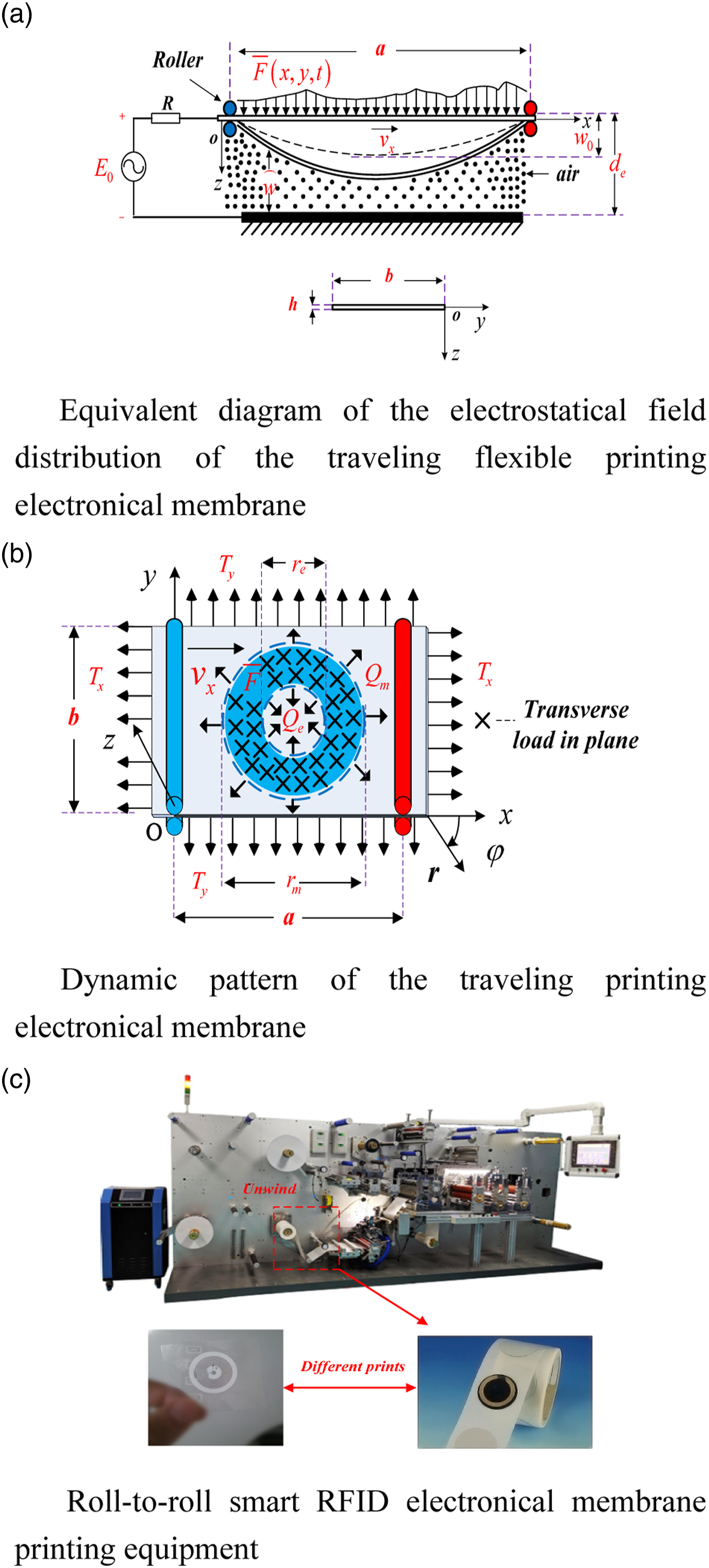
Calculation equation of capacitor25,26:

Deriving Eq. (1) can obtain the electrostatic force equation:

The Tyler expansion

According to Eq. (2), the nonlinear electrostatical force of the traveling flexible electronic membrane is composed of a static electric field force and a dynamic electric field force, which can be obtained by calculating the following equations:

Here,
Putting Eq. (4) into Eq. (2) obtains the electrostatical force:
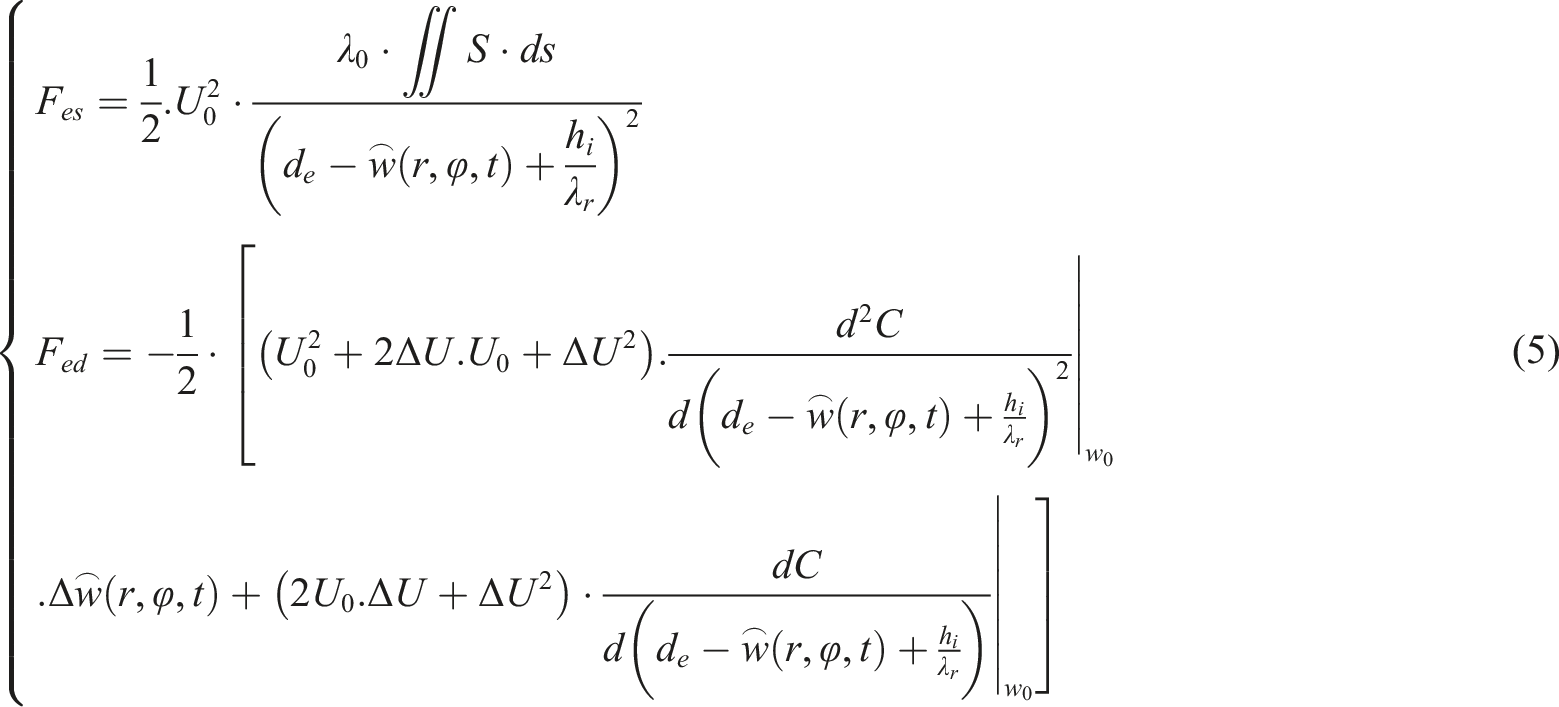
Then inserting Eq. (3) into Eq. (5) acquires the nonlinear electrostatical force generated by AC voltage and dynamic lateral displacement.
The nonlinear electrostatical force
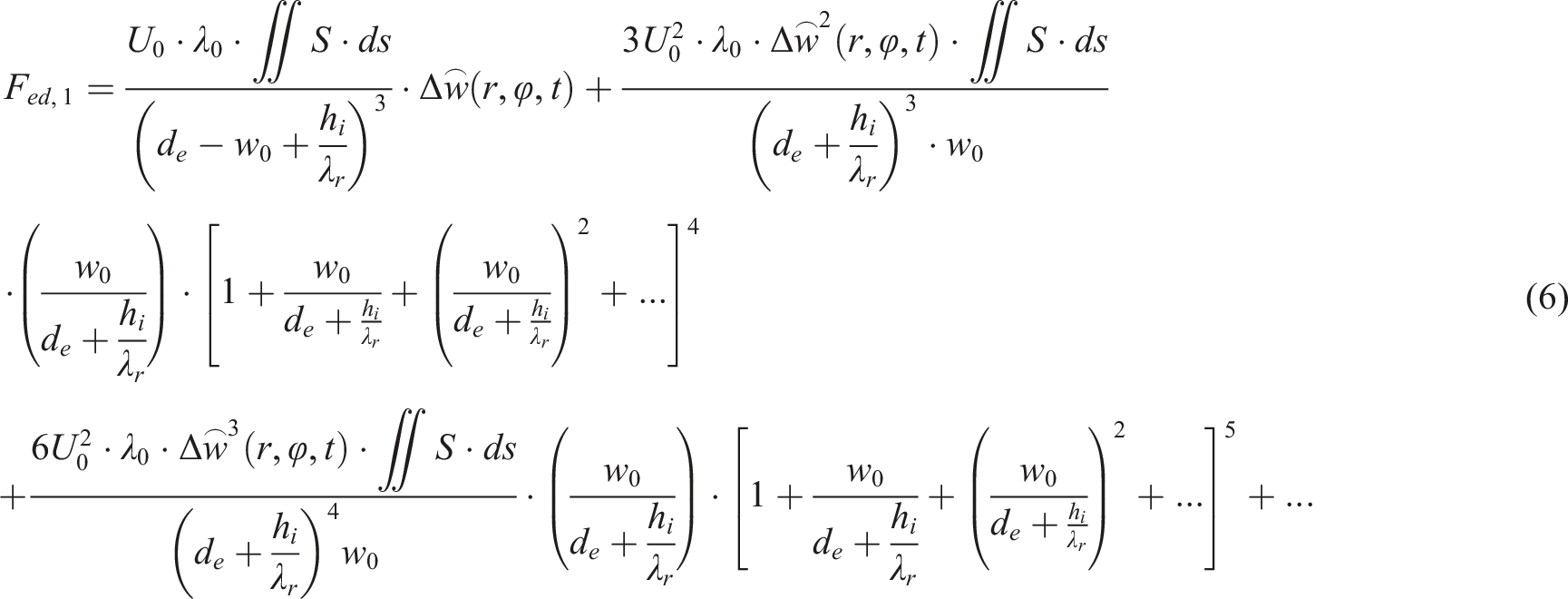

Substituting Eq. (7) into Eq. (5), the nonlinear electrostatical force

Adding Eq. (6) and Eq. (8) obtains the total nonlinear electrostatic field force:
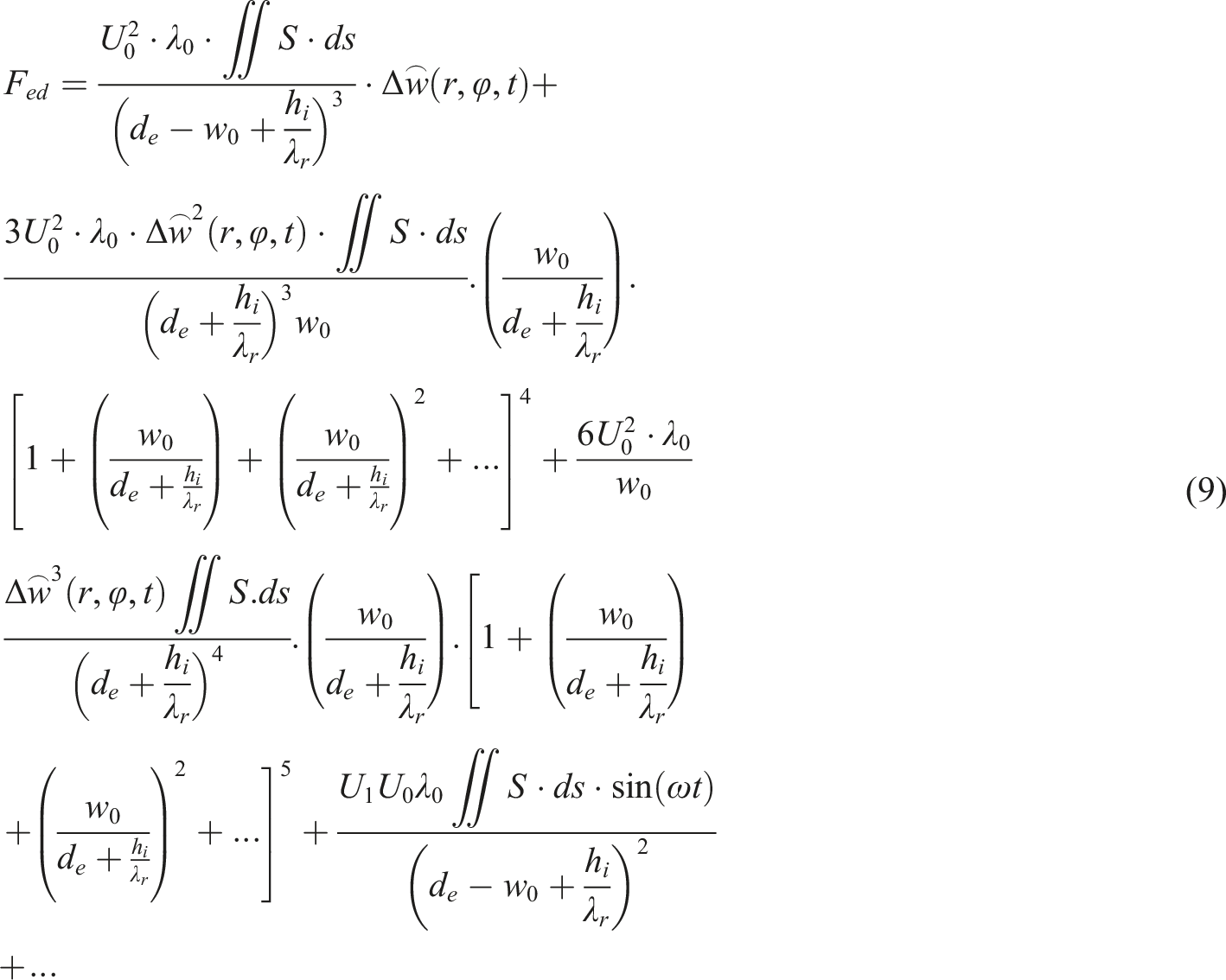
Nonlinear vibration control equations of a traveling flexible printing electronical membrane on temperature coupling
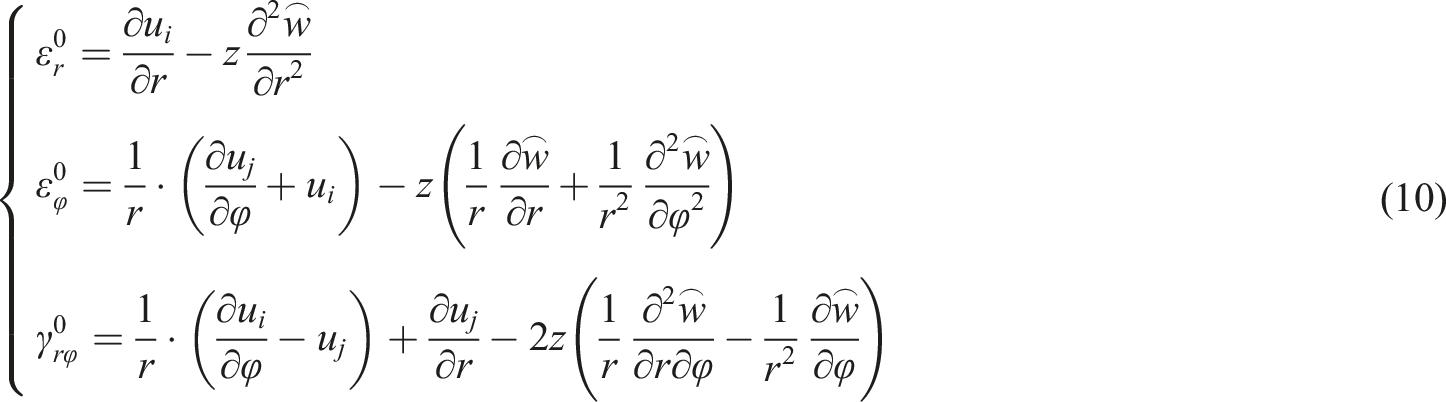
In polar coordinates, the circumferential and radial strains and shear strains at point z from the midplane of a traveling flexible printing electronical membrane are:
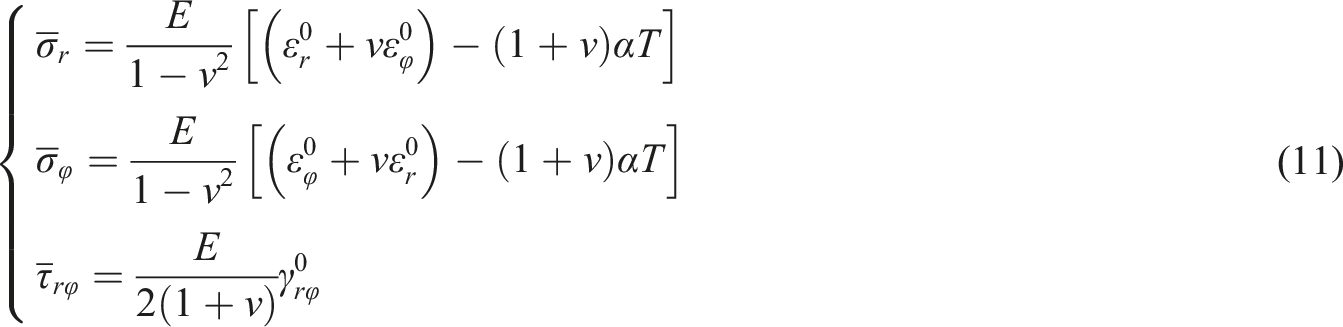
The stress component with variable temperature T is expressed as:
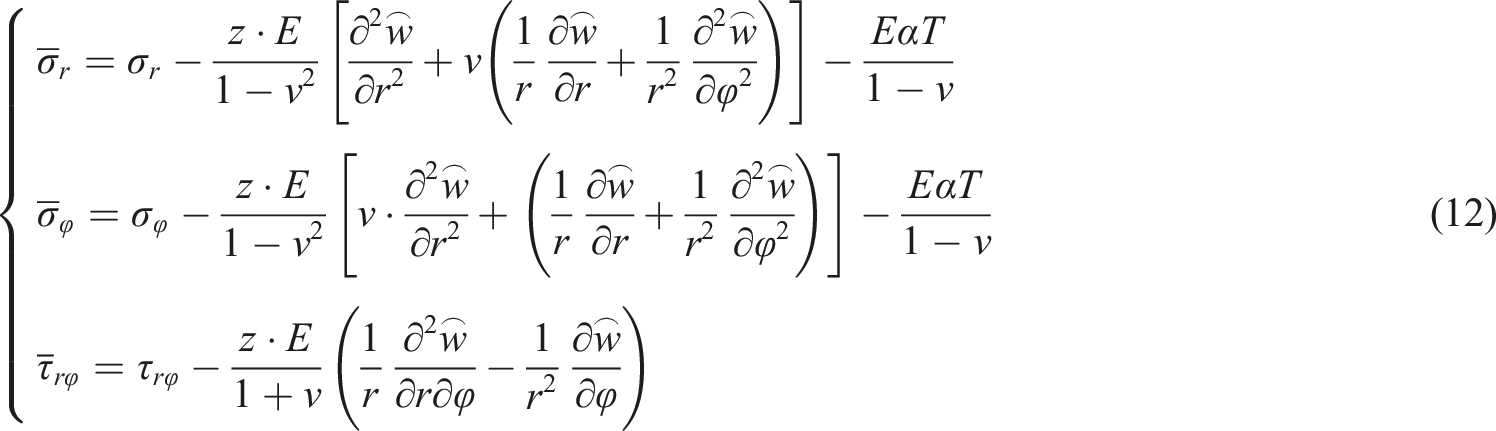
Inserting Eq. (10) into Eq. (11), the stress component equations for deflection and variable temperature can be acquired:
Integrating Eq. (12) with respect to thickness can obtain the torque and bending moment per unit width on the cross section:
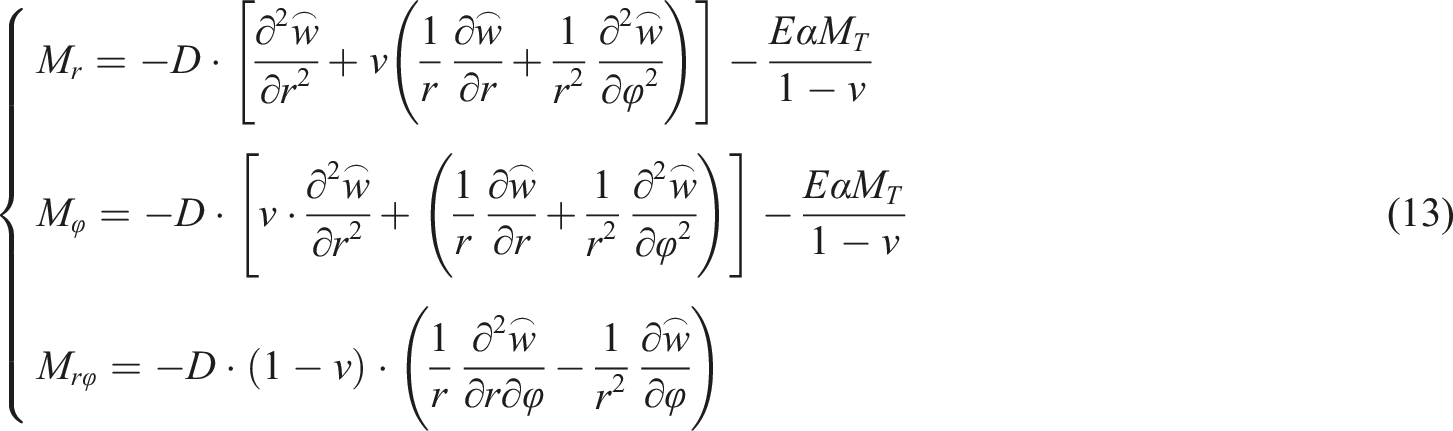
In the equation,
Substituting Eq. (13) into the following equation can obtain the potential energy with the temperature of the traveling flexible electron membrane:

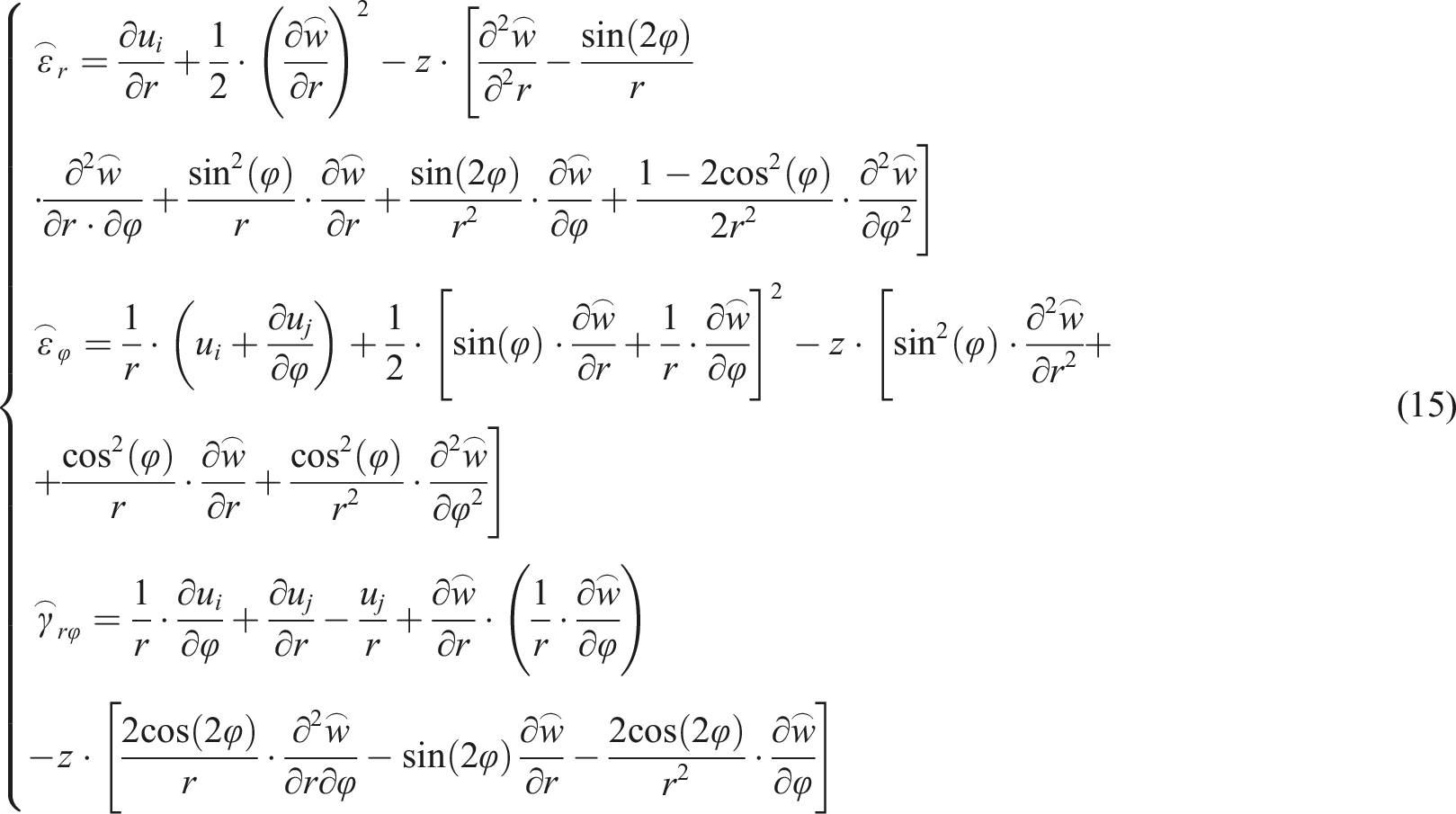
The large deflection geometric equation for the traveling flexible printing electronical membrane is as follows:
The balance equation of the traveling flexible printing electronical membrane is as follows:

Ignoring physical strength, from the symmetry
Placing Eq. (15) into Eq. (16) derives a compatible equation:

Omitting the shear force,

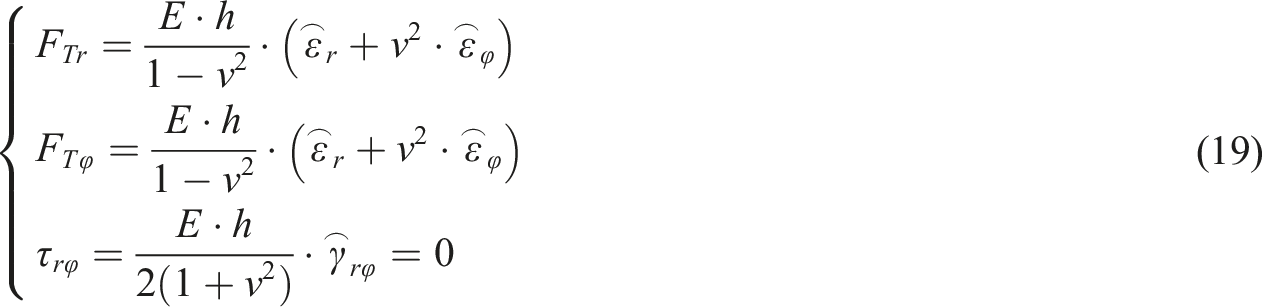
Physical equation for big deformation of the traveling flexible printing electronical membrane:
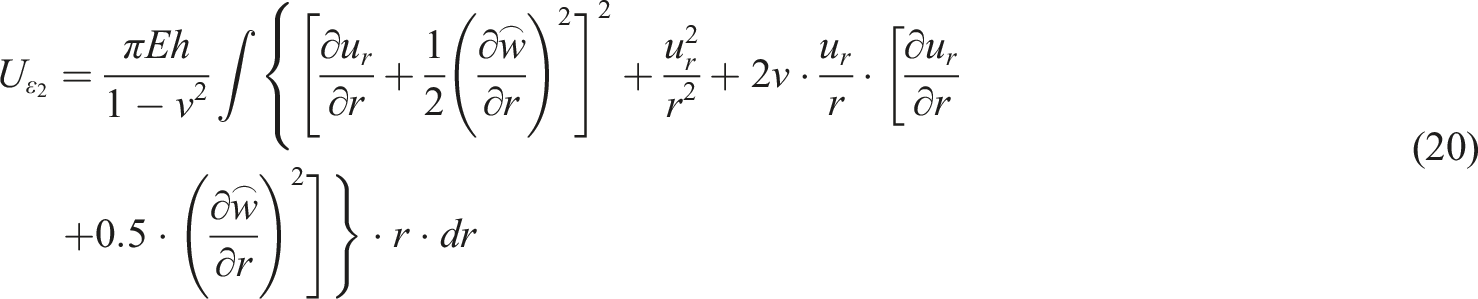
Substituting Eq. (15) and Eq. (19) into Eq. (18) obtains:
The absolute velocity vector of each point in the flexible printing electronical membrane is:

The differential operator expression is:

Substituting Eq. (21) into Eq. (22) derives the acceleration:

It can be seen from the above that the all kinetic energy equation of the traveling flexible printing electronical membrane in polar coordinates is as follows:

According to the Hamiltonian principle, the functional form can be getted.

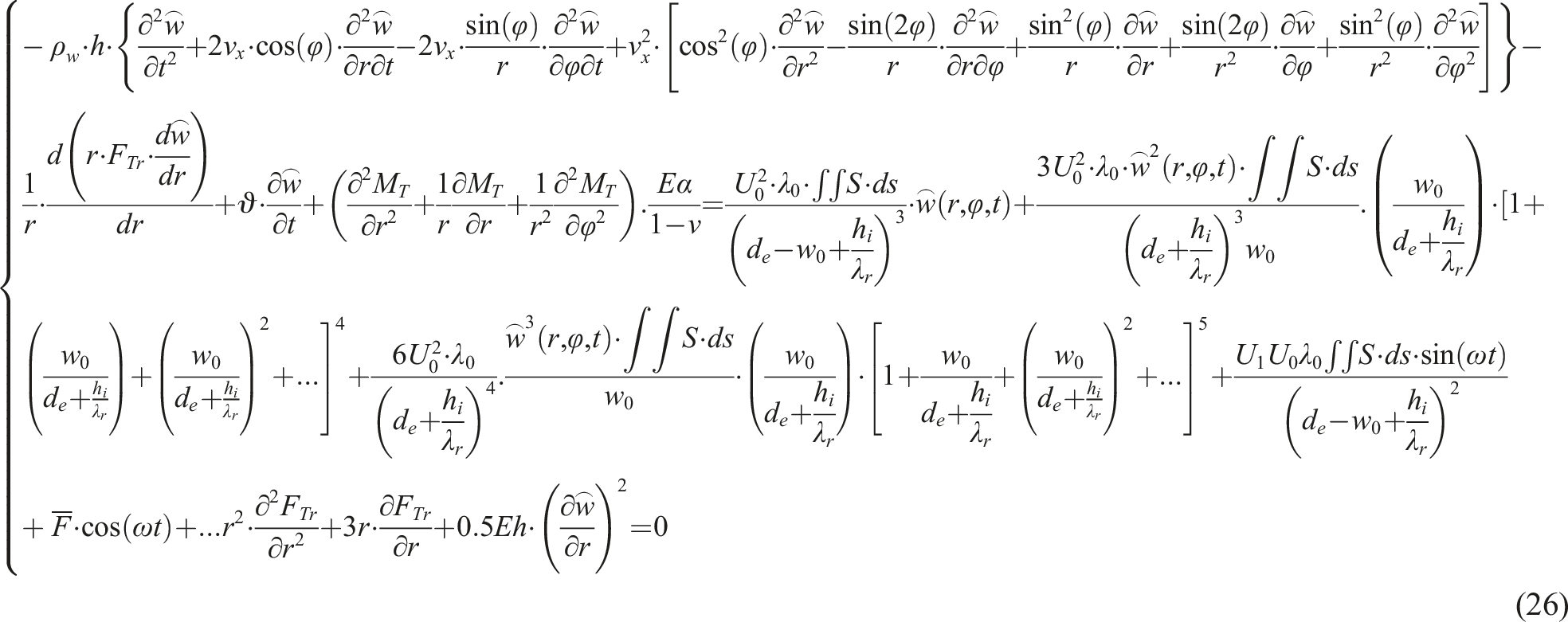
Substituting Eq. (9), Eq. (14), Eq. (18), Eq. (24) and the energy function including the boundary into Eq. (25) to compute the stationary number, combined with Eq. (23), we can obtain the thermoelastic coupled nonlinear vibrational equations of the traveling flexible printing electronical membrane subjected to nonlinear electrostatical force:
Since the temperature T change of the rigid printing electronical membrane along the z-axis is much greater than the change along the r and directions, the term

By introducing dimensionless quantities into Eq. (26) and equation (27):

Because

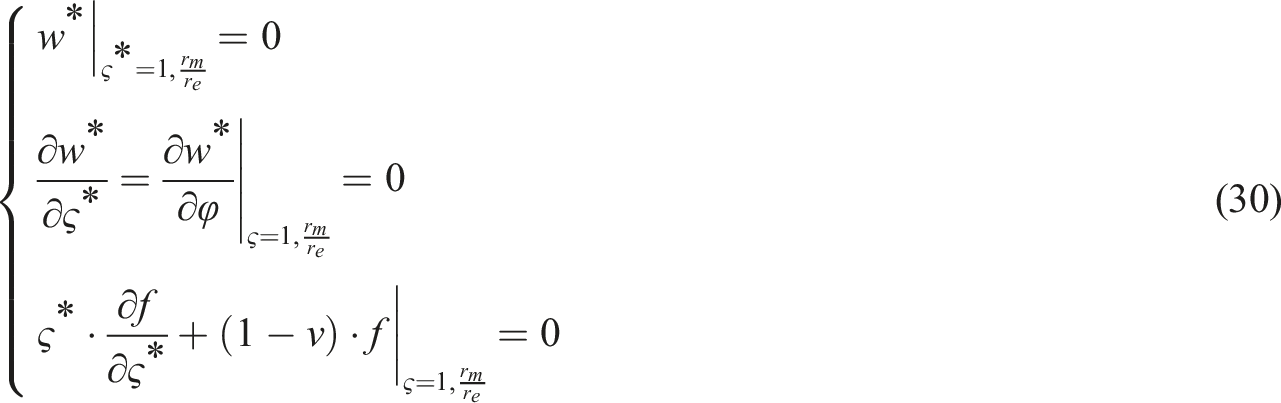
The nonlinear vibrational equation of the abovementioned traveling flexible printing electronical membrane satisfies the boundary conditions:
Bubnov–galerkin algorithm discretization


Putting Eq. (31) and Eq. (32) into equation (29) and executing Galerkin discretization, after sorting, the nonlinear forced vibrational function is acquired:

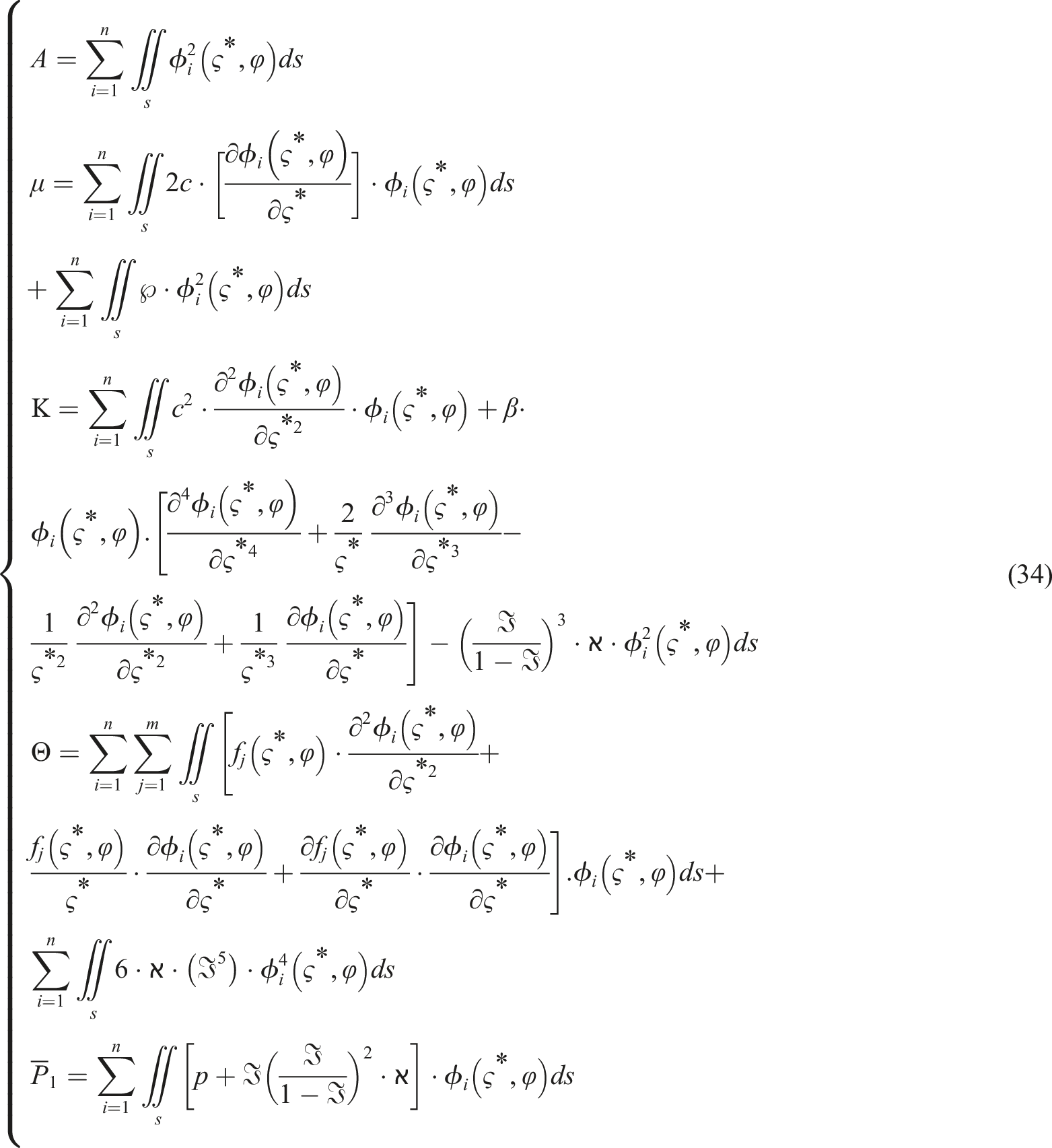
The coefficients of equation (33) are:
Numerical calculation analysis
The quartic Runge-Kutta algorithm was ready for exploring the nonlinear dynamic characteristics of the traveling flexible printing electronical membrane on temperature coupling under the basic production parameters. The Poincaré maps, time history diagrams, phase portraits, power spectra, and bifurcation plots reflected the effect of parameter changes on the nonlinear vibration of the system.
Global bifurcation plot of dimensionless velocity. Nonlinear characteristic maps with a velocity of 0 ( Nonlinear characteristic maps with a velocity of 0.5 ( Nonlinear characteristic maps with a velocity of 1.2 ( Nonlinear characteristic maps with a velocity of 2 (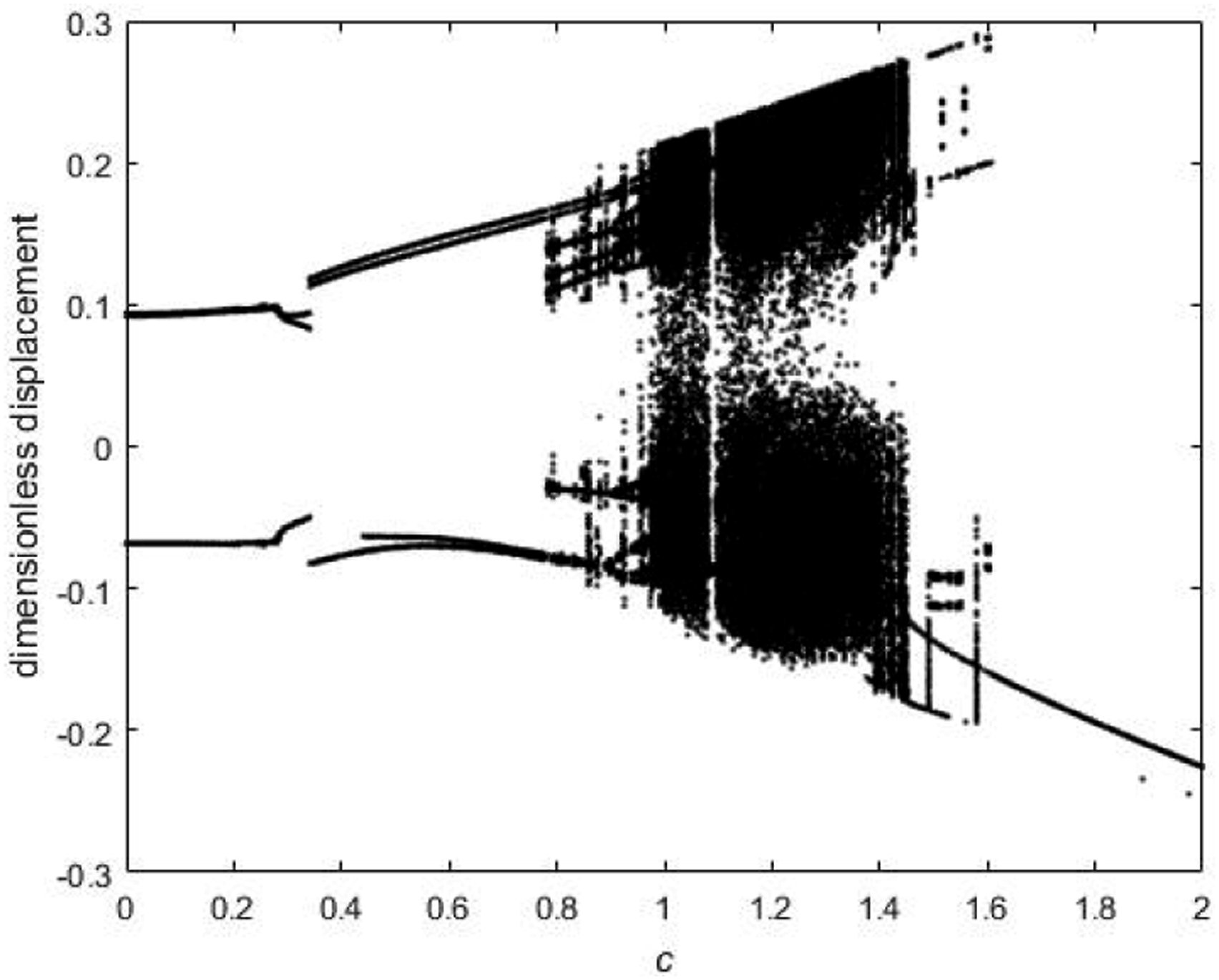
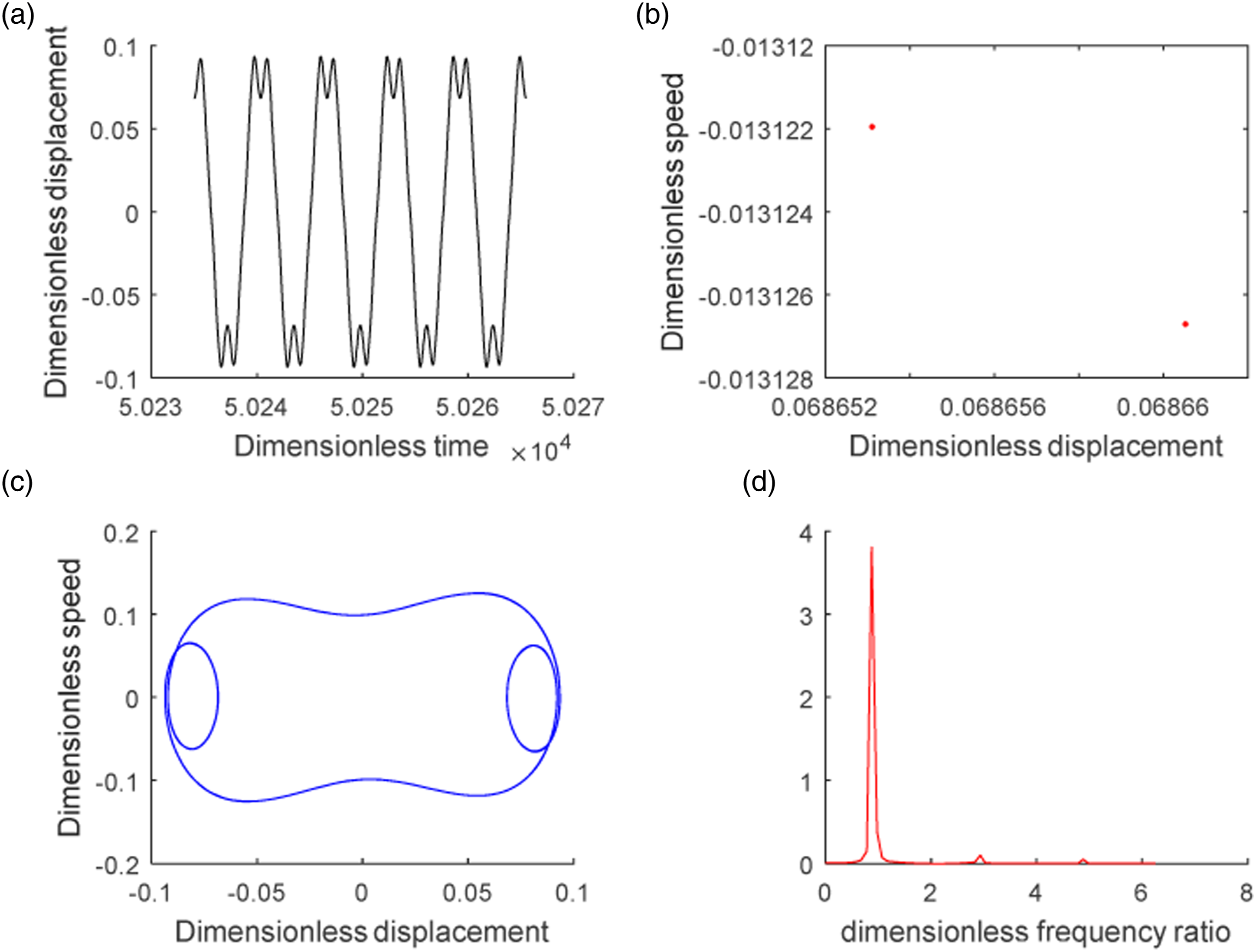
When
Figures 3 to 6 demonstrate that when
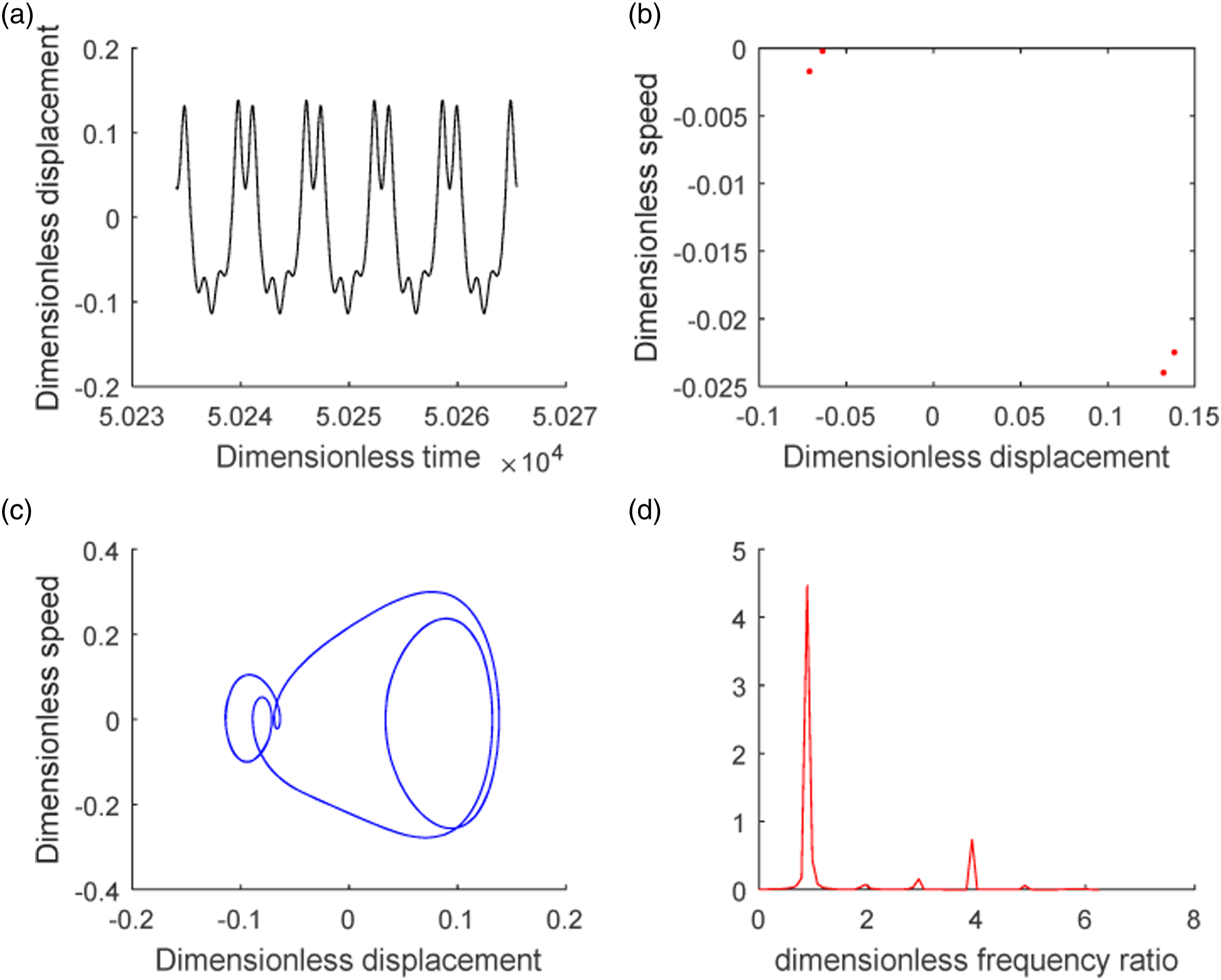
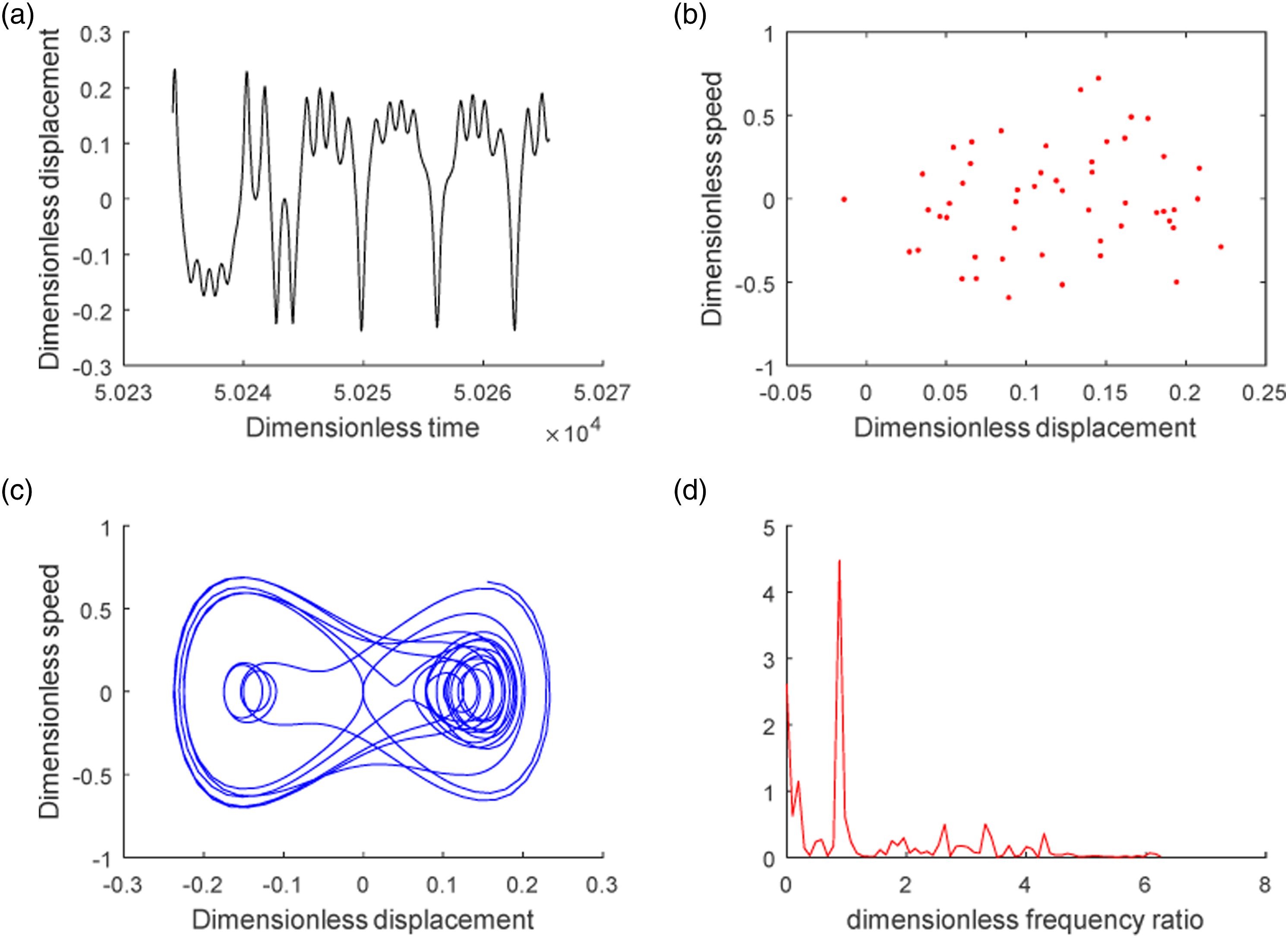
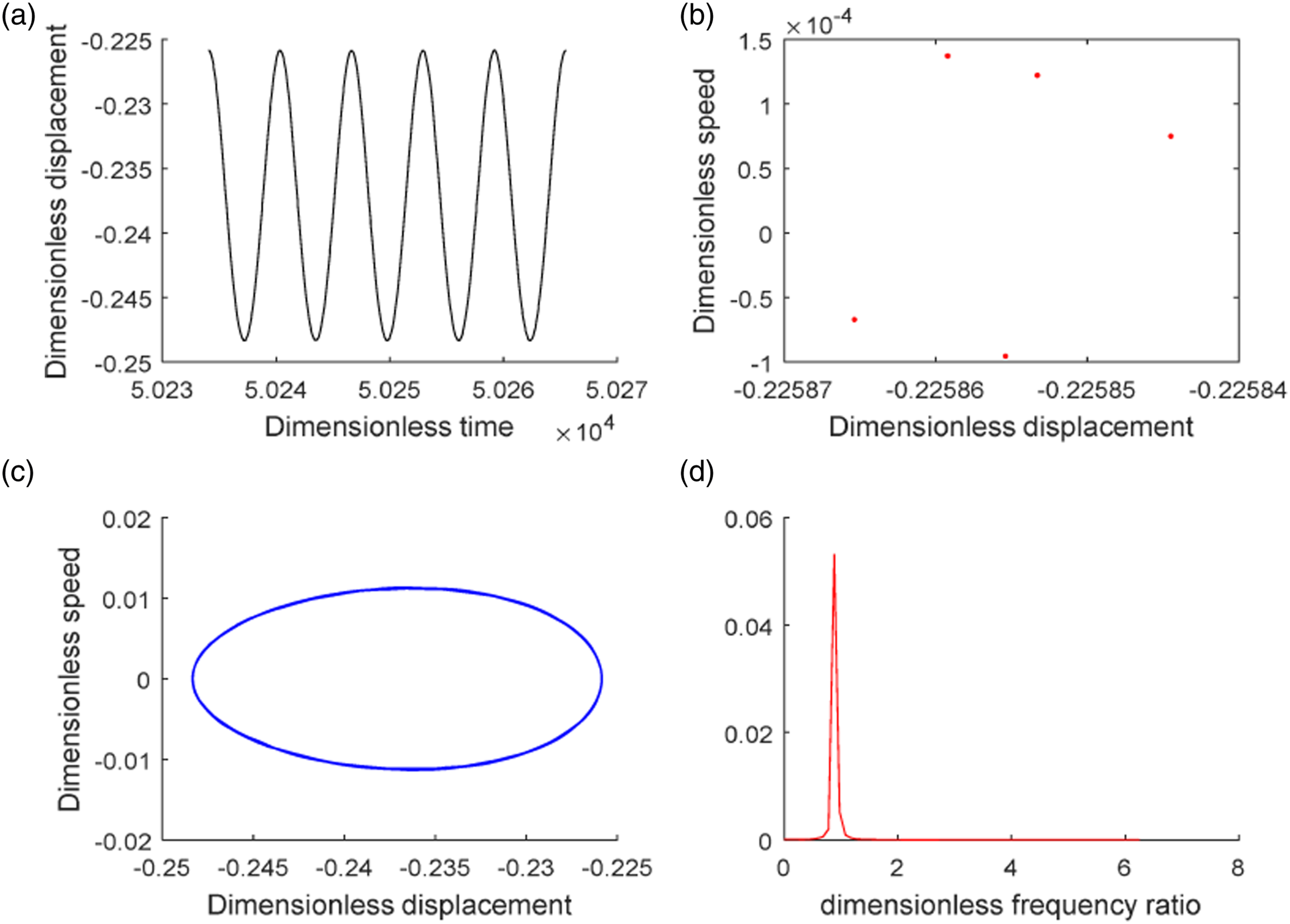
The Effect of the Temperature Coupling Coefficient on the Chaos and Bifurcation of the Nonlinear Vibration of the Traveling Membrane. The parameters of the traveling flexible printing electronical membrane are as follows: the initial condition is
Figure 7 shows a bifurcation plot of the displacement and temperature coupling coefficient. When Global bifurcation plot of the dimensionless temperature coupling coefficient.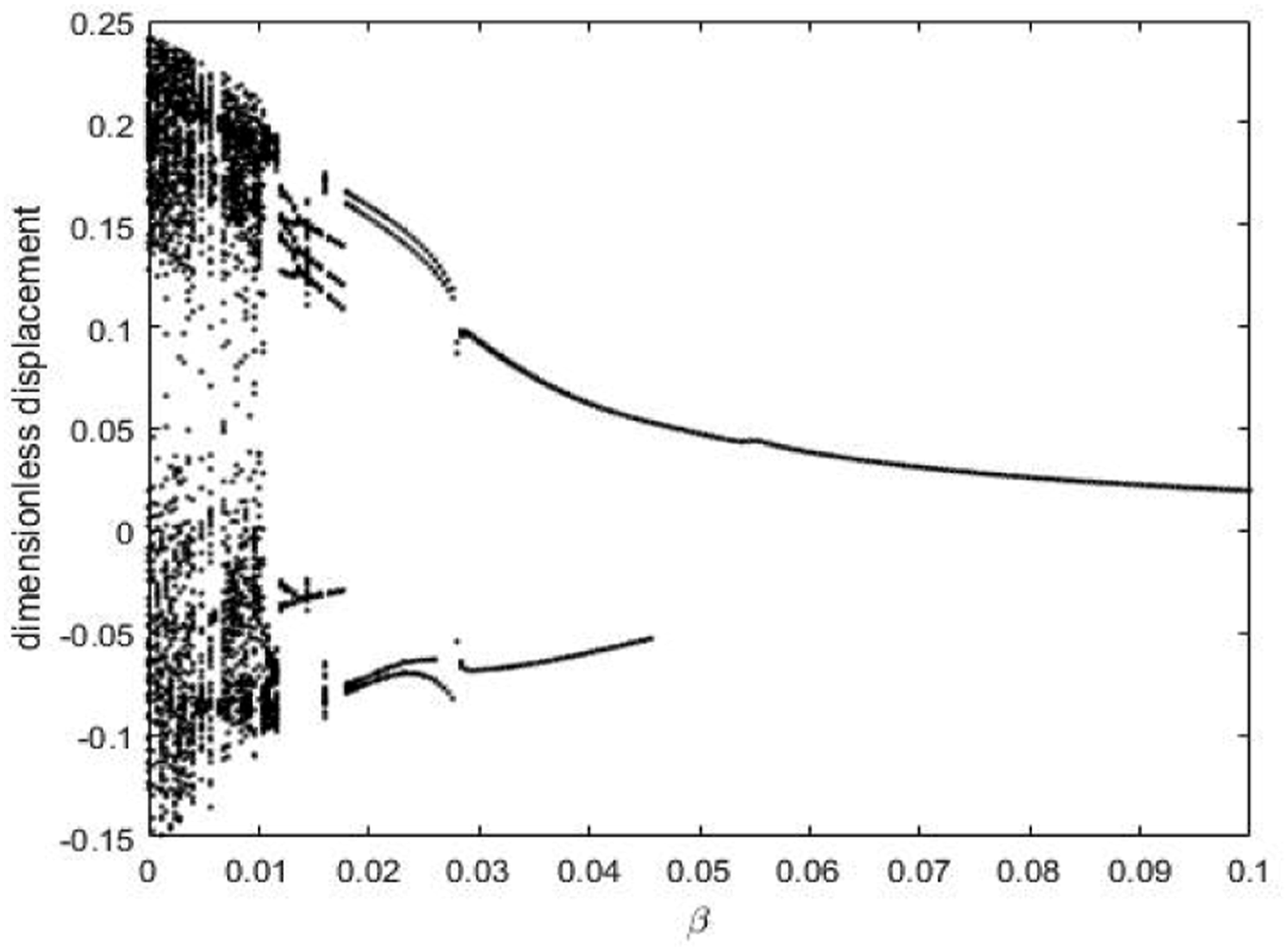
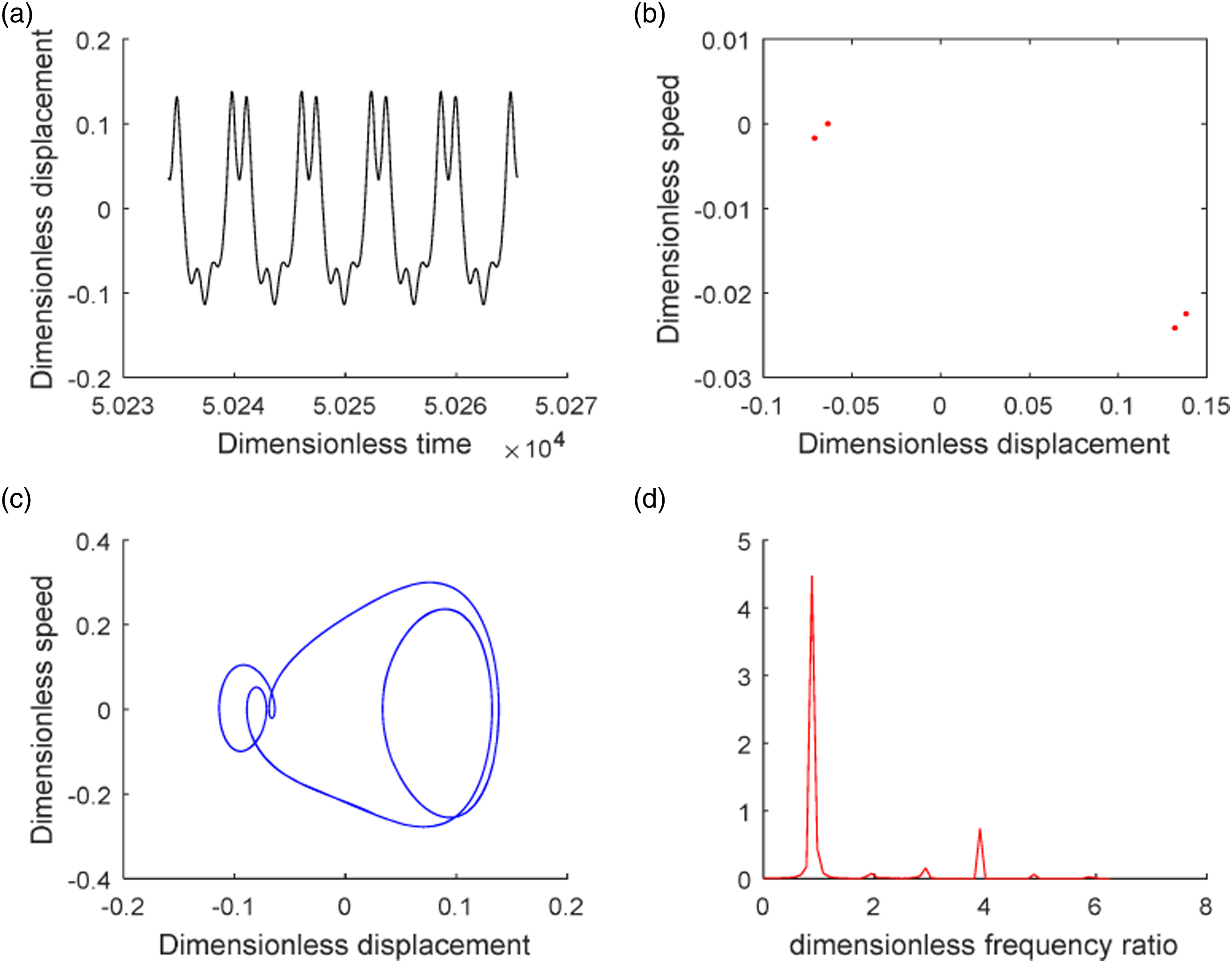
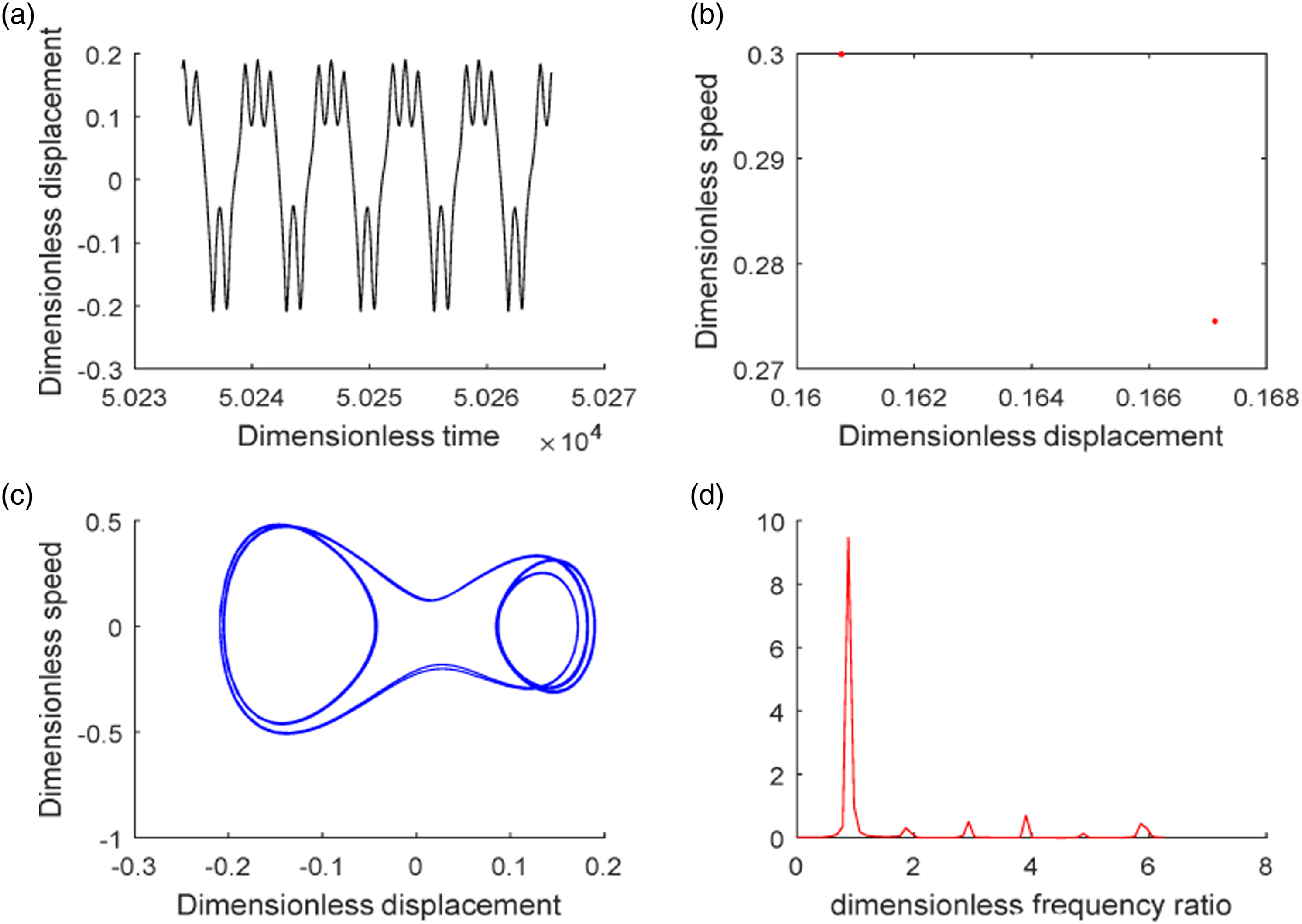
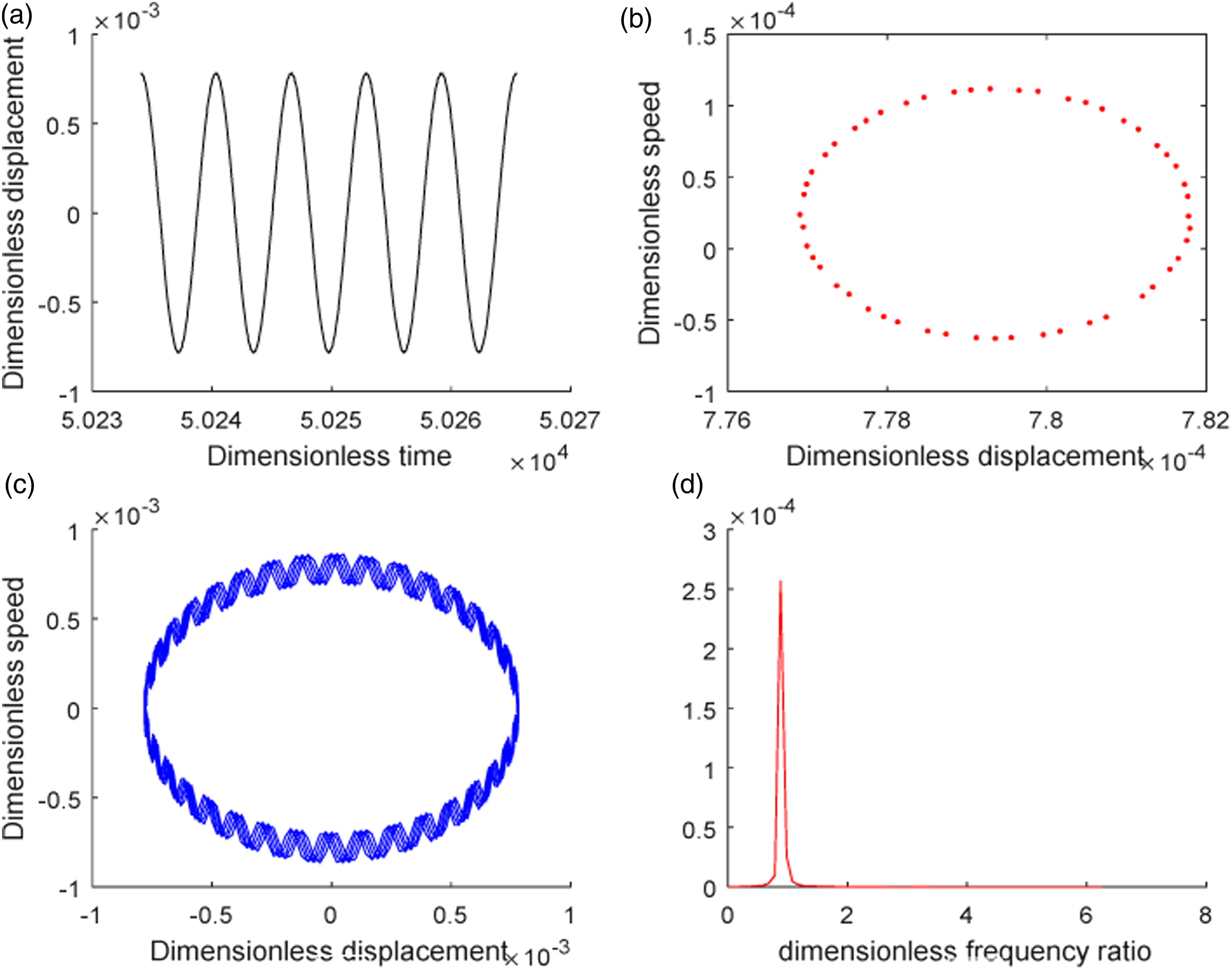
From nonlinear characteristic maps in Figures 8, 9, 10 and 11, it can be observed that while Nonlinear characteristic maps with a temperature coupling coefficient of 0 ( Nonlinear characteristic maps with a temperature coupling coefficient of 0.025 ( Nonlinear characteristic maps with a temperature coupling coefficient of 0.04 ( Nonlinear characteristic maps with a temperature coupling coefficient of 0.1 (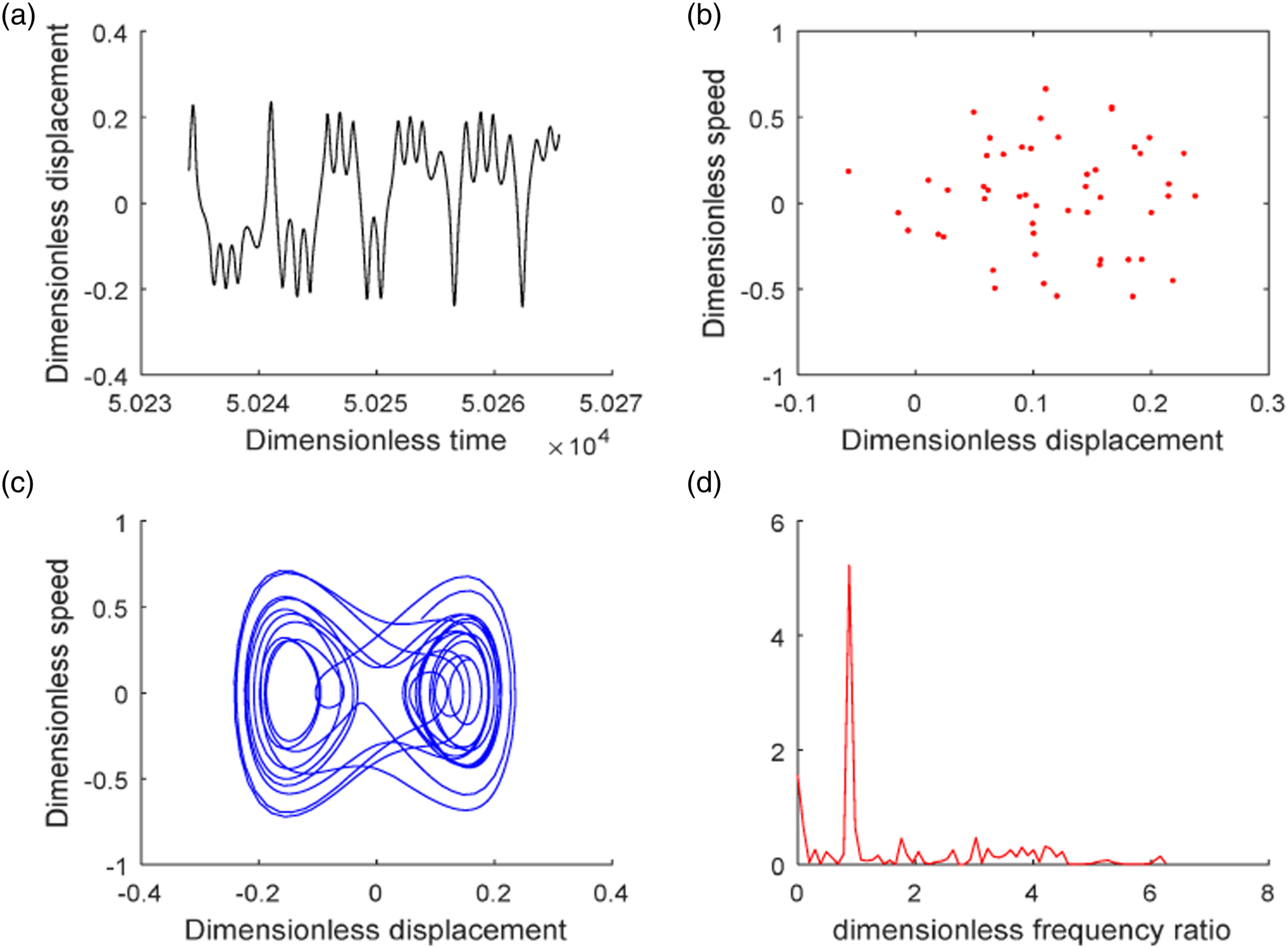
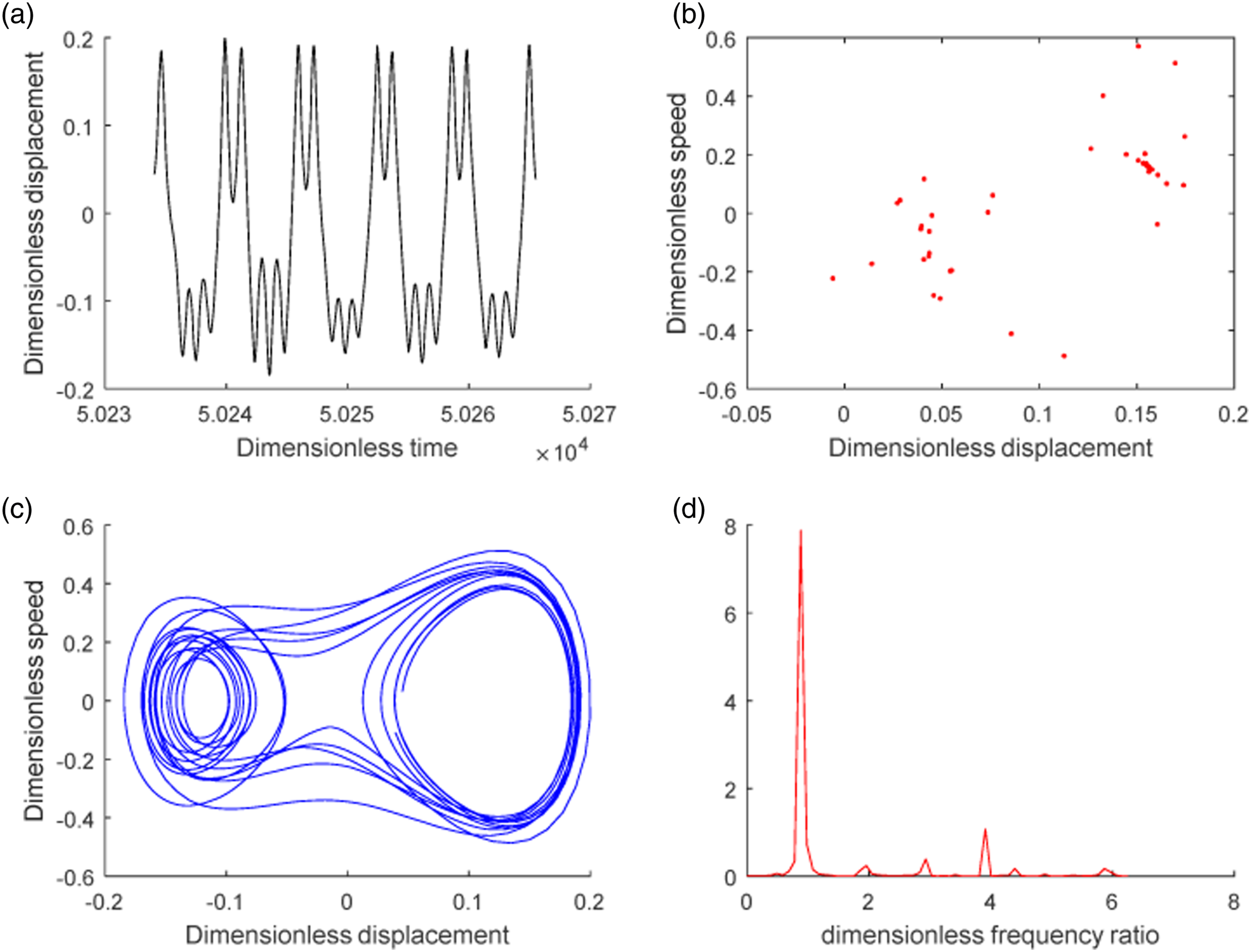
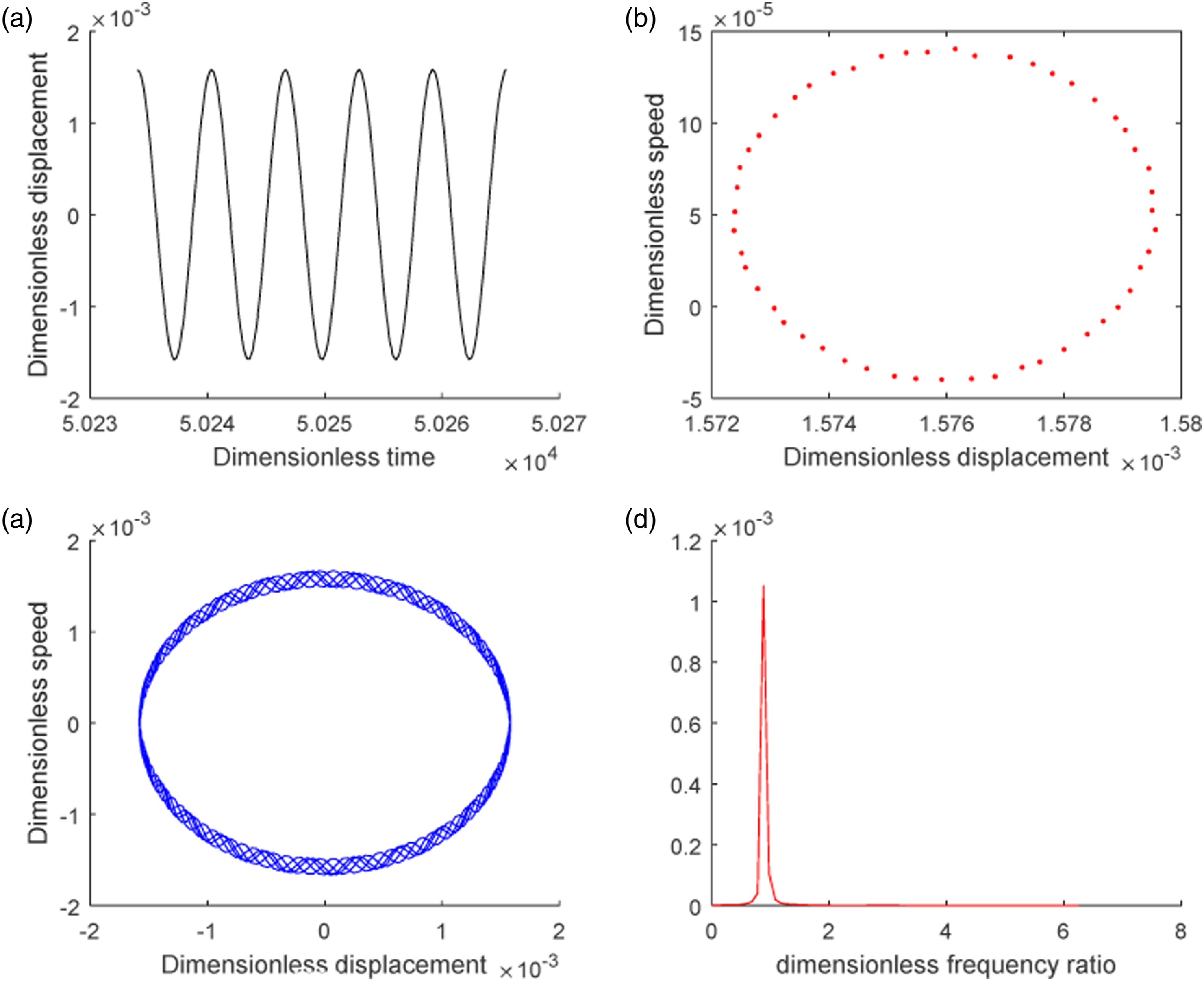
The Effect of the Electric Field on the Chaos and Bifurcation of the Nonlinear Vibration of the Traveling Membrane. Figures 12, 13, 14 and 15 display the nonlinear vibrational characteristic diagrams of the traveling flexible printing electronical membrane when the alternating voltage is changed. In numerical integration, the integral within the cycle of each external excitation force is 200 steps, the basic frequency is Global bifurcation plot of the dimensionless electric field ( Global bifurcation plot of the dimensionless electric field ( Nonlinear characteristic maps of the electric field ( Nonlinear characteristic maps of the electric field (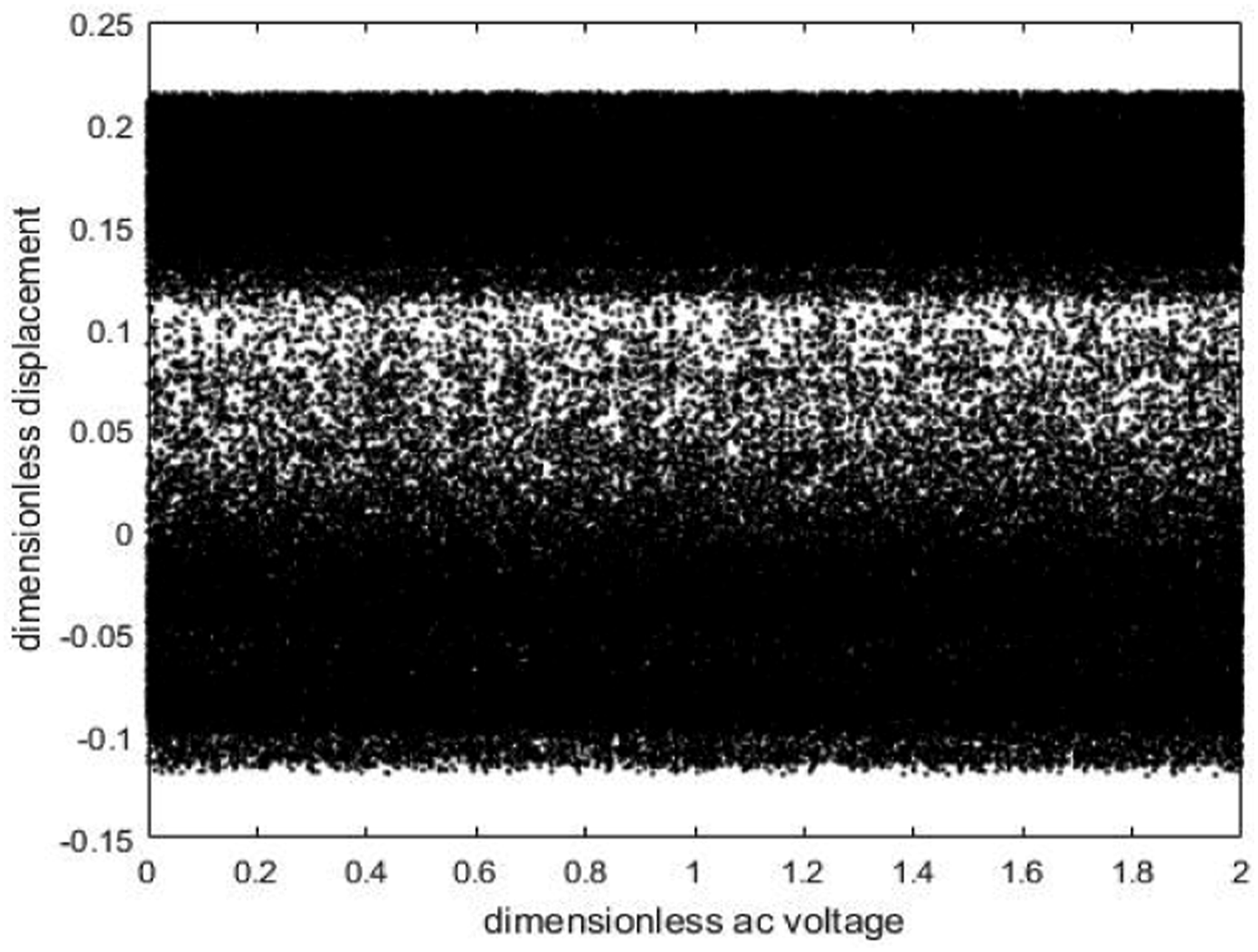
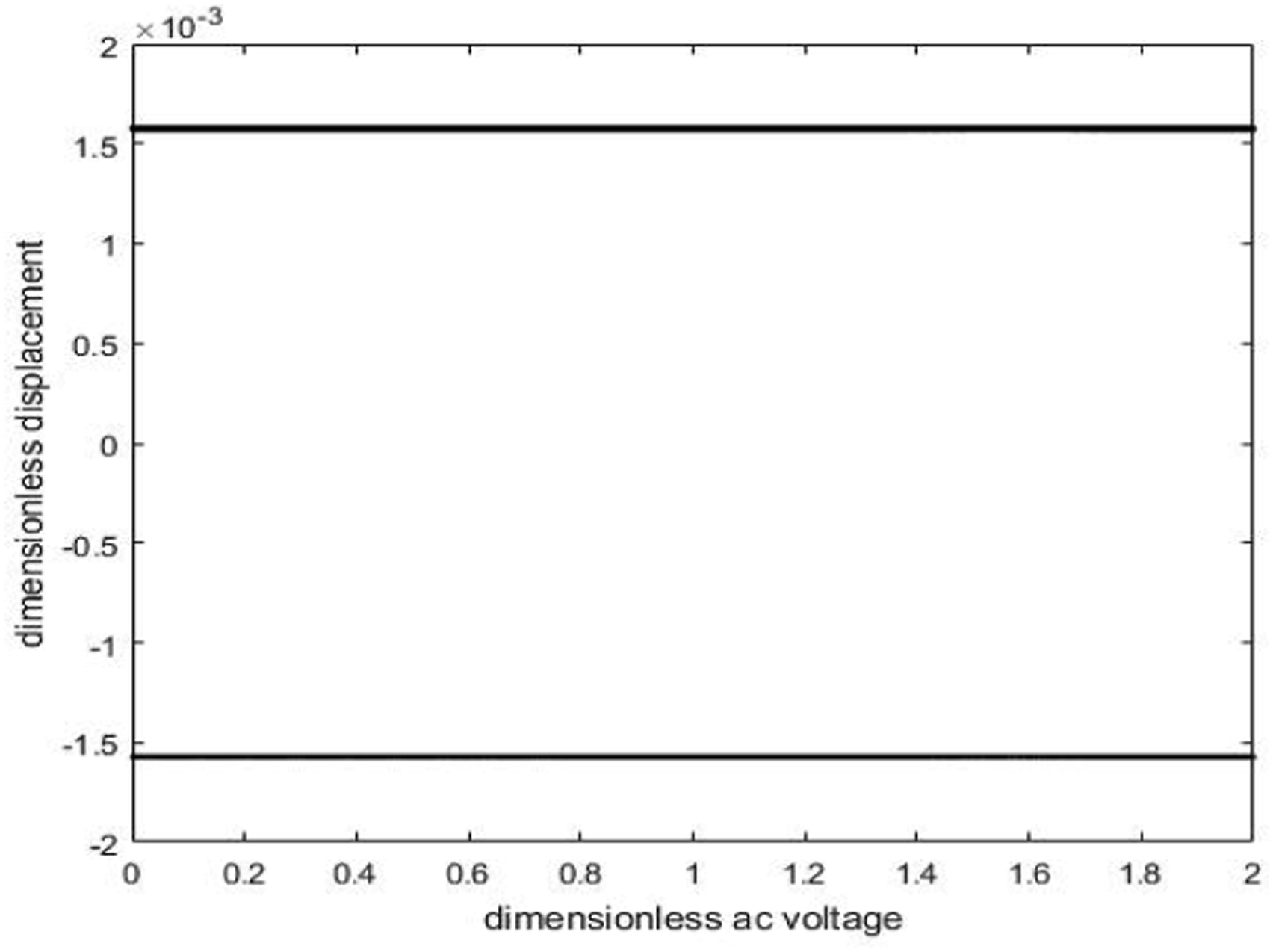
The bifurcation plots of Figures 12 and 13 show that when the dimensionless temperature coupling coefficient is
In Figure 14, when
Conclusion
This paper explored the nonlinear vibrational properties of the thermoelastic coupling flexible printing electronical membrane of a Chuanqi intelligent RFID printing machine subjected to nonlinear electrostatic force. The quartic Runge-Kutta algorithm was utilized to calculate the temperature-coupled nonlinear vibrational equation, and the nonlinear vibrational law of the membrane under the effect of dimensionless external motivation, damping coefficient, internal to external diameter ratio, speed, electrostatical field, and dimensionless temperature coupling coefficient was studied. The results are summarized as follows: 1. A dimensionless velocity is used as the control quantity. When 2. A dimensionless temperature coupling coefficient is used as the control quantity. When 3. A dimensionless alternating voltage is used as the control quantity. By choosing the appropriate temperature coupling coefficient membrane material, the chaos and period trajectory and motion domain of the traveling flexible printing electronical membrane can be controlled in the entire global parameter domain, realizing stable operation.
Overall, according to the steady-state ranges of thermal coupling of the traveling flexible printing electronical membrane under the action of nonlinear electrostatical force, the membrane preparation parameters are maintained in the stable areas to avoid the occurrence of potential strong nonlinear phenomenon.
Footnotes
Declaration of conflicting interests
The author(s) declared no potential conflicts of interest with respect to the research, authorship, and/or publication of this article.
Funding
This work was supported in part by the National Natural Science Foundation of China under Grant 52075435, in part by the Key Project of Shaanxi Provincial Natural Science Basic Research under Grant 2022JZ-30, in part by the Natural Science Foundation of Shaanxi Province under Grant 2021JQ-480.
