




Abstract
The rotary acoustic cavity coupled system can be generated in working conditions of aviation, aerospace, ship, machinery, and other fields. The rotary acoustic cavity includes cylindrical, spherical, and conical acoustic cavities, which integrates into the unified analysis model by iso-parametric transformation in finite element method. To study the acoustic field characteristic of rotary acoustic cavity coupled system, a unified analysis model of rotary acoustic cavity coupled system is established: First, the acoustic field characteristic of the coupled system is researched by improved Fourier series method, and the admissible sound pressure function is constructed by three-dimensional modified Fourier series. Then, the acoustic field domain energy functional is established, and the coupled domain energy functional including the coupled potential energy between the sound cavities is introduced to acquire the total energy functional of the coupled system. Finally, the energy equation is solved by Rayleigh–Ritz method, and the natural frequency and corresponding mode of the coupled system are obtained. The unified analysis model demonstrates excellent convergence and accuracy, which is verified by the results of finite element method. Sound pressure responses of the coupled system are obtained by introducing the internal point sound source excitation. The effect of relevant parameters of the coupled system on natural frequency and sound pressure response is investigated, which can provide theoretical guidance for vibration and noise reduction.
Keywords
Introduction
The rotary cavity with arbitrary impedance wall is the basic structural element in aviation, aerospace, marine, and other fields. In addition to the single cavity structure, the cavity coupled system can also be generally used in actual engineering applications. Taking the aircraft as an instance, such as the cockpit and cabin, the complex space in the aircraft can be regarded as the irregular region formed by the coupling of several rotary cavities. The variation of sound pressure generated by excitation in the cockpit will change the sound pressure in the cabin, which in turn affects the sound pressure in the cockpit, forming a complex rotary acoustic cavity coupled system. To provide theoretical foundation for structural optimization and low noise design, it is indispensable to conduct intensive research on the unified analysis modeling of the rotary acoustic cavity coupled system which can reveal the acoustic field coupling mechanism.
In an idealized acoustic modeling, the acoustic walls of the cavity are assumed to be rigid walls, which provides a basis for the in-depth investigation of acoustic field characteristics. Compared with the acoustic cavity with rigid walls, the analytical model of dissipative walled acoustic cavity is closer to the practical engineering applications. In related studies, the acoustic analysis model of the rectangular acoustic cavity and prism acoustic cavity with dissipative acoustic walls have been researched by many scholars. Bistafa and Morrissey 1 studied two numerical procedures to obtain the eigenvalues in the rectangular cavity with arbitrary wall impedances. Li and Cheng 2 developed a fully coupled vibro-acoustic model to characterize the structural and acoustic coupling of a flexible panel backed by a rectangular-like cavity with a slight geometrical distortion, which is introduced through a tilted wall. By the Fourier series method, Du et al. 3 researched the acoustic analysis of a rectangular cavity with impedance boundary conditions arbitrarily specified on any of the walls, and present several numerical examples to demonstrate the effectiveness and reliability of the current method for various impedance boundary conditions. Zhao 4 developed a real-time algorithm for characterizing perforated liners damping at multiple mode frequencies, and comparison is made between the results from the algorithm and those from the short-time fast Fourier transform (FFT)–based techniques. Jin et al.5,6 presented a general Chebyshev–Lagrangian method to obtain the analytical solution for a rectangular acoustic cavity with arbitrary impedance walls. The interior two-dimensional acoustic modeling and modal analysis are presented in the framework of iso geometric analysis (IGA). Bilbao et al. 7 incorporated general locally reactive impedance boundary conditions into a 3D finite volume time domain formulation, which may be specialized to the various types of finite difference time domain method under fitted boundary termination. Shi et al. 8 proposed a method for the analysis of acoustic modals and steady-state responses of arbitrary triangular prism and quadrangular prism acoustic cavities with impedance walls based on the three-dimensional improved Fourier series. Within the framework of Hamilton’s principle, Shao et al. 9 established a simple and unified process for transient vibration analysis of functionally graded material (FGM) sandwich plates in thermal environment.
Numerous models of the rotary acoustic cavity are applied to analyze many practical engineering environments. Therefore, an increasing number of researchers have concentrated on the investigation of the rotary acoustic cavity analysis model. From classical linearized acoustics, Rona 10 conducted on the acoustic resonance that develops in rectangular and cylindrical cavities, and an analytical model for the small amplitude acoustic perturbations inside an enclosure with rigid walls is constructed. Bennett 11 investigated the interaction between the shear layer over a circular cavity and the flow-excited acoustic response of the volume to shear layer instability modes. Jeong et al. 12 presented an analytical model for acoustic transmission characteristics of a cylindrical cavity system with radiation impedance walls representing the acoustic resonance conditions of a Korean bell. Through simulation and experimental studies, Blimbaum et al. 13 have analyzed the multi-dimensional acoustic field excited by transverse acoustic disturbances interacting with an annular side branch to emulate a fuel/air mixing nozzle. Lee 14 presented a semi-analytical approach to solve the eigenproblem of a 2D acoustic cavity with multiple elliptical boundaries, and then he 15 solved acoustic eigenproblems of 3D elliptical cylindrical cavities having multiple elliptical cylinders by means of a 3D semi-analytical formulation based on a multipole expansion. Chen et al. 16 investigated the structural–acoustic radiation problem of cylindrical shell structures with complex acoustic boundary conditions. The structural–acoustic radiation problem of a cylindrical shell is solved by using the double reflection method. Li et al. 17 derived the analytical solutions of the acoustic field in annular combustion chambers with both varying cross-sectional surface area and average radius sustaining a mean flow. Shao et al. 18 investigated the damping performances of seven single- and one double-layer perforated liners with different open area ratios experimentally. Meanwhile, a cold-flow pipe with a lined section is designed. It can be found from the existing literature that studies about analysis model of the rotary acoustic cavity coupled system which have been attempted are concentrated on the cylindrical cavity, while spherical and conical acoustic cavities are seldom involved. Particularly, there are few investigations of the unified analysis model of rotary acoustic cavity.
In many engineering practices, a single cavity structure cannot represent an integrated complex engineering structure such as aircraft and submarine. Hence the acoustic cavity coupled system has come into the field of scholars. Lee 19 proposed an advanced analytical method that can be applied to obtain acoustical modal properties of multiple three-dimensional (3D) rectangular cavities and the modal properties of a 3D coupled structural–acoustic system including the multiple cavities, where cavities are connected in series by necks. Unnikrishnan et al. 20 presented a simplified modeling approach for numerical simulation of a coupled cavity–resonator system which is validated by experiments. Tanaka et al. 21 derived explicitly the eigenpairs of a coupled rectangular cavity comprising five rigid walls and one flexible panel, which are yet to be found in much literature. Birk et al. 22 presented a high-order doubly asymptotic open boundary for modeling scalar wave propagation in two-dimensional unbounded media. By using a circular boundary to divide these into near field and far field, the present method is capable of handling domains with arbitrary geometry. Using the Lagrange multiplier technique, Chen et al. 23 proposed a domain decomposition method to predict the acoustic characteristics of an arbitrary enclosure made up of any number of sub-spaces, which avoided involving extra coupling parameters and theoretically ensures the continuity conditions of both sound pressure and particle velocity at the coupling interface. Shi et al. 24 concerned with the modeling and acoustic eigenanalysis of coupled rectangular spaces with a coupling aperture of variable size. Based on the energy principle, a modeling method for this problem is developed in combination with a 3D modified Fourier cosine series approach. Moores et al. 25 demonstrated an acoustical analog of a circuit quantum electrodynamics system that leverages acoustic properties to enable strong multimode coupling in the dispersive regime while suppressing spontaneous emission to unconfined modes. Although many investigations of acoustic cavity coupled system have been conducted, the shape of acoustic cavities in coupled system is mainly rectangular, while the rotary acoustic cavity coupled system is rarely involved. Meanwhile, sectional literature purely refers to the analysis of the coupling mechanism between acoustic cavities, but do not specifically establish a unified analysis model, especially a unified analysis model of the rotary acoustic cavity coupled system.
Contrapose the shortcomings of the existing studies, a unified analysis model of the rotary acoustic cavity coupled system is established in this paper, and its acoustic field characteristics are analyzed. First, the expression of the admissible sound pressure functions in the coupled system is constructed. Second, the energy functional of acoustic field is established, and the coupling potential energy between acoustic cavities is added to obtain the energy functional of the whole coupled system. Then, the solution equation of acoustic field coupling mechanism in the coupled system is acquired by Rayleigh–Ritz method, and the acoustic field characteristics of the system can be obtained by solving the equation. Finally, based on the verification of the fast convergence and accuracy of the model, the effect of relevant parameters on the acoustic field characteristics is analyzed, and the point acoustic source excitation is introduced to research the acoustic pressure response of the coupled system.
Unified analysis modeling process
Model description
Rotary cylindrical, spherical, and conical acoustic cavities can be represented by the special cases of double curvature cavity elements. It is demonstrated in Figure 1 that an orthogonal coordinate system is established with the base plane of the element (z = 0) as the reference plane. R
α
and R
β
denote the reference radius of curvature along the α axis and β axis. L
α
and L
β
represent length dimensions along the α axis and β axis, and L
z
represents the height dimensions along the z axis of the acoustic cavity. Cross-section geometrical parameters and coordinate system of double curvature cavity element.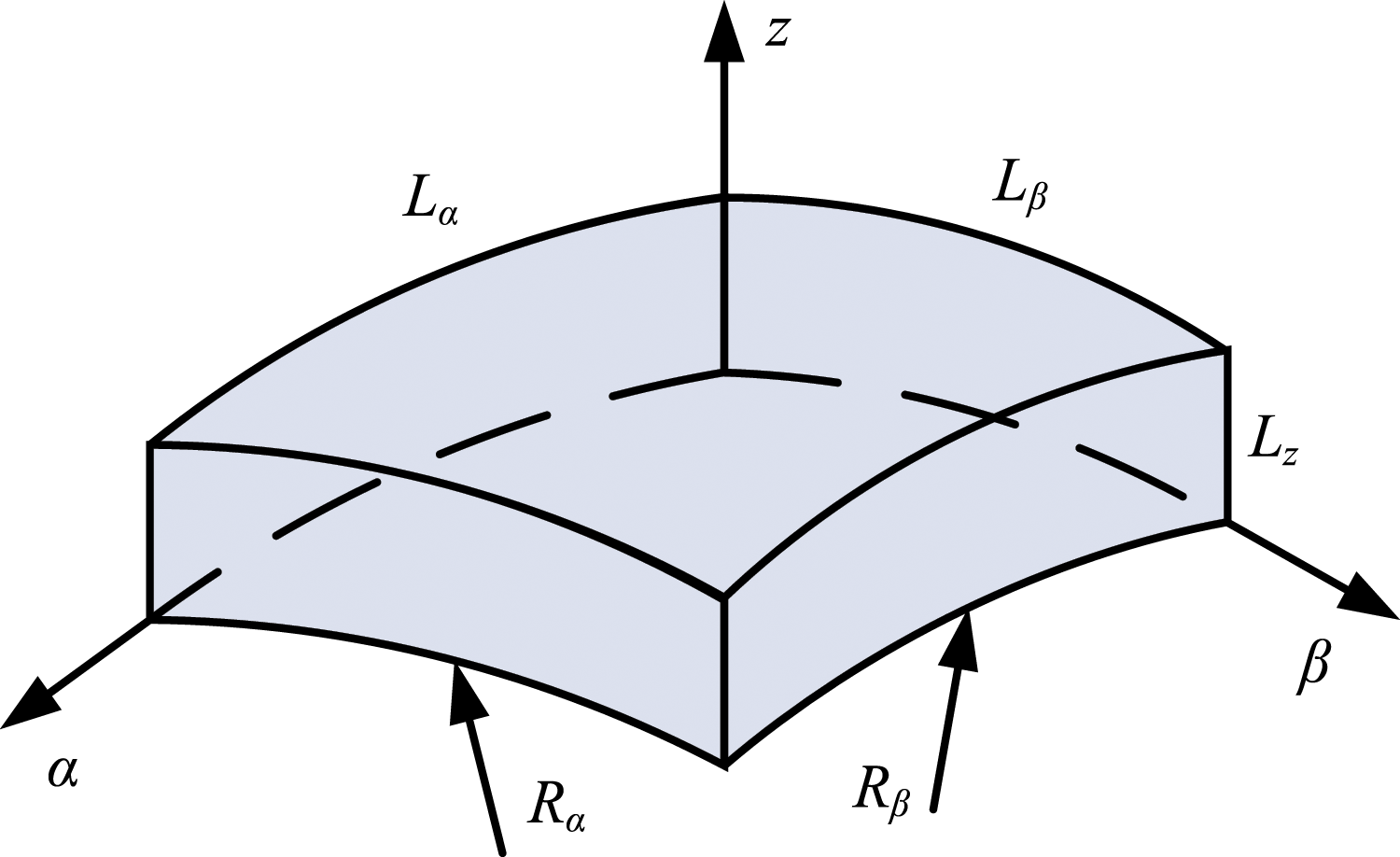
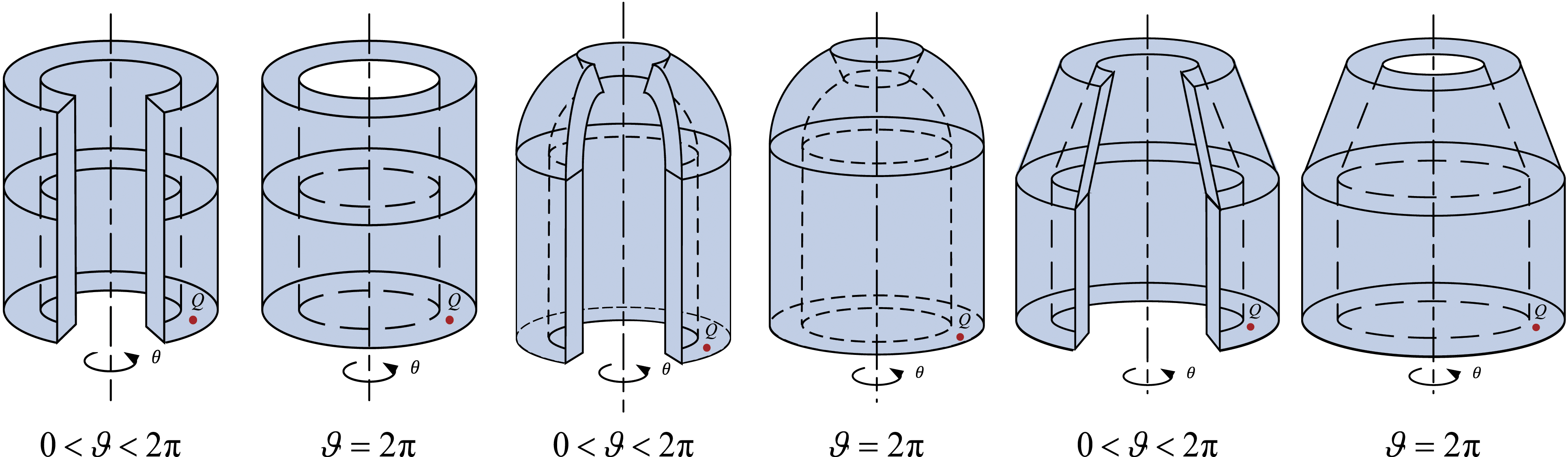
Figure 2 demonstrates the cross-section geometrical parameters and coordinate system of rotary acoustic cavity coupled systems: (a) The cylindrical–cylindrical acoustic cavity coupled system consists of two local coordinate systems (o-s1, θ1, r1) and (o-s2, θ2, r2). The inner radius and outer radius of cylindrical cavities are denoted by R1 and R2, the thickness is represented by H, and the height of two cavities is marked as L1 and L2, respectively. (b) The spherical–cylindrical acoustic cavity coupled system consists of two local coordinate systems (o-φ1, θ1, r1) and (o-s2, θ2, r2). R1 and R2 separately represent the inner radius and outer radius of spherical cavity and cylindrical cavity, and H is their thickness. The apex angle of spherical cavity can be represented by ϕ, where ϕ = ϕ2 − ϕ1. The height of cylindrical cavity is denoted by L. (c) The conical–cylindrical acoustic cavity coupled system consists of two local coordinate systems (o-s1, θ1, r1) and (o-s2, θ2, r2). R1 and R2 are the short radius and long radius of conical cavity, α and L1 are the cone–apex angle and the length of generatrix of conical cavity. The inner radius and outer radius of cylindrical cavity are denoted by R2 and R3, and the height is denoted by L2. H is the thickness of the whole coupled system. Figure 3 shows the shapes of rotary acoustic cavity coupled system at different rotation angles, in which ϑ is the rotation angle of the coupled system. When ϑ = 2π, the coupled systems have two walls coupling which causes the reduction of two walls. To investigate the acoustic response characteristics, a monopole point acoustic source Q is placed in the coupled system. Cross-section geometrical parameters and coordinate system of the rotary acoustic cavity coupled system. (a) Cylindrical–cylindrical acoustic cavity coupled system (b) Spherical–cylindrical acoustic cavity coupled system (c) Conical–cylindrical acoustic cavity coupled system. Unified model of the rotary acoustic cavity coupled system.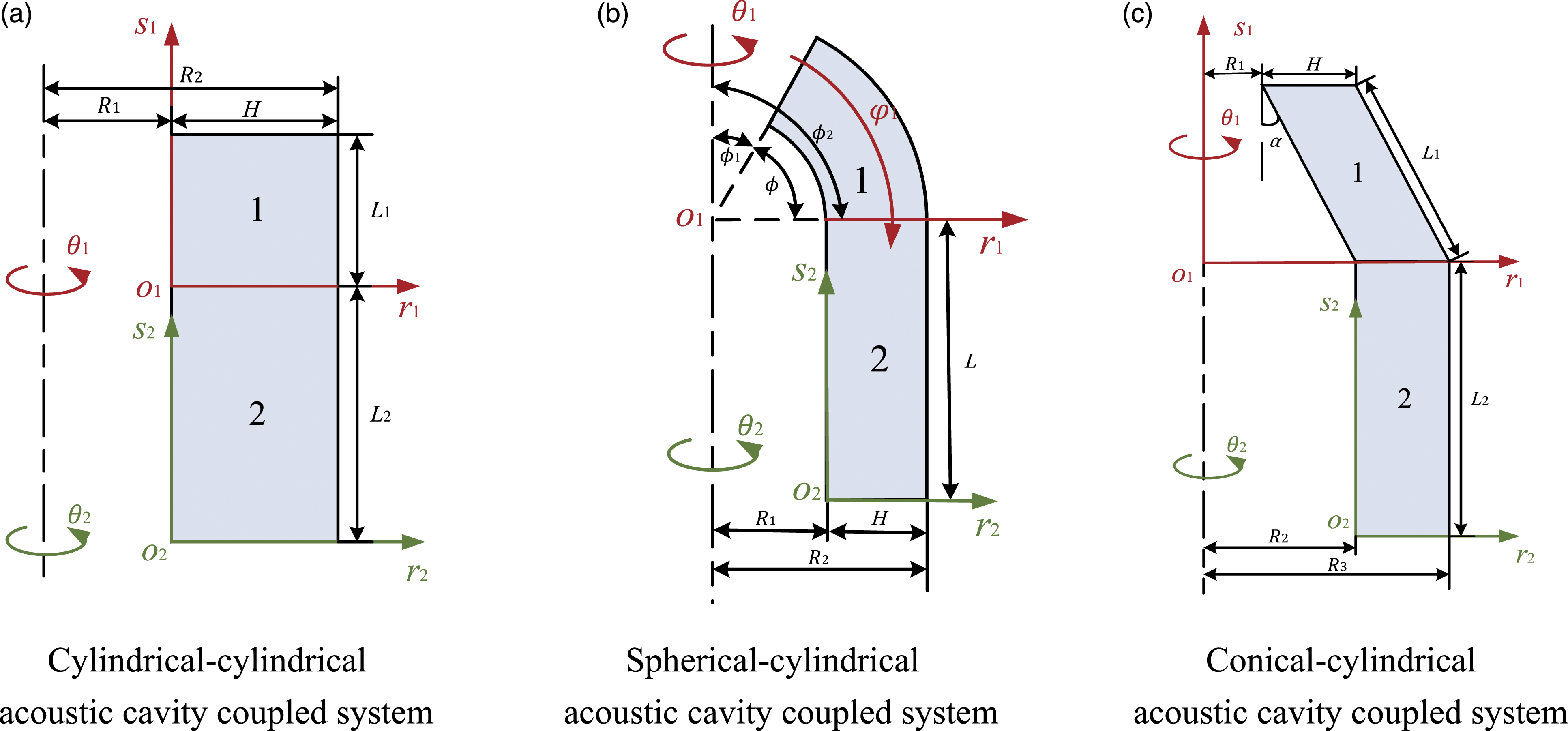
Related parameters
To establish the coupling mechanism between two acoustic cavities, the parallelogram section in rotary acoustic cavity coupled system is necessary to be transformed into a square section. As is shown in Figure 4, the plane ξoη coordinate system is transformed from plane ros coordinate system by iso-parametric transformation. Schematic diagram of coordinate transformation of parallelogram section.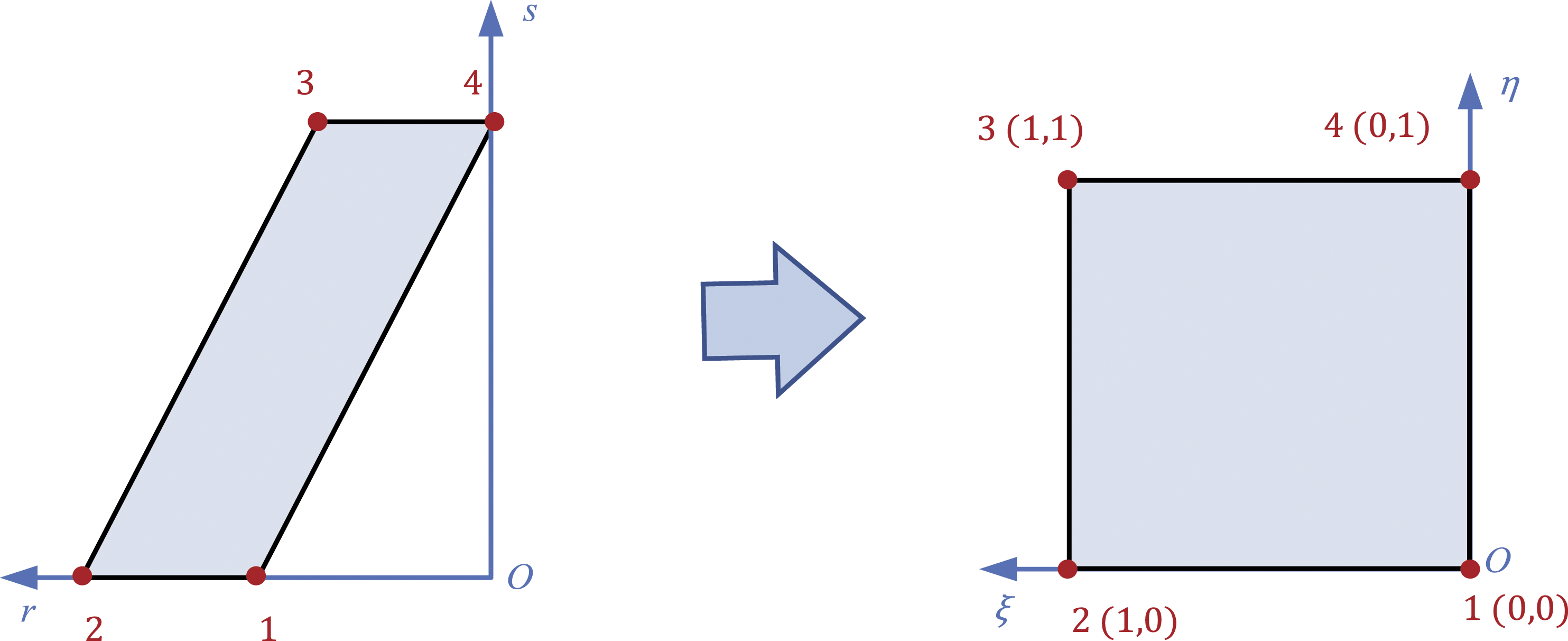
The coordinate transformation equation and the shape function expression are shown in equations (1) and (2)


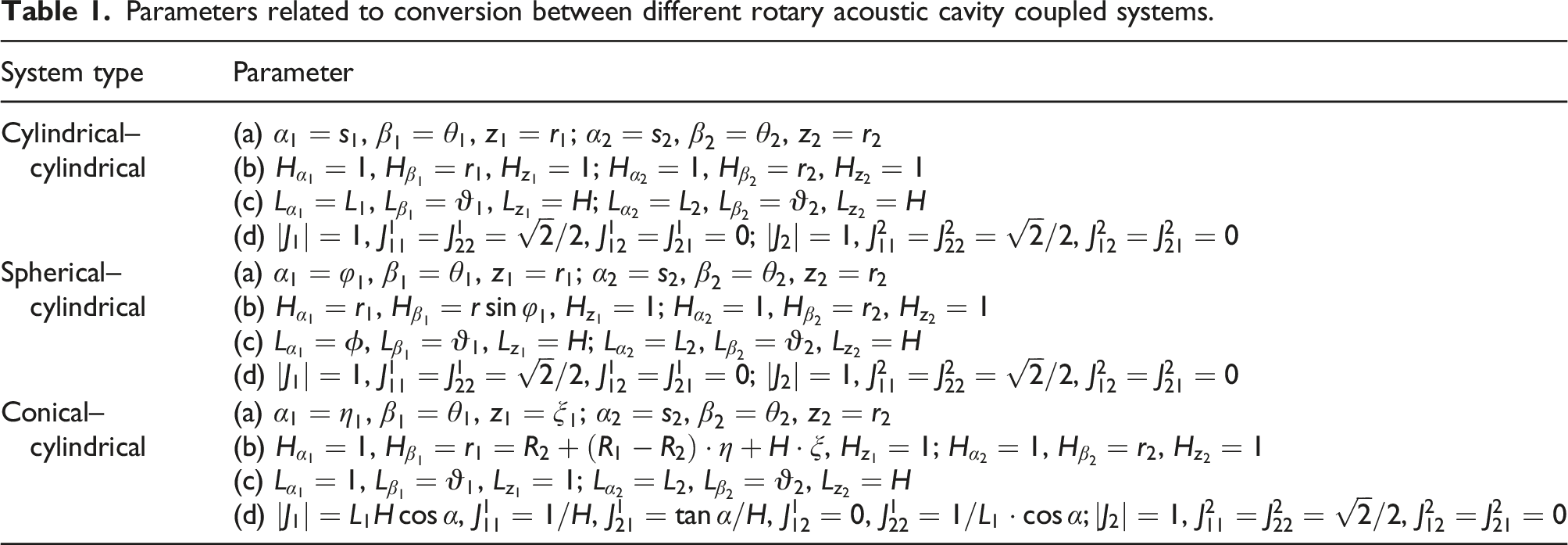
The transformation of coordinates is written in matrix form equations (3) and (4)


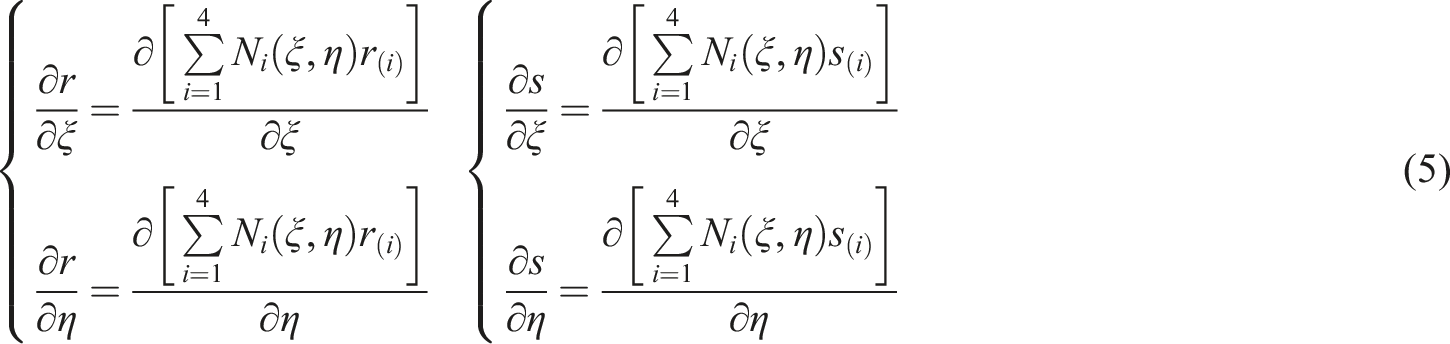
Equation (3) can also be expressed in the inverse form


Parameters related to conversion between different rotary acoustic cavity coupled systems.
Construction of admissible sound pressure functions
The rotary acoustic cavity coupled system can be divided into two sound field domains and the coupling domain represented by the contact surfaces of two enclosed acoustic cavities, hence two sound pressure admissible functions are established, respectively. The expression of the admissible sound pressure function expressed by three-dimensional modified Fourier series method is the superposition of one multiplied cosine function and six multiplied sines and cosines














Energy equation
Rayleigh–Ritz energy method is applied to research the acoustic field characteristic. The Lagrange equation of the established acoustic cavity coupled system model can be written as

The expression of 
The expression of 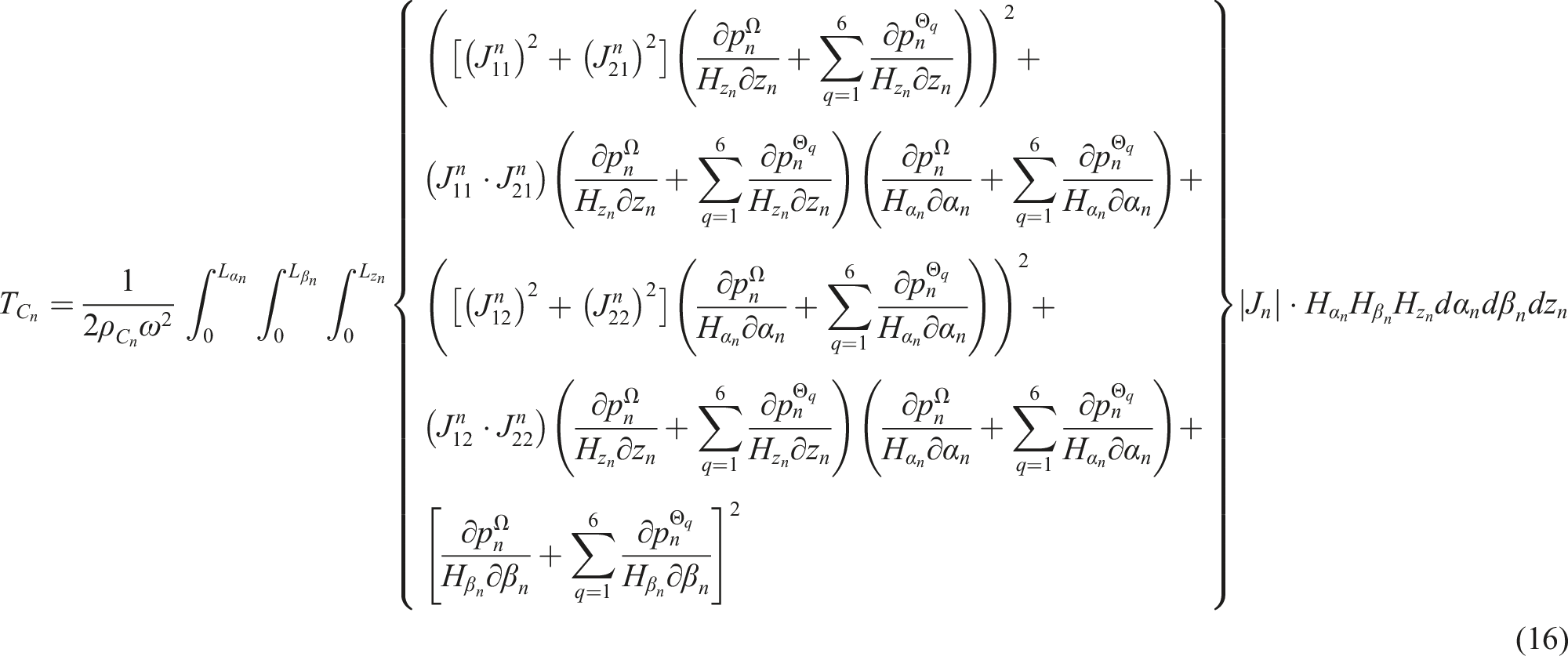
When 0 < ϑ < 2π, 

When rotation angle ϑ is 2π, the sound pressure remains consistent on the coupling interface, and the particle velocity remains continuous, hence the expression of 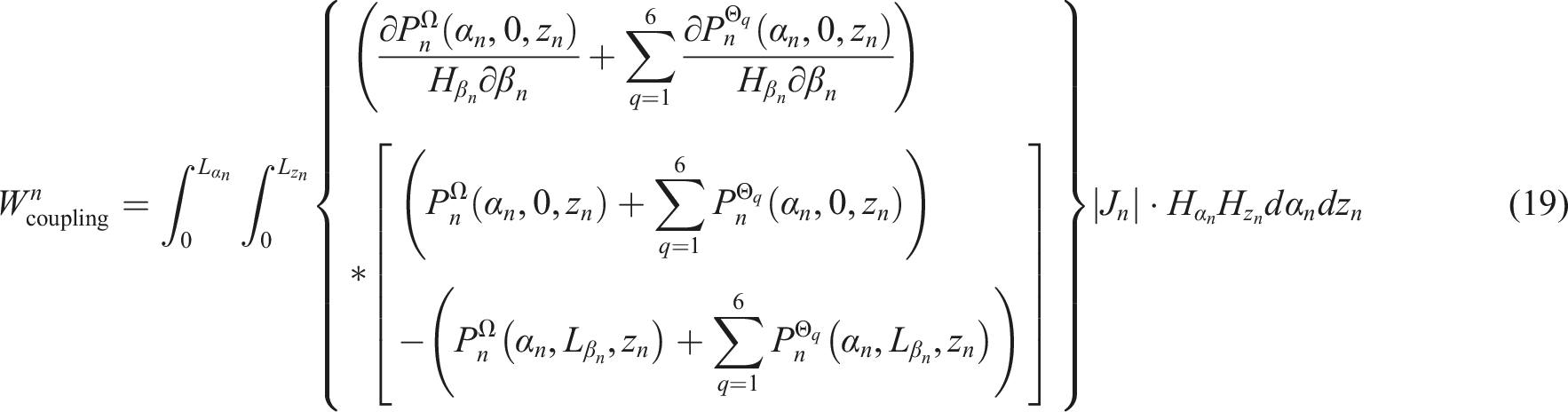
The expression of 

The coupling potential energy between cavity 1 and 2 marked as 
Solution procedure
Equations (15)–(22) are substituted into the Lagrange equation. According to the Ritz method, take the partial derivative of the three-dimensional unknown Fourier coefficient in the Lagrange equation, and the result is applied to be zero as follows



Transform equations (23)–(26) into matrix form

When the point acoustic source is not arranged (

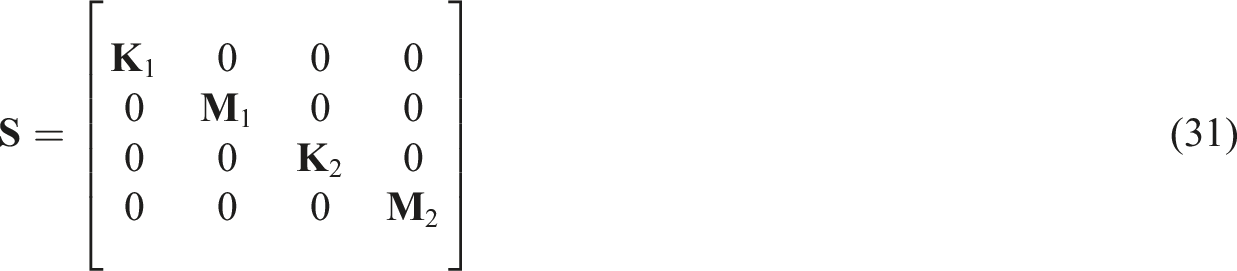

The eigenvalue ω of the linear equations (equations (29)–(32)) is the natural frequency of the rotary acoustic cavity coupled system, and the eigenvector
Numerical discussions and result analysis
After constructing the unified analysis model of the rotary acoustic cavity coupled system, this section mainly verifies the convergence and accuracy of the unified analysis model, analyzes the factors that affect the natural frequency of the coupled system subject to free vibration, and studies the sound pressure response under the excitation of a point acoustic source. The example in this section chiefly employs air and water as the acoustic medium, where the density of air is defined as ρair = 1.21 kg/m3, the density of water is defined as ρwater = 1000 kg/m3. The speed at which sound waves travel through air is defined as cair = 340 m/s, and the speed at which sound waves travel through air is defined as cwater = 1480 m/s.
Unified analysis model validation
Analysis of natural frequency convergence of cylindrical–cylindrical acoustic cavity coupled system.
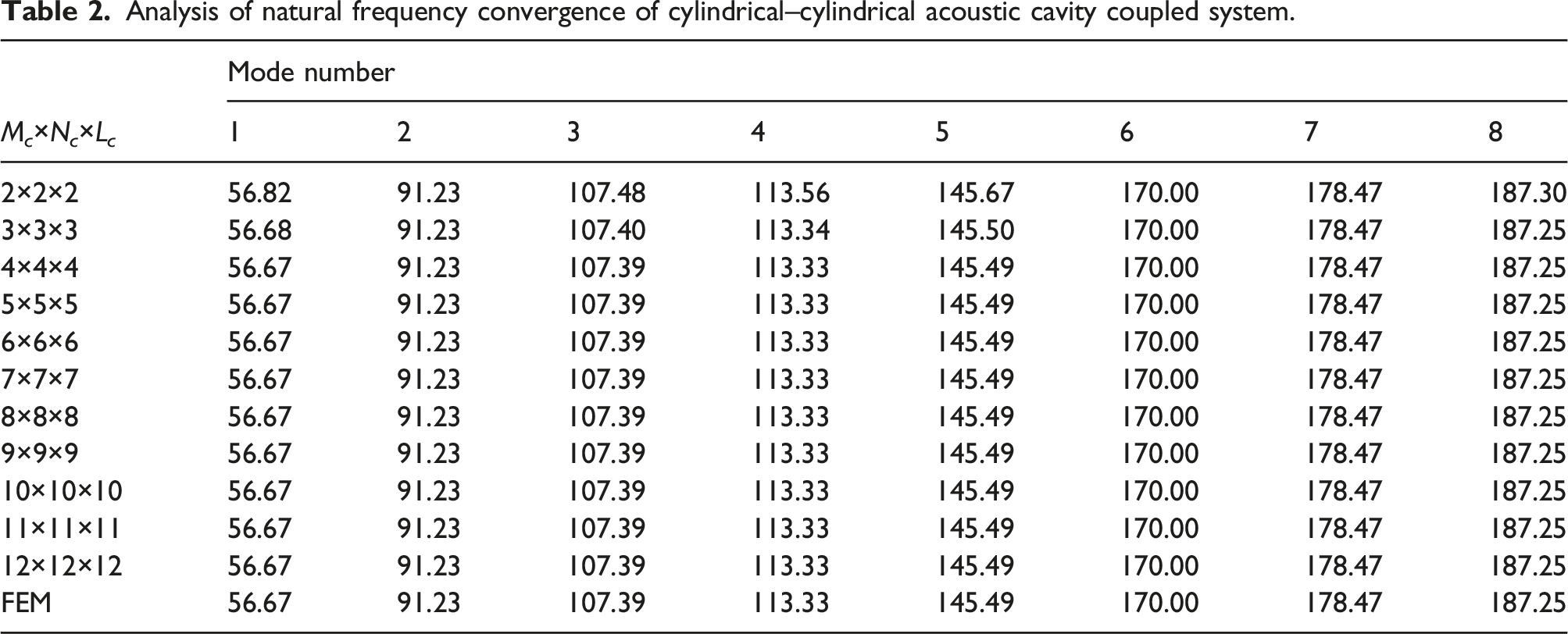
There are few references to the coupled system; the accuracy of the analytical model is verified by the finite element simulation results as a reference. The coupled system is simulated by finite element method using ABAQUS. Taking cylindrical–cylindrical acoustic cavity coupled system in Table 2 as an instance, geometric model establishment, mesh division and step type selection are shown in Figure 5. The element type of the model is AC3D20, the approximate global size of the seeds is 0.05 m, and the step type is selected as Frequency. By analyzing the simulation results listed in Table 2, the calculation results of this method are in agreement with those of finite element simulation. Therefore, it can be proved that the model of the cylindrical–cylindrical acoustic cavity coupled system constructed by the method in this paper has good convergence and accuracy. Finite element model establishment of cylindrical–cylindrical acoustic cavity coupled system. (a) model establishment and mesh division (b) step type selection.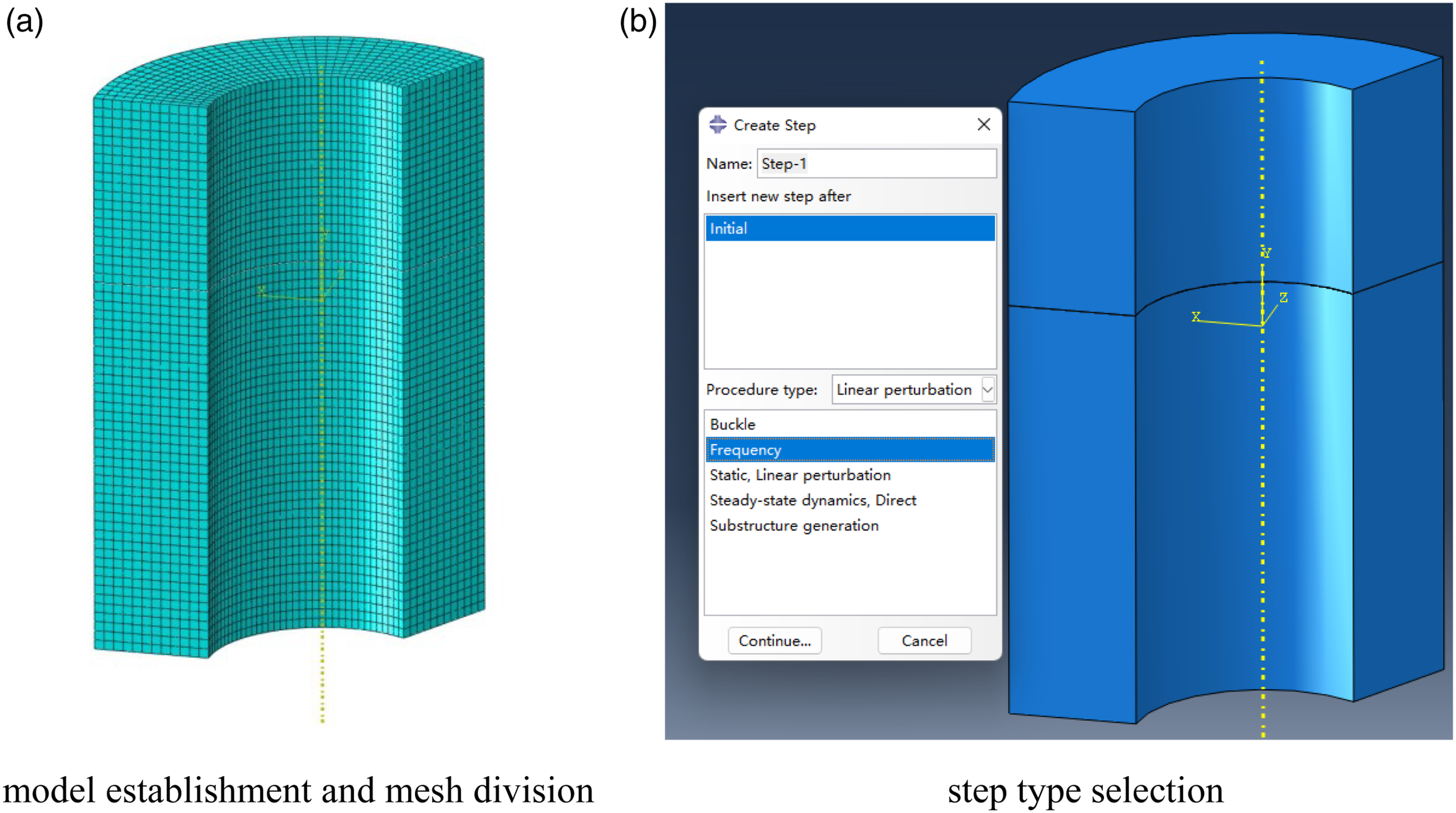
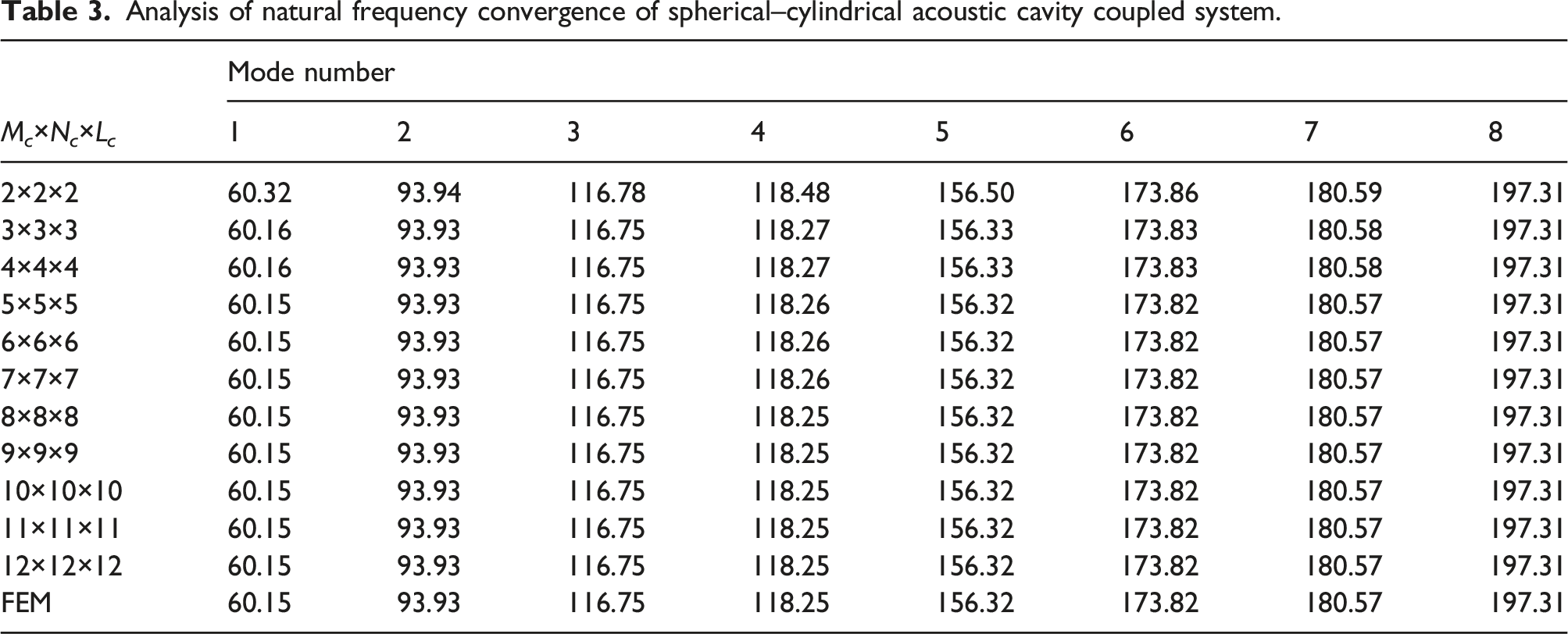
Analysis of natural frequency convergence of spherical–cylindrical acoustic cavity coupled system.
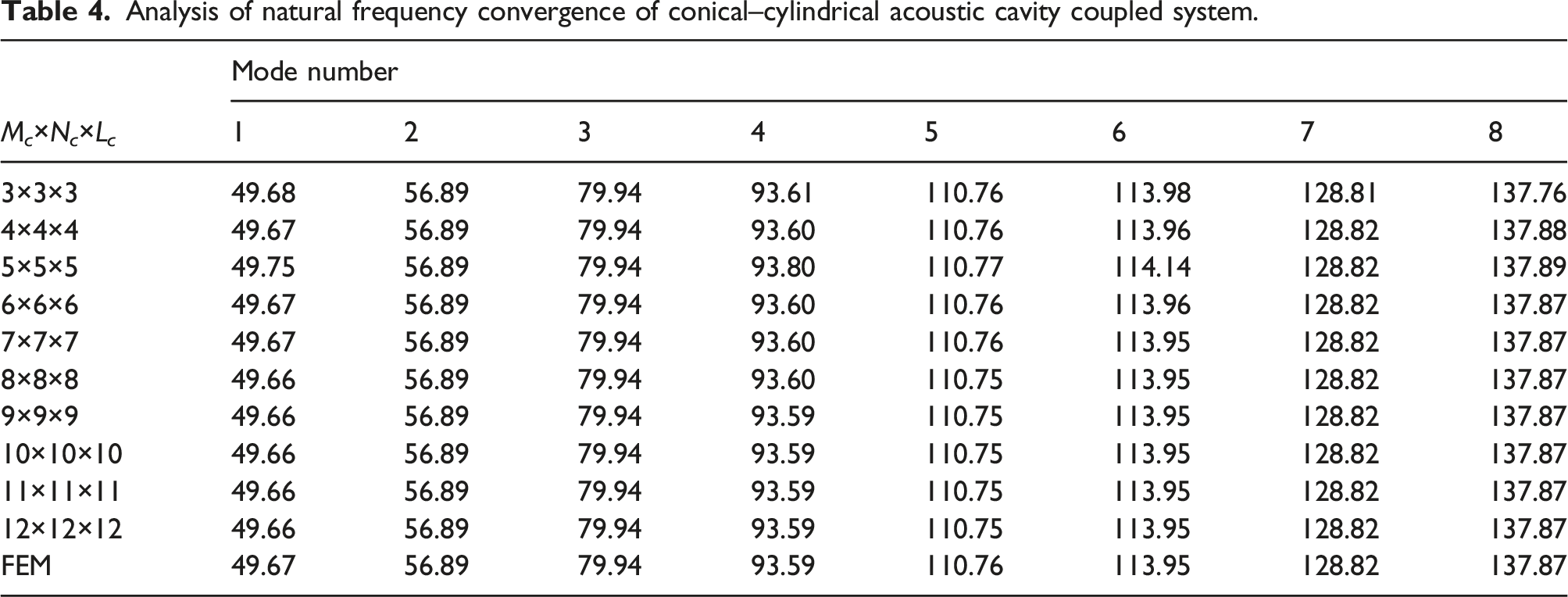
Analysis of natural frequency convergence of conical–cylindrical acoustic cavity coupled system.
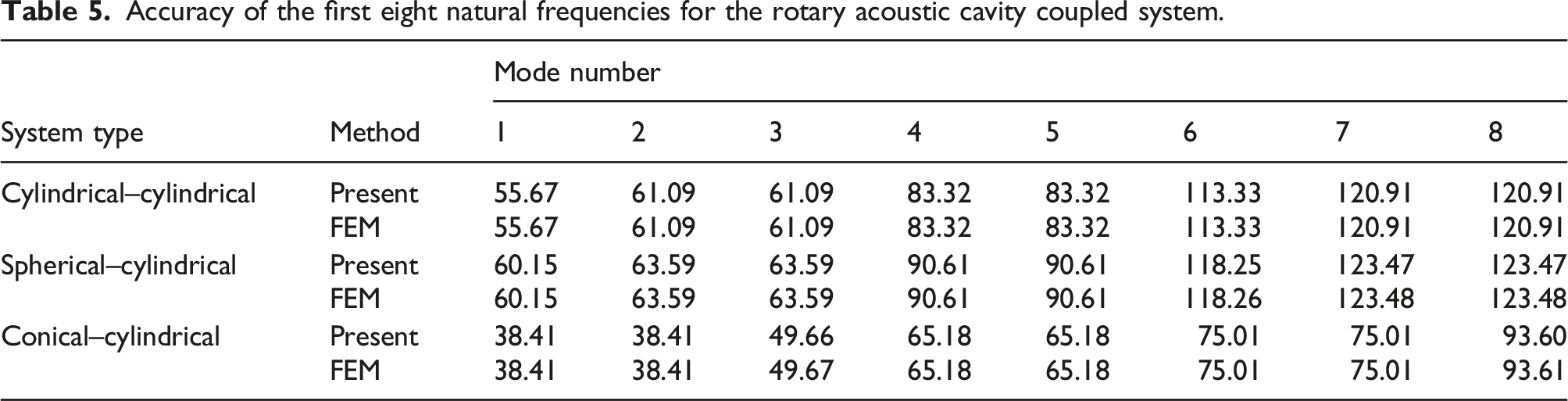
Accuracy of the first eight natural frequencies for the rotary acoustic cavity coupled system.
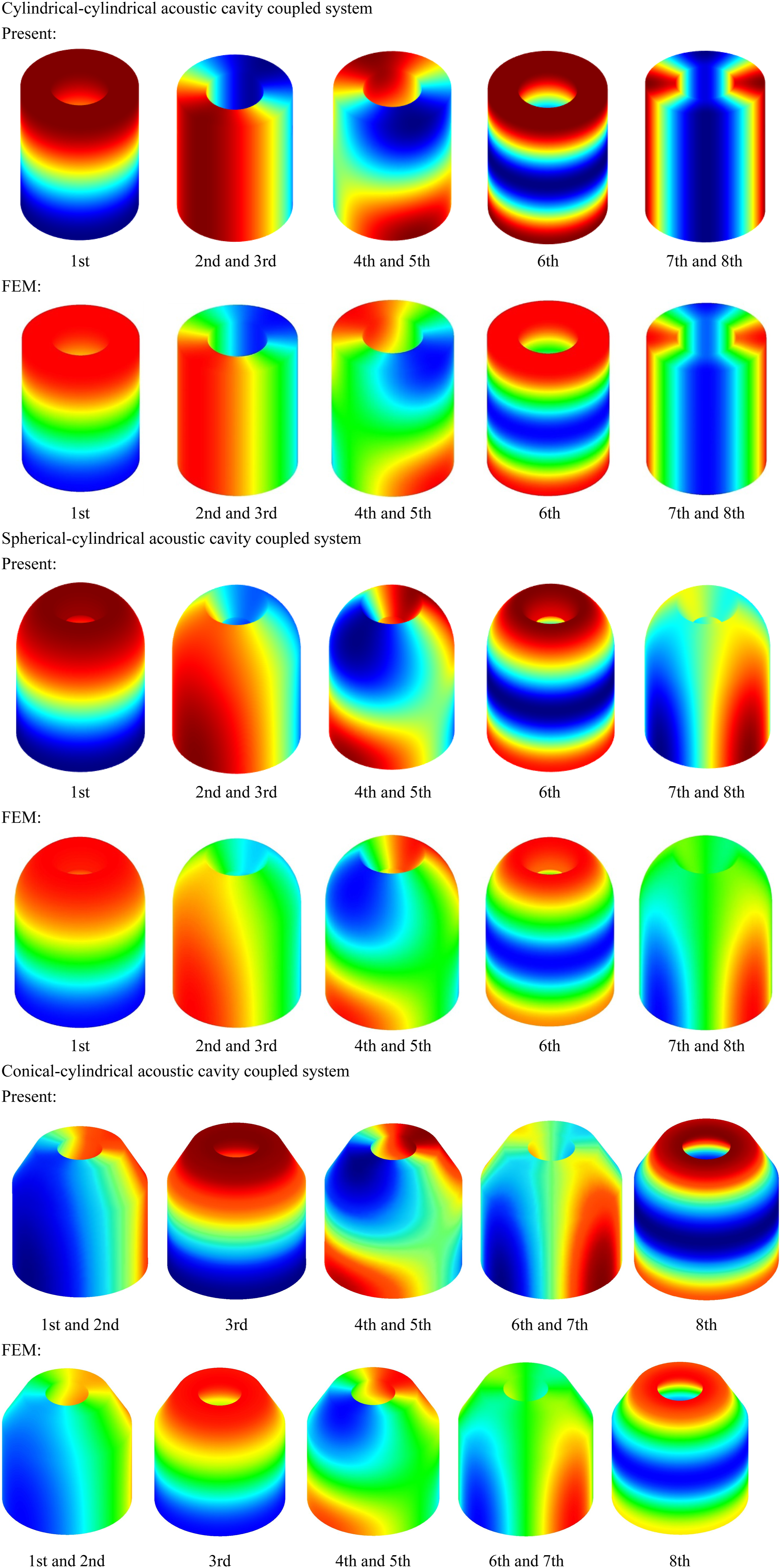
Aiming to express the sound pressure distribution of the coupled system intuitively, Figure 6 and Figure 7 separately demonstrate the first several order sound pressure mode nephograms of the coupled system obtained by the proposed method and the finite element simulation when 0 < ϑ < 360° and ϑ = 360°. The geometric parameters are consistent with Tables 2–5. It is found that the modes obtained by the two methods are consistent, which further proves the accuracy of the present method. Nephogram for sound pressure distribution of the rotary acoustic cavity coupled system when 0 < ϑ < 360°. Nephogram for sound pressure distribution of the rotary acoustic cavity coupled system when ϑ = 360°.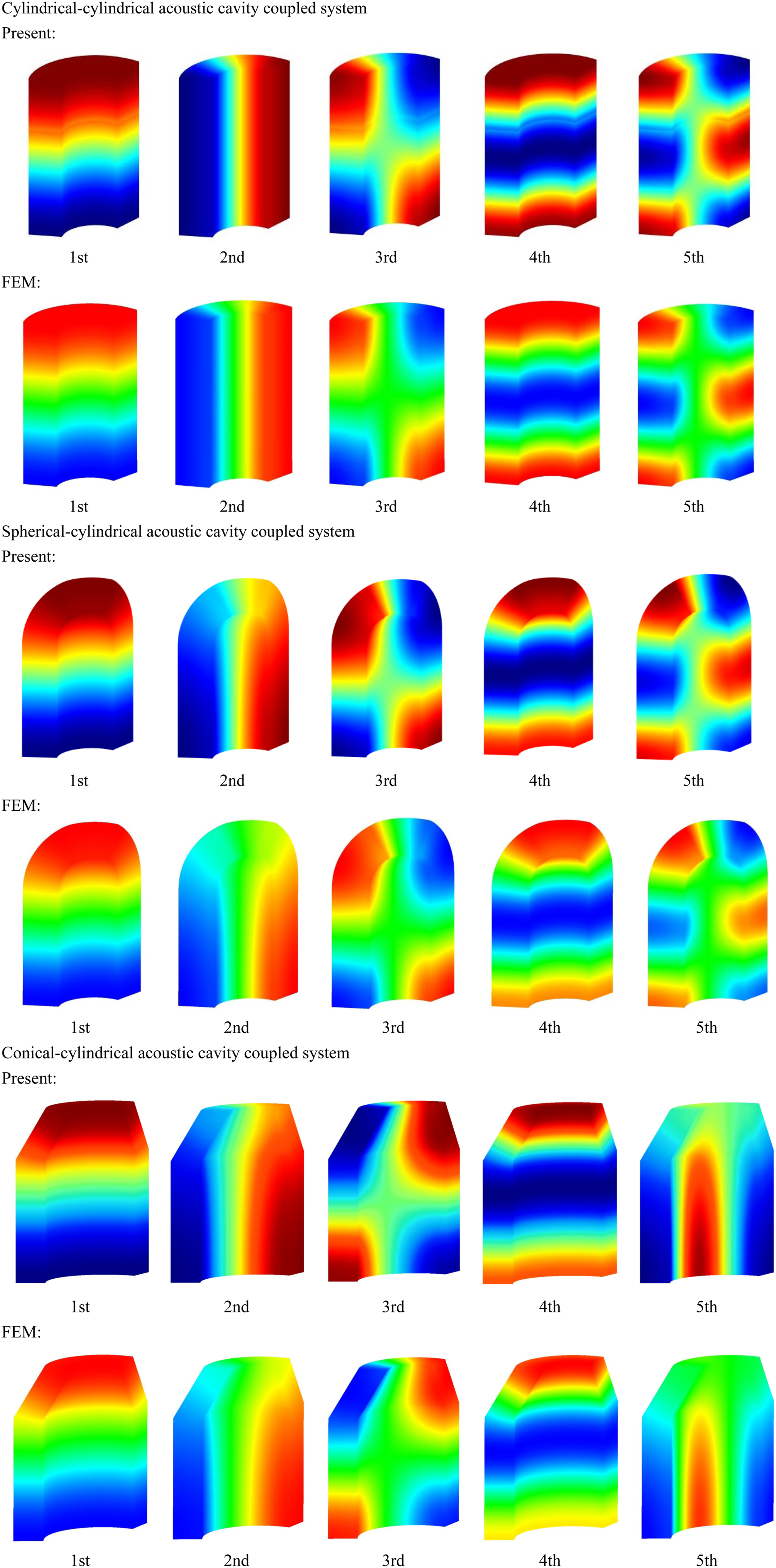
Natural frequency analysis
In this section, natural frequency analysis of the rotary acoustic cavity coupled system is carried out, and the effects of geometric parameters on the acoustic field characteristics of the coupled system are studied. The variations of natural frequencies of cylindrical–cylindrical acoustic cavity coupled system with different rotation angles are shown in Figure 8. The invariable geometric parameters selected for numerical calculation are: R1 = 0.4 m, R2 = 1m, L1 = 1m, L2 = 2m. As can be seen from Figure 8, the natural frequency of the same order decreases with the increase of the rotation angle ϑ under the condition of the same internal and external radius and the height of the sound cavity, but the situation changes when the rotation angle ϑ = 360°. Table 6 gives the first eight natural frequencies of the system with various rotation angles. The natural frequencies of the coupled system at ϑ = 90° include the natural frequencies of the coupled system at ϑ = 180°, and the natural frequencies of the coupled system at ϑ = 360° are numerically the same as those at ϑ = 180°. However, a closed loop is formed in the case of the coupling of the two acoustic walls, and the repeated modes are generated, resulting in the continuous extension of the natural frequencies of each order. These circumstances explain the reason why the natural frequencies rise again when ϑ = 360° in Figure 8. The variation curve of the natural frequency of cylindrical–cylindrical acoustic cavity coupled system with different rotation angles. The first eight natural frequencies of the cylindrical–cylindrical acoustic cavity coupled system with various rotation angles.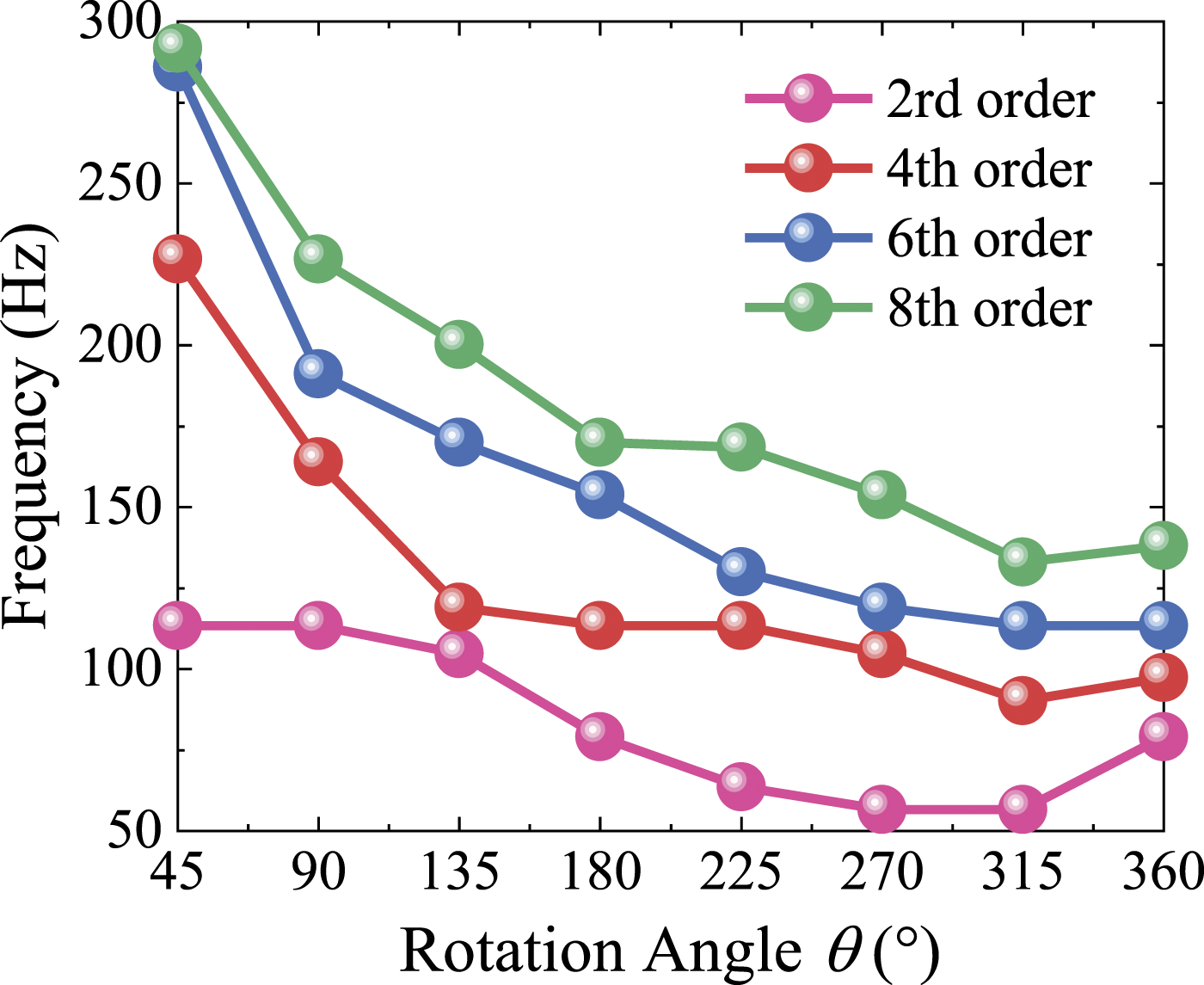
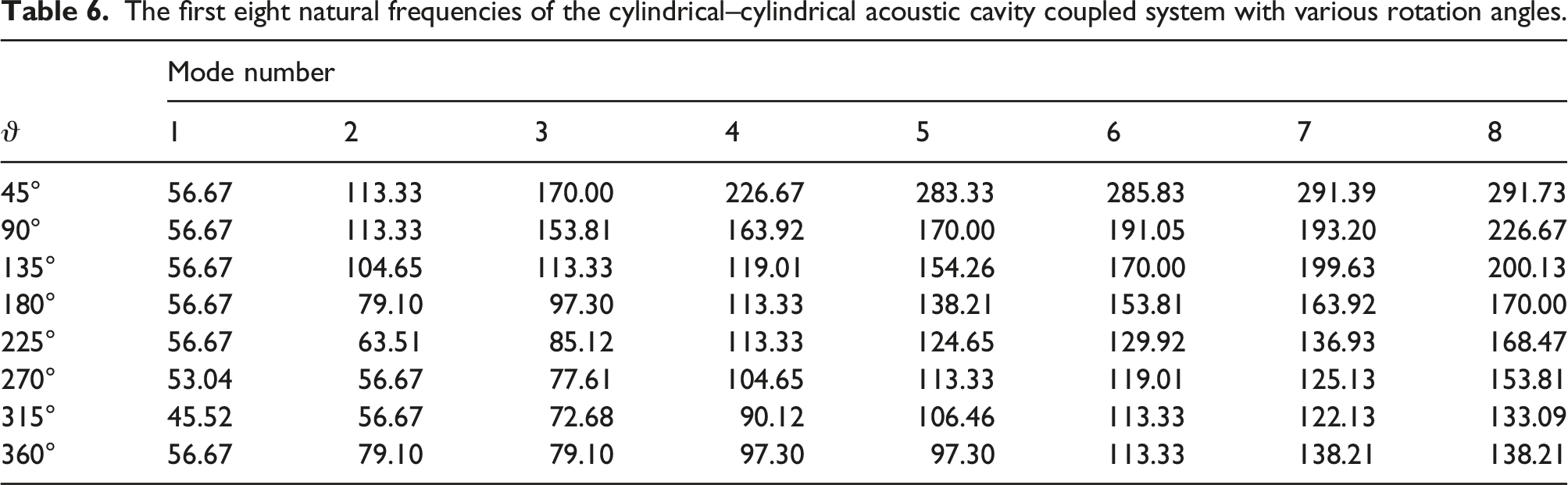
The first eight natural frequencies of the spherical–cylindrical acoustic cavity coupled system with various rotation angles.
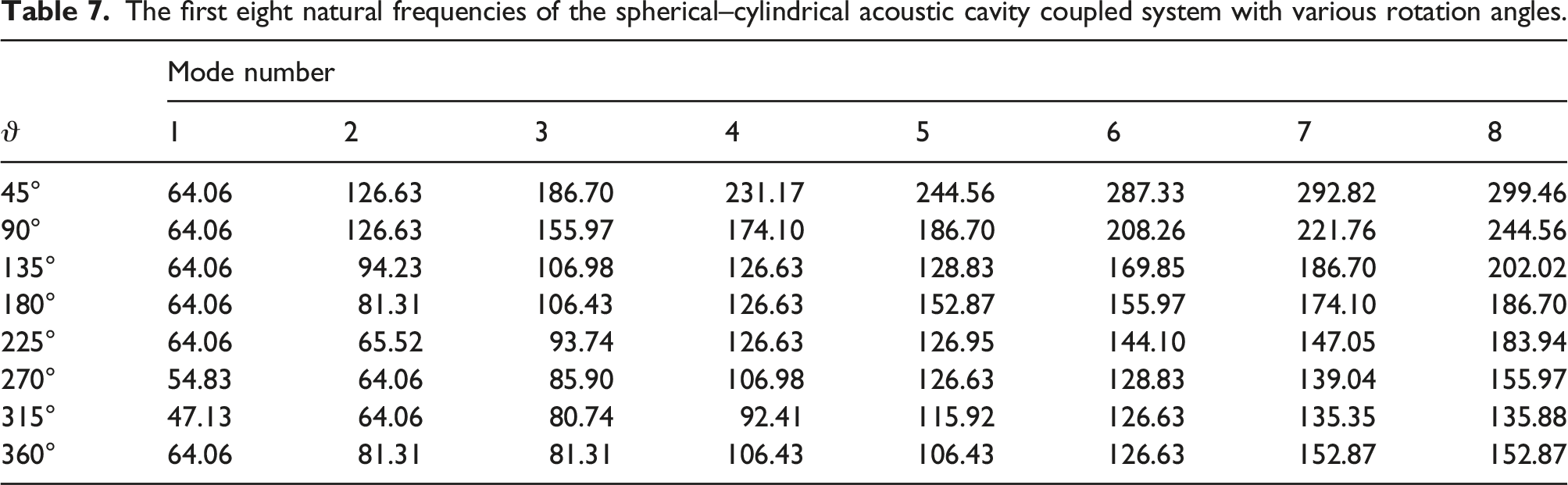
The first eight natural frequencies of the conical–cylindrical acoustic cavity coupled system with various rotation angles.
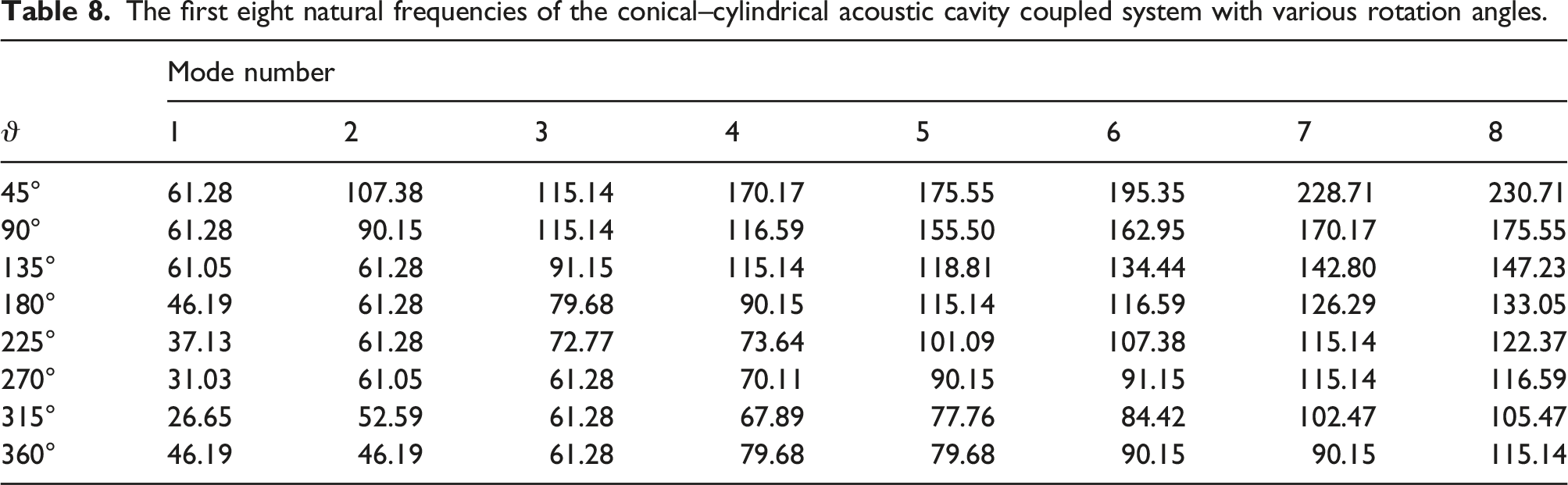
Parameterization of the height L of cylindrical cavity, the apex angle ϕ of spherical cavity, and cone–apex angle α of conical cavity are also needed to analyze the influence of the parameters on the natural frequency. Figure 9 gives the tendency of the first four natural frequencies of the cavity coupled systems with different geometric parameters mentioned earlier. The known invariable geometric parameters are: (a) R1 = 0.6 m, R2 = 1.4 m, ϑ = 120°; (b) R1 = 0.6 m, R2 = 1.4 m, ϑ = 120°, ϕ2 = 90°; (c) R1 = 0.6 m, R2 = 1.4 m, R3 = 1.8 m, H = 0.4 m, ϑ = 120°. It can be seen from Figure 9 that the natural frequency of the same order of the coupled systems decreases with the increase of the heights L of the cylindrical cavity when other geometric parameters are determined. The increase of the apex angle ϕ of spherical cavity also tends to degrade the natural frequency, but the variations in the range from 0° to 90° are less significant. It is also obvious that the natural frequency of the coupled systems degrades with the decrease of cone–apex angle α. The surface diagram of the natural frequency of rotary acoustic cavity coupled system with different geometric parameters.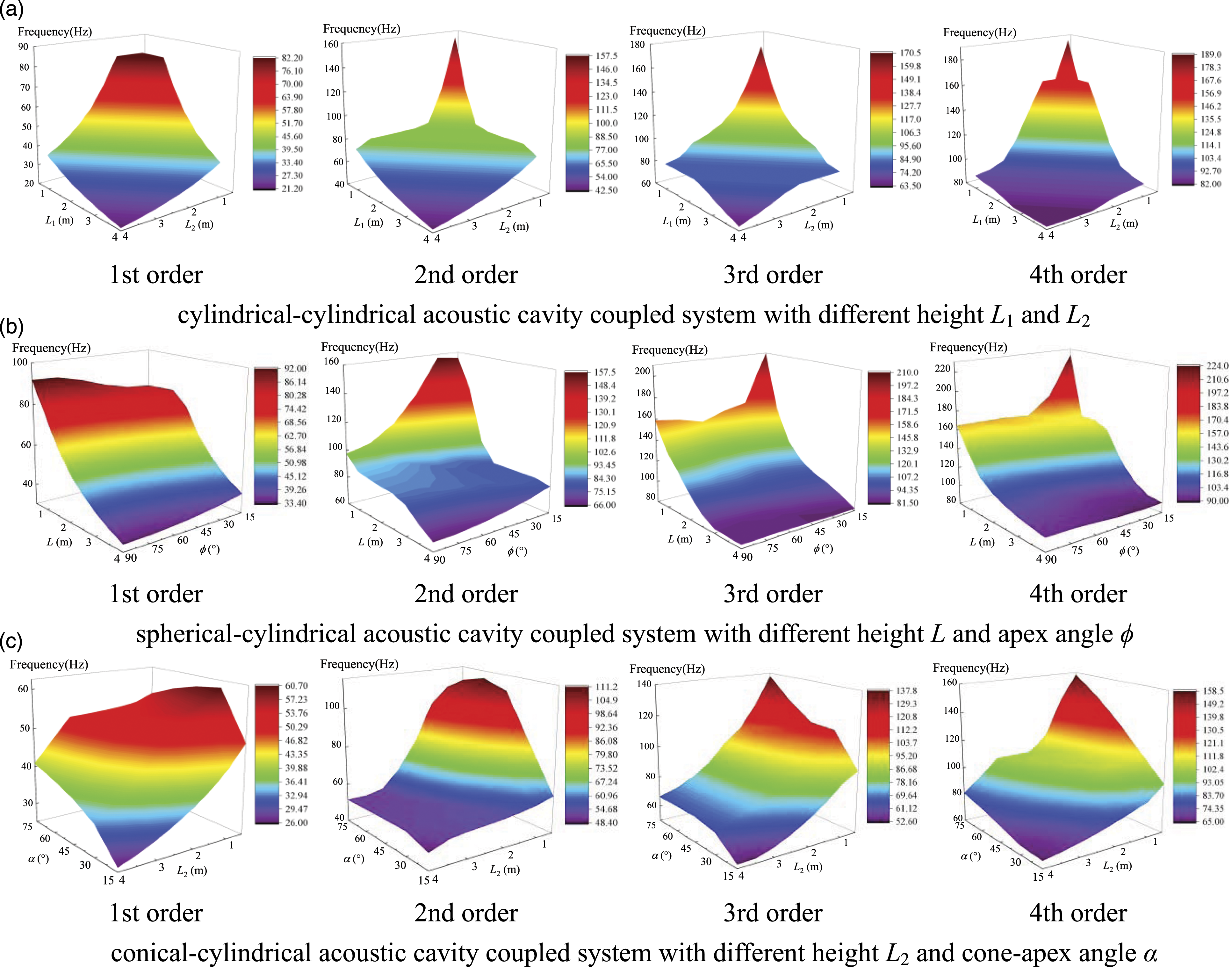
These theoretical conclusions can be applied to the structural design of workpieces. By adjusting the related geometric parameters of the acoustic cavity 1 and 2 in rotary acoustic cavity coupled systems, the natural frequency of the system can be controlled. On this basis, the dimension design of the workpiece generating the coupled system can be referenced.
Steady-state response analysis
The sound pressure response of rotary acoustic cavity coupled systems subject to the excitation of a point acoustic source is studied in this part. To simulate the sound pressure response of coupled system by finite element method in ABAQUS, another step needs to be added. The new step type is selected as steady-state dynamics, Direct. Figure 10 demonstrates the sound pressure response of cylindrical–cylindrical acoustic cavity coupled system under the excitation of a point acoustic source by present method and finite element method. The geometric parameters of this example are consistent with Table 2. The acoustic walls are all rigid. The point acoustic source is applied to (0.36 m, 1.02 m, 0.61 m) in cavity 1, the observation point 1 is located at (0.79 m, 0.43 m, 0.33 m) in cavity 1, and the observation point 2 is located at (0.26 m, 0.74 m, 0.67 m) in cavity 2. It can be found from Figure 10 that the sound pressure responses in different acoustic cavities obtained by this method subject to the excitation of point acoustic sources are basically consistent with the results of the finite element method, which verifies the accuracy of the analysis model. The sound pressure response of cylindrical–cylindrical acoustic cavity coupled system under the excitation of a point acoustic source.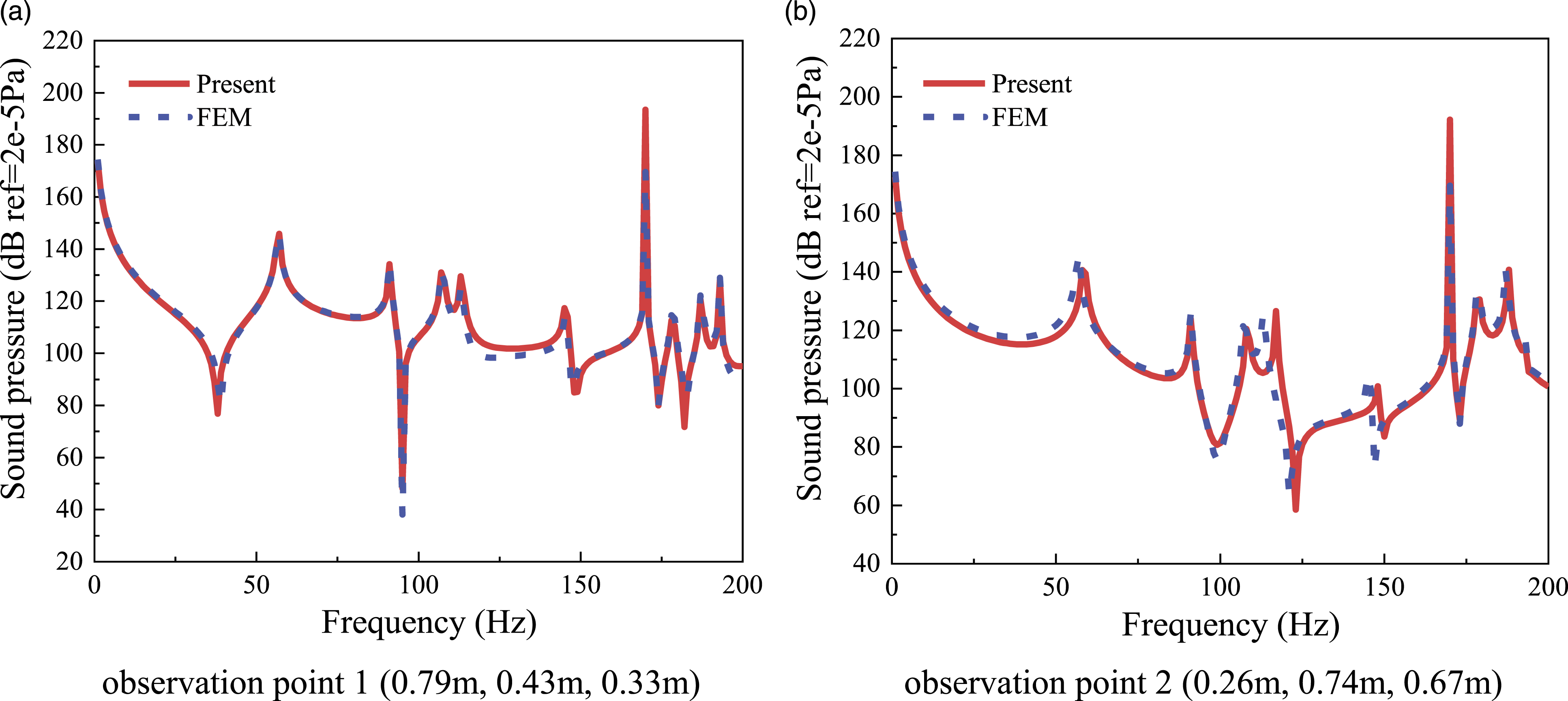
Taking cylindrical–cylindrical acoustic cavity coupled system as an instance, the influence of different acoustic media in acoustic cavities on the sound pressure response of rotary acoustic cavity coupled systems is investigated. Figure 11 presents the sound pressure response of the cylindrical–cylindrical acoustic cavity coupled system composed of different acoustic media under the excitation of a point acoustic source. The geometric parameters, acoustic walls distribution, point acoustic source location and observation point location of this example are consistent with Figure 10. As can be seen from Figure 11, in the coupled system with the same acoustic media of two cavities, if the acoustic media of one cavity changes, the peak density and magnitude of the sound pressure response curve of the whole coupled system will be changed. By comparing (a) and (b) as well as (c) and (d) in Figure 11, it can be found that, compared with the acoustic media combination of air–air, the peak density and magnitude of the sound pressure response curve of the coupled system with the acoustic media combination of air–water are significantly reduced. Compared with water–water acoustic media combination, the peak density and amplitude of sound pressure response curve of the coupled system with water–air acoustic media combination are increased. These phenomena indicate that the resonance of the sound pressure response in water is weaker than in air. Meanwhile, compared (a) and (c) as well as (b) and (d) in Figure 11, the sound pressure response curve of the air cavity within 200 Hz is consistent with that of the water cavity within 1000 Hz, indicating that different acoustic media still demonstrate some common laws. In a submarine, for example, the rotary acoustic cavity coupled system composed of air and water can form in a drainage chamber. The conclusions can be applied to the analysis of sound pressure response in the drainage chamber, which can help suppress resonance suppress resonance of the coupled system. The sound pressure response of cylindrical–cylindrical acoustic cavity coupled system under the excitation of a point acoustic source with different acoustic media.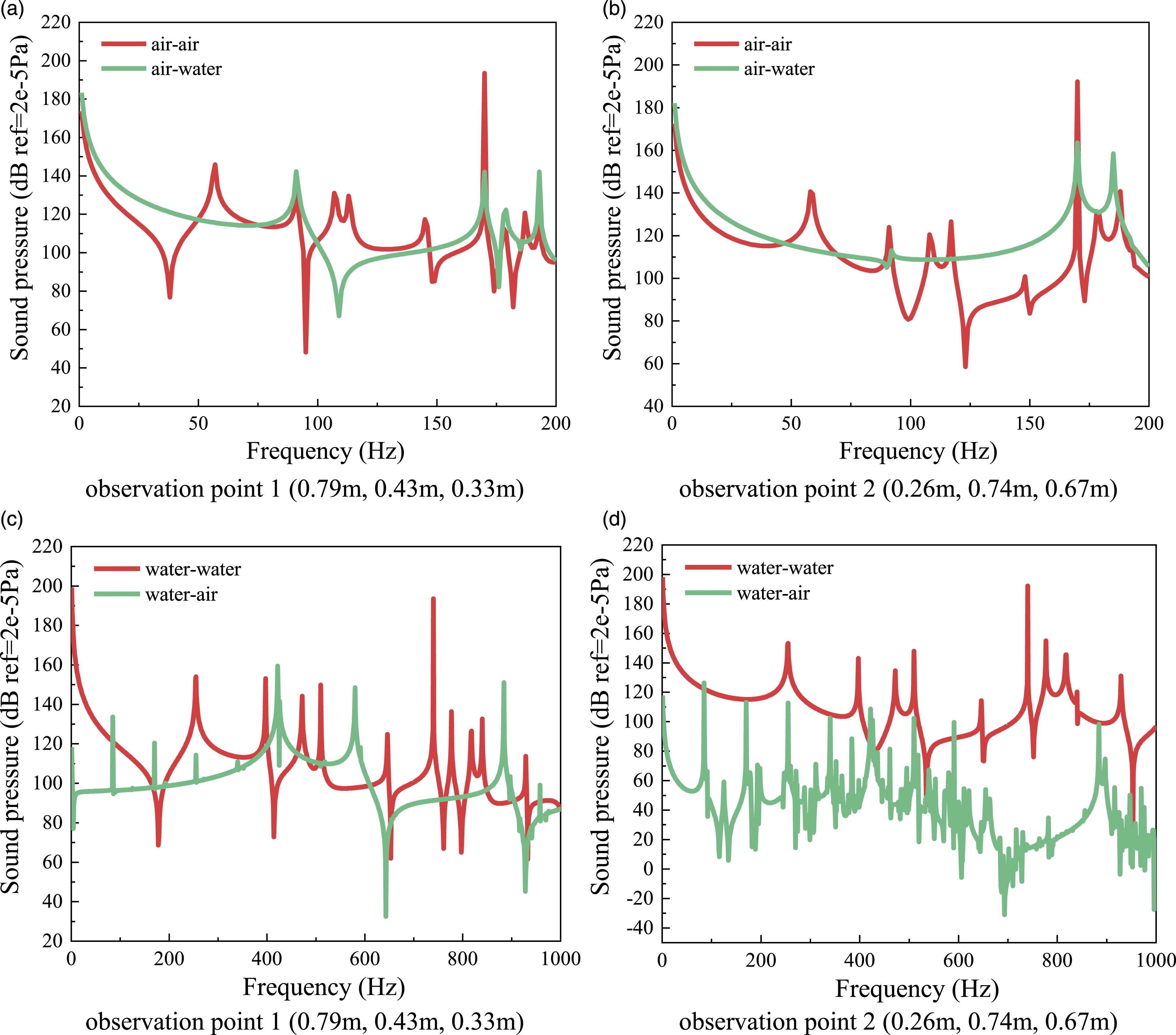
The accuracy of spherical–cylindrical acoustic cavity coupled system sound pressure response analysis model is verified in Figure 12. The geometric parameters of this example are consistent with Table 3. The acoustic walls of the spherical acoustic cavity–cylindrical acoustic cavity coupled system are all set as rigid walls. The point acoustic source is applied to (0.38 m, 0.44 m, 0.42 m) in cavity 1, the observation point 1 is located at (0.34 m, 0.95 m, 0.16 m) in cavity 1, and the observation point 2 is located at (0.22 m, 0.62 m, 1.11 m) in cavity 2. As is presented in Figure 12, the sound pressure response of the coupled system under the excitation of a point acoustic source obtained by present method are basically consistent with the results of the finite element method, which indicates this analysis model of the coupled system is precise. The sound pressure response of spherical–cylindrical acoustic cavity coupled system under the excitation of a point acoustic source.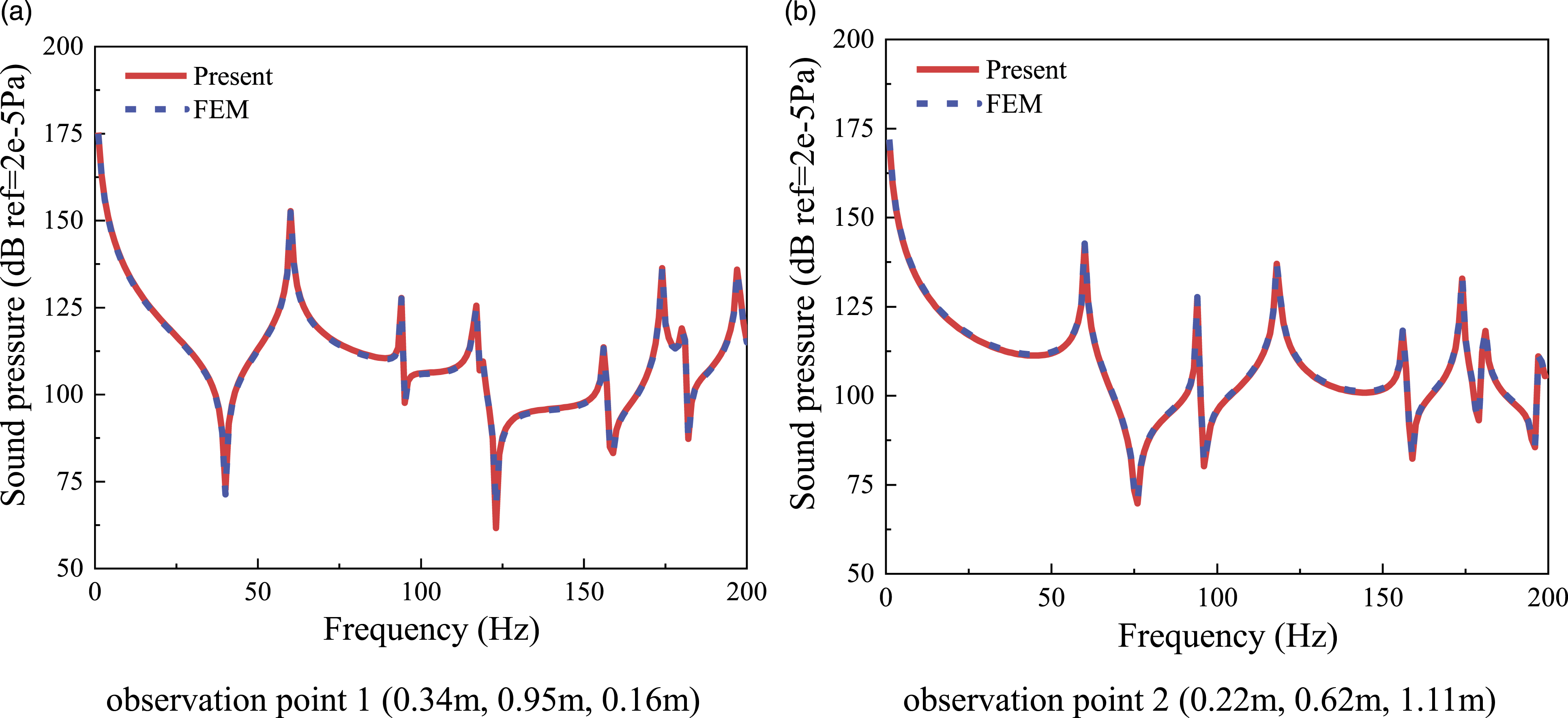
In addition to the acoustic medium of the coupled system cavity, damping and complex acoustic impedance are also introduced here to weaken the resonance phenomenon. Damping is introduced by setting the complex velocity The sound pressure response of spherical–cylindrical acoustic cavity coupled system under the excitation of a point acoustic source with different conditions.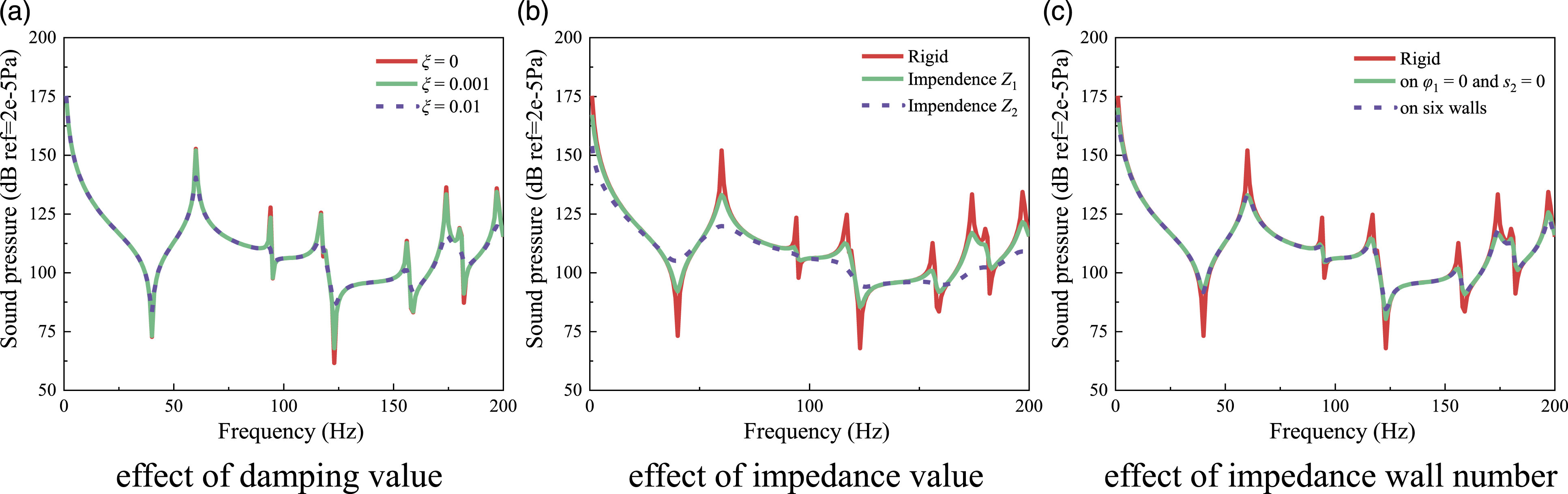
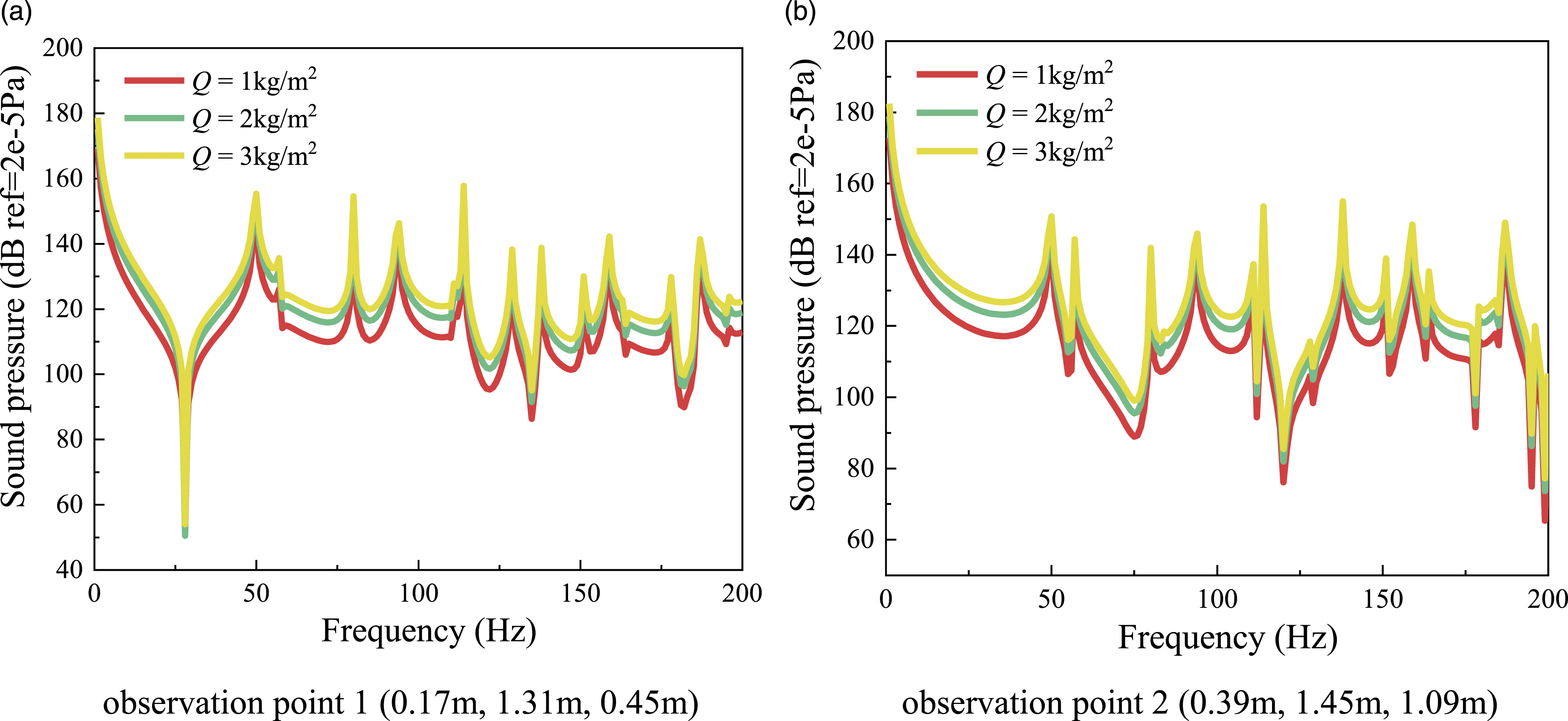
Finally, the influence of excitation amplitude on the sound pressure response is studied. Taking conical–cylindrical acoustic cavity coupled system as an instance, Figure 14 presents the sound pressure response curve of the conical–cylindrical acoustic cavity coupled system obtained by the present method and finite element method, which proves the accuracy of the coupled system sound pressure response analysis model. The geometric parameters of this example are consistent with Table 4. The acoustic walls are all rigid. The point acoustic source is applied to (0.80 m, 0.92 m, 0.74 m) in cavity 1, the observation point one is located at (0.17 m, 1.31 m, 0.45 m) in cavity 1, and the observation point two is located at (0.39 m, 1.45 m, 1.09 m) in cavity 2. After the accuracy verification, Figure 15 shows the sound pressure response curve of the coupled system with different excitation amplitudes using the same analysis model as Figure 14. The change of the amplitude of the point source contributes to the longitudinal deviation of the sound pressure response amplitude, and the sound pressure response amplitude increases with the increase of the external excitation amplitude. The sound pressure response of conical–cylindrical acoustic cavity coupled system under the excitation of a point acoustic source. The sound pressure response of conical–cylindrical acoustic cavity coupled system under the excitation of a point acoustic source with different excitation amplitudes.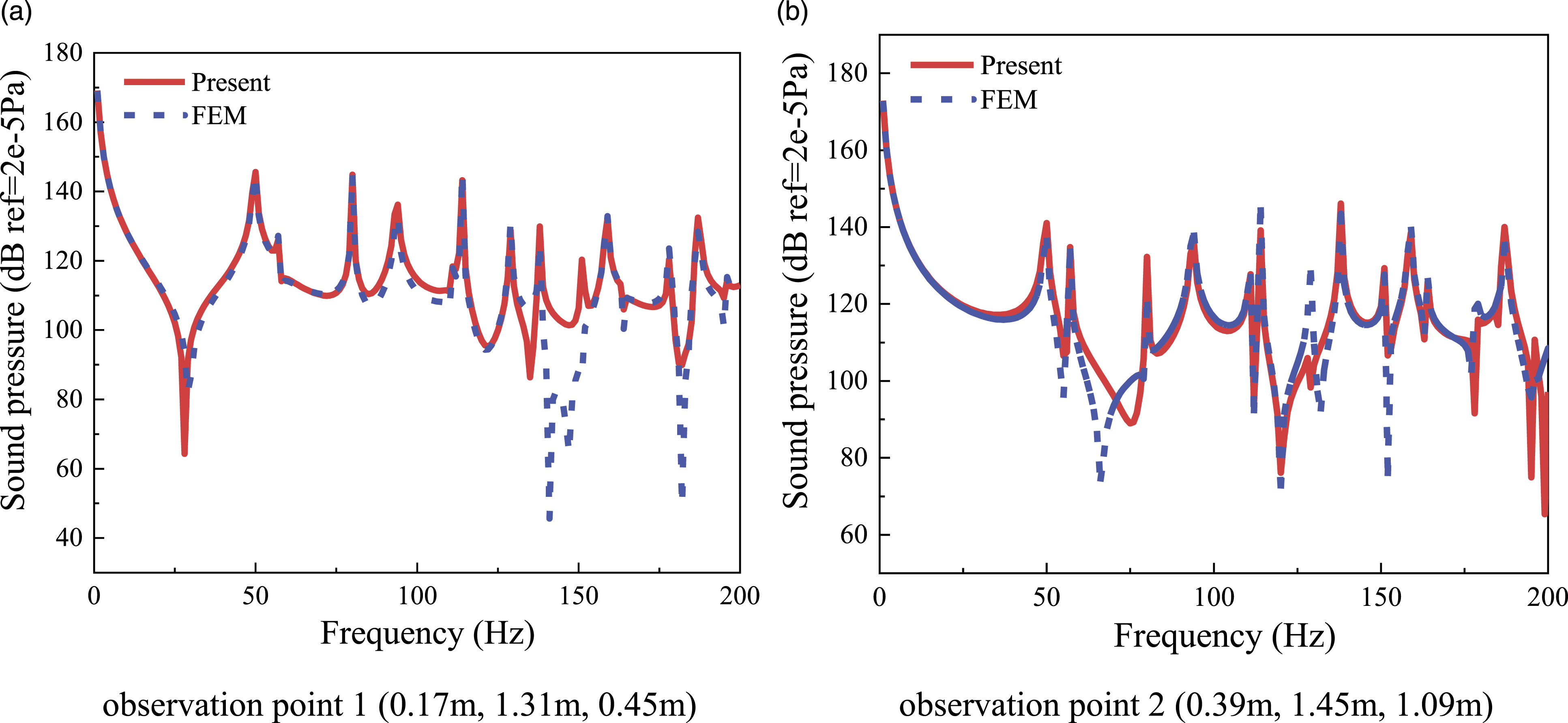
Conclusion
In this paper, a unified analysis model of the rotary acoustic cavity coupled system is established by iso-parametric transformation in finite element method. First, the admissible sound pressure functions of rotary cavities are given according to the three-dimensional improved Fourier series method. Second, the energy functional in the acoustic field of rotary cavity is constructed. Then, by introducing the coupling potential energy between the acoustic cavities, the total energy functional of the coupled system is obtained. Finally, the equation is solved by Rayleigh–Ritz method. The free vibration and steady-state response of the coupled system are studied through the numerical calculation results of the example, and the following important conclusions are obtained: (1) The unified analysis model of rotary acoustic cavity coupled system constructed by present method has good convergence and accuracy when the truncation value Mc×Nc×Lc = 8×8×8, the maximum error of natural frequency of each order is less than 0.02%. (2) In the condition of free vibration, the natural frequency of the rotary acoustic cavity coupled system decreases with the increase of the rotation angle. The natural frequency of the coupled system decreases with the increase of the heights of cylindrical cavities, the natural frequency decreases with the increase of the height of cylindrical cavity and the apex angle of spherical cavity, and the natural frequency decreases with the increase of cylindrical cavity height and the decrease of cone–apex angle of conical cavity. (3) In the rotary acoustic cavity coupled system, the resonance of the sound pressure response of in water is weaker than in air. The sound pressure response amplitude decreases with the decrease of impedance value and the increase of the impedance wall number, but the variation does not affect the waveform of the response. Meanwhile, the sound pressure response amplitude increases with the increase of the external excitation amplitude.
Footnotes
Declaration of conflicting interests
The author(s) declared no potential conflicts of interest with respect to the research, authorship, and/or publication of this article.
Funding
The author(s) disclosed receipt of the following financial support for the research, authorship, and/or publication of this article: This project was supported by the National Key R&D Program of China (Grant No. 2020YFB2008100). The authors gratefully acknowledge the financial support from the National Natural Science Foundation of China (Grant No. 52005255), Natural Science Foundation of Jiangsu Province of China (Grant No. BK20200430) and the Fundamental Research Funds for the Central Universities (Grant No. NS2020033).
