




Abstract
The artillery launch system directly influences the muzzle energy and launching accuracy, and therefore it is important to optimize the artillery launch system’s complete process to improve the launch performance. As the objective function of the artillery launch system is non-smooth with coupling parameters in sequential processes, conventional optimization methods are hard to converge for the muti-sequential process of the interaction between the projectile and the barrel. This paper develops a coupled dynamic model for artillery launching, which can predict the performance of the engraving process of the rotating band and the projectile motion in the barrel. The independent optimization problem of the artillery launch system is divided into two subspace problems, and a modified enhanced collaborative optimization (MECO) method with global search capability is proposed, in which the distance criterion and penalty design boundary method are implemented. Results show that the MECO is dedicated not only to satisfying compatibility between coupling parameters of the two sequential processes effectively but also to improving the projectile axial speed at the muzzle and launching accuracy. The MECO maintains a much stable level of convergence than the ECO when the original optimization problem is multimodal.
Keywords
Introduction
Conventional artillery weapons are still playing an important role in modern warfare. In the past decades, with the development in interior ballistic research, the artillery firepower and accuracy have greatly improved. The interior ballistic system mainly consists of a propellant, a projectile, and a barrel. Artillery launch is achieved via the interaction between the above-mentioned components. The projectile-barrel interaction during launch includes an engraving process of the rotating band and the following in-bore motion of the projectile. During the launching process there exist various coupling parameters in the interior ballistic system which significantly influence the projectile-barrel interaction. Ultimately, they affect the overall launch performance. To systematically improve the launch performance of artillery, a system-integration optimization method is proposed in this paper to optimize the complete interior ballistic system.
Owing to the highly transient nature of the artillery launching process, it is difficult to accurately measure each interior ballistic parameter. Therefore, research on the interior ballistic process of artillery is mainly based on numerical simulation and supplemented by live firing experiments. First of all, as the basis of artillery launch, the propellant combustion model can be used to predict the peak pressure and projectile speed. Different research groups have proposed different models, including the lumped parameter model based on thermodynamics and Lagrangian hypothesis1,2 and the two-phase flow model.3,4 Nevertheless, the propellant combustion model cannot acquire the projectile attitude at the muzzle, an initial condition for calculating the exterior ballistic trajectory which can make an important difference to the launching accuracy. In recent years, with the development of three-dimensional simulation software, the combustion model has been embedded in the simulation software of the projectile-barrel contact. This greatly promotes the research of the launch dynamics. Due to different research interests, most researchers usually focus on the engraving process or the projectile motion in the chamber separately. For example, in the study of the engraving process, Keinänen et al. 5 set the pressure–time curve subject to the boundary conditions to control the load of the projectile. Li et al. 6 used three different methods (FEM, FEM-SPH, and CEL) to simulate the elastic band engraving process. Sun et al. 7 studied the effects of the maximum engraving resistance and the engraving pressure under different charge cases. In addition, scholars’ research interests in the engraving process also include the wear of the rifling and the influence of rifling wear degree in interior ballistic performance.8,9 Since the engraving process is transient, lasting only a few milliseconds, the researchers who study the projectile motion in the barrel usually ignore this process. In the study of the projectile motion in the barrel, Chen 10 studied the effect of the curved barrel on projectile motion using ABAQUS®. Alexander 11 established the explicit dynamic finite element model (FEM) by ABAQUS®, and calculated the displacement, angular speed, and axial acceleration of the projectile. Yu and Yang 12 coupled the lumped parameter model with ABAQUS® to analyze the barrel dynamic response under the joint action of propellant gas pressure and projectile contact force. Therefore, the researchers only focus on a specific process of the launch dynamics without taking into full consideration the complete launching process in the chamber.
With the requirements of improving weapon system performance, in recent years, some researchers have used optimization algorithms to solve the artillery launch design problem. In optimizing the propellant combustion model, Gonzalez 13 first applied the augmented Lagrange multiplier method to obtain the optimal combustion model of the propellant and formulated the optimal design method. Zhang et al.14–16 used an intelligent optimization algorithm to optimize the propellant combustion model (lumped parameter model and two-phase flow model) and charge parameters. In the optimization problem with projectile-barrel interaction, studies which have optimized the artillery launch performance only consider part of the launching process. In addition, Wang et al., 17 Xu and Yang 18 used the interval uncertainty optimization method to optimize the launching accuracy and stability of the launch system. So far, few studies have focused on the complete optimization of the different stages of the projectile-barrel interaction. It is worth noting that Wei and Wang 19 utilized Isight® to establish a multidisciplinary design optimization (MDO) model of light weapon with interior, exterior, and terminal ballistics. Despite their primary consideration of the overall performance of the full trajectory rather than of the projectile-barrel interaction, the MDO optimization method has been used to solve the sequential launch problem in the bore, which has offered an effective enlightenment for us.
While the MDO problem in artillery launching is still researched in its infancy, the MDO method has been explored for a long time. The collaborative optimization (CO) strategy, 20 a typical MDO method, has been successfully applied to mathematical test problems and practical engineering problems.21,22 However, it has also encountered several challenges, as pointed out by DeMiguel and Murry. 23 In response to the challenges, Sobieski and Kroo 24 and Zadeh et al. 25 suggested using the response surface to approximate the post-optimal behavior of the subject’s sub-problems in the system’s sub-problems, given that representing a non-smooth function with a smooth face may not be an ideal approach. DeMiguel and Murray 23 proposed the modified collaborative optimization (MCO), which uses an accurate penalty function with fixed penalty parameter values to relax troublesome constraints and adds elastic variables to maintain the smoothness of the problem. Jin et al. 26 presented the design space decrease collaborative optimization and its enhanced version. Besides, Braun et al. 27 suggested relaxing the system’s sub-problem equality constraints to inequalities with a relaxation tolerance, and Li et al.28,29 promoted this approach by adaptively choosing the tolerance during the solution procedure. But these improved approaches fail to change the underlying CO problem that the system-level Jacobian is singular or that the Lagrangian multiplier is zero in the subspace problem. Roth and Kroo30,31 reformulated the system-level and subspace problems, proposing the enhanced collaborative optimization (ECO) method. The system-level problem of ECO is an unconstrained minimization problem which is responsible only for the compatibility of shared variables between the system-level and the subspace problems, while the subspace is responsible for minimizing the global objective function. The ECO eliminates the ill-conditioning features associated with the basic CO. Based on Roth’s results,30,31 the ECO can effectively reduce the amount of calculation by nearly an order of magnitude as compared with the CO. A distinctive feature of the ECO is that it includes linear models of the nonlocal constraints (LMNCs) and a quadratic model of the original objective function in each subspace. Nevertheless, when the LMNCs include non-local variables, the ECO needs to solve another problem, namely the constraint violation minimization (CVM). Tao et al. 32 showed that the LMNCs coincided with higher complexity of the ECO than that of the CO and ATC, and introduced the alternating direction method of multipliers (ADMM) into the ECO to simplify the LMNCs. The results of Tao’s research showed that the ECO-ADMM that simplified the LMNCs could converge with a calculation efficiency between the ECO and CO. In order to ensure the absolute convergence at system level in the ECO, the original optimization function of the subproblem was designed as a quadratic function, but it is usually a highly nonlinear multi-peak function in engineering problem. The local optimal solution may be obtained, when the gradient optimizer is still used for each subproblem. This will result in a system-level failure of the ECO to coordinate the shared variables of each subproblem to achieve consistency, and ultimately optimization failure.
The purpose of this paper is to develop a modified enhanced collaborative optimization (MECO) method to implement the distance criterion and penalty design boundary strategy in order to solve the optimization problem with a two-sequential artillery launching process.
The remaining part of the paper is organized as follows. Section 2 presents the dynamic model of artillery launching coupled with the propellant combustion model. The coupled model can simulate the engraving process and the projectile motion process. Section 3 presents the MECO method and calculation procedure, derives the artillery launch system’s optimization formulation in the form of MECO. Section 4 reports the results. Finally, Section 5 makes further discussion and draws a brief conclusion.
Artillery launching mechanism and model
In this section, we first review and develop the artillery launching mechanism, the propellant combustion model, and a coupled dynamic model of artillery launch. Next, we exhibit the structural parameters and introduce the response indexes and design variables of the artillery launch system. Finally, we describe the optimization problems of artillery launch system to be solved in this paper.
Artillery launching mechanism
The artillery launch system consists of a propellant, a projectile, and a barrel, as illustrated in Figure 1. The combustion of the propellant is confined to the area enclosed by the wall of the barrel and the base of the projectile. During the launching process, the barrel’s bottom is assumed to be fixed and the projectile is pushed forward by the propellant gas pressure. The outer diameter of the rotating band is larger than the inner diameter of the rifling so that the combustion chamber can be sealed. Therefore, the rifling completes the engraving process before guiding the rotation of the projectile, which ensures gyro stability for the projectile during its flight through the air. Artillery launching mechanism and parameters.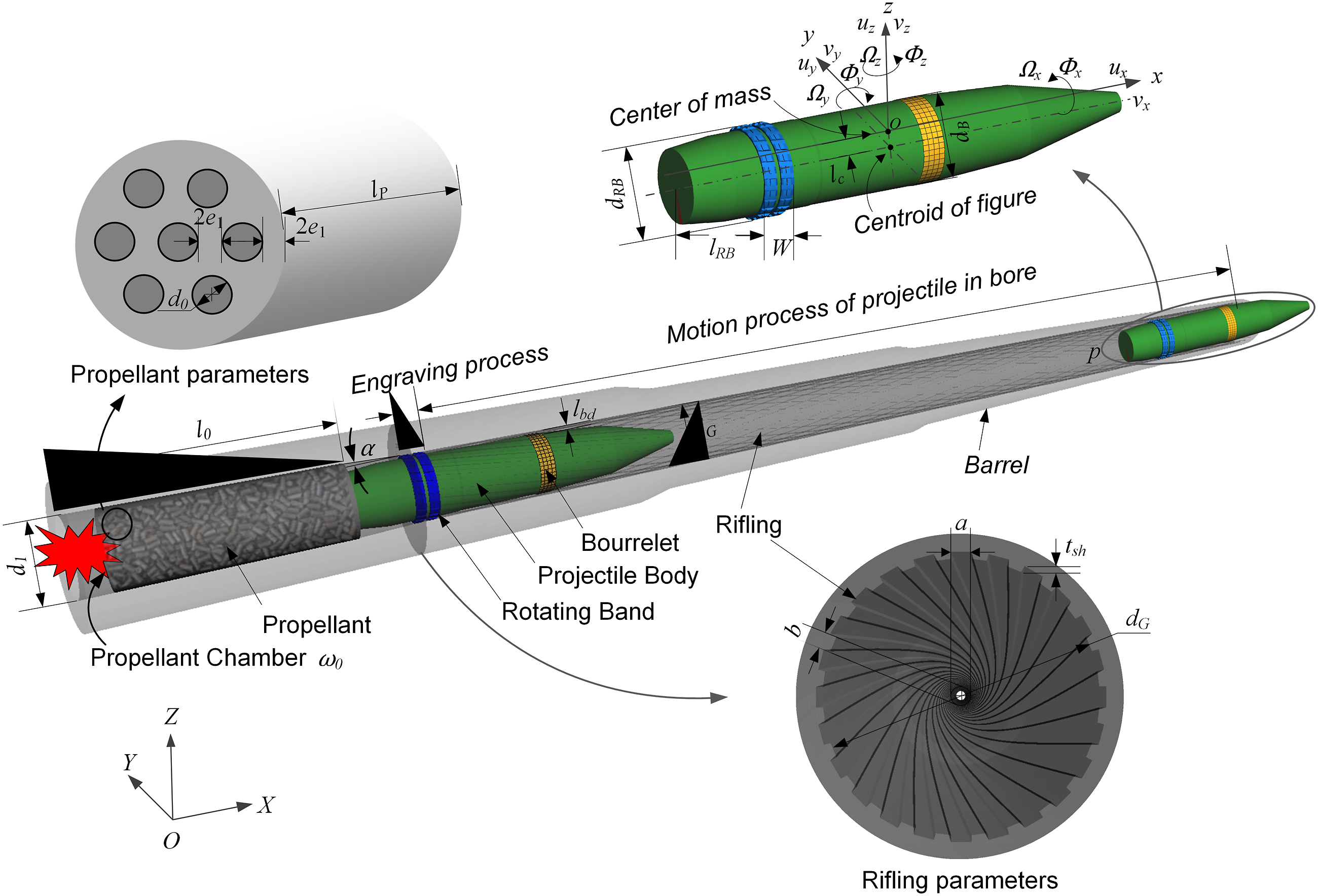
As shown in Figure 1, there are many coupling parameters of the propellant, projectile, and barrel, which affect not only each other geometrically but also the engraving process of the rotating band and the projectile motion in the barrel. For example, the coupling parameters of the propellant include the propellant thickness
The rifling depth

And the bourrelet-to-rifling distance

Therefore, a coupled FEM model, including the propellant combustion model and the dynamic model of the projectile-barrel mechanical interaction, should be developed to study the performance of artillery launching. The two models exchange parameters with each other in their respective computing processes.
Propellant combustion model
In our study, a lumped parameter model is adapted to implement the combustion model as shown in equations (3) and (4).
33
The combustion model can describe the engraving process and the projectile motion
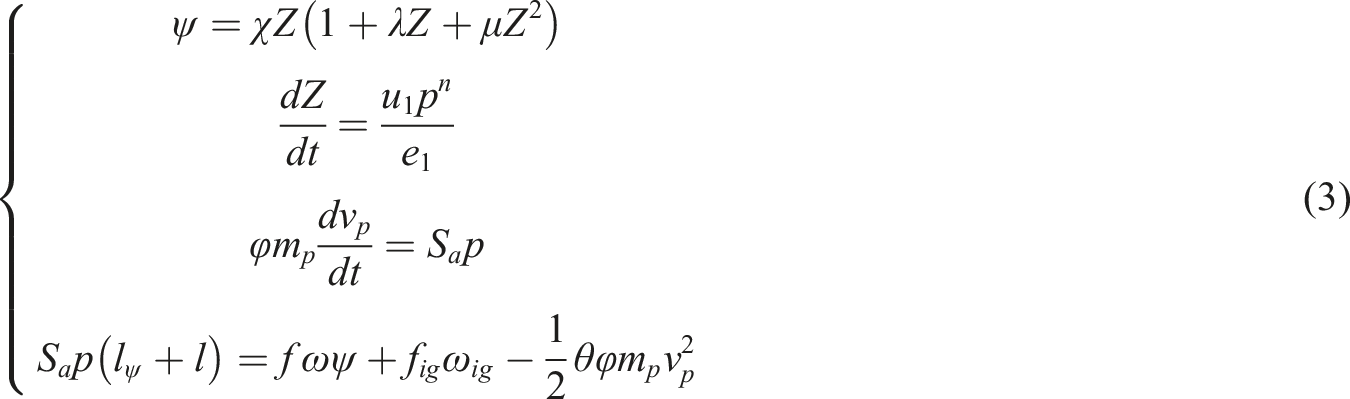

Through the above equations, the computing program for the propellant combustion model is developed based on the Runge–Kutta method.
The coupled dynamic model of artillery launch
In this paper, the coupled dynamic model of artillery launch is implemented in ABAQUS®. The projectile-barrel interaction can be figured out by the control function of explicit dynamics, as shown in equation (5)

In the artillery launch FEM, the projectile base pressure drives the projectile to move in the bore. The function relationship between the projectile base pressure

The coupling between the FEM and the propellant combustion model is realized through the VUAMP subroutine in ABAQUS®. First, the VUAMP coupled with the propellant combustion model calculates the instantaneous projectile base pressure The coupled dynamic model of the artillery launch.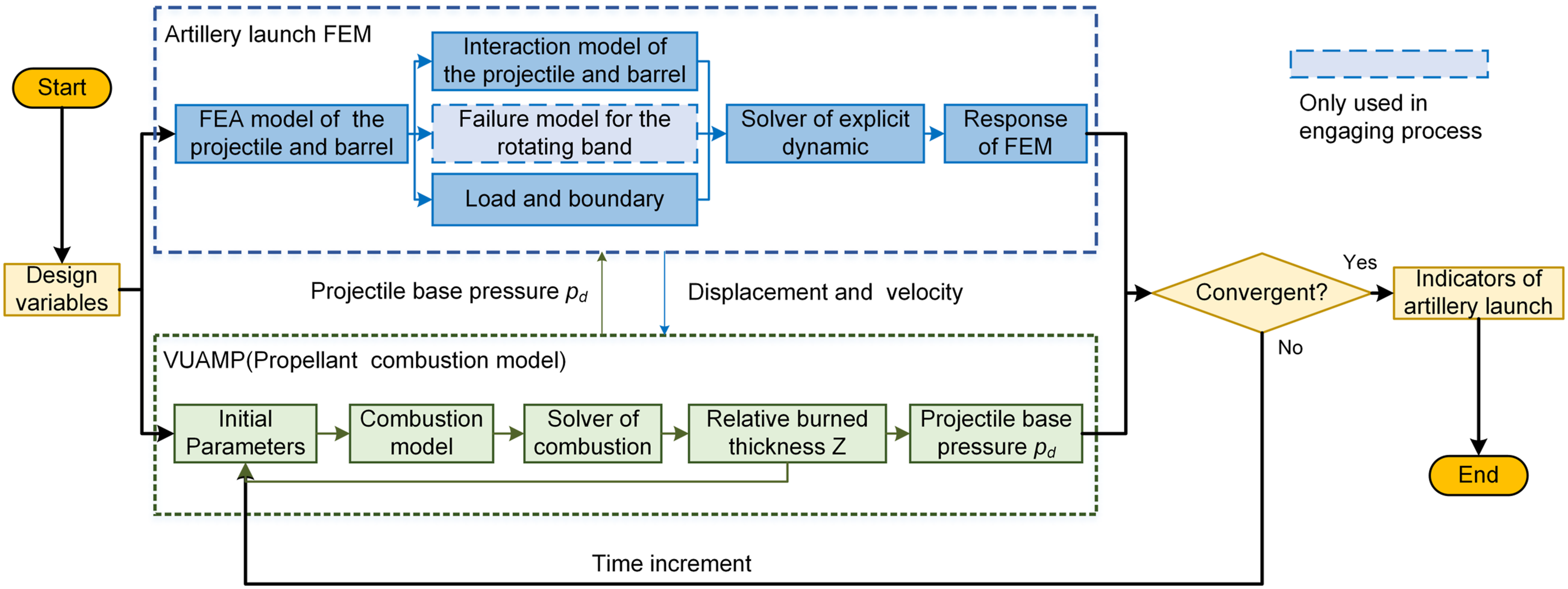
Response indexes and design variables of the coupled dynamic model
Through the coupled dynamic model of artillery launch introduced in the previous section, the response indexes can be calculated from the engraving process of the rotating band and the movement process of the projectile in the barrel, respectively. These two processes are named “sub a” and “sub b,” respectively.
The engraving process of the rotating band calculated one response parameter: the engraving resistance
Many scholars have studied the parameters or sensitivity that affects artillery firing performance in previous literatures.3,8,16,34 In this paper, 11 high-sensitivity parameters are selected as the design variables. According to the description of the coupled dynamic model, five design variables are grouped as shared variables
Problem description of the artillery launch system
Usually, artillery launch aims to maximize the muzzle energy and firing accuracy in safety.
Global objective function
To be distinguished from the objective function in the MDO problem in Section 3, the “global objective function” defined by Roth and Kroo 30 is used to represent the overarching design goal.
There are many indicators to evaluate artillery launch. In this paper, both the projectile axial speed normalization coefficient

Constraints
To ensure launching safety and service life, three constraints should be considered for the artillery launch problem.
(1) Engraving resistance
From the perspective of launching safety, it is necessary to limit the engraving resistance

(2) Maximum chamber pressure
The maximum chamber pressure

(3) Ultimate life of artillery
The ultimate life of artillery is defined as the time it takes for the projectile’s axial speed at the muzzle to drop by less than 10% of the initial design value when the rifling is worn.
37
The design variables


From equations (1) and (11) the bourrelet-to-rifling distance at the limit life

The constraint function

The US military has verified the life of the M1 artillery with the results showing that the ultimate life of the artillery is 15,000 rounds.
37
Considering the boundary of the surrogate model, the amount of wear and the number of shots need to be redetermined. Therefore, the projectile’s axial speed at the muzzle upon reaching the ultimate life should not exceed by the life coefficient
Methodology
In this section, the ECO method is reviewed. Next, the MECO method is proposed for the problem of the non-smooth global objective function. Finally, the optimization problem with a two-sequential artillery launching process is derived in the form of MECO.
Overview of the ECO method
The ECO solves the MDO problem with a bi-level structure, that is, a system-level problem and

In contrast with the system-level problem, the subspace problems optimize the global objective functions. The objective function of the subspace consists of three parts: the global objective function, a quadratic measure of compatibility
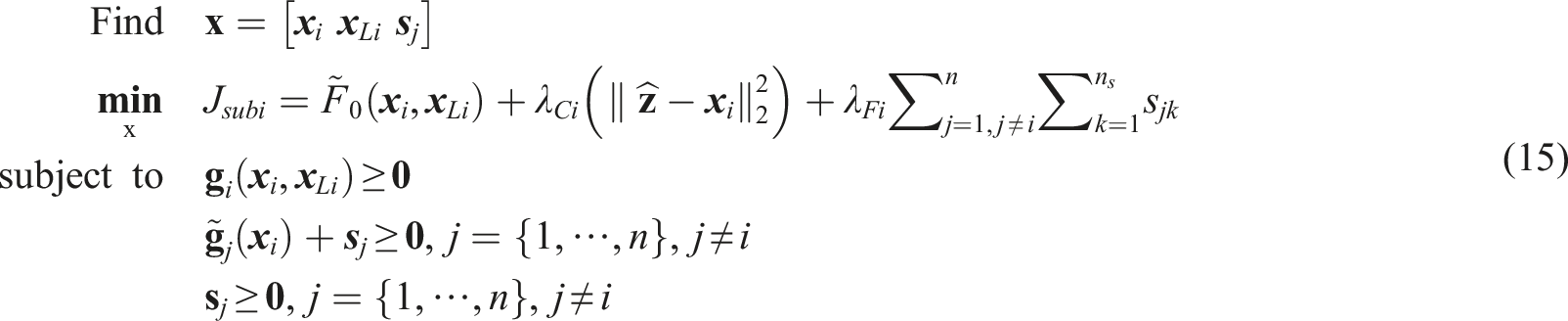

Since the parameters
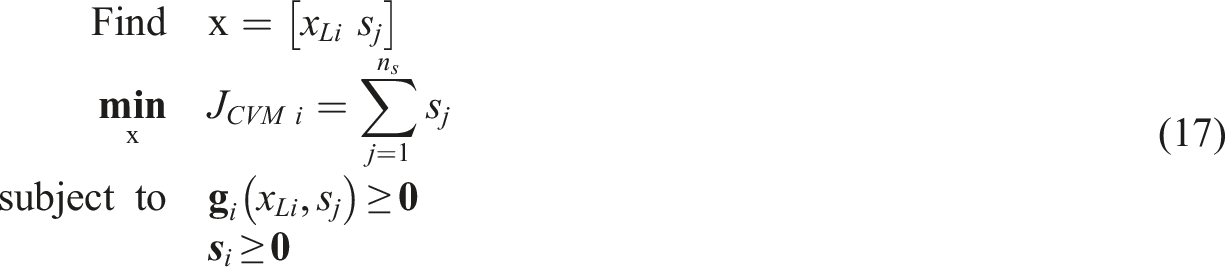
MECO method
One of the distinctive features in ECO is that a quadratic model of the global objective function
The intelligent optimization algorithms have been widely used in the global optimization for non-smooth functions. 39 Therefore, the intelligent optimizer is used in the subspaces to solve the non-smooth global objective problem and hence the artillery launching problem. In fact, the simple combination of the intelligent optimizer and the ECO may not converge in the system level. This is because the subspace uses the target values provided at the system level as the starting point for optimization when the gradient optimizer is applied in the ECO while the intelligent optimizer uses a group of random populations.
The ECO-based MECO proposed in this study has two distinctive characteristics: (1) A subspace loop is added by the distance criterion method to choose the optimal solution and (2) the penalty design variable boundary is used to improve the convergence.
The distance criterion method for the subspace loop
Based on the ECO strategy, a loop is added for each subspace and a distance criterion is adopted to choose the optimal solution to maintain the stability of the subspace in the main loop. The distance criterion is used to estimate the optimal solution’s Euclidean distance between the subspaces and the system level, and to compare it with the previous distance to decide whether the subspace needs to be reoptimized. The criterion is formulated in equation (18)

The penalty design variable boundary method
Since the only system-level responsibility is to handle variable consistency among all the subspaces, the system-level guidance direction tends to deviate from the previous cycle when the optimal solutions in each subspace are extremely different. Keeping the system-level guidance stable is the key to ensuring convergence.
We set the penalty design variable boundary of the subspaces to maintain the stability of orientation after the system-level direction is altered. The criterion

Calculation procedure of the MECO
Compared with the ECO, it is obvious that the subspace and system-level loop are modified in the MECO. The flowchart of the MECO is shown in Figure 3. The main steps of the MECO method are outlined as follows: Flowchart of MECO.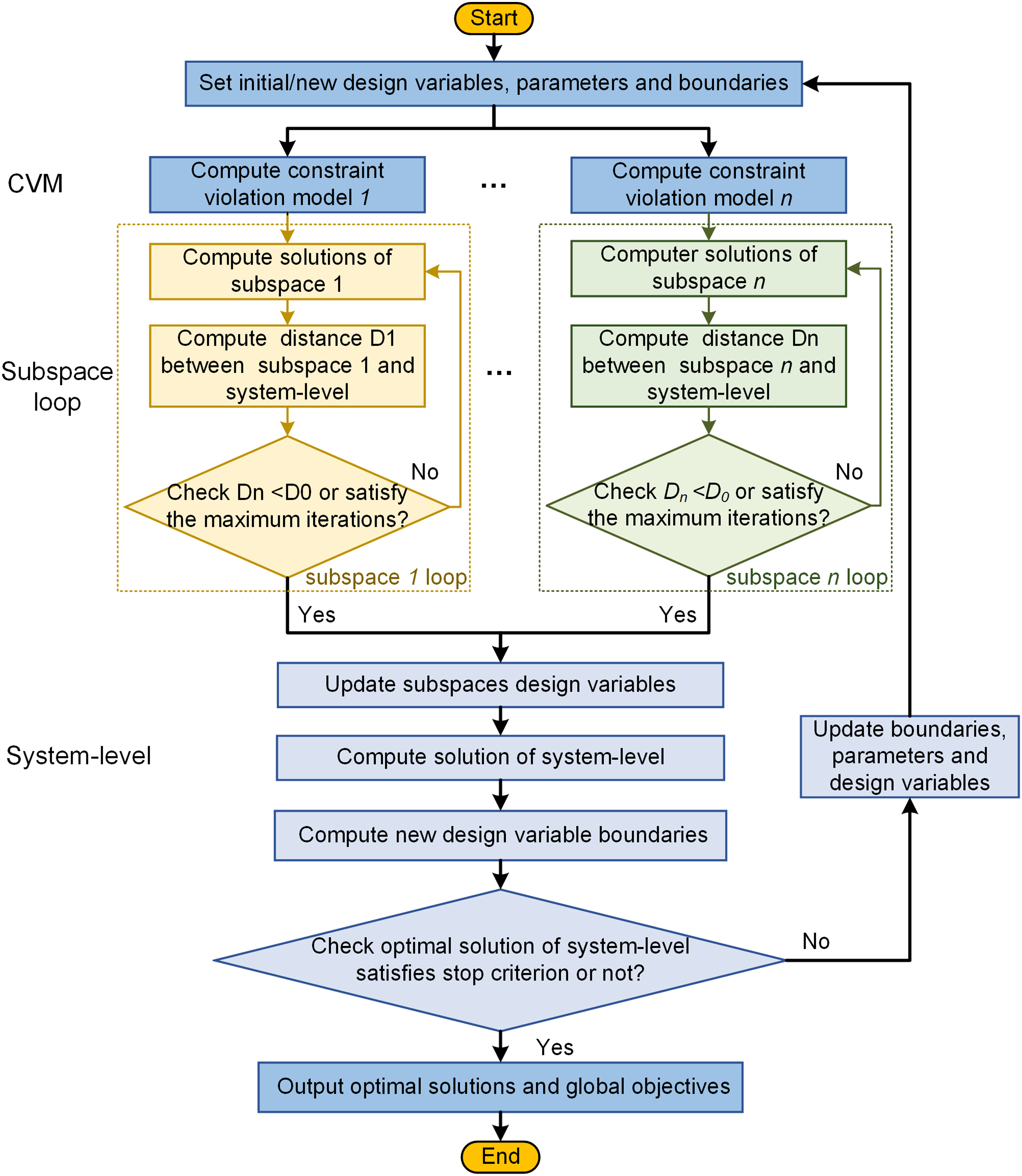
Step 1: Initialize/update the parameters or design variables and their boundaries.
Step 2: Solve the constraint violation model (CVM) for the non-local variables of the subspace to get the constraint model coefficients (CMCs) of each subspace by the gradient optimizer.
Step 3: Obtain the solutions of the subspace by the intelligent optimizer, such as the generational particle swarm optimization (GPSO). Calculate the space distance
Step 4: Update the design variables of each subspace after all subspaces are completed.
Step 5: Obtain the system-level feasible solution by the gradient optimizer and calculate the distance
Step 6: Check whether the system level satisfies the convergence tolerance or reaches the maximum iterations. If it does, end the iteration and obtain the optimal solution and global objectives; else substitute
MECO-based optimization model of artillery launch
The optimization problem with a two-sequential artillery launch is divided into two subspace problems. The form of MECO formulation consists of five parts: the CVM of sub a, the CVM of sub b, the optimization problem of sub a, the optimization problem of sub b, and the system-level optimization problem.
The CVM a for parameters

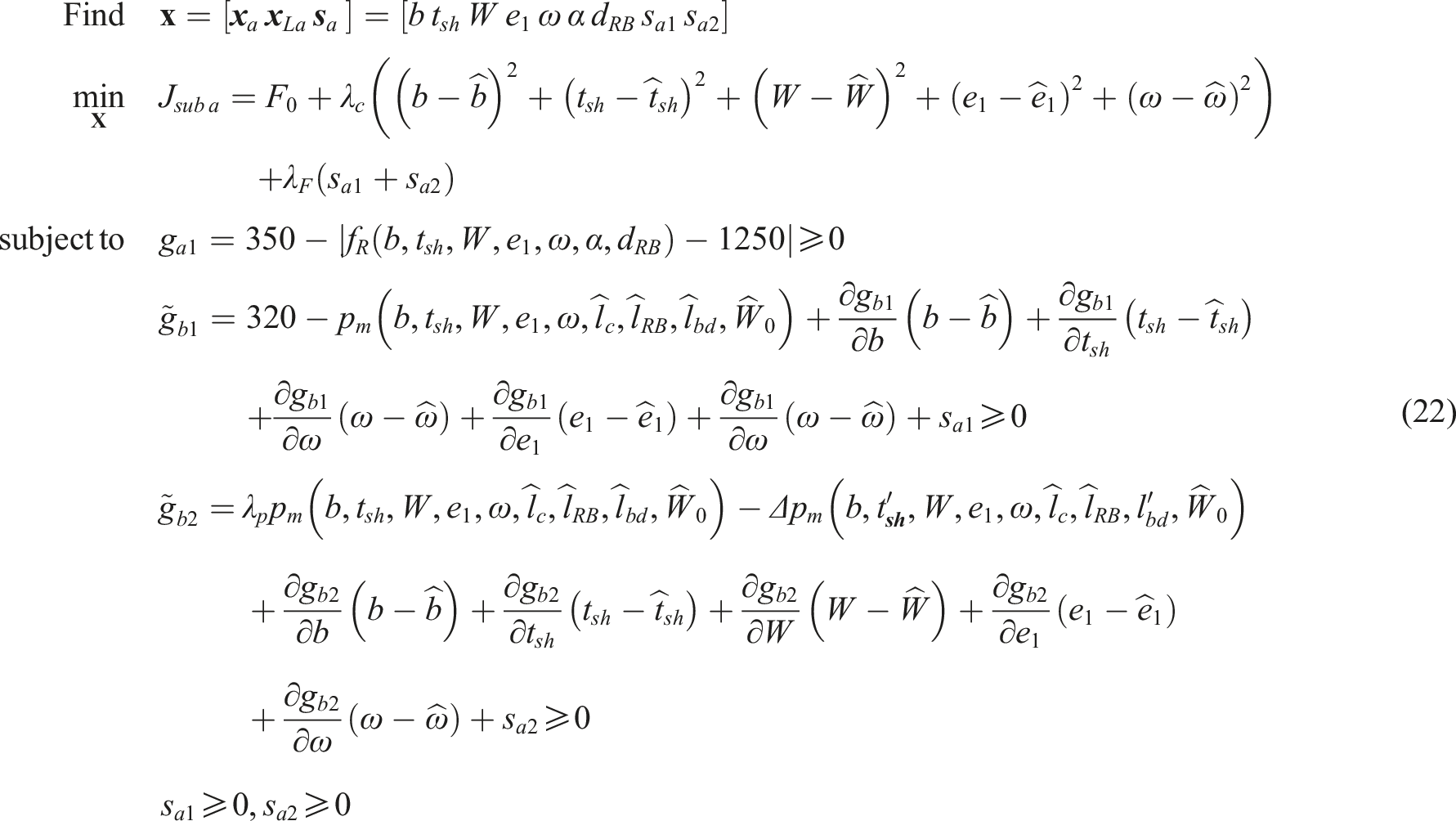
And the CVM b for parameters
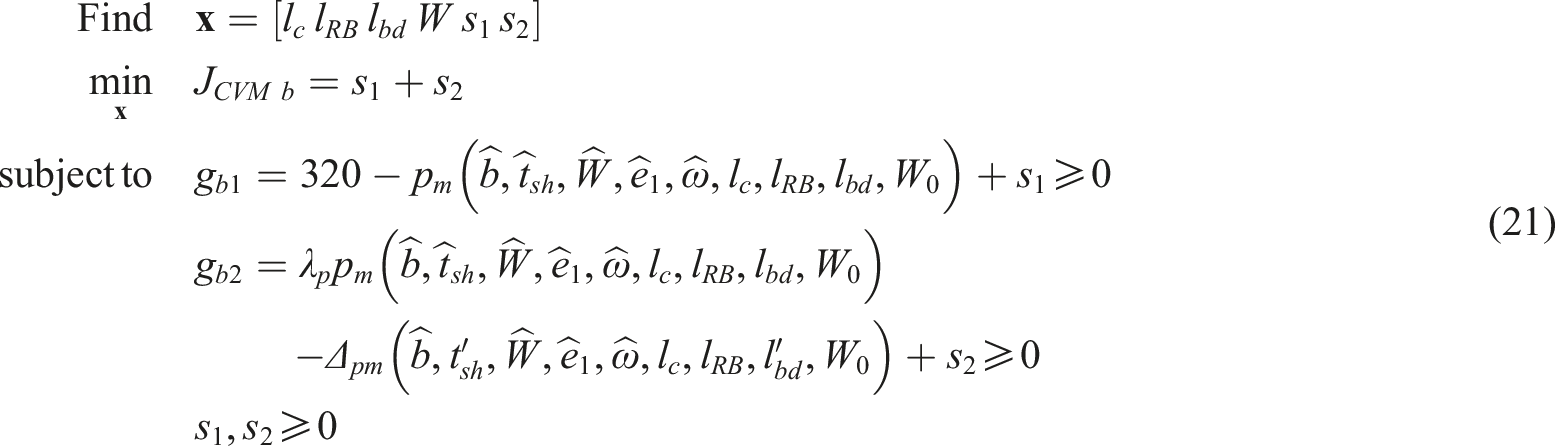
The optimization problem for the subspace of rotating band engraving process (sub a) is formulated in equation (22)
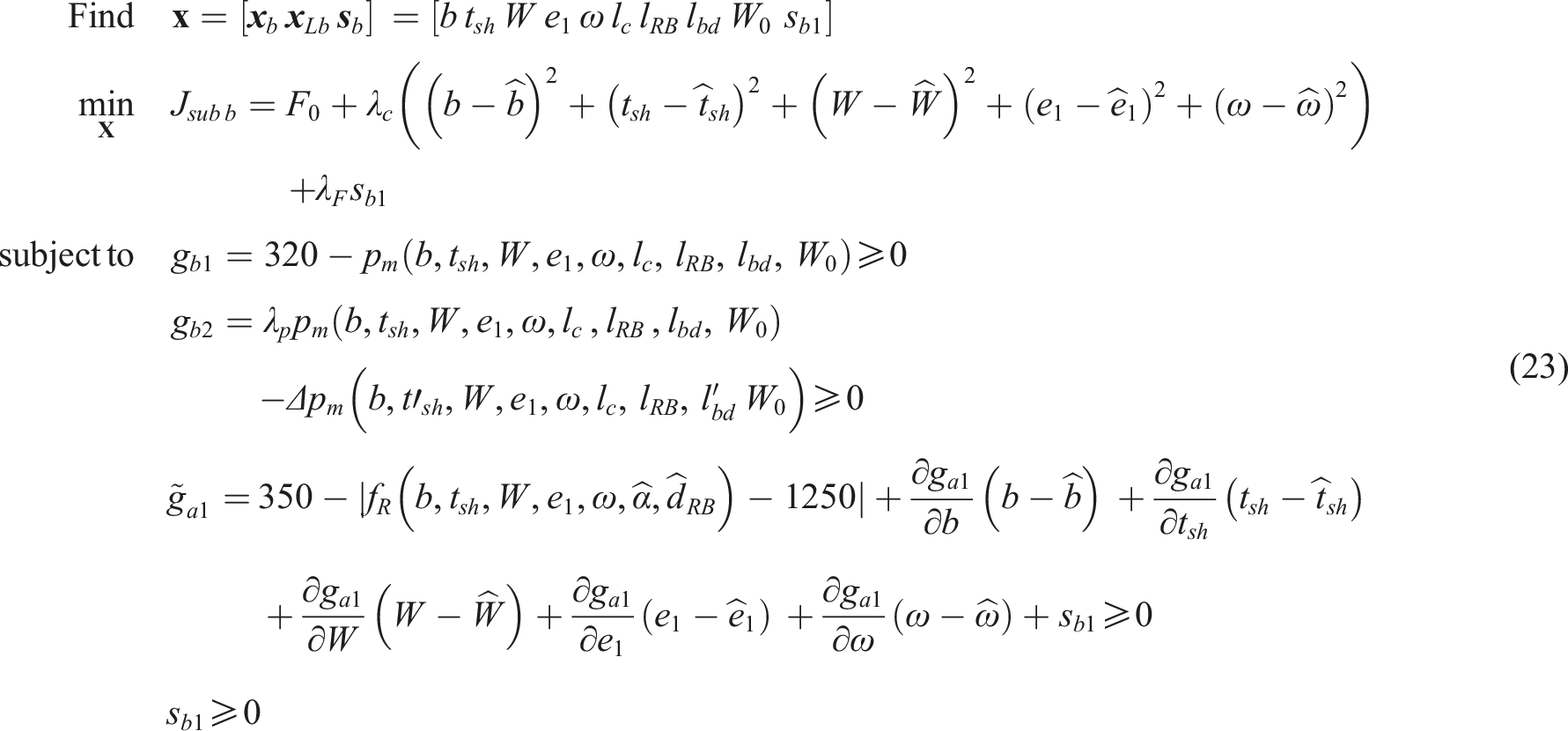
And the optimization problem for the subspace of projectile motion (sub b) is formulated in equation (23)
System-level problem is expressed in equation (24)

Results
In this paper, the complete optimization for the two processes of the projectile-barrel interaction is realized by implementing the MECO method with global search capability.
Optimal solutions of shared design variables and boundaries.

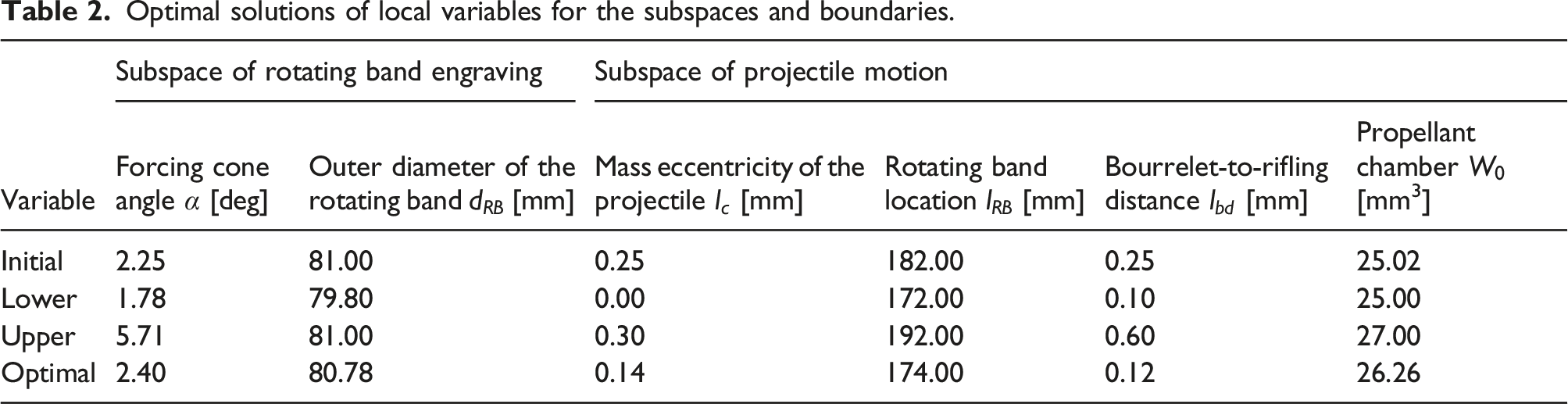
Optimal solutions of local variables for the subspaces and boundaries.
The Latin hypercube sampling (LHS) method is applied for DOEs. Each indicator acquires 35 training sets data (15 test sets data) from the model of the engraving process, and 70 training sets data (30 test sets data) from the projectile movement process in the barrel.
Accuracy of the surrogate models.

To realize the complete optimization for the subspace engraving process and subspace projectile movement process, the MECO strategy is implemented in Python 3. The sequential least squares programming (SLSQP) and the generational particle swarm optimization (GPSO) from pygmo2 are used as the gradient optimizer and the global optimizer, respectively. pygmo2 is a scientific library providing a large number of optimization problems and algorithms. 40
We set Convergence chart of system-level objective function values.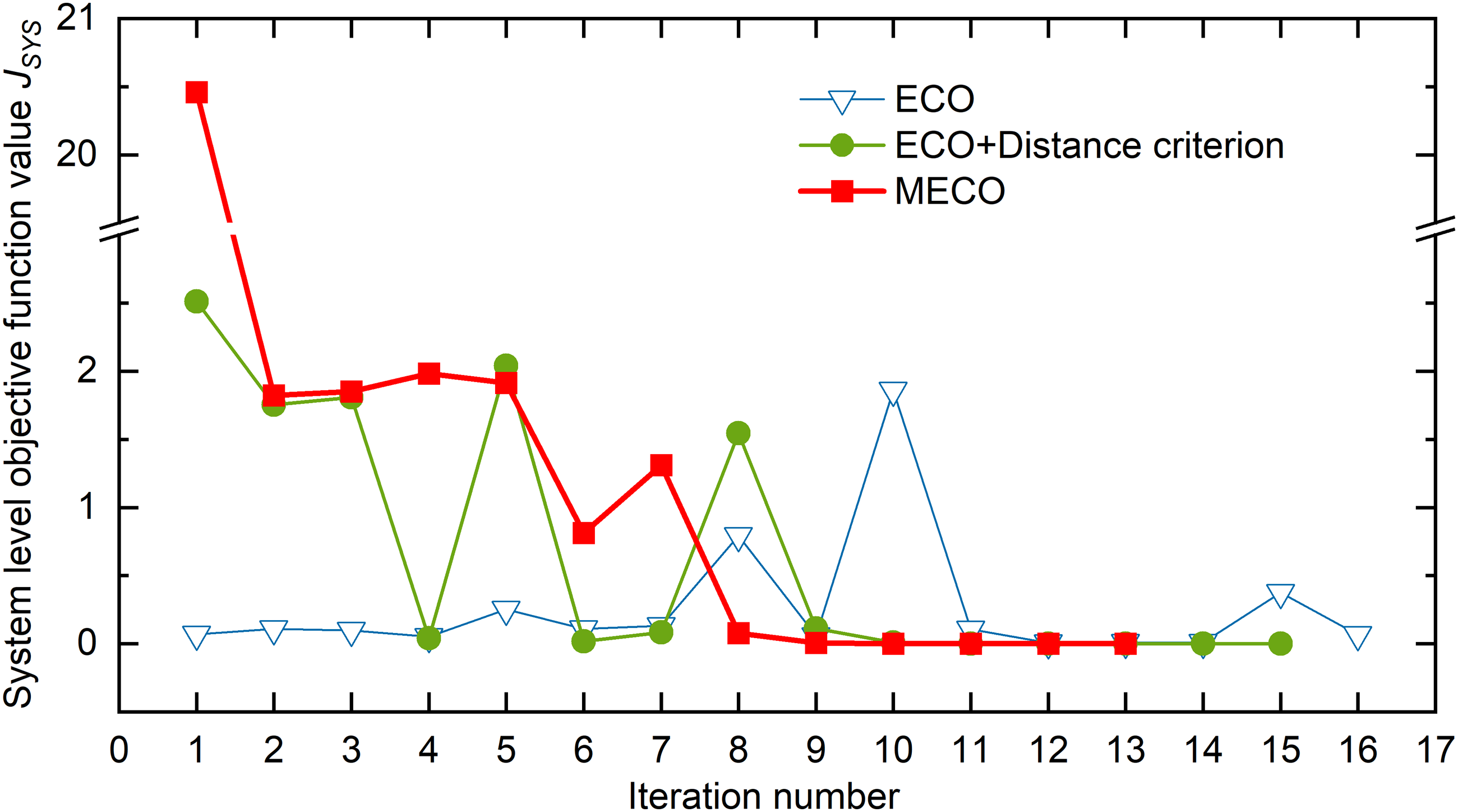
Under the implementation of the MECO method, the convergence curve of shared design variables is shown in Figure 5, which also displays the penalization process of the boundary of some design variables and the dynamic variation range of design variables in the subspace. Convergence curves and boundaries of shared design variables.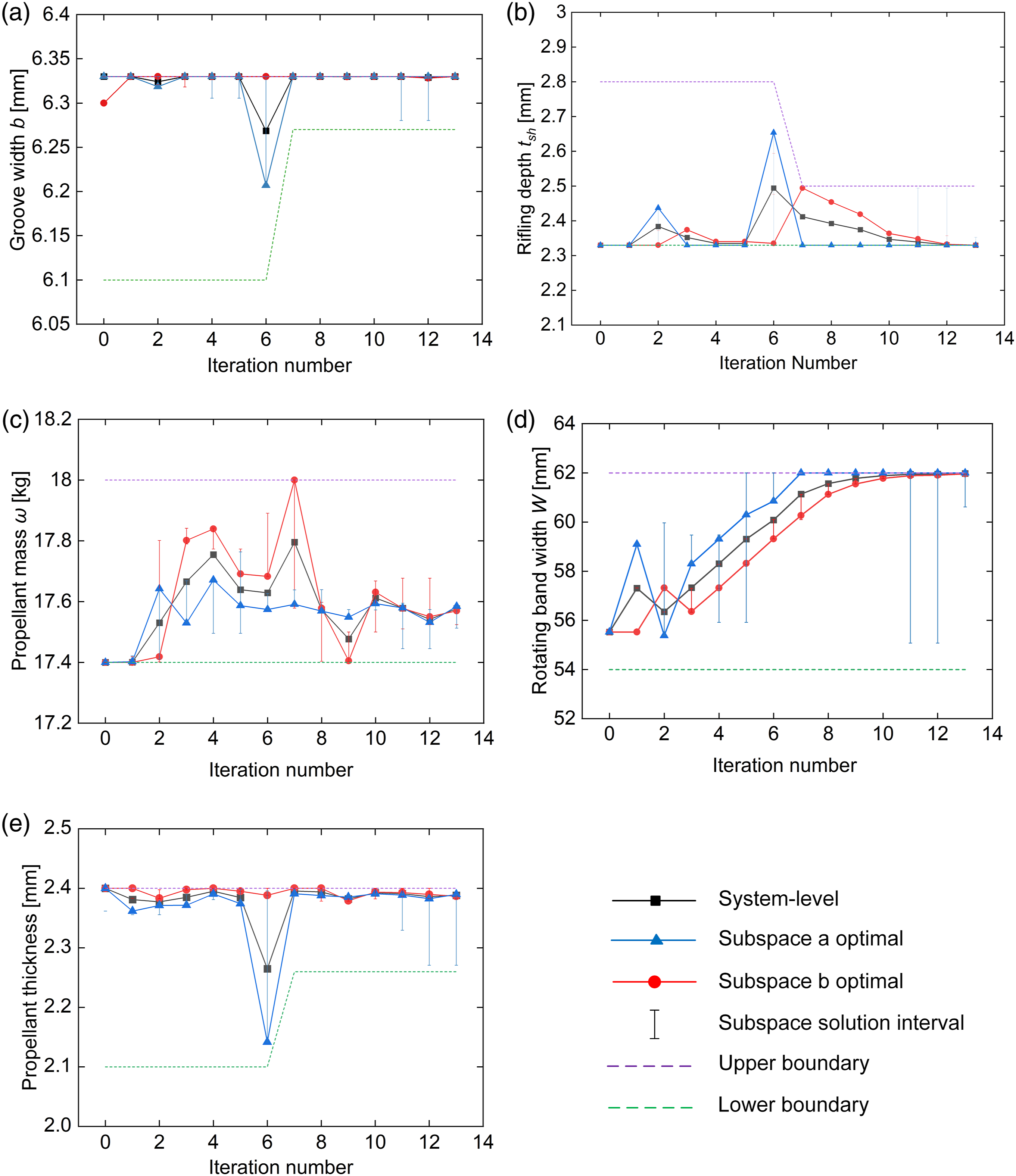
The values of local constraints with the iteration from the MECO method are listed in Figure 6. Values of the three system-level constraint functions with MECO.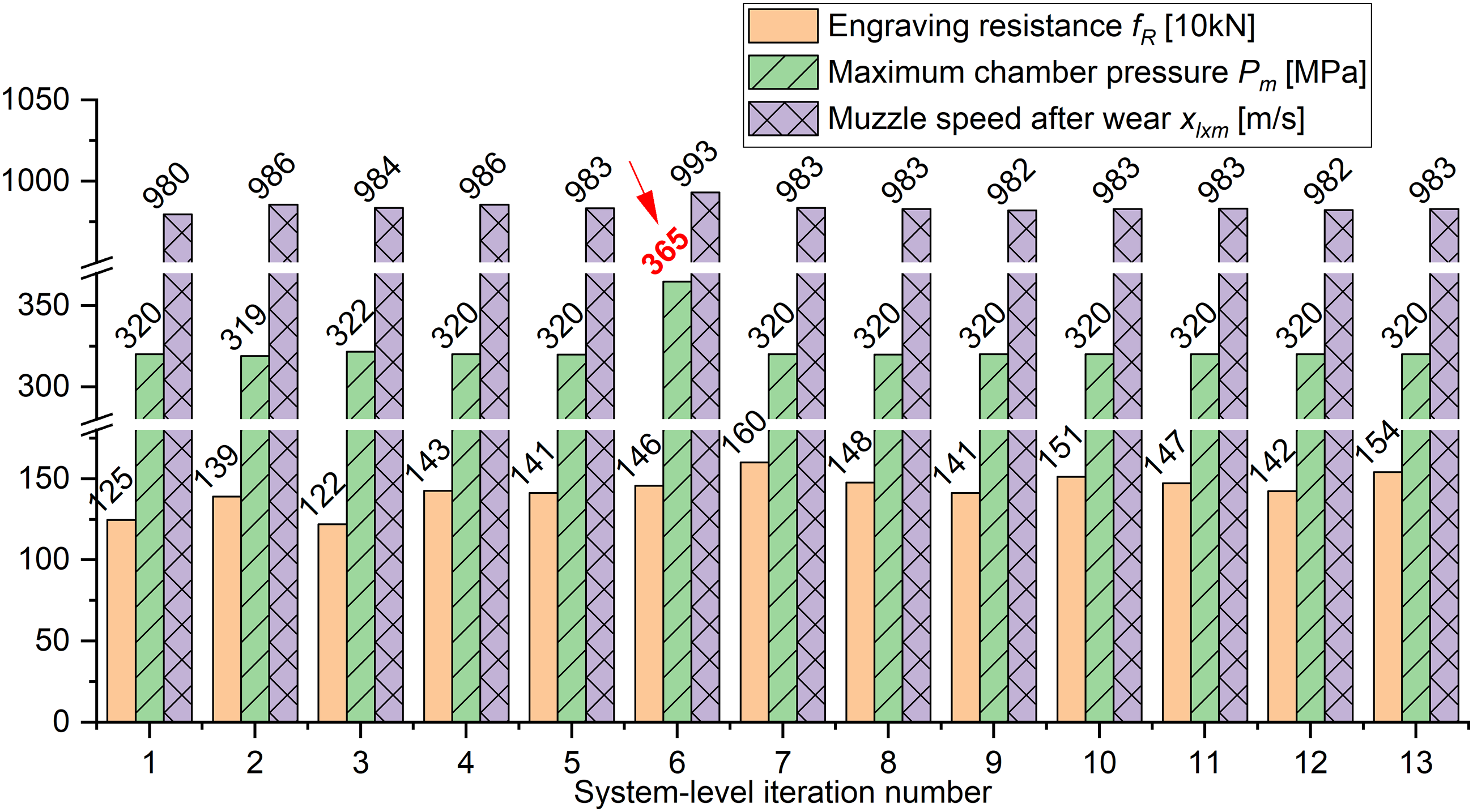
The indicators and global objective function by the MECO method are shown in Figure 7. Convergence curves of two indicators and the system-level global objective function with MECO.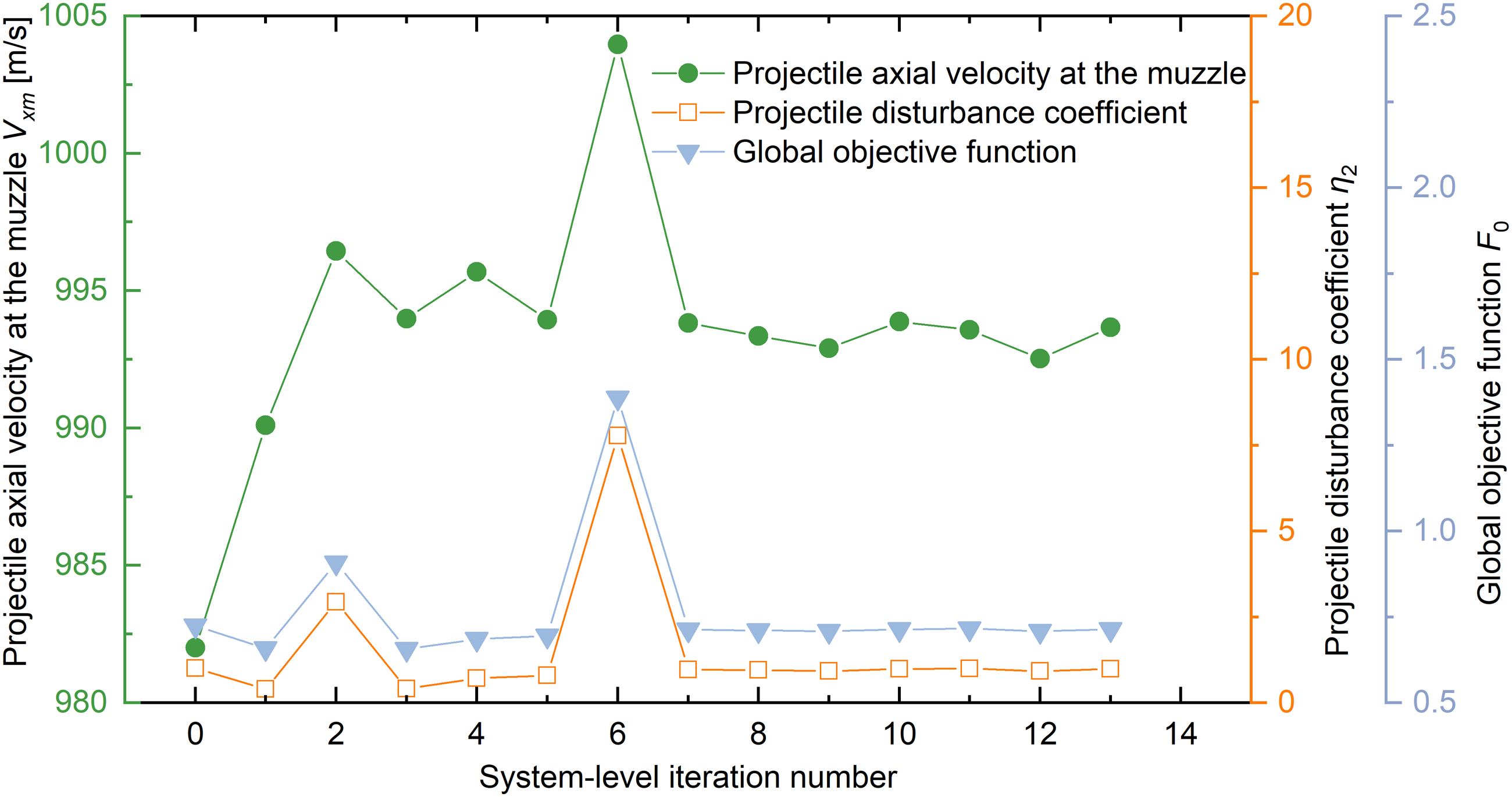
Projectile axial speeds at the muzzle

Discussion and Conclusion
Discussion
This study has presented an MECO method that optimizes the artillery’s maximum projectile axial speed and minimum projectile attitude disturbance at the muzzle while considering the two different stages of the projectile-barrel interaction.
Figure 4 shows the system-level convergence curves, which are implemented by different methods. The following insights are provided: First, the value of the system-level computing through the ECO strategy exhibits an oscillation characteristic, making it difficult to converge. Second, the solution converges when the distance criterion is adopted, but remains unstable in the first 8 iterations. Finally, the system-level convergence is improved when the boundary penalty of the subspace is further implemented, through only 13 iterations of MECO. It can be found that the boundaries of the design variables are narrowed by the MECO method, as shown in Figure 5. Compared with the other two methods, the MECO demonstrates higher efficiency and stability.
One interesting phenomenon observed is that the constraints of the maximum chamber pressure are broken through and the global objective function is also abnormal at the 6th iteration. For example,
It can be seen from Figure 5 that the system-level and each subspace’s shared variables all converge under the guidance of the dynamic “move limit” function. In this study, the distance criterion has been used in the subspace loop on the one hand, and the penalty design variables boundary method has been implemented on the other hand. The boundaries of the groove width
It can observe from Figure 7 that the curves of two indicators and the global objective function change drastically at the 6th iteration, due to the default of the maximum chamber pressure at the 6th iteration, as shown in Figure 6. The value of the global objective function has been improved from 0.7241 to 0.7140. The projectile axial speed
As shown in Figure 6 and Figure 7, the projectile axial speed
Conclusion
In this study, the dynamic model for artillery launch coupled with the propellant combustion has been developed to predict the performance of the engraving process of the rotating band and the movement process of the projectile in the barrel. The modified method has been developed with distance criterion and penalty design boundary in the MECO. To solve the optimization problem of the dynamic model for artillery launch, the model has been formulated in the form of MECO. The optimal results show that the system-level objective function presents oscillation characteristic that can hardly converge when the ECO strategy is implemented. The number of iterations of the MECO strategy is 13, less than that of the MECO strategy, showing higher efficiency and stability. The projectile axial speed at the muzzle has increased by 1.22% and the projectile disturbance coefficient has decreased by 2.77% under the constraints of the engraving resistance, the maximum chamber pressure, and the launching life. The projectile axial speed at the muzzle and the launching accuracy have been improved while the two-stage optimization problem has been solved effectively by the MECO strategy. Unlike most of the studies on artillery launch found in the literatures, the MECO is focused not only on satisfying the compatibility between the coupled parameters in the two sequential stages but also on reducing the global objective function, as in this paper from 0.7241 to 0.7140. Future work will involve the following aspects: (1) to generalize the deterministic optimization to uncertain problems based on the MECO strategy, (2) to generalize the optimization of artillery launch in bore to the full trajectory, and (3) to consider the dynamic weight problem of multi-objective optimization, and to couple it with MDO.
Footnotes
Acknowledgements
The authors thank Bing Wang and Fengjie Xu of Nanjing University of Science and Technology for providing the dynamic model of the engraving process and the projectile motion in the bore, and their assistance in the design of the experiment.
Declaration of conflicting interests
The author(s) declared no potential conflicts of interest with respect to the research, authorship, and/or publication of this article.
Funding
The author(s) disclosed receipt of the following financial support for the research, authorship, and/or publication of this article: This work was supported by the National Natural Science Foundation of China (11572158, 51705253) and Postgraduate Research and Practice Innovation Program of Jiangsu Province (SJKY19_0274).
