




Abstract
A multi-physics-analysis-based topology optimization (TO) method is proposed to optimally design the internal partition layout of a muffler integrated with a thermoelectric generator (TEG). The basic equations governing the acoustical behavior, heat transfer, and fluid flow in the muffler are introduced, and their interaction is designated for exact numerical analysis in terms of acoustics, heat transfer, and fluid mechanics. To implement density-based TO, one design variable is assigned to each finite element in the design domain, and interpolation functions suitable for each physics phenomenon are employed. In the TO problem formulation, the sum of the squared acoustic pressures at the outlet of the muffler for multi-target frequencies is selected as an objective function to achieve broadband noise attenuation. The temperature of the TEG and the pressure drop are constrained for high energy recovery efficiency and fluid passage, respectively. The optimization problem formulated for the muffler design is solved for various design conditions. Optimal partition layouts are obtained depending on the location and length of the TEG, the upper limit value of the pressure drop, and the number of target frequencies in the same frequency band. The noise attenuation performances of each partition layout are compared, and their expected recovery energies are calculated. One optimal partition layout is discussed in terms of acoustics, heat transfer, and fluid mechanics. The numerical results strongly support the validity of our proposed method for the optimal design of a muffler integrated with a TEG.
Keywords
Introduction
A muffler for duct noise reduction is integrated with a thermoelectric generator (TEG) in an exhaust system for vehicle waste heat recovery and power generation used to open and close an active valve.1–4 In general, the efficiency of a TEG is proportional to the difference between the temperatures inside and outside the muffler, 1 and the noise attenuation performance of a muffler is strongly affected by the partition layout inside the muffler. 5 A fluid with high thermal energy enters the muffler and exits from it with a relatively low temperature. Considering that the outside temperature is almost constant and the partition is a thermal conductor, the partitions should be optimally placed depending on the position of the TEG for significant noise reduction and high energy recovery efficiency. To this end, the inside temperature distribution should be accurately predicted using multi-physics analysis consisting of acoustical, thermal, and flow analyses. In addition, a muffler design method based on multi-physics analysis should be developed to simultaneously improve the noise reduction performance and the efficiency of the TEG.
Various optimal design methods have been developed based on single-physics analysis. In acoustical optimization, shape optimizations have been conducted to enhance the noise attenuation performance of a muffler by parameterizing the geometric design variables.6–8 For example, acoustical shape optimization is presented for a horn. 9 Wadbro and Berggren 10 designed an acoustic horn using topology optimization (TO), and Dühring et al. 11 optimized the internal topology of an acoustic wall to achieve a high sound absorption coefficient. Lee and Kim 12 solved the acoustical TO problem to improve the transmission loss (TL) value at a target frequency, and Lee 13 conducted an experimental acoustic validation for topologically optimized mufflers. Lee et al. 14 investigated the noise evaluation indices in acoustical TO problems for muffler design. Kook et al. 15 optimally designed a soundproof wall using TO with Zwicker’s loudness model, and Oh and Lee 16 proposed the sequential method for shape and TO to enhance the noise attenuation performance of a suction muffler. Additionally, reliability 17 and metamaterial concepts 18 have been combined with acoustical TO for muffler design. In thermal optimization, studies have been performed to determine the optimal heat path to achieve maximum thermal expansion on a simplified plate model considering thermal conductivity, as well as the heat sink and source boundary conditions.19–21 Similarly, another study was presented for a plate model considering both conduction and convection phenomena. 22 For fluid flow optimization, Borrvall and Petersson 23 proposed a topological duct configuration for Stokes flow under the assumption of very slow speed. Based on this, Guest and Prévost 24 obtained the optimal solutions for various duct compositions. In addition, a TO study presented the optimal duct configuration considering the inertial characteristics of a fluid and pressure drop, 25 and a commercially available software associated with a previous study was created. 26 Subsequently, several advanced fluid flow TO studies have been conducted for unsteady incompressible flow, 27 as well as turbulent flow TO. 28
On top of the excellent results of the previous studies, two-physics analysis based design results have been reported to reflect a coupling behavior or to increase calculation accuracy for industrial application. For example, based on static and acoustical analyses, Yoon and Lee 29 obtained the optimal topology that simultaneously improves the stiffness and noise attenuation performance of a high-speed train panel, and Yoon et al. 30 solved a simple bulkhead design problem by formulating a TO problem for a hybrid structural-acoustic coupling system. Kontoleontos et al. 31 formulated and solved viscous flow TO problems including heat transfer. Lee and Jang32,33 optimized the internal partition layout of a muffler using flow and acoustical TO methods to improve both the pressure drop and noise attenuation performance. Oh and Lee 34 performed TO to obtain an optimal muffler considering acoustical and heat transfer phenomena. In addition, thermo-acoustics studies were carried out to investigate the acoustical damping effect due to the small and narrow zones in the Helmholtz resonator.35,36 Of course, simply increasing the number of physics phenomena to consider do not always improve the outcome of design. However, increasing the number of physics phenomena in developing a muffler design method has yielded interesting design results, which could not be obtained without multi-physics analysis.
In this study, a muffler design method based on a three-physics analysis is developed to optimize the internal partition layout of a muffler integrated with a TEG to simultaneously enhance its noise attenuation performance and power generation. The TEG may be replaced by a convection-driven thermoacoustic engine with a piezoelectric generator. 37 The partitions are regarded as thermal conductors, and the acoustical, thermal, and flow analyses are systematically connected in the problem formulation. The structure of this paper is as follows: The fundamental physical properties considered in the muffler optimal design problem formulation are introduced with the governing equations and boundary conditions in terms of acoustics, heat transfer, and fluid mechanics. The interaction between these three physical properties is presented. Then a TO problem based on multi-physics analyses is formulated for the design of a muffler integrated with a TEG. The objective function and constraints are defined with the design variables. After that, the formulated TO problem is solved for various design conditions. The optimal topologies are discussed based on the geometric parameters of the TEG, target frequency, and allowed pressure drop value. Finally, the conclusion is presented in the last section.
Three physics for muffler analysis and design
In general, a fluid with high thermal energy flows into the muffler and exits from its outlet, and noise enters the muffler together with the fluid and is transmitted to the outlet. Rigid partitions are inserted inside the muffler to reduce the level of the transmitted noise for the frequency range of interest. Due to the partitions, an increase in the fluid resistance results in a pressure drop, which is the pressure difference between the inlet and outlet. In addition, a temperature gradient occurs inside the muffler because of the thermal resistance change resulting from the partitions and heat energy exchange through the muffler cover panel. Therefore, the three physics (acoustics, heat transfer, and fluid mechanics) should be carefully evaluated to accurately predict the performance of a muffler when the vibration of the panel and partition is ignored.
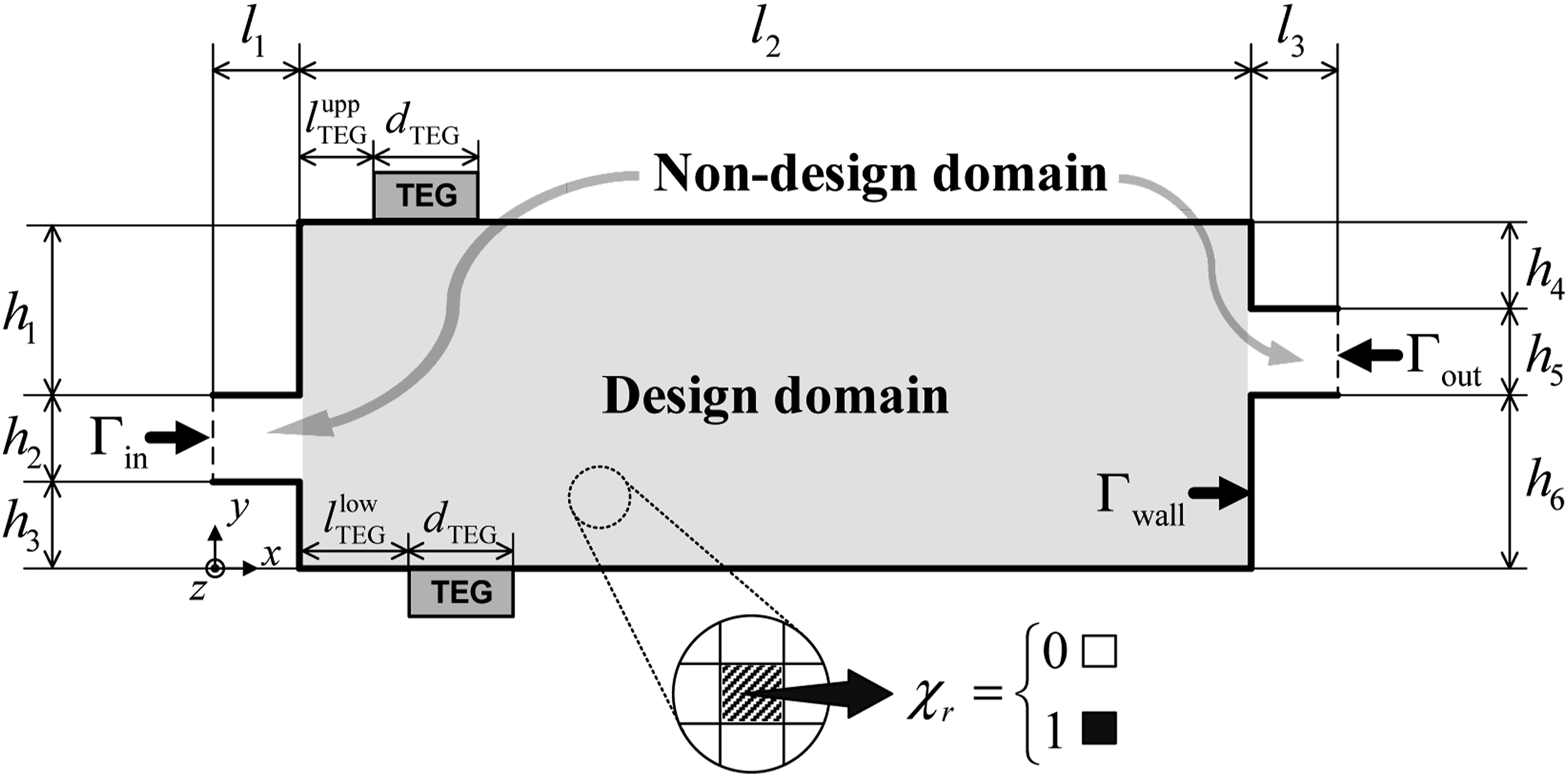
Figure 1 shows a muffler integrated with a TEG. The muffler consists of an inlet, an expansion chamber, and an outlet, the centers of which do not coincide with one another. The TEG is commonly used to convert thermal energy into electrical energy. It consists of a heat source plate, sink plate, in-between metals, and thermocouples as shown in the inset of Figure 1. The heat source plate is attached to the cover panel of the expansion chamber of the muffler. It is assumed that the fluid flowing into the muffler is air and the fluid inside the muffler exchanges heat energy with the fluid outside the muffler through the cover panel. The vibration of the muffler is not considered in this work. The depth of the muffler is sufficiently small, compared with its length and height, such that the muffler can be regarded as a 2-dimensional muffler integrated with a TEG, as shown in Figure 2, which is a 2-dimensional finite element model. An illustration of the muffler integrated with a thermoelectric generator. A 2-dimensional muffler model.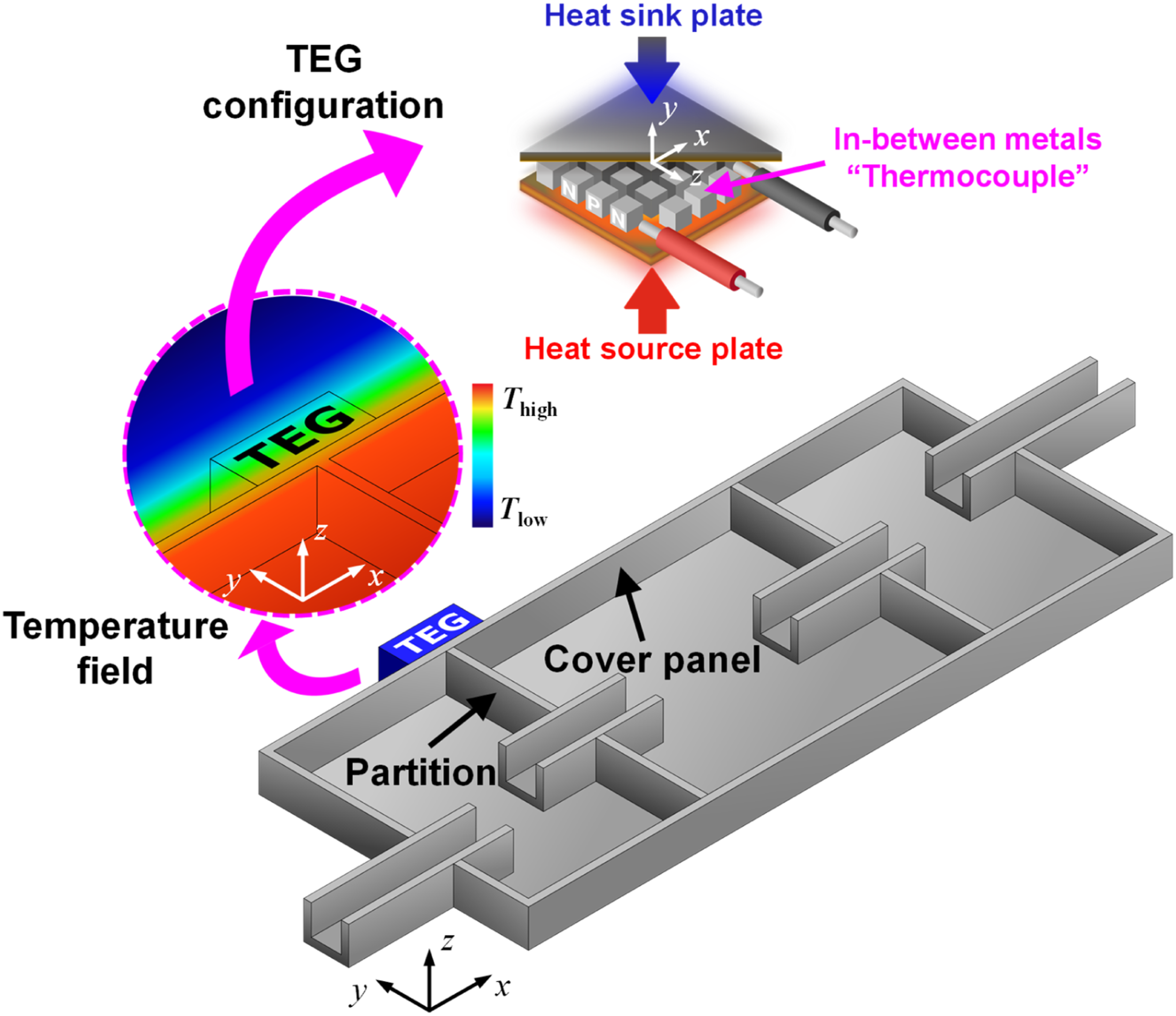
Governing equations and boundary conditions
According to fluid mechanics theory,
38
the continuity equation and Navier–Stokes momentum equation for calculating the fluid velocity



The Dirichlet boundary conditions are assigned to the inlet






The acoustic pressure





Interaction between the three physics
This subsection explains the interaction mechanism of the three physical properties (acoustics, heat transfer, and fluid mechanics) to properly analyze and design a muffler in Figure 2. It is assumed that the partitions are made of 409 stainless steel, which is a thermal conductor. The acoustic properties, bulk modulus
In addition, the material properties (





The multi-physics analysis procedure is summarized in the flow chart in Figure 3, where the thermal and flow analyses are followed by the acoustical analysis. First, equation (3) is solved for the initial values ( Flowchart for the three-physics analysis based on coupling effects.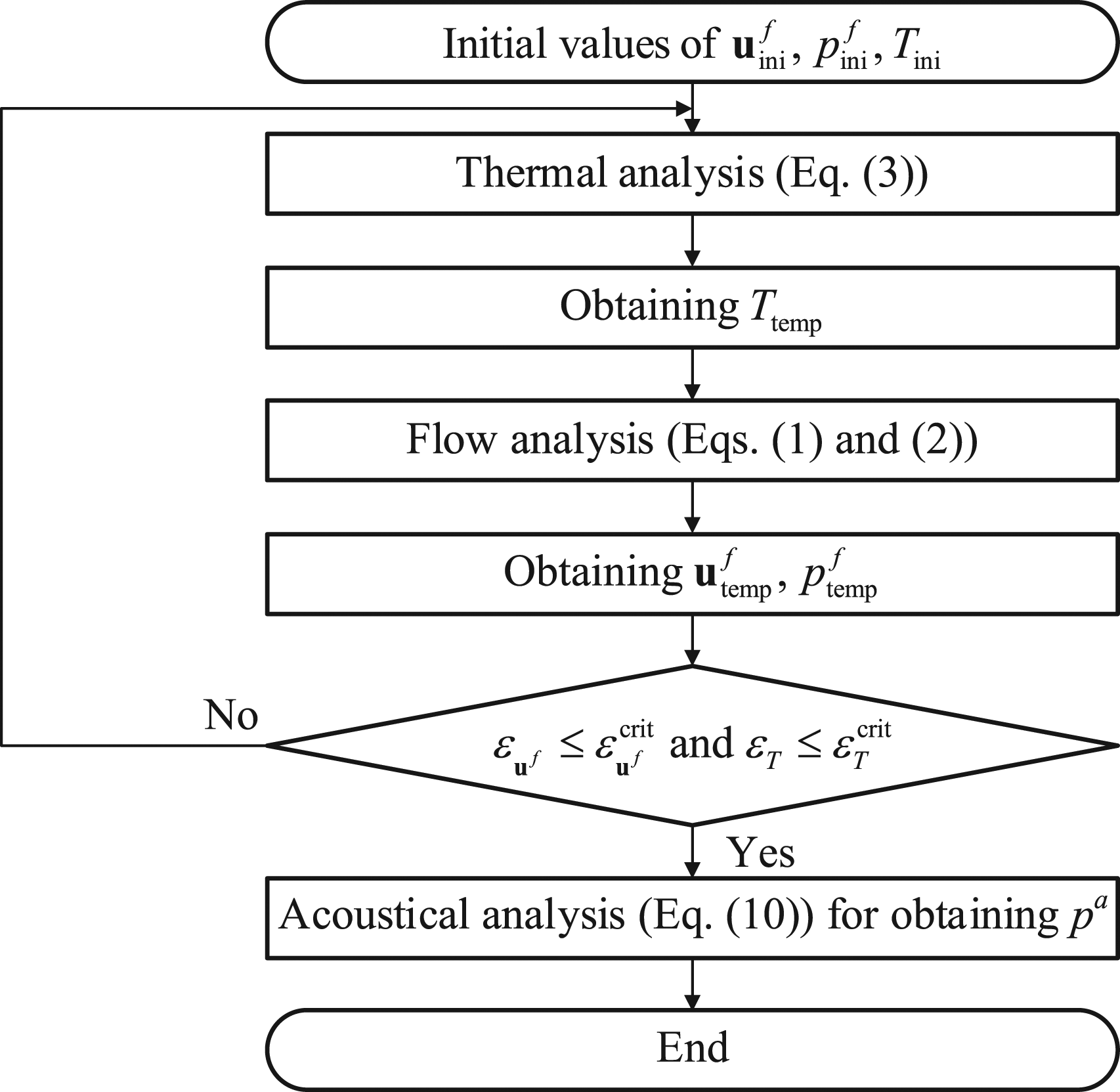



Muffler design goal
The partition layout of the muffler integrated with the TEG in Figure 2 must be carefully designed to maximize its harvested energy as well as its noise attenuation performance as described.2–4 It is well known that the internal partition layout strongly affects the noise attenuation performance of a muffler.12–14 The electric power generated by the TEG is a result of the Seebeck effect, 42 which develops across two points of an electrically conducting material due to a temperature difference between the two points. Because the heat sink plate of the TEG on the outside of the muffler is cooled by natural or forced convection, the temperature of the heat source plate should increase. In addition, the energy efficiency of the TEG depends on not only the inside partition layout but also its location on the cover panel of the muffler because the rigid metal partition can increase the temperature of the heat source plate of the TEG. Therefore, the TEG should be optimally positioned on the cover panel of a muffler to maximize harvested energy.
Furthermore, a severe pressure drop should be avoided when designing a muffler. The inside partitions of a muffler play both positive and negative roles: they induce acoustic impedance mismatch to attenuate incoming noise but usually increase flow resistance, increasing the pressure drop of the muffler. Therefore, a muffler should be optimally designed considering not only the acoustical characteristics but also the fluidic characteristics. In summary, in this paper, a muffler integrated with a TEG is optimally designed to enhance its noise attenuation performance considering thermal and fluidic effects.
TO problem formulation
Density-based TO
The muffler analysis model is divided into the design and non-design domains (





Physical properties characterizing each physics
The physical properties to be used in the objective functions and constraints are defined for the TO formulation. The noise attenuation performance of the muffler is evaluated with the squared absolute values




Objective function and constraints
Using the physical properties defined above, the muffler TO design problem is formulated to increase energy harvesting, improve the noise attenuation performance, and avoid severe pressure drop as follows






Numerical results
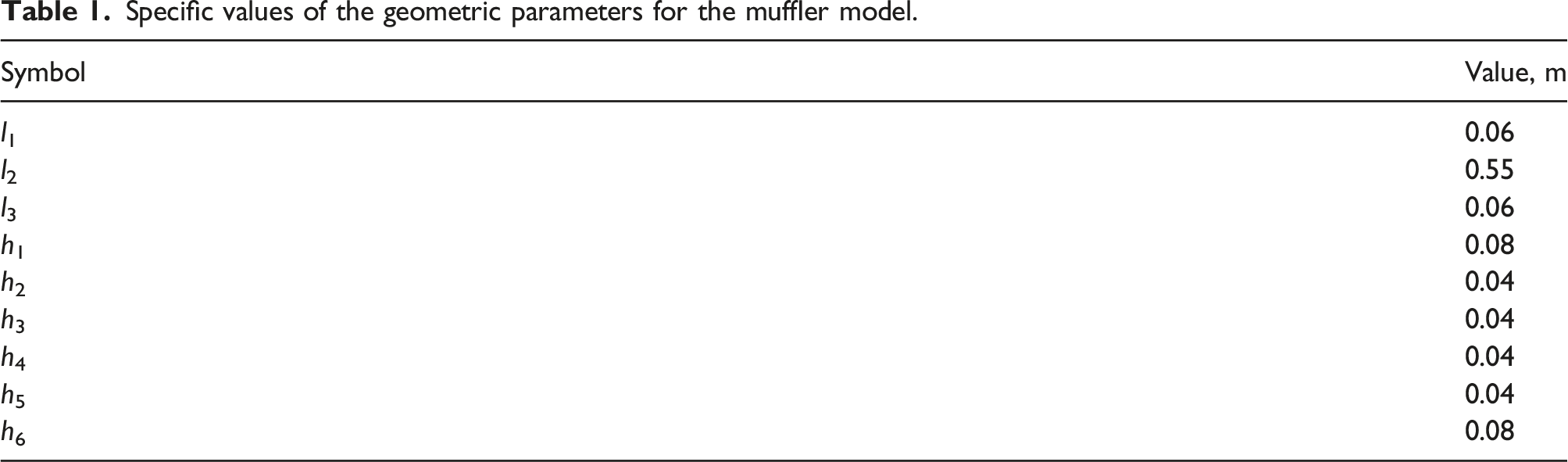
Specific values of the geometric parameters for the muffler model.
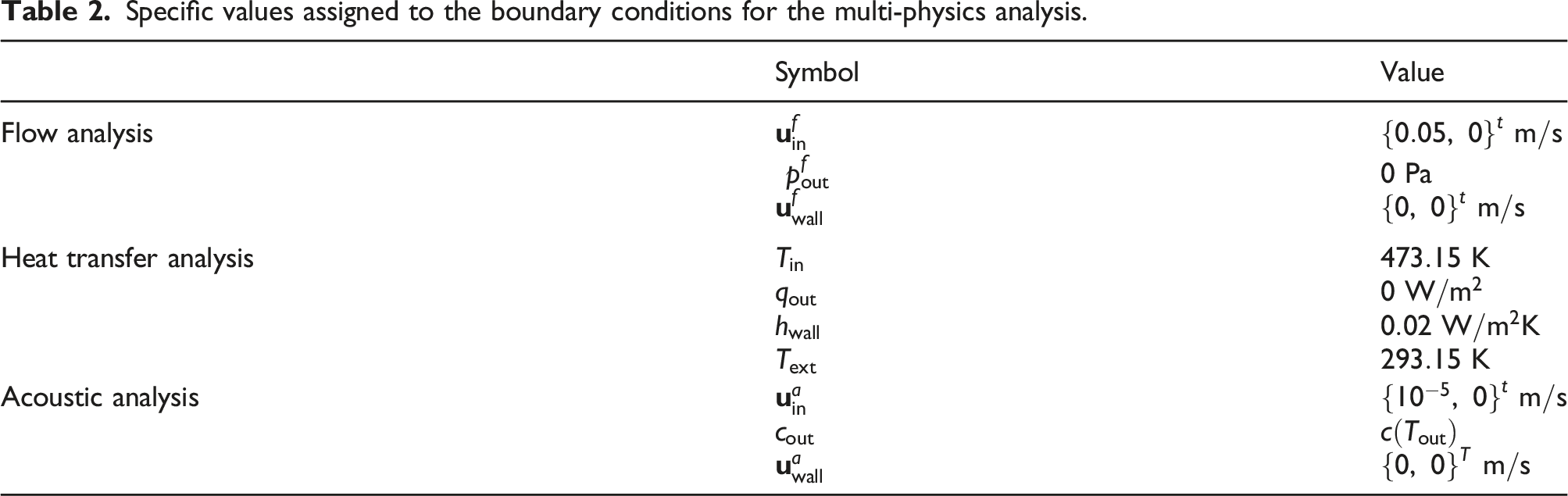
Specific values assigned to the boundary conditions for the multi-physics analysis.
Case I: Optimal topologies depending on TEG location
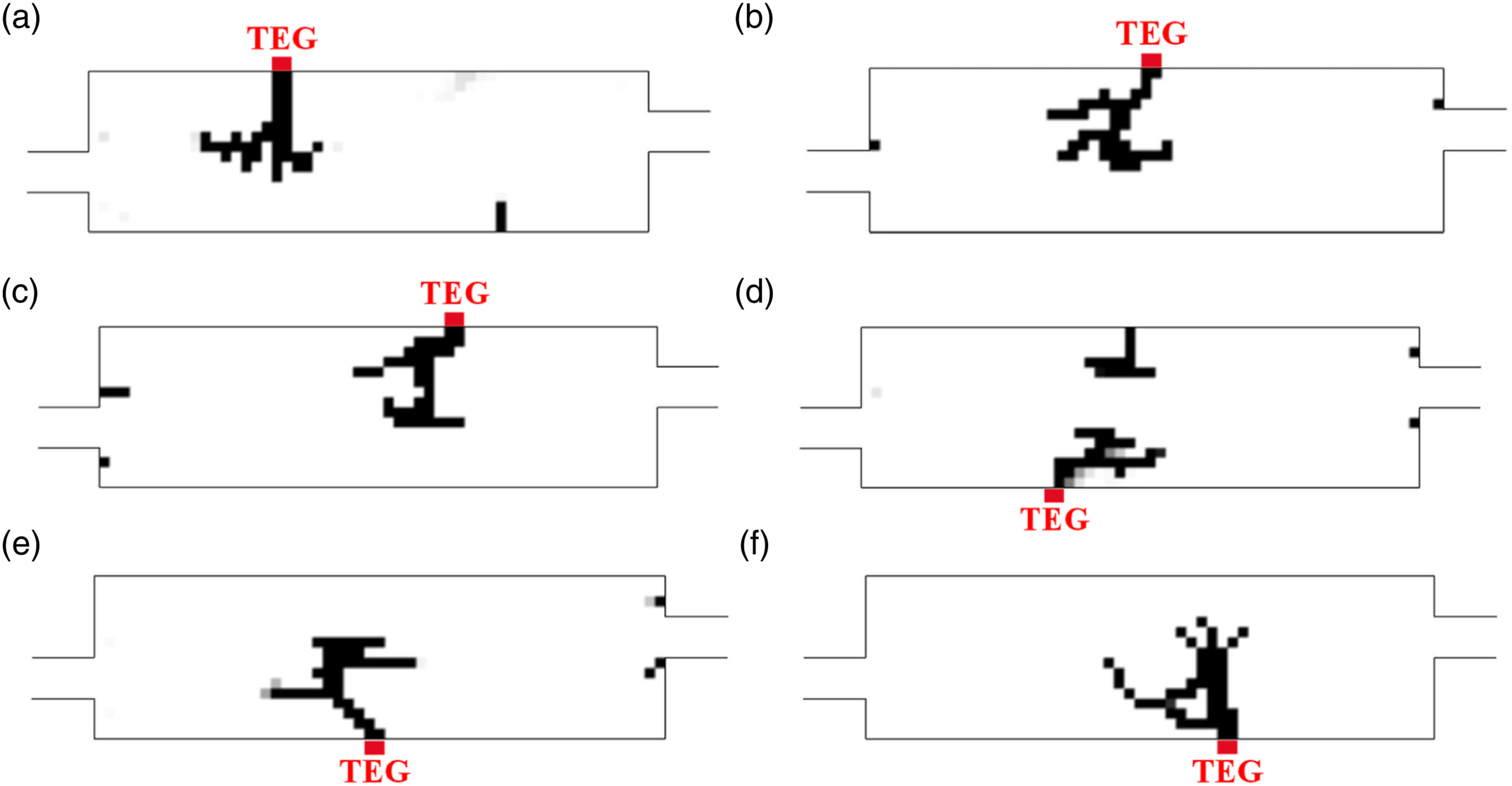
The TO problem formulated in equations (28)–(30) was solved for various locations of a single TEG: three locations at the upper side of the muffler (
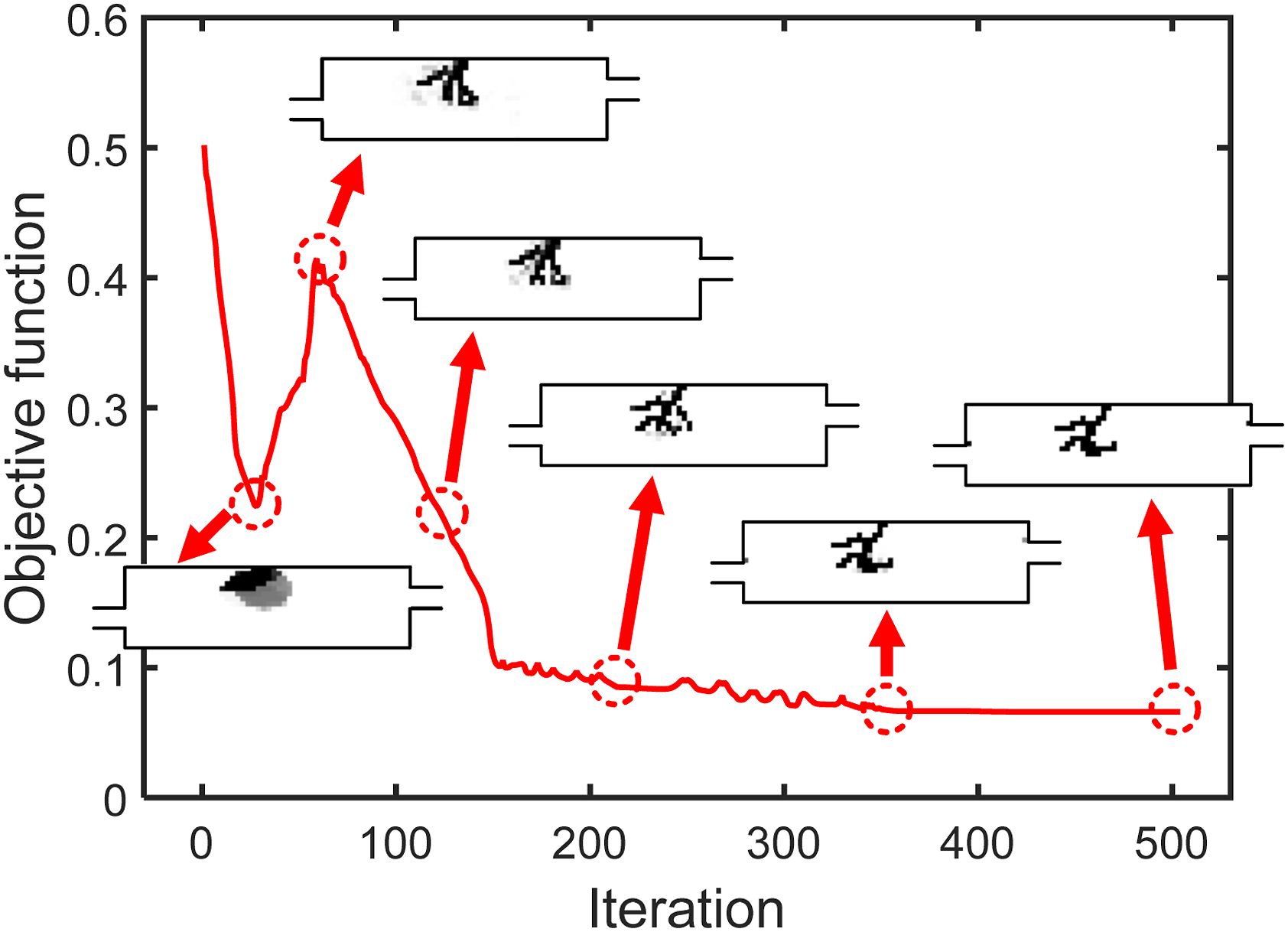
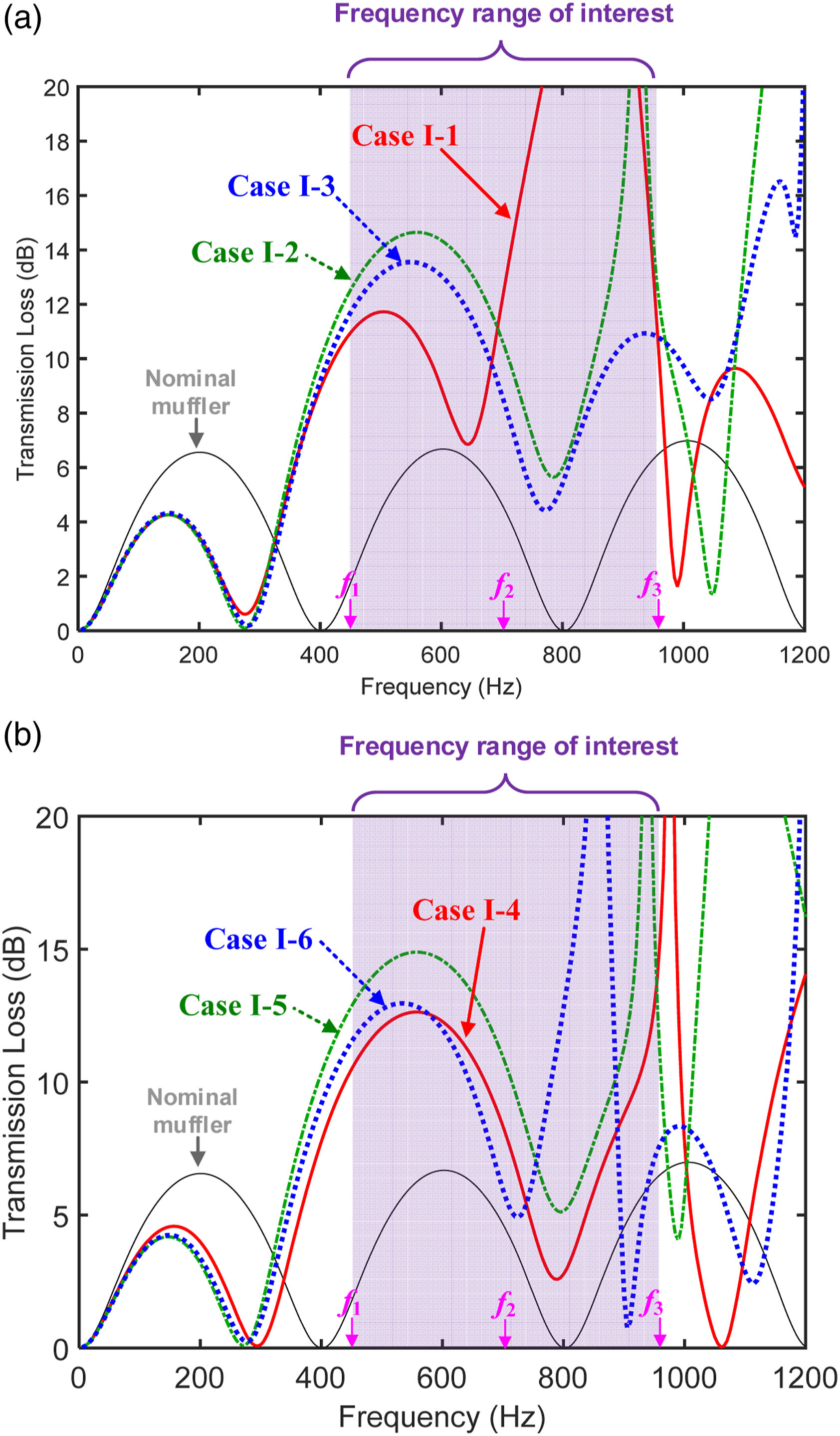
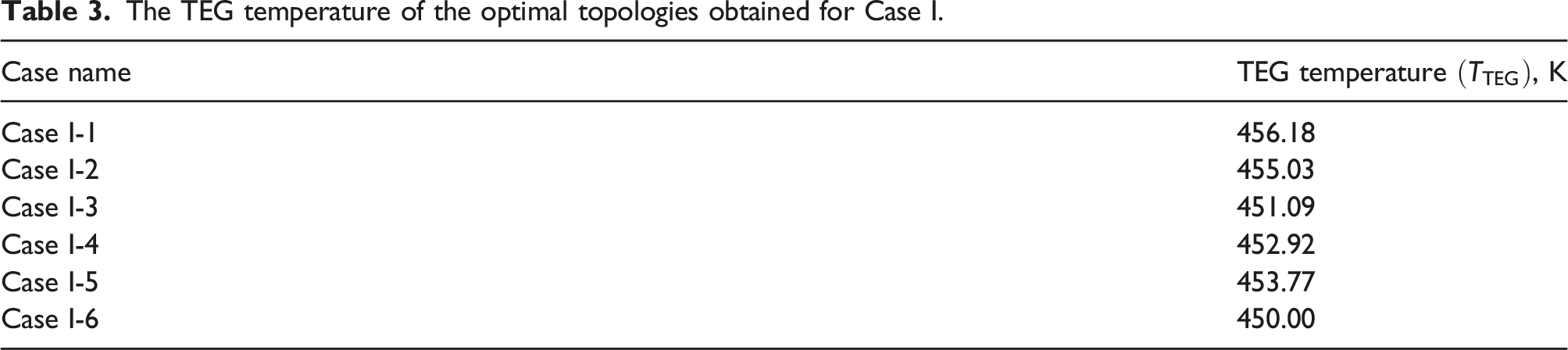
Figure 4 shows the history of the objective function with several topologies during the optimization process for Case I-2. Figure 5 shows the optimal topologies for Case I-1 to I-6, where the red boxes on the top and bottom represent a TEG. Each optimal topology had one large steel partition and several small steel branch partitions. The large partition started from the location of each TEG. To show the noise attenuation performance of each optimal topology, the TL was calculated using equation (31)
5
The history of the objective function for Case I-2. Optimal topologies obtained for Case I: (a) Case I-1; (b) Case I-2; (c) Case I-3; (d) Case I-4; (e) Case I-5; (f) Case I-6. Comparison of transmission loss curves of optimal mufflers for Case I with that of a nominal muffler: (a) Case I-1, Case I-2, Case I-3; (b) Case I-4, Case I-5, Case I-6. The TEG temperature of the optimal topologies obtained for Case I.
Case II: Optimal topologies depending on TEG size
In this case study, the effect of TEG size is investigated. In the previous case study, the TEG size was fixed at 0.02 m. Because the TEG size
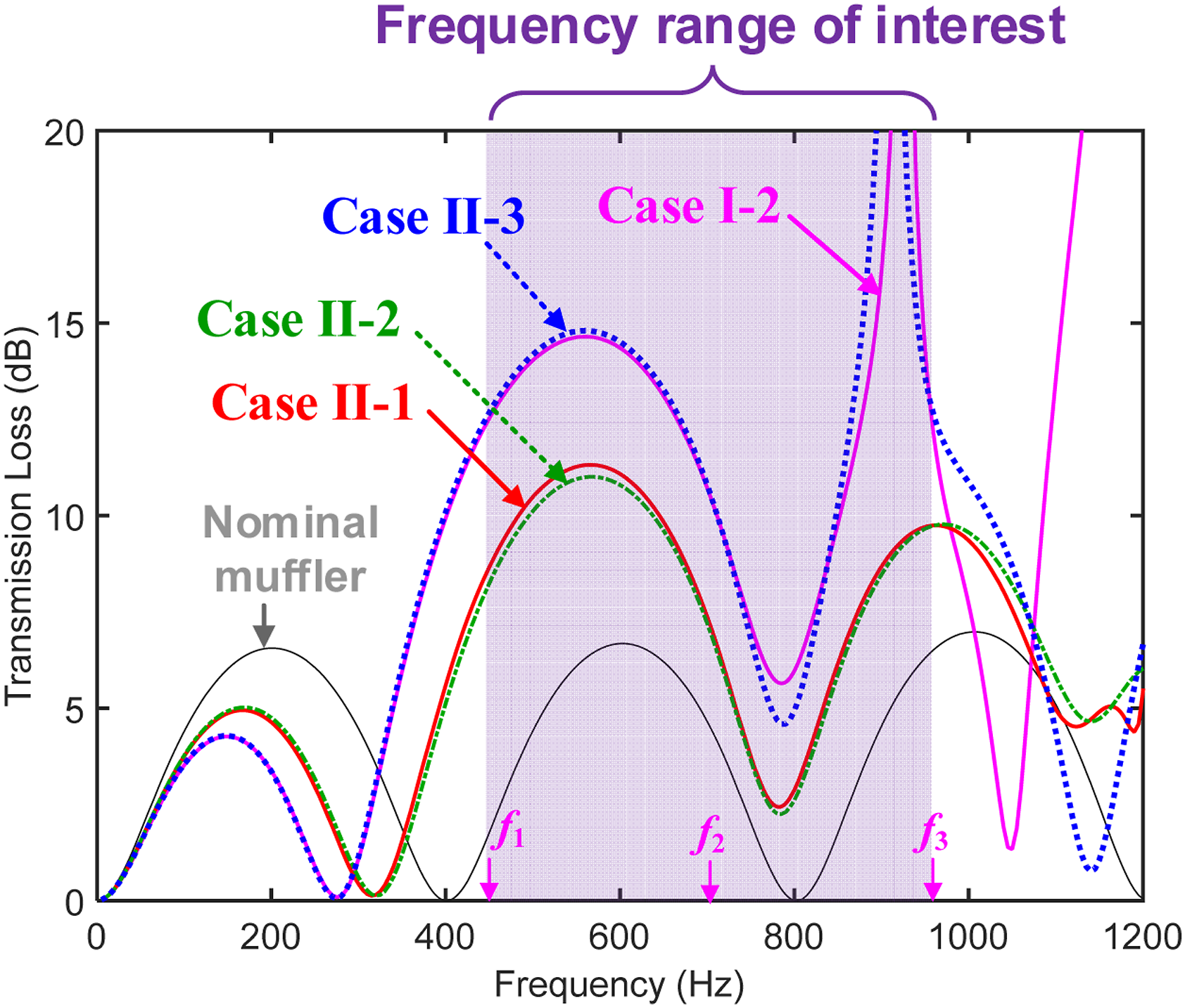
The optimal topologies for Case II-1 to Case II-3 are shown with the TEG indicated as red boxes in Figure 7. The TEG temperature values for these mufflers were 450.01 K, 450.00 K, and 452.39 K, and the pressure drop values were all 0.0015 Pa. It was observed that the partitions around the heat source plate of the TEG became thicker compared with Case I-2. This is because the thicker partitions can convey more energy to the TEG for increased energy harvesting. Furthermore, considering that the simulation is conducted in the 2-D domain, the harvesting trend will be exponentially increased in the 3-D domain because the area of the heat source plate and its number of thermocouples will increase accordingly. Figure 8 compares the TL curves of the optimal mufflers for Case II and Case I-2. The TL values at the target frequencies in Cases II-1 and II-2 were lower than that in Case I-2. For increased energy harvesting, the noise attenuation performances of the two cases were sacrificed. However, it is interesting to note that the TL value in Case III-3 was comparable to that in Case I-2. These results imply that increased energy harvesting does not always require sacrificing the noise attenuation performance. Optimal topologies obtained for Case II: (a) Case II-1; (b) Case II-2; (c) Case II-3. Comparison of transmission loss curves of optimal mufflers for Case II and Case I-2.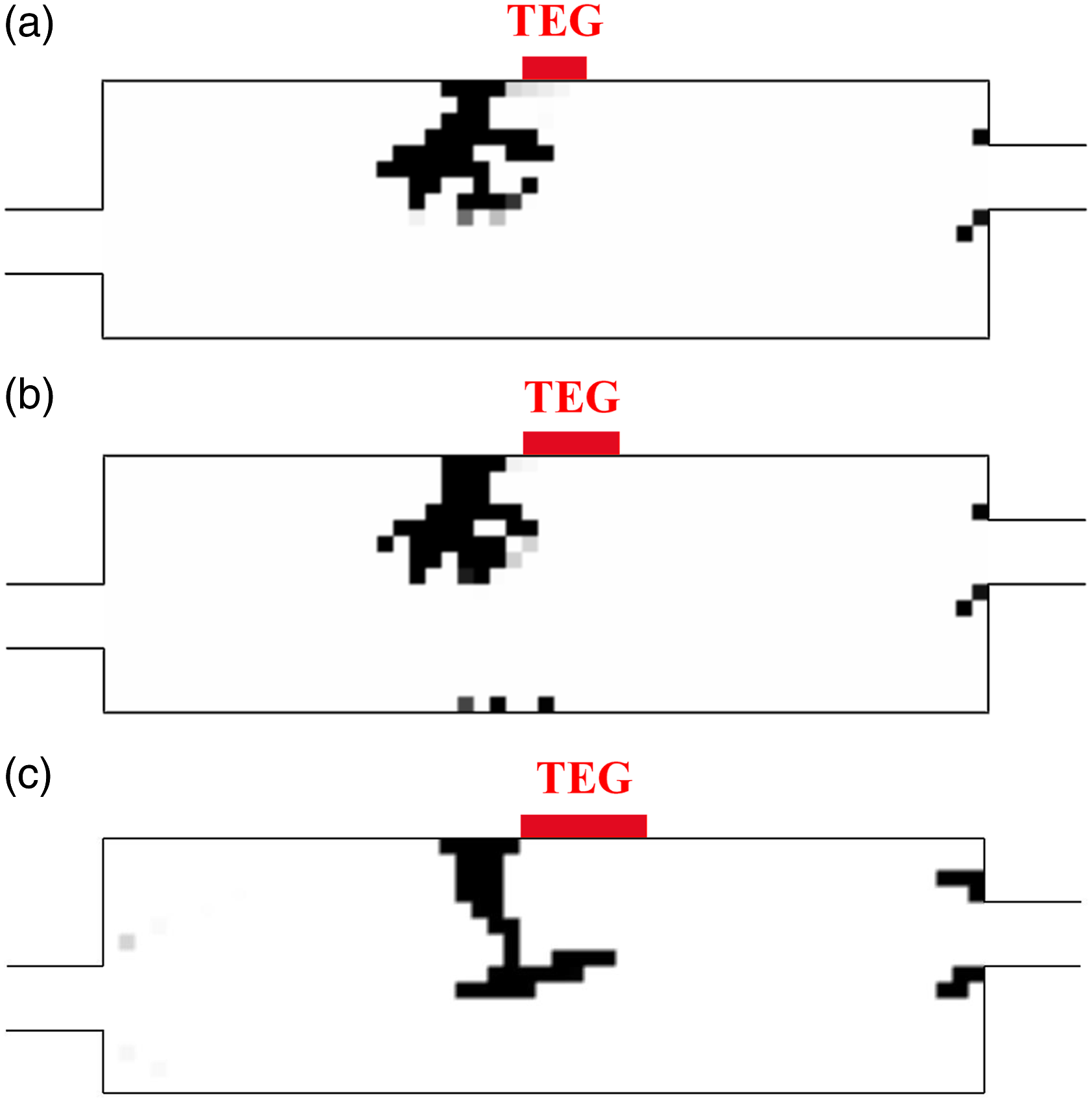
Case III: Optimal topologies depending on the allowed pressure drop value
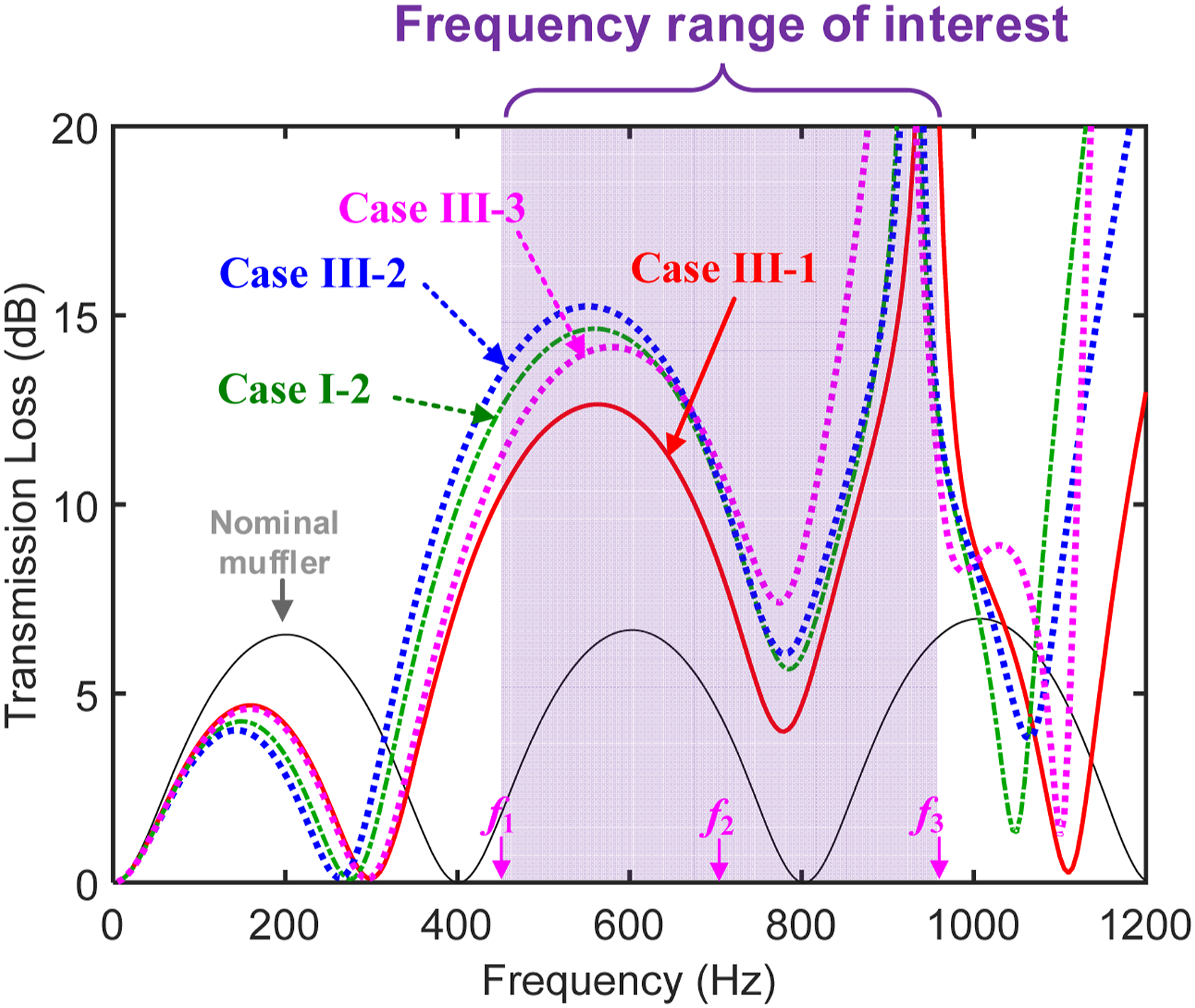
In this case study, the effect of Optimal topologies obtained for Case III: (a) Case III-1; (b) Case III-2; (c) Case III-3. Comparison of transmission loss curves of optimal mufflers for Case III and Case I-2.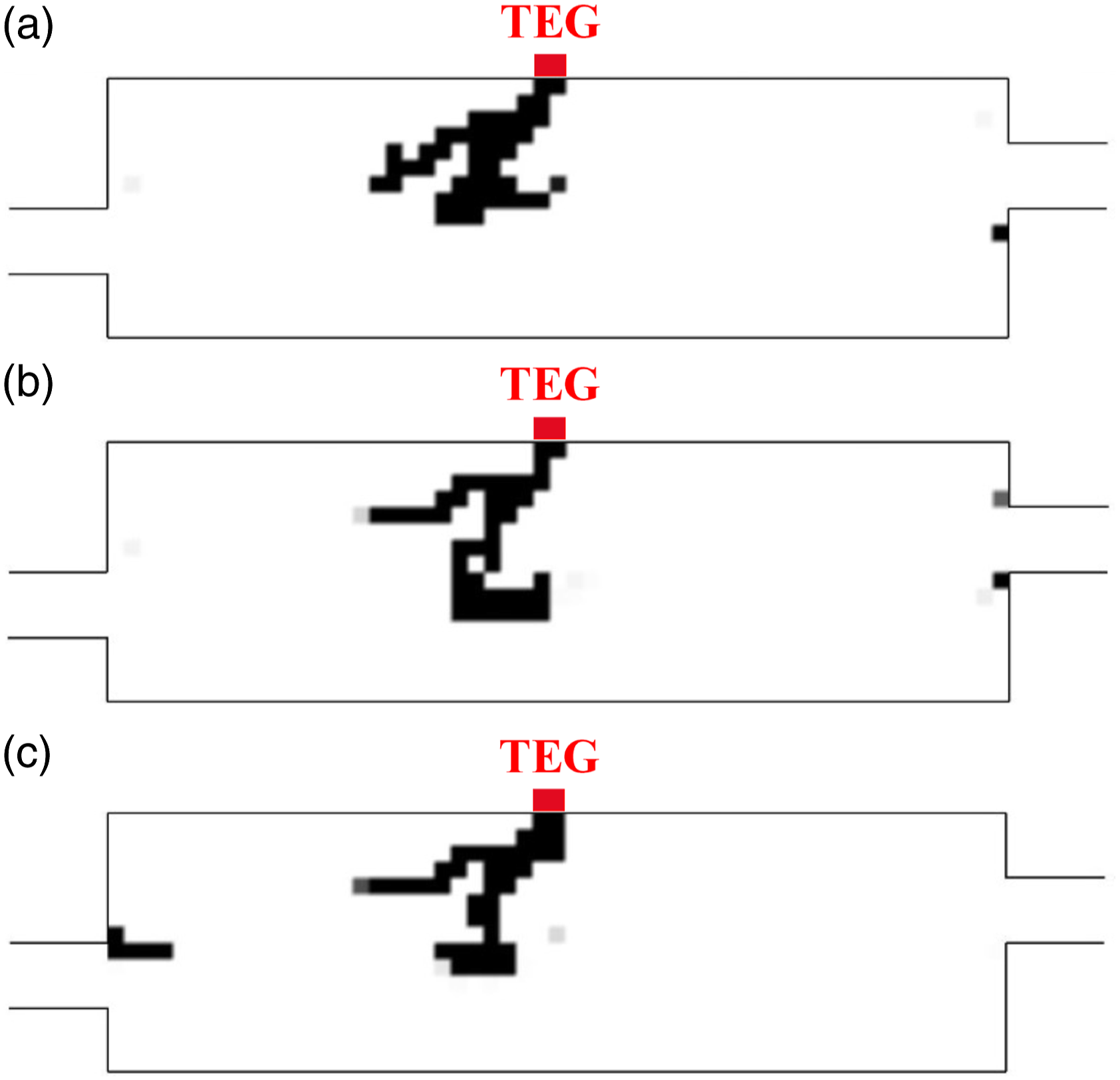
Case IV: Optimal topologies depending on target frequencies
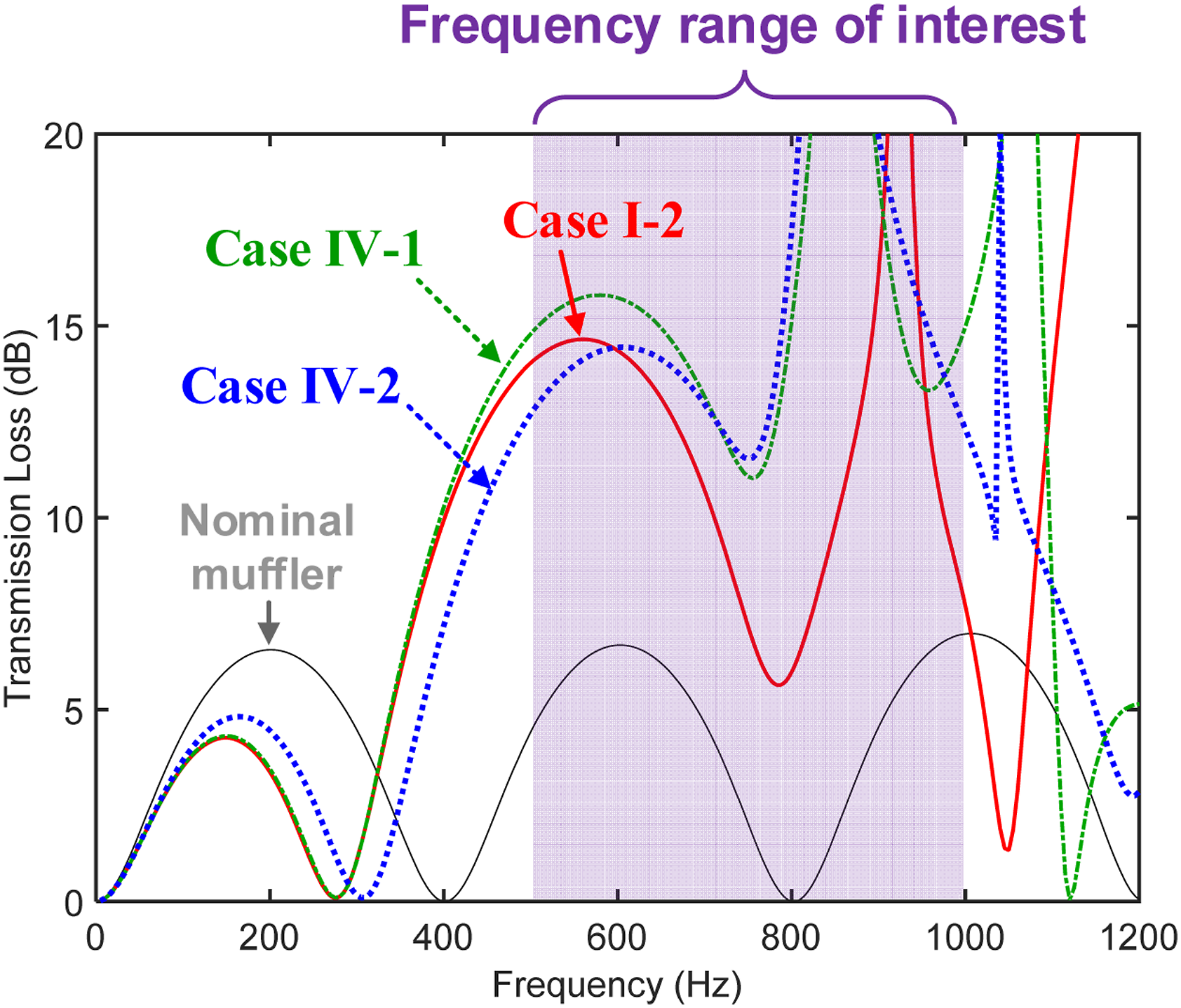
To verify the effectiveness of the proposed methodology for the broadband noise attenuation performance, the TO problem formulated in equations (28)–(30) was solved with an increasing number of target frequencies for the same frequency range of interest as in Case I-2. The target frequencies were selected with a frequency step of 150 Hz and 100 Hz in Case IV-1 and Case IV-2, respectively, that is,
The optimal design results for Case IV satisfied all constraints on the thermal harvesting performance (TEG temperature) and pressure drop: Distribution of the absolute values of the acoustic pressure of the optimal mufflers for Case IV at the target frequencies: (a) Case IV-1; (b) Case IV-2. Comparison of transmission loss curves of optimal mufflers for Case IV and Case I-2.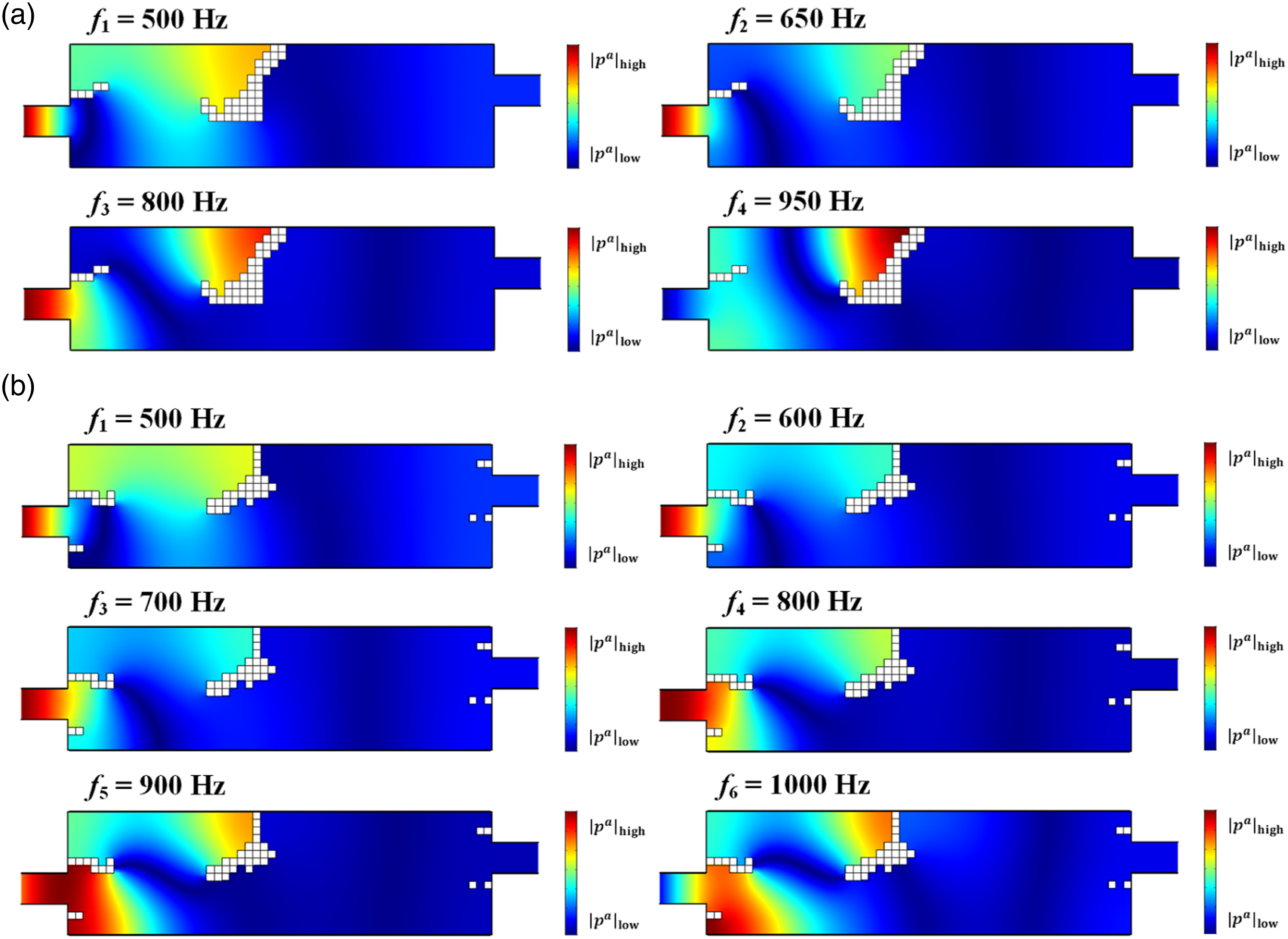
Discussion

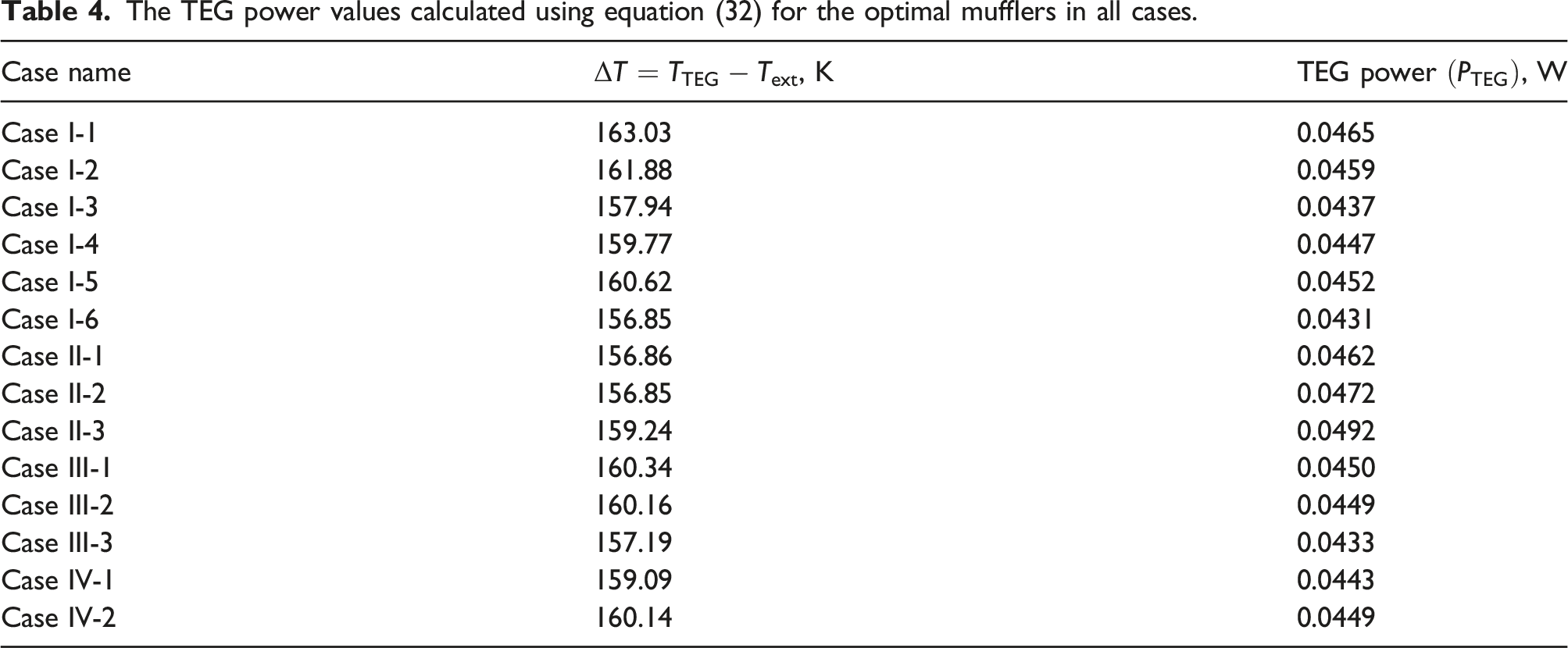
The TEG power values calculated using equation (32) for the optimal mufflers in all cases.
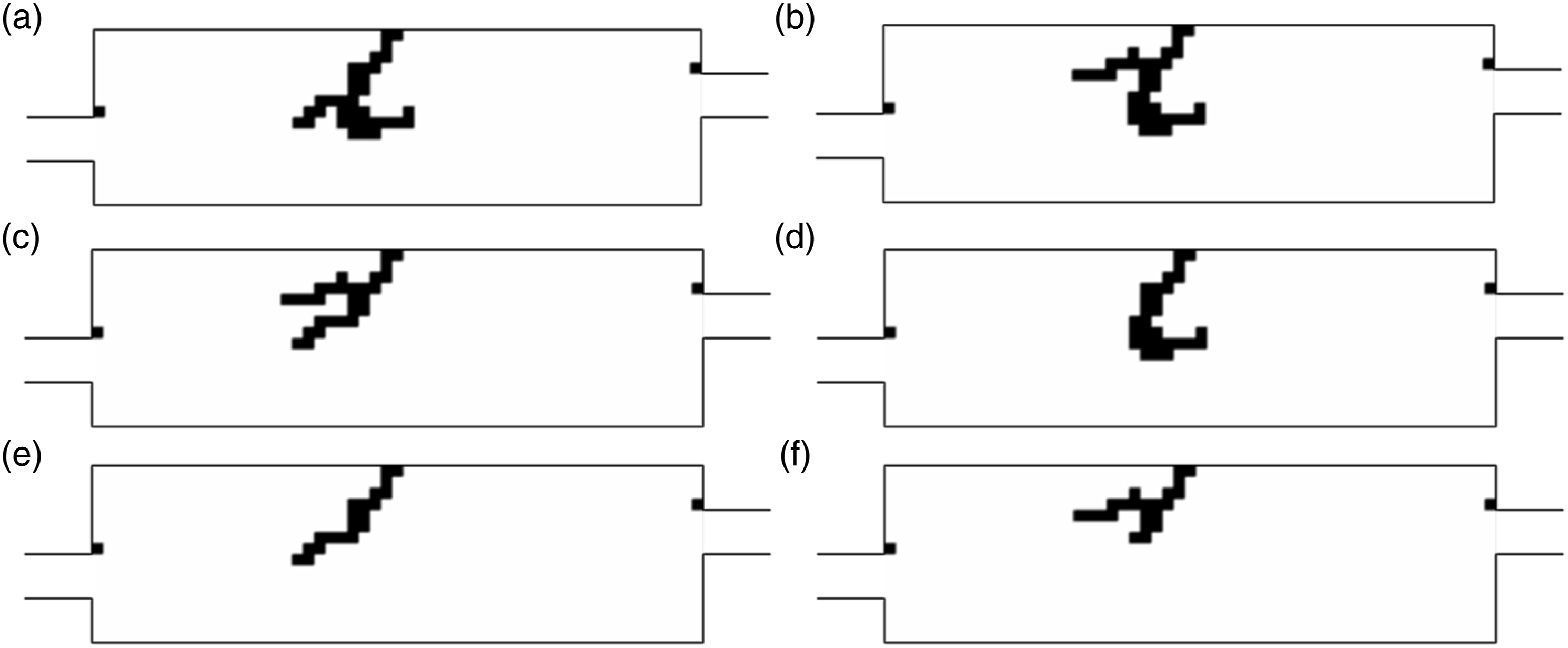
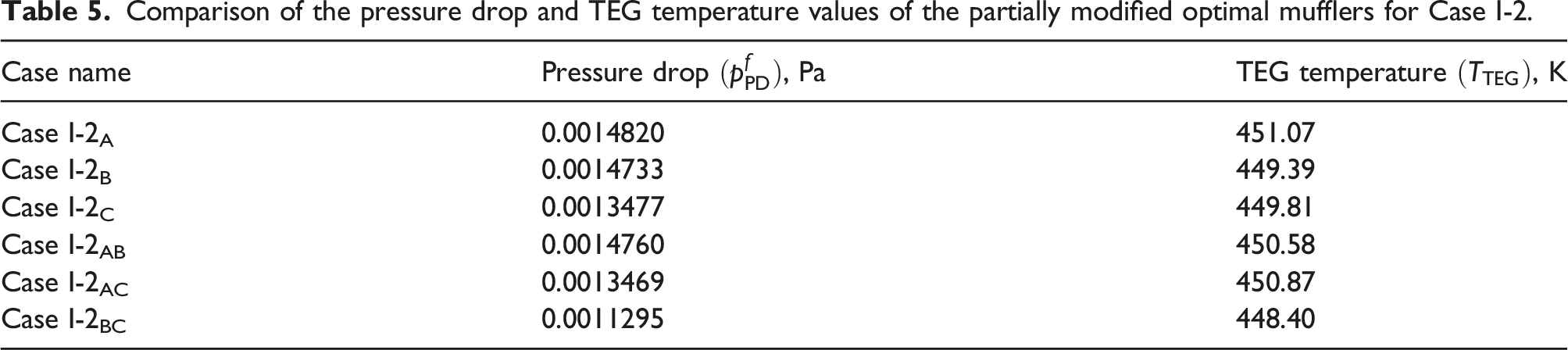
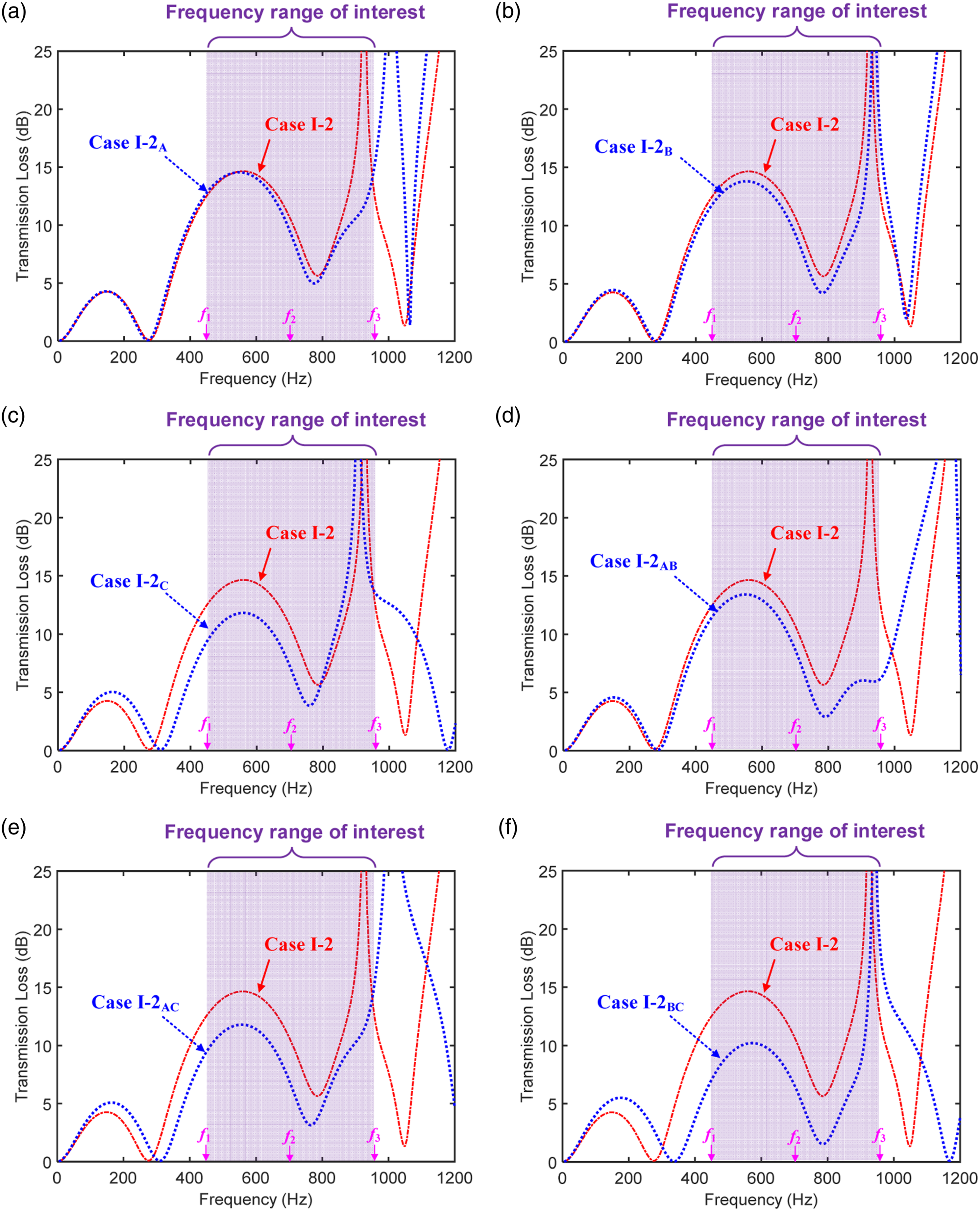
In the partition layouts obtained by the TO, the main partitions all began at the side of the muffler, where the TEG was attached, and evaded the short flow path from the inlet to the outlet. The main partitions had several branches. To investigate the effect of each branch on one of the three physical properties (noise attenuation, pressure drop, and TEG temperature), one of the branches was partially removed. The main partition in Case I-2 was divided into three branches as shown in Figure 13: Branches A, B, and C. Each case was distinguished with a subscript. For example, Case I-2A implies removing branch A, and Case I-2BC implies removing branches B and C. The topological configurations for the six combinations depending on the removed branch are shown in Figure 14. Table 5 compares Three branches of the optimal muffler for Case I-2. Partial modification of the optimal topology for Case I-2 for further investigation: (a) Case I-2A; (b) Case I-2B; (c) Case I-2C; (d) Case I-2AB; (e) Case I-2AC; (f) Case I-2BC. Comparison of the pressure drop and TEG temperature values of the partially modified optimal mufflers for Case I-2. Comparison of transmission loss curves of partially modified mufflers in Figure 14: (a) Case I-2A; (b) Case I-2B; (c) Case I-2C; (d) Case I-2AB; (e) Case I-2AC; (f) Case I-2BC.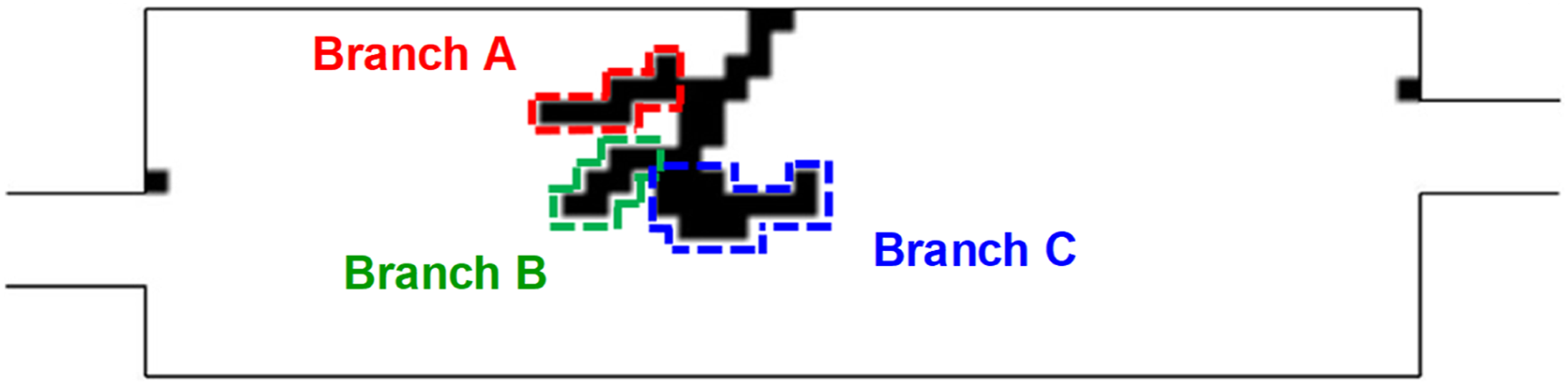
Overall, the well-formulated TO achieved the design goals for the TL, pressured drop, and TEG temperature values. In addition, it could be observed from the harvested power values in Table 4 that the power do not aid in the running of the vehicle engine but only in turning on the lights, and this could attract criticism regarding the practical aspects of a vehicle design. However, this methodology provides a new way to topologically design a device in a vehicle considering multiple purposes based on multi-physics. To further develop this design method, a thermo-acoustics analysis should be included when the geometry has a narrow region such as the neck area of Helmholtz resonator35,36,51 because of the viscous damping effect in viscous and thermal boundary layers on the wall. In a similar way, an aero-acoustics analysis should be considered when the flow-induced noise is expected by turbulent flow such as vortex shedding at the trailing edge. Those phenomena may happen because of the viscous damping around the narrow regions caused by partitions and the high-speed flow coming from the exhaust system.
Conclusions
In this study, a muffler design method was proposed using multi-physics-analysis-based TO and applied to an optimal design problem for a muffler integrated with a TEG. The centers of the inlet and outlet of the muffler were offset from each other, and a TEG was attached to the cover panel of the muffler. The design goals included enhancing the noise attenuation performance in the target frequency range, as well as the recovery energy efficiency of the TEG. A TO problem based on acoustics, heat transfer, and fluid mechanics was formulated, and the interaction between the governing equations for the three physics was properly designated for exact numerical analysis. The temperature-dependent material interpolation functions for parameterizing the 0 and 1 topological states of each finite element were defined in the design domain. The sum of the squared acoustic pressures at the outlet was selected as the objective function, and the lower limit value of the TEG temperature and the upper limit value of the pressure drop were constrained. The formulated TO problem was solved for various design conditions. The noise attenuation and heat transfer performances of the optimal mufflers were evaluated through their TL curves and recovery energies, respectively. The effects of the location and size of the TEG on the optimal internal partition layout were investigated, and the optimal partition layouts were compared depending on the upper limit value of the pressure drop and the number of target frequencies in the same frequency range of interest. The optimal partition layout of the muffler was discussed in terms of physical properties. The numerical results strongly supported the validity of the muffler design method based on the multi-physics-analysis-based TO process proposed in this paper.
As future work, a verification experiment should be carried out to verify the effectiveness of our design results. It requires a lot of experience, know-how and expensive experimental equipment for thermal fluid experiments to generate a uniform flow while maintaining a high temperature at the inlet of a muffler. In addition, microphones that can withstand high temperatures are required for acoustic pressure measurement, and an equipment to measure the harvested power of a TEG is also required. The experimental results would certainly contribute to development of a muffler design method.
Footnotes
Declaration of conflicting interests
The author(s) declared no potential conflicts of interest with respect to the research, authorship, and/or publication of this article.
Funding
The author(s) disclosed receipt of the following financial support for the research, authorship, and/or publication of this article: This work was supported by the National Research Foundation of Korea (NRF) grant funded by the Korean government (MSIT) (No. 2021R1F1A1050520) and by the National R&D Program through the National Research Foundation of Korea (NRF) funded by the Ministry of Science and ICT (2021M3F6A1085928).
