




Abstract
Motivated by the observations of Voyager 1 and 2 spacecraft and Freja satellite observations in Saturn’s magnetosphere, the formation of dust-acoustic (DA) localized and periodic waves in a complex plasma having superthermal electrons and ions are reported. In this regard, a modified Kadomtsev–Petviashvili (mKP) equation is derived by employing the weak turbulence theory for studying the characteristics of the nonlinear dust-acoustic waves (DAWs) in the model under consideration. The localized and periodic wave solutions to the mKP equation are derived using ansatz method in terms of Jacobi elliptic functions (JEFs). It is reported that the phase velocity of the DAWs in the Saturn’s magnetosphere is lower for kappa distributed ions and electrons by comparison with regions of space plasmas where the electrons and ions follow the Maxwellian distribution. The conditions for the existence of both localized and periodic waves are also presented. Estimates are also given of the spatial scales over which the dust-acoustic solitary/periodic structures form in Saturn’s magnetosphere.
Keywords
Introduction
Dusty/complex plasmas have received a lot of attention on account of their omnipresence in the universe over the past few decades. It has been revealed that such types of plasmas are abundant in different regions of space, in astrophysical environments, for example, as interstellar molecular clouds, solar nebulae, the Earth’s ionosphere, planetary rings, and comets, etc.1–5 and also in laboratory (e.g., fusion devices, plasma devices, solar cells, semiconductor chips etc.).
A dusty plasma consists of normal electrons and ions with the addition of some large size positive or negative dust particles. 5 According to several experimental and theoretical studies,5–10 the interaction of charged dust with electromagnetic and gravitational forces plays a momentous role in generating new low-frequency waves like dust ion-acoustic waves (DIAWs), dust lattice waves (DLWs), DAWs, DA cyclotron waves (DACWs), and dust drift mode etc.
Rao et al. 11 studied theoretically linear/nonlinear modes of the DAWs and Barkan et al. 12 provided experimental verification of DAWs. These waves are caused by the dynamic dust mass while electrons and ions provide the restoring force. Since then, many studies related to the complex plasmas have been carried out to understand the basic characteristics of these localized structures in laboratory and space plasmas.13,14 During the last few years, DA solitary waves (DASWs) in complex plasmas have been examined by many researchers.15–21
To investigate the formation of nonlinear structures in a dusty plasma, massless charged species are generally presumed to have a Maxwellian distribution. However, satellite missions have indicated that there are many regions in space plasmas where charged species deviate from Maxwellian behavior.
22
These superthermal (kappa) species have been found in the solar wind and planetary magnetospheres,
23
interstellar medium, auroral zone plasma,24–26 and also in the terrestrial magnetosheath.27–30 Vasyliunas used the superthermal velocity distribution for the first time as an empirical formula to fit data from the spacecraft OGO 1 and OGO 3 in the terrestrial magnetosphere.
31
Since then, the non-Maxwellian kappa distribution follows the power law has been used to fit data from spacecraft in Saturn, solar wind,
32
Earth’s magnetospheric plasma and Jupiter.
33
For larger spectral index values (i.e., κ → ∞), kappa distribution can be recovered the thermal (Maxwellian) distribution. The data obtained by Voyager 1 and 2 spacecraft from Saturn’s magnetosphere revealed that ions follow power law at high energies. Krimigis et al.
34
used kappa distributions to fit data observations for ions in the Saturn magnetosphere with spectral index values ranging from 6 to 8. In addition, the Cassini team collected data from spacecraft orbiting Saturn and covering distances ranging from 5.4 − 18 R
s
, where R
s
is the radius of Saturn
In the laboratory and space plasmas, one-dimensional (1D) non-planar geometry is unsuitable because of the observed geometry aberrations in the wave. Most importantly, the waves detected in space and in the laboratory are not confined to one-dimension (1D). A completely 1D-model, according to Franz et al. 36 cannot explain observable patterns inside the auroral zone, particularly at higher polar altitudes. The transverse perturbations are supported by higher dimensions. Introducing the transverse perturbation results in the generation of an anisotropy in the system, which has an impact on wave propagation. Kadomtsev and Petviashvili proposed a universal two-dimensional wave equation known as Kadomtsev Petviashvili (KP) equation after their names to investigate the stability of solitary waves under transverse perturbations.16,21,37 The nonlinearity arising in KP equation is in quadratic form. The reductive perturbation technique (RPT) is always used to derive small amplitude wave equations like Korteweg-de Vries (KdV), KP and modified mKP, etc. However, when quadratic nonlinearity disappears, the amplitude of a solitary wave becomes infinite rendering the equations governed by quadratic nonlinearity invalid. Then, at the critical condition, we proceed to the next order of nonlinearity and derive the mKP equation. 21
In dusty plasmas, two-dimensional nonlinear equations have been investigated in a variety of physical situations of interest. Gill et al. 16 studied the KP equation in a dusty plasma and obtained compressive (positive) and rarefactive (negative) solitons. Pakzad 38 derived KP equation in a complex plasmas having two-types of ions with different temperatures and found that at the critical condition, the nonlinearity coefficient vanishes and, therefore, no soliton solutions of the KP equation can be obtained. Duan 15 analyzed the KP equation in a warm complex plasma and found that the system supported only the formation of negative solitons. Lin and Duan 39 studied KP, mKP, and coupled KP (CKP) equations and reported that smaller dust grains cover more distances than larger dust grains owing to their higher speed. Dorranian and Sabetkar 40 derived both KP and mKP equations for nonlinear DASWs in a complex plasma having two different types of nonthermal ions.
In this work, we shall investigate the behavior of DA nonlinear structures including DASWs and DA periodic waves (DAPWs) in a complex plasma having inertialess superthermal species (electrons and ions) by deriving the mKP equation which involves cubic nonlinearity. The critical condition under which mKP equation is valid will also be determined. In the limit κ → ∞, the kappa distribution will be shown to reduce to the Maxwellian/thermal case. The following is an overview of how the manuscript is organized: In The physical model and derivation of the evolution equation, for the dusty plasma model, we present a basic set of fluid equations. Also, in The physical model and derivation of the evolution equation, the mKP equation is derived using the RPT. In Solution of the MKP equation, the ansatz method is employed to find the periodic and localized (solitary) wave solutions in the form of Jacobi elliptic functions (JEFs). Results and discussion deals with the numerical study of non-Maxwellian dusty plasma using the data from Saturn’s magnetosphere. In Conclusion, main findings of the work are succinctly written.
The physical model and derivation of the evolution equation
Here, we proceed to investigate the propagation of the DAWs in the x − y plane in a homogeneous, unmagnetized complex plasma composed of inertial cold dust particles and superthermal massless species (ions and electrons). For this plasma model, the equilibrium condition is written in the form: ni0 = Z
d
nd0 + ne0, where ns0 represents the equilibrium number density of the plasma species “s” (s = d, e, and i for the dust grains, electrons, ions, respectively), and Z
d
denotes the number of charges. For describing and understanding the dynamics of the DAWs, the normalized set of fluid equations of the present model are introduced as
21




The ions and electrons total normalized number densities according to the kappa distribution read41


The RPT is applied for deriving the mKP equation. Based on this technique, the space and time coordinates are stretched as21,39


The value of epsilon (ϵ) can be taken to be larger than one but then we enter the regime of strong turbulent theory42–44 which is beyond the scope of this work. Substituting equations (5)–(8) in the normalized set of fluid equations, that is, Equations (1)–(4), the lowest order-terms of ϵ give us

Solving system (9), the value of λ is obtained as

The expressions obtained by Xue 45 and Lin and Duan 46 for the Maxwellian and non-Maxwellian limits can be recovered from expression of the phase velocity of the DAW given in equation (10).
Going to the next-higher orders of ϵ and collecting them from equations (1)–(4), we obtain
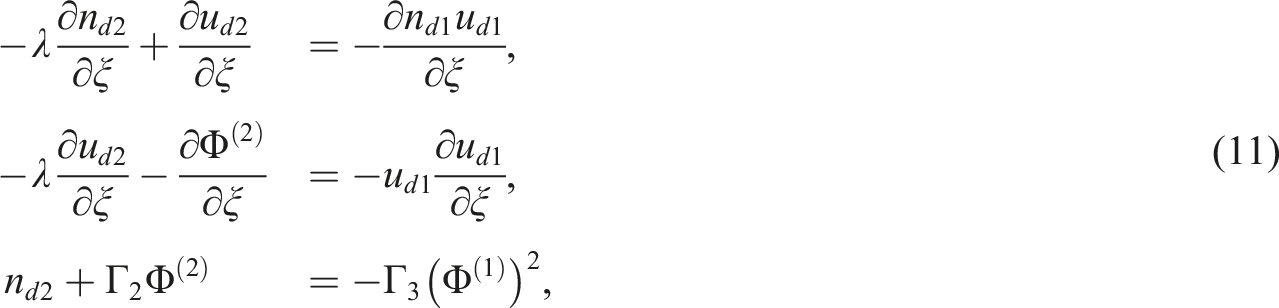

In multicomponent plasmas, this is the critical condition at which the quadratic nonlinearity ceases to exist. Thus, in order to solve the system, we should go to the next-higher order of nonlinearity. Consequently, the next-orders of ϵ give us
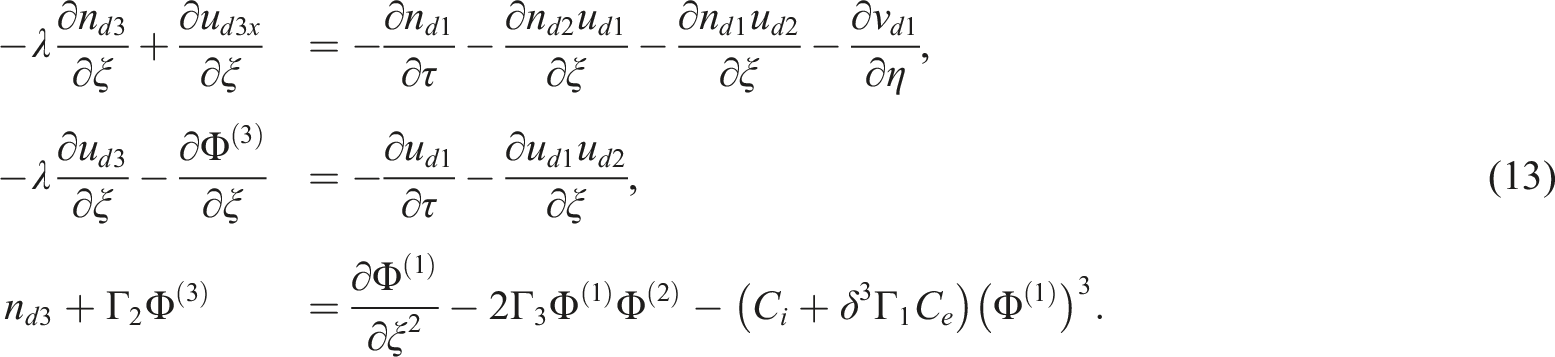
Solving system (13), we finally obtain the required mKP equation


Solution of the mKP equation
Several techniques have been suggested to find some exact solutions to different types of differential and integral equations such as homogeneous balance method,47–49 the tangent hyperbolic method,50–52 sine-cosine method, 53 the trial function method,54,55 fractal solitary theory,56–58 and the nonlinear transformation method59,60 and many other effective analytical and numerical techniques.61–67 All these methods are employed to calculate the solitary/shock solutions. The advantage of using the ansatz method or Jacobi elliptic function expansion method (JEFM) is that one can also obtain periodic solutions of the nonlinear equation besides the solitary and shock wave solutions. Recently, Tian et al. have carried out research to understand the basic characteristics of nonlinear localized structures in laboratory and space plasmas using the fractal space which holds a lot of potential for further investigations.68,69
Analytic solutions to the evolution equation using JFEM
The solution of equation (14) is obtained by going into a co-moving frame


Further simplification of equation (17) yields the following expression

To find a solution to equation (18), we suppose the solution in the following ansatz form
70

The value of j can be obtained with the help of harmonic balance method (the balance between the higher-order dispersion and nonlinearity of Eq. (18), that is, 3n = n + 2 ⇒ n = 1) which yields (see appendix for details)

Inserting solution (20) into equation (18), we finally get
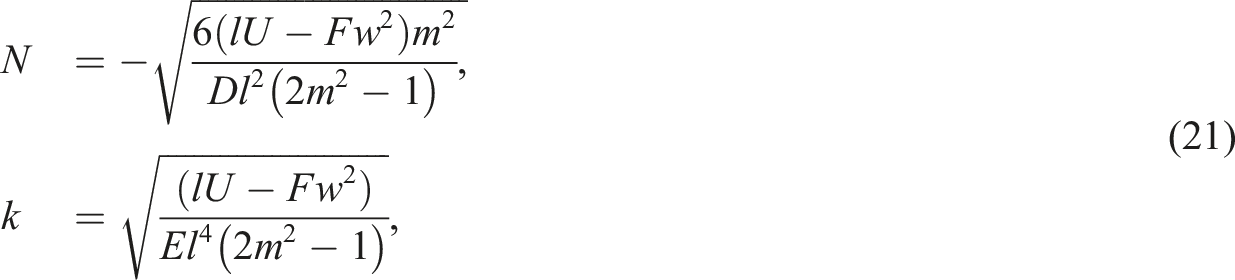

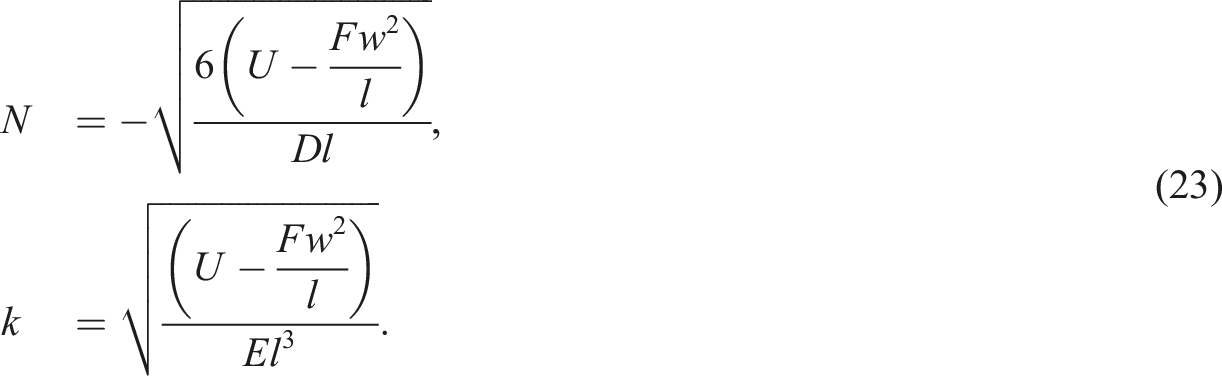
For the amplitude N, it is seen that the nonlinear structures exist only when
Results and discussion
Here, we proceed to study the linear dispersion characteristics of the DAWs and the formation of solitary and periodic wave solutions to the mKP equation (i.e., equation (14)). It is pertinent to mention here that we have written the model equations in the light of recent satellite observations and studies which show that the spectral observations of electrons and ions can be explained in a satisfactory manner by assuming them to be kappa-distributed. Krimgis et al. 34 assumed ions to be kappa-distributed and showed that they fitted the ion spectral observations (taken from Voyager 1 and 2 spacecraft) in the magnetosphere of Saturn extremely well. It was shown that the kappa values for ions are in the range of 6–8 in Saturn’s magnetosphere. The measurements of Saturn’s magnetosphere by the Cassini–Huygen’s mission team 35 reveal that the electrons distribution can be adequately fitted by considering them to be kappa distributed. It is clear that the kappa fits are observed over large swathes of Saturn’s magnetosphere. It is noted that the kappa values vary with increasing R with reference to the R S , where R S is the Saturn’s radius and are found to lie in the range 2–9. Furthermore, for the numerical investigation of mKP equation, we used the data from the Saturn’s magnetosphere which gives us the following values: nd0 ∼ 0.1–1 cm−3 and ne0 ∼ (1 − 4) × 102 cm−3 and of magnetic field is B0 = 0.04 G. Note that we considered the DAWs which primarily travel along the magnetic field lines and, therefore, ignore the effect of Lorentz force here. The value of ion to electron temperature ratio δ has been taken in the range 0.1–0.01 with Z d = 100.17,41,71,72 In a nutshell, the numerical investigation has been done in strict accordance with the satellite observations.
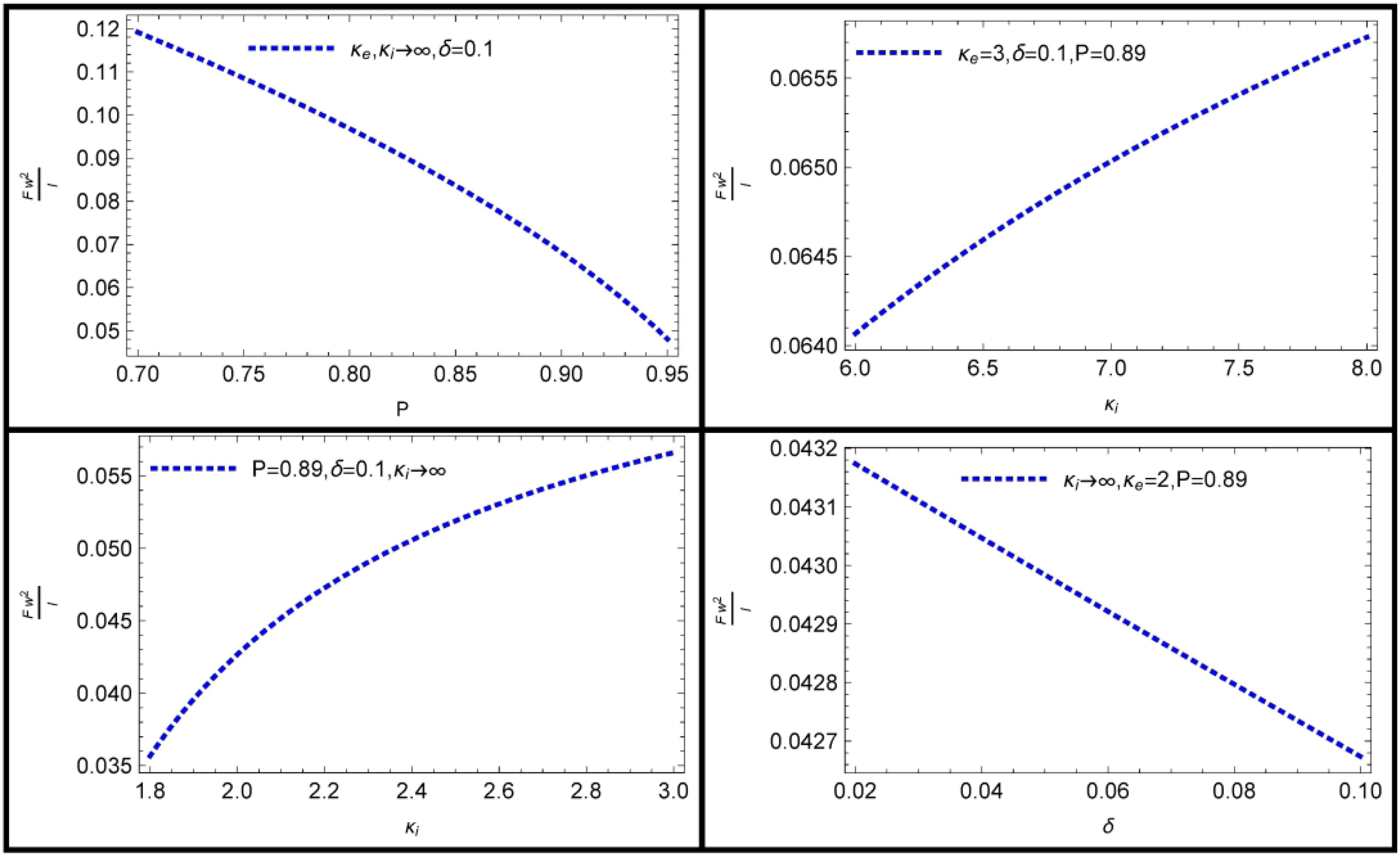
Figure 1 depicts the variation of the phase velocity λ of the DAWs against the electron concentration P and the different cases of the electron and ion distributions and the temperature ratio δ. It is shown from Figure 1a that an increase in P mitigates the phase velocity in the entire range of P. This happens because an increase in the electron concentration leads to a decrease of the dust concentration, thereby causing the observed decrement in the phase velocity of the DAWs. Moreover, it is found that the phase velocity of the DAWs becomes maximum for the Maxwellian electrons and ions, whereas it is least for kappa-distributed electrons and ions. It means that the phase velocity of the DAWs in Saturn’s magnetosphere is lower in regions of space plasmas where the ions and electrons are Maxwellian distributed. Also, it is found that the phase velocity of the DAWs for non-Maxwellian electrons and Maxwellian ions is greater than the converse combination. Figure 1b demonstrates the variation of phase velocity of the DAWs against the electron concentration P and the temperature ratio δ. One can see that the increase of δ leads to a decrease in the phase velocity. The variation of the phase velocity of the DAWs against electron concentration P and (a) the spectral indices 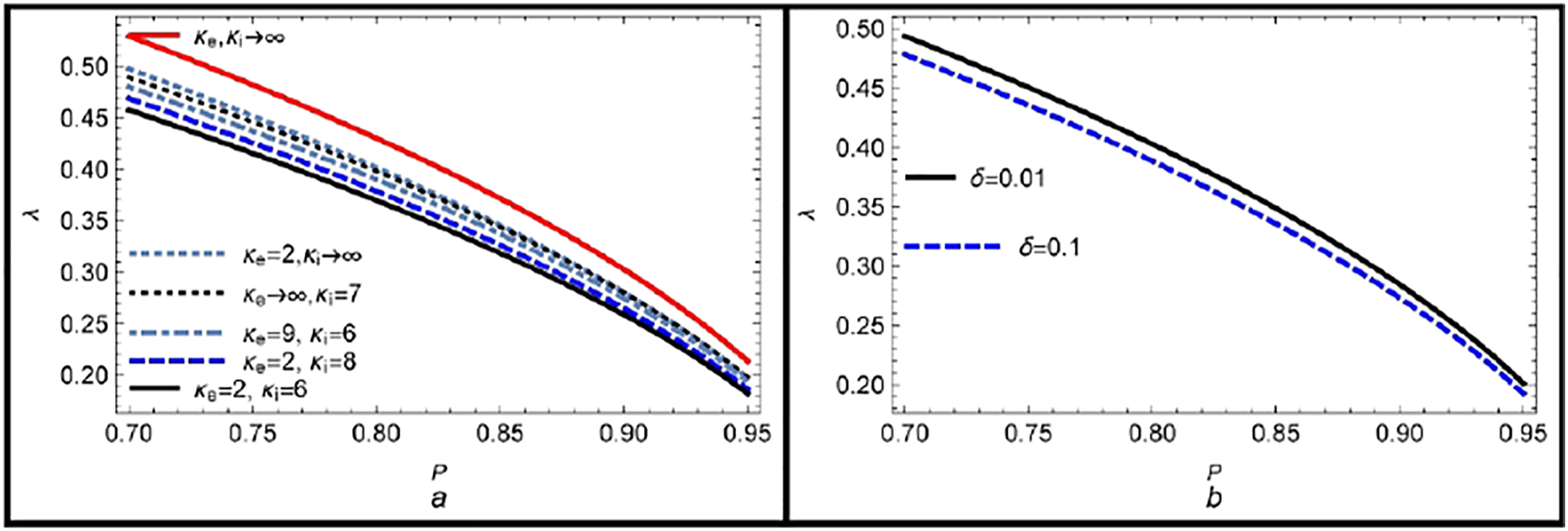
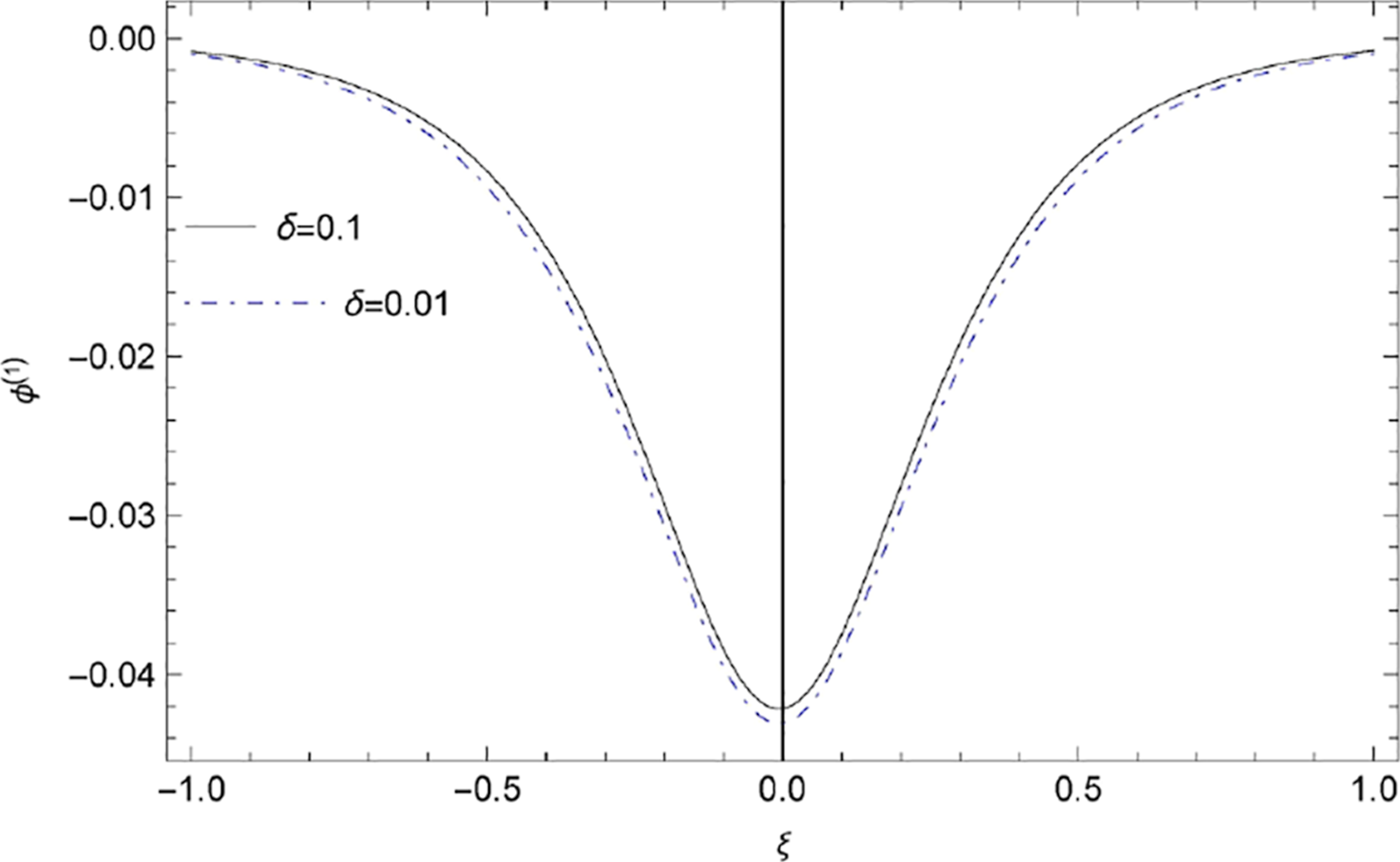
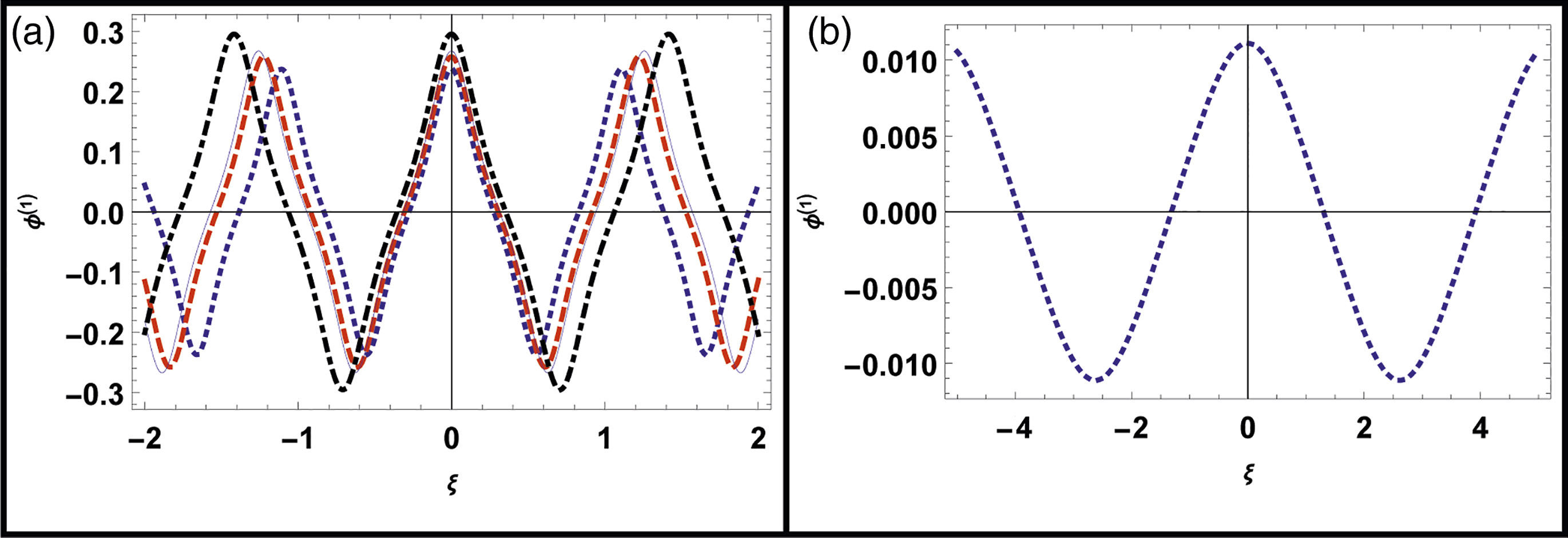
In Results and discussion, we have shown that the mKP equation admits two-types of nonlinear structures, namely, solitary and periodic waves, for different conditions of the modulus of elliptic functions m. Here, we investigate the effects of plasma parameters on the propagation characteristics of solitary and periodic structures. Figure 2 shows the effect of spectral indices The effect of (a) electron spectral index κ
e
and (b) ion spectral index κ
i
on DA solitary structures for δ = 0.1, τ = 0.01, μ
d
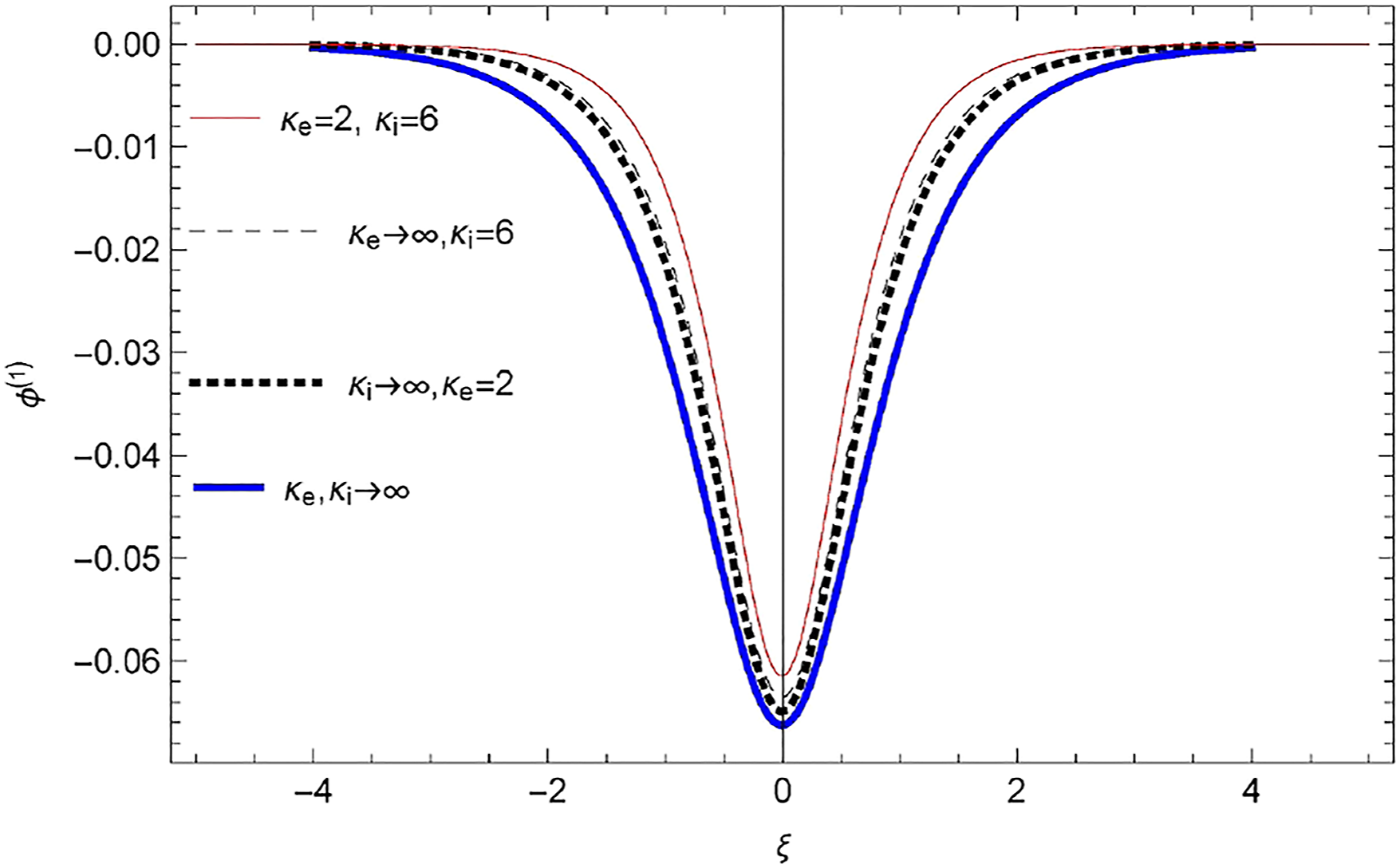
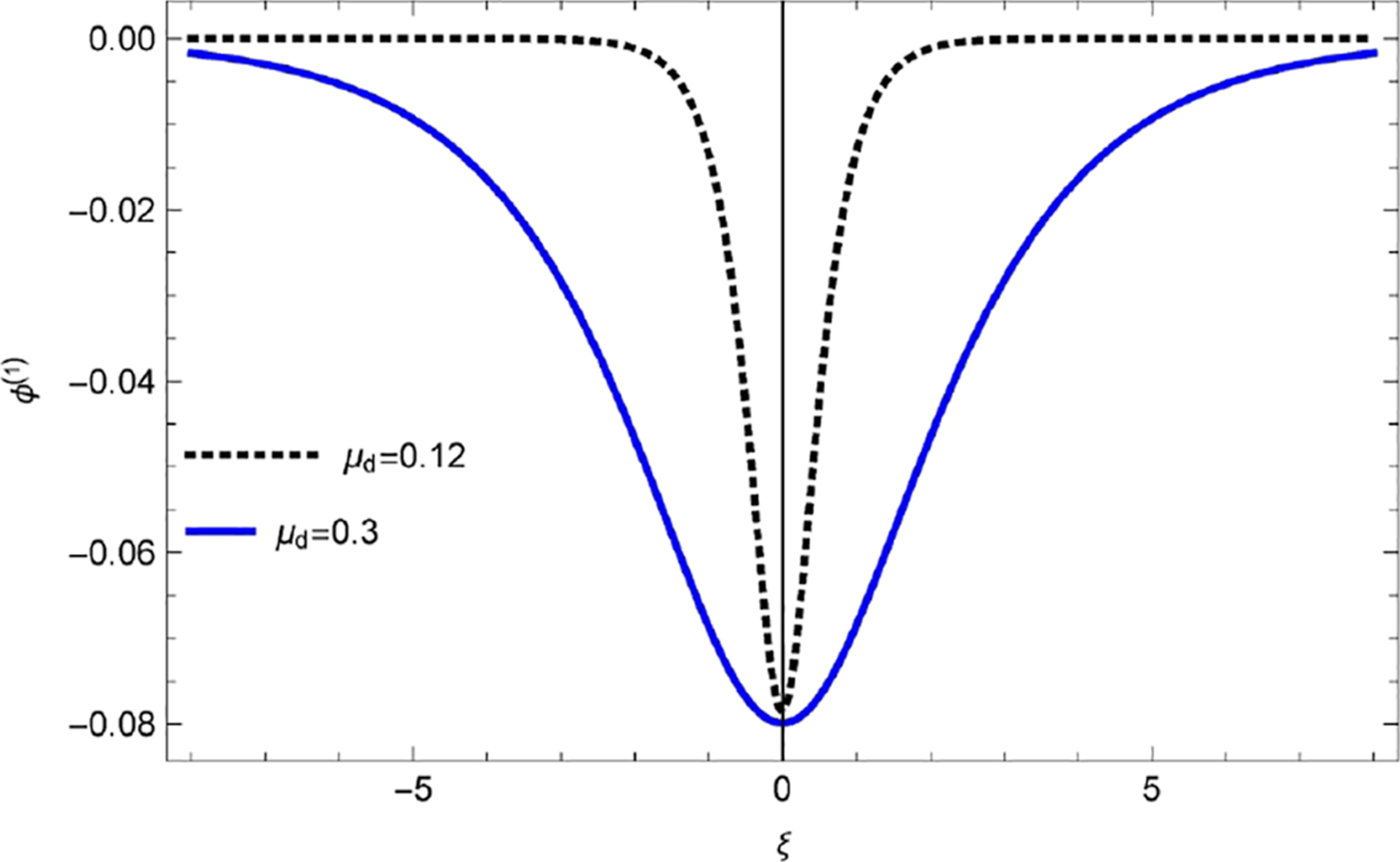
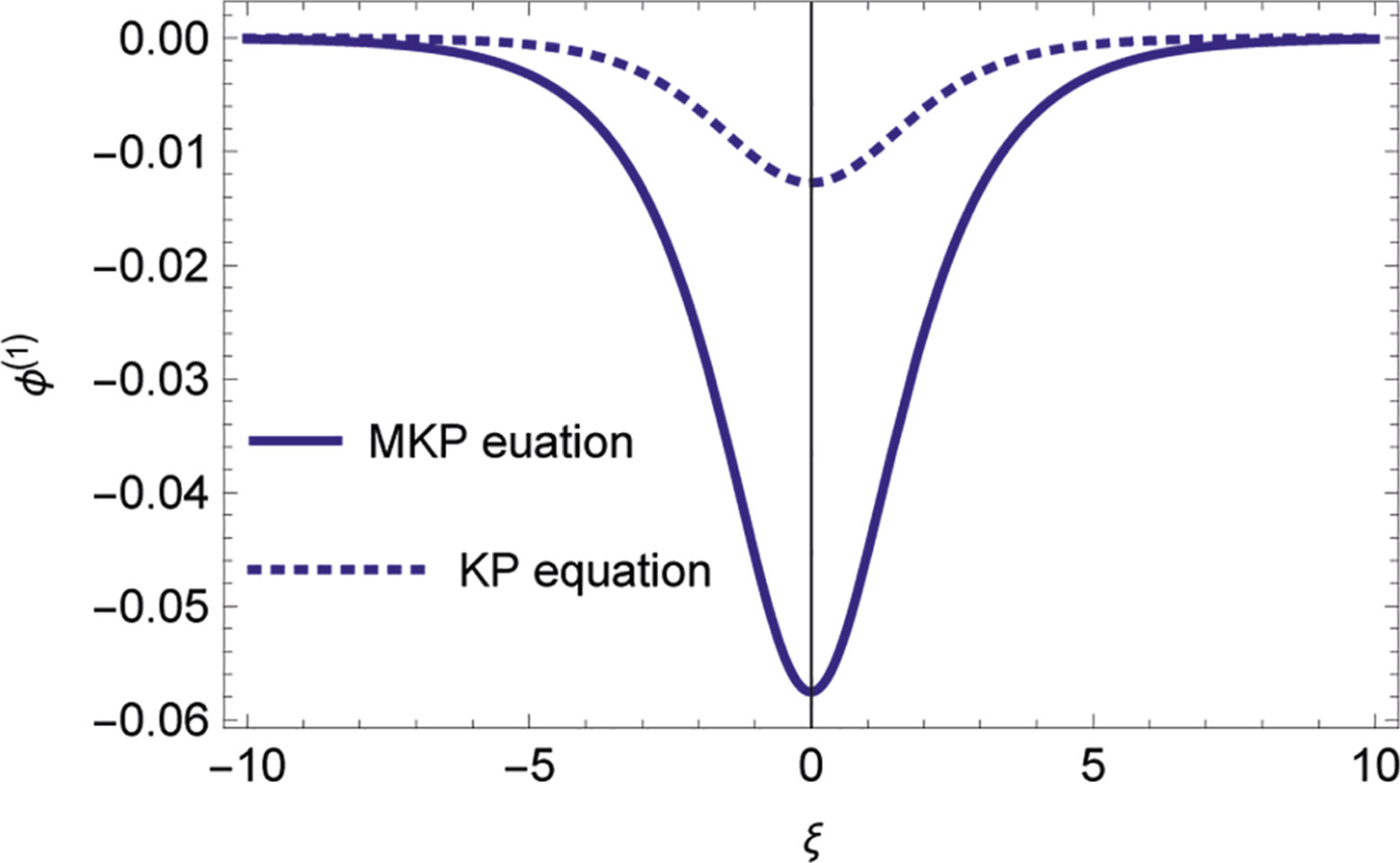
= 0.12 and U = 0.1. A comparison between the electron and ion different distributions and their impact on the structure of DASWs for The profile of the DASWs is plotted against the dust number density for The profile of DASWs is plotted against the temperature ratio δ for Exploring how (a) A comparison between the electron and ion different distributions and their impact on the DAPWs for specific range of m and U with μ
d
= 0.12 and δ = 0.1. (b) The effect of the m and U ranges on the DA periodic structures of dust in comparison to 7a. Comparison of the spatial scale of both KP and mKP equations.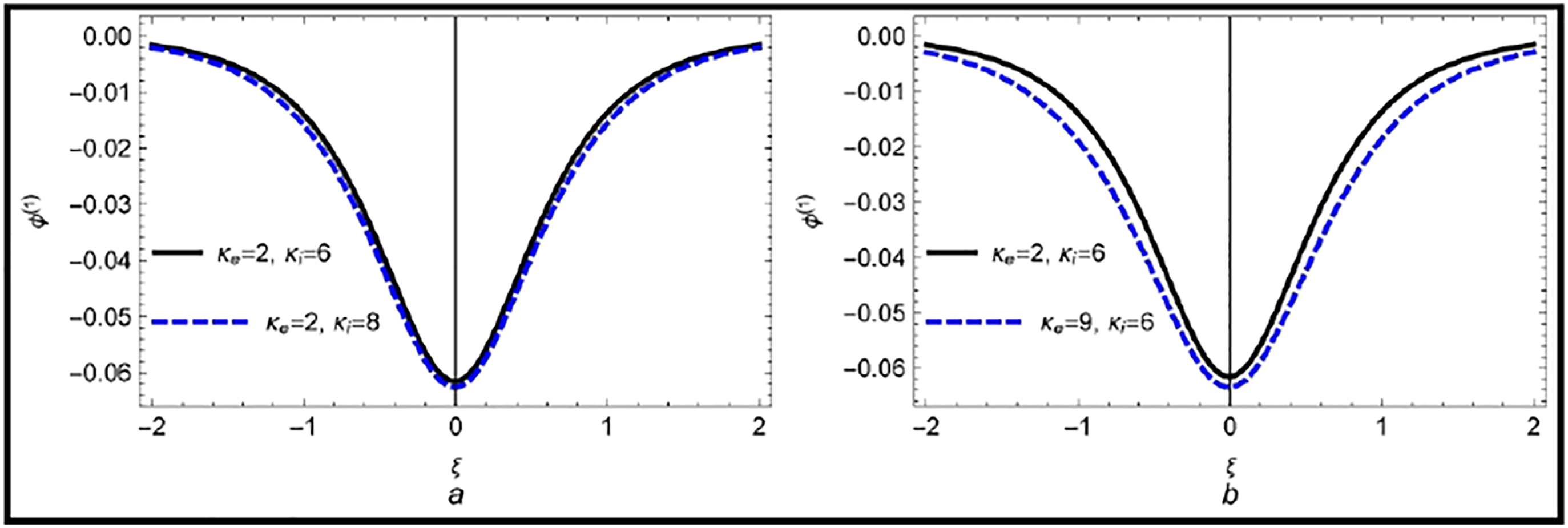
Conclusion
In this paper, the dust-acoustic periodic (cnoidal) and localized (solitary) waves in an unmagnetized complex plasma having cold inertial dust grains and inertialess kappa-distributed ions and electrons in the light of Voyager 1 and 2 spacecraft and Freja satellite observations of Saturn’s magnetosphere have been investigated. In the small amplitude limit, the mKP equation, which represents the two-dimensional propagation of nonlinear structure has been derived. The corresponding periodic and localized wave solutions of the mKP equation have been obtained via the Jacobi elliptic function expansion technique. In the linear regime, the phase velocity has been found to be maximum for the Maxwellian case and minimum for kappa-distributed ions and electrons. It has also been observed that an increase in the temperature ratioδ, mitigates the phase velocity of the dust acoustic waves (DAWs). Moreover, it has been noted that the increasing δ (i.e., the ion to electron temperature ratio) leads to the mitigation of the phase velocity of the DAWs. Using the plasma parameters of Saturn’s magnetosphere, the nonlinear periodic and localized (solitary) structures for the DAWs have been found to form on a longer spatial scale for Maxwellian ions and electrons as opposed to their kappa distributed counterparts. Furthermore, it has been noticed that both amplitude and width of the DASWs increase with the enhancement of the dust concentration. It has been observed that increasing the temperature ratio leads to the reduction of the amplitude of the DASWs. It has been seen that the velocity of nonlinear structures gets modified both in the case of the solitary and periodic structures. The existence conditions of localized and periodic structures have also been discussed at length. Importantly, it has been found that the mKP (driven by cubic nonlinearity) solitary structures form over a longer spatial scale (∼77 km) as compared to their KP (driven by quadratic nonlinearity) counterparts, which form over a spatial scale of
Future work: The unmodulated multi-soliton solutions to one-dimensional modified KdV (mKdV) equation is considered a hot topic which can be studied in future. Also, the nonplanar rogue wave approximate solutions to the nonplanar nonlinear Schrödinger equation are very important research topics that occupy the minds of many researchers, trying to deeply understand the mechanisms of propagation and generation of these waves in different physical systems.
Footnotes
Acknowledgements
The authors express their gratitude to Princess Nourah bint Abdulrahman University Researchers Supporting Project (Grant No. PNURSP2022R17), Princess Nourah bint Abdulrahman University, Riyadh, Saudi Arabia.
Author contributions
All authors contributed equally and approved the final manuscript.
Declaration of conflicting interests
The author(s) declared no potential conflicts of interest with respect to the research, authorship, and/or publication of this article.
Funding
The author(s) received no financial support for the research, authorship, and/or publication of this article.
Data availability
All data generated or analyzed during this study are included in this published article.

Appendix
The solution of equation (14) is obtained by going into a co-moving frame