




Abstract
Since the development of advanced sound absorption material is highly critical in noise control applications, anechoic coatings, and acoustic metamaterials, both fabrication technology and structure design are significant in the achievement of broadband and strong absorption performance in the low sound frequency range. In this work, the silicone rubber resonance absorption sheet with periodic cavities is prepared via inserting cylindrical steel strips with different diameters into the non-vulcanized colloid. Effects of size and arrangement of cavities on the sound absorption properties, as well as the corresponding mechanical properties, are investigated and discussed. Results indicate that periodic pattern designs could further improve the low-frequency sound absorption performance of silicone rubber foams, and increasing the cavity diameter could significantly improve the sound absorption efficiency of the prepared samples in the middle- and low-frequency range from 125 to 2000 Hz. Particularly, increasing the number of the layered cavities could also improve the sound absorption efficiency. The consumption of sound energy in the prepared silicone rubber resonance sheet is discussed, which could be attributed to the synergistic effect in different spatial scales.
Keywords
Introduction
With the rapid development of social production and construction, noise pollution has become a major problem that people need to solve in modern society.1,2 At present, the sound-absorbing substrates used in noisy environments are mostly hard plates, including sound-insulating wood panels, 3 sound-absorbing glass panels, 4 and sound-absorbing metal panels. 5 Such sound-absorbing materials can be adapted to appropriate sound-absorbing panels according to the noise frequency, which could meet the noise reduction requirements of different environments.6,7 However, the installation and winding process of hard plates are more complicated and take up a lot of space. Therefore, it is extremely necessary to prepare a sound-absorbing material that has a wide range of sound absorption and is easy to implement. Previous researches have shown that it was difficult to achieve broadband sound absorption merely with internal material properties. 6 And therefore, structural designs based on the mechanism of local resonance have been incorporated into fabrication of impedance transition structure, cavity resonance structure, particle filling structure, and phononic crystal structure. 2 The cavity shape has an important influence on the sound absorption performance of the whole material,8–10 and the frequency at which the sound absorption coefficient has the maximum value is the resonant frequency of the cavity. In recent years, rubber-like media with cavities have become a favorable candidate for noise control applications, anechoic coatings, and acoustic metamaterials.11–13 Different cavity shapes such as spheroid, trapezoid, ellipsoid, cylinder, and disk have been studied to investigate the acoustic performance and develop an effective coating for noise control applications. In these cavity materials, the sound absorption mechanism is mainly based on the intramolecular friction caused by sound waves inside the material. Besides, energy dissipation of sound waves at different media interfaces also contributes greatly to sound absorption. Therefore, introducing the periodic cavities into the sound-absorbing substances could be an efficient way to improve the broadband absorption performance. 14 However, there is challenge of efficient sound absorbing in relatively low-frequency range.
Compared with traditional indoor sound absorption and noise reduction materials, such as polyurethane foam and polyvinyl chloride foam, addition liquid silicone rubber 15 develops faster than free radical cross-linked liquid silicone rubber and polycondensation liquid silicone rubber, and has the advantages of simple preparation process, easy implementation, and no by-products of vulcanization.13,16 Additionally, liquid silicone rubber has better fluidity than mixed silicone rubber, and can be injection molded and compression molded, and the vulcanization rate is controllable. It has the advantages of simple preparation process, high production efficiency, low cost, and good implementation effect. In order to broaden its use space, functional additives are usually mixed into the colloid before vulcanization, such as reinforcing agents, foaming agents, flame retardants, antioxidants, conductive fillers, high thermal conductivity fillers, and other additives. 17 Liquid silicone rubber filled with functional fillers has the characteristics of high mechanical strength, large elastic modulus, and good heat resistance and weather resistance. It is widely used in sealing parts of precision equipment. Furthermore, liquid silicone rubber products are safe, non-toxic and have the advantages of stable performance and excellent biocompatibility. The porous liquid silicone rubber material prepared by introducing a foaming agent into the liquid silicone rubber has the advantages of softness, light weight, high resilience rate, controllable cell size and density, easy implementation, corrosion resistance, weather resistance, etc., which is suitable for sound absorption and noise reduction in most indoor and outdoor environments.13,15,16,18–21 Additionally, introducing chemical foaming agents into the liquid silicone rubber, such as foaming agents or pore formers, foamed material with countless cells could be prepared after different processes. Different types of cell structures (closed, open, and mixed cell structures) could be achieved by adjusting the hydrogen-containing silicone oil, and the cell size can also be tailored. 15 Therefore, silicone rubber is suitable for preparing sound absorption foams with easy implementing process.
Therefore, the silicone rubber foam with periodic straight-through cavities are designed and prepared in this study, and the effect of cavity size on the frequency dependent sound absorption performances is characterized and discussed. Additionally, mechanical properties of the porous silicone rubber sheets with cavities are also investigated. The results show that high sound absorption can be obtained in a broadband frequency range, and the low-frequency sound absorption could be significantly improved with the designed straight-through cavities. The improved broadband sound absorption efficiency is believed to be attributed to the multi-scaled interface structures in the porous silicone rubber resonance sheet.
Experiments procedure
Preparation: Vinyl terminated silicone resin, white carbon black, and hydrosilicone oil in the weight proportion of 100:30:3 were first mixed in a precision mill, and the inhibitor (2-methyl-3-butyn-2-ol) was then added to prevent partial vulcanization by inhibiting the crosslinking process. After the blending system was evenly dispersed, platinum catalyst was added into the mixture and to continue mixing for 10 min to make the platinum catalyst uniformly dispersed. The blend was then put into the preheated double-layer metal mold of 150 mm × 150 mm × 1 mm, and wires of specific diameters were penetrated into the designed positions. The mold was then placed to the vacuum drying oven for constant pressure vulcanization (24 N, 150°C, 20 min). After the colloid was vulcanized, all wires were dissociated and the porous silicone rubber sheets with straight-through cavities were finally achieved.
Characterization: The morphology of the sample was photographed by the Sony DSC-HX400 camera, and internal microstructure of the samples was characterized via the scanning electron microscopy (SEM, JSM-6460LV, Japan Electronics Co. Ltd). The falling rebound rate was tested according to GB/T 6670-2008. The hardness was tested according to GB/T 531-1999 with Shore O type hardness tester (SLX, Jiangdu Mingzhu Instrument Factory). The tensile strength and the elongation at break were tested according to GB/T 528-82, with the drawing speed of 80 mm/min. The sound absorption properties of samples were measured using a two-fixed microphone impedance tube (AWA1622, Hangzhou Aihua Instrument Co. LTD.) according to GB/T 18696.1-2004 with an accuracy of ±0.1. The two standard sub wavebands equipped in the measuring system have the sizes of Φ96 mm × 1000 mm (90–1800 Hz) and a Φ30 mm × 350 mm (800–6500 Hz), respectively. Samples for measuring the sound absorption coefficients in the working frequency of 100–6500 Hz were cut into two batches with Φ96 mm × 10 mm and Φ30 mm × 10 mm. Besides measuring the absorption coefficients at 125 Hz, 250 Hz, 500 Hz, 1000 Hz, 2000 Hz, and 4000 Hz according to GB/T 18696.1-2004, additional measurements are carried out at 375 Hz, 750 Hz, 1500 Hz, 3000 Hz, and 5000 Hz, with the aim to further investigate the frequency dependent sound absorption performances for all samples. The measurement for each sample was repeated 5 times to calculate the average of each data.
The noise damping performance of a tested sample/material is characterized by using sound absorption coefficient Δ
a
(ω), which is defined as
22

Results and discussion
Figure 1 gives the prepared silicone rubber sheets with cylinder cavities of different diameters and SEM pictures of foamed silicone rubber matrix. Since the thickness of the upper and lower molds is controlled to be 1 mm for all preparations, the thickness of the sample increases linearly with the increase of the cavity diameter, indicating that the self-foaming system of liquid silicone rubber is relatively stable. However, with the increase of the thickness of samples, the cavity structure deviates from the center position of the colloid. Therefore, in order to avoid the experimental error caused by the thickness changes, the samples would be cut into the same thickness with a blade leather machine before testing. As shown in Figure 1(b), the prepared foams have many cells with larger size and uneven distribution, and the average cell size reached 0.418 mm, which means that the foaming reaction did not occur at a uniform rate at this time, but the phenomenon of catalyst aggregation failure occurred. The foam surface has large and many pores with wrinkled surfaces (as shown in Figure 1(d)), which is caused by the volatilization of ethanol to produce gas. When sound waves pass through these samples, reflection, transition, and absorption would be occurred at all these interfaces and the propagation process of sound waves would be changed accordingly. Moreover, when sound waves propagate in the material, due to the difference in speed between the sound waves near the hole wall and the sound wave in the middle of the hole walls, the internal friction would be generated by the speed difference between the media. All these interaction processes can convert sound energy into heat and energy dissipation, leading to the sound-absorbing effect. Prepared silicone rubber samples with cylinder cavities of different diameters (a), and microstructure of the silicone rubber foam (b–d).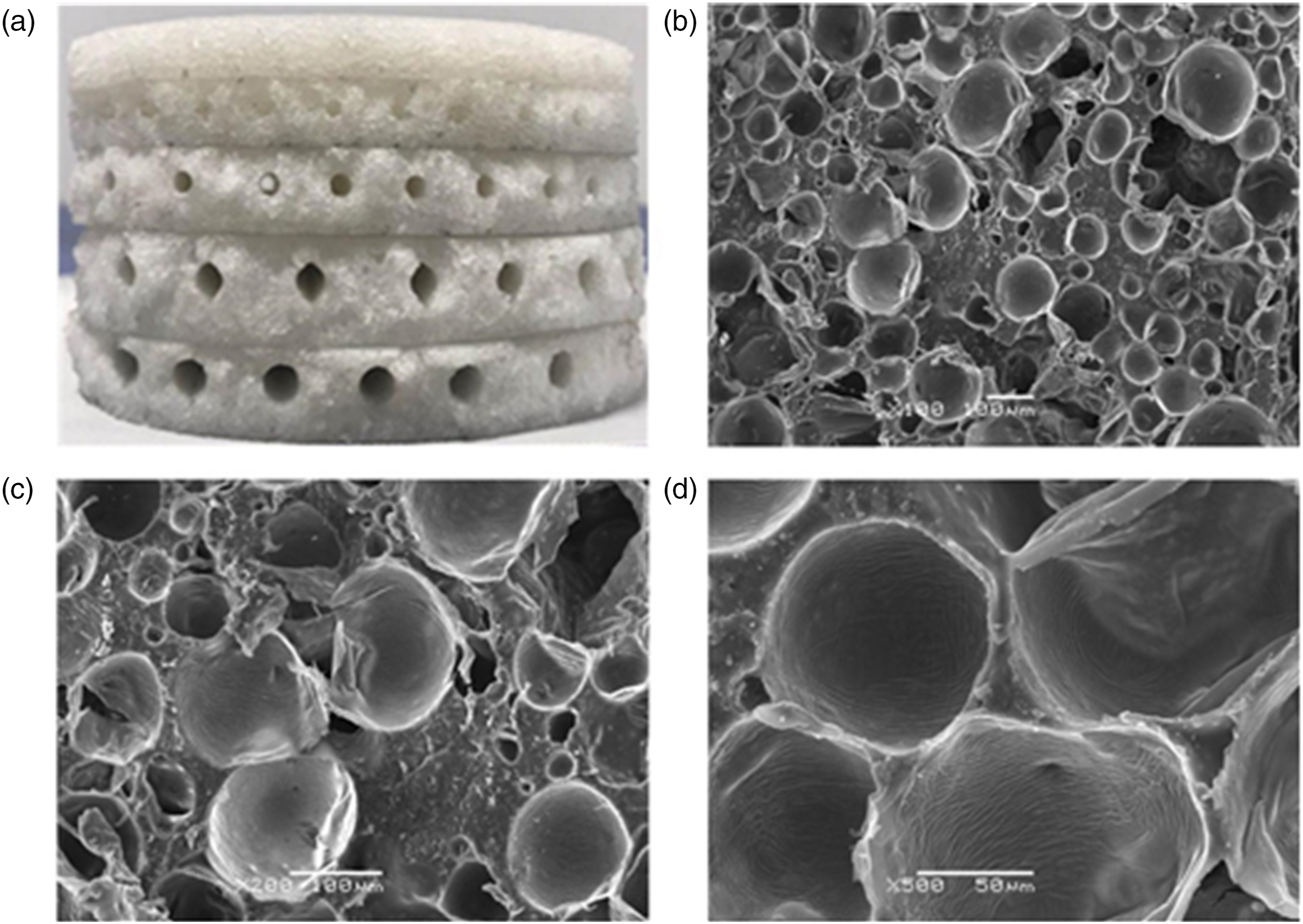
It is prone to be believed that mechanical properties of the silicone rubber sheets would be reduced, since the straight-through cavities could be identified as structural defects for silicone rubber foams. Thus, the mechanical property related parameters at the cavity position, including the hardness, fall rebound rate, tensile strength, and elongation at break, were measured and plotted in Figure 2. The hardness of porous silicone rubber sheet decreases with the increase of the cavity diameter, which is due to the decreased pressure-bearing capacity with large cavities. The restoring force decreases after the cavity surface is deformed by the pressure of the test probe, leading to the decreased hardness of the sample with increased cavity diameter. The fall rebound rate of silicone rubber sheets slightly increases first and then sharply decreases with the increasing diameter of straight-through cavities, and a maximum falling rebound rate (72.1%) is achieved with periodic cavities of 3 mm. The force of recovering deformation after being impacted by a falling ball is composed of elastic silicone rubber matrix and cavity recovery force. Large cavities would increase the thin-walled area between the silicone rubber surface and the cavities, leading to decreased surface deformation stress; thus, the cavity restoring force would be reduced. The tensile strength and elongation at break of silicone rubber sheets are both proportional to the cavities size. This is because the existence of straight-through holes is a structural defect for silicone rubber foams, leading to a stress concentration in the silicone rubber samples. As the diameter of the through cavities increases, this stress concentration is more obvious, which reduces the tensile strength and elongation at break of the samples. Mechanical properties of the porous silicone rubber sheets with different straight-through cavities. (a) Shall O hardness; (b) Fall rebound rate; (c) Tensile strength; (d) Elongation at break.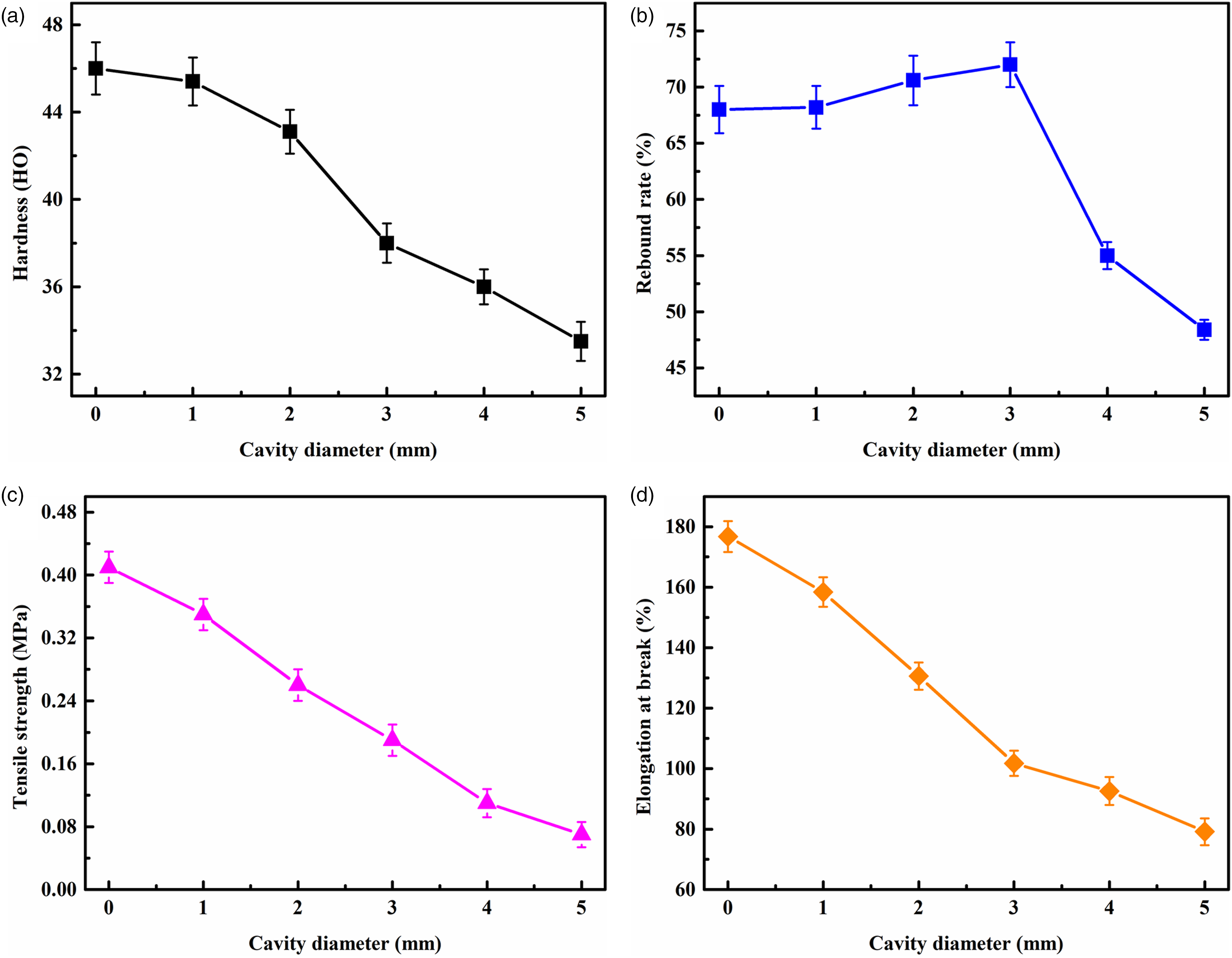
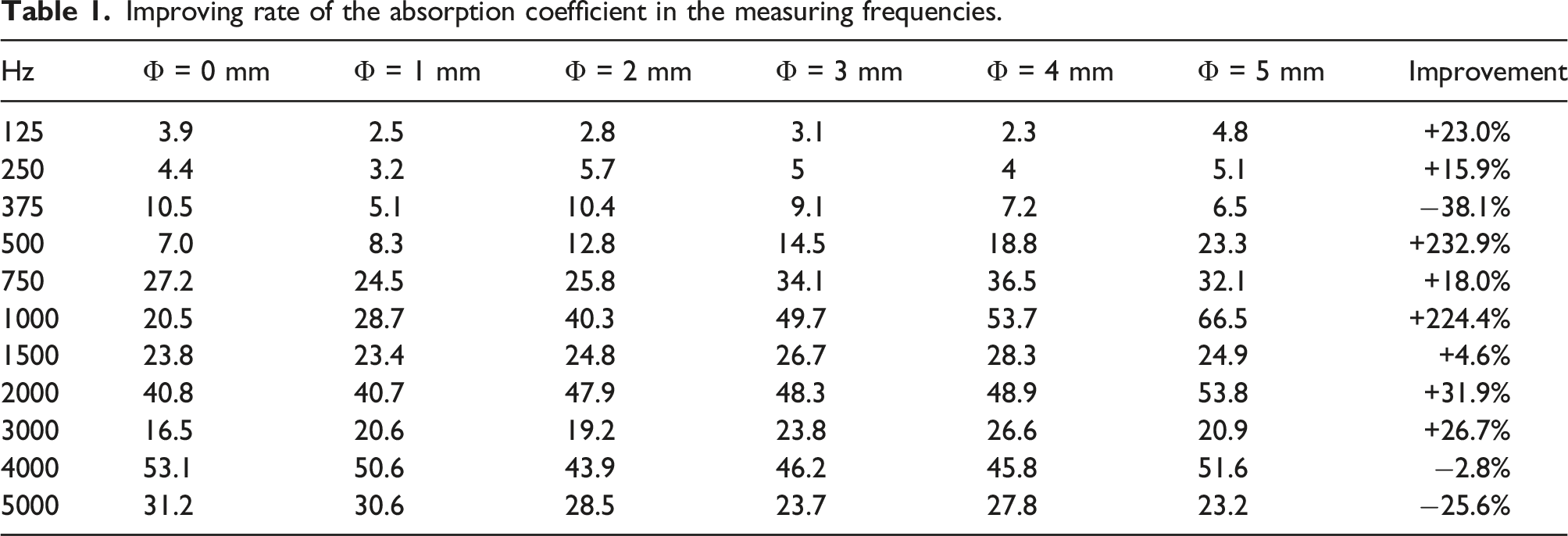
Figure 3 demonstrates the frequency dependent absorption coefficients of prepared silicone rubber sheets with cavities of different diameters. The distance between cavities is 1 mm, and the diameter of cavities varies from 1 mm to 5 mm, leading to different hollow fraction of the silicone rubber sheets. Introducing periodic cavities into the silicone rubber results in different effects on the sound absorption performance. The average sound absorption coefficient plotted in Figure 3(b) indicates the increasing improvement of average sound absorption with large cavities, and samples with 5 mm cavities can increase the sound absorption efficiency by approximately 70% comparing with the silicone rubber foam without periodic cavities. Sound absorption performance of the samples of the prepared silicone rubber samples with periodic cavities. (a) Sound absorption coefficient α as a function of frequency 125–5000 Hz and cavity diameter 0–5 mm; (b) Average sound absorption coefficient 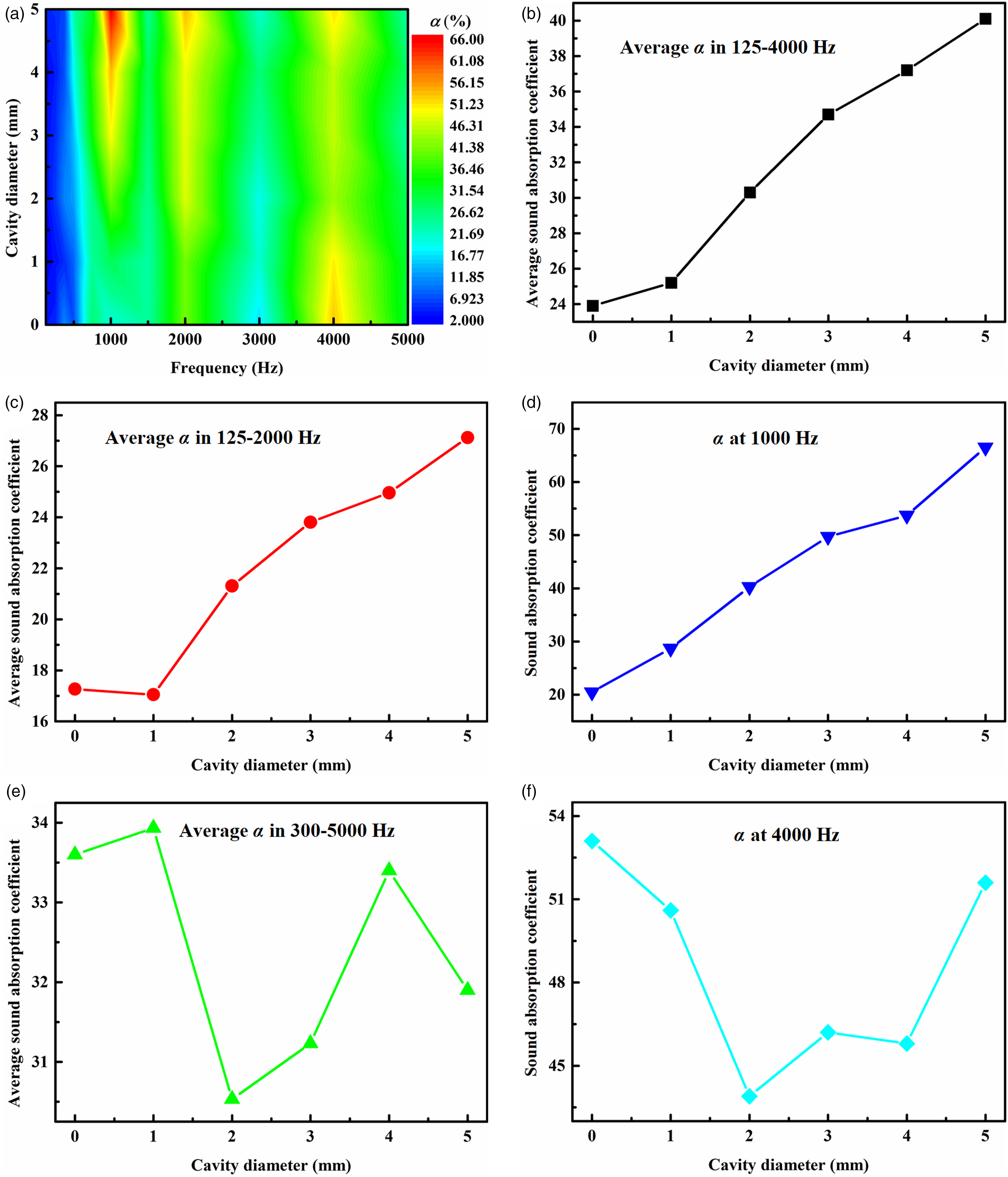
Improving rate of the absorption coefficient in the measuring frequencies.
From the above discussion, it could be concluded that cylindrical cavities could improve the average sound absorption coefficient of silicone rubber foams, and increasing the diameter could result in the enhanced sound absorption for low-frequency sound wave. Similarly, increasing the number of cavities should increase the thin wall surfaces in the sheets, which would also improve the acoustic impedance matching to increase the sound absorption efficiency. Thus, silicone rubber sheets with different layered cylindrical cavities of 3 mm were prepared, and their sound absorption coefficient at different frequencies is measured and plotted in Figure 4. Distinctly, in the low-frequency range of 125–2000 Hz, the sound absorption coefficient of the silicone rubber sheet would be increased with more layered cylindrical cavities. At 4000 Hz, the sound absorption coefficient of sheet would be slightly decreased with layered cavities. The reason for this frequency dependent change in the sound absorption performance could be attributed to the damping effect during the acoustic energy transmission in different cavity structures. The layered cavity structure has more thin-walled structures than the single-layer structure, and a large number of thin-walled structures are more likely to vibrate under the action of low-frequency sound wave with relatively lower energies, thereby consuming the sound energy. In addition, the increase of the thin-walled structures makes it easier for sound waves to penetrate into the material due to the improved acoustic impedance matching, thereby stimulating the air vibration in the cavity. For high-frequency sound wave, the cavity structure is not enough to absorb the sound energy and will transmit more sound waves. The silicone rubber sheets with double-, three-, and four-layer cavities reach the maximum sound absorption coefficient at 1000 Hz, that are 63.5%, 72.7%, and 73.5%, respectively, indicating that the increase in the cavity number will make the sound absorption frequency of silicone rubber to move toward the low frequency, and the acoustic flow resistance of silicone rubber decreases with the increase of cavity aperture, which significantly improves the sound absorption performance of silicone rubber foam in the low-frequency range. Therefore, for the resonance absorption foams with cavities, the distribution mode of cavities could also affect the sound absorption performances. Frequency dependent sound absorption coefficient of cavity structured sound-absorbing silicone rubber with different numbers of through holes.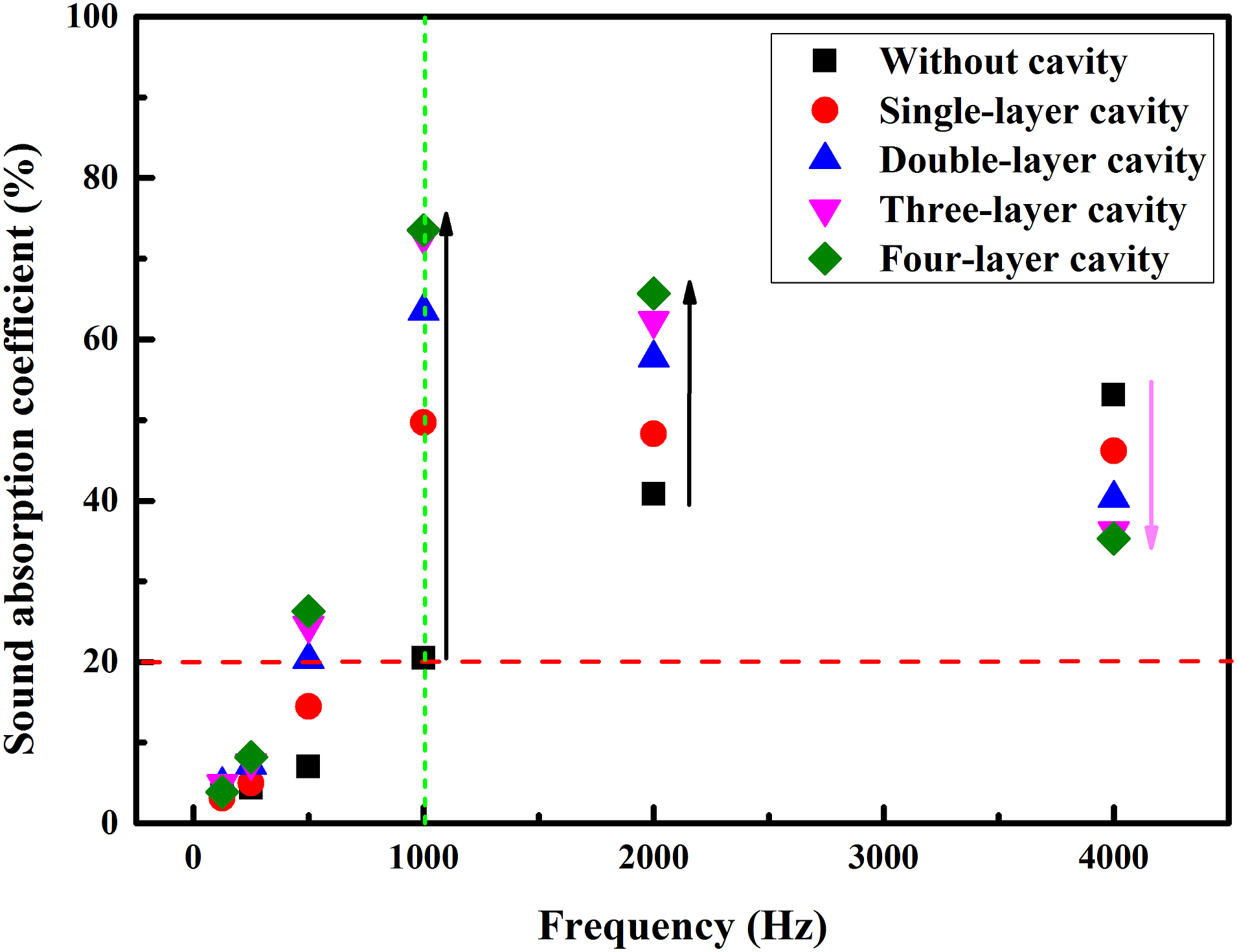
The sound absorption of silicone rubber foams is mainly based on their intrinsic properties and geometrical spreading, and the absorption mechanisms are discussed as following. As shown in Figure 5(a), three kinds of transformations happen at the interface for the sound energy when sound waves strike on the porous materials: reflection, absorption, and transmission, and the consumption of sound energy in porous materials follow multiple principles, which could be related to synergistic effect in different spatial scales.2,24,25 Firstly, the surface acoustic impedance would be reduced with induced cavities as shown in Figure 5(a), and the sound absorption coefficient would be increased according to the formula Multi-scale sound absorption mechanism of the porous silicone rubber sheet.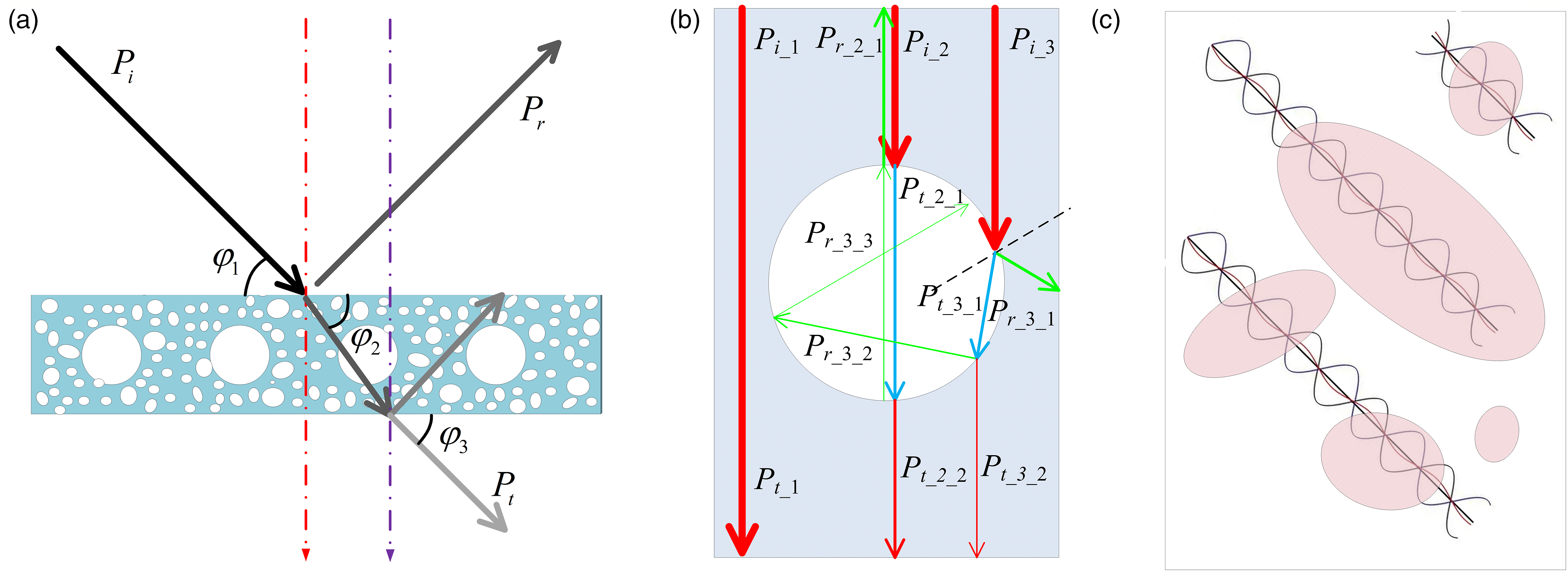
Conclusions
In this study, the silicone rubber foam resonance sheet with periodic straight-through cavities is prepared, and the effect of diameters of periodic cavities on the frequency-dependent sound absorption performances as well as the mechanical properties is investigated. Increasing the cavity diameter can significantly improve the sound absorption performance of silicone rubber foam in the mid-low frequency 500–2000 Hz. The average sound coefficient in 500–2000 Hz increases with the increase of the cavity diameter, and the maximum average sound absorption coefficient, 40.1%, is achieved in the sample with the single-layer cavities of Φ = 5 mm, which is 67.8% higher than the silicone rubber foam without periodic cavities. The silicone rubber sheet with layered cavities has a better sound absorption effect in the medium and low frequency of 500–2000 Hz, and the sound absorption coefficient moves to the low-frequency direction compared with the single-layer sheet. Additionally, the hardness, tensile strength, and elongation at break of the samples all decreases as the cavity diameter increases. Therefore, with designed periodic cavities, the low-frequency sound-absorption efficiency would be significantly improved, which could be applied for low-frequency noise transmission control.
Footnotes
Declaration of conflicting interests
The author(s) declared no potential conflicts of interest with respect to the research, authorship, and/or publication of this article.
Funding
The author(s) disclosed receipt of the following financial support for the research, authorship, and/or publication of this article: This work was supported by the National Key Research and Development Project of China (2020YFC1910205), and the Outstanding Youth Science Fund of Xi’an University of Science and Technology (2019YQ2-07).
