




Abstract
A nonlinear vibration system behaviors always periodically; however, sometimes a vibrating structure, e.g. an empty oil tank, will be collapsed suddenly. This can be explained as a kind of rogue waves. This paper gives a general approach to search for rational breather waves to nonlinear equations including nonlinear vibration systems and dispersive wave systems. A breather type of rogue wave solution which contains two peaks whose amplitudes are two to three times higher than its surrounding waves and generally forms in a short time is constructed. Moreover, by using three-wave method, new breather-type multisolitary coherent structures are presented, the fusion interactions of localized structures are discussed and graphically investigated, showing some novel features and interesting behaviors.
Introduction
Nonlinear vibration systems generally are characterized by instable response, chaos, bifurcation phenomena, and other relatively complex behaviors of vibration, and it occurs everywhere, almost all research focuses on the periodic property; however, there are some interesting phenomena which cannot be explained by periodic solutions. For example, a thin nanofiber membrane1–5 under some perturbation will change its shape to a strange form, Yu et al. 1 explained that the surface motion will be blocked. An empty oil tank vibrates in a small amplitude, but suddenly it will be collapsed, crimped fibers are obtained by vibration of axially moving jets. 6 All these phenomena can be explained by the rogue wave.7,8 Dan et al. 9 applied Hall–Petch effect or the geometrical potential theory10–12 to stabilize bubble walls so that bubbles can be enlarged during the spinning process. To investigate wave propagation processes for nonlinear problems, some effective methods have been proposed.13–20
Recently, Zh et al.
21
introduced a homoclinic breather limit method (HBLM) to seek wave solutions to nonlinear evolution equations

By using Painlevé analysis, and a transformation


Then, by using extended homoclinic test approach, one can get homoclinic (heteroclinic) breather wave solution to the above equation. A rational homoclinic (heteroclinic) wave can be obtained by letting the period of periodic wave go to infinite in the homoclinic (heteroclinic) breather wave solution.
In this letter, we pay our attention to construct new localized structures for the (2 + 1)D modified dispersive water-wave system given as


These equations modeled nonlinear and dispersive long gravity waves traveling in two horizontal directions on shallow waters of uniform depth derived by Boiti et al. 22 The system describes a lot of vibration processes in mathematical physics, e.g. the motion of the linearized vibrating string or membrane, and the vibration of a moving belt has similar equations like those given in equations (1) and (2). 23 Some proper results including periodic folded wave, nonpropagating and propagating solutions, abundant propagating localized excitations, and so on were obtained24–29 by a variety of approaches, and the system can also be effectively solved by the exp-function method, and the homotopy perturbation method and the variational iteration method.30–32
Present work deals with new localized coherent structures of system (1) and (2) by using HBLM and three-wave method.
Rational breather wave
In this section, we first consider system (1) and (2) with the dependent variable transformation with the logarithm of function f(x, y, t)

Substituting equation (3) into equations (1) and (2), by choosing

Therefore, we only need to solve the following equation

So, along with the homoclinic (heteroclinic) breather limit method, we suppose


Inserting equation (6) with equation (7) into equation (3), we obtain a new type of two-wave solution of system expressed by equations (1) and (2) in the form


Solution



Solution (u2, v2) shows elastic interaction between a backward-direction periodic wave and homoclinic wave of different direction (see Figure 1).
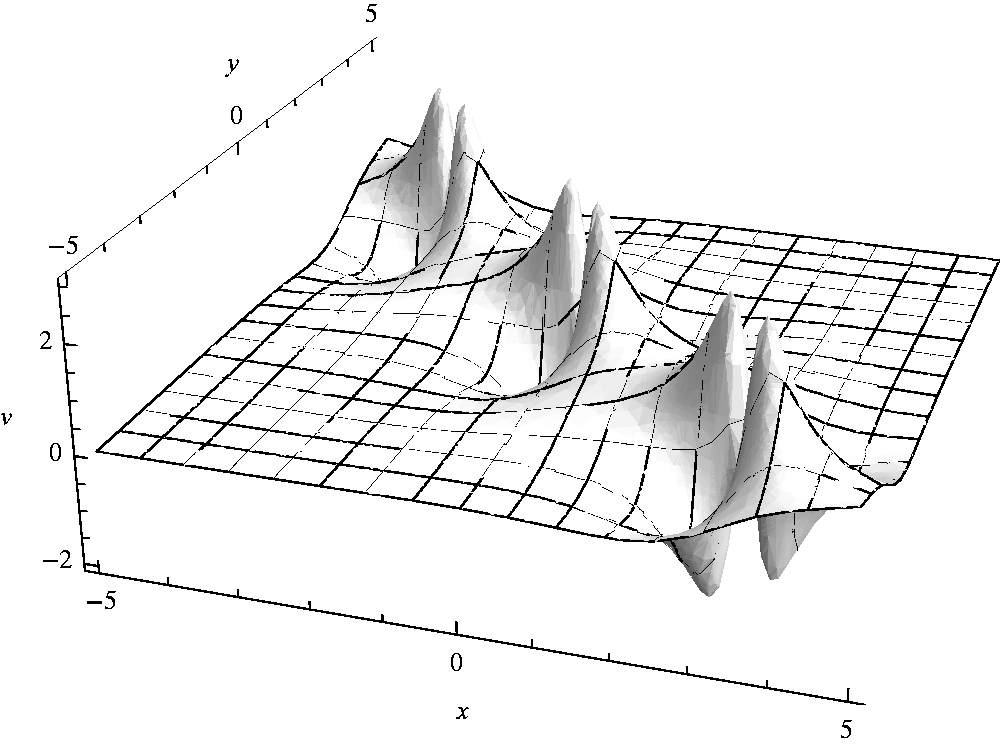
The spatial structure of v2 at m(y) = y, q(y) = −y, p = 1, t = 0.1.
Considering a limit behavior of


Solution (u3, v3) contains two waves with different velocities and directions. For fixed x and t, (u3, v3) → (0, 0) as q(y)(or m(y)) → ±∞. It is a breather type of rogue wave solution which contains two peaks whose amplitudes are two to three times higher than its surrounding waves and generally forms in a short time (see Figure 2(a)). It indicates that 2D rogue wave which is localized in both x- and y-directions may exist in the framework of MDWWS.
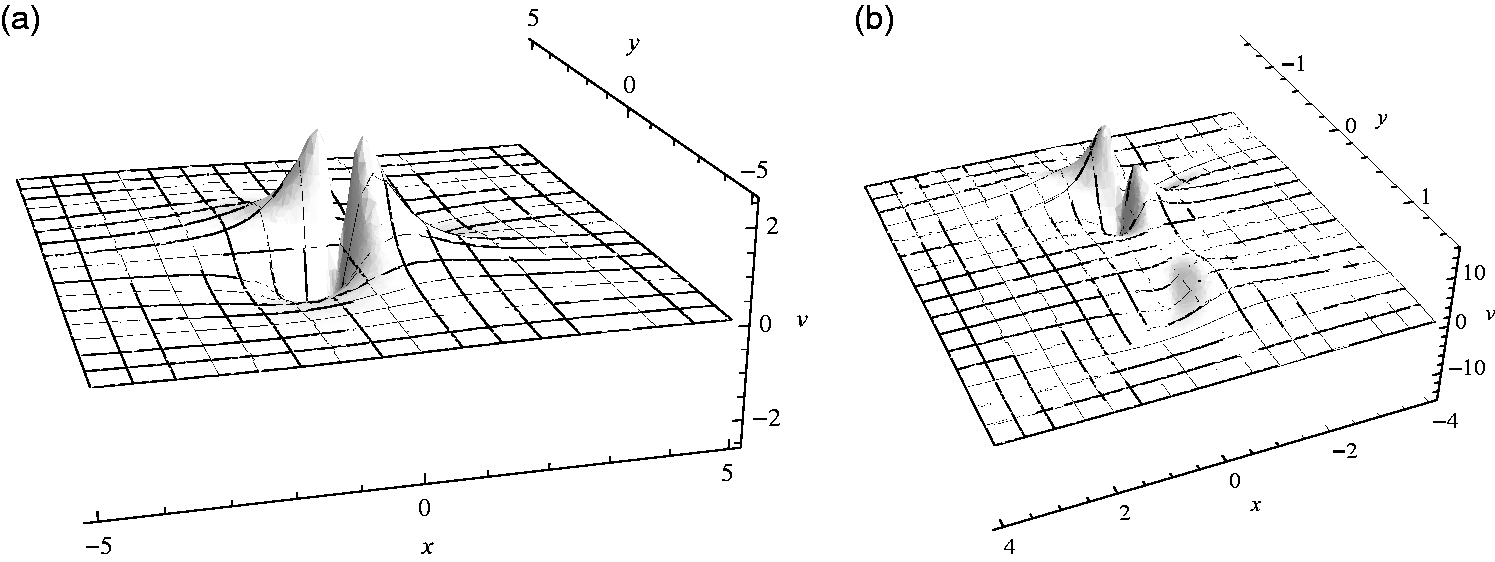
(a) The spatial structure of rogue wave of v3 at m(y) = 2y, q(y) = −2y, t = 1 and (b) the spatial structure of higher rogue wave of v3 with equation (8) at t = 0.05.
In another, owing to the arbitrary functions m(y), q(y) involved in (u3, v3), we can also search for higher order rational solution for system expressed by equations (1) and (2). In fact, if m(y) and q(y) are choosing as

New coherent structures
Now, let us consider equation (5) by using the three wave type of Ansatz function33 in the form

Substituting Ansatz (9) into equation (5) with Mathematica, we find that equation (5) can be automatically satisfied with the following relations




Choosing a = a1(y) = a4(y) as arbitrary constants, we can explicitly derive the three-wave solutions of system expressed by equations (1) and (2) as follows

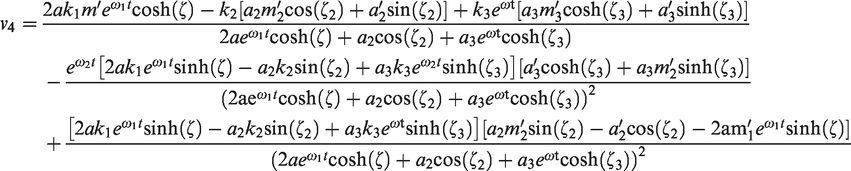
Solution (u4, v4) involves two kinds of transcendental functions: trigonometric and hyperbolic functions. It presents a kind of interaction solutions between trigonometrical waves and exponential waves.
We show its typical spatial structure in Figure 3 with the parameters selected as
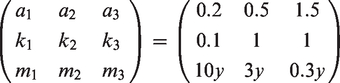
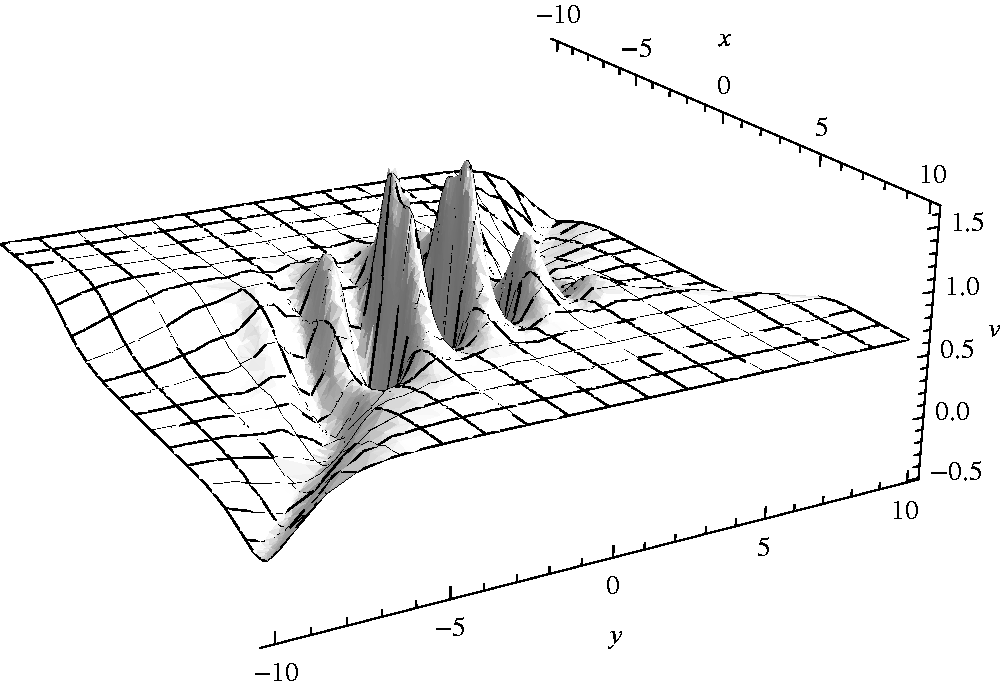
The spatial structure of two solitons fusion into one for v4 at a = 1 and t = 0.
Figure 3 shows that two line solitons come into interaction, fusion to one new soliton with some oscillations whose amplitude is higher than the two line solitons and later break up again to form two solitons which are actually the original soliton, respectively.
Owing to the arbitrary functions
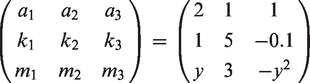
If we choose the arbitrary functions
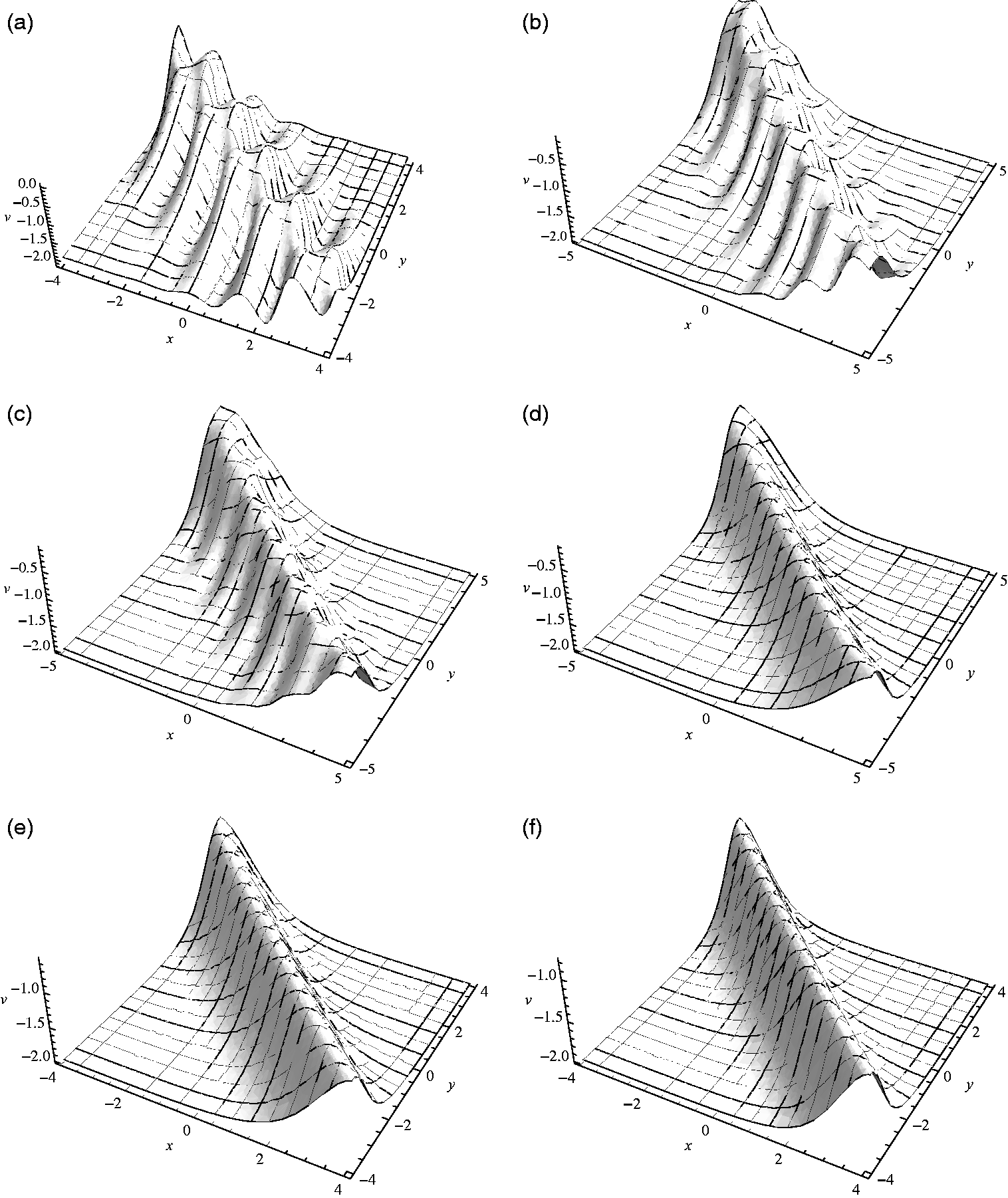
The spatial structure of two periodic peakons fusion into one line soliton of v4 at (a) t = 0, (b) t = 0.05, (c) t = 0.1, (d) t = 0.5, (e) t = 1, and (f) t = 2.
Figure 4 shows that two periodic peakons fuse to one single line soliton with the time increasing. After interaction, the final line soliton preserves its shapes and amplitudes and does not move in any direction.
Conclusion
In this paper, the HBLM is proposed to the (2 + 1)-dimensional modified dispersive water-wave system to seek rogue wave solutions. A new family of two-wave solution, rational breather wave solution is obtained. Based on the rational solution, rogue wave solution which has two to three times amplitude higher than its surrounding waves generally forms in a short time. It is a new discovery that rogue wave solutions can come from breather solitary wave solutions for the 2D framework. Moreover, we also derived three-wave solution for the MDWWS by using the three-wave method. The arbitrary functions in the obtained solutions imply that these solutions have rich spatial structures. And it may be helpful in future studies for the intricate nature world.
Footnotes
Acknowledgment
I would like to express my sincere thanks to Prof. J.H. He and the referees for their valuable suggestions and comments.
Declaration of conflicting interests
The author(s) declared no potential conflicts of interest with respect to the research, authorship, and/or publication of this article.
Funding
The author(s) received no financial support for the research, authorship, and/or publication of this article.