




Abstract
In this paper, we study the stochastic P-bifurcation problem for an axially moving bistable viscoelastic beam with fractional derivatives of high-order nonlinear terms under colored noise excitation. Firstly, using the principle for minimal mean square error, we show that the fractional derivative term is equivalent to a linear combination of the damping force and restoring force, so that the original system can be simplified to an equivalent system. Secondly, we obtain the stationary probability density function of the system amplitude by the stochastic averaging and the singularity theory, we find the critical parametric conditions for stochastic P-bifurcation of the system amplitude. Finally, we analyze different types of the stationary probability density function curves of the system qualitatively by choosing parameters corresponding to each region divided by the transition set curves. We verify the theoretical analysis and calculation of the transition set by showing the consistency of the numerical results obtained by Monte Carlo simulation with the analytical results. The method used in this paper directly guides the design of the fractional order viscoelastic material model to adjust the response of the system.
Keywords
Introduction
Fractional calculus is a generalization of integer-order calculus, it extends the order of calculus operation from the traditional integer-order to the case of non-integer order, and it has a history of more than 300 years as so far. Due to the limitation of the definition of integer-order derivative, it can’t express the memory property of viscoelastic substances. The definition of fractional derivative contains convolution, which can well express a memory effect and show the cumulative effect over time. Compared with the traditional integer-order calculus, fractional calculus has more advantages and is a suitable mathematical tool for describing the memory characteristics.1–3 In recent years, it has become the powerful mathematical tool in many disciplines, especially in the study of viscoelastic materials.
The classical integer operators do not have sufficient parameters to handle the different shapes of the hysteresis loops describing the behaviors of viscoelastic materials and structures, while the fractional derivative can accurately describe the constitutive relation of viscoelastic materials with fewer parameters, so the studies of fractional differential equations on the typical mechanical properties and the influences of fractional order parameters on the system are very necessary and significant. In recent years, many scholars have done a lot of work and achieved fruitful results in this field: Nutting, Gemant, and Scott et al.4–6 first proposed the fractional derivative models to study the constitutive relation of viscoelastic materials and the research on the viscoelastic material with fractional derivative is also increasing, and so far, it is still a research hotspot.7–9 Wang et al. 10 produced nanoscale crimped fibers using stuffer box crimping and bubble electrospinning and established the governing equations for nonlinear transverse vibration of an axially moving viscoelastic beam with finite deformation using the Hamiltonian principle, the obtained governing equations can be further used for numerical or analytical study of the crimping mechanism. Li et al. 11 solved a paradox in an electrochemical sensor by a fractal modification of the surface coverage model and elucidated a simple solution process to the fractal model. Wang and An adopted He’s fractional derivative which is defined through the variational iteration algorithm to describe a nonlinear vibration in microphysics, and used Ji–Huan He’s amplitude-frequency formulation to solve the fractional Duffing equation. 12 Xin et al. 13 considered the existence of a positive periodic solution for a kind of high-order p-Laplacian neutral singular Rayleigh equation with variable coefficient based on Mawhin’s continuation theory, and verified the result by an example. Bagley and Torvik used fractional calculus to study the dynamic behavior of viscoelastic damping structure, and analyzed the responses of the system under general load and step load, respectively.14,15 Zhang and Zhu analyzed the stability and dynamic response of viscoelastic belt under parametric excitation by the multiscale method.16,17 Chen et al.18–20 studied the dynamic behavior and steady-state response of axially accelerating viscoelastic beam by the Galerkin method and derived the differential equation of nonlinear vibration for axially moving viscoelastic rope, then pointed out that the damping of viscoelastic rope only exists in the nonlinear term. Leung et al. 21 studied the steady-state response of a simply supported viscoelastic column under the axial harmonic excitation based on the fractional derivative constitutive model of cubic nonlinear and derived the generalized Mathieu–Duffing equation with time delay by the Galerkin discrete method, then analyzed the bifurcation behavior of the system caused by the order of the fractional derivative. Liu et al. 22 studied the dynamic response of an axially moving viscoelastic beam under random disorder periodic excitation, then obtained the first-order expression of the solution by the multiscale method and carried out the stochastic jump phenomenon between the steady-state solutions. Yang and Fang derived the system equation based on Newton’s second law and the fractional Kelvin constitutive relation, and then studied the stability of the axially moving beam under the parametric resonance condition. 23 Leung et al. 24 studied the single mode dynamic characteristics of the nonlinear arch with the fractional derivative, then obtained the steady-state solution of the system based on the residual harmonic homotopy method and analyzed the influence of the parametric variation on the dynamic behaviors of the viscoelastic damping material. Galucio et al. 25 obtained the fractional derivative model to describe the viscoelasticity of the system based on the Timoshenko theory and Euler–Bernoulli hypothesis, then proposed a finite element formula for analyzing the sandwich beam of viscoelastic material with fractional derivative and the results were verified numerically.
Due to the complexity of fractional derivatives, analyzing them is difficult, the vibration characteristics of the parameters can only be qualitatively analyzed, and critical conditions of parametric influences cannot be found. These problems affect the analysis and design of such systems, in part because the stochastic P-bifurcation of bi-stability for the viscoelastic beam with fractional derivatives of high-order nonlinear terms under colored noise excitation has not been reported. Accordingly, we take the nonlinear vibration of a viscoelastic beam with fractional constitutive relation under colored noise excitation as an example, derive the governing equation of the viscoelastic beam and generate the nonlinear fractional oscillator based on the Galerkin discrete procedure, then obtain the transition set curves of the fractional order system and critical parametric conditions for stochastic P-bifurcation of the system by the singularity method, then analyze the different types of stationary probability density function (PDF) curves of the system in each region of the parameter plane. We compare numerical results from a Monte Carlo simulation with the analytical results obtained in this paper; it can be seen that the numerical solutions are in good agreement with the analytical solutions, verifying our theoretical analysis.
Equation of axially moving viscoelastic beam
There are many definitions of fractional derivatives, the following definitions are mainly introduced:
The Caputo derivative of the function

The Riemann–Liouville derivative of the function

The Grunwald–Letnikov derivative of the function


The fractal derivative of the function

The Riemann–Liouville derivative and Caputo derivative are commonly used, the initial conditions corresponding to the Riemann–Liouville derivative have no physical meanings, however, the initial conditions of the systems described by the Caputo derivative have clear physical meanings and their forms are the same as the initial conditions for the differential equations of integer order. So in this paper, the Caputo-type fractional derivative is adopted as is defined in equation (1).
For a given physical system, due to the initial moment of the oscillator is

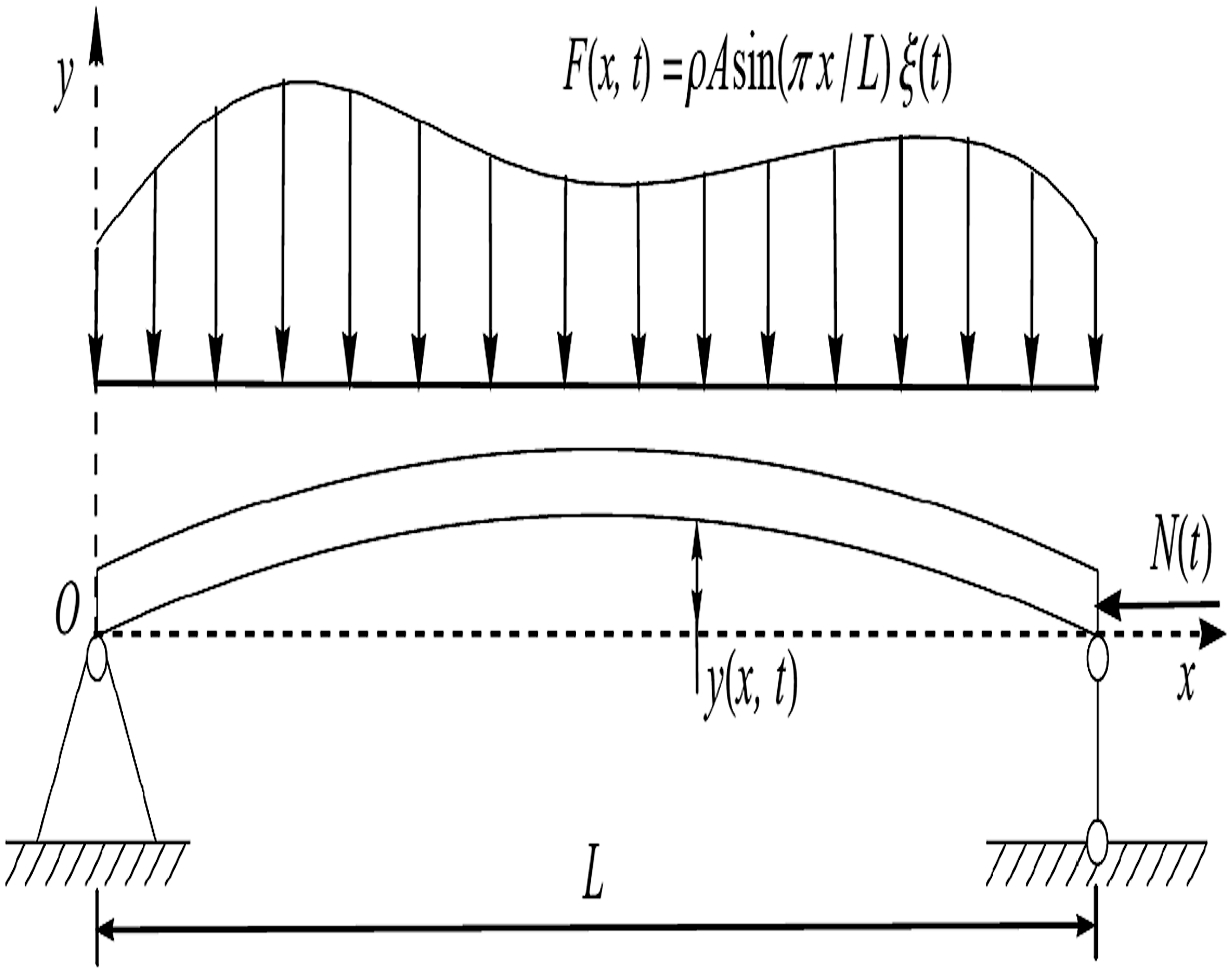
In this paper, the transverse vibration
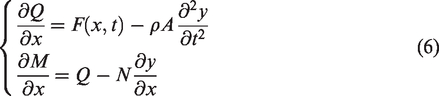

Figure 1. Schematic stress diagram of viscoelastic beam.
Assuming the material of the beam obeys a viscoelastic constitutive relation in the form of fractional derivative

When the deformation of the beam is small, the axial strain

Substituting equation (9) into equation (8) yields

The relationship between bending moment

From equations (10) and (11), the expression of the bending moment

The expression of the horizontal tension is

Substituting equations (12) and (13) into system (7), the system (7) can be rewritten as

The boundary conditions are

According to the boundary conditions (15), the solution of system (14) can be expressed as the Fourier series

Assuming that the initial transverse vibration of the system is

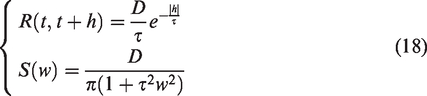
where
By the discrete format based on Galerkin method, the system (14) can be reduced to the ordinary differential equation as follows


For convenience, the system (19) can be represented as follows

The fractional derivative term has contributions to both damping and restoring forces,28,29 hence, introducing the following equivalent system

The error between systems (21) and (22) is

The necessary conditions for minimal mean square error are
30

Substituting equation (23) into equation (24) yields

Assuming the solution of system (22) has the following form

Based on equation (26), we can obtain

Substituting equations (26) and (27) into equation (25) yields
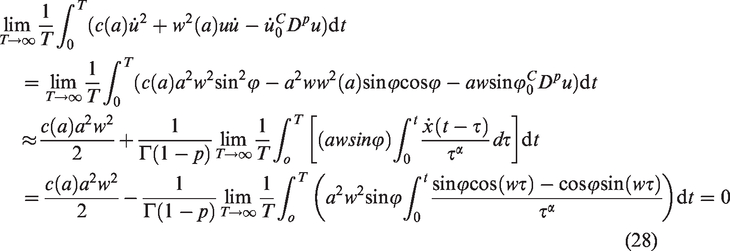
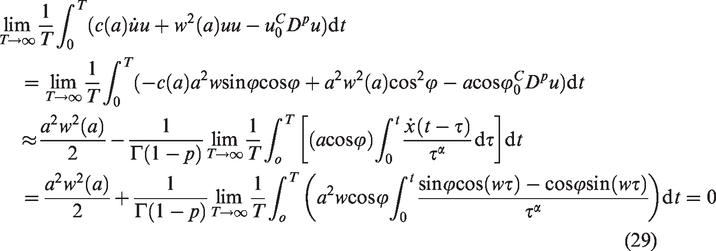
To simplify equations (28) and (29) further, asymptotic integrals are introduced as follows

Substituting equation (30) into equations (28) and (29), and averaging them across

Therefore, the equivalent system associated with system (22) can be expressed as follows

Next, we consider the stochastic P-bifurcation of system (32) which comprises the fractional derivatives of high-order nonlinear terms, and analyze the influence of parametric variation on the system response.
The stationary PDF of amplitude
For the system (32), the material modulus ratio is given as
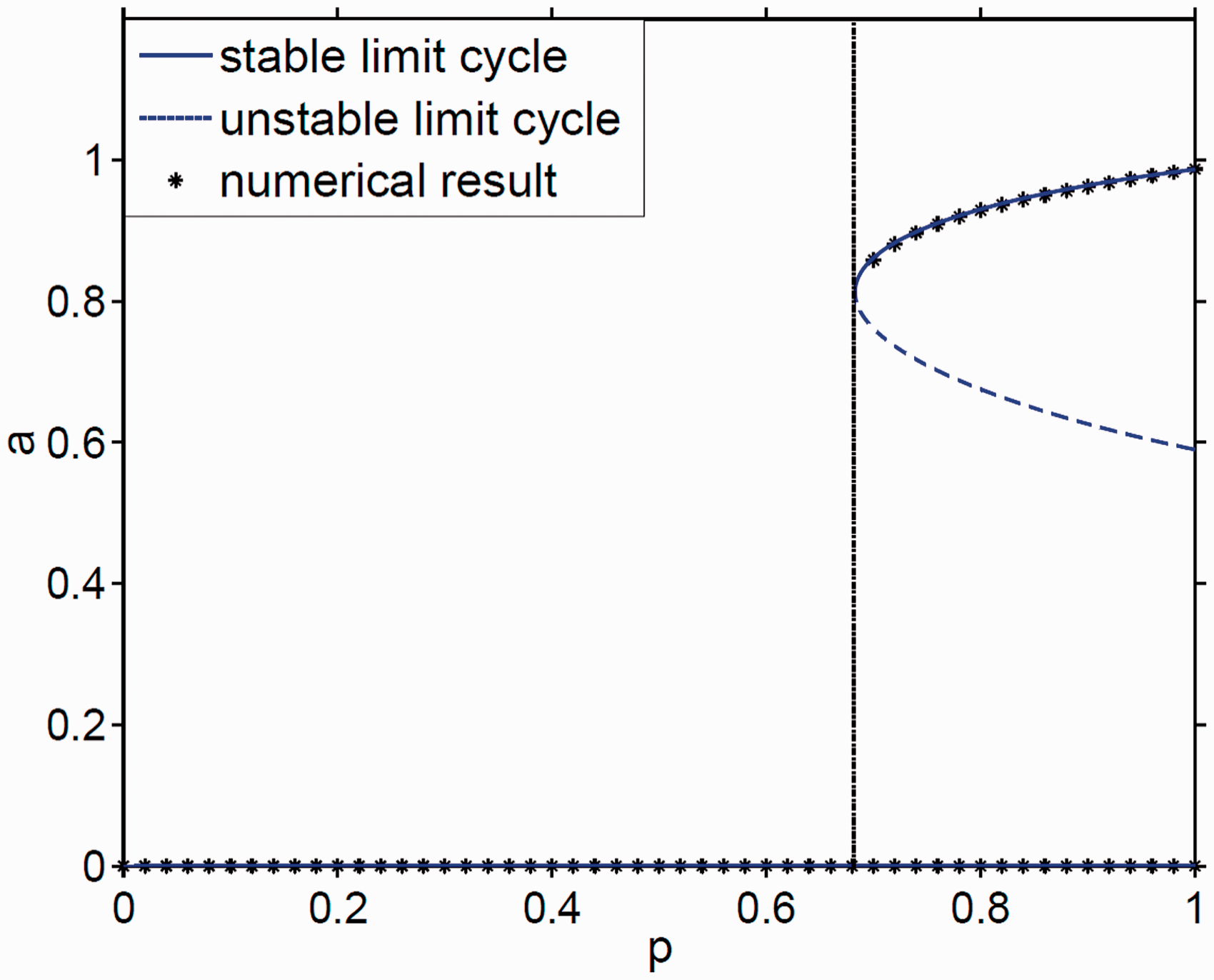
Bifurcation diagram of amplitude of system (32) at
As can be seen from Figure 2, the solution corresponding to the solid line is almost completely coincided with the numerical solution, which proves the correctness and accuracy of the approximate analytical result of the deterministic system, at the same time, it shows that the solution corresponding to the solid line is stable and the solution corresponding to the dotted line is unstable. And it also can be seen that there is 1 attractor in the system where
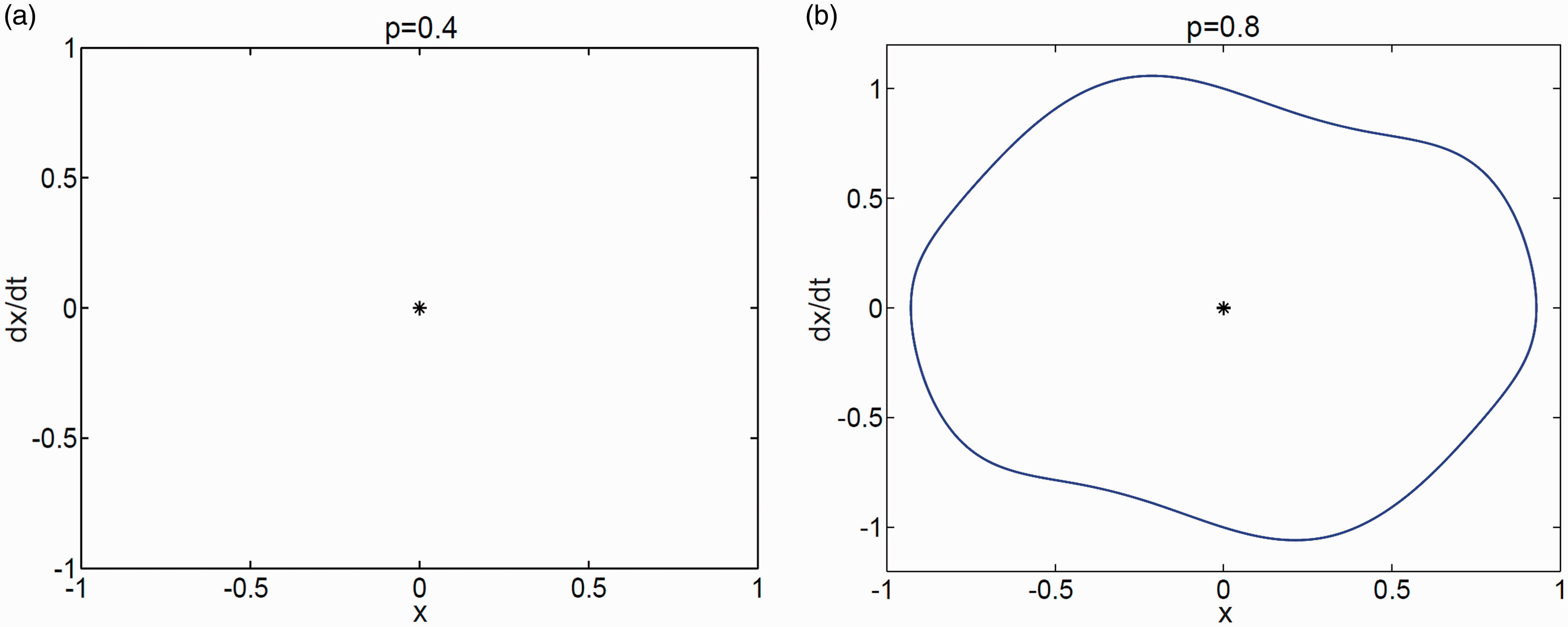
Phase diagrams of system (32) at
In order to obtain the stationary PDF of the amplitude of system (32), the following transformation is introduced
31
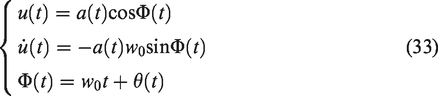
Substituting equation (33) into equation (32), we can obtain
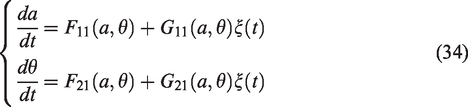
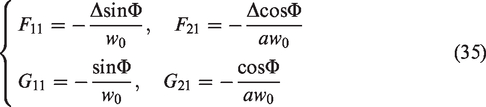

Equation (34) can be regarded as a Stratonovich stochastic differential equation, by adding the corresponding Wong–Zakai correction term, it can be transformed into the following Itô stochastic differential equation

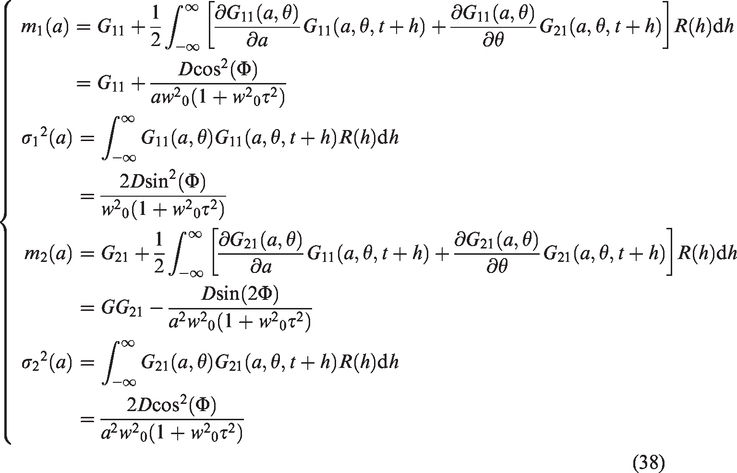
By the stochastic averaging method,
32
averaging equation (37) regarding

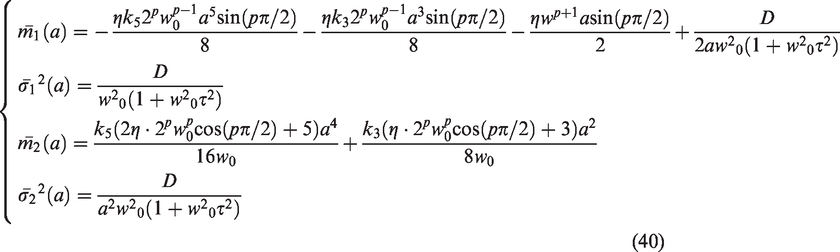
Equations (39) and (40) show that

The boundary conditions are

Thus, based on these boundary conditions (42), we can obtain the stationary PDF of amplitude


Substituting equation (40) into equation (43), the explicit expression for the stationary PDF of amplitude

Stochastic P-bifurcation
Stochastic P-bifurcation refers to the changes of the number of peaks in the PDF curve, in order to obtain the critical parametric conditions for stochastic P-bifurcation, the influences of the parameters for stochastic P-bifurcation of the system are analyzed by using the singularity theory below.
For the sake of convenience, we can write


According to the singularity theory,
33
the stationary PDF needs to satisfy the following two conditions

Substituting equation (46) into equation (48), we can obtain the following condition34,35

Substituting equation (47) into equation (49), we can get the critical parametric conditions for stochastic P-bifurcation of the system as follows

And amplitude

It can be seen from equations (50) and (51), the fractional order
Taking (
) as the unfolding parameters
Taking the parameters as
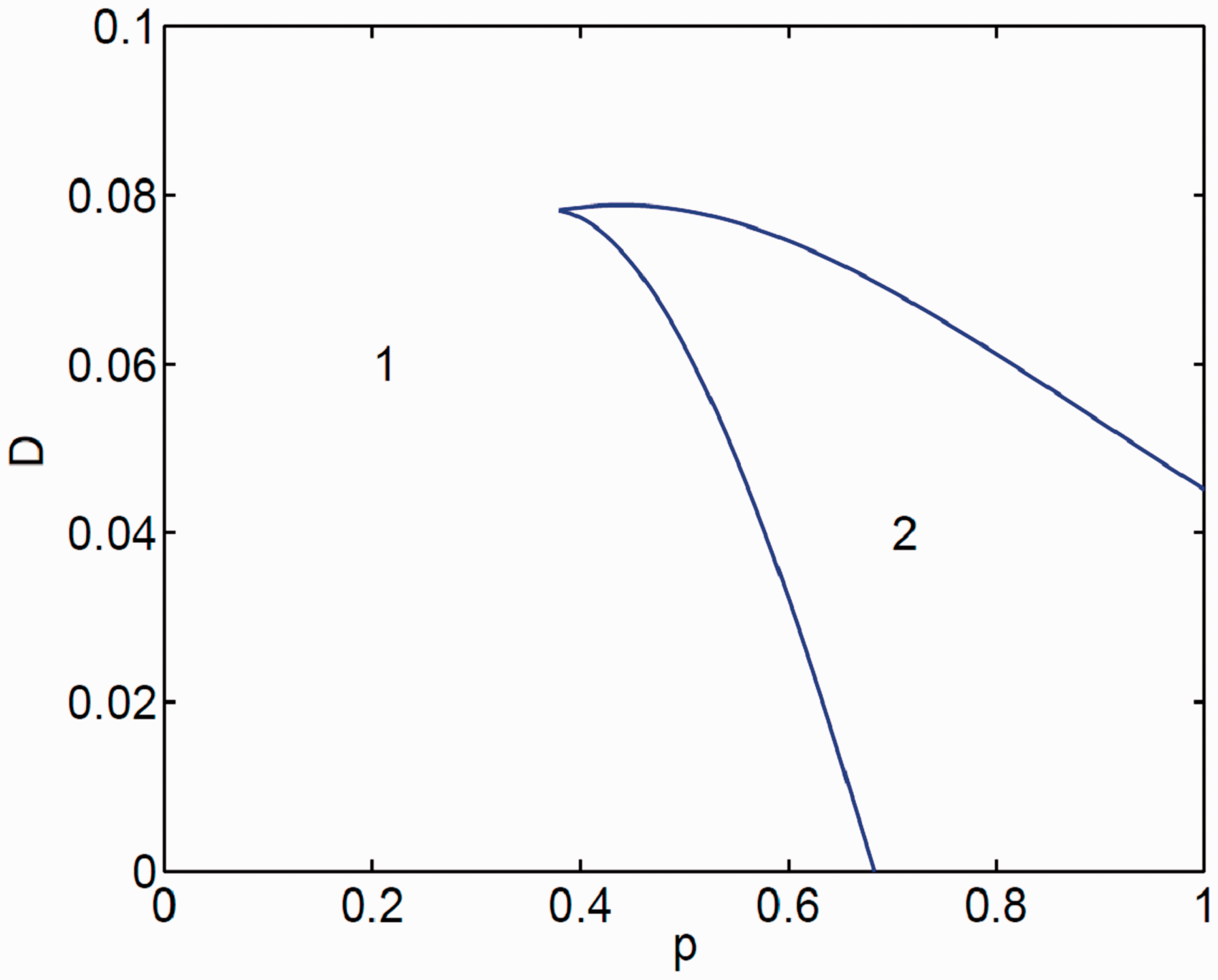
Transition set curves (taking
According to the singularity theory, the topological structures of the stationary PDF curves of different points (
Taking a given point (
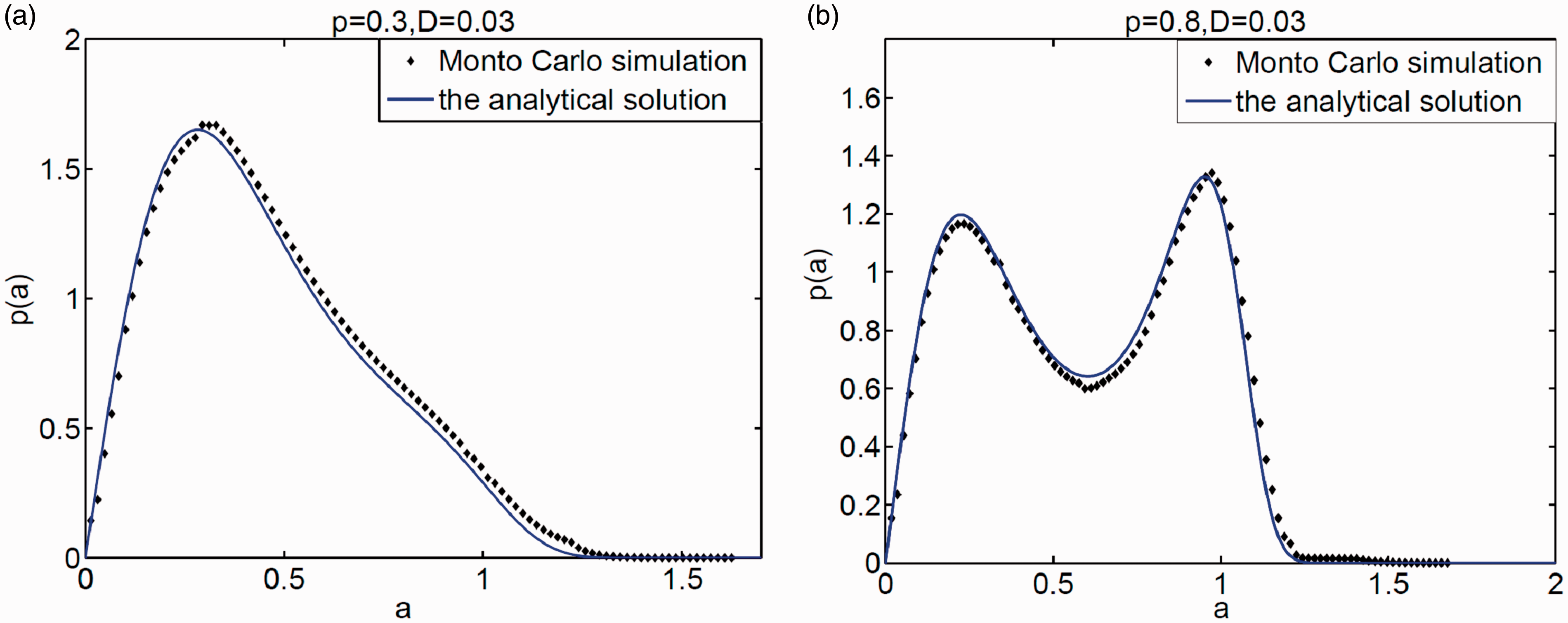
As can be seen from Figure 4, the parametric region where the PDF curve appears bimodal is surrounded by an approximately triangular region. When the parameter (
Taking (
) as the unfolding parameters
Taking the parameters as
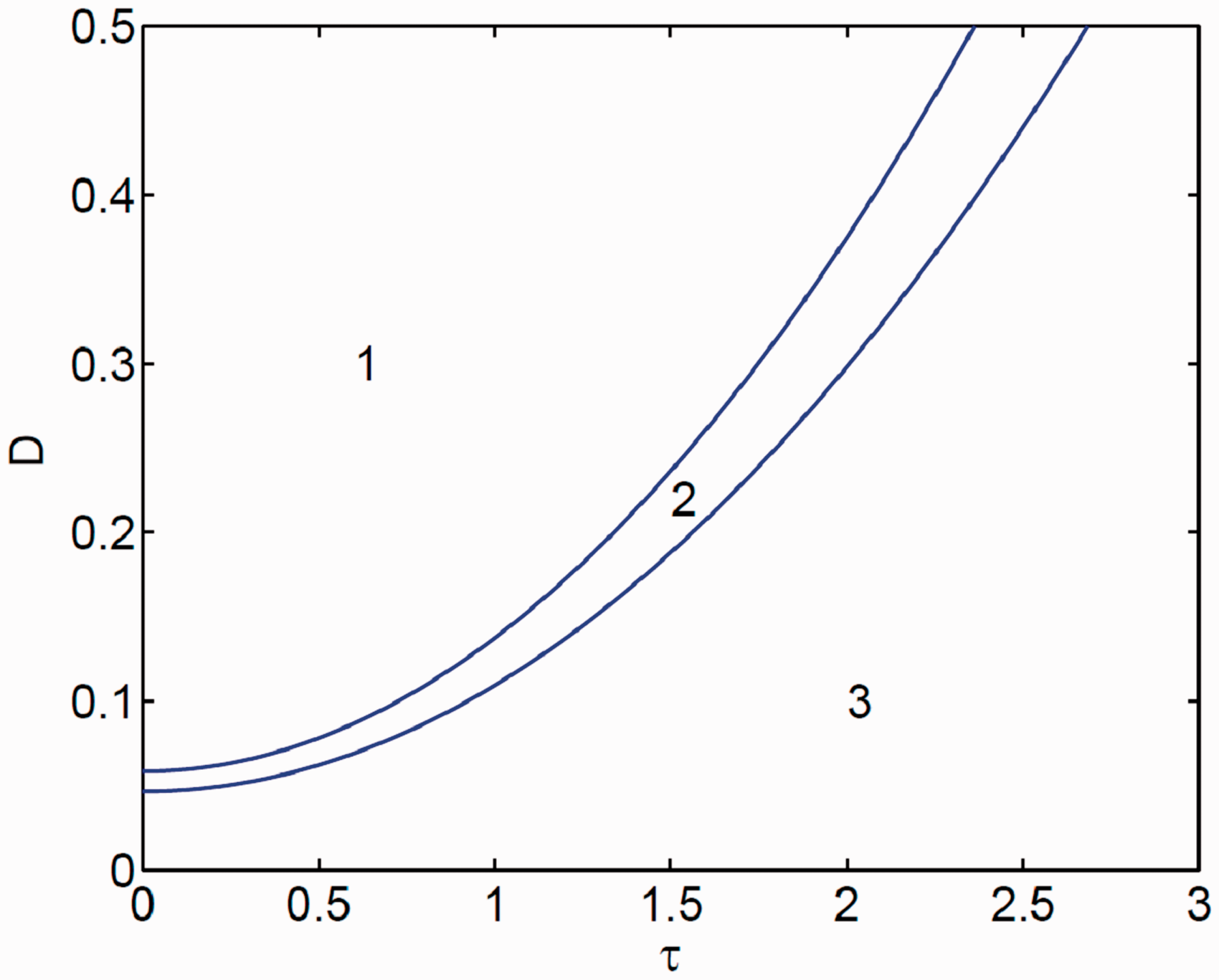
Transition set curves (taking
As can be seen that the unfolding parameter
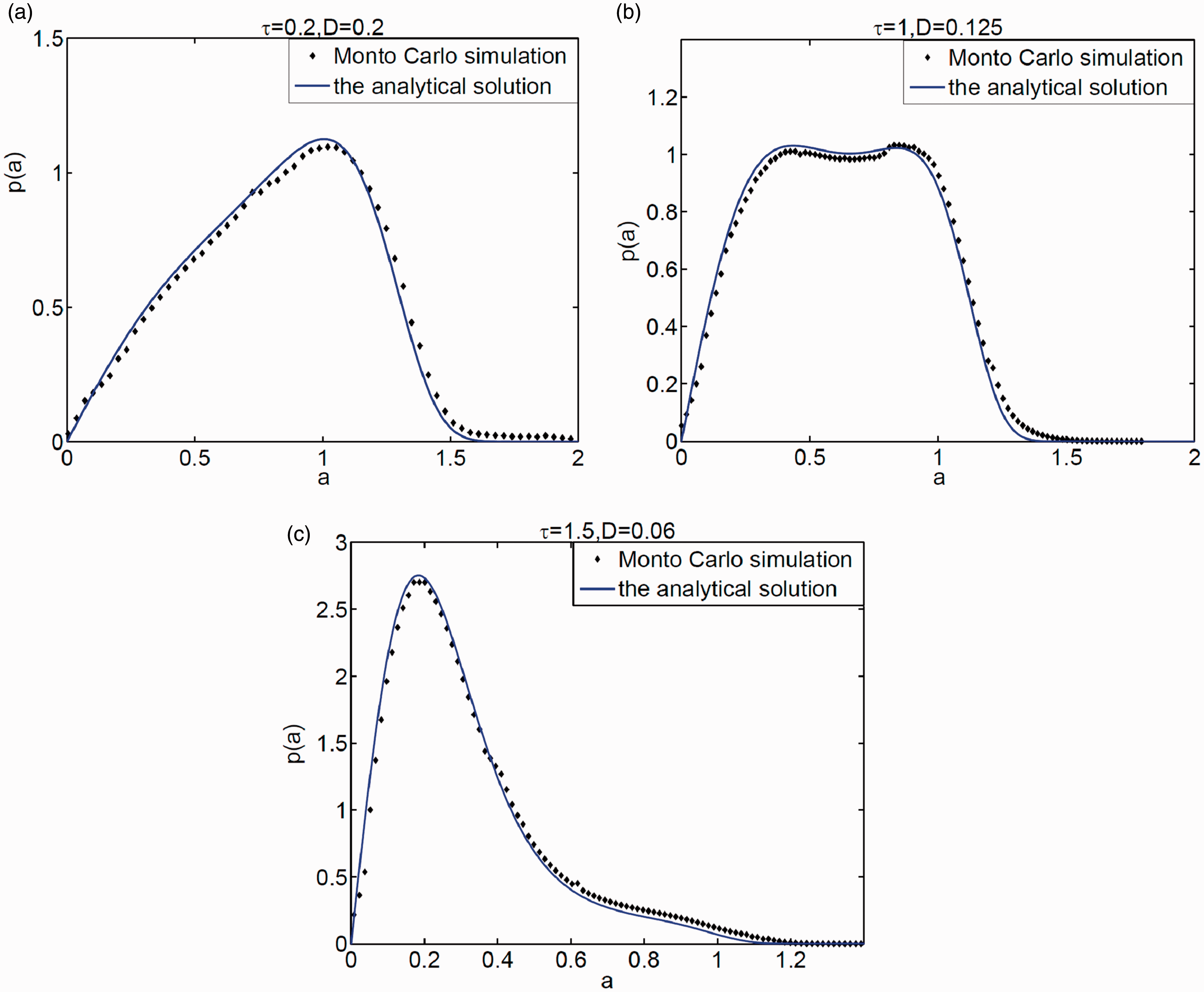
As can be seen from Figure 6, the parameter region where the PDF curve appears bimodal is surrounded by two lines. When the parameter (
The above results show that the stationary PDF curves of the system amplitude in any two adjacent regions in Figures 4 and 6 are qualitatively different. Regardless of the exact values of the unfolding parameters, if they cross any line in these figures, the system will demonstrate stochastic P-bifurcation behavior. Therefore, the transition set curves are just the critical parametric conditions for the stochastic P-bifurcation of the system. The analytic results shown in Figures 5 and 7 are in good agreement with the numerical results obtained by Monte Carlo simulation, further verifying the theoretical analysis .
Conclusions
In this paper, we studied the stochastic P-bifurcation for axially moving of a bistable viscoelastic beam model with fractional derivatives of high-order nonlinear terms under colored noise excitation. According to the minimal mean square error principle, we transformed the original system into an equivalent and simplified system, and obtained the stationary PDF of the system amplitude using stochastic averaging. In addition, we obtained the critical parametric conditions for stochastic P-bifurcation of the system using singularity theory, based on this, the system response can be maintained at the small amplitude near the equilibrium by selecting the appropriate unfolding parameters, providing theoretical guidance for system design in practical engineering and avoiding the instability and damage caused by the large amplitude vibration or nonlinear jump phenomenon of the system. Finally, the numerical results by Monte Carlo simulation of the original system also verify the theoretical results obtained in this paper. We conclude that the fractional order
Footnotes
Acknowledgements
The authors would like to thank the editors and reviewers for their conscientious reading of this article and their numerous comments for improvement which were extremely useful and helpful in modifying the article.
Declaration of conflicting interests
The author(s) declared no potential conflicts of interest with respect to the research, authorship, and/or publication of this article.
Funding
The author(s) disclosed receipt of the following financial support for the research, authorship, and/or publication of this article: The authors gratefully acknowledge the financial support from the National 973 Project of China (grant no. 2014CB046805) and the Natural Science Foundation of China (grant no. 11372211).