




Abstract
Electrospun nanofibers have shown great potential in wide applications such as energy, filtration, medical devices, and sensors. For all these applications, fiber morphology, fiber diameter and pore size of electrospun fiber mat play critical roles in determining the performance of the final products. Research has proved that sonic vibration can dramatically improve the electrospinnability of polymer solutions and subsequently the resultant fiber properties. In this work, the effects of sonic vibration on fiber morphology as well as fiber diameter and the pore structures of electrospun polyacrylonitrile fiber mat were investigated. The relationships between sonic vibration and fiber diameter, and pore size of the electrospun fiber mats were also studied.
Introduction
Electrospinning is a straightforward but versatile technology that can produce continuous nanofibers.1,2 Electrospun fibers have shown great potential in many applications such as supercapacitors, electrodes, filters, medical devices, and sensors.3,4 For the huge potential of electrospinning and electrospun fibers, modified electrospinning technologies, such as bubble spinning5–8 and centrifugal force spinning,9,10 have been invented aiming to realize mass production of electrospun fibers. Considering that the weakness of electrospun products has severely hampered the industrialization of electrospinning and its products, enhancement measures such as crosslinking,11,12 nanoparticle reinforcement,13–15 and post-draw 16 have been introduced to improve the mechanical properties of electrospun fiber mats. By applying sonic vibration to electrospinning solutions, electrospinnability of polymer solutions can be significantly improved as the solution viscosity is dramatically reduced. 17 Numerous parameters, such as operational parameters, polymer solution properties, and ambient conditions, can affect the morphology of electrospun nanofibers. Amongst all the parameters, solution (spinning dope) properties such as viscosity, electrical conductivity, and surface tension play critical roles in determining fiber morphology. Our prior researches have shown that sonic vibration has a strong impact on the properties of polymer solutions and hence on the structure of the resultant fibers. By changing the viscosity, dielectric conductivity, and surface tension of polymer solutions, the morphology and diameter of the resultant fibers were significantly altered.18–21 In this paper, we further studied how sonic vibration can affect the core features of electrospun fiber mats by altering the fiber morphology, fiber diameter, and the pore structure of the fiber mat.
Experimental section
Materials and instruments
Polyacrylonitrile (PAN) with an average molecular weight of 70,000 g/mol was obtained from Nanjing Stable Trading Co., Ltd. N,N-dimethylformamide (DMF) was purchased from Sinopharm Chemical Reagent Co., Ltd. All reagents were of analytical grade and used without further purification.
Solution preparation
PAN/DMF solution (18 wt%) was prepared by dissolving appropriate amount of PAN in DMF and stirring at a temperature of 80°C for more than 12 h until a homogeneous solution was obtained. The obtained solution was separated into six equal portions for different sonic vibration treatments and electrospinning, with one portion electrospun without any treatment.
Sonication treatment
A FS-1200 sonicator with a maximum output power of 1200 W and a fixed frequency of 20 kHz was used to generate sonic vibration. To apply the sonic vibration treatment, the tip of the sonic probe was immerged into the different PAN solutions to continuously vibrate at an output power varying from 240 W to 720 W for 10 min, respectively. The solutions were then cooled down to room temperature for electrospinning.
Preparation of electrospun fiber membranes
The electrospinning process was conducted at a voltage of +25 kV and a flow rate of 0.3 ml/h. The distance between the collector and the spinneret was kept at 20 cm. The temperature and relative humidity were maintained at 25 ± 1°C and 60 ± 5%, respectively. The generated fibers were collected on a grounded aluminum foil and then dried in a vacuum oven for 24 h before characterization and analysis.
Characterization
The morphology of the samples was observed using a scanning electron microscope (SEM, HITACHT SU1510, Japan Hitachi Company). The average fiber diameter was calculated using Image Tool software.
Geometric parameters including pore size and pore size distribution were measured with a capillary flow porometer (CFP-1100-AEX, U.S. Shiduoweier Co., Ltd).22,23 Prior to measurement, fiber mats with even thickness and a diameter of 5 cm were immersed in porewick (a kind of wetting liquid used for analyzing pore structure in membranes) for full wetness. Then, pure nitrogen was gradually allowed to flow into the samples. The pore size and pore size distribution were calculated based on the nitrogen flow rates through the wet and dry fibrous membranes.
Results and discussion
Surface morphology of electrospun fibers
The typical images of the resultant electrospun fibers are shown in Figure 1. It was apparent that sonic vibration treatment of electrospinning solution resulted in finer fibers with more uniform fiber size and smoother surface. The rough surface of the electrospun fibers from high concentration PAN solution without vibration treatment implies that PAN molecular chains were severely entangled.24–26 In the solution, molecular chains coil into numerous entanglements connected by their disentangled segments as shown in Figure 2(a). During electrospinning, the entanglements were drawn out of the spinneret as a whole, while the disentangled segments were partially straightened, as shown in Figure 2(b). The entanglements showed up as lumps on fiber surface; thus, a rough fiber surface was observed. During the applications of sonic vibration, the molecular chains in the entanglements were freed up, and thus no apparent lumps were found on the surface of the resultant fibers, as shown in Figure 2(c) and (d).
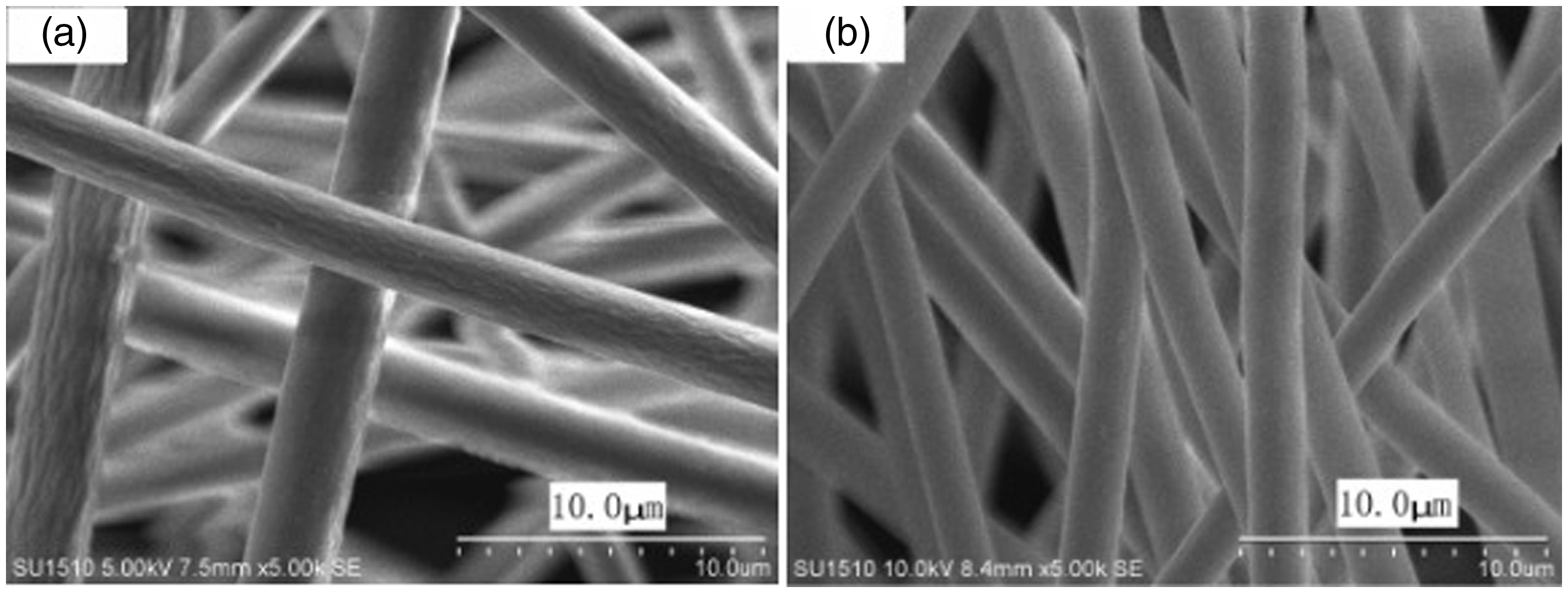
SEM micrographs of PAN fibers (a) from solution without vibration treatment and (b) from solution under the action of vibration.
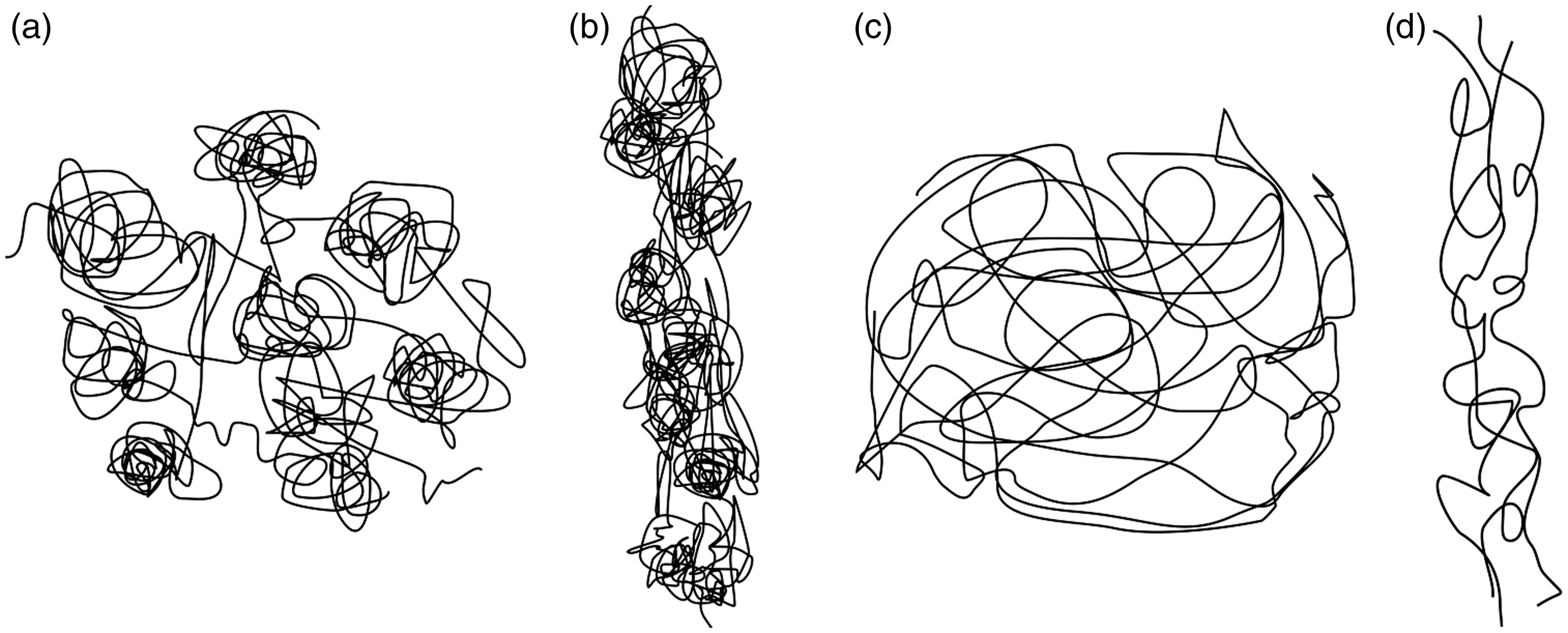
Fiber morphology forming mechanism. (a) Entangled molecular chains in polymer solution without sonic vibration treatment, (b) entangled molecular chains in electrospun fiber without sonic vibration treatment, (c) molecular chains in polymer solution disentangled after sonic vibration treatment and (d) disentangled molecular chains in electrospun fiber with sonic vibration treatment.
Effect on fiber diameter
Figure 3 shows the effect of sonic vibration on the average diameter of the electrospun PAN fibers. With increasing ultrasonic intensity, the average fiber diameter dramatically dropped from 2155.04 nm to 1700.17 nm. The finest fiber was obtained at a vibration power of 720 W, which is the most intense vibration that had been applied in this study. This result is quite understandable. As well known, solution viscosity is one of the most significant parameters that determines the electrospinnability of polymer solution and the resultant fiber diameter. 1 Lower viscosity results in finer fiber diameter.27,28 Sonic vibration dramatically increases the entropy of the solution, provides a number of voids for molecular chains to move around, and allows polymer molecular chains to free up from entanglements, 20 and therefore solution viscosity is dramatically reduced and the electrospinnability of the solution is considerably improved. As a result, finer fibers with uniform size and smooth surface can be obtained. By correlating fiber diameter with sonic vibration power, it is noted that the resultant fiber diameter is exponentially dependent on vibration power. As the vibration power increases, the fiber diameter declines following an exponential decay trend, as shown in Figure 3.
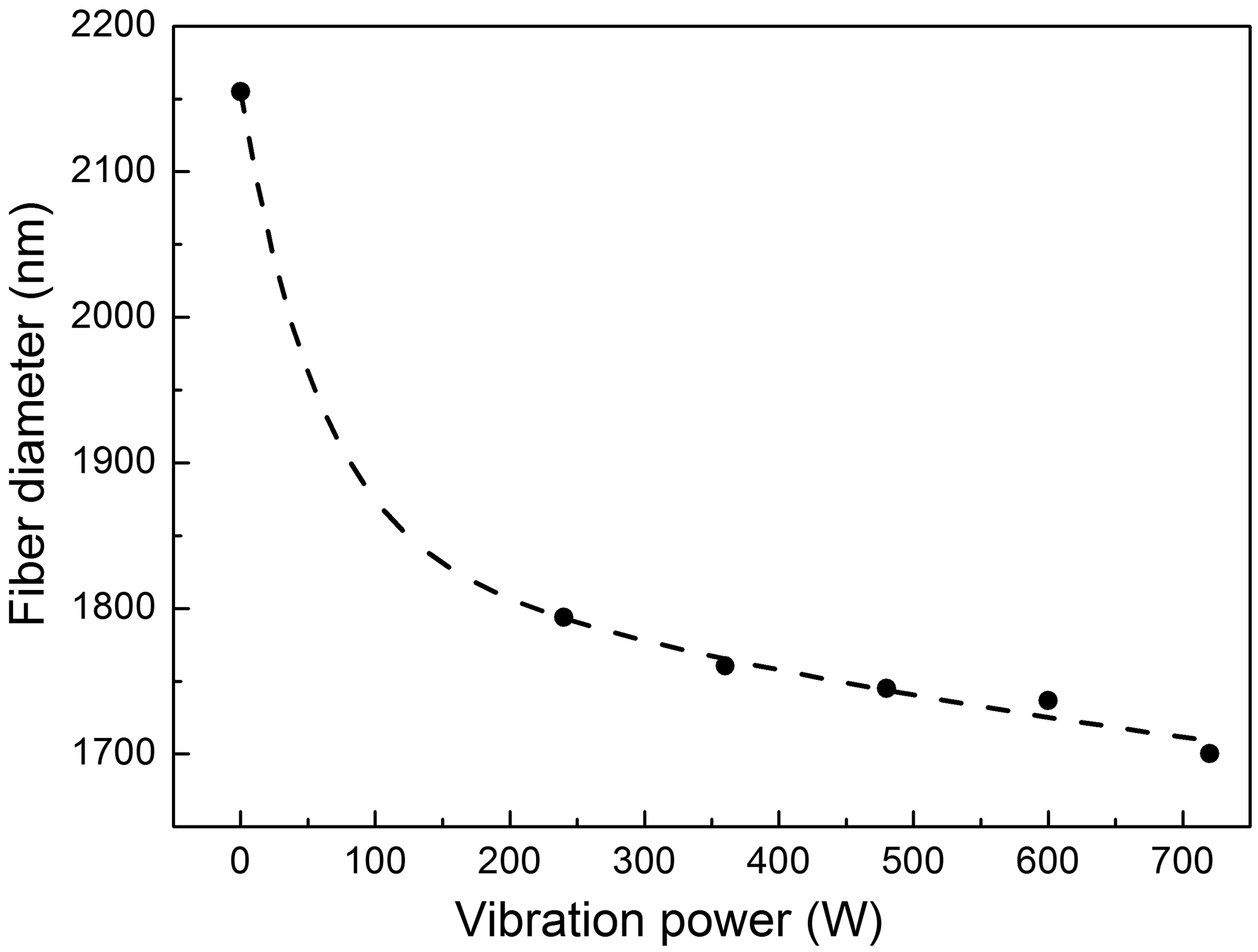
Exponential dependence of fiber diameter on sonic vibration power.
Effect on pore structure
With regard to porous fibrous membranes, pore size is one of the key parameters that determines the performance of electrospun fiber mats. Figure 4 shows the pore size of the electrospun PAN fiber mats, with sonic vibration powers increasing from 0 to 720 W. Each block in the figure represents an average value of five measurements. It is obvious that the average pore size of fiber mats electrospun from sonic vibration-treated PAN solutions is much smaller than that from PAN solution without treatment. The pore size of electrospun fiber mats decreases with the increase of vibration intensity before the ultrasonic power reached a threshold value of 360 W. After passing this threshold, further power increase enlarges the average pore size. The minimum pore size of approximately 5.5837 µm with a standard deviation of 1.7942 µm was obtained at a vibration power of 360 W.
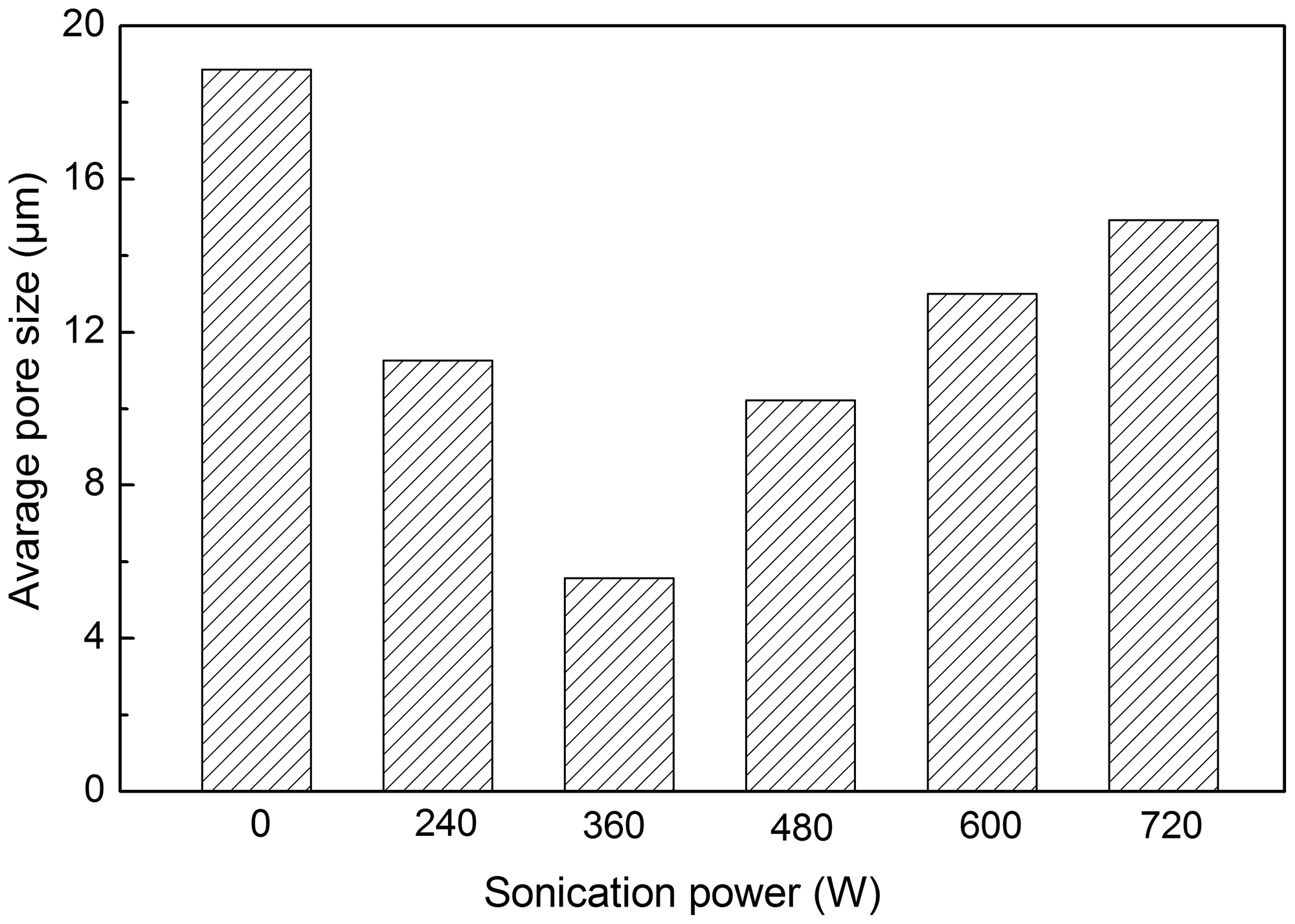
The average pore size of fibrous membranes from soultuions treated at different vibration powers.
Fiber diameter and pore size are the two key factors that affect the performance of the fiber mat.29–33 By correlating fiber diameter with pore size, we found that the effects of sonic vibration treatment on fiber diameter and pore size follow different tendencies, as shown in Figure 5. Sonic vibration has stronger effects on both the fiber diameter and the pore size. However, the change of vibration intensity has a stronger impact on the pore size than on the fiber diameter. As the intensity of sonic vibration increased from 120 W to 720 W, the fiber diameter decreased from ∼1.8 µm to ∼1.7 µm with only 100 nm difference, while the average pore size varied from ∼5.5 µm to ∼15 µm with around three times difference. This observation suggests that it is necessary to involve sonic vibration treatment prior to electrospinning in order to reduce fiber diameters, but the optimum intensity of the vibration needs to be adjusted according to application purpose. If smallest pore size is desired, 360 W vibration power should be applied. But if fiber diameter is more important, then 720 W or even higher power should be chosen.
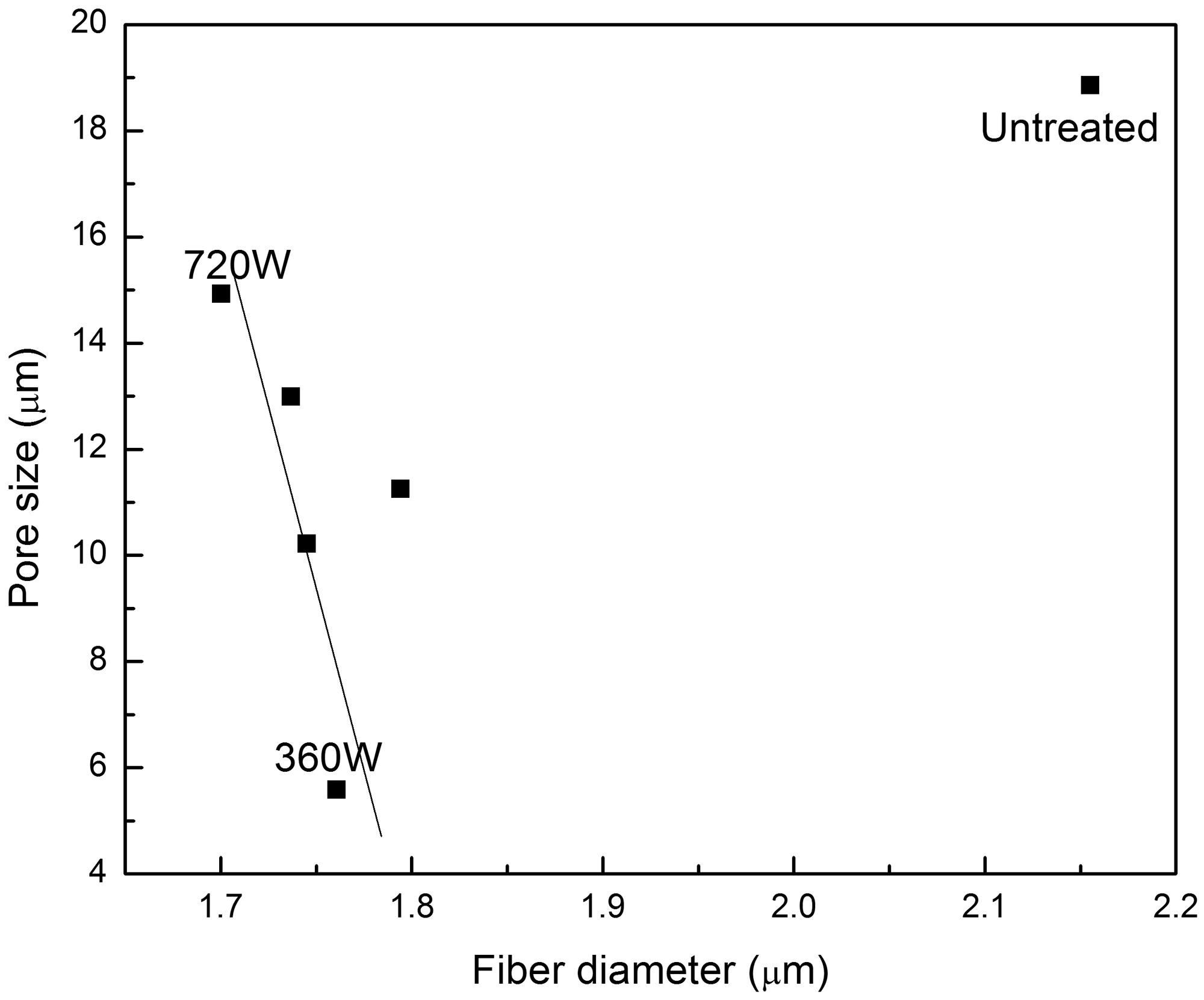
Fiber diameter vs. fiber mat pore size.
Conclusions
In summary, the effects of sonic vibration on electrospun fiber mats have been studied. It is clear that sonic vibration treatment can disentangle polymer molecular chains, reduce polymer solution viscosity, and result in fibers with finer diameter and smooth morphology. The more intensive the vibration, the finer the fiber diameter. The relationship between the vibration intensity/power and pore size was found to be nonlinear. With the vibration intensified, the pore size decreases until the vibration power reaches a threshold value, 360 W; afterward, the increase of vibration power will enlarge pore size. Since fiber diameter and pore size of fiber mats are the two crucial parameters that determine the product performance, this study can be a useful reference for optimization of fiber mat properties with regard to different applications such as filter, electrodes, and sensor.
Footnotes
Author’s note
Yuqin Wan is also affiliated with Lutai School of Textile and Appare, Shandong University of Technology, Zibo 255000, China.
Declaration of conflicting interests
The author(s) declared no potential conflicts of interest with respect to the research, authorship, and/or publication of this article.
Funding
The author(s) disclosed receipt of the following financial support for the research, authorship, and/or publication of this article: This work was supported by Supported by the National Natural Science Foundation of China (Grant No. 51203066) and the Open Project Program of State Key Laboratory for Modification of Chemical Fibers and Polymer Materials, DongHua University (LK1005).