




Abstract
In this paper, a process is devised systematically to scrutinize the scrolling chaotic behaviour of fractional-order Chua's system. The process is composed of fractional Laplace transformation, artificial neural network with Mexican hat wavelet as an activation function and simulated annealing. Sequentially, the parametric expansion of fractional Laplace transform is employed to convert the governing fractional system into an ordinary differential system. Next, artificial neural network and simulated annealing approximate and optimize the attained system and produce accurate solutions. The predictability and elaboration of double scrolling chaotic structures of fractional-order Chua's system are also studied using the Lyapunov exponent and fifth–fourth Runge–Kutta method. Moreover, the mean absolute error and root mean square error are measured for the convergence analysis of the proposed scheme. On the whole, the accurate approximate solutions, the phase plots of Lyapunov exponent spectrum and bifurcation maps of the dynamical evolution of fractional Chua's system are a triumph of this endeavour.
Introduction
The chaos theory seems to be everywhere; wild swirls of cigarette smoke, back-forth snaps of the flag in the wind, the behaviour of cars on an expressway, etc. are real-life examples of this theory.1,2 Its prototype took initiative from the study of three-body motion, simulation of weather predictions, fluctuations in economic systems, to the recent analysis of nonlinear systems, existing in all the multidisciplinary areas of science. The exploration of chaotic behaviour and its patterns, using several methodologies and computer-based algorithms has been assessed extensively. 3 Similarly, the applications of the chaotic systems are also widely found in electrical engineering, where Chua’s system is one of the most expedient example of electric circuits that exhibit classical chaotic behaviour.4,5 It is a system of nonlinear ordinary differential equations, which defines the voltage across the capacitors and the electric current in the inductor of the system. Chua's system produces a double scrolling chaotic pattern, which brought about an evolution in the study of chaos theory. Due to many other interesting hidden chaotic attractors of Chua's system, it has undergone several generalizations.6,7
Among many other methods for measuring the existence of chaos in a dynamical system, Lyapunov exponent (LE) is considered to be the most appropriate tool for this purpose. It is used to a great extent to measure the exponential divergence or convergence rate of the trajectories, starting from nearby initial points. Similarly, LE can also be used to check the stability of limit sets and sensitivity to the initial conditions of a nonlinear system. The signs of the LEs provide a qualitative picture of a system's dynamics, as found in Singh and Roy, 8 where the (+, +, −, −) nature of LE are discussed for the hyperchaotic behaviour of a four-dimensional hyperchaotic system. A single LE characterizes a one-dimensional map into chaos, a marginally stable orbit and a periodic orbit, by retaining positive, zero and negative signs, respectively. The existence of at least one positive LE identifies the presence of chaos, with the magnitude of the exponent reflecting the phase at which the system becomes unpredictable. 9
Modelling different real-world phenomena, using fractional definitions, has become the most highly appreciated areas of realistic sciences. This is because the nonlocal properties of fractional operator enable these differential models to condense the information, about recent and historical situations. For the last few decades, many advancements have been made in this regard to enhance the definitions and properties of fractional calculus to overcome the inadequacies, e.g. He’s fractional derivative, 10 Atangana–Baleanu fractional derivative, 11 conformable derivative, 12 etc. Consequently, these novel aspects enrich the capabilities of fractional differential models by bringing diverse physical significances to light.13–15 Hence, by means of different theories of fractional derivatives, the behaviours of many fractional differential equations have been studied and various techniques have been developed,16–19 but still, there are many things that can be done in this area.
In this endeavour, we provide the study of chaotic characteristics of Chua’s system with fractional order derivative. Our main aim is to acquaint an approximating and optimizing algorithm, which enables to accurately simplify the fractional Chua's system and corroborate LE to review the chaotic attractor of the system. In this regard, a parametric expansion of fractional Laplace transform of Caputo derivative has been utilized to deal with the fractional operators of the system. This new expanded form of fractional Laplace transform has been greatly used to solve fractional order systems nowadays, as it converts the problem in the ordinary differential equation, remaining in a fractional environment. 20 Here, after applying the fractional Laplace transformation, artificial neural network (ANN) 21 with simulated annealing (SA) 22 and fifth–fourth Runge–Kutta (FFRK) method 23 are employed to further attain the numerical solutions of the voltages across the capacitors and electric current of the Chua's circuit. In this study, the Mexican hat wavelet (MHW) 24 is taken into account for the activation of neurons of ANN. MHW is classified into a continuous wavelet transforms, which divides a given continuous-time signal into different scale components. It has significant applications in the representation of continuous-time signals of fractional bands and for resolving component mixtures. 25 Besides, the amalgamation of ANN and SA has also been significantly utilized these days to numerically optimize a number of integers, non-integer ordinary and partial differential equations. 21
Moreover, the remaining paper contains: the basic definitions of the Caputo fractional derivative, the parametric expansion of fractional Laplace transform and the demonstrative structure of MHW in the following section. Next, the formulation of fractional Chua's model and implementation of proposed schemes are described in detail. Furthermore, a comprehensive discussion of bifurcation investigations of the fractional Chua's system, graphical solutions of the parameters along with its phase diagrams, is imparted. Conclusively, effective outcomes of the whole attempt are transliterated.
Prologue
This section comprises the illustrative preliminaries of the paper, which include some major definitions and properties of Caputo derivative, Laplace transformation and MHWs.
Caputo fractional operator
Assume


Fractional Laplace transform
The Laplace transform of Caputo fractional derivative of order


MHW function
Let


Here
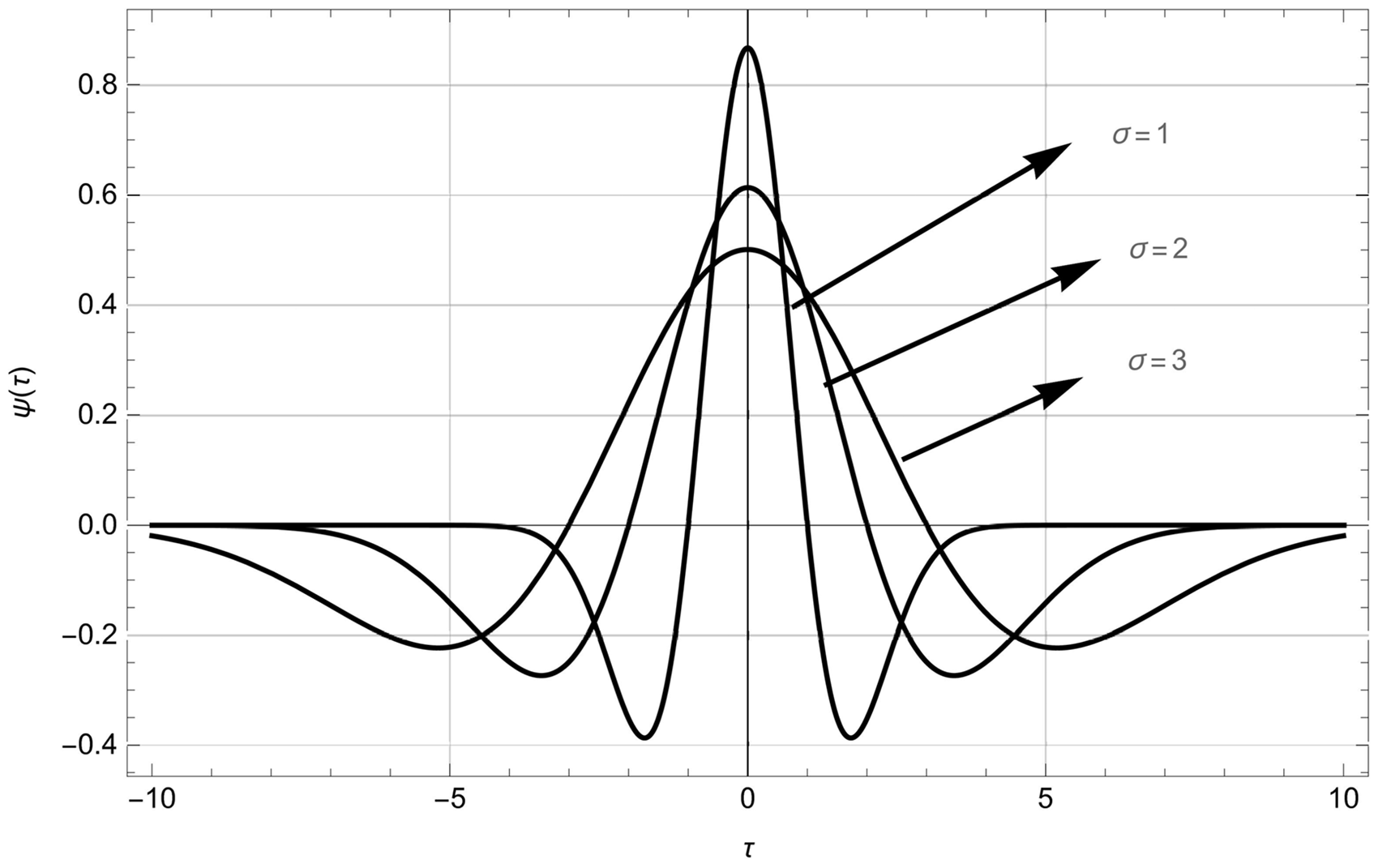
MHW at different values of
Fractional-order Chua’s model
Chua’s system is a simple electronic system which contains a nonlinear resistor (Chua’s diode) with a piecewise-linear characteristic.
3
As mentioned previously, Chua's system is a paradigm for chaos and has received considerable attention for more than a decade. Its mathematical structure has been widely studied with the definitions of fractional derivatives by several well-known authors.5,7 In general, the normalized dimensionless dynamical equation of Chua's circuit, with Caputo fractional derivative can be written as



This generalization is found in Cafagna and Grassi, 7 where the substitution of the continuous piecewise-linear function is made with a smooth function, such as a cubic polynomial etc. Here, we obtain different representations of solutions of the fractional-order Chua’s model (9), by using fractional Laplace transformation along with ANN and an optimization technique SA, elaborated in the next section.
Methodical scheme
In this section, we systematically illustrate the strategy that is proposed to evaluate the governing Chua's system. Firstly, a parametric expansion of the fractional-order Chua’s system into a new integer order system is carried out by employing fractional Laplace transform. Then, an ANN technique with SA is exerted to achieve an approximate analytical solution for the system. In fact, the parametric reduction of the fractional model fulfilled at the first step can further enhance the computational productivity.
Implementation of fractional Laplace transform
Consider the Caputo fractional operator


On replacing equation (11) into equation (10) and using the inverse Laplace transform we attain the parametric expansions as

Taking into account equation (12), the fractional-order Chua’s system (9) is simplified to the following differential system

This process of linearization is found to be significantly helpful in reducing computational costs that occur in different complicated approximations. Thenceforth, we exercise the proposed scheme to get the analytical solutions of system (13) with conditions (8), which will consequently lead to an approximate analytical solution of the fractional-order Chua’s system (9).
Approximations of MHW-based ANN
ANN predominantly approximates the functions by introducing a trial solution, which features two important parts: the first part contains an ANN with a vector, encompassing all its corresponding weights, whereas the second part must satisfy the initial/boundary conditions. Therefore, assume
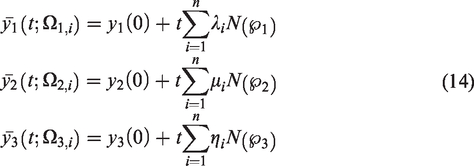
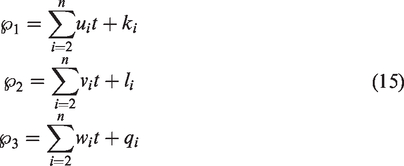
Such that
Fitness function
The construction of fitness function is based on the residual error of equation (13), which, after substitutions of trial solutions, can be written as
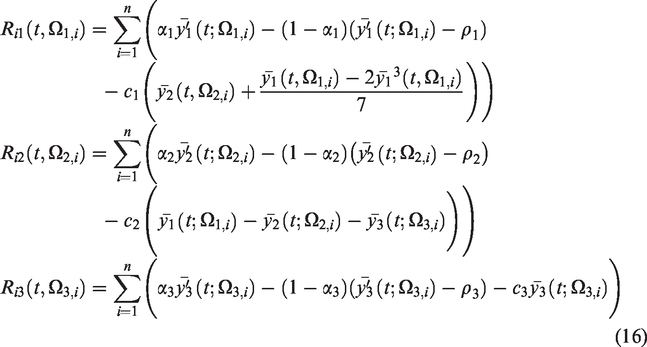
Now, using the capability of approximation theory in mean square error (MSE) sense, the fitness/objective function is developed as

Next, for the required minimum value of fitness function, we apply an SA algorithm, 22 which is a popular heuristic optimizer.
SA algorithm
SA algorithm imitates the annealing process, which is followed in material sciences, where a metal is cooled and frozen into a crystalline state with the minimum energy and larger crystal sizes so as to refine the metallic structures. Here, we use SA to compute the unknown terms of the series and optimize the performance index. This process encompasses the following features:
The unknown parameters whose values are to be determined. A conditional equation or an objective function. Its values play a crucial part in measuring the probability. Boltzmann probability distribution, which is an exponential function that assigns the probability to each value of the conditional equation.
The detailed algorithm of SA scheme is defined as follows:
Objective function
Initialize the initial temperature
Set the final temperature
Define the cooling schedule
Drawn from a Boltzmann probability distribution
Move randomly to a new location:
Calculate
Accept the new solution if better
Generate a random number
Accept if
Update the best
Suppose that
Performance index
The accuracy of the algorithm is assessed in terms of the two different performance measures, namely, mean absolute error (MAE) and the root mean square error (RMSE), i.e.



Application and discussion
Now, we investigate the dynamical behaviour of system (13) by the method described in the section Methodical scheme and the classical FFRK method. Scientifically, all the numerical manipulations and constructions of figures and tables are carried out using Mathematica 11. Following the aforementioned procedure, the trial solution of equation (13) for
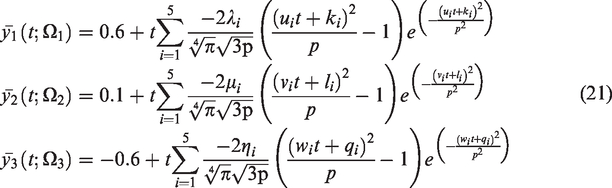
Here,
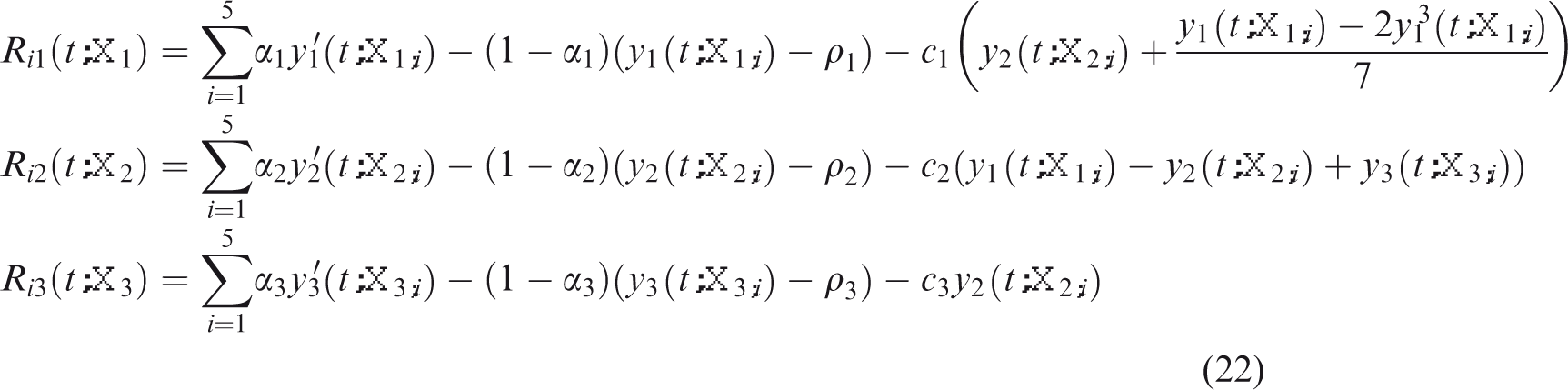
Substituting equation (21) into equation (22) and on discretizing
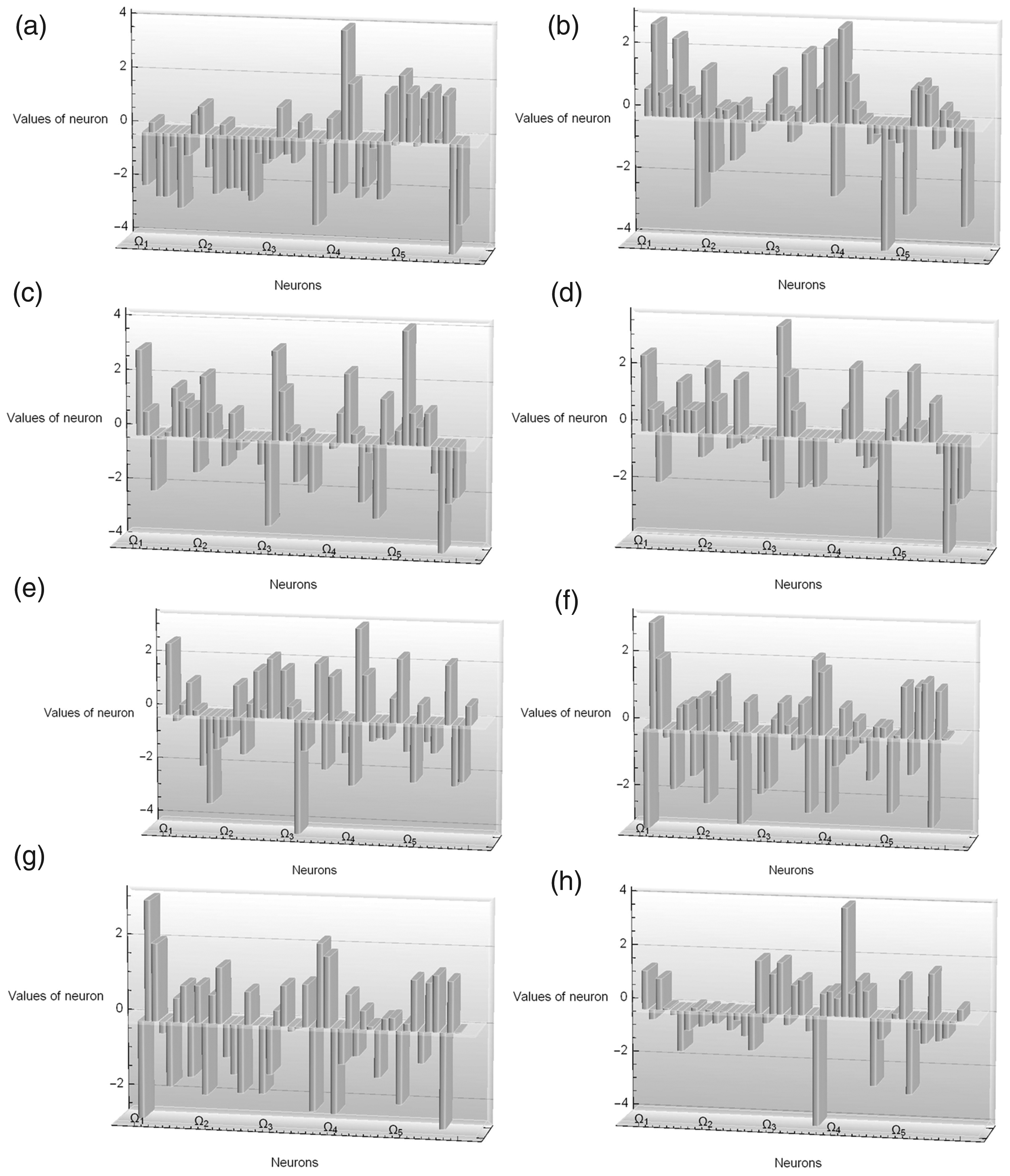
Set of weights of ANN for different values of
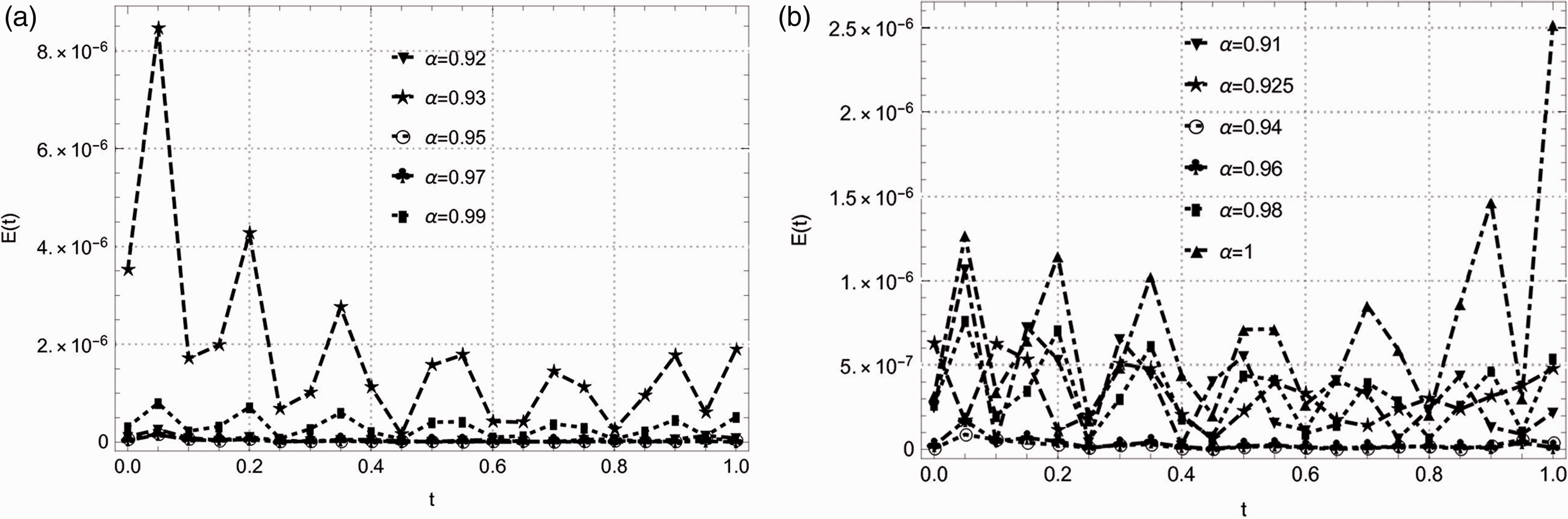
Fitness function
The optimized values of the fitness function
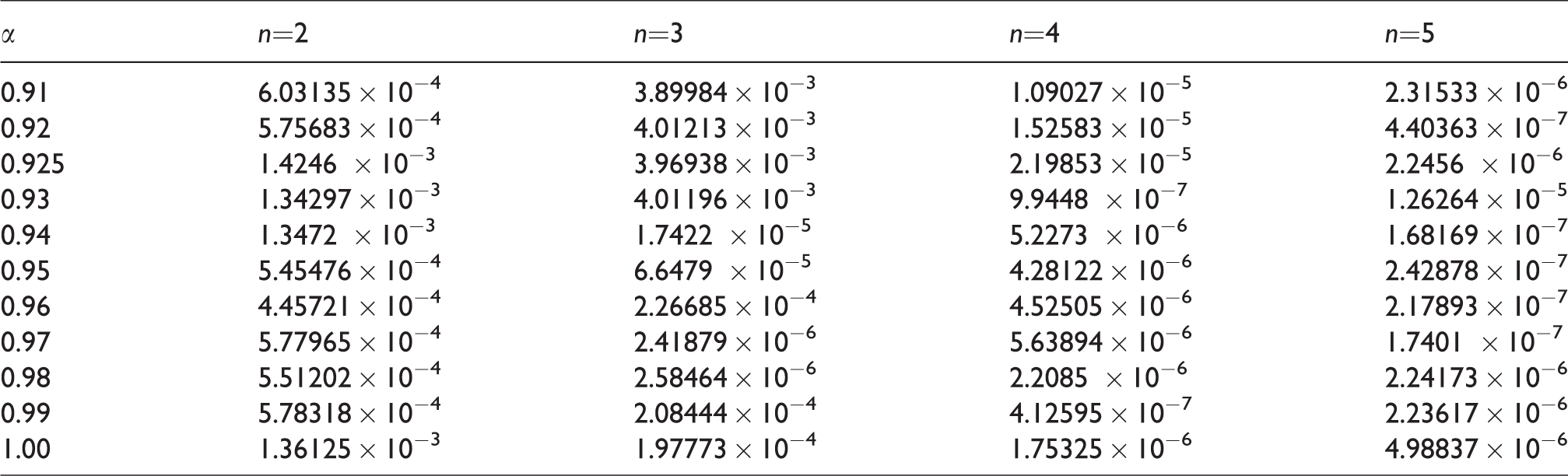
The RMSE values of
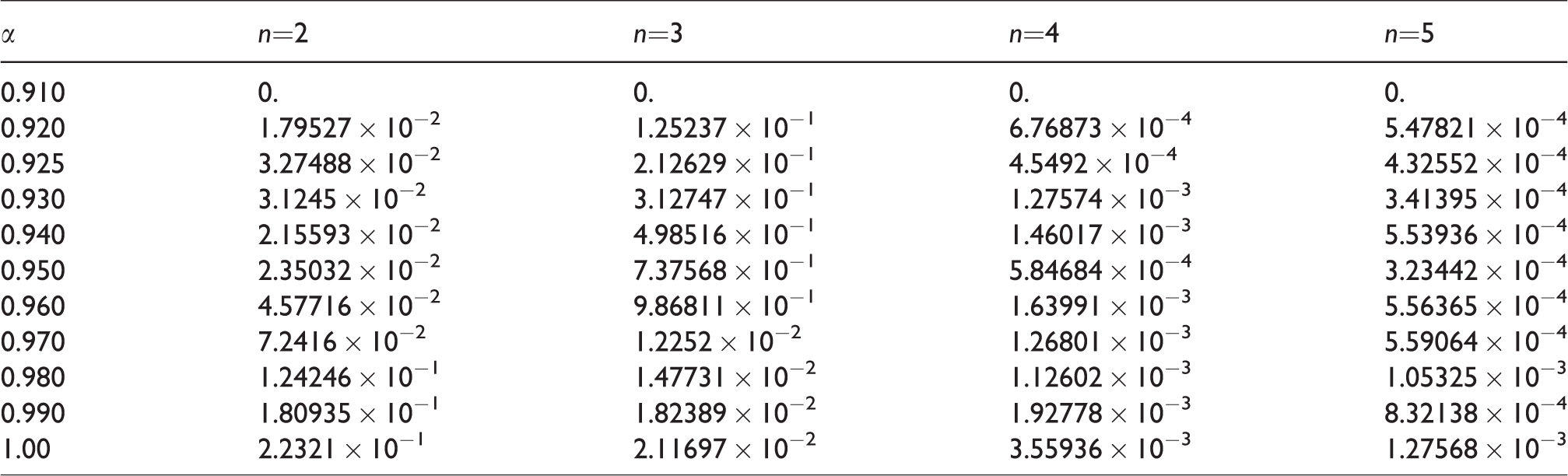
The RMSE values of
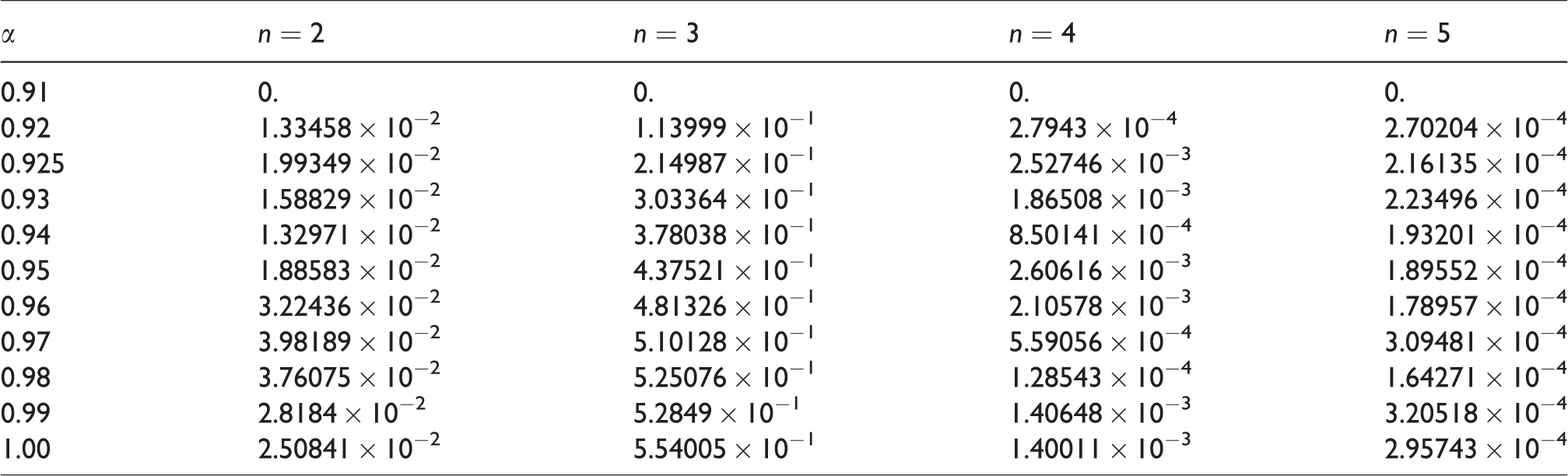
The RMSE values of
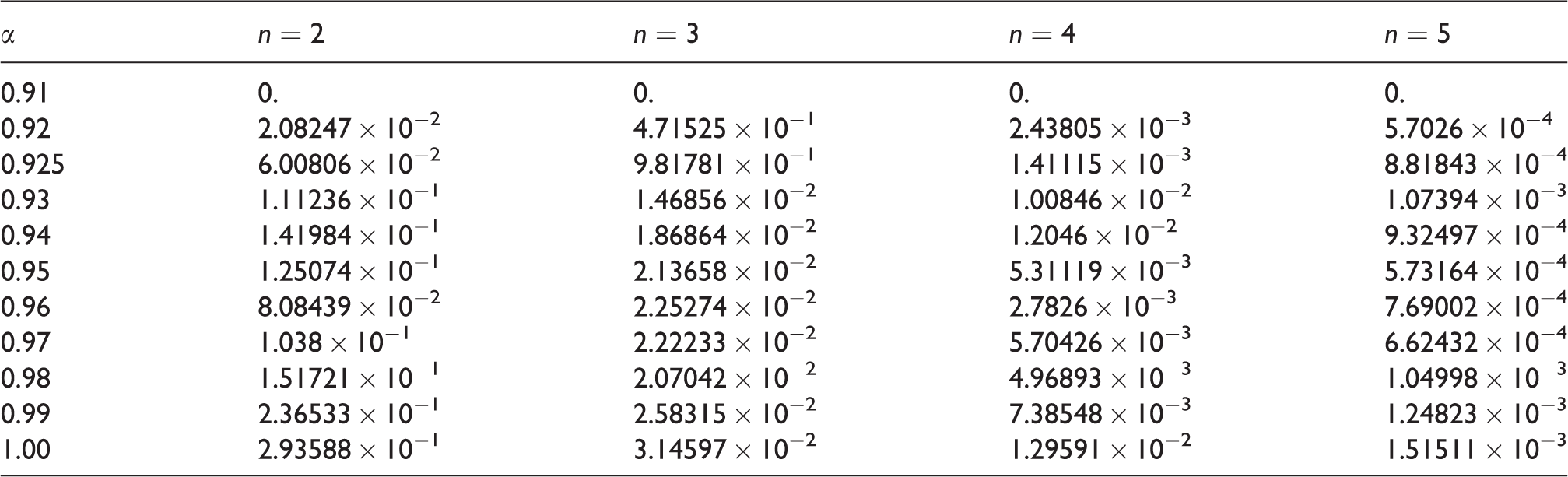
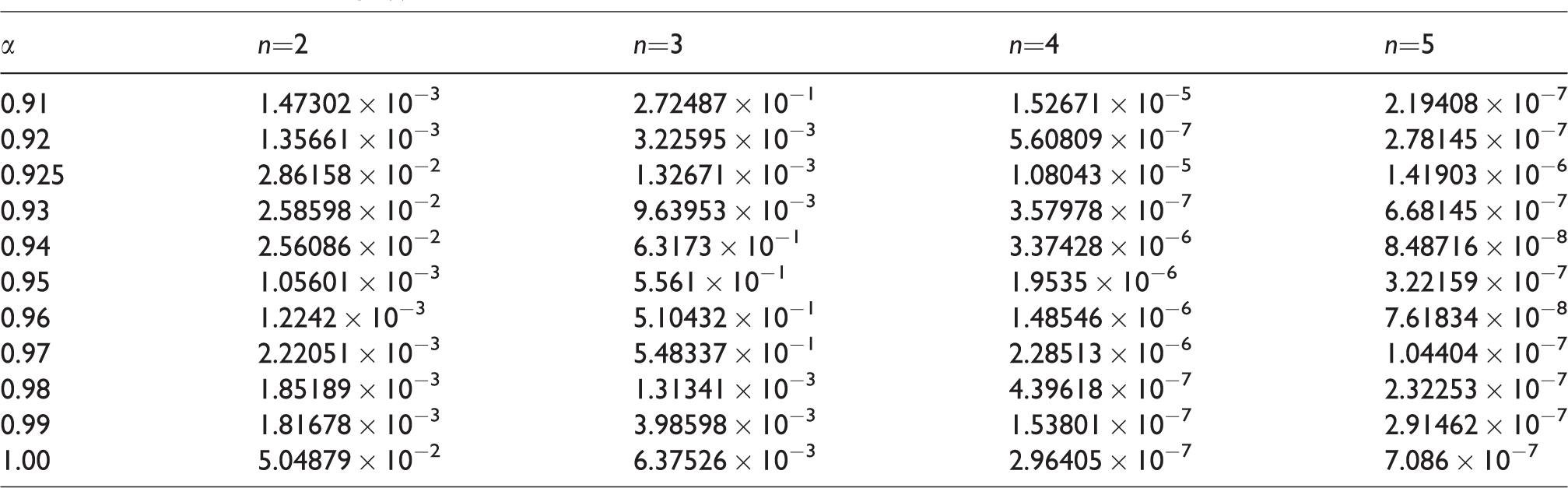
The MAE values of
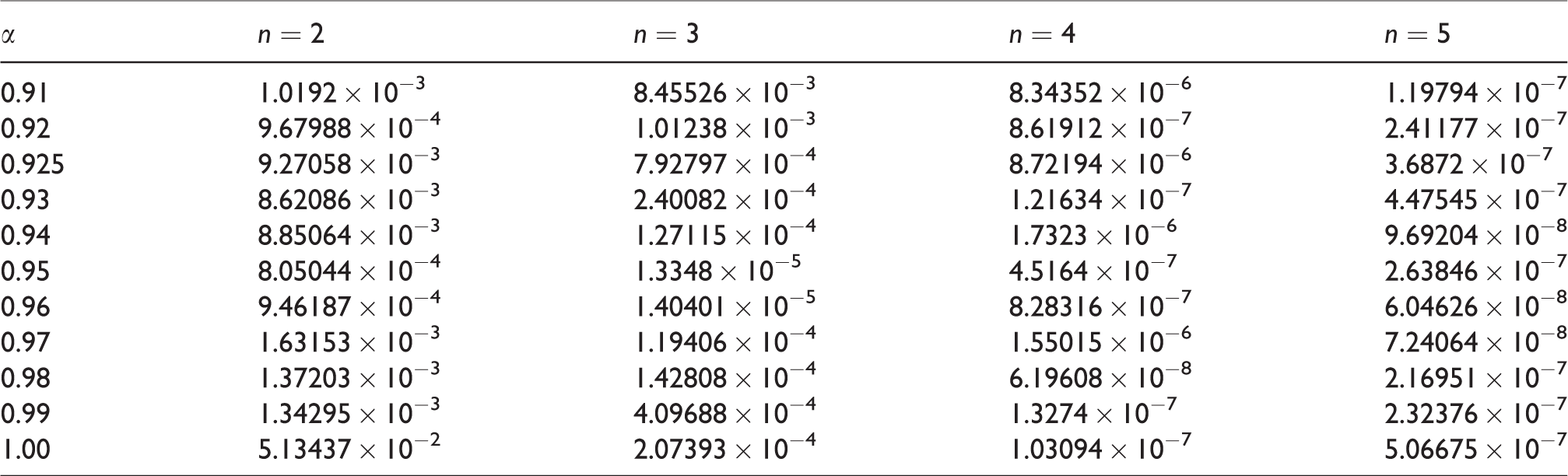
The MAE values of
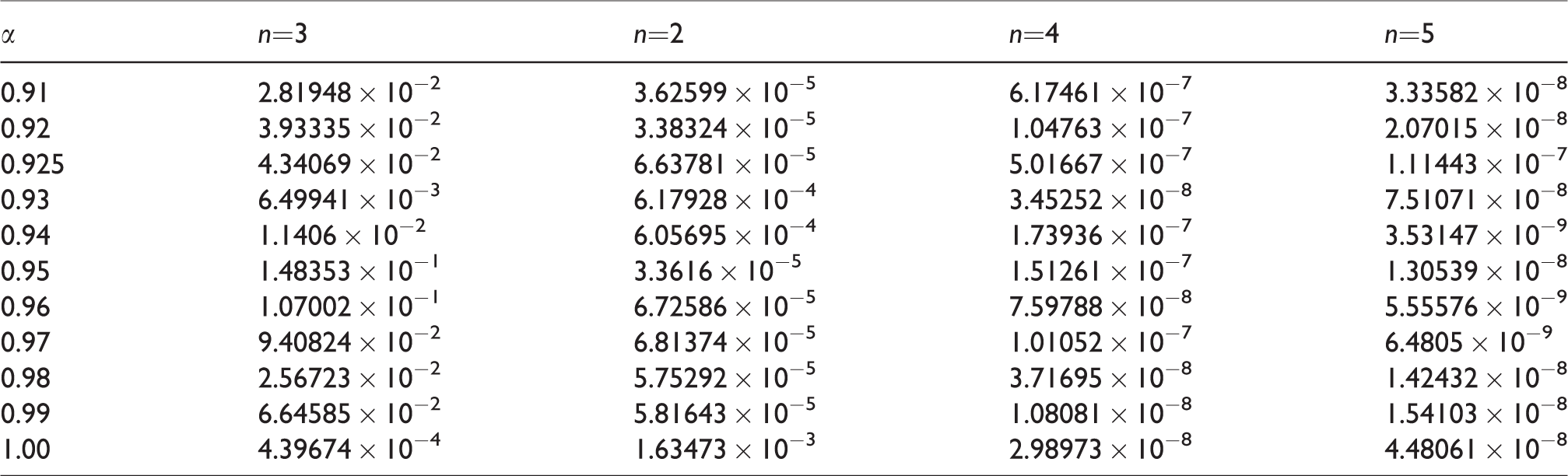
The values of MAE
The dynamical behaviour of the time series of equation (13), attained by using FFRK method, are plotted in Figures 4 to 6 for
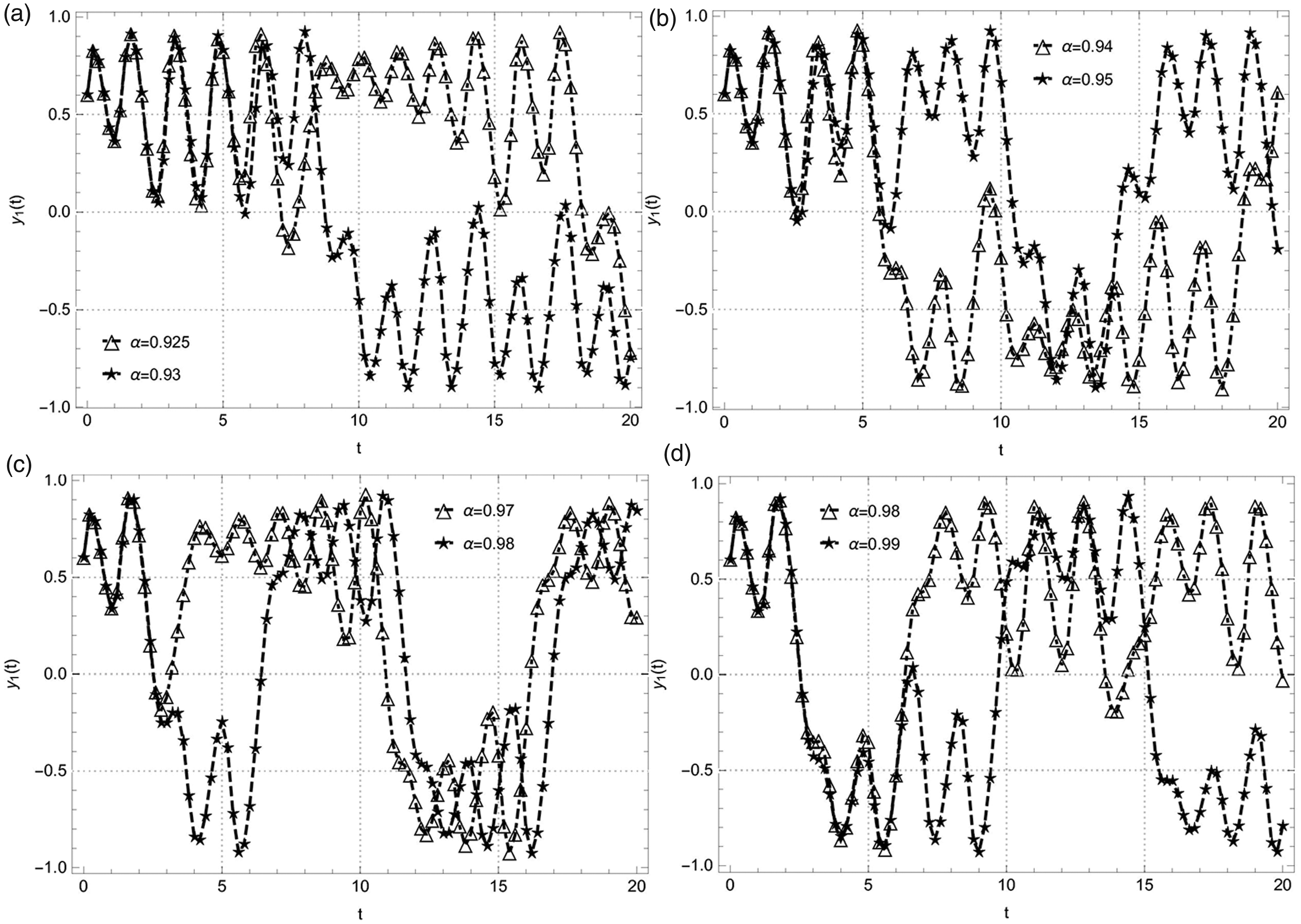
Time series of
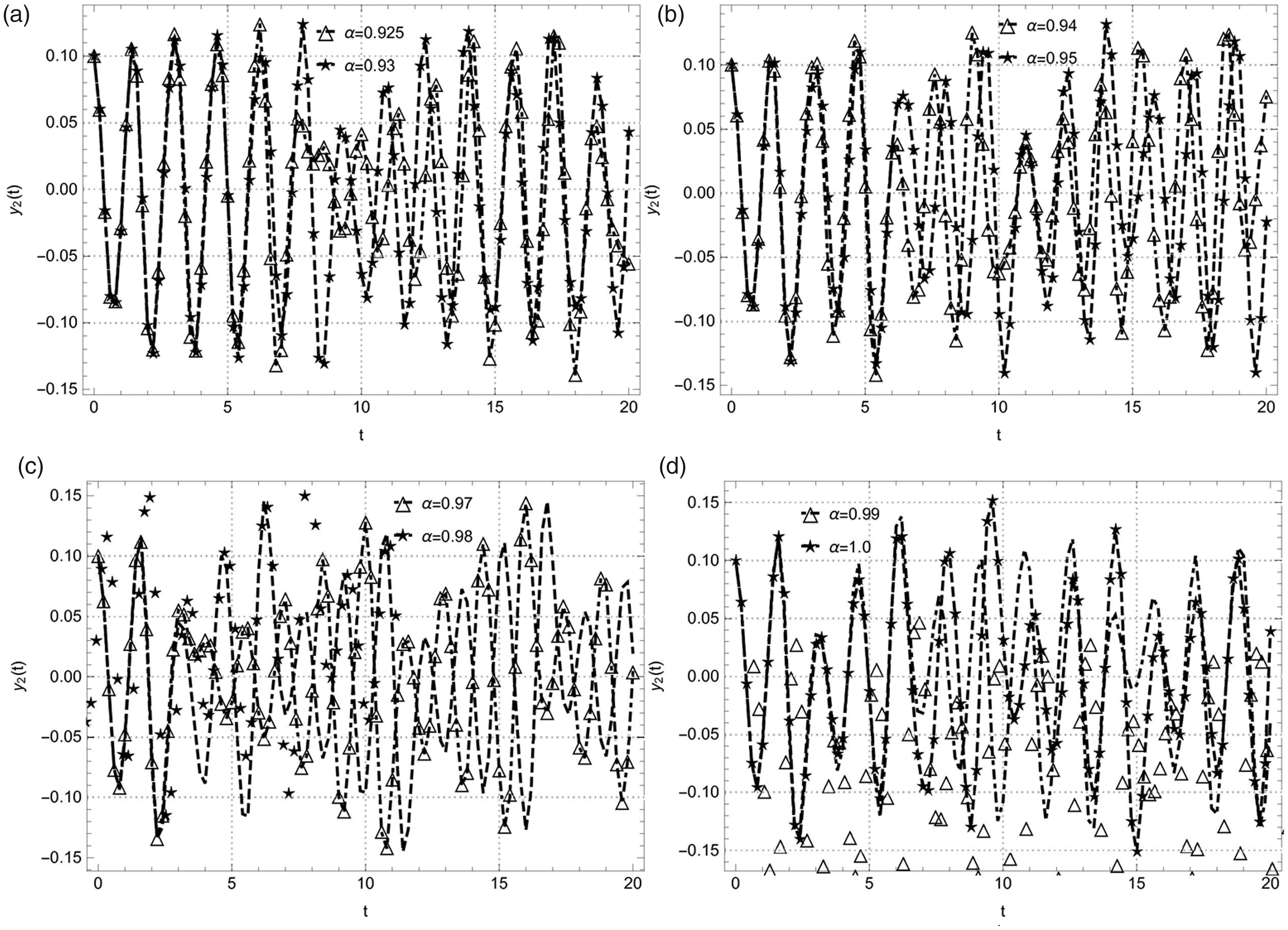
Time series of
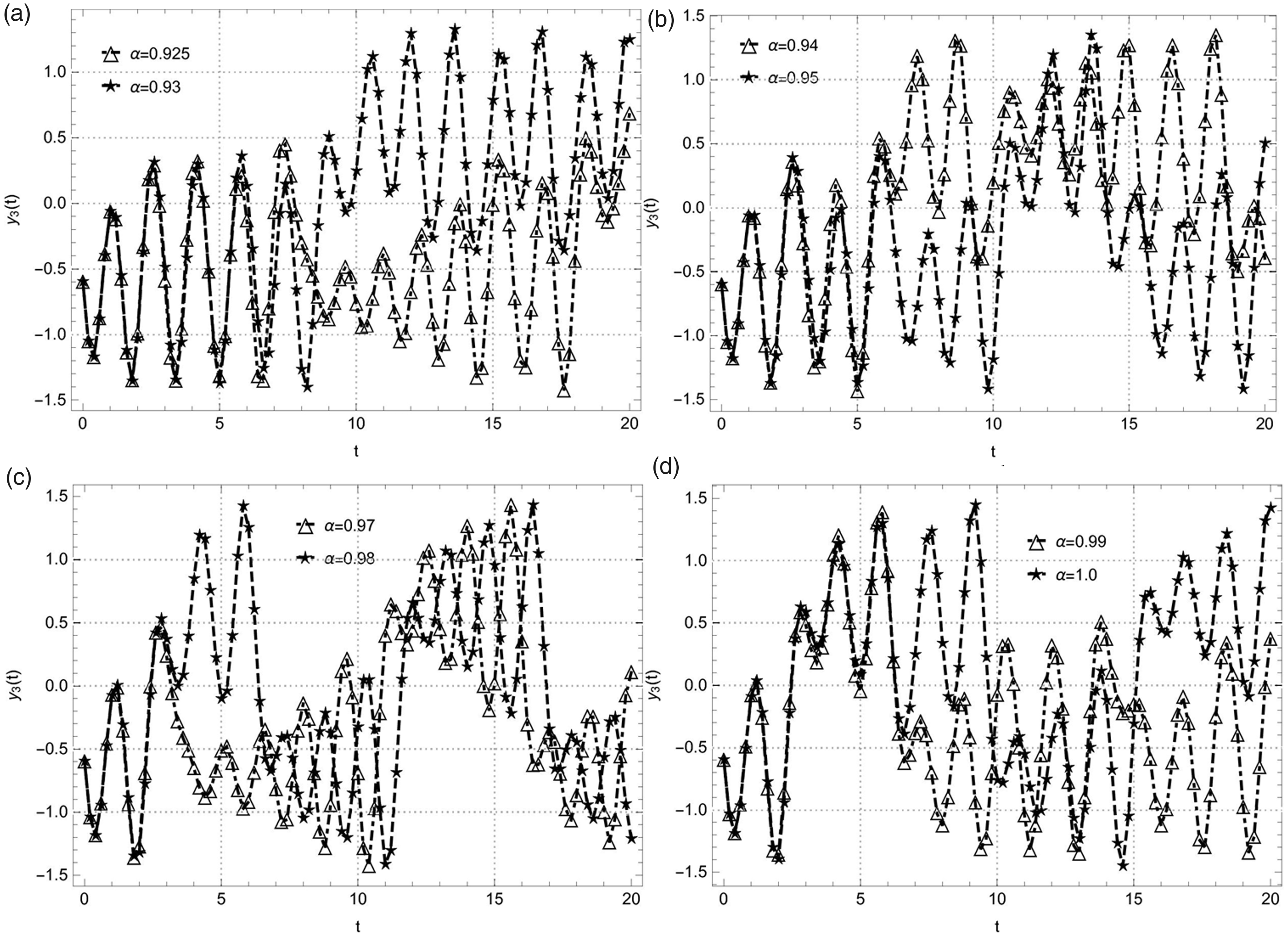
Time series of
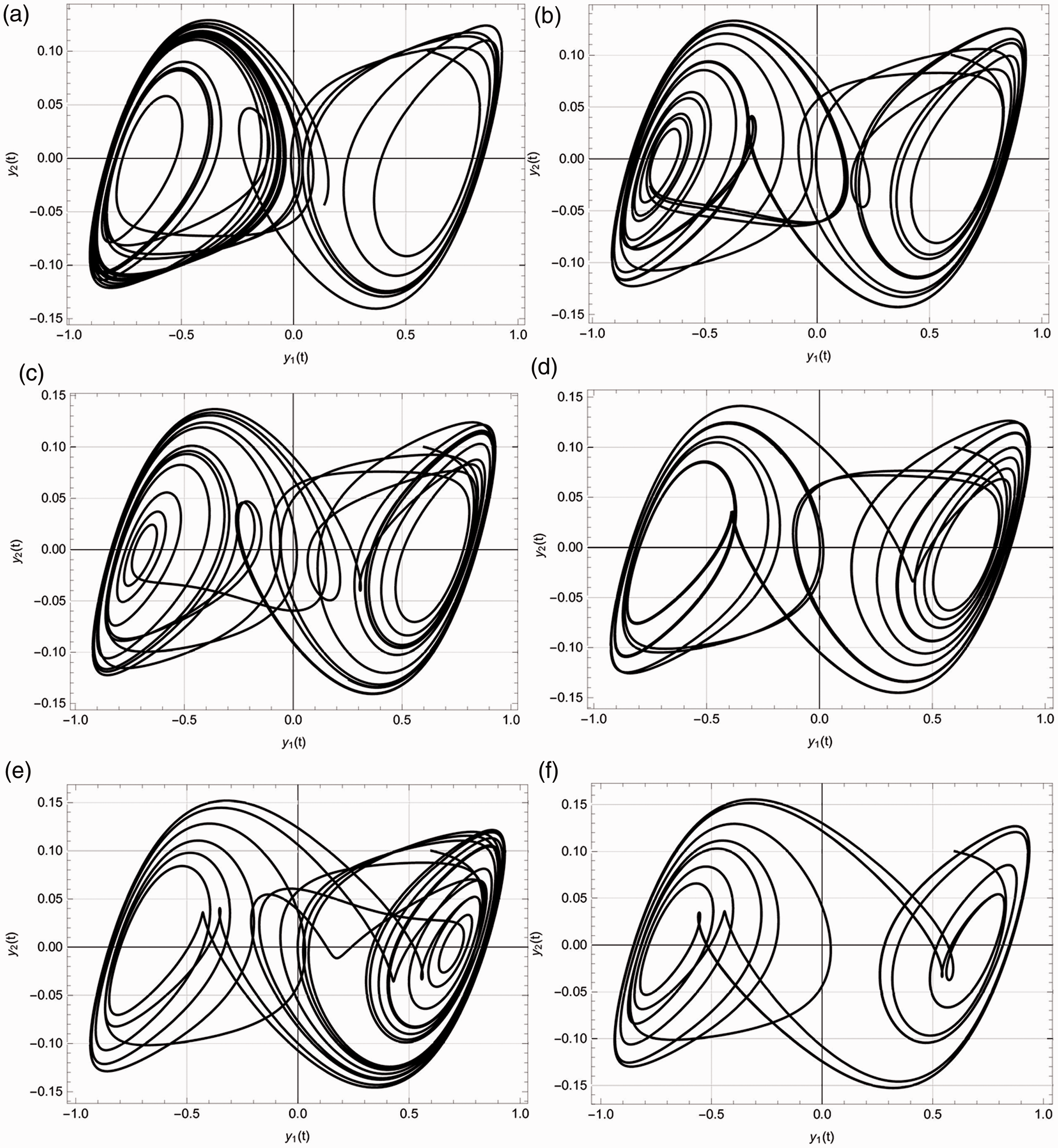
Phase plane projections, for
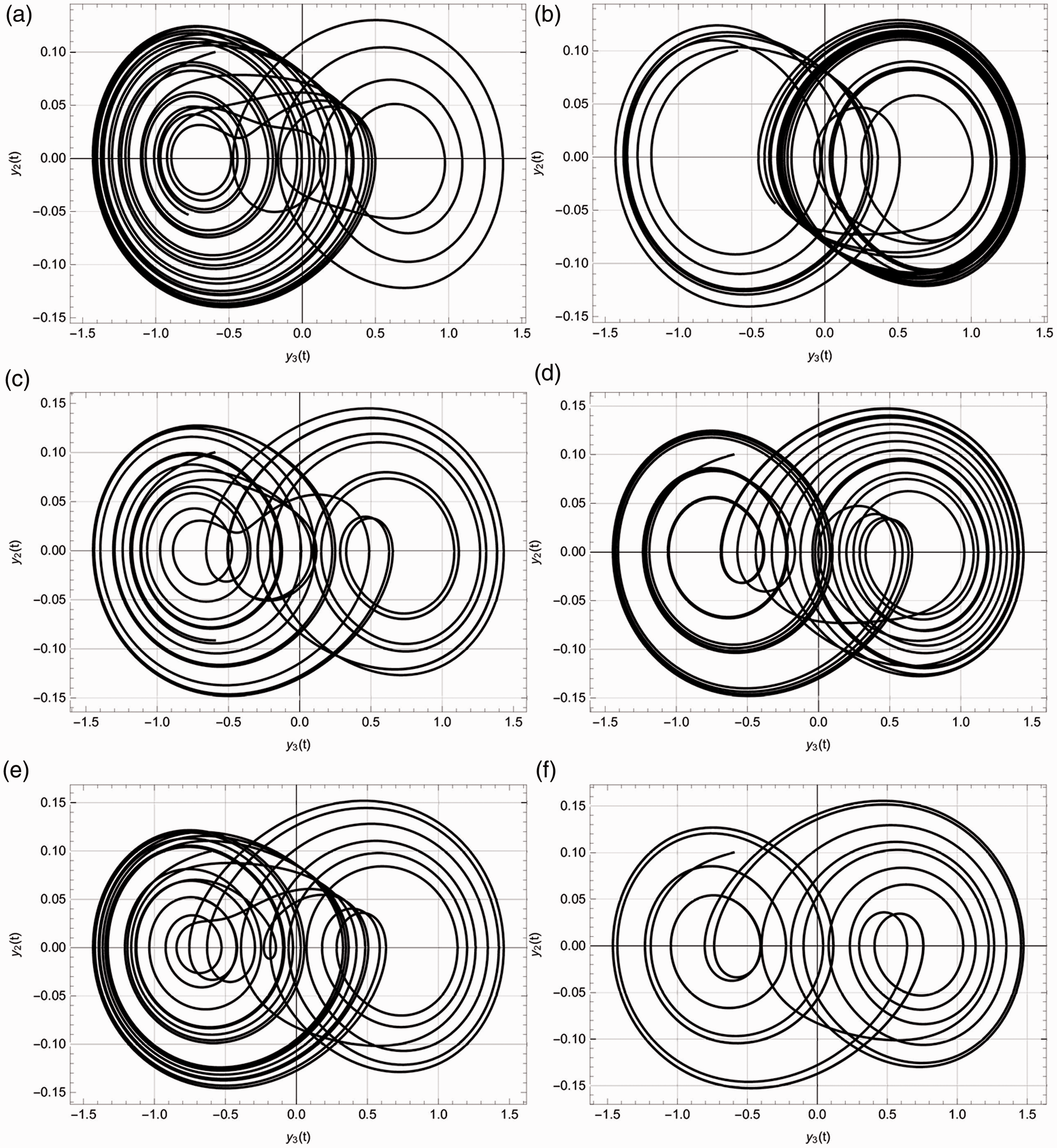
Phase plane projections, for
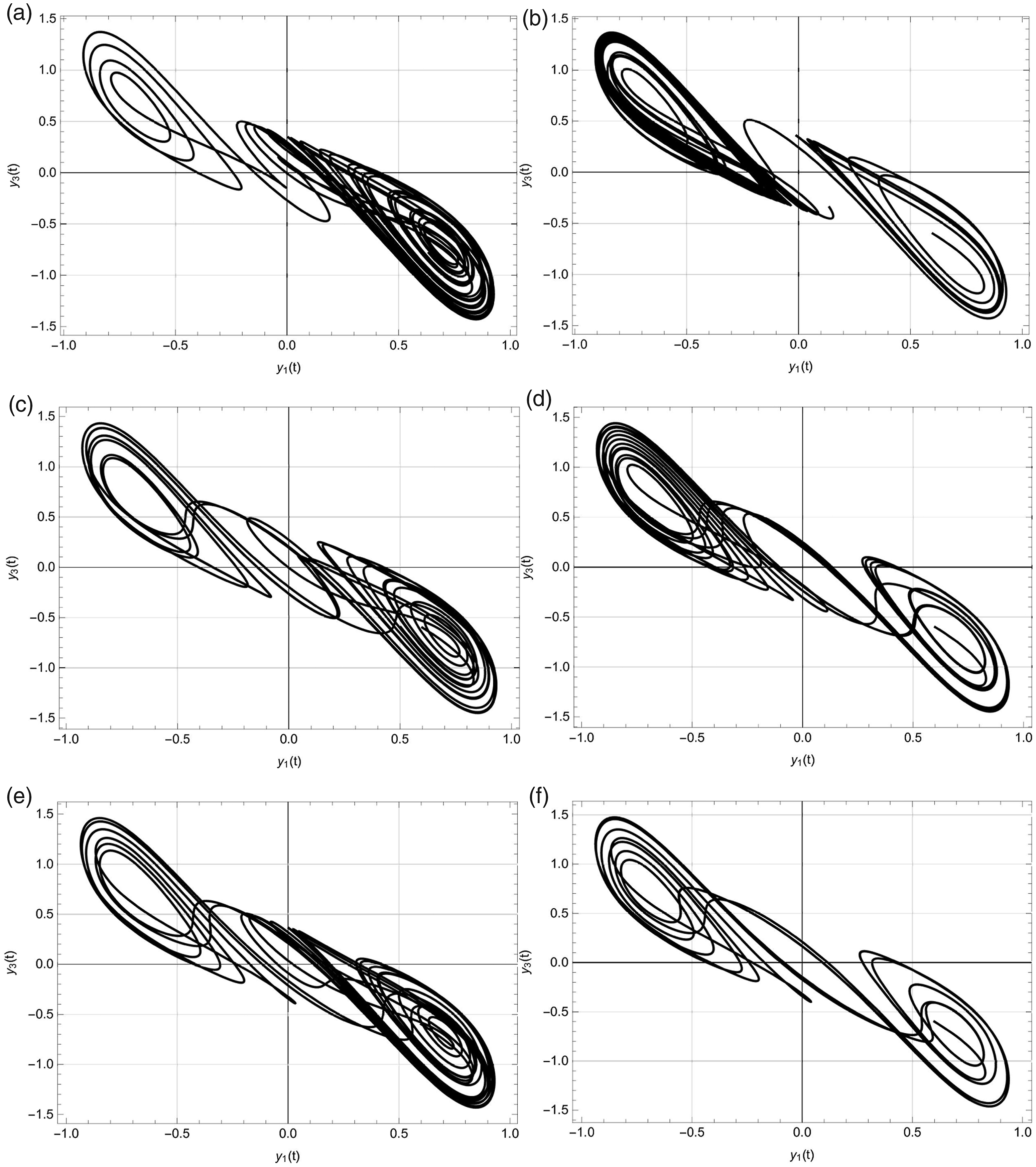
Phase plane projections, for
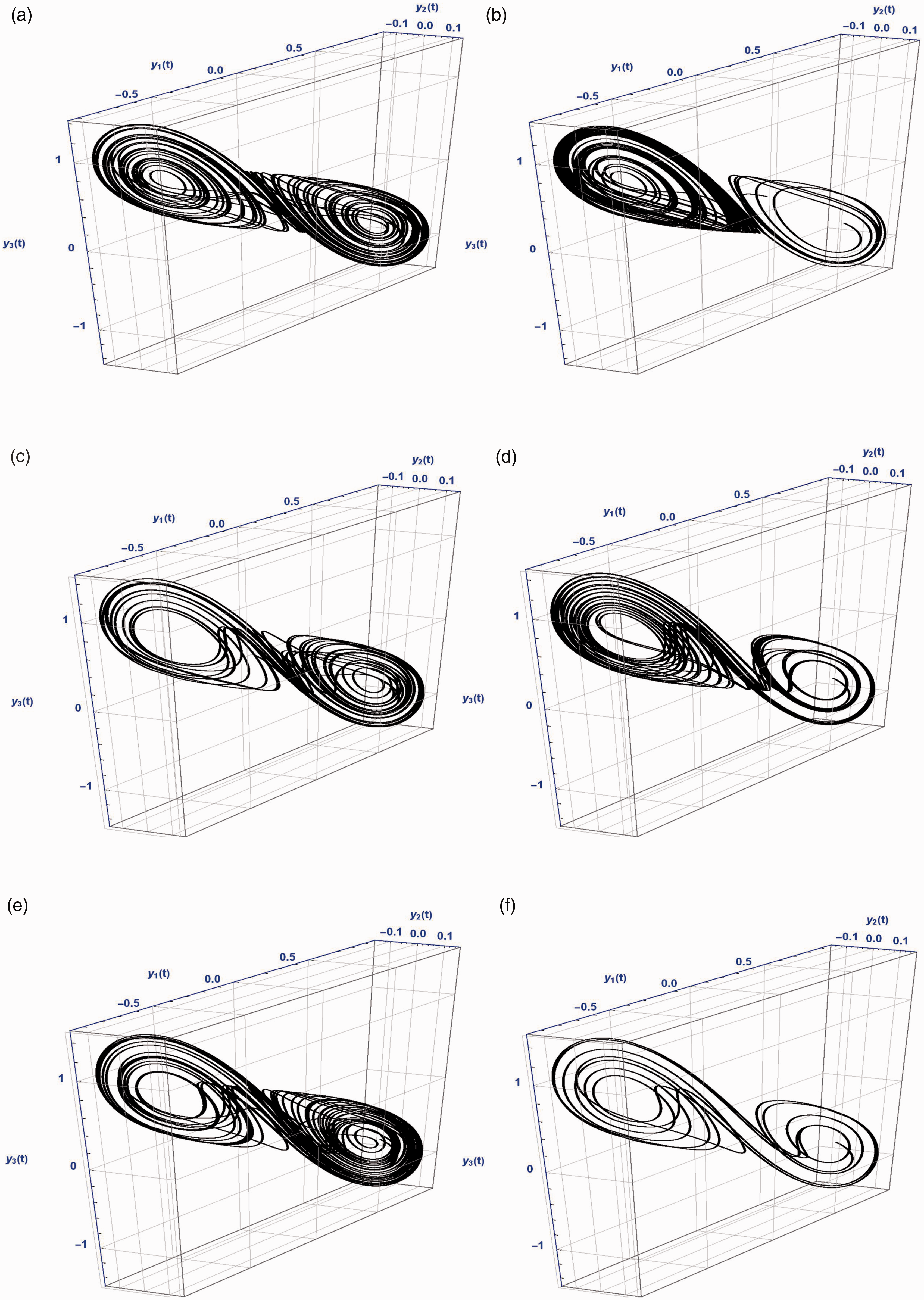
3D Phase portrait of Chua’s system at different order
Furthermore, the bifurcation diagram of the system (13) is also plotted in Figure 11, with respect to the parameter
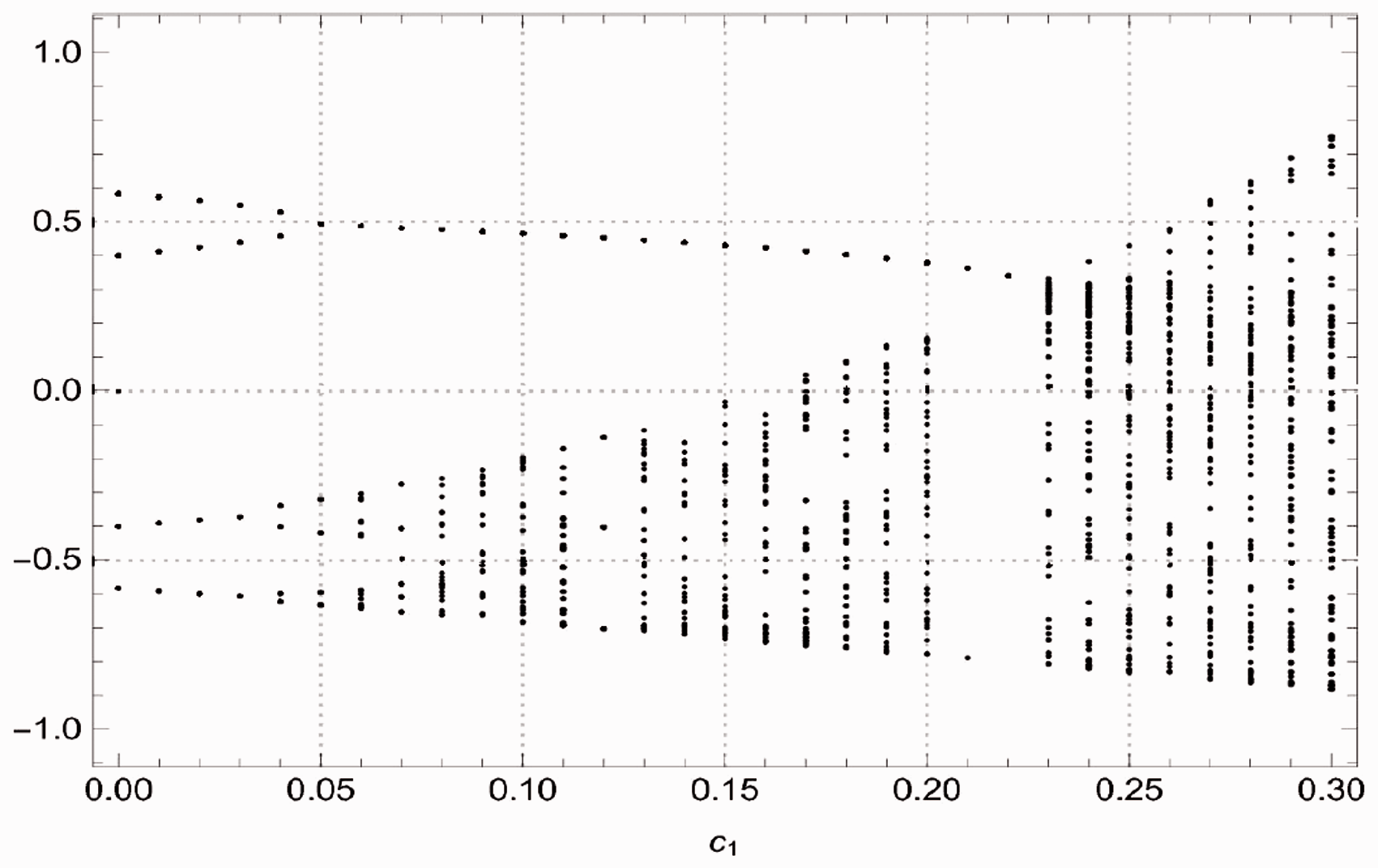
Bifurcation diagram of the fractional-order Chua’s system.
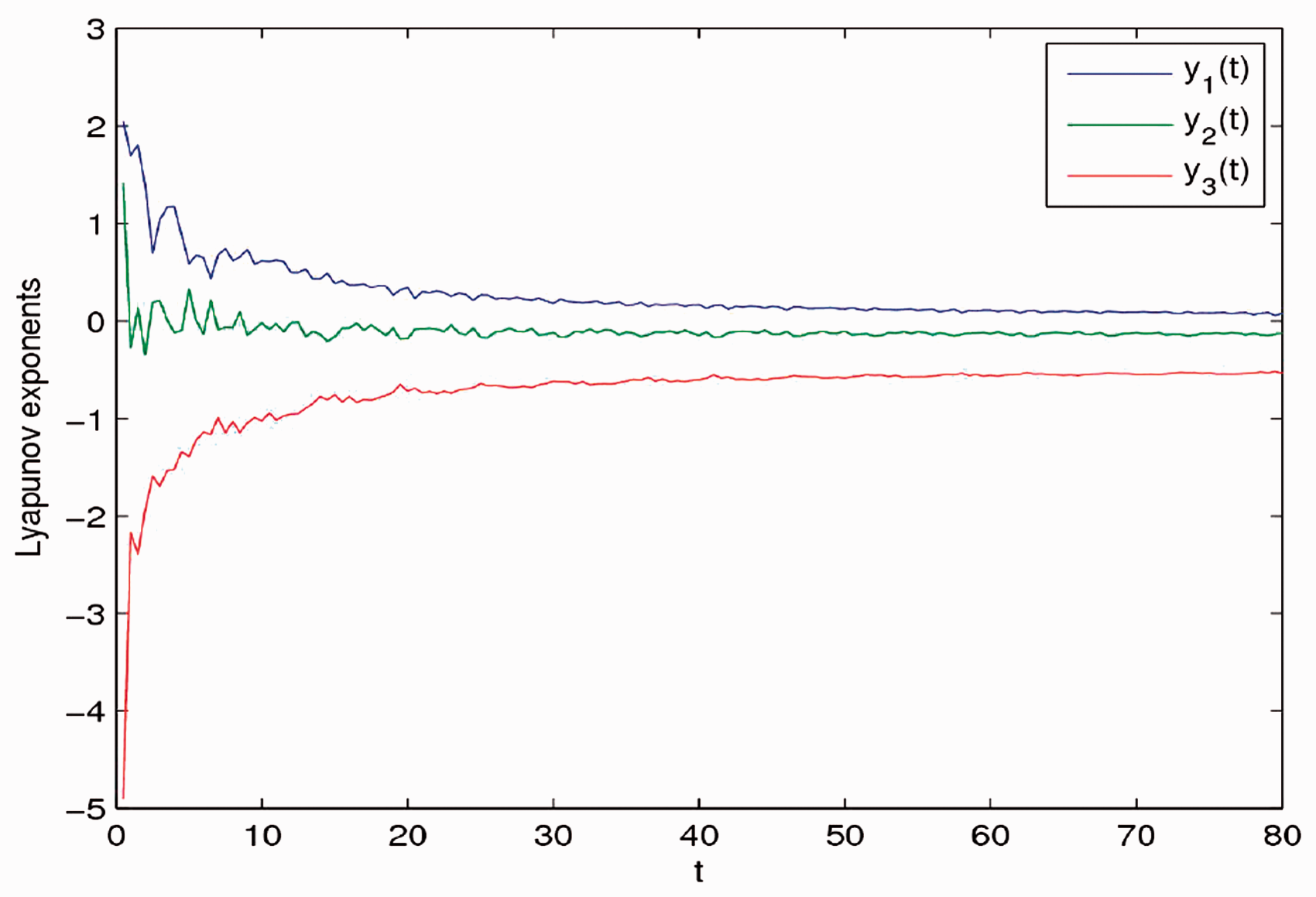
LEs of the Chua’s system with cubic nonlinearity.
Conclusion
In the present work, we carried out a systematic stratagem to scrutinize the fractional Chua's system and also comprehensively discussed its chaotic behaviour. The parametric linearization of fractional Laplace transform and two well-known methodologies, MHW-based ANN with SA and FFRK method, were proposed to attain the solutions of fractional Chua's model. Comprehensively, from the entire study, following lucrative outcomes were achieved:
The advantage of fractional Laplace transform expansion, which converted the fractional Chua's model into integer order differential system that remains in the fractional environment, made its simulation much easier. The MHW-based ANN with SA algorithm efficiently solved the cubic nonlinearity and produced optimized values of the dynamical variables of the Chua's circuit for different fractional values that ascertains its constructive applicability to solve nonlinear fractional systems. Through LE entropy we analysed the stability and sensitivity of the initial conditions and presented chaotic predictions of fractional Chua's model. The successful plots of LE for the cubic nonlinearity of Chua's system with the fractional factor verify the ability of LE to study the stability of fractional order systems as well. The FFRK method made it possible to attain phase portraits of chaotic attractors in different dimensions and for different fractional values of the Chua's circuit, which illustrates a notable capability of this method to describe the chaotic behaviour of the systems. Additionally, by means of visualization of the bifurcation plots and chaotic attractor of fractional Chua's circuit, the key objective of this attempt is achieved.
In the future, we will study dynamical behaviours of many other nonlinear systems that appear in different fields of science. Technically, we will consider some other amalgamation of neural networks with optimization algorithms to solve fractional partial differential equations as well.
Footnotes
Acknowledgements
The corresponding author acknowledges the referees and Editor Prof JH He for his comments and suggestions.
Declaration of conflicting interests
The author(s) declared no potential conflicts of interest with respect to the research, authorship, and/or publication of this article.
Funding
The author(s) received no financial support for the research, authorship, and/or publication of this article.