



Abstract
Objective
To conduct a multidimensional evaluation of endometrial cancer (EC)–related videos on major Chinese short-video platforms.
Methods
A cross-sectional study conducted on May 8, 2025 analyzed 226 eligible EC-related videos from TikTok, Rednote, and Bilibili. Video quality was assessed using Global Quality Scale (GQS) and Video Information and Quality Index (VIQI), reliability using modified DISCERN (mDISCERN), and understandability and actionability using Patient Education Materials Assessment Tool (PEMAT).
Results
Among 226 videos, TikTok emphasized symptoms/risk factors and scored highest in engagement, reliability (mDISCERN=2.0, P=0.002), and understandability (88%). Bilibili led in VIQI (median=17.0) but had the lowest understandability (67%). Professional videos outperformed patient-generated content (all P<0.05). Video length correlated positively with quality but negatively with engagement and understandability (all P<0.01).
Conclusions
EC-related videos vary widely in quality and lack consistent actionability. Strategic content design and platform-level verification are needed to improve reliability and public health impact.
Keywords
Introduction
Endometrial carcinoma (EC), a malignant epithelial tumor of the endometrium, has shown a markedly rising incidence in China and is currently the second most common gynecologic malignancy.1–3 Established risk factors include advanced age, menstrual and reproductive history, obesity, and chronic conditions such as diabetes and hypertension. 4 EC not only threatens patients’ physical and psychological health but also reduces quality of life and imposes a substantial socioeconomic burden. From a public health perspective, early detection, accurate information dissemination, and accessible education are essential to improving outcomes and reducing inequities in women’s health.
In 2024, internet penetration in China reached 78.6%, representing approximately 1.108 billion users. 5 With the rapid expansion of digital technology, the internet has become an important source of health-related information for the general public. It is known that approximately half of the adult population consults the internet for health-related information. 6 In the context of information overload, the public increasingly turns to online platforms for health-related information.7,8 Among various forms of online media, short-video platforms have experienced particularly rapid growth and have become prominent channels for health communication. According to statistics, videos tagged with #cancer on TikTok have accumulated over 1.1 billion views worldwide, 9 reflecting substantial public demand for health information delivered through short-form videos. In China, TikTok, known as Douyin, is one of the most widely used mobile applications, with approximately 766 million daily active users, making it a dominant platform for the rapid dissemination of short-form video content. 10 Bilibili, a comprehensive video-sharing platform particularly popular among younger generations in China, reports approximately 109 million daily active users 11 and is widely recognized for its knowledge-oriented and educational content. In contrast, Rednote functions as a lifestyle-oriented social media platform characterized by community-based interactions and user-generated experience sharing, with approximately 100 million daily active users.11,12 These three platforms were selected because they represent the most influential Chinese short-video ecosystems, covering mass entertainment (TikTok), knowledge-oriented video communities (Bilibili), and lifestyle-driven social sharing (Rednote). Together, these platforms represent major channels through which Chinese users access and exchange health information online.
Short videos enable users to access information in an engaging and easily digestible format. Importantly, they often integrate verbal explanations with visual supports such as animations, diagrams, subtitles, and procedural demonstrations, which play an important didactic role in medical communication. Visual elements can facilitate comprehension of complex medical concepts and improve knowledge retention. Graphic supports such as diagrams, animations, subtitles, and procedural demonstrations play an important didactic role in medical education and patient communication. Previous studies have demonstrated that visual demonstrations in online videos can enhance the educational value and learning effectiveness of medical information delivered through digital media. 13 Beyond patient education, videos can also serve as an important component of gynecological training. In particular, for early-career clinicians or practitioners in resource-limited settings, surgical videos provide valuable visual guidance for understanding complex anatomical structures and operative techniques. Previous studies have further supported the role of video-assisted learning in enhancing training quality and facilitating knowledge dissemination in gynecological practice. 14
Because online videos frequently include substantial written information in addition to verbal explanations, the concept of health literacy is particularly relevant. Health literacy refers to an individual’s ability to obtain, understand, and use health information to make informed health decisions. The National Institutes of Health, the U.S. Department of Health and Human Services, and the American Medical Association recommend that patient education materials be written at approximately a 6th-grade reading level to ensure accessibility for the general population. 15 Ensuring that health information is accessible and understandable is essential for improving patients’ knowledge of their disease. Patients who have knowledge about the causes, pathophysiology, treatment and prevention of a disease are better able to participate and comply during the disease prevention or treatment procedures. 16
Despite their potential to improve health literacy and broaden access to medical knowledge, short-video platforms are largely unregulated, raising concerns regarding the accuracy, completeness, and reliability of the health information they disseminate. Previous studies assessing online video content related to diseases such as liver cancer, cervical cancer, and gastroesophageal reflux disease have reported considerable variability in information quality, with some videos containing incomplete or misleading content. Notably, videos produced by healthcare professionals were generally found to be more reliable than those created by laypersons.3,17–19 To our knowledge, despite the increasing incidence and growing public health burden of EC in China, no previous studies have systematically evaluated EC-related videos on short-video platforms. Therefore, this study aims to perform the first systematic and multidimensional evaluation of the quality, reliability, understandability, and actionability of EC-related videos on three major Chinese short-video platforms: TikTok, Bilibili, and Rednote. The findings of this study may provide evidence-based insights to guide content creators, platform regulators, and healthcare providers in improving the effectiveness and accuracy of digital health communication for women’s cancers.
Methods
Video selection
Employing a cross-sectional design, this research conducted a multidimensional assessment of endometrial carcinoma (EC)-related video content on Chinese social media platforms. A systematic search using the Chinese term “子宫内膜癌” (endometrial cancer) was performed on TikTok, Bilibili, and Rednote on May 8, 2025. Data collection, screening, and extraction were conducted between May 8 and May 20, 2025. This study focused on Chinese-language videos because the objective was to evaluate the quality of EC-related health information available to Chinese-speaking users on major Chinese short-video platforms. The selected platforms primarily serve Chinese audiences, and the majority of health-related content on these platforms is produced in Chinese. In addition, these platforms primarily serve Chinese audiences, and most health-related videos uploaded to these platforms are produced in Chinese, making Chinese-language content the most representative source of health information for the target population. To mitigate algorithmic bias, newly registered accounts were utilized across all platforms for data collection. The default sorting algorithm’s top 100 videos were selected for evaluation, consistent with previous study that users typically engage only with initially displayed search results.20,21 The exclusion criteria encompassed non-relevant content, duplicate entries, and videos from unverifiable uploaders. The systematic selection procedure is detailed in Figure 1. We collected the features and sources of all included videos, including video links, uploader source, video content, video duration, publication dates, and user engagement metrics (number of likes, comments, collects, and reposts). Flowchart describing the video selection process.
Video content and uploader classification
The video publishers were categorized into five groups: gynecologists, other physicians, patients, professional institutions and non-professional institutions. An analytical framework was established based on the Chinese Society of Clinical Oncology (CSCO) Guidelines for Endometrial Carcinoma (2024). 22 Video content was categorized into seven thematic domains: epidemiology/definition, risk factors, symptoms, examination/diagnosis, pathology/staging/genotyping, treatment/follow-up/prognosis, prevention. Detailed classification criteria for each category are provided in Tables S1–S2 in Multimedia Appendix 1.
Video quality and reliability assessment
Video reliability was evaluated using the modified DISCERN (mDISCERN) instrument, adapted from Singh et al. This instrument had been recognized in public health and medical informatics literature for its enhanced practicality and accuracy in assessing web-based health content.23,24 It comprised five items, each scored one point for a satisfactory response, yielding a total score from 0 to 5 (Table S3).
Video quality was assessed using the Global Quality Scale (GQS) and the Video Information and Quality Index (VIQI). The GQS, a widely adopted 5-point Likert scale, rated the overall informational quality of healthcare videos 25 (Table S4). The VIQI instrument evaluated four domains on a 1–5 scale, with higher scores indicating superior quality 26 (Table S5). Prior studies have validated the GQS, VIQI, and mDISCERN tools.25,27,28
Understandability and actionability
Understandability and actionability were evaluated using the Patient Education Materials Assessment Tool (PEMAT), developed by the Agency for Healthcare Research and Quality. Understandability reflects the clarity of materials for individuals with diverse backgrounds and health literacy levels to comprehend and articulate key messages. Actionability denotes that patient education materials allow consumers with diverse backgrounds and health literacy levels to determine specific actions they can take based on the information provided. The tool includes 13 items for understandability and 4 for actionability (Multimedia Appendix 2). Each item was scored as 1 (“agree”), 0 (“disagree”), or “NA” (“not applicable”). The final scores for understandability and actionability were converted to percentages.
Statistical analysis
Two independent raters evaluated videos in randomized sequence. Discrepancies in ratings were discussed with a third investigator to reach consensus. Final scores were assigned only after full agreement. Inter-rater reliability for GQS, VIQI, mDISCERN, and PEMAT was quantified using Kappa coefficients (κ) or the Intraclass Correlation Coefficient (ICC), interpreted as: κ or ICC > 0.8 (excellent); 0.6 < κ ≤ 0.8 or 0.6 < ICC ≤ 0.8 (substantial); 0.4 < κ ≤ 0.6 or 0.4 <ICC ≤ 0.6 (moderate); κ or ICC≤ 0.4 (poor).
Non-normally distributed data were reported as the median with interquartile range (IQR), while categorical variables were presented as frequencies and percentages. Group comparisons involving three or more non-parametric datasets used the Kruskal–Wallis test with Dunn’ s post-hoc analysis. Relationships between non-normally distributed variables were analyzed using Spearman’s rank correlation coefficient (ρ). A two-tailed p-value < 0.05 defined statistical significance. All statistical analyses were performed with IBM SPSS Statistics (Version 24.0). This study analyzed publicly available online content and did not involve human participants; therefore, institutional review board approval was not required. The reporting of this cross-sectional study followed the Strengthening the Reporting of Observational Studies in Epidemiology (STROBE) statement 29 (Multimedia Appendix3).
Results
Characteristics of videos
Video characteristics of endometrial cancer content across Rednote, Bilibili, and TikTok platforms.

*P<0.05, ** P<0.01.
a–zKruskal-Wallis test.
Video uploder and content coverage
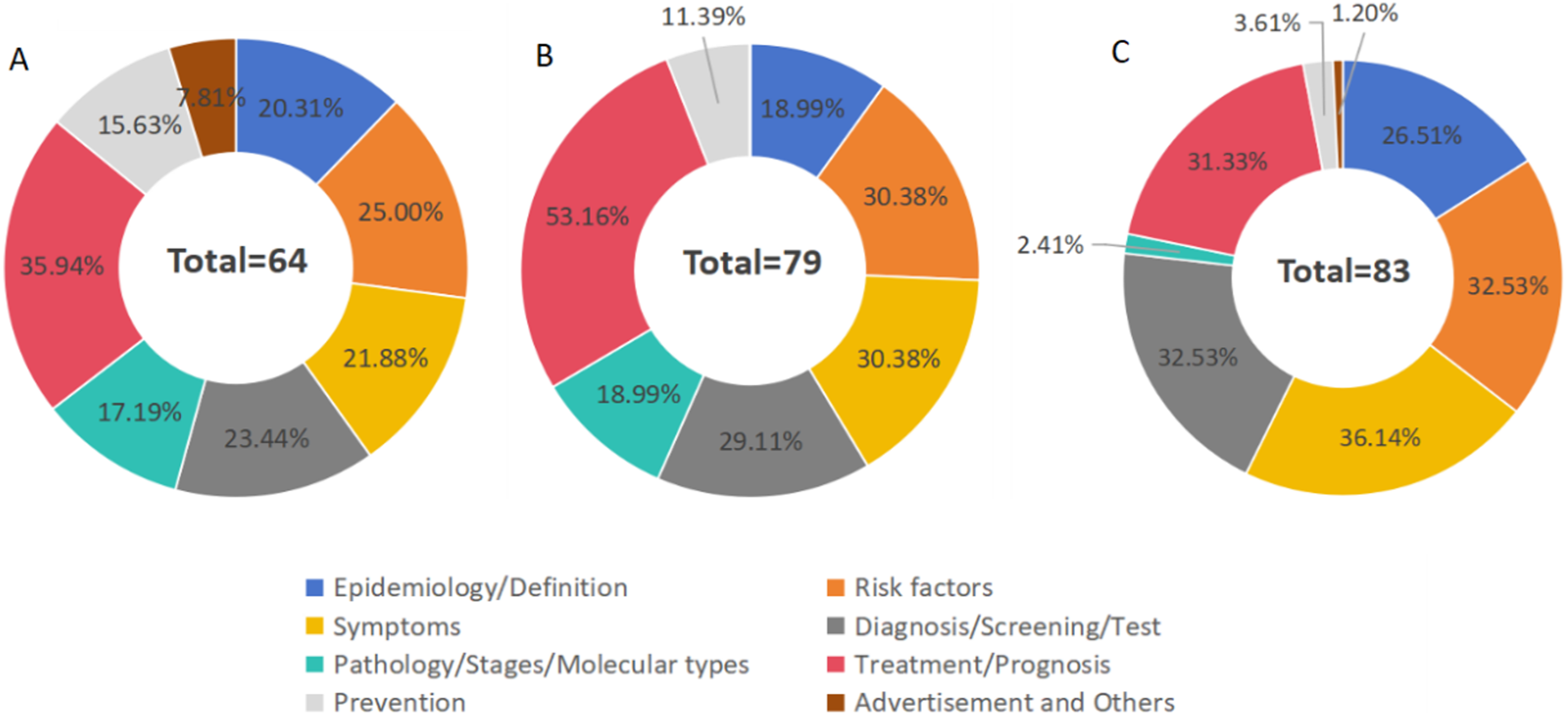
Gynecologists were the primary uploaders on TikTok (92.77%) and Rednote (89.87%)(Figure 2). Significant variations in video characteristics were observed across uploader identities(Table 2). Videos produced by gynecologists achieved superior performance in median likes (156.0), collects (53.0), and reposts (33.5). Notably, content from patients also elicited exceptionally high median comments (443.5), significantly surpassing most other groups (P < 0.01). Professional institutions created the longest videos, whereas medical professionals typically produced shorter content. Content analysis revealed distinct thematic specialization across platforms(Figure 3). TikTok videos predominantly covered symptoms (36.14%), risk factors (32.53%), and diagnosis (32.53%). In contrast, Rednote (53.16%) and Bilibili (35.94%) content demonstrated a predominant focus on therapeutic management and prognostic outcomes. Notably, coverage of preventive strategies and pathological staging remained substantially underrepresented across all three platforms. The distribution of uploaded authors on the three platforms. (a) Bilibili. (b) Rednote. (c) TikTok. Comparison of video characteristics by uploader identity. *P<0.05, ** P<0.01. a–zKruskal-Wallis test. The distribution of video content on the three platforms. (a) Bilibili. (b) Rednote. (c) TikTok.

Video quality and reliability assessment
Interobserver agreement was substantial for the GQS (κ = 0.792) and moderate for the mDISCERN tool (κ = 0.676). Intraclass correlation coefficients (ICCs) were 0.712 for the VIQI, 0.789 for Understandability, and 0.732 for Actionability.
The GQS, VIQI, mDISCERN, understandability, and actionability of videos across platforms.

*P< 0.05, **P<0.01.
a-zKruskal-Wallis test.
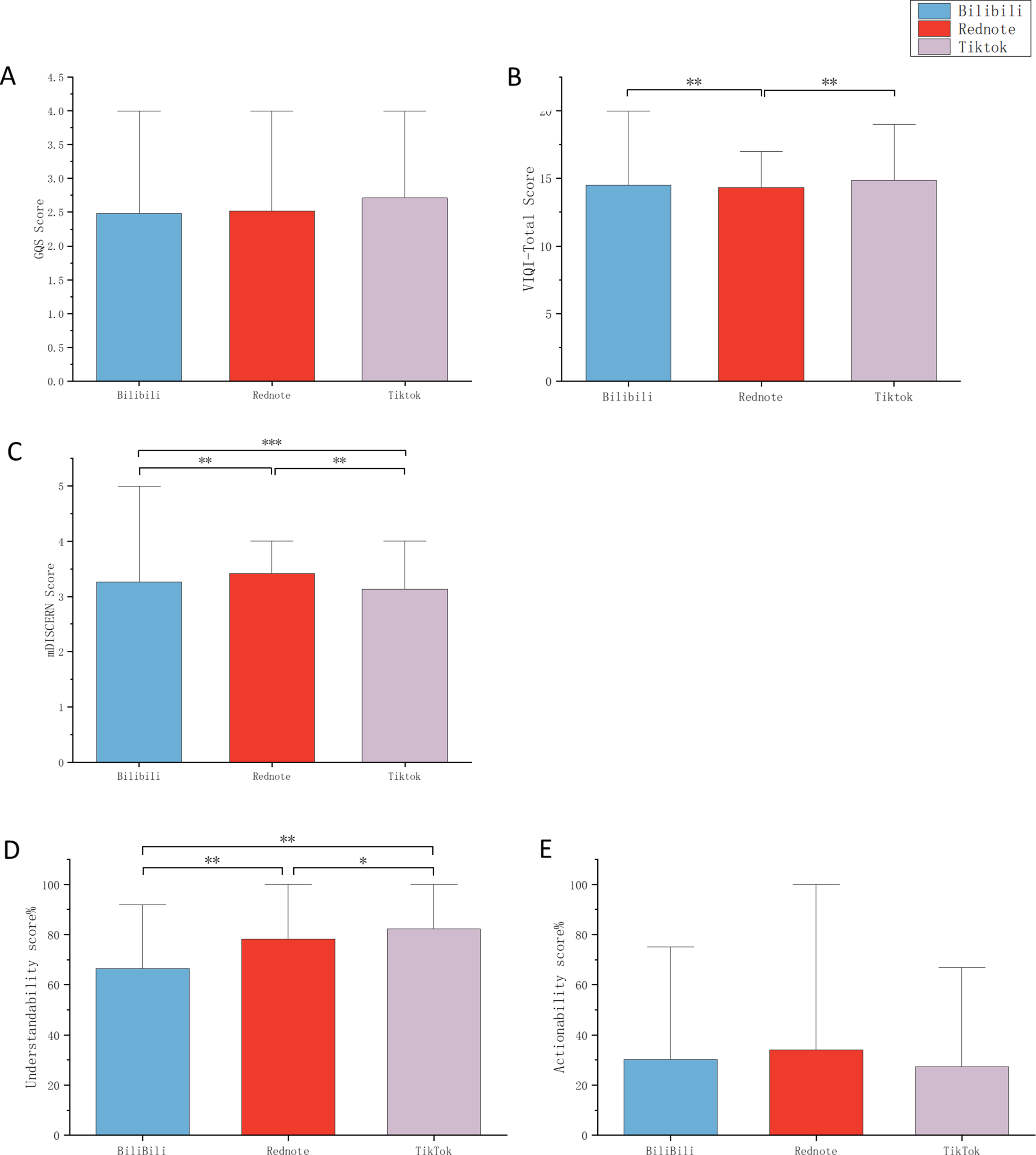
Intergroup comparison of video quality by platform. (a) GQS score. (b) VIQI total score. (c) mDISCERN total score. (d) Understandability score. (e) Actionability score. * P< 0.05 ** P< 0.01.
We also compared the GQS, VIQI, mDISCERN scores, understandability and actionability score of videos by different types of uploaders (Figure 5; Table S7). Both professional institutions and gynecologists achieved significantly higher GQS scores (median = 3.0) compared to patient-generated content (median = 1.0; P = 0.018 and P = 0.011, respectively). Regarding information reliability, videos created by gynecologists demonstrated superior mDISCERN scores relative to those from patients median = 1.0 vs. 0.0; P = 0.048). Furthermore, gynecologist-produced content exhibited significantly enhanced understandability (median = 82.0%) when compared to videos from professional institutions (median = 66.5%; P = 0.037) and other physicians (median = 64.0%; P = 0.034). Comparison of video quality by different uploaders. (a) GQS score. (b) VIQI total score. (c) mDISCERN total score. (d) Understandability score. (e) Actionability score. *P< 0.05, **P< 0.01.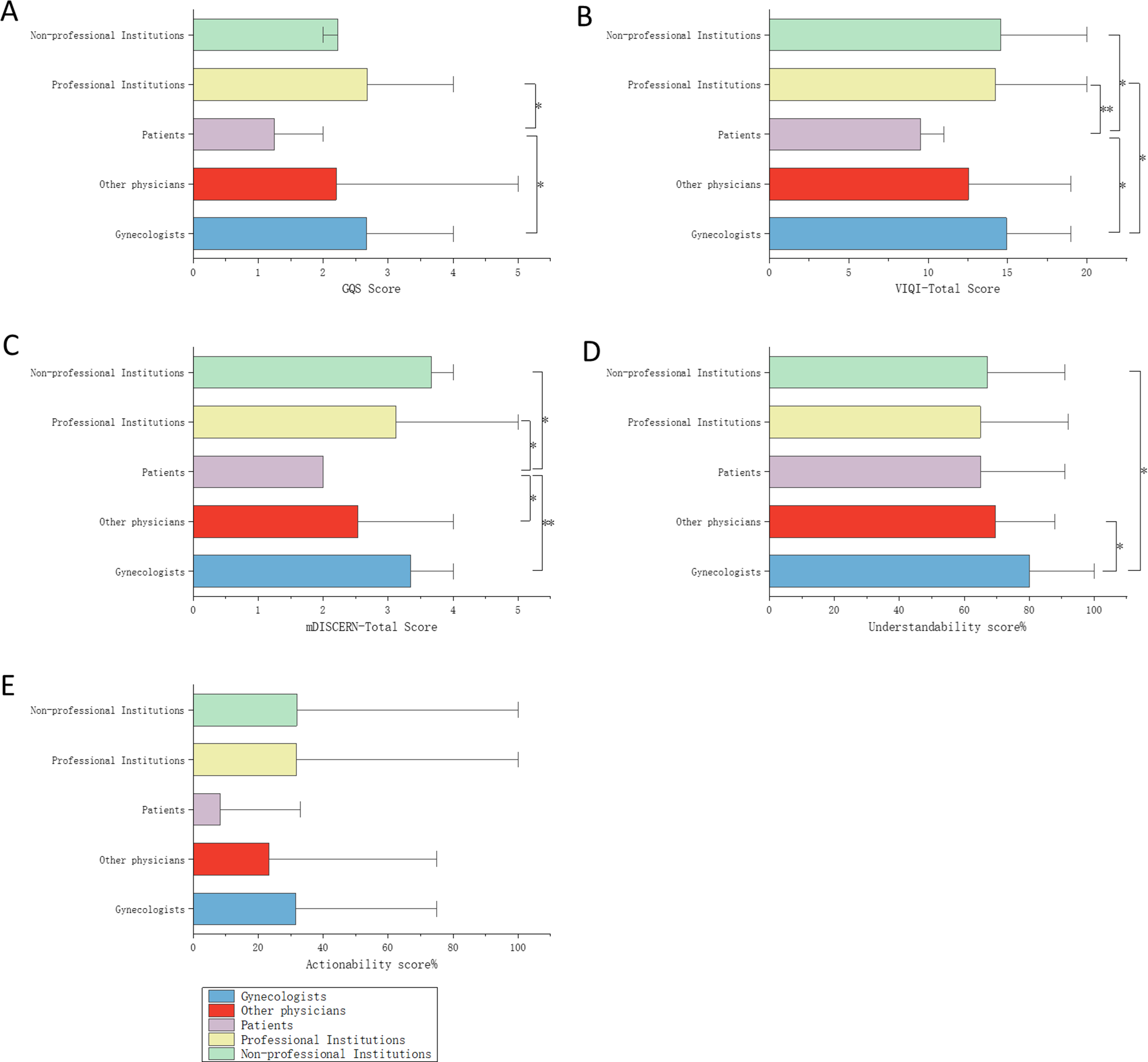
Correlation analyses
The analysis revealed distinct correlation patterns between video characteristics and quality metrics (Figure 6; Table S8). Video duration demonstrated significant positive correlations with GQS (ρ = 0.276, P < 0.01), VIQI (ρ = 0.270, P < 0.01), and actionability (ρ = 0.200, P < 0.01). Conversely, video duration demonstrated inverse relationships with both understandability (ρ =–0.319, P < 0.01) and user engagement metrics, including likes (ρ = -0.241, P < 0.01), collects (ρ = -0.230, P < 0.01), reposts (ρ = -0.236, P < 0.01), and comments (ρ = -0.148, P <0.05). Correlation analysis between video variables and video quality. * P<0.05 ** P<0.01.
Notably, understandability showed consistent positive associations with user engagement, correlating significantly with likes (ρ = 0.241, P < 0.01), collects (ρ = 0.230, P < 0.01), reposts (ρ = 0.236, P < 0.01), and comments (ρ = 0.148, P < 0.05). GQS scores also demonstrated positive correlations with (ρ = 0.141, P < 0.05), collects (ρ = 0.188, P < 0.01), and reposts (ρ = 0.187, P < 0.01). However, no significant correlations were identified between any video characteristics and mDISCERN scores.
Discussion
Principal findings
To our knowledge, this study was the first to provide a systematic, multidimensional evaluation of EC-related content on three major Chinese short-video platforms: TikTok, Rednote, and Bilibili. Our analysis reveals that the overall quality, reliability, and actionability of EC-related videos are suboptimal across all platforms, a finding consistent with research on other disease-specific video content.30–35 A critical and consistent finding across studies is the superior performance of videos created by healthcare professionals (HCPs). In our study, videos from gynecologists and other HCPs scored significantly higher quality, reliability and understandability, reinforcing the indispensable role of medical expertise in ensuring the accuracy of online health communication. Conversely, content generated by patients or non-professional institutions, while sometimes achieving high engagement, often relied on personal anecdotes and lacked citations, compromising its reliability. In terms of content orientation, TikTok videos predominantly focused on symptoms and risk factors, whereas Rednote and Bilibili more frequently addressed treatment strategies and prognosis. Notably, our content analysis also revealed that the role of age in endometrial cancer was rarely emphasized in the evaluated videos. Although EC has traditionally been considered a disease predominantly affecting postmenopausal women, recent epidemiological studies have reported a gradual increase in incidence among younger women. 36 Despite this changing epidemiological pattern, few videos discussed age-related risk stratification or highlighted the importance of age in early symptom recognition and clinical management. The insufficient emphasis on age-related risk information may reduce the effectiveness of online health education, as both older and younger women may fail to recognize their potential risk and delay seeking medical evaluation.
Difference in platforms characteristics
TikTok’s short, algorithm-driven videos achieved the highest engagement and understandability but often sacrificed informational depth. 33 In contrast, Bilibili hosted the longest videos. Yet, it also contained a substantial amount of content from non-professional sources and Traditional Chinese Medicine, which corresponded with the platform’s lowest scores in reliability and understandability, a pattern also observed in assessments of liver cancer videos. 37 Rednote occupied an intermediate position, sharing Bilibili’ s focus on treatment and prognosis but with moderately better performance in quality metrics. While these descriptive differences are evident, the essence of these cross-platform disparities is fundamentally driven by the interplay of three underlying mechanisms: platform positioning, uploader occupations, and user group characteristics.
First, platform positioning dictates content format and depth. TikTok operates within a highly fragmented, algorithm-driven ecosystem where videos must capture immediate attention, resulting in high understandability but limited depth. Bilibili is structured as a knowledge-sharing and community-driven platform, accommodating significantly longer videos (ranging from several minutes to hours) that encourage systematic, in-depth learning. Meanwhile, Rednote serves as a lifestyle community where users frequently share personal narratives, blending health information with practical, lived experiences. Second, cross-platform disparities are shaped by the distinct professional backgrounds of the uploaders. As our data indicates, TikTok and Rednote are heavily populated by individual gynecologists aiming to build personal brands. Consequently, their content is specifically tailored to quickly address highly prevalent patient concerns. Conversely, Bilibili attracts a higher proportion of institutional or official medical accounts that prioritize academic lectures, guideline interpretations, and Traditional Chinese Medicine perspectives. Third, these platform dynamics are profoundly by distinct user demographics and information-seeking behaviors. 38 TikTok features a broad, mass-market user base with significant penetration in lower-tier cities, necessitating highly accessible, “hook-driven” content to raise basic health awareness. In contrast, Rednote is predominantly used by young, health-conscious females in top-tier cities, driving its focus on proactive, lifestyle-integrated medical concerns, such as fertility preservation and postoperative care. Bilibili caters to a highly educated, youthful demographic with a strong culture of in-depth learning, making its users uniquely receptive to comprehensive academic content. From a theoretical perspective, this pattern aligns robustly with the “Uses and Gratifications Theory”. It suggests that users’ specific motivations—ranging from rapid health awareness (TikTok), to proactive lifestyle guidance (Rednote), and in-depth medical education (Bilibili)—fundamentally shape these digital health ecosystems. Ultimately, the observed differences in video quality are the result of a dynamic alignment among platform architecture, uploader expertise, and specific user demographics.
Comparison with Other Digital Health Information Sources
In reality, patients seeking health information utilize a diverse range of digital tools beyond short-video applications. For instance, Traditional websites remain a primary resource, even though studies consistently show they suffer from poor quality, low reliability, and reading levels that are too complex for the general public.16,39 YouTube is another major player, and research frequently highlights its content as more reliable and of higher quality than other social platforms. Recently, AI chatbots like ChatGPT, Gemini, and Perplexity have added a new dimension to digital health. While patients increasingly use them to ask questions, recent evaluations show their answers to disease-specific queries are often only of moderate or even poor quality.15,40–42 Consequently, it is clear that these AI chatbots cannot replace comprehensive, professional medical consultations. This highlights a universal challenge: whether patients are reading traditional websites, watching YouTube, scrolling short videos, or prompting AI models, professional medical oversight and strict content verification are still absolutely essential.
Difference in video uploaders and communication dynamics
The superiority of professional sources underscores the importance of expert participation in online health communication. This aligns with previous studies.34,43,44 A noteworthy and concerning finding of this study was the generally low level of actionability observed in the video content, a limitation that persisted even among videos produced by gynaecologist. Although the majority of uploaders mentioned risk factors for endometrial cancer, only a small proportion provided specific preventive measures or clear, actionable steps for viewers. This revealed a notable paradox: while information from medical professionals demonstrated the highest scientific reliability, it often fell short in translating that knowledge into practical guidance that viewers could readily implement. We speculated that this may be attributable to the time constraints inherent in the short video format, which tended to favor knowledge dissemination and awareness-raising over the delivery of detailed health behavior guidance.
In terms of dissemination impact, videos from professional medical sources attracted significantly more likes, favorites, and shares, reflecting public trust in and reliance on authoritative health information. In contrast, patient-generated content stimulated more active engagement in comment sections. This may be explained by the emotional resonance of personal narratives, combined with the substantial follower bases that some individual patients have accumulated. Although such narratives can offer valuable social support and psychological comfort, our data also highlight their increased risk of oversimplification or misinformation. Therefore, patient-generated content should be regarded as complementary to, rather than a substitute for, information from certified medical sources.
Correlations and their implications for content creation
Correlation analyses revealed a positive association between video length and quality, but negative associations with understandability and engagement. This finding illustrates a core dilemma in digital health communication—the “depth versus accessibility trade-off”. Longer videos allow comprehensive coverage of diagnosis, treatment, and prognosis, yet may overwhelm audiences with limited health literacy. Conversely, brief videos attract larger audiences but risk oversimplification. Future educational strategies should adopt a layered communication model, producing short “core message” videos complemented by extended in-depth versions. Additionally audience engagement showed only a weak positive correlation with GQS and no significant association with mDISCERN scores, corroborating prior research,33,37 reflecting audiences’ preference for short, rapid information. This indicates that users may not possess sufficient expertise to evaluate information reliability critically. Conversely, the strong positive correlation between understandability and engagement suggests that clear, visually guided communication not only improves comprehension but also promotes viral dissemination.
Practice implications
These findings underscore the importance of digital health literacy as a social determinant of health. For healthcare professionals and institutions, there is an urgent need to actively engage in developing high-quality online educational content. To enhance the comprehension of abstract medical concepts, creators should utilize visual aids, break down complex information into digestible bullet points, and incorporate clear voice-overs and subtitles. More importantly, they must intentionally design actionable videos that provide explicit, step-by-step guidance rather than just stating medical facts. For platform regulators, ensuring content reliability is critical. Platforms should implement strict medical content verification systems, such as “verified doctor” badges, and establish dedicated, peer-reviewed health sections. Beyond basic verification, platforms must take greater responsibility by adjusting their algorithms to actively prioritize and amplify videos created by verified professionals, thereby reducing the spread of misinformation. Furthermore, collaborative efforts among public health authorities, academic institutions, and digital platforms are crucial for developing comprehensive, evidence-based guidelines for the creation and management of online health information. Equally important are initiatives aimed at improving public digital health literacy, enabling users to critically filter and evaluate online content. To navigate this landscape safely, users should be encouraged to prioritize videos with official verification badges and cross-reference major claims with authoritative medical sources. Ultimately, while short videos can serve as an accessible starting point for health education, users must treat them as supplementary tools rather than definitive medical guides, always consulting their primary care physicians before making any treatment or lifestyle decisions. This critical approach is key to fostering a more reliable and patient-centered health information ecosystem.
Strengths
This study has several notable strengths. First, to our knowledge, it represents the first systematic evaluation of endometrial cancer–related videos across major Chinese short-video platforms, thereby addressing an important gap in the current literature on digital health communication. Second, the inclusion of multiple widely used platforms allowed for the assessment of different digital content ecosystems, including short-form mass dissemination, knowledge-oriented educational videos, and community-based experience sharing. Finally, by focusing on short-video platforms, this study provides evidence that may help guide healthcare professionals, content creators, and platform regulators in improving the quality of online health information related to women’s cancers.
Limitations
This study has several limitations. First, the video search was limited to Chinese short-video platforms, and therefore the findings may not be fully generalizable to video content available on platforms in other languages or regions. Second, the evaluation of video quality and reliability relied partly on subjective assessment tools. Although two independent reviewers performed the evaluations and demonstrated good inter-rater agreement, some degree of subjectivity cannot be completely excluded. Third, this study focused on evaluating the characteristics and quality of video content and did not assess the behavioral impact of video exposure on viewers, such as potential changes in health knowledge, attitudes, or healthcare-seeking behaviors. Fourth, this study did not perform a formal sample size calculation. Although we followed a commonly used strategy of evaluating the first 100 videos from each platform, this sampling approach may not fully represent all available content. Finally, despite efforts to standardize the search strategy, platform-specific recommendation algorithms may have influenced the visibility and selection of videos, potentially introducing selection bias. Future studies could incorporate guideline-based concordance analyses to more precisely evaluate the clinical accuracy and completeness of health information presented in short-video content.
Conclusions
Based on a comprehensive evaluation of EC-related videos, this study reveals that healthcare professionals serve as the primary source of EC-related health information. Our cross-platform analysis indicates that while TikTok and Rednote videos demonstrate adequate comprehensibility, they show limitations in reliability and quality. In contrast, Bilibili videos require substantial improvement across all evaluated metrics. A consistent deficiency in actionable guidance persists across all platforms, highlighting a crucial gap in translating medical knowledge into practical recommendations. Furthermore, we identify a significant trade-off between video duration and audience engagement, where longer, more comprehensive content compromises both understanding and popularity. These findings underscore the urgent need for developing optimized EC-related content that balances informational depth with communicative effectiveness. Creating accurate, comprehensible, and actionable educational materials is essential for advancing EC prevention strategies, improving treatment outcomes, and enhancing patient decision-making in digital health education.
Supplemental material
Supplemental material - Evaluating the quality and reliability of endometrial cancer related videos on Chinese short-video platforms: A cross-sectional study
Supplemental material for Evaluating the quality and reliability of endometrial cancer related videos on Chinese short-video platforms: A cross-sectional study by Jinghong Liang, Mengyao Huang, Shiyuan Qi, Qingjian Ye and Xiaomao Li by Health Informatics Journal.
Supplemental material
Supplemental material - Evaluating the quality and reliability of endometrial cancer related videos on Chinese short-video platforms: A cross-sectional study
Supplemental material for Evaluating the quality and reliability of endometrial cancer related videos on Chinese short-video platforms: A cross-sectional study by Jinghong Liang, Mengyao Huang, Shiyuan Qi, Qingjian Ye and Xiaomao Li by Health Informatics Journal.
Supplemental material
Supplemental material - Evaluating the quality and reliability of endometrial cancer related videos on Chinese short-video platforms: A cross-sectional study
Supplemental material for Evaluating the quality and reliability of endometrial cancer related videos on Chinese short-video platforms: A cross-sectional study by Jinghong Liang, Mengyao Huang, Shiyuan Qi, Qingjian Ye and Xiaomao Li by Health Informatics Journal.
Supplemental material
Supplemental material - Evaluating the quality and reliability of endometrial cancer related videos on Chinese short-video platforms: A cross-sectional study
Supplemental material for Evaluating the quality and reliability of endometrial cancer related videos on Chinese short-video platforms: A cross-sectional study by Jinghong Liang, Mengyao Huang, Shiyuan Qi, Qingjian Ye and Xiaomao Li by Health Informatics Journal.
Supplemental material
Supplemental material - Evaluating the quality and reliability of endometrial cancer related videos on Chinese short-video platforms: A cross-sectional study
Supplemental material for Evaluating the quality and reliability of endometrial cancer related videos on Chinese short-video platforms: A cross-sectional study by Jinghong Liang, Mengyao Huang, Shiyuan Qi, Qingjian Ye and Xiaomao Li by Health Informatics Journal.
Footnotes
Acknowledgements
The authors would like to thank all collaborators and institutions that provided data support and academic guidance for this study.

Consent to participate
This study did not involve human participants, animals, or identifiable personal data.
Author contributions
LJ designed the study and drafted the manuscript. LJ and HM jointly managed data collection, statistical analysis, result validation, and manuscript revision. QS performed third-party data verification. LX and YQ supervised the research and provided final approval of the manuscript for publication. All authors read and approved the final manuscript.
Funding
The authors received no financial support for the research, authorship, and/or publication of this article.
Declaration of conflicting interests
The authors declared no potential conflicts of interest with respect to the research, authorship, and/or publication of this article.
Data Availability Statement
All data generated and analyzed during this study are included in the published article and its supplementary files.
Supplemental material
Supplemental material for this article is available online.
Appendix
References
Supplementary Material
Please find the following supplemental material available below.
For Open Access articles published under a Creative Commons License, all supplemental material carries the same license as the article it is associated with.
For non-Open Access articles published, all supplemental material carries a non-exclusive license, and permission requests for re-use of supplemental material or any part of supplemental material shall be sent directly to the copyright owner as specified in the copyright notice associated with the article.
