




Abstract
Keywords
Introduction
With the rise of digital technology and its application in the health field, the scope of medical and health services has gradually formed a closed-loop service ecosystem that combines online and offline medical resources. Online health communities (OHCs) construct broad communication platforms focusing on health-themed interactions and enable patients to continuously obtain medical knowledge and emotional support from their physicians and peer patients.1–3 Patients can review the physicians’ information and expertise shown on OHCs, adopt numerous valuable information posted on the platforms, and consult with physicians to establish knowledge-based support.4–6 OHCs such as Haodf (haodf.com) and WeDoctor (wedoctor.com) have achieved rapid development under China’s new policies on “internet plus healthcare.” 7 For example, 280,000 active physicians has been certified by real name and proof of employment work, and 84 million patients have been cumulatively served on Haodf. More than 260,000 active physicians provide online medical services on WeDoctor, such as health assessment, diagnosis, counseling, and medication guidance. 8 There are also abundant opportunities for theory development and empirical analyses in OHCs, such as interactions between peer patients and between patients and their physicians.9,10 Thus, it is evident that the development of OHCs provides patients with opportunities for health-themed interaction and a new model of health management.
However, patients’ negative continuance intention remains an issue limiting the development of OHCs. It has been found that 45% of United States users who adopt or download health-related mobile apps had stopped using them. 11 As one of the technical carriers providing services to patients, mHealth is a new paradigm of emerging information technology (such as smartphones, wearable devices, etc.) in the field of health care. 12 Although mHealth can provide convenient medical services and health management through mobile devices, it also faces the threat of user interruption. 12 A recent survey shows new health apps are being developed quicker than demand. 13 The aforementioned technologies serve as carriers for the development and existence of OHCs, facilitating convenient and flexible interaction and communication between patients and physicians. However, the unsound and unsustainable development of health-related information technology will have a negative impact on OHC users’ continuance intention. Continuance intention refers to one of the primary post-adoption behaviors, 14 which represents a stable performance of user behavior and creates the cornerstone for the survival of information technology products.15,16 OHCs’ long-term viability and sustainable growth depend more on users’ continuance behavior than their initial adoption decisions. Moreover, continuous usage significantly reduces costs or gains competitive advantages. 17 Accordingly, this study is designed to explore patients’ intention for continuous use of OHCs and rationally apply the mechanism to enhance the process of OHCs’ value creation.
Social interactions are often structured as networks of participants and their relationships and influence consumer behavior through network externalities. 18 Network externalities refer to “the utility that a user derived from the consumption of a good increase with the number of other agents consuming the good,” 19 which affect individuals by affecting their perceived utility of the technology itself and the social benefits of social interactions. With the increasingly complex online social networks, the factors that drive network effects, such as perceived network size or perceived complementarity, namely network externalities, widely exist in the interaction between patients and physicians. For example, the health utility obtained by patients in OHCs not only depends on their e-health literacy and the OHC itself, but also is influenced by the number of physicians on the other side of the platform or the compatible services. It has been demonstrated that network externalities (or network effects) play a significant role in shaping and reshaping users’ attitudes and behaviors toward information technologies.20,21 However, little attention has been paid to addressing the determinants of OHC users’ continuance intention from an external network platform perspective. Since network effects influence OHC patients’ value creation and capture, the impact of networks on patients’ continuance intention in OHCs should be addressed.
Users’ continuance intention of new technologies is a complex mechanism and the single theory-driven model is insufficient to explain. Thus, it is necessary to establish a complete theoretical model to explain patients’ continuation intention. To explore how patients make continuous use decisions, the expectation confirmation model (ECM) has been widely used to focus on the user’s continuance intention at the post-adoption stage.22–24 Under the influence of network effects, the value or utility patients obtain from OHC services will be influenced by patients and physicians on both sides of the platform. Combining the ECM with network effects theory can fit the platform characteristics of OHCs and explore the influence mechanism of the determinants on patients’ continuance intentions. Additionally, it is also underlined that electronic health tools cannot function effectively if the target users lack the necessary skills to interact with them. 25 Since consumers’ capacity to assess online health information varies according to their level of e-health literacy, users’ actual use effect in adopting OHC services varies. However, there is a gap in the literature investigating the effect of e-health literacy on continuance intention in the context of OHCs. Thus, this study aims to propose an integrated framework to comprehensively explore patients’ continuance intention in OHCs.
Considering the limitations of the existing research, this study focuses on patients’ continuance intention for OHCs’ services from the perspective of network effects and integrates the external factors into the ECM to propose a comprehensive framework. The contributions of this study are as follows. First, we find three types of network effects exist in patient-centered social networks, in which patients’ continuance intention in OHCs is influenced by the patient, physician, and OHC provider. Second, we propose a unified framework of patients’ intention to continue to use OHCs by integrating external key determinants and give a clear explanation of their mechanism. Third, we conduct an empirical analysis and provide reasonable explanations for creating user value and retaining users in OHCs. The findings and implications of the study are elaborated in later sections.
The remainder of this study is organized as follows. This study first introduces the theoretical background and proposes the research model with research hypotheses. Based on the empirical results, this study has fully discussed the findings, implications, limitations, and the conclusion.
Methods
Theoretical framework
According to a systematic literature review about the continuance intention of online technologies, 26 expectation confirmation theory (ECT) is one of the most frequently used theories in the field of technology continuance intention. Originating from ECT and TAM,27,28 Bhattacherjee proposed the original model of ECM for IS continuance intention and explored the effects of post-adoption expectations and subsequent cognitive processes, 29 in which the substantive differences between initial adoption and continuance intention were drawn. By combining context-specific factors or theories, the ECM has been extended and applied to information systems and technologies in different fields.24,30–32 From the user’s internal perspective, satisfaction, perceived usefulness (PU), and perceived ease of use (PEOU) are significant explanatory variables of the continuance intention of OHC services. In order to improve the explanatory and predictive power of the ECM, it is necessary to extend the theoretical framework and practical application. Therefore, this study extracts the basic constructs from the ECM and further explains the influence of external constructs on patients’ informed health decisions and continuance intention while adopting OHCs.
With the construction and development of digital technologies and the platform economy, more and more entities are pouring into the platform, which contributes to forming a more complex multi-sided market. From the patient’s perspective, the OHC has a typical two-sided market structure, that is, same-sided patients to patients and cross-sided patients to physicians. Network effects arise and affect the utility or value that patients derive from the interaction with physicians and the use process of OHC. According to the network effects theory, the number of consumers and complementary services determines how a technology network is created and captured, ultimately affecting the responses and behaviors of its users.19,33 Network effects and network externalities can be explained from a causal perspective, including network size and complementary services, which are important factors driving network effects.
34
Previous studies conceptualized direct and indirect network externalities as referent network size and perceived complementarity.21,35,36 For example, in online service scenarios, including micro-blogging,
37
WeChat,
38
MOOC,
39
and IoT services,
40
the more existing users, the easier it is to share information between users and the more extensive connections can be established. In addition, perceived complementarity with the availability or accessibility has been proven to impact the value of a product or service. Meanwhile, researchers focused on the network effects from the same and cross side network in two-sided platform markets.40–42 The OHCs can be regarded as typical social network platforms, in which various valuable information from the patient-reported and physician-reported posts establishes knowledge-based online support. Based on the characteristics of the OHC platforms and their network structure, we summarize three types of network effects from the patients’ perspective. Figure 1 shows the structure and content of three network effects within OHCs. Network effects within OHCs. 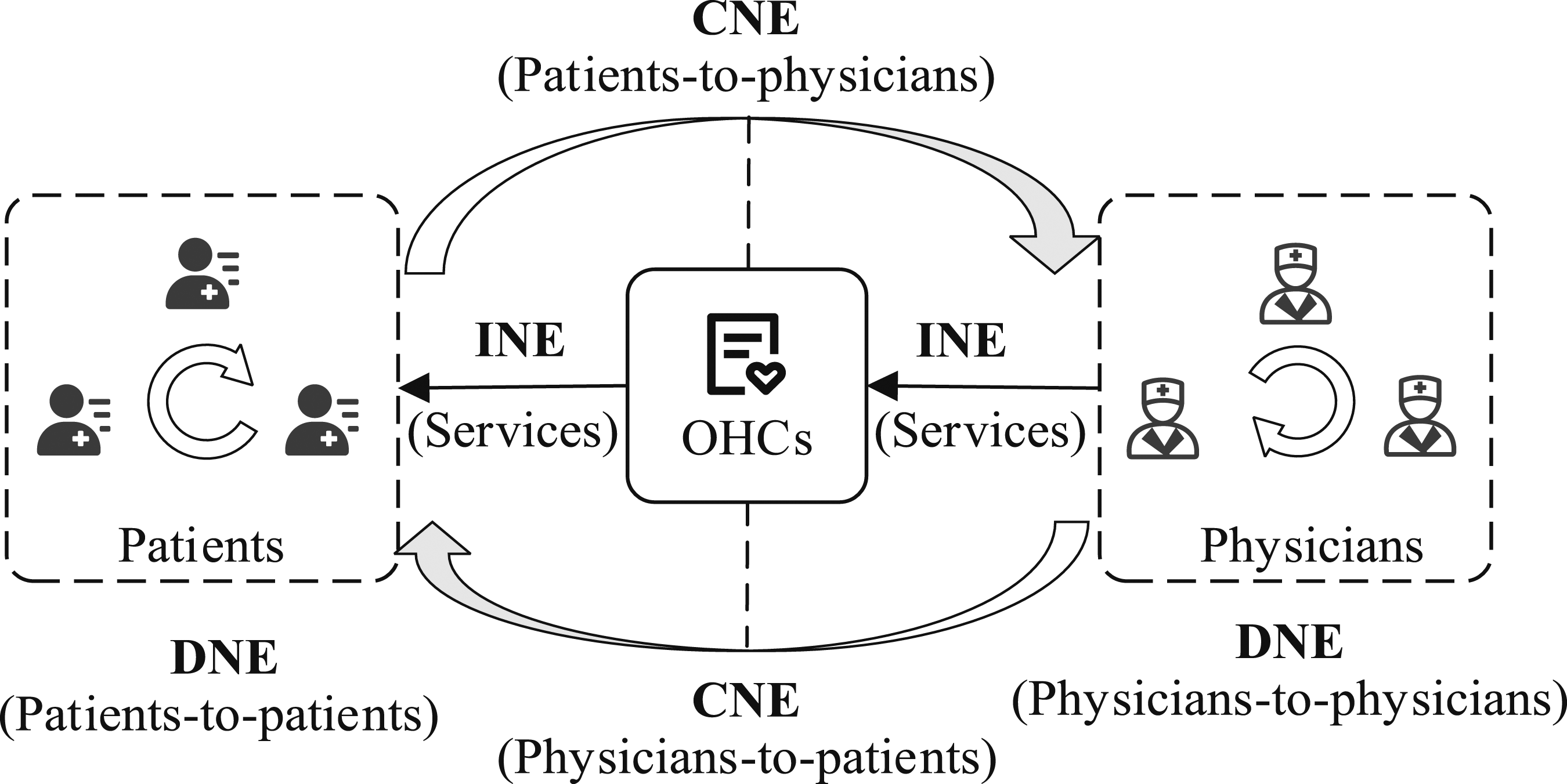
In line with the analyses above, network effects theory provides potential determinants for this study to explore factors affecting patients’ continuance intention, and the ECM establishes a research framework for continuance intention. By combining network effects theory and the ECM, on the one hand, we provide new insights from the platform structure perspective of OHCs, explaining why the utility of patient acquisition is affected by patients on the same side and physicians on the other side of the platform, as well as platform services. On the other hand, we explain the influence mechanism of the key determinants such as PU and satisfaction on the continuance intention through ECM.
Research hypotheses
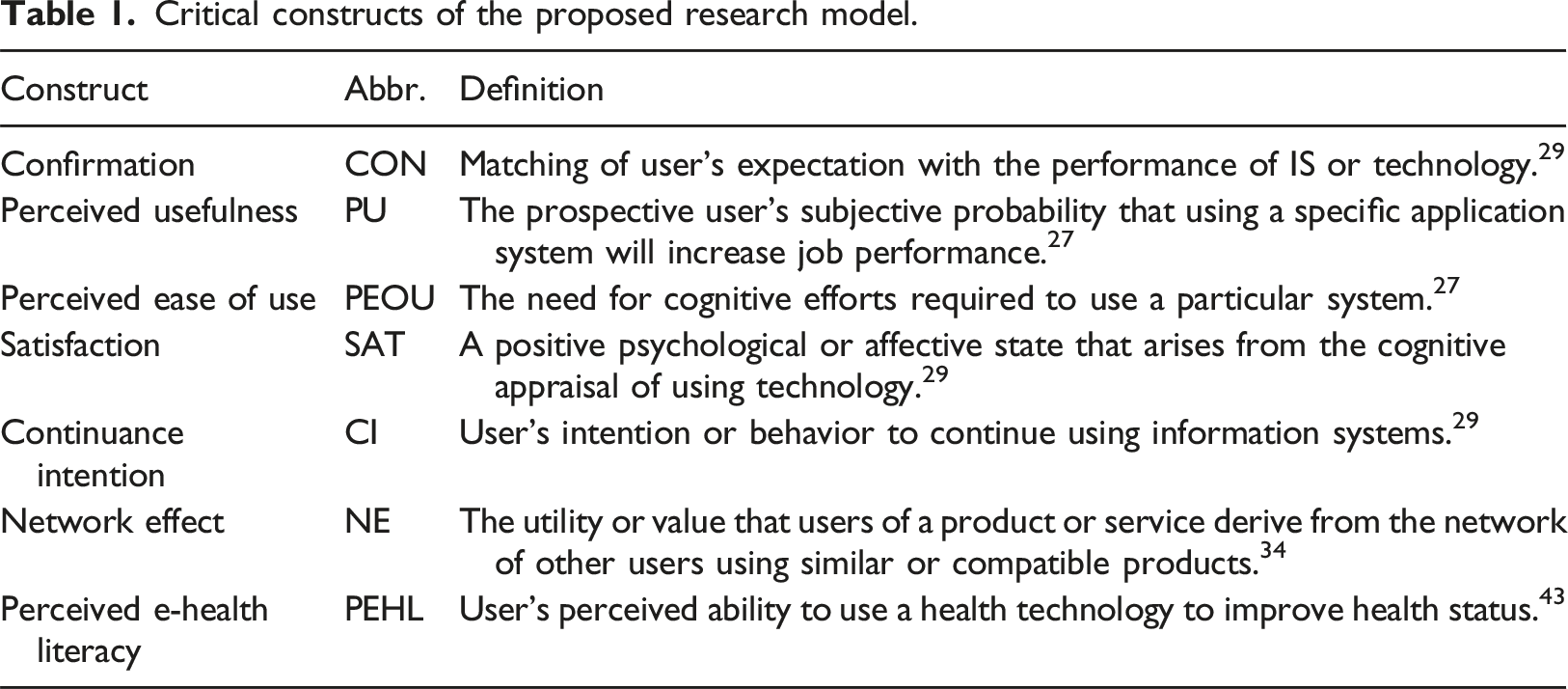
The proposed model is presented in Figure 2. To improve the readability of this paper, we provide the abbreviations and definitions of the constructs of the research framework in Table 1. Research model. Critical constructs of the proposed research model.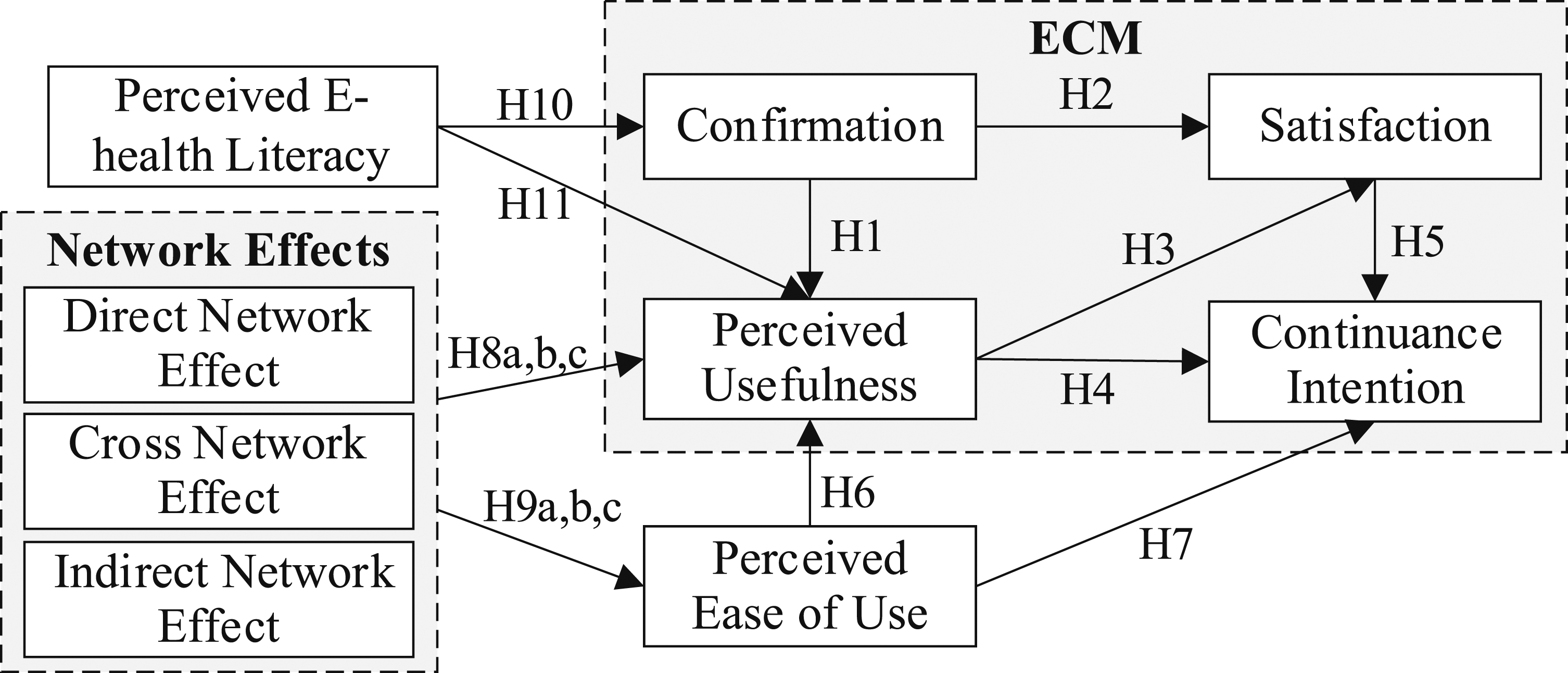
The baseline or reference level for users to make evaluations of the good or service is provided by the user’s confirmation of prior expectations. 29 Previous experience and judgment determine user’s willingness to continue using and further confirm whether the user’s initial expectations are met. 44 Confirmation affects both user’s satisfaction and the PU, which will further affect users’ willingness for continuous use.31,45 Under the basic framework of the ECM, patients’ confirmation of their expectations about the OHCs will influence corresponding satisfaction and PU. For example, if the OHC services exceed the demands of patients’ expectations, the level of satisfaction and PU will be positively impacted. Therefore, we propose that:
Patients’ confirmation with OHC services positively influences PU.
Patients’ confirmation with OHC services positively influences satisfaction. PU can measure the post-expectations of the performance after the confirmation,
44
which will lead to positive or negative psychological changes. It is verified that PU directly affects continuance intention or indirectly affects it through satisfaction in different online scenarios,44,46 especially in the field of health. While OHCs provide users with medical convenience or serve users’ medical purposes well, patients will be willing to continue to seek medical services. The positive impact of satisfaction on continuance intention is consistently supported by research on various types of digital technologies.
26
Previous research demonstrated that satisfaction is a powerful predictor of continuance intention.44,47 Positive affective state with information systems usage encourages users to use the technology more, while negative experiences may lead to abandonment and avoidance behavior. As for OHCs patients’ usage continuance intention, it is critical that patients feel satisfied with their overall experience of OHCs use, which will directly or indirectly affect the final continuance intention. Therefore, we propose that:
Patients’ PU positively influences satisfaction.
Patients’ PU positively influences continuance intention.
Patients’ satisfaction positively influences continuance intention. PEOU is a significant factor in influencing users’ perceptions and determining technological continuation intention.30,48 Patients are more likely to have a favorable experience and believe that OHC services are highly useful when they find them easy to use. In the context of OHCs, if patients perceive the ease of use of OHC services, they are more likely to perceive the usefulness and maintain an intention of continuance usage. Therefore, we propose that:
Patients’ PEOU positively influences PU.
Patients’ PEOU positively influences usage continuance intention. With the increasing numbers of users utilizing network products or services, existing users are more likely to obtain the network benefits, such as practical value and hedonic benefit.
37
For example, patients are more likely to be attracted to OHCs with more active patients and physicians. As more patients and physicians participate in the OHCs, the OHC provider will gather more feedback on the quality of the platform’s services, thereby improving the service quality and usability. Moreover, it has been confirmed that there is a positive relationship between perceived network size and PEOU.
37
Therefore, we propose that:
DNE is positively associated with PU.
DNE is positively associated with PEOU. Various valuable information from patient-reported posts can help establish knowledge-based online support through the interaction between patients and physicians. In online service scenarios,20,37,39 the more existing users, the easier it is to share information between users and the more extensive connections can be established. The network benefits like referent network size and complementary products positively affect user’s usage intention and PU.
34
Moreover, based on a wider user base and more resource content, the user’s PEOU will enhance with the expansion of the network size.
37
Therefore, we propose that:
CNE is positively associated with PU.
CNE is positively associated with PEOU. INE, such as perceived complementarity, is regarded as a factor influencing the value of a product or service with its availability or accessibility.34,39 PU and PEOU are closely related to the complementarity or availability of products in the context of OHCs. A wider variety of lower and upper tier “complementary services” support consumers to benefit more from the use of technology networks.
42
Consistent with the above analysis, DNE and CNE basically stem from the network size of patients and physicians, while INE is closely related to perceived complementarity and perceived compatibility of the OHC services. Therefore, we propose that:
INE is positively associated with PU.
INE is positively associated with PEOU. The knowledge and information of OHCs patients exposed to and actually obtained may be inconsistent due to the influence of various factors, such as the accuracy of the information itself and the e-health literacy of the users.25,49,50 e-health literacy affects the adoption of health-related information and the outcomes obtained by users in e-health activities. It has been noted that an individual’s motivation or assessment to engage in online health information searching is related to their level of e-health literacy.
43
The ability and competencies of users to use e-health tools are closely related to the actual use effect of the users. Those with high levels of e-health literacy are more inclined to assume the role of health information searchers and to carefully consider the authenticity and dependability of their sources of information.
51
The positive effect of e-health literacy on PU, confirmation, and perceived usability has been concluded.
52
For example, in some cases, using e-health tools will be difficult and inconvenient for users who lack the necessary health literacy, negatively impacting the effectiveness of using OHCs. Therefore, we propose that:
PEHL positively influences the confirmation with OHCs services.
PEHL positively influences PU of the OHC services.
Measurement development
To verify the model and hypotheses proposed in this study, this study originally designed the content of questionnaire survey (See Appendix A of supplemental material for further details). The complete scales of measurement items are consistent with the previous research in the discipline of information system. The scales for DNE, CNE and INE are adopted from the research on network effects19,33,35,41,42; the scales for PEHL are adopted from studies25,43,53; the scales for PU and PEOU are adopted from studies.27,54; other scales related to the ECM are adopted from studies.28,29,55 These multiple-item scales were measured using a seven-point Likert scale anchored from strongly disagree (1) to strongly agree (7). The respondents in our study are native Chinese OHC users, so we made appropriate revisions and fine-tuned terms to fit Chinese medical context. To ensure the reliability and validity of the measurement scales, a pilot-test was conducted on 56 participants using OHCs and minor changes were made to the wording of some questions based on pilot participant feedback.
Data collection and sample
Before starting the questionnaire, participants need to read the informed consent form. After the written informed consent was confirmed, respondents could continue to participate in the questionnaire. Because our research context is in OHCs, the questionnaire set preconditions that only participants with experience in OHC use can participate. The content of the questionnaire survey consists of the basic demographic statistics and the evaluation scales of the research model, in which we also set up an open multiple-choice question to invite participants to answer which OHCs they use.
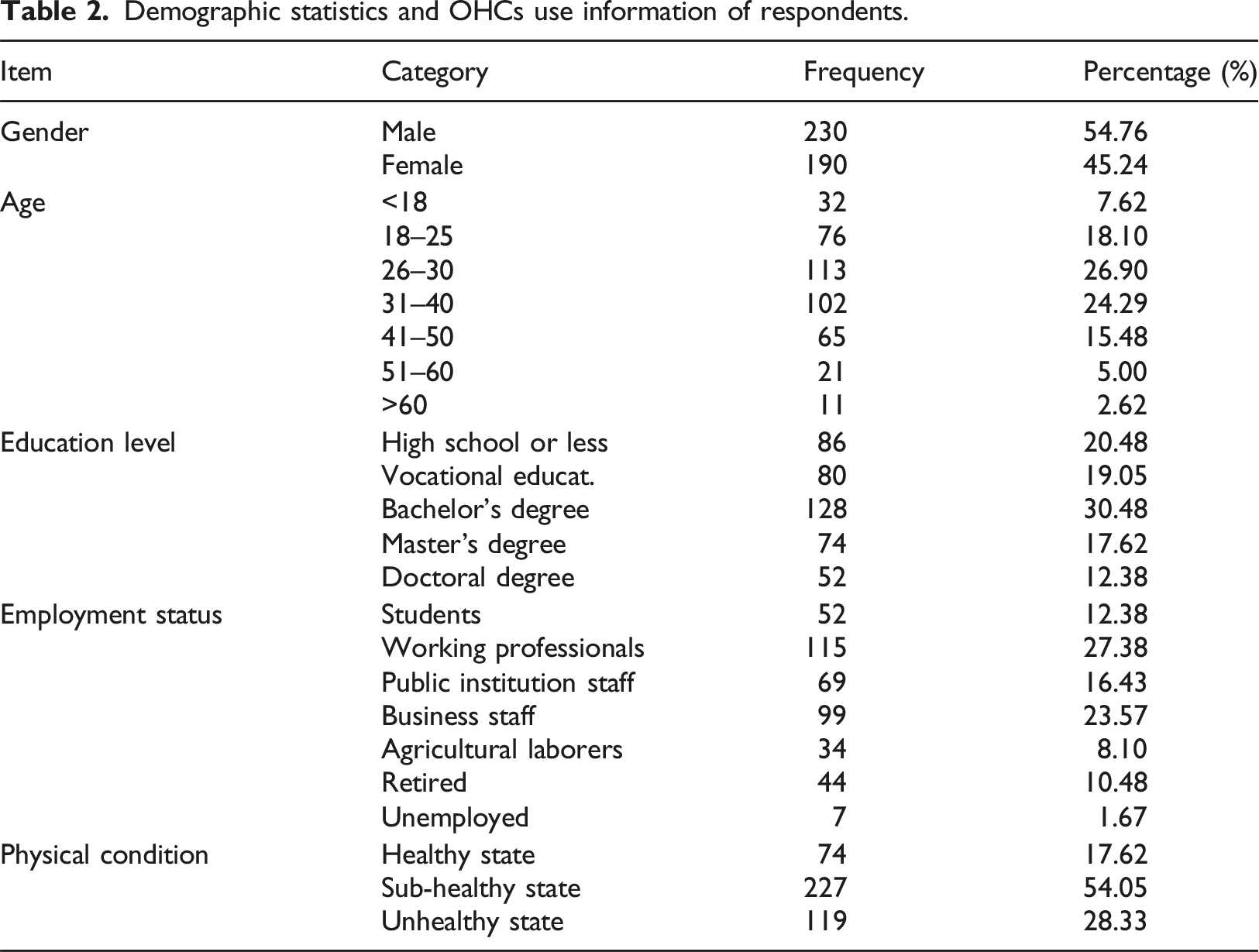
From August 2022 to October 2022, the empirical data were collected through a questionnaire survey on an online platform (Sojump) from China, and the Sojump-based questionnaire link was sent to participants by email, mobile phone message, or social media. 452 questionnaires were distributed, and 420 valid questionnaires were obtained after discarding incomplete or invalid responses. Among the valid responses, the first three commonly used OHCs are Haodf (haodf.com) with 287 respondents, Ping An Good Doctor (pagd.net) with 274 respondents, and WeDoctor (wedoctor.com) with 271 respondents. The OHCs mentioned above are leading OHCs in China, which provide community-based healthcare and enable patients to continuously obtain medical knowledge and emotional support from their physicians and peer patients.3,10 For example, Haodf comprises the largest number of high-quality authoritative physicians, and the number of active patients on the platform is also large, which promotes knowledge and emotional interaction between physicians and peer patients. 10
Demographic statistics and OHCs use information of respondents.
In this section, we established the research framework and proposed corresponding hypotheses based on ECM and network effects theory. Referring to the existing well-established scales, data were collected through questionnaires and used to analyze the research model.
Results
To analyze the hypotheses proposed in the research model, SPSS 20.0 and Amos 22.0 software were employed to test the measurement and structural model. The use of structural equation modeling (SEM) will confirm the robustness of the findings as it is based on the maximum likelihood algorithm, which takes into account the error terms in establishing loadings, correlations and other relevant measurements. 56
Common method bias
Since this questionnaire survey was perception-based and all the measurement scales of this study were self-reported, there were potential threats in terms of common rater effects, item characteristic effects and measurement context effects. 57 Thus, we need to rule out the potential for common method bias (CMB). We used two techniques to test the CMB. First, we conducted Harman’s single-factor test. 58 The exploratory factor analysis extracted nine factors with the first factor accounting for 36.648% of the variance, which is lower than the critical threshold (40%). 57 Second, we adopted a common-method factor test introduced by Liang et al. 59 We introduced the common-method factor by creating a latent variable that directly correlates with each construct’s indicators. The result demonstrates that the average variance substantively explained by the principal constructs and the common-method factor are 0.681 and 0.011, respectively. And the ratio between them is about 62:1, which has sufficient explanatory and persuasive power. Moreover, most indicators’ loading on the common-method factor is not significant. Thus, the CMB is unlikely to be a serious concern for this study. Detailed results are provided in Appendix B of the supplemental material.
Measurement model analysis
Before the assessment of the quality of the measurement, we examined the normality of the data through the skewness and kurtosis test. The results demonstrated that the absolute values of skewness and kurtosis for all constructs are less than 2, indicating these values were within the criterion and satisfied further structural equation analysis. 60
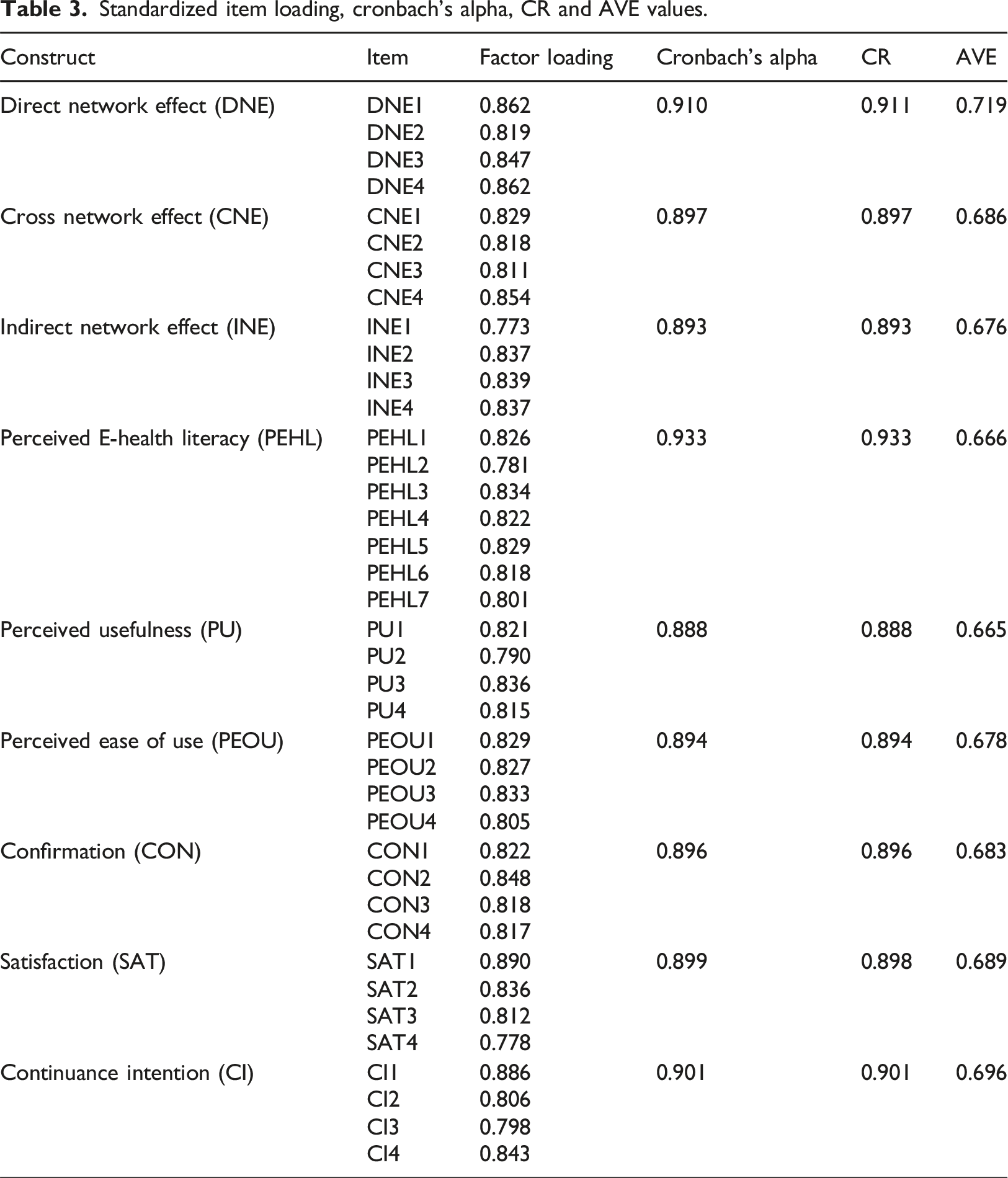
Standardized item loading, cronbach’s alpha, CR and AVE values.
Discriminant validity.
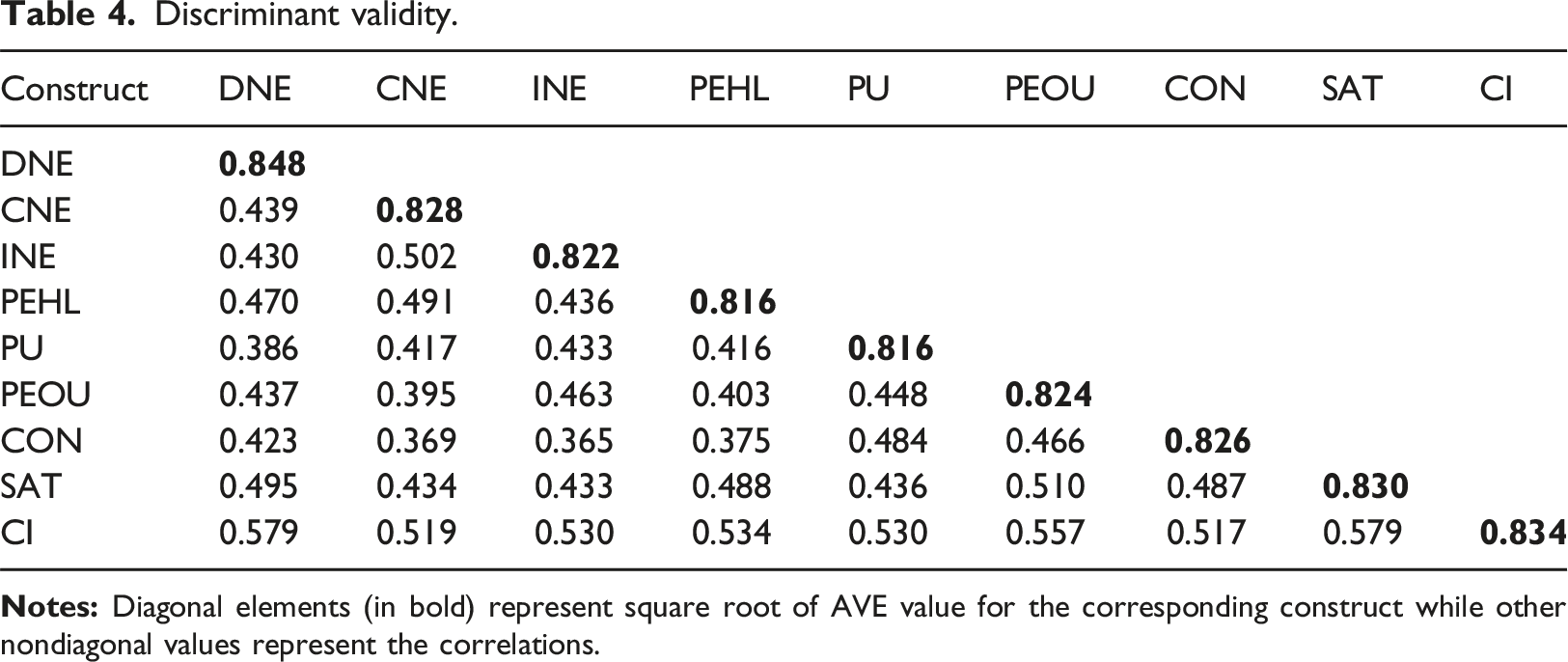
According to the aforementioned results, all nine constructs of the measurement model have strong internal consistency, reliability, convergent validity, and discriminant validity, which confirm the validity of the questionnaire and support this study to obtain reliable results.
Structural model analysis
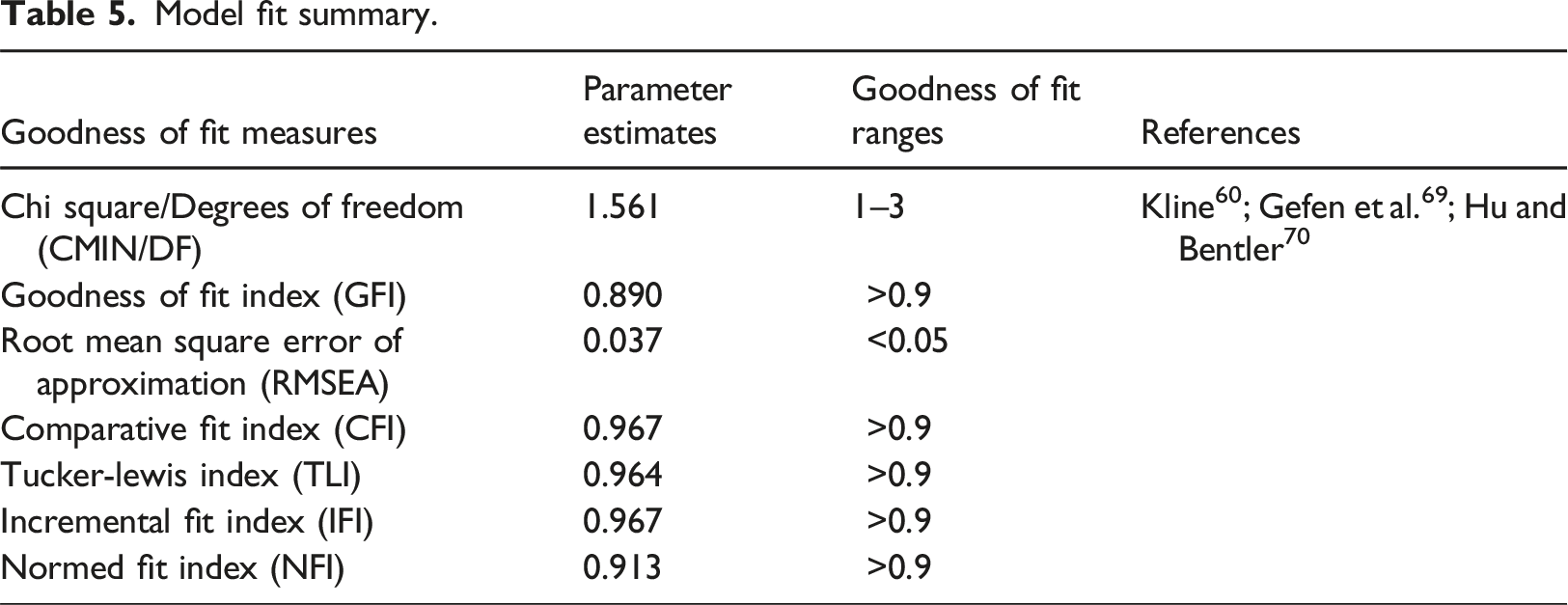
Model fit summary.
Multivariate coefficient of determination (R2) results.
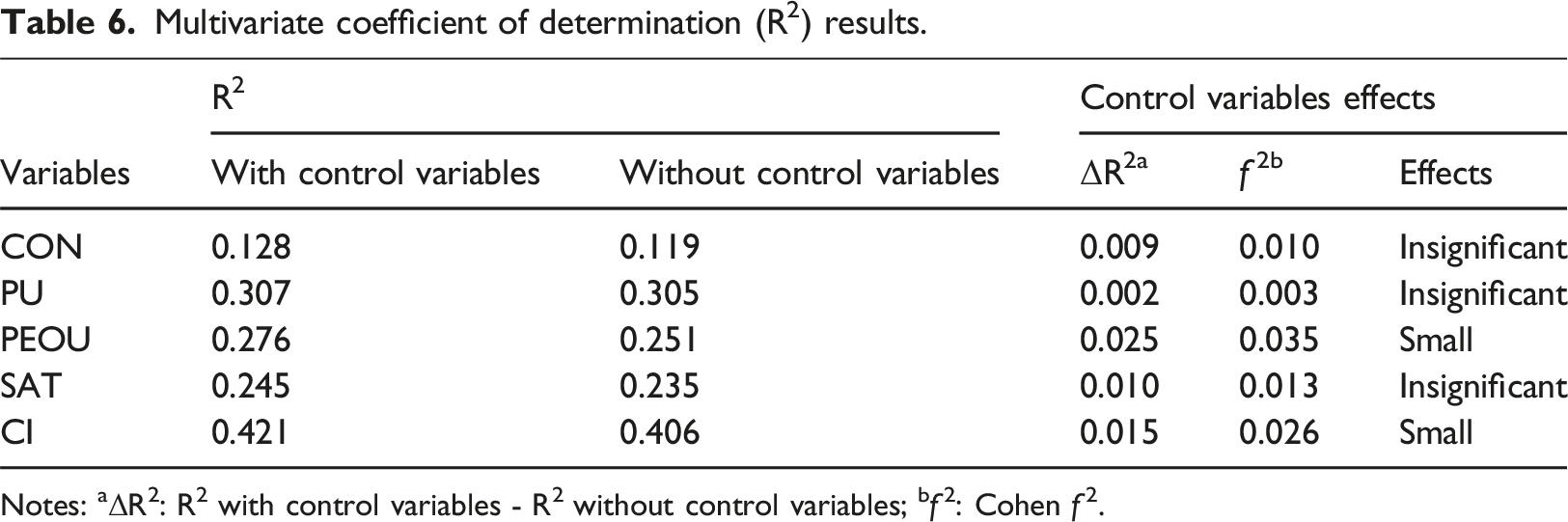
Notes: aΔR2: R2 with control variables - R2 without control variables; bf2: Cohen f2.
Figure 3 shows the standardized path coefficients and corresponding level of significance. The results of the research model. 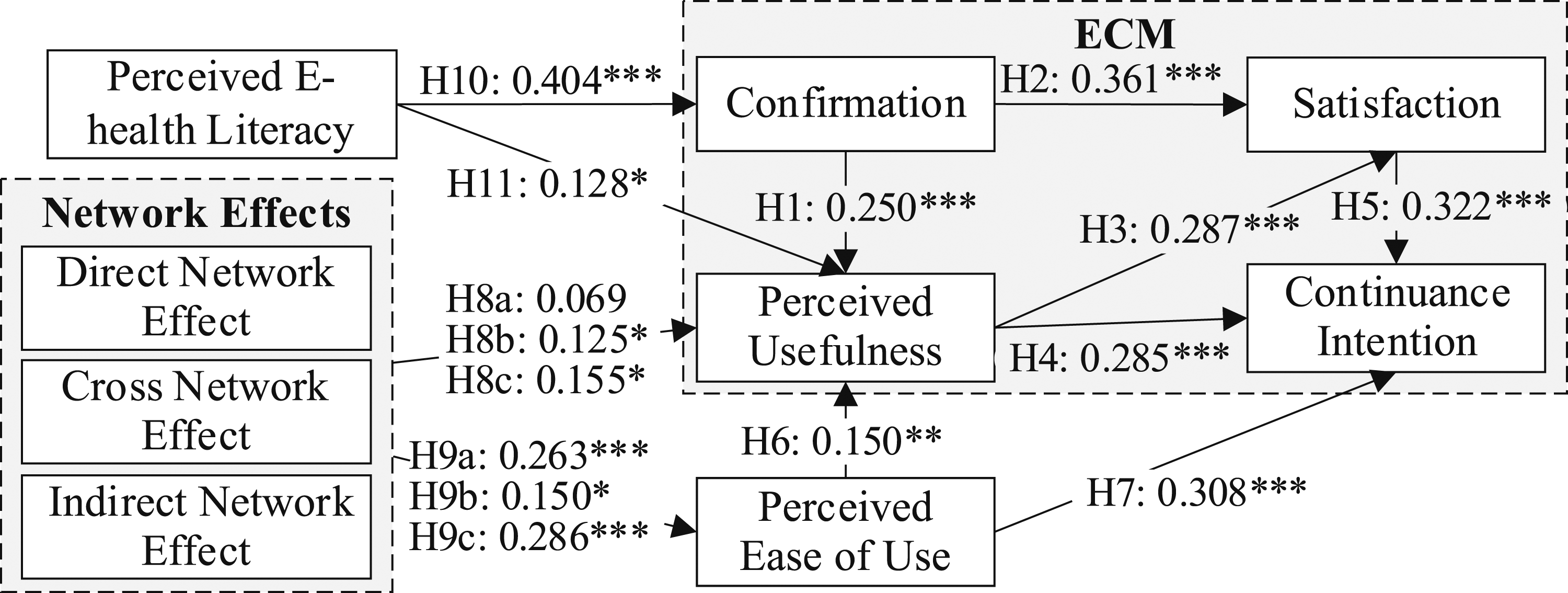
The results of hypothesis testing.
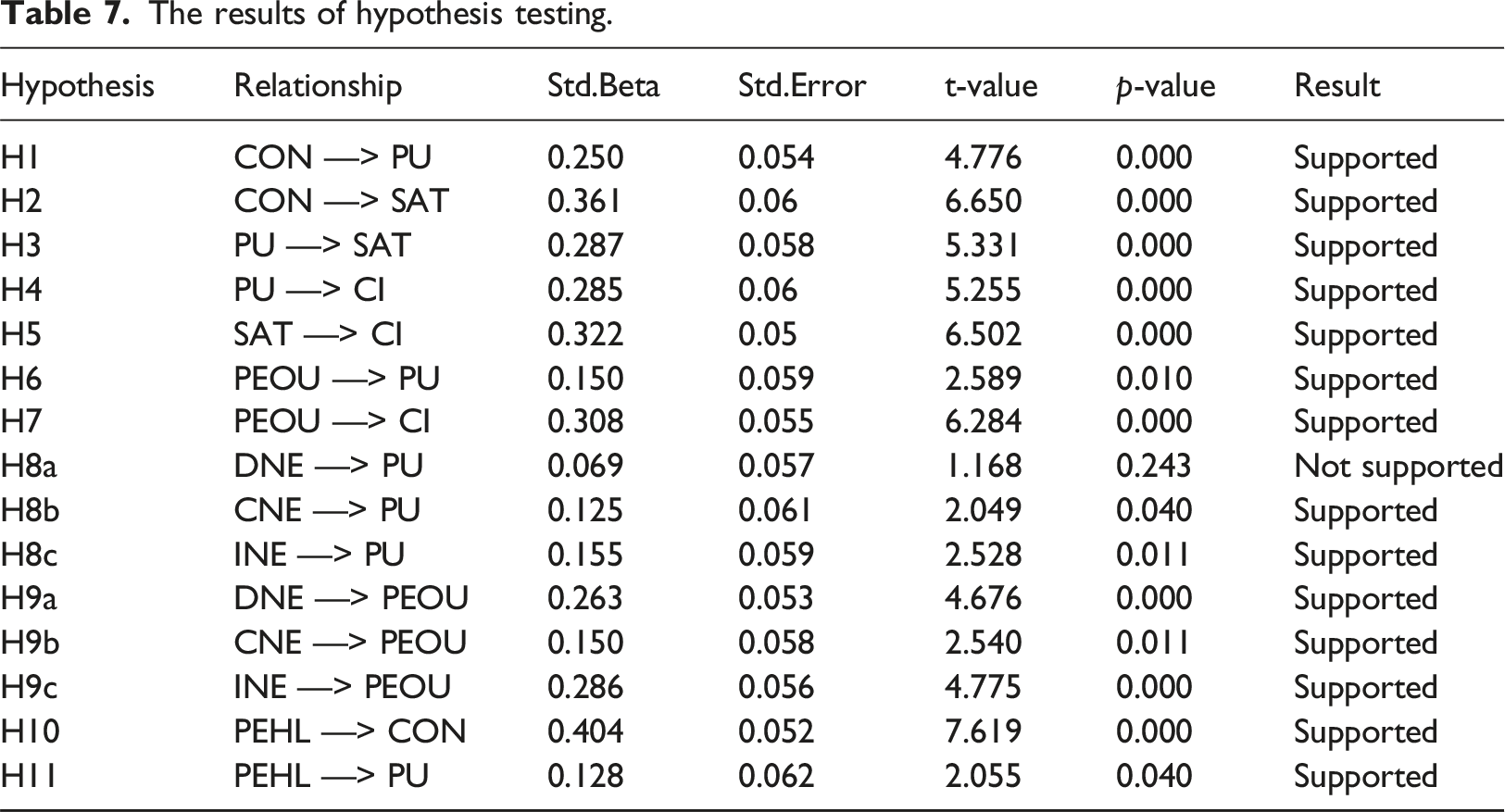
From the perspective of network effects, we examined three types of network effects on PU and PEOU. DNE is not statistically significant in explaining PU, and H8a is not confirmed. CNE (H8b, β = 0.125 and p < .05) and INE (H8c, β = 0.155 and p < .05) significantly affects PU. DNE (H9a, β = 0.263 and p < .001), CNE (H9b, β = 0.150 and p < .05) and INE (H9c, β = 0.286 and p < .001) significantly affect PEOU.
Focusing on the PEHL, PEHL (H10, β = 0.404 and p < .001; H11, β = 0.128 and p < .05) is statistically significant in explaining confirmation and PU. In conclusion, 14 of the 15 hypothesized associations were significant at p < .001 or p < .05, with H8a being insignificant.
In this section, the test of CMB was conducted to rule out the potential threat of inaccurate results. On the one hand, we estimated the reflective measurement model by validating the reliability, convergent validity, and discriminant validity; on the other hand, we analyzed the various paths of the structural model to provide scientific support for the conclusions drawn.
Discussion
Principal findings
This study identifies three aspects of the key findings. First, this study demonstrates that network effects act on patients’ continuance intention to use OHCs through direct, cross, and indirect formats. Direct network effect (DNE), cross network effect (CNE) and indirect network effect (INE) all play roles in continuance intention through PEOU. CNE and INE also have significant associations with perceived usefulness PU, while DNE only has a positive association with PEOU. According to the empirical results, it can be explained that the more physicians adopt and use the OHCs, the more convenient the complementary and compatible services of the OHCs, and thus the more significant the impact on patients’ PU. The path coefficients in the analysis results indicate that INE has a greater positive impact on PU than CNE. In particular, the positive effects of CNE, DNE and INE on PEOU increase in turn. INE is related to the availability, variety and quantity of complementary and compatible products or services, for example, patients’ PEOU will rise in line with the diversification and convenience of an OHC’s payment options.
It is worth noting that there is no substantial association between DNE and PU. Neither the number of active patients nor the use effect of patients from the same side of the two-sided platforms (OHCs) affect the user’s perception of usefulness. It can be explained that the degree of usefulness to patients of OHCs is not directly related to the number of patients used, but to the number and quality of physicians and additional complementary services of OHCs. Since both PU and PEOU have direct or indirect positive effects on continuance intention, such findings provide valuable insights into explaining patients’ intention to use from a network effects perspective.
Second, all hypotheses related to the ECM framework are supported in this study, which are consistent with previous research in various IS/IT adoption contexts.22,31,45,46 According to the findings, if patients’ expectations for OHCs use are met or the experience is more positive than expected, patients will identify the high performance of OHCs and recognize the positive effect of the OHCs services at the same time. Patients will have a high sense of satisfaction and ultimately lead to a high continuance intention. Moreover, the positive effect of PU on continuance intention indicates that patients with higher PU are more likely to feel satisfied and continue using OHCs compared to patients with lower PU. Besides, it has been demonstrated that satisfaction is a necessary antecedent in explaining patients’ continuance intention.
Finally, this study also provides valuable insight into why PEHL is a crucial factor in this model. PEHL reflects the user’s technical ability to obtain health information, which ultimately positively affects patients’ continuance intention towards OHCs. The higher the patient’s PEHL, the more able to confirm the expectation from OHCs and perceive the effect after using OHCs. In addition, this study also demonstrated the positive association of the PEOU with the patients’ continuance intention, the results are in line with previous studies.30,71
Practice implications
This study offers practitioners the basic mechanism of explaining why and how patients are motivated to continue using OHC services. First, platform operators are encouraged to incentivize the positive network effects of OHCs. According to the three forms of network effects (DNE, CNE, and INE), platform operators should mobilize the positive effects of patients on continuance intention from the perspectives of patients, physicians, and platform functions. Take the CNE as an example, the higher the number of active physicians, the better the service quality, and the stronger the CNE, which will directly improve patient’s PU and PEOU and indirectly strengthen patient users’ continuance intention.
Second, while ensuring the level of medical service supply, platform operators should also pay more attention to the convenience, friendliness and timeliness of the using process and experience. Another important aspect of the findings involves the direct impact of platform use satisfaction, PU, and PEOU on continuance intention. For example, improving the accuracy of health information, optimizing the interface for quick search functions, improving service quality to cope with unexpected results such as system crashes, and developing entertainment and social functions.
Third, it is necessary to improve patients’ e-health literacy capabilities and enhance their awareness of OHCs. In the process of continuously adopting OHCs, patients will protect their own health status, physicians will get wider employment opportunities, and OHCs can also achieve long-term and stable development, thereby forming a virtuous circle of the online medical ecosystem.
Limitations and directions for future research
This study suffers from several limitations. First, this study only focuses on the participants in China and the research findings may not be generalizable to OHC users in other countries. Future research can replicate this study and compare the findings in different economic and social environments.
Second, this study conducts a limited investigation of the roles of determinants. Other theories and factors, such as health information consumption behavior, information accessibility and the credibility of information sources, can enrich the influencing factors on user behavior and provide more comprehensive conclusions.
Third, this study simplifies the OHCs into two-sided platforms that connect physicians and patients. However, the participants in the ecological chain related to OHCs are diverse, including administrative departments, pharmaceutical e-commerce, medical insurance companies, etc. The long-term development of OHCs requires the joint efforts of these main parties, stimulating the positive network effects and ultimately achieving value co-creation. Future research needs to be extended to other participants to ensure the entire platform ecosystem’s healthy operation.
In addition, this study is a cross-sectional study, which lacks information about how the dynamic changes are associated with OHC users over time. It cannot adopt and capture the potential changes in variables. Future studies need to consider longitudinal studies with panel data to measure and compare the changes over time.
Finally, based on the structural equation modeling, the findings in this study can only be explained from the causal symmetry relationship. The influence of multiple factors on continuance intention cannot be solved from the configuration perspective. Future research can consider combining qualitative comparative analysis (QCA) method to explore the causal relationship of multiple concurrent results caused by different combinations of dependent variables.
In summary, based on the results of the empirical analysis, we confirmed the mechanism of network effects on patients’ continuance intention in OHCs, and summarized the main theoretical and practical contributions of the study. Meanwhile, it should be noted that this study still has other research opportunities in terms of research topics and research processes.
Conclusions
This study theoretically elaborates on the determinants affecting patients’ decisions on continuance intention of OHC services and empirically generates credible causal evidence about network effects by the actual data analysis. The network effects and ECM are utilized as the theoretical basis to focus on patients’ post-adoption intentions within the OHC context. 14 out of 15 hypotheses were supported in the theoretical framework established by this study. The research results prove that the network effects generated by the interaction mechanism among patients, physicians and the OHC platform exist and affect the continuous usage behavior of patients to varying degrees. Patients’ personal e-health literacy also has a positive impact on the confirmation and PU. The findings of this study make contributions to the literature on patient behavior and lead to potential interests for future research on OHCs usage continuance intention. This study also sheds light on the practical implications about patient retention and value creation through the lens of motivating network effects, which has practical guiding significance for maintaining the competitive advantage and achieving sustainable development of the OHCs.
Supplemental Material
Supplemental Material - Exploring the determinants of patients’ continuance intentions in online health communities from the network effects perspective
Supplemental Material for Exploring the determinants of patients’ continuance intentions in online health communities from the network effects perspective by Aihui Ye, Runtong Zhang and Hongmei Zhao in Health Informatics Journal.
Footnotes
Acknowledgements
The authors appreciate the support of the Beijing Logistics Informatics Research Base.
Author contributions
Declaration of conflicting interests
The author(s) declared no potential conflicts of interest with respect to the research, authorship, and/or publication of this article.
Funding
The author(s) disclosed receipt of the following financial support for the research, authorship, and/or publication of this article: This work was supported by the National Social Science Foundation of China [grant number 18ZDA086]; and National Natural Science Foundation of China [grant number 62173025].
Ethical statement

Data availability statement
The datasets and underlying research materials analyzed during the current study are available from the corresponding author upon reasonable request.
Supplemental Material
Supplemental material for this article is available online.
References
Supplementary Material
Please find the following supplemental material available below.
For Open Access articles published under a Creative Commons License, all supplemental material carries the same license as the article it is associated with.
For non-Open Access articles published, all supplemental material carries a non-exclusive license, and permission requests for re-use of supplemental material or any part of supplemental material shall be sent directly to the copyright owner as specified in the copyright notice associated with the article.
