




Abstract
Due to the rapid development of information technology, an increasing number of smokers choose online smoking cessation communities to interact with other individuals to help themselves quit smoking. Though it is well known that social support plays a key role in the process of smoking cessation, the features of social support that one can get from online smoking cessation communities remain unclear. We collected user interaction data from the largest Chinese online smoking cessation community, the quit smoking forum of Baidu Tieba. We selected 2758 replies from 29 active repliers and 408 correlated posts as our data set. Multidimensional content analysis is carried out from three aspects: posting scenarios, user quitting behavior stages, and types of social support. This article also explores the co-occurrence relationships of different types of social support by social network analysis. Results showed that users receive different compositions of social support in various posting scenarios and behavior stages. In most cases, emotional support is the most typical support the community provides. The community will provide more informational support when needed. Besides, informational support, especially personal experience and perceptual knowledge, has more diverse combination patterns with other types of social support. “Gratitude-Mutual assistance” and “Encouragement-Mutual assistance” are the most frequent co-occurrence relationships. The online smoking cessation community brings people who quit smoking together, and users provide rich types of social support for each other. Users can effectively obtain expected social support in different posting scenarios and smoking cessation stages. Smoking cessation projects should be designed to promote user communication and interaction, which positively affects achieving users’ smoking cessation goals.
Introduction
World Health Organization (WHO) points out that tobacco takes lives of nearly 8 million people every year and is one of the most extensive threats to public health. Realizing the harmfulness of smoking, most smokers are eager to quit smoking. 1 As tobacco dependence is a collection of behavioral, cognitive, and physiological phenomena, it is tough for smokers to quit once they become addicted. Nevertheless, if providing social support to smokers, they are more likely to quit. 2 Thus, offering effective social support to them has been a crucial challenge that most tobacco control programs and health workers face.
With the increase of health awareness and the popularization of the Internet, social media is widely used to obtain and exchange health information. 3 A national survey in the US showed that over 12 million adult smokers, more than one-third of all smokers, 4 turned to the Internet for help. The online smoking cessation community (OSCC) provides users with many resources and creates a positive atmosphere to encourage smoking cessation. 5 Many smokers choose OSCC as a platform to ask questions, share their experiences, and urge others to quit smoking.6,7 In OSCC, social support could play a key role in promoting users to quit, and active participation in communities is a critical factor for smoking cessation. 8
However, as an important factor affecting the success of smoking cessation, the features of social support in the OSCC remain unclear. Exploring features of social support in it helps to reveal the functionality, effectiveness, and mechanism of the OSCC and the motivation of users to use it. It is of great significance and casts light on the future development and implementation of online smoking cessation intervention projects. Thus, our study aims to explore features of social support in the OSCC and mainly concerns three following research questions:
RQ1: What kinds of social support are available in the community?
RQ2: Does social support meet the needs of people who are at different stages of quitting smoking and facing different problems?
RQ3: What’s more, is there a relationship between different types of social support?
The novelty of our study is that it presents multiple perspectives to explore features of social support in OSCC, such as types, distribution, and co-occurrence relationship. Besides, we especially consider scenarios and users’ behavior stages.
Related works
It is significant to provide appropriate and sufficient social support to smokers to help them quit smoking and lots of concerns have been raised among public health researchers.9–12 The social support theory originated from psychology. 13 The definition of it is widely accepted that social support is accessible to an individual through social ties to other individuals, groups, and larger communities. 14
Many smoking cessation programs are designed to provide social support for smokers, such as the telephone counseling15–20 and the group intervention.21–24 Under these circumstances, smokers receive a variety of social support. Related research found that both positive support (i.e. encouraging, congratulating) and negative support (i.e. nagging, criticizing) promote smokers to quit, and positive support had a more remarkable effect on them. 15 Besides, doctors are regarded as sources of cessation support due to their recognized ability to provide practical and emotional support. 25 However, these assistance methods are limited by the time and space and rely on the physician-patient connection, which might not entirely meet smokers’ personalized needs, particularly their age, smoking frequency, willingness, and quitting stages. 26
Additionally, smokers may feel reluctant or ashamed to share their situations concerning their privacy and pressure from media or non-smokers. 27 Smokers need a better environment to be engaged in smoking cessation. Furthermore, their personalized requirements should be specified. 26
The Internet is considered to substitute for face-to-face and telephone-based support for smoking cessation. 28 In recent years, Internet-based smoking cessation programs have been widely conducted.29–31 Smoking interventions implemented by the professional have been used to increase the cessation rate and the quality of information about smoking cessation.32,33 Also, smokers spontaneously blogged to share their experiences to provide social support and help other smokers.34,35
With the popularity of mobile phones, smokers are open to trying smartphone apps to support smoking cessation. 36 Plentiful studies tried to explore the potential of smartphone apps for helping smoking cessation. It was found that these apps influenced smokers’ daily lives and smoking habits. 37 Furthermore, smartphone apps for smoking cessation enable social support networks, such as Kick.it, which provide smoking cessation-related knowledge service and skills training, motivational content, and self-regulation functionality for smokers. 38 However, these apps still have some shortcomings. A previous study evaluated features of 225 apps for smoking cessation with 5As (“ask,” “advise,” “assess,” “assist,” and “arrange follow-up”), and found that these apps were not satisfactory enough to provide tailored feedback. 36 Another apps evaluation study showed these apps could be improved by better integration with evidence-based practices such as Clinical Practice Guidelines. 39
Presently, the OSCC is developing rapidly, focuses more on user interaction, and is a typical place for smokers to communicate. A massive amount of user-generated content (UGC) is produced by users during their interaction. 40 The creation of UGC helps a lot to connect with people and minimize their self-doubt. 41 Related studies lay stress on the classification of the posts in the OSCC, where social support is classified as a main topic.42–44 Myneni and Sridharan applied qualitative methods, text analysis, and network analysis on the community to understand smoking behaviors and behavior changes, but without much attention paid to the details and categories of social support.45–47 It is a typical user information behavior that users interact with each other by posting and replying in the OSCC, such as consulting, advising, or encouraging. The interaction manifests different types of social support directly or indirectly. Then some researchers extracted the posts and replies from the OSCC and used in-depth qualitative methods to analyze the content, concluding that emotional and informational support could help and provide useful guidelines for smokers.48,49 Moreover, Li et al. 49 analyzed the participation motivation of users in the OSCC from the perspective of social support, took into account the user’s quitting stage, and found that social support varies at different cessation stage.
In general, current studies focused on demonstrating the effectiveness of the Internet-based smoking cessation program itself and did not pay enough attention to the interaction between smokers. Social support is usually considered as a function of a smoking cessation program or a topic in the OSCC. Nevertheless, the current classification of social support for smokers is sketchy, which needs further refinement. Besides, only a few studies have used text content in the OSCC for content analysis or text mining, so there is still much space for research on the UGC in OSCC. When investigating the social support of people who quit smoking, methods such as questionnaires and interviews are generally applicable,50–52 yet there exist drawbacks to these methods. For instance, some questionnaire surveys might lack veracity, and the interview is constrained by time and space.20,21,53 Therefore, user data from the Internet could supplement these studies to investigate the social support issues of smoking cessation.
To fill gaps in the current research and answer our three research questions, our study aims to explore features of social support in the OSCC and mainly concerns three features, including types of social support, distributions of social support under different posting scenarios or different smoking cessation stages, and the co-occurrence relationship of social support. A multidimensional content analysis of user interaction data is carried out from three aspects: posting scenarios, user quitting behavior stages, and types of social support. It is considered a feasible approach to understand features of social support in the OSCC. Eventually, to increase the likelihood that users successfully quit smoking, this study tries to propose strategies to guide user behavior and optimize community functions based on the community’s social support features. Besides, it can also serve as the foundation for health workers to develop online smoking cessation programs.
Material and methods
Data preparation
The data for our study was obtained from an online community, Baidu Tieba (tieba.baidu.com), which is a widely used Chinese communication platform. It can be accessed via PC or mobile phone and uses forums as a place for users to interact on a specific topic socially. Quit smoking forum of Baidu Tieba is the biggest OSCC in China. Up to June 28th, 2020, it has gathered 685,455 users, with 266,471 posts and 10,421,663 replies. It could be considered influential among smokers and is an excellent data source of research on user interaction.
In our study, all posts and replies from August 1st to October 31th, 2018, were obtained with 25,465 replies (from 3766 different users) and 15,326 correlated posts (from 3480 different users). Then advertisements and nonsensical replies (e.g. replies with only a few symbols) were removed. After that, 20,301 replies and 15,177 correlated posts remained. Finally, 29 users who replied over 40 times were selected. Their 2758 replies and 408 correlated posts were extracted as the sample for further analysis. The research process is shown in Figure 1.
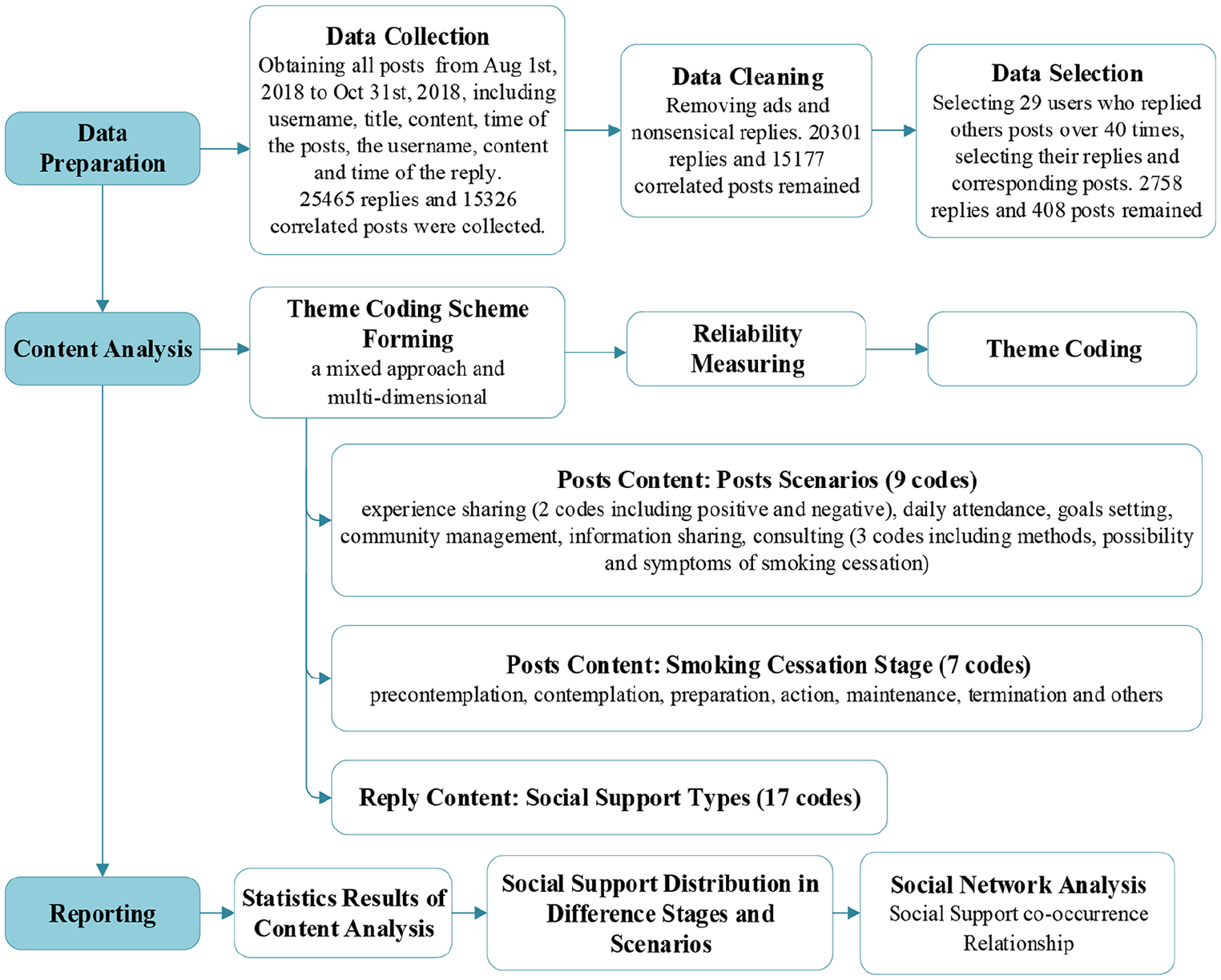
Research process.
Coding procedure and intercoder reliability
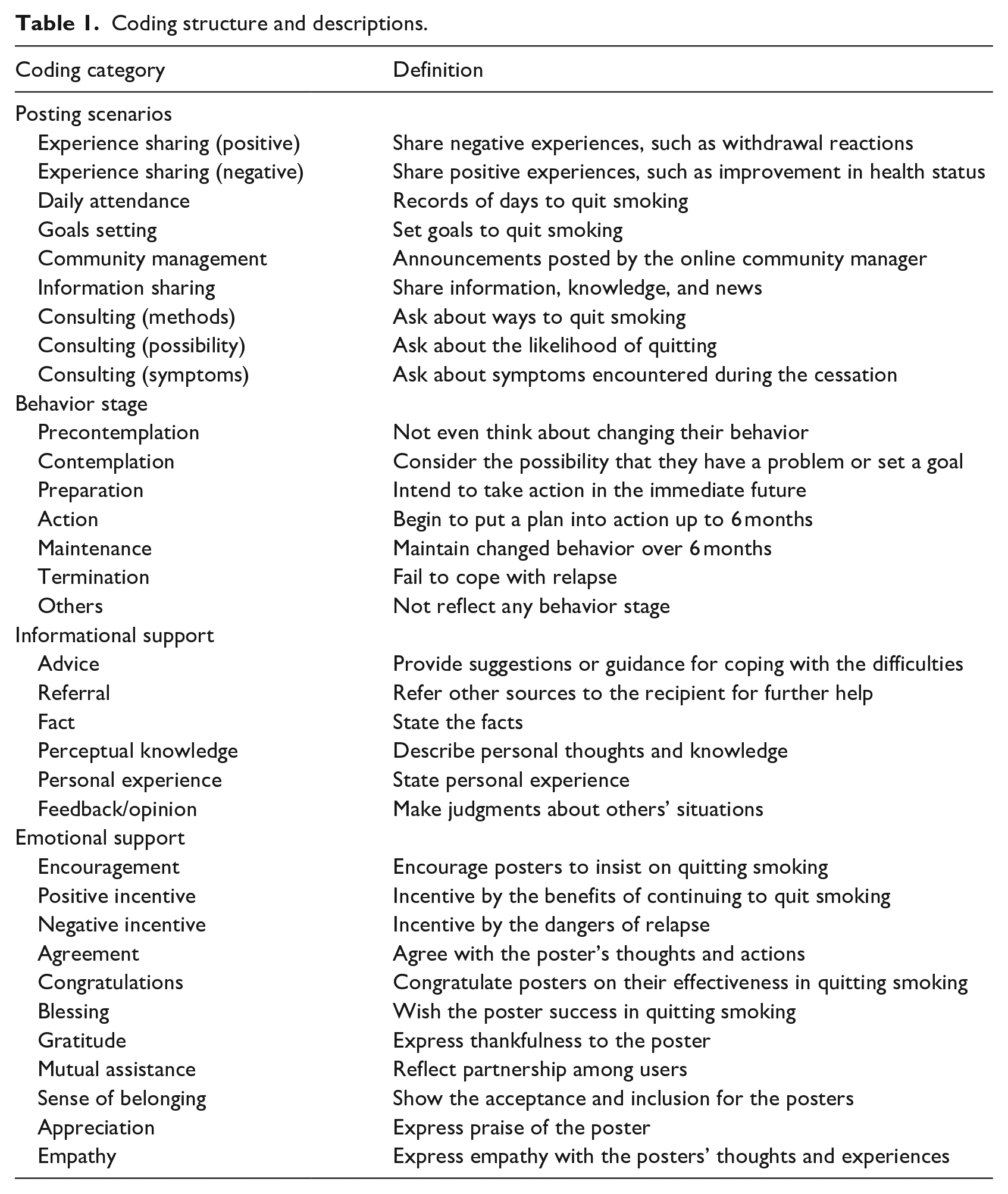
Content analysis is extensively applied in UGC research.54–56 The content of each post was coded from the posting scenarios and the smoking cessation stages, and each corresponding reply content was coded from the types of social support it reflected. In order to determine the coding scheme, this study used a mixed approach of deduction and induction.
Firstly, we used a deductive method to determine the coding scheme for the smoking cessation stage. Quitting smoking is a typical process of behavior change. According to the behavior staged theoretical transformation model, 57 it could be divided into six behavior stages according to smoking cessation duration. Users often mentioned their duration of cessation in the posts. Posts that could not reflect a smoking cessation period were marked as “others” (not reflecting any behavior stage).
Secondly, we used an inductive method to determine a coding scheme for posting scenarios. It was formed by open coding and category creation based on reading extensive post text.
Thirdly, we used a mixed-method to determine a coding scheme for social support. Due to distinct perspectives, researchers have diverse classification ways of social support. According to previous studies,58–63 we divided social support into informational support and emotional support. The sub-classification of informational support originated from two studies.58,59 Then the sub-classification of emotional support was formed by open coding and category creation based on reading extensive replies text, also referred to the result of co-keywords analysis of replies text carried out in previous work. 64
Finally, the coding structure was formed through the above three steps, as shown in Table 1.
Coding structure and descriptions.
To measure the reliability, we selected 50 posts and 50 replies randomly from all the data to carry out the inter-coders reliability test, and two coders worked independently. The reliability coefficient is calculated by the formula proposed by Perreault and Leigh.
65
In equation (1),

After the measurement, the reliability coefficients of posting scenarios, smoking cessation behavior stage, and social support are 0.91, 0.95, and 0.91, reflecting that the coding structure’s reliability is reasonable.
Statistics analysis
After coding, we performed statistics analysis with R 3.6.1. Firstly, we counted the frequency and percentage of each code. Then, the posts were grouped by the posting scenario and behavior stages respectively and the proportion of types of social support in each posting scenario or behavior stages was calculated. Besides, we used the chi-squared test to analyze the composition differences between informational support and emotional support in each posting scenario and behavior stages.
Social network analysis
Some replies contain several sentences and reflect different types of social support. In this case, all types of social support are coded, which lead to co-occurrence. This study conducts social network analysis to identify the co-occurrence relationship of social support and then determines the importance of nodes and edges through betweenness centrality and weight. A node with high betweenness centrality serves as a bridge to connect other nodes. 66 Gephi 0.9.2 was used to construct the network. Nodes were clustered by the community detection algorithm.
Results
Results of content analysis
According to the text coding results, each code’s number and percentage are counted and shown in Table 2.
Results of content analysis.
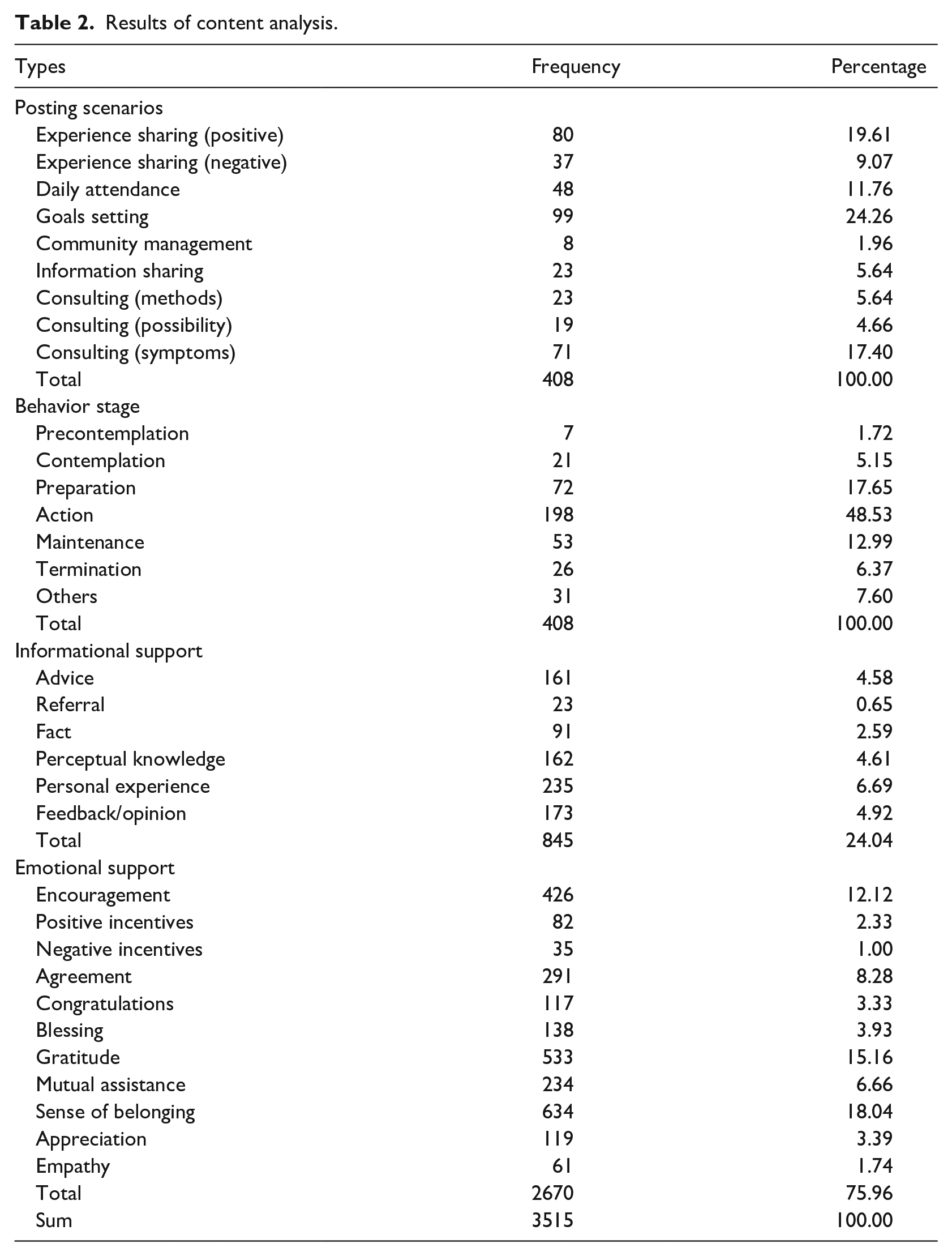
The results showed that the goals setting was the most common posting scenario, followed by sharing positive experiences and consulting about smoking cessation symptoms. These three types of scenarios accounted for 27.7%. The majority (92.40%) of the posts reflected the smoking cessation behavior stages of users (χ2 = 293.42, p < 0.001), and users in the OSCC were composed of people in different stages of quitting smoking. Nearly half of the sample posts reflected that users were in the action stage, and a small number of posts reflected the users were in the termination stage.
Emotional support dominated. The common types of emotional support included the sense of belonging, gratitude, and encouragement. Informational support accounted for less than a quarter of all. Among informational support, personal experience was the most, and other types of informational support did not exceed 5%. The frequency of referrals was the lowest. Users seldom recommended other information sources. These results showed that the “quit smoking” sub of Baidu Tieba had an apparent social function, which is prevalent for users to provide emotional support to others.
Social support distribution in various posting scenarios
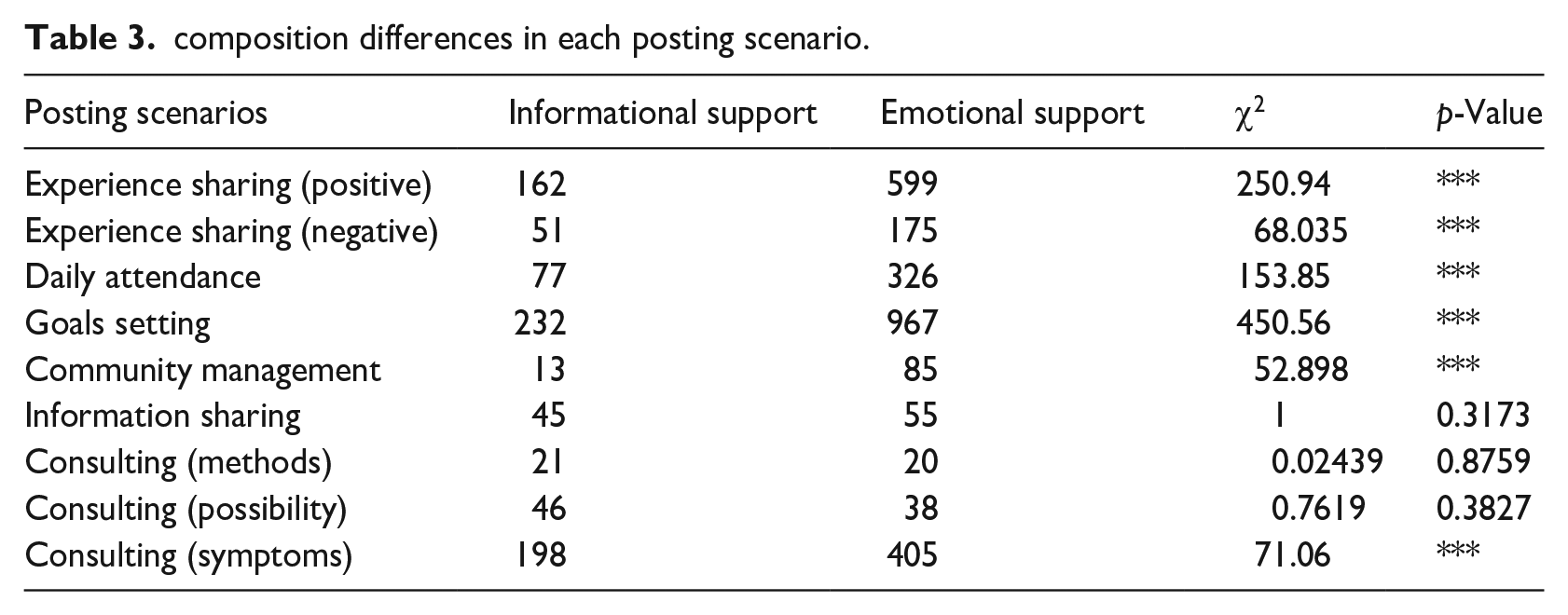
The composition differences between informational support and emotional support in each posting scenario were presented in Table 3. The proportion of types of social support in each posting scenario was presented in Figure 2.
composition differences in each posting scenario.
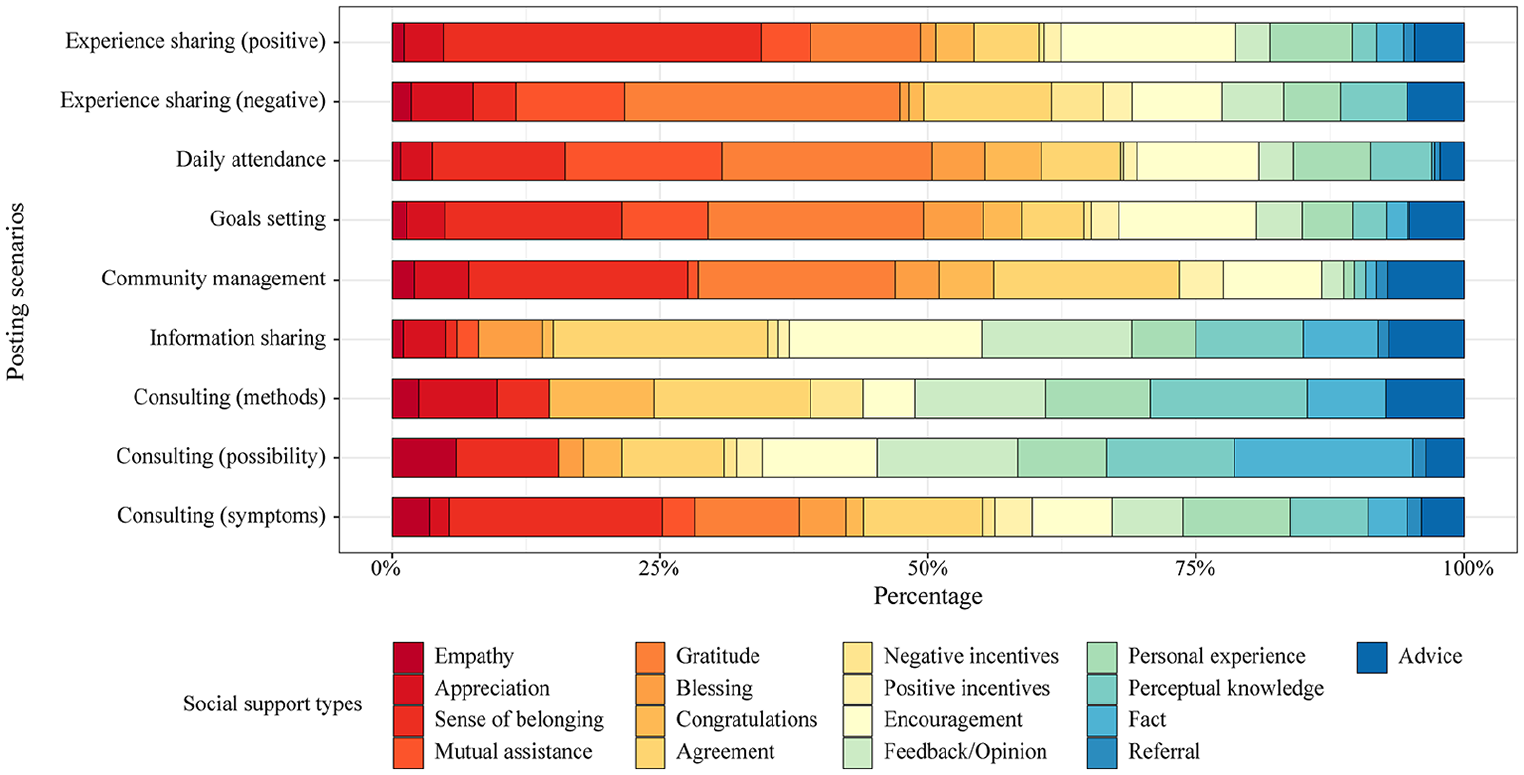
Social support distribution in various posting scenarios.
In various posting scenarios, the distribution of social support is different in the following aspects.
Firstly, Table 3 shows that users may receive informational support and emotional support in a similar amount when they share information, consult about methods, or the possibility of smoking cessation (p > 0.05). In other cases, emotional support dominated and accounted for a large proportion (p < 0.001).
Secondly, the distribution of subcategories of social support is different in various posting scenarios. The three most noteworthy points are as follows.
Under many scenarios (e.g. experience sharing (negative), daily attendance, goals setting), gratitude dominated. In the three scenarios of experience sharing (positive), community management, and consulting (symptoms), the sense of belonging had relatively higher frequency. Users helped each other integrate into the community and establish social relations by the sense of belonging. In the experience sharing (negative), the sense of belonging accounted for a small percentage (3.98%). Instead, gratitude accounted for more proportion than other types (25.66%). The reason for this result could be that even though posters shared negative experiences, they also put forward some suggestions that could be a reference to others, so the repliers showed their gratitude.
In the scenario of consulting (possibility), the fact made up much more than other scenarios, and perceptual knowledge accounted for a higher proportion, which indicates that when users consult about questions related to the possibility of smoking cessation, other users will provide them with objective and universally recognized knowledge, as well as their own experience.
Negative incentive accounted for 4.88% in consulting (methods) and 4.87% in experience sharing (negative) that much higher than other scenarios. It may be possible that posters were not very determined to quit smoking and repliers wanted to state the consequences of relapse, even mocked or satirized to promote posters to make up their mind.
Social support distribution in various behavior stage
The composition differences between informational support and emotional support in each behavior stage were presented in Table 4. The proportion of types of social support in each behavior stage was presented in Figure 3.
composition differences in each behavior stage.
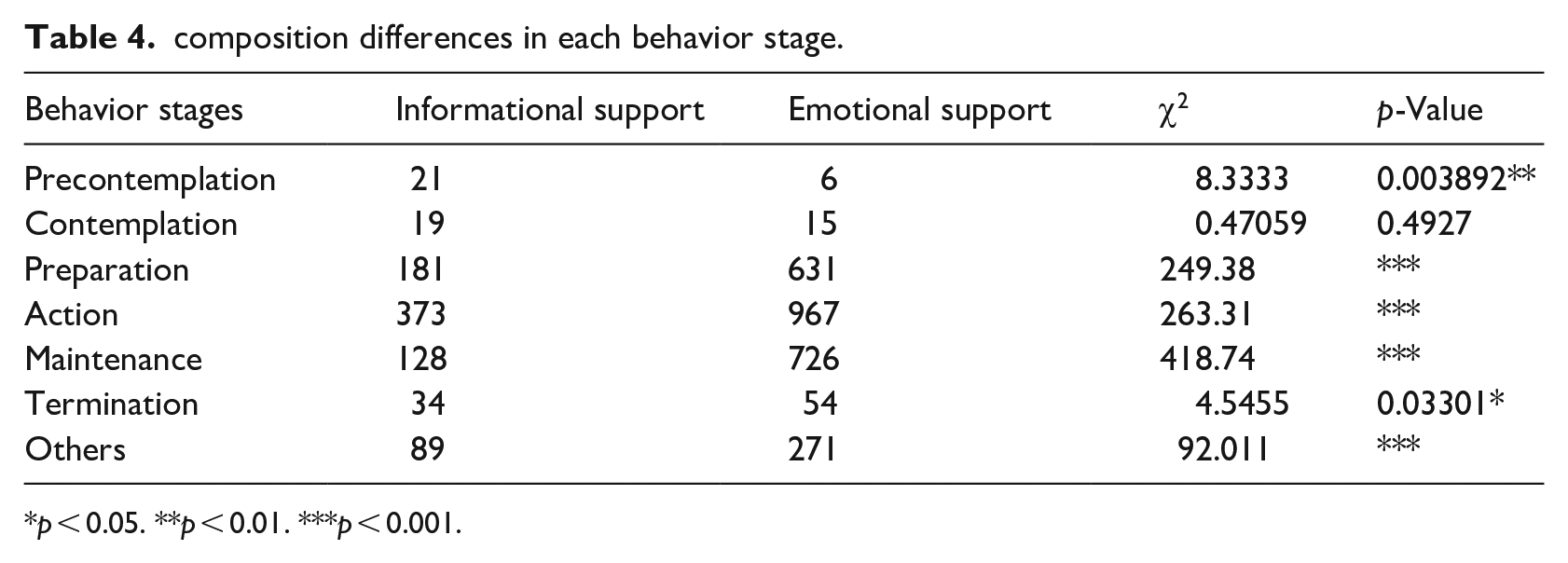
p < 0.05. **p < 0.01. ***p < 0.001.
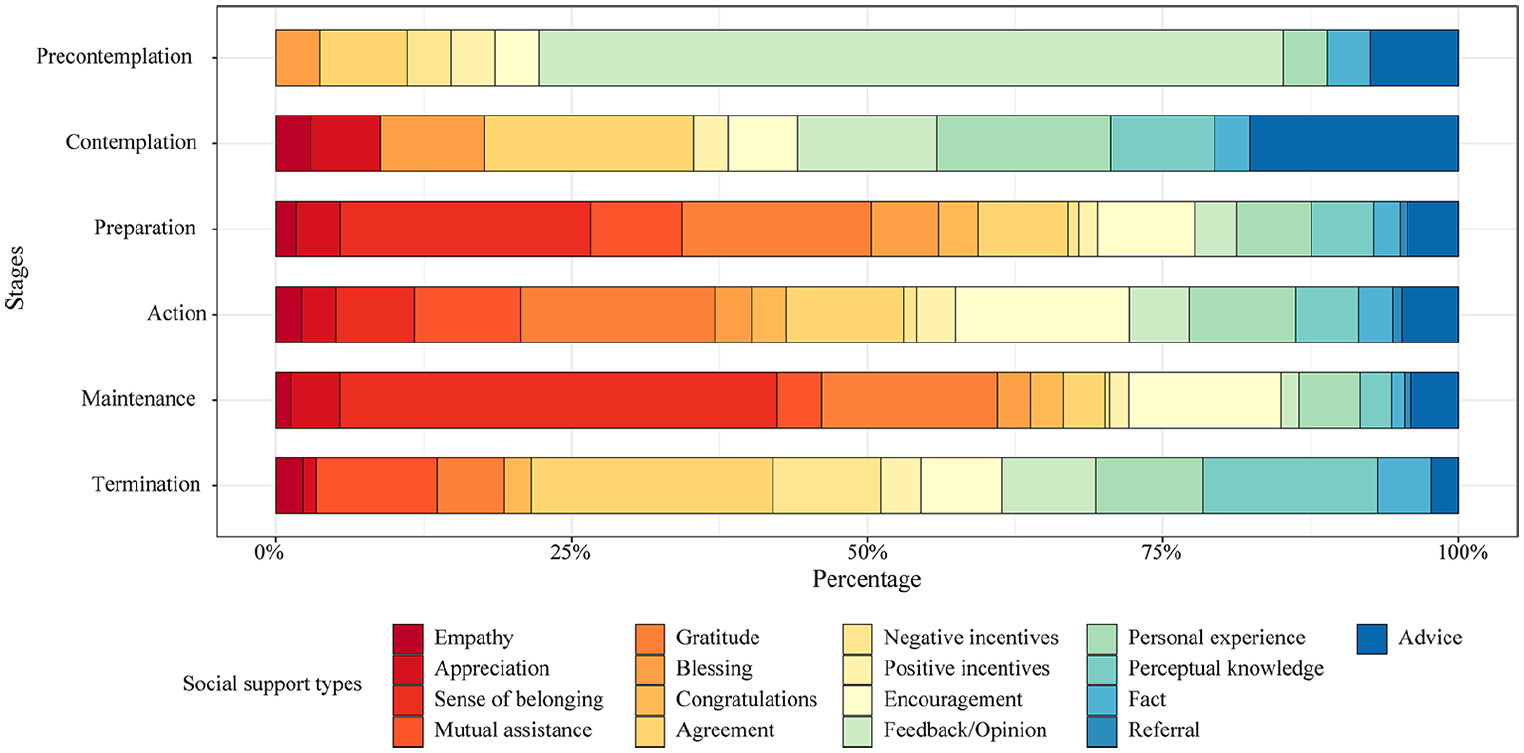
Social support distribution in various behavior stages.
In various behavior stages, the distribution of social support is different in the following aspects.
Firstly, Table 4 shows that users receive informational support and emotional support equally in the contemplation stage. In precontemplation stage, informational support is the majority. However, in the preparation, action, and maintenance stages, emotional support accounted for more than 70%. The three stages above are critical for quitters to quit smoking. Emotional support from the repliers is the source and motivation for the posters to persist in quitting smoking. In the termination stages, the proportion of informational support increased. When posters have the idea of relapse, repliers hope to correct their behavior by informational support, and help them keep quitting smoking.
Secondly, the distribution of subcategories of social support is different. The three most noteworthy points are as follows.
In the precontemplation stage, the purpose of repliers’ social support is to make the posters realize the harm of smoking and the benefits of quitting smoking. Feedback/Opinion accounted for the highest frequency (62.96%). In the contemplation stage, both agreement and advice accounted for the highest frequency (17.65%). In the above two stages, types of emotional support were much less than other stages. It is possible that posters are more likely to receive informational support, and they need information about why and how to quit smoking in these two stages.
In the preparation and maintenance stages, the sense of belonging dominated (21.18%), which may indicate that repliers hope to help posters make up their mind to quit by providing a sense of belonging in these stages. Moreover, in the maintenance stage, posters and repliers have connected closer. In the action stage, proportions of gratitude and encouragement were close (14.70% and 16.49%, respectively). Posters are willing to share their experience and feelings to help others in the action stage, so it is easier to get above two kinds of emotional support.
In the termination stage, the agreement has the highest proportion (20.45%). Posters expressed their idea of giving up but still struggled in quitting smoking. So repliers showed agreement to their feelings. However, empathy was still at a low proportion (2.27%). The proportion of negative incentives (9.09%) was much higher in the termination stage than in other stages. For the posters who have relapsed or have stopped cessation, negative incentives become the main incentive. To urge posters keep quitting smoking, repliers would highlight the harm of relapse or express their dissatisfaction with the posters’ relapse thoughts or behavior. Also, mutual assistance accounts for the highest proportion in the termination stage among all stages (10.23%), indicating that the community will not abandon or exclude those who fail to quit but urge them to persist inclusively.
Co-occurrence analysis
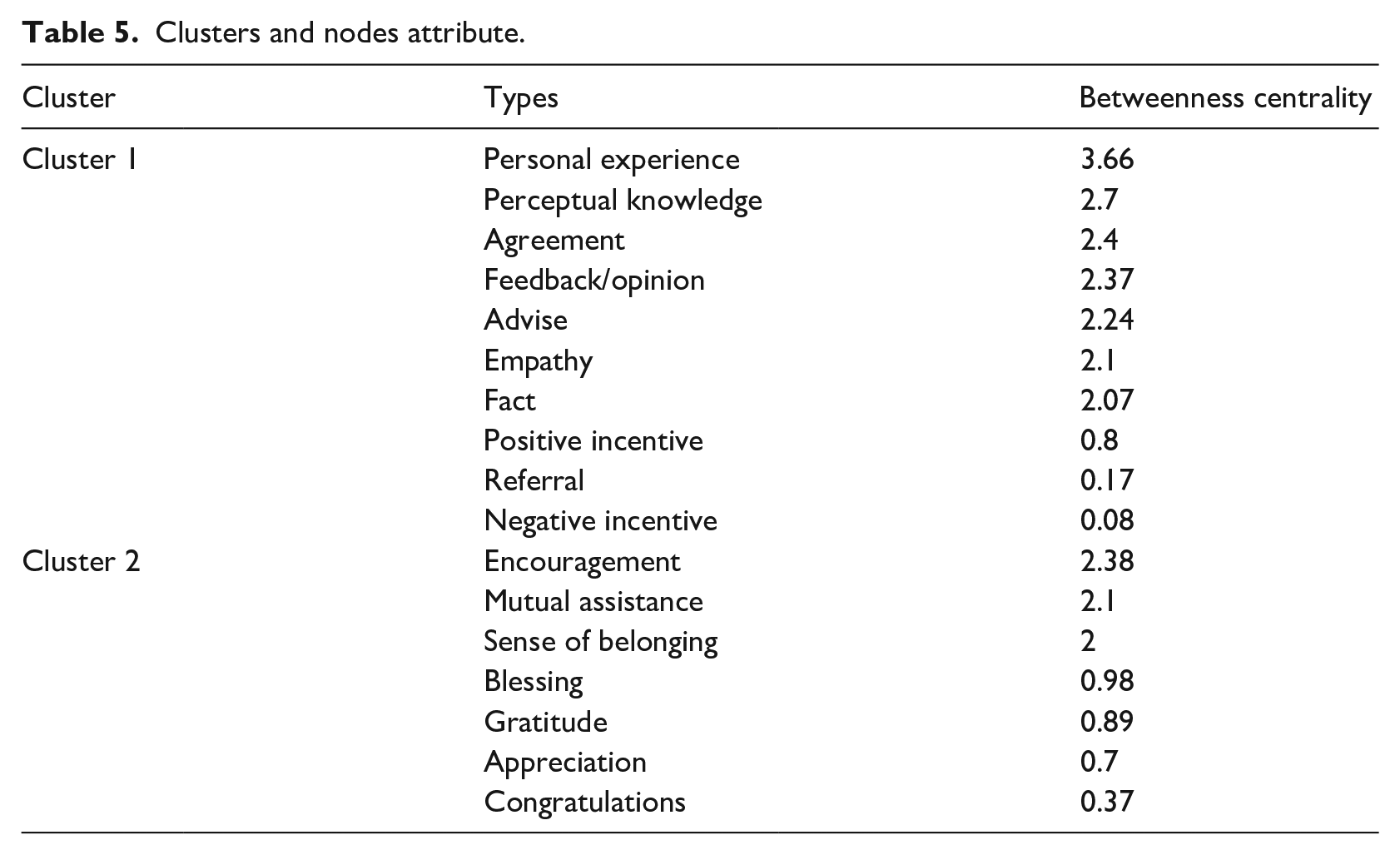
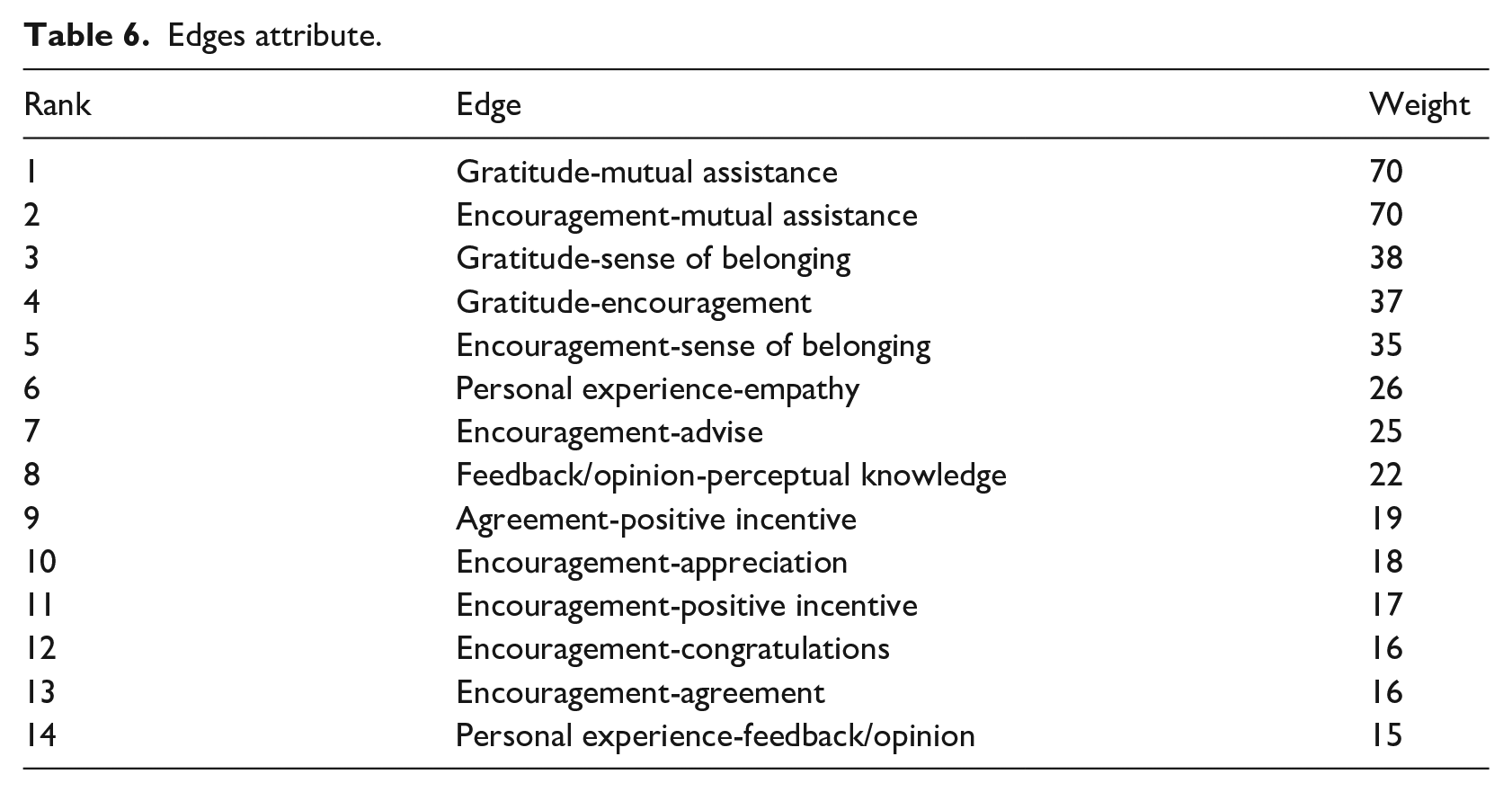
According to the coding result, 543 replies contained two kinds of social support, 98 replies of three kinds, six replies of four kinds, and two replies of five kinds. Two clusters were detected and given different colors. The node with higher betweenness centrality has a larger size. The thickness of the edges connecting the nodes reflects the co-occurrence frequency of social support. The co-occurrence network is shown in Figure 4, and the node attributes and edge attributes are shown in Tables 5 and 6.
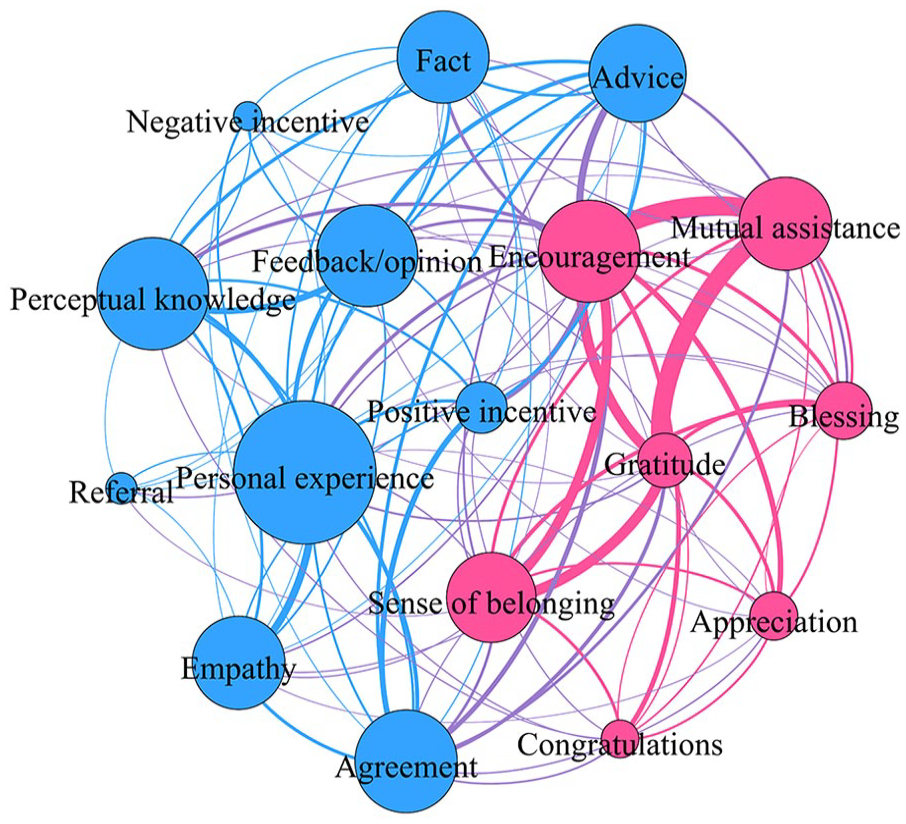
Co-occurrence of social support.
Clusters and nodes attribute.
Edges attribute.
In the co-occurrence network, 108 edges connect 17 nodes. The graph density is 0.794, indicating that the connection relationship between nodes is complicated, reflecting the complex combination of relationships between different types of social support. Two nodes with the highest betweenness centrality are personal experience and perceptual knowledge, all belonging to informational support rather than emotional support with greater quantity. It shows that personal experience and perceptual knowledge have higher diversity in combination with other types of social support.
The network can be divided into two clusters. The blue cluster includes all types of informational support in social support and four types of emotional support, including approval, empathy, positive incentive, and negative incentive. The red cluster contained encouragement, mutual assistance, and other types of emotional support.
Table 4 shows that edges with the highest weight are “Gratitude-Mutual assistance” (e.g. “Thanks, my bro! You can also make it, let’s fight for it !,” “Thanks for the encouragement, let’s make it together!”) and “Encouragement-Mutual assistance” (e.g. “Fighting! I think highly of your commitment and make it together!,” “Let’s make it together, and I hope you raise your spirit!”). The following edges are “Gratitude-Sense of belonging” (e.g. “Thanks to my bro, happy holiday!”), “Gratitude-Encouragement” (e.g.“Thanks! I will endeavor.”), “Encouragement-Sense of belonging” (e.g. “Good morning my bro, happy quitting smoking, fighting!”).
The nodes with higher co-occurrence frequency all appear in the red cluster. The repliers usually express multiple emotional support simultaneously in one reply, expect to make the posters not feel lonely and provide more motivation for them to quit smoking. Meanwhile, encouragement co-occurred with other types of social support more often. It can be inferred that in many cases, the repliers express various kinds of support, but their ultimate purpose is to encourage the posters to keep on quitting smoking.
Discussion
Main findings
Our study explored features of social support in the quit smoking forum of Baidu Tieba, the biggest OSCC in China, from the perspective of types, distribution under different scenarios or stages, and co-occurrence relationship of social support. The most significant difference between our study and the current studies on content in OSCC is that most previous studies45–47,67 regarded social support as a theme in the community, focusing on the distribution of themes, while our study focuses on social support itself.
This study is driven by the UGC in OSCC to research user social support features by text content analysis. It has the following advantages. First, this study conducted a non-interventional observation. Compared to e-mail interviews, 49 our study avoids interference caused by researchers and can provide in-depth information about the user interaction process. Our research results reflect the existing and objective features of social support in the community. Second, the text data is coded in multiple dimensions to reveal the features of social support. Third, the spontaneity of UGC might minimize social desirability bias caused by direct questioning, and a more general conclusion could be reached. 68
The main findings of this study are as follows.
First, compared with informational support, the types of emotional support are more diverse. Users express not only positive emotions but express negative emotions (e.g. negative incentive) as social support, which is rarely reported in previous studies. Emotional support is more common than informational support, and there may be two reasons. First of all, the cost for users to provide emotional support is lower. A few words can express most emotional support, while information support depends on the user’s understanding and organization of related information. Secondly, users may worry that they have provided the wrong information and misled other users. Uncertainty about their information impedes them from providing informational support.
Second, emotional support is dominant in most cases. Compared with previous research, this study finds that emotional support is more common than informational support in the OSCC, consistent with other studies.58,69 Users can effectively obtain targeted social support in different posting scenarios and smoking cessation stages. When posters may intend to obtain information, others will provide more informational support. It is also found that the types of social support users received varies at different smoking cessation stages, which is consistent with the results of other studies.49,64
Third, there are complex co-occurrence relationships between different social supports. It is found that informational support, especially personal experience and perceptual knowledge, has more diverse combination patterns with other types of social support. “Gratitude-Mutual assistance” and “Encouragement-Mutual assistance” are the most frequent co-occurrence relationships.
Fourth, the OSCC brings people who quit smoking together, and users provide rich types of social support for each other. The research results highlight online communities’ role as an information exchange platform for user information seeking and information sharing. Our results show that user interaction plays an essential role in promoting user participation, establishing and maintaining community user relationships, and enhancing their stickiness, consistent with the previous study that showed that social network engagement could enhance adherence to smoking cessation. 70
Implications
Our study’s theoretical implication is that it provides subcategories of social support in the context of OSCC and a micro perspective to analyze social support, which can serve as a basis for similar research.
As for the practical implications, our study could help community administrators guide users positively, enrich and deepen the online community’s functionality, increase user engagement, and help health workers set up strategies based on the online community engagement.
In terms of user behavior guidance, community administrators can promote users’ relationship through online activities and heated topic discussions.
We find that posts about consulting make up more than one-quarter of the total posts in our study, and users offer informational support to others more frequently in this case. It shows that information seeking and information sharing are vital functions for the OSCC. Administrators could build a dynamic knowledge base by summarizing and organizing FAQs users most concerned. It could prevent users from posting similar questions and reduce information redundancy in the community and improve the accessibility to useful information.
To facilitate information support, community managers need to provide users with reliable, professional information. They can collect more information published by authoritative institutions, such as clinical guides and professional books. To guarantee the quality of information and restrain the false information, community managers can also invite professional health workers to provide information services, such as introducing effective methods to quit smoking and cope with symptoms, increasing the self-management ability of OSCC users. In this way, OSCCs can incorporate interdisciplinary experts to promote community development and ultimately increase users’ chance of quitting smoking.
To provide more accurate personalized smoking cessation services, public health workers should focus on users’ behavior changes in different smoking cessation stages and identify obstacles encountered by users and their social support needs, thus increasing smoking cessation rates. 71 Automatic recommendation services can also be launched to provide targeted support for users at different stages of quitting smoking and facing different problems. 58
Limitations
There are still some limitations. Firstly, the number of participants should be expanded. We only involved 29 active users in 3 months because we conducted a manual content analysis that was not suitable for processing large amounts of data. Subsequent studies can train classification models based on this study’s coding framework by machine learning approach and automatically classify posts and replies to process large amounts of data. Secondly, this study used text content for analysis while excluding non-text data such as pictures, memes, videos, and other relevant information. Further research could combine non-text data for in-depth research.
Conclusion
In this study, posting scenarios of all posts can be recognized, and the majority of the posts can reflect the smoking cessation behavior stages of users (χ2 = 293.42, p < 0.001). All replies involved can convey at least one kind of social support. This study identified types of social support in the OSCC and extended the classification of emotional support. In most cases, emotional support is dominant. However, when users may intend to obtain information, the community will provide more informational support. Besides, there are complex co-occurrence relationships between different social supports. In general, the OSCC brings people who quit smoking together, and users provide rich types of social support for each other. Users can effectively obtain targeted social support in different posting scenarios and smoking cessation stages. Smoking cessation projects should be designed to promote user communication and interaction, which positively affects achieving users’ smoking cessation goals.
Footnotes
Author contributions
Declaration of conflicting interests
The authors declare that they have no known competing financial interests or personal relationships that could have appeared to influence the work reported in this paper.
Funding
The author(s) disclosed receipt of the following financial support for the research, authorship, and/or publication of this article: This work was supported by the National Natural Science Foundation of China (Nos. 71871102, 71420107026), the Young Elite Scientists Sponsorship Program by CAST (No. 2018QNRC001), the National Key Research and Development Program of China (No. 2018YFC0806904-03), and the China Postdoctoral Science Foundation (Nos. 2018T110808, 2017M610489).
