



Abstract
Research indicates that recording medical consultations benefits patients by helping them recall information pertinent to their care. Cancer Care Alberta set out to develop a mobile recording app to enable patients to safely and securely record appointments and take notes. Stakeholder engagement was conducted with patients, healthcare providers, and the Alberta Health Services Legal & Privacy team. App testing was completed with patient and family advisors. The app was piloted in a clinic to assess workflow impacts before moving to a public launch. The app launched in late November 2018 and continues to be used by patients in the cancer program and beyond. Earlier in 2024, the app underwent additional testing with advisors and user-friendly improvements were made based on feedback and previous user reviews. This article summarizes the development, implementation, and sustainment of the My Care Conversations app. Implementation challenges and effective strategies are highlighted.
Introduction
Cancer Care Alberta (CCA), an ambulatory cancer program situated within Alberta Health Services (AHS), Canada’s largest integrated public healthcare system, provides care and support for patients living with a cancer diagnosis. CCA supports patients from diagnosis, through ambulatory treatments, to survivorship or palliative care. 1 At its core, CCA is committed to delivering person-centered care, a philosophic approach to care that values respecting patients’ dignity, providing them with timely and accurate information, involving them as partners in decision-making processes, and fostering collaboration throughout their healthcare journey. 2 Inherent to this approach is recognizing the significance of understanding patient perspectives and addressing the unique challenges they may encounter, in order to optimize care delivery. 3 Research consistently supports the transformative impact of providing person-centered care, as it has been shown to improve patient experiences, care quality, and overall health outcomes. 4 CCA aims to provide person-centered care and improve patient experience while mitigating the barriers that patients encounter throughout their cancer journey.
It can be challenging for patients to understand and manage the large amount of information related to a cancer diagnosis, prognosis, and treatment options. This difficulty can be exacerbated in patients with pre-existing or treatment-related cognitive impairments that can impact their understanding and retention of information. 5 Research has shown that patients with cancer often receive less detailed and more confusing information than other patient populations.6,7 Moreover, among patients generally, the ability to recall medical information is often poor, with up to 80% of healthcare information discussed during clinic visits being forgotten. 8 Patients often require additional clinical conversations to ensure they understand and can be actively involved in their care. 9 Audio recordings of medical consultations have emerged as a potential solution to assist with information retention and sharing and to support active participation of patients in their care. These recordings help facilitate information recall after a stressful or overwhelming encounter and enable patients to prepare questions for subsequent visits. 7 Research also indicates that patients who receive audio recordings, compared to those who do not, exhibit an improved understanding of their cancer treatment, reduced anxiety, enhanced information recall and increased involvement in subsequent consultations and decision-making processes. 10
Despite the patient-centered benefits associated with audio recordings, their routine provision in oncology clinics is not standard practice. 11 Surreptitious recordings without the physician’s knowledge have taken place, as highlighted by the Canadian Medical Protective Association. These recordings can damage trust between patient and provider and may inadvertently lead to a breach of privacy if the recording is not made in a private space. 12 To address this and facilitate better communication between patients and physicians, a mobile app was developed in CCA with funding from the Alberta Cancer Foundation (ACF). The app, called My Care Conversations (MCC), offers a safe and efficient avenue for patients to make a recording of their clinical consultations within AHS. With 96.1% of households in Alberta reporting possession of cell phones in 2019, 13 MCC provides a near-universal and easily accessible platform for enhancing person-centered care. The primary goals include improving the retention, reflection, and sharing of knowledge communicated between patients, families, and healthcare providers, and decreasing the general anxiety patients and families feel regarding their inability to remember critical information received at an appointment. Although developed in the cancer program, the app was intentionally designed to be generic enough for patients to use at any AHS appointment. To our knowledge, at the time of development, MCC was the first organizationally endorsed, person-centered consultation recording app in North America.
This paper provides a comprehensive account of the development, implementation, and sustainability of the MCC app. We also highlight lessons learned throughout the development process and key considerations for other organizations or programs that may be implementing a similar app.
Methods
App development, design, and implementation process
In 2017, there were no standard resources or protocols in AHS to aid patients in effectively recording or remembering information shared during a healthcare consultation, other than having a friend or family member attend the appointment or relying on extensive notetaking. Recognizing this gap and the potential benefits of consultation recording, the process to create a person-centered, institutionally endorsed mobile recording app was initiated. For development and implementation of the app, the Model for Improvement framework was used.
14
A seven-stage strategic map was developed to guide the process (Figure 1); each stage is explained in detail in the subsequent section. Strategic map outlining the process of designing, launching, and scaling the use of the My Care Conversations app in Cancer Care Alberta.
Stage 1: pilot study
Before initiation of the current project, a multi-site feasibility study was conducted in 2013. 11 One study site was the Tom Baker Cancer Centre in the city of Calgary. Participants from Calgary were newly diagnosed prostate cancer patients (n = 54). 11 Participants who listened to their individual recordings reported high satisfaction, with a mean rating of 94/100. Participants also reported prospective benefits in four main areas: reduced anxiety, enhanced retention of information, better-informed decision-making, and improved communication with family members. 11 These findings highlighted the potential value of consultation recording within cancer care.
There are many apps available for patients with cancer, with varied purposes including: providing information and resources for symptom management,15–17 enabling patients to communicate with their healthcare team via online messaging and Telehealth,16,18 and providing supportive care.19,20 These features can all benefit patients in different ways, however none truly benefit patients in the moment that they are receiving care. An audio recording app, however, could help patients both during and after their appointment; this fit with the study participants’ feedback and further reinforced the need for the creation of the MCC app.
Stage 2: funding awarded and app vendor hired
Funding was provided through a “Transformational Care” grant from the ACF. The goal of this funding program is to invest in research that accelerates the translation of knowledge and scientific evidence to improve patient outcomes. 21 An application was submitted in Spring 2016 and funding was awarded in Fall 2017. The ACF funded the entire cost of app development and committed to making the app free to download. In January 2018, a local company called SAW Strategic Design Studio 22 was contracted for the design.
Stage 3: app development and initial design
User-centered design principles including an iterative process of early and active involvement of patient advisors and simple design representations 23 were employed to create a user-friendly, visually appealing app. Notable features included ample storage for audio files, easy file sharing, and offline functionality. Innate phone functionality was utilized whenever possible to ensure ease of use. Additional app features were included to protect physician privacy; these features are discussed in subsequent sections.
The app offers several key functionalities, enabling patients to (1) audio record healthcare appointments; (2) share recordings with their care team or trusted family and friends; (3) take notes during appointments or add notes to recordings later; and (4) prepare for upcoming appointments by creating questions that will appear the next time a recording is initiated. The app can easily be found on the App Store for Apple/iOS devices and the Google Play Store for Android devices. The design of the app is simple and requires minimal routine maintenance, preventing the need for continuous funding. Notably, the app is the first in Canada to be endorsed by a healthcare organization, and the Canadian Health Standards Organization recognizes it as a leading national healthcare practice. 24
Stage 4: patient advisor survey and prototype completion
To ensure the app design was informed by patient perspectives and prioritized ease of use, a survey was developed and distributed to patient and family advisors (PFAs) in the cancer program. Patients (current and former) and family members become volunteer advisors to use their lived experience with cancer to consult on projects to improve care and practices in the cancer program. 25 As this work qualified as a quality improvement initiative based on Alberta’s A pRoject Ethics Community Consensus Initiative (ARECCI) guideline, formal ethics review was not required for this project. 26
In total, 30 PFAs completed the survey. The aim was to gather feedback on the app’s feasibility and identify general functional needs. The results reconfirmed earlier findings that patients and families are often overwhelmed by the information in a consultation. The vast majority (n = 26, 86.6%) indicated they were likely or very likely to use a recording app if it was freely available for download. PFA feedback resulted in the development of an interactive beta version of the app in April 2018.
Stage 5: focus testing, prototype refinement, and app completion
Functionality and usability of the prototype was evaluated in one-to-one focus testing conducted with 14 additional patient advisors. While most feedback was positive, the testing underscored key areas for improvement resulting in several design changes, with guidance from the AHS Human Factors team to ensure usability and comprehensibility. 27 One feature that was modified was the reminder function, which was intended to prompt patients to ask questions at their next appointment. However, most advisors found it challenging to add or modify questions for future appointments intuitively. Recognizing the barrier to usability, CCA worked with the vendor to refine the app prototype to make the question feature more user-friendly. The iterative process of refinement and testing continued until the app’s completion in June 2018.
Stage 6: clinical launch strategy
For the clinical launch strategy, the app needed to be available for download and use, however CCA did not want broad awareness of the app until its feasibility was confirmed in the clinical environment. This was achieved by releasing the app in the Google Play Store and App Store without any search terms, meaning it could only be found by searching its full name. There were four phases to the launch strategy:
Clinical validation
CCA needed to establish the best approach to ensure app usage was not disruptive to clinical workflow and was easy for the patient to use in both the clinical setting and at home. The app was tested with a small sample of patients within a clinic to assess impacts to clinical workflow. Testimonies were collected from patients about their experiences.
Resource development
Information collected in the clinical validation phase was analyzed and physician, staff, and patient education resources were developed to support the clinical integration of the app as a standard resource for CCA patients.
Knowledge translation
In collaboration with the ACF, AHS Web Communications and CCA Patient Education, opportunities to promote the app through patient education materials and the AHS website were identified.
Clinical integration
Once patient and staff educational resources were created, an awareness campaign was developed to promote internal awareness of the app. In collaboration with AHS Community Engagement & Communications, a launch date was selected to coincide with a public media release. Just before the launch date, search terms were added on the App Store and Google Play Store, which made the app easily available for download across Alberta. Educational resources were also made available to the public via the AHS external website. 28
Stage 7: pre-launch communication and public launch
This stage involved a comprehensive public communication strategy and aimed to raise awareness of the MCC app more broadly across the province in coordination with the official public launch. A media event was held at the Tom Baker Cancer Centre in Calgary on November 28, 2018, to formally introduce the app. 29 This resulted in media coverage across all five AHS health zones, including features in newspapers, radio, television, newsletters and a magazine. Launch to the public occurred on December 4, 2018. Patients were encouraged to download the app through continued use of posters and messaging in clinic waiting room television ads throughout cancer centres, and social media posts. CCA site managers and frontline staff were made aware of the app and encouraged to talk to patients about its benefits. A Frequently Asked Questions (FAQ) document was added to AHS’ public-facing website 27 and an instructional video was uploaded to YouTube. 30
Results
Sustainability of the MCC app
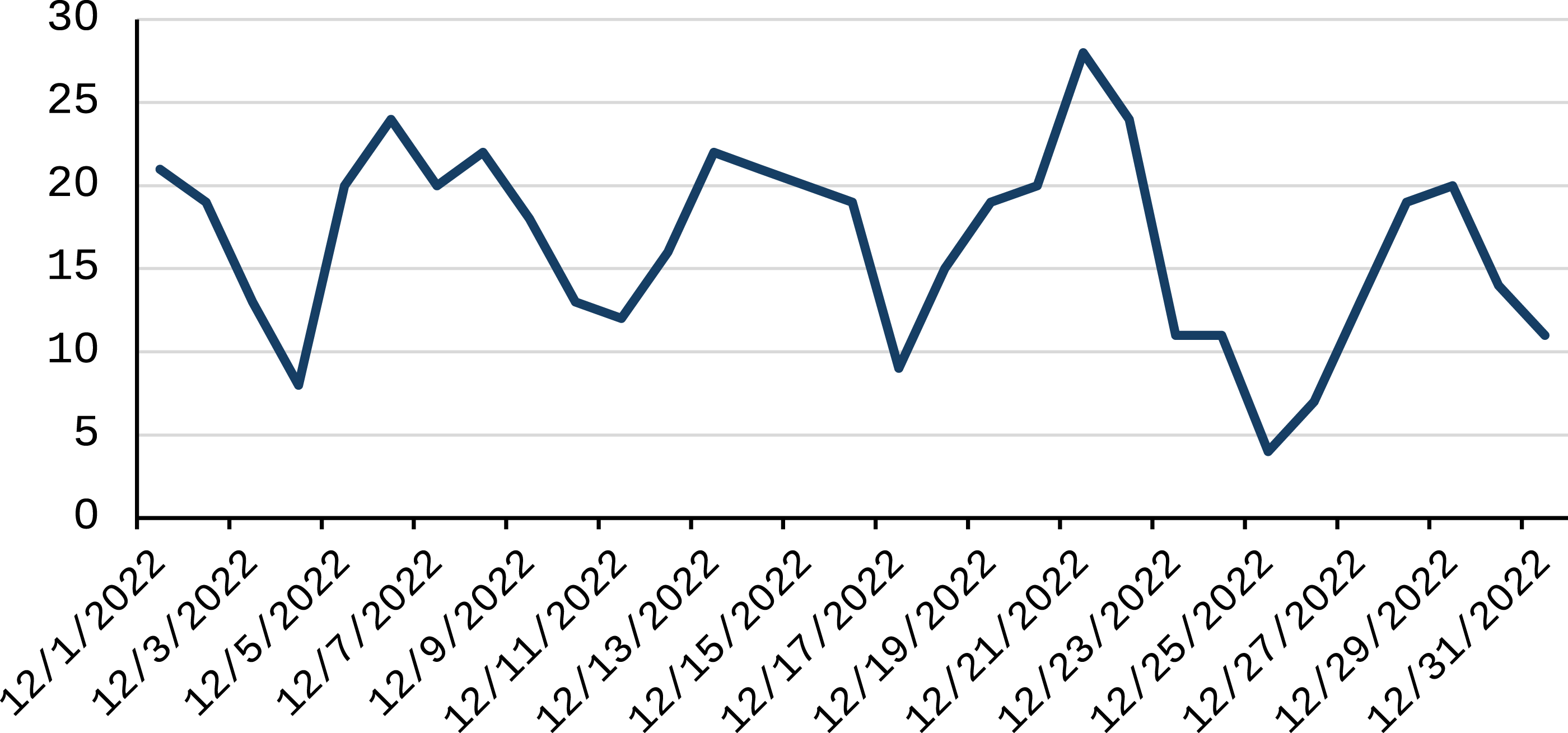
As of January 1, 2023, MCC has been downloaded 18,940 times since the public launch of the app in late November of 2018 (Figure 2). Daily usage data has also remained fairly consistent over time. For the Apple/iOS version of MCC, the average number of daily active devices (in other words, devices that have opened the app) is 15.5 overall; this data is unfortunately not available for the Android version of the app, but we can reasonably assume usage is comparable. Figure 3 presents the number of daily active devices for the Apple/iOS app from December 2022. This shows that MCC continues to be used by patients, even 4 years after launch. This suggests that implementation of MCC was successful. In 2019 the app received the AHS President’s Excellence Award for outstanding achievement in person- and family-centered care. Routine maintenance was conducted in early 2020 to fix small glitches and ensure compatibility with newer devices. During this round of maintenance, the “Notes” feature was also modified to enable patients to share their notes separately from their audio recordings, a change requested in several user reviews. Total downloads between November 28, 2018 (public launch) and January 1, 2023. Download data is presented for the google play store (Android devices) and the app store (Apple/iOS devices). Active devices by day for the Apple/iOS version of My Care Conversations, December 2022. This shows the number of devices each day that had the app open.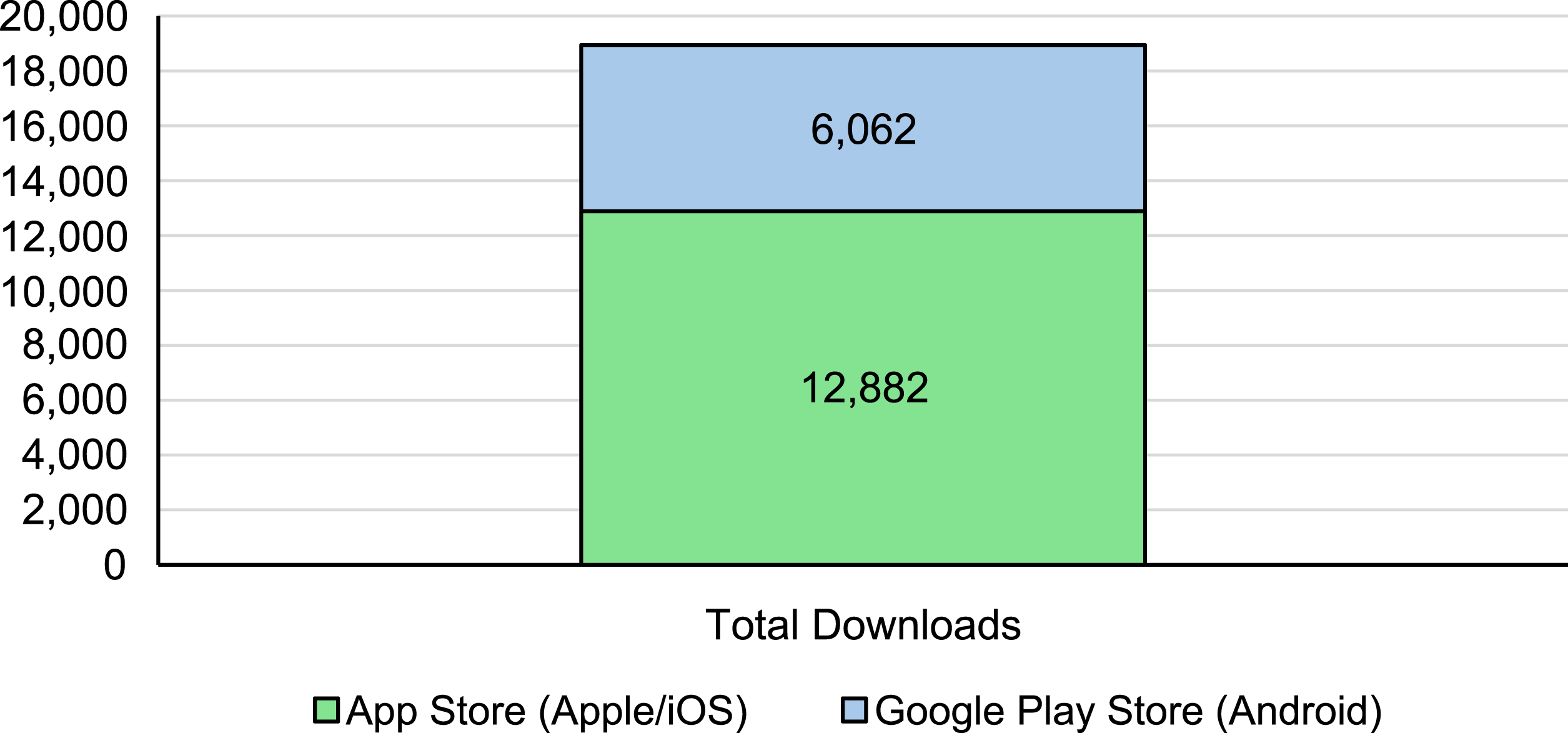
In late 2023, interest in the app began to grow substantially, with patients from outside CCA wanting to use the app to record their AHS appointments. As mentioned previously, the app was intentionally developed using generic healthcare language rather than cancer-specific terminology, enabling patients from any area of AHS to utilize it. The decision was made to have the app undergo another round of testing with patient and family advisors to address concerns reported by users who rated and reviewed the app online, as well as identify and correct any additional issues, before initiating an AHS-wide communication strategy. The app underwent testing in early 2024 and associated revisions were made to the Android version of the app, with similar revisions for the Apple/iOS version scheduled for later this year. Revisions included: rewording instructions to improve clarity, adding an autosave function for all recordings, and expanding the FAQs and embedding them directly in the app. These modifications were requested during the testing process and many were also requested in user reviews posted on the Google Play Store and App Store. Figure 4 provides visualizations of the key features of the final revised MCC app. The app was recently included as part of a new AHS person-centred care strategy called Shared Commitments, highlighting the value of MCC and its effective spread beyond cancer care.
31
Select features of My Care Conversations. a: Homepage of the app before any recordings have been made. b: Recording page, with notes entered but a recording not yet started. c: After the “record” button is pressed, a prompt appears reminding patients not to record in public spaces. d: A completed recording, with additional notes added during the appointment. Note that all examples and text shown here were created for demonstration purposes and are not from real patients.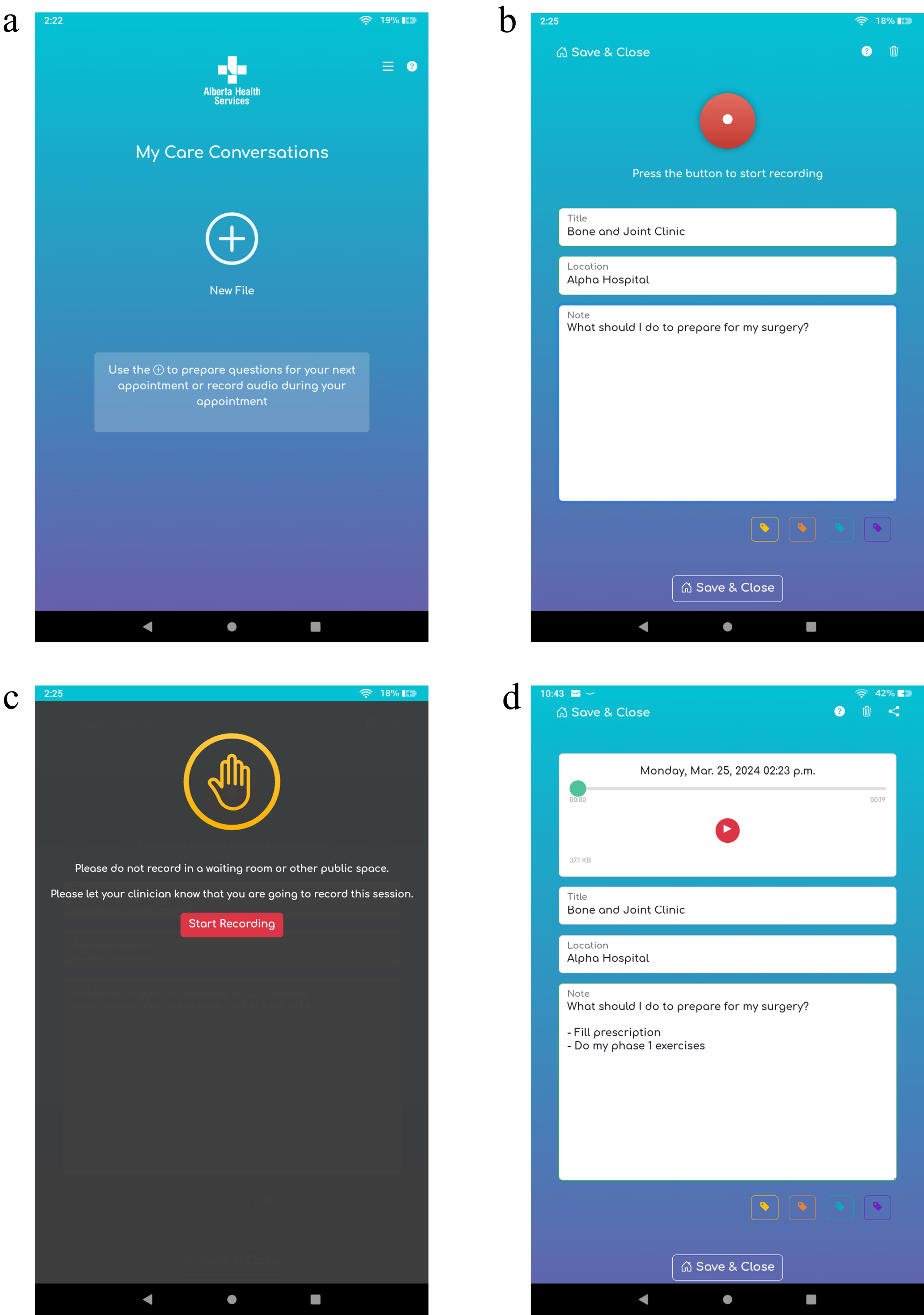
Discussion
Mitigating perceived risks
While implementing the MCC app, concerns were expressed around physician privacy and legal risk regarding how the patient's right to record medical consultations could put physicians at risk for litigation. Physician support for the app, which was critical for successful implementation, required these concerns to be addressed through the Alberta Medical Association (AMA), an organization committed to advancing person-centered care by advocating for and supporting physician leadership and wellness, 32 and the College of Physicians & Surgeons of Alberta (CPSA), which regulates physicians and oversees medical practice in Alberta. 33 Discussions took place between CCA, the AMA, and the CPSA to understand concerns and identify strategies to mitigate perceived risks while also honoring the provincial legal stance that recording consultations is the patient’s right. Fortunately, with support from key stakeholders including the AHS Legal & Privacy team and the AHS Chief Medical Information Office, all parties agreed that incorporating protective design features to prevent manipulation of audio files was an acceptable compromise. One feature was the addition of metadata tags which provide an embedded capability to identify whether a recording was tampered with. Another feature was a built-in reminder for patients to inform their clinician of their intention to record. The aim was to foster trust between clinicians and patients. Other important safety features include a reminder for patients not to record in public spaces and the intentional removal of easy sharing functions to social media platforms. Additionally, the requirement of an independent unlock of the app was included to further protect recordings, using innate device security access strategies (e.g., fingerprint, passcode, etc.). Addressing concerns raised by the AMA and CPSA and incorporating specific app design features ensured the protection of both patients and providers.
There was also uncertainty as to whether recordings should be legally retained as part of the patient’s electronic medical record (EMR) and whether the responsibility for storing recordings should be placed with the patient or AHS. Extensive deliberations with different teams and organizations to review and clarify the medico-legal framework in Alberta resulted in consensus that patients have the right to audio record consultations as a type of notetaking. The information discussed in the medical consultation is the patient’s information and as such they should be supported to remember as much information as possible. Given this, it was determined that AHS is not obligated to store and oversee the recordings that patients choose to make. It is the patient’s responsibility to keep their recordings safe. Physicians may still document in the EMR that consultation recording occurred. By clarifying the legal framework of audio recording, utilization of the MCC app ensures that patients' rights are respected while acknowledging the EMR as the official legal record of care.
Considerations for app implementation
Development and implementation of MCC resulted in many valuable learnings. Key learnings are highlighted below, for consideration by organizations interested in developing a similar patient-facing app.
Integration into clinical workflows
The simplicity and patient-facing nature of MCC helped minimize impacts on clinical workflows. Patients were encouraged to download the MCC app before their appointment to minimize interruptions, as clinics are busy environments and cannot afford disruptions to practice and workflow. When patients are unable to recall details of their appointment, they often call the clinic for clarification. As MCC helps improve patients’ recall, the app can effectively minimize the need for this additional task for clinic staff. This can help patients make important decisions regarding treatment options, which often need to happen quickly to prevent delays. Emphasizing the simplicity of MCC and the benefits for patients, as well as for staff in terms of clinical efficiencies, was a helpful strategy to promote support from staff.
Stakeholder engagement and collaboration
To ensure sustained support for the app, it was critical to collaborate with multiple stakeholders, organizations, and teams. One of the most important partnerships that CCA established was with the AHS Legal & Privacy team. Discussions of physician privacy, patient data security, and comprehensive risk mitigation strategies led to the design of specific app features, and legal considerations were thoroughly examined to form a solid foundation prior to implementation. A strength of MCC is that, because it was designed within the parameters of Alberta’s privacy legislation and the AHS policy framework, it has the capacity to be utilized in any area of AHS. This gives MCC great potential for scale and spread, to support more patients in safely recording appointments to improve recall and decision-making capacity.
Executive sponsorship and support
Leaders were engaged throughout MCC’s development, providing executive sponsorship and support for the app from various levels within CCA and AHS, including the provincial tumour team council to ensure cross-tumour team input. Participation from all parties was critical in gaining support for the app’s concept, alignment with communication strategies, and overall implementation.
Fostering person-centered care
The development of the MCC app was driven by the understanding that all patients have the right to relevant and timely information about their health, necessitating the co-design of the MCC app with patients, and testing and evaluation of the prototype of the app by patients. This produced valuable feedback that informed the final design. MCC is person-centred in design, offering patients control and autonomy over recording and sharing their consultations, enabling them to actively participate in their healthcare journey, make informed decisions, and involve family and friends in their care. Development of similar apps should ensure to engage patients throughout the design and testing process.
Supporting staff with education and uptake
A critical piece for consideration is building awareness regarding the legality of patients recording their medical consultations and the purpose of in-app safety features to protect the integrity of the recordings and mitigate the risks and concerns expressed by healthcare providers. To facilitate buy-in from staff, it is important to highlight the benefits to both patients and staff, while also emphasizing the safeguards put in place to protect all parties.
Limitations and future directions
The development and implementation of the MCC app in CCA has been regarded as a successful endeavor. Other groups looking to engage in similar work should consider the following limitations. The MCC app was built for Alberta’s medicolegal context; adoption or development of similar strategies to support patients elsewhere will need to occur with an intimate understanding of the local medicolegal framework. The initial survey conducted with PFAs to assess interest and feasibility of the app was not pilot tested; although the questions were written with plain language and patient-friendly wording principles in mind, pilot testing would have been preferrable to ensure that the language and questions were appropriate for PFAs. When testing the app, the focus groups lacked diversity, with most patients being ethnically white and all being English-speaking. Future feedback on the app should be collected from a more representative sample to ensure the app is suitable for diverse patients. Implementation was made more challenging due to constant negotiations with the physician and medical regulatory bodies. Including these parties at an earlier stage of the process, perhaps when the grant was being written, could have built more rapport and improved the negotiation process.
The app itself, although designed to be user-friendly, has limitations regarding accessibility. For example, the app does not have a text-to-speech feature to assist patients with hearing impairments, although the app is generally compatible with the text-to-speech features innately available on many devices. Similarly, while the app is only available in English, some translation apps maybe used in combination with the app. In the future, we would like to explore the possibility of allowing different languages to be selected, as well as features such as auto-generating transcripts of the recordings or using artificial intelligence (AI) to capture conversations and generate patient-friendly summaries. 34 These types of technology have only begun to be explored in AHS and as such are not likely to be implemented in the app anytime soon; however, improving accessibility is a priority in the healthcare system, and these features will continue to be discussed.
Conclusion
Receiving information about cancer and associated treatment options and other details can be stressful and overwhelming. The MCC mobile app was developed to empower patients with cancer to record their medical consultations to enhance their information recall and ability to engage in thoughtful decision-making. Guided by patient input and stakeholder collaboration, the app was designed to be simple and reliable and with minimal impacts to clinical workflow, making it a valuable tool for patients. User-centred design principles and active involvement of patient advisors ensured the design was effective for the intended audience. The sustained use of MCC can be attributed to the collaborative efforts of multiple stakeholders, organization-wide leadership and sponsorship, and a culture of person-centeredness in CCA. With the ongoing expansion of the app to other areas of AHS, this innovation serves as a model for leveraging technology to improve patient experiences, foster informed decision-making, and strengthen partnerships between patients and healthcare providers to enhance the overall quality of care.
Supplemental Material
Supplemental Material - Creating and implementing a medical consultation recording app: Improving health information recall and shared decision-making with my care conversations
Supplemental Material for Creating and implementing a medical consultation recording app: Improving health information recall and shared decision-making with my care conversations by Linda Watson, Se’era May Anstruther, Claire Link, Siwei Qi, Andrea DeIure and Dean Ruether in Health Informatics Journal.
Footnotes
Acknowledgements
We would like to thank Patrick Curley for his assistance and guidance in this work.
Author contributions
LW and DR conceived the study. SQ, CL, and SMA researched literature. LW was involved in innovation development. LW, AD, and CL contributed to innovation implementation. SMA and CL wrote the first draft of the manuscript. All authors reviewed and edited the manuscript and approved the final version of the manuscript.
Declaration of conflicting interests
The author(s) declared no potential conflicts of interest with respect to the research, authorship, and/or publication of this article.
Funding
The author(s) disclosed receipt of the following financial support for the research, authorship, and/or publication of this article: This work was funded by the Alberta Cancer Foundation [grant number 26857].
Ethical statement

Supplemental Material
Supplemental material for this article is available online.
References
Supplementary Material
Please find the following supplemental material available below.
For Open Access articles published under a Creative Commons License, all supplemental material carries the same license as the article it is associated with.
For non-Open Access articles published, all supplemental material carries a non-exclusive license, and permission requests for re-use of supplemental material or any part of supplemental material shall be sent directly to the copyright owner as specified in the copyright notice associated with the article.
