



Abstract
New technology that aims to tackle the systemic and societal problems face challenges bringing together diverse stakeholder perspectives effectively. We evaluate how an emotion-led approach, with a Living Lab process may be effective in these situations. We discuss findings and their implications for this in the context of the development and ongoing maintenance of a web app called “Ask Izzy”. Ask Izzy supports people who are homeless or are otherwise disadvantaged by providing information and consequently improving their everyday life and wellbeing. We present a mixed-method evaluation of the web app: firstly, we evaluate impact of key design decisions upon engagement. Secondly, we conducted semi-structured interviews with 30 participants who are either homeless, ex-homeless or service providers and used content analysis. Then we demonstrate that our emotion-led approach brings a novel perspective on concerns from key actors influencing the refinement of the app. The results section outlines emotional goals such as a feeling of control that were important to consider in order to meet the needs of both end users and the wider service provision network. Our study provides recommendations and an approach that may inform others in developing and delivering similar health care and related systems and services.
Keywords
Introduction
According to the Australian Bureau of Statistics homelessness is defined as living: “...in a dwelling that is inadequate; or has no tenure, or if their initial tenure is short and not extendable; or does not allow them to have control of, and access to space for social relations.” 1 Homelessness constitutes a systemic societal problem that requires a holistic approach in order to progress towards a solution. In Australia, as in many other countries, organisations and community providers aim to help people experiencing homelessness transition into stable living situations and increase their quality of life. Existing service providers try to offer support with a range of essentials from temporary accommodation, meals, health care, legal advice to getting work. Despite these efforts, the number of individuals experiencing homelessness in Australia increased by 14% from 2011 to 2016 according to the Australian Bureau of Statistics. 1 The exacerbating situation has led to further initiatives to improve access to relevant information about services by people experiencing homelessness. One initiative has been the development of new technology that supports a wide range of needs for people experiencing homelessness. Unfortunately, introducing new technology to help those who are homeless brings unique challenges. Existing research outlines some of the challenges experienced by this group of users that include: (i) lack of a necessary device or motivation to access information online; (ii) they are faced with information overload and new technology may, therefore, pose the risk to contribute to their confusion; and (iii) the incompatibility with existing service provider protocols they often use.2–13 Developers need to be aware of and consider these challenges in technology design.
Awareness is increasing that software development is multidisciplinary and requires broader understanding of the social context. Part of the broader context is taking into consideration the emotions that people may or may not feel when interacting with software. As peoples’ emotions play a key role in the way systems are used and adopted they are adding to the complexity of socio-technical systems. Emotions should be considered in software development which traditionally does not provide methods and processes to do this well. 14 Living lab processes are a suitable way to incorporate emotions into software development due to their set up and structure, bringing together the different perspectives and capabilities from academia, industry, government, and citizens. Living labs can facilitate the transition from standalone product and software design to taking a holistic approach that includes both service design and the whole socio-technical system. We discuss this further in the method section.
Research has shown that users will not accept technology if it does not address their emotional concerns.14–18 Emotional experiences with technology are formed initially and evolve over time. Changes are based on the actual technology engagement experience and layered with other associated experiences.19,20 For instance, users may wish to feel in control, connected, hopeful, non patronised, cared for, or safe.18,19,21 Such feelings need to be understood and given serious attention in the design of technology in addition to the functional requirements. We even suggest that user emotions need to guide all other aspects of design during development and evaluation.
There is a lack of understanding if and how new technology can be introduced into the complex system of service providers and can support people experiencing homelessness. While some studies focus on designing for vulnerable user groups, and even those who are homeless, they do not focus on emotional experiences, nor do they evaluate an already deployed system. We have evaluated the utility of positive emotions to guide our analysis and advance our understanding of supporting homeless people, who are a vulnerable population and hence have an even greater need for positive experiences. Our research has contributed to the development and refinement of a web app called Ask Izzy that helps homeless Australians find information about services that can help them. 22 The objective of our research is (i) to understand the key barriers and enablers to success for providing information online in appropriate ways to this vulnerable user group, and (ii) to provide insights and advice for living lab projects who are facing similar challenges and a high level of complexity when striving for societal change.
The remaining sections in this article are structured as follows: We summarise relevant literature on homelessness, and approaches for designing technology that help those experiencing homelessness. We then outline our research method including our emotion-led approach as part of a Living Lab methodology and present the findings. Quantitative user engagement data was gathered and analysed to understand usage trends. The data was complemented with qualitative data from semi-structured interviews collected with participants who were either homeless, ex-homeless, or service providers for a better in-depth understanding on usage patterns and rationales. Seven key themes emerged that are associated with emotional viewpoints or experiences of key actors using the application. These themes represented both barriers and enablers of success depending on how they were addressed through the app design. We then discuss and provide advice in relation to three challenges concerning (i) diverse views and trade-offs in software development, (ii) integration of technology with the wider service system and (iii) maintain uptake over time. We suggest that these challenges may be faced by similar initiatives. We end with concrete design recommendations for the design for mobile software applications that focus on the wellbeing and enablement of vulnerable users.
Research on homelessness and information provision
The Australian federal and state government support numerous services which are intended to assist homeless people or those at risk of homelessness find assistance. There are many services available through a wide range of service providers. The individual organisations providing the services are in charge and need to disseminate any new information that might be of help to the people experiencing homelessness with the support of both grassroots organisations and various government funded service providers. 2
Several attempts have been made to build technology to help people seek information and services online, thereby assisting service providers with their dissemination efforts. For instance, in Denmark there is a platform named Copenhelp that has been designed to help homeless and low-income residents gain access to services like shelter, food and medical care. Other platforms are targeted at service providers themselves, such as the Reconnect platform that is available in France. 23 In other countries such as the Netherlands, information apps have been developed with the objective to support people experiencing homelessness to strive for better social inclusion and to narrow the digital divide. 24 Additional means of accessing information can create new expectations that may be hard for the service providers to meet.5,11 Hence established ways are favored by organisations to having to deal with potential challenges rather than a more independent way of getting information through digital technology. Similarly, Humphry conducted research in Australia on the role of mobile phones and the internet for people experiencing homelessness. 25 She found that young homeless people face digital exclusion, but generally overcome difficulties by a set of practices that negotiate their connectivity barriers which she summarises with the term ‘survival infrastructuring’ (p. 1009). 25
When speaking about homelessness we need to be aware that the individuals experiencing homelessness represent a diverse user group. Major causes of homelessness include family violence or financial difficulties according to the Australian Bureau of Statistic. 1 Only 6% of people who are counted as homeless are characterised as rough sleeping; many live in transitional accommodation or severely overcrowded homes. Additional problems may build up over time, such as drug and alcohol abuse, creating a cycle and a worsening situation. 2
Heaslip et al. reviewed literature to understand the use of mobile health technology by homeless people and the impact on their general health. 26 While they welcome the wider expansion of digital health services through COVID they also caution that not all population groups might have equal access. The authors acknowledge that a large percentage of the homeless population owns a mobile phone, but they identify challenges such as limited access to the Internet, theft, ability to effectively use the phone and expenses for upkeep that lead to health inequalities. Research also shows that there is a strong relation between homelessness and specifically mental health. 27 Mental health issues can be both the cause and consequence of homelessness. 28 Insel suggests that mental health care should not be viewed from a classic medical model but from the broader scope of public health. 29 Taking a broader public health perspective is even more relevant for homeless people who often do not have equal access to medical health care. In addition, according to Simon et al., homeless people can be confronted with mobility challenges that reduce what they call an “individual’s activity space” leading to “spatial exclusion” in addition to commonly experienced social exclusion. 30 We can conclude that such reduced activity spaces limit opportunities and access for the homeless to relevant services further away, making it more relevant to know what support can be accessed close by.
Due to the many challenges homeless people face we consider it crucial to explore the role of technology to facilitate a transition from being homeless to being in a stable living situation. Most importantly, we acknowledge that the requirements of technology to support homeless people extend beyond providing access to information. The technology has to operate in ways that make them feel comfortable.
Work by Hersberger 9 and Chatman 10 suggest that those who are homeless can feel overwhelmed by information provided by services and are unlikely to own a smartphone to access the service information. However, a mobile phone is often viewed as a necessity and a critical lifeline. 11 The widespread use of technology among homeless people is confirmed through research by Easterday et al. in rural areas in Nebraska. 27 Another study of Raven et al. focuses on 350 older homeless adults (above 50 years of age) in California and the opportunities of social and medical support services through technology. In their sample, a number as high as 72% had access to, or owned, a mobile phone although not all of them were smartphones. 31 Likewise, Schueller et al. emphasise the potential of technology from their research on youth homelessness as an important avenue to reach young adults. 28 In summary, while it is important to be aware of actual technology access and use on a local level when providing software to give support to homeless people, recent research suggests digital technology is a promising information source. We suggest that the way the technology is designed is key to whether it will be useful and adopted, or dismissed.
Building software for social change
Software engineering is increasingly becoming a social and multi-disciplinary activity 32 (Stol & Fitzgerald, 2018). In order for projects to incorporate diverse perspectives into design, it is necessary to take some methodological steps to ensure that there is a broad inclusion from individuals and organisations in the socio-technical system. This has led to a consideration of socially oriented requirements as a topic to be considered in its own right.14,33 One aspect of social requirements are emotions that people may or may not feel when interacting with software. Another aspect is whether software systems embody human values. Software design should put greater emphasis on human values in order to build software that aligns with individual, corporate or societal aspects. Asking future or current users what specific function a software should achieve is different to asking them what their values are or how they want to feel when interacting with software. We are suggesting that for vulnerable users the latter is more important for technology uptake.
The living lab approach to develop complex socio-technical systems
Living labs are more complex in their set up and structure than traditional innovation approaches, bringing together the different perspectives and capabilities from academia, industry, government, and citizens.
Technology and design methods are integral to living labs approaches. Service design and user driven design methods such as Citizen-Driven Innovation 34 and Form IT Methodology 35 are recognised as a means of increasing user acceptance of innovations. Brankaert and den Ouden demonstrate the usefulness of design driven living labs to investigate and address complex societal problems, in our case information provision for people experiencing homelessness. 36
Living labs can facilitate the transition from standalone product and software design to taking a holistic approach that includes both service design (Figure 1) and the whole socio-technical system. When implementing a new technology, we must expect that other parts of the system will change due to the new element. Design process and associated methods.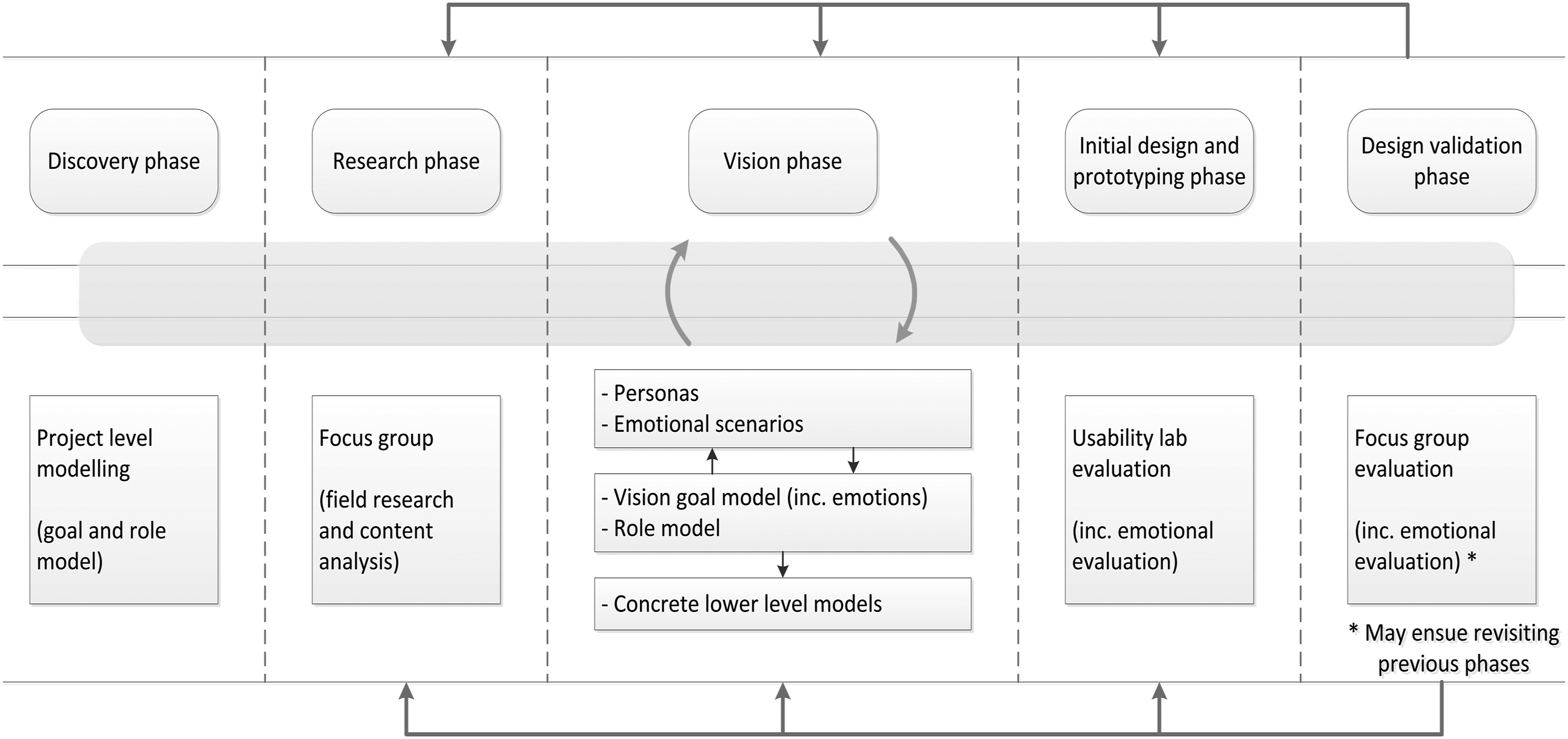
Figure 1 shows the design process with its main phases and the associated methods that were applied as part of the Living lab approach. Our focus here is on the emotional goals by different user personas and the data collected with users through interviews and focus groups (field research and evaluation through either workshops or interviews).
However, only when we understand the whole system are we able to create and support people to engage with the individual parts - in our case through the use of the designed app by different stakeholders. A living lab approach towards creating new technology aims to have such a holistic view. Lusch & Vargo propose underpinning principles of the creation process.
37
Their principles are based on Service Dominant Logic (SDL) and state that: • Service is the fundamental basis for exchange. In this case, the web app Ask Izzy is also a service and it aims for better decision making around homelessness. One of the main goals of the app was to overcome a lack of access and skills to take advantage of the social and economic opportunities that technologies can provide (InfoXchange, annual report 2015 -before app launch).
38
Almost 80% of people experiencing homelessness owned phones in 2015. Hence mobile technology was seen as a suitable support mechanism to provide information and better access as part of the complex service network. • Value is co-created by multiple actors and always includes the beneficiary in the process. All methods applied in our design process are part of the co-creation process in that they are giving the users a strong voice and methods whose outcomes are not directly created by users aim to represent their view based on their input. • Value is always uniquely and phenomenologically determined by the beneficiary. If visual design, wording or functional aspects of the app do not benefit the user then these aspects do not create value. • Actors cannot deliver value but can participate in the co-creation of value and offering of value propositions. Hence it was important that co-creation (input into design and evaluation) was done iteratively to ensure that value was indeed also part of the delivery.
We use the development process of the web app Ask Izzy as our case study. To take a holistic view of the homelessness we identify our whole socio-technical system to include the interaction of various stakeholders such as government and private sector funders, software developers, software providers, the homeless and the software itself as illustrated in Figure 2. The figure depicts system entities who are either individuals, organisations or communities in this socio-technical system. As expected in projects applying a living lab approach there was collaboration between end-users, industry (community sector and corporate partners), government partners, researchers and developers. The support network of a client (somebody receiving a service) may consist of multiple service providers including individuals and members of the local community. Their support network may also include other people who are homeless; in these cases advice may be shared in-person or online. The same figure also depicts the collaboration and the communication between the entities (represented by the arrows). The arrows show the multiple pathways in which information may reach someone who is homeless. Finally, Figure 2 depicts the technology engagement, which is integral to the flow of information. Clients are able to interact with the web app and at the same time high-level engagement information is monitored to improve design decisions. Interactions between organisations, communities, and individuals in the socio-technical system.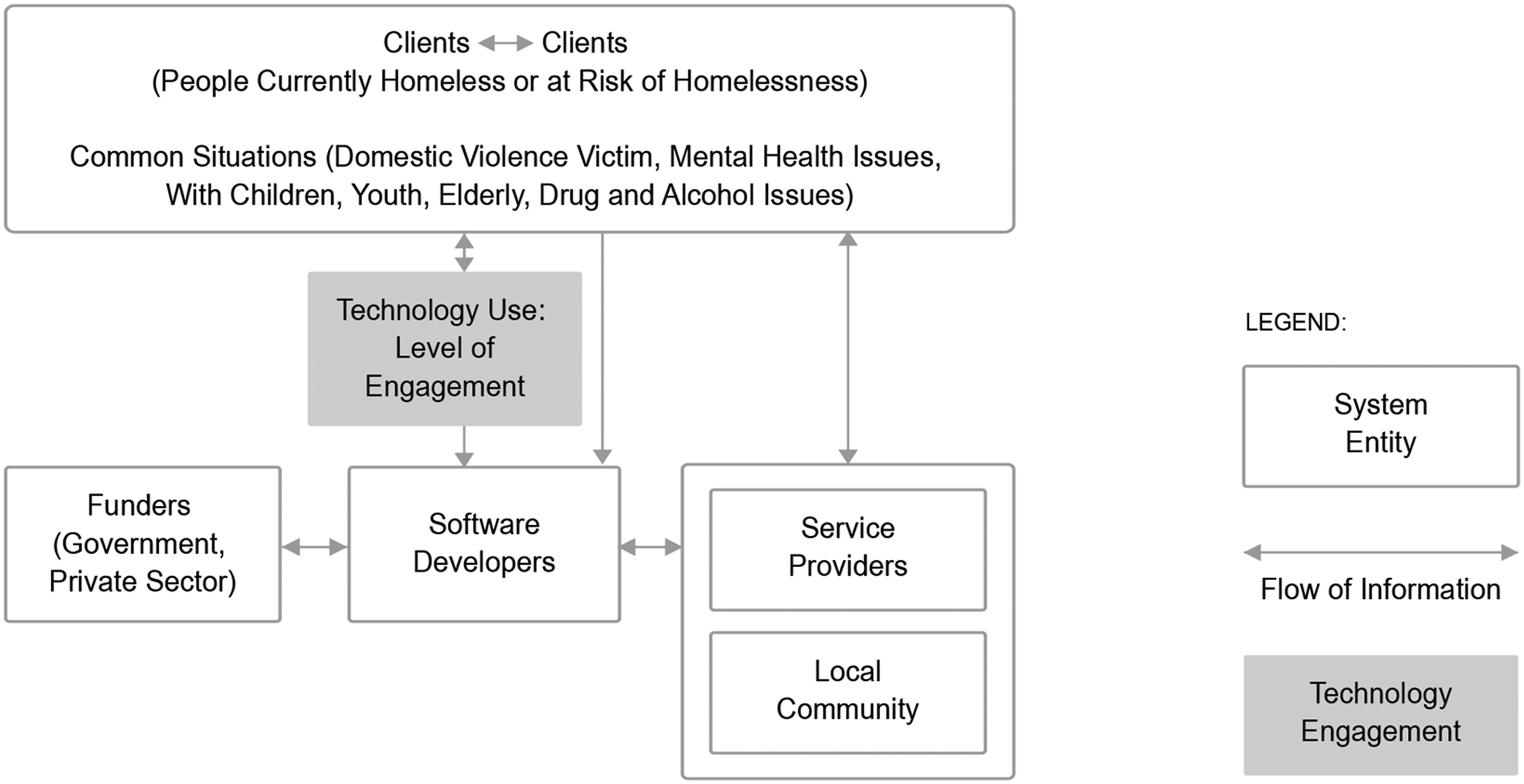
Thus we need tools and techniques to integrate the actors – the people experiencing homelessness and the service providers - into the development and evaluation by giving them a strong voice. We require this input to understand the wider implications of new services (information provision in a web app) to ensure they bring value to the different stakeholders and their interactions within the socio-technical system. We suggest that the emotion-led approach described in the next section is such a technique. We advocate that it is possible with our emotion-led approach to engage people for whom digital technologies traditionally have not been built for in the design and evaluation of a tailored application.
An emotion-led approach
People will reject technology if it does not address their emotional concerns.14–18,39 There has been some change over the last decade in software development through social modeling techniques 40 and creating narratives which focus on why users want to achieve a certain goal and not only what they strive to achieve. If users are to adopt and integrate technology in meaningful ways into their lives, fulfilling their emotional needs and expectations becomes crucial.41,42
The process of considering emotional needs is not new and has been well developed for product design. For example, Desmet and Hekkert 43 provide a detailed overview. Norman argues in his book on emotional design that designers must elicit desired user emotions and explicitly address them as part of the design. 17 However, while theories propose principles for the design of products, less work has been done to integrate emotional design into software engineering processes to create software applications that address people’s feelings.
Responding to these theories, there has been an increasing body of research demanding to include considerations of the emotions of all stakeholders when designing, developing and evaluating new technology. The wording used in the software or individual features can engender emotional reactions. Research on socio-materiality and technology affordances demonstrates how positive and negative emotional perceptions can be triggered by aspects of design.44–46 External factors such as the other individuals and organisations associated with the engagement experience also affect the emotional experiences which are associated with a particular technology. Inappropriate expectations may still be attributed to the technology itself due to multiple experiences becoming aggregated and associated with each other. 39 These experiences could include those occurring during the progression towards a goal.47,48 Consequently, in our case study, participants may interact with a service provider and their reaction is attributed to the technology that facilitated the interactions.
Events and interactions that occur leading up to technology engagement and occur as a consequence after technology engagement are important to consider, especially within socially complex situations. Introducing additional perspectives allows us to capture a holistic and dynamic perspective on the problem domain. It is argued that there is often the error of treating complex problems as a ‘project’ with an ‘end point’ as opposed to an ongoing process. 49 For this reason, linear cause-effect models face the same limitation of being unable to represent the inherent complexity of societal problems such as homelessness and useful information provision. Linear causal thinking models posit that particular constructs (perceived effort) result in an output event (IT Usage). They do well to understand particular determinants of ‘IT use’ but are limited in that the output of the model is not assumed to affect input. In short; they do not model feedback loops thus overlooking longer-term consequences. We argue that while dealing with the vulnerable (in this instance, people experiencing homelessness) with complex needs,27,30 it is important that we create technology solutions that is of true value to people, and is shaped by their feelings, goals and context throughout their help-seeking journey. Small changes in the way a service is made available to an individual can greatly affect outcomes for that individual long after their initial interaction or engagement. By empowering people experiencing homelessness to inform these changes allows to create a technology that brings meaningful benefits to their everyday life.
A range of popular psychological frameworks have been developed for characterising emotions. The emotions in the frameworks vary considerably. and the utility of the frameworks for system design and evaluation also varies.
However, as we cannot implement emotions we need to look at the whole socio-technical system (as shown in Figure 2 for example) working closely and iteratively with all stakeholders and user groups. Through our approach we substantiate the formulation of the emotions through language in discussion with users. We address the need to make software engaging for people to gain benefit and engender positive experiences in using the software. Consequently, we characterise results according to the way stakeholders wish to feel when using technology and place emphasis on emotional concerns when analysing results and do not rely on a single classification or framework to interpret our results. We use co-creation approaches in our interviews with stakeholders to capture and interpret our results. It is important to inquire about the wide ranging and often subtle feelings and perspectives of stakeholders that may not be accurately represented by a generalisable psychological framework.
A key contribution of our approach is the formulation of emotions as goals—goals of people describing their desired emotional state with respect to their lives and to the use of technology to improve their lives. By employing users’ emotions to understand technology development, our research has produced applications that are better received and accepted by users, with major implications on choice of functionality and visual design (anonymised).
The emotional goals represent and generate a shared understanding of the more subtle needs within a domain of the various stakeholders and can lead to the creation of new emotional scenarios to explore new interactions between users and system. Concrete software requirements can be derived from the described models by mapping the various goals into more concrete software features. In the initial design and prototyping phase the models can be used to suggest a design for the system, and to assess compliance with the emotional needs against software features. In the case of AskIzzy, emotional goals have been used to analyse user feedback and evaluate how well people’s feelings using the app are being addressed and to propose refinements for the design.
Beyond the development, planning for longer-term adoption, maintaining interest in applications is difficult when one is unaware of how and why people derive value from using software applications. The role of emotions is an integral part of the user experience 50 and has an influence on adoption over time. In alignment with our socio-technical system view we propose that social and contextual factors influence people’s decision to adopt a system. There exists a mutual relationship between emotions and functional and non-functional qualities that trigger responses in technology use.
The study on the Ask Izzy app
This research has contributed to the design and evaluation of the web app Ask Izzy. In the remainder of the paper, we present a mixed-method study that investigates the challenges for developing technology to support the information provision for people experiencing homelessness. The data collection and analysis received ethics approval by the University’s Ethics Committee for Human Research. The quantitative research stage provides an overview of technology use collected over 2 years since deployment from all app users. The quantitative data analysis enabled us to discover usage trends over time. The qualitative stage comprises of 30 in-depth semi-structured interviews that were conducted with several stakeholders. Seven key themes emerged from the content analysis the basis for the discussion our design considerations are centered around.
The web app Ask Izzy
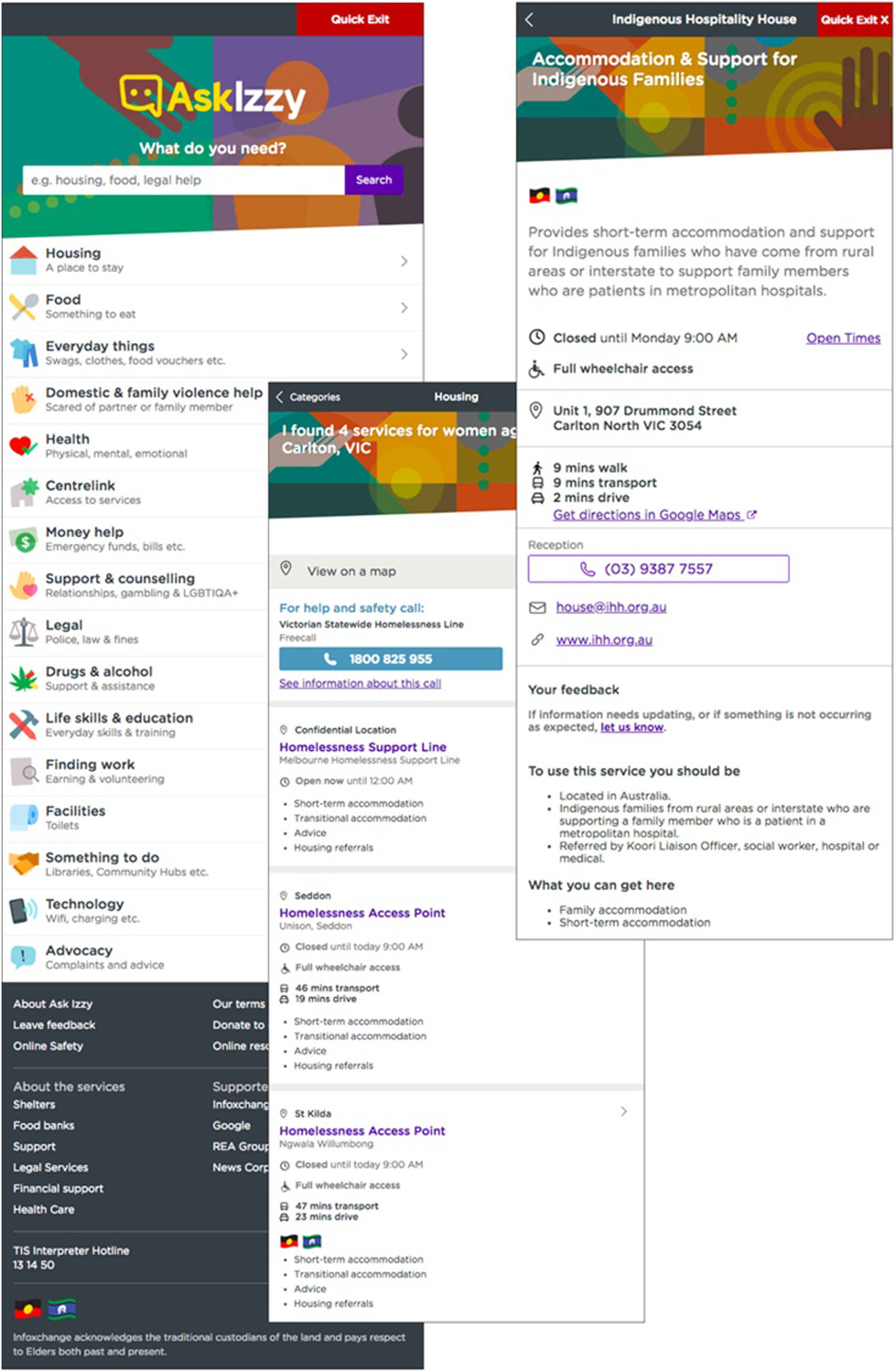
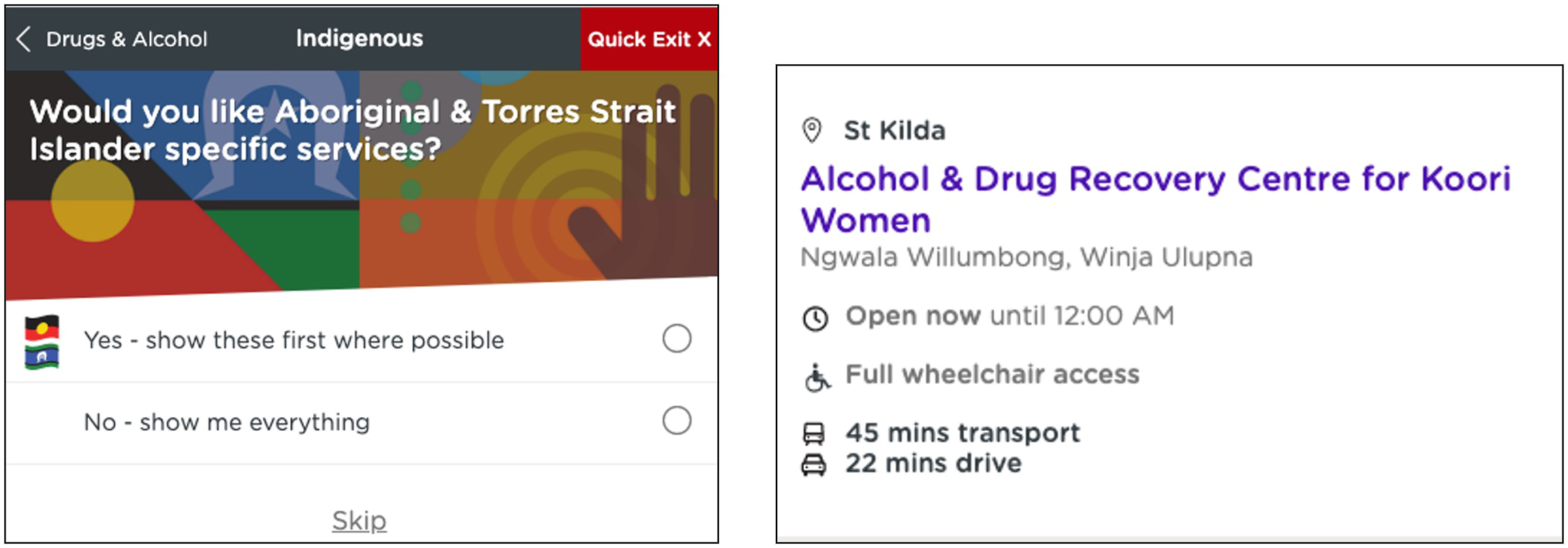
The web app aims to tackle the problem of homelessness by assisting those who are homeless in finding useful information. The app provides information from over 350,000 services in Australia. The listed services range from help with health issues, food, shelter through to legal and financial advice. Figure 3 shows the look and feel of the first version of Ask Izzy. Since the initial design the web app has undergone a number of design changes based on user data and recommendations detailed in this article. Figure 4 shows three example screenshots of the revised version after emotional themes have been taken into consideration. Figure 5 illustrates design changes that supported the emotional goals of users who identified as ATSI. The changes will be elaborated on further in the next sections. Two screenshots of an original design. Screenshots of second version of Ask Izzy. A screenshot of ATSI service search option and a screenshots of ATSI-specific search result.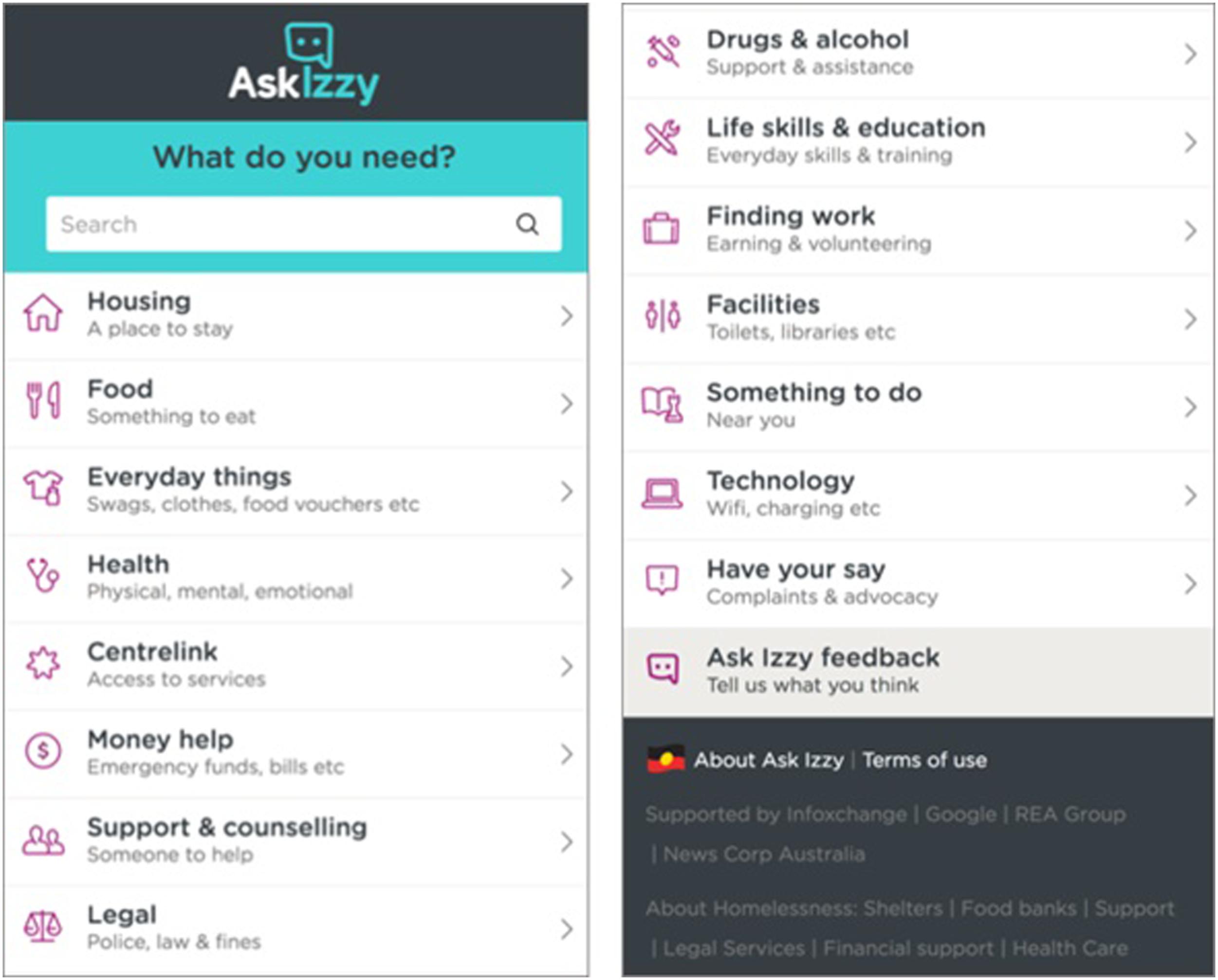
Our recent work has already focused on evaluating specific design decisions (anonymized for review). Differently, this paper aims to understand the impact on users and roles that Ask Izzy has as part of a broader socio-technical system. We particularly focus on take up based on addressing emotional needs.
Typically, users start with the browse/search page which presents them with 16 help categories. At this point the user can choose to give their current location and is then guided through a series of category-specific questions. A tailored service list is provided according to the answers within the chosen categories and the results are also ordered by relevance. A user can select a specific service to view its detailed service page. The detailed service page displays information about how to connect with the specific service, how to get there, who it is for, and what clients should expect.
Quantitative data collection and analysis
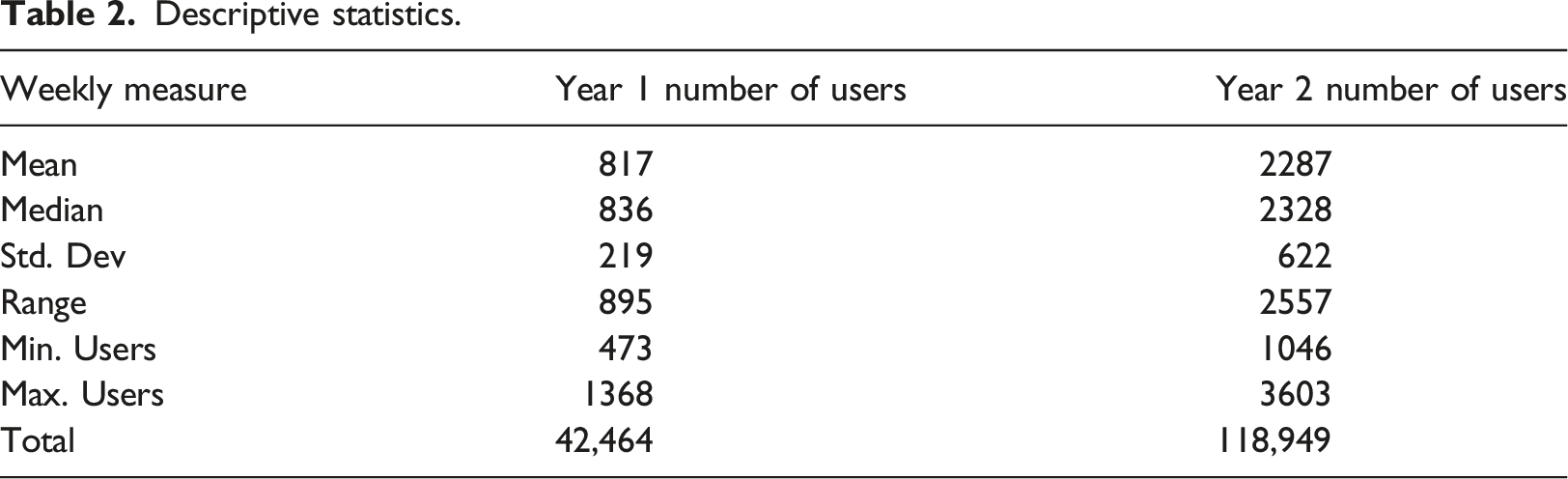
The collection of usage data spanned over 2 years. The data included how many times users returned to the Ask Izzy app. Table 2 presents descriptive statistics about the use of the app. The time windows were selected to capture data that was representative of normal use while spanning enough time to account for seasonal variations. A major concern for the app was whether people would continue to use the web app long term. For example, the demand for services normally spikes in winter and around New Year which coincides with summertime in Australia. Insights on the user returning behavior was obtained through measuring the number of days since they last visited the app (defined as session). For preserving anonymity in the finer-grained analysis, we report the aggregated data based on percentage change. Returning behaviour is compared by capturing four 12-weeks time windows and then analysing how often users returned to the web app for 7 days after the initial session. A session starts when a user engages with the web app and ends after the default of 30 mins of inactivity.
Qualitative research
Interview participants and data collection
Overview of interview participants.
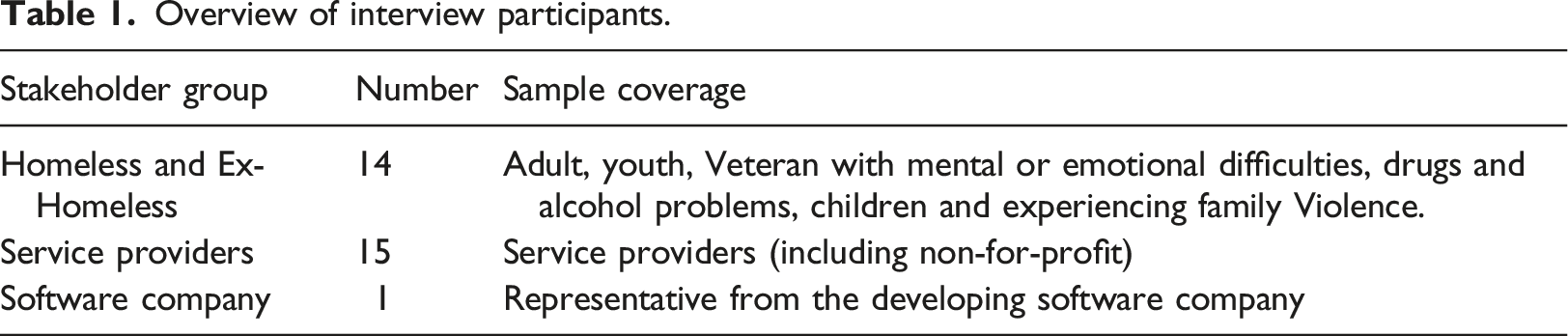
The semi-structured interview format was chosen to give flexibility to the conversation. The greater openness allowed participants to expand on answers and discuss contextual factors that they considered to be related to their use and perceptions of the web app. In relation to the design of the software, we enquired what they liked, disliked, and what they would like to be changed in the web app. Importantly, we also asked how using the technology made them feel. We then discussed interactions and experiences outside of the application including how they heard about the app and if they had recommended it or supported others in using it. Finally, we asked what they thought were the barriers to uptake. If they chose not to use the web app, we enquired for the reason.
Qualitative data analysis
The qualitative data consisted of the recordings of the interviews. All audio recordings were transcribed and were imported into the NVivo tool for analysis. 51 The data was analysed by two researchers following a thematic data analysis process. 52 The purpose was to identify, reconcile, and describe evolving key themes from the data. Codes (i.e. quotes) were extracted from the transcripts that were related to emotional experiences or concerns. The individual codes of the transcripts were grouped into themes and then combined through discussion to form a set of agreed key themes.
Emotions were considered in two ways. Firstly, participants were directly asked how the web app had made them feel during usage. Secondly, the entire interview text was looked at to elicit and interpret any text sections that were related to how the participants wished to feel. Applying thematic analysis, 52 no specific framework of emotions was used to categorise the elicited codes. Any text elements that were considered as representing the way the participant would or would not like to feel using the web app were annotated and extracted. We retained information about the stakeholder group of each participant. This enabled us to compare views of different users such as service providers with those who are homeless or ex-homeless separately for each theme.
Findings
Both the qualitative and the qualitative phase of the study produced relevant results. Here are the key findings. Implications of the findings are discussed in a subsequent section.
Quantitative results
Descriptive statistics.
The graphic in Figure 6 displays how many people used the app during the 2 years of data collection through the lens of four different time windows. This representation shows high-level information on active users over time while also detecting weekly fluctuations. We measured the number of users in 12-weeks time windows on a weekly basis. The four time windows are equally distributed across the 2 years. Time window 1 is the earliest measurement period while time window 4 is the most recent one. The highest number of users were measured in the most recent version of the app (Time Window 4; Version 2). During this period of time, the Figure shows that most weeks during this time window, the website received between 2500 and 3500 users. Sampling is taken in regular intervals and avoids known fluctuations to avoid outliers. From another perspective, the two charts in Figure 7 show the accepted measure of returning behaviour to determine the frequency that users return to use the app. By considering the patterns in the graph and charts, and how they change over time, we are able to determine if app usage is sporadic or routine. Furthermore, it is possible to determine whether new features that have been implemented alter the engagement patterns. For a specific example, consider the right-hand chart in Figure 7. Note that time window 1 is not shown on the charts because it serves as a baseline for comparison. If it were on the chart it would show as 0%. Note also that any extra sessions of a user in a single day are counted as ‘0 Days.’ Time window 4 shows an increase of 800% in the number of users that returned to the website on 7 days in comparison to time window 1. This trend is desirable as if the likelihood of returning stayed the same across versions we would expect the percentage change to be similar to the percentage change in number of users. In this case 800% is greater than the percentage change in users, which we interpret as a signal that users are finding the latest version of Ask Izzy more valuable and as a consequence are returning. The chart on the left is showing users who belong to an active user base (multi-user sessions) whereas the chart on the right is showing all users. Overview of user numbers in four twelve-week time windows to understand active use and weekly fluctuations. Percentage change in number of sessions. The chart on the left is showing users who belong to an active user base (multi-user sessions). The chart on the right is showing all users.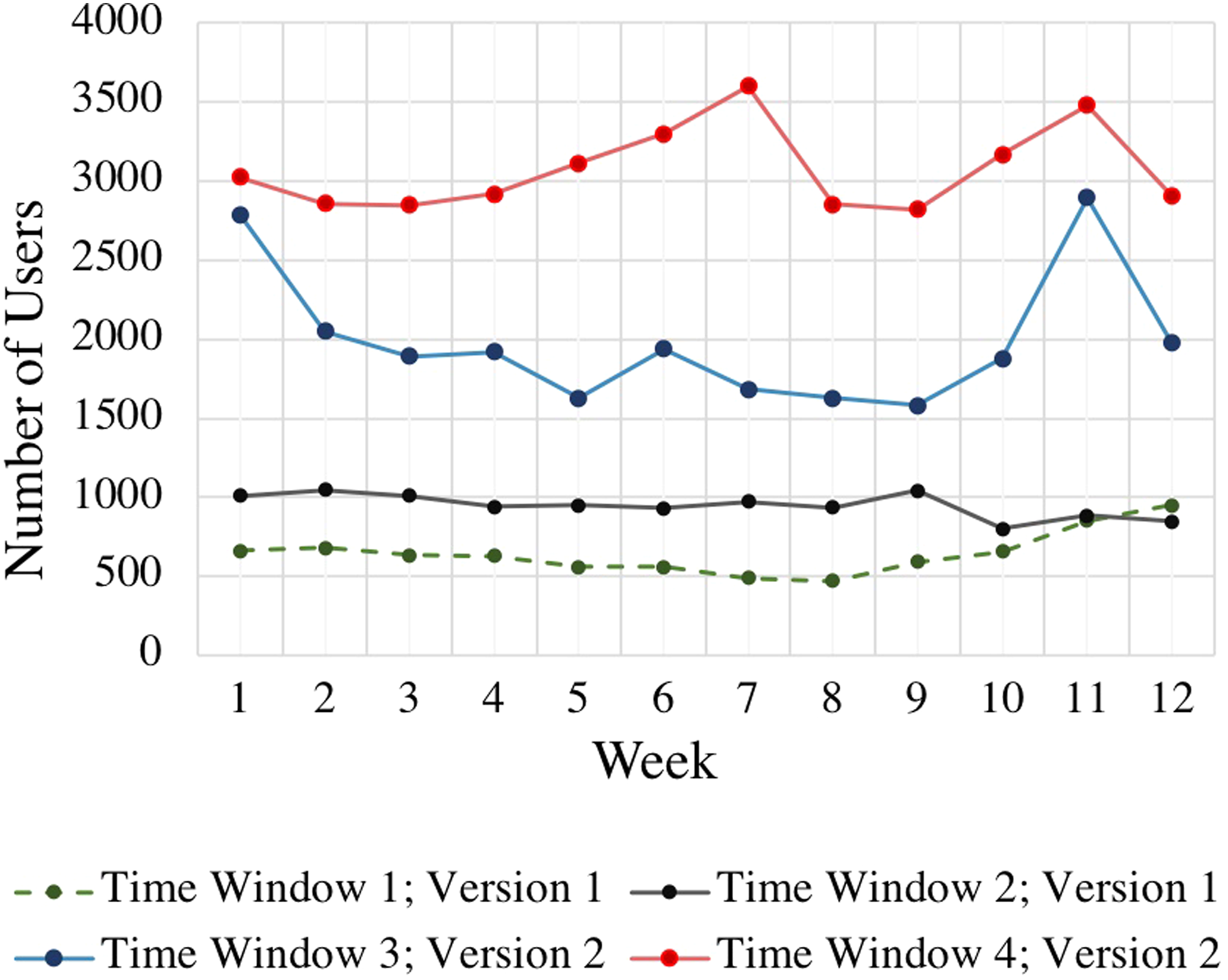
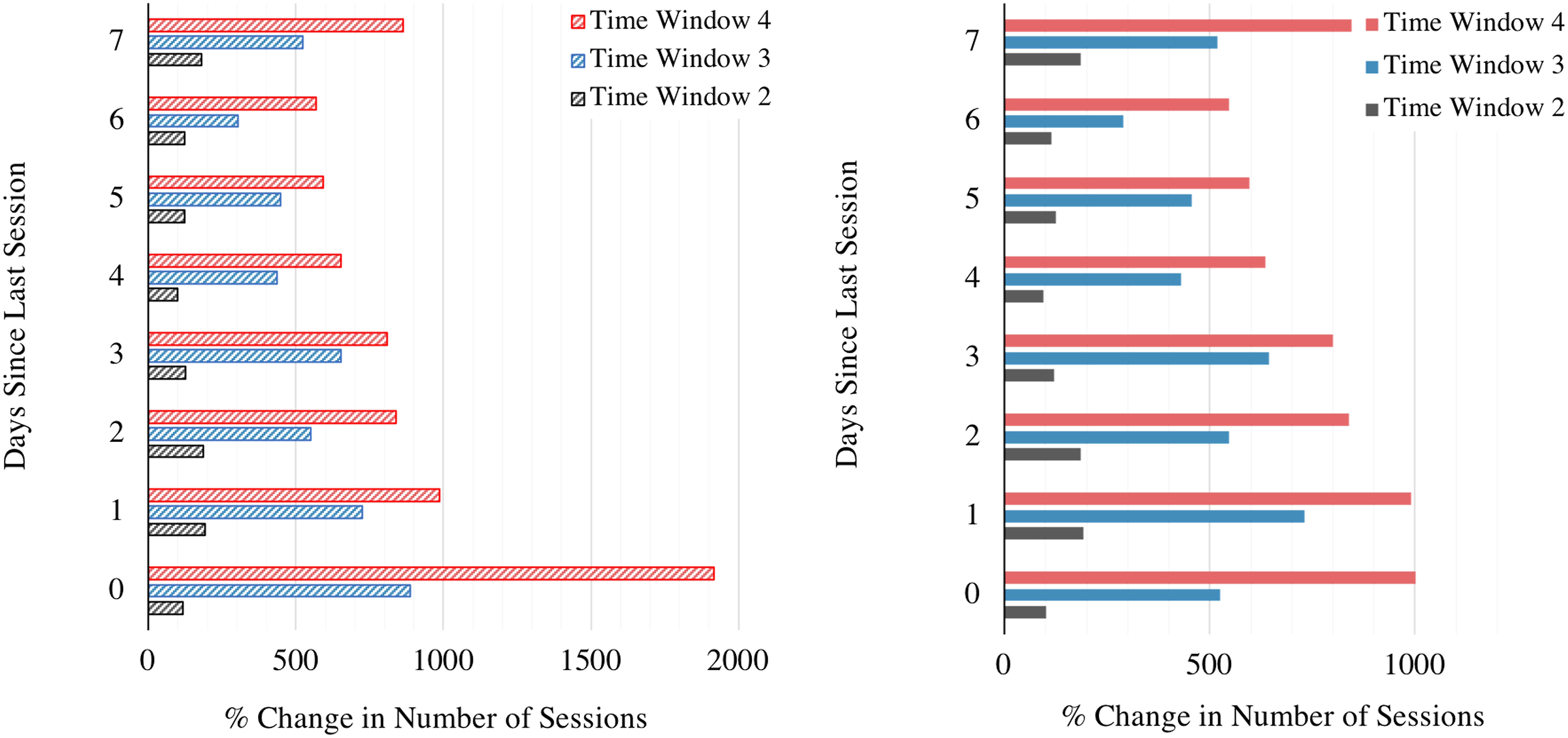
New users are also counted as ‘0 Days’ since their last session; and for this reason it is common practice to report multi-session users 1 separately. A focus on multi-session users can therefore be seen in the left-hand chart in Figure 7. Multi-session users are those who have had more than one session within a particular time window and are considered to represent an active user base. For more information about multi-user sessions we refer the reader to google analytics documentation. 1
Qualitative results
Emergent themes.
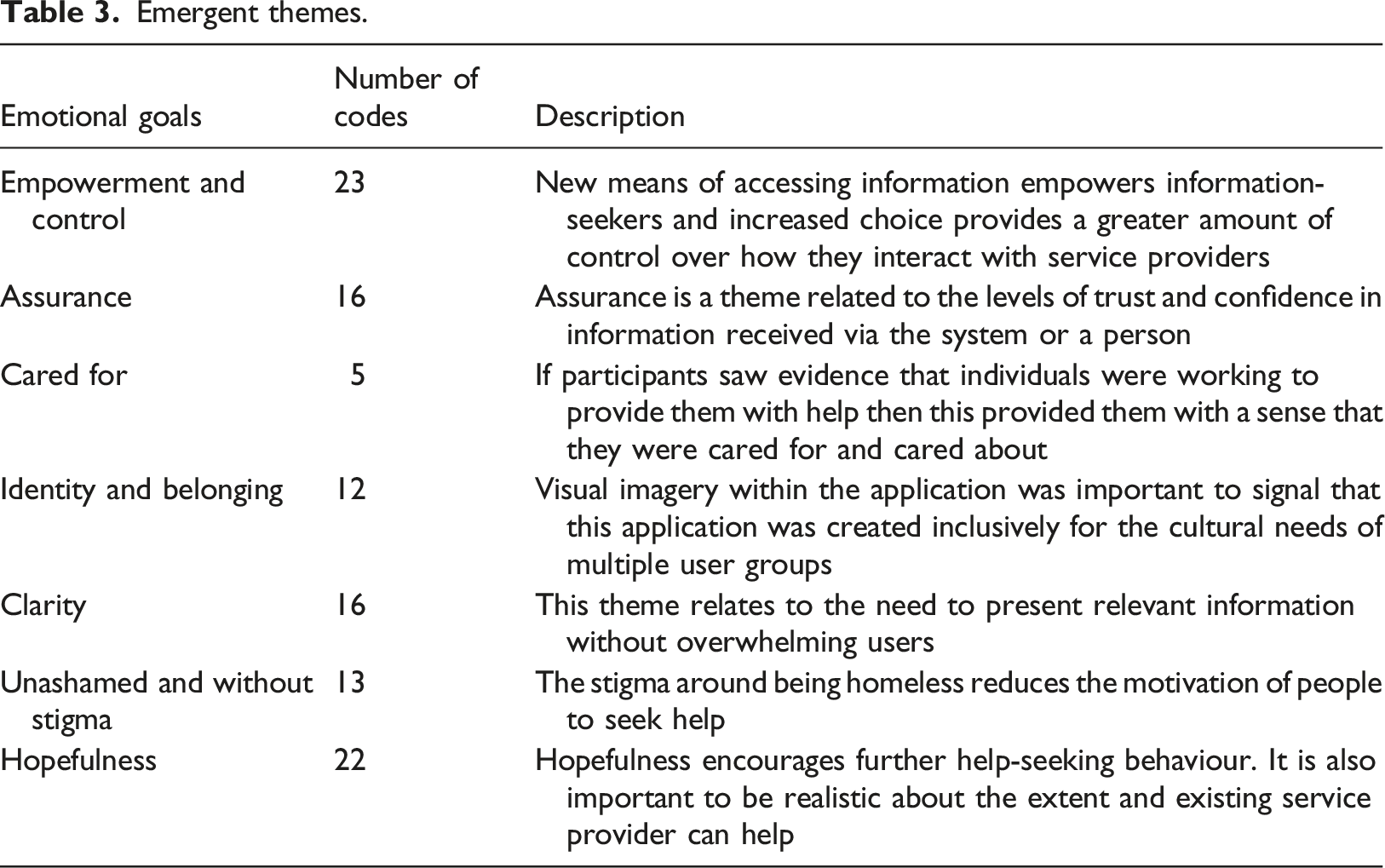
Across the different situations the most frequent theme was empowerment and control with 23 quotes being coded and clustered together under this label. Participants explained how this goal would be supported by giving people autonomy over the services that they find and choose to access. The web app created a new opportunity for homeless people to find information on services and interact with service providers. The opportunity was seen as empowering and one participant who had a lived experience of being homeless commented: “I think it’s great and when I was homeless there was nothing like this, and I know for sure maybe it would’ve reduced my time in homelessness maybe if I did have this amount of information.” In particular, the service results page presented a long list of options to allow people to pick and choose services based on their preferences (refer to Figure 4). One participant said: “… you don’t have to go to that one, you can have a choice.”
The importance of the goals is broader and applicable to provide more flexibility to shifting needs.
The living lab approach considers the broader socio-technical system. To be able to see the information, it is necessary for a user to have access to the internet, access to data services and sufficient battery on their mobile. Extra efforts were made to facilitate access, notably distribution of battery packs and negotiating with the primary telecommunications provider to grant unmetered access to the network while using the web app, effectively making information access a free service.
While the app originally was designed to support people experiencing homelessness or being in danger of being homeless, a third of the searches according to a more recent InfoXchange report account for food parcels and community meals. 53 It can be argued that with an increase for such a basic need people are using the app that are not homeless. The theme of empowerment can be extended to anyone in need and using the app – not only the originally targeted user group. Another example for the broader validity of key emotional goals is the extension of Ask Izzy through a voice assistant in collaboration with a major communication provider. The integration of the assistant also enabled people with English as a second language, low literacy or limited hand dexterity or vision impairment to use the Web app to get information on nearby services. 53
Peer-to-peer recommendation of the application was often described as a trusted source of information. People felt assured as well as cared for and trusted the advice of others in a similar situation. Consequently, awareness of the web app was effectively communicated socially at events. For example, knowledge about the location of food vans was readily exchanged and at the same time these became places where information was routinely exchanged. Young adults frequently sought advice from their case worker whose hands-on guidance would take the stress away from searching for appropriate courses of action. One formerly homeless participant described how he often assisted others who did not have access to a smart phone and WIFI. One staff member described this information support by a trusted person as
“So they take their opinions and advice of people, other people that are homeless that have been there and know the system. Who’s who.”
Another example for feeling assured was a later extension of Ask Izzy focussing on tailoring the application for women in problematic domestic situations with threats of abuse, both physical and verbal. According to the InfoXchange 2017 annual report 54 55% of Ask Izzy users are female and “domestic violence” was the most searched for term. Women wanting to use the app for investigating alternative accommodation or access to advice or other services having trust and confidence in the information was crucial. As they feared a violent reaction from their partner if they thought they were thinking of leaving, a ‘big, red button’ was added to Ask Izzy for the adaptation of Ask Izzy to situations where there was concern for domestic violence. By pressing the button, the app would switch to a ‘harmless’ page such as the local weather. The button needed to be easy to access as a violent partner might grab a phone or iPad, and seeing the local weather would not initiate a potentially difficult conversation or escalation. In terms of emotional terms, having the button made the users feel safer which is an aspect of feeling cared for, and complemented the feeling of being in control.
The theme relating to feelings of identity and belonging had a strong influence on the design. A quarter of people supported by homeless services are Aboriginal and Torres Strait Islander (ATSI). Hence 15,000 services listed in the Web app are specifically aimed at this user group. Users can prioritise the listing of ATSI services. 55 An earlier comment of Ask Izzy was that it was “too mainstream, too governmental, whichever way you want to put it.” Involving ATSI groups in the design process was just as important as the design itself. The involvement enabled the communities to be heard and to see how their needs were incorporated into the design (see Figure 5). Several iterations on the design that were motivated by the ATSI involvement related to the imagery, symbolic representations, interactional elements and language style. The imagery to support this theme is visible on the first page. Here, the page header shows artwork that was co-created with the community. It needed to strike the right balance between bringing in the rich colours typical of Aboriginal artwork while maintaining clarity around the textual information. Secondly, the flag of ATSI communities was displayed on the footer of the first page and acted as a symbol to show the needs of this community were considered. Showing that ATSI feelings had been considered was particularly important as some service providers within the list were tailored specifically for the ATSI community. While using the app, any user would be able to prioritise services that indicated that they were for ATSI communities.
A small, but relevant aspect of identity was the naming of the app. Originally the app was meant to be named “homeless assist”. 50% of the consulted people agreed that the word “homeless “should be in the end product. However, the other 50% were of the opposite opinion that the word “homeless” should not be part of the name. The former group was mostly consisting of people involved who had the functional ‘objective’ aspects of the app in mind such as “easy to search”, “does not beat about bush”, “simple” and “says what it is”. Consultation with end-users (workers and citizens) showed that the term ‘homeless’ has a broader definition for government and workers than it does for citizens’ and that ‘most people do not associate themselves with being homeless, especially young people’. For example, young people identified ‘homeless’ as a state of being totally destitute (exhausted all other possibilities), and that it does not apply to people with some means of support such as couch surfers/dwellers. Homeless was associated with being old. Young people do not generally identify with the word ‘homeless’ or ‘homelessness’. Adults identified ‘homeless’ as a variety of definitions including no fixed address and rough sleepers but in particular as people who want to feel respected and retain a level of dignity and personality. One interviewed service provider said: “So that’s part of the problem with promoting things as homelessness is most people don’t identify.” It became clear that the tone of language is important to adequately engage with people who are homeless and need support. Based on this a concept (Ask Izzy) was suggested that creates a personality and story, is gender neutral, non-age specific, and non-culture specific.
For a detailed discussion on how the original individual design features, such as imagery, language and iconography were associated with emotional goals in the development phase we refer the reader to previously published work (removed for review).
The goal of needing a sense of clarity was coded against 16 phrases in the transcripts. This is perhaps unsurprising as it has already been reported in prior literature that people who are homeless are often given an overwhelming amount of information. This goal informed all aspects of software design as all images and wording were created to be literal and easy to understand.
Clarity was closely connected to the theme of hopefulness. A formerly homeless person recalled her experience after realising that an advertised service was not able to help:
“It’s so depressing when you’re trying to find accommodation and you read something and say oh my god, they’ve got support to transitional accommodation. I remember this happened with me when I was homeless and I’d get really excited, oh great, I’ve found a place, maybe they can help me, hang up after hang up, after hang up.”
Hence one of the greatest challenges for technology design is to find the right balance in providing clarity and hope about what can be achieved by seeking help without reducing the motivation to seek out a specific service.
One of the service providers interviewed expressed that they “spend a lot of time managing client expectations”. Avoiding disappointment remains an ongoing challenge. Engaging with the information in the web app is one element of the service system where a prospect for support is created. Each subsequent interaction with service providers might be based on this initial expectation. For many individuals, experiencing homelessness will last a number of years. Therefore, the more a user aspiration is addressed in design (the greater the initial hope), the greater the risk of negative consequences in the long-term (expectations not met). One service provider explained it this way “you’re actually setting the expectation that there’s hope there when actually that’s misplaced”.
The goal of being unashamed or without stigma was coded against 13 phrases in the transcripts. The stigma attached to being homeless is a major barrier in seeking help. Participants often found workarounds that allowed them to ask for help anonymously. One way was to create a fake online account to ask questions in online forums. One homeless person phrased it this way:
“Well I find Facebook easier [than speaking in person] because I can be anonymous on Facebook so like I can make up a fake profile and just ask random questions on a group and they can like reply…”
Many decisions were made to reduce any stigma felt, including using the tagline ‘No Shame – Ask Izzy’ in marketing materials. Changes to reduce stigma were also made within the app design; the tagline on the landing page was changed from ‘A to Z of Homeless Help’ to ‘Find the help you need, now and nearby’. This change avoided explicitly labelling people as homeless.
Overall positive, results indicate that a large number of people who are homeless chose to find service information online. An interviewed service provider stated:
“we like to think that information only exists in hard copy form and that’s been a challenge we’ve had for a long period of time. But even in a meeting we had recently the number of people that identified the [web app] and how much they use it and how useful it is.”
Implications and recommendations
We have used positive emotions to guide our analysis and advance our understanding of how to support homeless people. This group are vulnerable and hence have an even greater need for positive experiences. Providing service information online has become even more relevant since the study was conducted with the current pandemic taking place preventing or reducing opportunities for people to seek information for help face-to-face. Just recently funding was provided to help people at a disadvantage due to effects of COVID-19. 53 Many homeless people have used the app as a support mechanism for finding information and services. Both the overall use and the percentage of returning users have increased as evidenced by the quantitative findings. The average weekly number of users was 817 in the first year of development. By the second year, the average weekly number had almost tripled to 2287. By the fourth year, the web app is being accessed by over 10,000 users each month. Clearly many people are using the web app to seek information online. These numbers demonstrate that the app has been very successful. It has had large uptake and has resulted in several extensions.
We now reflect on four aspects that allowed the project to be successful with a lens on emotional needs. We note that these aspects also can easily become obstacles to success. The discussion is organised in four subsections. For each aspect we summarise our learnings as recommendations (in italics) for the design for mobile software applications and the wider socio-technical system that have the wellbeing of users at the core and the wider service provision to diverse vulnerable stakeholders.
Reconciling diverse views and considering the wider socio-technical system
The themes elicited from the interviews highlighted diverse viewpoints of stakeholders that required reconciliation in the software design. It was important to take a holistic approach and socio-technical system view in these cases. The theme hopeful helped finding the right balance in communicating viewpoints in the web app. The interaction with the web app is one small part of a much longer help-seeking journey involving different situations. It is important to realise that the initial interaction with the web app creates expectations. If the expectation created is not met by the service provider or appropriate for the specific situation then there may be negative perceptions on both service providers and the success of the web app itself. Taking a holistic approach and socio-technical system view helped technology developers realise that specific design features would have consequences on future actions and interactions with service providers.
Additionally, we recommend to reconcile conflicting protocols and practices. One concern of service providers that came out from the interviews was their lack of control concerning the way that people needing assistance were passed between organisations responsible for coordination. Specifically, information about services which were usually recommended by a qualified service provider in-person was potentially problematic. If the information were presented to the client, it may lead to this client trying to access an unsuitable service that might not match their needs. If the information were withheld, it was essentially limiting the control of the client by reducing the way they could access the service, and how many choices were available.
With these challenges is it is easy to understand how two key information flow links depicted in Figure 2 could easily be interrupted or discontinued. Service providers had great influence on adoption success as they would cease to recommend the web app if they perceived the presented information as risky. Similarly, there was a danger that clients (homeless people) would stop recommending the web app to other clients if they did not feel their service needs were addressed.
It is key to support inclusive design: By addressing the different needs for identification, users were able to feel a sense of belonging. This was a goal for all users as the realities of homelessness can create a feeling of separation from society. In particular, as described in the findings section the ATSI user group said they wanted to feel that the app was created with their needs in mind. Another example of inclusive design is to keep it simple and broadly accessible. A strength of the Ask Izzy app is the broad user base that has widened since the launch of the app. Searches are easy and can be tailored to different user group needs.
Considering changing individual needs over time
The seven themes relating to how users wanted to feel needed to capture how needs can change over time. In these situations it was important to respect and consider people’s changing emotional state. Complying with emotional needs (which might be different for different user groups, the same user over time or depend on the season) encourages take up and longer-term use. Ask Izzy has now been in use for several years and has shown sustained and increasing take up. We advocate that considering the emotional state is key for revisiting and improving apps. Our research has shown how emotional goals can be used to gauge take up and explain success of a Web app.
It became clear that a longer-term view of appropriation was necessary and to consider the whole journey of an individual. Over time, a person experiencing homelessness may find themselves fluctuating between situations that are stable, unstable, recovering or being in a crisis. This means that there are not only changes between different user groups or individual preferences, but also an individual person’s needs and emotions vary depending on which situation they are in. For example, someone in an unstable situation needs education on available services, realistic expectations set on the requirements of each service, and actionable steps to allow them to act early and help prevent a crisis situation.
Users need to be given a sense of normalcy and clarity on their next steps and actions that stabilise their situation. Someone in a crisis needs information on their nearest housing and support point, specialist access points and priority actions steps; expectations set on what to expect from an access point visit is even more crucial for this situation; actionable steps to visit the nearest access point as soon as possible or if it’s after 5pm to call the crisis hotline. Someone recovering needs education on an access point for follow-up and information on support services available beyond their previous access point; expectations set on the requirements of each service, and actionable steps to stay in contact and attend appointments with their case workers.
Compatibility with the wider service provision network
There are significant challenges in ensuring that projects and their outcomes such as the AskIzzy web app continue to be used as part of the whole service network. We recommend to guide people to the right service. As a lot of research has shown that homeless people experience information overload, the navigation and direction to the right service is key. Such information overload is not specific to services supporting people experiencing homelessness. We suggest that any service dealing with vulnerable people and their concern around wellbeing can benefit from such guidance when navigating a complex socio-technical system. Such examples include navigating My Aged Care 56 or NDIS. 57
A strength noticed in Ask Izzy has been the ability for the app to provide a sense of independence for people – even in vulnerable situations – to confidently ask for help and support in an easy and simple manner. While dealing with the vulnerable, it is most essential that peoples’ privacy be protected. It is of highest priority that information is not misused or shared with third parties. For example, people experiencing domestic violence have repeatedly mentioned that their information if tracked could place them in danger. Hence our advice is to empower and protect vulnerable users.
The participants who were interviewed discussed how awareness of Ask Izzy could continue and be extended. They drew attention to a wider group of both organisations and individuals. Our data indicated three distinct subgroups might help with maintaining awareness. The first subgroup are client-facing case workers and service providers. The second subgroup that was identified were senior members of the indigenous communities who were prominent such as Elders. The third subgroup is the general public informed by workers who often interacted with people requiring assistance. Examples are police, public transport workers and hospital workers. Hence to build awareness of the app in the wider community and service system can help to broaden the network.
Understand the role of social recommendations to maintain momentum: Advice from people who had a similar experience of homelessness was considered reliable. Interestingly, the number of users who return to the web app after 7 days has increased. A possible explanation is that people access the web app after hearing about it via peer-to-peer recommendation at a repeating gathering, meeting or event. An event or activity that occurs weekly may possibly inspire people to use the web app. In fact, frequently an expert user had initiated interaction to help another person access a particular service. Interactions and raising awareness about the web app often occurred during activities that were social. By understanding how multiple stakeholders are able to collaborate we are able to understand the ongoing success of Ask Izzy as dynamic and constantly changing.
Ensuring long-term uptake and sustainability
In order for people to use a system, it is key as part of the holistic socio-technical environment that they are provided with accurate and ‘real’ information.
It is important to plan for ownership and maintenance. Data provided on the app must be accurate. If it is not, the homeless will cease to use it, it will develop a poor reputation and consequently service providers will not recommend its use either. It is important that service providers are confident that the information they provide is accurate and helpful. Responsibilities are often unclear about who needs to ensure awareness of the app is maintained.
One service provider reflected on this challenge:
“I guess your question was who should be responsible for it, I mean I guess it goes to who owns [the app] and I would think that the perception [is that the software company] owns it, so it’s their thing. And that’s problematic in terms of ongoing funding.”
For users to feel empowered, information needs to be up-to-date and address changing situations and conditions. Experiencing that information is not topical anymore is in disaccord with most of the emotional themes and users might lose trust in the application due to misaligned information. Providers have to be aware that this requires ongoing revisions and evaluations and hence additional funding. Adjusting the app to the pandemic situation has made it more relevant and increased the number of users.
Consider whole system changes: The potential users of the wider system constantly change and evolve. Some people newly become homeless, while others move into stable housing and no longer need the service. Service providers may undergo personnel changes or other organisational changes. Newcomers need to be briefed on the app to be able to recommend it to people in need. Communication pathways need to be maintained so that those who are homeless are aware and made aware of Ask Izzy.
Conclusions
We have described how an emotion-led approach has contributed to the analysis, design and evaluation of technology to help people who are experiencing homelessness find services online. We have discussed some key challenges in developing technology for the homeless. We believe that the insights we have gained can be useful to other researchers in the process of creating technology to help solve socially complex problems and deliver online services with diverse stakeholders.
Our case study of the web app involved us conducting a mixed-method study. We focus on the different perspectives of people who were homeless, ex-homeless, and service providers. Having a better process for developing and evaluating such technology to product level would have ongoing benefit in optimising effective delivery of health care and related systems and services. Our emotion-led approach helped researchers and the software development team understand the diverse and often contradictory concerns of service providers and homeless people, while placing the concerns clearly in the context of the broader socio-technical system.
We discuss the importance of technology design and the impact it has on existing organisational practices and protocols. We demonstrate how our emotion-led approach was used to inform design trade-offs. We explain the importance of being mindful so as not to raise unrealistic expectations. People who are homeless wanted to feel empowered, in control, assured, cared for, unashamed and hopeful while interacting with the web app. Yet service providers needed to ensure that claims about services were realistic.
Our evaluation of Ask Izzy demonstrated that a living lab approach can contribute to service provision in useful ways and ensure success. Even though the research team did not have full control over the development and the design of the app, their involvement in initial stages of the requirements elicitation of the project (reported in) 58 and the reported evaluation helped to improve and sustain the provision of this major national service for the homeless. Our approach had influence on the design of the app, brought emotions to the forefront of discussion and was evident in participants’ feedback during the evaluation. Analysis of services and their impact is relevant but not often done. This analysis was not looking into mere take-up statistics but was able to assess the impact of considering emotions on service delivery.
Overall our Living Lab approach combined qualitative and quantitative measures demonstrating successful service delivery over time. There are limitations of our research. There were insufficient resources to fully implement the insights gained from our evaluation. Also we do not know how positively the majority of users from our quantitative results experienced the app.
Finally, we discuss the challenge of maintaining momentum with the delivery of the web app. There needs to be continuing awareness of the web app as well as sufficient resources to maintain the service and deliver improvements. Based on lessons learned throughout the project we included a number of recommendations that may be useful for other projects considering technology implementations in complex socio-technical systems.
Footnotes
Acknowlegements
This research has been made possible by the support and collaboration with Infoxchange a not-for-profit social enterprise developing technology for social change. This project was funded by the Australian Research Council Discovery Grant DP160104083 “Catering for individuals' emotions in technology development”.
Declaration of conflicting interests
The author(s) declared no potential conflicts of interest with respect to the research, authorship, and/or publication of this article.
Funding
The author(s) disclosed receipt of the following financial support for the research, authorship, and/or publication of this article: This work was supported by Australian Research Council.
