



Abstract
Covid-19 has impacted the lives of people across the world with deaths and unprecedented economic damage. Countries have employed various restrictions and lockdowns to slow down the rate of its spread with varying degrees of success. This research aims to propose an optimal strategy for dealing with a pandemic taking the deaths and economy into account. A complete lockdown until vaccination is not suitable as it can destroy the economy, whereas having no restrictions would result in more Covid-19 cases. Therefore, there is a need for a dynamic model which can propose a suitable strategy depending on the economic and health situation. This paper discusses an approach involving a systems dynamics model for evaluating deaths and hospitals and a fuzzy inference system for deciding the strategy for the next time period based on pre-defined rules. We estimated Gross Domestic Product (GDP) as a sum of government spending, investment, consumption, and spending. The resulting hybrid framework aims to attain a balance between health and economy during a pandemic. The results from a 30-week simulation indicate that the model has 2.9 million $ in GDP higher than complete lockdown and 21 fewer deaths compared to a scenario with no restrictions. The model can be used for the decision-making of restriction policies by configuring the fuzzy rules and membership functions. The paper also discusses the possibility of introducing virus variants in the model.
Introduction
Since the novel coronavirus, SARS – CoV-2’s confirmation on 7th January 2020, it soon became a pandemic affecting the entire world. The outbreak began in a seafood market in Wuhan, China, and spread globally. 1 The virus was 88–89% similar to the other viruses carried by bats and belonged to the same family as SARS – CoV and MERS – CoV. 2 The World Health Organization officially declared the COVID-19 pandemic in March 2020 after it affected 114 countries. Common symptoms included cough, fever, diarrhea, and hypoactive delirium. 3
The impact of Covid-19 was felt across all dimensions, including public health, economy, and social life. In response to the pandemic, 82 countries have imposed lockdowns to restrict the spread of infections.
4
The restrictions slowed down the spread of the virus but had a substantial socio-economic impact
As of early May 2021, 154 million infections and 3.23 million deaths due to SARS-CoV2. The severity of the disease was often compared to Spanish flu from the early 1900s. Medicine has significantly evolved compared to 1918, but the susceptibility to the virus has increased due to local and international mobility. Researchers have shown that Covid-19 has resulted in a higher death rate of 4.1 compared to that of 2.8 for Spanish flu in New York City. 6 Further, infection Fatality Rate data for the United States indicates that COVID -19 is 6–10 times more lethal for elderly citizens than seasonal flu. 7 Therefore, it is essential to understand and prevent the spread of SARS-CoV2.
System dynamics has been one of the most prominent models to understand the spread of diseases. 8 In the past few months, several articles have been published on this topic using different variations of the compartment model to predict the epidemiology dynamics of Covid-19. R. Memarbashi and S. M. Mahmoudi modeled direct and indirect transmission pathways using a compartment model. 9 H. A. Adekola et al. improved the SIR model by including asymptomatic cases and hospitalizations. 10 A. K. Azkur et al. implemented the antiviral and antibody immune response to evaluate the incubation time. 11 A. Mahajan et al. estimated symptomatic and asymptomatic cases to be included in the compartment model to predict the spread of infections in the United States. 12 These articles based on compartment models alone do not account for the economic impact caused by the pandemic.
Further, several researchers have investigated the economic impact of this ongoing global pandemic. A scenario-based model was used to evaluate the Gross Domestic Product (GDP) loss using Computable General Equilibrium (CGE). 13 This paper also compared the loss of lives to that of loss of GDP. The lockdown restriction imposed in different countries has affected the supply chain for various sectors disrupting the global economy. S. Aday and M.S.Aday proposed a less restrictive trade policy between countries to prevent disruption in the food and agriculture sector. 14 In another research article, 47% of the respondents in a survey indicated that they should be facing production challenges in aquaculture to a shortage of skilled labor during Covid-19. 15 These articles emphasize the need for a computational decision support system to develop policies during a pandemic.
In the past few decades, Fuzzy inference systems (FIS) have been one of the popular computational intelligence techniques used for decision-making since their inception in 1988. 16 Some of the recent applications of FIS-derived algorithms in medicine and computational biology include remote patient monitoring by A. M. Humadi et al., 17 real-time medical diagnosis by I. B. De Medeiros et al., 18 and classification of diabetes patients by O. Geman et al. in 2017. 19 A similar methodology was applied to diagnose Covid-19 based on symptoms and attributes of the patient in 2021 by C. Iwendi et al. and H. Şimşek and Yangın, E.20,21 In recent times, hybrid fuzzy models have been applied to a wide range of problems, including estimating the effort of the Scrum project using an energy-efficient BAT algorithm with ANFIS, 22 boosted fuzzy model along with a marine predator algorithm to forecast wind power, 23 optimized ANFIS algorithm with the parameters tuned using a modified Aquila Optimizer (AO) with the Opposition-Based Learning (OBL) technique was used by researchers M. Al-qaness et al. to forecast the oil production in different countries, 24 and an intelligent system for pile bearing capacity estimation using GMDH (Group Method Data Handling), ANFIS and Imperialism Competitive Algorithm (ICA). 25
Due to the catastrophic impact Covid-19 had on the entire humanity, a significant amount of research was conducted on this issue. K. Mahmoud et al. determined the relationship between the spread of Covid-19 and environmental factors in 2021. 26 H. Alawad et al. performed overcrowding risk assessment in railway stations utilizing an adaptive neuro-fuzzy inference system (ANFIS), 27 forecasting infected cases using a hybrid approach along with genetic algorithms and a compartment model in Malaysia by A. Alsayed et al. 28 and in the United Kingdom by K.T.Ly. 29 G. Pinter et al. developed a hybrid fuzzy model with a multi-layered perceptron to forecast cases and mortality rates in Hungary in 2020. 30 M.K.Sharma et al. used a mediative fuzzy logic model to predict the Covid-19 patients across multiple states in India. 31 Further, S. Shafiekhani et al. develop a graphical user interface for forecasting Covid-19 cases using ANFIS and Long Short-Term Memory (LSTM) networks in Iran. 32 These forecasting and classification models do not incorporate the decision-making that can be useful for policymakers.
To address this issue, T. S. Almulhim and I. Barahona developed a mathematical framework to rank relevant indicators for reopening strategies. 33 F. Samanlioglu and B. E. Kaya used a fuzzy Analytic Hierarchy Process (AHP) model to evaluate intervention strategies in Turkey. 34 Padhi et al. implemented a quantum computational approach to reduce space and data complexity and evaluate the global lockdown impact. 35 Researchers evaluated the effects of lockdown rules and social awareness under various scenarios using a Spatial-SIR model.36–37 P. Boldog et al. developed a computational tool for risk assessment of countries depending on their connectivity to China and the imposed control measures. 38 T. Lazebnik and S. Bunimovich-Mendrazitsky developed an optimal model for evaluating the spread of the disease among different age groups in Israel using a spatial model. 39 A few researchers addressed the economic impact and evaluated the lockdown strategies using a bio-economic approach and an optimal heterogenous lockdown strategy.40,41
After performing the literature, we identified the gap for a model which accounts for health and economic factors during the decision-making process for handling a pandemic. This research paper addresses this issue by proposing a hybrid methodology of a compartment model for simulating the spread of Covid-19 and a fuzzy inference system for generating the restriction strategy. This paper also includes vaccinations and discusses the possibility of incorporating virus variants.
Materials and methods
System dynamics model
This research uses a modified SEIRD epidemiology model to represent and predict the progression of COVID-19. The compartments represent a state that an individual might enter during the pandemic. The states and the parameters for the SEIRDV model in Figure 1 are defined as follows. An updated epidemiological compartment model for predicting Covid-19 dynamics.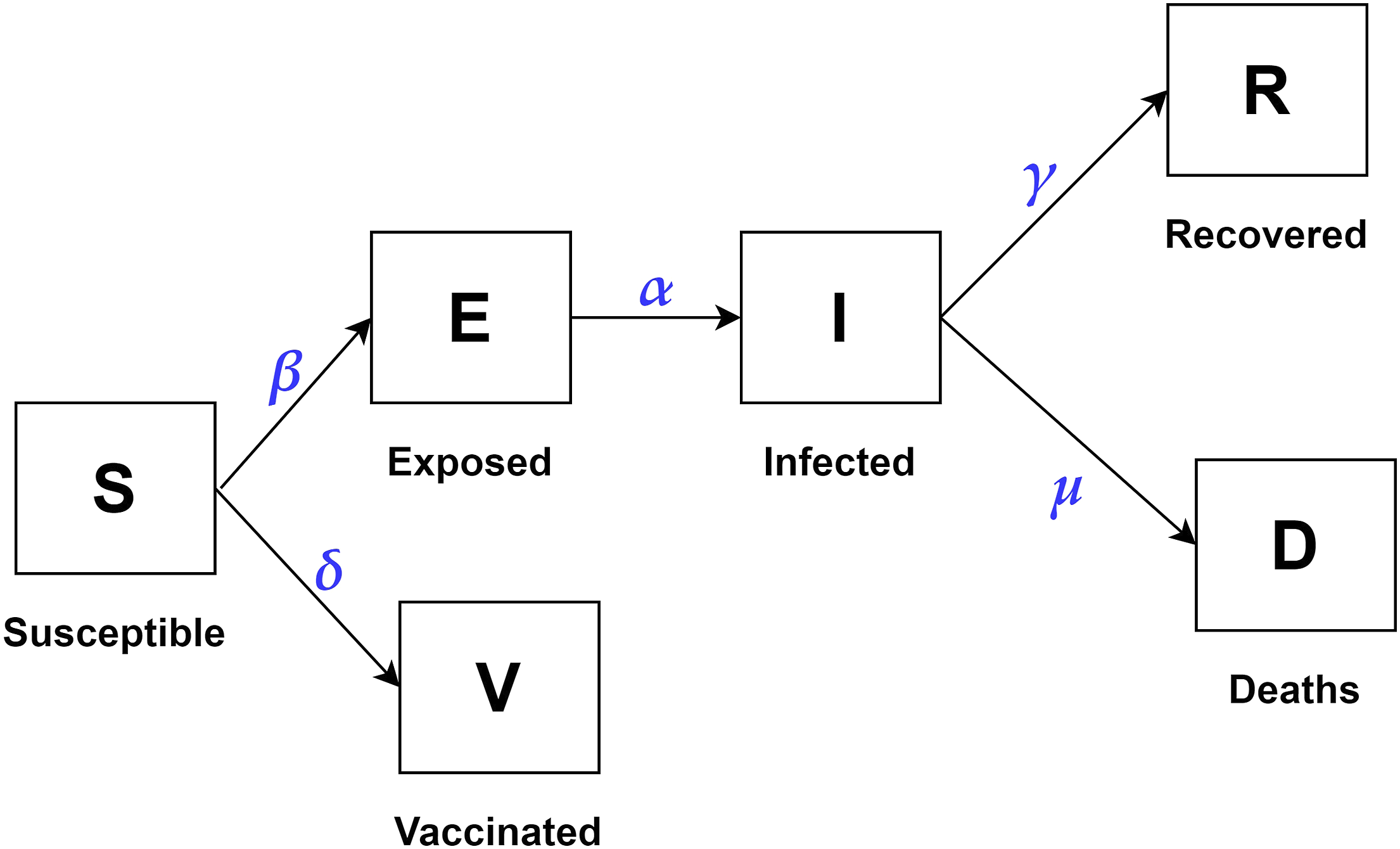
Susceptible, S(t): The number of individuals not yet infected by the disease on day t.
Exposed, E(t): The number of individuals in contact with infected people on day t.
Infected, I(t): The number of individuals infected by the disease on day t.
Recovered, R(t): The number of infected individuals recovered on day t.
Deaths, D(t): Total causalities until day t.
Vaccinated, V(t): Total vaccinations until day t.
Incubation rate (α): Rate of latent individuals becoming infective. The value is equal to the inverse of the incubation period for the disease.
Transmission rate (β): The number of individuals encountered an infected person per day.
Death rate (μ): The number of infected individuals deceased per day.
Recovery rate (γ): The number of infected individuals recovered per day.
Vaccination rate (δ): The number of vaccinations per day.
The differential equations representing the system dynamics of the compartment model are listed below.






Fuzzy inference system
Fuzzy inference is the process of mapping inputs to an output using fuzzy logic. The overall process is represented in Figure 2. FIS components are the inputs, membership functions, fuzzy rules, and the output. The process begins with converting crisp input values to fuzzy inputs using membership functions. A set of rules mapping these inputs to the output are then developed. An example of such a rule is “If inputs 1 and 2 are low, the output is low”. Finally, the rules’ output strength is added and defuzzied to get a crisp output value. Fuzzy inference system methodology.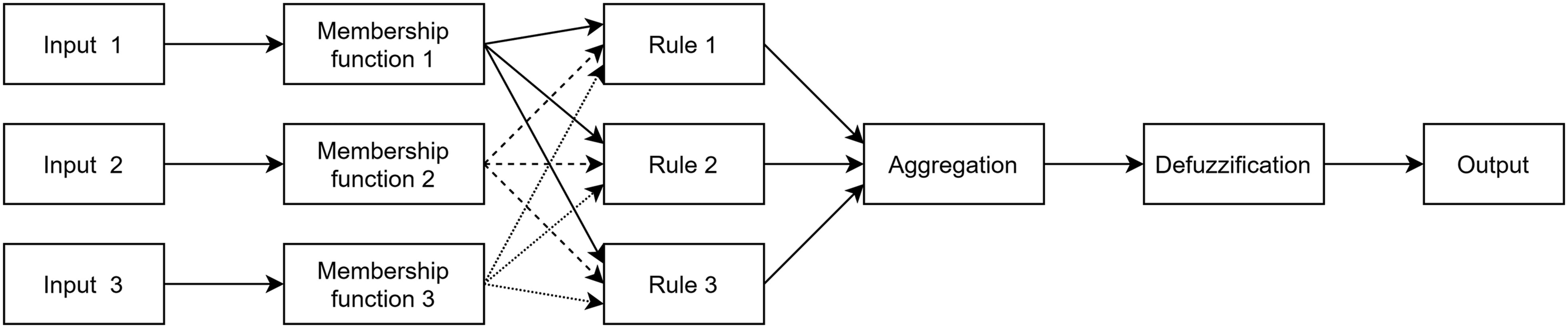
Evaluating GDP
As of 2020, United States GDP is about 20,000 billion for a population of 300 million. The simulation was assumed to be in a region with 10,000 people. After correction, the resulting data over time is shown in Figure 3. The “time” in equation (7) represents the months from January 2018. On observing the fluctuations, we have assumed a 5% drop in GDP during restrictions and 15% in a lockdown. Population adjusted GDP growth based on United States economy.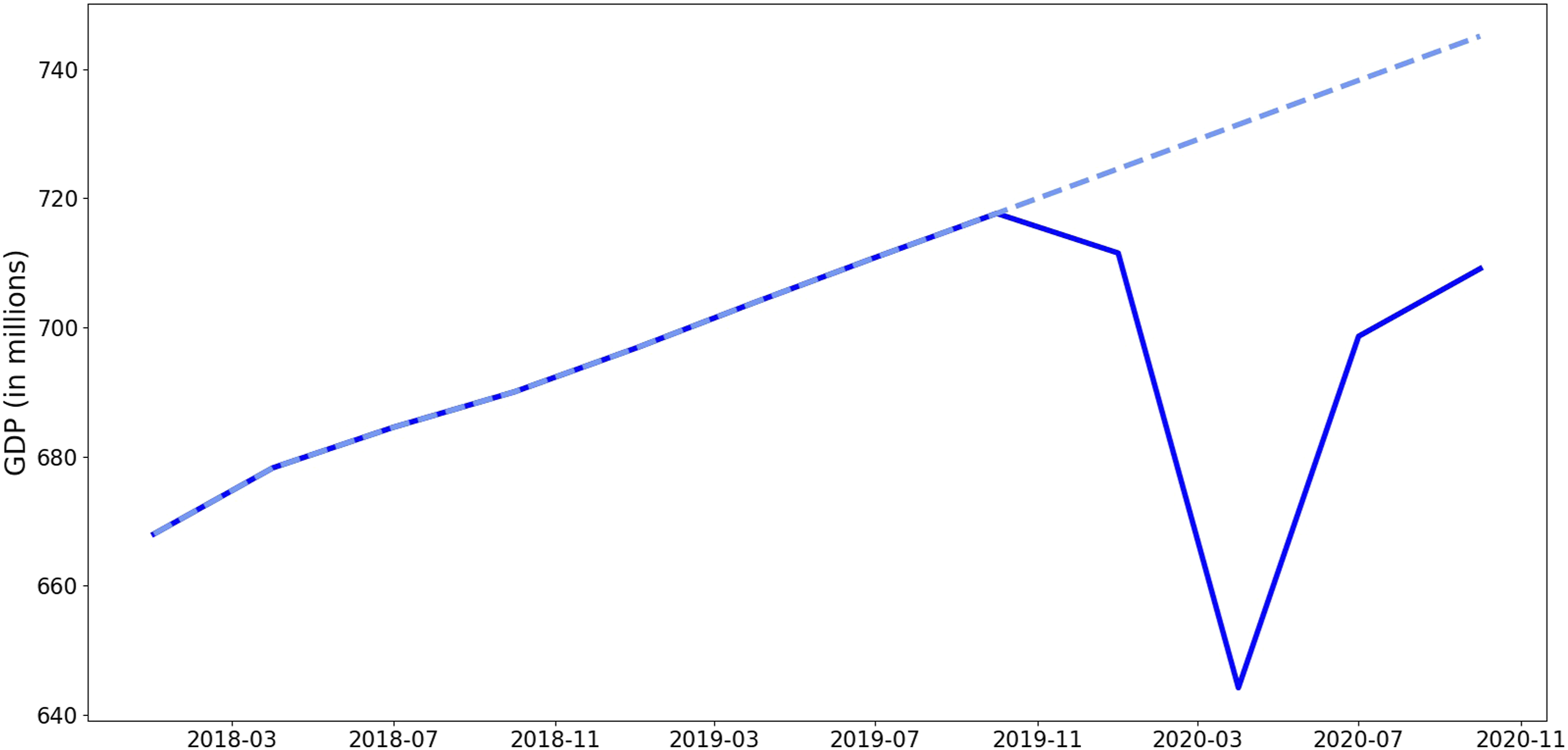

Integrated model
The inputs for the final model include vaccinations and deaths from the SEIRD model and GDP for the current period. The numerical variables are converted into fuzzy values using membership functions. The next step is to develop rules corresponding to the input level (low, medium, and high) and the output variable. As shown in Figure 4, the output variable has three outcomes – lockdown, restriction, or no restriction. This integrated fuzzy models’ result depends on the level of inputs and the rules. Integrated Model Architecture for suggesting Covid-19 response.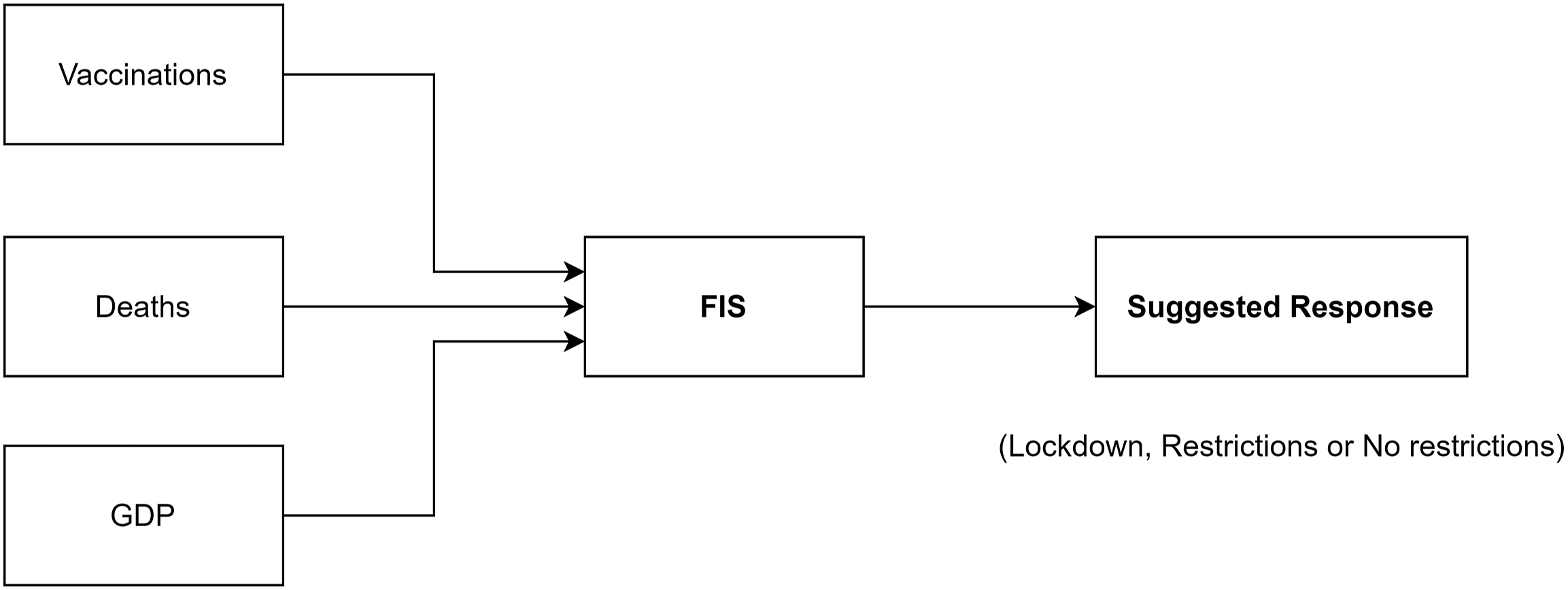
Result
The results from the SEIRDV model simulation for SARS CoV-2 are shown in the picture below. We used the reproductive number (R0) of 2 for the experiment. Further assumptions include one infection out of 10,000 people at the start of the simulation, an infectious time of 3.3 days, and an incubation time of 5.1 days. 37 Onset rate (α) and death rate (μ) were set to 0.1 and 0.05, respectively. The vaccine was assumed to be available 100 days after the first infection.
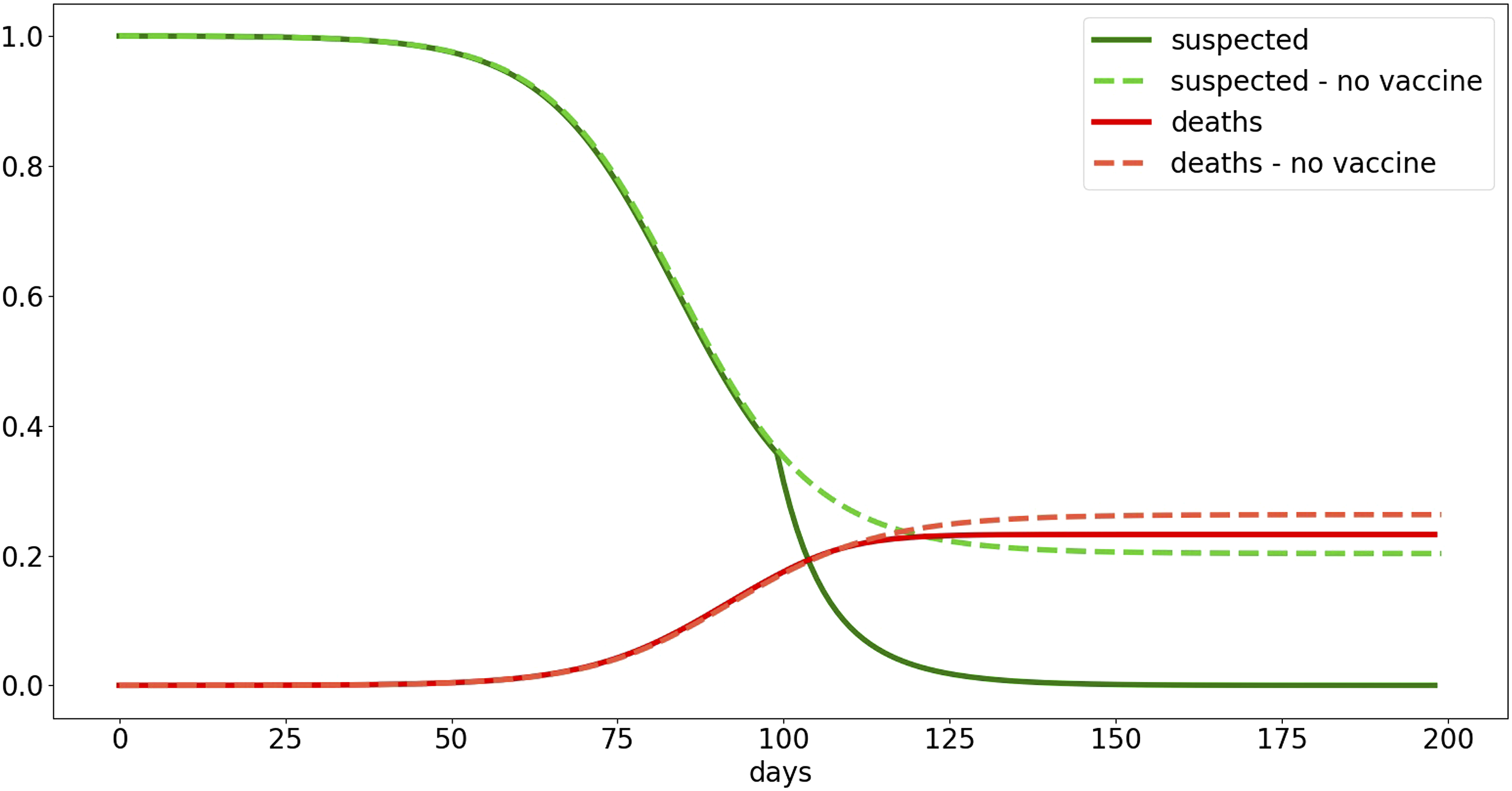
We simulated the model for a total of 200 days. The suspected cases, exposed people, infections, recovered people, deaths, and vaccinated people over time are shown in Figure 5. X and Y axes represent the days from the start of the simulation and the fraction of the population, respectively. We can observe a sharp decline in suspected people and deaths once the vaccine becomes available after 100 days. As observed in Figure 6, the overall deaths decreased by 33.69%, and the infections dropped by 85.67% due to the vaccinations. Results from the simulation of SEIRDV model for 200 days. Comparison of infections and deaths with and without vaccinations.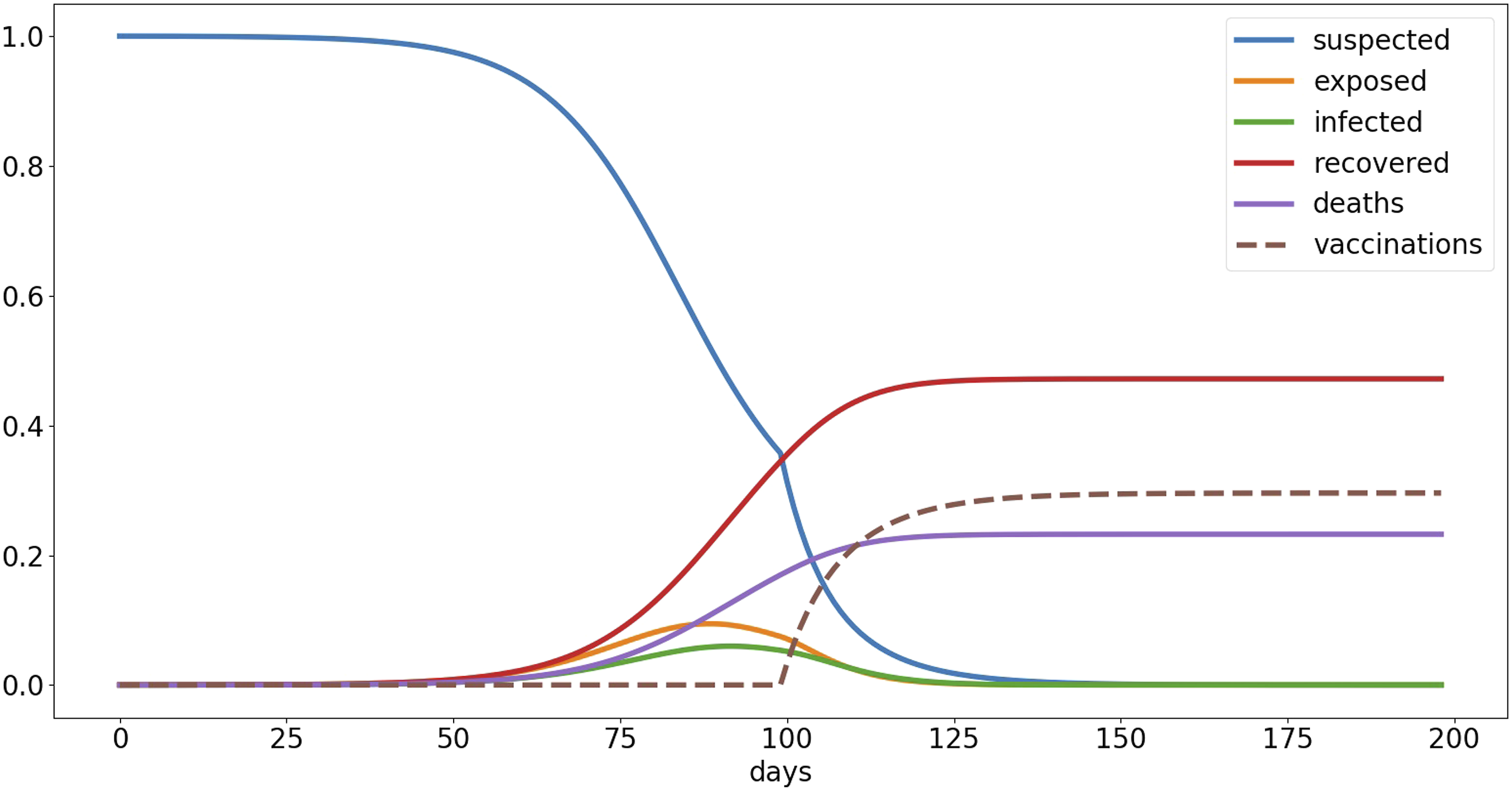
After configuring the SEIRDV model with lag, the next step was to develop the FIS. The fuzzy inference model uses the deaths and vaccinations data from the compartment model and GDP from equation (7). These numerical parameters were converted to fuzzified variables using membership functions (MF). We used triangular MFs for all the variables for simplicity. These MFs have three levels (low, medium, and high), ranging from 0 to 1. The membership function for vaccinations is as shown in Figure 7. The “low” level for vaccinations ranges from 0 to 0.4, corresponding to vaccinations for 0–40% of the population. The mappings for other inputs and membership functions are provided in Table 1. Fuzzy membership function for vaccinations. Mapping of inputs to fuzzy membership functions.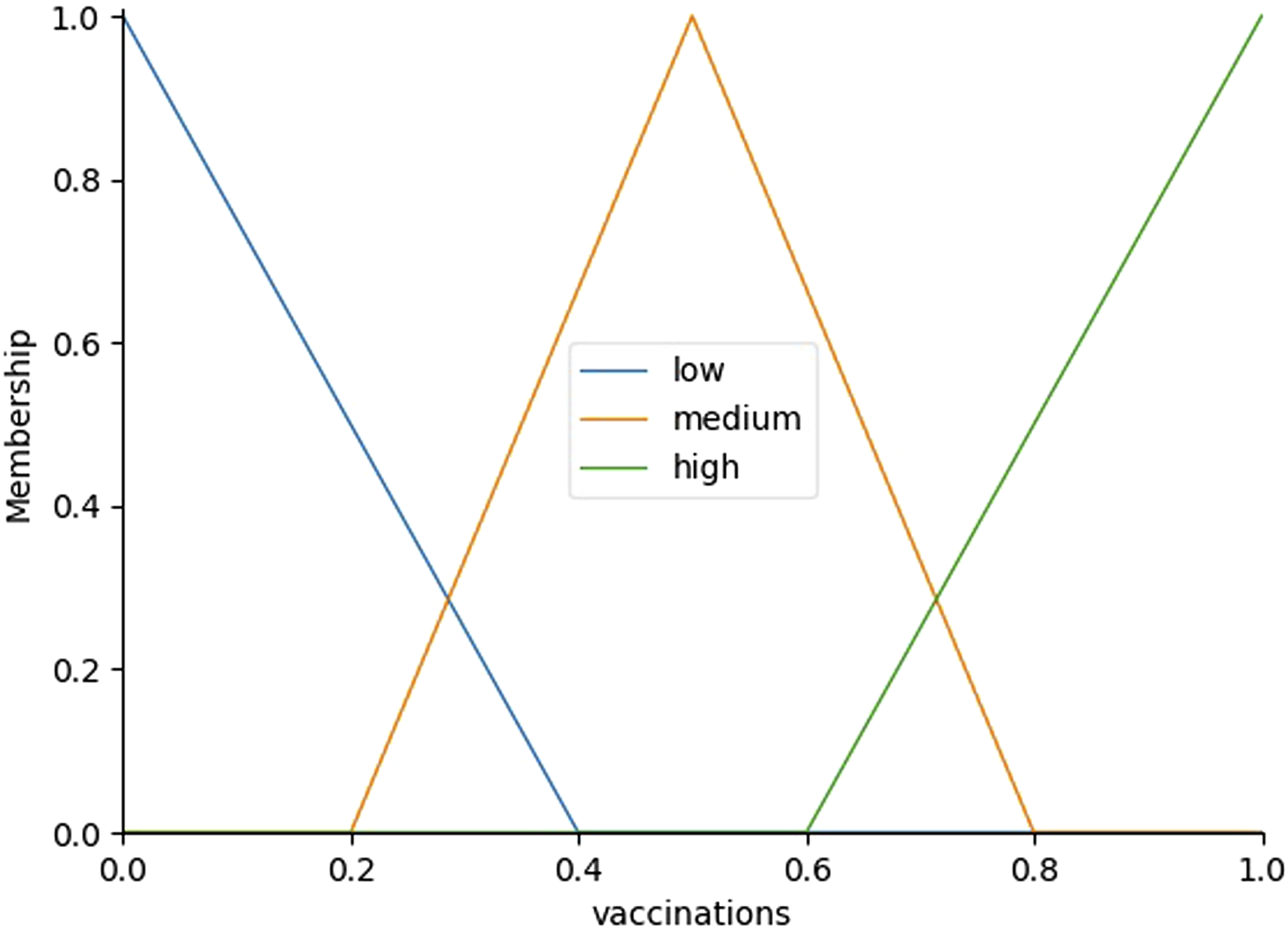

A set of ten fuzzy rules were identified for the inference system. The suggested response is then established based on the value of the output variable. The fuzzy output (restriction) corresponds to a decision of imposing no restrictions for low, restriction for medium, and lockdown for high. • If • If • If • If • If • If • If • If • If • If
Finally, a simulation was carried out for 30 weeks (210 days). The proposed hybrid model (FIS) uses the susceptibility, infections, and vaccinations from the compartment model of last week to generate a restriction strategy for the upcoming week. The results from the simulation are shown in Figure 8. We can observe the model initiating restrictions once the cases start increasing in the 2 week. Further, the inference system immediately imposes a lockdown in the third week. Finally, the model suggests lifting the lockdown as the infections start decreasing after 56 days and moving to no restrictions after 63 days. Simulation results showing the suggested lockdown policy from the Integrated model.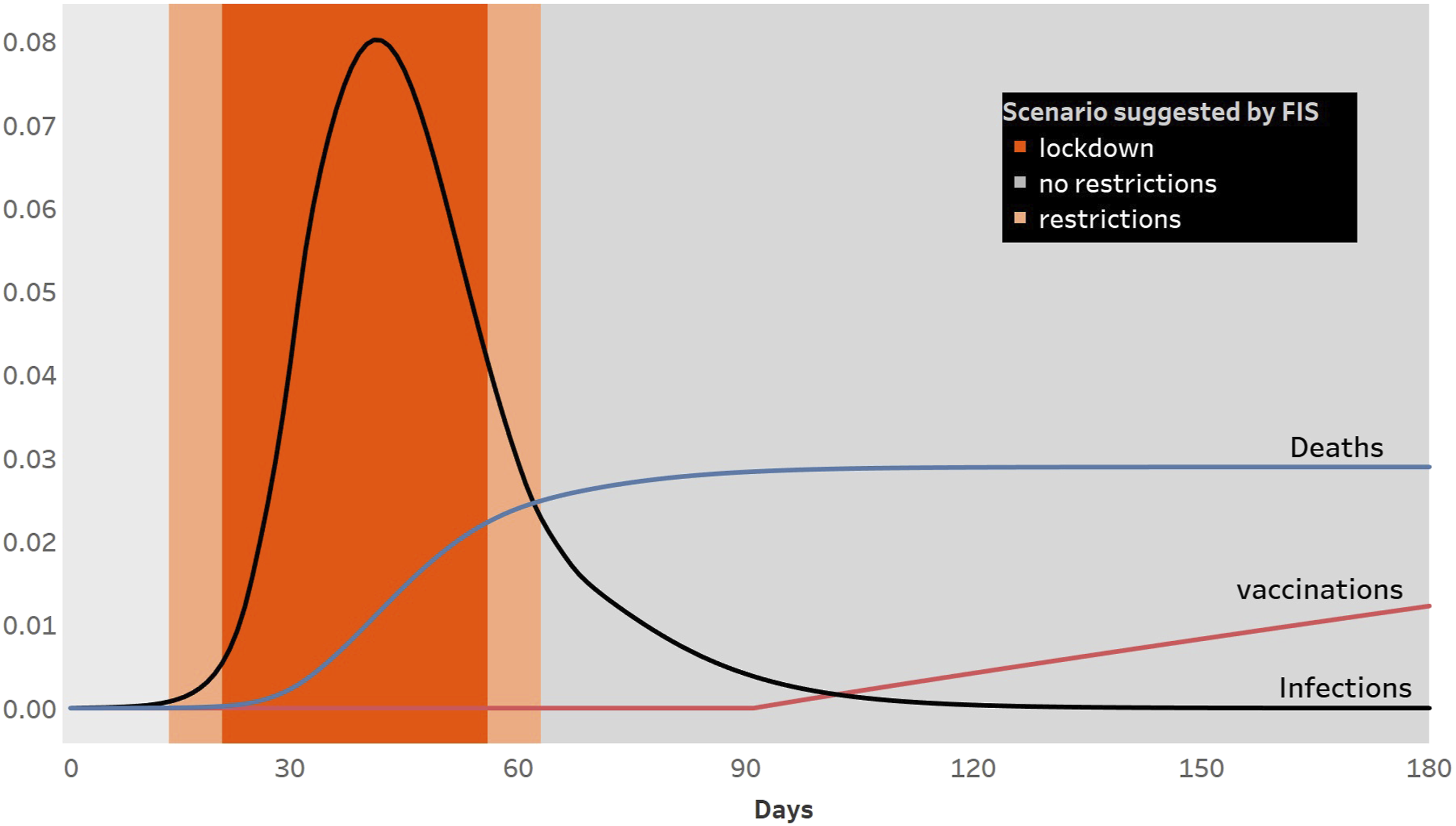
Simulation results from the 3 different Covid-19 response models.
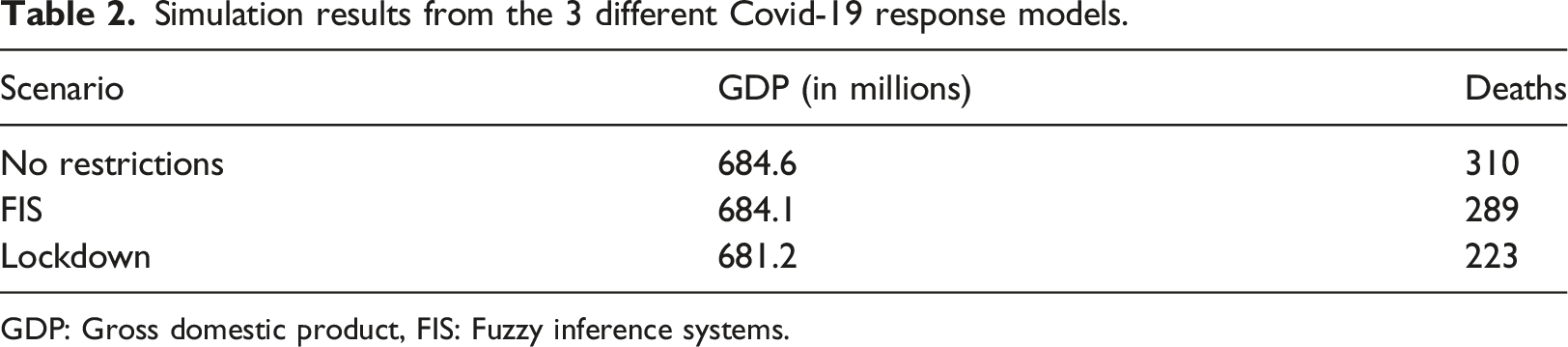
GDP: Gross domestic product, FIS: Fuzzy inference systems.
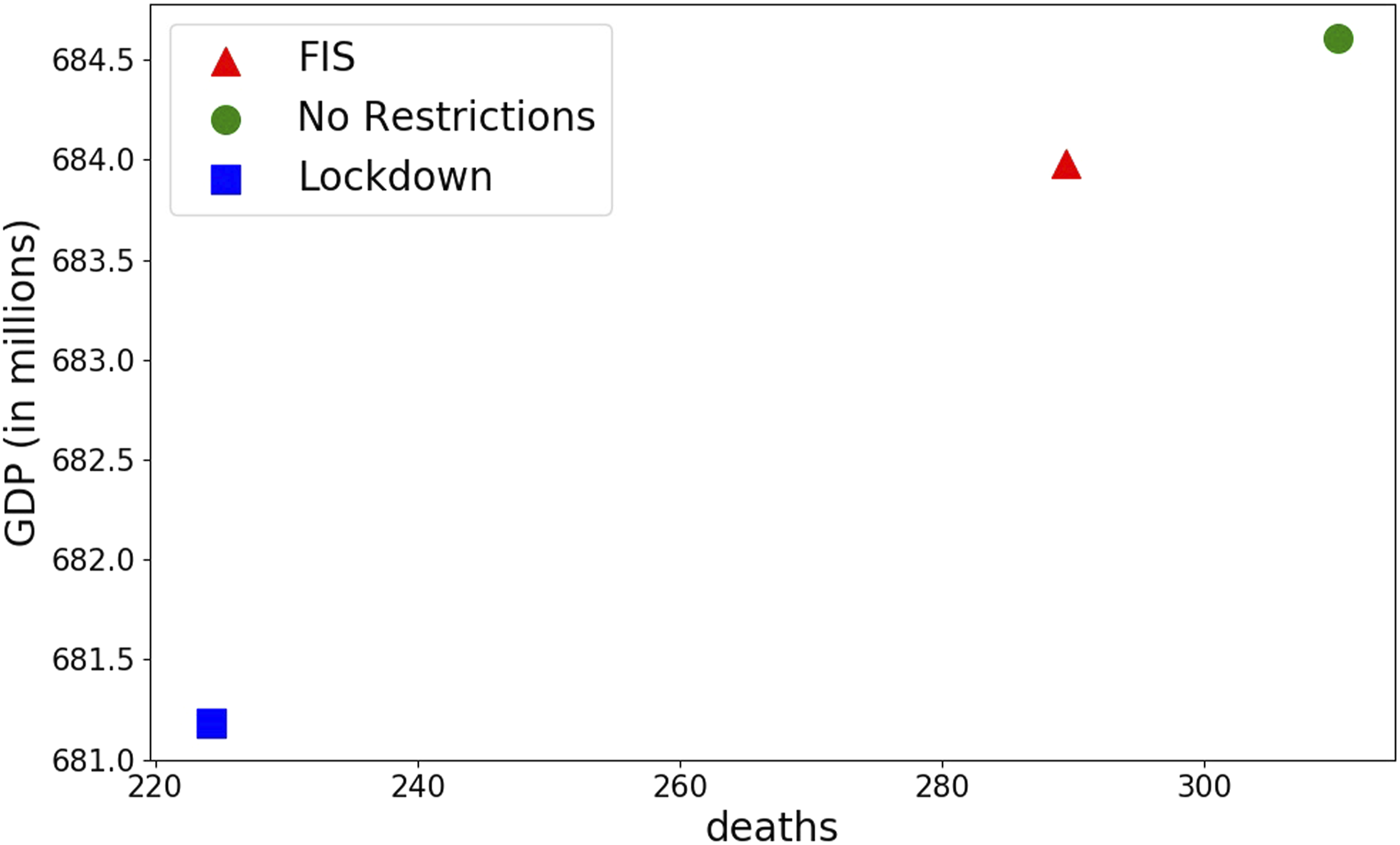
Results from the comparision of the integrated FIS model with complete lockdown and no restrictions models.
Conclusion and future work
This paper introduced a framework for restriction policy decision-making by combining a compartment model with a fuzzy inference system. The resultant integrated model aims to balance the economy and public health. An aggressively restrictive policy can negatively impact the economy, whereas a relaxed policy may lead to more infections. There is a need for a dynamic model for suggesting the restriction policy. The results from the simulation indicate that the model keeps the economy growing compared to the complete lockdown policy and has lesser deaths than the no restrictions policy. This approach can be applied to organizations to develop a dynamic pandemic handling system at the workplace to maximize productivity and minimize risks. The model can be improved further by including factors such as social distancing and inclination to follow safety protocols. This framework can be applied to any region by providing the inputs for the improved compartment model and evaluation of GDP.
Future work for this research includes validating the model with health, economy, and restriction policy data from multiple countries. Additions such as vaccination apprehension and the budget availability for vaccine manufacturing and distribution can improve the model. Further, virus variants can be modeled by introducing different reproduction numbers and a lag allowing the virus to mutate. Figure 10 shows the resulting results for such a scenario. Predicting Infections and deaths with a 2nd variant using the SEIRDV model.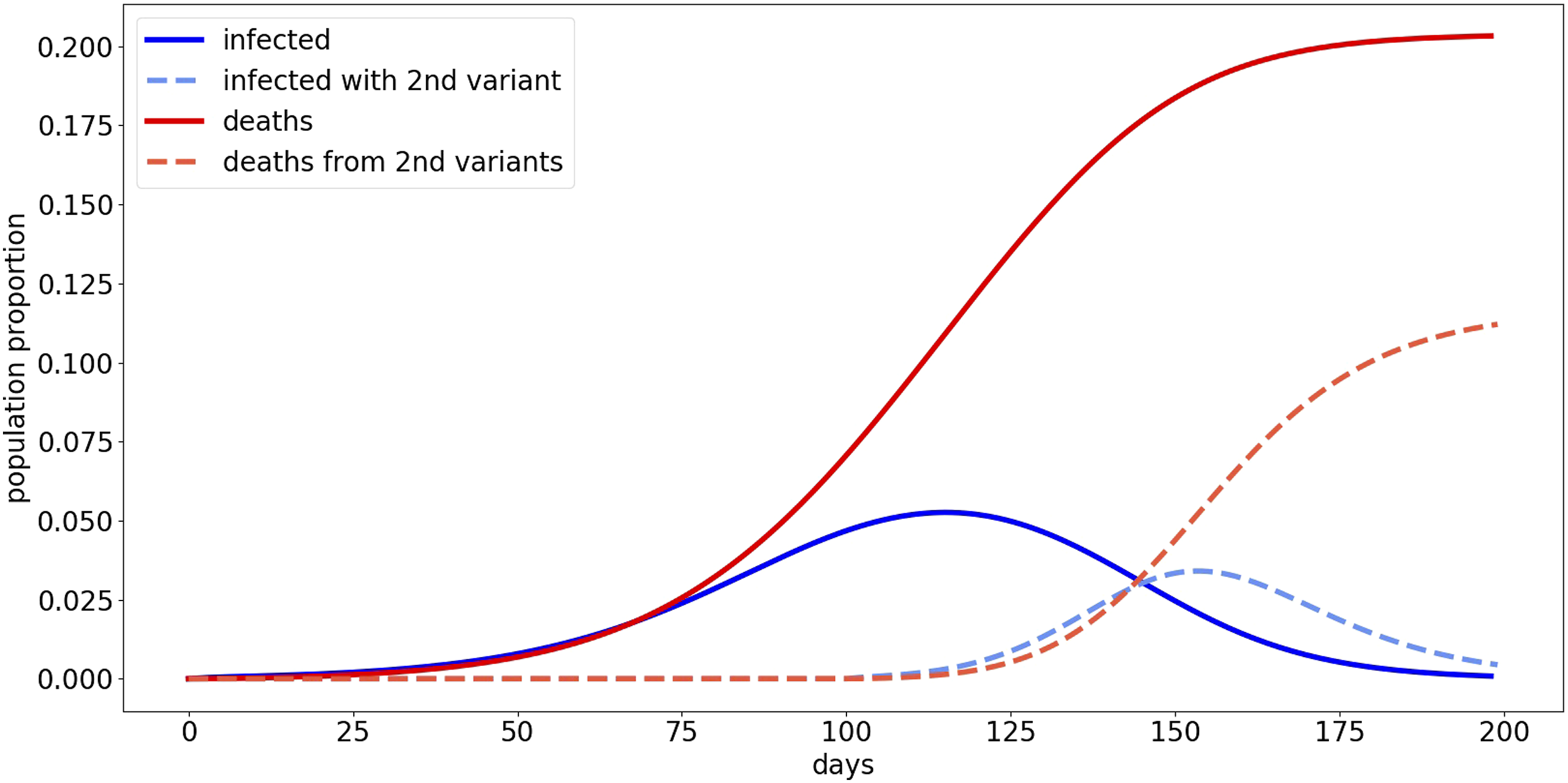
Footnotes
Declaration of Conflicting Interests
The author(s) declared no potential conflicts of interest with respect to the research, authorship, and/or publication of this article.
Funding
The author(s) received no financial support for the research, authorship, and/or publication of this article.
