




Abstract
The purpose of this study was to conduct the first usability inquiry of a gamified, behavior change theory-guided mobile app PuzzleWalk for increasing physical activity and reducing sedentary behavior in adults with and without autism spectrum disorder (ASD). Eighteen adults with and without ASD participated in a mixed-methods study that consisted of cognitive walkthrough, system usability assessment, and qualitative interviews. The results of the system usability testing indicated satisfactory quality of the PuzzleWalk system that can be readily applicable to both adults with and without ASD. Several notable issues were identified from the qualitative interviews that address critical insights into unique health and social needs in adults with ASD. Future work is warranted to examine the long-term effects of the PuzzleWalk system on increasing physical activity and reducing sedentary behavior in adults with and without ASD in real-world settings.
Introduction
Physical inactivity is an emerging health concern in individuals with autism spectrum disorder (ASD)1,2 whose primary symptoms are pervasive social deficits and restricted behavior patterns and interests. 3 Limited research highlights that individuals with ASD experience numerous comorbid lifestyle-related diseases such as obesity, hypertension, and type 2 diabetes which are primarily caused by physical inactivity and sedentary lifestyle.4 –6 Moreover, the level of physical activity (PA) in this population reduces with age, and this phenomenon tends to persist into their adulthood.1,7 Nonetheless, adults with ASD have largely been overlooked in the autism literature, and the lack of affordable, preventive health interventions worsens the already poor health profile of this population.8,9
Mobile technologies using smartphone apps present an accessible and time- and cost-effective way to facilitate PA behavior change in the general population.10 –12 Numerous studies have demonstrated the potential of mobile technologies in enhancing self-monitoring and improving PA and sedentary behavior (SB) in diverse groups of the general population, such as overweight adults and sedentary office workers.11 –17 Meanwhile, the evidence supporting the long-term effects of mobile health apps for those with ASD is scarce due to the lack of longitudinal studies 18 and heterogeneity of cognitive abilities of individuals with ASD that hinder research integration. 19 Nonetheless, the use of mobile technologies has been emerging and moderately effective in improving educational outcomes, social skills, play, and other behavioral symptoms in individuals with ASD.18,20 –22 There exists a mobile health system designed to improve physical fitness and fundamental motor skills of children with ASD using alternative visual communication methods, however, the system is limited to children and requires substantial assistance of a caregiver or an instructor for proper execution. 23 An accessible and affordable mobile health intervention tailored to the unique needs of adults with ASD in real-world settings is a novel way to address the health disparities in this population and is worthy of further investigation.
Incentivizing PA using gamification techniques in particular has strong potential for increasing PA and reducing SB in adults with ASD. Gamification has been immensely popular in commercial PA and health mobile apps for the past decade.24,25 The tactic of the gamified PA apps is to leverage animated visuals, behavioral incentives, and engaging storylines to yield positive health behavior change.26 –28 A recent comprehensive review study revealed that, although the majority of existing gamified mobile health systems lacks the adherence to theoretical guidelines or industry standards, gamification still creates impactful outcomes for increasing behavior change motivation in an unobtrusive way. 25 Lee and colleagues 29 found that playing games was one of the dominant purposes of smartphone use in adults with ASD, which likely leads to an increased time spent using smartphones and may also be associated with increased sedentary time. 30 Given the stationary form of smartphone use, it may be crucial to transform smartphone usage time into more healthy and active time by leveraging gamification features to elevate intrinsic motivation for PA participation.14,31,32
Mobile apps with gamification features present an innovative opportunity for increasing PA and reducing SB in adults with ASD while addressing a prevalent health disparity in this population segment. Using a mixed-methods approach, we aimed to (1) assess the system usability of a gamified, PA-promoting mobile app PuzzleWalk developed by the research team, (2) ascertain participant perspectives of technology use, PA, and SB in adults with ASD, compared to adults without ASD, and (3) examine possible differences in perceived evaluation of system usability, technology use, and PA participation between the two groups. This study focuses on autistic adults with typical cognitive function in that the proposed usability inquiry requires appropriate judgment and comprehension for app use in subjects. Since we assumed that the perceived usability on PuzzleWalk in adults with ASD might differ from that of the general population, adults without autism diagnosis were involved in the study as a baseline comparison group. The focus on increasing PA and reducing SB is timely as these are critical health indicators that can improve overall health in the underserved population of adults with ASD.
Methods
Iterative mobile health design inquiry
A gamified behavior change app PuzzleWalk was developed to increase PA and reduce SB in adults with ASD following a participatory, user-centered development process, including needs analysis, literature review, and prototype design. 26 Specifically, we followed the modified version of the IDEAS (Integrate, Design, Assess, and Share) framework in which evidence-based ten phases (e.g. analysis of target users, behavioral theory evaluation, and pilot studies) guide the development process of digital health behavior change interventions. 33 PuzzleWalk incorporates behavior change techniques, a theory-based method for promoting healthy behavior change by leveraging psychological determinants, such as enjoyment, autonomy, continuation desire, perceived competence, and intrinsic and extrinsic motivation. The example features include comprehensive user guide, self-monitoring of target performance, contingent rewards, and goal-setting. 34 The app aims to address a significant gap in preventive health interventions for adults with ASD who have typical cognitive functioning at age-level, but still struggle with adopting an active lifestyle by embracing unique characteristics and needs of this population such as avoidance of social situations 35 and preference in visuo-spatial interaction through technologies. 36 PuzzleWalk employs ‘spot the difference’ puzzle games as a gamification strategy and consists of 660 major city images around the world. The design principle is a conversion algorithm between daily walking steps and puzzle-solving game time, which is an important distinction compared to other commercially available health/fitness apps. The app automatically converts accumulated daily steps to game time, so users are motivated to engage in walking activities to earn more game time for puzzle games (see Figure 1). The results of an iterative inquiry on the PuzzleWalk system development have been reported elsewhere. 32
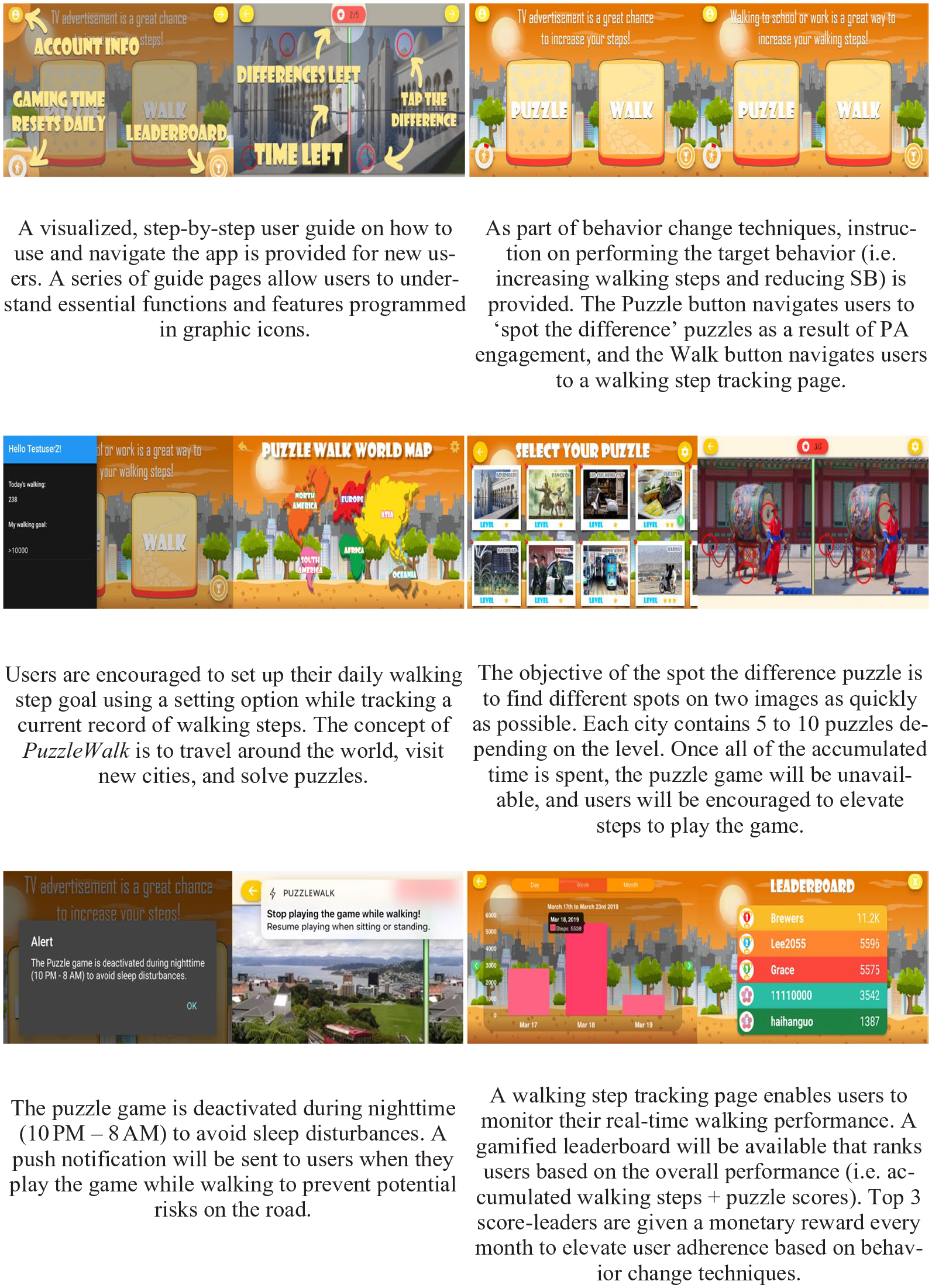
Visual Prototype and Descriptions of Key Functionalities of PuzzleWalk.
Participants
Nine adults aged ⩾18 years and diagnosed with ASD were recruited through local and regional autism support groups. Additionally, nine adults without ASD were included in the study as a comparison group to examine possible differences in usability perceptions and perspectives on technology use, PA and SB. Subjects with regular access to a supported smartphone device (Android 4.4+ or iOS 9.0+ operating system) were eligible for study participation, and those with cognitive or mobility impairments (e.g. intellectual disability, wheelchair users etc.) were excluded from the study in both groups. A screening interview was conducted with each participant with ASD to assess the levels of language competency and any potential cognitive impairments by asking a series of questions relating to study requirements, protocol, and demographic information. All participants provided written consent prior to study participation. Institutional Review Board at Indiana University approved this study.
Procedure
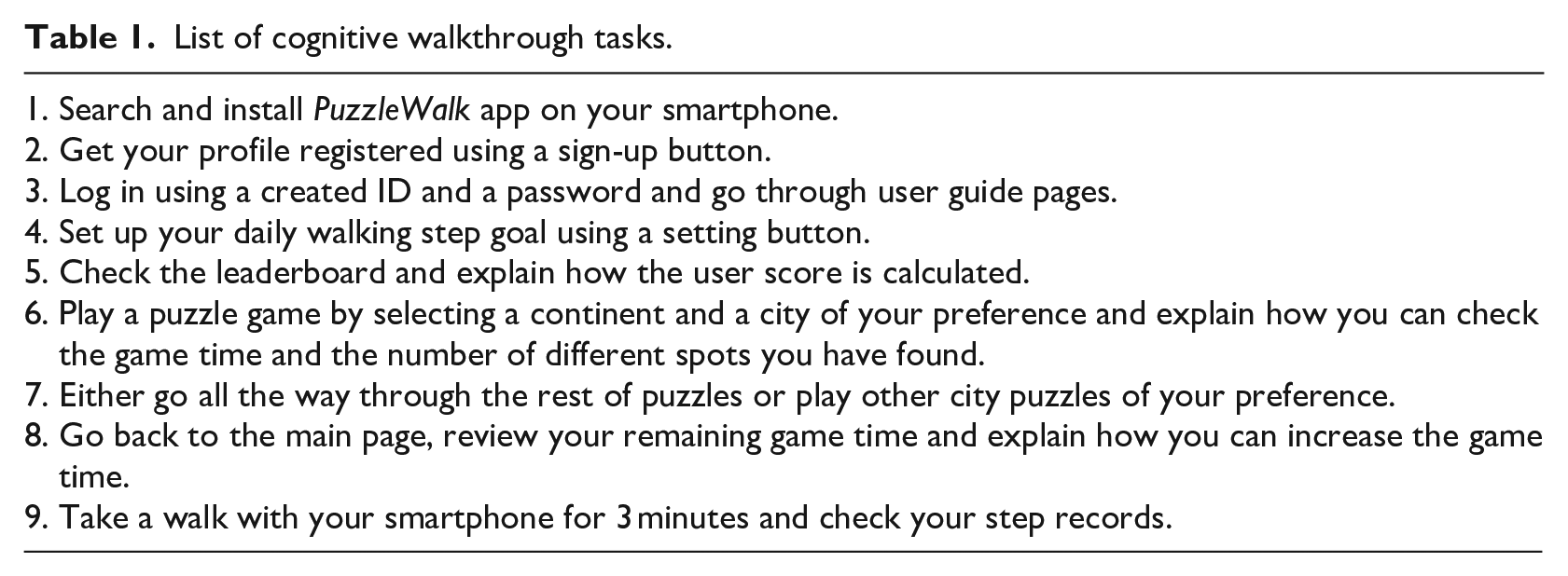
Usability inquiry of PuzzleWalk was conducted at a subject-specified site (e.g. subject’s residence or researcher’s laboratory) with each participant. All participants were familiarized with the study protocol prior to starting the assessment and interview. Participant demographics including autism diagnosis age, height and weight information, information on medical/therapeutic history (ASD group only), and smartphone device information were collected using a self-report method. Participants were asked to select a device (Samsung Galaxy S6 or iPhone 6s) of their preference for usability testing and participated in a cognitive walkthrough. Specifically, participants were instructed to follow a researcher’s nine task prompts about the app interface navigations and primary functionalities while narrating their thoughts through a think-aloud protocol. 37 The cognitive walkthrough tasks were provided with special emphasis on comprehensibility and replicability of each interface of the app (i.e. app search and installation, profile registration, login, step goal-setting, leaderboard, interface comprehension, level of puzzles, step-game time conversion, and walking performance tracking), as well as perceived valuation of the app (see Table 1). To evaluate the easiness of app use, a question “How easy or difficult was a certain task?” was asked once each task had been completed, and participants scored the level of each task using a five-point Likert scale in which 1 indicated “Very difficult” and 5 indicated “Very easy”. 38 Participants then completed a validated usability assessment questionnaire, the 10-item System Usability Scale (SUS), 39 based on their experience with the app. The total of 10 item scores ranges from zero to 100, with a rating of 68 or higher considered “above average” of the product usability. 40 Additional questions regarding the ease of use, competency, and learnability were asked to examine the functional expectations and limitations of PuzzleWalk on promoting regular PA participation in people with and without ASD. Individual interviews were sequentially conducted with participants to better understand the use of diverse technology devices and PA participation. Special attention was paid to their (1) technology preferences, (2) benefits and challenges of technology use, and (3) impact on PA and SB. Each interview session was audio-recorded and transcribed for analysis.
List of cognitive walkthrough tasks.
Data analysis
Descriptive and inferential statistics were used to analyze the demographic characteristics and the results of the task of easiness and the SUS assessments. The small sample size and non-normal distribution of data were addressed by using Mann-Whitney U tests to determine differences of task of easiness scores between the ASD and non-ASD groups. Collected height and weight responses were used to calculate body mass index (BMI) of each participant, which is classified into three different levels according to the obesity classification guidelines (i.e. normal: 18.5–24.9 kg/m2; overweight: 25–29.9 kg/m2; obese: >29.9 kg/m2). 41 The IBM Statistical Package for the Social Sciences, Windows version 24 was used for quantitative data analyses (SPSS Inc., Chicago, IL, USA). Peer debriefing, triangulation, and searching for negative cases were executed to build the credibility of qualitative data analysis. 42 Thematic analysis was conducted to identify similarities and patterns of the recorded responses, and emergent themes were discussed and iterated until a consensus is reached among two independent researchers by resolving conflicting questions and refining initially categorized themes. 43 Affinity diagrams were constructed based on the annotated codes to identify common themes across multiple interviews. 44 Thematic categories from cognitive walkthrough and individual interviews were used to complement the qualitative inquiry. Representative response quotes were supplemented under the relevant core themes.
Results
Descriptive demographic
The average years of age for ASD and non-ASD groups were 27.9 (SD = 6.1) and 26.9 (SD = 6.8), respectively. A total of 88.8% of participants in ASD group were overweight or obese, while 66.6% of non-ASD participants were overweight or obese. On average, ASD group participants spent 86.1 min/day (SD = 67.3) and non-ASD group participants spent 150 min/day (SD = 82.2) using their smartphone, respectively. More than half of the ASD group participants reported that they were diagnosed with ASD during their early childhood (55.6%), while five (55.6%) reported comorbid medical conditions, such as depression and learning disorder. Detailed demographic information is presented in Table 2.
Participant demographics.
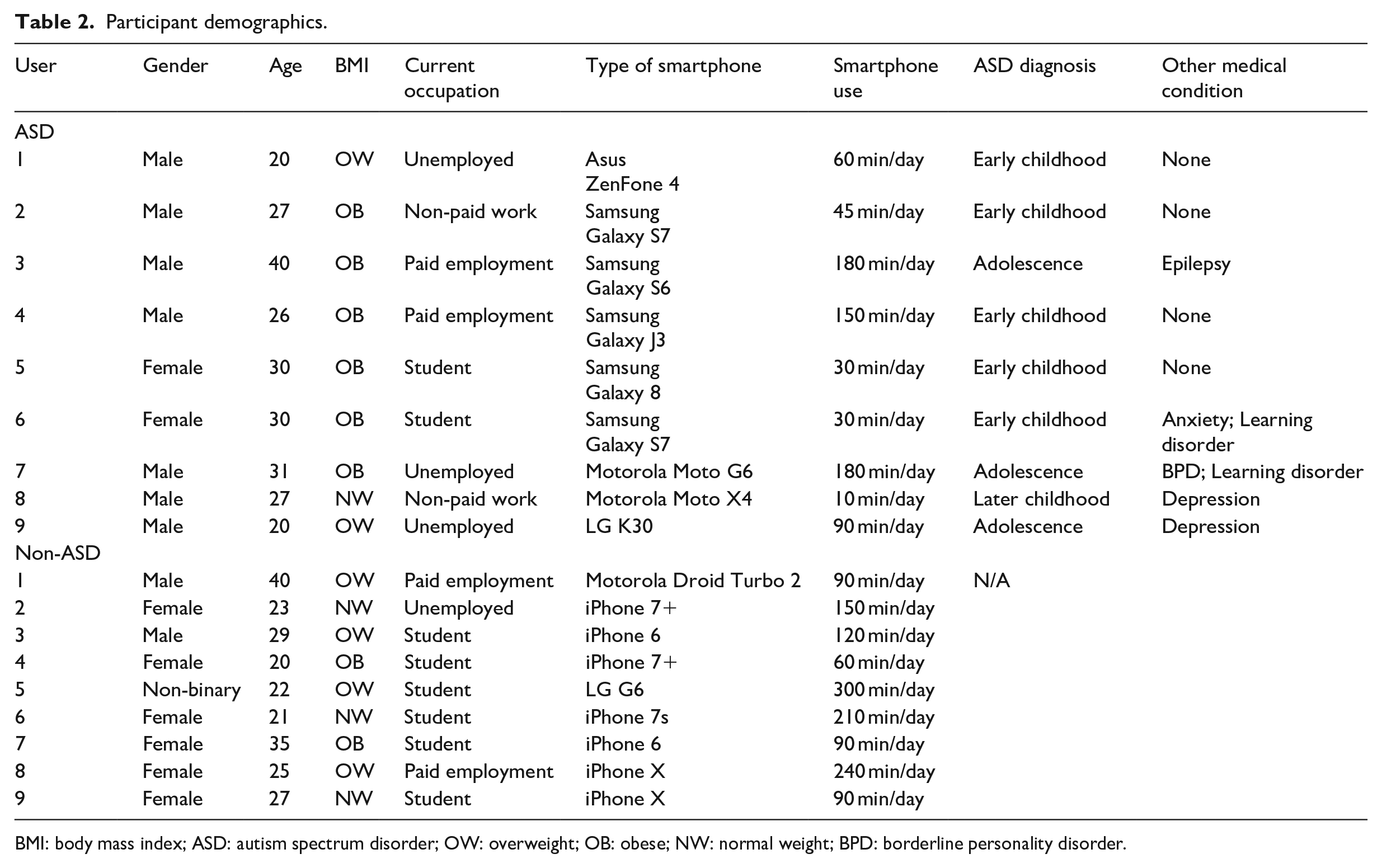
BMI: body mass index; ASD: autism spectrum disorder; OW: overweight; OB: obese; NW: normal weight; BPD: borderline personality disorder.
Tasks of easiness and system usability results
Mann-Whitney U tests on tasks of easiness revealed that the task scores for the two groups were similar, and most test scores were not statistically significantly different between ASD and non-ASD groups (see Figure 2). Out of 45 possible maximum scores, the ASD group recorded 38 (median), while the non-ASD group recorded 34 (median) for the total of nine tasks of easiness scores (U = 60, z = 1.739, p = 0.094). Both ASD and non-ASD group participants reported that the features of PuzzleWalk were generally “Very Easy” to understand and use, but the difficulty of puzzle games and comprehension of user interfaces were indicated as “Moderately difficult” by the non-ASD group. (U = 41, z = 0.047; U = 46, z = 0.528, both p > 0.05). Only goal-setting task scores were significantly different between the two groups (U = 66, z = 2.510, p = 0.024). Higher values represent greater easiness of use and detailed scores of each task of easiness are presented in Figure 2.
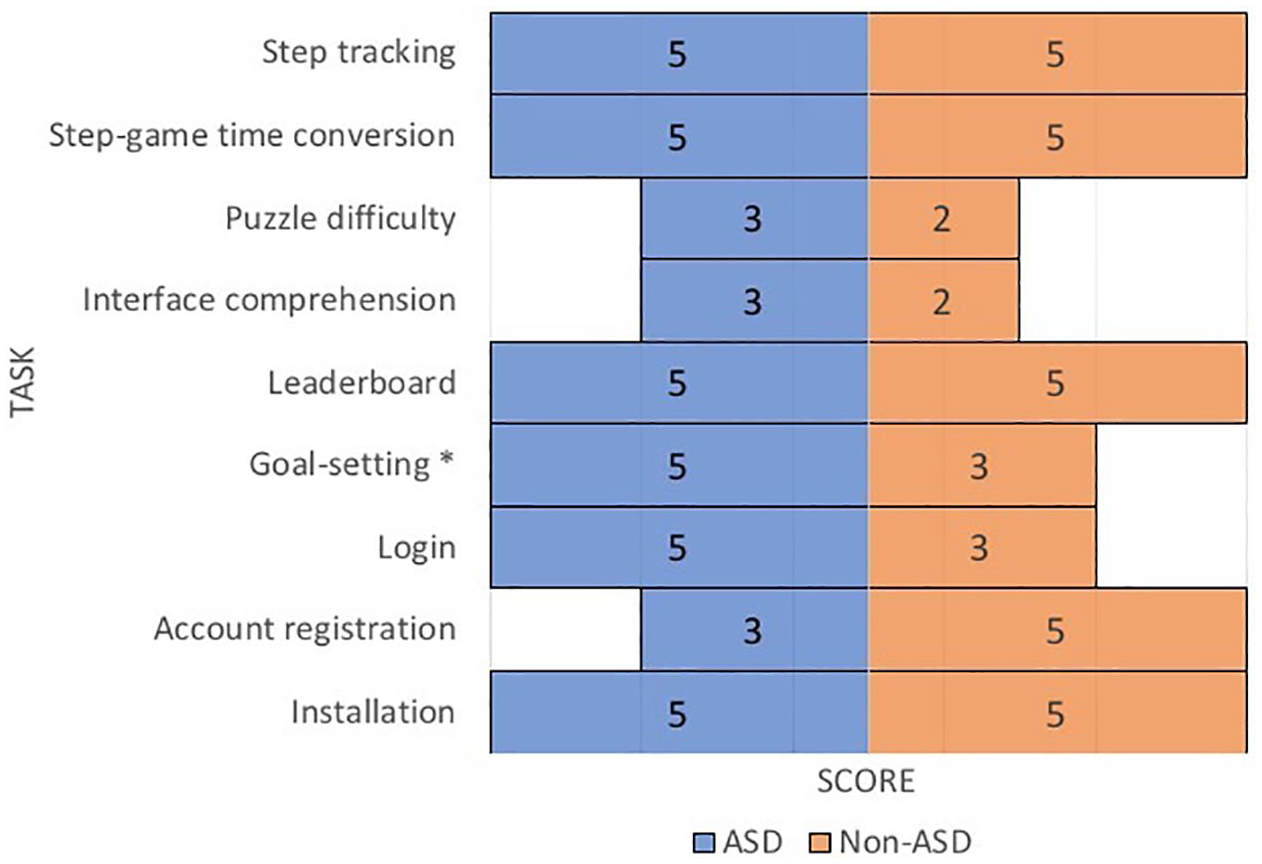
Comparison of tasks of easiness scores between ASD and non-ASD groups.
The average scores of the SUS for the ASD and non-ASD groups were 85.9 (SD = 6.4) and 81.9 (SD = 14.5), respectively, indicating an excellent user satisfaction for the PuzzleWalk as a mobile health intervention. Among 10 system usability items, there was no average measure that scored below 3 out of 5 in both groups. According to open-ended responses regarding user satisfaction toward the current mobile system, participants in both groups commonly indicated colorful designs, the idea of puzzle games integrated with PA, and the concept of world travel as their favorite aspects of the app. Still, the relatively difficult level of puzzles was noted as a thing that needs improvement. Although there exist three different game levels according to the difficulty and numbers of puzzle, a number of subjects in both groups commonly perceived that the puzzle game was somewhat difficult regardless of the game levels. All participants indicated that they were interested in using the PuzzleWalk in the future except for one participant in each group. A participant with ASD noted that the puzzle game is not his interest, while the other participant in the non-ASD group indicated his already high self-motivation for regular PA participation as a reason for his disinterest with the app.
Think-aloud dialogs from cognitive walkthrough
While executing a think-aloud protocol for the cognitive walkthrough with the ASD group, valuable insight was gained with regard to the importance of simple instructions and visual cues for people with ASD. For example, two participants noted:
“We have a hard time at comprehension, so sometimes we need to read instructions several times.”
“For the step goal setting, a visual cue, like highlighting the number or turning green in the background, would help to understand that the number of steps I try to select is actually selected.”
Also, we observed that, unlike those with ASD, the non-ASD group participants tend to pay minimal attention to user guide pages without reviewing the instructions carefully, expecting that they could understand the necessary functionalities as they practice and experience with the app.
“You will use points? Steps? I cannot remember the penalty. I don’t remember, I will figure it out while playing.”
“People don’t want to read much when you download an app. You just think I will figure it out.”
Meanwhile, the ASD group participants expressed strong interests in visualized interfaces of the app. Still, some felt the puzzle games were difficult to solve, which necessitates the app to involve more achievable levels of puzzles.
“I like that the pictures are different than usual scenic pictures on these kinds of games. The colors are really nice, and it feels like we are learning about another culture.”
“The level of difficulty of the puzzle was hard. Bigger images would help or more obvious spots especially for level 1.”
Qualitative interview results
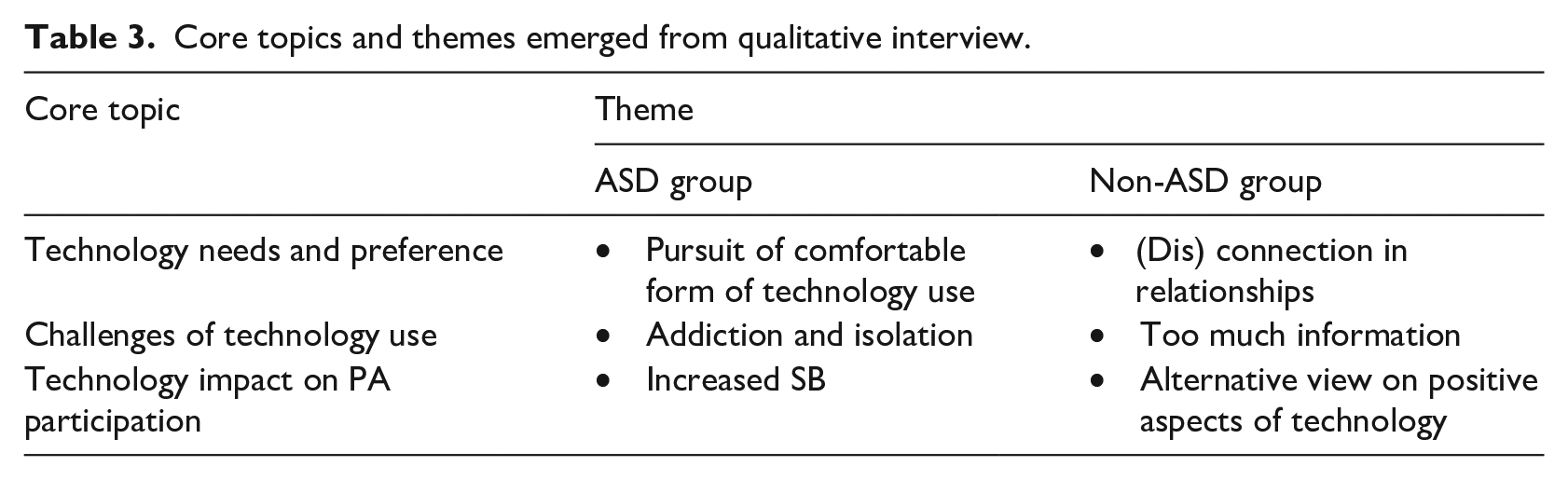
Our qualitative interviews focused on understanding the perspectives on technology use and its impact on SB and PA among group participants. The emerged themes were compared between ASD and non-ASD groups according to the categorized core topics (see Table 3).
Core topics and themes emerged from qualitative interview.
Technology needs and preference
The majority of the ASD group participants considered technology as a tool that comfortably fulfills their interests and entertainment. However, they also expressed that the affinity toward technology use is rooted in their social preferences. For example, participants with ASD noted:
“Because we are less social and go out less, so we have more time to do things with it (technology devices). Also, people on the spectrum tend to have particular interests which can be pursued on the Internet. Even as far as carriers go, people on the spectrum often become coders.”
“I am on computer a lot. I use it for my search and entertainment. I spend a lot of time on Twitch (* a live streaming and chatting platform for gamers). . . . We communicate verbally through mic and chat. I do not care about the physical connection. I have difficulty reading people. I feel a little bit more comfortable talking with these people. I do not need both; Real people and chats.”
Meanwhile, non-ASD group participants focused on social media that maintains and expands their relationship boundary across the online environment while experiencing or being conscious of possible side effects of social media use. For example, non-ASD group participants stated:
“I spend more time than I want to, just scrolling on social media because I don’t know what to do with that time. Sometimes, Facebook is the worst for me because people post pictures about their vacation that I can’t afford it right now. I get a little resentful, so I realized I need to get off Facebook.”
“It allows me to talk to people that I wouldn’t see otherwise. And the people I know in person, I don’t really talk with them on social media, which means I probably have two different relationships. I try to be as authentic as I can, but I worry that people that will recruit me (for a job) in a soon future, would see my content, so I don’t swear as much. I try not to be controversial.”
Challenges of technology use
Some of the participants in the ASD group expressed that the technology, especially computer games, is addictive and often makes them experience irregular sleep routines and isolation from their family group. For example, participants with ASD expressed:
“(I) sleep too much because I stay up all night playing computer games. I am addicted to them. I know it is bad for my health.”
“When I isolated myself in my room playing games, they (family) are like, why are you staying in your room when you could spend time with us? Sometimes technology disconnects me with other people.”
While the addiction issue was stated, the non-ASD group participants also felt that they receive too much unnecessary information or news from diverse channels of technology. For example, two participants in the non-ASD group noted:
“I don’t spend much time on it (social media) but still random thoughts pop in the head, but they are not necessary even if it’s entertaining. Sometimes because of the news, it can be very negative and so depressing. Too much depressing news.”
“It (technology) gives you too much information like stalking someone which causes unnecessary anxiety.”
Technology impact on PA participation
Concerning the impact of technology use on PA participation, ASD group participants felt that the technology use increased their SB and that they lack the knowledge and options to address this issue. For example, participants in the ASD group stated:
“I do spend a lot of time at the computer so I’m just sitting there. It doesn’t help me to be more active. I don’t move around like I should be doing.”
“I think that my sedentary behavior has been increased by the computer, but I don’t think it’s the worst thing in the world. I don’t know what I would do without it, because I don’t think I would have a lot of options for entertainment or social needs. If I lived in a different place or lived a different type of life. . . But for the moment it’s all I really have.”
Similar to the ASD group, some of the non-ASD group participants also indicated that their SB tended to be increased by technology use. However, they commonly altered their view and focused more on positive aspects and benefits of technology, such as tracking and managing their PA participation. For example, non-ASD participants noted:
“I look at my phone laying down in my bed, but (with a fitness app,) I can track what I eat, my steps, and I can go for walks while talking with someone. . . . I don’t really care but it keeps me in check and increases my physical activity.”
“Sometimes, technologies prohibit me to be healthy, but it also helps because if I don’t have a lot of steps in (my smart watch), I may think Oh, it’s maybe time to go to the gym.”
Discussion
This study demonstrates how adults with and without ASD perceive and evaluate the gamified, behavior change techniques-based mobile app PuzzleWalk as a potential mobile health intervention to increase PA and reduce SB, as well as their perspectives on technology use and PA participation. The findings provide critical insight into adults with ASD in terms of their behavioral aspects of technology use and PA participation, in comparison with adults without ASD. Applicable design insights are discussed for the future development of mobile health interventions that should take the unique behavioral and social needs of adults with ASD into consideration.
Visual attraction and system usability
Growing evidence has supported that people with ASD prefer and selectively attend to visual stimuli.45 –48 Our participants with ASD also showed high interest and preference on animated designs of the system while disliking descriptive written instructions. In our study, both group participants were satisfied with visually attractive user interfaces that positively enhanced their desire and motivation to explore the app’s system. In terms of perceived usability, although the level of puzzle difficulty was pointed out for further improvement, all group participants commonly expressed the easiness of the system to comprehend core features and functionality of the app. Also, given that users’ satisfaction of the system is strongly correlated with their perceived aesthetics and usability, 49 the results of the high SUS scores from both groups indicate the readily applicable quality of PuzzleWalk that can be adopted by people with and without ASD. Interestingly, although the visual preference and the easiness of the system use were similarly appreciated among the two groups, the propensity for the system comprehension varied among participants with and without ASD. Those in the non-ASD group paid little attention to user guide pages and perceived that they would figure out the necessary functionality of the app by repeatedly experiencing the system. On the other hand, participants with ASD strongly wanted to review the guide pages and praised image-based and straightforward instructions. This finding is in line with the characteristics of those with ASD in which these individuals tend to follow rules, routines, and directions.3,50,51 In that sense, it is recommended that future mobile health interventions equip with visually attractive interfaces, ease of functioning, and simple user instructions in the system to minimize comprehension barriers in adults with ASD. Also, considering the varying capacity and skill sets for playing games in gamified health interventions, it will be essential to provide users with achievable game challenges toward increased adherence and successful outcomes of health behavior.
Feeling disconnected in a connected world
According to the interviews, adults with ASD actively adopt current technologies such as smartphones or computers as an alternative form of social communication and connection, while also avoiding traditional face-to-face interactions. This finding is supported by past HCI studies that found an association between the use of technologies and online social interactions in individuals with ASD. A study on high-functioning adults with ASD revealed that various social needs and supportive relationships are created and fulfilled via internet-based online communities. 52 Another research study focused on those with autism who regularly play Minecraft, a game that provides users with virtual space to build and accomplish user-centered game tasks. 53 The findings indicated that Minecraft users with ASD tend to create their own social communication ecology in the virtual world. 54 It is obvious that the online environment provides individuals with ASD with a relatively comfortable environment to communicate with others without concerns about reading complex and implicit conversational cues, which is typically difficult for those with ASD. 55
Technology immersion can also pose significant social and health problems in adults with ASD. Unlike the non-ASD group participants, some adults with ASD noted that their daily routine is overwhelmed with technology use that often leads them to become isolated and disconnected from significant others, and engaged in prolonged SB. The social skill deficits in the ASD population generally lead to social isolation, and this relationship has been well documented in the literature.8,35,56 –59 Current technologies such as smartphones and computers may play an unintended role in increasing social isolation among adults with ASD in offline settings. Moreover, as supported in the general population, excessive technology use can result in high levels of SB60,61 and consequent adverse health outcomes such as obesity.62,63 Although it is premature to presume that there is a causal relationship between technology use, social isolation, and increased SB, it is imperative to address health interventions that emphasize both offline social interactions and achievable behavior change strategies for reducing SB in adults with ASD.
Lack of awareness of mobile health technologies
While the non-ASD group actively utilized mobile health technologies for tracking PA records and self-encouraging healthy behaviors, the ASD group lacked the knowledge of and interest in technology as a potential tool for health management in spite of their positive feedback on PuzzleWalk use. These results may stem from a core behavioral symptom of autism; restricted and repetitive behaviors, which are often developed into pre-occupations or intense and narrow interests.59,64 The circumscribed interest patterns in individuals with ASD would result in narrow boundaries of cognition and perceptual interactions. 65 Also, this symptom can lead to an indifferent attitude toward health management through mobile technologies, even if they are often attracted to technology devices due to its consistency and low social burden. 66 The perceived attitude of indifference regarding mobile health technologies may also be related to financial limitations often present in the ASD population. Although income information was not gathered in the current study, research has been consistent that the employment status is generally low in adult with ASD, 67 and young adults with ASD have the lowest employment rates compared to adults with other disabilities. 68 Our participants with ASD owned comparatively cheaper mobile devices than those without ASD. Smartphone brand and device preference can solely drive ownership, but financial constraints must be considered in adoption and use of mobile health technologies as a health management tool in those with ASD. Future development of mobile health interventions should consider the unique needs and restricted interests of adults with ASD to create appealing design features for them to voluntarily engage in the system.
Implications for gamified health intervention design
The findings of this mixed-method study demonstrate a promising usability of PuzzleWalk app as a potentially effective health intervention tool to address preventive health in adults with ASD. Although it is premature to conclude the intervention effectiveness of PuzzleWalk on increasing PA and reducing SB, this study demonstrated a novel approach for the development of the user-centered mobile health intervention using gamification and behavior change techniques. There are several implications for future work. First, the aim of the PA or SB intervention design should focus on long-term behavior change and sustained user engagement. 69 The evidence is still scarce to support the use of mobile health apps for long-term behavior change in that the majority of the available studies performed cross-sectional evaluations.70 –72 Also, although it is unlikely that the game is satisfiable for every user, the gamification elements should provide users with achievable challenges to maintain or enhance user interests and adherence. Lastly, given the addictive nature of mobile device use, the gamification-embedded interventions should consolidate effective strategies to prevent excessive use while securing user safety. As shown in PuzzleWalk, the gaming features can be deactivated during nighttime to avoid sleep disturbances in users. When games are incorporated with physical activities, a push notification can be considered to raise awareness of potential risks that users may encounter on the road. 73 Our future work includes the assessment of the preliminary efficacy of PuzzleWalk on increasing PA and reducing SB in adults with ASD in real-world settings. Non-ASD individuals with mental health issues (e.g. anxiety and depression) can be included in the study as a comparison group to examine potential differences in intervention effects on PA and mental health between groups.
Strengths and limitations
The inclusion of adults without ASD as a comparison group and the mixed-method study design are primary strengths that allowed us to objectively compare group differences in PuzzleWalk system usability and better interpret underlying perspectives toward technology use, PA participation, and SB between the two groups. Clarifying that adults with and without ASD express different needs in terms of understanding and assessing user interfaces can be important for developing any mobile technology that includes those with ASD. Further, highlighting the contrast that technology provides not only an important social connection, but also negative health behaviors (e.g. high SB and low PA), is critical to leveraging mobile health interventions as a tool that can support positive social interactions and health behaviors in adults with ASD.9,74 The relatively small sample size of autistic adults without co-occurring cognitive impairments (e.g. intellectual disability) makes it difficult to generalize the findings to the overall autism population represented by a wide variety of characteristics. 3 Adults with ASD and intellectual disabilities will require different study design considerations and adaptations for independent use. Future work is needed to examine if there are differences in long-term perceptions and usability evaluation based on age groups and technological adaptability in those with and without ASD in real-world settings. Youth with more technological experience, particularly in mobile apps, could demonstrate advanced system comprehension, as well as longer adaptability. In addition, future work on mobile health interventions targeting adults with ASD should be tailored to visual attraction of the system, as well as unique social desires and preferences of these individuals for successful outcomes.
Conclusion
The purpose of this study was to conduct the first mixed-methods, usability inquiry of a gamified, behavior change theory-guided mobile app PuzzleWalk for increasing PA and reducing SB in adults with and without ASD. The PuzzleWalk system was deemed sufficiently satisfactory and functional to be adopted as a mobile health intervention in both groups, but the game difficulty needed to be adjusted for easier options at lower levels of play. Adults with ASD required ease of functioning and visually attractive interfaces to comprehend and adopt the mobile system, markedly different from those without ASD, which is a crucial design element for this population segment. Careful consideration is warranted in terms of reducing social isolation and sedentary behavior when using technology as a health intervention tool for adults with ASD to not predispose these individuals to risk for developing chronic diseases. Additional research is needed to better understand the unique social preference, characteristics and impact of technology use, and preventive health in people with ASD.
Footnotes
Declaration of conflicting interests
The author(s) declared no potential conflicts of interest with respect to the research, authorship, and/or publication of this article.
Funding
The author(s) disclosed receipt of the following financial support for the research, authorship, and/or publication of this article: This work was supported by the Indiana University Collaborative Research Grant Program.
