




Abstract
Twitter has the potential to optimize research conduct, but more research is needed around the nature of study-related tweets and strategies for optimizing reach. In the context of our caregiving study, we aimed to describe the nature and extent of study-related tweets, the extent to which they were shared by others, and their potential reach. To do so, we conducted a secondary analysis of our Twitter recruitment. We aggregated and categorized study-related tweets and analyzed the reach of the 10 most retweeted tweets. Results indicated that of 71 caregivers, 27 were recruited via Twitter. General recruitment tweets were most-shared by users. Tweet reach ranged from 5273 to 62,144 users. Twitter caregivers were demographically comparable to non-Twitter caregivers but had higher Internet proficiency and fewer children. Overall, using a personal Twitter account can expand the reach of study recruitment. Future research should compare different recruitment strategies and explore characteristics that may challenge the heterogeneity of Twitter samples.
Introduction
Social media for health research
In the current digital age, 88.5 percent of Canadian households, 81 percent of American households, and 85 percent of European households have access to the Internet.1,2 In 2014, the estimated worldwide use of social media, such as Facebook, Twitter, and YouTube, was 1.79 billion users, and is projected to rise to 2.44 billion users by 2018. 3 In the third quarter of 2017, Twitter had an average of 330 million active monthly users. 3 In light of these statistics and the fact that the Internet is an “everyday technology” for many, social media is gaining importance as a medium for conducting health research. Specifically, recruiting participants for health research can be difficult due to the costs and time associated with traditional recruitment methods (e.g. in person, postal mail, email, printed brochures).4,5 For this reason, many studies have identified social media as being valuable for recruiting research participants.6–8
Social media affords many recruitment benefits including: (1) cost-savings (due to reduced travel to various recruitment sites);9,10 (2) increased exposure through snowball sampling (i.e. participants can easily share the study with friends and acquaintances on social media, thereby promoting further participation); 9 (3) the ability to obtain a heterogeneous sample (e.g. geographically diverse);10,11 and (4) access to hard to reach or “hidden” populations (e.g. caregivers, those involved in illicit behaviors). 10 To date, Facebook has been the most widely accepted and used social networking site by academic researchers, 5 where recruitment has taken place via ads, fan pages, private messages, and groups.12,13 Facebook has been used most frequently and successfully to recruit young adult populations, illicit drug users, persons from the lesbian, gay, bisexual, trans, and queer (LGBTQ) community, and those with rare diseases. 5
Twitter for health research
Twitter is another social media avenue that has grown in popularity among researchers in recent years. Twitter has primarily been used as a source of “big data” due to the high volume of variable and publicly available data. 14 Due to the “real-time” nature of Tweets, Twitter is also seen as a good source of public health surveillance (e.g. to monitor discussions around HIV, or to track the spread of diseases in real time). 15 Although the use of Facebook for research recruitment has been widely described in the literature,6,7,16,17 Twitter-based recruitment has only recently begun to receive the same breadth and depth of attention.4,9,18–22
Nature and extent of recruitment tweets
Presently, tweets can only be 140 characters. However, Twitter has announced plans to increase the character limit to 280. 23 In either circumstance, there are many options and considerations that can contribute to the success of a recruitment tweet. These include the content of the tweet, the time and day the tweet is posted, the frequency of tweets, and the account the tweets come from.
It has been found that including a link in a tweet increases the probability that it will be “retweeted” (i.e. shared by others). 24 This is especially useful for web-based survey research where a direct URL to a study questionnaire can be included. 4 Researchers also have the option of targeting specific users by “mentioning” them in a tweet, which also enhances the chances of receiving a “retweet.” 19 The wording of a tweet is also important as the use of verbs (e.g. asking users to “retweet”) can increase the likelihood of individuals taking action.4,19 Very little research has investigated how to optimize Twitter-based recruitment, but one study suggested that posting tweets either early in the morning (before noon) or late in the evening (after 6 PM) can improve engagement. Furthermore, posting on Mondays and Wednesdays was found to be most successful. 4 The timing of tweets is a relevant consideration given that a tweet is likely to be viewed by users only if they are looking at their feed immediately after the tweet was posted. 25 A number of studies have provided insight into the frequency of study-related tweeting, with most agreeing that a significant time commitment is required to keep the account current, engage followers, and ensure exposure.4,21,25 The success of study-related tweets also hinges on the account the tweets come from. Studies have reported mixed opinions about the importance of the account holder, with some positing that the value and content of tweets is the most important factor 22 and others highlighting that the user’s “handle” should be aligned with the purpose of the study. 4 Generally speaking, researchers agree that an account should be active, trustworthy (either through use of a personal account or selection of an appropriate handle), and have many followers.4,19,21
Reach of Twitter recruitment
Since Facebook is predominantly meant as a personal profile site, 26 users often set strict privacy restrictions for their accounts. Conversely, Twitter is intended to be a platform for widespread conversation and the sharing of ideas. 26 For this reason, less than 10 percent of Twitter users make their accounts private.27,28 From a research standpoint, this provides less restricted access to potential research participants and facilitates snowball-type sampling through the “retweet” function.9,19 By retweeting, users can easily share study-related tweets with their own followers. Twitter users can also “mention” specific individuals in their retweets—making the sharing of information more tailored. 9 Since privacy settings pose less of a challenge to mentioning someone in a tweet or sharing a tweet with certain users, “tweet reach” is enabled by the public nature of Twitter. In one study, 21 percent of the tweets that the researchers posted were retweeted by other users, thereby aiding them in recruiting 5.3 times more than the target sample size. 19 In another study, two different Twitter recruitment approaches were implemented (one strategy targeting “high profile” users and another targeting “low profile” users). 4 In the “high profile” and “low profile” strategies, a single tweet had a reach of 249,836 users and 323,796 users, respectively. 4 These studies begin to elucidate that a single tweet by a researcher has the potential to be amplified and seen by thousands of potential participants.
Purpose and objectives
The purpose of this article is to expand the evidence base supporting the use of Twitter for health research recruitment. While the literature centered on Twitter as an avenue for research recruitment has undeniably expanded in the past few years, more work in this area is needed. Questions around the use of personal versus study-specific accounts and the nature/reach of study-related tweets remain. Using a study on caregiver peer support as a case example, we aimed to describe (1) the nature and extent of the study-related tweets that were posted, (2) the extent to which study-related tweets were shared by others, and(3) the potential reach of study-related tweets.
Methods
Design
The main study used mixed-method design to explore peer support exchange with a sample of adult children caring for aging parents. 29 We administered a web-based survey which concluded with an invitation to adult children caregivers to participate in a qualitative telephone interview that would provide further insight into their experiences with online versus in-person peer support. 30 This article presents an exploratory, secondary analysis of the Twitter recruitment process. Only the quantitative data collected were used to address the secondary research questions that were developed after study completion.
Participants
We aimed to recruit 80 adult children caregivers who were engaged in online or in-person peer support activities. To be included in the study, participants had to be: (1) 18 years or older; (2) able to read, write, and speak English; (3) assisting their parent with at least one activity once a week; (4) engaged in some form of peer support (e.g. in-person support group, online forum) at least once a month; and (5) providing care in Canada.
Convenience sampling strategies
Before we began recruitment, our academic institution’s research ethics board reviewed and approved the study in 2013, in accordance with the Tri-Council Policy for Ethical Conduct Involving Humans. Recruitment brochures were distributed through two national community care organizations as well as community support programs in four major Canadian cities (Toronto, Halifax, Calgary, and Vancouver). We posted study information in the discussion forum of a national hospice’s website and distributed study information through their virtual newsletter and social media channels. A Facebook page was also created and supplemented by paid advertisements. For the remainder of the article, these strategies will be referred to as “other recruitment avenues.”
Recruitment via Twitter
For this study, the first author used her personal Twitter account (largely unused prior to the study) for the recruitment process. We elected to use a personal (vs study-specific account) as we felt that this would facilitate a broader range of activity and interaction. Using a personal account allowed us to balance the frequent study-related tweets with other content that followers would find valuable.
In February 2014, the first author began sending tweets related to the study. All of the tweets included, at minimum, the link to the study survey as well as information about the target population (e.g. adult children in Canada caring for a parent and are engaged in peer support). General recruitment tweets were sent out where a “call for participants” was posted without targeting any specific users. These tweets typically included a request for a “retweet” (RT; Figure 1).

Example of a general recruitment tweet.
Additional tweets were sent by “mentioning” relevant stakeholders who would be willing to “retweet” the survey link (i.e. share the tweet with their own followers). In addition to caregiving- or health-focused users, influential users (e.g. media personalities, celebrities, political figures) as well as users with many followers were also asked to retweet the survey link.
We used hashtags such as #caregiving, #peersupport, #aging, and #elderly in order to increase the likelihood that a study-related tweet would be seen by users interested in these topics. Since the Twitter analysis was not planned prior to the study, we did not use a study-specific hashtag throughout the recruitment process (which would have facilitated aggregation and analysis of study-related tweets).
The first author also engaged with and reached out to a number of communities on Twitter that are defined by a certain hashtag. For example, #hcsmca (healthcare social media Canada) is a community of healthcare professionals, researchers, policy makers, patients, and caregivers that share information and engage with one another using the #hcsmca hashtag. Other communities that were tweeted at were #alzchat (Alzheimer chat) and #ElderCareChat.
Data collection
To address our research questions centered on the aggregation, extraction and analysis of study-related tweets, we used a third-party application called Twitonomy (www.twitonomy.com). Twitonomy allows you to log in via your Twitter username where it then analyzes your account activity (e.g. number of tweets sent, average tweets per day, number of your tweets that were retweeted, hashtag use, mentions, and links shared; see Figure 2 for sample output).
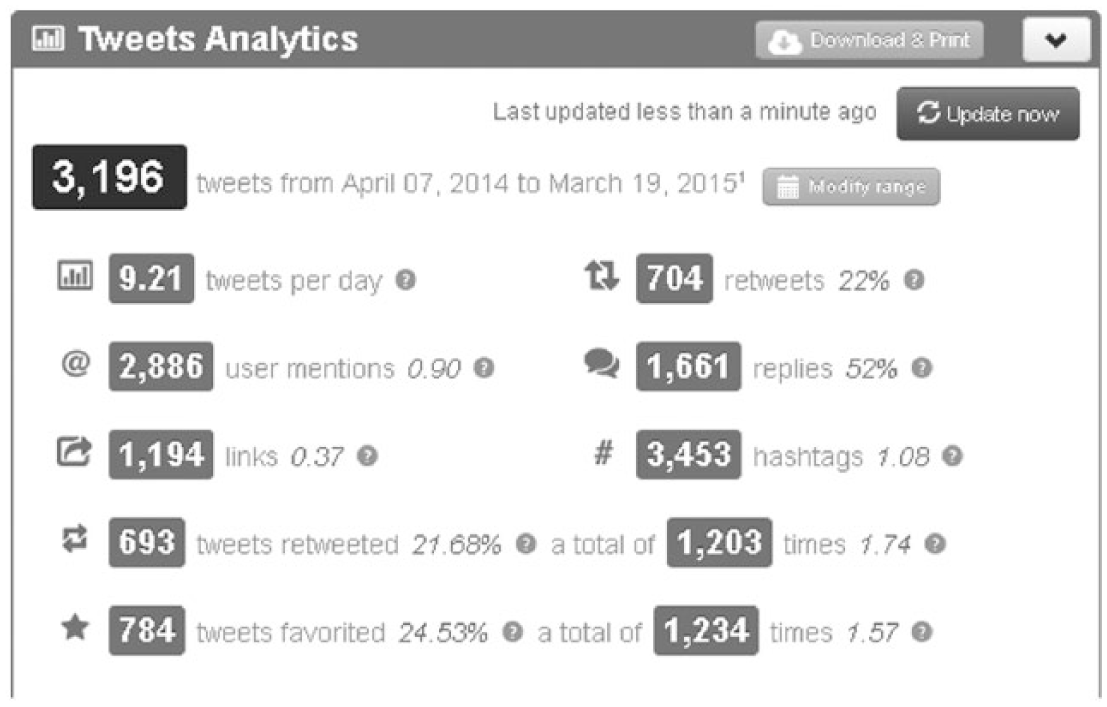
Sample of Twitonomy analytics.
It is important to note that Twitonomy analysis is limited to a user’s most recent 3200 tweets and 800 mentions. For this reason, we were only able to use Twitonomy to retrieve and analyze tweets beginning 1 April 2014. Recruitment, however, commenced on 1 February 2014 and therefore a manual extraction and analysis of tweets for the months of February and March 2014 was conducted using the first author’s Twitter archive (i.e. a history of all tweets from the account). Twitonomy is also limited to analyzing a user’s entire account and since the first author used her personal Twitter account (rather than creating a study-specific one) Twitonomy was not able to isolate the study-related tweets. In turn, Twitonomy facilitated the aggregation and extraction of tweets, but this list was then manually reviewed by a volunteer reviewer to identify tweets that were study-related (i.e. tweets that mentioned the study or responded to other tweets where the study was mentioned). The first author then went through the list a second time to ensure that no study-related tweets were missed.
In addition to aggregating and extracting the tweets, Twitonomy provided information on how many times a specific tweet was retweeted (i.e. shared by other users). This captured the percentage of study tweets that other users shared with their own followers, thereby increasing the exposure of the original tweet. Although Twitonomy provided information about the number of times a specific tweet was retweeted, it did not indicate which users posted the retweet. Without information about the number of followers a user has, we were not able to calculate the reach of the tweets. In turn, this limited our ability to use Twitonomy to address our second research question pertaining to the overall reach of study-related tweets. We were partially able to investigate reach by selecting the top 10 most retweeted tweets and cross-referencing them with www.retweet.co.uk. This online application provides a list of all users that retweeted a specific tweet.
Data analysis
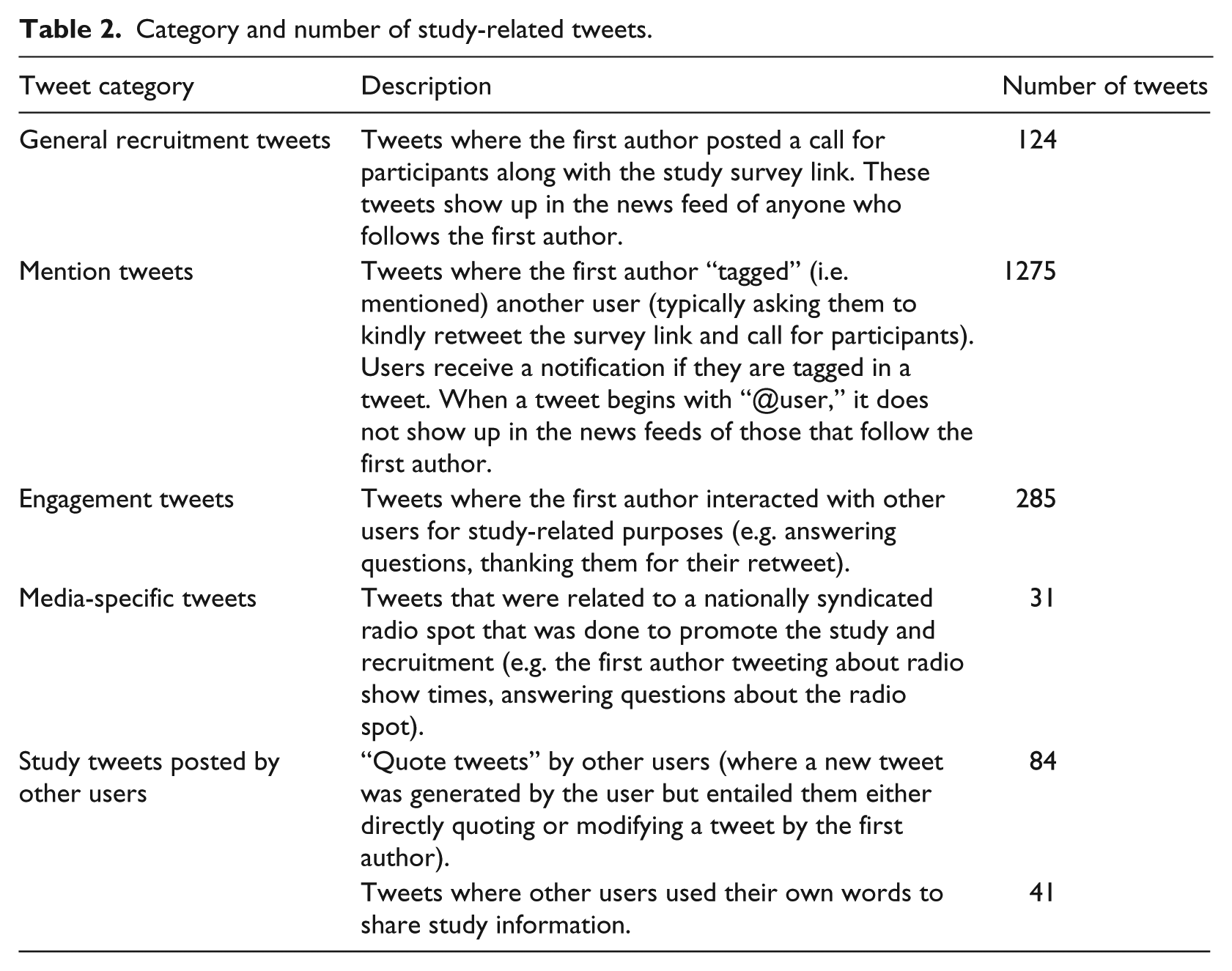
To describe the nature of tweets posted, we reviewed the study-related tweets aggregated by Twitonomy and classified them into one of five categories (Table 1). Using the list generated by www.retweet.co.uk, we were able to observe who retweeted each of the top 10 tweets, search for their followers and total this across all users in order to calculate the “reach potential” of each tweet (i.e. the potential number of users who may have been exposed to the original tweet as a result of the retweets).
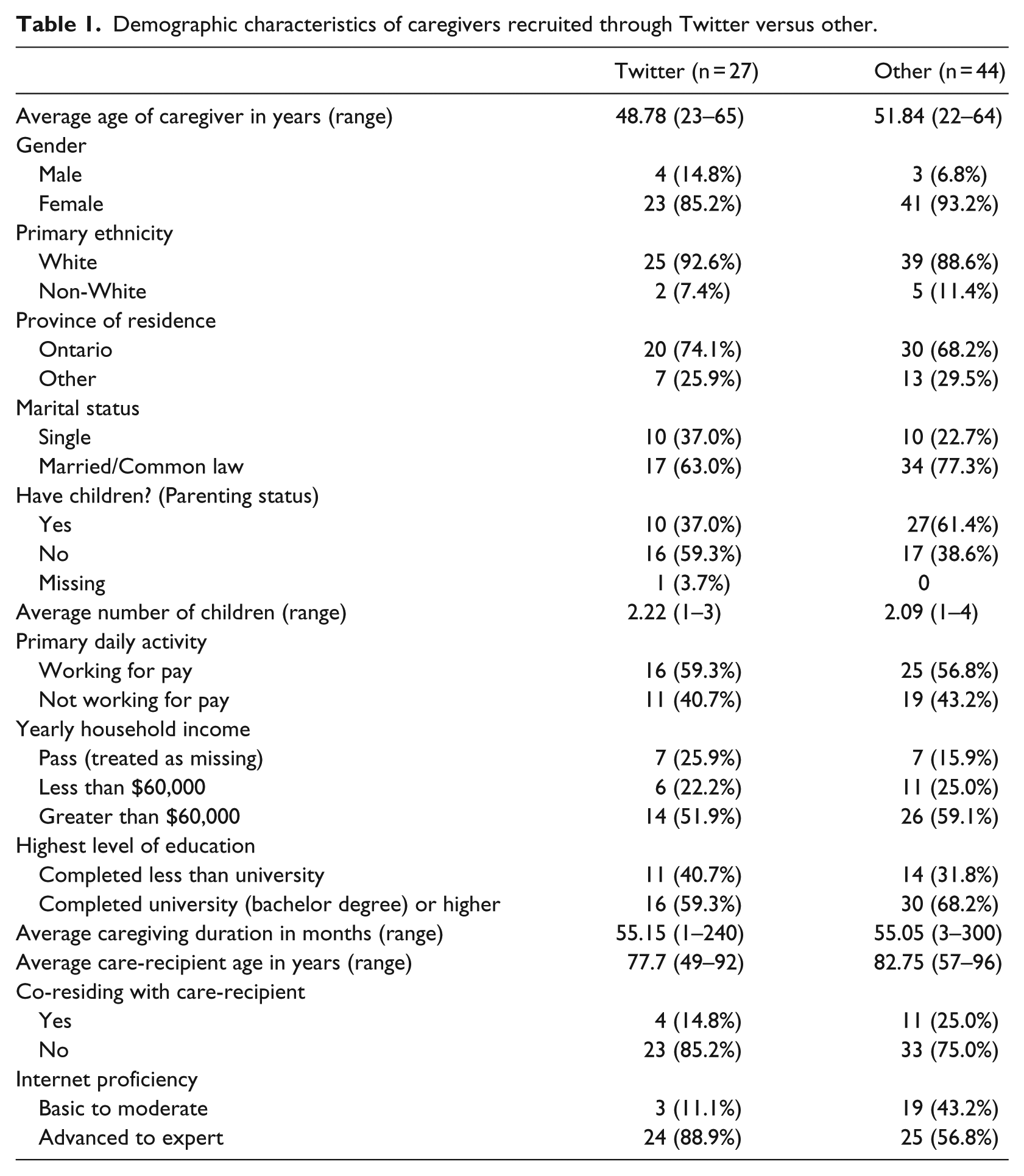
Demographic characteristics of caregivers recruited through Twitter versus other.
Findings
During the recruitment period (1 February to 1 October, 2014), a total of 71 caregivers completed the web-based survey, and 59 percent (n = 42) volunteered for a telephone interview. Of the 71 caregivers who completed the web-based survey, 27 (38%) indicated that they had heard about the study through Twitter. The remaining 44 (62%) heard about the study through word of mouth (N = 18), Canadian media coverage of the research (N = 13), Facebook (N = 6), a health or community care organization (N = 4), LinkedIn (N = 1), and a support group (N = 1). Table 1 provides an overview of the demographic characteristics of the caregivers recruited through Twitter (N = 27) compared to those recruited through other avenues (N = 44). Caregivers recruited through Twitter were marginally younger (mean = 49 years old) than those recruited through other avenues (mean = 52 years old). Gender, ethnicity, and marital status distributions were comparable between the two groups. Notably, far fewer caregivers in the Twitter group had children compared to caregivers recruited through other avenues (37% vs 61%, respectively). In all, 89 percent of caregivers in the Twitter group reported “advanced to expert” Internet proficiency compared to 57 percent of caregivers recruited through other avenues.
Tweets posted
In total, 1715 study-related tweets were sent between 1 February and 1 October, 2014. During this time, the first author’s Twitter followers grew from approximately 64–629. On average, study-related tweets were sent 7.09 times a day. The type and number of tweets posted can be found in Table 2.
Category and number of study-related tweets.
Retweet activity
As previously noted, we were unable to retrieve retweet statistics for the tweets sent between 1 February and 31 March, 2014. Therefore, the retweet statistics are limited to the period between 1 April and 1 October, 2014 (see Table 3). Of the 926 tweets posted, 29.6 percent (n = 285) were retweeted, resulting in 592 total retweets.
Retweet activity.
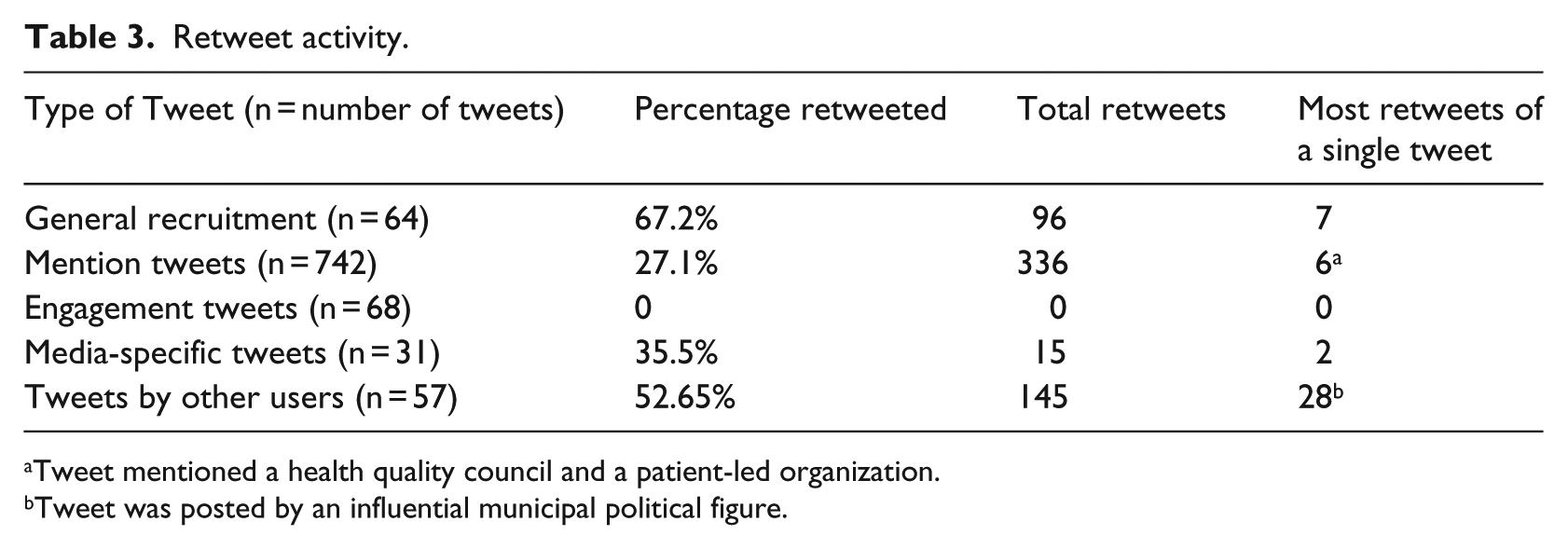
Tweet mentioned a health quality council and a patient-led organization.
Tweet was posted by an influential municipal political figure.
Reach of tweets posted
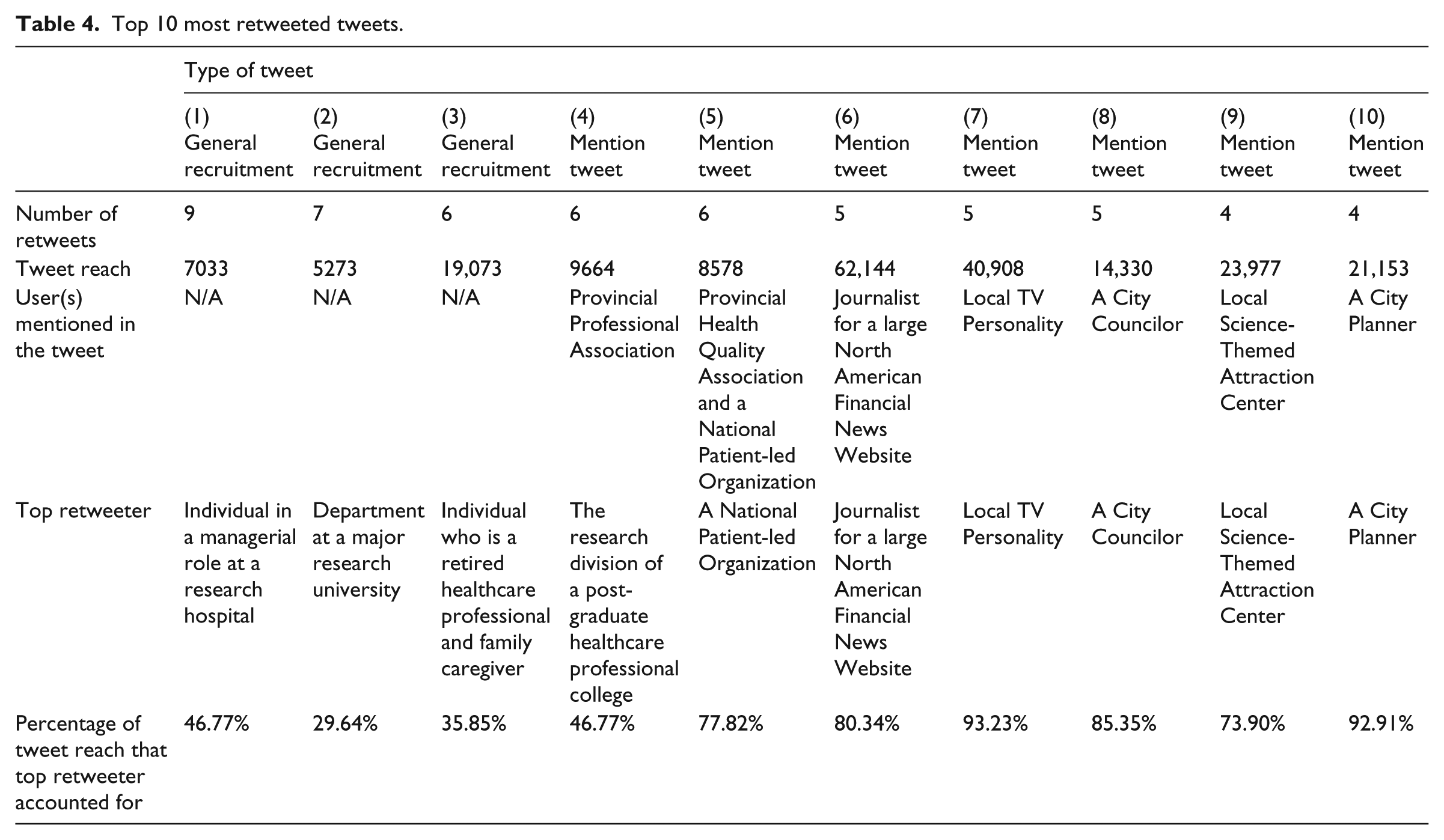
We were able to analyze the top 10 most retweeted tweets to calculate the total reach of each. Each of the “mention tweets” listed in Table 4 was retweeted by the user that was tagged in the original tweet.
Top 10 most retweeted tweets.
Discussion
This article aimed to describe the use of Twitter to recruit family caregivers for a study on peer support exchange. Specifically, we described the nature and extent of tweets posted as well as the extent to which these tweets were shared by others. Between February and October 2014, a total of 71 family caregivers were recruited to the study (27 through Twitter). Caregivers recruited through Twitter were demographically comparable to caregivers recruited through other avenues. However, Twitter caregivers had fewer children and higher Internet proficiency than non-Twitter caregivers. In total, 1715 tweets were posted and included general recruitment, mention, and engagement tweets. The largest percentage of retweets was observed in the general recruitment category. Analysis of the top 10 most retweeted tweets highlighted the large reach potential of a single tweet.
Study-related tweeting: going beyond recruitment
The literature agrees that while Twitter can be a useful tool for accessing a wide range of participants, a strategy that entails tweeting about more than just recruitment is required.10,12,25,31 First, it is important to have a known online presence and many followers. 31 This is facilitated by a reciprocal exchange of information 12 on topics other than study recruitment in order to maintain interest and appeal to your followers beyond a one-way dissemination of recruitment-related information. 31 As was demonstrated in our study, the first author’s followers grew from 64 to 629 during the recruitment period. This was largely because the first author not only tweeted about the study but also engaged with various users and participated in a number of tweetchats. This enhanced her visibility and reputability leading to greater opportunities for engagement, more followers, better study exposure and ultimately, successful use of Twitter to recruit participants.
In O’Connor et al.’s 19 study, a personal account was also created by the first author so as to be identifiable to others, promote engagement, and generate followers. Of the 749 tweets posted in that study, nearly 22 percent were retweeted resulting in a total of 359 retweets. Similarly, nearly 30 percent of tweets we posted in our study (between April and October 2014) were retweeted resulting in 592 total retweets. As mentioned, we were not able to retrieve statistics for tweets posted between February and March 2014. In turn, the actual percentage and total number of retweets for out study is potentially higher than what we have reported. It is worth noting that Hendricks et al. 4 implemented two distinct strategies—one where high-profile accounts were targeted (e.g. accounts that would garner a lot of attention) using one of the authors’ personal accounts; and another where low-profile accounts were targeted using a study-specific account. Since the low-profile strategy was more successful, the authors suggest that a study-specific account may be more effective for recruitment. However, as the authors also point out, the low-profile strategy targeted accounts that were potentially more flexible in their Twitter engagement and more willing to share research-related tweets. In turn, the success of the strategy may have had more to do with the accounts that were targeted rather than the account sending out the tweets. Overall, our study in conjunction with existing research underscores the importance of developing a strategy for recruiting using Twitter. Since reciprocity (i.e. both sharing and responding to tweets posted on Twitter) is a key element that transforms Twitter from a simple information-sharing site to a social networking platform that supports connections and relationships, 32 future research should continue comparing the use of personal versus study-specific accounts. Specifically, it would be beneficial to implement identical strategies using each type of account in order to facilitate comparison and delineate the success of each approach.
Evaluating the impact of study-related tweeting
While the first author’s many followers and non-study engagement with other users aided in enhancing the Twitter recruitment, an important trade-off of using this approach was that it made it more challenging to extract and analyze tweets pertaining exclusively to the study. This is an important area for future consideration by researchers planning to engage in Twitter recruitment. One way that this issue can be addressed is for researchers to use a unique study-specific hashtag to track the number of times a study-related tweet is shared 33 and streamline the wealth of information. 34 While Twitonomy had limited functionality for collecting the full history of study-specific tweets, The Twitter Archiving Google Spreadsheet (TAGS) can overcome this limitation. 35 TAGS is a script for Google sheets, where the tool can be given access to a user’s Twitter account. Upon connecting to the account, the user can collect and store an unlimited archive of tweets on a given search term. Using TAGS, a researcher can aggregate study-specific tweets using the unique study hashtag.
Strengths, limitations, and future directions
This article addresses the need for health science research that provides an in-depth account of social media recruitment outside of the Facebook context. A strength of our research was the manual selection of study-related tweets by two reviewers. This reduced the likelihood that a study-related tweet was not captured. One notable limitation relates to Twitonomy failing to extract and analyze all study-related tweets. As a result, we were not able to retrieve and calculate the total number of retweets and overall study reach. However, we were able to gain some insight into reach by examining the top 10 most retweeted tweets.
Our research begins to elucidate that Twitter-based samples have the potential to be comparable to non-Twitter samples. However, the fact that caregivers recruited through Twitter had higher Internet proficiency and fewer children than caregivers recruited through other avenues points to an important area for future consideration. Participants who use Twitter may have more time to do so due to fewer familial obligations (e.g. having children) and greater comfort with the social media platform. These characteristics could potentially challenge the heterogeneity of samples recruited through Twitter and should be addressed by future research.
One aspect of our study that is distinguishable from others that have used Twitter to recruit4,19 is the implementation of both an online and offline research aspect. Previous research has suggested that web-based recruitment can be especially beneficial for mixed-method studies that are sequentially designed to gather a large amount of generalizable quantitative data followed by the collection of in-depth qualitative data. 36 Given that nearly 60 percent of participants who completed the web-based survey volunteered for a qualitative interview, our study provides preliminary but promising evidence for the use of Twitter for mixed-method research involving online and offline components. It can be inferred that those who willingly volunteered for the offline research were presumably comfortable with and prepared for that modality. However, it would have been informative to ask those who chose not to volunteer the reason for their decision (e.g. anticipating difficulty with offline data collection). Future studies that comprised online and offline phases are advised to collect data pertaining to participants’ reason(s) for refusing participation in the offline portion of the research.
Conclusion
This article describes the use of Twitter to recruit family caregivers for a study on peer support. Overall, using Twitter enhanced the overall reach of study-related tweets and led to the recruitment of 38 percent of the study sample. Our findings begin to elucidate that Twitter-based samples have the potential to be comparable to non-Twitter samples, but future studies should address Internet proficiency and parental status as potential characteristics that differ between the two groups. Our findings lend support for using personal accounts for recruitment and highlight the need for study-specific hashtags. Future research should continue exploring optimal strategies for Twitter recruitment as well as the potential use of Twitter for research involving online and offline components.
Footnotes
Declaration of conflicting interests
The author(s) declared no potential conflicts of interest with respect to the research, authorship and/or publication of this article.
Funding
The author(s) received no financial support for the research, authorship, and/or publication of this article.
