




Abstract
Understanding the information-seeking preferences and Internet access habits of the target audiences for a patient portal is essential for successful uptake. The resource must deliver culturally and educationally appropriate information via technology that is accessible to the intended users and be designed to meet their needs and preferences. Providers must consider multiple perspectives when launching a portal and make any needed adjustments once the launch is underway. We report results of a study of 270 parents and caregivers of paediatric patients in a major health system during the process of implementing a patient portal. Through a 26-question paper-and-pencil survey, data were collected on participant demographics, Internet access and use, health information–seeking behaviours, health literacy, and potential use of a patient portal. Results indicate a positive attitude towards portal use but also suggest that low health literacy may be a key issue to portal adoption.
Introduction
One of the goals of Healthy People 2020 is the use of health information technology (HIT) to improve health outcomes, quality, and equity. Among the several specific objectives are the increase in patient–provider communication, the delivery of health information that is relevant and understandable to the target audiences, and the improvement of health literacy skills. 1 There are numerous HIT mechanisms designed to achieve these objectives, most of which require access to the Internet – especially broadband, and increasingly, mobile devices. While health-related websites have become ubiquitous, of growing importance are those extensions of electronic health records, often enhanced with knowledge-based resources, known as patient portals. The recent push to implement electronic health records in both inpatient and outpatient environments, as well as the recognition of the importance of patients’ involvement in their own healthcare, has stimulated interest in portals through which patients and designated caregivers can view test results, request medication refills, communicate with clinicians, and make/change appointments.
The advent of these portals presents additional opportunities for technology to play a role in health information and communication activities such as health information seeking and health literacy. A portal enables providers to tailor information and communication resources to the specific needs of the intended recipients, thus enabling providers to deliver culturally and educationally appropriate information. However, for a portal to reach its full potential, the healthcare providers and organizations must take some preliminary measures to ensure that both the materials and the interface are optimized. Designing and implementing an effective portal require clarifying its purpose, identifying the intended users, becoming familiar with their information-seeking patterns and preferences, and assessing their capabilities and access habits. 2 In this article, we report on one phase of the process that a major paediatric hospital and associated clinical practices used to implement its patient portal; we present our story so that others may benefit as they embark on selecting, refining, and implementing a patient portal.
Background
In the portal implementation discussed here, the provider organization is a major paediatric hospital that has a significant investment in making educational materials available to the patients’ families and caregivers as well as to the patients themselves, although (since the patients are children) the materials for each group are of necessity quite different from one another. Prior to portal design and development, the organization had already established procedures and practices for communication between providers and parents or caregivers and had taken steps to assure that their written materials met basic health literacy guidelines. Nonetheless, the organization lacked knowledge about the specific health literacy and information-seeking behaviours of the families they hoped to engage, particularly since the practices were located in diverse socioeconomic areas. Furthermore, the organization was concerned about the rate of uptake for the portal. This situation provided an opportunity for a team of researchers to investigate the phenomenon and to provide its insights to the organization. The research team, comprised of information scientists and systems designers, had experience in assessing the information-seeking habits and preferences of diverse populations and was able to contribute its expertise in these areas to the experience of the healthcare providers. Involving an interdisciplinary team enabled a comprehensive or ‘systems approach’ to assessing readiness for the implementation.
Adopting a systems approach when introducing any technological innovation helps to ensure that both the user and the designer perspectives are considered. That is, because the patient/family unit and the provider/designer unit are related to one another, the characteristics of each part may affect the overall system; changing one component invites an impact on the others. Understanding the information-seeking preferences and Internet access habits of the desired audiences for a patient portal – or any other digital tool – is essential for successful uptake. The resource must also be attractive enough to be used, employ technology that is accessible to the intended users, and be designed so that it meets their needs and preferences. Thus, provider organizations must consider multiple perspectives when determining how and whether to launch a portal and make any needed adjustments once the launch is underway. Doing an initial assessment of the intended audience can be a critical success factor in ensuring adoption.3,4
Information-seeking behaviour is the topic of a large body of research, and numerous resources are available that provide important insights, particularly in health information seeking.5,6,7 While much Internet health information–seeking behaviour is conducted by adults seeking answers to their own personal questions, a significant amount of health information seeking is done by family members or caregivers on behalf of others. What follows here is a summary of what is known about the information seeking of parents and caregivers on behalf of their children.
Early studies investigating parental use of the Internet have shown that parents use Internet resources to learn more about their child’s condition and that they are willing to use them for managing their children’s care.8,9 On the other hand, misunderstandings and confusion can occur, and there is a need to educate both parents and the general population on how to evaluate the quality of online health information.10,11,12,13 Since parents appear to demand a very high standard of credibility when it comes to information that may affect their children, trustworthiness is a key factor in determining whether parents will seek and accept information that will be used to make decisions about their children’s care. At the same time, patients and families often share information with each other and often report that family and friends are an important source of health-related information. 14
Health literacy is defined by the Centers for Disease Control and Prevention (CDC) as the degree to which an individual has the capacity to obtain, communicate, process, and understand basic health information and services to make appropriate health decisions. 15 The National Assessment of Adult Literacy (NAAL) measures the health literacy of adults living in the United States. At the time of its most recent assessment, approximately 36 per cent of adults in the United States have limited health literacy. An additional 5 per cent of the population is not literate in English. Only 12 per cent of the population has a proficient health literacy level. 16 As noted earlier, improving health literacy is one of the goals of Healthy People 2020; helping providers to understand and appreciate the health literacy ‘profile’ of their patient population can be an important first step in addressing this goal.
Building on previous research and our own experience, we focused our attention on learning more about the patients and families served by a specific healthcare organization to enable it to prepare for implementing its patient portal more effectively. The specific aims of this research were to explore the current technologies parents of this health system use to access the Internet, to ascertain how parents find health information for themselves and their family, and to assess the level of awareness and use of digital technologies to meet the information needs parents may have. To address these aims, we surveyed parents/caregivers at five clinics affiliated with the health system and located throughout a large metropolitan area to determine their health information–seeking practices and preferences. We also asked screening questions to assess their level of health literacy and their interest in accessing and using a patient portal. Because we were conducting the research in conjunction with the operations of a specific health system, our sample reflects the goals of that system and does not necessarily represent the population as a whole.
Methods
Setting and sample
The study was conducted in five clinical practices associated with a major paediatric hospital in a large metropolitan area in the eastern United States. The clinic locations were selected to capture the variety of patients and practices present in this metropolitan area. We included rural, urban, and suburban practices to encompass social and demographic as well economic differences. Using a convenience sample, we conducted a paper-and-pencil survey of parents and other responsible adult caregivers of children and adolescents. All respondents were 21 years or older and were able to read and write English. The study was approved by the Institutional Review Boards (IRBs) of both the health system and the researchers’ university. Data were collected from August to December 2012. A total of 270 usable surveys were collected with a minimum of 50 from each clinical practice.
Survey instrument
The paper-and-pencil survey instrument used for this study was adapted from an interview protocol designed for a previous study conducted in a medically underserved area in the same metropolitan area. 17 The survey investigated the various forms of access to the Internet in use by patients. The conversion to a paper-and-pencil format was done to be minimally intrusive in the clinical setting, and the new format was field tested and refined before implementation. The research coordinator for the health system and members of the research team met with the practice managers and clerical staff to discuss the study protocol and to finalize the procedure for administering the survey instrument.
To establish the reading level of the survey, the text was pasted into a Microsoft Word (Microsoft Corporation, Redmond, Washington) document and then evaluated for reading ease and grade level using the Flesch Reading Ease formula, which has been widely used in evaluating medical literature. For this survey, the Reading Ease score was 66.1 (scale 0–100) and the grade level was 7.1, which approximates the reading level recommended by the National Library of Medicine’s 18 consumer health resource MedlinePlus. The final version of the survey contained 26 questions and took 10–15 min to complete by checking appropriate boxes. Survey questions included demographics (age, race, and education) and questions about Internet use, mobile device access, health information–seeking behaviours, health literacy, and potential use of a patient portal. Access was assessed using the following questions: ‘Do you currently have Internet access through a computer/laptop/cell phone/smartphone or other device?’ and ‘How do you get to the Internet most often?’ Healthcare information–seeking patterns were elicited by questions about looking for health information for themselves or others in their family. Health literacy was assessed using the three screening questions proposed by Chew 19 in 2004 for use in identifying patients with inadequate or marginal health literacy.
Data collection and analysis
The 26-item survey was administered to participants while they were waiting to be seen by clinicians at the individual practices. A student researcher trained in the procedure for conducting the survey recruited a convenience sample of participants by approaching parents/caregivers in the practice waiting rooms after they had checked in for their child’s appointment. Parents/caregivers received a brief introduction to the study and instructions for completing the survey; they were encouraged to take the survey with them to the examination rooms to complete the survey while waiting if necessary. The surveys were collected as participants checked out. Participants’ time was compensated by a US$15 gift card for a local store.
Data from the 270 usable surveys were entered manually into SurveyMonkey for subsequent analysis. The data were collected anonymously, and only descriptive statistics are presented here. Relationships between the responses to several different pairs of questions were correlated using SPSS but nothing of statistical significance was found.
Since some respondents did not answer all questions or selected more than one choice, not all variables total 100.
Results
Study participants
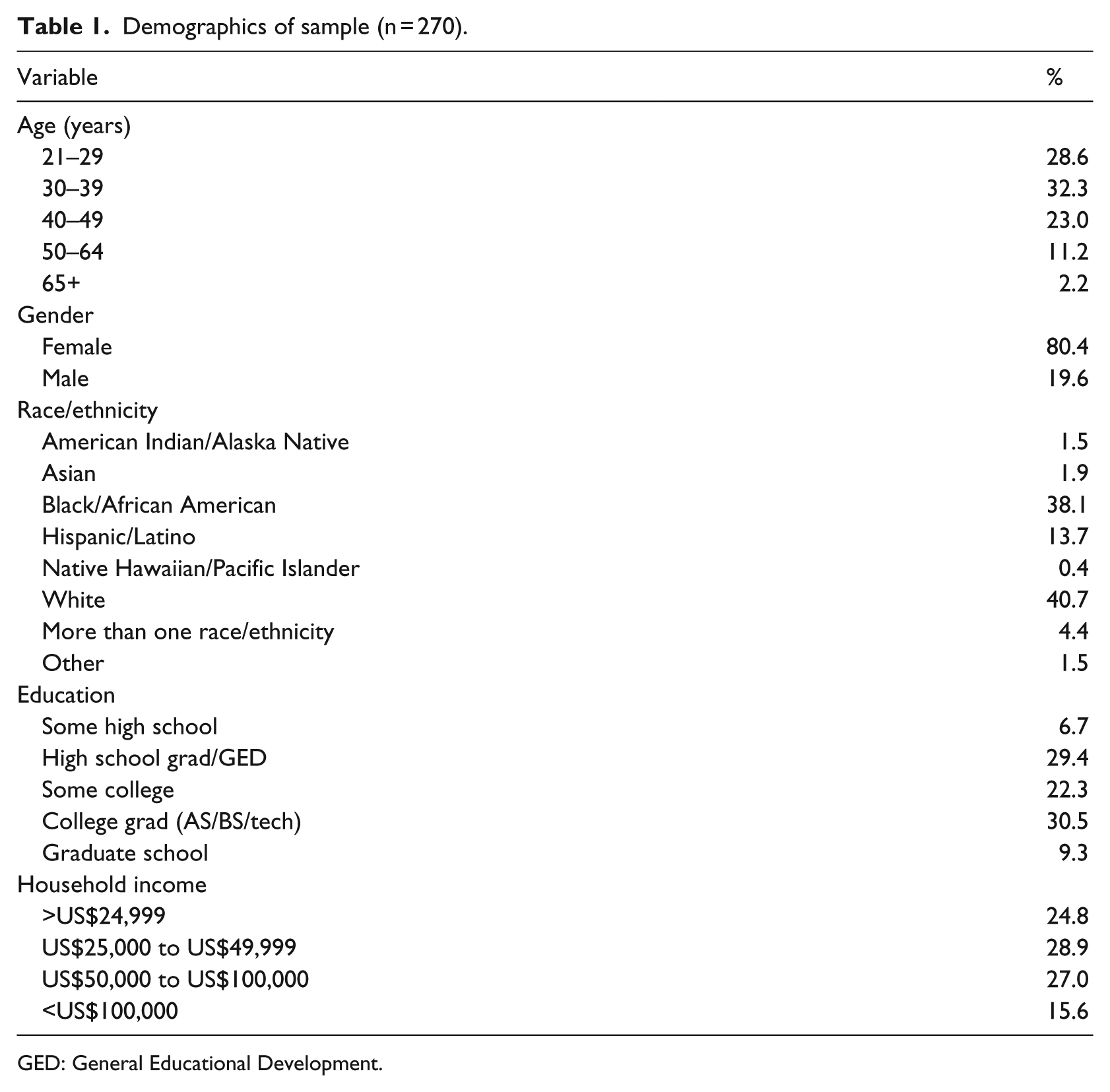
Demographic data of the participants are summarized in Table 1. As shown, the majority of the participants were women of child-bearing age. This is consistent with the nature of the population, that is, parents and caregivers of paediatric patients. The number of White and African-Americans was nearly equal, at 41 per cent White and 38 per cent African American. Close to 25 per cent of participants had income levels of less than US$24,999, and 36 per cent had completed no more than a high school education or its equivalent (GED). This suggested that a number of study participants might have health literacy issues. A profile of the study participants appears in Table 1.
Demographics of sample (n = 270).
GED: General Educational Development.
Internet access
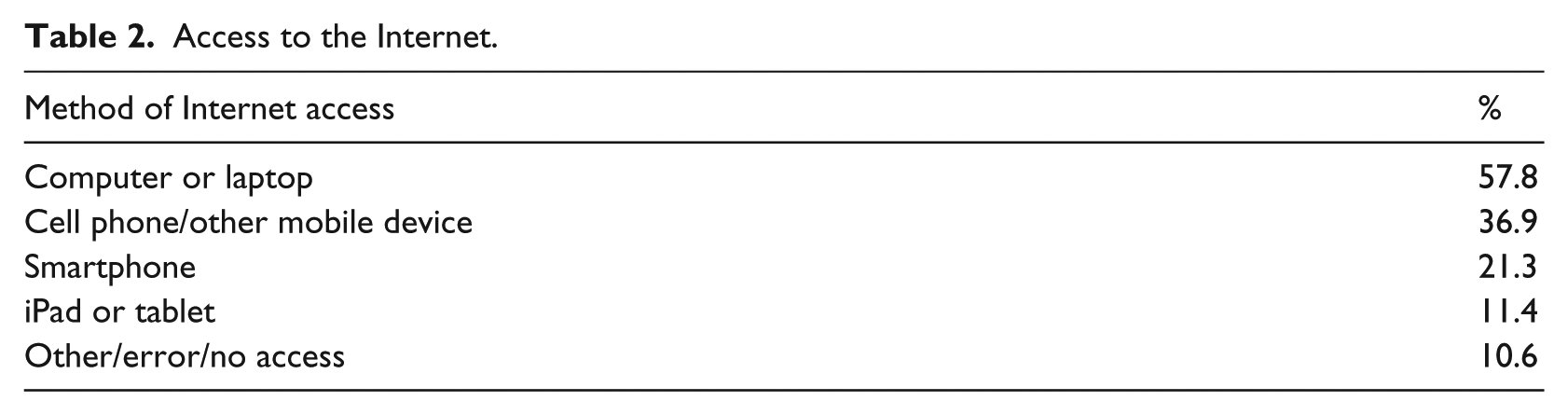
Because successful implementation of patient portals depends on users having Internet access, several questions were designed to capture various aspects of Internet access and use. In total, 94 per cent of respondents reported having access to the Internet. Methods of access are displayed in Table 2, indicating that while computers (including laptops) were used by over half of those surveyed, mobile devices, including tablets, and mobile phones accounted for more than a third of access. Since some respondents checked more than one mode of access, totals sum to more than 100 per cent.
Access to the Internet.
Over 80 per cent of respondents reported using the Internet several times a day, and fewer than 3 per cent reported using the Internet less than once a week. Of the respondents, 83 per cent reported that they were either ‘comfortable’ or ‘very comfortable’ using the Internet. These findings indicate a well-connected population of parents and caregivers.
Health information seeking
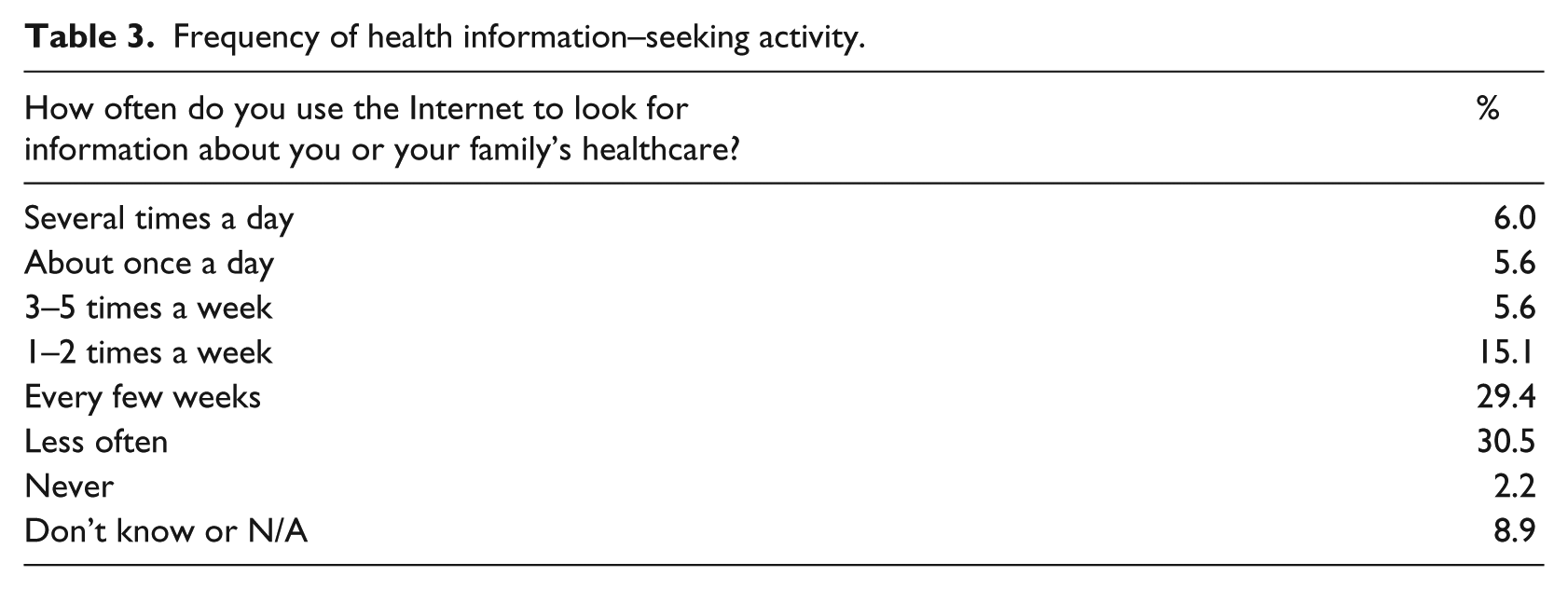
Of the respondents, 85 per cent reported using the Internet to look for general information, although only 42 per cent reported using the Internet specifically to look for health-related information as we noted in our previous study. 17 Only about 11.5 per cent of respondents use the Internet daily to look for some type of health-related information. Table 3 displays the frequency of health information–seeking activity.
Frequency of health information–seeking activity.
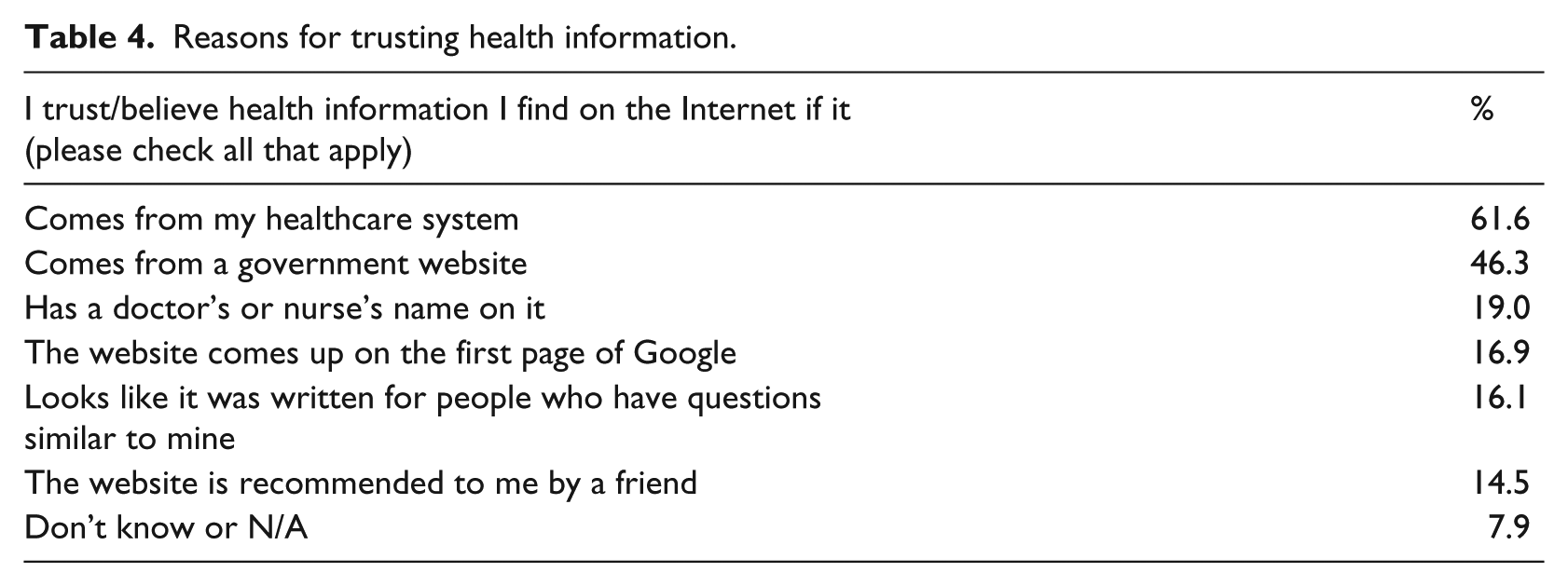
Nearly 75 per cent of respondents reported that they ‘usually’ or ‘always’ found the health-related information that they were seeking; more than 52 per cent of respondents were confident that the information they found was accurate. Respondents had various ways of determining whether to trust information that they found on the Internet. Table 4 displays the reasons for trusting health information on the Internet.
Reasons for trusting health information.
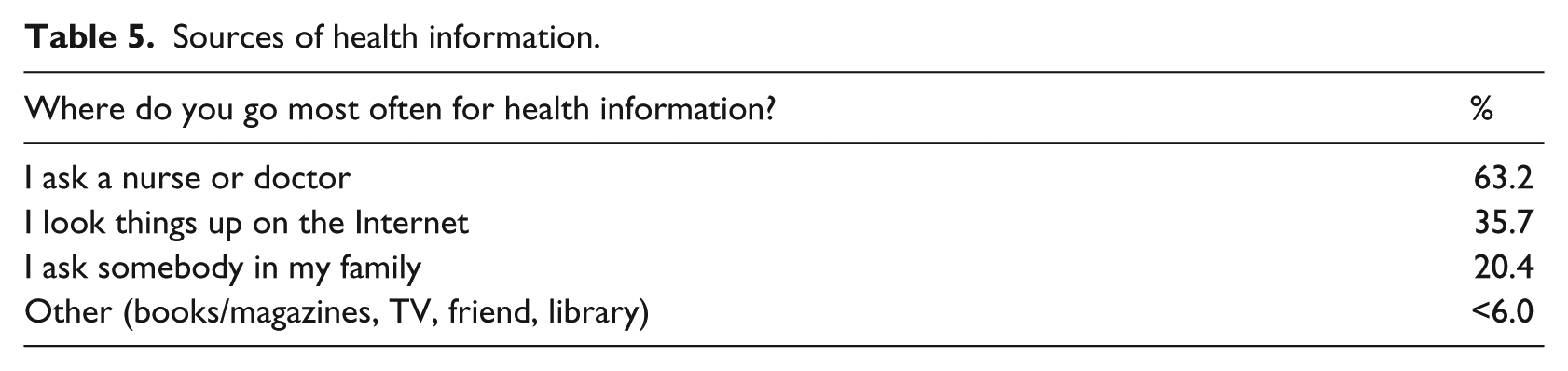
In addition to looking for health information on the Internet, respondents indicated that they used other sources of information. Table 5 displays the most frequently used sources of health information.
Sources of health information.
Health literacy of participants
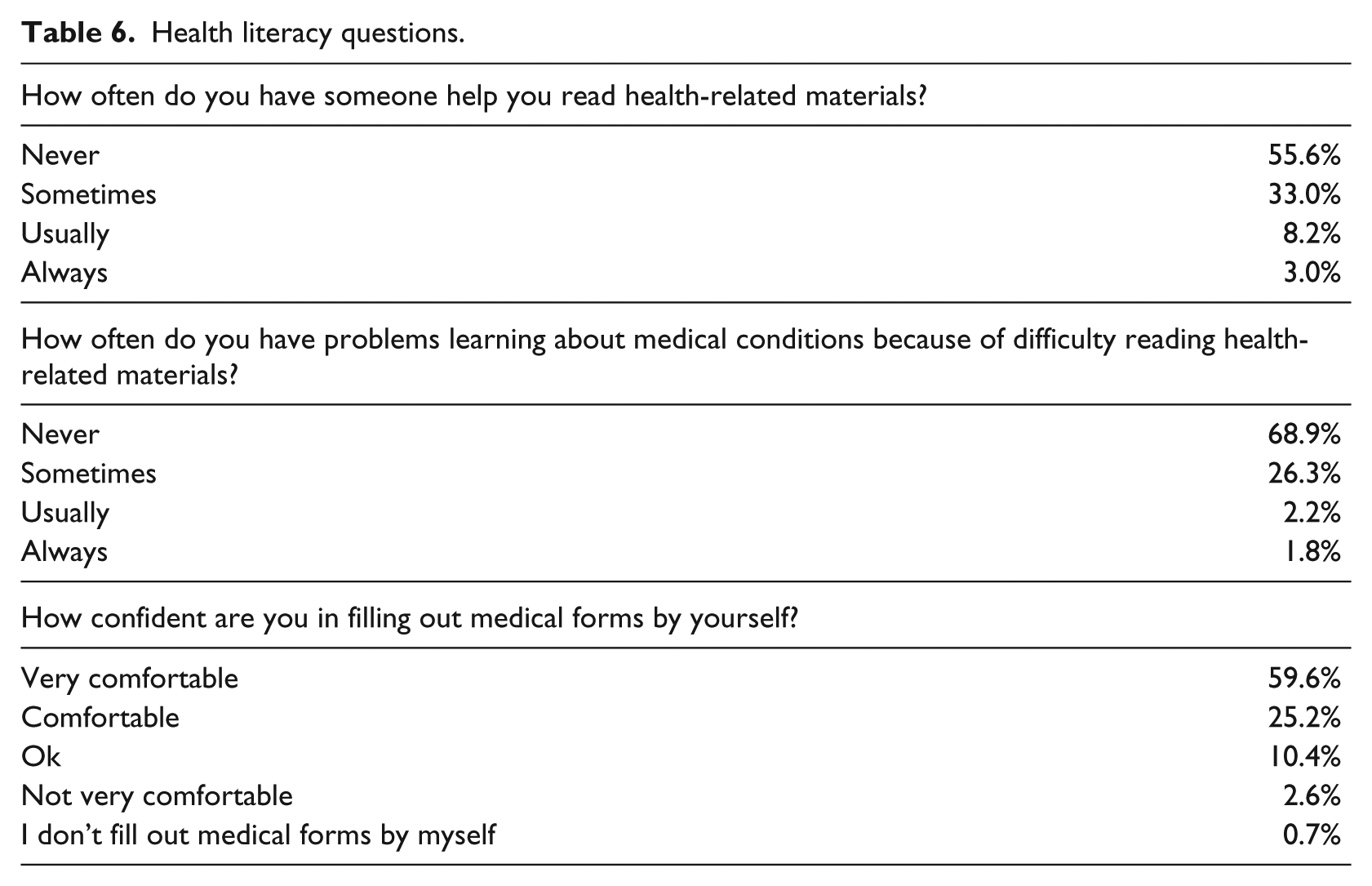
The survey instrument used the three screening questions proposed by Chew et al. 19 to identify patients with marginal or inadequate health literacy in the population served at the five clinical practices. Table 6 indicates that a substantial portion of the respondents may have marginal or inadequate health literacy. More than a quarter of the participants indicated that they ‘sometimes’ had difficulty reading health materials, and fully one-third indicated that they ‘sometimes’ needed help reading health materials. These results are consistent with those found in the population at large, according to the NAAL, cited above.
Health literacy questions.
Attitudes towards portal adoption
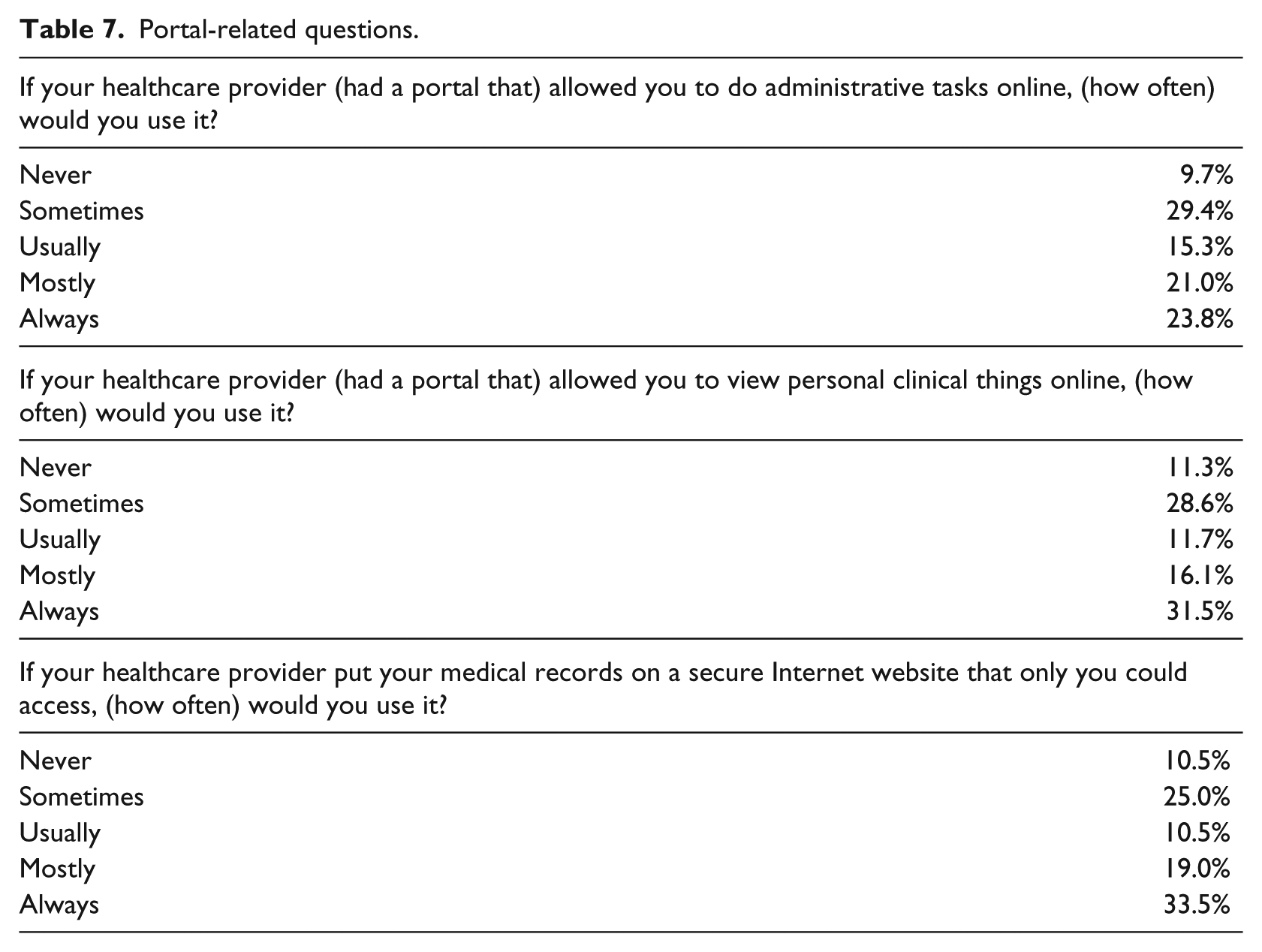
The final set of questions in the survey queried participants about their interest in using the Internet for administrative tasks such as making appointments, or for viewing personal clinical data, and accessing their medical records. Table 7 shows that a majority of respondents would use a portal if it were available from their healthcare provider.
Portal-related questions.
Discussion
This study was conducted during the early implementation stage of a patient portal designed by a leading paediatric health organization. As part of the investigation, our research team, guided by a hospital clinician, explored how the parents and caregivers of paediatric patients access and use the Internet. We were interested in learning how parents/caregivers look for health information and in understanding more about their information-seeking patterns and preferences. The research yielded pertinent descriptive data about the ways in which parents and caregivers seek and use information. The results showed that the overwhelming majority of parents/caregivers surveyed were connected to the Internet through a variety of devices. This finding suggests that Internet access is not a barrier to portal implementation, at least among the population being served at the clinics where the study took place. The study also confirms findings from our previous research indicating that mobile devices such as smartphones were often the means by which patients connect to the Internet. 17
While 85 per cent of the respondents to the survey reported that they use the Internet to look for general information, only 42 per cent indicated that looking for health information was among their most frequent information-seeking activities. The picture that emerged from our investigation suggests that although parents/caregivers may often use the Internet to look for health information, their preferred source of health information remains a nurse or doctor. This finding suggests that as health organizations begin developing patient portals, care should be taken to involve clinicians in selecting health resources as users put a high value on materials associated with their doctor and healthcare team. Furthermore, when asked whether they would go online to do various administrative tasks and/or to view their medical records on a secure website (i.e. a portal), the response was positive. When combined with the findings from previous research indicating the positive effect of having health information tailored to specific users, the portal idea seems powerful indeed. 20
As clinics and hospitals look into deploying patient portals, they will need to include efforts to understand their users and the factors that are likely to influence their use of the Internet to meet their healthcare information needs. As patients and caregivers depend more on mobile devices for Internet access, the ways in which health information is presented will evolve to include resources that are optimized for mobile use. Clinicians and designers of health information resources are advised to take this into account to ensure that health information is provided in the most appropriate ways. Digital literacy and health literacy are also key considerations in establishing effective ways to increase health information access and use. (After the completion of this study, the organization implemented a mobile version of the patient portal.)
Future studies may wish to focus on patient and family education, specifically directed at increasing portal use in the ways that their patients access the portal. Respondents’ positive responses to using the Internet for administrative tasks and for viewing clinical items bode well for clinics and hospitals in the United States because they must meet the ‘Meaningful Use’ requirements mandated by the Federal government. These regulations require providers who received Federal funding to implement HIT and to demonstrate that they are using this technology ‘meaningfully’. That is, they must work towards achieving specific goals such as installing a patient portal that will inform and engage patients. The next step will be to explore different use patterns to examine whether users will limit their use of mobile devices to accessing their personal health information or whether they will engage in more complicated tasks such as searching for health information. 21
Our findings indicate that providers must also consider the health literacy of those expected to use their portal. Almost all of the respondents to our survey reported having a high school education or above, but a quarter to a third admitted having difficulty with reading health materials. This finding aligns with the perception that low health literacy is widespread across the US population. Calls for making health information more understandable and accessible are especially relevant to the designers of patient portals. As patient portals are enhanced with educational and informational resources, care must be exercised to create materials at appropriate levels and are tailored to the needs, preferences, and abilities of the intended users so that they can be read, understood, and followed.
Limitations
Our sample was a convenience sample of parents and caregivers in five paediatric clinics in a single metropolitan area; respondents may not have had the same characteristics as non-responders. Further study is needed to assess the generalizability of these findings to other types of clinics with adult populations. In addition, participants’ education and income were generally higher than the city average, which may indicate some response bias to the survey. If patients had limited health literacy, they may have been less likely to respond to the survey, in which case our findings may overestimate patient interest in using the Internet for health information seeking and possible portal usage. As a result, the lessons learned from these experiences may not be generalizable to all communities.
Conclusion
This study looked at a population of parents and caregivers in five urban and suburban/rural paediatric practices to understand their health information–seeking patterns and preferences and to assess their capabilities and habits in order to gauge the potential for portal use. We found that a majority of patients cared for by these practices had access to the Internet and were interested in using a patient portal as a way to manage their care. Their preference for nurse- or doctor-provided information may be a factor that influences portal adoption among this population. Our findings lead us to recommend that organizations such as hospital and clinics that are contemplating the implementation of a patient portal should conduct a similar survey to understand more about their potential users. Digital technology is rapidly expanding in the healthcare arena, along with calls for greater involvement of patients. Our data suggest that these are welcome changes that could result in more informed and engaged patients and families. At the same time, it is critically important to identify communities where access to resources is limited and therefore may not be able to access use the resources. Low health literacy remains a serious problem among the general population, and it is a potential barrier to portal adoption within target populations. With simple survey techniques such as those described here, providers can be confident that their investment in a patient portal will have the intended results. Only by taking the time to survey potential users and assess their health literacy and their patterns and preferences for digital technology will portal designers and implementers have the confidence that they are truly advancing the goals of Healthy People 2020.
Footnotes
Acknowledgements
The authors gratefully acknowledge the contributions of Jordan Jobs and Debra Abrams in the collection and preparation of the data and Marcy Polansky for statistical assistance. All authors contributed equally to this study. A copy of the survey instrument may be requested from the corresponding author Dr Prudence Dalrymple at
Declaration of Conflicting Interests
The author(s) declared no potential conflicts of interest with respect to the research, authorship, and/or publication of this article.
Funding
The author(s) received no financial support for the research, authorship, and/or publication of this article.