




Abstract
The Internet is a growing source of information for health in general, with university student being online almost daily. Evaluating their use of the Internet for mental health information and support can help understanding if online tools and websites should be used for mental health promotion and, to some extent, care. A survey was conducted with more than 600 students of Law, Nursing and Computer Science of the University of Cadiz in Spain to determine their general use of the Internet and their perceptions and trust in using this medium for mental health information. Data were collected using a 25-item-questionnaire and findings indicated that students had a strong distrust in online mental health information, notwithstanding their daily use of the Internet. The frequency and methods of their research on the Internet correlated with their health status, their medical consultations and with certain socio-demographic characteristics.
Introduction
The Internet plays a significant role in health information seeking, with an increasing number of web users looking for news and advice concerning mental health. 1 The confidential and privacy-protection-oriented nature of the Internet is an incentive for searching sensitive topics such as mental health which are often a source of stigmatization. Furthermore, the Internet has also the advantage of widespread accessibility at low or no cost. 2 In this sense, the accessibility offered by the Internet could promote social inclusion for those people who are isolated due to geography, immobility or illness.
At present, the Internet is ranked higher as a source to use than a source to trust, with health professionals remaining the most trusted sources of information for mental health problems. 3 However, given the frequent use of the Internet and related technology, it is possible that in the near future online mental health services will represent a further therapeutic support for mental health care.
Adolescents and young adults could benefit from the use of the Internet as a provider of mental health care, and online mental health promotion. Prevention and early intervention strategies at a population level are already delivered by some national mental health care systems (e.g. in Australia, the Young and Well Cooperative Research Centre website www.yawcrc.org.au and the Orygen Youth Health website www.oyh.org.au; in Ireland, the Youth SpunOut website www.spunout.ie; in France the Fil Santé Jeunes website www.filsantejeunes.com).
Young people represent a big portion of the Internet public and they are, at the same time, a vulnerable group where presence of mental distress is frequently observed. Indeed an Australian study reports that issues such as anxiety, depression, psychosis, suicide and eating disorders have actually their peak onset in the 12–25-year period. 4 Among Spanish students, aged 18–24 years, Serrano-Blanco et al. 5 reported that there is a high odds ratio of them experiencing a substance use or misuse problem. Another Spanish survey 6 showed that 7.8 percent of young adults aged 18–24 years suffered from anxiety disorders. For this reason, concerns regarding the mental health of young people have become increasingly pressing, 7 and against this background, it is necessary to evaluate the use of the Internet by young people specifically for mental health information and support seeking. An understanding of their behavior on the web and their feelings about the support and news they find online will help in defining the quality of the contents of websites and aid in the design of new methods for searching information needed.
Numerous studies have been conducted on the way people of all ages use the Internet for general health information seeking,8–10 but a few have focused exclusively on both young people and mental health.11–15 As such, the use of the Internet for mental health information is less certain and little is known about what types of mental health information young people search for and how they view using the Internet for mental health support. Among these few studies, Gould et al. 12 estimated that in the United States, one-fifth of young adults had used the Internet as a source of mental health information. In Australia, a national survey investigated the perceived helpfulness of websites for mental health information 13 and a similar study was conducted in the United States 14 showing that mental health–related websites enhance knowledge about mental health issues and increase help seeking. By contrast, in Europe, resources and surveys in this domain are still really scarce, with some exceptions of national studies like the Health Barometer 15 in France, which however did not exclusively focus on e-health. In one of the few studies identified, Horgan and Sweeney 11 in a quantitative study with Irish students aged between 18 and 24 years showed that 68 percent of participants indicated that they would use the Internet for mental health support if they needed to, and considered the Internet as a viable source of support.
Young adults’ and adolescents’ frequent engagement with the Internet for health information can change and affect their relationships with health professionals. 16 Indeed, the introduction of information and communication technology has already represented a radical shift in the health domain in general and in the mental health one in particular. However, to the best of our knowledge, there is not yet a complete understanding of how the Internet is used by students in relation to medical advice. In general, it seems that the relationship between patients and physicians has become less hierarchical and more client-provider oriented. 17
The main objective of this research was to address the gap in European and International literature about the use of the Internet for mental health information and support seeking by young people and their relationship with the health care system. This article presents findings from a survey conducted in the University of Cadiz in Spain. The survey investigated Spanish students’ use of the Internet by taking into account the links with their health status and their medical consultations. Students’ socio-demographic characteristics and their trust in mental health information found online were also determined.
Methods
Data were collected using a self-administered questionnaire based on a tool developed for a study in Ireland. 11 The original questionnaire was modified and updated with new items from a French survey 18 (Baromètre Santé 2010) and two French Studies (WHIST 19 and Fil Santé Jeunes 20 surveys). The final questionnaire (see Appendix 1) also took into account the major themes identified from the literature on the use of the Internet by young adults for mental health information and advice and the most searched words on this issue. 21 The Spanish version of the questionnaire was then composed of items translated into Spanish from either French or English. Counter-translations were provided by three professional translators and native Spanish speakers for a final Spanish questionnaire which was approved and validated by one psychiatrist, one psychologist and one social worker. They determined whether the questionnaire addressed the topic overall (content validation), and tried to detect whether subjects’ answers on the questionnaire could predict certain aspects or behaviors of the subjects (predictive validation).
The questionnaire consisted of 25 items divided into three sets: General Information, that is, demographic details of age, gender, subject of academic study, type of accommodation, place of living, employment and health condition (9 questions); General Usage of Internet (4 questions); and Use of Internet for Health and Mental Health (12 questions). The questionnaire contained different types of questions such as multiple choice questions, polar questions and Likert scales.
Data were collected from students of the University of Cadiz which is a public university located in the province of Cadiz, Spain, and founded in 1979. The population of Cadiz in 2012 was 123,948 with a density of 27,000 per square mile. The University’s main schools include Modern Languages, Health, Engineering, Labor Relations, Legal and Economic Studies, Pedagogy. The three courses selected for this study, Computer Science, Law and Nursing, belonged respectively to the school of Engineering, Legal and Economic Studies and Health. In the academic year 2012–2013 when this survey was carried out, the total number of students of the University of Cadiz was 19,802.
The survey was conducted in the second week of June 2013. Students from all five years of the Bachelor’s degree and Master’s degree of Computer Science, Law and Nursing were included in the study. These three courses were selected in order to cover both the fields of Letters and Sciences (one of our hypotheses being that students of these fields could have different relationships with Internet). Moreover, we opted for this choice in order to have the same number of males and females, since males were very numerous in the Sciences field, and females in the Nursing course. Nursing students were chosen also in order to represent the medical field without any specific reference to mental health issues. The questionnaire was distributed in class and re-collected after 10–15 min. The protocol of this study was strictly followed in accordance with the Social Research Ethics Committee of the University of Cadiz. The Head of School of each course was contacted to seek access to participants. Once access was granted, the investigators studied the timetables to pick appropriate classes and approached individual lecturers to seek permission to distribute the questionnaire during class time. For Computer Science, 10 classes participated in the survey with the consensus of 7 lecturers. For Law, four classes participated in the survey with the consensus of 4 lecturers. For Nursing, 3 classes participated in the survey with the consensus of 2 lecturers. Lecturers refusing the distribution of the questionnaire during their classes stated that this would have delayed their academic program. All students attending these 17 classes participated to the study and their questionnaires were included in the final analysis with a refusal rate of 0 percent. Not all participants answered every question, but they were all included in the sample because they had answered at least to 50 percent of the items. Among the variables here analyzed, missing rates go from 0 to 20.2 percent. They are reported for each studied variable.
Students were informed that the participation was voluntary, that no personal sensitive health data would be collected and that the questionnaires were anonymous. To maintain confidentiality of the records, no personal details like name, address, phone number or e-mail were requested.
Statistical analyses were performed using Statistical Package for Social Sciences (SPSS) v20.0 software (SPSS Inc.; Chicago, IL, USA). The chi-square test was used for comparisons of proportions, p < 0.05 was considered as statistically significant.
Results
The sample
The total sample included 687 participants representing 36.3 percent of the total students of Computer Science, Law and Nursing (N = 1889), that is, 3.4 percent of the total University of Cadiz student population (N = 19802) in the academic year 2012–2013. The sample consisted of 211 students of Computer Science (representing 42.1% of all Computer Science students, N = 501), 258 students of Law (representing 36.4% of all Law students, N = 708) and 218 students of Nursing (representing 32.0% of all Nursing students, N = 680).
Details of the participant’s age, gender, area of study, work, accommodation and living situation are provided in Table 1. The sample included students of all ages, here presented in six age groups. Given the small numbers of people aged more than 25 years, the respondents were finally presented in four age groups.
Participant characteristics.
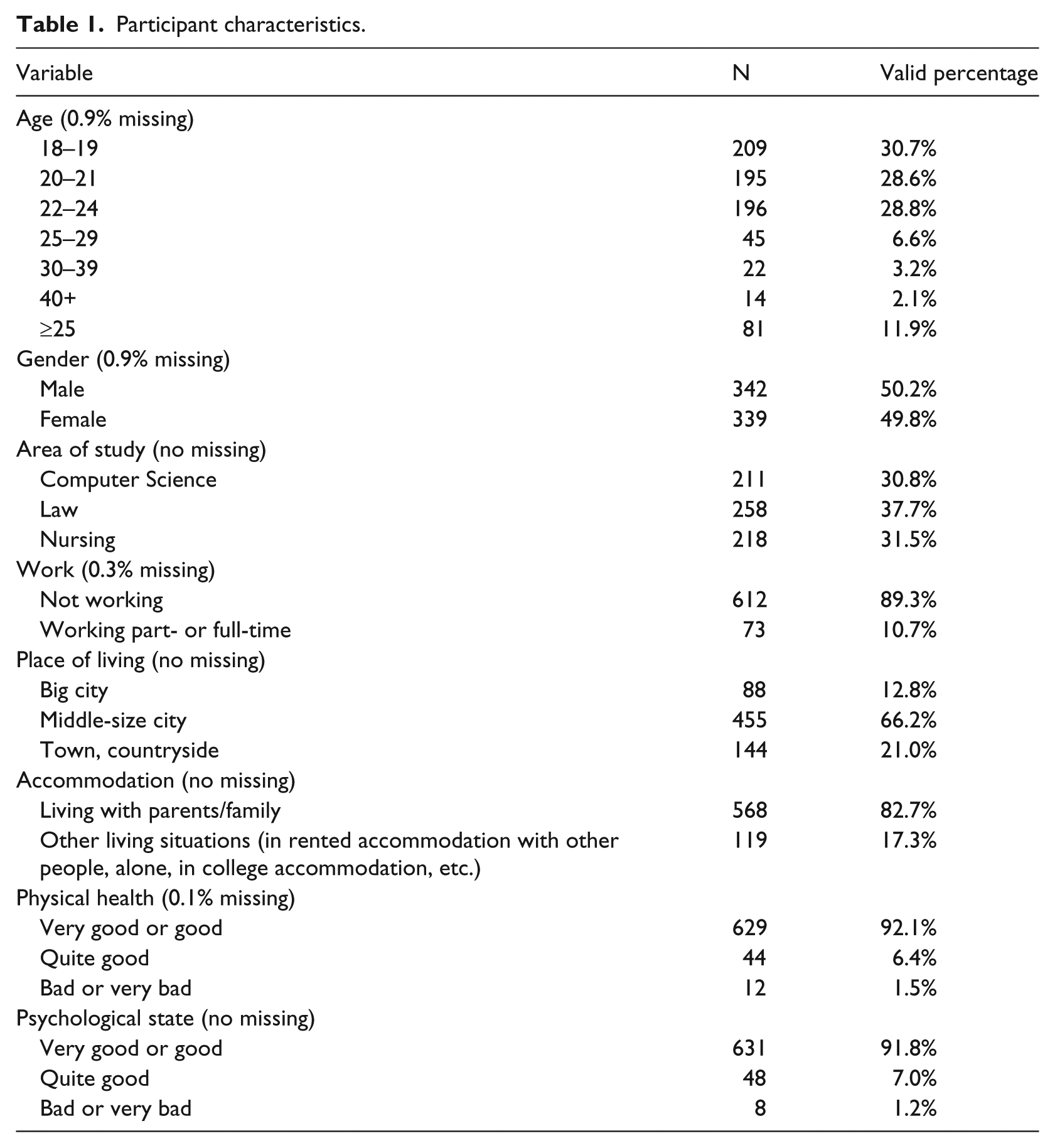
As reported in Table 1, the questionnaire included two items asking respondents about their physical health, and their psychological state. Belief in health status did not differ in a significant way based on gender, with 91.5 percent of males and 92.6 percent of females reporting very good or good physical health, and 90.0 percent of males and 93.5 percent of females believing their emotional state was very good or good.
No statistically significant differences based on age were found with 92.8 percent of students aged 18–24 years reporting very good or good physical health versus 87.7 percent aged ≥ 25 years. Only 1.3 percent of the total sample reported bad or very bad physical health, with no statistically significant differences among the age groups. As for psychological health, 92.1 percent of students aged between 18 and 24 years declared that their emotional status was very good or good versus 91.4 percent of students aged 25 years and more. Only 1.0 percent of the total sample reported bad or very bad psychological health, with respondents being aged between 18 and 21 years.
No statistically significant differences were found when analyzing the relationship with both physical and psychological health of respondents and their area of study, employment status, their place of living and who they were living with (accommodation).
General use of the Internet
The Internet was used several times a day by 92.7 percent of participants and once a day by 4.2 percent. Only a small number consulted the Internet less than once per day (3.1%). No statistically significant differences were found by gender or physical and psychological status. However, their area of study was related to how often they used the Internet, with 98.1 percent of Computer Science students consulting the Internet several times a day versus 90.2 percent of Law Students and 90.3 percent of Nursing students, χ2(6 df, N = 681) = 14.86, p < 0.021. Significantly, χ2(3 df, N = 683) = 11.73, p < 0.01, those living with their families (93.6%) used the Internet more frequently than those living in other accommodations (88.2%). No statistically significant differences were found in relation to the place of living whereas employment status influenced the use of the Internet χ2(3 df, N = 681) = 11.01, p < 0.5, with 93.6 percent of students who did not work, consulting it several times a day, 84.7 percent of students working full- or part-time.
Findings indicated that 97.5 percent of participants accessed the Internet at home, 91.8 percent at college, 56.9 percent wherever there was Internet access from their smartphone, 45.9 percent at friends’/family’s house, 45.6 percent in a public place (Internet café, library, etc.) and 5.3 percent at work. When asked whether they owned a personal computer, four participants did not provide an answer, while all other participants (N = 683) confirmed owning a personal computer.
Students were then asked to report how frequently they engaged in a list of 12 activities on the Internet. Findings indicated that they used the Internet at least once a day for accessing social networks (83.0%), as well as getting news updates (67.5%), finding information for college (65.4%) and watching videos (65.3%). Less recurrent activities were participating in chat rooms, with 41.2 percent of the respondents never using them, and buying products with 33.1 percent of the respondents never doing online shopping.
Use of the Internet for mental health
In comparison with other activities, survey respondents did not look for health information online very often, but more than half of the sample (53.8%) reported doing so at least once per month. When asked to distinguish between general health and mental health information consulted in the last 12 months, 91.4 percent of students reported having looked online for general health information, and almost half of them (49.4%) for mental health information at least once in their lifetime. Table 2 reports the types of mental health concerns searched for online in the last 12 months.
The consultation of specific mental health topics in the last 12 months.
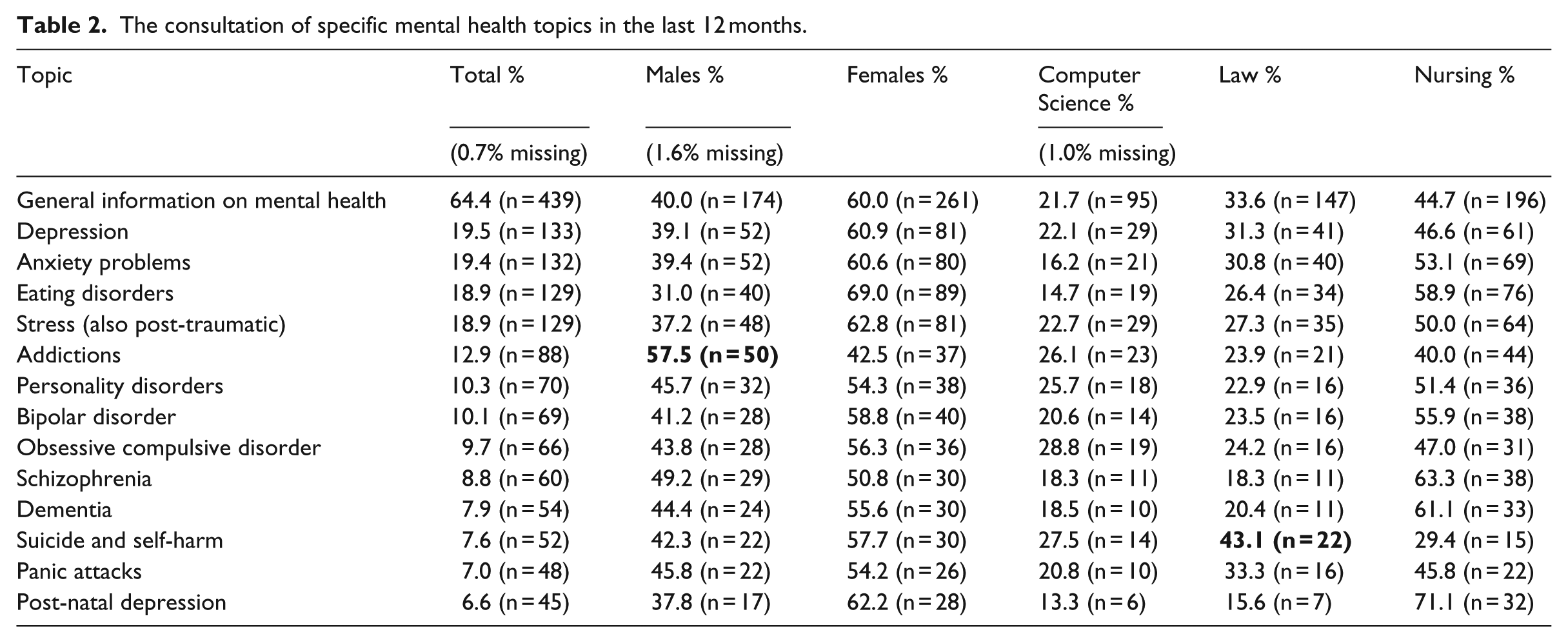
The frequency of searching and the types of information searched for were correlated with the participants’ socio-demographic characteristics and physical and psychological state. Focusing on age, no statistically significant difference was found between the behavior of younger and older students. Statistical differences were noted between males and females, with females being more likely to look for mental health information at least once in their lifetime, 56.8 percent women versus 41.4 percent men, χ2(1 df, N = 674) = 16.04, p < 0.01. As expected, Nursing students looked significantly more than their colleagues for mental health information: 71.2 percent of them versus 39.7 percent Law students, and 38.3 percent Computer Science students, χ2(2 df, N = 678) = 60.49, p < 0.01. No significant differences based on work, accommodation, place of living or physical health of the respondents were found. By contrast, statistically significant differences were found, χ2(2 df, N = 678) = 9.30, p < 0.01: 47.7 percent of between those reporting very good or good psychological states as opposed to those 63.8 percent with quite good psychological states, and 87.5 percent of those reporting a bad or very bad psychological state.
The participants were required to provide information on how they looked for mental health information online and their trust in the information retrieved. Entering key words into a search engine, portal or Internet Service Provider was the most frequently used procedure (30.2% of students reported doing so “very often”), with one-third (33.8%) of participants never directly visiting a health website or portal they already knew. Many students reported never paying attention to the date of the information (28.4%), or to the person and/or institute providing the information (22.3%).
When asked whether they trusted the information found online, 22.4 percent answered “yes” (0.8% “absolutely yes” and 21.6% “quite so”) and 77.6 percent answered “no” (11.7% “not quite so” and 65.9% “not at all”). The trust in the Internet was not significantly associated with any socio-demographic variables (age, gender, course, living condition, work and both mental and general health status). However, students living in a middle-size city (68.3%), versus those living in a town or the countryside (16.5%), or a big city (15.1%) had more trust in information sourced, χ2(6 df, N = 643) = 17.19, p < 0.01.
Only 15.8 percent of participants knew what a labeled website was (31.2% of Nursing students, 10% of Law students and 6.9% of Computer Science students), with a statistical difference noted based on program of study χ2(2 df, N = 664) = 58.63, p = 0.000.
Respondents were asked to identify the three main advantages and the three main disadvantages for using the Internet for mental health information and support (from a list of 13). The top three advantages were the following: “The Internet is easily accessible 24 h a day” (68.8%); “The Internet contains a vast amount of valuable information” (50.8%); and “The Internet is anonymous, private and confidential” (44.6%), with no missing data. The top three disadvantages were as follows: “The Internet provides unreliable information” (74.4%); “It is not possible to know who produced the information” (47.1%); and “Distrust in the information in comparison with medical advice” (45.8%), with no missing data.
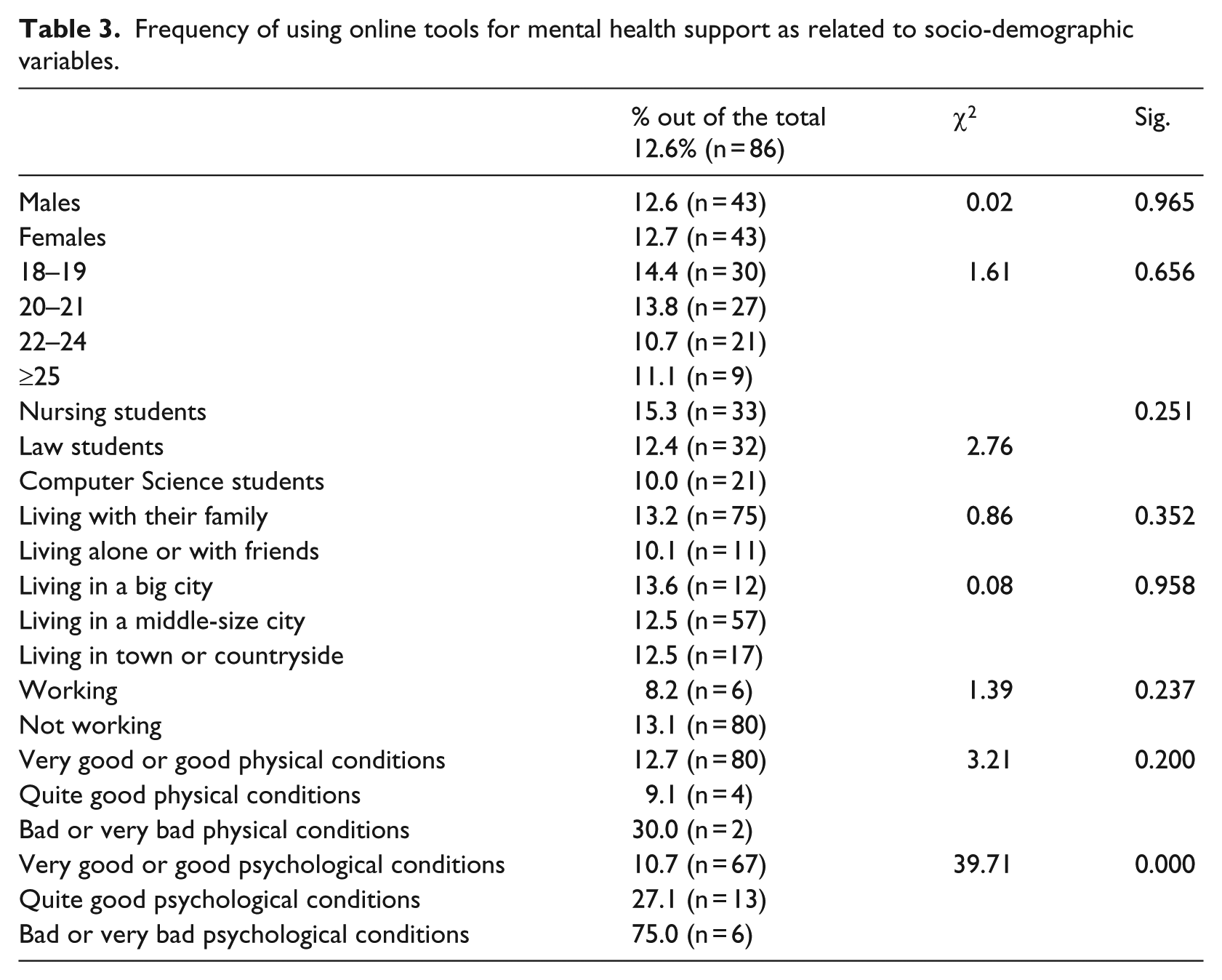
Finally, when asked whether they had ever used online tools like forums, online therapy supporting devices or chat boards with experts in the field of mental health, 12.7 percent of students answered so (no missing data).
Table 3 reports the use of online tools for mental health support based on the socio-demographic variables under study.
Frequency of using online tools for mental health support as related to socio-demographic variables.
Medical consultations and Internet use
In the last 12 months, 89.7 percent of participants had seen at least one of the following health professionals: general practitioner (77.0%), medical specialist (19.4%), gynecologist (14.3%), another general health professional (7.7%), psychologist or psychiatrist or counselor (4.8%), school nurse (0.9%). The consultation of at least one of these health professionals was not significantly associated with accommodation, place of living or with field of study, whereas females (95.3%) were significantly more likely than males (83.9%) to have consulted with at least one health professional in the last 12 months, χ2(1 df, N = 681) = 23.53, p < 0.01.
In relation to physical health, it is interesting to note that 100 percent of those reporting a very bad or bad health status had seen at least one health professional against 89.4 percent of students declaring both very good or good general health conditions and quite good health conditions (χ2(2 df, N = 685) = 1.27, p = 0.52, but numbers were small). As far as psychological health was concerned, 100 percent of participants reporting a very bad or bad emotional state had seen at least one health professional in the last 12 months. Percentages of young people having consulted at least one health professional (χ2(2 df, N = 685) = 1.93, p = 0.38, but numbers were small) were very high also for those reporting a quite good (93.8%) and a very good or good psychological and emotional state (89.2%).
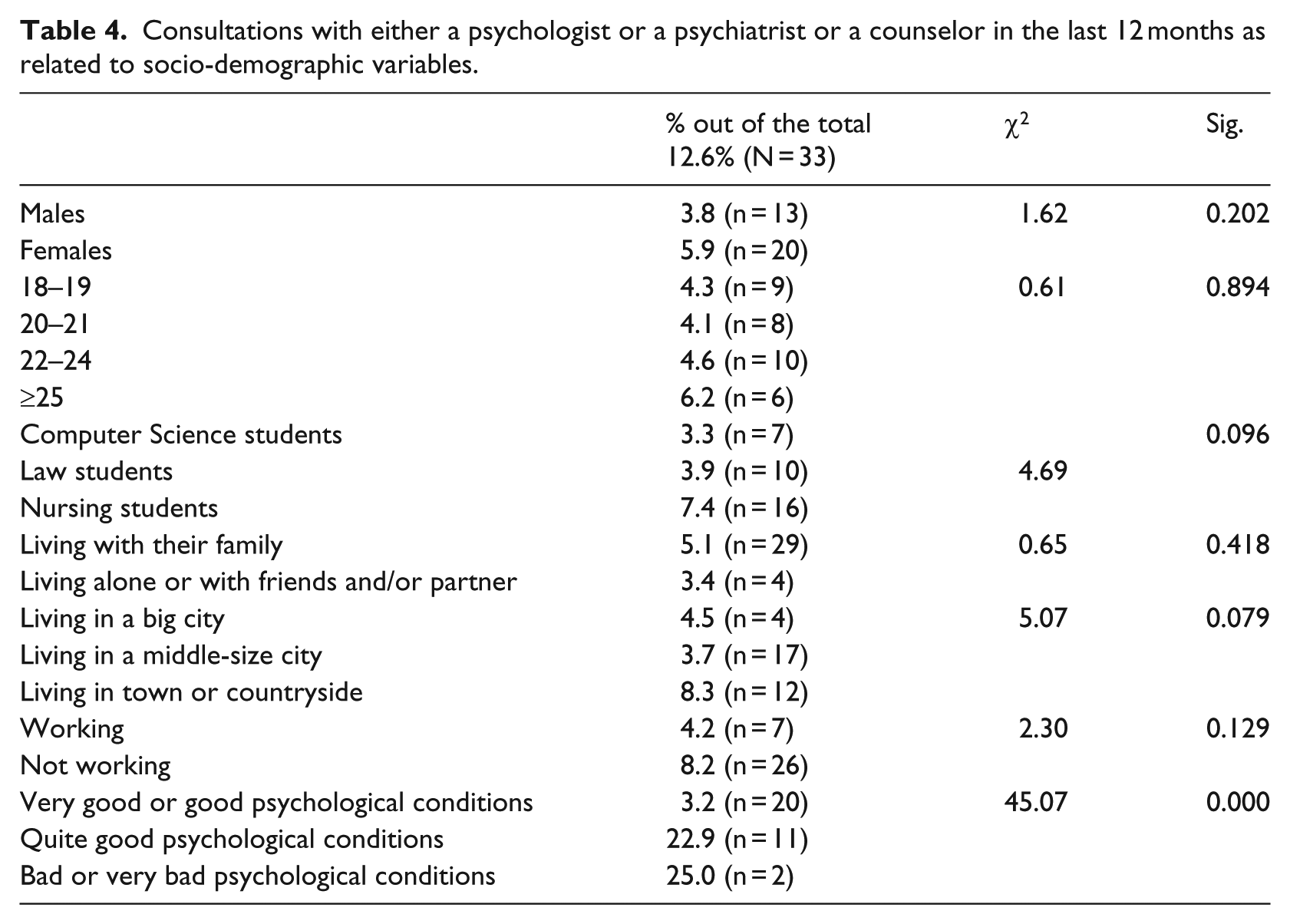
Table 4 reports the consultation of either a psychologist or a psychiatrist or a counselor in the last 12 months, representing 4.8 percent of the total sample. It is noteworthy that students who did not trust information and advice on mental health found online were more likely to see mental health professionals (3.5% of those “not quite” trusting the information, and 2.7% of those totally distrusting the information). Among those trusting the information found online, 10.1 percent of those somewhat trusting online advice had consulted with a mental health professional, whereas nobody absolutely trusting the Internet for mental health information had, χ2(3 df, N = 643) = 10.86, p < 0.05.
Consultations with either a psychologist or a psychiatrist or a counselor in the last 12 months as related to socio-demographic variables.
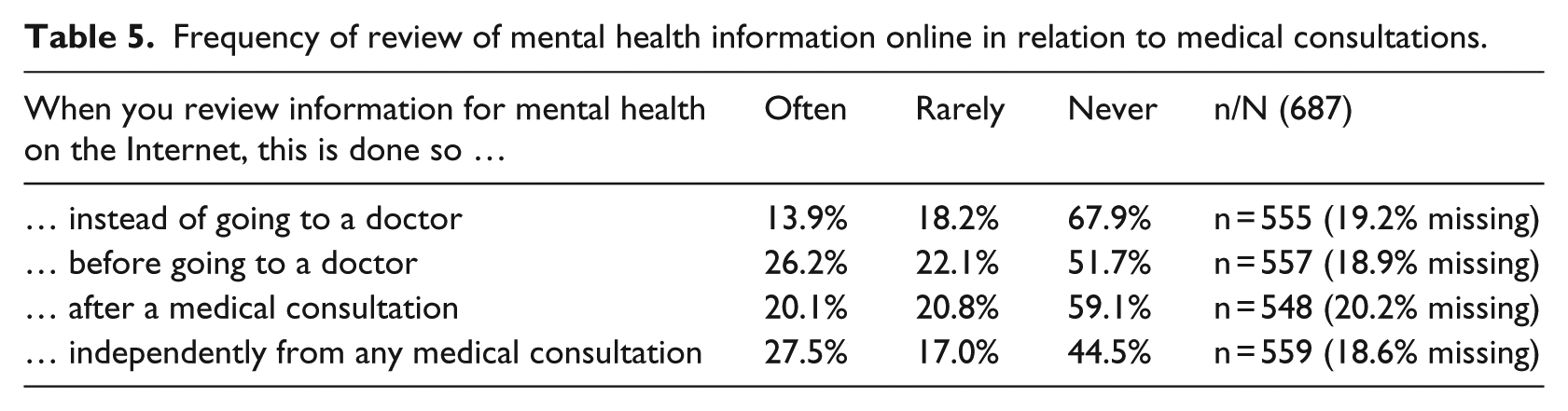
As for the relationship between mental health information seeking and the consultation of any health professional, Table 5 shows the frequency with which students reviewed information for mental health on the Internet instead of before, after or independently from seeing any health professional. Of note (even if the numbers are small) is the profile of those reviewing mental health information on the Internet instead of going to a doctor. They were mainly females, 17.1 percent versus 10.8 percent males, χ2(4 df, N = 551) = 8.67, p = 0.070; aged between 18 and 24 years, 40.9 versus 37.3 percent of students aged 25 years and more, χ2(20 df, N = 552) = 24.94, p = 0.204; not living with their family, 15.6 versus 13.5 percent, χ2(4 df, N = 555) = 2.07, p = 0.722; living in the countryside, 19.2 versus 12.7 percent living in a middle-size city versus 12.3 percent living in a big city, χ2(8 df, N = 555) = 9.07, p < 0.05; 18.2 percent Nursing students versus 14.9 percent Law students versus 8.7 percent Computer Science students, χ2(8 df, N = 553) = 22.54, p < 0.01; and those not working, 14.1 percent versus 12.1 percent of students also working part- or full-time, χ2(4 df, N = 554) = 0.84; p = 0.932.
Frequency of review of mental health information online in relation to medical consultations.
Finally, the use of at least one online tool for mental health care concerned 97.7 percent of people having seen at least one health professional in the last year, and 11.5 percent of those who had seen one psychologist or psychiatrist or counselor in the last year.
Discussion
Data were collected from 687 students at the University of Cadiz, mainly aged between 18 and 24 years (87.1%). All respondents owned a personal computer, 56.9 percent accessed the Internet through a smartphone, and the great majority (92.7%) used the Internet several times a day. Students mainly used the Internet for social networking and general information seeking, in line with the results of the studies conducted in the United States by Rogers, 22 in England by Eynon and Malmberg 23 and of a less recent study conducted in Alicante, Spain. 24 This suggests that Spanish respondents have similar online habits to students of other countries.
Unlike other studies analyzing the use of the Internet for mental health information seeking,1,12 this survey aimed to comprehensively describe the factors associated with the use of the Internet for mental health information and care among young university students in Cadiz. Respondents were students with a similar literacy level but different age, gender, field of study, work conditions, accommodation and place of living. Their perceived physical health and emotional state were also determined to see whether being unwell could have a strong impact on searching for mental health information online as suggested by Bundorf et al. 25
In relation to age, other than representing a low percentage (11.9%) of the total sample of this survey, people aged between 25 and 64 years responded in line with the replies of their younger colleagues. This seems to confirm that, among university students, the use of the Internet does not differ based on age. These results confirm the fact that in Spain access to the Internet via mobile devices is a little above the European Union (EU) average 26 with the Internet being for most people in Spain an information tool. 27
Females were more likely than males to look for both general health and mental health information online, in line with the findings of studies in the United States 28 and in France. 29 This finding could suggest the need for developing gender-specific online tools and websites.
In relation to the geographical residence, results were not statistically significant but, given the small sample of respondents, interestingly this survey showed that 20.7 percent of students living in the countryside had used online psychological support tools versus 13.8 percent of students living in a big city. A larger sample could confirm the hypothesis that the Internet may represent a useful source of quality information for those living far from mental health services, facilities and professionals. The study by Bundorf et al. 25 and the results of the survey by Renahy et al. 30 showed that accommodation and geographical residence can influence one’s use of the Internet for health information seeking.
The sample included students from three different programs (Nursing, Computer Science and Law) in order to differentiate the areas of interest of the students and counterbalance the percentage of males (more for Computer Science) and females (more for Nursing). It has been hypothesized that Nursing students were more interested in health information seeking than their colleagues and that Computer Science students used the Internet more than both Nursing and Law students. Our results confirmed those hypotheses. Studying Nursing indeed seems to influence the use of the Internet for health information seeking, particularly for mental health. This could be explained by the necessity to be informed on these topics for one’s University and professional career, but also by personal interest. Studying health-related subjects could also empower students who can be more trained to evaluate the trustworthiness of the mental health information they find online.
Students were also asked whether they worked or not. According to Sahari et al., 31 working and studying at the same time could be a source of distress and influence the mental status of participants, resulting in a higher use of the Internet for mental health information. However, in this sample, no differences were found in the use of the Internet for mental health among full-time and part-time workers and unemployed students.
Finally, this research sought to explore the use of the Internet for mental health support related to medical consultations, in line with the growing interest in understanding the effect that online information seeking has on patients’ experiences, empowerment and interactions with mental health care providers. 31 Results showed that 13.9 percent of students stated reviewing information for mental health on the Internet instead of going to a doctor. Among the three main disadvantages students perceive in the use of the Internet for mental health information and support seeking, 45.8 percent of students mentioned the distrust in the information in comparison with medical advice and 71.4 percent, the fact that the Internet provides unreliable information. These statements are consistent with the results by Di Antonio 27 who found that, in relation to general health (and not only mental health), 54 percent of young Spanish preferred seeking support from professionals rather than looking for information online.
Most of the students (84.2%) reported not knowing what a labeled site was. The information provided by labeled sites respect ethical standards and has been approved by official entities like the Health On the Net Foundation (HON) 8 or the National Ministries of Health. Not knowing that this type of certification for websites exists, which is present in Spain from 1998 with the WebMedica, could make it difficult for students to decipher the difference between websites where content is reliable and appropriate and those where it is not. This is even more problematic for about 43.0 percent of students who reported never paying attention to the person and/or institute providing the information.
However, students recognized that the Internet has numerous advantages as a tool for mental health information and support, like the fact of being easily accessible 24 h a day, containing a vast amount of valuable information and being anonymous, private and confidential. This survey seems to indicate that the Internet has a considerable impact as an information source, but it is not gaining the position of a clear substitute for traditional mental health care. In this sense, the Internet seems to potentially be a complementary source useful in facilitating preventive approaches and discussions with physicians, 33 instead of being in competition with the medical advice. These advantages should then be exploited by mental health professionals who could use the Internet as a support tool for their work. Face-to-face approaches seem to be still preferred by students. However, this attitude could vary according to the type of support they look for (information, moral support, counseling, etc.) and according to the specific mental health issue of interest. Interventions via the Internet could be developed for young people experiencing mental health difficulties, or for young people worried for their families and friends. Indeed, results showed that those reporting very good or good psychological conditions looked for mental health information online as much as those reporting very bad or bad psychological conditions. This suggests that the use of the Internet for mental health information and support seeking is a matter for everybody, healthy or unhealthy.
Limitations
This study was conducted in a university setting with students from only three courses and it may not be representative of all young peoples’ views in general, including those with a lower level of literacy. It is possible that young people in continuing education are more likely to use the Internet because of necessity. Therefore, the sample consists of a computer literate population only. Another limitation of this survey is also given by the fact that the majority of respondents reported to be in good psychological health. Then, respondents may not have been directly interested in mental health issues. The use of and trust in the Internet for mental health information and support were different according to the mental health status of young people. In any case, this study was aimed at providing a general overview of the behavior of students about mental health information seeking, without any distinction between healthy and unhealthy subjects. Moreover, results showed that half of the sample had reported having looked for some mental health information at least once in their lifetime.
Furthermore, the use of the Internet could also be connected to the economics and the culture of the city where people live. Of note is the fact that the region of Cadiz has been particularly affected by the economic crisis in the last few years. 34 It is then possible that our results could have been different if the questionnaire had been distributed in other richer areas of Spain.
Finally, questionnaires were distributed at the end of the semester which could have influenced the emotional state of the students and their level of attention, given the proximity of the examinations.
Conclusion
The Internet is widely accessible and frequently searched for general health information; however, searching for information and support about mental health seems to be more likely among Nursing students compared to Law and Computer Science students.
However, it is deemed important to inform young people about mental health issues to promote mental health and well-being and prevent mental distress. The Internet can increase access to this type of information and consequently decrease unmet needs. For this reason, sites and interventions on the Internet need to be formally evaluated 35 and education programs need to be implemented to allow young students properly use the Internet as a health information tool.
Understanding how young people perceive the quality of information provided online and how they use the Internet in relation to mental health support seeking is essential to improve the existing websites and to design new online tools meeting the needs of young web surfers. Social networks and the Web 2.0 are resources young people very often consult online. 27 The promotion of mental health could then benefit from these tools together with classic websites which could both be seen as an innovation in health care system. Some in the medical community have espoused the potential positive impact of the Internet on increasing mental health education and promotion self-care 36 and as such this study can help improve the provision of mental health information and inform mental health professionals on the types of support young people search for on the Internet.
Footnotes
Appendix 1
e-MentH questionnaire: English version
Acknowledgements
The authors wish to thank Dra. Emilia Giron for her help in organizing the collection of the questionnaires. Thanks are also due to the Nursing students Estefania Varo Varo, Carlos Antonio Gonzalez del Pino and Santiago de Los Reyes Vazquez who assisted the investigators during the preparation of the Spanish version of the questionnaire and during the distribution of the questionnaires in class. Counter-translations for validating the final tool were kindly provided by Gaia Saviotti, Ricardo Oliveira, Sara Viña and Maria Chiara Amono. Finally, the authors wish to thank the professors and assistants who allowed the distribution of the questionnaires during their classes: Dra. Isabela Zurita, Dr Rafael Padilla, Dr Miguel Angel Cepillo, Dr Eduardo Corral, Dra. Cristina Gavira Fernandez, Dr Luis Miguel Marín, Dra. Immaculada Espejo, Dr Jose Fidel Argudo Argudo, Dr Carlos Rioja del Rio, Dr Manuel Matias Casado, Dra. Mercedes Rodriguez Garcia and Dr Fernando Perez Peña. The first author, Ilaria Montagni, acknowledges the Conseil Régional d’Aquitaine for providing funding for her research studies.
Declaration of Conflicting Interests
The author(s) declared no potential conflicts of interest with respect to the research, authorship, and/or publication of this article.
Funding
The author(s) received no financial support for the research, authorship, and/or publication of this article.