




Abstract
Healthcare professionals’ use of social media platforms, such as blogs, wikis, and social networking web sites has grown considerably in recent years. However, few studies have explored the perspectives and experiences of physicians in adopting social media in healthcare. This article aims to identify the potential benefits and challenges of adopting social media by physicians and demonstrates this by presenting findings from a survey conducted with physicians. A qualitative survey design was employed to achieve the research goal. Semi-structured interviews were conducted with 24 physicians from around the world who were active users of social media. The data were analyzed using the thematic analysis approach. The study revealed six main reasons and six major challenges for physicians adopting social media. The main reasons to join social media were as follows: staying connected with colleagues, reaching out and networking with the wider community, sharing knowledge, engaging in continued medical education, benchmarking, and branding. The main challenges of adopting social media by physicians were also as follows: maintaining confidentiality, lack of active participation, finding time, lack of trust, workplace acceptance and support, and information anarchy. By revealing the main benefits as well as the challenges of adopting social media by physicians, the study provides an opportunity for healthcare professionals to better understand the scope and impact of social media in healthcare, and assists them to adopt and harness social media effectively, and maximize the benefits for the specific needs of the clinical community.
Keywords
Introduction
Today, many organizations and professionals have adopted social media tools (e.g. Facebook, Twitter, and YouTube) for different personal or professional purposes such as broadcasting, education, knowledge sharing, communicating with customers, or encouraging collaboration among team members. Physicians have also been attracted to the mainstream popularity of social media in society. Many physicians have now started to embrace most of the social media tools, either formally through their organizations or informally through personal use, and this has grown significantly in recent years.1–3
For example, physician-only social networks such as Sermo, Ozmosis, and Medscape have attracted over 100,000 members each. Surveys show that more than 60 percent of US physicians use social media or relevant participatory media to look for medical information and to communicate with peers.1,2,4 Similarly, European physicians have also begun to embrace most social media tools.3,5 The use of smartphones and tablets has also increased significantly among physicians around the world. 4
Despite the evidence demonstrating the increasing use of social media by many medical practitioners and organizations, it is still nascent and underutilized in the healthcare domain, and currently, there is a widespread skepticism about and mistrust of the usefulness of social media in healthcare. 6 Although some studies7–9 investigated the adoption of social media by healthcare professionals, most predominantly focused on revealing the patterns of use and the level of physicians’ familiarity with social media tools. Very few studies have discussed in detail the potential benefits and challenges of adopting social media by physicians. There is still a lack of understanding on how to adopt and harness social media effectively, on what the benefits and challenges are, and what is needed to improve the capacity of social media initiatives in healthcare communications. Therefore, this study explores physicians’ perspectives and experiences in order to reveal how and why physicians use social media, and what challenges they encounter when using social media.
The remainder of the article is organized as follows. First, the methodology used in the article is explained. The main findings of the study are then presented in three sub-sections that cover social media use by physicians, the reasons of use, and the challenges involved with adopting social media. The article concludes with a brief discussion of the study findings and implications for the healthcare industry.
Methods
Employing a qualitative survey design, 24 physicians were interviewed (using a semi-structured interview method) to achieve the goals of the study. A qualitative survey is one of the research methods suitable for investigating exploratory questions. 10 It explores knowledge, opinions, and meanings that people assign to their experiences by employing qualitative data collection and analysis methods, instead of statistical quantitative methods. 11 Therefore, it was deemed that a qualitative survey could provide opportunities for an in-depth understanding of physicians’ perspectives, knowledge, and experiences of the benefits and challenges of adopting social media in healthcare.
Twitter was extensively used to announce the call for participation. In addition, some active medical bloggers and contributors on medical wiki pages were contacted by email or tweeter messages. After the recruitment of some participants who responded to the announcements, additional participants were recruited by employing purposive and snowball sampling. One of the main criteria for recruiting the study participants related to the level of their engagement with social media tools. For the purpose of this study, only physicians who used social media regularly—at least twice a week—were recruited.
The majority of the participants were male (92%). This might be because of the snowball and convenience sampling used in recruiting the participants. No consistent data were found in the literature, indicating major gender differences among physicians in adopting social media. The majority of the participants were also in the age groups ranges of 31–40 years (54%) and 41–50 years (29%). The large percentage of the participants was from Australia (54%), followed by the United States (38%) and Europe (8%). In terms of clinical specialty, the majority of the participants were emergency physicians (58%) and general practitioners (21%). Other specialties were represented by the participation of one transplant surgeon, one oncologist, one geriatrician, one orthopedic surgeon, and one immunologist.
All interviews were conducted over Skype and audio recorded. The participants were asked about the social media tools they use, how they use them, and what their experiences and challenges are when using these tools for their professional knowledge sharing. The average time of each interview was about 40 min. The interview contents were analyzed using the thematic analysis approach, following the guidelines provided by Burnard 12 and Braun and Clarke. 13 The data analysis program, NVivo (version 9), was also employed to facilitate the data analysis process.
Results
The following sections show the findings of the study relating to which particular social media platforms the physicians use most often, the reasons for the physicians’ attraction to social media, and the challenges they face while using social media.
Social media use by participants
There are a variety of social media tools available now on the Internet, and physicians have also tried some of these tools either for professional or personal purposes. However, according to the 24 physicians who were interviewed in the study, blogs and Twitter were the two main social media tools that attracted many physicians. Almost all the physicians who participated in the study had used Twitter frequently and were involved in blogging. Social media use is defined here as using one or several social media sites regularly for authoring and sharing knowledge, engaging in discussions and commenting with peers, and also reading and keeping up-to-date.
Figure 1 shows an overview of the tools used by the participants of the study. As shown in the figure, 22 participants mentioned using Twitter regularly, and two participants used it occasionally. The participants preferred Twitter primarily because of its popularity among the clinical community, and therefore, the attendance of a professional audience on the Twitter sphere. Twitter had mainly been used by the participants for keeping up-to-date with advanced information and news in the field. According to the participants, ability to quickly review advanced and peer-reviewed information, to keep up-to-date and abreast of what is going on in the field internationally, and also ability to network and be part of the community was mentioned as the main advantage of joining Twitter.
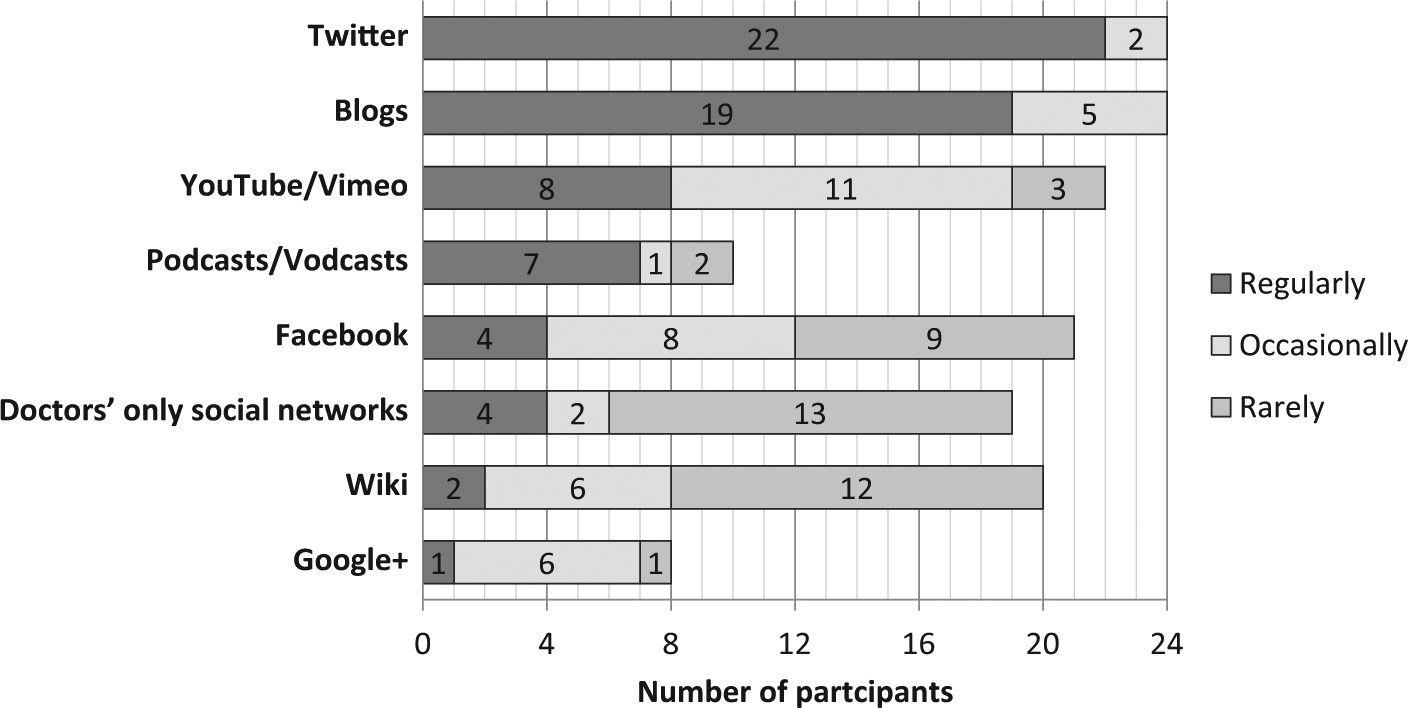
Frequency and types of social tools used by the study participants (N = 24).
According to the participants, Twitter best suits physicians’ needs in terms of keeping them up-to-date. Since physicians are usually busy, they have limited time to read and review traditional journal papers to keep up-to-date. However, Twitter’s availability on mobile devices has enabled physicians to receive updated information very quickly, and they are able to review Twitter updates at a time of their own choosing or even during their work time.
After Twitter, blogs were the main social media tools that the majority of the participants (19 out of 24) mentioned that they used regularly. Compared to Twitter, blogs had been largely used for case reporting and case-based discussions, providing literature summaries, sharing clinical tips, introducing controversial topics, and developing in-depth discussions. The participants mentioned that the main advantages of using blogs were to provide adequate space for writing, the possibility of commenting and developing discussions, and also the possibility of embedding multimedia files.
Multimedia sharing sites, such as YouTube and Vimeo, were the third main category of social media tools used by study participants. Compared to their use of blogs and Twitter, the majority of the participants had used multimedia sites only occasionally. As shown in Figure 1, 8 participants had used multimedia sites regularly, 11 participants occasionally, and 3 participants had used them rarely. The majority of the participants preferred to view embedded links of podcasts/vodcasts shared on blogs rather than search for them directly on multimedia sharing sites. Multimedia components on social media were used mainly for demonstrating practical clinical skills for broadcasting advanced discussions that occurred among experts about current issues and topics in the field, or for disseminating conference presentations.
Few participants had used wikis and social networks such as Facebook and Google+ regularly. The majority of the participants found Wikis technically difficult to use for authoring and contributing content. In addition, the anonymous nature of contributing on wikis had made the participants reluctant to use public wikis regularly. According to the participants, the lack of contributors’ responsibility for the content they share on wikis, as well as the lack of recognition by peers and the community, are the main disadvantages of anonymity on wikis. Despite these issues, a large number of participants acknowledged that they used Wikipedia when they needed to obtain quick information about a topic.
Social networks such as Facebook and Google+ were mainly used for personal use rather than for professional purposes. The personal–professional conflict of interest and the lack of professional audience were mentioned as the main reasons for not using public social networks. The participants did not mention the use of LinkedIn as a main communication tool. However, a search of their names on the LinkedIn web site revealed that almost all participants had a LinkedIn profile.
Similarly, the study participants rarely used dedicated social networking sites for doctors. This was mainly due to the lack of a wider as well as relevant audience, the inability to build personal branding, the discussion of administrative- and system-related topics on these platforms rather than clinical-related topics, and finally, the lack of awareness about the existence of such networks. Despite these findings, many popular physicians-only social networks such as Sermo, Ozmosis, and Medscape reported over 100,000 users each. However, as the researchers did not have access to the users of such networks, sufficient data were not available to compare and discuss the differences between the views about physicians-only social networks and other public social networks.
Reasons to use social media
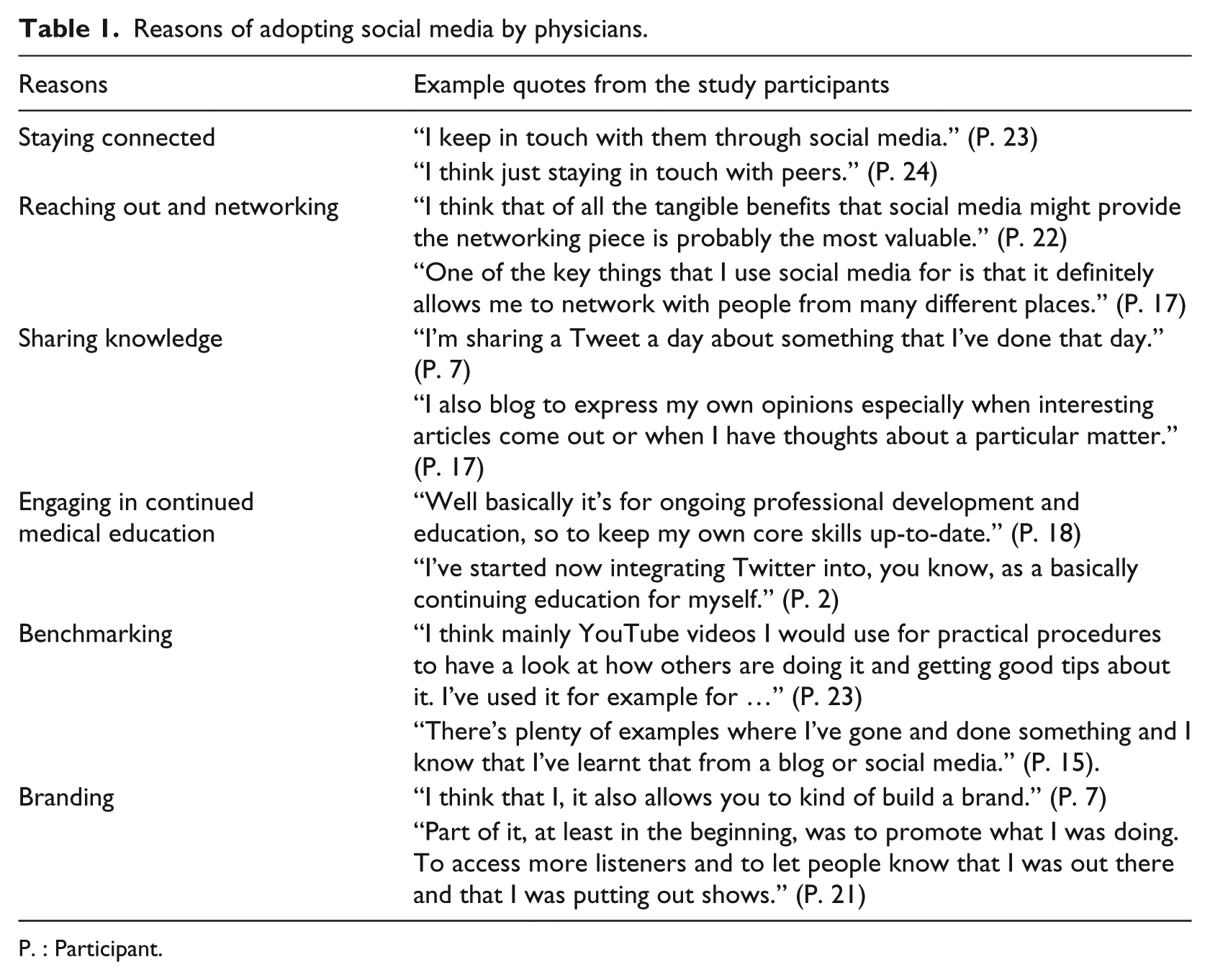
Previous sections have mentioned the frequency and types of social media tools used by the study participants. In addition, the specific reasons for using each tool were briefly introduced. This section presents the main reasons for the study participants to use social media platforms, regardless of the type of tool. The physicians who participated in the study mentioned a variety of reasons for joining and using social media. However, using thematic analysis, the main reasons for using social media by participants could be grouped into six main categories, as listed in Table 1. Selected interview quotes representing each reason are also provided in the table. The following sub-sections present the detailed discussion of each reason.
Reasons of adopting social media by physicians.
P. : Participant.
Staying connected
The study participants mentioned that social media enabled them to stay easily connected with past and present colleagues. With the ubiquitous nature of social media, availability anywhere and anytime, it is very easy to stay connected with peers. [Social media had enabled the participants to become aware of their colleagues’ work and projects by following their Twitter accounts or their blog posts. In addition, they were able to refer to their colleagues on social media for immediate questions, feedback, and assistance. The participants also mentioned that they were able to crowd source information regarding their particular problem from close friends and trusted peers on social media. In general, the ability of social media to keep colleagues connected was mentioned as one of the main advantages of using social media.
Reaching out and networking
One of the most tangible benefits of social media, according to the study participants, was the ability to reach out to a wider audience and to network with like-minded peers globally. According to the study participants, social media has removed traditional barriers of networking within and across organizations. It has enabled physicians to locate and develop relationships with people of different backgrounds from around the world. It promotes more inter-sectoral, inter-organizational, and international communication and networking between physicians. Conversations on social media establish an early connection that might later develop further into a stronger relationship in real time. The participants gave several examples of connecting with people around the world to work on projects, to publish journal papers, or to create joint podcasts/vodcasts.
In addition, the messages and contents shared on social media move virally among a much larger audience on social media. The potential audience on social media, according to the participants, includes both clinical and non-clinical communities such as patients, managers, politicians, and journalists. This wide audience provides more opportunities for networking, learning, and disseminating knowledge.
Sharing knowledge
Knowledge sharing was mentioned as one of the primary reasons for physicians to join social media. The participants stated that knowledge sharing through traditional mechanisms such as publishing in academic journals is difficult and time consuming. However, social media has provided opportunities to disseminate personal and experiential knowledge or commentaries on the literature much easier than ever before. Some of the advantages mentioned by the study participants that made social media a better choice for knowledge sharing are as follows: it is easy to join and use; it has user-friendly interfaces and functionalities; it is multimedia-oriented and supports a variety of media such as text, images, and audio–video components; it is ubiquitous and can be accessed anywhere, anytime; and it allows access to a much larger audience.
Engaging in continued medical education
The majority of study participants mentioned continuing medical education as another main reason for joining social media. Most physicians find it difficult to keep up with current medical knowledge and information after they graduate from university. Traditionally, physicians used journal papers or educational opportunities to stay up-to-date. According to the study participants, the traditional mechanisms are usually delayed and less effective in terms of time management for busy physicians, whereas information and knowledge on social media moves very fast compared to traditional publications. They usually appear on social media before they get published in traditional hardcopy formats.
In addition, the professional information on social media is usually filtered by enthusiastic peers. In other words, the participants usually receive the most relevant information that has been reviewed and recommended by trusted people and sources on social media, provided that they have already established those trusted connections. Furthermore, most of the knowledge shared on traditional media, according to the participants, is scientific knowledge that most practitioners are rarely interested in, whereas social media discussions are mainly focused on experiential and practical knowledge sharing that most practitioners are eager to learn. According to the participants, social media also provides opportunities to obtain much broader knowledge about a field due to interaction with large groups of clinical communities.
The participants believed that social media provides a phenomenal educational opportunity. It is going to change continuing medical education. However, it must be aided by healthcare organizations, for example, there is a need for clear, proper, and internationally accepted social media policy that not only regulates, but also promotes the usability of social media. The study participants hoped that with generational change, increased access to the Internet, and an increased sophistication of social media in terms of enhanced ability to leverage educational content, social media will find its place in medical education in the near future.
Benchmarking
Becoming aware of new and advanced clinical practices and learning, and incorporating these into practice, was also mentioned as another main reason to use social media. According to the study participants, multimedia sharing platforms provide enormous opportunities for ordinary clinicians to record newly recognized clinical practice and disseminate it easily on social media channels. Clinical practice is sometimes conducted differently around the world. Social media provides opportunities to become aware of different ways of performing the same skill and benchmarking the most effective one. Permanent availability of multimedia files on social media and also the possibility to ask questions or provide comments and feedback were mentioned as some of the main advantages of using social media for benchmarking clinical practices.
Branding
Another reason that participants used social media was associated with the opportunities for personal branding on social media. Anyone could use social media to share and promote his or her own particular knowledge, experiences, and findings. Many participants expressed the view that everyone can have a voice on social media and establish her or his own “street credibility.” This has now motivated many physicians to look at social media as a way to establish and obtain academic or professional affirmation. Many physicians now have a profile shared on social media tools that introduces their work and areas of interests, and this enables them to develop more professional contacts and encounter more collaboration and work opportunities.
In addition to the major reasons discussed above, the participants mentioned several other reasons to use social media. Examples of these include educating and interacting with patients, reducing email communication, effective use of time, and collective learning. Some of these reasons were discussed as part of the main categories presented above. Some others were mentioned less frequently or were perceived by the participants as useful but less important reasons to use social media.
Challenges of using social media
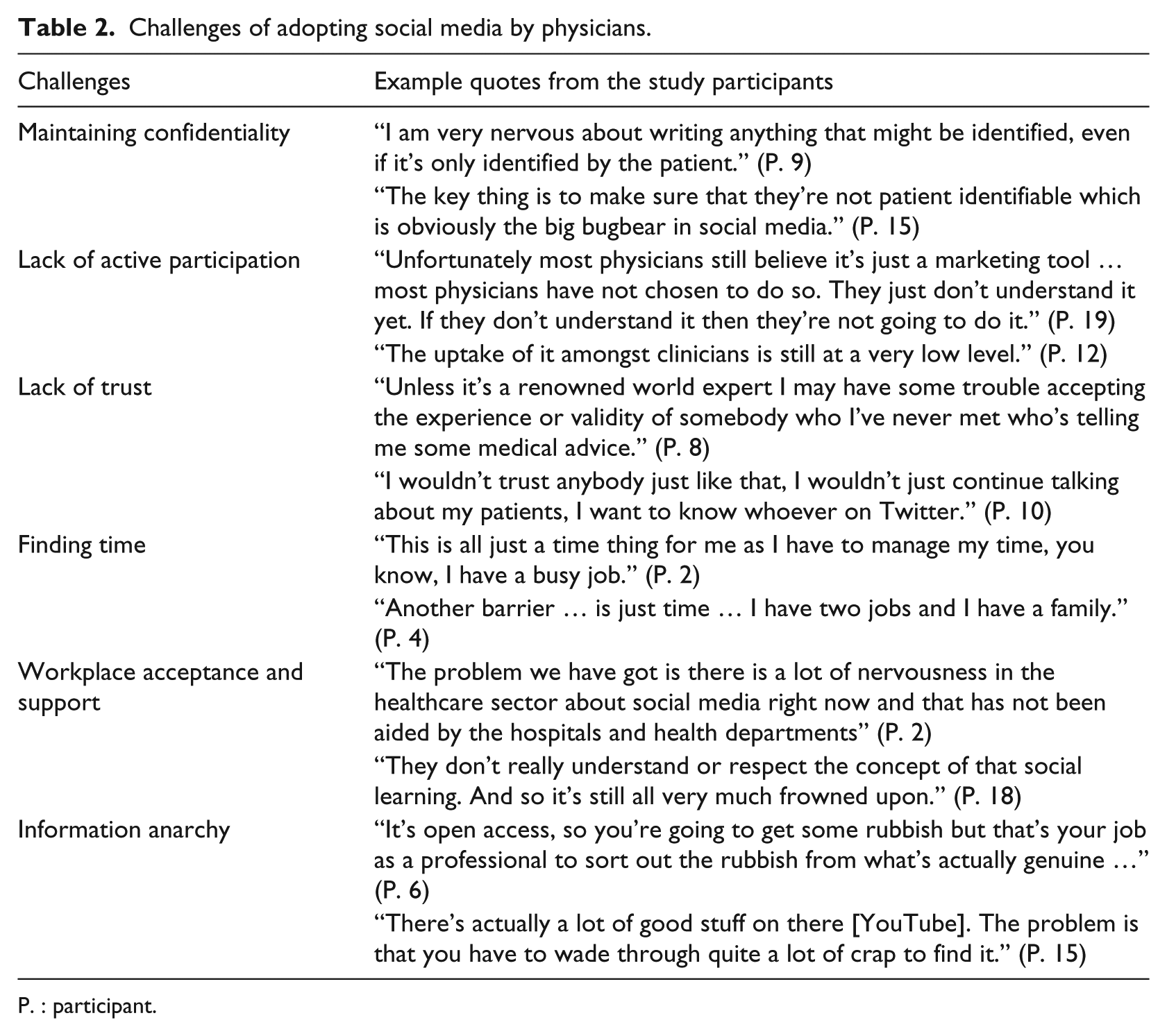
Despite the perceived benefits for physicians to adopt social media, the study participants also reported several challenges that sometimes made it difficult for them to employ this media in communications with peers and for knowledge sharing. Using the thematic data analysis approach, the data were reviewed to explore some of the challenges that physicians encounter when using social media. For the purposes of this discussion, the findings were grouped into six main categories based on importance as well as frequency of occurrence in the data. Table 2 presents the six principal challenges that revealed from the data analysis. The table also provides two samples of the participants’ points of view about each challenge. A detailed discussion of each challenge is provided in the following sub-sections.
Challenges of adopting social media by physicians.
P. : participant.
Maintaining confidentiality
Maintaining patients’ confidentiality or privacy was mentioned frequently as one of the major challenges and barriers to participating in social media conversations. According to the study participants, sharing any patient’s specific or identifiable information on social media is considered a breach of patient privacy rules such as Health Insurance Portability and Accountability Act (HIPPA) in the United States. The participants believed that the risk of unwittingly disclosing patient information on public social media tools such as Twitter, blogs, and YouTube is higher than on any other knowledge-sharing tool. The participants mentioned that even in the dedicated online social networks for doctors, which are supposed to be highly secure, there is always a chance of leaking patient information.
The fear of not maintaining patient privacy appropriately on social media has created a situation where some participants viewed social media as a risky place to share an individual patient’s stories. There is the possibility that the sharer’s job or position might be jeopardized if patient privacy is not respected properly on social media. The situation has led to a lot of physicians staying passive on social media.
As recommended by the study participants, the best way to keep patient confidentiality on social media is to regard social media as part of their everyday professional communication, act completely professionally from the beginning, and adhere to the same patient privacy principles and codes of conduct that are required in the workplace. Physicians must not reveal any actual patient information on social media. All patient-related information must be substantially de-identified or patient consent must be obtained before sharing patient information on social media, as recommended by the participants.
In addition to respecting patient privacy, there is a need to respect colleagues as well as organizational privacy on social media, according to the study participants. Physicians using social media must be careful not to harm their colleagues or organization by sharing information which may influence their position or reputation.
Lack of active participation
Another important challenge that was highlighted by the study participants relates to the lack of active participation of physicians on social media. The participants stated that there is a fundamental lack of understanding of social media among physicians and healthcare organizations. Many physicians still do not believe in the efficiency of social media for knowledge sharing. They view it as a time wasting effort whose benefits are not tangible enough. As expressed by some of the participants (see Table 2), this lack of understanding is one of the main reasons that many physicians have not completely adopted social media tools.
Those who have adopted social media are also using it predominantly as a lurker. They do not contribute often on social media. However, the participants believed that lurkers also receive value from social media by reading, listening, or watching contents shared on social media, even though they do not contribute much. Currently, there is no significant culture of participation among physicians on social media. According to the study participants, only a small percentage of physicians eagerly and regularly contribute to the social media conversations. They are just beginning to pay attention to this new technology. However, physicians who are personally interested in engaging in knowledge-sharing activities now appear to be attracted by the potential offered by social media platforms, particularly Twitter and blogs.
Lack of trust
Lack of trust was also addressed by the study participants as one of the major challenges to using social media for knowledge sharing. Physicians do not easily trust other people on social media when the information is related to medical knowledge and practice. Social media is open to everyone regardless of their educational and professional qualifications, and anyone can pretend to be anything or speak more authoritatively than other people on social media. There is no close or face-to-face interaction among social media participants in which they are able to easily assess someone’s trustworthiness. Authors’ credentials are not always assessable on social media. Consequently, there might be a lack of trust or a reluctance to accept what has been shared on social media.
As shown by the examples of the participants’ viewpoints in Table 2, physicians do not simply trust everyone on social media. The majority of physicians only trust people who they know and who they have met face-to-face in real time. They also trust people who are well known in their field. Other approaches for trusting people on social media, according to the study participants, included recommendations by colleagues, observing the authenticity, consistency, and relevancy of voice, evaluating professional standing of sharers, and using trusted sites.
Anonymity is reported as one of the main barriers to developing a trusted relationship on social media. Some physicians participate on social media anonymously due to their employers’ restrictions on the use of social media or because of the strict rules about maintaining patient privacy. The study participants appreciated the need for anonymity on social media, which was sometimes due to personal security and privacy issues. However, it would be difficult for anonymous users to establish trusted relations on social media, according to the participants.
According to the participants, knowing basic information about a sharer is the first step to initiate conversation and develop trust on social media. It is particularly important in the medical context where patients’ lives matter most for physicians. Furthermore, the participants believed that developing trust on social media does not occur as quickly as it does in face-to-face interactions. It is built up over time and via regular reciprocal communication that provides opportunities for better knowing and understanding each other.
Finding time
Finding sufficient time to use social media was also mentioned by the majority of the study participants as another major barrier to engaging in social media effectively. According to the study participants, physicians have a busy profession and barely have enough time to spend on social media. Most work multiple shifts. They have many other priorities and pressing needs in their professional and social life, which make it difficult for them to allocate sufficient time for social media. Indeed, many physicians who contribute to social media are mainly doing it at the expense of their other commitments, such as spending time with their family and friends. In addition, it is likely that very few physicians are paid for contributing on or using social media for educational purposes. It is mostly altruistic work, as expressed by some participants.
On the other hand, although contributing on social media was believed by the participants as easy to do, it was also described as a time- and effort-consuming activity. For example, the participants stated that writing a short blog post requires time for research, reflection, referencing, typing, and posting on a blog. Creating a video or an audio post was also mentioned as another example that needs extra time to set up devices, to record, and edit in order to share on social media platforms.
In general, finding a time to contribute on social media was perceived too difficult for busy physicians. An inability to dedicate sufficient time may minimize the opportunity for regular communication on social media, which is necessary for developing a mutually trusting relationship.
Workplace acceptance and support
Another significant challenge that was revealed by the study participants was related to the lack of understanding and support by their workplace in adopting social media for knowledge sharing. The study participants stated that there is a serious lack of understanding about social media among healthcare organizations. Most do not support or have even banned social media use by physicians across the entire organization. According to the study participants, healthcare managers do not understand the value of social media and tend to view it as time wasting or a risky place that may lead to compromising patient privacy. The participants told that they needed to put a substantial effort into demonstrating the validity and usefulness of social media to their managers.
The example participant quotes in Table 2 show that, healthcare organizations are very protective and conservative about social media. Physicians and other clinical staff are not formally allowed to use social media in most healthcare organizations. Those who use social media mostly use it privately or anonymously, by using a pseudonym, for example, without the knowledge of their organizations, and only outside working hours. The participants stated that there is always a fear of being fired among physicians for the use of social media that sometimes makes them reluctant to use social media even outside the organization.
The physicians who participated in the study expressed their dissatisfaction with some of the strict restrictions imposed at their workplace in regard to social media use within or outside of the organization. The main reason that healthcare organizations do not promote the use of social media among clinical staff is probably related to the high potential of violating patient privacy on social media, as discussed above. The participants acknowledged that the need to protect patient privacy on social media is critical and indisputable. However, completely blocking the use of most popular online social networking tools in today’s society was not perceived as reasonable by the majority of the study participants.
Information anarchy
Information anarchy on social media is another challenge that was mentioned by the study participants. Social media is open to everyone regardless of their educational and professional qualifications. The openness of social media has advantages and disadvantages. The main advantage of the openness of social media is related to its ability to allow everyone to find and have her or his own individual voice. However, one of the disadvantages of the openness of social media is information anarchy. Information anarchy generally describes a situation where there is no formal information management policy and no hard control of data. 14 Information anarchy on social media can also be defined as a state where finding the relevant information is difficult due to the less organized and chaotic nature of information created and shared.
According to the study participants, social media has mixed users, which range from, for example, fans of music bands to professionals and scientists who are participating on a single platform simultaneously. Social media is primarily a place for social conversations. Even conversations among professionals are mixed with both social and professional conversations. In addition, there is much background noise such as advertisements, marketing offers, and spam, which make it sometimes difficult for physicians to concentrate on their main purpose. There is no strict regulation and control of data shared on social media. Consequently, an amalgam of information is shared and available to physicians who use social media. This information anarchy makes it sometimes challenging and tedious for physicians, particularly beginners, to find relevant information on social media.
The study participants stated that there is always a need to filter out relevant content as well as relevant people on social media due to its openness and the diversity of its users. Therefore, as recommended by the study participants, the first step on social media is probably to create a list of like-minded people and trusted sources. The list can be altered over time by observing the sharers’ online presence and determining their trustworthiness and relevance.
In addition to the six major challenges already discussed, there were other issues mentioned by the study participants that probably needed further exploration. Examples included: the inability to build personal branding on wikis, a fear of writing for public consumption, a risk of becoming addicted to using social media, the availability of numerous social sites, the inability to retract errors, and the unpredictable nature of social media.
Discussion
The study showed that blogs, Twitter, and multimedia sharing sites were the three main social media tools that the majority of the physicians who participated in the study were interested in and used frequently. Although these findings challenge some of the findings of previous studies that found that the most used social media tools by physicians were physician-only social networks 2 or Facebook, YouTube, and LinkedIn, 3 due to the small sample size of this study (24 participants), the findings are not sufficiently generalizable or comparable with previous studies.
The study also uncovered that the main reasons that attracted physicians to the use of social media were as follows: staying connected with colleagues, reaching out and networking with the wider community, the desire for knowledge sharing, continuing medical education, benchmarking practice, and personal professional branding. A few studies had previously highlighted the reasons for adopting social media tools by physicians. For example, Usher 7 found that Australian physicians adopt social media because it provides a quick and effective way to communicate; has the ability to be used effectively; is appealing for younger patients; they have had requests from patients; it is enjoyable; it has ease of mobility; and it provides a forum for finding relevant health information.
Hughes et al. 9 have also revealed that junior physicians are interested in Web 2.0 tools because of their ease of use, their structure, and the breadth of information that these sites provide. Some studies also found that social media is useful for continuing medical education.9,15 More recently, Antheunis et al. 3 also found that healthcare professionals mainly use LinkedIn and Twitter to communicate with colleagues, extend their network, share knowledge and news, and also promote their services. The current study, while acknowledging some of the previous findings, provides a more overarching view of why physicians use social media.
In addition, the study revealed that physicians encounter several challenges while using social media. The main challenges included: maintaining confidentiality, lack of active participation, finding time, lack of trust, workplace acceptance and support, and information anarchy. These findings support the previous findings that preserving patient privacy16–18 is one of the major barriers in social media adoption in healthcare. It also supports some of the other findings of previous studies, such as lack of support and the need for regulation and appropriate policy,19,20 lack of time,7,18 lack of understanding of the actual benefits of social media in healthcare, and the potential risk of developing addictive behaviors. 7 The study also revealed new challenges such as the lack of active participation and information anarchy as other important challenges that physicians experienced when adopting social media.
Among the six challenges that the current study revealed, protecting patient privacy and the lack of trust are probably the most critical issues surrounding the adoption of social media practice in healthcare that need to be carefully approached. Indeed, these challenges have compelled many healthcare organizations to refuse to formally embrace social media tools or even to prohibit their use within their organization. 6
Most of the benefits and challenges of adopting social media by physicians, which were found in this study, might also be relevant for professionals other than physicians. In other words, staying connected, reaching out and networking, sharing knowledge, engaging in continued education, benchmarking, and branding might also be reasons for adopting social media by other professionals. Similarly, maintaining confidentiality, lack of active participation, lack of trust, finding time, workplace acceptance and support, and information anarchy might also be challenges of adopting social media by other professionals. However, some of them are more common in healthcare. An example could be protecting patient privacy which is very critical in medical practice and influences the total use of social media by healthcare professionals. Another example could be workplace acceptance and support which was reported as one of the major barriers in adapting social media by physicians, probably again because of the issues related to preserving patient privacy on social media. Other professionals may not have such difficulty in adopting social media, and their organizations may even promote using social media. Trust could also be another example as clinical practice needs more of reliable information, and trusting information and people on social media might be different for physicians when compared to other professionals.
Conclusion
In summary, social media is a new technology in the healthcare domain. Adopting social media has both benefits and risks for physicians. Currently, physicians and other healthcare professionals are facing several challenges in their adoption of social media for knowledge sharing. In spite of the limitations discussed above, the social nature and wider audience of social media has attracted many physicians around the world. The participants believed that it is worth joining social media to keep up with new advancements and to engage in conversations with peers available beyond their immediate local access. It cannot replace face-to-face communication and learning in real time, particularly for novices in the medical practice. However, it is an appropriate adjunct to real-time learning and amplifies the learning experience.
The participants of the study believed that the future of social media in healthcare is promising. It is currently underutilized and fairly unregulated. However, it is expanding and now many major healthcare organizations and professionals are looking closely at social media. Social media may well revolutionize medicine in terms of consultations, professional interactions and networking, cross-organizational knowledge sharing, transforming continuing medical education, and democratizing healthcare by allowing more people (including patients, journalists, other clinical professionals or enthusiasts) to have a voice and get involved in medical related activities.
Although the study had limitations in terms of the generalizability of the findings due to small sample size and also interviewing only active users of social media, the study provided detailed findings (unlike previous quantitative studies) of how physicians adopted social media. The findings may provide an opportunity for healthcare professionals, healthcare providers, administrators, and information technology (IT) decision-makers to better understand the scope and impact of social media in healthcare. These insights could be used in determining how to adopt and harness social media effectively and to maximize the benefits for the specific needs of the clinical community. This is important, as there is currently a widespread skepticism about and mistrust of the viability of social media for knowledge sharing in healthcare.
Finally, the study necessitates further empirical studies on how physicians use social media tools, in particular by studying the perspectives and experiences of both users and non-users of social media, investigating the use of further social media tools by physicians, and examining social media use by different communities of physicians and other healthcare professionals in different geographical locations. Conducting both quantitative and qualitative studies is recommended to better understand the phenomenon of adopting social media in healthcare.
Footnotes
Declaration of conflicting interests
The author(s) declared no potential conflicts of interest with respect to the research, authorship, and/or publication of this article.
Funding
The author(s) disclosed receipt of the following financial support for the research, authorship, and/or publication of this article: The study received financial support from Iran University of Medical Sciences and Queensland University of Technology.