




Abstract
This article aims to characterize the different types of Facebook and Twitter groups for different mental diseases, their purposes, and their functions. We focused the search on depressive disorders, dementia, and Alzheimer’s and Parkinson’s diseases and examined the Facebook (www.facebook.com) and Twitter (www.twitter.com) groups. We used four assessment criteria: (1) purpose, (2) type of creator, (3) telehealth content, and (4) free-text responses in surveys and interviews. We observed a total of 357 Parkinson groups, 325 dementia groups, 853 Alzheimer groups, and 1127 depression groups on Facebook and Twitter. Moreover, we analyze the responses provided by different users. The survey and interview responses showed that many people were interested in using social networks to support and help in the fight against these diseases. The results indicate that social networks are acceptable by users in terms of simplicity and utility. People use them for finding support, information, self-help, advocacy and awareness, and for collecting funds.
Introduction
People need to share their experiences, emotions, and/or doubts to find support, so that they do not feel alone. Aristotle said that man is a social animal. 1 This need is accentuated when someone suffers from an illness. Neurodegenerative diseases are incurable and debilitative conditions that result in progressive degeneration or death of nerve cells. These diseases and mental illnesses, like depression, are not exclusive to a panel. According to estimated data provided by the World Health Organization (WHO), more than 450 million people suffer from mental disorders. 2
An online social network is a relatively new type of virtual community that is designed to allow members to build relationships with other members of the community.3,4 People get support from other Facebook or Twitter users when they made public some comments, so it may be used as a mini-support group for depression, for example.5–8 It is possible that depression disclosure on social network may actually help to reduce the stigma around mental illnesses. Engagement in social media and online communities can enhance communication, facilitate social interaction, and help to develop technical skills. 9
Depressive illnesses are disorders of the brain. 10 The WHO estimates that 120–200 million people, about 3 percent of world population, suffer from depression. 11 Depression is probably the most common psychological disorder and the one that receives the most attention. This disease makes a person feel sad, hopeless, worthless, pessimistic, and guilty.12,13 Alzheimer’s disease is a form of dementia that gradually worsens over the time and affects memory. 14 The WHO estimated that about 24 million people suffer from Alzheimer’s disease, and these numbers are increasing due to population aging. 15 Parkinson’s disease is a degenerative disorder of the central nervous system. 16 The Parkinson’s Disease Foundation estimated that 7–10 million people worldwide are living with Parkinson’s disease. 17 Dementia is the loss of mental functions such as thinking, memory, and reasoning, and it is severe enough to interfere with a person’s daily functioning. 3 Overall, 35.6 million people were estimated to be living with dementia in 2011, with 7.7 million new cases each year.18,19 These data emphasize the importance of these diseases for society.
Related work and motivation
In the last few years, the Internet has been used for providing health care in different forms. Hence, it has been used for many interventions such as the ones that support older adults in self-management of chronic disease20,21 and for online support groups such as ones for supporting those people bereaved by suicide. 22
Special attention has been given to social networking sites, which have been already used for the prevention and treatment of several diseases or conditions. Hence, they have been used for quitting smoking,21,23 for peer supporting in cancer patients,24,25 and for HIV prevention, 26 for example.
There are also several studies about these online interactions related to mental health. This way, some researches are dedicated to obtain the percentage of individuals using different types social networks for the management of their mental diseases; 27 others try to assess the efficacy and effectiveness of online communities over formal mental health services 28 or just Internet-based interventions; 29 some make recommendations for these groups; 30 many of them are about specific groups, websites, or diseases;31–34 others are studies of specific cases of people with a mental disorder and their participations in social networks;35,36 some study the relation of the use of these networks and the possibility of being affected by a mental illness; 37 and even there are articles that use social networks to assess mental health collaboration. 38
Summing up, there are many different studies of social networks and mental health, but there are no reviews of the state of the arts of all these online services and groups, and therefore, this article will try to fill this gap, presenting a content analysis of Facebook and Twitter groups related to depression, dementia, Alzheimer, and Parkinson. We have chosen these four diseases because they are the most prevalent worldwide, and it is estimated that the number of patients is increasing exponentially. Similarly, Facebook and Twitter were selected for being the two most popular social networking sites. 39 The principal aim of this article is to assess which types of groups dedicated to these diseases are available, which have more members, what are their functions, and how are they seen by the patients and their relatives. This work will be focused on the extraction of statistical data in order to evaluate the efficacy of these groups from the point of view of the users and their tendencies.
Methods
The best way to obtain the desired data was to perform searches on the selected social networking sites using specific keywords. Therefore, on January 2013, we searched groups for the mental diseases mentioned on Facebook and Twitter because they are the two most popular social networking sites, 39 using the search engine provided by these platforms. Search keywords used were “depression,” “dementia,” “alzheimer,” and “parkinson.” This study incorporates all kind of Facebook and Twitter groups, including groups created by patients’ relatives, researcher groups, national and international foundations, and non-governmental organizations (NGOs), which can be focused on prevention, treatment, fund raising, cures, or general information.
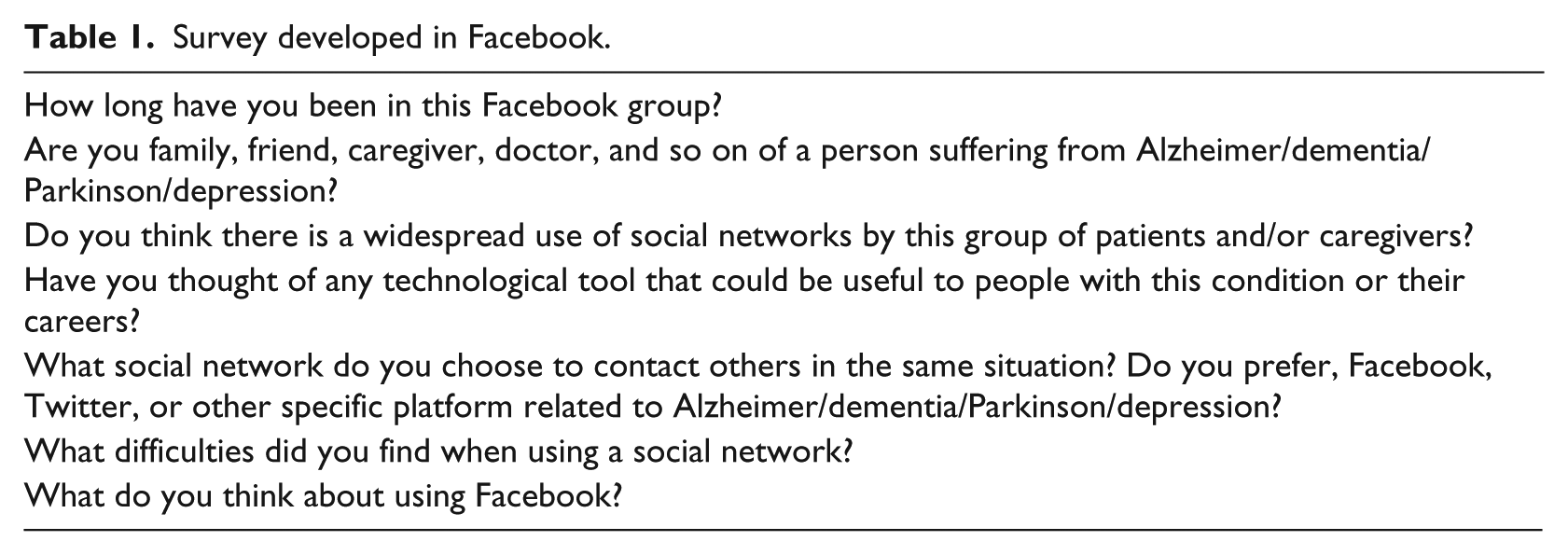
For obtaining feedback and the feelings from the users of these groups, we developed a survey with several questions, used in the second part of this research, which was analyzing the responses and free commentaries of some questions asked in a survey conducted in Facebook. In Table 1, we can see the different questions, and Figure 1 shows examples of the results obtained in one of the searches performed.
Survey developed in Facebook.
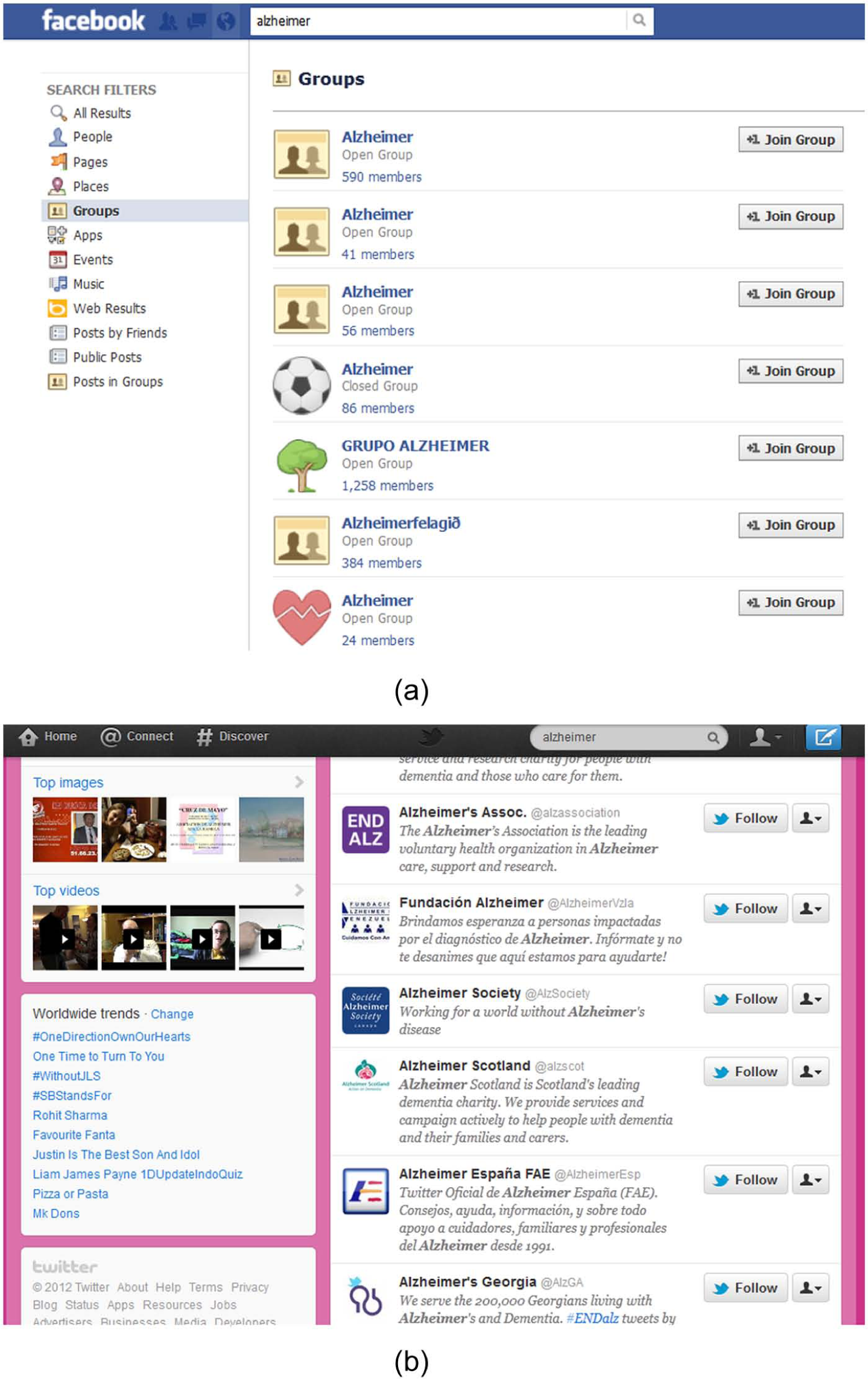
Search results on Facebook and Twitter: (a) sample of Facebook search result and (b) sample of Twitter search result.
Data extraction
Each group has been analyzed extracting the following data: general characteristics such as group name, purpose, and creator (type and localization) and user-generated content such as number of members, wall posts, events, photos, documents, number of tweets, number of followers, and other important information about telehealth content. One author read all the groups, selecting those interesting for the study and coding them in a spreadsheet by using the previous data. Any problems were noted and, once the analysis was completed, these were discussed by the authors. Finally, another author validated the findings of the one who performed the search, conducted a statistical analysis using Statgraphics for the statistical analysis of them, 40 and developed the questions of the survey.
The survey was posted on the Facebook ‘walls’ of 20 groups selected randomly, and any group participant was free to complete it. The administration and execution of the surveys were done as follows: first, the survey was posted on the wall of each group, then we waited for a month to get the answers received, and finally, we collected all the answers and analyzed them.
Data analysis
Analyzing the extracted data, we could classify the purpose of each group. This step led to the identification of the five main types of groups of the four diseases:
Support groups. Members provide each other with various types of help.
Informant groups. They are created to satisfy the emotional needs of survivors or those affected by the disease, both patients and their family or friends.
Self-help groups. This group includes people who share a common desire to overcome mental illness or otherwise to increase their level of cognitive or emotional well-being. They are different from support groups because here the users just expose their experiences or achievements in order to stimulate other users to achieve them too, not giving specific advice to a individual user, as happens in support groups.
Advocacy and awareness groups. They are created to raise awareness of the importance of these diseases.
Fund collecting groups. They are created to solicit and gather voluntary contributions as money or other resources.
We also examined the creators of the groups, and we found eight types: associations, 41 societies, 42 foundations, 43 collectives, 44 individuals, 45 companies, 46 caregivers, 47 and specialists. 48
Results
Summary
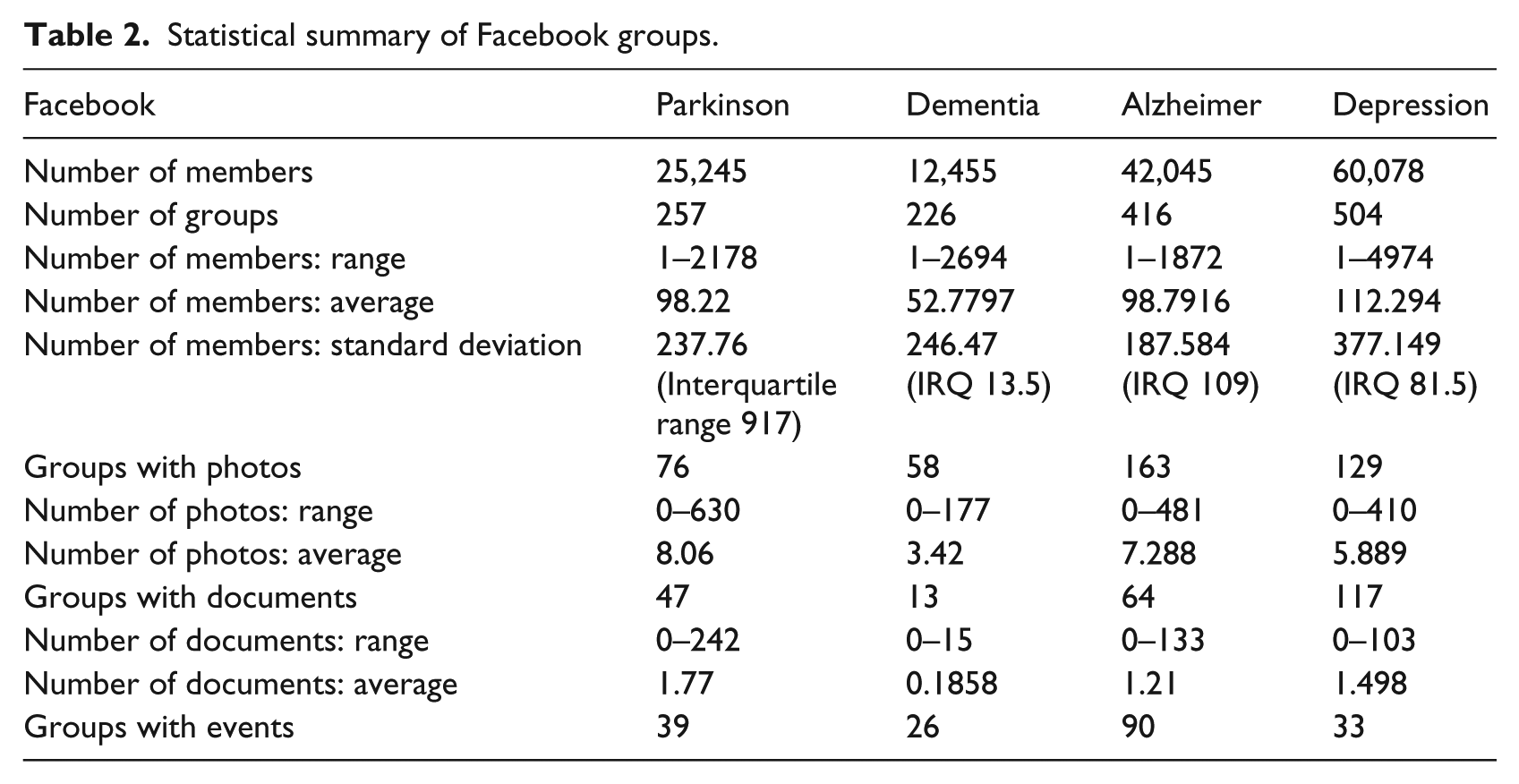
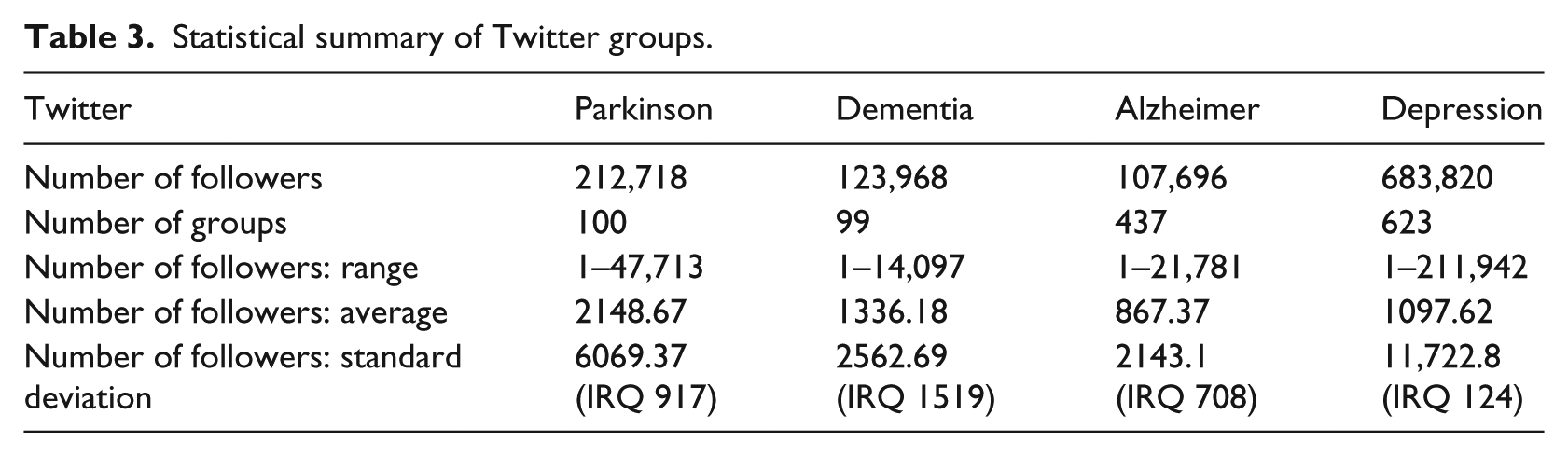
Figure 2 shows the main results regarding the number of groups by disease and the number of members on Facebook and on Twitter. In Tables 2 and 3, summary statistical data for each disease are shown. Table 2 has Facebook data and Table 3 is for Twitter.
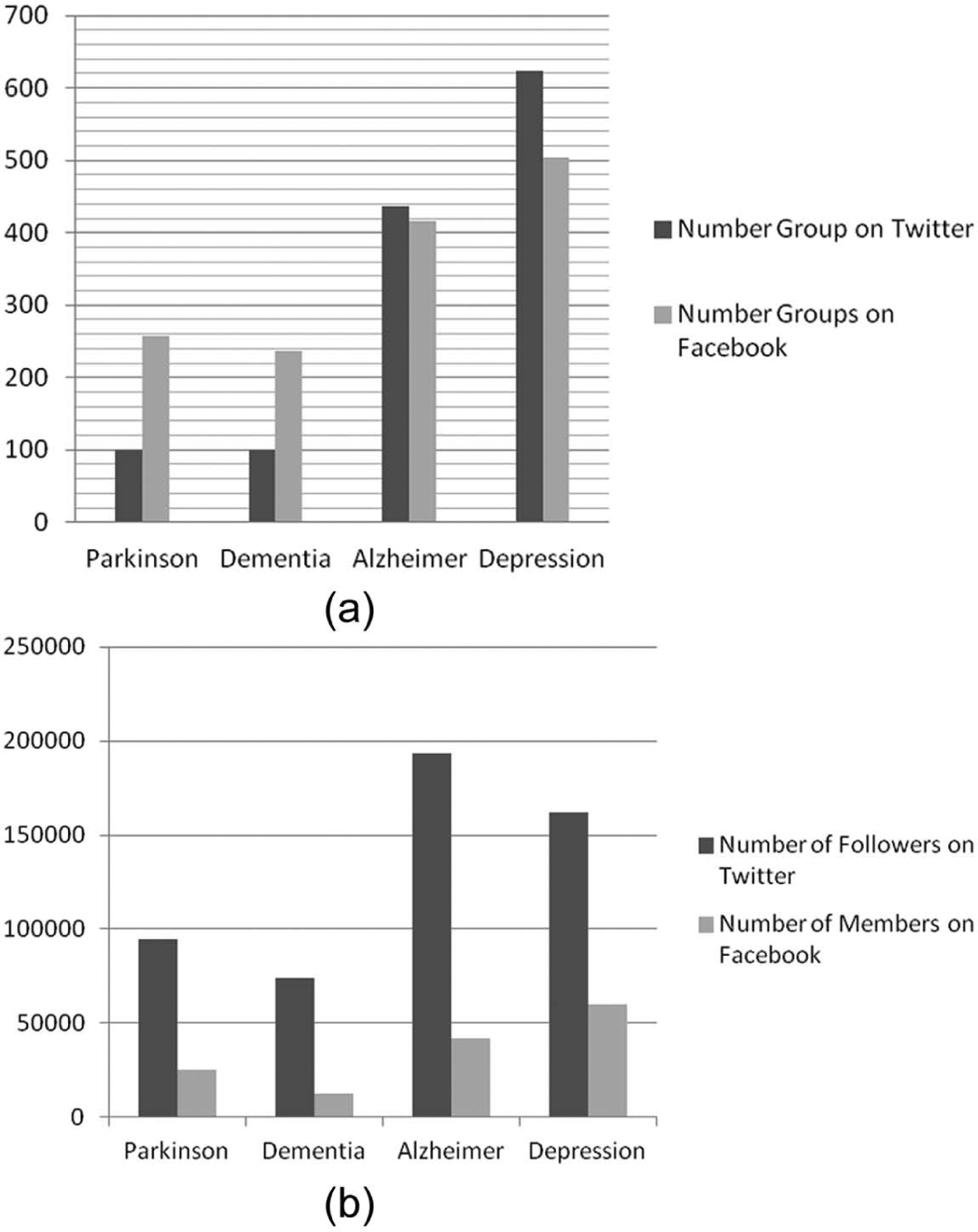
(a) Number of groups on Facebook and on Twitter and (b) number of members on Facebook and on Twitter.
Statistical summary of Facebook groups.
Statistical summary of Twitter groups.
Parkinson’s disease
In this research, we found a total of 237,963 Facebook and Twitter members who are followers of one or more of the 357 groups. Figure 3(a) shows the main objectives of the groups found on Facebook. The main group is self-help groups (28.02%), groups where all the members share a common problem, i.e. Parkinson’s disease. Furthermore, 22.57 percent of people belong to an advocacy and awareness group. The goal of 20.23 percent of these groups is raising funds.
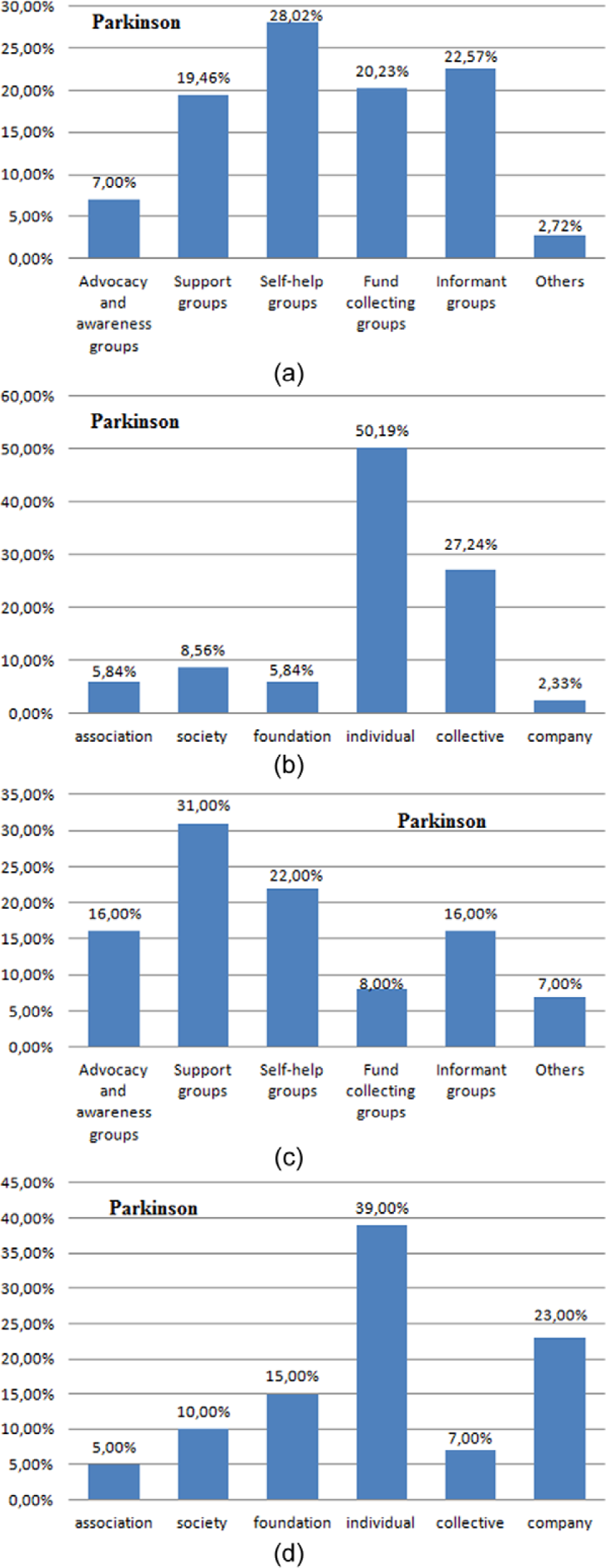
Main issues and creators for Parkinson’s disease: (a) main issues of Facebook groups, (b) main creators of Facebook groups, (c) main issues of Twitter groups, and (d) main creators of Twitter groups.
Regarding the creators of the groups, we can see in Figure 3(b) that the most abundant is an individual creator (50.19%), followed by collectives (27.24%). The numbers of foundations (5.84%), associations (5.84%), or societies (8.56%) are also important in this case.
Figure 3(c) and (d) show the same data for Twitter. The aim of some groups is disease support (31%). There are a variety of organizations that offer support for patients, their family members, and friends. In all, 22 percent of groups are self-help groups. The goal of 16 percent of the studied groups is people who provide information about the disease, while other 16 percent have the disease awareness as their objectives. The remaining 7 percent are employed in other uses. Concerning the creator, 39 individual is a person and 23 percent is a organization.
Dementia
We found a total of 13,642 Facebook and Twitter users who were members of one or more of the 325 groups. Figure 4 shows the main uses and creators of the dementia groups in Facebook (Figure 4(a) and (b)) and Twitter (Figure 4(c) and (d)).
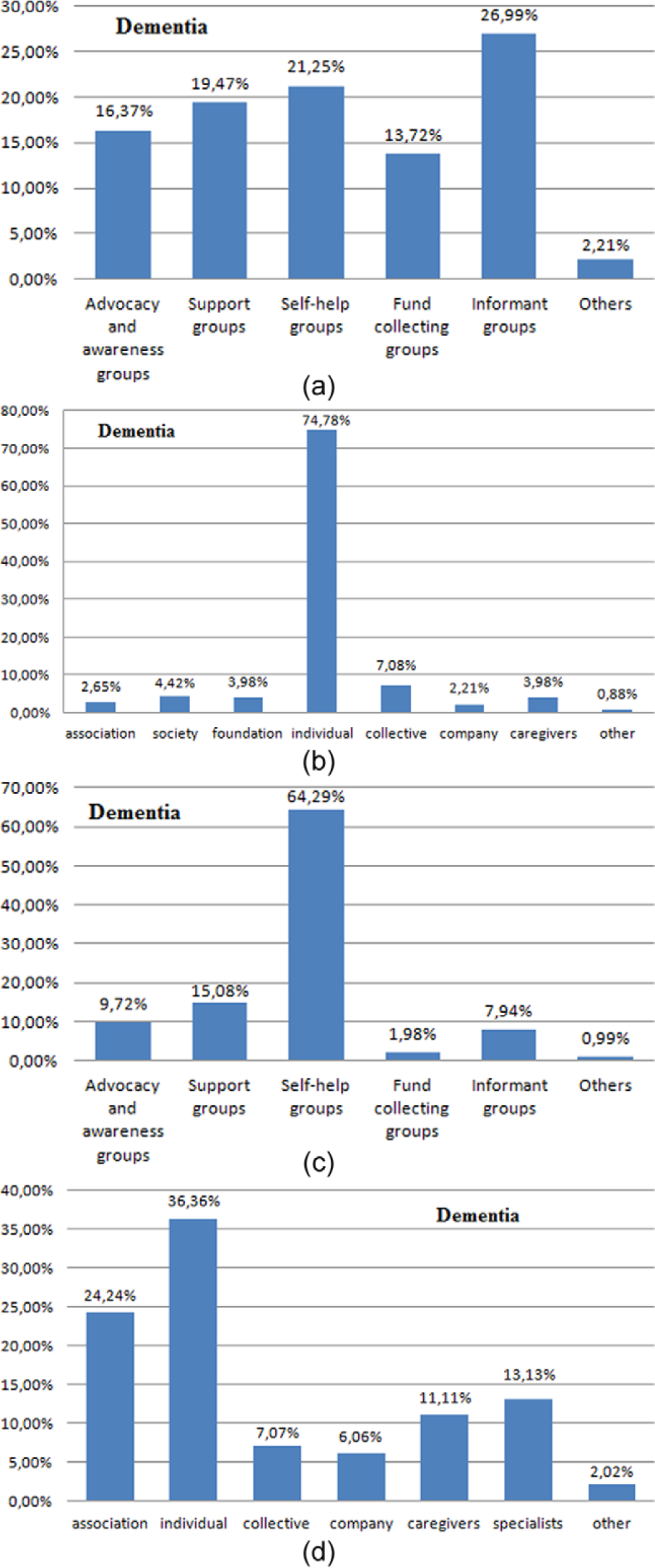
Main issues and creators for dementia: (a) main issues of Facebook groups, (b) main creators of Facebook groups, (c) main issues of Twitter groups, and (d) main creators of Twitter groups.
The main use of Facebook concerning dementia is to provide information about this disease (26.99%); 21.25 percent are self-help groups, whereas 19.47 percent have the aim of supporting patients and their relatives. The most abundant creator is an individual creator with 74.78 percent, the rest are collectives, associations, or societies dedicated to help, support, inform, and fight against this disease.
The goal of 64.29 percent of the studied groups on Twitter is self-help, while 15.08 percent is committed to supporting patients and relatives who are fighting against the disease. Of the users taking part in these groups, 9.72 percent have the advocacy and awareness raising as objective and 7.94 percent provide information of the disease, while 1.98 percent of them are aimed to obtain funds. Of these groups, 36.36 percent are created by an individual, 24.24 percent are created by an association, and 13.13 percent are created by specialists.
Alzheimer
We found a total of 149,741 Facebook and Twitter users who were members of one or more of the 853 groups. Figure 5 shows the main uses and creators of the Alzheimer groups in Facebook and Twitter.
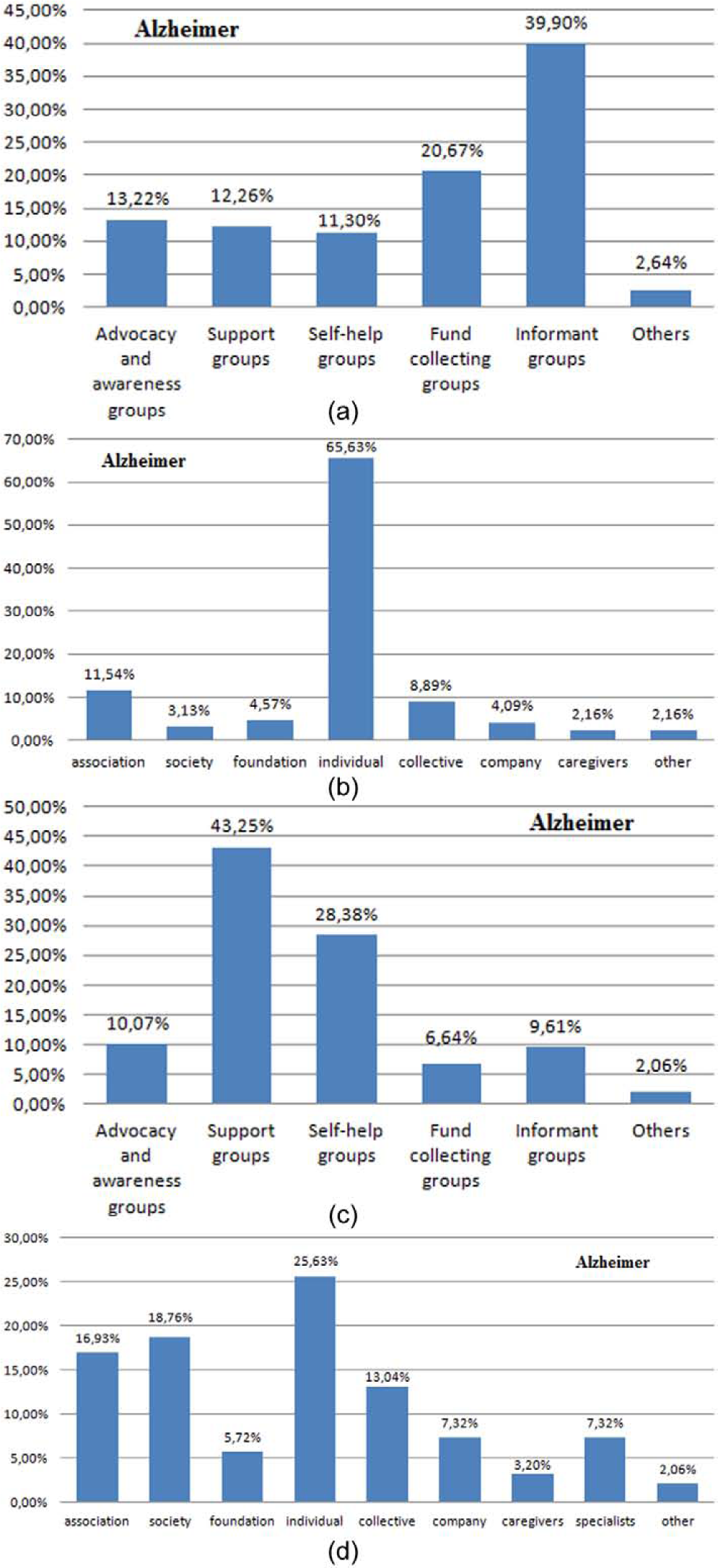
Main issues and creators for Alzheimer’s disease: (a) main issues of Facebook groups, (b) main creators of Facebook groups, (c) main issues of Twitter groups, and (d) main creators of Twitter groups.
The main use of Facebook concerning Alzheimer is to inform about this disease (39.90%). The goal of 20.67 percent of the groups is the fund collection to continue the investigation of this illness. In all, 13.22 percent of people belong to an advocacy and awareness group, 12.26 percent support the fight against the disease, and 11.30 percent of the groups are self-help groups. The most abundant creator on Facebook is an individual (patients, family, etc.) with 65.63 percent, followed by association groups who are fighting and supporting this disease (11.54%).
As we can see in Figure 5(c), the main aim of the groups in Twitter (43.25%) is to support families, caregivers, and patients. Of the groups, 28.38 percent are self-help groups, whereas 10.07 percent of people belong to an advocacy and awareness group. Also, 9.61 percent of people want to get better information about Alzheimers, and the goal of 6.64 percent of the groups is fund raising for the disease. As usual, the most abundant creator is an individual (25.63%), followed by societies (18.76%) and associations (16.93%).
Depression
We found 1127 groups and identified a total of 743,898 Facebook and Twitter users who are members of one or more of the depression groups. Figure 6 shows the principal uses and the creators of the groups for depression in Facebook and Twitter.
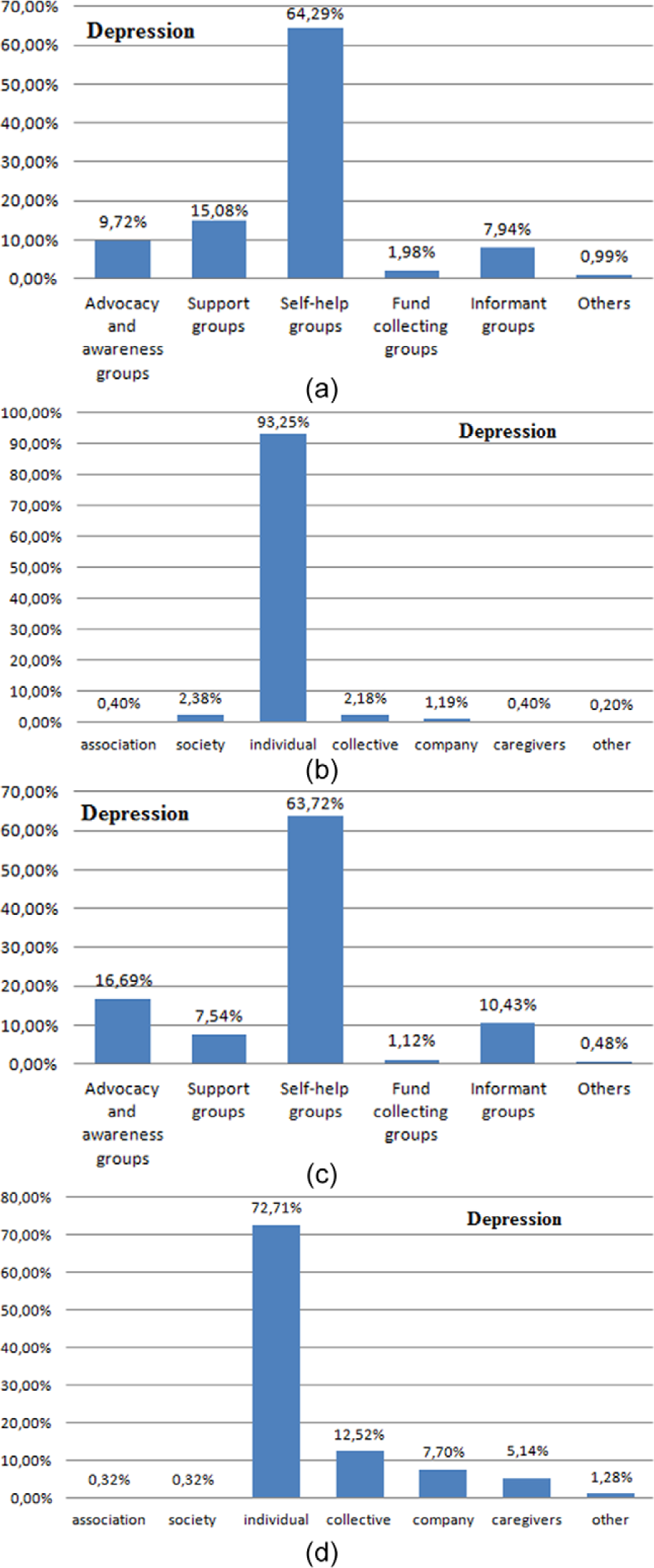
Main issues and creators for depression: (a) main issues of Facebook groups, (b) main creators of Facebook groups, (c) main issues of Twitter groups, and (d) main creators of Twitter groups.
The majority of the Facebook groups (64.29%) are self-help groups. With this illness, self-help groups have high relevance due to the characteristics of patients with depression. In total, 15.08 percent are groups created for supporting people affected by depression and 9.72 percent for raising awareness about depression and related events. Furthermore, 7.94 percent provide information and 1.98 percent raise money.
Similarly, the majority group in Twitter is the self-help group with 63.72 percent. Of them, users are members of self-help groups, 10.43 percent provide information disease, and 7.54 percent are dedicated to supporting patients and relatives. The main creator in Twitter is an individual (72.71%). Of these groups, 12.52 percent are created by a collective of patients or relatives, 7.70 percent are founded by a company, and 5.14 percent by caregivers. The remaining groups are created by associations, societies, or other collectives to support or inform about depression.
We have analyzed the self-help groups for depression, and we found variations on this disease on Facebook and Twitter (see Figure 7). The goal of 5.86 percent groups on Facebook and 3.27 percent on Twitter is to talk about postpartum depression; 4.01 percent on Facebook and 3.78 percent on Twitter have suicidal tendencies; 6.48 percent on Facebook and 5.04 percent on Twitter are teenagers or children who need to express their feelings of depression; and finally, 0.93 percent on Facebook and 3.02 percent on Twitter manifest a bipolar disorder. The category “Others” involves many types of depression, such as depression caused by the dismissal from a job, the end of a personal relationship, the death of a loved one, and so on.
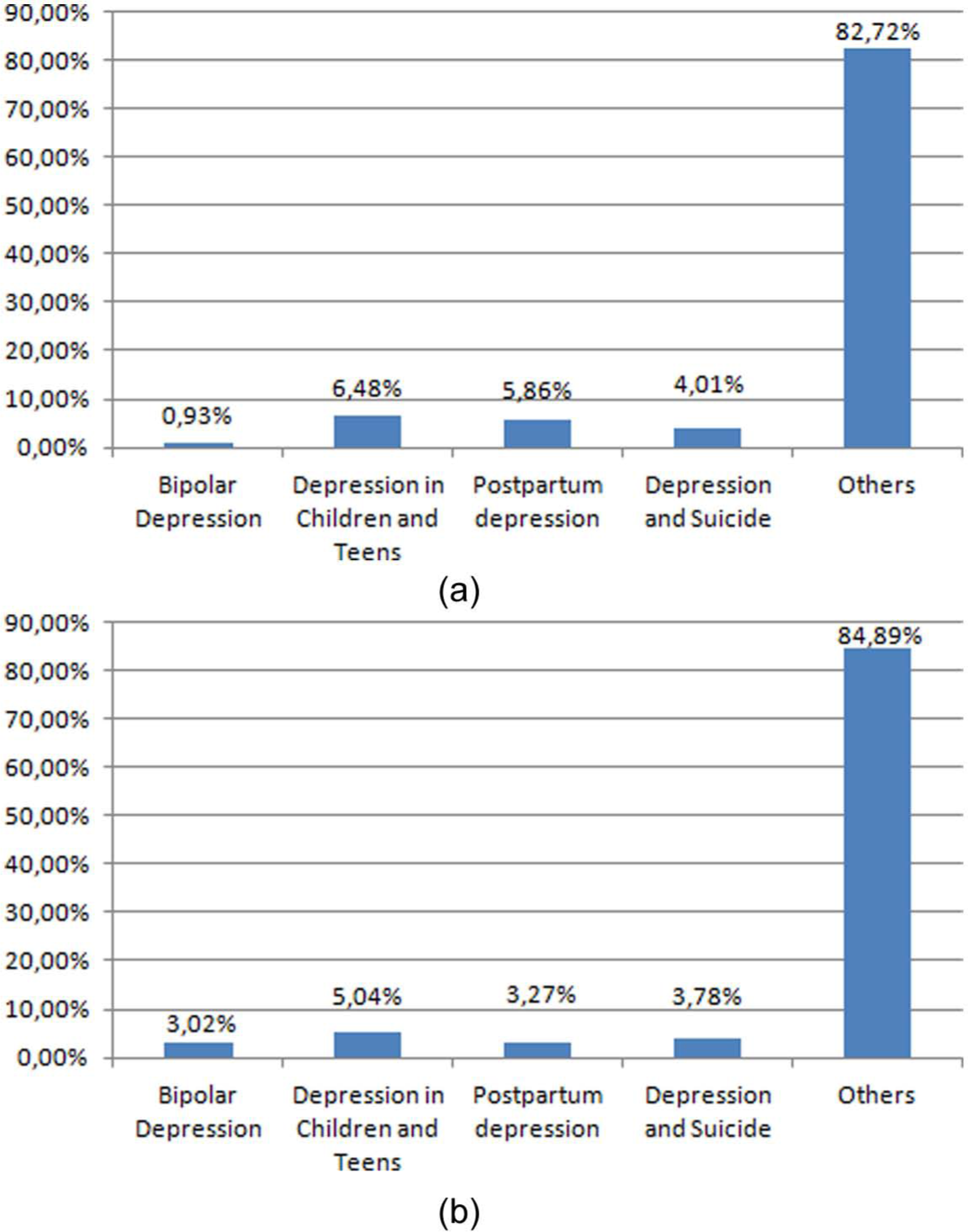
Types of depression related groups found (a) on Facebook and (b) on Twitter.
Survey
Only 25 individuals answered the survey, which was complemented with some interviews with a local Alzheimer association. The most relevant results of the survey and the interviews are the following:
Generally, people suffering from Alzheimer, dementia, and Parkinson do not usually use social networking sites since they and their relatives are usually elderly people, not used to the new technologies. However, depression is more extensive throughout society, and therefore, there is a more significant use of these sites.
Associations, societies, and foundations use social networking sites for promoting their activities and show the relatives what they do with their patients, their progress, and their situation.
Usually, caregivers and relatives use social networking sites looking for consolation and support from other people in a similar situation.
Experts and specialists use the social networks for following advances in research by their colleagues and being in contact with them.
Many patients would prefer a specific social networking sites for their disease and use of music, video, and photos for their stimulation.
There are very few applications devoted to patients of these diseases.
The majority of the patients prefer Facebook over Twitter because they found Facebook more useful and collaborative.
Discussion and conclusion
Social network analysis is a powerful way of understanding social processes. Social network analysis is a way of understanding social processes. By social network analysis, it is possible to see how information flows through social ties, how people acquire information and resources, and how groups operate. After analyzing the results presented in this article and data on global mental health, it is not surprising to see that social media are obtaining more and more importance for social media are becoming more and more importance in the fight against these diseases.
Regarding the four mental and neurodegenerative diseases have been studied, we found numerous groups committed to research of new treatments, new drugs, or simply help patients to express their feekings and offer a way of finding comfort and strength. These groups were sorted by their objective, with a total of five groups, as mentioned in the “Methods” section. Focusing on Figure 2(a), which represents the number of groups for each of the four mental illnesses, depression has the greatest number of social groups in both Twitter and Facebook, followed by Alzheimer, Parkinson, and dementia. This means that there are more people interested in trying to help create groups for depression over other mental diseases. This is not surprising depression is manifest in many ways and for many reasons.
Alzheimer’s is prominent because it is the most common type of dementia, but in this case, patients have almost no role to play in social networks because of the consequences of their disease. Hence, in this case, the principal users are relatives seeking information, specialists, caregivers, and people who want to donate money. This is also same in the case of dementia, where patients are not active due to the characteristics of neurodegenerative diseases. Finally, social network users seem to be slightly more interested in Parkinson than in dementia, which is striking since there are many more people suffering from it than from Parkinson. The reason for that may be that the consequences of Parkinson are more easily visible, and therefore, people are more aware of this disease.
In this study, five principal types of groups have been found: support groups, informant groups, self-help groups, advocacy and awareness groups, and fund raising groups. In light of the results shown in Figures 3 to 6, it is clear that the most common groups in all the diseases studied are the self-help groups and the least usual are the fund raising groups. The rest of the groups have different prevalences depending on the disease and the social network.
Hence, in the case of Alzheimer, dementia, and Parkinson, informant groups are abundant in Facebook but they are much less in Twitter. However, the more abundant groups for depression are self-help groups both in Twitter and Facebook. Despite these variations, it can be said that, excluding depression, Facebook is more used for informant groups and Twitter is more used for support groups, in addition to the self-help groups, common in both networks. This is a consequence of the characteristics of the social networks: as Facebook allows posting of longer messages commentaries, it can be more useful than Twitter for informative purposes, since Twitter only allows posting short messages, not long enough for descriptive and informative purposes.
Focusing on group creators, it should be noted that groups for depression are created by individuals (93% on Facebook and 73% Twitter), whereas Alzheimer and Parkinson are diseases with a high percentage of advocacy associations and foundations for the care of these patients, as Parkinson has 48 percent groups on Facebook and 38 percent on Twitter created by a collective, organization, foundation, or association and Alzheimer has 28 percent on Facebook and 55 percent on Twitter. Dementia has individual creators (74.78% in Facebook and 33.66% in Twitter) as the predominant creator, similarly for depression. In general, there are fewer differences among groups sorted by types of creator in Twitter than in Facebook, suggesting that individual users prefer creating groups in Facebook instead of Twitter.
The previous finding is supported by the opinions of users obtained from the survey and the interviews. They prefer using Facebook over Twitter because it is more collaborative. However, they would rather prefer dedicated social networks for each disease since they think information and help would be more accurate than that provided by groups of Facebook or Twitter.
It is important to emphasize that groups whose purpose is to educate and inform society, families, and patients are of great interest because many families and patients are seeking adequate information, accurate, and current. In this regard, it is notable that, users interviewed expressed a preference for social networking sites devoted disease and applications designed specifically for them.
This article has mostly focused on a quantitative analysis of social networking site use, complemented by a small-scale qualitative study based on survey and interviews. Future work will focus on the perceptions of patients, relatives, caregivers, specialists, etc., their experiences and their assessments. Another line of enquiry would be the study or even the development of a social networking site specifically designed for a mental disease, such as depression. Finally, it would be interesting to examine the role of mobile technologies in the support of people with mental health problems.
Footnotes
Acknowledgements
The authors wish to express their gratitude to the Asociación Familiares Alzheimer Valladolid, Valladolid, Spain, for answering their questions.
Declaration of conflicting interests
The author(s) declared no potential conflicts of interest with respect to the research, authorship, and/or publication of this article.
Funding
The author(s) disclosed receipt of the following financial support for the research, authorship, and/or publication of this article: This research has been partially supported by the Spanish Social Security Administration Body (IMSERSO) under the project 85/2010; by the Instituto de Telecomunicações, Next Generation Networks and Applications Group (NetGNA), Portugal; and by National Funding from the Fundação para a Ciência e a Tecnologia (FCT) through the PEst-OE/EEI/LA0008/2011 Project.