




Abstract
Short message service (SMS) and email reminders have the potential to improve adherence to appointments and medication taking. Within the UK, information and communication technology (ICT) is widely used with a very high proportion of people having access to the internet and mobile phones. Little is known about ICT use by older adults and those with chronic illness. A feasibility survey was carried out with 112 rheumatology patients in Hertfordshire, UK to determine their current use of the internet, email and SMS and their willingness to receive electronic reminders in the future. A high proportion of patients up to age 65 are successfully using ICT despite older age or functional disability caused by rheumatic disease. Forty-four percent would be willing to receive an electronic appointment reminder and 25% a medication reminder. The results suggest that reminders would be welcomed by some patients and extensive patient training would not be needed before implementation.
Introduction
Adherence to medication regimens is an important part of therapy, particularly in chronic illnesses such as rheumatoid arthritis. However, non-adherence rates can be as high as 30%–50%.1–3 This has the potential to increase illness progression resulting in less symptom control and the possibility of disability in the future. This will also have a societal effect, as patients with increased disease activity are more likely to require frequent hospital and general practitioner (GP) visits and more aggressive and expensive treatments. Non-adherence can comprise of a deliberate decision not to take medications, or can simply be a result of forgetting to take all of the doses prescribed. Forgetting has been shown to increase as patients become older, 4 if they are out of their usual routine, 5 or if the regime is complex. 6 This has the potential to be easily rectified and it has been proposed that a cue could be used to remind patients to take their medications. 7 To be effective, the cue must be simple and discreet, but available when the medication is required. As being away from home is often cited as a reason for forgetting,8,9 it is also essential that the cue is effective in this circumstance. For these reasons, simple communications such as email or short message service (SMS) text message are hypothesised to meet the criteria set out above.
With the introduction of cheaper service and set-up costs and increased coverage, more people have access to, and are using, information and communication technology (ICT), such as email and SMS text messaging. In 2009, the Office for National Statistics (ONS) Internet Access survey 10 stated that 70% of the UK population had internet access and 90% of them used email. This suggests that the possibility of utilising emails in a health setting is becoming more plausible and acceptable, a notion supported by Wilson et al. 11 who found that 65% of their sample would be willing to receive health related emails.
A 2008 survey stated that there were 65 million active mobile phone devices in the UK and that, on average, 216 million SMS messages were sent per day. 12 Mobile phone and SMS use in health settings is becoming more evident. A number of mobile phone-based interventions have been found to be successful in dietary education and weight loss13,14 and smoking cessation.15–20 Studies have also shown that SMS messages significantly reduced the number of non-attended appointments21,22 and that, in addition, they were significantly cheaper than telephone reminders.23,24 These studies found that for every 9–14 SMS reminders sent, one additional non-attended appointment was avoided. As SMS messages cost less than 10p, on average, to send and a wasted outpatient appointment in the UK costs £65, 22 this appears to be a cheap and effective method of improving attendance in outpatient departments.
Although the potential of ICT use in healthcare has started to receive some attention, there has been very little research on the possibilities of aiding self-management of chronic disease, resulting in no systematic reviews or meta-analyses looking specifically at chronic illness. These would be particularly useful in light of the fact that the majority of these patients will be older and have more disabilities than the healthy population. Two studies by Kwon et al. 25 and Faridi et al. 26 found some success at using web- and SMS-based interventions to improve blood glucose control in type 2 diabetes; however, the studies were conducted with younger patients that were familiar with the technology. To address the commonly held belief that older people do not accommodate technological advances, Dey et al. 27 surveyed women between the age of 41 and 88 years old and found that 75% use a computer and that 86.9% of these use email. Wilson et al. 11 found that 59% of people surveyed aged between 50 and 76 years old had internet access. van Lankveld et al. 28 recruited patients with arthritis with a mean age of 45 years via health websites and found that 91% used the internet several times per week, indicating that arthritis-related disability, such as stiff joints was not preventing them from using a computer, although the nature of recruitment means that nothing is known about non-internet users. Tak and Hong 29 also reported that the level of functional disability in their sample of arthritis patients was not related to internet use.
Very little research has been carried out on how older people use mobile phones. Qualitative studies by Kurniawan30, 31 and Bachu et al. 32 indicated that people over 60 years of age used their mobile phones infrequently, mostly for emergency phone calls. They reported rarely sending SMS messages, although they received them, on average, once a week and were able to access and understand them. Small buttons and screens were identified as potential barriers to use, although this was not the case for the actual participants. A review of the literature indicated no quantitative studies recording current use of text messaging among older people, particularly by patients who would be especially prone to problems handling a mobile phone. To determine the feasibility of implementing electronic reminders and to address the lack of evidence in the literature, a feasibility survey was carried out to determine: 1) current access to email and SMS messaging by rheumatology patients; 2) potential barriers to ICT caused by disability among rheumatology patient groups and how that effects current use; and, 3) willingness by rheumatology patients to receive appointment and medication reminders via email and SMS message in the future.
Method
Survey
The survey was designed to explore current use of ICT by participants including the internet, email and SMS messaging. The survey had two sections: the first related to general ICT use and the second to exploring the feasibility and desirability of using email and/or SMS reminders for outpatient appointments and medication doses. As patients with rheumatic disease are likely to suffer stiffness and disability with their hands and fingers, their dexterity is likely to be reduced. For this reason, questions relating to difficulties using computers and mobile phones were included to determine if this is a barrier to ICT use. Questions relating to access to, and usage of, the internet were formatted to be comparable to the ONS ‘Internet Access 2009: Households and Individuals’ national survey. 10 Other questions relating to email and SMS use were concerned with current access and frequency and ease of use for participants.
Procedure
Participants were approached by a researcher and informed of the purpose of the study before being invited to participate. All surveys were anonymous and completed alone by the participant unless they requested help from the researcher. Owing to the recruitment setting, all surveys were paper based and took approximately 15 minutes to complete. Consent was assumed upon receipt of a completed survey. Ethical approval was given for this study by the Hertfordshire NHS Research Ethics Committee.
It is important to consider how many people overall could potentially be accessed, as well as those that are already very familiar with the technology in order to gain an understanding of potential barriers to implementing a reminder service in this patient group. Therefore, results are generally presented in two ways: 1) the percentage of the entire sample (n=112) to establish the proportion of the entire patient population that could be accessed via ICT; and, 2) the percentage of patients that have stated that they already use the internet at least once per week (n=86) and own a mobile phone (n=104) to establish the proportion of patients that would be immediately accessible via these technologies.
For all technologies, differences between age groups were considered using χ2 tests and odds ratio (OR) statistics. The χ2 tests were used to identify differences between all of the age groups. To determine ORs, the samples were dichotomised into those aged 18–64 years and >65 years old. Given the traditional view that older people do not use ICT, we wanted to look at a younger versus older patient group.
It was expected that younger patients would be very familiar with ICT and so, as well as calculating odds ratios, the absolute percentage of patients using email and SMS are shown to determine current experience of older adults.
Results
Participants
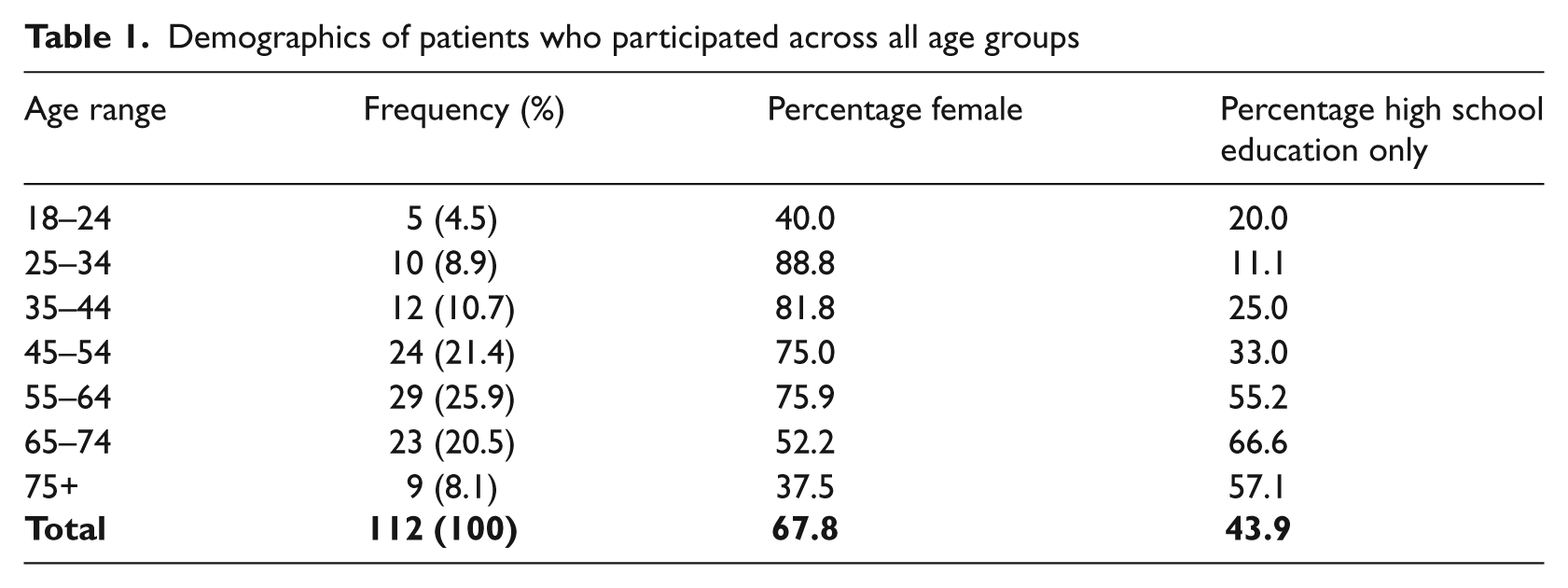
All patients attending a rheumatology outpatient appointment at two hospitals in Hertfordshire, UK over a period of three weeks in February 2010 were invited to participate. Over 8 half-day sessions, a total of 121 patients were eligible and 112 agreed to take part. Patients that refused were all female and aged over 40. The median age range was 55–64 years and 67.8% of patients were female (Table 1), which is consistent with the demographics of rheumatic disease. Only 11.2% had no formal qualifications and all were from the local Hertfordshire area.
Demographics of patients who participated across all age groups
Internet access and frequency of use
Of this sample, 81.6% had internet access at home and 76.5% of those over 65 years old had access.
Home internet access increased with education, with 97% of patients with a degree or above having access, 100% with A levels, but only 66% of those with GCSEs or no formal qualifications having home internet access.
Seventy-seven percent of all patients accessed the internet at least weekly, 3.6% were occasional users but 19.6% never accessed it. The OR shows that patients aged <65 years are 8.4 (2.8:25.7) times more likely to be weekly internet users than patients over the age of 65 years. Figure 1 shows that nearly all younger patients access the internet at least weekly, but that weekly access decreases dramatically for older patients.
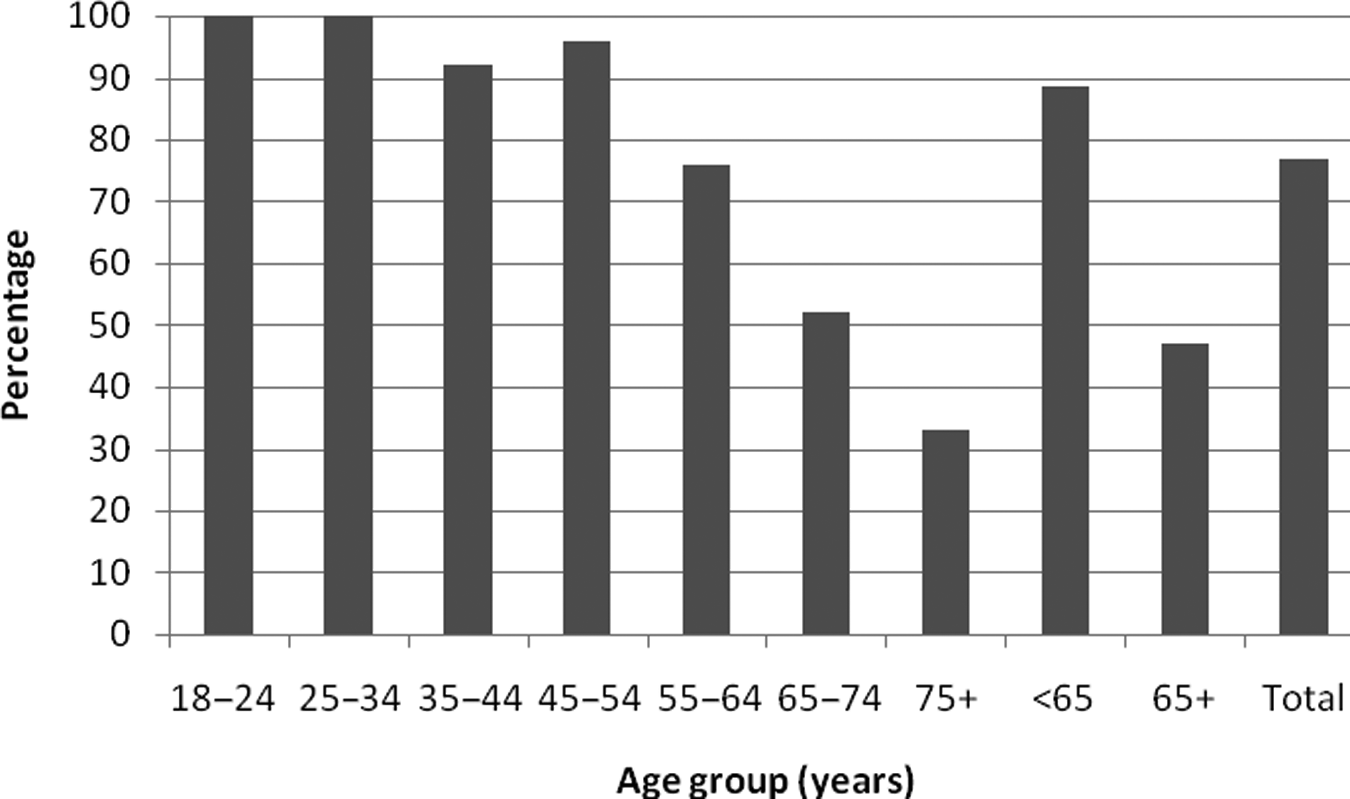
Percentage of regular internet users (access at least once per week) across all age groups.
Email access and frequency of use
The number of patients with an email address was high for the total sample at 79.1%; however, this dropped to just over half for those aged >65 years. A high proportion of weekly internet users of <65 years old had an email address (98.5%), as well as those over the age of 65 years at 86.7%. The majority of patients that have an email address are accessing it at least once per week(Figure 2). There is no difference between frequency of access by age group; χ2 = 23.8, p=0.48.
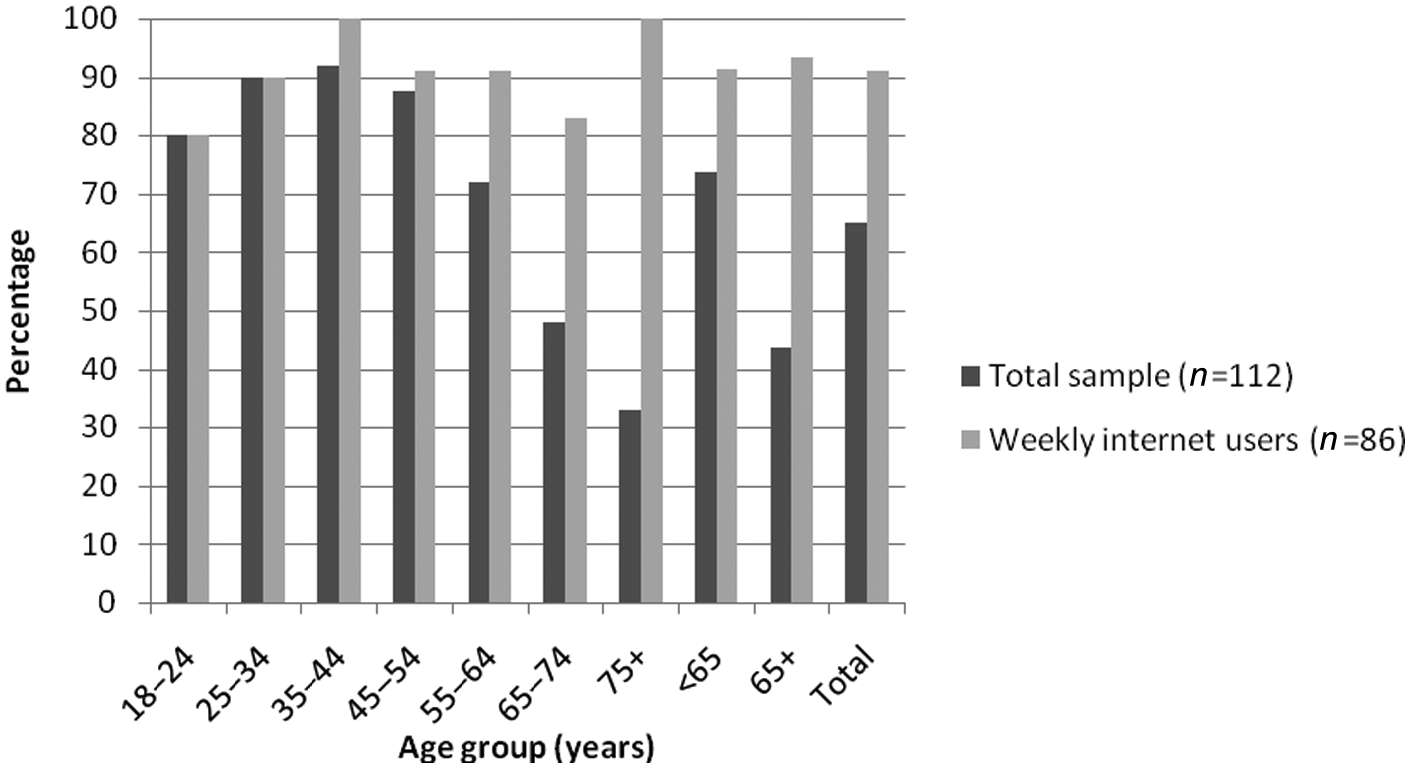
Percentage of patients that access their emails at least once per week for weekly internet users only (n=86) and the total sample (n=112).
Mobile phone access and frequency of use
Mobile phone ownership was very high at 92.9% of the total sample. Most patients indicated that their mobile phone was switched on at least during the day and, although older patients were likely to have it on less often, this was not significant. Up to the age of 65 years, more than 83.75% of those with a mobile phone send or receive an SMS message at least once per week, although this declines to 47.4% of the 65–74 year old group and 25% of those aged over 75 years. However, in anticipation of the likely one-way application of an SMS reminder, patients were asked how confident they were in reading text messages. Figure 3 shows that up to the age of 75 years, a high proportion of patients were “confident” or “very confident” at reading SMS messages.
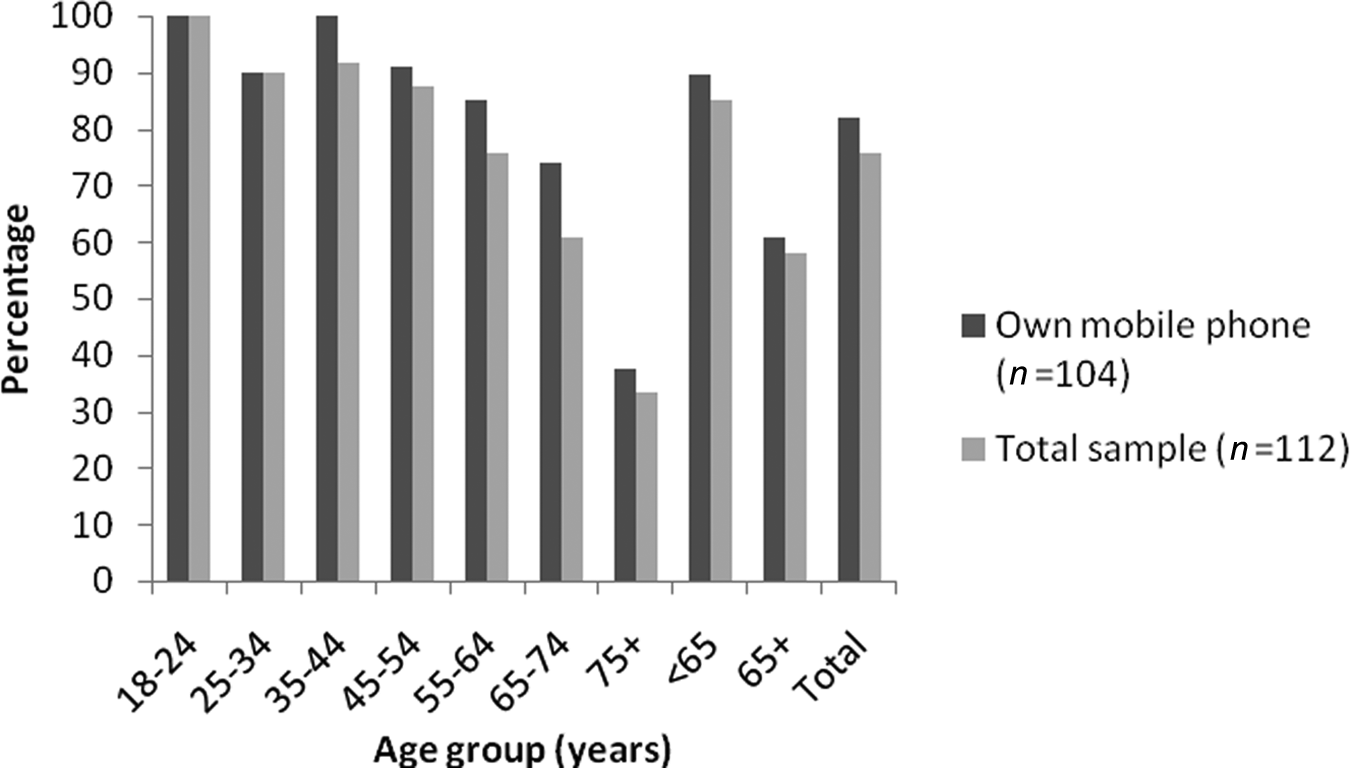
Percentage of patients that are confident at reading SMS text messages for those that own a mobile phone only (n=104) and the total sample (n=112).
Disease-specific difficulties for ICT use
Only 8% of patients reported problems using a computer with most of these reporting multiple problems (Table 2). Interestingly, the problems reported did not differ between age groups and there were very few technical difficulties reported.
Potential difficulties experienced by patients when using ICT
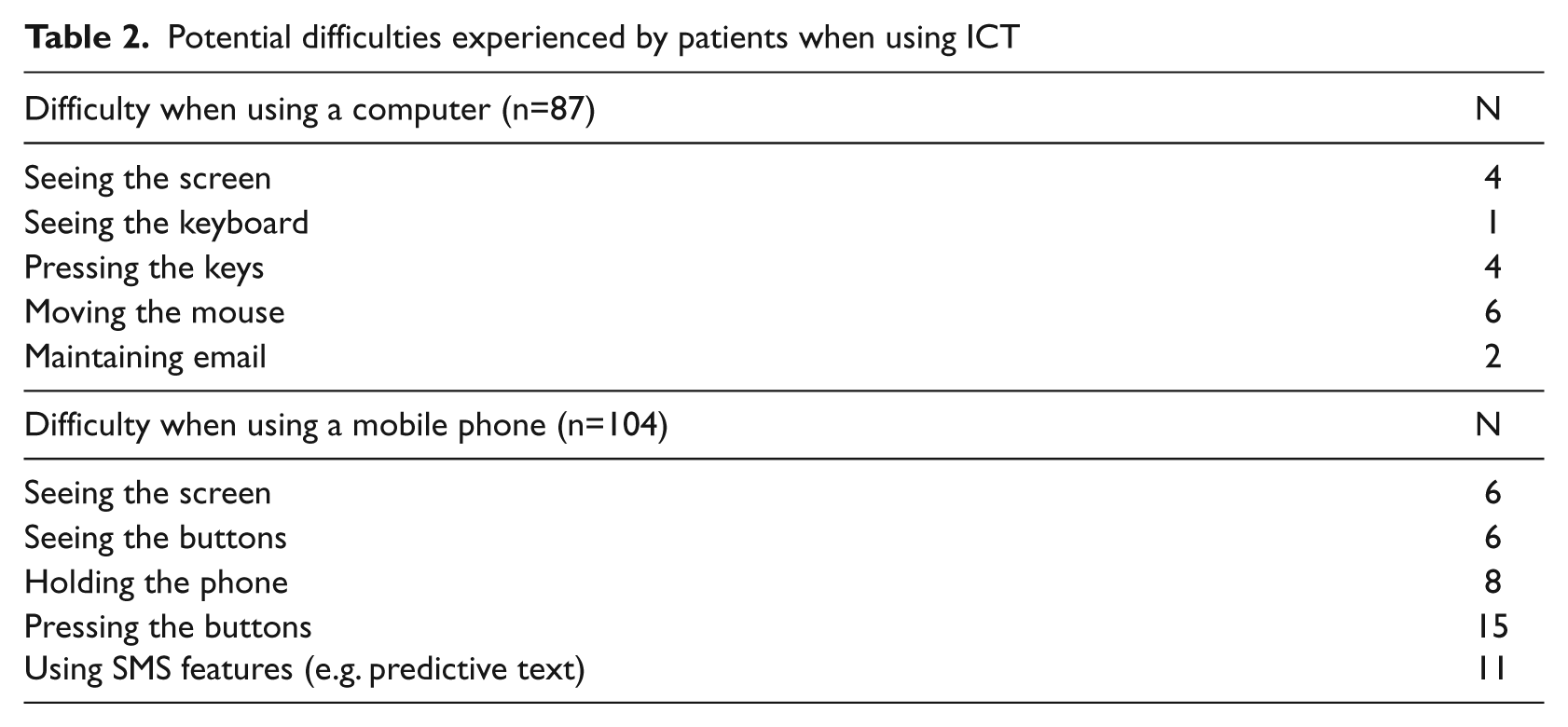
Similarly, only 19.6% of patients reported problems using a mobile phone and many had multiple difficulties (Table 2). There were a larger number of technology-based problems reported with using mobile phones, possibly because SMS has not been commercially available for as long as email. For both mediums, there were more arthritis-based problems reported than age-related (sight), although these did not act as a barrier to technology use as only one person reported that these problems resulted in them not using a computer and no one reported not using a mobile phone because of these difficulties.
Willingness to receive electronic reminders
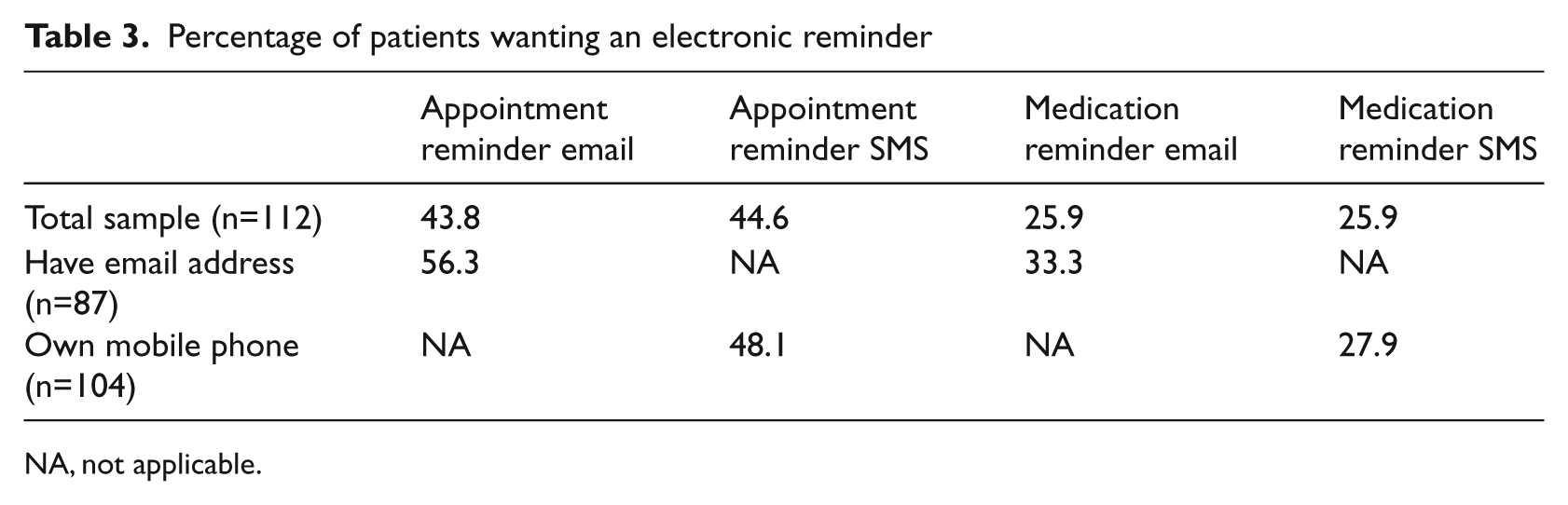
Patients were asked whether or not they would be willing to receive an electronic reminder for appointments and/or medications that are due in the future. Table 3 shows the percentages of patients willing to receive a particular reminder for the total sample, as well as only those with access to the relevant ICT. A large number responded positively to an appointment reminder and about a quarter of people would be willing to receive a medication reminder.
Percentage of patients wanting an electronic reminder
NA, not applicable.
There was no difference between all age groups for an email appointment reminder, email medication reminder or an SMS appointment reminder. There was a small difference, χ2 (6) = 13.52, p=0.04 for SMS medication reminders with a higher proportion of younger patients willing to receive one. Younger patients are more open to using SMS as 50% of those under the age of 65 years would be happy to receive an SMS appointment reminder compared with 29% of those aged >65 years. Similarly, 28.75% of those aged <65 years would be happy to receive an SMS medication reminder compared with 18.75% of those aged >65 years. There was no preference between the mode of reminder with very similar results for SMS and email.
Discussion
This survey found that a large proportion of patients within the rheumatology outpatient clinic had access to, and frequently used, ICT. It is encouraging to find that this patient sample did not differ in their levels of access to the internet from the general population stratified by age. 10 There is little research concerning internet access among chronic illness groups; however, as was found by van Lankveld et al. and Tak and Hong28,29 these patients are not finding their illness to be a barrier to technology use as less than 20% of patients reported “problems” using ICT, which is a relatively small proportion given that these patients are generally older and have higher levels of disability. The problems identified were mostly arthritis based, i.e. pressing buttons and holding small objects, as opposed to sight-related. Only two people reported “technical” problems with computers, such as maintaining an email account whereas 11 people reported similar problems with mobile phones. This suggests that although mobile phone ownership is higher than internet access, more people struggle with complicated phone features, such as predictive text than with using an email account. It is important to note that, although they may find mobile phones more difficult to use, this is not acting as a barrier, as they still report regular use. These results are similar to those found by Bachau et al. 32 in that specific features, such as pressing small buttons and managing complicated automated features prove to be difficult for these patients, but that they are able to develop coping mechanisms in order to use the technology in a way that addresses their particular requirements.
This survey supports previous research10–11,29,33–,34 that internet access increases with education. For those with no formal qualifications in particular, there are low levels of internet access (66% in the patient sample and 52% in the UK population). This could potentially impact on any healthcare interventions involving internet-delivered programmes as a subset of people that are already at increased risk of adverse health outcomes35,36 would be less likely to benefit from these interventions.
A high proportion of people that had an email address accessed it at least weekly, indicating that if a reminder was sent sufficiently in advance, particularly of an outpatient appointment, the majority of patients with an email address would read it. This is maintained across the age groups until age >65 years wherein this type of reminder would not be particularly useful because of the overall reduced access. However, as an additional means of reminding patients of information that they are already aware of (e.g. appointment times), email seems a cheap and feasible method.
The penetration of mobile phones was very high in this sample and as the majority of people had their phones switched on during the day and are confident in reading text messages this could be a very effective method of reminding patients about appointments and medications that are due. Also, as mobile phone ownership was so high, the overall effect on the clinic population would be strong and it would not be necessary to give additional training or hardware thus reducing the cost of a potential intervention. This suggests that it would be possible to obtain similar levels of success at reducing missed appointments in the order of a 6% absolute reduction as those in paediatrics 21 and ophthalmology 22 despite the typically older average age of patients.
A quarter of the sample would like a medication reminder and approximately 44% would like an appointment reminder. Patients did not discern between email or SMS for the reminders, indicating that patients would take advantage of any type of reminder to improve their ability to self-manage. More patients requested an appointment reminder which may be as a result of the fact that most patients would be monitored via outpatient clinics every six months, whereas medication has to be taken much more regularly allowing people to develop a routine. However, our previous work has shown that 20% of rheumatology patients “sometimes forget” to take their medication 37 and it would be these patients that should be targeted for a medication reminder intervention. They were also significantly younger, as were those requesting a medication reminder in this study. It is therefore highly likely that the patients that would most benefit from a medication reminder are also the ones that would be most amenable to it. Reducing the number of forgotten doses would not only improve the prognosis for the patient but also help to save costs on unnecessary treatment and hospital contacts. As email and SMS messages are so cheap to deliver, the potential savings would far outweigh the costs of an intervention, particularly if patients most likely to benefit are identified and targeted in an efficient way.
There was a marked decrease in technology use for those aged over 65 years although there was only a very small sample for this age group. However, as Figures 2 and Figures 3 show, over 70% of patients aged up to 65 are regularly using ICT, which would result in a high penetration rate of reminders across the entire sample. It may be more difficult to introduce these measures in an older sample that are not already competent with the technology and who rely on paper-based or telephone call reminders for appointments. However, these technologies are firmly entrenched in society with cheaper hardware becoming available to improve access for everyone. Therefore, as the patient sample ages, they will become more adept at using email and SMS messages, which can be used to the advantage of the patient and healthcare provider to improve self-management and save wasted resources.
This survey reports current use of ICT among the rheumatology patient population which had the potential to be different from the general population because of the typically older age and likely disability from joint damage. This provides the evidence-base for further work to implement appointment and medication reminders in a clinical setting, which is currently lacking in the literature. Although the cross section of patients recruited was representative of the rheumatology clinics in this area, it should be noted that the socio-economic status of this geographic area is historically high given its proximity to London and therefore may overestimate ICT access compared with the general population. Encouragingly, the patient population did not differ from the general population for the area and so rheumatology patients should not be assumed to have reduced ICT use, particularly for mobile phones, as no patients reported not using a mobile phone despite some functional difficulty. The sample size for the two oldest age groups was a little low, particularly for the over 75 years old group and more research is needed into how exactly these patients prefer to manage chronic illness and whether reminders would be suitable given that they are more likely to receive assistance from family and/or carers. However, this survey has provided detailed information on how this patient group currently uses technology to inform future interventions to use technology to aid self-management of chronic illness in light of a population that is becoming more technologically aware and more prone to serious chronic disease as life expectancy increases.
Conclusion
Current penetration of ICT is high within the rheumatology population in these Hertfordshire hospitals. These patients are also regularly using email and SMS text messaging up to the age of 65 years old. The high level of knowledge and experience of this group suggests that implementing appointment and medication reminders would be feasible without the requirement of additional training or hardware and that a number of patients would be willing to utilise them in order to improve self-management of their rheumatic disease.
Footnotes
Acknowledgements
Thanks go to Tania Brown for help with data collection along with the nursing and reception staff at both hospitals for all of their support whilst recruiting patients.
This research was made possible by an ESRC-CASE grant awarded to LH and the Early Rheumatoid Arthritis Network.