



Abstract
Aims
Alcohol, drugs and gambling are subject to governmental control policies and regulation. We have investigated how supporters of regulation/criminality of drug use and liberals advocating more lenient control provide arguments on the governmental control policies and regulation on addiction policies.
Methods
We organized three experiments in Helsinki, Finland, in 2023 on the argumentation on alcohol, drug and gambling policies. Altogether, 98 lay persons, mainly students at the University of Helsinki, participated in the experiments. As a method, we employed the imitation game, which can be used to measure how knowledgeable members of a social group are regarding the knowledge of another group. The method produces both quantitative and qualitative data.
Results
On drug policy, supporters and opponents of criminality of drug use were asymmetrically segregated. The opponents of criminality were in a minority and were more knowledgeable of the knowledge and beliefs of the majority supporting criminality. When it came to the alcohol and gambling policy fields, both supporters and opponents of regulation had more symmetrical relations.
Conclusions
The results can be used for addiction policies and anticipating emerging new lines of argumentation.
Keywords
Introduction
Alcohol, drugs and gambling are subject to governmental control policies and regulation. Policies such as alcohol availability control policies are debated widely in societies because of the difficulties in reconciling interests of trade, tax revenues and public health. Alcohol policy is the most researched area of alcohol, drug and gambling policy (hereafter ADG) in Finland. Lately, interest in drug and gambling issues has increased markedly.
Finland has played a significant role internationally in alcohol policy research. Under the leadership of Finnish sociologist Kettil Bruun, an international research group developed the total consumption theory that has become a basic framework for alcohol policy research (Babor et al., 2023; Bruun et al., 1975). This model has long influenced the maintenance of regulation of alcohol consumption, especially in the Nordic countries. Alcohol policy can be seen to deal with the tension between alcohol-related harms and the commercial, economic and other potential benefits of alcohol (Mäkelä et al., 1981; Room et al., 2005). In Finland, the debate on alcohol policy has intensified between the monopoly-based regulation and the varying degrees of deregulation on, for example, sales restrictions and locations as well as cross-border sales. Through societal experiments conducted on the initiative of the alcohol monopoly Alko's front figure Pekka Kuusi and the subsequent development of so-called scientific alcohol policy, alcohol policy regulation began to be gradually relaxed from the 1950s onwards (Bruun & Mäkelä, 1977). The monopoly was reformed to only concern retail sales in 1995, when Finland joined the European Union (EU), and recently (in 2018 and 2024) alcohol policy reforms have curtailed the monopoly's status, increasing the availability of alcohol. The question of the existence of the alcohol monopoly is still valid, as alcohol distance sales, for example, remain a hot topic.
In Finland, the significance of the drugs issue in the ADG sector arose later than in many other countries (Hakkarainen et al., 2007). In terms of drug policy, the differing pharmacological effects of different substances have significantly shaped the entire policy area and have led to a debate on the differences between so-called “soft” and “hard” drugs and the adequacy of the distinction, as well as the related gateway theory (Caulkins et al., 2016). A more recent classification has also emerged, which is equally controversial, separating “recreational use” from “problematic use”. Recently, drug policy has responded to the normalization of drug use (Parker, 2005) and the emergence of new synthetic drugs on the market. Because there are several divisive issues in drug policy, different classifications have been employed in various ways in different contexts. According to Tammi (2007), harm prevention in Finland is uniquely linked to prohibitionist policies, which are challenged by those favouring decriminalization of drug use.
Scientific debate on gambling policy is the latest addition to the ADG area. It is also challenged by the shift from onsite to online (Egerer & Marionneau, 2019) and from the newly established monopoly to a licensing system (Egerer et al., 2018). Both in Finland and internationally, there have been several recent attempts to build a model for gambling policy (Orford, 2020; Sulkunen et al., 2018). Discussion on the public health model of gambling has also taken place (Latvala et al., 2019). This model could structure the debate in an equivalent way to the total consumption model for alcohol. Previously there were three monopoly gambling and gaming companies in Finland (Slot Machine Association (RAY), The betting agency () and Horse Race Betting (FinToto), but these merged in 2017. In practice, the regulation of gambling in Finland has been somewhat less stringent compared to many other industrialized countries. However, with the development of legislation, gambling regulation in Finland has become stricter. The Finnish gambling policy programme (Rahapelipoliittinen ohjelma, 2022) has set forth a challenging task: gambling should be understood as a risk to health, welfare and the economy, but gambling problems should not be stigmatized. The report by Sailas et al. (2023: p. 5) opened a path “to a partial licence system where all operators meeting the licensing requirements could provide online casino and betting games and where the main purpose of the system would be to prevent and reduce the harm caused by gambling”. In its programme, the government declared to implement a licensing system for gambling in 2026 (Valtioneuvosto, 2023).
This study investigates how the supporters and the opponents of regulation provide arguments on governmental addiction control policies. For this purpose, we organized three imitation games on addiction policies in Helsinki in 2023. Our empirical findings, which are analysed with mixed methods, concern the supporters and the opponents of regulation in the alcohol, drug and gambling policy fields. The results can be used for planning addiction policies and anticipating emerging new lines of argumentation. The article concludes with a discussion.
Methods
The method of study is the imitation game (IG), which can be used to measure how knowledgeable the members of a social group are regarding the knowledge of another group (Arminen et al., 2019; Caudill et al., 2019; Collins & Evans, 2014). The method produces both quantitative and qualitative data. In the game (Figure 1), each participant has three roles – the judge, the non-pretender and the pretender – which are played in turns. The participants are not initially aware of who is who in the room. In the imitation game, the judge and the non-pretender are members of the same “target group”, while the pretender is not. It is the judge's task to identify the respondents’ group membership through self-made questions. The method does not restrict how the participants form their questions as long as they are related to the theme of the game (e.g., alcohol policy). The non-pretender's task is to answer according to their genuine stance, while the pretender's task is to answer as they believe the opposite group members would answer. The turns in the game proceed as the judge poses questions, receives answers from the non-pretender and the pretender, and assesses their answers. In the end, the judge gives a final assessment of who has been a genuine group member and who has been the pretender. In our case, the judge from the supporters/opponents of regulation tries to identify another supporter/opponent of regulation (non-pretender) and the opponent/supporter of regulation (pretender).
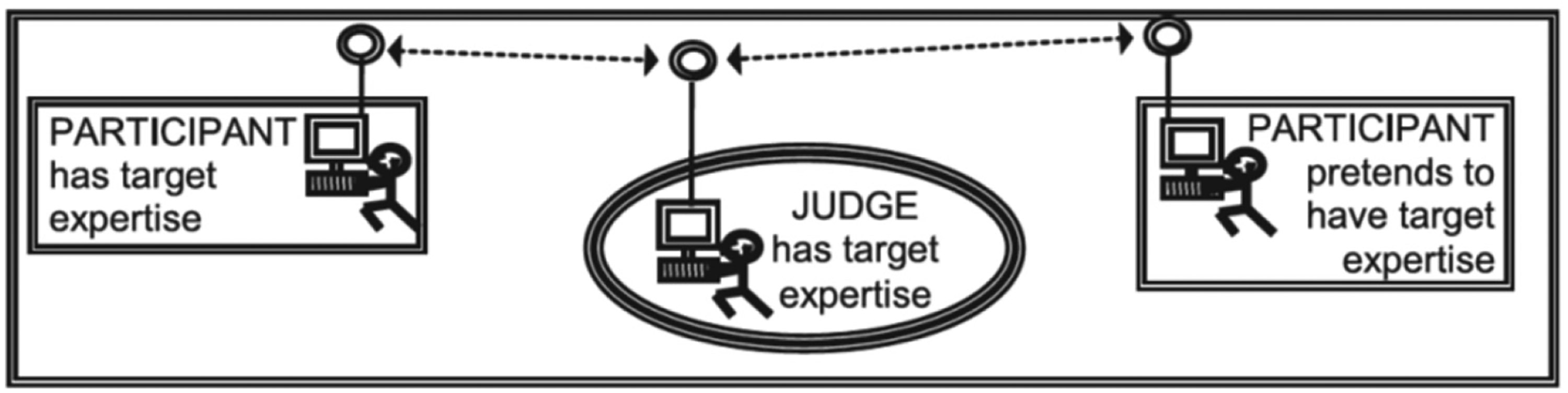
The concept of the imitation game (Collins & Evans, 2014).
We organized social groups in our experiments as follows. In the alcohol policy game, the player groups are supporters and opponents of regulation of availability. In the drug policy game, the player groups are supporters and opponents of criminality of drug use (all divisions may entail complexities. Activists for the legalization of cannabis justify their stance on the basis that legal cannabis markets would entail a new regulation instead of illegal markets). In the gambling policy game, the participants either minimally support the current level of regulation or its relaxation (Finland is moving from a gambling monopoly to a licensing system, but the issue is how strictly the regulation of gambling should be set with the licensing system, that is, more strictly or more leniently than is currently the case). The set-up of experiments required us to have the same number of supporters and opponents of regulation in the experiments (i.e., a maximum of 20 for each group in all three experiments, potentially totalling 120 participants in all).
The aim of the study is to explore to what degree the supporters of regulation are knowledgeable regarding the opponents’ arguments and vice versa. Our hypothesis (H1) is that in relation to alcohol policy, the supporters and opponents of regulation are relatively strongly assimilated in terms of their knowledge. That is, in the course of the long history of alcohol policy in Finland, people have learnt to know the arguments both for and against the regulation of alcohol availability. Our hypothesis (H2) is that there is a stronger segregation between the decriminalizers and the supporters of criminality of drug use. Finnish drug policy has long been based on punitive prohibitionism, which has not allowed an open public discussion on drug policies (Kainulainen & Hakkarainen, 2021). Our hypothesis regarding gambling policy (H3) is that the argumentation by the supporters of regulation and opponents (liberals) is less structured, because of a lack of public knowledge about gambling regulations and the vision for its future.
The experiments were organized in May, June and October 2023. The participants were recruited via student associations’ email lists and social media (Jodel app) for each subject area. Initially, we had addresses for at least 40 email lists of student associations, covering all Faculties of University. We aimed at recruiting students evenly around different faculties and tried not to send a recruitment message several times to any single list. Jodel was used closer to the date of the experiment. For each experiment, half of the participants self-identified themselves as supporters of regulation and half as opponents of regulation.
Example (1) shows how the turn-taking in the imitation game proceeds from a judge's first question to the assessment (the originals are in Finnish; translations of examples are included). The judge is an opponent of drug use criminality (Figure 2).
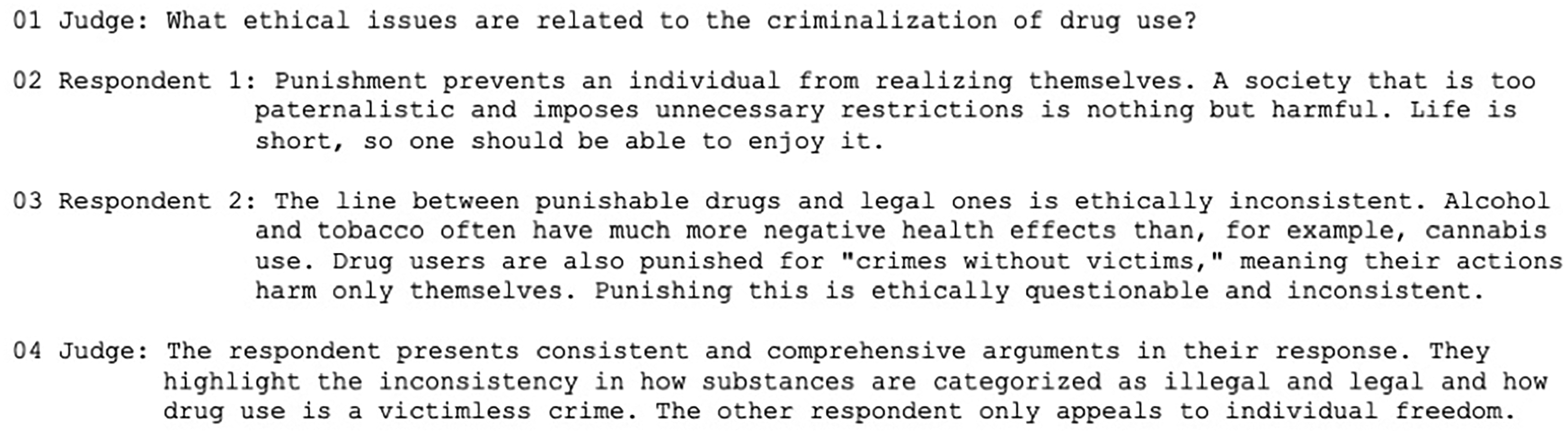
Imitation game sequence.
The judge submits a question to the co-players (line 1). The co-players then answer the question according to their task. The judge receives the answers (lines 2–3) simultaneously, and then accounts them (line 4). Subsequently, questions are posed until the judge feels confident about which of the respondents is a member of the same group (opponent of criminality) and who is a pretender imitating the opponents of criminality. Usually three to five rounds of questions are enough for the judge to make the final assessment (i.e., being relatively sure of who is who).
The qualitative imitation game data consists of questions, answers and assessments in game interaction. The method also concerns the number of sequential and final assessments which were correct or incorrect. In making the assessment, the judge writes an account on both answers (Example 1, line 4) and reports the level of confidence of this assessment (not shown in the transcript). When the judge stated to be unsure of the assessment, this was coded as uncertain in the quantitative analysis.
Quantitative Analysis
Quantitatively, the results of the game are based on the identification ratio (IR), which measures the accuracy of final assessments. IR gives a quantitative account of how well a group recognizes the opposite group's attempts to imitate its members.

If a group has a high IR, this shows its capability to identify its members and stay apart from the opposite group. If a group has a low IR, then the boundary to the opposite group is low. If both groups get roughly the same IR values, then the groups have a symmetrical relation. High IR values represent potential segregation, and low IR values represent potential assimilation. As the imitation game explores the knowledge relation between groups, it does not cover other aspects of the relationship between groups; for example, in a gender imitation game (self-identified) women and men got very low IR values (Collins & Evans, 2014), but people may still identify themselves with gender. For example, less structured argumentation by imitation game participants may cause random IR because of a lack of interest in gambling regulations.
The sequential identification ratio (SIR), which is estimated similarly, measures the accuracy of the assessments after each question in the game. SIR gives a quantitative account for accuracy of the total question-answer-assessment sequences (not only about the final assessments, such as IR).
Qualitative Analysis
Thematic analysis was used to analyse qualitative materials gathered from the games. The main argumentative themes were identified on the basis of question-answer-assessment sequences.
Data
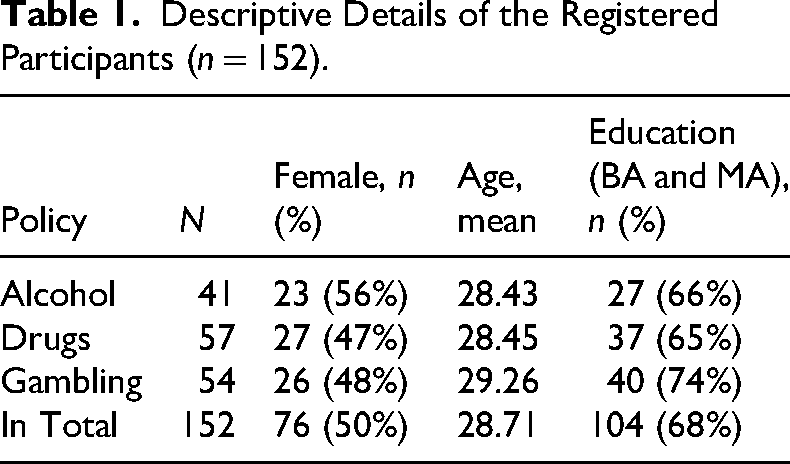
The descriptive details of the participants are the following. In three experiments, there were 152 registered volunteers for playing. Half of the participants were female, and the mean age was around 29 years (for all the registered participants, background information was collected in the registration). The players were mostly recruited from university email lists. Of the players, 65–74% were either BA or MA students. Most of the other players had an upper secondary level of education (Table 1).
Descriptive Details of the Registered Participants (n = 152).
Results
Quantitative Results
Of 152 registered volunteers, 98 attended the experiments. Due to the settings of the game, it was necessary to have an even number of participants (maximally 20 + 20) for each of the three experiments; in practice, each game was organized two consecutive times (each having 10 + 10 participants). Each cancellation or no-show potentially caused the loss of a pair. In the first experiment, we managed to organize 14 pairs; in the second, there were 17 pairs; and, in the third, there were 18 pairs. In the first experiment, we underestimated the number of no-shows and cancellations. Table 2 shows the results concerning the IR. In imitation games, the minority group tends to better identify its members than the majority group (Collins & Evans, 2007); however, it is not self-evident, whether there are clear majority/minority relations in addiction politics. If there is no widespread criticism of the prevailing addiction policy, we may assume that the majority accepts the status quo (at least passively). Consequently, we may assume that the supporters of the current level of regulation tend to be the majority, and we might expect liberal opponents to have higher IR values. Indeed, in terms of both alcohol (IR values 0.29 > 0.14) and drug (IR values 0.41 > −0.06) policy games, that does happen (Table 2). In the drug policy game, the supporters’ IR (−0.06) shows that the opponents (decriminalizers) are able to successfully pass the questioning of the majority extremely well. This can be interpreted in relation to the Finnish prohibition of drug use, where the decriminalizers must be highly knowledgeable of the knowledge and beliefs of the majority. The experiment indeed gives evidence that this is the case. The decriminalizers’ high IR (0.41), for its part, indicates that the group has shared knowledge and beliefs that are not distributed to the majority. In other words, the Finnish decriminalizers of drug use appear to have a distinct set of beliefs, which supports the view that prohibitive drug control does not allow its public criticism (Kainulainen & Hakkarainen, 2021). In contrast to alcohol and drug policy games, in the gambling policy game the IR values were almost equal, with the supporters having only slightly higher IR (0.39 > 0.34). The high IR values in the gambling policy game suggest that the supporters and the opponents of regulation are segregated, which we consider a surprising result.
Identification Ratio (n = 98).
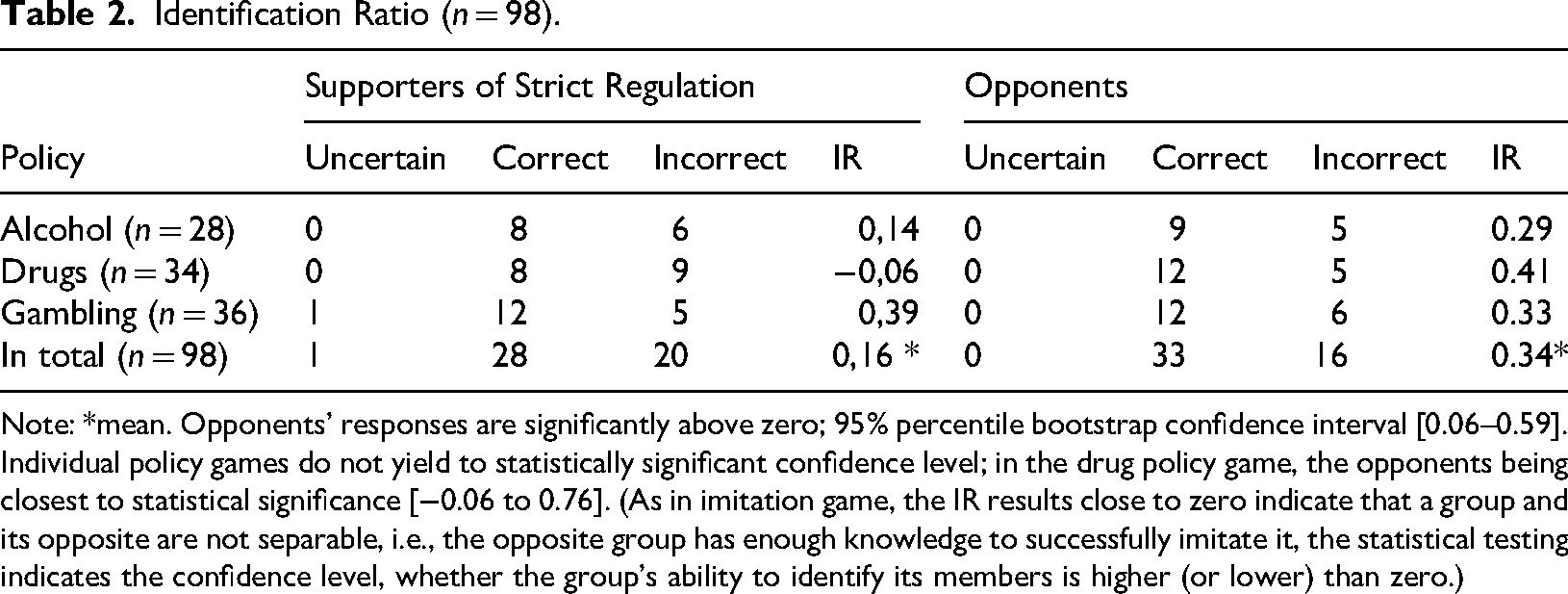
Note: *mean. Opponents’ responses are significantly above zero; 95% percentile bootstrap confidence interval [0.06–0.59]. Individual policy games do not yield to statistically significant confidence level; in the drug policy game, the opponents being closest to statistical significance [−0.06 to 0.76]. (As in imitation game, the IR results close to zero indicate that a group and its opposite are not separable, i.e., the opposite group has enough knowledge to successfully imitate it, the statistical testing indicates the confidence level, whether the group's ability to identify its members is higher (or lower) than zero.)
However, when we have a look at the SIR results, the findings get complicated. Ordinarily, SIR values can be slightly lower than IR values; that is, the participants can make some mistakes and still get the final assessment right, as they can see all the question-answer-assessment sequences together. For example, in a game between Finnish Somalis and majority Finns, both groups’ IR was 0.45, while the Finnish Somalis’ SIR was 0.42 and the majority Finns’ SIR was 0.38 (Segersven et al., 2024). In a game between active Christians and secular Finns, the active Christians’ IR was 0.65 and the SIR was 0.34, while the secular Finns’ IR values and SIR values were close to zero (Arminen et al., 2019).
In imitation games on addiction policy (Tables 2 and 3), the IR and SIR relations are mostly quite different than in previous imitation games.
Sequential Identification Ratio (n = 377).
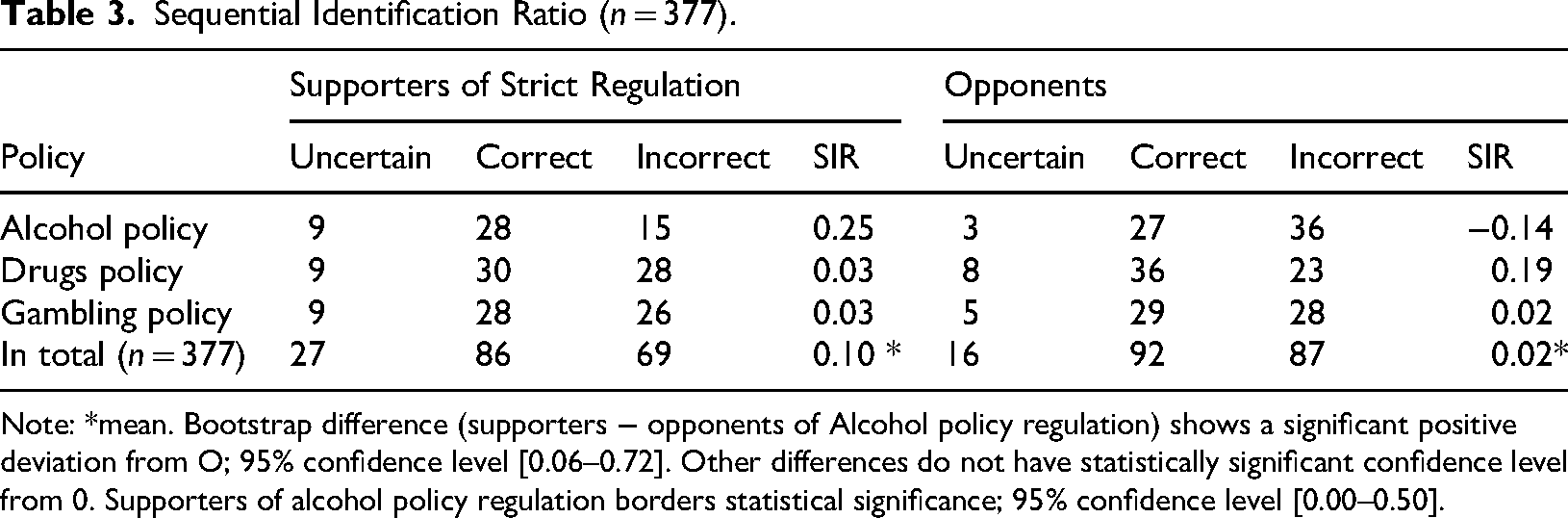
Note: *mean. Bootstrap difference (supporters − opponents of Alcohol policy regulation) shows a significant positive deviation from O; 95% confidence level [0.06–0.72]. Other differences do not have statistically significant confidence level from 0. Supporters of alcohol policy regulation borders statistical significance; 95% confidence level [0.00–0.50].
By comparing Tables 2 and 3, we see that the drug policy game follows a standard pattern in which the minority shows a (marginal) positive trend in its display of understanding of its expertise in comparison to the majority. The IR of the minority is higher than its SIR (i.e., the final assessment has a higher score than the score of individual questions). The majority in drug policy have low SIR and IR, and the final assessments are no better than evaluations of individual questions. The opponents of criminality also have a great ability to successfully pretend to be supporters of criminality: they can be said to have interactional expertise of the supporters’ argumentation, and they have a solid understanding of the supporters’ views despite their own distinct group foundation. The small, distinct minorities generally outshine the majority in their expertise, and display a high granularity in their knowledge of the ways of the majority. The extreme case of this kind of group relations is the relations between blind and sighted individuals (Collins & Evans, 2007), where the blind are great interactional experts on the social world of the sighted, who in turn do not generally have any access to the social world of the blind.
In the gambling policy game, the SIR values of both the supporters and the opponents of regulation were random, and in the final assessment both groups were relatively strong in identifying their members. This finding suggests that there exists a symmetrical argumentative difference between the groups, but it is very thin. In other words, in most questions, the supporters and the opponents of the regulation on gambling policy did not have distinct views that separated the groups, but eventually there were some questions that formed a difference between the groups, which then becomes visible in the final assessments (IR).
When there are robust differences between the groups, the individual questions start to build the difference, which then in the final assessments grows stronger (e.g., regarding drug policy). The robustness versus thinness of group difference is a new methodological issue for the imitation game paradigm (Segersven & Arminen, 2025).
The most complex of all the addiction policy games proved to be the alcohol policy game, in which the SIR values and the IR values are opposite. The supporters of regulation have a relatively high SIR: they do well with individual questions but then fail badly in the final assessment (IR), which is lower than their SIR. The opponents of regulation (liberals) exhibit precisely the opposite: their SIR is extremely low (negative), but then they manage to do well in the final assessment and achieve a reasonably high IR. How can we interpret this result? The opponents of regulation seem to have a subtle understanding of the supporters’ argumentation. While this means that they can pass well in the final assessments, their knowledge edge is just thin; at the level of individual questions, the supporters of regulation on average have the advantage. In other words, there are only narrow aspects of a knowledge domain in which liberals have a superior understanding, which they then can use to recognize their opponents. This result is similar to current Turing tests between large language models (LLMs) and humans, in which LLMs show an extremely strong capability to simulate human thinking, but still fall behind humans in some narrow aspects of a knowledge domain that humans can (still) utilize in recognizing machine thinking (Segersven & Arminen, 2025).
Qualitative Results
The thematic analysis identified the key themes in the argumentation of the supporters of regulation and opponents (liberals) in each area. The imitation game method did not constrain the questions asked or how they were asked, as long as the questions and answers focused on the game's theme. We will demonstrate the tone and type of arguments of each group with chosen, anonymous extracts (2–27) from the game.
Alcohol Policy
The themes of the supporters of regulation revolved around maintaining public health and safety concerns such as preventing drunk driving. Typical reasons given for the regulation on alcohol use are seen in (2): “the health and societal costs caused by alcohol, such as performing liver surgeries, treating alcohol-related car accidents, domestic violence, and alcoholism” (25251/A2) (the code consists of the individual game in the imitation game, and number of the question (Q), the answer (A) or the assessment (R). Through these the reader may infer which extracts, if any, come from the same person). The supporters of regulation generally viewed alcohol legislation in a positive light and felt that it is necessary. At the heart of the supporters’ argumentation is a pessimistic outlook on alcohol consumption and its consequences. Supporters shared a view that self-control of alcohol consumption is not sufficient (3): “I don't think one can rely on that. If one could, then there would not be news about drunk driving or bar bathrooms full of vomiting people. Even I have gone overboard despite trying to drink ‘moderately’” (25205/A4). The stance of lack of self-control was utilized to recognize the group member (4): “I personally believe that people don’t always know their own limits. That's why we can't rely on everyone to just stop and not take more” (25205/R4). The key argumentative themes of supporting regulation on alcohol policy are found in Figure 3 (Distribution figures by Rosanna Rydman). The common themes used by the supporters of regulation were related to public health and safety, with a pessimistic view of alcohol consumption and a positive view of alcohol legislation.
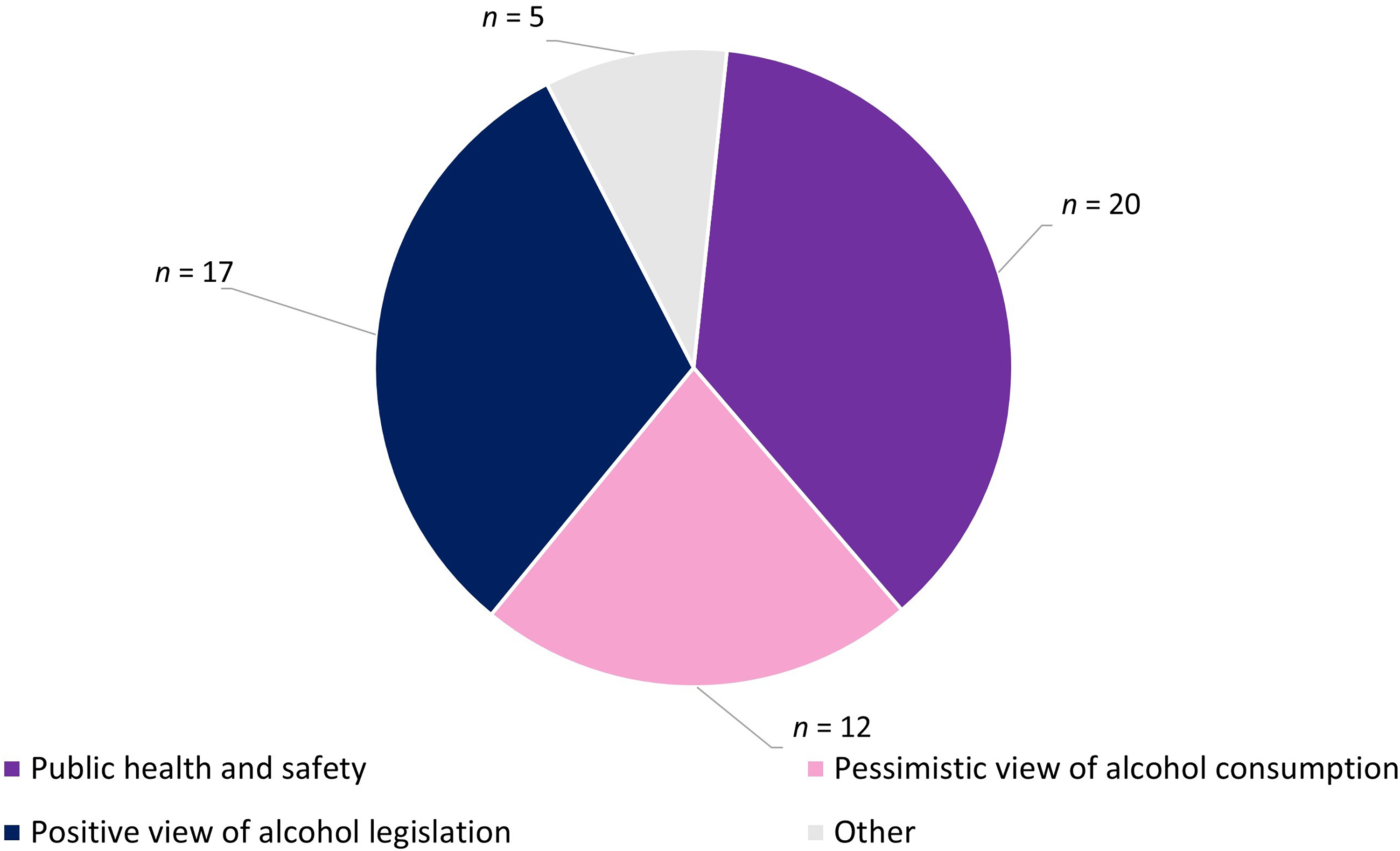
The distribution of argumentative themes used in alcohol policy: The supporters of regulation (n = 54).
In contrast, the opponents of regulation (liberals) emphasized a more liberal approach to alcohol sales and consumption, believing that everyone could benefit from a free market system. They viewed governmental legislation and regulation negatively. Example (5) shows how an opponent answered the question on restrictions being a satisfactory solution to alcohol abuse (cf. the supporter's answer (2)). As seen in Example (5): “In the most challenging cases, there seems to be a general lack of perspective and/or self-medication at play. For some, drinking becomes a prerequisite for social interaction. When we reach the stage of physical addiction, something has already gone wrong long ago. These problems persist despite current sales restrictions, and I don't believe they have a significant positive impact” (25254/A2). The opponents emphasized the lack of a positive impact by alcohol regulations. They shared a more optimistic perspective on alcohol consumption and self-control than the supporters. When asked if total alcohol consumption would increase if the selling of alcohol were less regulated and longer selling hours were allowed, a liberal answered (6): “Hard to say. There are arguments for both the growth and reduction of sales. Personally, I believe that sales would remain relatively stable – or possibly even decrease slightly. In other words, what would be purchased during the extended sales period would now be spread out over the available time, reducing the ‘let's buy so much that it definitely lasts’ mentality, which leads to the mindset of ‘since we have it, let's drink it’” (25260/A4).
The key argumentative themes for deregulating alcohol availability are market liberalism, a negative view of alcohol legislation and an optimistic view of self-control (Figure 4).
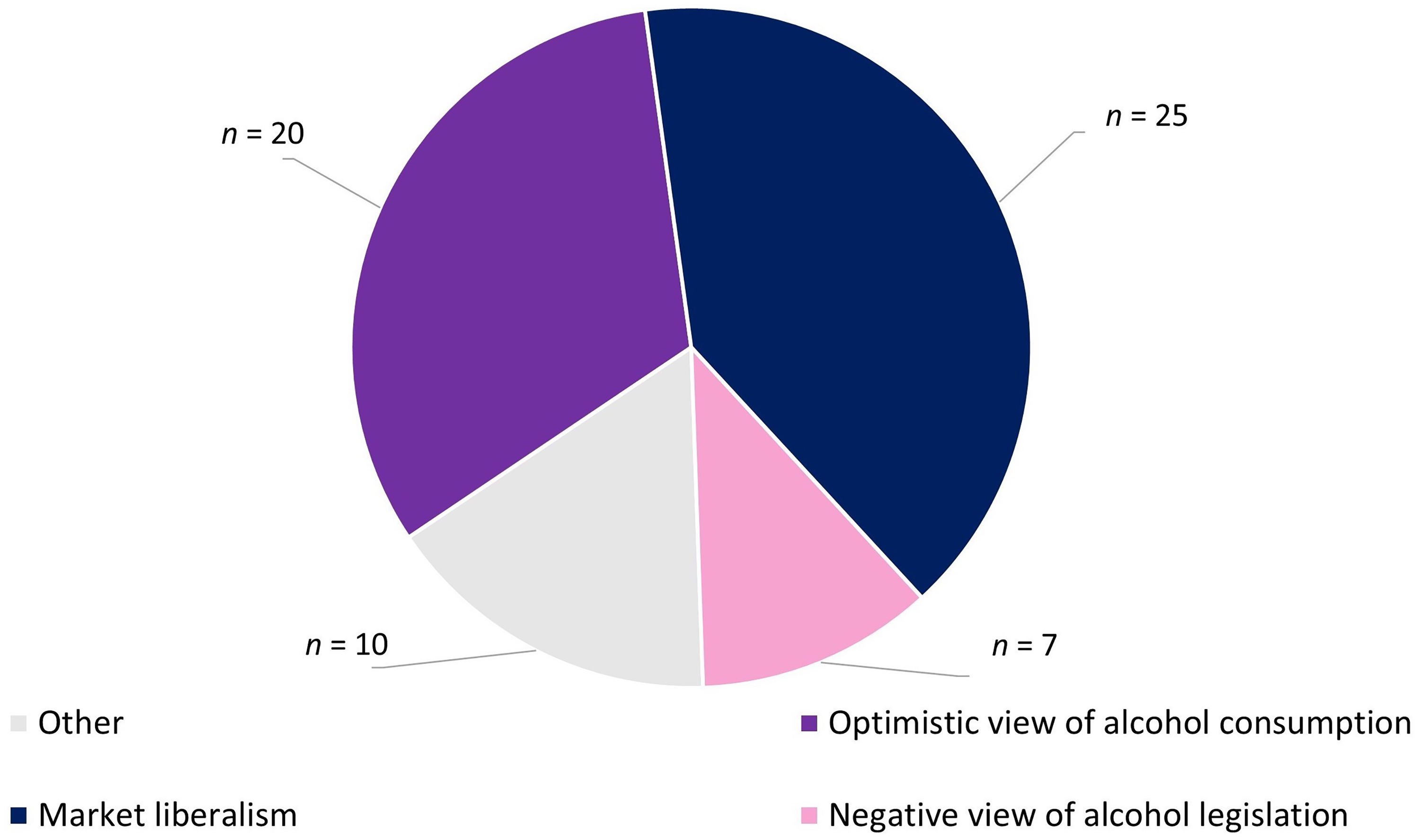
The distribution of argumentative themes used in alcohol policy: The opponents of regulation (n = 62).
Our qualitative analysis shows that the main point of division in alcohol policy was not a stance on the availability of alcohol but a stance on the role of the government, that is, whether it should support free markets and consumer choice or use restrictions to ensure its citizens’ health and well-being and prevent alcohol abuse.
Drug Policy
The imitation game data proves that for many supporters of criminality of drug use, the distinction between legalization and decriminalization of drug use is not clear, or they do not appear to understand what decriminalization would mean and straightforwardly discuss only legalization. The supporters of criminality of drug use emphasized the positive aspects of drug legislation and focused on the theme of public health and safety, as in the alcohol policy game. In (7), a supporter who asked a question about the legalization of drug use gave the following assessment of the responses: “I believe that drug use would increase among young people after legalization, and the consequences of drug use cannot be accurately predicted. Answer 2 supports the legalization of drugs, as the person wants to reduce the stigma surrounding drug use” (27329/R1). Additionally, the supporters of criminality of drug use emphasize the financial costs they associate with legalization, as seen in (8): “The legalization of drugs would pose a significant additional burden on the healthcare system, as drug use and treatment needs while under the influence would increase” (27333/A1). They also saw that an individual was at least partly responsible for the consequences of drug use, as expressed in (9): “The consequences of side effects are the responsibility of both the individual and society” (27371/A2).
The supporters of criminality of drug use argued not only against legalizing drugs but expressed a belief that punishment served as a deterrent to drug use, as seen in (10): “The use of the same drug should, in principle, be punished in the same manner. Minors should be treated the same as in other penalties. Not punishing during the ‘experimental phase’ would send a message that experimenting is okay, and the purpose of punishment is precisely to encourage not using the substance at all. The threshold for starting drug use is thus higher. If someone has instead been allowed to use drugs to some extent without consequences, the threshold for using them again will surely decrease. The court could, on a case-by-case basis, refrain from punishment if it is proven, for example, that the person was coerced into taking drugs against their will” (27371/A2).
The themes employed by the participants supporting the current drug policy regulations are shown in Figure 5. The positive view of drug legislation was clearly the most common theme. Public health and safety, individual responsibility and financial costs were themes shared by the players supporting criminality.
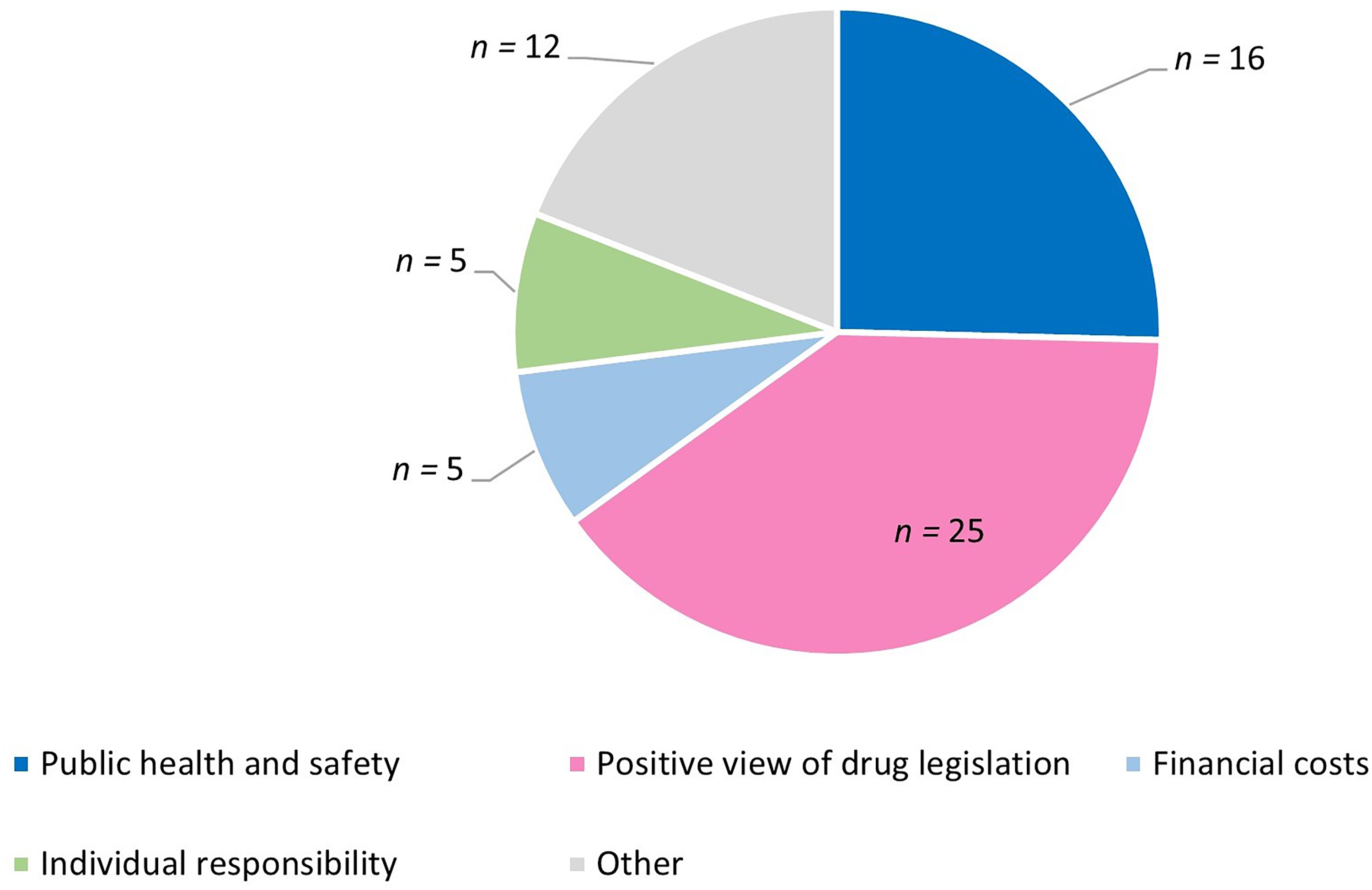
The distribution of argumentative themes in drug policy: The supporters of criminality (n = 63).
In contrast, the opponents of criminality showed empathy towards drug users, suggesting that decriminalization could encourage individuals to seek help. It was also considered to free up police resources, as seen in (11): “Yes. Through decriminalization, resources are saved, for example, for the police (no wasting resources on arresting marijuana users or monitoring cannabis use) and for the judiciary (the number of cases to be processed would decrease). On the other hand, I don’t see how decriminalization would specifically increase costs” (27334/A2). The supporters of decriminalization seem to distinguish between decriminalization and legalization. The question of the benefits of decriminalization are expressed in (12): “Those struggling with drug issues could receive better treatment and, above all, would be more willing to seek it. Legalization does not mean encouraging drug use, nor should it. Drugs cause challenging problems in society, and criminality only locks the situation, not helping to address the issues” (27336/A1).
While the supporters of criminality saw the individual as being partly responsible for the consequences of drug use, the opponents of criminality viewed drug consumption as belonging to freedom of choice, as seen in (13): “Drug use should not be punished; it should be an individual choice where each person can decide whether to use drugs or not. Currently, the societal impact of drug use is that the underground economy thrives, with organized crime profiting. On the other hand, drug use may not necessarily have any societal impact: a recreational user could be a normal, working, tax-paying family person” (27374/A1). The opponents’ argument for individual rights was also known by the supporters of criminality (see Example 1), but that was not the only argument by the opponents of criminality (also in Example 1).
They also disagreed with the current drug legislation, as expressed in (14): “The current drug policy does not reduce drug use but only makes it harder for users to get help for their addiction. Criminalizing drug use directs punishments to the wrong address” (27380/A1). They further argued against classifying substances as legal or illegal, as (15) reveals: “No. A marijuana smoker has at most harmed themselves, but they could have done the same with alcohol and tobacco. It is not justified to penalize one type of behaviour and not another if the harms of both are equal or if the harms of legal procedures are greater. There are not enough resources to investigate bicycle thefts and other minor property crimes, which is wrong because in these crimes, the victim has lost their property or experienced other harm” (27376/A4).
Figure 6 shows the key argumentative themes of opposing criminality of drug use. The most common theme, appearing in almost half of the cases, was empathy for drug users. Other drug policy-related themes included the question of drugs and the economy, the challenge of distinguishing between legal and illegal drugs, individual rights and the freedom of choice, and negative views on drug legislation.
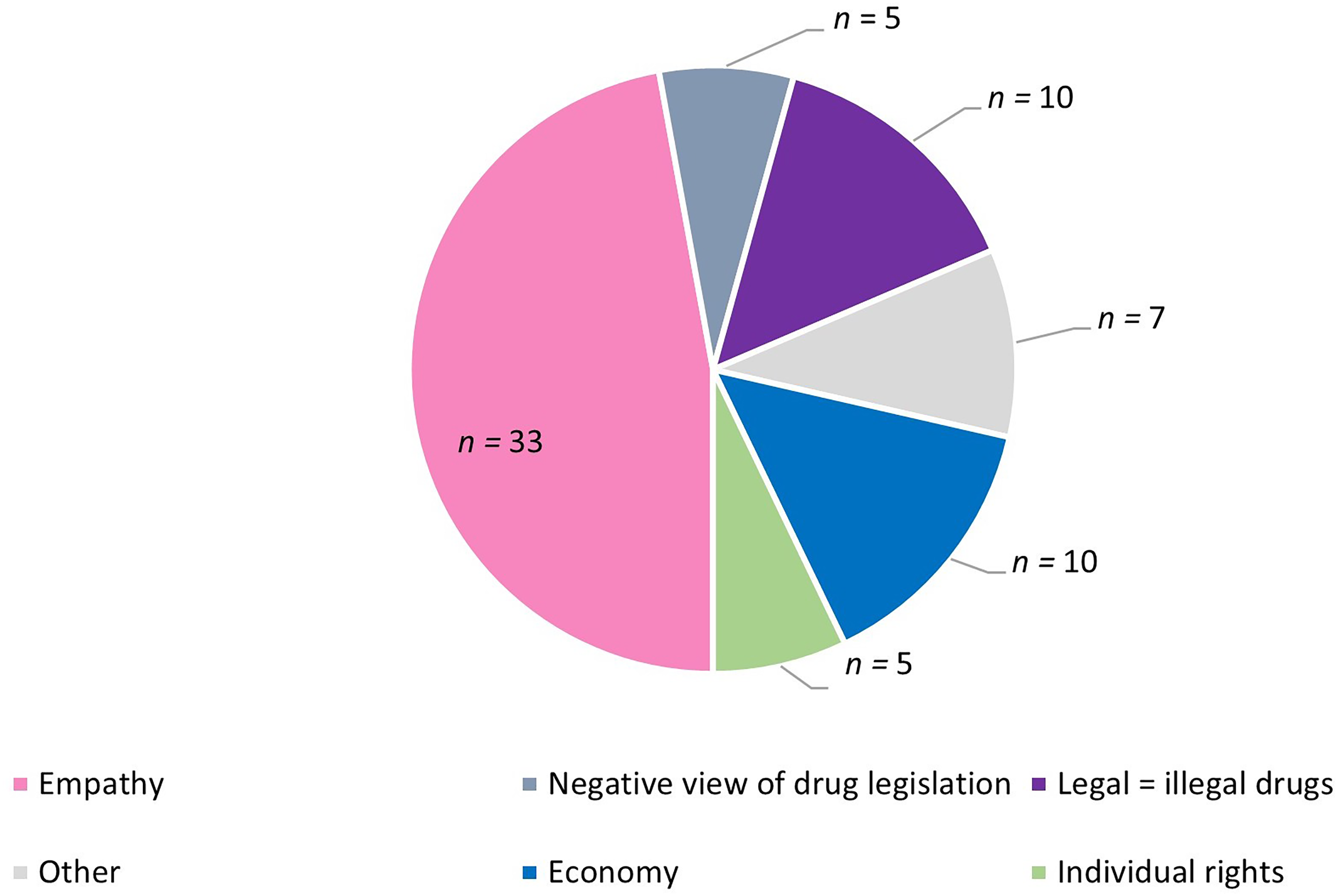
The distribution of argumentative themes used in drug policy: The opponents of criminality (n = 70).
The opponents of criminality of drug use focused their questions on the counterfinality of criminality. Of all the addiction policy areas, the group relations in drug policy are the closest to classical minority/majority group relations, where the minority possesses knowledge of the specific domain to which the majority does not have access.
Gambling Policy
The supporters of regulation expressed a strong positive attitude towards the state's responsibility in regulating gambling, but they also acknowledged concerns about profiting from individuals’ addiction. To the question about the benefits of opposing the regulation of gambling, a supporter answered in (16): “Players would not benefit from the liberalization of gambling. Even the former strategy director of RAY (Finland's Slot Machine Association) Matti Hokkanen has stated that ‘in gambling, the only sure winner is the organizer of the gambling games’. So, even (The betting agency of Finland) is aware of the harms of gambling. The problems stemming from gambling are primarily social and economic. Perhaps the most unfair aspect of the negative effects of gambling is that the problems disproportionately affect, for example, those who are already poor, less educated, and those with mental health issues. The benefit to the state would also be minimal. With the system opening to the market, a large number of commercial operators would enter the market, likely reducing the playing of ’ own games. Thus, the profits channeled to the public sector by would also decrease, and players’ capital would flow to foreign for-profit operators” (19495/A3). They believed that the state-owned gambling company Ltd served a beneficial purpose. In another sequence, however, an opponent imitates a supporter, when asked whether the respondent believed that the state-owned gambling company is a responsible actor (17): “Yes, absolutely, I do. always puts the individual first. Many work tirelessly at every day precisely so that every Finn would have a job and a livelihood, as well as the best possible conditions for a pleasant and spirited life. In addition to all this, has a certified quality criteria certificate, ensuring that its operations are transparent, upright and fair” (19489/A2). The supporter who had asked the question recognizes the attempt to imitate/exaggerate when assessing the answer (18): “The pretender's answer sounds overly sweet and almost like it's straight out of ’ marketing material. The response is remarkably transparent. Or perhaps the respondent is a true believer in ” (19489/R2).
It is the state's responsibility to prevent issues such as addiction from escalating without proper oversight, argued a supporter (19): “Society has a responsibility towards its citizens in every way, and that includes responsibility for the choices of various addicts. The individual cannot be blamed for their various illnesses; addiction is a dependency disorder, a mental health condition. The individual should be treated, and therefore it would be better for society to seek out the cause of the individual's illness and help them overcome it” (19435/A2). The supporters shared an ethical basis for gambling policy, as shown in a question–answer sequence by two supporters. First, one asked (20): “Can the potential harm caused by gambling be prevented without tightening gambling policies?” (19497/Q3) The response followed (21): “No. has received multiple warnings from the Police Board regarding the ethics of its advertising …” (19497/A3).
The themes expressed by the supporters included support for a responsible gambling monopoly, concerns about the addictive nature of gambling, the ethical grounds for the regulation and the responsibility of the state (Figure 7).
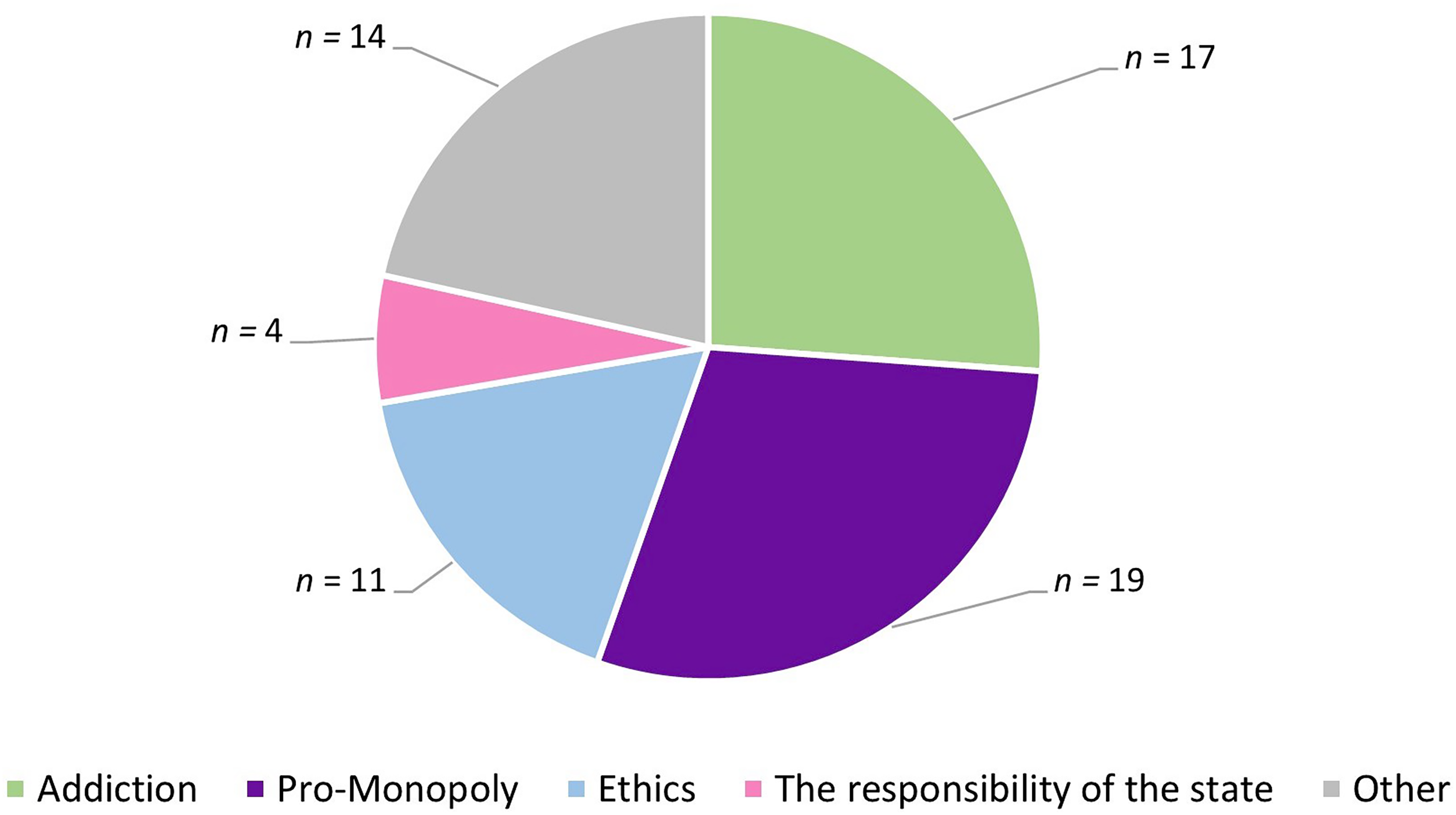
The distribution of argumentative themes used in gambling policy: The supporters of regulation (n = 65).
At the same time, the opponents of the regulation focused on the economic aspects of gambling, noting the importance of balancing supply and demand in the industry, and the impossibility of state-level control. For example, when a respondent was asked (22) “Does it make sense to regulate gambling?” (19430/Q2), the answer was (23): “That's exactly why restrictions on gambling should be lifted, because the role of foreign online casinos is only growing in our society. If the domestic gaming monopoly is too restricted, players will go elsewhere, and thus profits will also leave our society. Therefore, only the harm remains in our country, but the revenues flow elsewhere” (19430/A2). One type of argument is that technological change and globalization have gone beyond monopolies. This presupposition is built into the following question (24): “Some parties advocate for excessive bans/restrictions in the gambling industry. Do you believe that in the digital world, Finland could become like North Korea, meaning that strict restrictions would be possible in a Western democracy?” (19490/Q3)
Ultimately, an argument was presented that gambling is just a commodity like other commodities (25): “Don’t you think Finland should fully adhere to the EU's principles of free trade, meaning that the Ministry of Social Affairs and Health, Customs, etc., wouldn’t seek to restrict free trade of wines and spirits (so that alcohol could be freely ordered by mail from abroad)? By the same logic, gaming services should also be freely available from one EU country to another, shouldn't they? So, don’t you think Finland should also adhere to free trade in these product categories?” (19492/Q1) Market liberalism had the ultimate basis in the competence of consumers (26): “Why do you think it's important to regulate gambling? Why can’t the decisions made by adults themselves be respected?” (19494/Q1) At times, the emphasis on individual freedom tilted towards individual responsibility, so that individuals were also responsible for seeking a cure for their addictions (27): “… however, ultimately individuals have a responsibility for themselves and seeking treatment for their addiction/problems” (19426/A2).
Figure 8 shows the key argumentative themes of the opponents of regulation on gambling policy. The themes were a rather mixed collection related to four areas including economic questions, such as supply and demand as an economic model for markets; the state-owned gambling company granting more funds for cultural and voluntary actors only if gambling is less regulated; a free market benefitting everyone – individuals and companies; and licensing bringing more income and better control of gambling markets.
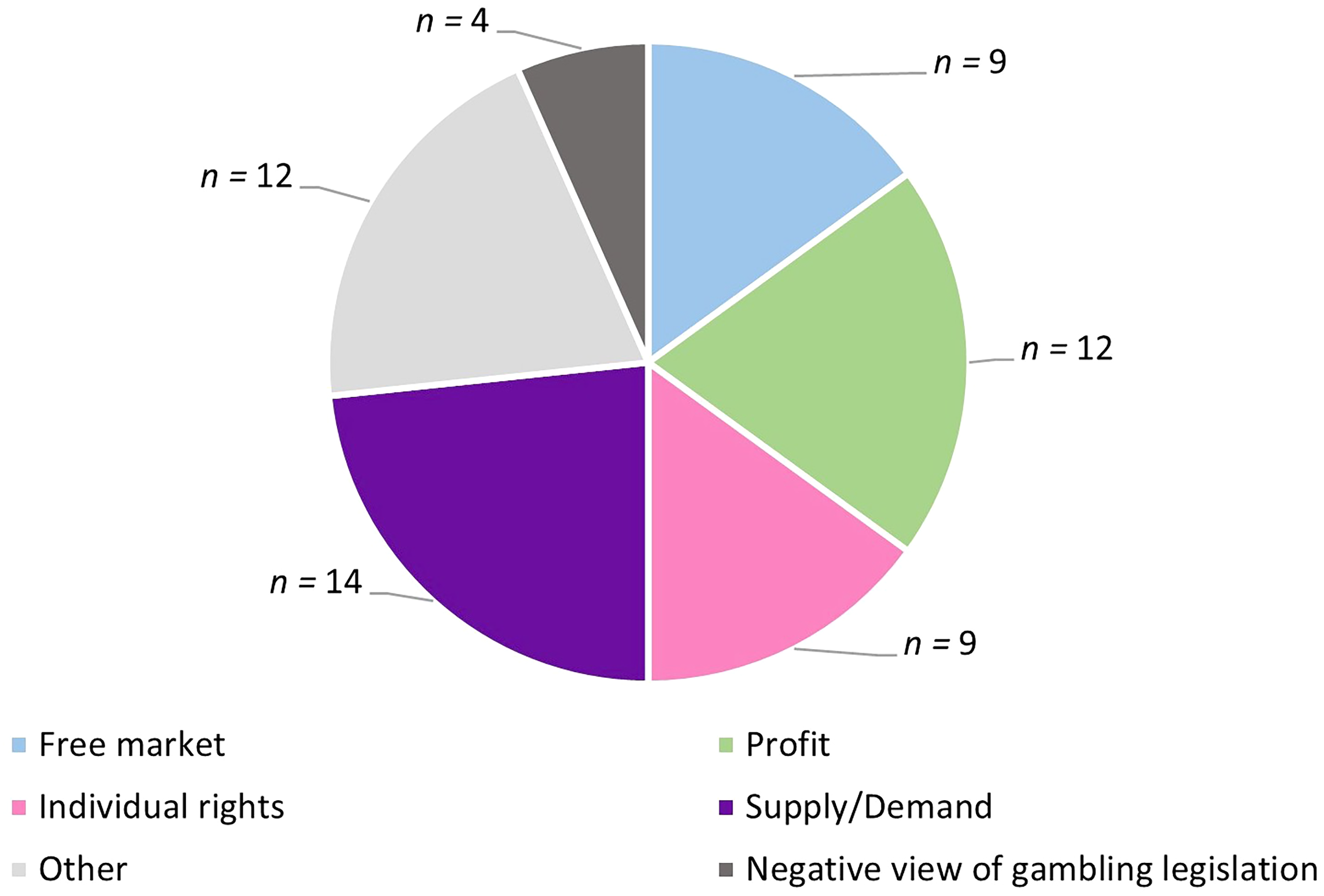
The distribution of argumentative themes used in gambling policy: The opponents (n = 60).
Our qualitative analysis shows that the divide in the gambling policy is related to the question of whether gambling should be regulated or not. The opponents have a strong economic market-liberal emphasis in their arguments, while the supporters argued for the state monopoly and public regulation.
Discussion
In imitation games on addiction policies, only the game on drug policy resulted in a standard outcome, in which the minority (liberals supporting decriminalization) had a superior knowledge of the argumentation of the majority (the supporters of criminality). It appears that the liberal argumentation has not had such public visibility that it would have reached the criminality supporters. Based on our data, we can also specify what kinds of arguments separate the opponents and supporters of criminality. The former may have a more granular view of the distinctions between decriminalization and legalization than the supporters of criminality have absorbed. It also seems that the supporters of decriminalization have sensitivity (empathy) towards the human costs of the criminality of drug use, which others may lack. Kettil Bruun's notion of sensitivity towards control costs might be a way to formulate it (Bruun et al., 1975; Tigerstedt, 1999). An empathic perspective towards criminalized drug use sees it as a crime without a victim.
In the imitation game on alcohol policy, the outcome of the final assessments (IR) showed that the liberal opponents of regulation surpassed the supporters in their reciprocal knowledge of argumentation. However, the outcome based on all assessments was the opposite, which seemed to indicate that the supporters of regulation have a better understanding of the opponents’ views than vice versa. This shows that the liberal opponents’ argumentative edge is narrow; that is, they appear to have a narrow aspect of epistemic domain that allows them to keep epistemic distance from the supporters. In terms of the methodology of the imitation game, the relationships between IR values and SIR values open a new dimension for analysis (Segersven & Arminen, 2025). As the results based on all assessments and final assessments diverge, we must conclude that the finding is thin, based on a narrow distinction. In canonical games, IR values and SIR values point in the same direction, and consequently the distinction is robust. In earlier imitation game studies, Segersven (2024) and Segersven et al. (2024) have analysed the success rates of SIR values in different knowledge domains and found domain-specific areas of distinction. For example, in an imitation game between Finland Swedes and majority Finns, attention was paid to education (e.g., Swedish-speakers’ separate schools), which amounted to a distinction in other respects assimilated groups (Segersven, 2024); in a game between Somali immigrants and majority Finns, the cultural understanding of the family institution strongly separated the groups (Segersven et al., 2024). Qualitative analysis may help us find if there exists a specifiable narrow distinction between the supporters and the opponents of alcohol consumption. We wonder whether it might again be an issue on the social costs of regulation, as in case of the drug policy.
In the imitation game on gambling policy, the outcome based on the final assessments shows a relatively strong symmetrical separation between the supporters and the opponents. Analysis of all assessments shows that on the whole, they are close to random: the groups are inseparable (as was expected in our hypothesis). In all, the result is that there is only a thin knowledge difference between the supporters and the opponents; on average, in individual questions the groups were not able to recognize their members.
Conclusions
Alcohol, drugs and gambling are subject to governmental control policies and regulation, and, at times, are subjects of intense social and political discussion. We found that the social group distance between the supporters and opponents of regulation was different in each of these addiction policy areas.
On drug policy, one specific issue concerns the social and human costs of the criminality of drug use. In this regard, the supporters of decriminalization have far greater sensitivity than those who oppose decriminalization. In terms of alcohol policy, the distance between supporters of strict regulation of alcohol availability and liberals aiming at looser controls is much smaller than that between supporters and opponents of the criminality of drugs. In alcohol policy, the supporters and opponents of regulation are well integrated and have developed an understanding of each other's argumentation. In terms of gambling policy, the relationship between the supporters and opponents of regulation is symmetric; the two groups have equal access to each other's argumentation. In terms of research methodology, the varying relationships between IR and SIR results opened a new dimension for interpretation of imitation games. As for addiction policies, the only robust finding was in the drug policy game, where starting from individual questions there emerged a clear knowledge difference between the supporters and opponents on the criminality of drug use. The results of individual questions cumulated, which makes the overall findings robust. In the drugs and gambling policy fields, on average individual questions did not separate the supporters and opponents of regulation. In these fields, the differences between the groups, though existing, were thin; only a narrow epistemic edge separated the groups. The reasons for the thinness of separation between supporters and opponents of regulation vary between different areas of addiction policies. During the long history of alcohol policy in Finland, people have learnt by heart the arguments both for and against the regulation of alcohol availability. In gambling policy, the lack of public discussion and distinct knowledge of gambling regulation and the vision for its future does not yet allow subtle and robust argumentation.
Footnotes
Acknowledgements
We thank Katarina Warpenius, Pekka Hakkarainen and Janne Nikkinen for comments and ideas on organizing the experiments, as well as Robin Room for comments. We thank Tiina Poutiainen for participating in organizing the experiments. Any possible mistakes are ours.

Ethical Considerations
We follow the ethical research standards of the Finnish National Board of Research Integrity (TENK), which maintains that ethical approval can be waived when
Participation in the research is based on the principle of informed consent The research does not involve intervening in the physical integrity of research participants The participants are over the age of 15 years Research does not expose participants to exceptionally strong stimuli Research does not involve a risk of causing mental burden that exceeds the limits of normal daily life Research does not involve a threat to the safety of participants or researchers or their family members or others closest to them.
Consent to Participate
The participants gave their written consent to participate in the study.
Consent for Publication
The participants gave their written consent to us for analysing and reporting the results of the study.
Funding
The authors disclosed receipt of the following financial support for the research, authorship, and/or publication of this article: This article is a part of the project The Structures of Alcohol, Drug and Gambling Political Argumentations in Finland (2023–2025). The project was funded by the Finnish Foundation for Alcohol Studies.
Declaration of Conflicting Interests
The authors declared no potential conflicts of interest with respect to the research, authorship and/or publication of this article.
Data Availability
Data may contain individual statements that might endanger the anonymity of participants; data cannot be shared with unauthorized parties.