



Abstract
Understanding professionals’ attitudes towards their clients is as important as adequate knowledge and skills within the field of substance abuse. Molina-Mula et al. (2018) declare that this is even essential to developing the ability to work with clients with dependence problems. An attitude generally refers to the way people think or feel about something (Merriam-Webster, n.d.), as well as reflects an evaluation of an object or situation (Jain, 2014). In the most general sense, attitude determines type of response, which varies from negative to positive (Prates et al., 2021). However, attitude has another important role: to predict behaviour (Shrigley, 1990). Nowadays, prediction and explanation of behaviour are dominant goals of attitude research in various contexts, ranging from political, commercial and lobbying to public health and human service sectors (Howe & Krosnick, 2017).
Attitudes can influence behaviour; however, the relationship is not straightforward. First, behaviour and attitude do not always match up completely (Chaiklin, 2011), as there are many factors that influence the engagement in behaviour, such as environmental factors, normative beliefs and social norms, personal beliefs and values, behavioural intentions and so on (Ajzen, 2001; Ajzen & Fishbein, 1972, 2000; Bakanauskas et al., 2020). Even more complicated is the activation of behaviour in terms of conscious and unconscious processes, where attitudes might operate outside individuals’ awareness, as well as behaviours that can be automatically influenced by knowledge led by accidental social cues (Ferguson & Bargh, 2004). According to Chaiklin (2011), the “order of change” dilemma arises in this situation too: is it crucial to modify attitudes in order to change behaviour; do these changes occur simultaneously; or is it enough to modify only behaviour? Although human behaviour is complex, and people do not always act upon their thoughts, the mental component, expressed in beliefs, attitudes and intentions, based on the Theory of Planned Behaviour, is a priori, and often become the target of intervention in motivating people to engage in and maintain particular behaviour or to encourage awareness of the behaviour they conduct (Ajzen & Schmidt, 2020). Therefore, in this particular study, attitude is chosen as the mental component of behaviour, which can be measured with psychometric tests, the results of which make it possible to use interventions to achieve change in social work with individuals with alcohol usage problems.
Evidence suggests that health and social professionals’ attitudes impact the quality of care and services they provide, as well as connect to various dimensions of work. For example, negative attitudes may decrease motivation to help clients (Van Boekel et al., 2014), interfere with professionals’ willingness to work with alcohol-related problems (Skinner et al., 2005) or form a barrier to a good therapeutic relationship (Anderson et al., 2004). Conversely, positive attitudes are related to higher engagement with individuals who use various substances (Cartwright et al., 1996; Hutchinson et al., 2013), and lead to more intensive intervention activity (Anderson et al., 2017), positive treatment outcomes (Anderson et al., 2004) and adherence to treatment plans or recommendations for educational activity (Darlow et al., 2012). Cartwright et al. (1996) show that professionals’ attitudes may even be used to predict clients’ treatment behaviours. In that study, workers who were most committed to their work created affective bonds with their clients and managed to formulate shared goals and treatment processes; as a result, their clients were the most engaged in their treatment. A more recent study also reveals that patients with substance usage problems emphasised professionals’ attitudes as incredibly important in their treatment (Wangensteen & Hystad, 2022). Those treated in a respectful and collaborative manner developed higher self-esteem and optimism, felt valued and created a more positive experience in the substance abuse treatment unit. In contrast, a disrespectful professional attitude increased a sense of helplessness (Wangensteen & Hystad, 2022). Unconsciously imposed or consciously exhibited negative beliefs about people with substance usage problems also affect clients’ openness to discuss the problem and threaten mutual cooperation (Curtis & Harrison, 2001). However, in such a sensitive area as substance abuse, the risk of stigmatising attitudes is high, which may result in client avoidance or unwillingness to respond to the problem (Henderson et al., 2014; Prates et al., 2021). Thus, it is important to produce empirical knowledge on social workers’ attitudes towards individuals with alcohol usage problems to strengthen the interventions that can be applied during standard services and those specifically orientated towards substance abuse. This knowledge can in turn improve social work practice within this field and enhance client involvement and cooperation. In spite of the complex nature of attitude formation, incorporating personal and professional experience, societal norms and values, or even cognitive reasoning processes, education/formal learning might have a significant influence on attitude construction in social work with individuals with alcohol usage problems. Research supports the importance of education for social work professionals’ attitudes towards substance abuse problems (Amodeo, 2000; Galvani & Hughes, 2010; Senreich & Straussner, 2013; Senreich et al., 2017). For instance, those social workers who underwent 9 months of postgraduate psychoactive substance abuse training were more likely to assess their clients for these issues and held more optimistic attitudes about clients with alcohol and other drug usage problems. Studies were aimed to increase social workers’ skills and knowledge in the areas of diagnosis, treatment, assessment and relapse prevention (Amodeo, 2000). The scientific research of Galvani and colleagues (Galvani, 2007, 2017; Galvani & Allnock, 2014; Galvani & Hughes, 2010; Galvani et al., 2013) have long analysed the influence of the formal and special education for social workers while working with individuals with substance abuse problems, and attitudes are discussed in detail. Galvani (2007) stated that this is not an inability or unwillingness of the social worker to address substance use issues, this is a failure of social work education to respond to the calls for more effective training on this topic. Later she explained that knowledge, support from colleagues and legitimacy of the role are highly connected, emphasising the importance of the knowledge to make social workers feel like legitimate performers of their role in the field of substance abuse (Galvani & Hughes, 2010). Recently, the author presented the ecological perspectives of the place of substance abuse within social work education and human resources, and social workers values, attitudes and knowledge are recognised as individual influences, which should be analysed while educating professionals for social work within the field of substance abuse (Galvani, 2017). Accordingly, attitudes, knowledge and skills should be treated equally in the training of professionals (Hutchinson et al., 2013). Although some researchers have not observed a change in social workers’ attitudes towards substance usage problems after receiving specific training or after a university course, they did note a change towards utilising particular intervention options; for example, training increased the usage of a harm reduction model (Fenster et al., 2017). The contents of training/courses also influence attitude construction, though the main question is how to bring this knowledge into real practice (Galvani & Hughes, 2010). Consequently, it is not only important to boost attitudes through knowledge and skills but also to grasp how this is done. The present study neither distinguishes the concept of knowledge more precisely nor investigates it in further detail with regard to practice hours, environments or formal education subjects. But it is still critical to recognise how complex knowledge is as a construct and that not only formal education constitutes its development. Education does not literally mean only lectures or seminars, and knowledge is not delivered only in a university or college. Livingston's (2014) model of knowledge for social work in the field of alcohol usage raises the question of the origin and impact of social workers’ knowledge brought to specific contact with individuals with alcohol usage problems. The author suggests that this is not only the case of formal knowledge (learnt through education), but also of so-called “non-codified” knowledge, constructed through individual and professional experience, cultural norms, personal values and ethics, and individual wisdom that construct social workers own knowledge framework upon which social workers’ practices occur (Livingston, 2014).
Substance abuse problems are well recognised in Lithuania (Dambrauskiene et al., 2019; Department of Drug, Tobacco and Alcohol Control, 2022; Klumbiene et al., 2012; OECD/European Observatory on Health Systems and Policies, 2021; Radisauskas et al., 2021; Rehm et al., 2021; Rovira et al., 2022; Stelemekas, 2021; WHO/World Health Organization, 2023). Alcohol consumption is a major public health concern in Lithuania (OECD, 2021), with up to 35% higher alcohol usage than the European average (Department of Drug, Tobacco and Alcohol Control, 2022). In Lithuania, drinking alcohol may have been a factor in 7% of all deaths in 2020 (Department of Drug, Tobacco and Alcohol Control, 2022), with large numbers of cases of cancer, liver cirrhosis and coronary heart disease, which are closely connected with alcohol usage (Radisauskas et al., 2021; Rovira et al., 2022; Stelemekas, 2021). The high suicide rate in Lithuania (WHO, 2023) might also be attributable to excessive alcohol usage (Dambrauskiene et al., 2019). Approximately 70% of men and 43% of women who attempted suicide had issues with problematic alcohol consumption (Dambrauskiene et al., 2019). Excessive alcohol usage painfully touches families. The research by Tamutienė and Jogaitė (2019) highlighted the harm experienced by children (aged 8–18 years) growing up in an environment with parental alcohol consumption. It was found that not only are maltreatment and domestic violence present in such families, the pathways to help are often complicated by social stigma (Tamutienė & Jogaitė, 2019). Statistics show that in as many as 76% of cases, when children had to be taken from families, it was because one of the caregivers was under the influence of alcohol and/or narcotic, psychotropic or other psychoactive substances and could not care properly for the child (Department of Drug, Tobacco and Alcohol Control, 2022). Apart from statistics and documented research, there are the intangible costs of alcohol consumption that are difficult to measure, even though they highly affect the individual and all of society. Social workers encounter issues with alcohol and other substance usage directly and indirectly. In Lithuania, social work is organised by the Ministry of Social Security and Labour of the Republic of Lithuania and is described as a profession that aims to assist individuals, families, communities and society in resolving social issues and overcoming challenges brought on by their interaction with the environment (Ministry of Social Security and Labour, 2022). After completing a study programme in the field of social work and acquiring a qualification in social sciences (bachelor and/or master level education) in one of the six universities or nine colleges in Lithuania, social workers conduct their professional role by services and functions described on the Law on Social Services of the Republic of Lithuania (2006), which vary from general (providing information, consultation, mediation, representation and so on) to more specific (developing social skills, crisis management, social care etc.) (Law on Social Services, 2006). Importantly, the institutional services and functions that a social worker carries out are the same, although the origins of the social problems vary, indicating the importance of appropriate knowledge within a specific field of practice. Social workers often evaluate the complete spectrum of needs that people have, but they could be less knowledgeable about concerns with alcohol and other drugs. Interventions for other problems will not be as successful if this crucial area of need is overlooked and unmet (McCarthy & Galvani, 2018). Being at the centre of many social problems, such as families at risk, violence in the immediate environment and so forth, social work professionals do face problems with alcohol use, even though they do not always work directly with those individuals; rather, they provide information or consult families or individuals with social problems, but may notice or are aware of a drinking problem. Then the question arises of the worker’s responsibility and willingness to consider the alcohol issue, as well as his or her ability and willingness to discuss it with the client while dealing with other issues. Certainly, in specific centres, such as alcohol or drug rehabilitation or dependence clinics, social workers may take more active steps in the rehabilitation process. However, when it comes to alcohol prevention or intervention through daily practices, it is up to the social worker's competence and commitment (in terms of actual help and in terms of quality of help) to determine what the next steps will be when he or she notices the client's drinking problem. Those steps may depend greatly on the professional’s knowledge, skills and, as the above research indicates, attitude. Therefore, this study is not an attempt to evaluate specific social services in alcohol-related institutions alone; the aim of the present study was to analyse the overall picture of social workers’ attitudes while providing any standard or specific services to individuals with alcohol usage problems. As Galvani once declared, alcohol consumption should not only be seen as a health problem, it is a social issue as well (Galvani, 2007). Therefore, it is essential to consider the factors that could improve social workers’ responses to these issues, one of which is attitude, which has recently gained considerably more scientific attention. As a relatively new profession and science, social work in Lithuania differs significantly from the Western or Nordic welfare systems in terms of approach, service organisation and functions. Only after regaining its independence in 1990 did Lithuania start to grow a more autonomous social work sector, and it was during this time that social work started developing increasingly as a profession (Mačiulskytė, 2014). However, to successfully address social concerns and satisfy the needs of vulnerable people, the profession still faces obstacles, such as the need for more evidence-based resources and support. In addition, the role of social work in Lithuania still faces great uncertainty, which is reinforced by changes in policies and regulations, limited resources, complex social problems and various dilemmas without a clear solution (Rimkus, 2015). Social workers in Lithuania are required to work with a range of settings and populations, creating a diversity of tasks that aggravate the expectations of their profession, and, as a consequence, might affect the efficiency of client and community care. This is especially true in complex cases, such as problematic alcohol use, when a social worker has to deal with the client's practical day-to-day issues and simultaneously faces an emotional and psychological demanding situation. Thus, the overall objective of social work education in Lithuania is to prepare professionals who can use the most recent research, balance the interests of diverse communities and respond to unpredictable situations (Rimkus, 2015). This article is an attempt to include knowledge in social work with individuals with alcohol usage problems in Lithuania and is a part of a doctoral dissertation focusing on an in-depth analysis of social work with individuals with alcohol usage problems in Lithuania; it belongs to several articles that consistently explore this phenomenon (Kievišienė, 2022; Kievišiene & Skaffari, 2020). Being the first quantitative study focusing on social workers’ attitudes towards individuals with alcohol use problems in Lithuania, the study has two research questions: (1) what attitudes towards individuals with alcohol usage problems are the most and the least positive in a sample of Lithuanian social workers; and (2) what is the relationship between the professionals’ attitudes, their formal education and their work experience?
Methods
Study sample
Social workers from various social service institutions in Lithuania participated in this research. Those institutions included municipality or district social service centres from main cities and regions in Lithuania (which are the main departments for managing social services in family and child care, governing crisis centres and homelessness care, and so on), five major addiction centres in the main cities of Vilnius, Kaunas, Panevėžys, Klaipėda and Šiauliai, as well as non-governmental organisations related to alcohol rehabilitation or intervention centres for families/men/women based on the official register in Lithuania. An invitation to participate in the research was also spread through the Social Workers Association in Lithuania, which includes around 1100 members. Importantly, a working with or encountering people with alcohol usage problems on a regular basis was described as the primary criterion for a social worker’s inclusion in the study. Since this research was designed for descriptive purposes, the focus was on generating an unspecified sample of social workers so that a broader scope of social work with individuals with alcohol usage problems could be attained. The sample size could not be calculated because the condition for participation was “working with individuals with alcohol usage problems” in daily practice, but was not specified to only those social workers working in specialised dependence treatment units; therefore, it was the social worker's decision whether he or she often met individuals with alcohol usage problems, and as result could participate in the research.
Questionnaire
An initial explanatory letter outlining informed consent to participate in the study was shared with the institutions’ leaders and then distributed further to the social workers themselves. To gather the participants, an online administered questionnaire was obtained. The research scale started with detailed information about the purpose of the study; the informed consent with principles of confidentiality and anonymity of the study was also outlined, and only after the participant agreed to answer the questionnaire (by pressing “yes, I agree to participate”) was he or she further automatically directed to the start of the study questions. The questionnaire gathered demographic and socioeconomic data, including sex, age, education, place of employment and work experience. The social workers’ attitudes towards individuals with alcohol usage problems were assessed using the shortened version of the AAPPQ (the SAAPPQ) (Anderson & Clement, 1987). This internationally used scale has previously shown good applicability in various disciplines, such as healthcare, education and social work (Clancy & Oyefeso, 2019; Gonçalves et al., 2020; Iqbal et al., 2015; Munoz et al., 2019; Santos & Rosário, 2015; Williamson, 2019; Wilson et al., 2011). The SAAPPQ has five subscales (Adequacy, Self-Esteem, Motivation, Legitimacy and Satisfaction), which, when combined, represent two latent constructs (Role Security and Therapeutic Commitment), as shown in Table 1. The SAAPPQ has 10 items that are evaluated on a 5-point Likert scale (1 = strongly disagree, 5 = strongly agree). Total attitude score are in the range of 10–50, with a higher score indicating a more positive attitude.
The structure of the SAAPPQ.
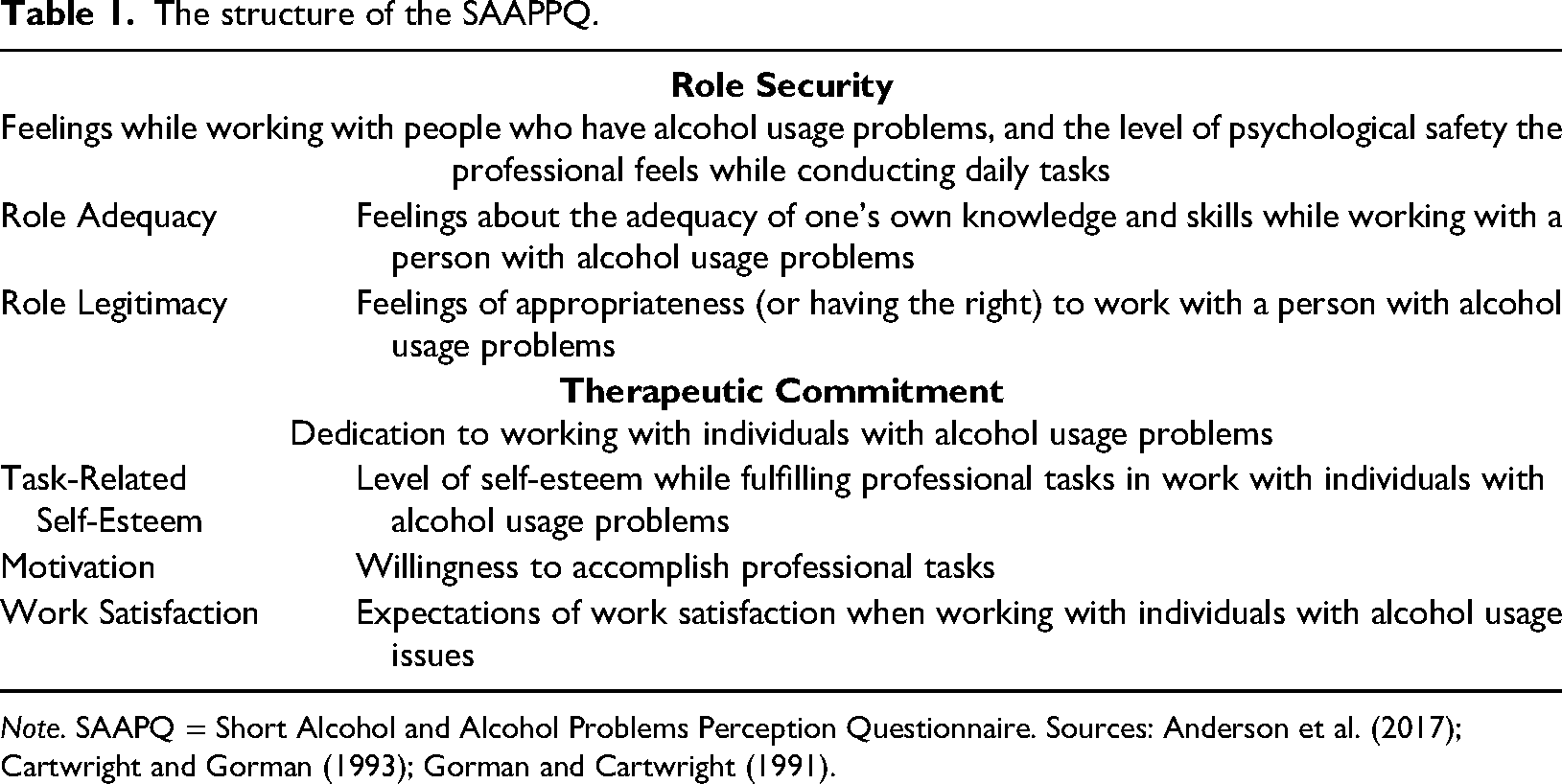
Note. SAAPQ = Short Alcohol and Alcohol Problems Perception Questionnaire. Sources: Anderson et al. (2017); Cartwright and Gorman (1993); Gorman and Cartwright (1991).
Per the SAAPPQ's authors’ (Anderson & Clement, 1987) agreement to use the scale for this research, a double-translation design was used to obtain a Lithuanian version of the SAAPPQ. It was advantageous to employ more than one translator for this design to enhance the equivalence of the source and target languages, as achieved by recording discrepancies in the target language (as compared to a back-translation procedure) (Organisation for Economic Co-operation and Development [OECD], 2012). A professional translator (YZ) and the researcher (JK), both fluent in the target language, translated the SAAPPQ into Lithuanian. Two social work professionals from Lithuania reconciled the initial translation by assessing both the source and target language versions. Discrepancies were resolved through discussion. The two translations of the statements were generally identical; in case of discrepancies, the selection of word synonyms was the most frequent reason. Moreover, person-centred SAAPPQ item stems (following Mahmoud et al., 2020) were used to avoid stigmatisation and better represent the human worth principles of social work ethics. For instance, the word “drinker” was replaced with “an individual having alcohol usage problems”. The Lithuanian translation of the whole SAAPPQ questionnaire is shown in Table 2.
The Lithuanian translation of SAAPPQ.
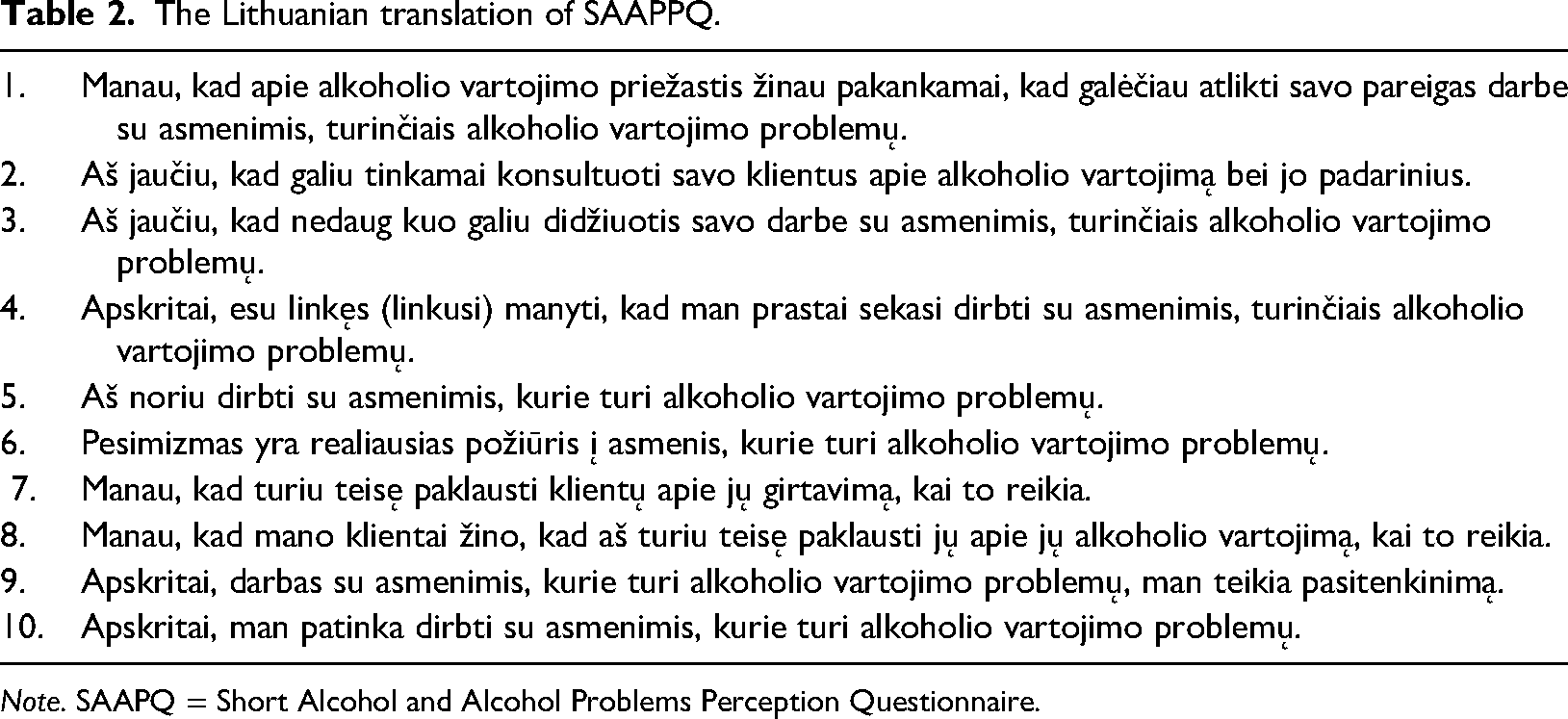
Note. SAAPQ = Short Alcohol and Alcohol Problems Perception Questionnaire.
Statistics
Analyses were performed using SPSS for Windows, version 22.0 (IBM Corp., Armonk, NY, USA). A two-tailed p value of 0.05 was considered significant. The descriptive data were presented as means and standard deviations alongside 95% confidence intervals or median (25th–75th percentile), and categorical variables as the frequency and percentage. A Shapiro–Wilk test and inspection of shape parameters, such as skewness and kurtosis coefficients, were performed to check the normality assumption. Levene's test was used to check whether samples had equal variance. To measure the relationship between continuous variable “work experience” and different attitude domains, data visualisation by curve estimation models was first performed (the data showed a statistically significant non-linear correlation between the attitude domains “work satisfaction” and “work experience”). However, to achieve a deeper analyses of different stages of work experience and their association with separate attitude domains, a one-way ANOVA was performed while categorising “work experience” by cut-off points determined by statistical tertile analyses. The Bonferroni to post hoc multiple comparisons after rejection of a one-way ANOVA for all dependent variables (SAAPPQ and subscales) were applied. The differences between the two groups (education level of bachelor or master) were assessed using a Student’s t-test or Mann–Whitney U test, as appropriate. A comparison between the three groups of work experience (the continuous variable was categorised into tertiles) was performed using a one-way ANOVA. The magnitude of change (effect size) in SAAPPQ subscale scores was assessed using Eta squared (η2, the percent of the total variance in value that is associated with work experience; η2 = 0.01 indicates a small effect, 0.06 indicates a medium effect, 0.14 indicates a large effect) for the ANOVA model and Cohen's d for the t-test. Cohen's d is a standardised measure of effect size and provides information on the amount of change in the measure relative to the variation within the measure. A Cohen's d value of 0.2 is a small effect, 0.5 is a moderate effect and 0.8 is a large effect (Cohen, 1977). The internal reliability of the Lithuanian version of the SAAPPQ was measured using a Cronbach's alpha test and showed good internal reliability, with a Cronbach's alpha value of 0.764 (Taber, 2018).
Results
In total, 149 social workers completed the survey. The survey's response rate was 33.78% (the response rate was calculated by dividing the total number of responses [n = 149] by the number of people who opened the link to the online survey [n = 441] and multiplied by 100). The majority of responders (97.3%) were female, which is consistent with Lithuanian work force data for occupations where women hold the majority of positions (Office for National Statistic, 2023). The mean age of the final sample 41.28 years (SD 10.54; age range 22–63 years). Their range of work experience was 1–27 years (mean 9.93 years [SD 6.67]). In total, 47 (32%) individuals had a master's degree and 100 (68%) had a bachelor's degree; 2 (1%) did not answer the question. The majority of respondents worked in municipal or eldership social service centres (n = 75, 50%) or in family support centres (n = 32, 22%) (Table 3).
Baseline characteristics of participating social workers.
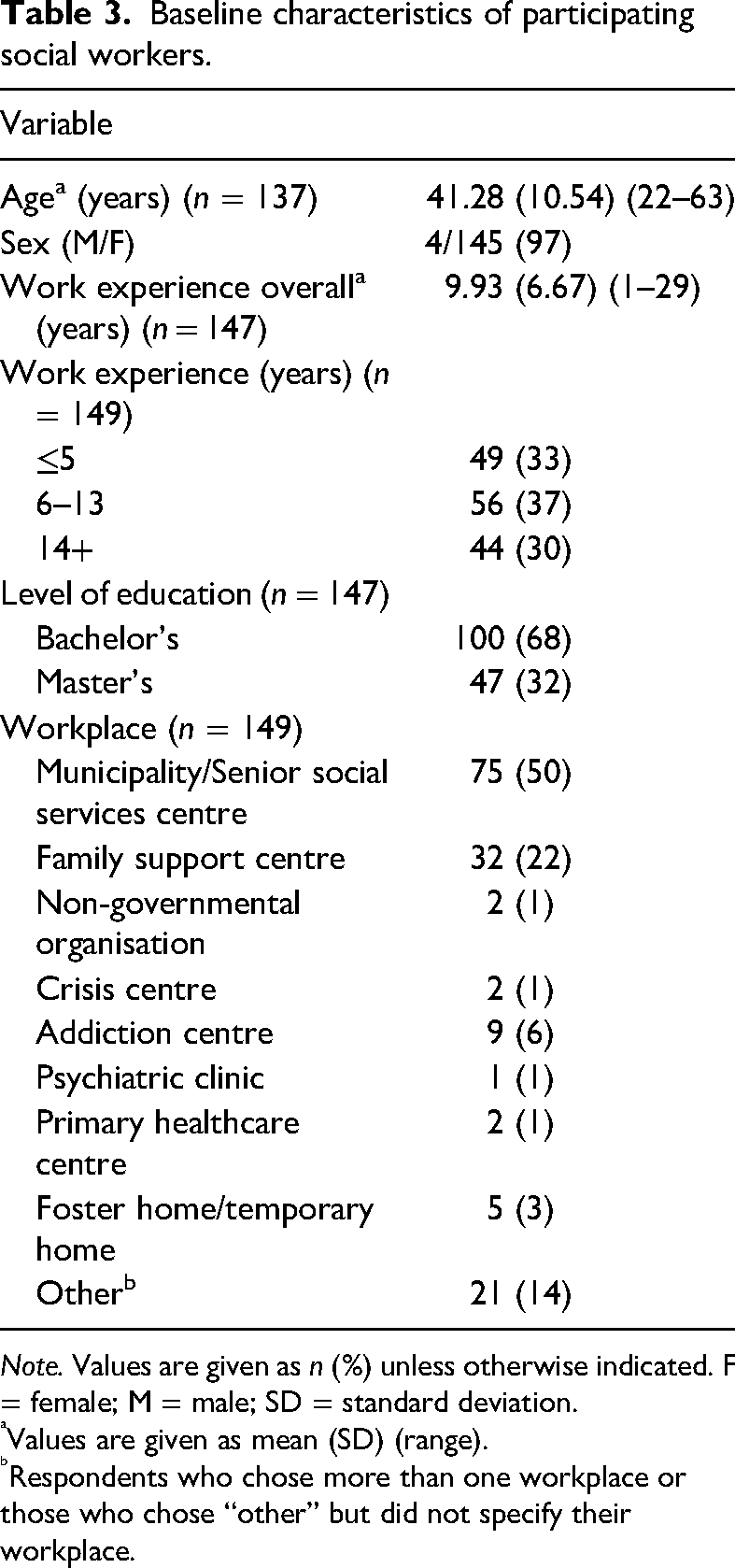
Note. Values are given as n (%) unless otherwise indicated. F = female; M = male; SD = standard deviation.
Values are given as mean (SD) (range).
Respondents who chose more than one workplace or those who chose “other” but did not specify their workplace.
Overview of attitudes
The sample's mean SAAPPQ score was 35.81 (SD 4.8), representing an overall positive attitude among the social workers towards individuals with alcohol usage problems (score range 10–50). The analysis of the attitude subscales and latent domains was described as min/max scores, means and standard deviations. A midpoint report was also generated, with the midpoint indicating neither a positive nor a negative attitude, scores above it indicating a more positive attitude and those below it representing a more negative attitude (Table 4).
Sample characteristics: mean SAAPPQ subscale results.
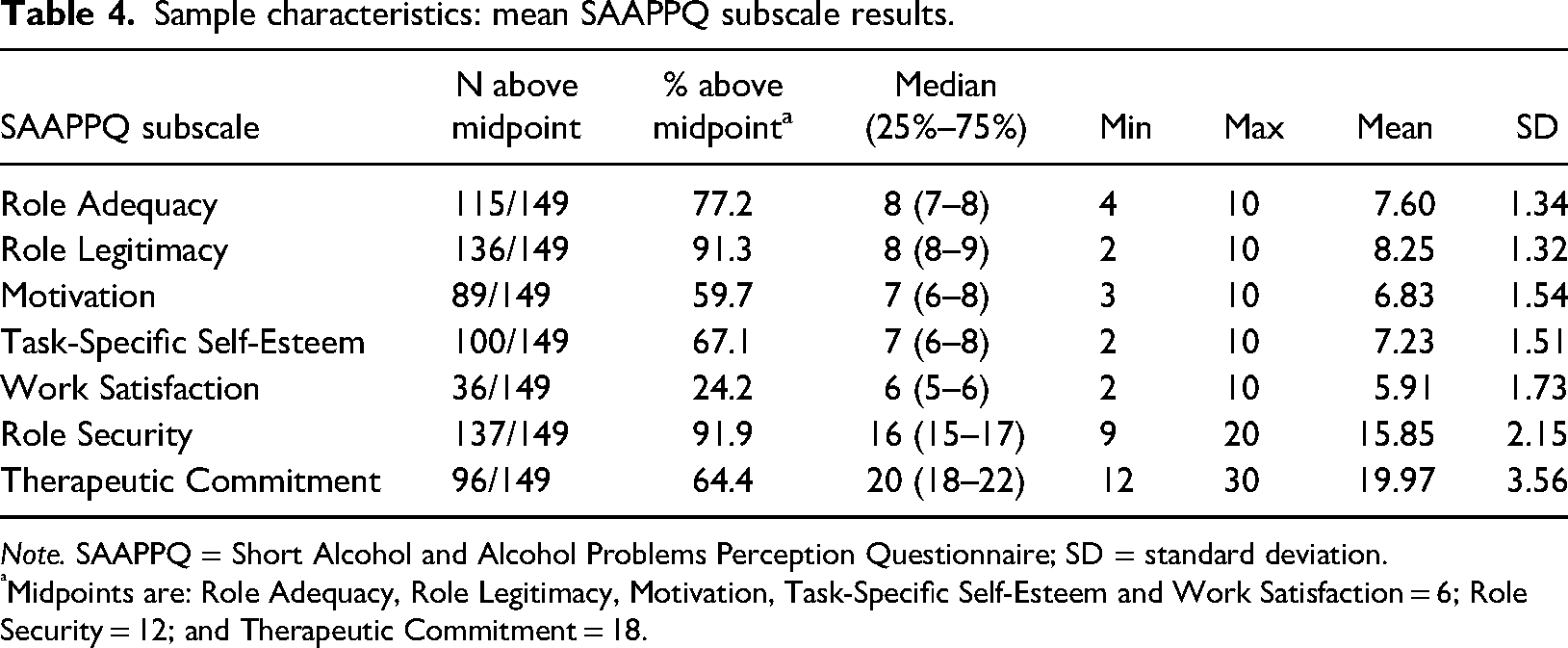
Note. SAAPPQ = Short Alcohol and Alcohol Problems Perception Questionnaire; SD = standard deviation.
Midpoints are: Role Adequacy, Role Legitimacy, Motivation, Task-Specific Self-Esteem and Work Satisfaction = 6; Role Security = 12; and Therapeutic Commitment = 18.
The most positive attitudes were expressed in the SAAPPQ subscale Role Legitimacy (91.3% above the midpoint), meaning that the social workers felt that they had the right to work with people with alcohol usage problems. However, the respondents reported much lower attitudes in the Motivation (59.7% above the midpoint) and Task-Specific Self-Esteem (67.1% above the midpoint) subscales, showing a lower willingness to accomplish social work tasks with individuals with alcohol usage problems and possibly lower self-confidence in fulfilling them. The lowest results were in Work Satisfaction (24.2% above the midpoint), indicating that, in general, the respondents considered working with clients with alcohol usage problems as not very rewarding or pleasant. Considerably different attitude scores between the two latent constructs Role Security (91.9% above the midpoint) and Therapeutic Commitment (64.4% above the midpoint) reflected that the social workers felt psychologically safe in their work (i.e. they have the right to work with individuals with alcohol usage problems and have the knowledge and skills to proceed with daily tasks). However, they might have lacked dedication in social work dealing specifically with individuals with alcohol usage issues.
Level of education
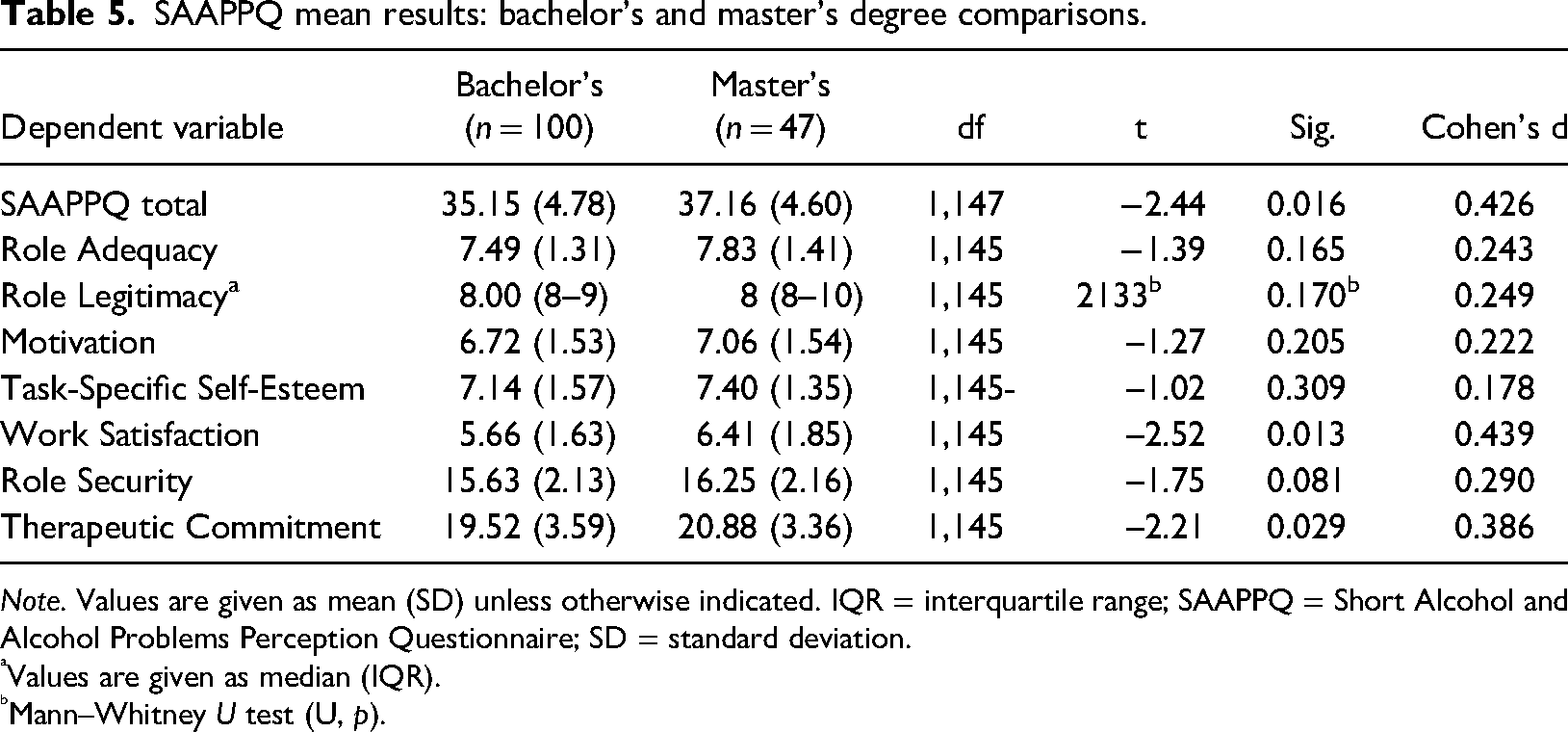
The data analysis also revealed associations between the level of education and various SAAPPQ subscales and latent domains (Table 5).
SAAPPQ mean results: bachelor's and master's degree comparisons.
Note. Values are given as mean (SD) unless otherwise indicated. IQR = interquartile range; SAAPPQ = Short Alcohol and Alcohol Problems Perception Questionnaire; SD = standard deviation.
Values are given as median (IQR).
Mann–Whitney U test (U, p).
Participants with a bachelor's degree scored lower in every domain of the SAAPPQ than those with a master's degree (Table 5). There were significantly higher scores for master's degree holders compared to bachelor's degree holders for the total SAAPPQ score (t = –2.44, p = 0.016), the Work Satisfaction subscale (t = –2.52, p = 0.013) and the latent Therapeutic Commitment domain (t = –2.21, p = 0.029). In short, those who had a master's degree held more positive attitudes towards individuals with alcohol usage problems overall, were more satisfied with their work and were more willing to take steps to address problematic alcohol usage.
Work experience
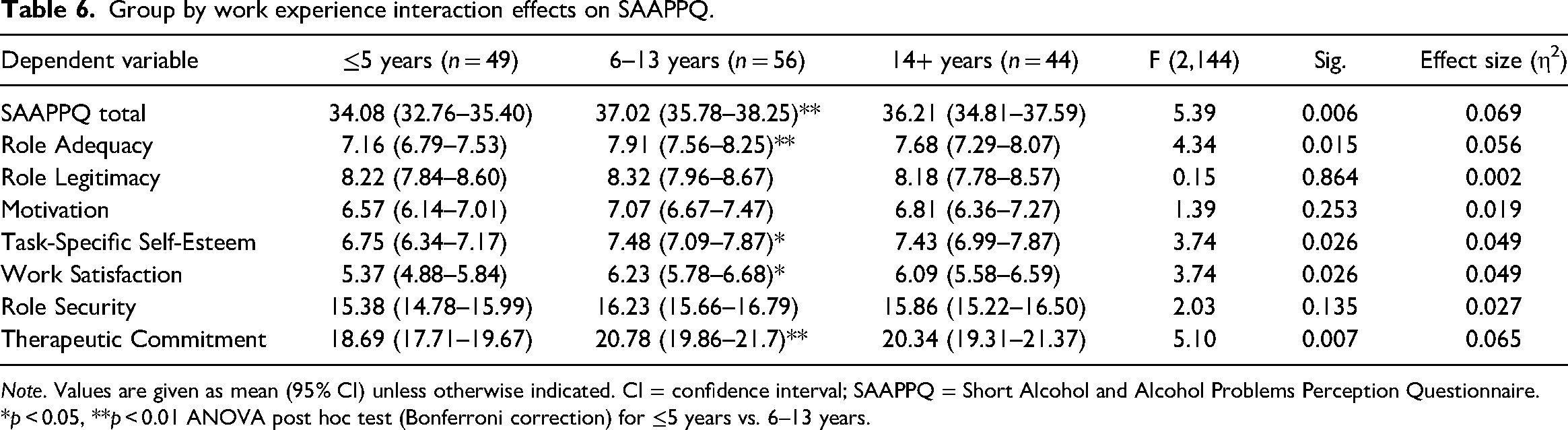
Work experience (in years) had a significant effect on overall attitude towards individuals with alcohol usage problems (F = 5.39, p = 0.006). Professionals reporting 6–13 years of work experience (mean SAAPPQ = 37.02) held more positive attitudes overall compared to those reporting ≤5 years of experience (mean SAAPPQ = 34.08). Similar work experience effects were also found for Role Adequacy (F = 4.34, p = 0.015), Task-Specific Self-Esteem (F = 3.74, p = 0.026), Work Satisfaction (F = 3.74, p = 0.026) and Therapeutic Commitment (F = 5.1, p = 0.007) (Table 6).
Group by work experience interaction effects on SAAPPQ.
Note. Values are given as mean (95% CI) unless otherwise indicated. CI = confidence interval; SAAPPQ = Short Alcohol and Alcohol Problems Perception Questionnaire.
*p < 0.05, **p < 0.01 ANOVA post hoc test (Bonferroni correction) for ≤5 years vs. 6–13 years.
In general, the results showed that having more social work experience (6–13 years) was associated with social workers’ higher confidence in their own knowledge and skills while working with individuals with alcohol usage problems, yielded more intensive engagement in social work with those clients and raised the social workers’ self-esteem and satisfaction in fulfilling their daily tasks.
Discussion
The aim of this study was to explore social workers’ attitudes towards individuals with alcohol usage problems. The findings indicate that Lithuanian social workers have a favourable attitude toward clients who have alcohol use problems. This outcome may reflect the experience and frequency of work-cases involving alcohol misuse. Given that Lithuania has a high rate of alcohol consumption (OECD, 2021), problematic alcohol use as a topic or subtopic may come up in various social work settings. Previous research by Hutchinson et al. (2013) showed that work-case experience related to higher substance use increased positive attitudes. In addition, researchers found social workers’ attitudes towards people with alcohol and other drug usage problems to be rather unsure than negatively disposed (Hutchinson et al., 2013). The most positive attitudes were expressed in the domains Role Legitimacy and Role Adequacy, indicating that the examined sample of social workers feel that they have the right and adequate knowledge and skills to work with individuals with alcohol usage problems. However, the willingness to accomplish professional tasks (Motivation) and the expectations of work satisfaction (Work Satisfaction) reflected neutral or even slightly negative attitudes. The participants also showed much higher Role Security than Therapeutic Commitment (latent constructs), indicating relatively small engagement in daily tasks with individuals with alcohol usage problems. Moreover, the results revealed that level of education and work experience have a significant effect on the attitudes of social workers. As mentioned above, the most positive outlook social workers held concerned their Role Adequacy and Role Legitimacy, which implies feelings of having knowledge about their work and believing they have the right to treat individuals with alcohol usage problems. This is a very optimistic finding, as these constructs relate strongly to the nature of the services provided by the participants. According to Loughran et al. (2010), both are key mechanisms to understanding the changes in ideas and interventions that professionals in this area apply, as well as explaining the aversion or willingness to discuss substance abuse issues with their clients. Role legitimacy is a belief of appropriateness to address specific client concerns (Loughran et al., 2010); therefore, in professions where working with individuals with alcohol usage problems is rare or not the first focus of the services provided, professionals may consider treating these clients as not being a legitimate part of their job. The concept of role legitimacy also incorporates the sense of perceived boundaries of professional obligation to intervene (Skinner et al., 2005); therefore, in unspecified social work services (e.g., in social service centres where a social worker is providing information or consulting a client not necessarily regarding his drinking problem, but is aware of it), this is up to the worker’s belief whether he or she should also intervene in the problematic alcohol usage situation. Recent research demonstrating positive attitudes toward role legitimacy in social work with people who have alcohol use problems also suggests that Lithuanian social workers encompass alcohol abuse issues in their professional field. This might be a positive reflection of reduced role insecurity, a problem that is particularly relevant to Lithuanian social work (Rimkus, 2015) and prominent in the field of addiction social work (Galvani & Hughes, 2010; Livingston, 2014; Loughran et al., 2010). Importantly, this research was focused on a previous unspecified sample of social workers, meaning that it was only asked whether they met clients with alcohol usage problems in daily practice, but it was not asked whether social workers were taking active therapeutic or any other specific actions to the drinking problems. As stated by the British Association of Social Workers (BASW), alcohol (as well as other drugs) is often a part of the lives or people receiving social work services, and interventions for other problems will not be as successful if this pressing need is neglected; therefore, role legitimacy is a significant indicator in the social work profession (McCarthy & Galvani, 2018). Accordingly, role legitimacy and adequacy are important concepts in professions with a wide scope of practice, such as social work. Considering that social work is often seen as a continuum from practical services to therapeutic work, there is plenty of space to garner all professional roles and functions, meaning the interventions should clearly cover all topics of legitimate work. At the same time, Work Satisfaction was one of the areas where the social workers exhibited less positive or even slightly negative attitudes. Work satisfaction is the result of one's evaluation of one's job to enable the achievement (or not) of professional expectations or job values (Weiss, 2002). It is achieved through progress and engagement in goal-directed activity, as supported by a professional's belief in their ability to perform professional tasks (Granziera & Perera, 2019). Research demonstrates that employees’ attitudes towards their job (work satisfaction) affect their willingness to provide adequate services (Safadi, 2019). Low work satisfaction can be related to numerous factors, including salary (Schweitzer et al., 2013), workplace flexibility (Marmo & Berkman, 2020), job demands and quality of work (Geisler et al., 2019), co-worker support (Marmo & Berkman, 2020) and professional burnout (Gómez-García et al., 2020). Of the ways to improve work satisfaction, recent research discusses the significance of knowledge and peer-colleague support. Work satisfaction can also be increased through knowledge management, which is a process of knowledge acquisition, sharing, creation and retention (Alias et al., 2018). Skinner et al. (2005) propose moving beyond education and training to focus on team culture and role support to increase work satisfaction. Smith and Shields (2013) also show that work flexibility, autonomy and positive supervisory experiences positively affect work satisfaction. Since this attitude dimension reflected the lowest attitudes towards individuals with alcohol usage issues in this study, in future research it would be interesting to analyse the underlying reasons for this result and search for possible structural/organisational or personal/professional interventions to optimise it. Motivation to work with individuals with alcohol usage issues was the second lowest attitude dimension identified in the current study. This finding is alarming, because long-term evidence shows that work motivation is associated not only with work engagement (Putra et al., 2016; Shkoler & Kimura, 2020; Smith & Shields, 2013) but also with personal well-being (Trépanier et al., 2020). According to Ryan and Deci (2000), positive performance feedback, optimal work tasks and the absence of humiliating attitudes promote intrinsic motivation, while deadlines, rules, harsh assessments and artificial goals lower it. Other research shows that professional growth and autonomy are among the major job resources that stimulate intrinsic motivation (Van den Berg et al., 2013). In essence, a job environment that fosters workers’ psychological resources, such as the need for autonomy, competence and relatedness, encourage motivation (Trépanier et al., 2020). Therefore, a healthy psychological climate as well as adequate work organisation are very important for a worker to stay motivated. Both of the above constructs (Work Satisfaction and Motivation), together with Task-Specific Self-Esteem, comprise the latent construct Therapeutic Commitment, which had much lower attitude results than the latent construct Role Security. Therapeutic commitment directs a practitioner's behaviour while working with clients with substance abuse problems, as it determines whether the practitioner will act upon the client's substance abuse (Amodeo, 2000). Cartwright (1980) furthers this claim in writing that therapeutic commitment determines the effectiveness of a practitioner's response to alcohol users. Later, Cartwright et al. (1996) showed that a professional's level of therapeutic commitment predicts the treatment behaviour of clients with alcohol usage problems. This connection persists independently of a recommended treatment plan and whether the practitioner takes part in that plan (Cartwright et al., 1996). Research also indicates that therapeutic commitment can be successfully increased through educational interventions (Albery et al., 2003; Chorwe-Sungani & Shangase, 2013; Keurhorst et al., 2014). This study also indicated a connection between level of formal education and attitudes towards individuals with alcohol usage problems. Specifically, a degree (bachelor's or master's) was statistically significantly related to total attitude score, Work Satisfaction and Therapeutic Commitment. Recently, Nguyen (2020) concluded that having an increased knowledge of alcohol abuse and other drug-related problems raises social workers’ willingness to work with clients who abuse substances. Seinreich and Strausnerr (2013) present similar results, informing that master's-level social work students who took a substance abuse course, practised in substance abuse settings or followed non-academic substance abuse training expressed more positive attitudes (total attitude score) towards individuals with alcohol usage problems. Senreich and Straussner (2013) further note the importance of supervision or academic training on substance abuse: students who practised or volunteered with clients who abused substances in non-substance abuse settings did not show a statistically significant increase in knowledge, total attitude score or increased scores in any other attitude subscales. This implies that simply being exposed to substance abuse and not gaining supervision or formal education within this topic is not enough for social work students (Senreich & Straussner, 2013). Ongoing support (supervision) and training to gain sufficient knowledge on substance abuse is related to higher perceptions of having knowledge, skills and feeling prepared to work with problematic alcohol consumption (Galvani et al., 2013). The present study showed that social workers with master's degrees, who are assumed to be more knowledgeable generally, have more favourable attitudes toward people who have alcohol use problems and are not only pleased with their profession but also more committed to it. Furthermore, Work Experience was found to be associated with social workers’ attitudes towards individuals with alcohol usage problems. Professionals working for 6–13 years expressed more favourable attitudes towards these clients, and scored higher in the Role Adequacy, Task-Specific Self-Esteem, Work Satisfaction and Therapeutic Commitment domains. Prates et al. (2021) likewise found that working longer in services for clients with alcohol usage problems is connected with more positive attitudes. A systematic review shows similar results: professionals who had worked longer in the mental healthcare sector (including substance abuse treatment) had more therapeutic optimism and were less likely to stereotype their clients (Henderson et al., 2014). Generally, the connection between longer work experience compared to career beginners and more positive attitudes might be explained by various factors. First, the early career beginners in social work might have lower attitudes (e.g., task-specific self-esteem, work satisfaction, therapeutic commitment) due to a lack of expertise in navigating complex systems, dealing with workload, tight time schedules, addressing intersection client needs or other obstacles, which make social work a potentially stressful occupation (Lloyd et al., 2002), but due to novelty in career might become even more challenging. In a sensitive area such as cases of alcohol usage in particular, and mental health social work in general, social workers are managing not only normative social work functions but they also deal with stressors arising from work content, client-related difficulties, severity of cases and so on (Coyle et al., 2005; Lloyd et al., 2005). With more practice, social workers may adopt a more sophisticated approach to managing cases, may have a greater arsenal of interventions that have already been proven to be effective in their practice and may become more confident in adapting their work approach to fit the unique circumstances of each client. Therefore, having more work experience (compared to career beginners) results in having more knowledge, skills and practice, which in turn enable the individual to feel more comfortable in high work demands, be equipped with more practice or science-based interventions, and build up professional and personal resilience in such emotionally and professionally challenging cases such as alcohol usage. Importantly, research shows that managing emotions and developing emotional competence (Kinman & Grant, 2011), practising multifaceted (physical, spiritual, emotional) self-care (Lee & Miller, 2013), engaging in professional development or gaining social support or professional supervision (Collins, 2008; Dirgelienė, 2013; Fahy, 2007) help to manage stress, add a positive professional self-image, help to increase good self-regulation skills and regulate tension, and as a result could increase the overall professional and personal well-being at the beginning of new job.
Limitations
Although serious consideration had been given to the proper double-translation of the SAAPPQ scale, a factorial analysis was not carried out, so the scale is not validated. It is also important to mention that the continuous variable “work experience” was grouped by tertiles; therefore, those specific cut-off points are relevant only to this study sample. Furthermore, this research aimed for a descriptive understanding of social workers’ attitudes towards individuals with alcohol usage problems, and some analytical motives to search for possible associations between these factors. Accordingly, the study cannot determine causality, which would bring even more scientific benefits to the phenomenon analysed. A larger sample size could have also helped reveal even more potential outcomes and, for instance, answered the question of how attitude changes with more experience with individuals who have alcohol usage problems. Further, the sample did not allow an analysis of sex differences, because the majority of participants were women. It is also important to mention that this research did not differentiate the respondents with regard to their workplace, which could determine the acquisition and dissemination of knowledge and skills in social work with this particular client group, and as a result influence social workers’ attitudes towards them. Therefore, while this study represents a general picture, it does not encompass organisational or personal social work efforts within the substance abuse field. The research did not differentiate respondents by their formal education institution either, which can differ in modules or specific courses about substance abuse and potentially influence attitude. Yet, in turn, this could be seen as an advantage, as even in such unspecific circumstances, scientifically significant associations between education and attitudes were revealed, putting even more emphasis on the importance of education in social work.
Conclusion
It is first vital to recognise the complicated and multifaceted relationship between attitudes and actions, as well as attitudes and knowledge, as there is no clear relationship between these constructs, and this particular research is unable to explain all of the relations. However, given that social work in Lithuania is a relatively young profession and that its function, skills, services and education are becoming more and more established, it is still crucial to pay attention to these factors, especially in social work with individuals with alcohol usage problems, an area that is gaining considerable attention worldwide. This research showed that social workers understand their professional responsibility to work with individuals who have alcohol usage problems, but their dedication to this work is much lower. This is an important indicator of the need to enhance social workers’ motivation, self-esteem and work satisfaction to increase their well-being or fulfilment within the activities they perform. Supporting social work education about individuals with alcohol usage problems is also important, as the participants in this study with higher education showed more favourable attitudes towards these clients overall. The study findings also revealed an association between social work experience and attitudes towards individuals with alcohol usage problems. Those in their first years of practice might face difficulties that result in lower self-esteem, satisfaction, role adequacy and work commitment; therefore, providing these new social workers with more information and support through supervision is needed. Overall, this study found a reduced level of commitment to working with people who have alcohol usage problems, which could lead to weaker client interventions and a decline in the preventative objectives of alcohol consumption. Lower employee motivation and job satisfaction should also be taken into account because those attitude domains are intimately related to the quality of services offered. In the case of self-esteem (an attitude domain that was also found to be lower while working with individuals who have alcohol usage problems), it is crucial for the social worker to take care himself on both a professional and personal level in order to address any concerns. As a result, higher self-esteem might potentially improve the quality of services he or she offers. Finally, this study provided important scientific foundation for promoting master's level social work education.
Acknowledgements
Footnotes
Acknowledgements
I would like to express my gratitude to my supervisors Professor Merja Laitinen of the University of Lapland in Finland and Lecturer Pia Skaffari of the same institution for their professional guidance, support and shared expertise on this research project and manuscript writing. I am also grateful to Drs. Indrė Dirgelienė and Valdas Rimkus from Klaipeda University in Lithuania for their involvement in the translation and adaptation of the SAAPPQ scale. My special thanks go to the participants in this study who responded to the questionnaire and expressed their experiences.
Declaration of conflicting interests
The author declared no potential conflicts of interest with respect to the research, authorship, and/or publication of this article.
Funding
The author received no financial support for the research, authorship, and/or publication of this article.

Note
1. The data used in this study belong to a bigger research project and can be accessed only through correspondence with the lead author.