



Abstract
Social media provide interactive communication platforms for gambling operators to address potential consumer groups, market their products and profile their brands. Despite them being a relatively new phenomenon, marketing strategies and techniques for utilising social media are well documented (see, e.g., Bradley & James, 2019 or Newall et al., 2019). The aim is to spread product and brand awareness and to create consumer engagement (Ashley & Tuten, 2015).
A key feature of social media is to provide a platform for storytelling and self-presentation. It serves companies’ image creation aims (Gainsbury et al., 2015), enabling consumers to act as company promotors (Griffiths & Casswell, 2010; van Dijck, 2013). Curated social media posts can effectively blur the boundaries between advertising and user-generated content, making it difficult for users to identify communications intended for commercial purposes (Gainsbury et al., 2015; Nicholls, 2012).
The aim of this study was to describe how gambling operators in Finland and Sweden used social media for marketing and communication purposes in 2017–2020. This time period presented us with an opportunity to make comparisons between the development of similar gambling provision systems (state monopoly variants) that, mid-study, parted policy paths and developed into two different systems: a licensed market was introduced in Sweden in 2019, while the monopoly was strengthened in Finland in 2017.
Gambling operators’ social media accounts are typically used for commercial communication and for building communities around companies and gambling products. Content can be either organic, reaching mainly account followers, or sponsored, where the social media service provider is paid to increase the visibility of the content. Users can engage with the content by liking, commenting, or sharing it; and thereby they become involved in the distribution of marketing messages.
We begin this report by accounting for the two gambling regulation contexts and the study scope and design. Findings are then reported regarding both the level of social media activity and some typical content. In the end we summarise and draw some conclusions regarding what our findings mean.
Gambling regulation systems
Finland
In Finland, gambling is a present and common activity visible, for example, in the many electronic gaming machines that are prevalent in ordinary grocery stores and kiosks. The peculiar monopoly-based system of high consumption of leisure gambling and the channelling of gambling proceeds through state grants to civil society is a characteristic of the Finnish system (Kankainen et al., 2021). The Lotteries Act (1047/2001) forms the core of gambling legislation.
In 2017 Finland merged its three existing state monopoly operators Veikkaus Oy (monopoly on Lotteries games), the Finnish Slot Machine Association RAY (monopoly on casino and slot games) and Fintoto (monopoly on horse betting and trotting) into one state-owned monopoly called Veikkaus Oy. The new Veikkaus has a full monopoly on all gambling services, product provision and selling on the Finnish mainland (Selin et al., 2019). According to the Lotteries Act section 14b, Veikkaus can promote the company and gambling activities in a “responsible manner”. Marketing must not target minors and it cannot convey an image where frequent gambling is seen as something positive. The National Police Board has outlined the regulation, and monitors gambling marketing.
Games are classified as less harmful “green” games, and as more harmful “red” games based on their rapidity and the sums at stake. Lotteries and cardboard tickets are classified as green games, and casino games, betting and most slot games are classified as red games (Poliisihallitus, 2015). Veikkaus may promote red games only in particular game rooms, casinos and trotting tracks in connection to the point of sale, and customers need to be informed that these games entail a risk of causing harm for the gambler. However, the operator is allowed to provide information about the betting events, their locations, winning probabilities, terms and fees outside the described selling locations. The general outlines of conduct pertain to both to site-based and web-based gambling environments and to old and new media communication.
The Veikkaus-based monopoly system pertains to mainland Finland, but the autonomous Åland Islands has its own small-scale gambling monopoly operated by Ålands Penningautomatförening (Paf). Paf also has a monopoly on gambling provision on (Åland-registered) cruise ships in the Baltic Sea, provides online gambling products and holds licenses in other countries, for instance in Sweden (see Spelinspektionen, 2021a). Therefore, in our study, Paf is represented both in the Finnish and Swedish social media data sets.
Revenues from both Veikkaus and Paf are channelled to third-sector organisations. The sport and culture field, as well as youth organisations and the field of sciences, are important beneficiaries of gambling proceeds. For instance, about 60% of support for the cultural sector and 80% of support for sports activities in mainland Finland comes from gambling-generated revenues (Sulkunen et al., 2018). This system paves the way for a complex balance between responsibility and revenues. Veikkaus has been heavily criticised and its justification has recently been disputed in the public debate (Marionneau & Hellman, 2020).
Gambling is less frequent in Sweden than in Finland and has even decreased during the last few years. Still, around half of the turnover from the Swedish gambling markets comes from 3% of the players, making it a question for prevention and public health (Folkhälsomyndigheten, 2019).
The Swedish gambling provision system was re-regulated in 2019, when the state-monopoly system was replaced with a licensing system. The updated gambling act (Spellag, 2018:1138) was intended to curb unauthorised offshore operators on the online market and strengthen the protection of players. For instance, the law demands all licensed operators to clearly warn gamers about excessive gambling, and inform them about how to access and seek help should a problem arise. This is called “duty of care”, or “omsorgsplikt” in Swedish (Forsström & Cisneros Örnberg, 2019).
The introduction of the new legislation was justified by difficulties in enforcing domestic law on online-based offshore companies’ gambling provision. Estimates suggest that offshore operators had increased their revenues in the Swedish market from 3.2 million euros to 5.1 million between the years 2012 and 2016 (Lotterinspektionen, 2016). The new situation in the market also affected the amount of money the Swedish state as well as public interest associations received from gambling surplus. By January 2021, a total of 111 licenses had been distributed within the new system (Spelinspektionen, 2021b).
The official justification for the merger of the Finnish monopolies was similar to the one in Sweden: the online products by the three previous gambling product-based monopolies could be argued to compete with each other – a situation which contradicts the principles of EU law. The possibility of regulating gambling-related harm was emphasised as the main justification (see Selin et al., 2019). The countries thus chose diametrically different paths in dealing with the new global digital gambling context: Finland decided to centralise and strengthen state control over gambling production and the retail market, whereas Sweden chose to give the state control over market standard premises, regulation and supervision. In Sweden, license-based companies can face punitive action if they do not comply. In Finland, the state monopoly is overseen by different departments and agencies within the state corpus.
Only licensed operators are allowed to advertise gambling in Sweden. Gambling marketing directed at Swedish consumers must be moderate. Marketing can never be directed at people under the age of 18 years or reach consumers who have decided they no longer wish to play. The Swedish Consumer agency is responsible for overseeing gambling marketing in Sweden (Spelinspektionen, 2021a).
The new licensing system opened the Swedish gambling market for competition and new operators, and many of them which had previously been operating illegally were quick to apply for licenses, such as Bet365, LeoVegas, Mr Green and Unibet. The Swedish Gambling Authority are responsible for licensing and monitoring gambling on the regulated gaming market and ensure that all operators fulfil given requirements and act responsibly within the market. In cases where license holders do not comply with the rules, The Gambling Authority can impose sanctions. During the summer of 2021 operator “Mr Green” was given a warning, and a fine of over 30 million SEK for not protecting their customers from excessive gambling (SVT Nyheter, 2021).
For further reading about the Nordic gambling market, and the efficiency of the systems, see, for example, Nikkinen and Marionneau (2021).
Study scope
With the aim of mapping a coherent picture of the social media activity by gambling operators in Finland and Sweden this study inquires into:
the extent to which the Finnish and Swedish operators are active on social media; the typical curated social media content by the operators targeting national audiences; and, how audiences interact with the content on the operators’ accounts in terms of likes, shares and comments.
Mapping these dimensions helps us further knowledge on the ways in which gambling operators address the public and by doing so establish themselves as businesses and societal actors.
Study design
The study maps curated national language content by Finnish and Swedish gambling operators on four social media platforms: Facebook, Instagram, Twitter and YouTube. Paid advertising, influencer marketing and advertising on other webpages are not included. The four social media outlets selected are the most widely used in both countries, with 25–80% of citizens aged 16+ using them on a daily basis, depending on platform (Internetstiftelsen, 2020; Statistics Finland, 2019). March was chosen as a sample month for the years 2017, 2018, 2019 and 2020. March was chosen as a month without major holidays or international sport games arranged, that could present a skewed picture of the activities posted about. The researchers manually scrolled back on the timelines of the accounts, until finding everything that had been published between the first and the 31st of the month in the selected years. Screenshots were captured of all posts detected and saved as image files. All posts were then audited according to a 50-item scheme, described later in this report. We only included organic posts appearing on the operators’ timelines, i.e., curated content as well as posts that the accounts retweeted or shared on their own timelines. So-called visitors posts were also collected, whenever applicable.
Data
The Finnish data set was collected from social media accounts belonging to the state monopoly Veikkaus and the Åland monopoly Paf. A total of 13 Facebook accounts, nine Instagram accounts, 11 Twitter accounts and six YouTube accounts were identified as belonging to Veikkaus and Paf. Altogether, 4846 posts were published on the Finnish accounts during March 2017, 2018, 2019 and 2020. In Sweden, the data collection had to follow another strategy. The gambling operators that target Swedish citizens on social media are both former monopoly or offshore companies and present license-based operators. As no comprehensive records exist regarding the total repertoire of offshore operators targeting Swedish citizens online, we identified relevant names through member lists of the association for online gambling, BOS, founded in 2012. To check whether these corresponded to the most commonly known companies, we used two larger Swedish market analyses focusing on gambling habits among the population. These continuous surveys, which were conducted by Mediavision (2015–2018) and Novus (2012–ongoing) gave us the brands that represent the most recognised and commonly consumed gambling brands among Swedes. The total lists of potential operators came to consist of 50 brands.
Of the identified 50 brands, 28 operators had Facebook, Instagram, Twitter, and/or YouTube activities in March 2017, 2018, 2019 or 2020. The sampling resulted in 27 Facebook accounts, 16 Instagram accounts, 17 Twitter accounts and 12 YouTube channels. The studied 28 operators correspond very well to the most commonly known, utilised and widespread gambling brands in Sweden. During March 2017, 2018, 2019 and 2020 the social accounts of these 28 operators had 8395 curated posts.
Coding scheme
The collected material (4846 Finnish posts + 8395 Swedish posts = 13241) was coded into a 50-item scheme according to a classic content analytical process. The scheme was developed inductively looking for typical elements. Both empirical and theoretical studies on social media marketing and gambling marketing guided our efforts (for more about content analysis, see Drisko & Maschi 2015; for the authors’ own previous similar proceedings, see Kauppila et al., 2019).
The coding scheme was executed in Excel (Microsoft, Redmond, WA). Basic information for each post was recorded in the form of publication date, name of the operator, country, publication platform and date of data collection. The number of shares or retweets was saved, as well as the numbers of reactions in the form of likes and comments (when applicable). The posts were also coded according to type of game displayed in the post, if any. In addition, the direct link to the URL was saved in the Excel spreadsheet. We also wanted to examine to what extent the posts are visible to minors. By creating fake underage profiles, the researchers were able to detect whether the operators employed age gating.
Apart from the basic information and the age checks, the scheme covered:
Marketing techniques and technical features. This included information on whether the post was a video or a picture, if the post contained links or hashtags and if the post encouraged the reader to share or comment. Leisure and entertainment. This code was ticked in case posts contained, for example, mini games, polls or any special offers aiming for social media users to get involved with them. We also scanned the posts for humorous features, tokens of wealth on display, or whether alcohol or tobacco were visible in the posts. Elements of sports. This code covered sport genres and if the post was covering a game or event live. The concept of winning. This code was ticked if the posts told the stories of lucky winners, contained information about upcoming winning pots or shared betting tips on how to get closer to the big win. Elements of so-called soft values and responsible gambling. For example, posts appealing to the reader emotionally, or posts describing how revenues from gambling are being used for the common good. Gender elements, and national identity elements. Here we noted whether the posts displayed male or female characters, or if the post included specific elements that could be placed into the Finnish or Swedish cultural contexts.
The coding scheme enabled us to classify the material into different categories, detect general trends, technical features and characteristics of the posts. The scheme was tested and refined by two rounds of pilot coding, where individual researchers separately coded smaller samples followed by discussions, modifications and consensus-reaching regarding any discrepancies.
In addition to the original coding battery, we also included the Covid-19 pandemic in the 2020 material, which was an emerging theme we could not foresee when designing the study but which came to bear relevance as a marker on how social media is used for reflecting on the surrounding world and ongoing matters.
The findings presented in this report are accounted for regarding prevalence of posting, content of the posts and user reactions.
Findings
Platform and posting frequency
Finnish and Swedish gambling operators are fairly active on social media and their activity remains on the same level or decreases a bit over the time period studied, particullarly Swedish operators’ Twitter postings and Finnish operators’ Facebook postings decreased in the year 2020. This could be due to the coronavirus crisis and the public discussion on the risk of people starting to game online in their homes while social distancing.
Of the 4846 Finnish posts, 30% were Facebook posts, 8% Instagram posts and only 3% consisted of YouTube videos. The most popular platform to use was Twitter, as 60% of all the collected posts stemmed from that source. Tweets also dominated the Swedish material. Of the 8395 Swedish posts, 62% came from Twitter accounts. One quarter (25%) stemmed from Facebook, 10% were Instagram posts and only 4% were YouTube videos.
The use of YouTube among the studied operators was on a steady, low level in both countries throughout the study period. Instagram lost some of its popularity in Finland, whereas the use of this platform grew somewhat in Sweden, albeit remaining on similarly low levels in both datasets. Facebook peaked with 500 posts in Finland in 2018, after which the use of Facebook took a dive. The Swedish use of Facebook remained at the 500-post level until 2019, after which a similar decline was detected. The platform that differed the most between the Finnish and the Swedish dataset was Twitter, as it was extremely popular among the Swedish operators in 2017 and 2018, after which it faced a radical decline 2019–2020 (see Figure 1).
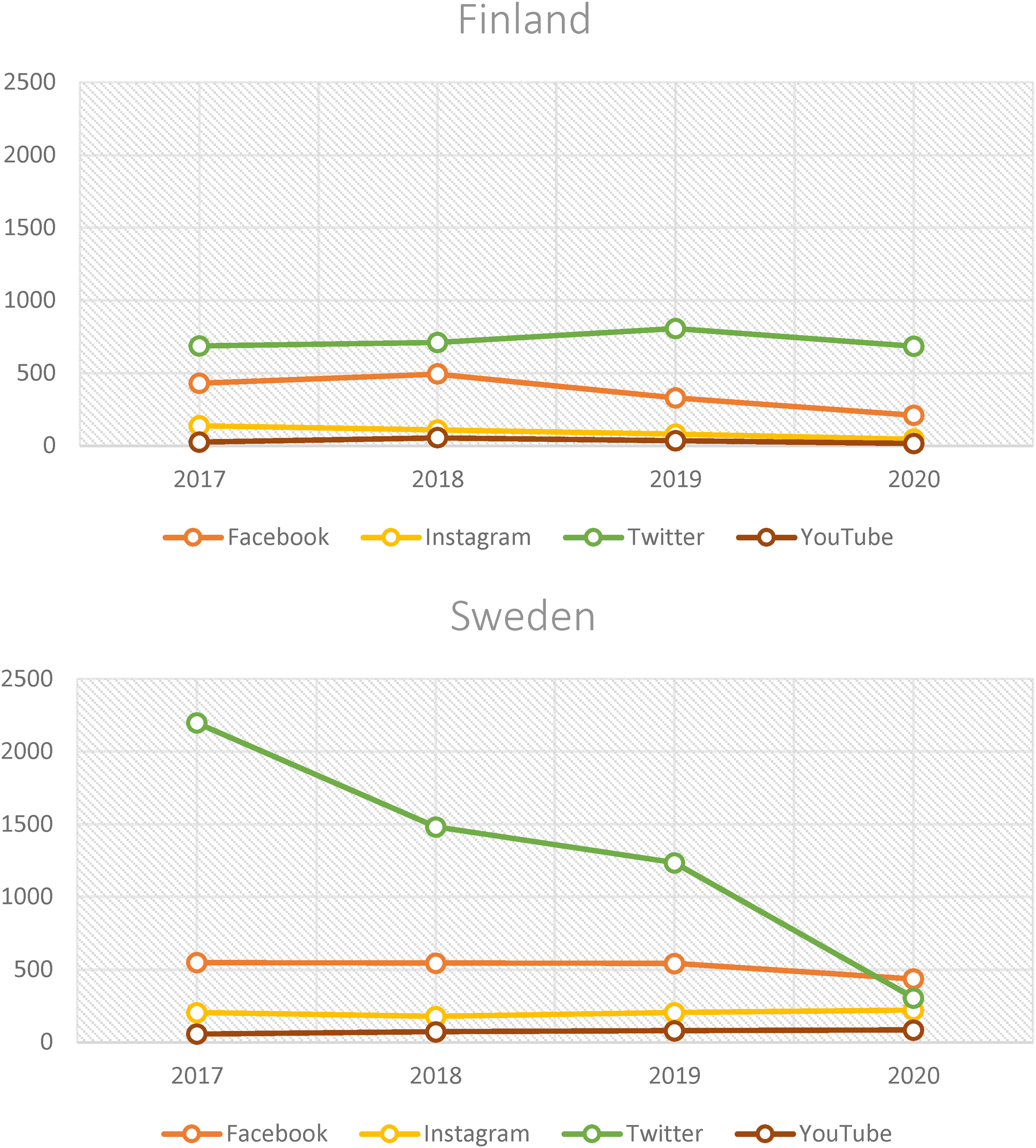
Number of posts on platforms 2017–2020, Finland and Sweden.
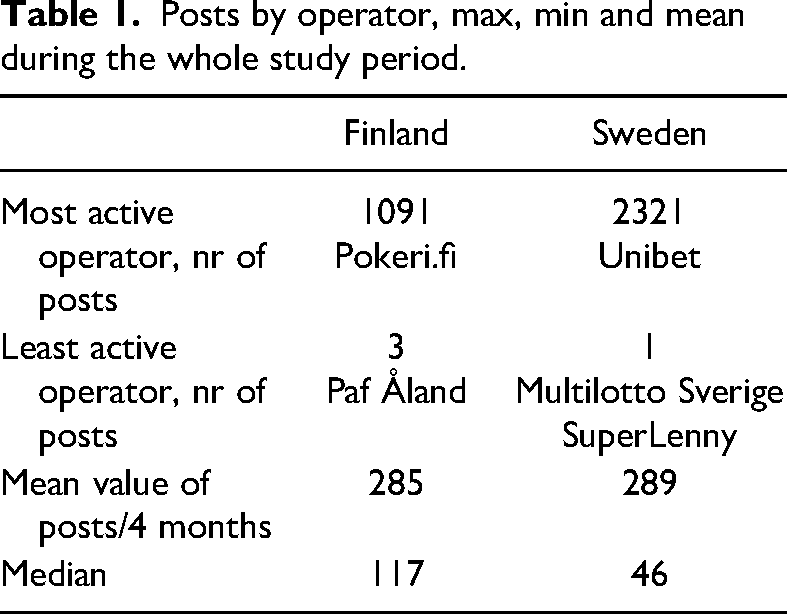
Commercial communication about gambling should be modest, according to law in both countries. The publishing pace among the operators varied greatly, both in Finland and Sweden. In the Finnish dataset the Veikkaus account “Pokeri.fi” was the most active, publishing over 1000 posts combined on all four platforms. On the Swedish side, Unibet, with more than 2300 posts scattered over all four platforms throughout the study period, was the operator with the highest activity level on its social media accounts. The most active operators used cross-posting to a high degree, meaning they published the same content on several platforms. The great pace of betting accounts may correspond to the fast pace and dramatic curve of this gambling format.
On the other end of the spectrum was the Åland Islands-based operator Paf Åland that published only three Facebook posts during the whole studied period, as well as Facebook pages Multilotto Sverige and SuperLenny, with only one post each in the Swedish material (see Table 1 and Figure 2). As for the pace, 1000 posts would be equivalent to the operator publishing on average eight posts every single day during the four-month study period, or roughly one post every three hours. As for 2300 posts, this means on average publishing a post 18 times per day, which no longer can be counted as modest.
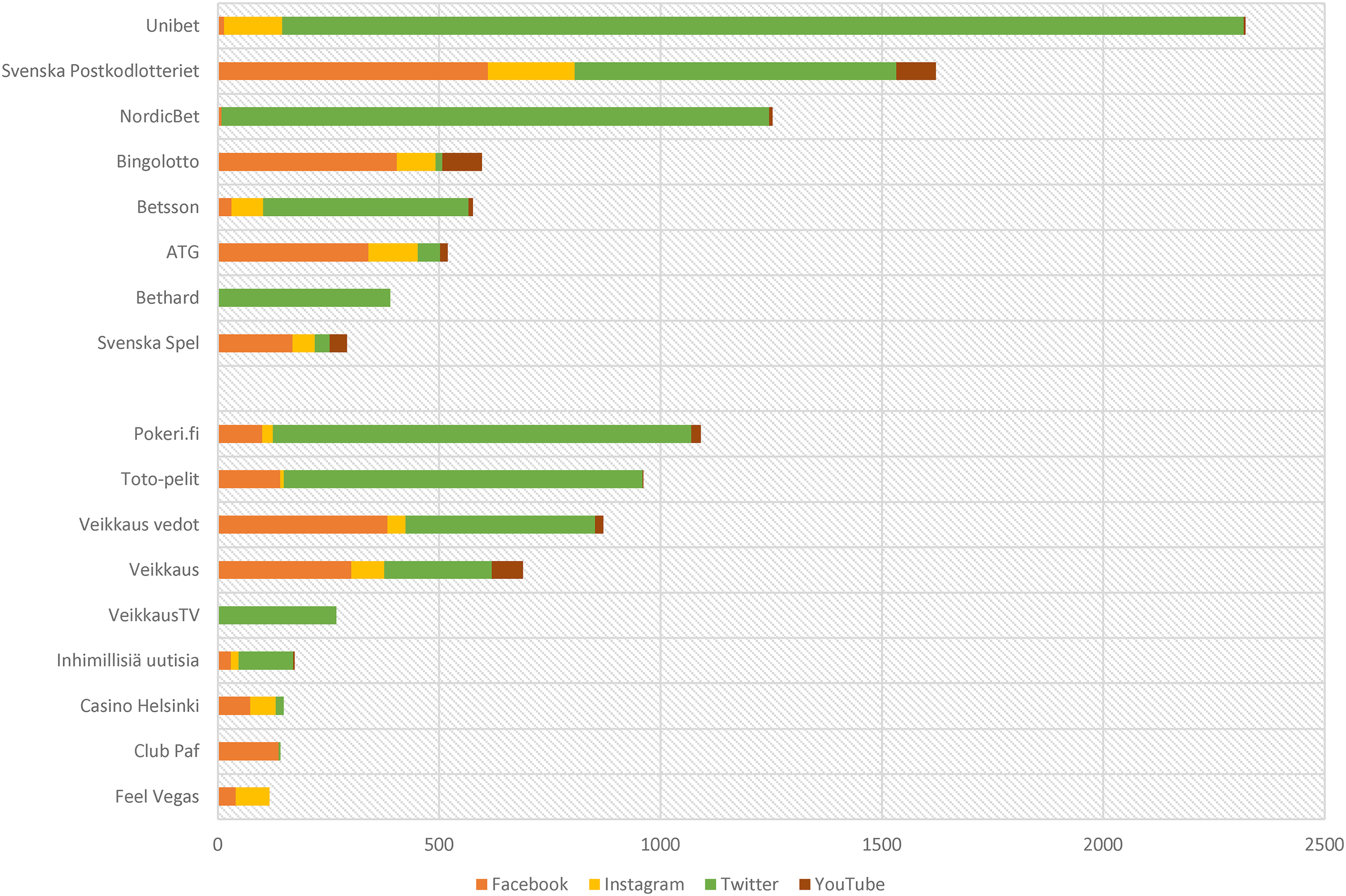
Number of posts per operator and platform, Sweden and Finland 2017–2020, among those operators that published more than 100 posts.
Posts by operator, max, min and mean during the whole study period.
Age limit compliance
By creating fake accounts with a registered age of 15, we checked whether minors could access the sampled posts. Around 60% of all posts turned out to be accessible for all social media users, including users who are registered as minors.
If the operator had an age restriction in place a warning text appeared, and no information on the whole account was visible to the user. During the data collection process Twitter did not apply any age restrictions for accessing, liking or commenting on posts, so Twitter is not included in the overview in Figure 3.
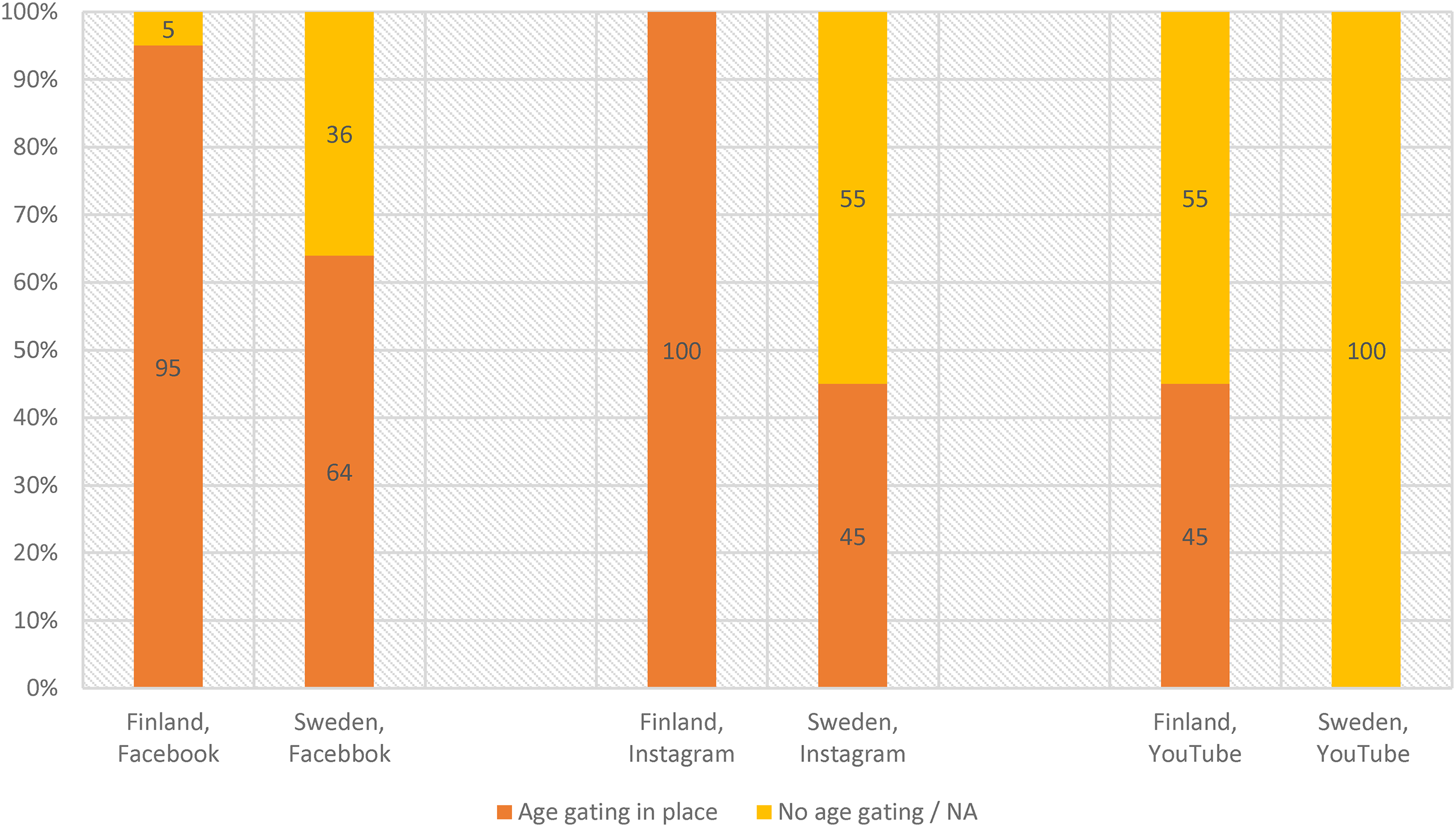
Age-gating on Facebook, Instagram and YouTube, Finland and Sweden, % of posts.
Ninety-five per cent of the Finnish Facebook posts and 100% of the Finnish Instagram posts were blocked from minors. Roughly half of the Finnish YouTube videos were blocked and therefore inaccessible to minors. Age gating on the Swedish posts was used to a lower extent than in the Finnish material: 64% of the Facebook posts were equipped with age limits, 45% of the Instagram posts and only one out of 295 YouTube videos (see Figure 3)
Reactions and user engagement
Only a handful of posts generated a great deal of user engagement. In terms of likes (and other reactions to posts such as “haha” or “love”), the overall activity was low in both countries. One third of all Finnish posts did not get a single reaction, and in Sweden the vast majority of all posts (72%) got between 0 and 20 likes. In the Finnish sample, consumer reactions decreased each year. On the Swedish side the largest number of reactions was recorded in 2019. There were, however, exceptions, as a few individual posts gained tens of thousands of likes. The most liked posts in both Sweden and Finland tended to be retweets or shares from other companies, but also domestic competitions with chances to win prizes were very popular.
The same trend held true for comments, as only a few posts managed to attract a lot of them. Out of the Finnish posts, 43% got between 0 and 10 comments, and the average number of comments went down over the years. The overall picture was very similar in Sweden, as 88% of the posts received between 0 and 10 comments. The most commented on posts in the dataset were competitions. As with comments and reactions, the lions’ share of posts were shared to a very low degree: 86% of all Finnish posts got retweeted or shared less than 10 times. Sweden saw a similar trend, as 95% of all posts had less than 10 shares/retweets.
Gambling content
In 44% of all Finnish posts and 58% of the Swedish posts there were no actual references or visual portrayals of gambling activities. An example of an entire account that did not entail any gambling-related content is Veikkaus’ online journal “Inhimillisiä uutisia”, which translates to “Human news”. This is an account that solely focuses on content marketing. It reports on themes and stories related to the activities of the NGO beneficiaries of state grants that stem from gambling revenues, but without any reference to the gambling element. The Swedish posts that did not directly refer to games or gambling were tweets commenting upon ongoing football games, comments on everyday events, and reflections about the surrounding world such as the outbreak of the coronavirus to name a few examples.
As for the posts showing games and gambling, the structures and divisions differ between the two countries depending on the character of sampled operators. As sub-accounts owned and run by Veikkaus were included in the Finnish sample, the physical venue Casino Helsinki and its services has also been included. The Swedish operators were only represented by their main accounts, and therefore Svenska Spel subsidiary Casino Cosmopol was left out, which explains the shift towards casino and poker games in the Finnish material (see Figure 4).
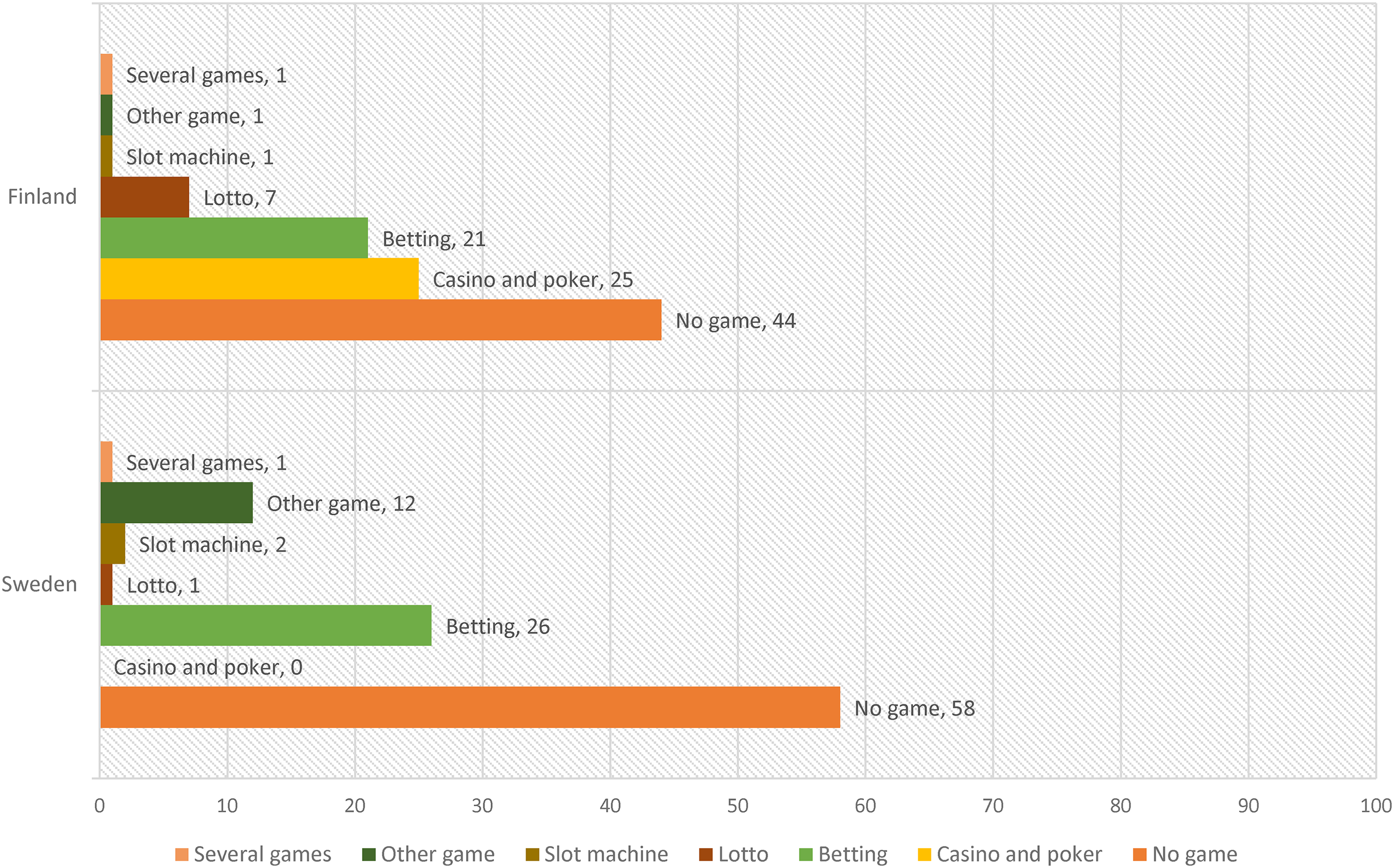
Shares (%) of games visible in the posts, if applicable, Finland and Sweden 2017–2020.
In Finland, one quarter of all posts portrayed casino and poker, and 21% of the posts concerned betting. Lotto was visible in 7% of the posts, 1% each of the posts showed slot machines, some other games, or several games combined. Casino, poker games and betting – i.e., the most frequently included in the social media posts – are classified as harmful games, labelled “red”. In addition, we found no correlation between games that are most popular to play, and frequency of posting concerning those games. In 2019, Veikkaus’ most popular types of games to play were Finnish lotto, other lotteries, and slot machines outside casinos (Salonen et al., 2020).
Out of the Swedish posts that showed gambling, 26% portrayed betting and 12% other types of games, including bingo. Out of all posts, 2% were related to slot machines, 1% to lotto and 1% to several games combined. In 2018, the most popular type of game in Sweden was lotteries, followed by horse racing and betting (Folkhälsomyndigheten, 2019).
Links, hashtags and other technical features of the posts
The use of links, hashtags and the tagging of other accounts was common in both Finland and Sweden. By using these elements operators can place the post in a broader meaningful context, plugging into an event, a venue, a collaborator, organisation or a person. Often, the posts would link to an article or refer the audience to the operators’ own websites. The use of hashtags was most common in the Finnish data, peaking in 2020 when 78% of all posts included a hashtag sign, whereas the use of links was to be found in roughly nine out of 10 posts in Sweden, in each year of the study.
Only a fraction of the posts in both datasets asked the visitors to share or urged the visitor to gamble. However, in Sweden there was a growing trend to ask the visitor to react in some way by, for example, answering a question or partaking in a poll. In 2020, more than half of all posts contained an invitation to act. A similar trend was not found in Finland.
As for competitions, lotteries, games and polls there were some 50 competitions to be found in the Finnish material, equalling 4% of all posts, except for 2020 when the number was lower. Visitors could, for example, win tickets to hockey games, or smaller prizes such as plastic buckets or pillows by answering questions on Facebook. Also concert tickets were up for grabs, and the possibility to get to spend a night out at the casino with your friends. There were significantly more competitions to be found in the Swedish dataset: 14% of all posts in 2017 and 7% of all posts in 2020 were of this kind. On offer were, for example, meetings with Zlatan, money prizes, concert tickets and free spins at online casinos. Very few minigames or polls were to be found in either Finland or Sweden. A handful of games that did exist were often quizzes, and the polls were often connected to sports and betting, such as “which team will win tonight, X or Y?”.
The number of posts mentioning offers was also low: 1–3% in Finland and 4–5% in Sweden. The Finnish offers included, for example, horse racing bonus weeks and cheaper tickets to parties arranged at the casino, whereas the special offers in the Swedish data ranged from “comment and like this post, to win 6 free rows on EuroJackpot”, happy hours on Facebook, Twitterlinks to 50 SEK discount on your next game, or the chance to get free coffee cups when you signed up for certain games. Mentioning loyal customer programmes was more common in the Finnish dataset, where we found, for example, descriptions of trips arranged for loyal customers and free entrances to various events in 4–8% of all posts over the years. In Sweden, only a handful of mentions were to be found in the whole material, for example, certain limited games were only available for registered players, and only loyal customers were invited to partake in exclusive quizzes with especially grand prizes.
As links, hashtags and account tagging were common, it is only natural that many posts mentioned external agents, meaning other companies, persons, places, distributors and collaborating partners. The tendency to mention external actors in posts was very high in both countries – between 59% and 70% over the studied period in Finland, and around 70% in the Swedish data each year. Also mentioning events such as the Eurovision Song Contest or various sport games was common, emphasising the importance of networking and recognition in larger contexts.
Elements of sport and big winnings
As is typical for the gambling industry everywhere in the world, the collaboration and shared meaning-making contexts within the realm of sports were palpable in both Finland and Sweden. For example, 43–60% of the Finnish posts, and 50–58% of the Swedish posts in each studied year dealt with ice hockey, football, horse racing and other kinds of sports. Connecting and making gambling a central part of sports is known as “gamblification” (Lopez-Gonzalez & Griffiths, 2018).
One special feature of the sport-themed posts was those that covered different sport games as they unfolded; i.e., live coverage. Live commentary of games happened mostly on Twitter, covering both domestic and international games, and commentary posts were published at a rapid pace during a short period of time.
The image of winning money is a driving force in gambling and winning the jackpot is an attractive media storyline (see Kauppila et al., in press). Between 3% and 9% of all Finnish posts shared stories about winners, and the grand prizes they had laid their hands on. For example, Facebook posts with tempting titles such as “On Saturday night, the surprised wife told her husband that apparently the grand Lotto jackpot was to be found in their town. Soon after that the husband checked his gaming account, and (dot dot dot) …” (Lotto, Finland, a Facebook post 11 March 2019).
These kinds of posts were slightly more common in the Swedish sample (7–10% of all posts) and could, for example, be videos where representatives from lotteries knocked on the doors of unsuspecting Swedes whose lives were about to change as they were now declared lotto winners.
Information about jackpots and prizes was to be found in 5–14% of the posts each year in the Finnish sample. The posts either talked about pots in the past tense, for example winners from last night or in which towns the large jackpots were to be found, or gave forecasts and sneak peaks at upcoming pots and prizes. In Sweden, between 5% and 8% annually described, for example, how large prize sums would be at stake on upcoming weekends, or gave information on how to partake in online games. Other content related to supportive information that would educate or facilitate for the visitor when placing money on betting; for example, experts interviewed on which horses would perform well in upcoming heats, tactics for betting and statistical analyses of previous winnings.
Soft values and responsibility
Messages about responsible gambling, and other elements of virtuous work undertaken by the operators in terms of beneficiaries were a prevalent part of the material. The two different policy systems place the operators in different positions, as a license holder and a state-monopoly indisputably have different obligations to fill and roles to play in the gambling market. In the Swedish license system, the role division between product provider (selling games) and supervision (controlling that operator acts in a legal way) looks different than in the Finnish monopoly system, in which the state is supervising its own monopoly company.
Posts touching upon the subject of beneficiaries decreased in Finland and increased in Sweden during the studied sample months. Stories about how, for example, Veikkaus money has been given to various projects and organisations, and thereby helped youngsters or immigrants were on the highest level in 2017 (12% of all posts), and lowest 2020 (only 1%). In Sweden, posts about beneficiaries doubled from 5% in 2017 to 10% in 2020. These posts could be videos about how local sports clubs have received financial support, how third-sector organisations arrange charity events and how youth workers thrive with the help of gambling beneficiaries.
Closely connected to the narrative of public good and beneficiaries were posts that pulled upon the viewers’ heartstrings, i.e., heart-warming, emotionally appealing messages about loneliness, elderly people or oppressed groups to name a few whose lives have improved in some way or another thanks to beneficiaries or lotto jackpots. Again, these posts decreased a great deal in the Finnish material: there were 11% posts of this kind in 2017 but only 2% in 2020. The opposite trend was detected in the Swedish sample where it became more common to add elements of emotional appeal in the posts, often in connection with mentioning of beneficiaries. These messages, which could be, for example, articles about elderly ladies battling loneliness, young people with various disorders and difficulties, or volunteers in third-sector organisations, grew from 2% to 9% over the course of the study period.
Posts that dealt with public relations reached their highest level in 2017 (18%) in the Finnish material but shrank to 4% in 2020. The posts concerned, for example, International Women's Day and Earth Hour, where the visitors were urged to switch off lights for one hour for the sake of the climate. Messages concerning PR were found on 7–15% of all the posts throughout the studied period in Sweden.
Actively showing responsibility and awareness when it comes to the potential harm caused by gambling activities is also a way for the operators to build a safe and trustworthy image of the company. We analysed the posts looking for content that had any reference to responsible gambling such as a mention about the gambling age limits which are 18 years in both jurisdictions. The use of responsible markers differed significantly between Finland and Sweden. Finland saw a steady amount throughout the periods – between 9% and 12% of all posts – whereas Sweden took a large leap from 2% to 35% of all posts between 2017 and 2020. The upswing is likely to be connected to the renewed legislation that requires gambling operators to include responsible gambling messages within the scope of their “duty of care”.
Responsible gambling markers in both countries appeared typically as a mention concerning the age limit (18+) or reminders to “play responsibly!”. The messages usually featured in the actual text section and/or in the picture of a post, or at the end of a video. The Swedish material included information about supportive organisations, often stodlinjen.se, to a large degree. The notes concerning responsible gambling were quite inconspicuous in comparison to other content. They were placed for instance in the corners of the pictures or at the very end of the text. Presumably, most of the messages were not very effective (in line with the conclusions of Lole et al., 2019). Only a small part of the material gave more information about the topic. The posts provided, for instance, information about tools for responsible gambling and mentions about an award that Paf received for its work for responsible gambling.
Audience identification
On average, 30% of all Finnish posts that portrayed people (n = 2269) contained only male characters. Posts showing only females decreased over the years, from 13% to 6%. Also the part of the Swedish data that depicted people (n = 5166) was clearly dominated by pictures of men. The male dominance is explained by the large number of sport-related pictures that concerned mostly male teams and games.
Elements that could be understood as a form of contemporary nationalism, or stereotypically Finnish or Swedish elements, have been labelled “banal nationalism” (Billig, 1995). With his concept, Billig wanted to address that contemporary nationalism does not emerge only in its extreme forms but that nationalism is also represented in very everyday, “banal” contexts. Examples of banal nationalism are the national flag being used in political institutions, sporting events, or school celebrations; talk about “us”, “we” or “our” in the press; or the national symbols on the notes and coins. In the coding of the social media material, any marker or symbol recognised as nationalistic was marked with the national identity code by the researcher (who was also familiar with the Finnish or Swedish cultural context). In total 155, or 3.1% of all posts included elements on Finnish identity and nationality, with a strong emphasis on sport. The evident connection between national identity and sport (King, 2006) is something that is being widely used by different industries for commercial purposes (Jette et al., 2008; Mager, 2005). References mostly to football and ice hockey would entail this sort of nationalism. The national imaginaries were often portrayed without any direct reference to a gambling game, except for Lotto. This finding could be explained by the special signification of the national lottery in Finnish culture (Matilainen, 2018). In the Swedish case, 4% of the posts showed elements of nationality following the same rationales as the Finnish data displaying, for example, the Swedish flag or cheers for the national football team.
The pandemic
During March 2020, the coronavirus started to spread in Finland and Sweden, which means our material dates from the first weeks of the pandemic. The Finnish government together with the president declared a state of emergency and enforced The Emergency Powers Act (1552/2011) on 17 March in order to slow down the spreading of the disease and to protect risk groups (The Finnish government, 2020a). On 15 June, the government announced that the country was not in a state of emergency anymore (The Finnish government, 2020b). In Sweden the government “adopted an ordinance on a prohibition against holding public gatherings and events” on 11 March to prevent the spreading of the coronavirus in the country (Ministry of Justice, 2020). The decisions restricted citizens’ gatherings and access to other social opportunities and services.
The coronavirus situation, and the restrictions imposed have affected gambling. For example, Veikkaus announced that the pandemic affected its sport betting supply significantly and there was only a faint shift to online games during January 2020–June 2020 (Veikkaus, 2020). Almost all the known sport leagues were suspended for a couple of months in March 2020 in Europe and in the USA. The pandemic has also affected national leagues and sport events. For instance, the first Finnish ice hockey league Liiga was terminated on 13 March due to the pandemic (Liiga, 2020) and the first Swedish ice hockey league Svenska hockeyligan on 12 March (SHL, 2020a, 2020b). In Sweden, the state company Svenska Spel temporarily closed its four casinos at the end of March 2020 based on the government's decision to ban meetings with more than 50 people. The company supported sports clubs and financed education for its casino workers to work temporarily as caregivers in the region of Stockholm (Svenska Spel, 2020). In Finland, Veikkaus closed its gaming arcades and slot machines on 13 March to prevent the spread of the virus. The arcades reopened in late June, and slot machines in mid-July (Veikkaus, 2020).
Posts concerning the virus outbreak were published mainly after mid-March 2020 in Finland, but appeared a few days earlier in Sweden. This timeline reflects national situations. Ninety-two coronavirus-related posts appeared in the Finnish material and 99 in the Swedish material. The firsts posts in early March handled the coronavirus pandemic in other countries, and the effects of the pandemic on international leagues. On 13 March, Veikkaus announced the closure of gaming arcades and slot machines. The first Covid-19-related posts in the Swedish data concerned international sporting events and the effects of the pandemic on their organisation. The rest of the Swedish posts were published on 11 March, or later, and concerned different aspects of the effects of the coronavirus pandemic in Sweden.
Many of the total 17 Finnish posts in March 2020 that announced the closure of gaming arcades, casinos and slot machines presented the decision to close as a matter of safety for customers, employees and other actors. The remaining posts focused on charity and a hashtag campaign for sport clubs; mentions about exceptional and gloomy situations in society; and mentions about telecommuting and loneliness.
In comparison to the Finnish material, the Swedish material included more charity and PR and fewer mentions of the effects of the pandemic on sport and sporting events. One third of all Swedish posts dealing with the pandemic theme concerned charity, support for people in vulnerable or challenging positions in society such as homeless people or poor families with children. Folkspel, for example, mentioned that in addition to normal money transfers for third-sector organisations, they now also supported the city mission of Gothenburg during the coronavirus pandemic. Ten posts mentioned in general that sports clubs and other third-sector organisations were financially in difficulties due to the coronavirus pandemic. A few of them announced fundraising or the financial support that the gambling operator provided for the sports clubs and one operator emphasised that people could support sports clubs and third-sector organisations in desperate need due to the coronavirus pandemic by buying lottery tickets.
It seems that since mid-March 2020, messages about beneficiaries were highlighted more often than before in the Swedish material. It is possible that the operators saw a possibility to highlight everyday actions to support the third sector during the coronavirus pandemic. Therefore, the support for third-sector actors was presumably a suitable way to create favourable images of the operator, particularly during the coronavirus pandemic. Overall, the references to the pandemic were similar in both studied countries, and themes we saw in Finland such as safety measures, alternative supplies for sports betting and practical announcements regarding restrictions were also visible in Sweden. In addition to direct Covid-19 pandemic references described above (n = 191), many posts in both countries informed about “atypical” betting objects, e.g., about Belorussian football and ice hockey series, which were not underlined in other studied periods (alternative supply).
Discussion and conclusions
This is the first study to map the ways in which gambling operators in Finland and Sweden address the public through social media, in their different operational contexts as license holders and state monopoly operators. It has also analysed the nature of the commercial communication on social media by gambling operators during times of policy changes.
Below, we will confine our discussion to the findings of larger trends regarding gambling operators’ presence on and portrayal of themselves in social media and the gambling operators’ mediation of themselves as responsible societal actors.
Gambling operators are present on social media – how do they portray themselves?
The study shows that gambling operators in both Finland and Sweden are very much present on social media. These findings are by no means new: a generally speaking high presence of gambling operators on social media platforms has been documented in previous studies from other countries (see, e.g., Gainsbury et al., 2015).
The most active accounts studied would post several times a day, and they produced over 2000 posts during the study period. On average, however, the posting pace was quite moderate in both countries with an average of 2.3 publications per day. Cross-posting of the same picture or video on multiple platforms was not uncommon.
When it comes to frequency of social media posting, a rapid publication pace can achieve substantial visibility, but does not necessarily help to achieve marketing and PR aims (Katainen et al., 2018). Then again, rapid and repetitive publishing can, in the long run, be a way of normalising gambling activities along with gambling brands and products. A normalisation effect is often sought through portrayals of gambling as an everyday activity (Gainsbury et al., 2016).
A substantial part of the analysed social media posts carried elements of a broader socially networked context, such as a link, a hashtag, an “@”-sign or a geotag. By equipping social media posts with these elements, the post will reach a larger audience, as tagging other people, places, venues, companies, teams, agents, events or operators widens the visibility and reach of the post. It also serves a cultural normalisation function, by gambling operators appearing in mundane everyday non-gambling-related contexts. Sports, especially live commentary and coverage of sports events, was a typical social media content of the gambling operators in both countries. More than half of the posts were related to sport in both samples. The merging of sports and gambling is often referred to as “gamblification” of sports.
Our study indicates that operators have established their presence on social media in order to build their brand, market their services and products, and get people interested through interaction initiatives. The companies use different strategies to accomplish their goals. A substantial percentage of the posts studied did not visually portray games, gambling or people gambling – this was the case in 58% of the Swedish posts, and 44% of the Finnish posts. In cases where posts portrayed or referred to games, these references would in the Swedish material represent the most popular games (betting, lotteries). This was not the case in the Finnish dataset, where the material contained a lot of references to “red” games (betting, casino, poker). The most popular games among the Finnish general population (lotteries and slot machines outside casinos) were less visible. This observation is interesting since it says something about how the operators want to profile themselves and how they perceive the addressees of their social media messages.
Different social media channels seemed to be used for slightly different purposes. For example, 75% of betting-related content appeared on Twitter, as an open public arena that serves the purposes of rapidly “throwing out” information for people to relate to. Most betting-related posts were live update scores. These posts entailed blurred boundaries between marketing and “news”. Typically, the “news” of a live update score is followed by information on changing odds, i.e., a way of selling another product. Mainly male leagues and sports games were covered, making the material tilted towards male-domination in terms of people visible in the posts and subjects covered.
License holders and state monopolies as responsible actors
Gambling is not allowed among people under the age of 18 years in Finland and Sweden and in both countries the law stipulates that marketing of gambling services cannot be directed towards minors. The Finnish operators were better at equipping their posts (and thereby accounts) with age-gating, but a large part of the posts was still open to minors, on both sides of the Baltic Sea. Setting an age limit for an account on Facebook, Instagram or YouTube is a quick and uncomplicated operation, which could easily be carried out by every account holder of this study.
Our study indicates that a license system may give leeway for gambling operators to market gambling products and services in a more direct manner, whereas monopoly operators’ communications are more often related to the operator's societal role in other senses. In the Finnish monopoly system the social role emphasised is the one of supporting the common good. The Swedish data contained more invitations to react, and more elements of spare-time fun than the Finnish data. They also had more competitions and stories of winners. This indicates that the Swedish operators are more prone to touch upon “easy going” leisure subjects that attract their customers and create engagement on their accounts, helping them market their services and products. Veikkaus and Paf, on the other hand, seem more tied to the narrative of public good and public health, although a decreasing trend of posts on these subjects was detected between 2017 and 2020. This might be explained by the rise in public critique of the system of channelling gambling revenues to the third sector.
The updated Swedish legislation has brought clearer rules on what must be included in commercial communications, and what kind of requirements must be fulfilled for the operator not to lose its license or get fined. This is reflected in posts with “R-18”, the words “play responsibly” or advice on where to seek help if gambling becomes a problem. After 2019, all commercial communication concerning gambling must include clear information on minimum age, and where to seek help should gambling become problematic to handle. Our study showed that in March 2019, two months after the new law came into force, less than 10% of all posts were equipped with a responsibility message. One year later in March 2020, however, the responsible gambling content was included in 35% of all posts. An impetus for improvement might have been a report by the Swedish Consumer Agency (Konsumentverket, 2019) that harshly criticised the Swedish market for being sloppy, and not following the law.
Including March 2020 in our sample allowed us to study how the pandemic was addressed on the studied social media accounts. Nevertheless, only a small part of the material directly referred to the coronavirus pandemic. The posts or videos typically concerned the effects of the pandemic on sport and sporting events, or presented alternative options or foreign markets that were still open for betting. The Swedish material had more references to charitable causes than the Finnish material: the posts portrayed vulnerable groups and the effects of the pandemic on their situations. They included fundraising campaigns and information on possibilities to donate money to third-sector organisations by buying lottery tickets. Several posts provided practical information about cancelled events, and the operators portrayed the coronavirus pandemic as an exceptional and dark period.
Previous studies (see for example Kauppila et al., 2019) have shown that social media is a difficult environment for law enforcing, as it is difficult to impose effective restrictions on a moving target in terms of rapidly changing content. Social media is also, per definition, social, which means accounts, visitors and followers are expected to share, comment and engage. The fact that gambling operators encourage their followers to engage with their posts could in the long run be a question of legal protection, especially for children and young people and other vulnerable groups in view of gambling products. Further research should be undertaken to explore the extent to which and the ways in which minors are exposed to gambling marketing on social media.
To summarise, this study shows that gambling operators use their social media accounts for communicating, engaging and enticing their followers using a multitude of different types of posts. Differences were found between the data sets, which we ascribed the position of the operators in a state-monopoly market, versus a licensed market. Social media can be portrayed as a grey zone between editorial communication, and marketing of products and services. Even though the posts do not directly look like classic commercials, they still gain visibility and reach many consumers keeping to a low expense. The analysed social media posts construct, and maintain images of the operators, their brands and products through sports contents and relatable human interest messages.
Limitations
Given the different policy systems Swedish and Finnish operators function in, the samples are not directly comparable nor identical. We have covered a wide repertoire of Veikkaus’ and Paf's social media habits, by looking not only at the monopolies’ main accounts, but also at other sub-accounts and subsidiaries specialised on different themes and angles. The Swedish sample, on the other hand, was collected trying to cover as many operators as possible on the market. This means the operators are represented by only one account on the four platforms, for example only Svenska Spel's main accounts, but none of its subsidiaries such as, for example, the Facebook page for Casino Cosmopol. The data sets are still valid for mirroring contents in different gambling provision systems.
Footnotes
Acknowledgements
Paula Jääskeläinen, Stella Wahlström and Kristoffer Zetterberg contributed to data collection and technical assistance.
Declaration of conflicting interests
The authors declared no potential conflicts of interest with respect to the research, authorship, and/or publication of this article.
Funding
The authors disclosed receipt of the following financial support for the research, authorship, and/or publication of this article: Svensson and Nilsson were funded by the Swedish Research Council for Health, Working Life and Welfare (Forte) under grant 2017-0174 and from Svenska Spel research council under grant FO2016-0017. Svensson was also funded by the REGAPS programme (Responding to and Reducing Gambling Problem Studies). The REGAPS programme is supported by the Swedish Research Council for Health, Working Life and Welfare (Forte) under Grant 2016-07091. The work by Hellman, Kankainen, Lindeman, Kauppila and Männistö-Inkinen is funded through a cooperation contract with the Finnish Institute for Health and Welfare for the execution of Lotteries’ section 52. The section 52 research is funded by the Ministry of Social Affairs and Health.
