




Abstract
Background:
Gambling among adolescents is a growing public health concern in Sweden as in many other countries. Excessive gambling has been found to be associated with a wide range of negative consequences such as financial problems, strained relationships, criminal behaviour, depression, and an elevated risk for suicide. Research suggests a link between alcohol consumption and gambling, particularly among male gamblers. There are nevertheless gaps in the available knowledge pertaining to school-aged students in Sweden.
Aim:
The purpose of this study is to investigate predictors of gambling and frequent gambling among Swedish students in Grade 9 and Grade 11 (ages 15 and 17 years).
Data and method:
Data on gambling and alcohol consumption were obtained from the Swedish Council on Information and Other Drugs yearly school surveys (n = 4763) in Grade 9 and Grade 11 (n = 3720). Poisson regression models have been applied to estimate the association between less frequent and frequent gambling with the predictors of gender, family and school satisfaction, school situation, and alcohol and drug use.
Results:
Gambling among Swedish students is a highly gendered activity: boys gamble more and more frequently than girls. Having consumed alcohol was associated with both less frequent and more frequent gambling among Grade 9 students while controlling for other variables. In Grade 9, heavy episodic drinking was only associated with less frequent gambling, not with frequent gambling. Among Grade 11 students, both alcohol consumption and heavy episodic drinking was associated with less frequent gambling but heavy episodic drinking was only associated with frequent gambling. Moreover, drug use was associated with less frequent gambling in Grade 11. Skipping classes was the only school factor that was found to be associated with less frequent gambling (Grade 11). Such factors as family satisfaction and two measurements of economic situation were not associated with gambling at all.
Organised gambling opportunities for adolescents have increased in Sweden as in many other countries, much as a result of growing possibilities to gamble via the Internet or through various smartphone applications (Binde, 2014). In an environment where gambling is becoming more accessible and normalised, we may also expect an increase in gambling activities among youth (Noël, 2014), but this does not appear to be the case in Sweden. Three national surveys have estimated that the prevalence of gambling and problem gambling in the general population in Sweden was lower in 2013 than 12 years ago, while 73% of the adult population gambled in 2013 compared to 89% in 1998 (Binde, 2014). More recent estimates among students in Grade 9 (15 years old) and Grade 11 (17 years old) suggest a fairly stable or a declining prevalence. In 2012, about 12% of girls in Grades 9 and 11 had gambled during the past 12 months. In 2017 the rates had decreased to about 7% in both grades. Among boys in Grades 9 and 11, about 25% and 33%, respectively, had gambled in 2012. In 2017 the estimates were approximately at the same level, 23% in Grade 9 and 34% in Grade 11 (Svensson, 2017). What is striking in most prevalence studies is the finding that gambling is such a gendered activity among Swedish adolescents (Fröberg, Hallqvist, & Tengström, 2012; Svensson, 2013).
The gambling market in Sweden is changing, by 1 January 2019, the Swedish monopoly will change into a license-based market. There are several reasons for this but according to a government report (Staten offentliga utredningar, 2017) a major reason is that international online gambling companies have been operating in Sweden to the extent that the monopoly system has been eroded. According to the Swedish Gambling Authority (Lotteriinspektionen, 2015), the international companies, without a license, have a market share estimated at 37%, in terms of revenues.
From a youth perspective, gambling in Sweden did not have any universal age restrictions up until 2006. Until 2006 it was possible to gamble on specific sports and take part in state-run lotteries if you were younger than 18 years old. It was not, however, legal to bet on a specific game. In 2006 a general 18-year age limit on all games was introduced, but still, some lotteries were available to people under 18. Since the year 2000, the Swedish Gambling Monopoly has had casinos where the age restriction has been 20 years.
The European School Survey Project on Alcohol and Other Drugs (ESPAD) reports indicate that Swedish students gamble slightly less than European students on average. Of the Swedish students aged 16 years, 13% had gambled at least once during the past 30 days, while the European average was 14%. In terms of more frequent gambling, 5% of the Swedish students reported having gambled twice or more during the past 30 days, whereas the European average was 7%. Among the Nordic countries, the Finnish students gambled the most. According to the ESPAD study, 20% of the Finnish students had gambled during the past 30 days and 13% had gambled more frequently (Kraus & Nociar, 2016).
Compared to alcohol research, the research field of gambling is relatively new. Much of the research has therefore been focused on the prevalence of adolescent gambling and/or adolescent problem gambling. Gambling problems among young people were first recognised in Britain, the United States, and in Canada, according to Fröberg (2015). Given that the field is new, it must also be recognised that there are several scales on how to capture and to define adolescent problem gambling in a population. Pathological gambling was first introduced in the Diagnostic and Statistical Manual of Psychiatric Disorders (DSM) in 1980, and the criteria have since been revised. Generally speaking, the criteria for pathological gambling have shifted from being more chronic, progressive, and stressing an individual’s inability to resist gambling to the fifth edition of the DSM no longer viewing the disorder as chronic and progressive, and containing different levels of severity of the problem. However, these criteria are built on adult experiences and are thus not validated for adolescents.
Problem gambling among youth has been shown to be associated with a number of negative consequences, including depression, disrupted relations, suicidal ideation and attempts, substance use, delinquency, and poor school achievement (Blinn-Pike, Worthy, & Jonkman, 2010; Shead, Derevensky, & Gupta, 2010). Moreover, early onset of gambling has been shown to be linked with gambling problems later in life (Winters, Stinchfield, Botzet, & Anderson, 2002). Studies on youth and problem gambling constantly show an association between substance use and problem gambling (Blinn-Pike et al., 2010; Peters et al., 2015; Rahman et al., 2014). Some studies have investigated the relationship between school-related aspects, such as truancy, conflicts, and school achievement. Generally, the findings from these studies indicate that problem gamblers display a higher level of these problems compared to other adolescents (Potenza et al., 2011; Yip et al., 2011). Moreover, a longitudinal study has found indications pointing to the conclusion that poor school performance at an early age increases the risk for gambling in adolescence (Hayatbakhsh, Clavarino, Williams, Bor, & Najman, 2013). Some studies also suggest a link between socio-economic status (Humphreys, Nyman, & Ruseski, 2011) and gambling among youth, indicating that youth from low socio-economic status (SES) backgrounds are more prone to frequent gambling than high SES youth (Auger, Lo, Cantinotti, & O’Loughlin, 2010).
For these reasons, it is warranted to explore various predictors of gambling among Swedish youth, in particular as adolescent gambling has been paid little attention as compared to gambling in the Swedish general population. We will approach this task by using frequency of gambling as an indicator of problem gamblers, and will analyse whether less frequent gambling and more frequent gambling are related to alcohol and drug use, school factors, and economic situation. We will also test whether these associations vary with age, that is, differ between Grade 9 students and Grade 11 students.
Data and methods
The data come from the 2014 annual Swedish school survey compiled by The Swedish Council for Information on Alcohol and Other Drugs (Auger et al., 2010), which has conducted school surveys of alcohol and drug habits and related issues among 9th-graders (15–16 year olds) annually since 1971. Grade 11 students (17–18 year olds) have been included in this survey since 2005, which is also the first year to include questions on gambling for money in the survey. However, the gambling questions have changed over time, particularly between 2011 and 2012, which limits their comparability. The survey is an anonymous paper-and-pen questionnaire completed in the classroom. The annual samples comprise about 5000 individuals in Grade 9 and about 4000 in Grade 11 (with a roughly equal number of boys and girls; see Table 1). The two samples are representative of Grade 9 and Grade 11 students in Sweden. The sampling procedure is a stratified sampling procedure, in order to ensure that all regions in Sweden are represented. School class, rather than pupil, is used as the sampling unit, i.e., if a class is selected then all the students in that class fill out a questionnaire. On an individual level, the response rates in 2014 were 85% among Grade 9 pupils and 83% among Grade 11 pupils. On a class level the response rate was 82% in Grade 9 and 81% in Grade 11 (Englund, 2014). Regarding dropouts from the Swedish compulsory school Grade 9, these are about 1% and in Grade 11 (not compulsory) about 11%. It is likely that those dropping out of school have a higher alcohol and drug consumption compared to those who stay in school. Thus this may affect the findings of this study.
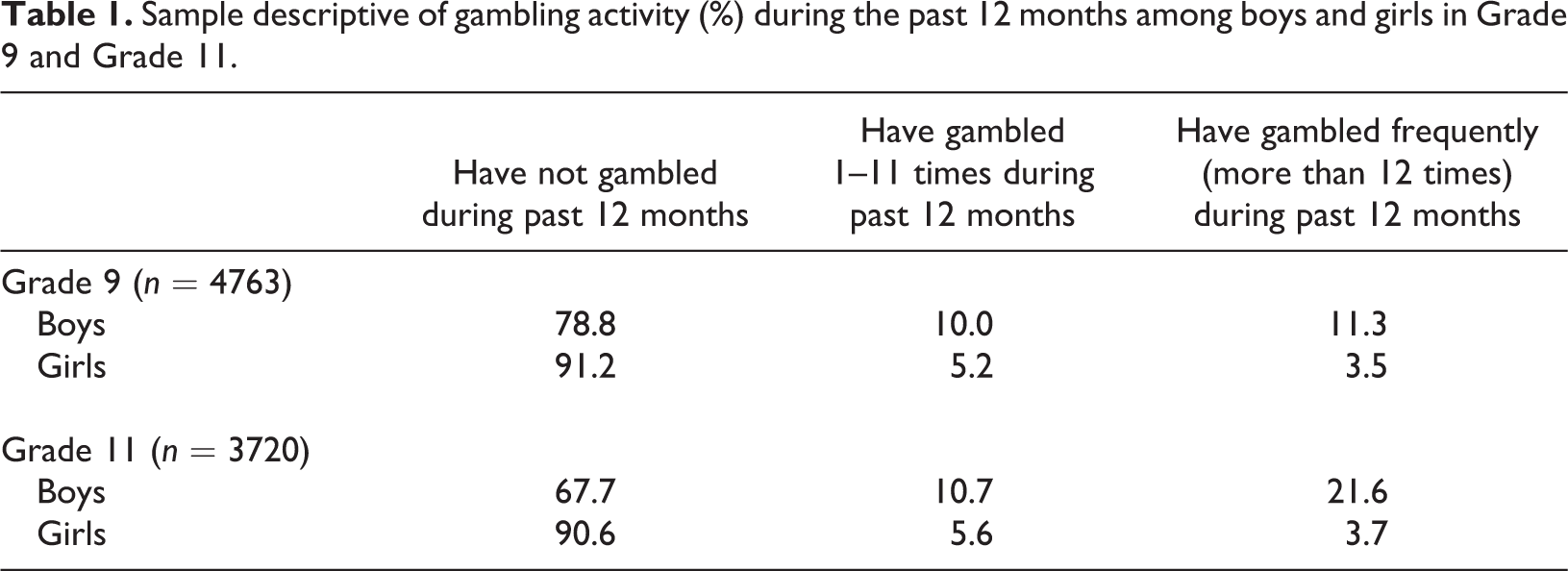
Sample descriptive of gambling activity (%) during the past 12 months among boys and girls in Grade 9 and Grade 11.
Measures
The gambling questions in the survey start with a lifetime question of whether the respondent has ever gambled for money. If the respondent has gambled for money, the next question is whether he/she has gambled during the past 12 months. If the answer is “yes”, the respondent is presented with a question containing nine items covering various types of games such as poker (both online and offline), vending machines, sports betting, and two different types of lotteries. Included in the survey are also “other types of gambling online” and “other types of gambling (not online)”. Each item is followed with a question about frequency of gambling during the past 12 months, with response options ranging from “never” to “several times a week” on a four-point scale. To construct a sum score for overall gambling frequency, we applied a semi-continuous measure reflecting, approximately, the number of times gambled in the past year (i.e., 0, 6, 24, 52) for each category of gambling. The sum score indicates the total frequency of gambling during the past year and has values from 0 to 468. We dichotomised the gambling frequency into “has gambled during the past 12 months”, which indicates that the respondent had gambled 1 to 11 times during the past 12 months, and “has gambled frequently during the past 12 months”, which indicates a gambling frequency of 12 times or more during the past 12 months.
Based on previous studies on determinates of gambling, a number of sociodemographic measurements were used to predict gambling. Family and school satisfaction were measured with two similar questions: “How satisfied are you generally with your relationship to your family?” and “How satisfied are you in school?” Responses range from “very satisfied” to “very dissatisfied” on a five-point scale. Responses were coded as satisfied, neither satisfied nor dissatisfied, or not satisfied. Two other questions about the school environment were used to estimate this – if the student had been bullied and if the student had been a bully him/herself (“Have you been bullied during the past 12 months”, and “Have you been involved in bullying someone during the past 12 months”). Both questions have been recoded to reflect whether the student had carried out or been exposed to bullying at least two to three times a month during the past 12 months. Lastly, a question concerning skipping classes was used to further estimate school environment and school satisfaction. If the student had skipped classes two to three times a month during the last year, this was coded as having skipped classes.
Two questions were used to estimate the student’s economic situation, one referring to whether the student could not afford to accompany friends on a trip and the other on whether the student could not afford to buy things that she/he wanted, and that friends had. Another two questions were employed to estimate alcohol consumption. The first question referred to whether the student had consumed alcohol at all during the past 12 months and the second asked whether the student had been involved in heavy episodic drinking or not. Here, heavy episodic drinking (HED) was defined as drinking the equivalent of or more than a bottle of wine (various options provided) on one occasion. The last question pertained to drug experience, that is, whether the student had used drugs (cannabis, marijuana, hash, cocaine, LSD, heroin, spice (or similar), amphetamine, sedatives (without prescription)), or whether the respondent had used another drug but was uncertain of what it was, during the past 12 months.
Data analysis
To estimate the association between gambling and various demographic and social factors, we applied a Poisson regression model with robust standard errors. There are several reasons for choosing this approach. Firstly, the dependent variable, gambling, is not a continuous variable as it is formulated in the questionnaire. Secondly, we expected that frequent gambling would be a rare event, particularly among girls; hence, the Poisson model is preferable (Zou, 2004). It has, furthermore, been shown that logistic regression models overestimate the association between risk factors and outcomes (Diaz-Quijano, 2012). Instead of an odds ratio (OR), as in a logistic regression model, the estimate is expressed as a relative risk (Slutske, Caspi, Moffitt, & Poulton, 2005) measure. The estimate expresses the risk of being a gambler or frequent gambler within each of the defined categories of the independent variables.
We began the analysis with bivariate regression models in order to explore the associations between gambling and the various demographic and social factors. We then estimated the Poisson multivariate regression models. In the multivariate models, we inserted the variables which had a significant association with the dependent variables in the bivariate analysis among either Grade 9 or Grade 11 students. To examine the risk of multicollinearity in the multivariate analyses, correlations between each of the predictor variables were assessed. These correlations were generally low, ranging between 0.01 and 0.33 among Grade 9 students. The correlation between the two financial questions was 0.52. Corresponding correlations among Grade 11 students were between 0.01 and 0.28, and here too the two financial questions produced the highest correlation (0.56). We also examined the variance inflation factor (VIF), which indicates whether a predictor has a strong relationship with the other predictors; scores above 10 are considered problematic (Field, 2009). Variance inflation factor scores in the data ranged between 1.08 and 1.50 for the predictor variables among Grade 11 students and between 1.09 and 1.50 among Grade 9 students. These tests imply that multicollinearity in the data is highly unlikely.
Results
Table 1 shows the sample and the distribution of not having gambled, gambled once during the past 12 months (1 to 11 times) and gambled more frequently (more than 11 times during past 12 months). The majority of the boys – 79% in Grade 9 and 68% in Grade 11 – had not gambled during the past 12 months. The percentage of non-gamblers is even higher among the girls: 91% in both Grade 9 and Grade 11. Among those who reported having gambled during the past 12 months, 10–11% of the boys and 5–6% of the girls in both grades gambled less frequently, while 11% of the boys in Grade 9 and 22% of the boys in Grade 11 gambled more frequently. The percentage of girls who gambled more frequently was about 4% in both grades. It should also be noted that among boys in Grade 9 there was roughly an equal distribution between those who had gambled less and more frequently (10% and 11%). However, this distribution is quite different among boys in Grade 11, where 11% gambled less frequently compared to 22% who gambled more frequently. Among the girls the corresponding estimates suggest that the proportion of more frequent gambling is similar to that of less frequent gambling.
Estimation of bivariate poisson regression models
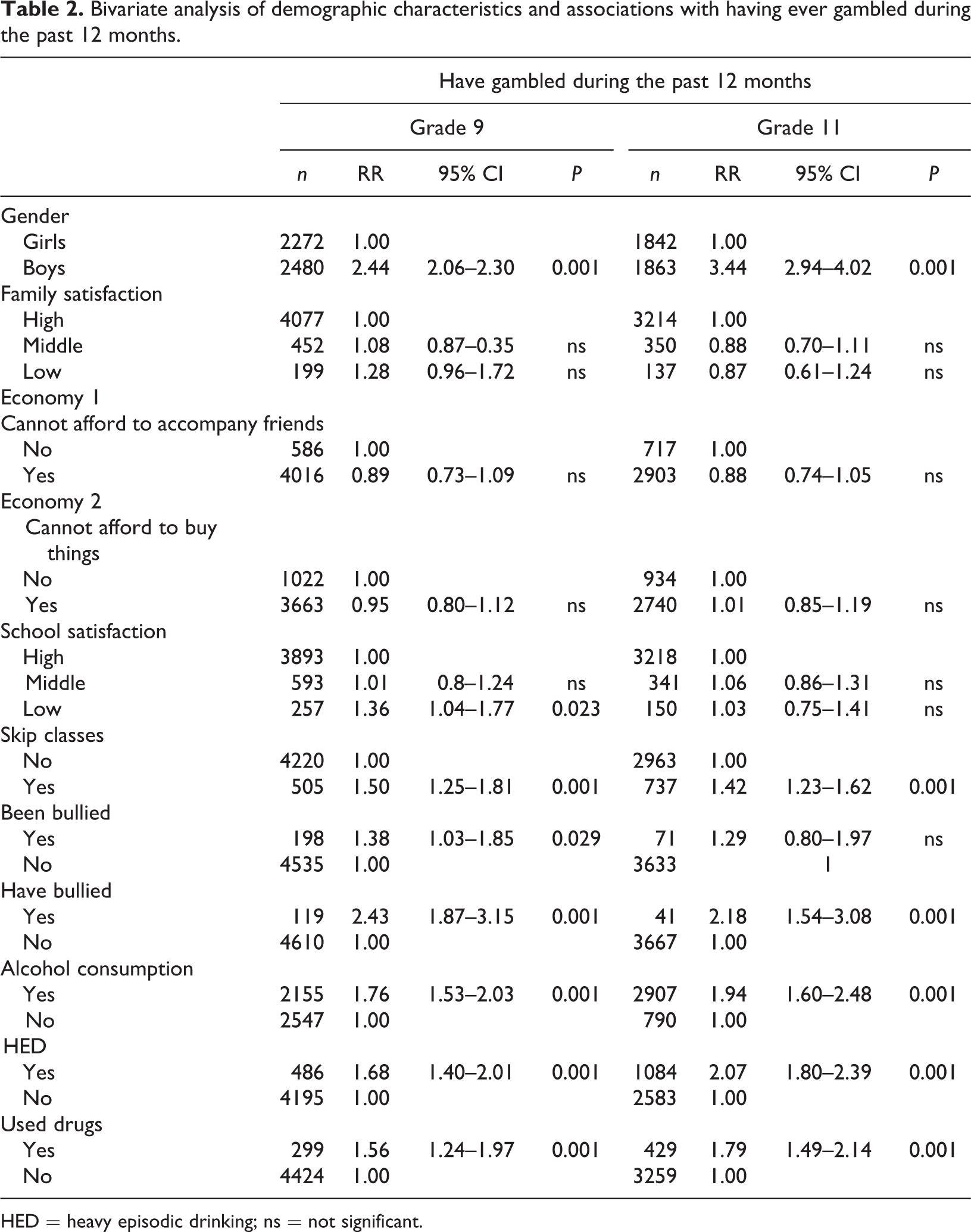
The results from the bivariate regression model estimates are presented in terms of relative risks (Slutske et al., 2005) with a 95% confidence interval (Tables 2 –5). When comparing those who gambled with those who did not gamble (Table 2), we found that gender had a positive and significant association with gambling and that this was common to both age groups. The relative risk for boys in Grade 9 to gamble was 2.44 compared to girls. The corresponding risk was even higher, 3.44, among the 11th-graders. The estimates for skipping classes, being a bully, having consumed alcohol, having been involved in HED, and taking drugs were all positive and significant. This indicates that these factors are associated with gambling in both Grade 9 and Grade 11. Among 9th-grade students, significant estimates were also found with school satisfaction (that is, those students with a low school satisfaction were more prone to gamble compared to those whose satisfaction with school was high). Also, those students in Grade 9 who had been bullied were more prone to gamble compared to those who were not bullied. Furthermore, family satisfaction and the two financial indicators are not significantly associated with gambling.
Bivariate analysis of demographic characteristics and associations with having ever gambled during the past 12 months.
HED = heavy episodic drinking; ns = not significant.
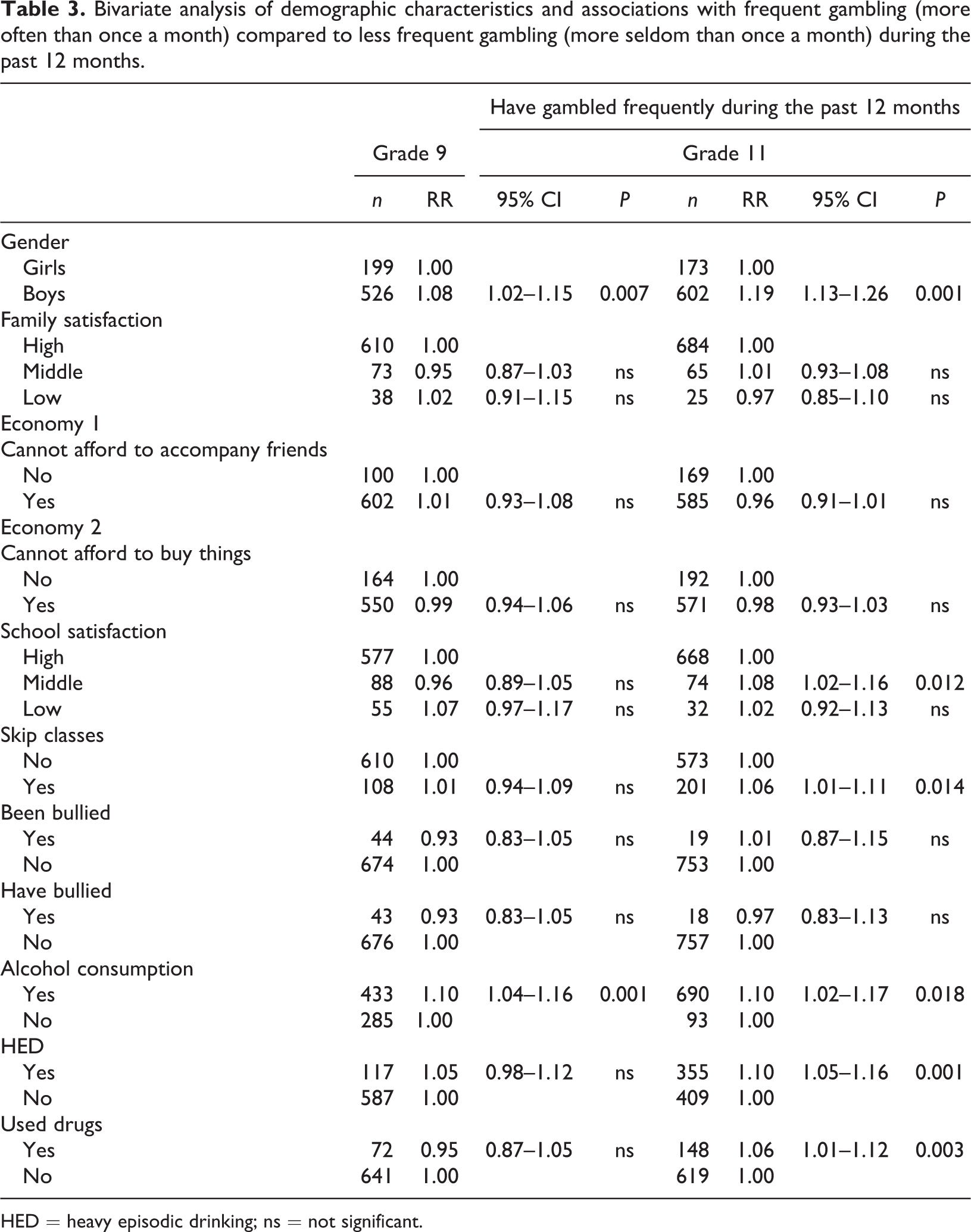
Bivariate analysis of demographic characteristics and associations with frequent gambling (more often than once a month) compared to less frequent gambling (more seldom than once a month) during the past 12 months.
HED = heavy episodic drinking; ns = not significant.
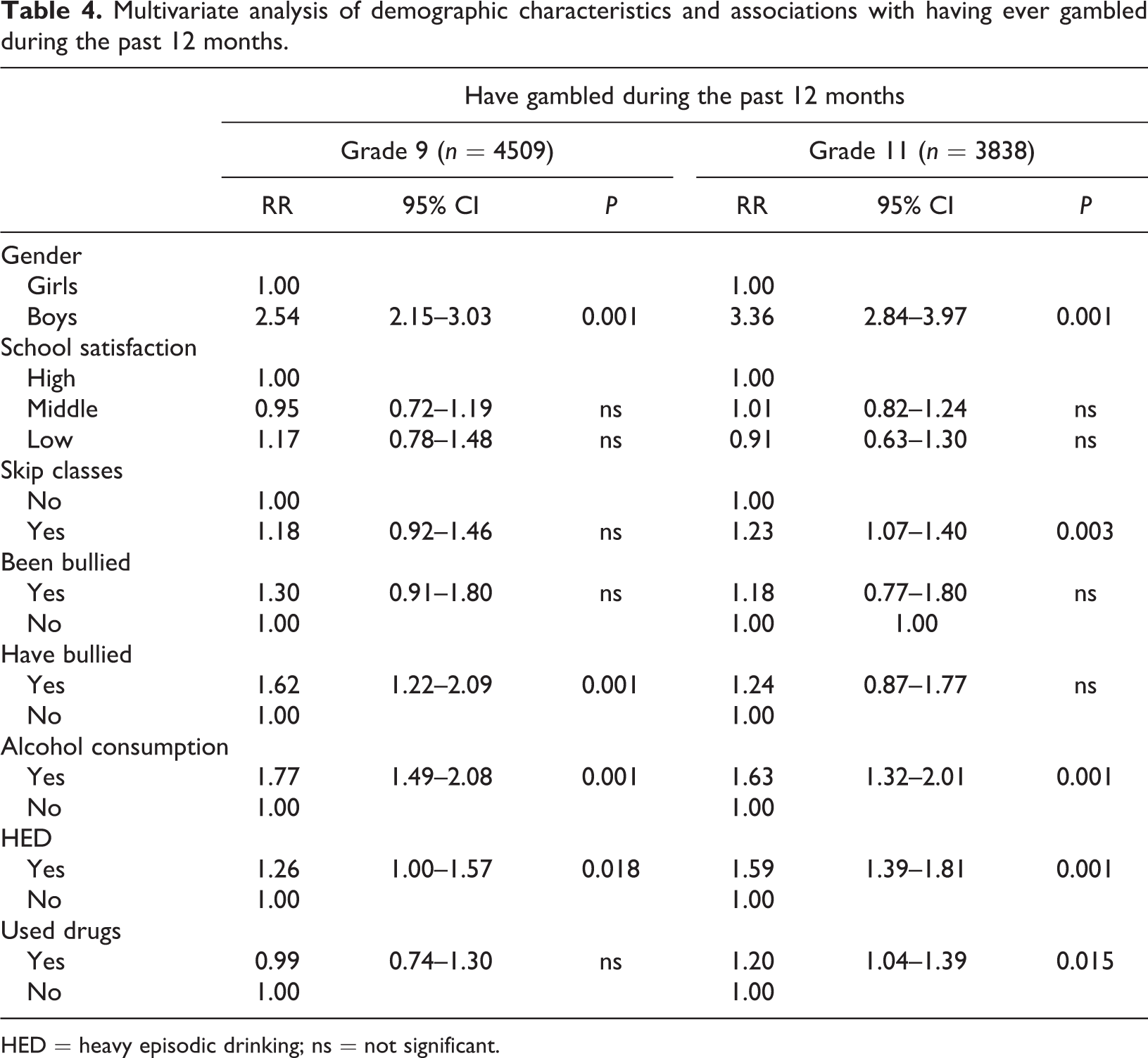
Multivariate analysis of demographic characteristics and associations with having ever gambled during the past 12 months.
HED = heavy episodic drinking; ns = not significant.
Multivariate analysis of demographic characteristics and associations with frequent gambling (more often than once a month) compared to less frequent gambling (more seldom than once a month) during the past 12 months.
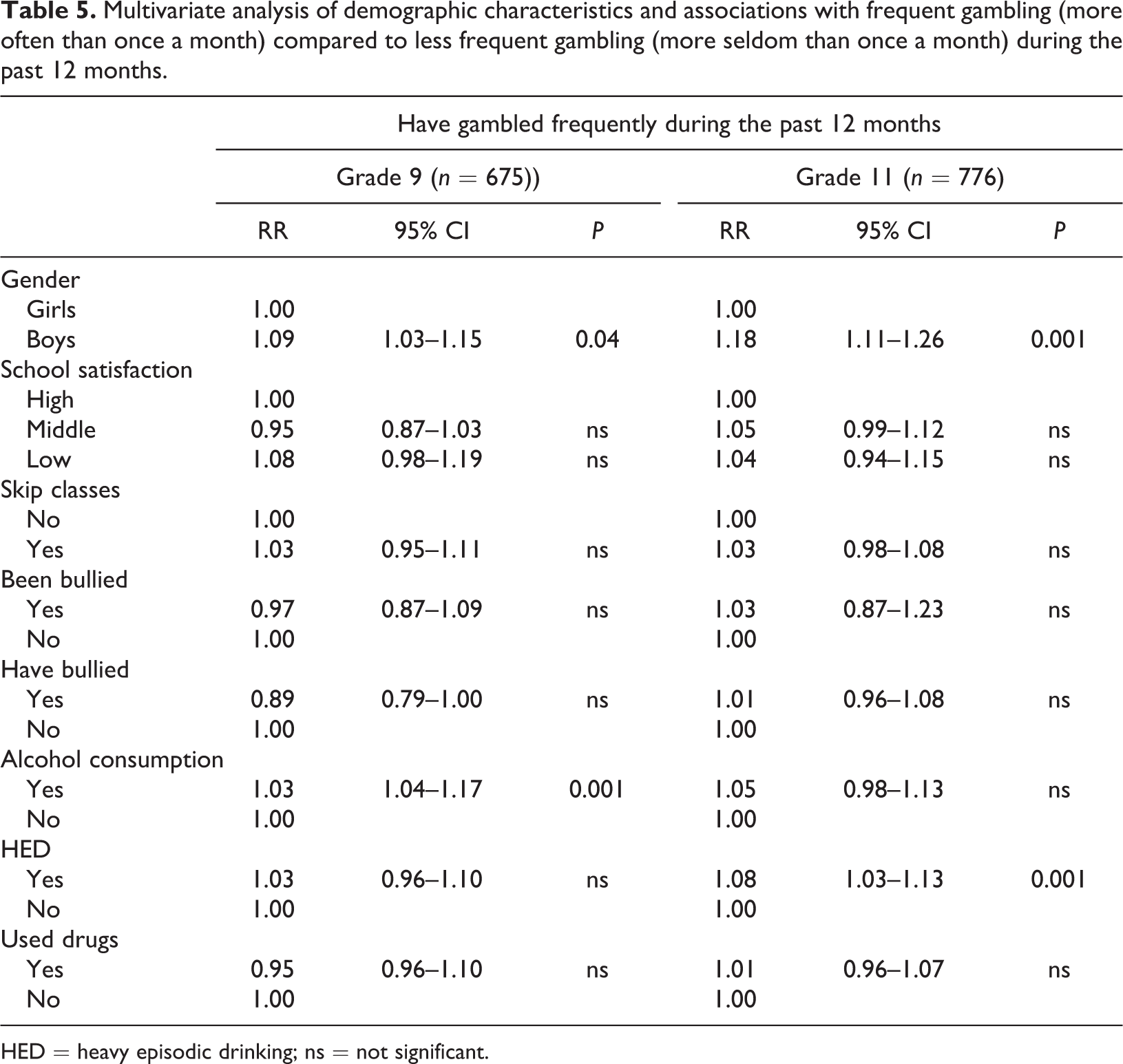
HED = heavy episodic drinking; ns = not significant.
Comparing those who gambled less frequently with those who gambled frequently (Table 3), we discovered that gender and having consumed alcohol were significantly associated to more frequent gambling in both grades. In Grade 11, students who reported “middle” school satisfaction, skipped classes, had been involved in HED, and had used drugs were prone to gambling more frequently.
Estimation of multivariate Poisson regression models
We performed multivariate regression models to assess the most important factors by estimating the effect while controlling for the influence of all other variables. The findings in terms of relative risk are presented in Tables 4–5.
In the multivariate analysis, comparing those who gambled at all with those who did not gamble (Table 4) helped us to establish that sex, having consumed alcohol and HED were still significant and positively associated among students in Grades 9 and 11. Furthermore, among students in Grade 9, having bullied was significantly associated with having gambled. Skipping classes and having used drugs were significantly associated with gambling among Grade 11 students.
In the final analysis, we compared those who gambled less frequently with those who gambled more frequently (Table 5) and found that only gender was significantly associated with more frequent gambling among students in Grades 9 and 11. In Grade 9, having consumed alcohol was significantly positively associated with more frequent gambling. In Grade 11, students who reported HED were more prone to gambling more frequently.
Discussion
This is the first article to explore predictors of gambling among Grade 9 and Grade 11 students in Sweden. The main findings of the study are that there is a significant association between gender and gambling: boys gamble more and more frequently than girls in both Grade 9 and Grade 11. Secondly, there is an association between alcohol consumption and gambling among Swedish adolescents, and, thirdly, predictors of gambling vary even in terms of small age differences and frequency of gambling. Finally, we did not find any support for the indicators of family satisfaction and the students’ financial situations being a significant predictor of gambling or frequent gambling.
Our results support earlier findings and underscore that gambling is typically a gendered activity among Swedish youth (Fröberg, 2015; Svensson, 2017). This gender bias has also been shown in other countries (Blinn-Pike et al., 2010; Scholes-Balog, Hemphill, Dowling, & Toumbourou, 2014). Moreover, our results challenge the notion that gambling is becoming a normalised activity, given the assumption that normalised behaviour is something more or less equally distributed between young males and females. On the contrary, it remains a typical male activity among Swedish students, particularly when it comes to more frequent gambling. However, these results may also reflect the types of games and the gender stereotypes the gambling industry is conveying in its marketing and which youth are exposed to (Derevensky, Sklar, Gupta, & Messerlian, 2010). The results may also reflect that boys and girls have different motives for gambling (McCormack, Shorter, & Griffiths, 2014) or that males and females gamble in different domains (Svensson, 2013).
Alcohol consumption has been shown to be a strong predictor of gambling in earlier studies (Hill, White, Chung, Hawkins, & Catalano, 2000; Noël, 2014; Peters et al., 2015). Our results point to a more nuanced association between alcohol and gambling among Swedish students. On the one hand, having consumed alcohol and HED were significantly associated with less frequent gambling, compared to no gambling among students in Grades 9 and 11. On the other hand, more frequent gambling, as compared to less frequent gambling, was only associated with having consumed alcohol in Grade 9 but not HED. In Grade 11, HED but not having consumed alcohol was associated to more frequent gambling. In our interpretation of these results, this indicates that those who gamble more frequently do not have an elevated risk of more risky drinking patterns compared to those who gamble less frequently in Grade 9, but they do in Grade 11. The, to some extent contradictory, results of alcohol consumption and HED may be an effect of the elevated proportions of alcohol consumers from Grade 9 to 11: in Grade 9, 46% of the students had consumed alcohol, whereas the corresponding proportion was 79% in Grade 11 (Englund, 2014). Another reason we did not find alcohol as a predominant predictor in all analyses, as has been shown in previous studies, may be that Swedish students rank at the lower end of HED and frequency of alcohol intake compared to adolescents in many other ESPAD countries (Kraus & Nociar, 2016).
To some degree, our results on the association between gambling and alcohol challenge the notion that there are similarities between personalities associated with problem gambling and dependency on alcohol, cannabis, and nicotine (Slutske et al., 2005). The association that we found with alcohol was not that evident in either grade or between gambling and frequency of gambling. Neither was the association with drug use very evident. Only in Grade 11 did we find an association between drug use and less frequent gambling. However, it should be noted that we have not measured personalities or dependencies.
Regarding the associations of alcohol and gambling, a question for future research is the temporal association between gambling and alcohol consumption among youth. In most European countries, alcohol consumption has decreased among students whereas gambling, at least in Sweden, appears to have remained relatively stable (Kraus & Nociar, 2016; Svensson, 2017). These divergent trends call for more research on both aggregate and individual levels.
Our findings should be considered with several limitations in mind. First of all, the findings are based on cross-sectional survey data, and no causal relationship can thus be established. This is particularly important because gambling research is a new field compared to studies on alcohol and drug use, and the harms and negative outcomes from gambling among youth have not been established. In this study we have used frequencies of gambling as a way of categorising different types of gamblers. This approach limits the comparability to other studies where the gamblers are categorised by various scales such as Lie/bet, Diagnostic Screen for Gambling Problems-Self Administered (NODS-SA), Canadian Problem Gambling Index (CPGI), Victorian Gambling Screen (VGS), and others. Still, some research suggests a link between frequency of gambling in adolescence and experience of problem gambling at age 30 (Carbonneau, Vitaro, Brendgen, & Tremblay, 2015). Secondly, as the data are self-reported there is the possibility of the influence of social desirability bias. However, here we have used frequency of gambling as the dependent variable and there is some evidence that gambling behaviour reporting is less affected by social desirability as compared to reporting of gambling problems (Kuentzel, Henderson, & Melville, 2008). Moreover, the questions on alcohol and drugs (cannabis) in the survey have been compared to the ESPAD survey from 1995 to 2015 (every fourth year) and the findings suggest a very similar development over the years. This strengthens the assumption that the two different surveys catch similar behaviour, at least when it comes to alcohol and drug use, over time (Guttormsson & Leifman, 2016).
With these limitations in mind, our study points to the conclusion that, from a preventive perspective, efforts to reduce adolescent gambling must take various approaches. Firstly, to increase parents’ and students’ knowledge of the risks involved in gambling. As we have shown, gambling among Swedish students is not a rare behaviour, specifically not among males. Here, it is worth noting that a general age-restriction on gambling was first introduced in 2006 (18 years old), compared to alcohol, the current age restriction on off-premise was introduced in 1969 (20 years old). This is not to say that age restrictions have major effects, rather it is an indication of what is perceived as risky behaviour, from a societal perspective. Secondly, and from a secondary prevention perspective, we have shown that gambling, to various degrees, is associated with other risky behaviours, such as alcohol and drug use among students in Sweden. These findings suggest that gambling behaviour is something to consider when youth are treated for alcohol or drug use.
Footnotes
Declaration of conflicting interests
The authors declared no potential conflicts of interest with respect to the research, authorship, and/or publication of this article.
Funding
The authors disclosed receipt of the following financial support for the research, authorship, and/or publication of this article: This work was conducted within the research programme REGAPS (Responding to and Reducing Gambling Problem Studies). The REGAPS programme is supported by the Swedish Research Council for Health, Working life and Welfare (Forte) under grant 2016-07091 and the Svenska Spel research council under grant “FO2014-0006” and grant FO2016-0017.
