




Abstract
Aims:
This study explores the associations between gambling involvement, type of gambling, at-risk and problem gambling (ARPG) and register-based grade point average (GPA), among Finnish people aged 18–29 years (N = 676). It is assumed that high gambling involvement and engaging in certain types of gambling are linked to ARPG, and that low school achievement is positively associated with these measures.
Methods:
A nationwide cross-sectional random sample was collected in 2015. The data were weighted based on gender, age and region. Analyses were carried out using logistic regression models.
Results:
Frequent gambling, playing several game types, online gambling and ARPG were more common among men than women. Those with low GPA played fast and low-paced daily lottery games and used online casinos significantly more often than men and women with average/high GPA. Men with a low GPA were also more likely to gamble on a weekly basis and played casino games and online poker more often. For women with a low GPA online gambling and playing slot machines were more common than for women with an average/high GPA. When controlling for sociodemographic variables and gambling involvement, men’s participation in daily lottery games and online poker was significantly associated with a low GPA, but among women none of the game types remained statistically significant. Among women, playing several different game types was linked with a low GPA.
Conclusions:
It seems that poorer school achievement is associated not only with frequent gambling, a large number of game types played and online gambling, but also, to some extent at least, with game type preferences.
Young people’s academic performance is associated with health behaviours, educational tracks and expected future social class (Koivusilta, Rimpelä, & Vikat, 2003; Koivusilta, West, Saaristo, Nummi, & Rimpelä, 2013; Pennanen, Haukkala, de Vries, & Vartiainen, 2010; Ristikari et al., 2016). A typical measure of academic performance is grade point average (GPA). More precisely, those with higher school grades are less likely to engage in health-compromising behaviours, such as smoking, drinking and illicit drug use. Studies have reported consistent gender differences in school achievement, with girls earning higher grades than boys (Duckworth & Seligman, 2006). In the Finnish context, although the skills and knowledge of 15-year-old students are clearly above the international average (OECD, 2015), Finnish girls have higher compulsory school GPAs than boys (Ristikari et al., 2016). Compulsory school education in Finland begins at age seven and ends at age 16. Final school grades range from 4 to 10.
In previous studies, low school achievement and low level of education have also been linked to at-risk and problem gambling (Castrén et al., 2013; Dowling et al., 2017; Floros et al., 2015; Fröberg, Modin, Rosendahl, Tengström, & Hallqvist, 2015; Winters, Stinchfield, Botzet, & Anderson, 2002).
Two longitudinal studies have found evidence of an association between school achievement and gambling, suggesting that poor school achievement may be associated with gambling later in life (Fröberg et al., 2015; Winters et al., 2002). In Sweden, Fröberg and colleagues (2015) found gender differences in the association between school achievement at age 16 and at-risk and problem gambling later in life. A cross-sectional Finnish survey using retrospective register data found a clear association between poor school achievement and at-risk and problem gambling only among women. This study also found evidence of an association between weekly gambling and poor school achievement (Latvala, Castrén, Alho, & Salonen, 2017). Accordingly, it has been reported that a high level of education or socioeconomic status protects against problem gambling (Dowling et al., 2017; Ekholm et al., 2014).
The Finnish gambling system is based on a state monopoly. The gambling network is dense as slot machines are widely available in nearly any retail venue, including supermarkets, grocery stores, kiosks, petrol stations, restaurants, bars and cafés (Raisamo, Warpenius, & Rimpelä, 2015). People in Finland are very active gamblers. In 2015 over 80% of young adults aged 18–34 years had played at least one type of gambling game during the past year (Salonen & Raisamo, 2015). The legal age for gambling in Finland is 18 years. As in several other Western countries, men in Finland gamble more frequently than women, and also gamble online and play several types of games clearly more often (Castrén et al., 2013; Hing, Russell, Tolhard, & Nower, 2014; Salonen & Raisamo, 2015).
Research suggests that there are gender differences in preferred game types. Men tend to prefer games that are typically categorised as games of skill, while women more often participate in games that are categorised as games of chance (Holdsworth, Hing, & Breen, 2012; Nower & Blaszczynski, 2006). Earlier studies have suggested that women prefer scratch cards, bingo, lotteries and electronic gaming machines (EGMs); whilst men in turn prefer table games, wagering and sport betting (Delfabbro, King, & Griffiths, 2014; Hing et al., 2014; Holdsworth et al., 2012; Odlaug, Marsh, Kim, & Grant, 2011; Romild, Svensson, & Volberg, 2016). However, recent research has shown that among younger women participation in skill-based forms of gambling has increased (Hare, 2015). This may be because of development of new technologies and marketing strategies which may be appealing for younger women (McCarthy et al., 2018; McCormack, Shorter, & Griffiths, 2014). Younger women tend also to participate in multiple forms of gambling with skill-based games being added to existing forms of luck-based gambling (McCarthy et al., 2018). Research further suggests that certain types of games can be more harmful than others (Binde, 2011; Binde, Romild, & Volberg, 2017; Scalese et al., 2016). For example, casino-type games (and slot machines in particular) are more likely to be associated with problem gambling than slow lottery-type games (Williams, Volberg, & Stevens, 2012). In addition, online gambling has been linked to problem gambling (Gainsbury, 2015).
Although research has shown gender differences in both gambling and school achievement more information is needed about the gender-stratified association between school achievement and gambling behaviour. Furthermore, earlier studies have tended to focus on problem gambling, leaving aside questions of gambling involvement (e.g., frequency of gambling, type of gambling). We still do not know whether people with lower school grades prefer certain types of games, and whether gender influences the association between school achievement and game type.
This study explores the associations between gambling involvement, type of gambling, at-risk and problem gambling (ARPG) and register-based grade point average (GPA), among men and women aged 18–29 years in Finland (N = 676). It is assumed that high levels of gambling involvement and engaging in certain types of gambling are linked to ARPG, and that low school achievement is positively associated with these measures. From a prevention and policy standpoint it would be important to identify and examine those factors that may be associated with the later development of gambling, and to explore gender differences in these associations. To this end, our study uses nationwide data to examine the association between final GPA at age 16 and gambling involvement (number of game types, gambling frequency and online gambling) later in life among men and women aged 18–29 in Finland.
Methods
Participants
We used data from the Finnish Gambling 2015 survey which was carried out by Statistics Finland using computer-assisted telephone interviews between 3 March and 8 June 2015 (Salonen & Raisamo, 2015). Overall, 4515 interviews were completed, with a 62% response rate. Statistics Finland register data were linked with the Finnish Gambling 2015 survey data. The data were weighted based on age, gender and the region of residence. Only 18–29-year old gamblers were selected from the data (N = 676).
Measures
Compulsory school achievement
Compulsory school education in Finland begins at age seven and ends at age 16. Final school grades range from 4 to 10. The lowest passing grade is 5 and 10 is the highest possible grade. Virtually all adolescents pass compulsory school education. Grade point average (GPA) is based on register data from Statistics Finland sources. In Finland GPAs are reported separately for all subjects and theoretical subjects. For the present study, however, we were only able to consider the grades for theoretical subjects because of the high number of missing GPA values for all subjects. Based on the GPA, adolescents were divided into two classes: adolescents with lowest 25% quartile were considered as having low GPA and all the rest average/high GPA. For men, the limit of low GPA value was 6.99 and for women it was 7.10.
The survey inquired about past-year gambling involvement in 18 different game types offered by the Finnish gambling monopoly operators and/or online gambling internationally. These games were recoded into 12 game types (Table 1): weekly lottery games, fast-paced daily lottery games (such as instant e-lotteries and eBingo), low-paced daily lottery games (such as Keno), scratch cards, slot machines, betting games, casino games (both in casinos and in game arcades), online poker, non-poker games on the online casino site of Finland’s Slot Machine Association (FSMA) (hereafter “online casino”), horse games, private gambling and non-monopoly gambling (includes gambling on cruises from Finland to Sweden and Estonia and also non-poker and non-monopoly online games). Each of these 12 game types was treated as a dependent variable in the logistic regression models.
Gambling involvement, at-risk and problem gambling and type of gambling during past-year gamblers by gender.
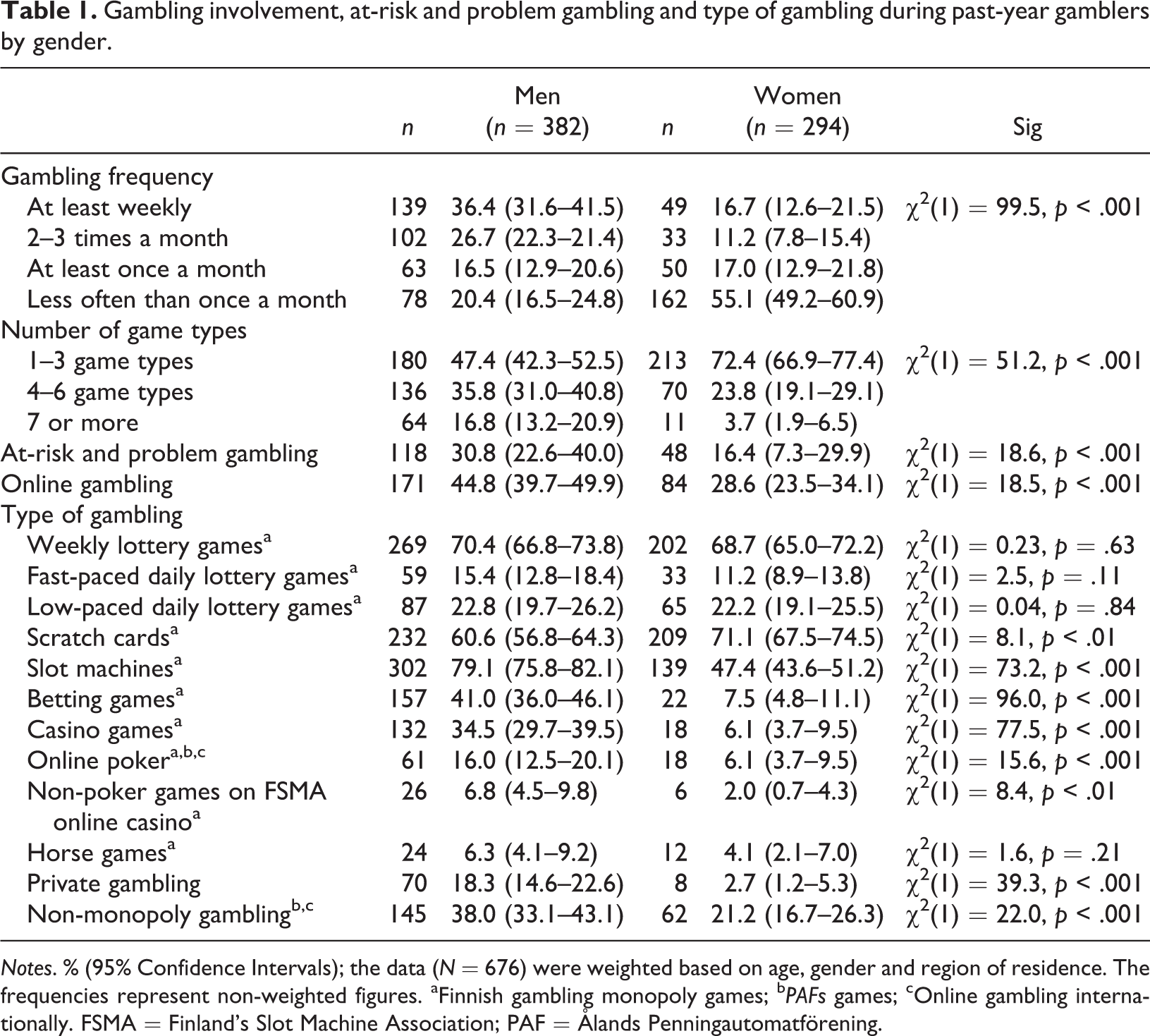
Notes. % (95% Confidence Intervals); the data (N = 676) were weighted based on age, gender and region of residence. The frequencies represent non-weighted figures. aFinnish gambling monopoly games; bPAFs games; cOnline gambling internationally. FSMA = Finland’s Slot Machine Association; PAF = Ålands Penningautomatförening.
Gambling involvement
Gambling involvement was examined by gambling frequency, number of game types and online gambling. Overall gambling frequency was defined based on the type of game that occurred most often and recoded into two categories: (1) gambling at least once a month and (2) gambling less often than monthly (Tables 1 –4). Number of game types was calculated based on how many of the 12 game types the participant had played during the past year. Respondents who had participated in some type of online gambling during the past 12 months were classified as online gamblers, others were classified as land-based gamblers. In the majority of previous studies, similar categorisation regarding online gambling has been used (Baggio, Gainsbury, Berchtold, & Iglesias, 2016; Edgren, Castrén, Alho, & Salonen, 2017; Gainsbury, Russell, & Hing, 2014).
Odds ratio (OR) values and 95% confidence intervals for at-risk and problem gambling (ARPG) based on type of gambling and gambling involvement.
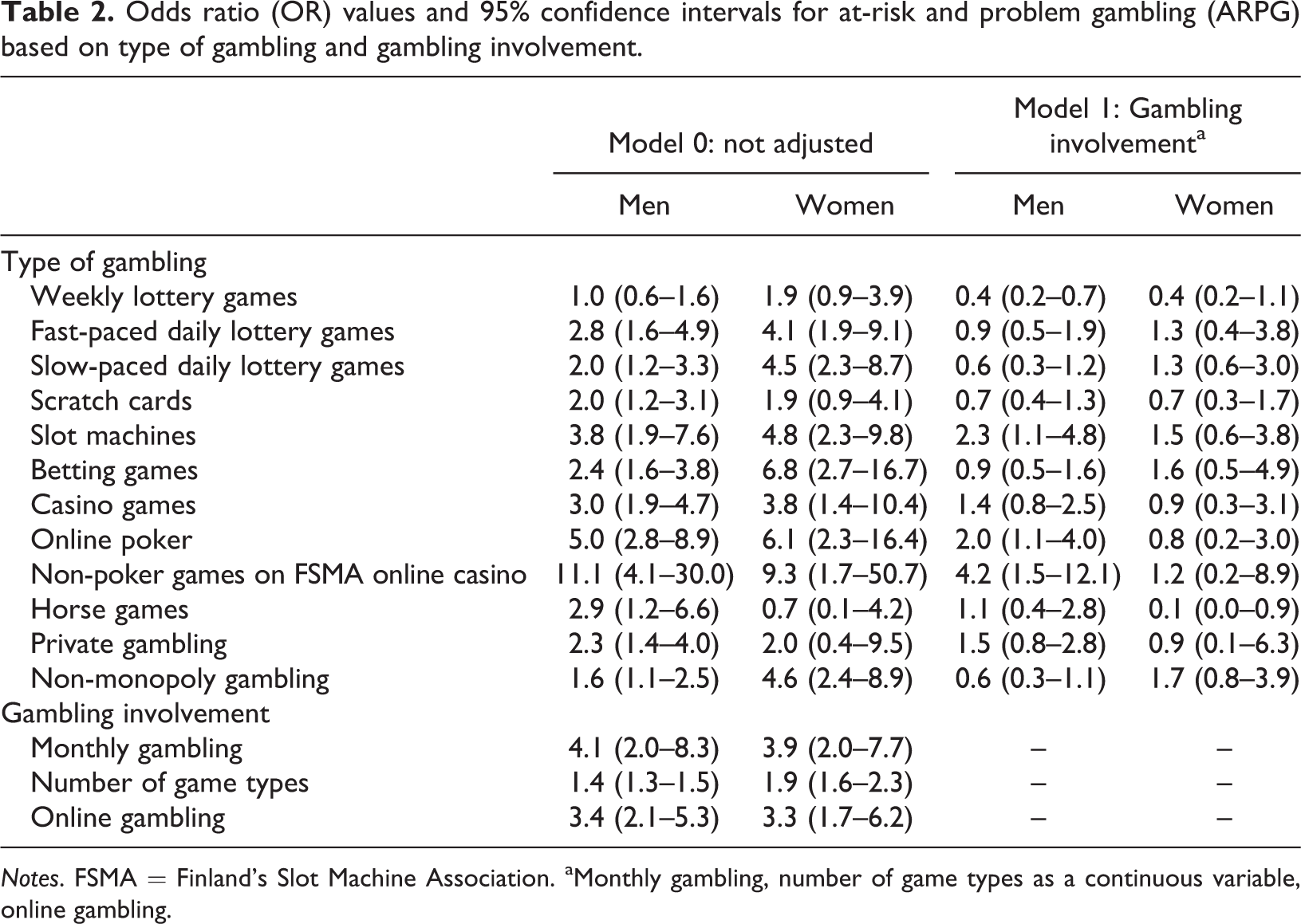
Notes. FSMA = Finland’s Slot Machine Association. aMonthly gambling, number of game types as a continuous variable, online gambling.
Sociodemographic characteristics, gambling involvement and type of gambling by grade point average (GPA) in compulsory school by gender
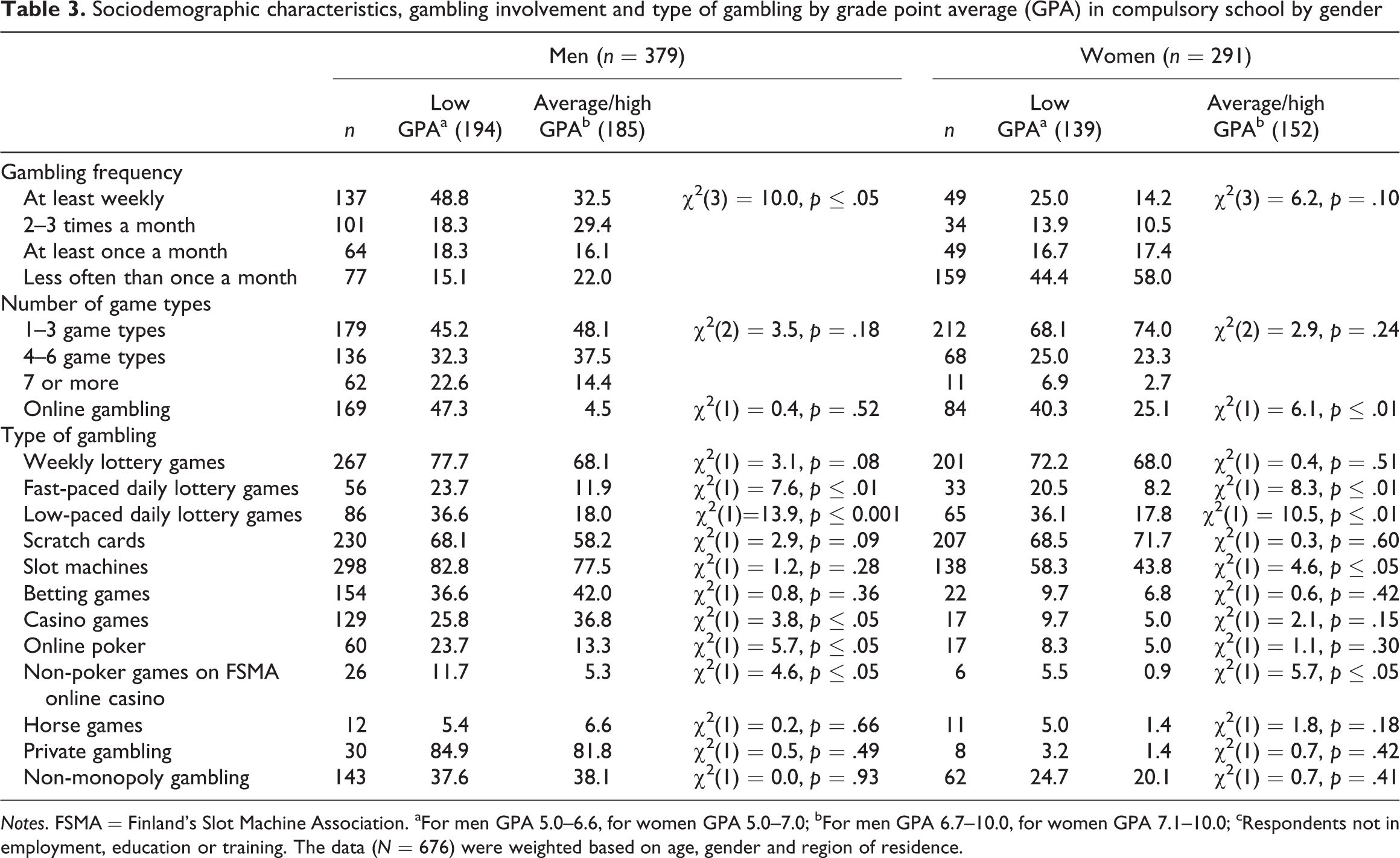
Notes. FSMA = Finland’s Slot Machine Association. aFor men GPA 5.0–6.6, for women GPA 5.0–7.0; bFor men GPA 6.7–10.0, for women GPA 7.1–10.0; cRespondents not in employment, education or training. The data (N = 676) were weighted based on age, gender and region of residence.
Odds ratio values and 95% confidence intervals for models in which grade point average (GPA) is the independent variable and type of gambling and gambling involvement the dependent variables.
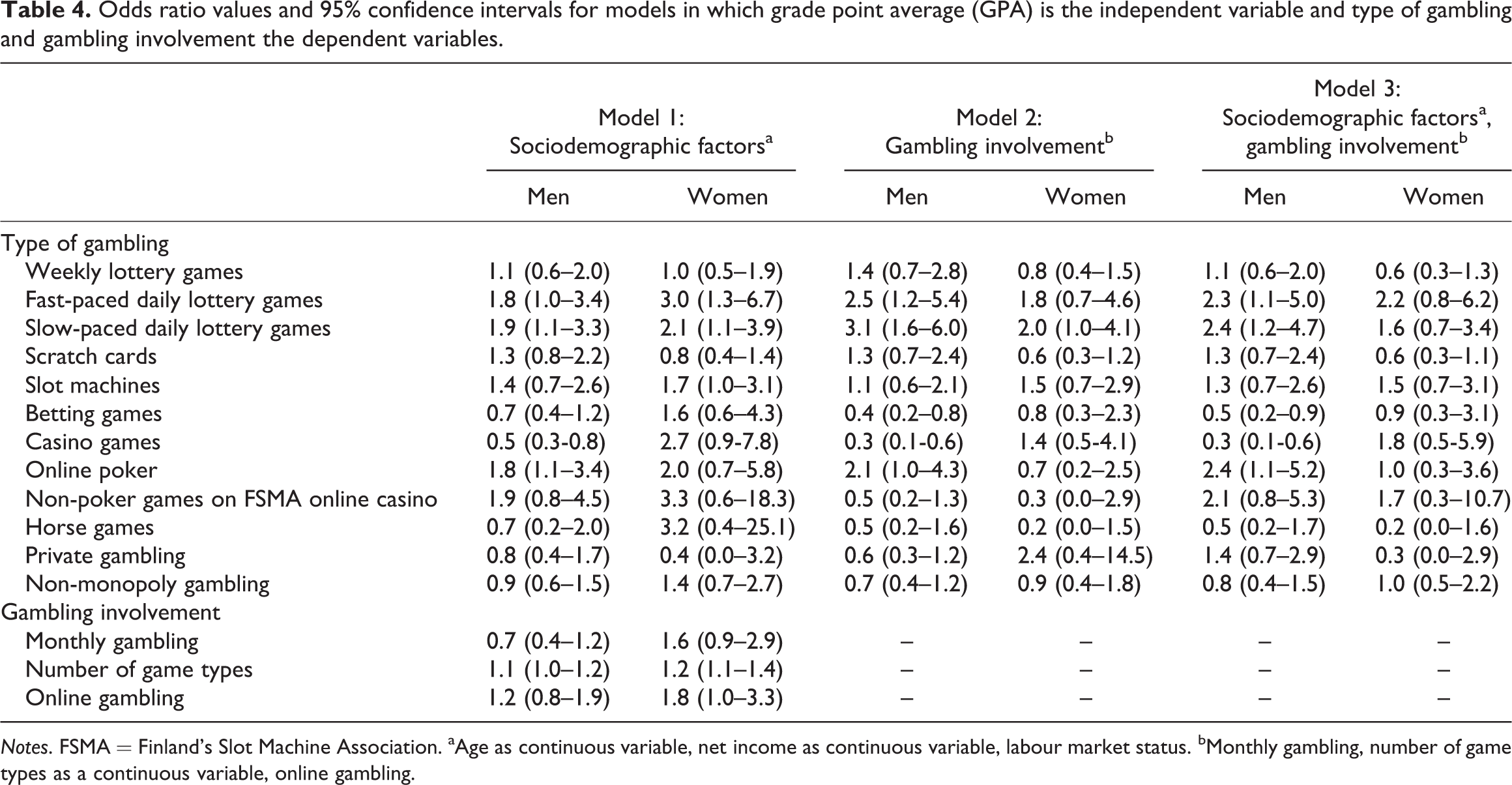
Notes. FSMA = Finland’s Slot Machine Association. aAge as continuous variable, net income as continuous variable, labour market status. bMonthly gambling, number of game types as a continuous variable, online gambling.
At-risk and problem gambling
At-risk and problem gambling was defined using the Problem Gambling Severity Index (PGSI), a nine-item instrument measuring past-year gambling behaviour and gambling consequences. All items have four response options ranging from never (0 points) to almost always (3 points), giving a maximum score of 27 points (Ferris & Wynne, 2001). As in previous studies (Browne, Greer, Rawat, & Rockloff, 2017; Edgren, Castrén, Jokela, & Salonen 2016), respondents scoring one point or more were considered ARPGers. Cronbach’s alpha for the PGSI among men was 0.86 and among women 0.77.
Sociodemographics
The sociodemographic variables were age, income and labour market status. With the exception of the latter, these were collected from register data. The personal income variable included both earned and capital income. Earned income included social security benefits, such as student financial aid. Men’s annual income ranged from €0 to €96,883 and women’s from €0 to €65,017. Current labour market status was recoded as: (1) employed (including employees, farmers and the self-employed), (2) students and (3) not in employment, education or training (NEET). The NEET category covered unemployed respondents, conscripts or persons undergoing non-military service, persons caring for a child (including those temporarily on parental leave) or a relative at home, and homemakers or other.
Statistical analysis
Firstly, gender differences in ARPG, gambling involvement and type of gambling during the past year were examined using chi-square tests (Table 1). Secondly, using logistic regression models, association between ARPG, gambling involvement and type of gambling were studied to discover what kind of gambling involvement and which game types are linked with ARPG (Table 2). Thirdly, using chi-square tests, ARPG, gambling involvement and type of gambling were examined against men’s and women’s final school grades (Table 3). Finally, gender-stratified logistic regression models adjusted for sociodemographic variables and gambling involvement factors were constructed to examine whether low GPA would be associated with gambling involvement and specific type of gambling (Table 4). 95% confidence intervals (CIs) for all percentages are presented. The results of the regression analyses are presented as odds ratios (OR) and their corresponding CIs. Data analysis was carried out using SPSS version 24.
Ethics
The study protocol was approved by the Ethics Committee of the National Institute for Health and Welfare. Participation in the study was voluntary and all potential participants received written information about the study. Permission to use the register data was received from Statistics Finland. Following the rules and instructions defined by the Statistics Finland, the analyses were conducted in a protected environment using the remote access system, and the results were transferred to the authors through a screening process.
Results
Background information
Over half of the participants (56.6%) were men. The mean age of participants was 23.3 years (SD 3.4). Men’s average annual income was €16,831 (SD €14,579) and women’s €15,365 (SD €10,720). Almost half (49.4%) of the respondents were employed, 35.7% were students and 14.8% not in employment, education or training. Women had a higher mean GPA (t(668) = 5.4, p < .001): men’s mean GPA was 7.5 and women’s 7.9. Among men 43.8% had a below-average GPA, the corresponding figure among women was 56.1%.
Gender differences in ARPG, gambling involvement and type of gambling
Frequent gambling and ARPG was more prevalent among men than women, and men also played several types of games more often (Table 1). Likewise, online gambling was more common among men. There were no gender differences in participation in weekly lottery games, daily lottery games or horse games. Scratch card gambling was more common among women than men. Men played slot machines, betting games, casino games, online poker, non-poker games on the online casino, private gambling and non-monopoly gambling more often than women. The four most common type of gambling activities for men were weekly lotteries, slot machines, scratch cards and betting games. The preferred types of gambling among women were weekly lotteries, slot machines, scratch cards and low-paced daily lottery games.
Association between ARPG, gambling involvement and type of gambling by gender
Monthly gambling, increased number of game types and online gambling were associated with ARPG among both men and women (Table 2). Among men, playing all other games than weekly lottery was linked with ARPG, but when gambling involvement was adjusted, only slot machine gambling and non-poker games on the FSMA online casino, and poker remained statistically significant. Among women all other games than weekly lottery, scratch cards, horse games and private gambling were associated with ARPG. However, when gambling involvement was taken into consideration none of the game types remained statistically significant.
Differences between men and women with low and average/high GPA in gambling involvement and type of gambling
Men and women with low GPA gambled on fast and low-paced daily lottery games and the online casino significantly more often than men and women with an average/high GPA. Men with a low GPA also gambled more often on a weekly basis and played casino games and online poker. For women with a low GPA online gambling and playing slot machines were more common than for women with an average/high GPA (Table 3).
Association between GPA, gambling involvement and type of gambling by gender
In Table 4, models in which GPA was the independent variable and type of gambling and gambling involvement were dependent variables are shown. When sociodemographic variables (model 1) were controlled for, involvement in slow-paced daily lottery games and online poker were associated with a below-average GPA among men (Table 4). When monthly gambling, number of game types and online gambling (model 2) were adjusted only men’s involvement in fast and slow-paced daily lottery games were linked to a below-average GPA. Further, when all adjusting variables were taken into count (model 3), daily lottery games and online poker remained significant. Among women only fast-paced daily lottery games were associated with a below-average GPA in model 1, but in the final fully adjusted model, none of the 12 game types remained statistically significant (Table 4). Among women only number of game types was associated with a below-average GPA.
Discussion and conclusions
The present study aimed to explore the associations between gambling involvement, type of gambling, ARPG and GPA among Finnish men and women aged 18–29 years. We found only partial evidence that individuals with poorer school achievement, as measured by register-based GPA, prefer certain game types. Men with a low GPA participated in fast and low-paced daily lottery games and played casino games and online casino and poker more often than men with an average/high GPA. Women with a low GPA participated more often in fast and slow-paced daily lotteries and scratch card gambling than women with an average/high GPA. However, when adjusting for sociodemographic factors and gambling involvement, daily lottery games were associated with low GPA only among men. Low GPA can effect educational tracks and predict lower social class (Koivusilta et al., 2003; Koivusilta et al., 2013; Pennanen et al., 2010; Ristikari et al., 2016), which in turn can be associated with increased participation in lottery games. It has been found that increased spending on the National Lottery is associated with lower social class position (Reid, Woodford, Roberts, Golding, & Towell, 1999). Among men, online poker was linked to low GPA though Internet gambling is commonly linked with higher education levels (Jiménez-Murcia et al., 2011). However, in our study online poker was also associated with ARPG. It might be that low GPA and playing online poker are linked with more problematic gambling among men. Among women low GPA seemed to be associated with the number of game types rather than type of gambling.
Consistent with previous findings (Castrén et al., 2013; Delfabbro et al., 2014; Hing et al., 2014; Salonen & Raisamo, 2015), frequent gambling, several game types and online gambling were more common among men than women. Type of gambling also differed by gender. Men participated more often than women in almost all other game types than scratch cards. This has also been found in other Finnish population and clinical studies (Salonen, Castrén, Latvala, Heiskanen, & Alho, 2017; Salonen, Latvala, Castrén, Selin, & Hellman, 2017). In Australia, expenditure on scratch cards was the only gambling activity where men and women spent similar amounts of money (Davidson, Rodgers, Markham, & Taylor-Rodgers, 2016).
Gambling venues play an important role in gambling participation. In Finland gambling is possible in nearly any retail venue, including supermarkets and grocery stores, where slot machines, scratch cards and lottery games are widely available. In these public places gambling advertisement is also ordinary. Over half of Finnish women stated that the most common place to gamble was in grocery stores or supermarkets (Salonen, Hellman, Latvala, & Castrén, 2018). This should be noted when thinking about prevention of gambling problems. Studies have shown that increase in the availability of gambling is associated with an increase in problem gambling rates (Bybee & Aguero, 2000; Grun & McKeigue, 2000). When gambling is not restricted to areas with age limits, gambling becomes normalised and part of everyday activity.
The main strengths of this study include its nationally representative sample and the use of an objective, register-based measure of school achievement. Furthermore, earlier research has tended to focus on problem gambling and less attention has been paid to examining gambling involvement. As pointed out by Williams, Volberg, Stevens, Williams, and Arthur (2017), however, the measurement of gambling involvement in population prevalence studies does involve some limitations. The use of long lists of items of gambling types, gambling providers, and gambling access can create overlapping categories. In our case, for instance, respondents who had gambled on cruises may have indicated both that they have played casino games and gambled on non-monopoly games. There is also the risk of incomplete coverage, meaning that some game types are assessed by subtypes and others are not (Williams et al., 2017). In our study sport betting is divided into horse and other betting, and we also identified different subtypes of lottery games.
When interpreting the results of our study it is important to keep in mind that because of its cross-sectional nature, we are unable to draw any conclusions about causality between the variables under study. Also, the small number of women participating in different game types made it impossible for us to conduct all the analyses.
The mechanisms through which poor school achievement can lead to playing different types of gambling games are highly complex. The individual’s educational track and subsequent socioeconomic position probably come into play. Furthermore, it is known that mental health factors and developmental trajectories, such as impulsivity and depressive symptoms, are linked to gambling preferences (Lee, Storr, Ialongo, & Martins, 2011; Liu, Luo, & Hao, 2013). Their role should therefore also be considered in further studies. All this means that a longitudinal design is needed to shed light on the role of potential mediating factors in the relationship between academic achievement and gambling in adulthood.
From a prevention and policy standpoint it would be important to have a clearer understanding of the factors that are potentially associated with later gambling behaviour. It seems that poorer school achievement is associated not only with frequent gambling, a large number of game types and online gambling, but also, to some extent at least, with game type preferences. LaPlante, Nelson, LaBrie, and Shaffer (2006) wrote that more information is needed on gambling preferences so that more effective preventive initiatives can be put into place. This statement is still valid today.
Footnotes
Acknowledgements
The authors wish to thank the Finnish Ministry of Social Affairs and Health and the Finnish Foundation for Alcohol Studies for their financial support. Thanks also to David Kivinen for his help with the English language.
Declaration of conflicting interests
The authors declared no potential conflicts of interest with respect to the research, authorship, and/or publication of this article.
Funding
The authors disclosed receipt of the following financial support for the research, authorship, and/or publication of this article: This study was supported by the Ministry of Social Affairs and Health under section 52 of the Lotteries Act and by the Finnish Foundation for Alcohol Studies under section 52 of the Lotteries Act. Neither funding source had any involvement in the study design, data analysis or data interpretation or in any phase of the publication process.