



Abstract
Managing the customer journey across both physical and digital interactions is complex and particularly challenging for small and medium-sized brands with limited resources. This study investigates how these brands can build experiential value throughout the shopping journey by leveraging relationship marketing to enhance direct-to-consumer experiences. Our findings highlight the challenges of integrating technology capabilities into marketing strategies for digital customer acquisition while emphasizing the importance of seamlessly blending physical and digital experiences to strengthen consumer-brand relationships. The research also reveals the potential for combining cultural heritage with digital innovation to gain a competitive advantage. We contribute to marketing literature by proposing a framework that connects customer experiences with ethical, social, hedonic, and cognitive value dimensions. We conclude with practical insights for managers who could use this framework to optimize resources and identify underperforming value areas.
Keywords
Introduction
Technology has dramatically reshaped consumer interactions with brands across almost every sector, as evidenced by the significant rise in autonomous virtual assistants in customer service and purchasing (Statista, 2023). By 2030, machines are anticipated to facilitate one-quarter of all purchases (Gartner, 2022), further reducing human interactions with brands, especially in digital environments (Steinhoff et al., 2019). This shift compels brands to balance hedonic and functional benefits while overcoming organizational resistance to the system transformations necessary to remain competitive (Rialti & Zollo, 2023). Moreover, small and medium enterprise (SME) brands face additional pressure from larger companies with superior resources (Govindarajan et al., 2019), driving many SMEs to adopt direct-to-consumer (DTC) sales models (Zimand-Sheiner et al., 2024). While DTC offers a means to maintain sales during disruptions, it also poses significant challenges, particularly in customer acquisition for smaller, lesser-known brands. Many SMEs, which traditionally rely on wholesale sales to large retailers, now find themselves competing against these same retailers. Those without retail contracts are often entirely dependent on DTC sales, increasing the need for sustainable growth strategies to survive and remain competitive alongside larger retailers.
In addition, today’s consumers demand efficiency, convenience, and enjoyable online experiences (Shaw et al., 2022). For resource-constrained SMEs, assessing the cost effectiveness of delivering compelling experiences throughout the purchasing journey is a growing challenge. While artificial intelligence (AI) can improve the efficiency and consistency of digital interactions, it lacks the human touch necessary to build relationships and uphold ethical standards (Pappas et al., 2023). While functional convenience can be digitized, delivering experiential value is more complex. Luxury brands, for example, are experimenting with digital sensory stimuli to connect touchpoints and capture both functional and experiential value online (Rahman et al., 2023). The term “Phygital” describes the integration of offline physical and online digital experiences, addressing consumers’ need for tangible and emotional value (Batat, 2022). Despite emerging research on phygital experiences associated with luxury items (Guzzetti et al., 2024; Hyun et al., 2022; Pangarkar et al., 2022), there remains a gap in studies focused on the transformation of SME digital business models (Ardito et al., 2021; Matarazzo et al., 2021; McKee, Sands, Pallant, & Cohen, 2023).
Given the importance of creating cost-effective and meaningful shopping experiences in phygital DTC markets, our research explores two key questions: first, how can experiential value be delivered throughout the shopping journey, and second, what is the role of relational marketing in digital shopping experiences. We build upon Gilboa et al.’s (2019) exploration on the influence of relationship marketing on customer experiences in the SME context to gain a comprehensive understanding of how SMEs can leverage the blending physical and digital elements to sustain value while navigating competitive and technological challenges. Using Lemon and Verhoef’s (2016) customer journey framework, we structure our investigation of shopping experiences before, during, and after purchase through the lens of relationship marketing. Our findings contribute to the retail literature by emphasizing the evolving role of relationship marketing in shopper experiences (Gilboa et al., 2019) and advance the experiential value literature by exploring how technological advancements shape experiential value (Varshneya et al., 2017), particularly in relation to ethical values like security and trust (Alnawas, 2022).
Additionally, we highlight how blending digital and physical experiences through relationship marketing can mitigate the absence of physical interaction in digital environments. Our conceptual framework illustrates how SME brands can integrate technological tools, guided by relationship marketing strategies, to enhance experiences in phygital DTC settings. Our framework identifies six relationship marketing strategies across the customer journey that contribute to experiences aligned with ethical, cognitive, social and hedonic experiential value dimensions: Building confidence and trust, delivering a seamless and personalized experience, incentivizing conversion, offering recommendations and rewards, building community and exclusive benefits, and driving and supporting commitment. These strategies are essential for guiding the multidimensional components of experiential value throughout the shopping journey, helping brands identify underutilized or overutilized elements and allocate resources effectively to deliver meaningful customer experiences.
Literature review
The traditional approach of capturing value from existing customers in physical stores is no longer sufficient for SMEs seeking growth (Jeansson et al., 2017). With fewer resources compared with larger brands (Di Fatta et al., 2018), SMEs face the challenge of sustaining growth through digital buyer acquisition (Kindström et al., 2024). Operating digitally through DTC channels offers significant growth potential by expanding market reach (Hånell et al., 2020; Tolstoy et al., 2021), while also reducing dependence on distributors and retailers (Kolbe et al, 2022). Digital technologies enable brands to leverage existing capabilities, such as knowledge, data, and buyer relationships, to enhance personalized services and create value (Verhoef et al., 2021). However, integrating these capabilities with new technologies demands both intuitive and rational decision making (Mi et al., 2024), as brands adopt relational strategies that integrate digital tools to strengthen consumer-brand relationships (Thaichon et al., 2021). Payne and Holt (1999) argue that value creation extends beyond product attributes to encompass all interactions that shape customer-brand relationships. This broader perspective aligns with the concept of experiential value, where meaningful and memorable experiences drive customer perceptions (Varshneya et al., 2017). As brands increasingly blend physical and digital interactions, technological innovations enhance these experiences, with experiential value dimensions—ethical, cognitive, social, and hedonic—acting as drivers of shopper behavior (Varshneya et al., 2017) and brand perception (Pantano et al., 2022). Table 1 presents a synthesis of these studies organised by focus, method, findings and relevance to DTC online retail.
Key Experiential and Relationship Marketing Literature.
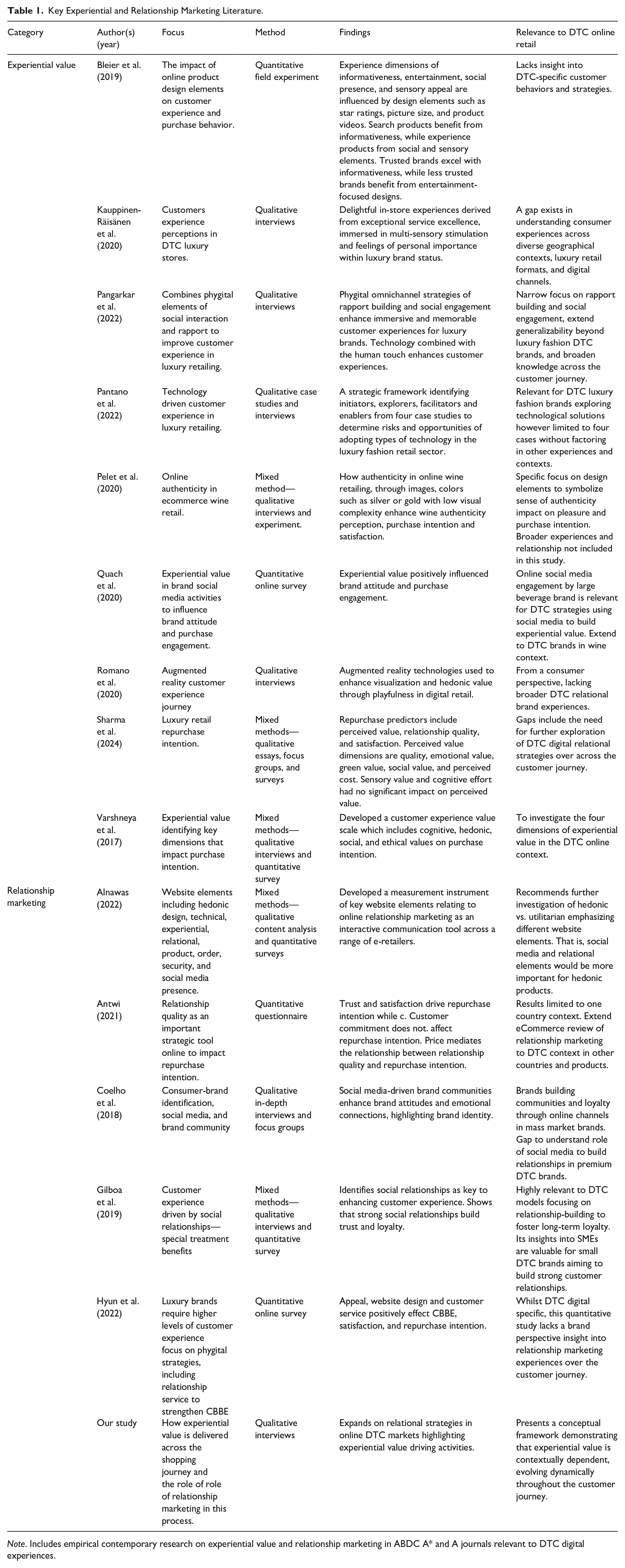
Note. Includes empirical contemporary research on experiential value and relationship marketing in ABDC A* and A journals relevant to DTC digital experiences.
Experiential value in physical and digital contexts
Research shows that value is derived not just from products, but also from the services and experiences associated with them (Holbrook & Hirschman, 1982). Unlike transaction value, which is captured at the point of sale, experiential value arises from all interactions and experiences shoppers have with a product or service, and these experiences are perceived as meaningful (Atkinson & Kang, 2022). This includes personalized advice that makes customers feel unique, and expressions of self-values like relaxation, freedom, and time—values not necessarily tied to a purchase (Kauppinen-Räisänen et al., 2020). Experience goods (Pine & Gilmore, 1999) gain value from their intrinsic sensory attributes like taste and aroma, alongside contextual elements such as setting and presentation (Bruwer & Rueger-Muck, 2019; Vo Thanh & Kirova, 2018).
Although the literature on experience-oriented consumption in physical retail is well-documented, with studies highlighting the role of experiential events in enhancing shopping value and influencing customer behavior (Bäckström & Johansson, 2006; Kauppinen-Räisänen et al., 2020; Sands et al., 2009), recent studies have called for a deeper exploration of experience consumption in digital contexts (Bernal-Jurado et al., 2021; Joy et al., 2021). To address this gap, our research adopts a multidimensional framework to capture experiential value in both physical and digital contexts, considering both intrinsic dimensions (e.g., taste and aroma; Gómez-Carmona et al., 2023) and extrinsic dimensions (e.g., price, labels, and awards; Mueller et al., 2010; Robertson et al., 2018). Varshneya and Das (2017) propose a multi-dimensional value framework, including ethical, social, hedonic, and cognitive dimensions. Ethical value relates to trust, privacy, and security, influencing shopper confidence, especially with the increasing demand for transparency and moral authenticity from brands (Chatzopoulou & Kiewiet, 2021). Ethical concerns about data usage and the replacement of human interaction with AI are increasingly relevant to consumers (Grewal et al., 2023). Quach et al. (2020) find that privacy concerns influence how firm-initiated social media activities affect trust, with higher concerns having stronger effects of experiential value on attitude towards the brand. Social value includes status, esteem, and social approval, emphasizing the role of social interactions and recognition in shopping experiences (Varshneya et al., 2017; P. Williams & Soutar, 2009). Hedonic value captures the enjoyment, pleasure, and escapism derived from consumption experiences (Bruwer & Rueger-Muck, 2019; Sweeney & Soutar, 2001). Cognitive value focuses on the intellectual and practical benefits perceived by shoppers, such as quality, time, and effort (including non-monetary cognitive efforts) and monetary costs related to achieving shopping goals (Sharma et al., 2024).
By adopting Varshneya and Das’ (2017) experiential value framework, this research explores how shoppers derive value from brand interactions that extend beyond transactions. Focusing solely on purchase outcomes risks overlooking the broader value of digital site visits (Pallant et al., 2017). Therefore, all shopping interactions offer potential value for the brand (Lemon & Verhoef, 2016; Sands et al., 2016). This leads to our first research question:
RQ1: How can experiential value be delivered throughout the digital shopping journey?
Blending relational activities across digital and physical sites
As technological advancements continue to shape shopper connections with brands, the importance of relationship marketing has gained significant attention (Thaichon et al., 2020). Consumers engage in shopping for various reasons: convenience, necessity, enjoyment, or habit (Nguyen et al., 2022). However, when shopping digitally, consumers lack sensory cues such as touch, taste, or smell, which are essential in informing their purchase decisions (Steinhoff et al., 2019). This sensory constraint presents a challenge for brands striving to maintain connections with shoppers in digital environments. Relationship marketing offers a solution by enhancing memorable shopping experiences in both physical and digital environments. This approach involves establishing, developing and maintaining relational exchanges with stakeholders (Morgan & Hunt, 1994), providing benefits that extend beyond the core offering (Hennig-Thurau et al., 2002).
Relational marketing encompasses more than customer relationship management; it involves relational exchanges across multiple touchpoints (Christodoulides & de Chernatony, 2004; Payne & Frow, 2017), creating economic value for brands (Pine & Gilmore, 1999). Trust is central to sustaining these interactions, particularly in digital contexts where interactions may feel less personal (Antwi, 2021; Steinhoff & Palmatier, 2021). Trust also mitigates perceived risks related to data privacy and security (Kim & Krishnan, 2015) and situations where product quality cannot be assessed at the point of purchase (Bruwer et al., 2011). Trust is further reinforced when brands adopt transparent strategies and measurable performance metrics to demonstrate accountability and reliability in customer relationships (Delaney et al., 2016). Moorman et al. (1993) argue that trust involves both belief and behavioral intention. This need for trust is particularly evident in the context of highly involved experiential products, such as wine, where consumers require stronger initial trust (Jebarajakirthy et al., 2020). Trust developed in physical stores can be leveraged in other channels (Stewart, 2003), enhancing overall relational value. When trust is established as shoppers enter a digital store, the benefits of prior relationship-building efforts are transferred, contributing to long-term relationship value (Boulding, 2005). Further, Bleier et al. (2019) show that online design elements such as product images, star ratings, and videos, enhance social presence and perceived trust, thus strengthening the digital customer experience. This is particularly important given the resource-intensive nature of digital investments (Jean & Kim, 2020).
The automation of human relational elements through digital service interfaces, such as augmented reality (Romano et al., 2020), service bots, and AI (Rahman et al., 2023), is revolutionizing shopping experiences. Brands that invest in digital technology to enhance shopping experiences benefit from increased service availability, reduced operating costs, and streamlined shopper interactions (i.e., queries, support, and sales) with minimal or no human involvement (van Pinxteren et al., 2019). Nonetheless, replicating face-to-face relationships in digitally mediated exchanges remains challenging (Gilboa et al., 2019). Steinhoff et al. (2019) caution that while digital tools may strengthen customer-brand relationships, their effective use requires careful management. Beyond adoption of technology tools, strategically employing them through relational exchanges can enhance economic value. Thus, relationship marketing is an integrated approach to creating meaningful and trusted shopping experiences and strengthening brand identification in digital environments (Coelho et al., 2018). Our research deconstructs experiential activities using relational marketing to better understand how these activities drive meaningful shopping experiences across the entire journey. This leads to our second research question:
RQ2: What is the role of relational marketing in digital shopping experiences?
Research method
Qualitative, semi-structured, in-depth interviews are well-suited to the study of rapidly evolving topics (Miles et al., 2014) and therefore are appropriate to address our research questions. We investigate our research questions by conducting interviews with experienced SME directors and managers of brands in the Australian premium wine industry.
Wineries, with a history of DTC sales through physical stores, have developed relational capabilities adaptable to digital environments. The Australian wine industry, like its global counterparts, faces declining demand and intense competition (Statista, 2024). Many SME wineries are in remote locations that limit shopper convenience, and lack negotiating power with major retailers (IBISWorld, 2024). Therefore, they are relying increasingly on digital DTC for sustainable growth. Although previous research has explored wine sales in physical locations (Bruwer & Rueger-Muck, 2019) and from a consumer perspective (Higuet & Remaud, 2023), a gap remains in understanding how traditional SMEs can translate in-store relational strategies to drive digital growth. The wine industry presents an ideal context for the exploration of these challenges due to the unique difficulties SME wine brands face in selling experiential products digitally.
For SME wineries, a producer’s size can be identified by the number of cases produced per annum (Wines Vines Analytics, 2025) such that an SME is classified as very small (less than 5,000 cases per annum), small (5,000–49,999 cases per annum), medium (50,000–499,999 cases per annum), and large (500,000+ cases per annum). The Australian wine industry is fragmented, comprising 94% small and medium-scale brands (IBISWorld, 2024). Most are very small brands which we have excluded as they tend to represent lifestyle operators (Browne et al., 2021), and are less likely to embrace digital technologies as they have few employees and simplistic management processes (Guerola-Navarro et al., 2021); hence, can be less overtly growth driven (Dawson et al., 2011). We also exclude large brands due to their highly concentrated ownership structure (O’Loughlin, 2020) which is unlike the operational dynamics and marketing strategies of SMEs. This narrower focus ensures a more relevant and nuanced understanding of how SMEs create experiential value in digital markets.
To establish a comprehensive background demonstrating how SMEs use relational strategies to enhance buyer-brand connections through DTC, we incorporated secondary data sources (Beverland & Luxton, 2005; Miles et al., 2014). During coding, the research team discussed and refined structures, meticulously cross-referencing data with existing literature (Spriggle, 1994). To ensure reliability (Hirschman, 1986; Wallendorf & Belk, 1989), one research team member conducted the initial coding, followed by collaboration with the research team to verify and refine emerging themes (Miles et al., 2014). Additional triangulation included sources such as wine journals entries (Cohen, 2022, 2023) academic studies (McKee, Cohen, Sands, & Pallant, 2023), and insights from an industry wine conference (Wine Communicators, 2023), which took place shortly before the interviews commenced. This multifaceted approach ensured a robust understanding of the DTC landscape from multiple perspectives.
Sampling procedure
A non-probability sampling technique (i.e., purposive sampling) was applied to identify industry experts who could offer deep insights into the DTC digital shopping experience. The participant inclusion criteria, presented in Table 2, were informed by the study’s unique context (Miles et al., 2014). SME directors and managers with business and marketing expertise were recruited through industry contacts, direct approaches via professional networking sites (i.e., LinkedIn), and field visits. To ensure a broad range of perspectives, participants were selected to represent various roles, including owners, sales and marketing directors, marketing managers, and those holding dual roles such as winemaker and managing director. Participants were thoroughly briefed on the study’s objectives through an introductory email, which was followed by further correspondence detailing the interview process, timing, ethical considerations, and consent agreements.
Participant Inclusion Criteria.
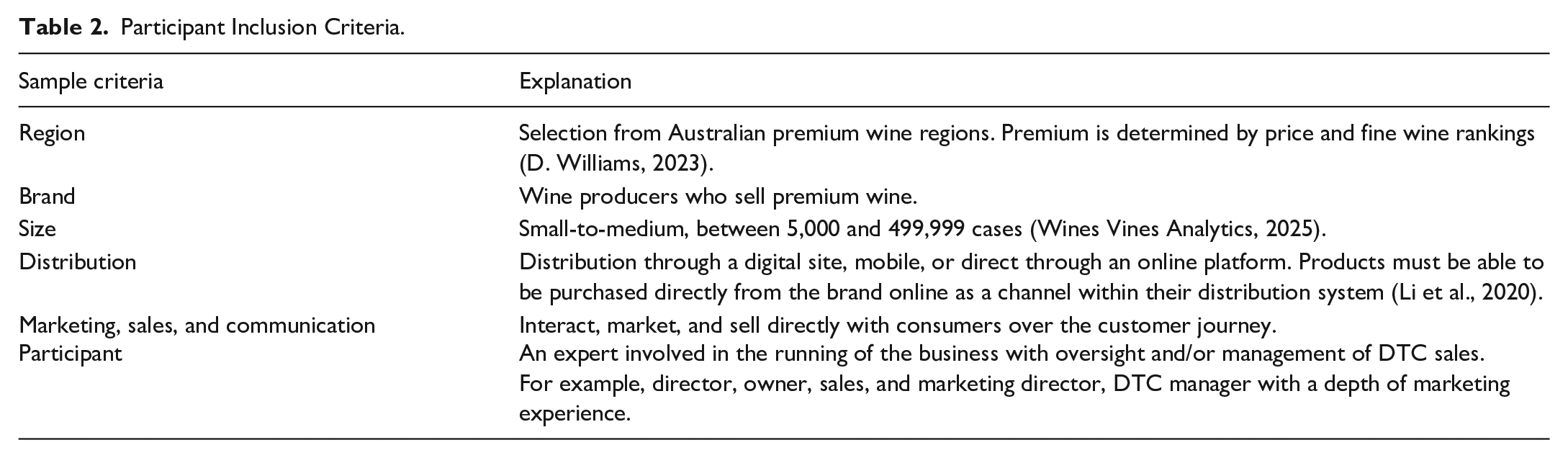
Interviews were conducted until data saturation was achieved, ensuring comprehensive coverage of the research objectives (Guest et al., 2006; Hennink & Kaiser, 2022). Saturation was reached at 21 interviews with no substantive new themes emerging thereafter. Table 3 provides an overview of our participants’ profiles.
Participant Profile.
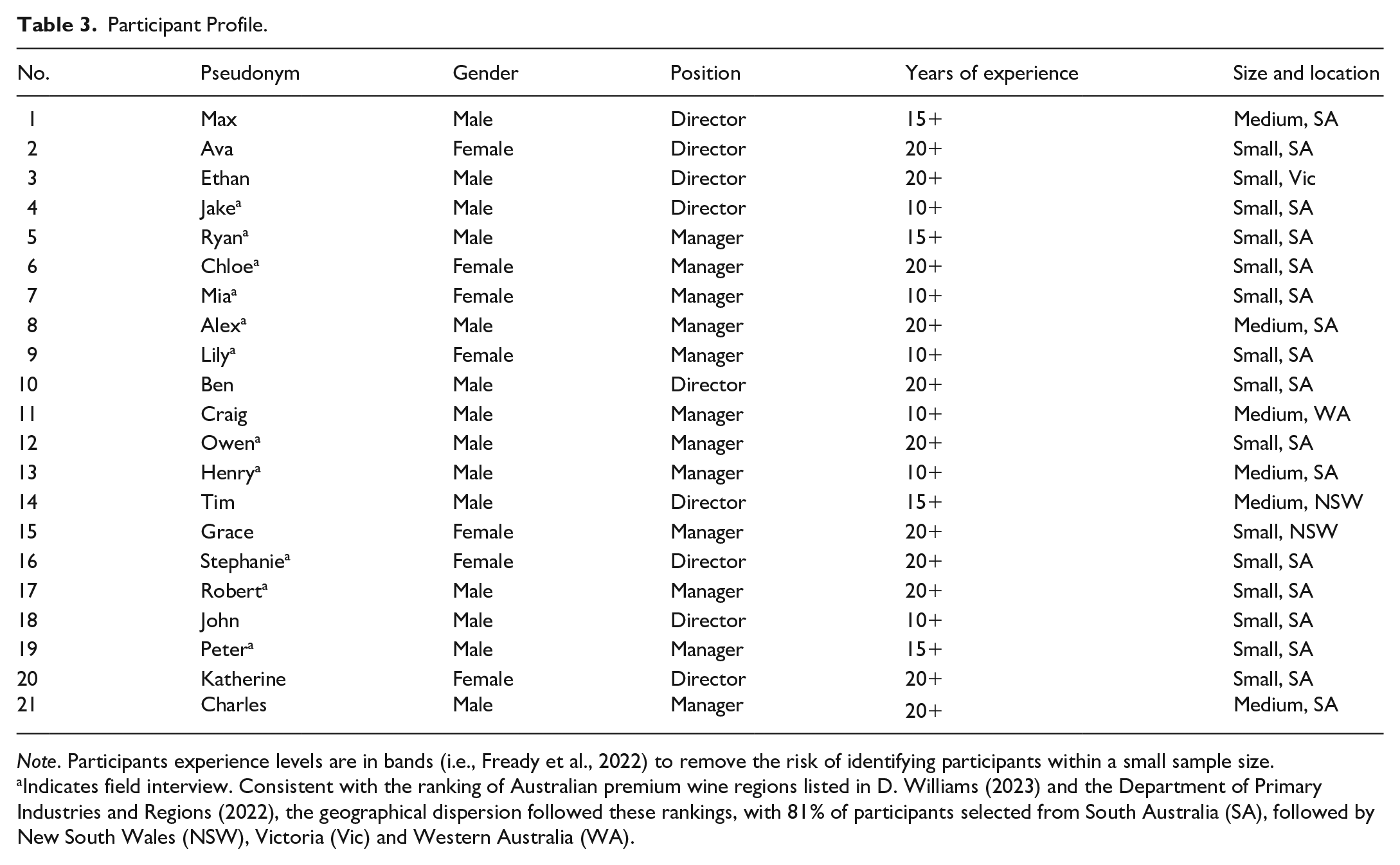
Note. Participants experience levels are in bands (i.e., Fready et al., 2022) to remove the risk of identifying participants within a small sample size.
Indicates field interview. Consistent with the ranking of Australian premium wine regions listed in D. Williams (2023) and the Department of Primary Industries and Regions (2022), the geographical dispersion followed these rankings, with 81% of participants selected from South Australia (SA), followed by New South Wales (NSW), Victoria (Vic) and Western Australia (WA).
Interview protocol and data collection
Our interview approach adhered to the deductive theory-building framework (Miles et al., 2014), which guided the development of our research scope and interview protocol. In-depth interviews were conducted to capture rich data from busy SME directors and managers. The interview protocol underwent multiple revisions to ensure topic coverage and efficient information flow within the constraints of a 45-min session. To validate the interview questions, a pre-test with retail practitioners was conducted (Miles et al., 2014). Based on the feedback received, minor adjustments were made to refine the interview questions. This process improved our ability to capture detailed insights into the marketing strategies and lived experiences of participants and ensured the richness and relevance of the collected data.
Eleven interviews were conducted face-to-face in the field and ten were conducted online. During all interviews, the SMEs website was displayed to facilitate discussions about the use of digital tools and techniques, including navigation, images and videos, cart functionalities, and anecdotes related to the interview discussion.
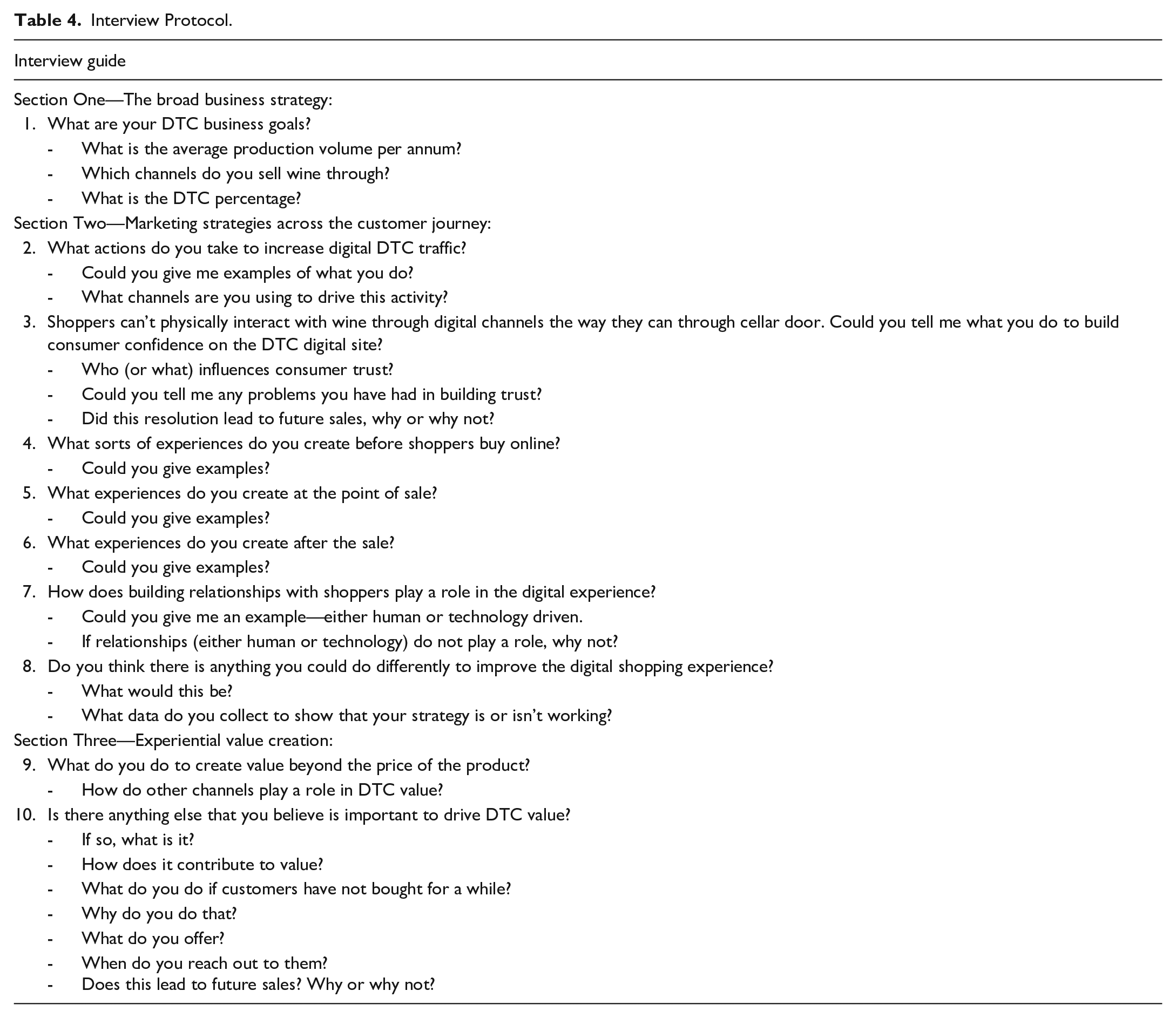
Table 4 shows the 10 primary questions and the associated probing questions that guided the discussions. These questions covered relational and trust-building aspects of DTC strategy intended to enhance experiential value, and the shopping journey experiences. Each of the 21 interviews lasted between 40 and 75 min, averaging 47 min. All interviews were recorded and subsequently transcribed for analysis. Follow-up queries were sent to four participants to clarify specific points. To ensure accuracy and depth of analysis, each interview recording was reviewed multiple times in conjunction with the transcript. This process allowed for corrections to transcriptions and facilitated the immediate identification and synthesis of key themes. The transcripts, comprising 253 single-spaced pages were uploaded into NVivo 14 for analysis. This enabled us to create a structured database for inquiry, allowing a systematic in-depth review to identify patterns and themes within the data. This rigorous approach ensured a robust analysis, capturing the nuanced dynamics of the DTC shopping experience within the premium wine sector.
Interview Protocol.
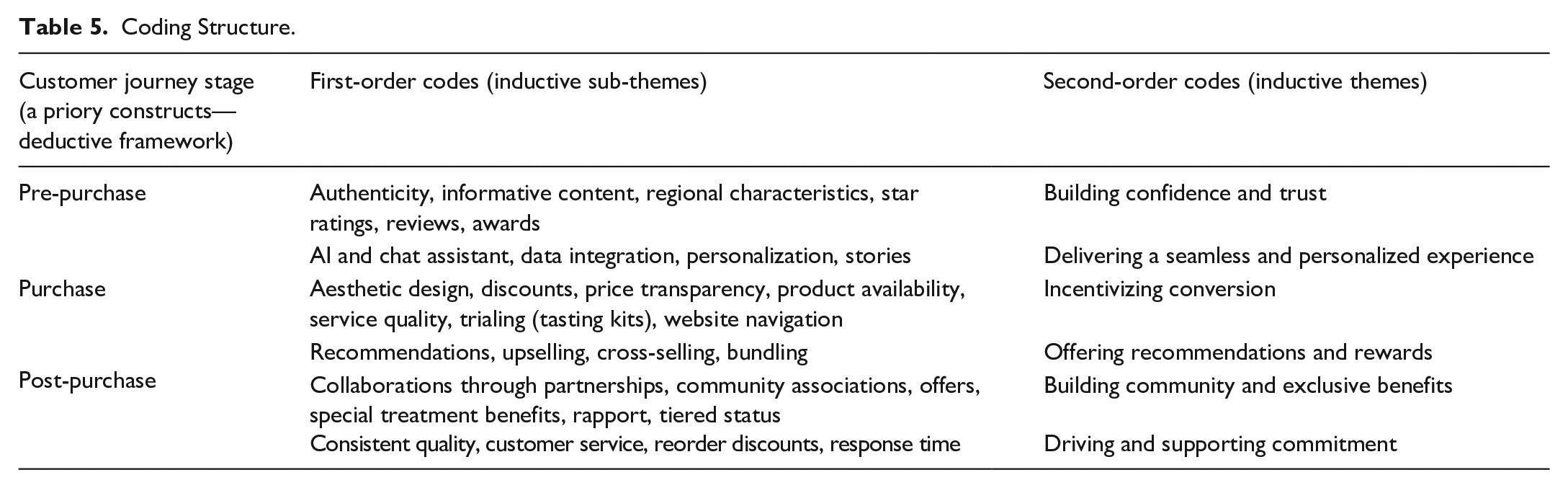
Data coding was conducted manually in NVivo 14 to ensure a thorough exploration of relationships within the established schema. Initially, a deductive approach was utilized, applying a priori constructs that helped guide the coding process based on the interview questions and organized according to the customer journey framework. The development of a detailed codebook facilitated the grouping of data into key themes relevant to each research question, using a deductive coding strategy. To refine the insights, we adopted both deductive and inductive analytical approaches (Miles et al., 2014). This manual coding process allowed meaningful insights and patterns to emerge directly from the data to deepen our understanding of the interplay of physical and digital experiences in DTC digital settings. An inductive approach was applied to iteratively identify emerging themes related to marketing strategies that influence experiential value. The data analysis from the qualitative interviews enabled the authors to identify digital shopping experiences as first order codes throughout the customer journey. Twenty-six first order codes were identified and then inductively grouped into six second-order codes, shown in Table 5. These emerging themes and the interconnections between a priori codes were systematically categorized to form distinct dimensions, which are detailed in the Findings section below.
Coding Structure.
Findings
To identify the SME relational marketing strategies that drive experiences in digital DTC settings, we first established the digital strategy goals of SMEs. We then categorized the interview findings according to stages in the customer journey. At the pre-purchase stage, relational marketing focuses on building confidence and trust, and delivering a seamless, personalized shopping experience. During the purchase stage, the role shifts to incentivizing conversion through recommendations and rewards. Post-purchase, relational marketing aims to build community connections and offer exclusive benefits to encourage ongoing consumer commitment. Figure 1 illustrates the role of relational marketing in digital shopping experiences. Building on the research questions explores how SMEs deliver experiential value throughout the digital shopping journey, with related findings depicted in Figure 2. Participants are quoted verbatim (including slang and grammar) to maintain integrity, with identifying information removed. Additional quotes related to each theme can be found in the Online Supplemental Appendix.
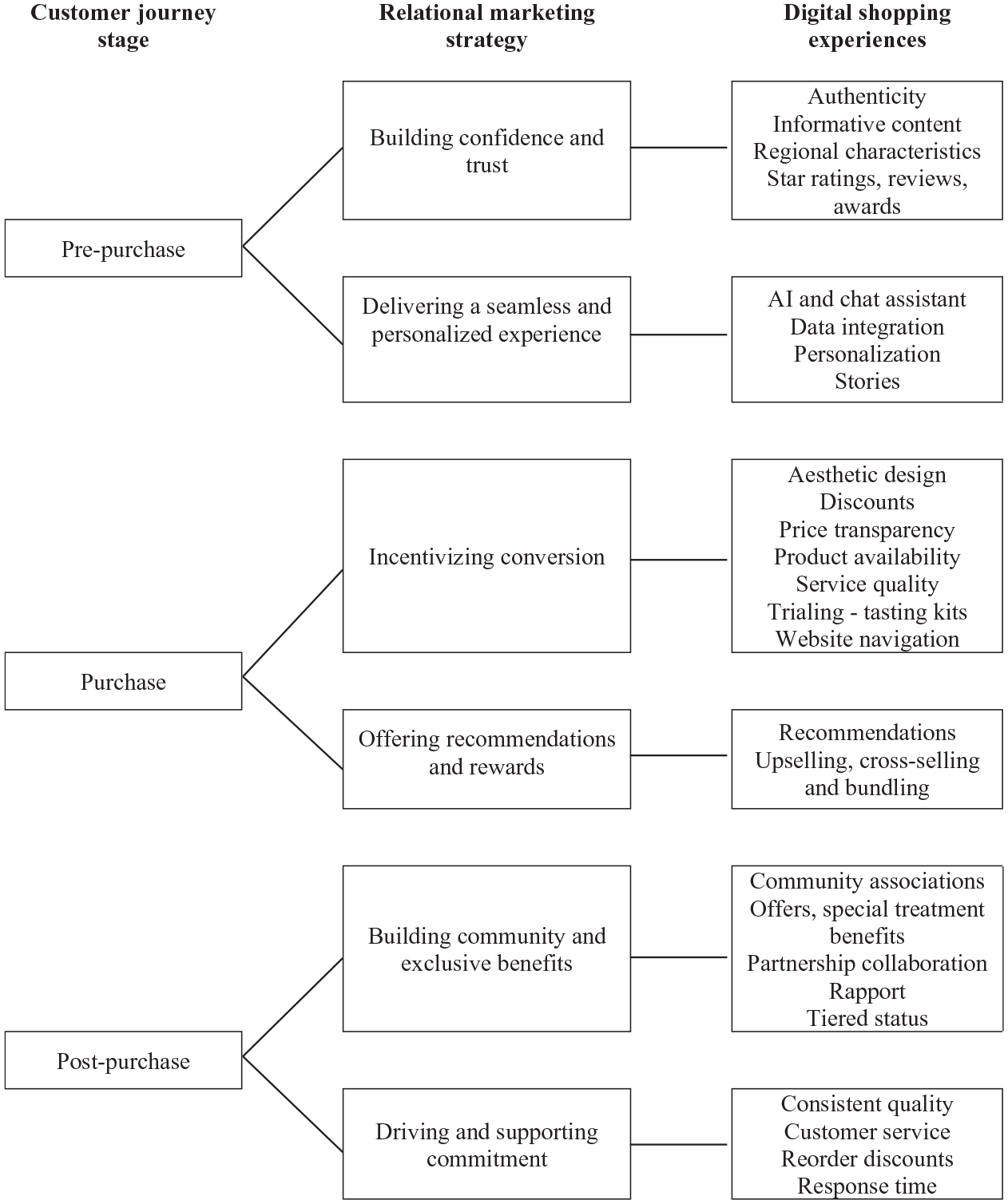
The role of relational marketing in digital shopping experiences.
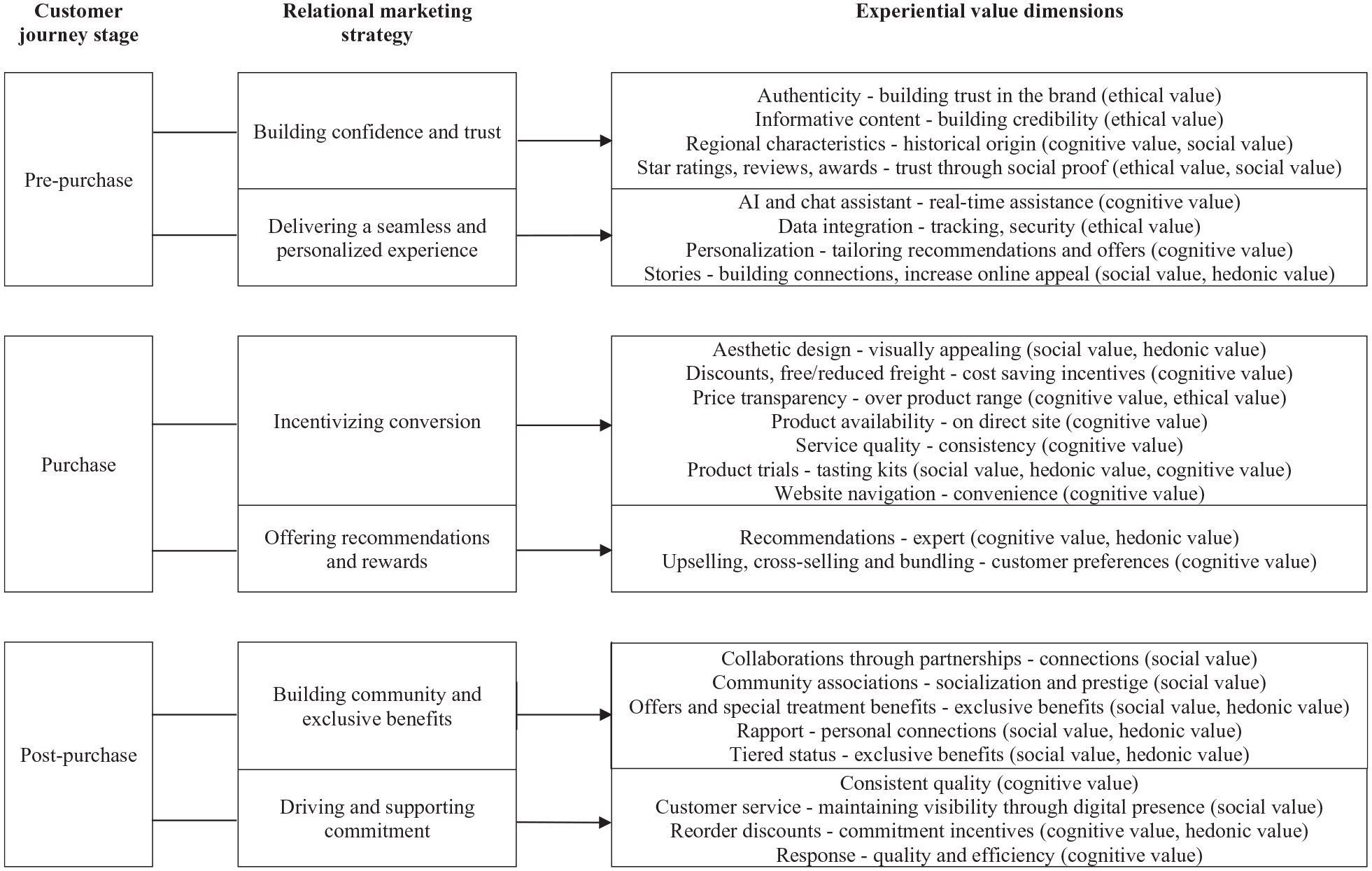
Framework of relational marketing and experiential value throughout the digital shopping experience.
Digital DTC relational strategies
Interviews with SME directors and managers revealed that growth through digital DTC is the primary business objective, despite capacity constraints and the importance of third-party retail sales for diversification. The acquisition of new buyers through digital DTC is minimal, with over 90% of buyers acquired via physical sites. Reported digital DTC volumes varied between 5 and 80% with an average of 34%, while third-party retail and export accounted for the remaining distribution. Medium brands, with a greater reliance on export and retail channels, averaged 23% DTC volume compared to 39% for small brands. As Tim highlights, attracting new shoppers to digital DTC requires relational marketing at multiple touchpoints prior to purchase:
Direct online wine sales. It’s one of those things that I think it needs a little bit more engagement introduction before the sale and probably as a couple of touch points before we see it. Buying sight unseen, it’s one of the conundrums in online selling of wine. It’s a very physical product. It’s a very sensorial product and not being able to see it, smell it, look at it, taste it. All these sensorial inputs have a massive role to play in that final sale. (Tim, Director, Medium size winery)
Building confidence and trust
Before purchase, relational marketing in digital shopping focuses on building confidence, trust, and delivering a personalized experience. Directors and managers noted that buyers often buy from multiple brands, observed through relationship-building efforts at physical sites, such as “how many other wine clubs do [buyers] belong to, helping to tailor tasting experiences” (Henry, Manager, Medium size winery). With few digital customers acquired organically, efforts center on blending physical and digital experiences for existing customers, particularly those in wine clubs or on customer lists. These customers receive personalized email communications that capture lifestyle elements, including stories and updates from the current vintage. SMEs leverage their core strengths, personal relationships and the authenticity of winemaking, to convey the intrinsic value and uniqueness of their brand. Telling the brand’s story and highlighting the winemaking process helps consolidate authenticity and quality, making it harder for imitator brands to replicate the strategy. However, conveying this digitally requires more than just transactional interactions; it demands a personal touch to build trust and reflect the brand’s authenticity and values. As Max explains:
We try to reinforce our family-owned credentials, our craft credentials, and the authenticity around the brand. Our social media features a lot of our people and our vineyard. It features all the things that make us a rural brand. I think a lot of consumer trust comes back to what [customers] get in the bottle when they buy it. (Max, Director, Medium size winery)
By strengthening buyer confidence using informative content featuring videos of new releases, images of place including regional characteristics, distinctive labels on products, and the people associated, brands can help to build trust through meaningful digital shopping experiences.
Now it’s more about who you are and what you do and that you are authentic and real. And it’s more about us than the wine sometimes. That’s why we are trying to create that feeling online that if you engage with us, you are engaging with us. Whether you might understand it mechanically or understand our wine or understand the challenges of a family business. So, it’s more about trying to engage, not just with wine buyers, but people who are more interested in what our values are and what we are trying to do and be. (Ava, Director, Small size winery)
Trust is also strengthened by third-party endorsements and recommendations. Reviews, star ratings, and awards provide brands with opportunities to enhance trust and attract market attention by demonstrating recognized premium quality or value. Trust-building can enhance ethical values, including security, price transparency, and quality of services. Understanding the effectiveness of various marketing strategies, such as imagery versus critical reviews, is part of this ongoing challenge. The convenience and flexibility offered by an easy-to-use digital platform that also ensures data security and transaction integrity, helps to build confidence and trust.
Delivering a seamless and personalized experience
The findings of our second theme reveal an increase in experimentation with chatbots for general communication, including prompts and questions, and exploring AI to expedite customer communication. While directors and managers have emphasized the importance of the human touch, technology helps to personalize interactions and tailor messages to appeal to different consumer segments. As Tim explains, the younger shoppers expect that you already know something about them before they come to you:
Convenience and flexibility go hand in hand. And the ability to tailor and taper your online presence to an individual and to almost second guess their needs, wants and desires. There is an expectation in the younger consumer that you already know something about them before they come to you. Enhancing our ability to get that insight from our social media and our website’s going to be fundamental. There’s going to be methodologies and outcomes and results that people haven’t imagined yet that you’ll be able to dive into with AI. And they’ll be making odd connections. If a person doesn’t like chocolate, they’re going to love this wine. I’m curious to see those sorts of things. (Tim, Director, Medium size winery)
The findings emphasize the need for data integration. Directors and managers often use multiple software packages, relying on intuition and skill to interpret information. The integration of software could enhance the customer experience by seamlessly tracking, managing, and interpreting data insights emerging from physical and digital channels. As Jake and Craig observed:
It’s clear to me that [the technology software] has a massive capacity and you’re paying a lot of money for these tools. But the reality is there’s nobody [in] this business that can exercise or utilize [the technology] to its fullest extent. (Jake, Director, Small size winery) Having an integrated database where we can accumulate data on customers that has real meaning and then try and find ways to leverage that to be innovative. Every time someone interacts with you in a way you can measure, you’ve got to compile that data, and you’ve got to try and understand what it means and how you can use that to your advantage because, you can’t take it for granted. We’re trying to create seamless infrastructure where it doesn’t really matter where the touchpoint is for the customer. And then it just comes down to how much further we can innovate using some of the sort of digital tools that are available to us. (Craig, Manager, Medium size winery)
Directors and managers stated that technology is a valuable tool that can be used to enhance personalization at scale. Specifically, Alex emphasized the importance of tailoring communication at physical and on digital sites to build buyer relationships:
I want people to feel like they’re getting a response from individuals. This is where your order is, comes from the person who is on the website. We describe the wines differently in the online world than we do in the cellar door. The emphasis in the cellar door is more about telling the story of where the wine might’ve come from or what makes a difference. Online, the emphasis is much more on describing the flavors than they expect and the situations that it would be appropriate to have the wine. [ . . . ] There’s a consistency in interesting stories that will draw people into the idea of, well, I want to discover more. (Alex, Manager, Medium size winery)
The utilization of these communication capabilities is essential for DTC growth. Emphasizing stories that forge a connection beyond the product itself plays a key role in relational marketing. These narratives allow shoppers to form deeper connections with the brand, appreciating not just the wine but the heritage and craft behind it. This approach strengthens the brands’ distinctiveness in a competitive market by forming connection through shared experiences.
It’s that intrinsic feel and intrinsic value people can attach to our brand about our story and who we are and what we do. (Ava, Director, Small size winery) There is no other way which is more effective for us to tell people our story and really get them engaged and make them feel like they’re connected to the brand. (Grace, Manager, Small size winery)
Overall, the findings reveal several challenges at the pre-purchase stage, particularly in terms of achieving organic growth through digital channels. The next stage of the purchase journey involves converting interested shoppers into buyers by offering incentives, recommendations, and rewards.
Incentivizing conversion
To replicate physical destination experiences digitally, directors and managers discussed the aesthetically designed websites including seasonal images, videos of new releases, and content featuring the brand’s family-owned and craft credentials to enhance digital appeal by building connections and associations. They often use traditional strategies like discounts, reminder emails, and retargeting ads to circumvent cart abandonment. Although price-related incentives drive sales, their impact is limited compared to other value-adding options. Henry emphasized the importance of price transparency, noting that different products sold through various channels can be heavily discounted by retailers. Segmenting product ranges across channels can help to alleviate price differences:
We have the luxury that we can segment because we have a different range for [retailers] and so anyone who visits here or through the club or to a fine wine retailer who might have placements at or at a restaurant, that’s a completely different range. (Henry, Manager, Medium size winery)
Product availability in digital DTC can be directly controlled. Offering recommendations and flexible membership options builds the physical lifestyle aspect of the brand digitally:
The real goal is for them to want to buy your wine when they see wine outside of the environment that they’re currently in. DTC is supporting that relationship that we’re trying to build. [ . . . ] wine is critical and essential to the whole thing, but if you’re not buying the lifestyle around that product and everything it represents as well, that’s just another product. I don’t necessarily see DTC just as a sales channel. It’s a communications channel and a marketing channel and a relationship building channel. (Tim, Director, Medium size winery)
To build confidence in new vintage releases and connect shoppers to the winemaking process, Grace (below) explained that trialing small quantities digitally in a live format can reveal intrinsic qualities like taste and aroma, which are fully appreciated only once the bottle is opened. This approach also helps address variations in the product and style of vintages, like other high-end retail brands.
We did virtual tastings and sort of came up with a little keg system for wines. Smaller bottlings and personalized labels [ . . . ] with a lower investment. The whole taste and trial experience is just so interconnected to driving things that are happening online. (Grace, Manager, Small size winery)
These efforts highlight the importance of reaching customers to trial and taste samples of products, building trust and developing relationships through social proof. Such experiences allow shoppers to enjoy products in their own settings, enhancing their overall perception of the shopping experience. As Grace, explained, shoppers are reluctant to purchase DTC without having tried the product first.
Ensuring easy website navigation and relevance is a complex task, requiring robust backend systems to support seamless operations.
The level of information and the granularity of what we can discover is growing all the time as well. So, sifting through what is relevant is almost a full-time job in itself [ . . . ] Is the picture of a bottle under a tree saying Christmas more effective than a critic’s review? And to whom is it exactly responding to? (Alex, Manager, Medium size winery)
Offering recommendations and rewards
At the point of purchase, recommendations can address shopper queries, while pop-ups featuring cross-selling, up-selling, and bundling options further enhance the shopping experience.
That first interaction is that incentive to buy. Even if they don’t buy at that stage, they’ve usually potentially put something in the cart. So, then there’s abandoned cart and abandoned checkout flows. You can see those metrics. The abandoned checkout is probably that real revenue growth. Using that propensity or prediction of next purchase (Jake, Director, Small size winery)
During the purchase stage, meaningful digital experiences are enhanced by personalized details relating to delivery conditions, for instance, such as specific location or holding shipments due to hot weather. Direct communication at this stage strengthens relationships. The final two themes pertaining to the post-purchase stage focus on building community and exclusive benefits and driving and supporting commitment.
Building community and exclusive benefits
At the post-purchase stage, collaboration with other businesses to form commercial partnerships adds value to wine club memberships. These partnerships offer members access to exclusive benefits beyond the wine sector, enriching the overall membership experience.
The idea of collaborating with different kinds of businesses to create commercial partnerships outside of the wine space so that you can enhance the value of your wine club membership by giving your wine members access to benefits in other companies. (Craig, Manager, Medium size winery)
To build connections, advocacy is fostered among members through community involvement, emphasized through contributions to philanthropic events, sponsorships, and other forms of support. This approach also reinforces the brand’s corporate social responsibility.
It’s all word-of-mouth and that’s part of us being part of the community putting in. We are involved in philanthropic things, we give money out, we contribute to the community, sponsor and things like that. It’s important that we portray our responsibility to wine to people and to our community. (Ava, Director, Small size winery)
Relational marketing enhances digital shopping experiences by offering prestige and exclusivity within tiered wine clubs. Social status is cultivated through strategies that strengthen the buyers’ sense of belonging and pride in the brand association. Creating aspirations through offers and special treatment is a significant part of the post-purchase experience, as directors and managers discussed the importance of aligning these experiences with buyers’ desires to elevate perceived value.
Where we’re heading that, it’s an aspiration. It’s a dream, you’re trying to offer someone something that they don’t have but they want. And so that’s sort of where we’re going. We’ve created the asset, and we’ve got the possibility to do that [ . . . ] The romance of it. (Ben, Director, Small size winery)
Ben emphasized the importance of integrating physical assets with digital experiences to enhance the brand experience. Offering tiered memberships within wine clubs creates a sense of exclusivity, reinforced by special treatment benefits like access to exclusive events. These benefits shift the focus from the wine itself to fostering a sense of belonging.
This sense of insider exclusivity and truly going out of our way to treat members to a higher level is kind of core to this extended service concept and selling the brand the whole time and the wine as an afterthought and sort of turning that interaction on its head. (Tim, Director, Medium size winery) Then you hope that there’s the last benefit, which is somewhat of a bragging rights status to being a club member somewhere. And that’s what we strive for. It’s about the benefit you get from being in that club. That can be a discount. It also is access to events that only club members can go to. (Max, Director, Medium size winery)
The establishment of rapport with customers through personalized experiences involves engaging subscribers to build the brand story. Post-purchase, social status experiences aim to enhance self-image through social recognition, offering exclusive experiences to maintain a prestigious and connected buyer experience.
Driving and supporting commitment
In customer service, Alex emphasized the significance of balancing cognitive and ethical considerations. It is important to offer personalize choices and flexible membership options, allowing buyers to select wines according to their preferences without having to make a commitment, while ensuring the ethical use of data for personalization purposes.
Finding that balance between having an easy shopping experience where they can find what they’re looking for and buy it quickly and easily, versus those levels of integrity that ensures the data is safe and that the transaction is exactly what the customer wants. That’s a technical side to it that is sometimes difficult to reconcile. (Alex, Manager, Medium size winery)
As Craig suggests, consistency and quality can be enhanced by automation:
[ . . . ] having an integrated database where we can accumulate data on customers that has real meaning and then try and find ways [ . . . ] to be innovative and to work particularly with automation in terms of communication. To put a lot of that on autopilot. (Craig, Manager, Medium size winery)
Customer service extends beyond selling wine to offering a complete experience. Personalized recommendations based on preferences and purchase history enrich the shopping journey. This personal touch can include follow-up notes, future purchase suggestions, and prompt communication to address any questions, meeting buyer expectations and ensuring overall satisfaction.
I like orders out within 24 hours because the sooner that somebody receives it, it’s like Christmas for adults, right? You’re anticipating that order coming in, you get quite excited. If you can delight that consumer right at the outset, it’s just building that lifetime value. (Jake, Director, Small size winery)
The relational marketing strategies applied throughout the customer journey were categorized into six themes, identifying the role of relational marketing in blending physical and digital experiences to connect with digital shoppers. The second research question seeks to map the meaning of each experience to the four experiential value dimensions developed by Varshneya and Das (2017) as shown in Figure 2. This framework depicts the relational marketing and experiential value dimensions—ethical, social, hedonic, and cognitive—of the digital shopping experience. The findings associated with RQ2 are discussed next.
Delivering experiential value across the digital shopping journey
Trust-building at the pre-purchase stage contributes to ethical value by providing authentic, informative content, ratings, reviews, and awards to build brand confidence. While ethical considerations concerning data management and security are crucial, they should be balanced with other value dimensions for a holistic experience. Relationship-building efforts predominantly drive ethical value; however, they also incorporate cognitive, social and hedonic values, with AI and chat assistants tailoring recommendations to enhance cognitive value. Regional characteristics and historical ties contribute to cognitive and social values, while storytelling strengthens connections through social and hedonic values.
At the purchase stage, there is a strong emphasis on cognitive value, with the focus being on utility and convenience. Sampling and tasting kits incentivize conversion, thereby yielding hedonic value and, if shared socially, may also contribute to social values by strengthening social esteem and approval. These experiences are largely centered on conversion strategies such as cart suggestions and offerings of discounts, with traditional follow-up methods such as email outreach for abandoned carts. There is potential for further exploration to better identify cart preferences and enhance relational support during purchase.
In the post-purchase stage, exclusive benefits provide emotive experiences of enjoyment, social status, and pleasure, which can yield hedonic or social emphasis depending on the delivery context. These benefits strengthen connections through events and special treatment benefits. Consistent quality and commitment drive functional value by offering convenience, ease-of-use, and efficiency, contributing to cognitive value. While re-order discounts create excitement and satisfaction, adding to hedonic value, they also influence rational decision-making, adding to cognitive value at the time of purchase.
The digital shopping experience and the dimensions of the experiential value framework (Figure 2) offer insights into SME marketing strategies to reveal customer experiences rich in functional and emotional value. The building of confidence and trust to deliver a seamless and personalized experience at the pre-purchase stage, and the incentivizing of conversion through recommendations and rewards during the purchase stage, promote reliability and transparency, enhancing ethical and cognitive values. Relational marketing strategies help to drive social connections and enjoyment, contributing to social and hedonic values through stories, expert recommendations and product trialing. Post-purchase relational efforts foster social status and commitment by offering convenience, community associations and benefits, integrating functional cognitive, and emotional social and hedonic values into shopper’s digital experiences.
Discussion
This study investigates how SMEs can deliver experiential value throughout the digital shopping journey and leverage relational marketing to enhance digital shopping experiences. Despite challenges such as digital customer acquisition, data integration, and advancing technology, SMEs have significant opportunities to establish digital DTC channels as sustainable revenue streams. Our findings confirm the importance of experiential value in digital contexts (Varshneya & Das, 2017) and relationship marketing in SMEs (Gilboa et al., 2019) but extend these models by applying them to the DTC setting. While prior research conceptualizes experiential value as a multidimensional construct, our study provides a structured framework detailing how its dimensions—ethical, cognitive, social, and hedonic—manifest across different stages of the digital customer journey. This approach offers SMEs a practical means to evaluate and enhance customer experiences.
A key insight is the challenge of digital customer acquisition, with most digital DTC customers originating from prior physical interactions. This contrasts with research on larger brands, where digital channels are primary acquisition drivers (Homburg et al., 2017). Our findings indicate that SMEs must adopt a hybrid strategy, blending physical and digital experiences to sustain engagement. This extends trust transfer theory (Stewart, 2003), demonstrating that trust established in physical settings can transfer to digital contexts, but requires active relational strategies, such as brand storytelling and transparency, to mitigate consumer hesitation in digital-only interactions.
AI’s role in relational marketing is also critical. While AI improves efficiency in digital shopping experiences (Grewal et al., 2023), SMEs must balance automation with human interaction to preserve authenticity and trust. AI tools enhance cognitive value through personalized recommendations, but human interaction remains essential in fostering social and hedonic value, particularly in high-involvement product categories such as wine.
Another key contribution is the dynamic nature of experiential value. Previous studies treat experiential value dimensions as independent constructs (Varshneya & Das, 2017), but our findings reveal their interdependence across the customer journey. Ethical value (trust and security) at pre-purchase enhances cognitive value (efficiency) during purchase and social value (community engagement) in post-purchase interactions. Rather than being static, experiential value evolves based on journey touchpoints, providing a more nuanced understanding of consumer experiences.
Finally, our findings contribute to discussions on exclusivity and community-driven marketing in DTC contexts (Christodoulides & de Chernatony, 2004). While exclusivity is well-documented in luxury markets (Pangarkar et al., 2022), our study demonstrates how SMEs can create exclusive experiences through tiered memberships, personalized rewards, and social status incentives to drive consumer commitment and long-term loyalty.
Theoretical implications
This research makes several contributions to the marketing and retail literature. First, we develop a theoretical framework (Figure 2) that maps experiential value dimensions across the digital customer journey. While prior literature conceptualizes experiential value as multidimensional (Varshneya & Das, 2017), it has not systematically examined how these dimensions shift over time. Our study builds on this by demonstrating that experiential value is contextually dependent, evolving dynamically throughout the journey. Ethical value (trust, transparency) dominates the pre-purchase phase, while hedonic and social value become more prominent post-purchase through exclusive membership benefits and community engagement. This challenges the static treatment of experiential value in prior research and provides a more refined perspective on optimizing digital customer experiences.
Second, we extend trust transfer theory (Raza et al., 2023; Stewart, 2003), which posits that trust established in one context (e.g., physical stores) can transfer to another (e.g., digital platforms). Our findings reveal that this transfer is not automatic but requires active relational marketing strategies. SMEs must reinforce authenticity through content marketing, customer testimonials, and real-time engagement to sustain trust in digital settings. This is particularly relevant for SMEs, which lack the established reputation of larger retailers and must compensate for perceived risk through relational strategies. Our research refines trust transfer theory by identifying key mechanisms, such as storytelling and social proof that enable the effective migration of trust from physical to digital contexts.
Third, we contribute to research on AI in relational marketing. While AI-driven personalization improves efficiency in digital retail (Grewal et al., 2023), our findings suggest AI’s role extends beyond cognitive value (personalization, automation) to influence social and hedonic value. AI-generated recommendations can simulate relational marketing (Campbell et al., 2020), but over-reliance on automation risks undermining authenticity and eroding consumer trust. Our research advances this discourse by proposing that AI should complement, rather than replace, human interaction, ensuring that relational marketing strategies remain personalized and authentic. This is especially critical in high-involvement categories like wine, where social and sensory engagement shape brand perception.
Finally, we contribute to literature on DTC business models (Kalayci et al., 2024; McKee, Sands, Pallant, & Cohen, 2023) by demonstrating that DTC is not merely a transactional channel but a strategic relationship-building tool. Previous studies focus on DTC as a way to reduce reliance on third-party retailers (Tolstoy et al., 2021), but our study reframes it as a mechanism for fostering exclusivity, strengthening consumer-brand relationships, and driving long-term loyalty. This challenges the prevailing notion of digital DTC as convenience-driven and instead positions it as an experience-driven strategy with significant long-term benefits for SME brands.
Managerial implications
This research provides actionable insights for managers, particularly through the development of an experiential value audit tool. Figure 2 maps out the digital DTC customer journey, helping managers to assess how well their brand delivers value at each stage. By using this tool, managers can identify gaps in their customer experience, such as an overemphasis on functional benefits while neglecting emotional or social aspects. With these insights, managers can adjust their strategies to create a more balanced and engaging customer experience, ultimately enhancing experiential value.
The second managerial consideration focuses on customer acquisition. Tasting kits can be an effective tool for reaching more digital shoppers by offering tangible product samples, thus bridging digital and physical experiences while enhancing hedonic and functional values. Although efforts often target high touch buyers, brands should also focus on light buyers (Trinh et al., 2024) and new buyers (Cohen et al., 2012; Martin et al., 2020; Pelet et al., 2020). Occasional buyers are those Australian wine shoppers who tend to purchase from several brands (Higuet & Remaud, 2023). Given that the purchasing of wine is often occasion-driven, targeting infrequent or non-brand buyers could present growth opportunities.
The third managerial consideration involves commitment. Trust and relationships within subscription clubs influence purchasing habits and reinforce long-term commitment (Karami et al., 2023). However, although club subscriptions aim to generate retention, they can limit cross-selling and new product trials, reducing long-term value (Gielens & Steenkamp, 2019). To minimize this impact, personalized marketing, such as AI-driven customer service, can enhance segmentation and provide tailored interactions, adding cognitive value.
Limitations and further research
This research explores how SMEs market their experiential products via their own DTC stores, using premium wine as a context. Key findings indicate that there is limited acquisition of new customers through digital DTC channels, with SMEs relying on existing buyers acquired from physical sites. Additionally, this study explores how SME premium brands use integrated relational marketing and digital tools throughout the customer journey to enhance experiential value, emphasizing the role of authenticity in building trust and emotional connection. The study also highlighted the importance of blending physical and digital experiences to strengthen brand-buyer relationships and identifies the potential for SMEs to combine cultural heritage with digital innovation for a competitive edge.
However, the research has certain limitations. The qualitative approach, while rich in detail, is constrained by participant input and interview duration. Expanding this research through quantitative methods, such as surveys and experiments involving both brands and shoppers, could offer a more comprehensive understanding of online DTC shopping experiences. Moreover, the study focused on SMEs in the wine industry within a single country, although similar challenges are present in other retail sectors such as luxury goods. Future research should explore the broad theoretical constructs of acquisition, trust, experience, and experiential value in different retail categories and global contexts. Segmentation analysis based on buyer behavior could improve targeting strategies, while studies on product samples and related suggestions could deepen insights into digital shopping behavior. Despite technological advancements that reduce human contact, relational marketing remains a critical resource for SMEs. This study offers a substantive framework for analyzing the integration of physical and digital experiences, providing a foundation for further quantitative research from both consumer and brand perspectives.
Supplemental Material
sj-docx-1-anz-10.1177_14413582251356706 – Supplemental material for Crafting Digital Experiences: Relational Strategies for SME Brands in Direct-to-Consumer Markets
Supplemental material, sj-docx-1-anz-10.1177_14413582251356706 for Crafting Digital Experiences: Relational Strategies for SME Brands in Direct-to-Consumer Markets by Samantha McKee, Sean Sands, Justin Cohen, Carla Ferraro and Jason Pallant in Australasian Marketing Journal
Footnotes
Acknowledgements
The authors would like to thank the Editor, Associate Editor, and anonymous reviewers of their input throughout the review process.

Declaration of conflicting interests
The author(s) declared no potential conflicts of interest with respect to the research, authorship, and/or publication of this article.
Funding
The author(s) received no financial support for the research, authorship, and/or publication of this article.
Declaration of generative AI and AI-assisted technologies in the writing process
During the preparation of this work, the authors used the Gen AI Academic Editor tool developed by Michael Haenlein to improve readability and language. After using this tool, the authors reviewed and edited the content as needed and take full responsibility for the publication.
Supplemental material
Supplemental material for this article is available online.
References
Supplementary Material
Please find the following supplemental material available below.
For Open Access articles published under a Creative Commons License, all supplemental material carries the same license as the article it is associated with.
For non-Open Access articles published, all supplemental material carries a non-exclusive license, and permission requests for re-use of supplemental material or any part of supplemental material shall be sent directly to the copyright owner as specified in the copyright notice associated with the article.
