



Abstract
Artificial intelligence (AI) has been widely adopted in the service sector to enhance the customer experience and gain a competitive advantage. However, there are a limited number of papers that focus on the relationship between AI and customer experience, and there is no clear framework to reveal how AI influences the customer experience. Therefore, this paper will address how AI affects the customer experience and develop a conceptual framework of AI applications in customer experience along the customer journey. A two-step research design is adopted in this paper. The first phase aims to identify a framework through an extensive systematic literature review of the relevant databases. The findings cover three main themes: AI experience, AI functions, and AI services. A research framework is created on the basis of the findings. This paper contributes to consumer behavior and services by integrating AI with customer experience and providing a comprehensive framework for guiding future research. The study also offers practical implications for practitioners to enhance customer experience.
Introduction
Customer experience is considered an important driver of competitive advantage and business success (Lemon & Verhoef, 2016) and can create unique and sustainable benefits for companies (Bueno et al., 2019). Lemon and Verhoef (2016) pointed out that the customer experience at every touch point of the customer journey is important, including the pre-purchase, purchase, and post-purchase periods. A customer journey consists of multiple encounters, including moments of interaction between service providers and customers (Lemon & Verhoef, 2016). These multiple encounters are mediated by a variety of touchpoints, such as online and offline channels that influence customers’ experiences and purchase intentions (D’Arco et al., 2019). The customer journey can be seen as a metaphoric concept to describe the customer experience (Pekovic & Rolland, 2020), one that designates the order of service encounters with specific products, services, or brands (Meyer & Schwager, 2007). Therefore, a seamless customer journey through all touchpoints is imperative to ensure a positive customer experience (Pekovic & Rolland, 2020).
The customer experience construct is holistic in nature and involves a customer’s cognitive, affective, emotional, social, and physical responses to service providers (Verhoef et al., 2009). Many factors can affect the customer experience. For example, Joshi (2014) proposed that service delivery and customer care both play important roles. Furthermore, physical environment, staff behavior and attitude, and social environment can also influence the utilitarian, hedonic, and social values of the customer experience (Addis & Holbrook, 2001; Gentile et al., 2007). However, customer experience can not only lead to customer satisfaction, but also result in service failure (Ross et al., 2020). One reason is that while there are elements that service companies can control, such as service interfaces, retail atmospheres, products, and prices, there are also elements that are outside of a retailer’s control, including the influence of others and the purpose of shopping (Verhoef et al., 2009). Therefore, some providers have begun to adopt technology-based service delivery systems to develop new technology-enabled shopping modes (Verhoef et al., 2009) such as artificial intelligence-powered applications.
Artificial intelligence (AI) is playing an increasingly important role in shaping the customer experience (Ameen et al., 2021). Nguyen et al. (2022) evaluated the relationship between AI quality and customer experience and found that AI quality can positively influence the customer experience. The adoption of AI can also help facilitate a seamless customer experience (M. Li et al., 2021). Prentice et al. (2020) pointed out that AI has permeated the wider community to enhance business operations, including customer experiences, thereby driving online sales and creating value (Vlačić et al., 2021), while also improving operations and productivity (Ivanov & Webster, 2017). AI can facilitate marketers gaining deeper insight into the target market (D’Arco et al., 2019). However, AI-powered interactions may encounter setbacks, potentially causing anger, confusion, and customer dissatisfaction (Castillo et al., 2021). For example, AI technology relies on customer participation, increasing service complexity and contributing to customer dissatisfaction and service failure (Hilton et al., 2013).
Previous studies have focused on customer experience from a limited number of perspectives. Prentice and Nguyen (2020, 2021) evaluated the relationship between AI, service quality, and customer engagement, and also studied the roles EI (emotional intelligence) and AI play in customer satisfaction. However, the authors did not specify which type of AI and functions were used. Huang and Rust (2018) summarized AI in service into four broad levels (mechanical, analytical, intuitive, and empathetic), while specific types of AI were not included. Both S. H. Ivanov and Webster (2017), Lu et al. (2020), Wirtz (2021) focused solely on robot service and did not consider other formats of AI (such as Internet of Things [IoT], big data, VR, and AR). Therefore, the current study aims to review all the relevant literature on the application of AI in the service domain with a focus on its relevance to the customer experience.
Consistent with the foregoing discussion, this study aims to examine what types of AI are utilized and how each type is related to the customer experience. To address this question, a comprehensive systematic literature review is adopted to generate a conceptual framework for the relationship between AI and the customer experience along the customer journey. A quantitative systematic review approach is conducted because it is quantitative, comprehensive, and structured, can remove any repeated results, and can identify research gaps (Pickering & Byrne, 2014). Second, content analysis is used to obtain both direct and indirect details of concepts and themes of publications (Randhawa et al., 2016). The systematic literature review and content analysis are used to summarize how AI is applied to improve customer experience along the customer journey based on the blocks. Then a conceptual framework and future research directions are provided. Finally, the findings, discussions, and directions will be summarized in the last two sections.
Methodology
Research design
To explore how AI is utilized in the customer journey to improve the customer experience, the authors adopted a two-step research design. As previous research has not provided a conceptual framework for AI tools in customer journeys, the first aim is to provide a framework through an extensive systematic literature review of three databases. A systematic literature review and theme analysis are used to analyze the selected literature. The details of research design, data collection, and data analysis are explained in the following section.
Data collection
A comprehensive literature search was performed in EBSCOHost, Science Direct, and Google Scholar. These three databases were chosen because the data is indexed from the academic web (Gaur et al., 2021). To provide a comprehensive overview, a wide area was searched, including titles, keywords, and abstracts. In addition, references cited in published articles which are relevant to AI and the service industry were also traced. Authors adopted several steps to make the data collection clear. First, the concepts and research questions were clarified. The target literature domain was then determined as “AI/artificial intelligence” and “service.” Based on the research domain, two sets of keywords were used to perform the search. Since artificial intelligence does not have a well-defined definition or clear dimension (Deggans et al., 2019), natural language processing chatbots, smart agents, and machine learning are three of the major types of AI that are applied in services. Other scholars also mentioned deep learning, machine learning, AI, and RAISA to explain these techniques. Therefore, the research strategy covers the relevant terms as much as possible. The search string applied in this paper is (“Artificial intelligence” OR “chatbot” OR “robots” OR “deep learning” OR “machine learning”) AND (“Touchpoints” OR “customer experience” OR “customer journey”).
Papers that satisfied all the following criteria are included: (1) published in a peer-reviewed journal; (2) written in English; (3) full paper. In the initial search, there were 1,214 results after the first attempt. Duplicated articles and irrelevant papers were then removed, and 316 records were left for review. After briefly scanning through the selected papers, only those that mentioned AI and the customer experience in the title or abstract were included for further analysis. A total of 126 articles remained for detailed review. Key information was retrieved from these papers, including author(s), document title, year, journal publisher, and main findings. Results of these documents will be summarized in the findings section. To reduce bias, one author conducted the article search while another checked whether the selection followed the inclusion and exclusion criteria. The review process lasted from March to April 2023.
Data analysis
This study conducted the data analysis over several steps: Preferred Reporting Items for Systematic Reviews and Meta-Analyses (PRISMA) and thematic analysis. The quantitative systematic review approach followed the guidelines of Preferred Reporting Items for Systematic Reviews and Meta-Analyses (PRISMA), which provided the details of the steps for systematic literature review (Moher et al., 2009). A quantitative systematic review approach proposed by Pickering and Byrne (2014), was used to determine the frequency of key criteria such as locations, authors, and methods used. In this paper, we recorded the methods to undertake the study, the categories of AI, the industries that AI tools are used for, the theories used, and recommendations for future research. Content analysis was later used to get a direct and detailed understanding of the concepts and themes underpinning the publications (Randhawa et al., 2016).
In the second stage, we adopted a thematic analysis to synthesize the data. Based on the prior steps of analysis, major themes were identified through the review process. Opting for an abductive approach, this study addressed observations and facts by offering multiple possible explanations, aiding in hypotheses generation, and facilitating creative problem-solving (Magnani & Li, 2007). Given the social, technical, and business dimensions of AI and customner experience, the abductive approach is particularly suited to tackling the complexity and embracing the diversity inherent in this evolving field. To develop a conceptual framework of AI customer journeys, this paper adheres to the guidelines of MacInnis (2011), which outlines eight steps for crafting a conceptual framework paper: identifying, revising, delineating, summarizing, differentiating, integrating, advocating, and refuting (MacInnis, 2011). By employing these two data analysis steps—a quantitative systematic review approach and thematic analysis—we aim to uncover theoretical underpinnings, identify key concepts and themes, and organize AI categories into distinct levels. This approach also facilitates the identification of research gaps and the delineation of future research directrions (Figure 1).
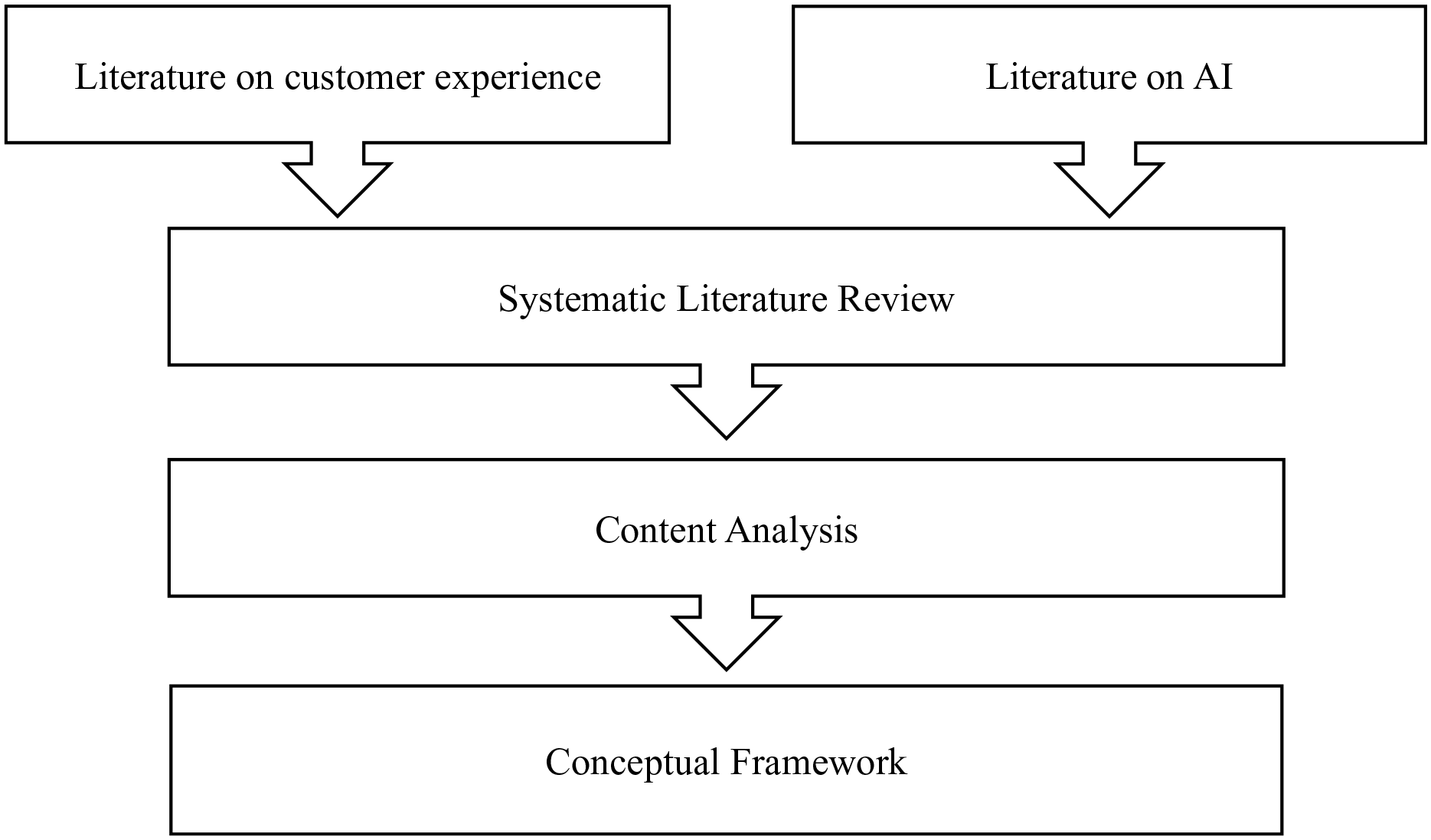
Research design.
Findings and discussion
Based on the research design, we analyzed the selected literature and then divided the research findings into three aspects: AI experience, AI functions, and AI services. A conceptual framework is then proposed based on the research findings.
AI experience
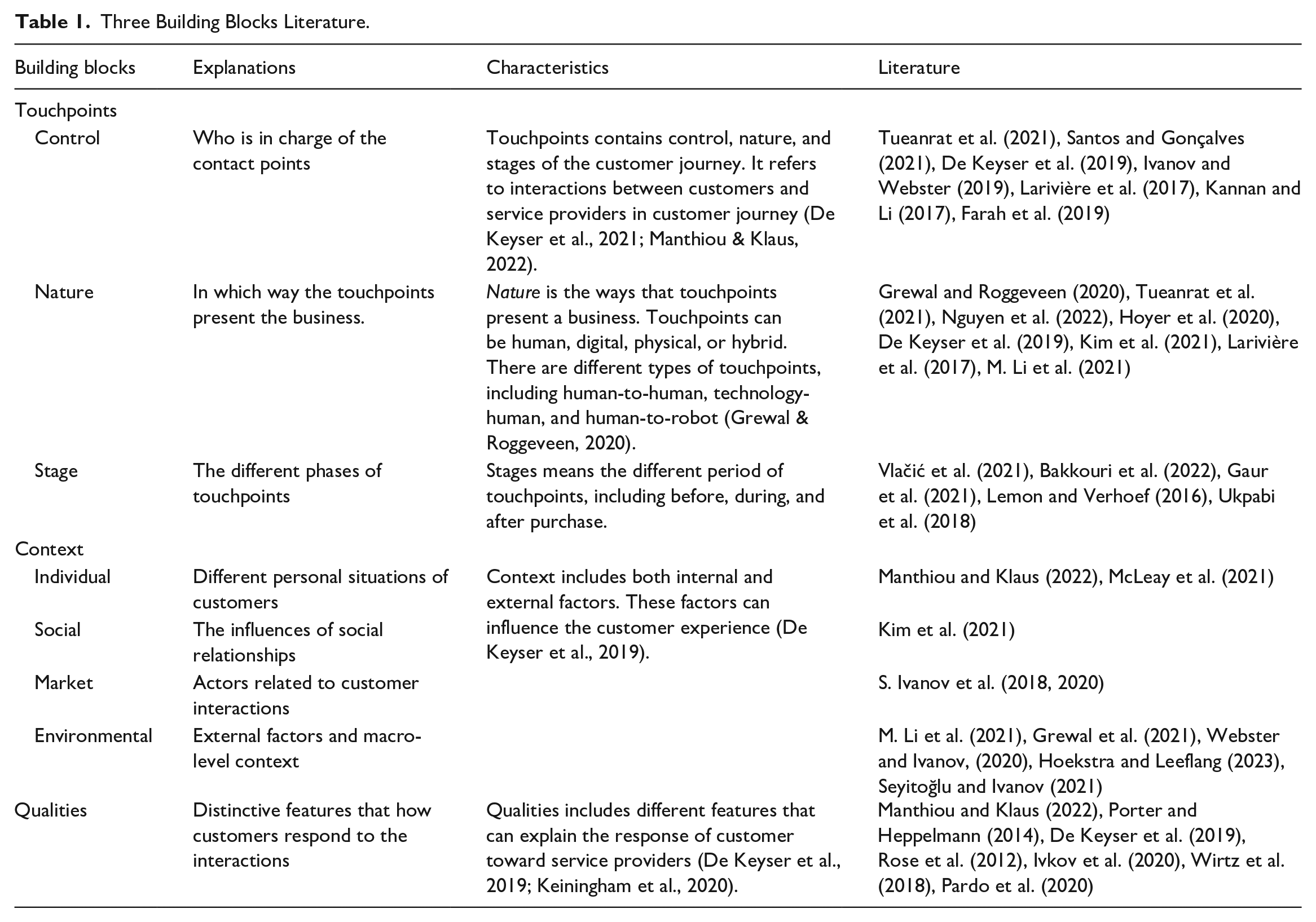
After systematically reviewing the relevant literature, we summarized the AI customer experience journey into three building blocks: touchpoints, contexts, and quality (De Keyser et al., 2021), discuss how their usage has been integrated with AI services in this study. Details of the contents are shown below.
Touchpoints
Touchpoints refer to all interaction points between customers and businesses during the customer journey (De Keyser et al., 2021). According to Manthiou and Klaus (2022), the touchpoint building block includes control, nature, and stages of the customer journey. The following part will explain each element separately.
Control
Control refers to the management of touch points between customers and businesses including physical environment, the onstage and backstage employees, as well as online environment. Technology shapes the customer experience by providing a more autonomous role to customers (Flavián et al., 2019), who can reduce time and space limitations. Successful companies have begun to pay attention to the role of new technologies and utilize them to enhance the customer experience (Tueanrat et al., 2021). Technological innovations “offer an unprecedented interactive, immersive, and personalized experience in the customer journey” (H. Nam & Kannan, 2020, p. 30).
Digital touchpoints give customers a sense of control, as they can access shopping platforms and make purchases at any time (Tyrväinen & Karjaluoto, 2019). They provide real-time, interactive, and multisensory experiences to customers, which can help companies connect with customers, add value to products, and increase sales (Del Bucchia et al., 2021; Hamilton, 2020). They also strongly rely on the development of self-service technologies (Vakulenko et al., 2019). For example, online communities provide shared experiences to customers, which reduces information barriers between customers and brands (Kannan & Li, 2017). However, some customers feel vulnerable and threatened by data-driven technologies and will thus only accept interactions they are comfortable with (Del Bucchia et al., 2021). If technologies are adopted without fully understanding how they target customers, companies may receive incorrect data, leading to poor interactions with customers and switching behavior (Farah et al., 2019). On the contrary, digital technology provides both sensory and emotional value to customers (Santos & Gonçalves, 2021). Interactions between humans and AI related technologies can strengthen emotional bonds and sensory attachments (Tueanrat et al., 2021). Sensory and emotional information can influence customers’ decision-making processes, as customers can make optimal choices based on richer information other than brand names (Hoyer et al., 2020; Santos & Gonçalves, 2021).
Nature
Nature refers to the ways in which touchpoints present a business. The nature of touchpoints can be human, digital, physical, or hybrid. Previous researchers have discussed different types of interactions: human-to-human, technology-human, and human-to-robot (Grewal & Roggeveen, 2020). Furthermore, physical evidence demonstrates how various characteristics (e.g. robotic intervention, robot type, and design) can impact the customer experience (Tung & Law, 2017). Technological advancements (e.g. AI) can influence the dynamics of organizational frontlines, altering the approach to service delivery and the experiences of both customers and frontline employees (FLEs). This impact extends beyond transforming conventional technology-enabled interactions, and introduces new forms of encounters (De Keseryer et al., 2019). De Keseryer categorized eight archetypes based on the role of technologies in service encounters, with the main roles revolving around technology as a human augmentation force and technology as a human substitution force.
The increase in innovative touchpoints has disturbed the traditional marketing model, changing the stages of customers making a purchase decision (Tueanrat et al., 2021). Therefore, the customer decision-making process is now a fluid journey and not in a specific order. Digital transformation changes the touchpoints and companies’ value chains, necessitating new service solutions to satisfy increasing customer needs (Paluch & Tuzovic, 2019; Tyrväinen & Karjaluoto, 2019). It also enhances services in a personalized and interactive manner, making the customer decision journey more complex. This complexity arises from the distinct characteristics of different technologies, which influence the different stages of customer decision-making (Hoyer et al., 2020; Santos & Gonçalves, 2021). Such touchpoints are referred to as innovative and encompass “self-service kiosks, mobile devices, and wearable technologies” (Tueanrat et al., 2021, p. 346), enabling companies to provide value, establish connections with customers, and deliver enhanced experiences to increase sales (Del Bucchia et al., 2021; Hamilton, 2020). De Keyser et al. (2019) identified the influence of extended reality (XR) on customers, frontline employees, and service organizations. As XR can bridge the virtual and real worlds (Ivanov & Webster, 2019), XR, combined with human-robot interaction, can be integrated into service encounters (Kim et al., 2021).
Nguyen et al. (2022) proposed that AI tools serve as a type of touchpoint. AI tools have effects on both customers and companies, contributing to the customer experience of flow, where individuals become deeply immersed in an activity, ignoring time and their surroundings (Rose et al., 2012). AI can assume various roles in humon-robot interactions, such as guide, facilitator, substitute, and enhancer (Larivière et al., 2017). It can substitute for service employees and foster network connections between employees and customers, with employees and customers playing the roles of “enabler, innovator, coordinator, and differentiator” (Larivière et al., 2017). AI encompasses various tools, including virtual reality and augmented reality. Virtual reality and augmented reality result in customer experiences being “embedded, embodied, and extended” (Hilken et al., 2018, p. #511). These technologies provide digitally enabled touchpoints that supply real-time and multisensory experiences, immersing customers fully in a virtual world (Farah et al., 2019; Hollebeek et al., 2020).
Therefore, these technologies offer authentic customer experiences, bridging the gap between online and offline, and seamlessly enhancing the experience (Hilken et al., 2018). Moreover, innovation touchpoints integrate humans with devices, generating strong emotional bonds between customers and services (Flavián et al., 2019; Tyrväinen & Karjaluoto, 2019). These technologies help companies collect customer data, deepen their understanding of customers’ personal needs, and enhance customers’ sensory attachments (Tueanrat et al., 2021). Li et al. (2021) emphasized special uses for AI tools during the Covid-19 pandemic. Since AI applications produce many technologies designed for service encounters, they can reduce face-to-face contact, reshape service encounters, and influence customers’ experiences and behaviors. They can also decrease social interactions with customers, improve decision-making through contactless data collection, and replace some human jobs (Oravec, 2018; Zhou et al., 2020). Furthermore, M. Li et al. (2021) summarized AI technology-based service encounters falling into four types: AI-supplemented, AI-generated, AI-mediated, and AI-facilitated (M. Li et al., 2021).
Customer journey “stages.”
Stages follow traditional marketing literature, indicating the different phases of touchpoints occurring before, during, and after purchase. However, based on these classifications, previous literature summarized key touchpoint stages in marketing. Most marketing literature summarized the consumer decision process as a purchase journey, which includes “problem recognition, the information search, evaluation of alternatives, the purchase decision, and post purchase decision” (Lemon & Verhoef, 2016, p. #71). The formation of the customer experience is a complex process which is accomplished by any direct or indirect interaction of the customer with the organization before, during, and after purchase (Vlačić et al., 2021).
Digital touchpoints help companies satisfy customer needs in an unprecedented way, and therefore change the process of customer decision-making (Bakkouri et al., 2022; Reinartz et al., 2019). Santos and Gonçalves (2021) found that technologies play different roles in specific stages. In the pre-purchase stage, VR (facilitates timely product trials, while AR assists customers selecting information and choosing products (Hoyer et al., 2020). However, most technologies are utilized in the purchase period. IoT (Internet-of-Things) utilizes automatic transactions (such as facial and fingerprint recognition), which can improve transaction convenience and reduce transaction costs (H. Nam & Kannan, 2020). VA (Voice Assistant) technologies make purchase decisions and repurchasing processes simpler. Other techniques, such as automation, interaction, and transparency, also help make searches and purchases more convenient.
Using an example of the tourism and hospitality industry, three phases are involved: pre-trip, during-trip, and post-trip stages are involved (Fotis et al., 2012). Customers obtain necessary information in the pre-trip stage. In the during-trip stage, they experience emotional connections with the destination. The last stage, post-trip, is a reflection of the trip and how they share their experiences to others (Ukpabi et al., 2018). Ukpabi et al. (2018) summarized how artificially intelligent robotic virtual agents (AIRVA) deepen tourists’ experiences in four ways: simplified travel searches, simplified travel booking services, onsite tour guides, and personalized pricing. Simplified travel searches use a smart interface with machine learning, which pulls together information on a destination. One example of a simplified travel search is the conversational search. Voice chatbots can search for information related to vacation packages, business trips, or tourist journeys. Therefore, travellers can engage a chatbot easily and conveniently (Ukpabi et al., 2018). Furthermore, AI has simplified travel personalization, which is considered a tool to simplified travel booking. AI adds innovation value to travellers’ experiences and is the future of tension-free travel booking. In many airlines, conversational chatbots have been introduced where travellers can ask questions without having to navigate through websites. Onsite tour guides can also employ artificial intelligence to make tourists’ experiences more memorable. Specifically, chatbots and recommender systems can play the role of travel guides by explaining the importance of attractions. AIRVA can also provide information that can enhance the emotional bonds between customers and destination. By comparing lower and higher prices (rate match), AI provides real time price intelligence to personalized pricing, which can provide the best rates to travellers. Hence, this new type of intelligence can bring positive experiences to travellers (Ukpabi et al., 2018).
Pre-purchase is the stage before customers decide to purchase a service. Prepurchase behaviors include need recognition, consideration, and search (D’Arco et al., 2019). In this stage, customers may need a recommendation system to suggest specific services, as well as live chatbots to provide details about a service. Indeed, AI-based recommendation systems can help customers save time by reducing time-consuming information searches, overcoming online information overloads, and improving the personalization and efficiency of travel decision making (Zheng et al., 2020). For example, using AI technology reduces the time spent on making travel bookings by almost 90% and there is a growing trend among travellers to use smart recommendation systems for travel planning (Shi et al., 2021). Chatbots are also important AI tools in the first stage, as they can interact with customers at any time, making them the most widely-used AI tool (Pillai & Sivathanu, 2020). There are two types of live chat technology that can assist in search-support functions and support decision-making. These may benefit consumers during interaction with chatbots before, during, and after transactions, as live chat technology can support them throughout their customer journey (McLean et al., 2020).
The Purchase stage is the period when consumers are served by others. In this stage, there are three behaviors: choice, ordering, and payment (D’Arco et al., 2019). Robot service and automation are widely adopted in this stage. The application of robotics is progressing rapidly, diffusing into a broad range of sectors. For example, robots are being increasingly employed in the hospitality industry, such as Henna in Japan and SARA in Singapore. The first robot deploys a functional trolley robot to escort hotel guests and carry their suitcases, while the later offers information and assistance for tourists (Gaur et al., 2021). These AI and human interactions influence the customer experience during purchases. Moreover, many service providers provide automatic service. Examples of such technologies include mobile applications, virtual reality, and digital kiosks (Tussyadiah, 2020).
The Post purchase stage is the final stage of the buying process. Behaviors in this stage are consumption, usage, engagement, and service requests (D’Arco et al., 2019). Analysis AI is applied in this stage. Most applications in the analytics category are used for back-of-house operations that underline interactions with customers. It is already well understood that these applications directly contribute to increased revenues, as AI provides customized and individualized services to customers, and also reduce costs significantly with AI optimized solutions. Thus, service industries can adopt this type of application easily once technical barriers and obstacles are overcome (K. Nam et al., 2021).
AI experience—Context
Context refers to contextual factors (both internal and external) that influence the robotic tourism experience (De Keyser et al., 2019). This term suggests a subjective nature, meaning customer experiences can differ. Manthiou and Klaus (2022) further identified the context building block into four constructs: individual, social, market, and environmental. By identifying the four sub-contexts, the contents of the context are explained clearly through macro, meso, and micro perspectives. Specifically, individual context refers to the different situations of customers during the customer journey (Sandström et al., 2008), including subjective, personal, internal, psychological, and interpretive views (Holbrook & Hirschman, 1982; Jaakkola et al., 2015). For example, customers’ personalities, socio-demographics, attitudes toward technology, levels of innovativeness and need for control all may influence the robot tourism experience (Manthiou & Klaus, 2022). Social context is created by social relationships (Verhoef et al., 2009), and includes collective, shared, communal, relational, and sociocultural characteristics (Becker & Jaakkola, 2020; Carù & Cova, 2003; De Keyser et al., 2019). A practical example is when tourists are influenced by those around them, including other tourists and locals (Arnould & Price, 1993). Market context refers to the different actors in marketing that are related to customer interactions, including “competition, substitutes, service systems, networks, and future entrants” (De Keyser et al., 2019, p. #441). Hotels will mimic their competitors automated strategies if they are seen as effective (Manthiou & Klaus, 2022). Environmental context encompasses external factors and macro level context, which can be “natural, economic, public, social or political, or a mix of these” (De Keyser et al., 2019, p. #441). maintain that external environmental domains (such as legal, ethical, social, and economic conditions) shape the use of robots in tourism and hospitality settings. Moreover, major disrupters, such as Covid-19, will influence both the adoption of automated technology and customer perceptions of these technologies (Manthiou & Klaus, 2022).
Individual context and social context
McLeay et al. (2021) found that customers’ personalities and cognitive evaluations will influence their experience of a service encounter and their intention to use a brand. Moreover, service robots were an effective tool to ensure high levels of physical social distancing were maintained during the Covid-19 pandemic. However, service robots can create a technological shield between tourists and service providers that increases both physical and emotional distance. Therefore, tourism and hospitality companies should complement the use of robots with technologies that will contribute to social connectedness and offset the negative consequences that may arise from the use of robot technology (Kim et al., 2021).
Market context
Facing a need to innovate, service organizations have begun to introduce robots to service encounters (McLeay et al., 2021). However, as new technologies are increasingly giving employers the ability to replace human labor with machine labor, a fundamental question has arisen: to what extent will AI replace human labor in service industries in the future? This presents a number of challenges, as employers look to implement automation technologies, and employees are concerned about being replaced by these automation technologies (S. Ivanov et al., 2020). One feature of AI is that it can effectively deal with data and information, which is considered an essential element in service contact (Elavarasan & Pugazhendhi, 2020). M. Li et al. (2021) further pointed out that AI had many benefits during the Covid-19 pandemic. It allowed communication to take place without face-to-face interactions, it was effectively utilized to prevent the virus spreading, and it contributed to improved service quality by relieving pandemic-related psychological issues.
Environment context
Marketing practice has been strongly affected by economic, environmental, social, and digital revolutions (Hoekstra & Leeflang, 2023). These changing environments can be divided into two types: macro (economy, social inequality, climate, and digitalization) and micro (communication, distribution channels, and consumer behavior; Hoekstra & Leeflang, 2023). The Covid-19 pandemic rapidly accelerated digital transformation in the tourism and hospitality sectors. It caused supply chains to be modified, delivery systems upgraded, and novel shopping methods promoted to customers (Grewal et al., 2021). Moreover, these developments required improved capability to make use of existing value for customers and stakeholders, while simultaneously showing respect for society and the environment (Hoekstra & Leeflang, 2023). The Covid-19 and SARS public health crises affected many industries and resulted in service providers and customers moving from an offline world to an online one. Therefore, robots and artificial intelligence (AI) technologies are vital in delivering needed services during health pandemics (M. Li et al., 2021; Seyitoğlu & Ivanov, 2021). Grewal et al. (2021) found that AI has contributed through both front-end and back-end technologies, which means it can interface with customers while simultaneously facilitating backroom operations. From social and cultural perspectives, demographic issues are considered in an environmental context. For example, many developed countries are facing labor shortages and aging populations, which will increasingly necessitate the replacement of human labor with automation (Webster & Ivanov, 2020). The same authors also stated that human labor replacement is more practical, more immediate, and presents lower risks in developed countries (Webster & Ivanov, 2020).
AI experience—Qualities
Qualities denotes a set of distinctive features that demonstrate how customers respond to interactions with service providers (De Keyser et al., 2019; Keiningham et al., 2020). Manthiou and Klaus (2022) identified five variables which can affect qualities as participation level, dimensionality, time flow, valence, and ordinariness. Participation level correlates to how actively customers react to stimuli, including customers’ immersion, involvement, and engagement levels (Rose et al., 2012). Dimensionality is formed by the different types of experiences that develop from customer and business contacts (Lemon & Verhoef, 2016), and reflects feeling, learning, being, and doing on the part of customers. Customers may find robotic services fun, appealing, and unique (Ivkov et al., 2020), which will enhance the customer experience (Manthiou & Klaus, 2022). The robot acceptance model from Wirtz et al. (2018) reflects customers’ socio-emotional and relational tendencies, while time flow indicates “a continuum ranging from short to long experiences and from monotone to dynamic” (De Keyser et al., 2019, p. #442). Customers may also experience positive, neutral, negative, or ambivalent feelings when using robotic services, which Manthiou and Klaus (2022) described as Valence. The final variable, Ordinariness, describes the different levels of customer predictions, ranging from ordinary to extraordinary (peak, daily, or ordinary moments; Walls et al., 2011). A robot service could be a normal day to day service, or an unique service, depending on the service provider (Manthiou & Klaus, 2022).
Pardo et al. (2020) found that products become thick, deep, and transformative. Products become thick via digital enhancement, while deep correlates to smart products which expand boundaries, meaning products which can connect with other entities and transfer information to these entities (Porter & Heppelmann, 2014). The final feature, transformative, equates to the capacity of a smart product to transform human behavior to data (Pardo et al., 2020). Due to robotic tourism experiences having the potential to significantly affect service quality, tourism businesses should focus on dimensions such as functional, emotional, and relational. According to Manthiou and Klaus (2022), levels of customer participation (low, moderate, or high) with robotic intervention should be taken into consideration by tourism businesses. They further pointed out that, due to the nature of AI, tourists and robots co-create the services. Since not all experiences are extraordinary, businesses should investigate the roles of time, duration, speed, and rhythm, and contemplate how tourists perceive remarkableness in their robotic tourism experiences (Table 1).
Three Building Blocks Literature.
AI functions
To understand how AI functions in service, we focus on the applications used in the home sharing industry, and summrizes four aspects: analyze, design, engage, and guide (Rusthollkarhu et al., 2022). Analyze refers to analysis of actions that detect customers’ characteristics, understanding their behavior, and evaluating the success of sales (Li & Kannan, 2014). According to this perspective, the customer journey is not only a customer interaction process (prepurchase, purchase, and post purchase), but also an apportunity to better understand sales and marketing processes (Lemon & Verhoef, 2016). Design refers to customers’ journey plan actions, which includes designing journey elements and seamless experiences in the marketing process. Two elements are identified as crucial characteristics in customer journey design: long purchase times and fact-based decision characteristics (Bakhtieva & Bogolyubov, 2016). Moreover, data based understanding is a key factor to bridge gaps between analyze and design, yet is underutilized for improving customer journey designs and marketing processes (Järvinen & Karjaluoto, 2015). Engage refers to actions that capture customers’ attention and result in engagement during the customer journey. Literature has identified that customer engagement is essential for customer journey management (e.g. Liao et al., 2010). Customers can engage with shared co-creation and co-development practices (Aarikka-Stenroos & Jaakkola, 2012), while channel choices can also drive customer engagement (Narayanan & Nandagopal, 2016). Guide correlates to actions that help customers navigate through their journey. The literature has identified methods Business to Business (B2B) companies use to encourage customers to progress to the next touchpoint and move forward in their customer journey (e.g. Jacobs et al., 2018), and evaluated the impact of individual preferences (e.g. Mosquera et al., 2018). However, the previous literature has not examined how AI is used in the home sharing industry and what its role is during the customer journey process. Hence, this paper summarizes the key roles and functions of AI applications in the home sharing industry (see Table 2).
Four Functions of AI.
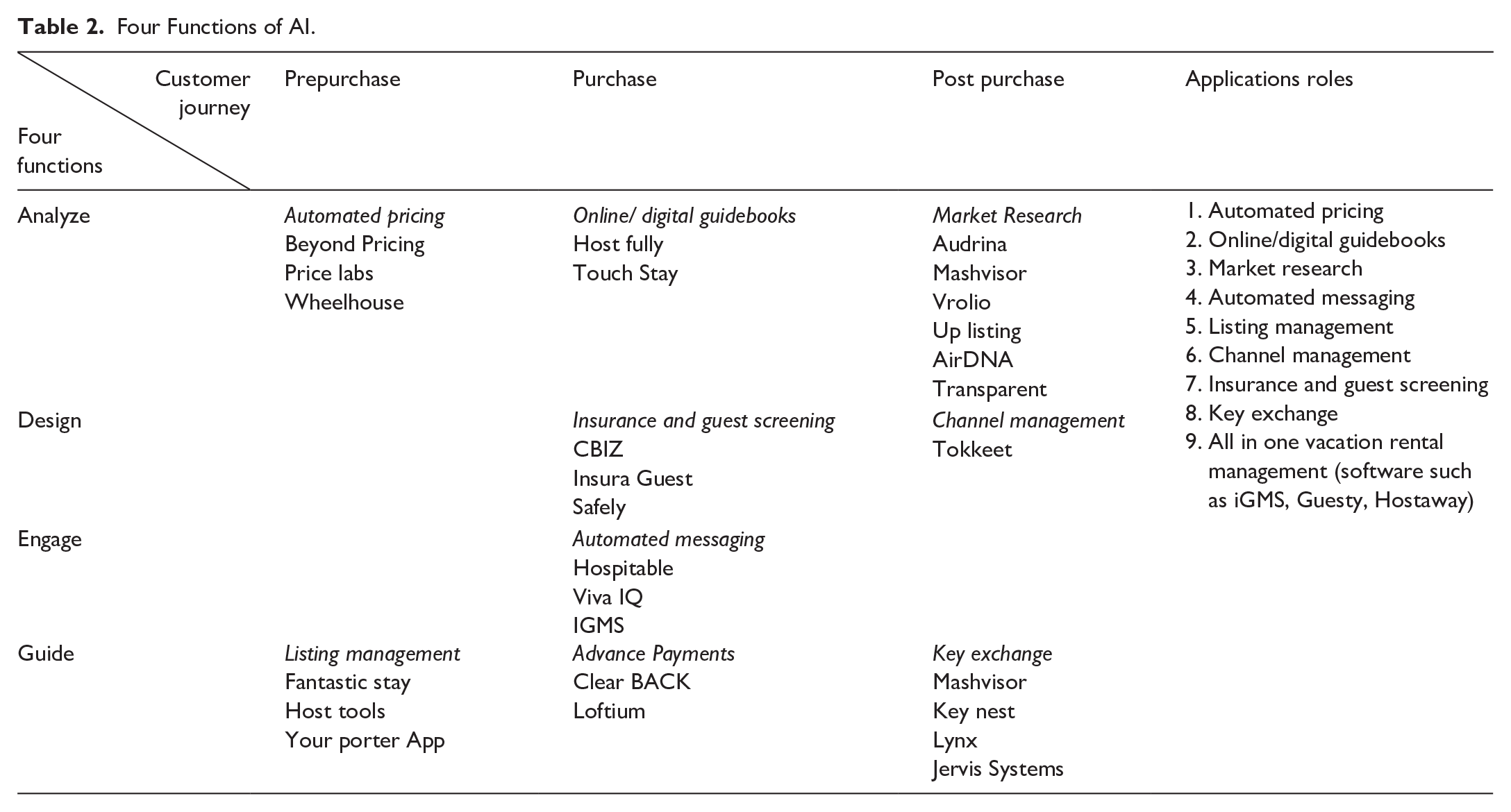
Furthermore, to understand how these tools can help manage the customer journey, we combined the four functions in the three phases of the customer journey, which are pretravel, during travel, and past travel (Lemon & Verhoef, 2016). The AI functions for certain customer journey phases are presented in Table 2. Specific AI functions that consist of other managerial support tools are also presented. After reviewing a total of 126 digital tools from websites, 52 AI empowered tools were selected. AI enables home sharing platforms to improve their services during the three customer journey phases. With the help of the four functions, AI tools can increase the efficiency of management activities throughout the whole customer journey process by automating services and enchancing human-AI collaboration. Table 2 lists the role of each AI function during the customer journey process, demonstrating that AI tools play different roles throughout the customer journey process. Night roles are summarized as automated pricing, online/digital guidebooks, market research, automated messaging, listing management, channel management, insurance and guest screening, key exchange, and all-in-one vacation rental management. Automated pricing is also known as dymamic pricing or smart pricing. According to Chen et al. (2022), AI uses machine learning to dynamically modify or adjust prices. Automated pricing can result in higher revenues and save hosts’ time as calendars can be automatically updated. The other nine functions also contribute to the customer journey with different tasks during the three phases.
AI services
AI enhances customer personalization
AI-enabled Personalized (AIP) occurs when firms leverage AI to collect specific data to characterize customers and accurately predict their behavior, based on large amounts of data and advanced computing power (Hoyer et al., 2020; Lemon & Verhoef, 2016). These data reveal customers’ can assist marketers tailering their marketing strategies for specific customersThe Internet of Things (IoT) is also used with AIP for capturing data, while VR and AR are adopted to generate enjoyable and satisfying interactions (Ameen et al., 2021). Personalized profiling is conjunct with data collection and customer profiling, and therefore marketers are dependent on machine learning, deep learning, neural networks, natural language recognition, and image recognition to build profiles.
The process of AI-enabled personalization occurs throughout the entire customer journey (Gao & Liu, 2022). Initially, customers adopt actions such as recognition, information searches, and consideration of alternatives in the pre-purchase stage (Lemon & Verhoef, 2016). Interactions between the environment and a company provide opportunities for AIP to guide potential customers so they can complete both online and offline touchpoints (Puntoni et al., 2021). For example, search engines guided by AIP can attract customers’ online attention in the prepurchase stage and can provide personalized navigation. The purchase stage includes making a choice, ordering products, and paying for them (Lemon & Verhoef, 2016). Marketers rely on personal promotion that is based on interactive marketing and AIP can provide personalized promotions at this stage. Thus, AIP combines AI and traditional promotion techniques to satisfy customers’ needs by making personalized promotional offers (Seele et al., 2019). In the post-purchase stage, marketers aim to develop customer loyalty through a variety of strategies; for example, the provision of professional after sales service. AIP in this stage can be considered as a form of personalized retention as it can consider customers’ requests, maintain customer loyalty, or even renew the entire customer journey.
AI and trust
Effective trust helps to overcome uncertainty, mitigate risk, and drive the success of C2C (customer-to-customer) platforms (McKnight & Chervany, 2001). Unlike e-commerce, the sharing economy is not always conducted face to face (Hossain, 2021), especially during the Covid-19 pandemic. Physical contact could potentially result in the loss of life (Ter Huurne et al., 2017). Moreover, regulatory uncertainty in this area increases the lack of security (Ranchordás, 2015). Thus, trust is a critical issue for sharing. Park & Tussyadiah (2020) demonstrated that trust is positively related to behavioral intent. This occurs when customers trust a specific platform, they will use this platform instead of other unfamiliar and untrusted platforms (Park & Tussyadiah, 2020). The importance of a platform’s trustworthiness in customer decision-making was confirmed by Chen et al. (2022), who found that there is a trust formation process between platform providers and hosts (Chen et al., 2022). Furthermore, trust can also result in technical, functional, and economic quality (Watt & Wu, 2018).
Previous studies have proposed that AI can help foster trust with the use of background checks and ID verification (Chen et al., 2022), and can enhance customer engagement and loyalty by providing memorable service experiences (Prentice & Nguyen, 2020). AI tools may also have benefited from the Covid-19 pandemic as they were required to improve the customer experience, drive online sales, and create value (Vlačić et al., 2021). A study by Chen et al. (2022) found that trust in both home-sharing platforms and hosts can influence customer engagement and loyalty, but AI plays a negative moderator role in these processes. However, scholars have also found that AI may not be well accepted by some users. For example, Cheng and Foley (2019) argued that AI hinders Airbnb hosts’ sense of control, while Chen et al. (2022) suggested that AI may cause loss of trust and even racism in some cases. Difficulties such as these mean the trust issue is an important consideration when adopting new technologies.
AI adoption and customer experience
AI is not always welcomed by its users. Vakulenko et al. (2019) pointed out that customers’ attitudes toward new technologies range from excitement to anxiety. Some customers are concerned about the new technology collecting their data to provide personalized recommendations (H. Nam & Kannan, 2020), which makes many people feel as though they are being harassed (Tueanrat et al., 2021). High levels of privacy are positively correlated to perceptions of value, fairness, trust, and satisfaction (Tueanrat et al., 2021). Thus, service providers should reduce customers’ privacy concerns by providing transparent privacy policies (Paluch & Tuzovic, 2019). Technology adoption rates also depend on how well customers understand the benefits of AI. Some customers may believe that they can benefit from adopting AI because it can improve their purchase experiences, making them more interesting and less expensive (Tueanrat et al., 2021). The technology adoption rate is different at various levels of the customer journey and is dependent on technology readiness levels. Therefore, first-time users may find it difficult to familiarize themselves with the technology. However, as experience levels increase, levels of mistrust decrease, leading to increases in adoption rates (Vakulenko et al., 2019). Therefore, service providers should understand their customers and design touchpoints accordingly (Tyrväinen & Karjaluoto, 2019).
The adoption of AI can improve customer experience (i.e. flow) and enhance customer relationships (i.e. brand identification), leading to an organization’s version of customer advocacy (Moliner et al., 2018). Nguyen et al. (2022) found that AI quality drives flow and customer-brand identification, leading to customer advocacy and a subsequent increase in both operational efficiency and customer experience. AI techniques help to create service value (Larivière et al., 2017) by facilitating service exchanges through the provision of information and then using this information to improve the user-friendliness of applications. Service companies provide resources to increase the competencies and capabilities of applications by creating value that matches with customers’ needs (Makridakis, 2017). Based on SD logic and service value co-creation theories, AI technology-based service encounters are increasingly being used to not only create added value, but to reshape traditional service encounters (Larivière et al., 2017; M. Li et al., 2021). AI can help the hosts enhance guest experience and engagement. A good experience motivates customers to have more “physical, mental, social, and emotional” engagement with a company (Prentice & Nguyen, 2020, p. 3).
Conceptual framework for AI and customer experience
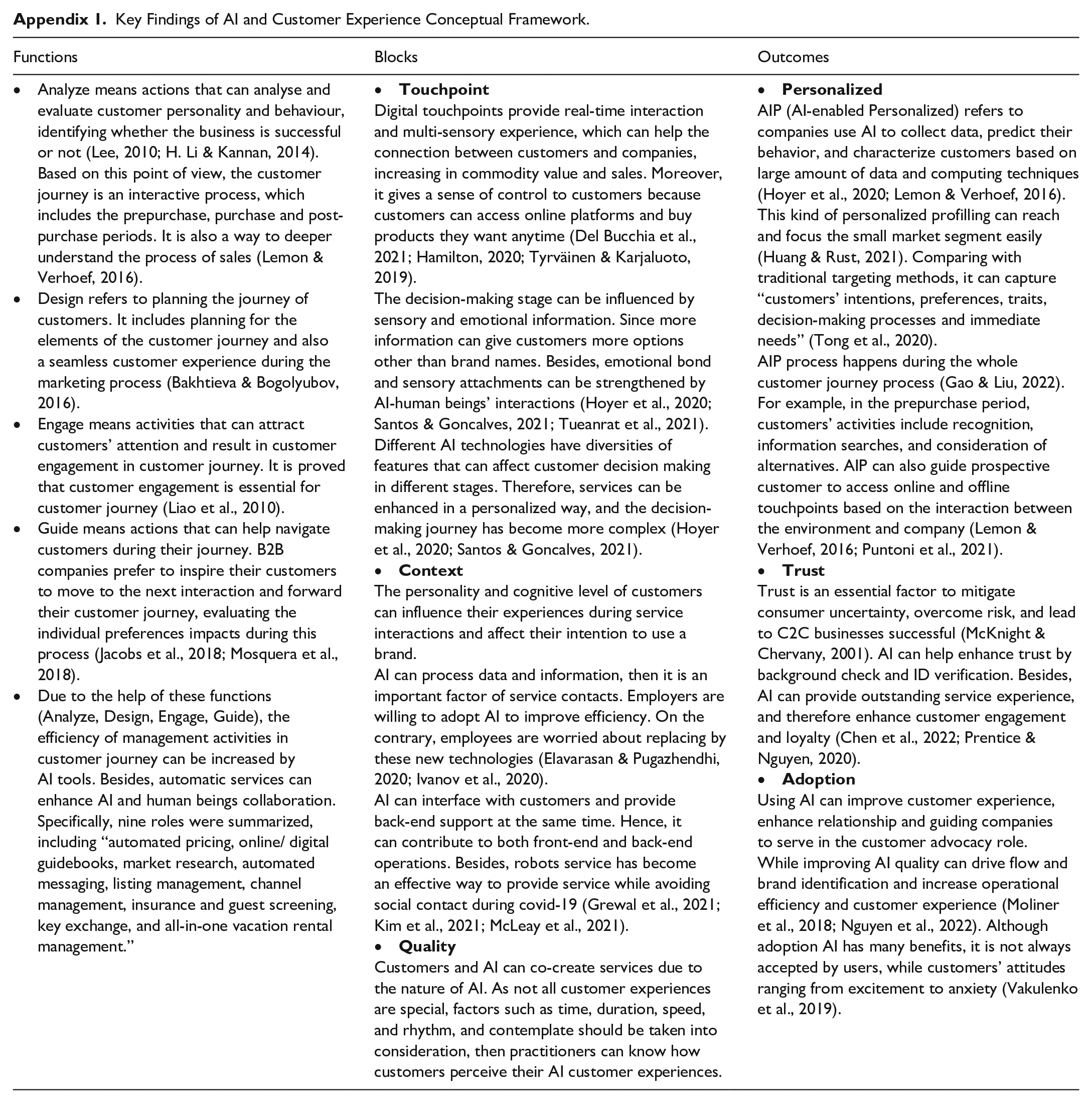
Based on the literature review and data analysis above, we adopted MacInnis’ (2011) steps to generate the conceptual framework. Following the three building blocks concept and four AI functions, we reached a conceptual model of AI factors and functions that influence the customer experience (see Figure 2). As an emerging high technology that can deliver contactless services in public health emergencies (M. Li et al., 2021), the outcomes of adopting AI are summarized in this conceptual framework. Outcomes include AI-enabled personalization, AI and trust, and AI adoption and customer experience. Details of the three constructs (functions, blocks, and outcomes) are shown in Appendix 1.
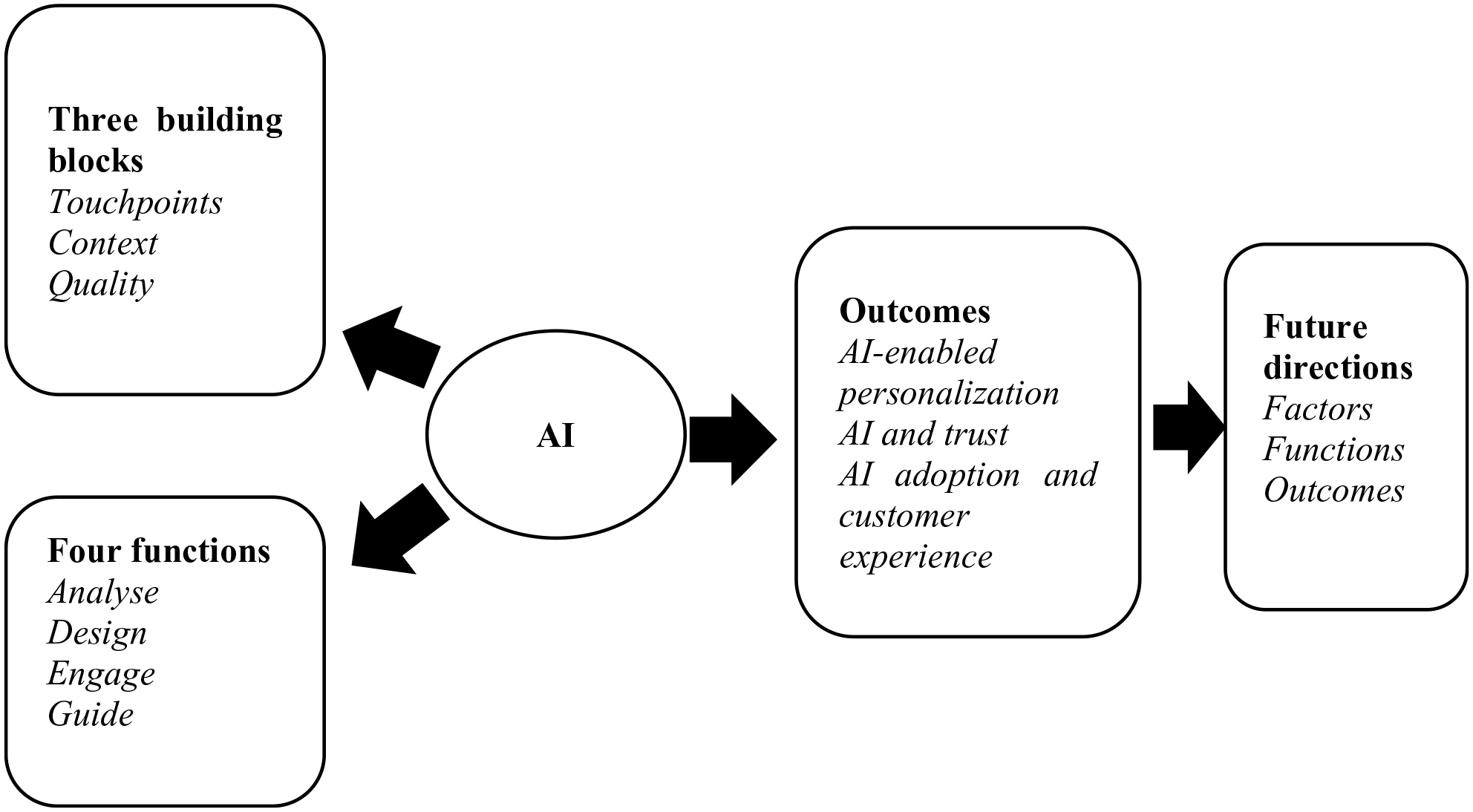
Conceptual framework.
Propositions for future direction
Building upon the literature review and a review of websites positioned at the intersection between AI tools and the home-sharing industry, we outline research trends and specific research questions. Three propositions are proposed: factors, functions, and outcomes. Table 3 shows the research trend for these three propositions, while specific research questions are listed for each proposition.
AI and Customer Experience: Research Trends and Research Questions.
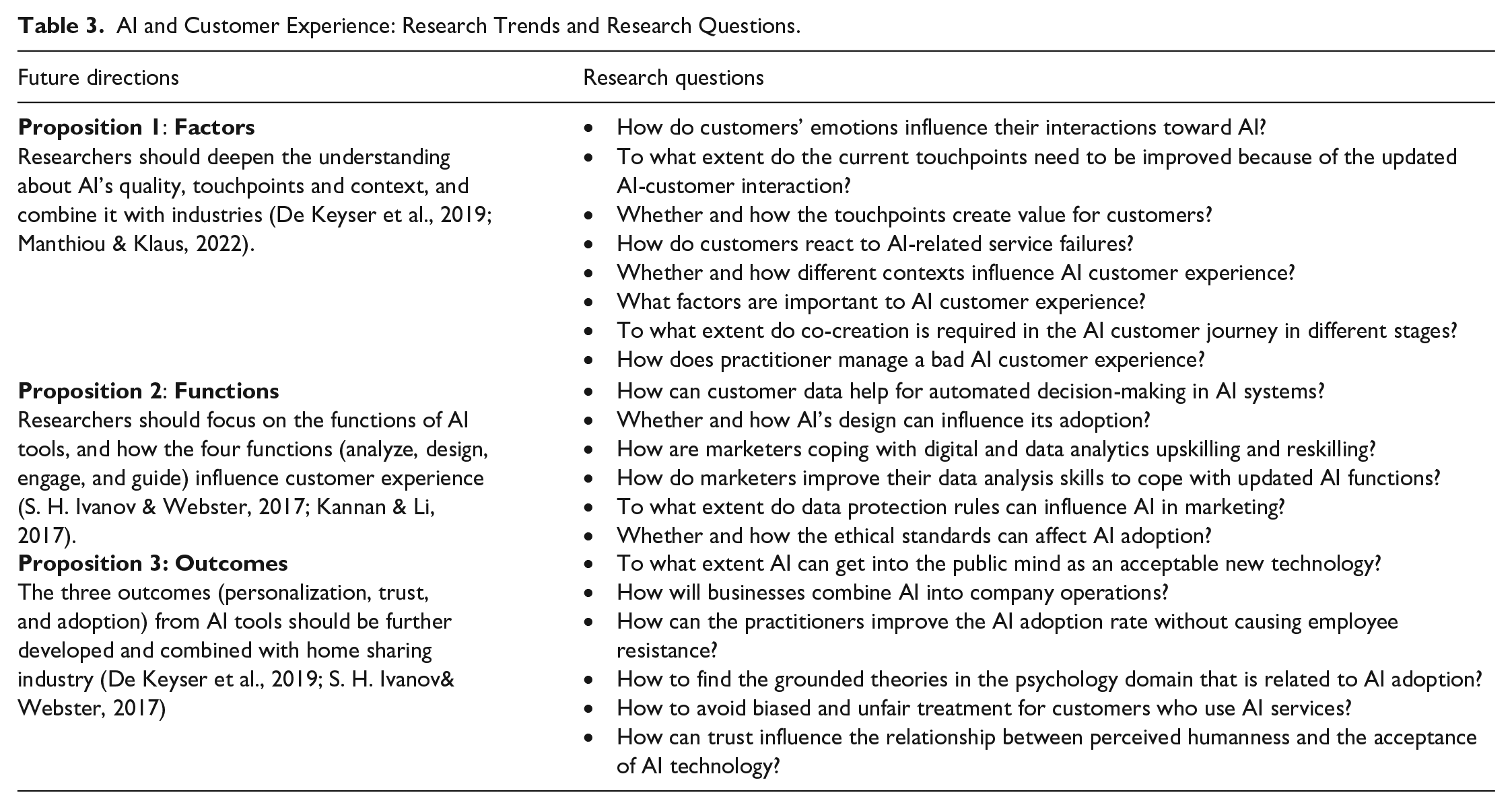
Proposition 1 focuses on AI factors. Researchers should deepen their understanding of AI’s quality, touchpoints, and context, and then combine them with the home-sharing industry. Future research on quality should comprise the AI experience with all the qualities related to the extent of participation and other outcomes. Touchpoint requires further research to focus on all human, physical, and digital touchpoints. In addition, the different contexts of AI customer experiences taking place (e.g. individual, social, market, and environmental/societal contexts; Tueanrat et al., 2021) will influence the customer journey, and these need to be examined. Aside from the positive effects of AI, the negatives still need to be taken into consideration. Questions relating to ethics, fairness, and privacy also require further study. There are also valid concerns regarding loss of autonomy and dignity through dehumanization (Belk, 2020).
Proposition 2 correlates to functions. Researchers should focus on how the four functions (analyze, design, engage, and guide) influence the customer experience. As previously mentioned, AI is a broad digital technology that includes personal computing devices, such as wearable technologies, virtual reality, augmented reality, and mobile apps; computing technologies and analytical methodology, such as cloud computing, deep learning, machine learning, and big data analysis; search technologies, such as those that track eye movements; and connectivity technologies, such as sensors, Internet of Things (IoT), and chat technologies (Kannan & Li, 2017). AI operates at different function levels, and while some techniques can strongly influence customer experience outcomes, others may not have such a major impact (S. H. Ivanov & Webster, 2017).
Proposition 3 refers to outcomes. The three outcomes (personalization, trust, adoption, and customer experience) from AI tools should be further developed and integrated with the industries. Future researchers first need to understand consumer behaviors before they can comprehend the reasons why they (consumers) accept or reject certain technologies (S. H. Ivanov & Webster, 2017), and should also use multiple disciplines to link AI-driven customer experiences with financial outcomes (De Keyser et al., 2019). With the potential to replace human labor, different trends are emerging in the hospitality industry. While use of AI services is omnipresent in some hotels, other hotels tend to use AI more for technical support and it is largely unseen by consumers (S. H. Ivanov & Webster, 2017). AI will continue to have profound impacts in the home sharing and service industries, most notably in customer service, utilization of human staff, and how customer journeys will be shaped and influenced.
Conclusion
AI is considered a game changer in the way it is revolutionizing business practices and influencing revenue (Biswal, 2022). To deepen our understanding of AI, we focused on AI’s factors and functions toward customer experience in this paper. After reviewing the related literature and analyzing the contents of selected papers, we summarized the factors and functions of two aspects: three building blocks (quality, touchpoint, and context) and four functions (analyze, design, engage, and guide). The major contents of AI are categorized under the descriptions of these two aspects. Based on the results of the literature review, the conceptual framework was proposed. The AI customer experience allows us to identify gaps and propose directions for future studies. Based on the study findings, a conceptual framework was created to encapsulate the intricate interplay of factors and functions shaping AI-driven customer experiences. This framework serves as a valuable tool for researchers and practitioners alike, offering a structured approach to understanding the complexities of AI in the customer experience domain. The comprehensive exploration of factors and functions, coupled with the development of a conceptual framework, establishes a robust foundation for understanding the intricate role of AI in shaping customer experiences. These insights not only contribute to academic discourse but also offer practical guidance for businesses navigating the dynamic landscape of AI-driven customer interactions.
Limitations
Limitations are present in this paper. First, limiting terms to “AI” and “robots” in the keyword search can affect the findings as there are various terms associated with AI and robots, such as “autonomous technology” and “automated social presence.” Autonomous technology denotes machines’ ability to perform actions without human intervention (van Doorn et al., 2023), while automated social presence refers to robots creating the feeling in consumers that they are in the company of another social entity (van Doorn et al., 2017, 2023). Future research should include these words for better insights. Nonetheless, AI and robots remain the most frequently used terms in the academic field. AI is a broader concept focused on creating intelligent software, robots are physical entities that may incorporate AI to perform specific tasks. The combination of AI and robotics can result in intelligent machines capable of both cognitive and physical tasks (Russell & Norvig, 2010). AI and robots are frequently used due to their versatility, adaptability, integration, representation in media, and their ability to encompass both intelligent software and physical machines. These terms offer a concise and comprehensive way to describe the evolving landscape of automated systems (Nilsson, 2023). Second, the study should embrace the topics relating to customer attitudes and behaviors. AI technologies, relying on customer participation, increase service complexity and the likelihood of failure (Castillo et al., 2021). As customers invest more time and effort, there is a potential for feelings of annoyance and frustration when the co-created service falls short of expectations (Harrison & Waite, 2015). The study did not capture whether customers may perceive AI as a threat and resist engaging with this data-driven technology. These issues warrant increased attention in future research.
Footnotes
Appendix
Key Findings of AI and Customer Experience Conceptual Framework.
| Functions | Blocks | Outcomes |
|---|---|---|
| • Analyze means actions that can analyse and evaluate customer personality and behaviour, identifying whether the business is successful or not (Lee, 2010; H. Li & Kannan, 2014). Based on this point of view, the customer journey is an interactive process, which includes the prepurchase, purchase and post-purchase periods. It is also a way to deeper understand the process of sales (Lemon & Verhoef, 2016). • Design refers to planning the journey of customers. It includes planning for the elements of the customer journey and also a seamless customer experience during the marketing process (Bakhtieva & Bogolyubov, 2016). • Engage means activities that can attract customers’ attention and result in customer engagement in customer journey. It is proved that customer engagement is essential for customer journey (Liao et al., 2010). • Guide means actions that can help navigate customers during their journey. B2B companies prefer to inspire their customers to move to the next interaction and forward their customer journey, evaluating the individual preferences impacts during this process (Jacobs et al., 2018; Mosquera et al., 2018). • Due to the help of these functions (Analyze, Design, Engage, Guide), the efficiency of management activities in customer journey can be increased by AI tools. Besides, automatic services can enhance AI and human beings collaboration. Specifically, nine roles were summarized, including “automated pricing, online/ digital guidebooks, market research, automated messaging, listing management, channel management, insurance and guest screening, key exchange, and all-in-one vacation rental management.” |
• Digital touchpoints provide real-time interaction and multi-sensory experience, which can help the connection between customers and companies, increasing in commodity value and sales. Moreover, it gives a sense of control to customers because customers can access online platforms and buy products they want anytime (Del Bucchia et al., 2021; Hamilton, 2020; Tyrväinen & Karjaluoto, 2019). The decision-making stage can be influenced by sensory and emotional information. Since more information can give customers more options other than brand names. Besides, emotional bond and sensory attachments can be strengthened by AI-human beings’ interactions (Hoyer et al., 2020; Santos & Goncalves, 2021; Tueanrat et al., 2021). Different AI technologies have diversities of features that can affect customer decision making in different stages. Therefore, services can be enhanced in a personalized way, and the decision-making journey has become more complex (Hoyer et al., 2020; Santos & Goncalves, 2021). • The personality and cognitive level of customers can influence their experiences during service interactions and affect their intention to use a brand. AI can process data and information, then it is an important factor of service contacts. Employers are willing to adopt AI to improve efficiency. On the contrary, employees are worried about replacing by these new technologies (Elavarasan & Pugazhendhi, 2020; Ivanov et al., 2020). AI can interface with customers and provide back-end support at the same time. Hence, it can contribute to both front-end and back-end operations. Besides, robots service has become an effective way to provide service while avoiding social contact during covid-19 (Grewal et al., 2021; Kim et al., 2021; McLeay et al., 2021). • Customers and AI can co-create services due to the nature of AI. As not all customer experiences are special, factors such as time, duration, speed, and rhythm, and contemplate should be taken into consideration, then practitioners can know how customers perceive their AI customer experiences. |
• AIP (AI-enabled Personalized) refers to companies use AI to collect data, predict their behavior, and characterize customers based on large amount of data and computing techniques (Hoyer et al., 2020; Lemon & Verhoef, 2016). This kind of personalized profilling can reach and focus the small market segment easily (Huang & Rust, 2021). Comparing with traditional targeting methods, it can capture “customers’ intentions, preferences, traits, decision-making processes and immediate needs” (Tong et al., 2020). AIP process happens during the whole customer journey process (Gao & Liu, 2022). For example, in the prepurchase period, customers’ activities include recognition, information searches, and consideration of alternatives. AIP can also guide prospective customer to access online and offline touchpoints based on the interaction between the environment and company (Lemon & Verhoef, 2016; Puntoni et al., 2021). • Trust is an essential factor to mitigate consumer uncertainty, overcome risk, and lead to C2C businesses successful (McKnight & Chervany, 2001). AI can help enhance trust by background check and ID verification. Besides, AI can provide outstanding service experience, and therefore enhance customer engagement and loyalty (Chen et al., 2022; Prentice & Nguyen, 2020). • Using AI can improve customer experience, enhance relationship and guiding companies to serve in the customer advocacy role. While improving AI quality can drive flow and brand identification and increase operational efficiency and customer experience (Moliner et al., 2018; Nguyen et al., 2022). Although adoption AI has many benefits, it is not always accepted by users, while customers’ attitudes ranging from excitement to anxiety (Vakulenko et al., 2019). |
Declaration of conflicting interests
The author(s) declared no potential conflicts of interest with respect to the research, authorship, and/or publication of this article.
Funding
The author(s) received no financial support for the research, authorship, and/or publication of this article.
