



Abstract
Extant research in product placement has focussed on cognitive aspects of effective product placement, with less consideration for the emotional effects or the type of product being placed. The focus of this paper is to examine how plot valence influences the effectiveness of product placements and to consider whether the ethicality (or controversy) of the product matters. The present study draws upon emotional contagion theory to test our research question. Based on two experimental studies, the findings show that product placement in a positive (vs. negative) plot enhances positive brand attitudes and purchase intentions, and positive mood mediates this effect. Further, regarding controversial products, the influence of positive (vs. negative) plot is also mediated by increased engagement. Our findings guide marketers, production houses and product placement agencies, particularly those selling controversial products, in developing effective product placement strategies.
Keywords
Introduction
Marketers and advertisers consider a range of strategies to effectively carry brand communications through different media channels (Jin & Villegas, 2007). Different types of media, such as radio, drama, music, movies and various others, are utilised as platforms to help in the promotion of new products (Halim & Kiatkawsin, 2021). Within this suite of promotion methods, product placement has emerged as a compelling substitute for conventional television advertising (Dias et al., 2017; Natarajan et al., 2018) as it allows powerful connections to be forged between consumers and branded products. In particular, product placement has been shown to be instrumental for building emotional connections between the media platform, the consumer and the product at hand (Badrinarayanan & Becerra, 2019; Mitchell & Nelson, 2018).
Historically, product placements have demonstrated significant impact, as exemplified by the featuring of Reese’s Pieces in Steven Spielberg’s movie E.T. (Extra-Terrestrial), as a conduit for trust between the alien and the main character. Here, product placement resulted in a substantial 65% rise in sales (Balasubramanian et al., 2006). Moreover recently, Greta Gerwig’s movie Barbie servers as a striking example of product placement’s effectiveness. For instance, after the release of the trailer, Auto Trader reported a 120% increase in interest for Chevy Corvettes, one of the featured cars in the film (Puckett, 2023). The global expenditure on product placement continues to grow by 14.3% in 2022 to reach $26.2 billion, nearly doubling since 2016 (PQ Media, 2022). These examples underscore the effectiveness of product placement as a promotional strategy, where brands, concepts or products are visually or audially integrated into media content as paid communications (Natarajan et al., 2018).
Advertisers and marketers commonly use product placement in movies or drama series (Dias et al., 2017; Mitchell & Nelson, 2018). Since consumers are aware of the specific persuasive objective of advertising (Balasubramanian et al., 2014), they discount traditional advertisements as a less credible information source (Uribe et al., 2016). However, their purchase intentions for products placed within entertainment media can increase when the product placement aligns with the audience’s emotional engagement (Son & Kijboonchoo, 2016).
Emotions play a pivotal role in determining the effectiveness of product placements. For example, the emotional content of a screenplay can captivate audiences, making the narrative more engaging (Paulich & Kumar, 2021). The efficacy of an advertisement is frequently assessed based on its capacity to evoke emotional reactions, since the role of emotion has been shown to significantly influence the reaction of an individual to a message (Hamelin et al., 2017). Various academic disciplines have focussed on the influence of emotion contagion on consumer behaviour and attitude (Meng et al., 2021). Consequently, understanding how product placement effectiveness may be augmented through embedding offerings in appropriate emotional settings, then emerges as a key avenue in academic inquiry (Jin & Villegas, 2007).
Furthermore, over the past decade, digital media and communication technologies have significantly transformed consumer experiences, introducing new business models, advertising vehicles and formats (Poels & Dewitte, 2019). Given this context, such studies could revisit and potentially validate relevant theories and concepts in advertisement with fresh data that were previously untested (Malthouse & Li, 2017).
Previous studies on product placement have investigated how products placed in movies influences consumer evaluations and brand choice (Bressoud et al., 2010; Jin & Villegas, 2007; Redondo & Bernal, 2016). However, these studies have focussed on investigating the cognitive effect of product placement, leaving the affective (emotional) dimension relatively underexplored (Balasubramanian et al., 2006). The few studies that have explored the affective aspect of product placement, have yielded mixed results.
For instance, Jin and Villegas (2007) showed that placing a product in a humorous scene that is, a positive plot, can lead to favourable consumer responses to product placement. On the other hand, other studies have found that placing a product within a negative narrative plot can also have a direct and significant effect on consumers’ attitude towards the placed product (Dias et al., 2017; Knoll et al., 2015). These mixed findings highlight the need to better understand whether the emotional valence of the plot influences the effectiveness of product placements.
Although prior studies have presented mixed evidence regarding the effectiveness of positive versus negative emotional contexts for product placement, a comprehensive explanation remains absent regarding the conditions under which positive or negative valence proves more effective and the underlying mechanisms driving these effects. Notably, existing studies predominantly focus on general product categories, offering limited exploration of controversial products such as gambling, alcohol or fast food (Dias et al., 2017; Schemer et al., 2008).
One such mechanism, engagement, has been shown to increase in response to emotionally evocative content (Akpinar & Berger, 2017; Tellis et al., 2019), yet its role in the relationship between emotion and product placement remains underexplored. Consequently, the question of how emotional valence influences consumer attitudes towards controversial products remains unaddressed, highlighting a significant gap in the literature.
This study aims to fill these research gaps on emotional aspects of product placement by extending previous studies, utilising emotional contagion theory and emotion-as-information perspective and examining the underlying mechanisms driving these effects. As such, this study attempts to (1) bestow information on the function of positive (vs. negative) plots in influencing consumer emotions, (2) contrast the influence of positive (vs. negative) plots on the effectiveness of product placement (i.e. consumer attitudes and purchase intentions) and (3) examine if this aforementioned process is contingent on the product type under consideration. Furthermore, it offers insights for advertisers and marketers on building successful communication strategies. Particularly, the overarching suggestion is to engage a positive plot when communicating a product.
Theoretical background
Product placement
Advancements in technology have accelerated the entertainment industry, introducing covert communication channels like product placement, offering a more natural form of advertising in comparison to celebrity endorsements or television commercials (Babin et al., 2021; Dias et al., 2017). Product placement involves the deliberate synthesis of a branded product within an entertainment instrument, showcasing the brand or branded product seamlessly integrated with the content (Russell & Belch, 2005).
According to Balasubramanian et al. (2006), scholars have explored how product placement influences the cognitive, emotional and conative elements of the consumer decision-making process, based on the hierarchy-of-effects paradigm. Cognitive outcomes pertain to product placement’s function in affecting consumers’ brand knowledge and awareness (Babin et al., 2021). Affective (emotional) outcomes relate to the development of positive feelings and attitudes towards the brand, such as preference or liking (Babin et al., 2021). Conative outcomes refer to changes in consumer behaviour influenced by product placement, such as purchase intentions and brand choice (Balasubramanian et al., 2006). Whilst a number of research has discovered that the presentation to product placement has a notable and favourable effect on conative outcomes, such as purchase intentions (Davtyan & Cunningham, 2017; Jin & Villegas, 2007; Law & Braun, 2000), many researchers contend that the relationship between product placement presentation and such outcomes may be more complicated (Russell, 2019), and elucidated by various determinants (Babin et al., 2021; Kozary & Baxter, 2010).
Product placement is a popular strategy for companies to enhance brand relationships in non-commercial settings (Davtyan & Cunningham, 2017; Jin & Villegas, 2007), with studies showing emotional content builds stronger connections (Heath et al., 2006). When a brand name is persistently exposed simultaneously with emotional stimuli, the brand name itself will induce analogous emotional reactions (Jin & Villegas, 2007). Given the importance of emotions in commercials and advertisements, it is therefore of interest to investigate the emotional component of product placement and its role in determining product placement effectiveness.
Product placement and emotion
Previous studies have discovered different types of product placement peculiarities: modality (audio, visual or audio-visual), prominence (subtle or prominent placement) and plot connection (lower or higher plot connection; Russell, 1999). Modality is a key component of product placement in audiovisual media (Paivio, 1971), encompassing visual, auditory and audio-visual methods (e.g. movies or television series; Gupta & Lord, 1998). The definition of placement prominence by Gupta and Lord (1998) refers to the visibility and impact of the product, with prominent placement being easily visible and subtle placement being more inconspicuous.
The plot connection reflects how the product is interspersed into the narration of a TV series, movie or other media (Russell, 1998). Higher plot placement signifies the product comprises part of a considerable thematic aspect of the narrative, such as an essential plotline, while with lower plot placement it does not bestow much to the narrative (Cholinski, 2012). Research consistently indicates that plot-connected placements exert a stronger influence on affective and conative outcomes than placements with weaker connection to the plot (Naderer et al., 2018; Sawyer, 2006; Song et al., 2023).
Building on this, Cárdaba et al. (2023) examine the impact of product placement prominence and its connection to the plot on consumer memory, demonstrating the significance of integration within narratives. Similarly, Cheng and Nagai (2024) emphasise that embedding products into the storyline substantially enhances brand recognition, while also positively shaping consumer attitudes and purchase intentions. Complementing these findings, Noschang and Vogelgesang (2024) provide further evidence on how plot integration and viewer attention collectively influence brand recall and recognition, underscoring the pivotal role of narrative integration in product placement effectiveness. Hence, plot connection is a prominent deliberation for firms searching to revamp the effectiveness of product placement in their communication strategies.
However, an investigation of this literature discloses considerable theoretically pertinent gaps. Particularly, previous research has mainly given priority to the cognitive effects of product placement (Balasubramanian et al., 2006; Cholinski, 2012, Kamleitner & Khair Jyote, 2013), with restricted focus on the affective components of product placement (Balasubramanian et al., 2006). While research has explored the affective (or emotional) components of product placement, such research displays mixed results. For example, some researchers have proposed that a positive emotional scene (e.g. humorous scene) can lead to favourable effects from product placement (Mitchell & Nelson, 2018). However, there are various conditions when negative product placement can also be effective (Dias et al., 2017; Knoll et al., 2015). See Table 1.
Summary of Relevant Studies Examining Emotional Valence.
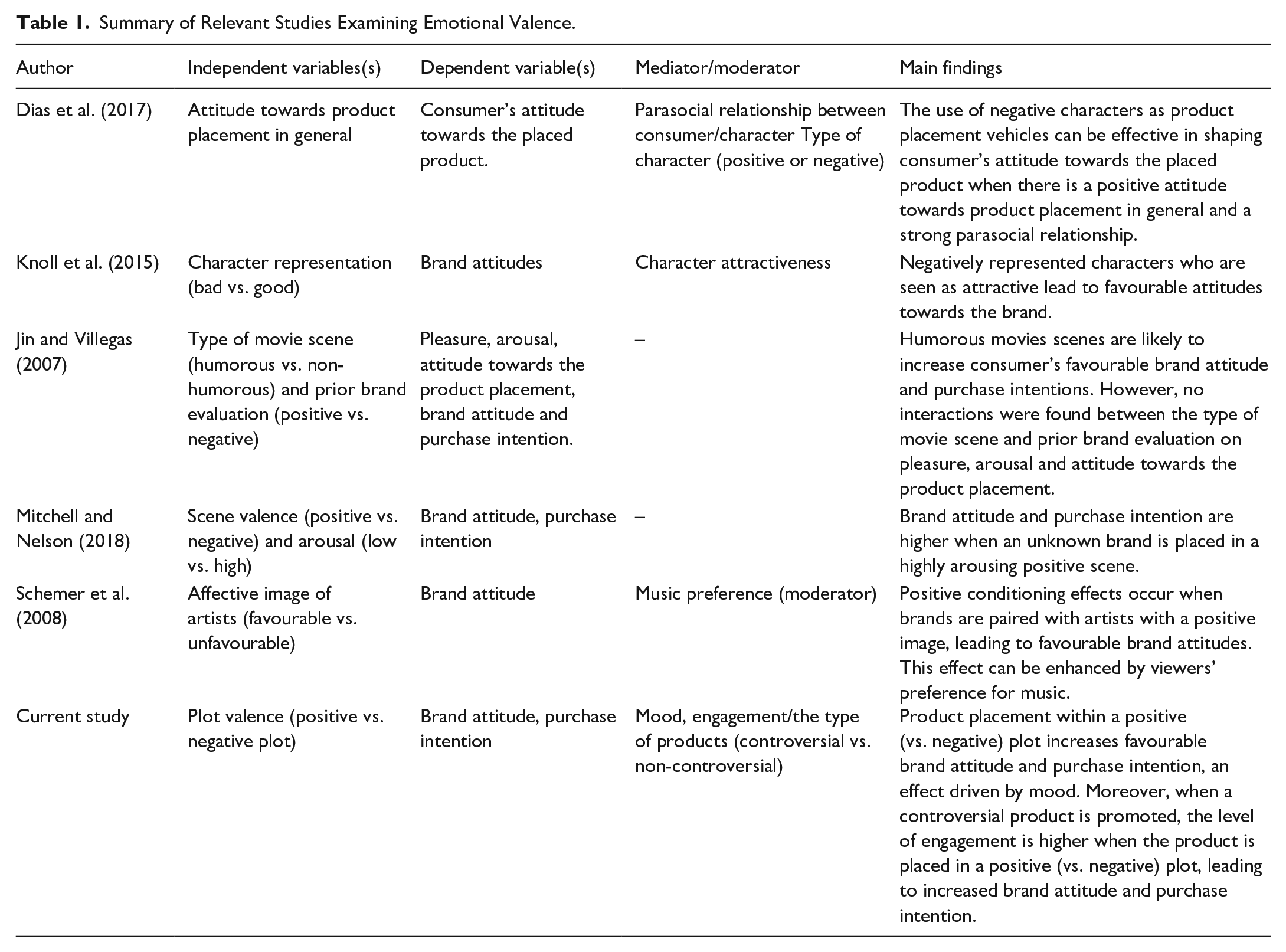
Previous studies have also utilised various ways to manipulate emotions. However, these manipulations sometimes assimilate external cues, such as images or music unrelated to the product placement (Mitchell & Nelson, 2018; Redondo, 2012), and character behaviour, and narrative alignment (Homer, 2009), or the studies investigate particular cases, such as contrasting product placements of divergent brands in various media (Jin & Villegas, 2007). As a result, the particular mechanism underlying the relationship between emotional plots and product placement effectiveness is yet to be fully understood.
Emotional contagion theory
Research on the impact of emotions on consumer decision-making processes has been conducted across various fields for decades (Guo et al., 2020). The present research has developed based on theories proposing that emotions can be largely identified based on three dimensions: dominance, arousal and valence (Detenber et al., 1998). Research on emotions mainly characterises them based on their valence, a continuum from pleasant to negative (Jin & Villegas, 2007; Septianto et al., 2019). The current research highlights the valence dimension in investigating the plausible effect of emotional plot on product placement, building on past studies, such as those by Mitchell and Nelson (2018), who demonstrated how positive emotional contexts, like humour and high arousal, can enhance brand attitudes and purchase intentions. Expanding on this foundation, this study explores both positive and negative valence to capture a broader spectrum of emotional influences. Additionally, by introducing engagement as a mediating mechanism and considering the moderating role of product controversy, this study seeks to deepen the understanding of how emotional contexts shape consumer responses, offering complementary insights to previous findings.
The current literature suggests that emotional plots can significantly influence consumers’ emotional responses through the mechanism of emotional contagion, as proposed by Hatfield et al. (1993). Emotional contagion is ‘a process in which a person or group influences the emotions or behaviour of another person or group through the conscious or unconscious induction of emotion states and behavioural attitudes’ (Du et al., 2011, p. 450). For instance, negative emotion can be transmitted, such as when a sad facial exhibition in advertising evokes sadness in consumers and stimulates donations (Small & Verrochi, 2009). Similarly, researchers argue that product placement in emotionally engaging movies or television drama can stimulate an emotional connection between the product and the show (Davtyan & Cunningham, 2017; Hong et al., 2008). The study contended that respondents connected emotionally with a TV show due to its relatability to their prior experiences, ensuing emotional reactions (Ta Park et al., 2020).
Notably, Emotional Contagion Theory shares both similarities and differences with a complementary perspective known as Affect Transfer Theory. While both frameworks explain how emotions shape evaluations and behaviours, they operate through distinct mechanisms. Affect Transfer Theory suggests that affective responses towards one stimulus can be transferred to another associated object, typically through repeated pairings or established cognitive associations (Till & Priluck, 2000; Xiaofei et al., 2021). This theory is widely applied in marketing contexts, such as celebrity endorsements, where positive emotions towards the endorser influence attitudes towards the endorsed brand (Zhao et al., 2025).
Unlike affect transfer theory, which posits that emotions generated from media are directly passed to the associated brand, emotional contagion theory explains how emotions are transmitted through social mechanisms, such as empathising with characters and vicariously experiencing their emotional states (Hatfield et al., 1993). Building on this, emotional contagion operates through nonverbal cues, such as facial expressions, tone of voice and body movements, which convey emotions to others who unconsciously ‘catch’ these emotional states (Hatfield et al., 1994).
This distinction is particularly relevant in the context of plot-driven product placements, where viewers are likely to internalise characters’ emotions, thereby influencing their attitudes towards the embedded brand. While both theories highlight the power of emotion in shaping human responses, they differ in their mechanisms and contextual applications.
Emotion-as-information hypothesis
Previous studies have displayed that emotions carry a common context for thought (Mayer et al., 1991). As such, emotions are frequently integrated into advertising correspondences to influence attitudes and purchase intentions (Jin & Villegas, 2007). This is because consumers utilise their experienced feelings as a main origin of information when developing evaluations or forming a consumption decision (Pham, 1998; Schwarz & Clore, 2007). This notion parallels the emotion-as-information hypothesis (Schwarz & Clore, 2007), which contends that consumers utilise emotional information in decision making, with positive emotions heightening favourable assessments of products and negative emotions heightening unfavourable ones (Schwarz & Clore, 1983).
Positive emotions advance information assimilation, problem-solving and decision-making (Wilson &Till, 2011), while negative emotions heighten affective judgments and risk perception (Clore et al., 2001). Such findings could clarify how recollected emotional responses (connected with emotional plots) can be used to form brand attitudes and purchase intentions towards placed products.
This study proposes that positive plots will lead to better consumer evaluations of a placed product than negative plots. Placing a product within a scene that evokes positive emotional responses should lead people to have analogous affective response to the product (Cavanaugh et al., 2015; Septianto et al., 2019). This study also proposes that positive plots will lead to better consumer evaluations of a placed product than negative plots.
The moderating role of controversial product type
Product placement effectiveness can be attributed to various factors, including the type of product being placed (Gupta et al., 2000) and consumer engagement with the content (Natarajan et al., 2018). Gupta and Gould (1997) categorise products into two distinct types: non-controversial (neutral) and controversial (ethically charged). Non-controversial products, such as everyday household items, are generally more accepted across cultures due to their lack of ethical implications (Mooij, 2003). In contrast, controversial products, such as alcohol, cigarettes and firearms, often raise ethical concerns and may provoke consumer backlash (Fam et al., 2009). Such placements tend to face resistance across various cultural contexts (Eisend, 2009).
Another key factor influencing product placement effectiveness is consumer engagement with the entertainment content (Scott & Craig-Lees, 2010). Engagement, defined as the willingness of consumers to interact and connect with a brand, plays a pivotal role in enhancing the impact of product placements (Hollebeek, 2011; Nadeem et al., 2021). Empirical evidence suggests that advertisements eliciting both positive and negative emotions evoke greater emotional engagement and persuasive impact compared to those with a unidimensional emotional theme, whether solely positive or negative (Jones & Hamby, 2024). Specifically, integrating positive emotions into a screenplay can significantly heighten audience engagement (D’Hooge et al., 2017; Paulich & Kumar, 2021).
Emotionally evocative content also has broader implications in the digital era. Akpinar and Berger (2017) demonstrate that emotionally charged content is more likely to be shared on social media, amplifying its reach and contributing to the success of provocative marketing campaigns. Similarly, Chen and Berger (2013) found that moderate levels of controversy generate higher levels of conversation and engagement than low or extreme controversy, highlighting the nuanced relationship between provocation and consumer response. These findings align with the broader concept of emotional content in marketing, which has been shown to drive consumer engagement and sharing behaviour (Tellis et al., 2019). Collectively, these insights underscore the interplay between emotion, engagement and the cultural acceptability of product placements in shaping their effectiveness.
Designating controversial products in a positive scene may diminish any controversy because such scenes heighten hedonic value, thus, leading to more positive attitudes (Zhang et al., 2023; M. S. Lee et al., 2020). Koordeman et al. (2014) found that positive portrayals of alcohol, a commonly controversial product, can generate more positive attitudes towards it. However, J. Lee and Cho (2022) argue that when a positive message is incongruently paired with a negative image, consumers are more likely to perceive the product negatively. Conversely, negative messages can be softened or even reversed when accompanied by a positive image, as consumers absorb the image’s positive emotional cues, even when the image is incongruent, resulting in more favourable evaluations (J. Lee & Cho, 2022). Thus, this research argues that placing a controversial product in a positive plot should lead to higher engagement than placing it in negative plot, subsequently affecting consumer evaluations of the product.
Overview of studies
Two experimental studies were conducted to address the above hypotheses. Study 1 aimed to determine how brand attitude and purchasing intentions were affected by positive (vs. negative) plots. In addition, it investigated the role of mood as mediator in driving the effect of emotional plots. The aim of Study 2 was to examine the role of engagement as mediator in driving the effect of positive (vs. negative) plots when the product type is controversial.
The two studies manipulated emotion in movie scripts, using placed fictitious brands to measure the impact. In both studies, respondents read movie scripts with different plot valence (positive or negative), evaluated the product placed within the plot and then indicated their brand attitudes and purchase intentions. In order to test H1 and H2, Study 1 utilised bottled water in emotional plots to measure respondents’ brand attitude and purchase intention. Study 2 replicated the findings of Study 1 by using different emotional plots (H1 and H2) and added beer in the plots as a controversial product to test H3.
Study 1
The objective of Study 1 was to test Hypotheses 1 and 2. To evaluate the cause-and-effect of plot on brand attitudes and purchase intentions, we experimentally manipulated the valence of the plot in this study.
Method
Participants
One hundred and ninety-seven US respondents (51.3% male; Mage = 40.18 years old, SD = 14.52) were invited through Prolific in exchange for financial compensation.
Design and procedure
Study 1 utilised a single-factor, two-level (plot: positive vs. negative) between-subjects experimental design. Respondents were randomly assigned to either positive or negative product plot placement, reading a movie script with both positive and negative plots, but only one plot containing bottled water. The stimuli are provided in Supplemental Appendix A. The order of reading was also counterbalanced. The study utilised a counterbalanced approach to control for potential influence of order and emotional states on results. Respondents were presented with both positive and negative plots to ensure the observed effect was from the tested variable, rather than external influences (Charness et al., 2012). Bottled water was chosen due to its neutrality and a fictitious brand (Winterich & Barone, 2011), ‘Aqua Blue’ to avoid confounding brand-related factors (Mitchell & Nelson, 2018). The movie scripts, adapted from Berger et al. (2021), tell the story of Alex proposing to Sarah and their upcoming wedding. They are excited but fear to tell their families, as both have negative views on love. In the positive plot, Alex’s mom supports their marriage, while in the negative plot, Alex’s dad disagrees, leading to arguments.
Measures
After reading the movie script, respondents were asked to rate their attitudes towards the brand, purchase intentions, mood and processing fluency, using a 7-point scale with each items. The questionnaires are provided in Supplemental Appendix B.
Results and discussion
Plot manipulation check
The stimuli, the movie scripts, were adapted from Berger et al. (2021). Two positive scenes and two negative scenes in Berger et al. (2021) were pretested and confirmed the manipulation to be negative and positive. In their study, respondents were either exposed to positive scenes followed by negative scenes, or negative scenes followed by positive scenes, or interspersed positive and negative scenes. In accordance with Berger et al. (2021), the present study manipulated the order of positive and negative scenes.
Brand attitudes and purchase intentions
The results of an independent sample t-test indicated that respondents who evaluated product placement in the positive plot showed more positive brand attitudes (M = 4.85, SD = 1.36) than those evaluating product placement in the negative plot (M = 3.49, SD = 1.39; t(195) = 6.96, p < .001, d = 1.36). See Figure 1. Thus, Hypothesis 1a is supported.
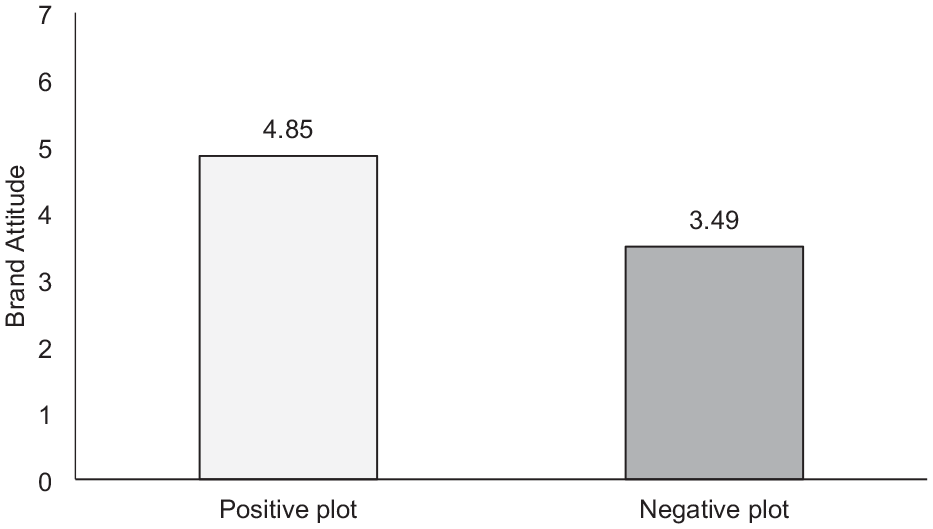
Brand attitude (in 7-point scale; Study 1).
Similarly, the results of independent sample t-test indicated that respondents reviewing product placement in the positive plot reported stronger purchase intentions (M = 3.99, SD = 1.57) than those reviewing product placement in the negative plot (M = 3.14, SD = 1.51; t(195) = 3.87, p < .001, d = 0.85). See Figure 2. Thus, Hypothesis 1b is supported.
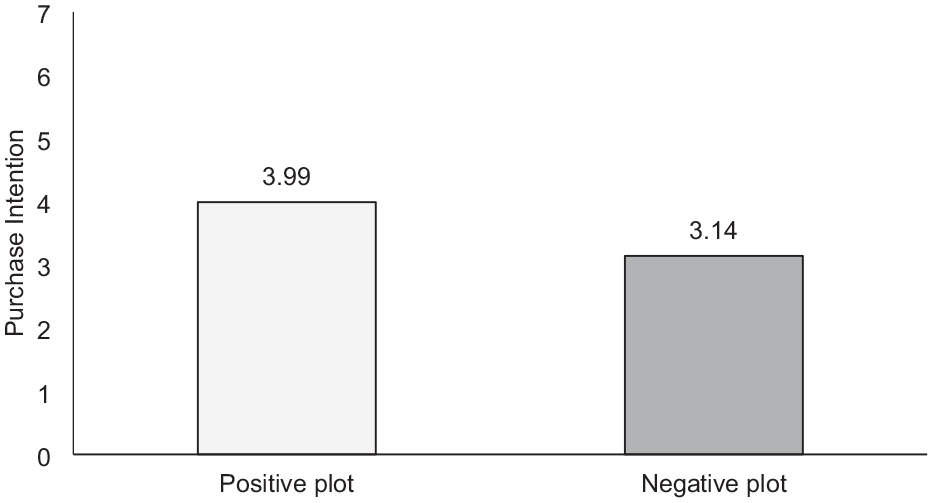
Purchase intention (in 7-point scale; Study 1).
Mood
The results of an independent sample t-test showed that respondents reviewing product placed in the positive plot reported more positive mood (M = 5.07, SD = 1.60) than those reviewing product placement in the negative plot (M = 2.37, SD = 1.50; t(195) = 12.24, p < .001, d = 2.70). See Figure 3. Nevertheless, an independent sample t-test revealed that there were no significant differences in the processing fluency level amongst respondents reviewing product placement in the positive (M = 4.77, SD = 1.58) and negative plot (M = 4.51, SD = 1.66; t(195) = 1.12, p = .26).
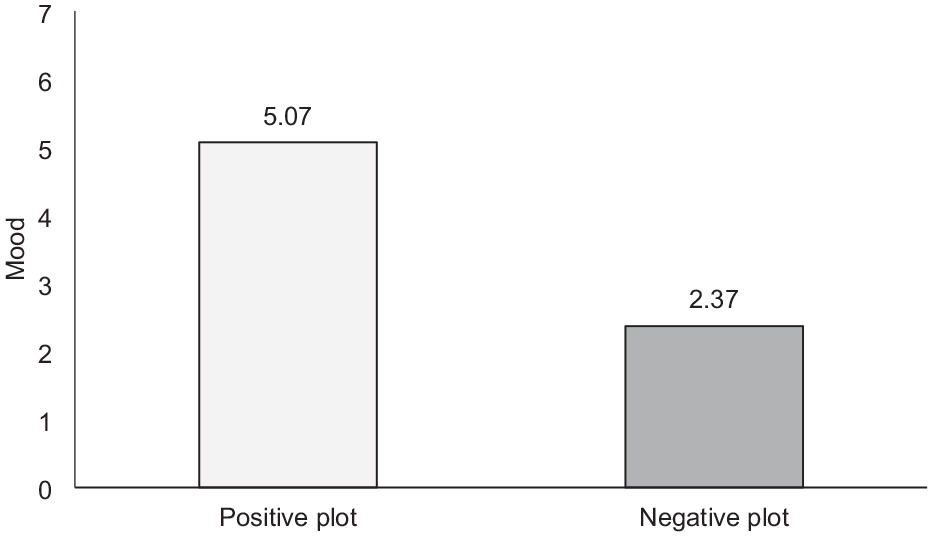
Mood (in 7-point scale; Study 1).
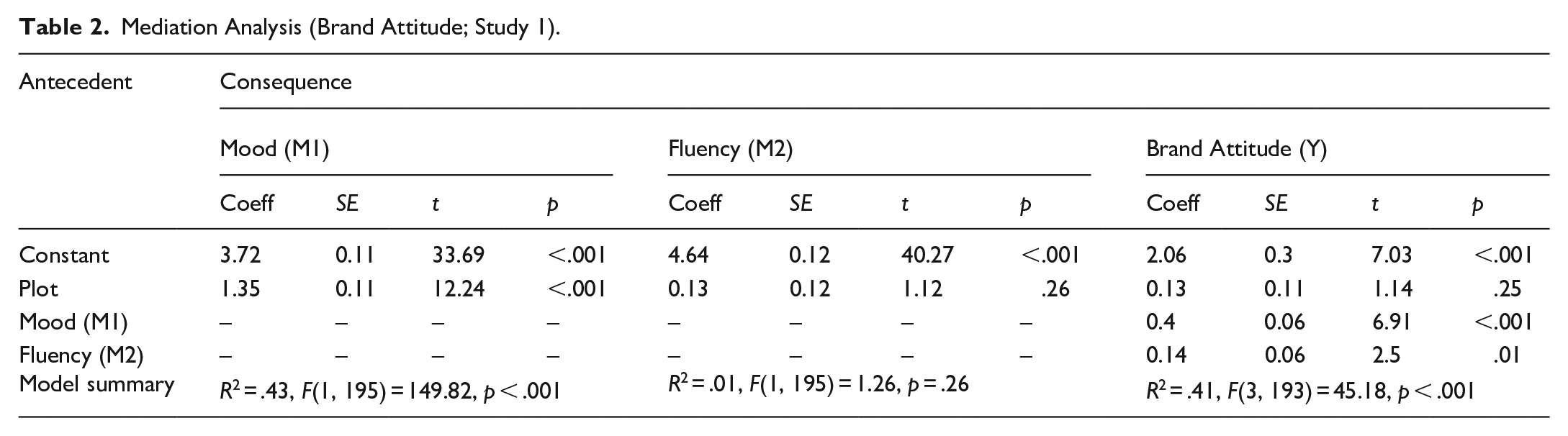
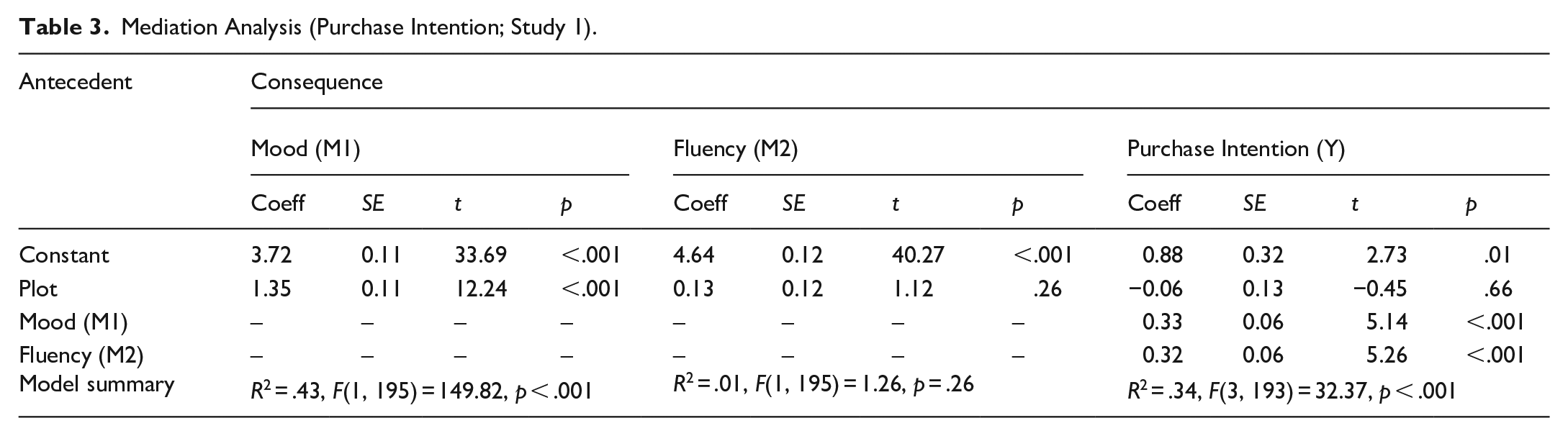
We then utilised PROCESS Model 4 with 5,000 bootstrap resamples (Hayes, 2017) to determine whether plot (positive = 1, negative = −1) increased positive brand attitudes via mood. We also included another potential moderator, which is processing fluency. The indirect effect via processing fluency was non-significant (B = 0.02, SE = 0.02, 95% CI [ −0.01, 0.06]), whereas the indirect effect via mood was significant (B = 0.54, SE = 0.10, 95% CI [0.34, 0.75]; see Figure 4 and Table 2). These findings supported Hypothesis 2a. We examined the indirect effect of plot on purchase intentions through a mediation analysis. The indirect effect via processing fluency was non-significant (B = 0.04, SE = 0.04, 95% CI [−0.29, 0.12]), whereas the indirect effect via mood was significant (B = 0.44, SE = 0.10, 95% CI [0.27, 0.64]; see Figure 5 and Table 3). Thus, Hypothesis 2b is supported.
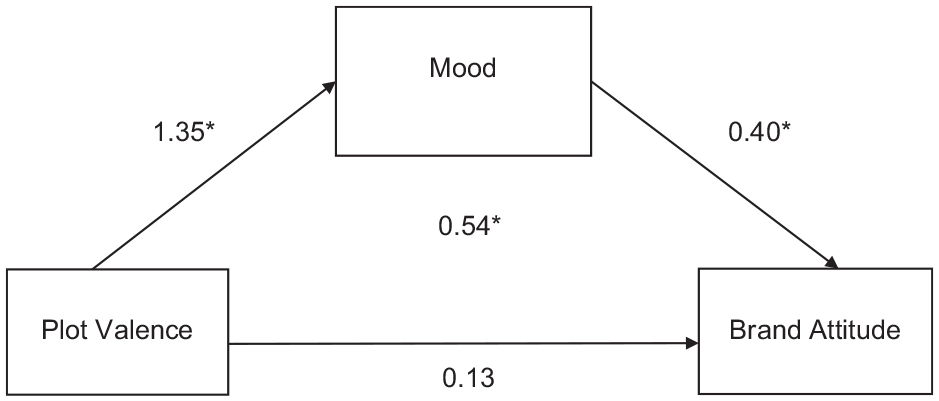
Mediation analysis (Study 1 for Brand Attitude) path diagram of the mediation model with standardised beta wights.
Mediation Analysis (Brand Attitude; Study 1).
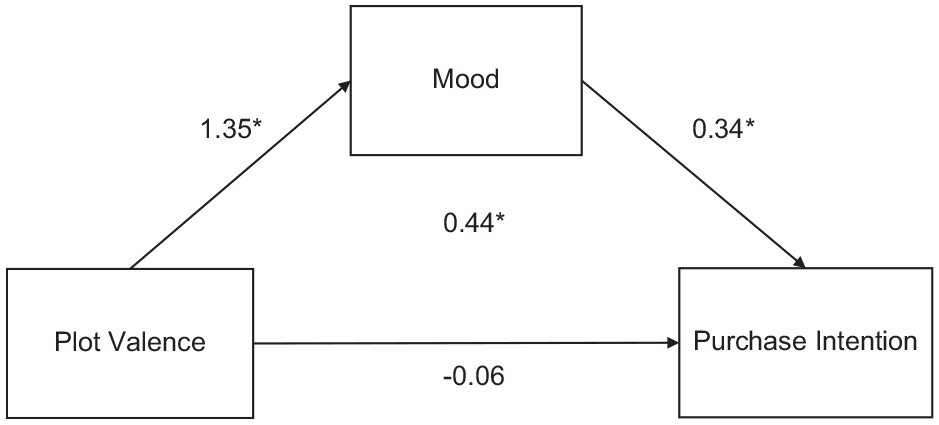
Mediation analysis (Study 1 for Purchase Intention) path diagram of the mediation model with standardised beta wights.
Mediation Analysis (Purchase Intention; Study 1).
Discussion
The findings from Study 1 show that a positive (vs. negative) plot heightens positive brand attitudes and purchase intentions. Moreover, the influence of plot on brand attitudes and purchase intentions was mediated by mood.
Study 2
Study 2 extended Study 1’s findings by replicating findings using different movie scripts and testing the role of engagement in driving the effect of a positive (vs. negative) plot in the case of a controversial product (H3). Hence, Study 2 tested two distinct products and measured engagement as another mediator.
Method
Participants
Three hundred and ninety-nine US respondents (50.1% males; Mage = 36.94 years old, SD = 17.04) were gathered through Prolific with financial compensation.
Design and procedure
Study 2 utilised a 2 (plot: positive vs. negative) × 2 (product: controversial vs. non-controversial) between-subjects experimental design. As in Study 1, respondents read positive and negative movie script plots with product placements, in a counterbalanced order. The study also tested a controversial product (i.e. beer; see Appendix A).
The movie scripts, adapted from Berger et al. (2021), tell the story of high school friends (Rachel, Gustavo, Rebecca and Pascal), who want to watch the Broadway musical Hamilton. In the positive plot, the manager gives Rachel and Gustavo a shift off to go to the theatre, while Rebecca and Pascal miss the musical due to being unable to afford the huge bag of candy they filled. After reading the movie script, respondents answered similar questions to Study 1 on brand attitudes, purchase intentions and mood. However, we also measured levels of engagement to test Hypothesis 3.
Measures
A 7-point rating was used to measure the question for engagement using four items (adapted from Berger et al., 2021; Di Muro & Murray, 2012).
Results and discussion
Product type manipulation check
A two-way ANOVA was performed to investigate controversy. The results showed a non-significant effect of plot (F(1, 395) = 2.44, p = .12) and a non-significant interaction effect (F(1, 395) = 0.97, p = .32). However, the main effect of product (F(1, 395) = 97.06, p < .01) was significant, regardless of the plot, respondents reviewing the product placement of beer reported higher controversy (M = 3.87, SD = 1.65) than those reviewing the product placement of water (M = 2.34, SD = 1.46).
Brand attitudes and purchase intentions
A two-way ANOVA was conducted to examine brand attitudes. The results showed a non-significant main effect of product (F(1, 395) = 1.83, p = .18) and a non-significant interaction effect (F(1, 395) = 2.03, p = .16). Nevertheless, there was a significant main effect of plot (F(1, 395) = 115.53, p < .001, ηp2 = .23), regardless of the product, respondents reviewing product placement in the positive plot reported more positive brand attitudes (M = 4.68, SD = 1.19) than those evaluating product placement in the negative plot (M = 3.33, SD = 1.31). See Figure 6. Thus, Hypothesis 1a is supported.
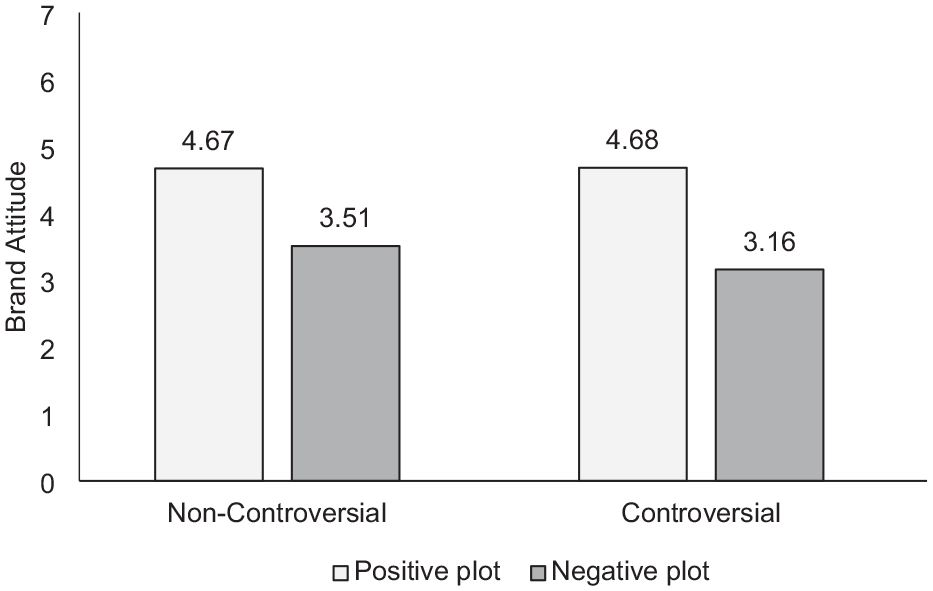
Brand attitude (in 7-point scale; Study 2).
A two-way ANOVA examining purchase intentions revealed that the main effect of product (F(1, 395) = 2.43, p = .12) and the interaction effect (F(1, 395) = 1.48, p = .22) were not statistically significant. However, there was a significant main effect of plot (F(1, 395) = 29.67, p < .001, ηp2 = .07), regardless of the product, respondents reviewing product placement in the positive plot reported stronger purchase intentions (M = 3.61, SD = 1.50) than those reviewing product placement in the negative plot (M = 2.81, SD = 1.47). See Figure 7. Thus, Hypothesis 1b is supported.
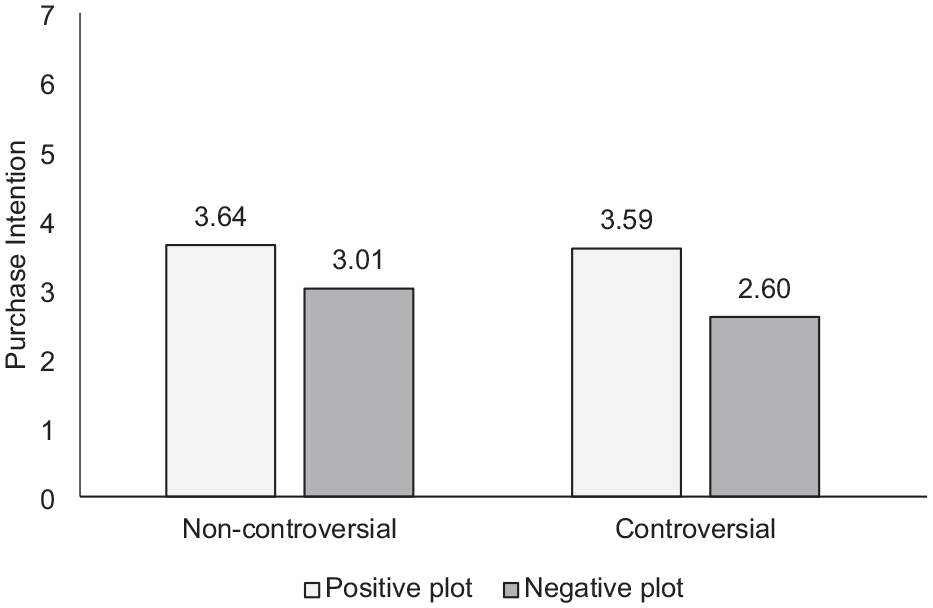
Purchase intention (in 7-point scale; Study 2).
Mood and engagement
A two-way ANOVA investigating mood displayed that the main effect of product (F(1, 395) = 0.23, p = .63) and the interaction effect (F(1, 395) = 0.17, p = .68) were not statistically significant. Nevertheless, there was a significant main effect of plot (F(1, 395) = 164.89, p < .001, ηp2 = .30), regardless of the product, respondents reviewing product placement in the positive plot reported more positive mood (M = 4.55, SD = 1.46) than those reviewing product placement in the negative plot (M = 2.66, SD = 1.48). See Figure 8.
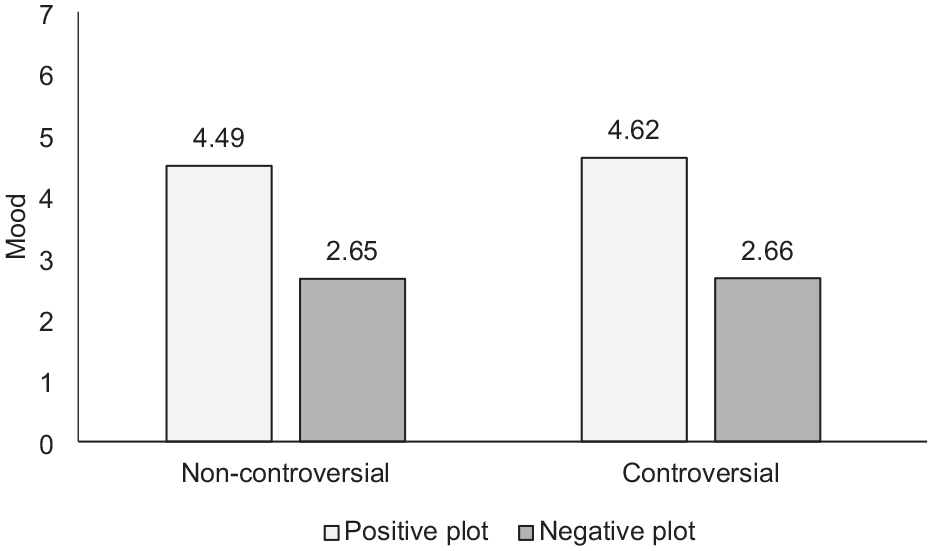
Mood (in 7-point scale; Study 2).
In addition, a two-way ANOVA was carried out to investigate engagement. While the results revealed non-significant main effects of product (F(1, 395) = 0.47, p = .49) and plot (F(1, 395) = 1.04, p = .31), a significant interaction effect appeared (F(1, 395) = 5.20, p = .02, ηp2 = .01). Specifically, in the case of beer, higher levels of engagement (M = 3.87, SD = 1.51) were reported by respondents reviewing product placement in the positive plot than those reviewing product placement in the negative plot (M = 3.37, SD = 1.48; F(1, 395) = 5.30, p = .02, ηp2 = .01; see Figure 9). However, in the case of the bottled water, the differences in engagement between the positive (M = 3.42, SD = 1.48) and negative plots were non-significant (M = 3.61, SD = 1.45; F(1, 395) = 0.82, p = .37).
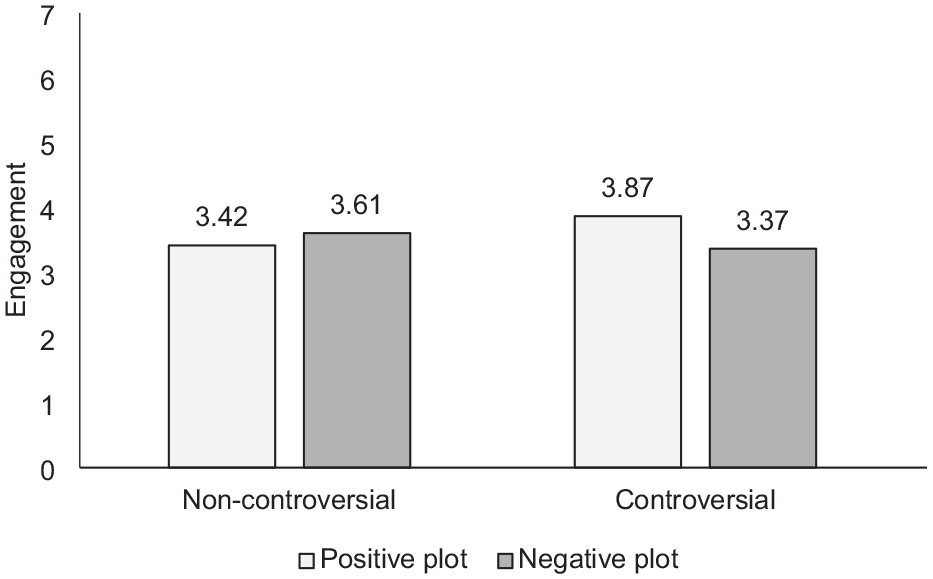
Engagement (in 7-point scale; Study 2).
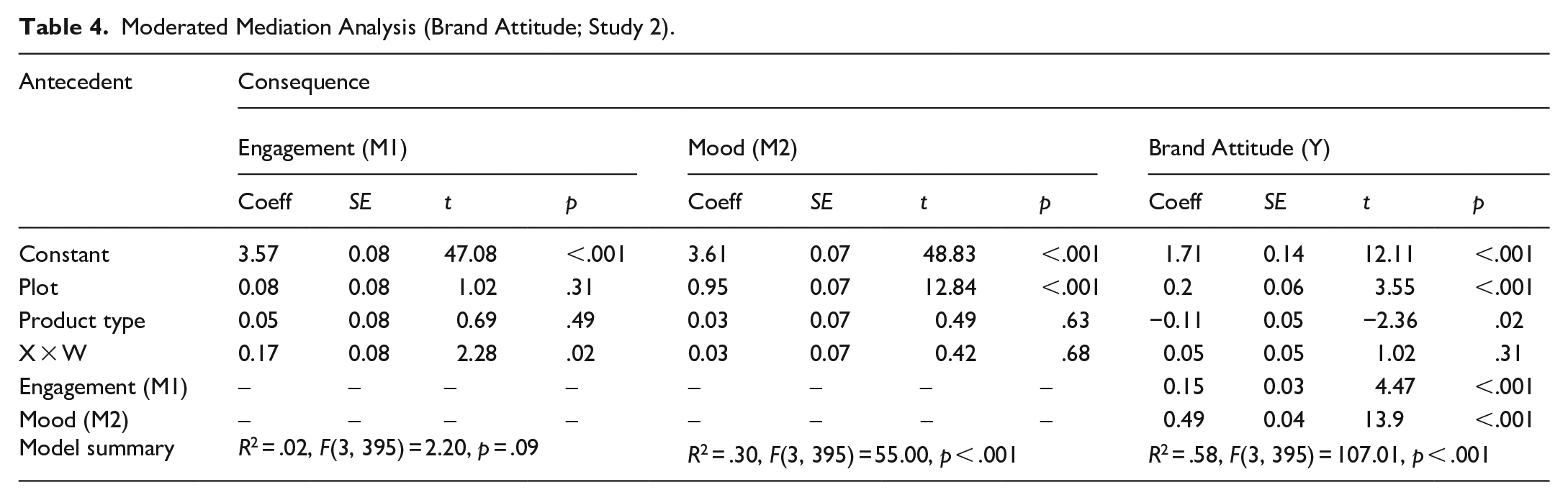
We utilised PROCESS Model 8 with 5,000 bootstrap resample (Hayes, 2017) to determine the effect of plot (positive = 1, negative = −1), moderated by product (beer = 1, bottled water = −1), on brand attitudes via mood and engagement. See Table 4 and Figure 10. Examining mood, it revealed a non-significant index of moderated mediation (B = 0.03, SE = 0.07, 95% CI [−0.11, 0.17]) because the indirect effect was significant for both beer (B = 0.48, SE = 0.07, 95% CI [0.35, 0.61]) and bottled water (B = 0.44, SE = 0.07, 95% CI [0.32, 0.59]). Thus, Hypothesis 2a is supported. In contrast, for engagement, it showed a significant index of moderated mediation (B = 0.05, SE = 0.03, 95% CI [0.01, 0.11]), such that there is a significant indirect effect in the case of beer (B = 0.04, SE = 0.02, 95% CI [0.01, 0.08]) but non-significant in the case of bottled water (B = −0.02, SE = 0.02, 95% CI [−0.05, 0.02]). Thus, Hypothesis 3a is supported.
Moderated Mediation Analysis (Brand Attitude; Study 2).
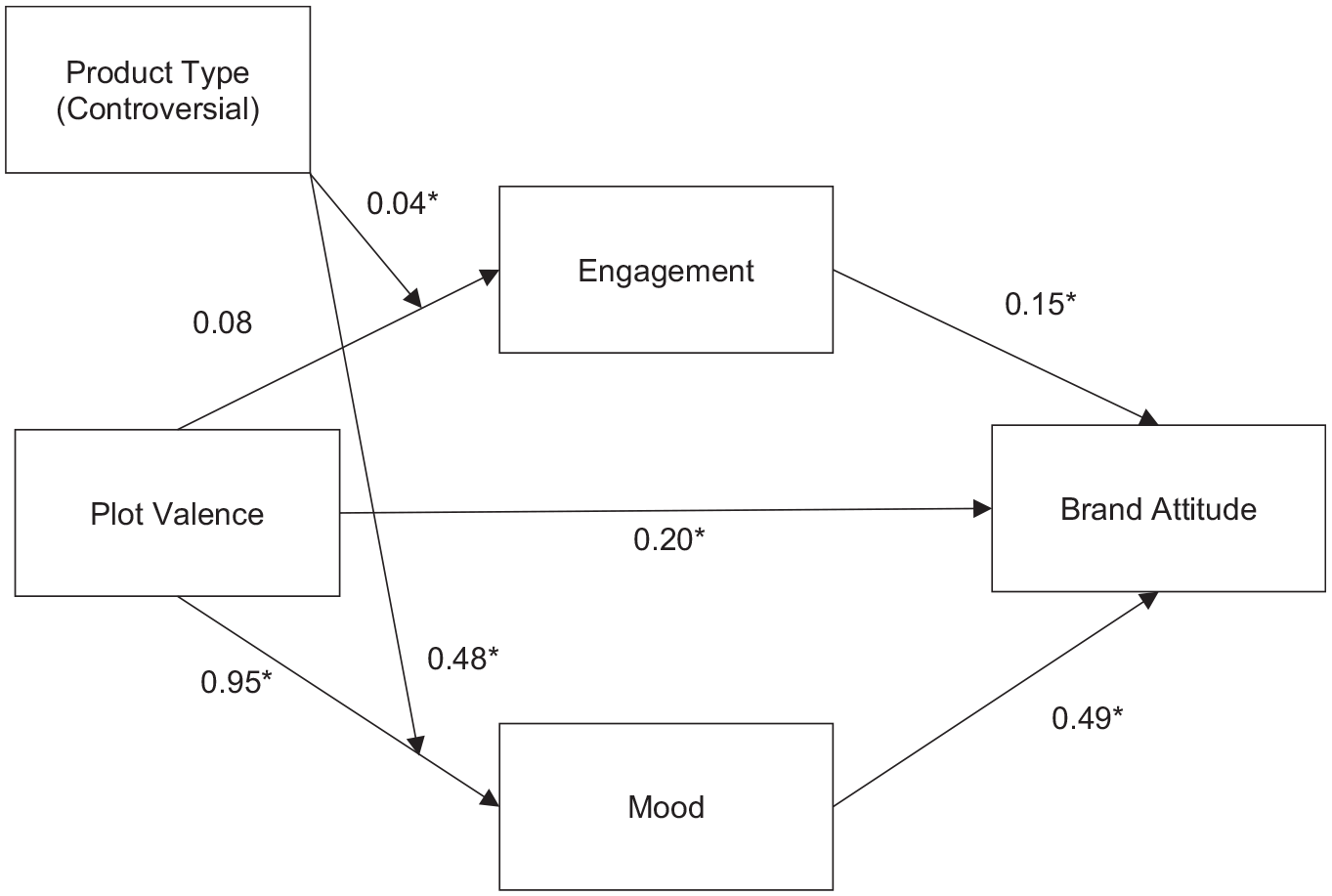
Moderated mediation analysis (Study 2 for Brand Attitude) path diagram of the mediation model with standardised beta wights.
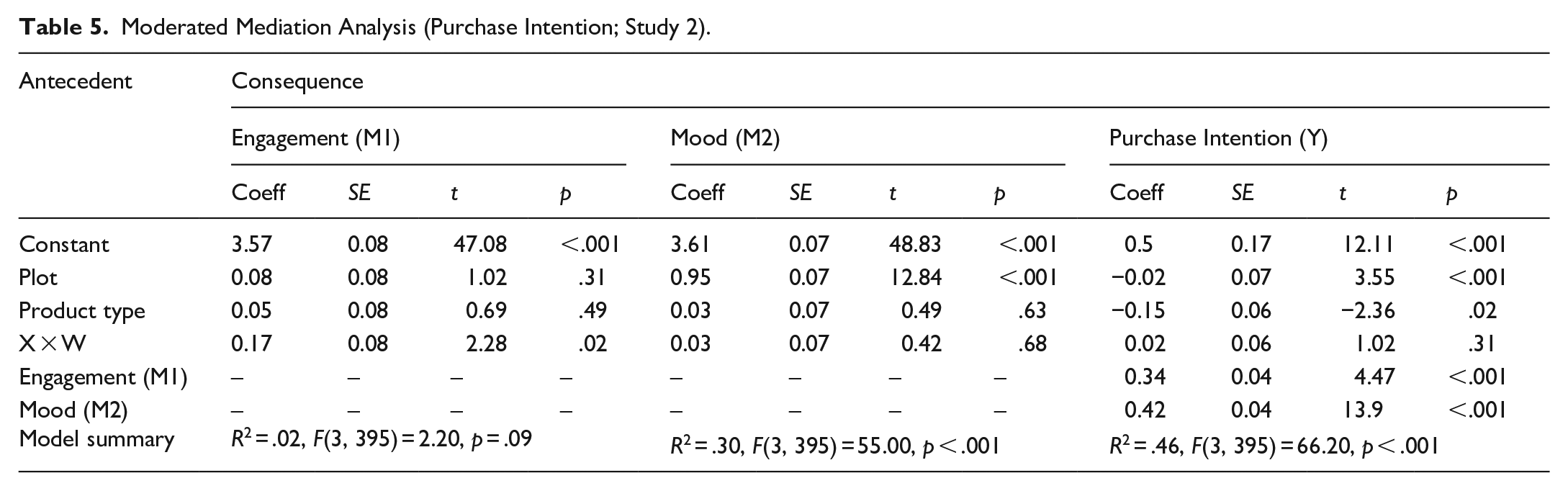
We performed similar analyses to investigate purchase intention as the dependent variable. See Table 5 and Figure 11. Mood has a non-significant index of moderated mediation (B = 0.03, SE = 0.06, 95% CI [−0.10, 0.15]) because there is a significant indirect effect for both beer (B = 0.41, SE = 0.07, 95% CI [0.28, 0.55]) and bottled water (B = 0.38, SE = 0.07, 95% CI [0.26, 0.52]). Thus, Hypothesis 2b is supported. Investigating engagement, it showed a significant index of moderated mediation (B = 0.12, SE = 0.05, 95% CI [0.01, 0.23]), the indirect effect was significant in the case of beer (B = 0.09, SE = 0.04, 95% CI [0.02, 0.16]), but non-significant in the case of bottled water (B = −0.03, SE = 0.04, 95% CI [−0.11, 0.04]). Thus, Hypothesis 3b is supported.
Moderated Mediation Analysis (Purchase Intention; Study 2).
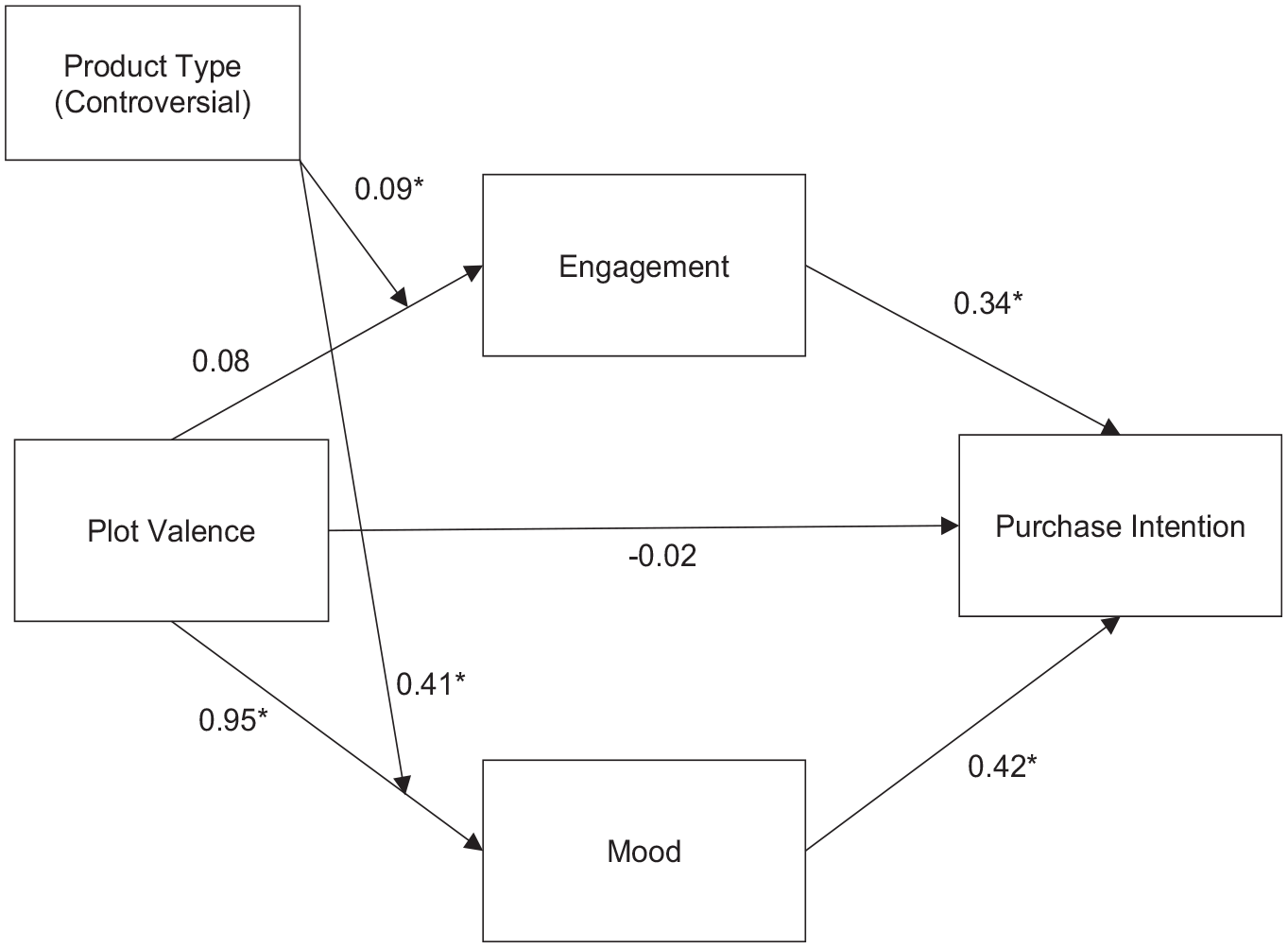
Moderated mediation analysis (Study 2 for Purchase Intention) path diagram of the mediation model with standardised beta wights.
Discussion
The results of Study 2 showed further support for the key hypotheses by replicating the results of Study 1 regarding the positive effect of product placement in a positive (vs. negative) plot on brand attitudes and purchase intentions. Moreover, positive mood acted as a critical mediator. However, and more importantly, we also examined different products, including beer (a controversial product). The results displayed that in the case of beer (but not bottled water), respondents reported higher levels of engagement when reviewing product placement in the positive (vs. negative) plot.
General discussion
Although product placement is used extensively and its influence on consumer behaviour has been studied by various researchers (Balasubramanian et al., 2006; Eisend, 2009; Russell, 2002). However, most of these studies investigated the cognitive effect of product placement, resulting in limited research on the affective (or emotional) component of product placement (Balasubramanian et al., 2006; Cholinski, 2012). Moreover, existing studies have studied general products, overlooking controversial ones, like gambling and alcohol that pose unique challenges (Dias et al., 2017; Schemer et al., 2008). The findings of this study cater to this research gap. Two experimental studies examined consumers’ attitudes and behavioural intention towards products placed in positive (vs. negative) plots, applying emotional contagion theory and the emotion-as-information perspective.
Our research shows that positive emotional scenes boost brand attitudes and purchasing behaviour, influenced by mood. Moreover, when controversial products are promoted, respondents report higher engagement levels in positive emotional scenes, leading to increasingly favourable brand attitudes and purchase intentions. This is an important finding given that many cultures resist the placement of ethically controversial products (Eisend, 2009). Our findings suggest that when the audience is exposed to incongruence (i.e. a controversial product in a positive emotional scene), which likely results in surprise and heightening attention (M. S. Lee et al., 2020), consumers were more engaged. Interestingly, we did not find a similar effect for the non-controversial product suggesting that when the audience is exposed to expected information (i.e. a non-controversial product in a positive emotional scene; M. S. Lee et al., 2020), it is unlikely to lead to enhanced engagement.
Theoretical implications
The theoretical contributions of this study are threefold, aligning with MacInnis’s (2011) framework for conceptual contributions in marketing. First, since the study extends previous research investigating the influence of positive plot in the context of product placement, it offers what MacInnis (2011) describes as a revising contribution that is, ‘seeing what has been identified in a different way’ (p. 143). We find that placing a product within a positive emotional plot leads to more favourable brand attitudes and stronger purchase intentions, regardless of product type.
Our findings help to address the inconclusive results in prior research comparing the effects of positive versus negative emotional stimuli in product placement. Specifically, we demonstrate the critical role of mood and narrative engagement as mediating mechanisms with the latter being dependent on the type of product. While some studies have found product placements in negative narrative contexts to be effective (e.g. Dias et al., 2017; Knoll et al., 2015), our findings align with research that supports the effectiveness of placement in positive emotional plots (e.g. Jin & Villegas, 2007; Mitchell & Nelson, 2018), and crucially, we identify the psychological processes underpinning these effects. Thus, our study clarifies mixed findings in the literature and contributes new insights into the impact of emotional tone in product placement.
Second, this study provides a delineating contribution by investigating the impact of emotional plot placement on brand attitudes and purchase intentions through a different experimental manipulation of the core constructs. Specifically, we respond to MacInnis’ (2011) call to ‘detail, specify, or map out how a construct, theory, or domain operates, including its boundaries, processes, or conditions’ (p. 144). By systematically manipulating the emotional tone of a movie script while holding other variables constant, our controlled experimental design allowed us to isolate the effects of emotional plots on consumer responses, thereby allowing for more robust conclusions.
This approach is important because different manipulation methods can yield varying results, as they elicit emotional responses in contextually and psychologically distinct ways (Siedlecka & Denson, 2019). For instance, studies using real movie scenes (e.g. Jin & Villegas, 2007; Mitchell & Nelson, 2018) tend to generate more authentic emotional reactions due to their naturalistic contexts, closely mirroring typical media consumption. However, studies employing controlled, hypothetical narratives provide greater experimental control, allowing researchers to isolate specific variables, yet lack the contextual richness and emotional depth of real-life scenarios (Knoll et al., 2015). This divergence in methodological approaches can lead to variations in outcomes, as naturalistic setups may enhance emotional engagement, while controlled manipulations allow for precise testing of isolated effects. By adopting a controlled experimental methodology, our study enhances methodological rigour and enables the theoretical application of emotional contagion, thereby advancing our understanding of the mechanisms linking emotional plot placement to consumer decision-making.
As noted in the preceding paragraph, this study offers understanding of the mechanism that connects emotional plots and consumer outcomes, providing what McInnis (2011) refers to as an identifying contribution that is, one that ‘establishes or reveals something that has yet to be established’ (p. 143). Findings of our two experimental studies show that a positive plot heightens favourable consumer attitudes and purchase intentions towards the brand. This influence is driven by positive mood, supporting the emotion-as-information hypothesis. Researchers have previously utilised emotion-as-information to examine the influence of emotion on consumer responses (D’Hooge et al., 2017; Mitchell & Nelson, 2018). Notably, the current research examined the effect of emotional plots when placing different product types (i.e. controversial products). The findings from Study 2 showed that promoting controversial products in a positive plot enhances engagement and consumer judgments, with positive mood mediating the effect of positive plot and brand attitude on purchase intention, whereas engagement only increases when the product is controversial. This adds a new layer to emotional contagion theory by showing that controversial products require greater engagement to generate favourable brand attitudes.
Thus, this research found significant theoretical contributions for the study of product placement by mixing emotional contagion theory and the emotion-as-information perspective as relevant theories. In doing so, this research offers insight into the process underlying the effect of product placement in emotional plots on consumer outcomes, for various product types.
Practical implications
The study suggests that placing a product in a positive plot is more effective in boosting brand attitudes and purchase intentions than in a negative plot, thus recommending its placement to marketers and managers. Negative plots can negatively affect controversial products, while positive ones can promote positive brand attitudes and purchase intentions, benefiting managers and marketers. However, avoiding such placements can mitigate the negative impacts of unfavourable evaluations.
The overall recommendation is to employ a positive plot for all products, regardless of degree of controversy. Notably, when seeking to communicate controversial products (e.g. alcohol), a positive plot (e.g. celebratory events) can be useful as it strengthens engagement. Our findings suggest that managers should resist the temptation to place controversial products within stressful, violent or gritty narratives, even when such placements align with the product’s image or occur at pivotal moments in the storyline, as these contexts may undermine consumer perceptions. By incorporating these products into storylines or settings that evoke positive emotions, brands can mitigate potential negative perceptions and enhance consumer receptivity. Thus, our findings are beneficial to advertisers and marketers in developing successful product placement strategies.
Moreover, retailers can apply the findings by designing physical store environments that enhance positive emotional engagement, increasing the effectiveness of in-store advertisements and product placements. For instance, placing promotional displays in visually appealing areas of the store that naturally evoke a sense of positivity and warmth. Examples include aesthetically designed sections with vibrant colours or areas associated with positive experiences, such as near seasonal or celebratory displays.
Additionally, these findings could be extended to digital marketing environments. Advertisers could leverage virtual store tours or augmented reality tools to create immersive, uplifting experiences for consumers engaging with controversial products online. For example, pairing these products with positive imagery or contexts in online ads and social media campaigns could enhance emotional engagement and increase the likelihood of favourable consumer outcomes.
Limitations and future research avenue
Despite the interesting findings, the present study comes with some limitations that could be addressed in future research. First, the present study utilised movie scripts as emotional stimuli to create a controlled experimental environment to test the effect of emotions (positive vs. negative). Although ecological validity was sacrificed due to the manipulations that involved reading movie script, the present research controlled the independent variable, namely emotional valence.
To increase ecological validity, future studies could use a controlled experimental methodology, like theatre methodology (Russell, 2002), which creates an experience that closely resembles watching television in real-life. Moreover, future study should explore whether implanted product placement should only consider instantaneous emotions at the time of its appearance or emotions throughout the entire movie. Furthermore, future studies could also incorporate product designs into movie posters for improved external validity and authenticity. It could fill a gap between research focus (e.g. product placement) and manipulation method (e.g. reading plots).
Secondly, the limitations of the study include its confined geographic location in the United States, which may limit its generalisability or external validity to other populations or cultures. Future research is suggested to investigate if the findings apply to other cultures, particularly conservative cultures, with different views on controversial product placement (Eisend, 2009).
Third, the use of fictitious brands in the experiment may also limit the validity and generalisability of our findings. Using a fictitious brand is to ensure no confounding results (Mitchell & Nelson, 2018) and avoid the influence of prior brand knowledge (Low & Lamb, 2000). Future research should explore the influence of emotional plots on product placement effectiveness for well-known brands and whether prior brand attitude moderates the effects, as existing brands are commonly placed in movies.
Lastly, this study examines the moderating role of product type (i.e. controversial product). Future study could extend this inquiry by investigating the role of product type (i.e. hedonic vs. utilitarian) as a moderator. Given that consumers may be motivated to reduce negative emotions by obtaining the more hedonic good (Dhar & Wertenbroch, 2000).
The study suggests that emotional plots, based on emotional contagion and the emotion-as-information hypothesis, influence consumers’ brand attitudes and purchase intentions. It suggests that positive mood and engagement mediate this process. Further research could explore factors affecting emotional contagion or the emotion-as-information effect, such as the moderating role of controversial products in enhancing positive emotional plots. Both theories contribute to understanding consumer behaviour and decision-making.
Supplemental Material
sj-docx-1-anz-10.1177_14413582251347324 – Supplemental material for The Role of Emotional Plot in Driving Product Placement Effectiveness
Supplemental material, sj-docx-1-anz-10.1177_14413582251347324 for The Role of Emotional Plot in Driving Product Placement Effectiveness by Joohee Kim, Anne-Maree O’Rourke, Arnold Japutra and Sebastiaan van Doorn in Australasian Marketing Journal
Footnotes
Declaration of conflicting interests
The author(s) declared no potential conflicts of interest with respect to the research, authorship, and/or publication of this article.
Funding
The author(s) received no financial support for the research, authorship, and/or publication of this article.

Supplemental material
Supplemental material for this article is available online.
References
Supplementary Material
Please find the following supplemental material available below.
For Open Access articles published under a Creative Commons License, all supplemental material carries the same license as the article it is associated with.
For non-Open Access articles published, all supplemental material carries a non-exclusive license, and permission requests for re-use of supplemental material or any part of supplemental material shall be sent directly to the copyright owner as specified in the copyright notice associated with the article.
