



Abstract
This meta-analysis explores how Normative Conduct Theory explains high-involvement behaviours, such as choosing electric vehicles, and low-involvement behaviours, such as reducing meat intake – both aimed at lowering carbon emissions. The study reveals that personal norms, descriptive norms, injunctive norms and social norms positively correlate with both behavioural categories examined. Personal norms are found to have the most significant impact on low-involvement behaviours, aligning with existing literature. In contrast, injunctive norms are the most influential for high-involvement behaviours, such as selecting electric vehicles, suggesting that these choices are strongly impacted by recommendations from significant others. Descriptive norms, social norms and personal norms follow in their influence on EV uptake. The analysis highlights the complex role of normative influences in promoting carbon reduction behaviours, providing valuable insights for advancing theoretical understanding and developing practical interventions to encourage sustainable choices.
Keywords
Introduction
Record extreme heat events are impacting our Earth. The last 12 months have seen unprecedented global temperatures, culminating in May 2024 which was registered as the hottest month on record (Rice, 2024). While the evidence for human-caused climate change is overwhelming, the warnings have been provided for decades, with predictions that ‘by the first decade of the next century we may experience global temperatures warmer than any in the last 1000 years’ (Broecker, 1975, p. 11). However, instead of being driven by the mounting evidence, action on climate change has been relatively slow to gather pace. Worryingly, total greenhouse gas emissions, with the exception of the COVID-19 period (2020–2022), have continued to grow year on year, with a total historical increase of 32% since the turn of the century (Ebbs et al., 2024).
Consequently, action is needed now on all fronts to combat this evolving global disaster. Given limited resources and, seemingly, willpower it would be prudent to target the main culprits of emissions as a matter of urgency. According to Project Drawdown, which bases its calculations on IPCC 2023 (Jasper, 2023), two main sources of Green House Gases (GHGs) emissions are Food, Agriculture, and Land use (24% of global GHG emissions) and Transportation (14% of global GHG emissions) (Dhakal et al., 2022). Under a scenario that is approximately in line with a temperature rise of 2°C by 2100, transitioning to a plant-based diet has the second greatest potential, of all solutions, to reduce GHGs (78.33 Gigatonnes GHGs Reduced/Sequestered, 2020–2050). The uptake of electric cars or replacing conventional cars with alternative fuel vehicles (AFVs), such as hybrid and plug-in-hybrid vehicles, also contribute significantly to reducing GHGs by 7.66 to 9.76 gigatonnes by 2100 (for calculations and explanation, please see https://drawdown.org/solutions).
Increased plant-based diets and electric car/AFVs uptake both have potential impacts as solutions to address climate change. We acknowledge the influence of cultural and religious background (Razzaque & Chaudhry, 2013), personal values (Thøgersen et al., 2012) and social settings (Perez et al., 2021) on classifying low-involvement purchasing decisions in certain contexts. Plant-based diets are often characterised as low-involvement decisions due to several key factors. Primarily, these diets typically involve routine purchases that require limited cognitive effort. Consumers often select plant-based products out of habit or convenience, rather than engaging in extensive decision-making processes. This aligns with the concept of low-involvement purchasing, where decisions are made with minimal cognitive engagement and perceived risk (Cornish, 2012). The limited perceived risk associated with plant-based diets further supports their classification as low-involvement. Unlike high-involvement decisions, which carry significant personal, financial or social risks, the adoption of plant-based diets is generally seen as a low-stakes choice. This perception is reinforced by the growing availability and normalisation of plant-based options in mainstream markets, reducing the barriers to entry and making these choices more accessible and less daunting for consumers (Hinchcliff et al., 2023). Cultural, religious and habitual factors also play a crucial role in shaping consumer involvement in plant-based diets. Cultural norms and traditions can significantly influence dietary choices, often embedding plant-based eating within the fabric of daily life. For instance, in many cultures, plant-based diets are deeply rooted in historical and culinary traditions, making them a routine part of daily consumption (Fresán et al., 2020). Habitual factors also contribute to the low-involvement nature of plant-based diets. Once consumers establish a routine of purchasing and consuming plant-based foods, these choices become automatic and require little conscious thought. This habitual behaviour is reinforced by the increasing availability of plant-based products, which simplifies the decision-making process and encourages consistent consumption patterns (Fresán et al., 2020).
Contrastingly, purchasing an electric vehicle (EV) or alternative fuel vehicle (AFV) is a high-involvement decision, necessitating significant information processing, research and a higher perception of risk due to the substantial financial investment and long-term commitment involved (Rezvani et al., 2015). It is important to distinguish that while EV choices are typically limited to battery-powered models, AFVs encompass a broader range of options, including hybrids and plug-in hybrids, both of which are crucial for reducing carbon emissions in the transport sector. From a consumer behaviour perspective, both EVs and AFVs are high-involvement purchases due to the significant social, financial, physical and opportunity risks that are involved in these decisions (Saleem et al., 2018). These two behaviours – adopting plant-based foods and choosing EVs or AFVs – represent key points on the spectrum of consumer decision-making involvement. Understanding how to effectively promote such GHG-reducing choices offers valuable insights that could be applied to both high- and low-involvement purchase behaviours, providing broader implications for strategies aimed at reducing carbon footprints across different domains.
A wide range of research has reported on the determinants of meat curtailment (and adopting plant-based diets) and EV/AFV uptake behaviours. Current streams of investigation in regard to pro-environmental behaviours explore consumer decision-making through the lens of rational and planned choices (e.g. the Theory of Planned Behaviour) (Ashaduzzaman et al., 2022; Saleem et al., 2023), fear-induced behaviour change (e.g. the Protection Motivation Theory) (Li & Liu, 2024; Villamor et al., 2024), values-driven behaviours (e.g. the Value-Beliefs-Norms theory) (Hiratsuka et al., 2018) and behavioural learning frameworks to promote environment-friendly behaviours, such as Stimulus-Organism-Response (SOR) and Pleasure-Arousal-Dominance (PAD) models (Tran et al., 2024). In addition to this research, another noteworthy exploration is related to normative pressures that compel individuals to behave in an acceptable way – mostly positive behaviours, that is, helping others, responsible consumption and pro-environmental behaviours (Dai & Yang, 2024; Fesenfeld et al., 2023). In this research area, various types of norms have been constantly shown to positively influence several pro-environmental behaviours (Onel, 2016).
Prior research has extensively examined the influence of injunctive, descriptive, personal and social norms on both high-involvement (e.g. EV and AFV choices) and low-involvement (e.g. meat curtailment and plant-based food choices) pro-environmental behaviours. However, findings remain highly inconsistent and sometimes contradictory, with effect sizes varying in both magnitude and direction (please see Table 4). Some studies report a strong positive association between norms and behaviour, while others indicate weak, negligible or even negative effects, complicating efforts to establish a unified theoretical framework.
These inconsistencies emerge due to several factors, including differences in study designs, theoretical frameworks, cultural contexts and measurement approaches (please see, Supplemental Appendix B). For example, studies in China (JA113, JA115, JA132) focus on policy incentives and technological factors when examining EV adoption, often emphasising external facilitators rather than normative influences. In contrast, research conducted in European contexts (JA116, JA117, JA136) places greater emphasis on social norm dynamics and moral motivations, leading to differences in reported effect sizes for descriptive and injunctive norms. This suggests that normative influences may be contingent on broader societal and regulatory contexts. Methodological choices also contribute to variation in findings. Studies employing panel data or longitudinal designs (e.g. JA112, which examines red meat consumption in Norway over several years) tend to capture dynamic changes in normative influences, revealing shifts in behaviour over time. In contrast, cross-sectional surveys (e.g. JA101, JA108) provide only a snapshot of behavioural intentions, potentially overstating or understating the strength of normative effects. Similarly, differences in sample size and representativeness further complicate comparisons; while large-scale studies (e.g. JA105, JA112) can detect more stable normative trends, smaller studies (e.g. JA104, JA148) may yield findings that are influenced by sample composition and contextual factors.
Additionally, theoretical variations also contribute to inconsistencies. Some studies (e.g. JA138, JA141) integrate the value-belief-norm (VBN) theory or the norm activation model (NAM), which emphasise personal moral obligations, whereas others (e.g. JA110a, JA119) rely on the theory of planned behaviour (TPB), which prioritises attitudes and perceived behavioural control. As a result, the role of norms in shaping pro-environmental choices appears stronger in studies grounded in VBN and NAM frameworks compared to those using TPB, where attitudes and self-efficacy often take precedence. Importantly, distinctions between high- and low-involvement behaviours are frequently overlooked, despite their moderating role in normative influence. Studies on EV adoption (e.g. JA110, JA114) indicate that purchasing decisions for high-cost, high-involvement behaviours may be less sensitive to normative pressure than low-involvement behaviours such as dietary choices (JA103, JA121). This suggests that the effectiveness of normative influences varies depending on the level of financial, habitual and cognitive investment required for behaviour change.
In view of the above, this study conducts a meta-analytic review of extant literature to provide a precise account of the normative influences that can support the promotion of curtailing meat consumption and uptaking EV vehicles to reduce GHGs. In so doing, this meta-analysis facilitates the discovery of the precise effect size of normative influences and identifies which influencers are stronger to promote each category (low- vs. high-involvement) of behaviours. In line with Huber et al. (2020), this study focuses on examining the relative importance of a specified group of norms in influencing behavioural choices, rather than incorporating all normative influence constructs in the model derived from various definitions. Consequently, guided by Norms Theory, particularly the Norm Activation Model (NAM) (De Groot & Steg, 2009) and Normative Conduct Theory (NCT) (Cialdini et al., 1991), a critical framework emerges for understanding normative influence on consumer behaviour in the context of pro-environmental behaviour.
The latter parts of this meta-analysis are structured as follows: Section ‘Theoretical background and literature review’ summarises the theoretical background and helps develop hypotheses; Section ‘Methodology’ explains the methodological nuances of the meta-analytic approach adopted in this study; Sections ‘Meta-analysis, Discussion and implications, and Conclusion and limitations’ address analyses and findings, discussion of results, and conclusion, respectively.
Theoretical background and literature review
Developing an understanding of the drivers of individual and social behaviours is critical in implementing decarbonisation strategies. This study utilises norms-based theories, specifically the Normative Conduct Theory (NCT) and Norms Activation Model (NAM), to explore sustainable behaviours that may mitigate climate change. In particular, the roles of personal, social, injunctive and descriptive norms and their influence on both high and low-involvement ecological behaviours, including meat curtailment and EV choices, are examined.
Behavioural norms encompass the rules and expectations governing societal behaviour and play a significant role in shaping human behaviours. They operate in social settings and influence the degree to which individuals act in a certain way, forming the expectations and rules of behaviour that provide order to our social interactions (Anderson & Dunning, 2014). Social psychology research suggests that people use the behaviour of others to guide their own behaviours, even when they believe that they are not being watched (De Groot et al., 2021). This finding indicates the scope in which to explore how norms shape consumer choices in relation to environmental products.
In a marketing context, norms profoundly affect how individuals consider and engage with products and subsequently shape purchase behaviours, including the influence on pro-environmental behaviours. For instance, Han (2021) presents a systematic review and perspective on the theories that have been used to consider the drivers of sustainable consumption and lists the theory of reasoned action, norm activation theory, theory of planned behaviour, model of goal-directed behaviour and value-belief-norm theory as key normative conduct models. In terms of evidence, Moon (2015), in their study examining norms, beliefs and values as a proxy for sustainable behaviour, found that sustainability-conscious consumers were more influenced by norms (personal and social) when compared to their own beliefs and values. They also determined that recycling behaviour was substantially influenced by social and personal norms. Similar findings were also reported by Onel (2016) who, in assessing psychological motivations on pro-environmental consumption, adopted a unique approach to analysing the influence of norms on pro-environmental purchasing decisions. This involved extending the scope of norms beyond traditionally used subjective norms to include personal norms. The study found that pro-environmental decisions made by consumers were better understood through personal norms, rather than through attitude towards behaviour, subjective norms and perceived behavioural control. The study concluded that personal norms were a better indicator of intention for pro-environmental behaviour than subjective norms. However, the use of norms does not always yield positive results. As Peattie (2010) outlines, while the literature appears to be dense in terms of research on the impact of attitudes, values, intentions and norms, the influence of each varies across different behaviours and settings. For instance, Johe and Bhullar (2016) found that while group norms, which are the behaviours deemed appropriate by a relevant reference group, were favourable to organic consumerism, subjective norms were not a predictor of pro-environmental behaviour.
In this study, the NAM and NCT have been utilised to explain the activation of norms and their role in promoting pro-environmental behaviours. NAM, developed by Schwartz (1977), posits that personal norms are activated through two key processes: awareness of consequences (AC) and ascription of responsibility (AR). Personal norms, which are the central postulate of NAM, refer to an individual’s internalised sense of moral obligation to engage in certain behaviours (De Groot et al., 2021). This model has been widely applied in environmental behaviour research, particularly in explaining high-involvement behaviours like the uptake of electric vehicles (EVs) and alternative fuel vehicles (AFVs). For instance, studies show that individuals with a heightened awareness of the environmental consequences of their transportation choices and a sense of personal responsibility to reduce their carbon footprint are more likely to adopt EVs or AFVs (Ashraf Javid et al., 2021; Nayum & Thogersen, 2022). Here, the personal norms activated by AC and AR compel individuals to make significant, often financially and socially, risky decisions such as purchasing an EV or AFV, which aligns with high-involvement pro-environmental behaviours.
NAM’s applicability also extends to low-involvement behaviours like curtailing meat consumption and choosing plant-based food (Onwezen et al., 2022b). In this context, awareness of the environmental consequences of meat production, such as greenhouse gas emissions and deforestation, coupled with a sense of individual responsibility to reduce these impacts, can activate personal norms, leading to behavioural change (Zumthurm & Stampfli, 2024). For example, individuals who recognise the environmental benefits of reducing their meat intake and who feel personally accountable for these impacts may choose plant-based options (Raghoebar et al., 2020) even when the behaviour requires less cognitive or financial investment, compared to purchasing an EV. Thus, the NAM model provides a robust framework for explaining both high- and low-involvement pro-environmental behaviours, as it captures the moral dimension of decision-making driven by personal norms, with awareness and responsibility being key activators.
Normative Conduct Theory (NCT) (Cialdini et al., 1991) is the second key framework used to explain behavioural norms and focuses on the distinction between injunctive norms (perceptions of behaviours that are socially approved or disapproved) and descriptive norms (perceptions of what behaviours are commonly performed). NCT emphasises the role of social and situational contexts in shaping behaviours, as individuals tend to conform to these perceived norms when making decisions. This theory has been particularly useful in explaining high-involvement pro-environmental behaviours such as the adoption of EVs and AFVs. For example, research shows that individuals are more likely to purchase an EV or AFV if they perceive that others in their social group approve of such choices (injunctive norms) or if they see that many others are adopting these vehicles (descriptive norms) (Pettifor et al., 2017; Saleem, Ismail, & Ali, 2021). In this case, injunctive norms might involve societal or community-level approval of reducing carbon emissions, while descriptive norms reflect the increasing number of peers or neighbours choosing greener transportation options (Saleem, Eagle, & Low, 2021). Both norms contribute to shaping these high-involvement decisions by signalling social acceptance and trend conformity.
Similarly, NCT has been applied to explain low-involvement behaviours, such as the curtailment of meat consumption and the choice of plant-based meals. Studies demonstrate that individuals are influenced by injunctive norms, such as perceiving that reducing meat consumption is socially approved due to its environmental benefits, and by descriptive norms, such as observing more people opting for plant-based diets (Sparkman, 2018; Sparkman et al., 2020) These norms can significantly impact low-involvement behaviours where the stakes are lower compared to purchasing an EV or AFV, but where social signals still play a critical role. For instance, the growing trend of plant-based food consumption, as reflected in social media or among friends, can reinforce descriptive norms, while the increasing environmental awareness surrounding meat production can strengthen injunctive norms, leading to more widespread adoption of plant-based diets (Sharps et al., 2021) Thus, NCT provides a valuable framework for understanding both high- and low-involvement pro-environmental behaviours by illustrating how social norms, either through societal approval or observation of common practices, can drive sustainable actions.
By applying NAM and NCT across the above-cited behaviours, this study sheds light on how social, descriptive, injunctive and personal norms can promote decarbonisation efforts at both ends of the behavioural spectrum.
Social norms and sustainable behaviours
Social norms, enforced through pervasive sanctions, can be defined as ‘social attitudes of approval and disapproval, specifying what ought to be done and what ought not to be done’ (Sunstein, 1996, p. 914). Conforming to social norms is often advantageous as collective wisdom benefits both the individual and the group, offering a convenient decision-making heuristic and reducing the need to critically evaluate the consequences of each decision. This phenomenon, termed ‘fixed-action patterns’ (Kallgren et al., 2000), simplifies the decision-making process. Consumers’ actions and decisions are significantly influenced by the expectations of their community. These social norms, implicit or explicit, manifest as the shared rules, regulations and standards within a group. Deviations from these norms can result in negative emotions such as shame, guilt, embarrassment and anxiety, which can constrain decision-making (Raghoebar et al., 2020). Social norms are also found to provide guidance when pro-environmental behaviours create conflict between the costs and benefits of those behaviours. The relationship between social norms and sustainable behaviour is referred to as the norm-sustainability relationship (Zumthurm & Stampfli, 2024). A review of social norm-based interventions on pro-environmental behaviour determined that they are effective inducements of significant behaviour change (Hammami et al., 2023; Lades & Nova, 2024).
Considering the above, this study proposes the following hypotheses:
In addition to social norms, NCT and NAM explore the psychological processes that activate moral and social obligations, prompting individuals to align their behaviour with these norms. Critical to both models is the emphasis on the activation of norms as a motivational force. NCT highlights descriptive and injunctive norms in guiding behaviour, while NAM emphasises the role of personal norms, activated by awareness of consequences and ascription of responsibility. Both theories identify key motivational factors that drive individuals to act in accordance with norms, such as the desire to adhere to perceived social expectations or to fulfil personal moral standards.
Injunctive and descriptive norms and sustainable behaviours
Normative conduct theory (NCT) analyses the way in which norms influence an individual’s behaviour (Cialdini et al., 1991). Specifically, this considers the way in which descriptive norms and injunctive norms influence motivations for behaviour change. Descriptive norms refer to the normal or typical behaviour that is expected in an environment where those who are influencing individuals are seen to be involved in similar behaviours, thereby leading by example. Under descriptive norms, influence directs individuals to act in a certain way due to their important others being involved in similar behaviours, hence providing social validation (Kam et al., 2022; Wolfswinkel et al., 2024). Injunctive norms, on the other hand, are mere influences through the perception that important others expect and approve of certain behaviour within a specific context. This means that individuals will be influenced by what they perceive others view as accepted behaviours, given the potential for social sanctions in the event of non-conformance (Kallgren et al., 2000; Sparkman, 2021). The use of normative conduct and its consideration of descriptive and injunctive norms allows us to understand how individuals are encouraged to engage in low- and high-involvement behaviours (such as meat consumption and EV uptake).
The activation of norms is a key finding from extant research using Normative Conduct Theory. Given the focus on influencing behaviour, understanding the emphasis that an individual places on the descriptive or injunctive norms in a specific situation enhances our comprehension of behaviour modification at that point in time. In activating a specific norm, the individual increases the salience of the norm and creates more favourable conditions within which behaviour change may occur. As an example of norm activation, research by Cialdini et al. (1990, p. 1017) found that while participants littered more often in an already littered environment, the ‘effect occurred to a much greater extent under conditions of high norm salience, when subjects’ attention was drawn to the existing descriptive norm for the environment’.
Injunctive norms consider the influences on behaviour by focusing on what should be done in a particular situation and how others in society may approve (or disapprove) of an individual’s actions in a specific scenario. In their study, Cialdini et al. (1990) found that activating injunctive norms, through the presence of a single piece of litter in a clean environment or swept piles of rubbish in a setting, may have invoked society’s expectations on the individual and inclined them against littering. In the same vein, Kam et al. (2022) also found that injunctive norms were potentially motivating for students to talk with an on-campus mental health professional. By considering injunctive norms in the context of reducing meat consumption and greater uptake of EVs, consumers may engage in these behaviours due to societal expectations and the potential for social sanctions in the event they do not undertake the behaviours. Several studies have provided evidence of injunctive norms in predicting meat curtailment-related behaviours, although varying effect sizes should be noted (Lai et al., 2020; Wolfswinkel et al., 2024). Similar evidence can be found for behaviours related to EV uptake (Haustein & Jensen, 2018; Lee et al., 2023).
Based on the above, this study proposes the following hypotheses:
Descriptive norms suggest that individuals are more likely to participate in behaviour when they see or believe that others participate in the same behaviour (Kam et al., 2022). For example, Kam et al. (2022) found that descriptive norms were important in potentially motivating college students to engage with a mental health professional. Descriptive norms may influence the high and low involvement purchase decisions of consumers regarding reduced meat consumption or greater EV uptake, as consumers would consider these actions to be usual in these settings. In the context of meat consumption, descriptive norms have been shown to have a significant positive impact on individuals (Raghoebar et al., 2020; Wolfswinkel et al., 2024). A similar finding is reported for the relationship between descriptive norms and the uptake of EVs (Chen et al., 2016; Saleem, Eagle, & Low, 2021). Based on the above, this study proposes the following hypotheses:
Personal norms and sustainable behaviours
Unlike social and subjective norms, personal norms are more individual-specific and are internalised as a consequence of exposure to moral dilemmas as well as lifelong ingrained values due to culture and family structure. The Norms Activation Model explicates personal norms in a sequential array of three variables, that is, the awareness of consequences for not engaging in pro-environmental behaviours leading to the ascription of responsibility, eventually resulting in forming pro-environmental personal norms (Borusiak et al., 2020, 2022). Awareness of consequences (AC) refers to the recognition of negative outcomes for others or things that are valued when one does not act pro-socially; this can be referred to interchangeably as awareness of need (Klockner, 2013). Ascription of responsibility (AR) relates to the sense of responsibility for negative outcomes that result from a lack of prosocial behaviour (De Groot & Steg, 2009). Personal norms (PN) are moral obligations to take or refuse specific actions (Schwartz, 1977). Research into the relationship between normative activation and altruistic behaviours demonstrates their significance in shaping pro-environmental behaviours (Savari et al., 2023; Wang et al., 2023). Research has also utilised the Norm Activation Model to predict both intentions and behaviours in relation to pro-environmental products such as organic food (Onwezen et al., 2022b) and the purchase of EVs or hybrids (Jansson, Nordlund, et al., 2017; Nordlund et al., 2018).
Based on the evidence in current literature that is related to the relationship of personal norms with high and low involvement behaviours, this study proposes the following hypotheses:
The above hypotheses have led to the development of the conceptual framework for this study, presented in Figure 1.
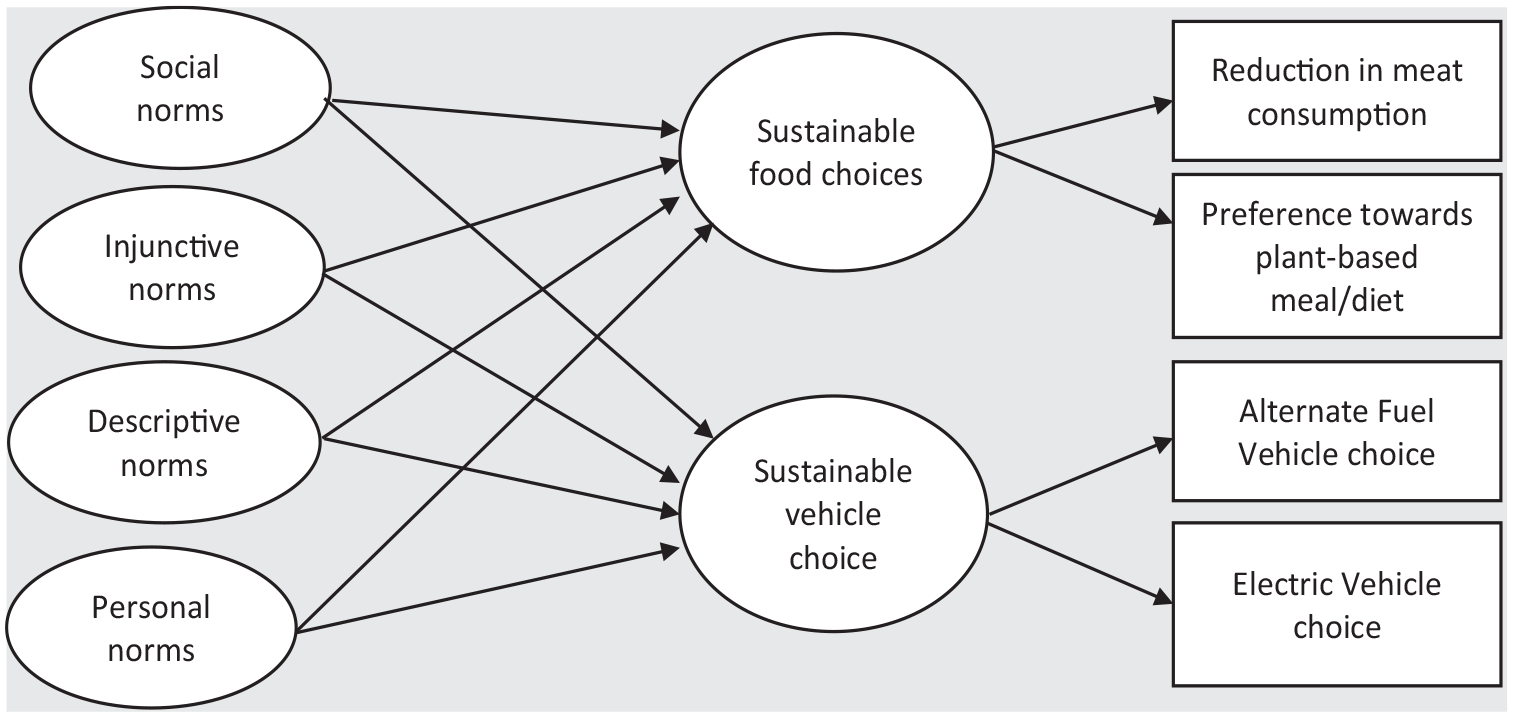
Conceptual framework of the study (created by authors).
Methodology
Meta-analysis enables the synthesis of current research on a specific topic to draw conclusions based on already reported data or, to be more precise, the effect sizes in quantitative studies. This methodical quantification enables the testing of hypotheses utilising existing data acquired from published research that were chosen by systematic review approaches. Meta-analysis is advantageous because it enhances the statistical power of a study by combining data from various sources. This helps in identifying smaller effects that might go unnoticed in individual studies due to limited sample sizes or other constraints (Abbas & Ali, 2023; Ashaduzzaman et al., 2022). Meta-analysis can also assist in resolving contradicting or conflicting findings among research, enabling a more reliable estimation of the true effect size.
This study utilised the bivariate meta-analysis technique to test the hypotheses outlined in Section ‘Theoretical background and literature review’ and shown in Figure 1. Bivariate meta-analysis (BVMA) is a statistical method used to quantify the effect size between two variables, specifically an intervention and an outcome, and is frequently used in meta-analytic based studies (Borenstein et al., 2011).
Data collection
Systematic literature review guidelines suggested by Paul et al. (2024) were followed to conduct a literature search for this meta-analysis across eight databases to ensure thorough coverage of relevant research. The databases included were ProQuest, PubMed, Sage, Scopus, Taylor & Francis, APA PsycNet, CINAHL and Web of Science. These databases were selected for their comprehensive span of scholarly literature in numerous fields, such as psychology, health sciences, environmental studies and management (Ashaduzzaman et al., 2022).
The search strategy involved using a combination of keywords related to the constructs of Normative Conduct Theory and those associated with sustainable behaviours in food choices and vehicle choices. The keywords used to fetch records from the listed databases included ‘battery electric vehicles’, ‘alternative fuel vehicles’, ‘electric cars’, ‘HEV’, ‘PHEV’, ‘EV’, ‘meat’, ‘plant based meals’, ‘animal protein’, ‘vegetarian meal’, ‘vegetarian diet’, ‘social influence’, ‘injunctive norms’, ‘normative influence’, ‘descriptive norms’, ‘introjected norms’, ‘integrated norms’, ‘social pressure’, ‘personal norms’, ‘social norms’, ‘consumption’, ‘reduction’, ‘choice’, ‘purchase’, ‘uptake’, ‘prefer’, ‘preference’, ‘reduce’, ‘use’ and ‘consume’. The selection of these keywords was based on their pertinence to the research questions of this study and the goals of the meta-analysis. Once the keywords were selected, search strings were created for each of the databases indicated above, using appropriate Boolean operators, with assistance from the SR-Accelerator programme (Clark et al., 2020). Supplemental Appendix A includes the meta-analysis protocol of this study that outlines the search approach, including the particular terms used, the search syntax, and the criteria for including or excluding information.
The search approach was established to obtain papers that investigated the associations between Normative Conduct Theory dimensions and pro-environmental behaviours. Several iterations of the search technique were performed to improve the search results and discover more relevant studies (Abbas & Ali, 2023). A total of 875 records was obtained, as reported in Supplemental Appendix C.
Screening and eligibility criteria
Following the retrieval of records, the subsequent stage involved scrutinising articles according to the predetermined inclusion criteria that was established for the meta-analysis. In the final stage we implemented stringent four-parameter screening criteria to specifically include studies that are pertinent to normative pressures and sustainable behaviours. The criteria encompassed the following: (1) scholarly publications that have undergone peer review and have been published in reputable journals; (2) articles written in the English language; (3) articles that empirically investigate constructs connected to normative pressure and (4) articles that present correlation or regression coefficients in their findings.
The exclusion criteria included research that examined behaviours unrelated to sustainable food choices, such as reducing meat consumption and preferring plant-based meals, as well as studies that focused on sustainable transport choices, such as electric cars (EVs), plug-in hybrid electric vehicles (PHEVs), and alternative fuel vehicles. Studies that presented characteristics that are not classified into pre-established categories of normative influence-related behaviours were also excluded, as well as those without adequate information on effect size.
At the outset, we eliminated duplicate records (n = 495) by employing Endnote’s duplication detection and removal tool as well as manual analysis. In the subsequent phase, publications that were considered unsuitable by automated algorithms, such as non-research materials like books, book sections, conference proceedings, theses or magazine pieces (n = 69), were also excluded. Two articles that were not published in English were also excluded (n = 2). After applying a full-text search to the remaining data (n = 309), we were able to retrieve the complete text of all the articles. Consequently, 309 papers underwent additional examination.
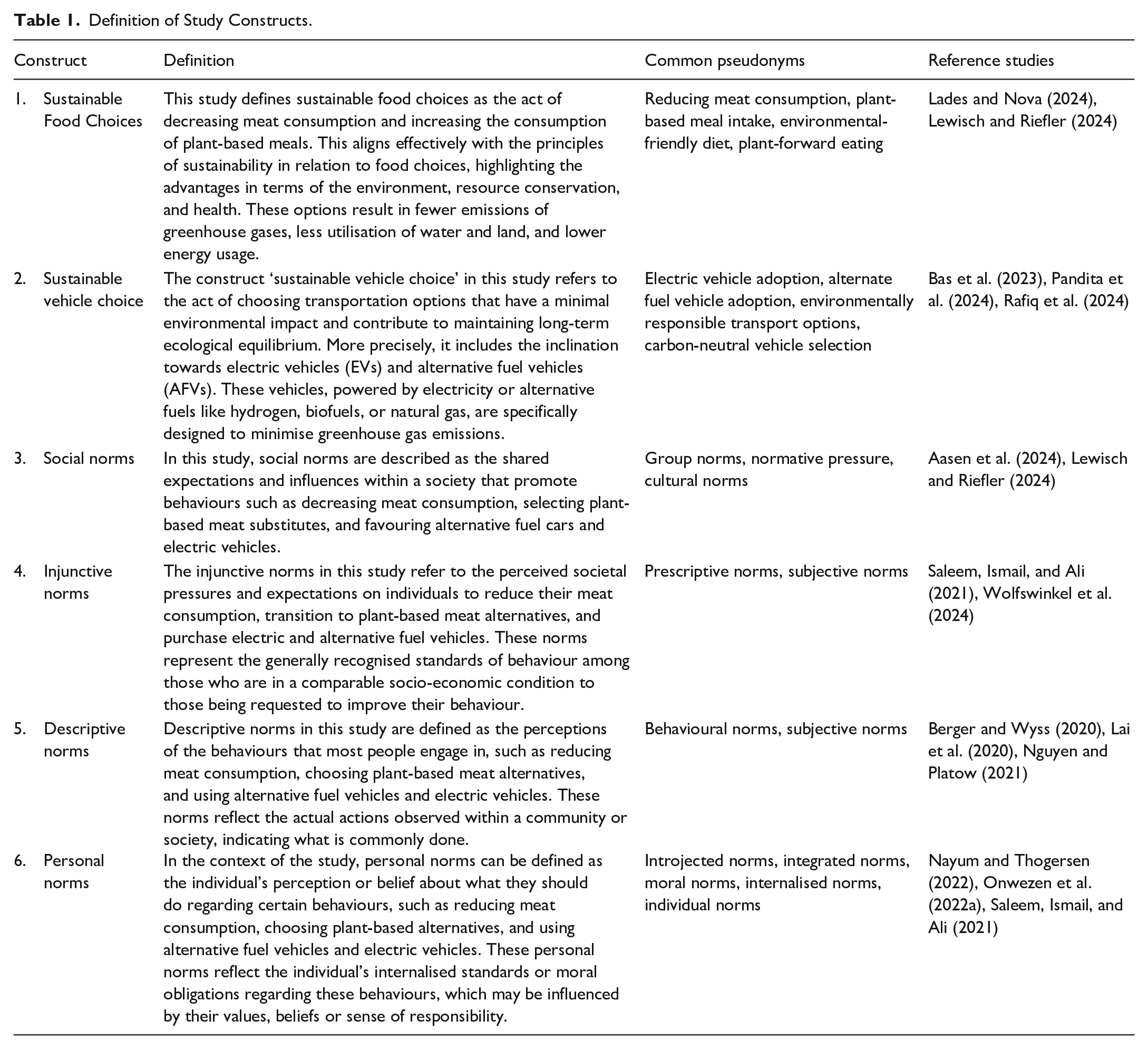
After conducting a more thorough evaluation based on the eligibility criteria, we excluded studies that focused on behaviours unrelated to sustainable food or vehicle (n = 69), non-empirical papers (n = 54), articles that did not report normative influence constructs (n = 55) and papers that did not provide sufficient information on effect size (n = 65). Consequently, 61 studies were considered suitable and eligible for meta-analysis. Figure 2 displays the PRISMA flow diagram, which provides a comprehensive overview of the process for identifying, filtering, and including records. Table 1, which follows, provides a definition of the study constructs.
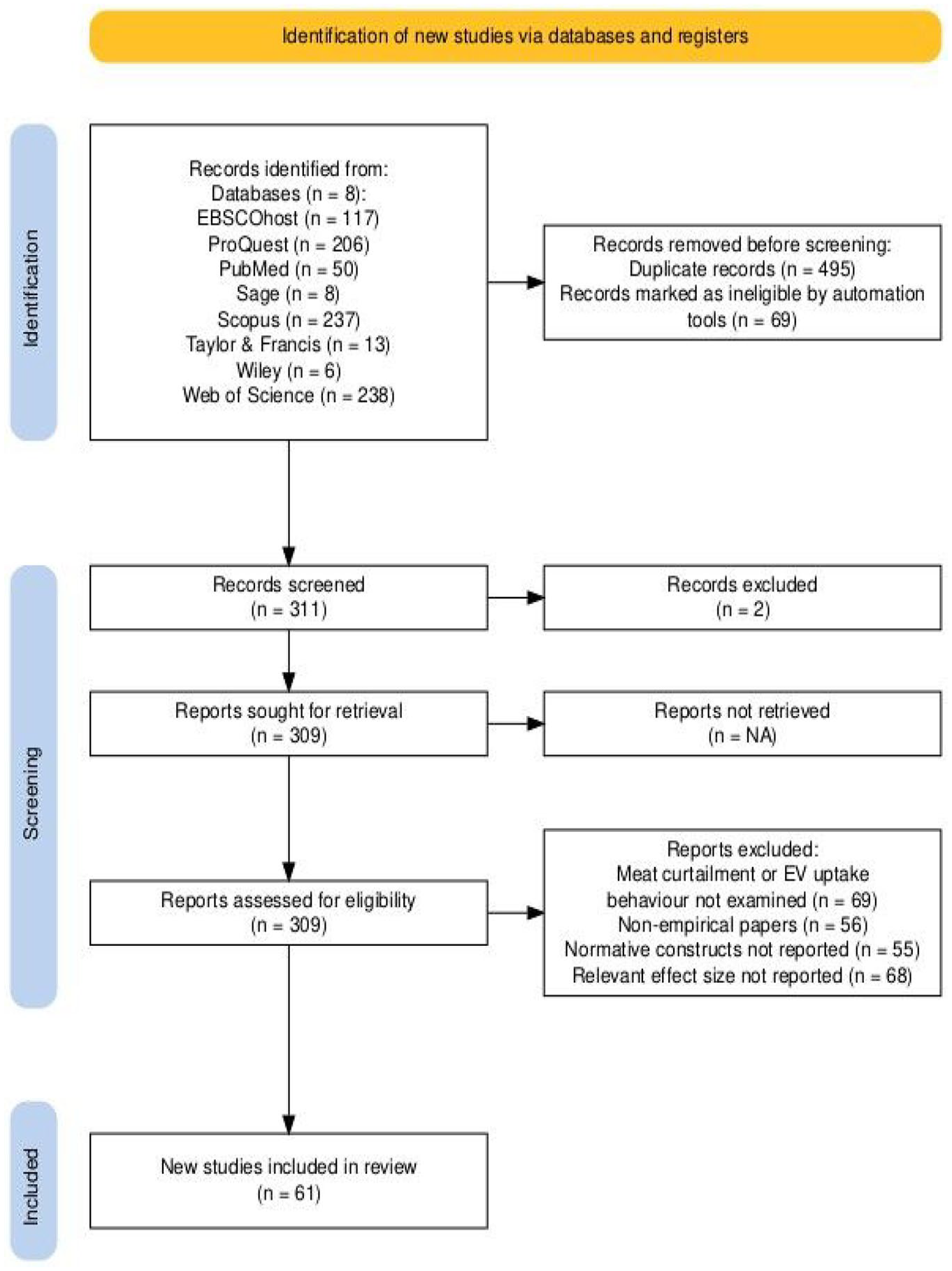
PRISMA flow diagram of the selected studies.
Definition of Study Constructs.
Information coding and recording
The 61 selected studies underwent coding to prepare the data for meta-analysis. This task entailed coding of descriptive statistics for the studies and their corresponding effect sizes. The coded descriptive information encompassed the bibliometric details of the studies, such as the country of data collection, the country’s development classification (advanced, emerging, developing) based on the International Monetary Fund’s Fiscal Monitor (International Monetary Fund [IMF], 2023), survey method (online vs. pen and paper), sample size, sample type (student vs. non-student), and the type of behaviour explored (high involvement vs. low involvement).
The study attempted to incorporate a minimum of four impact sizes (pertaining to either sustainable food or sustainable transport behaviours) per study, as specified in the structure depicted in Figure 2. Nevertheless, it was possible that certain information was omitted, such as studies that did not examine all normative factors, and there were instances when numerous behaviours were assessed in a single study. Adhering to established guidelines outlined in prior meta-analytic reviews (for instance see, Ashaduzzaman et al., 2022; Rana & Paul, 2020), each sub-study was considered and analysed as an independent study. This resulted in a total of 218 effect sizes being computed based on 143 sub-studies from the 61 selected articles. Sample characteristics and the number of effect sizes computed from each study are summarised in Supplemental Appendix B.
Meta-analysis
Effect size selection and computation
Studies based on the norms conduct models have primarily utilised regression-based methods, such as multiple regression or structural equation modelling, to examine and validate their hypotheses. Meta-analytic reviews commonly provide regression coefficients (both unstandardised and standardised beta) and correlation coefficients as available effect sizes. Nevertheless, because of the problem of multicollinearity that is linked to regression coefficients, it is strongly suggested (Borenstein et al., 2011) and commonly practised (Ashaduzzaman et al., 2022; Mishra et al., 2023) to use correlation coefficients (r) as the effect size in meta-analysis. However, rather than excluding studies that do not disclose r values, it is advisable to convert β values to r values when only β values are reported. This is done to prevent publication bias (Peterson & Brown, 2005).
Most of our research presented correlation coefficients, with the exception of some studies where regression coefficients and odds ratio (OR) were provided as alternate effect sizes. The standardised regression coefficients were converted into correlation coefficients using the following equation (Peterson & Brown, 2005):

where r = correlation coefficient, β = standardised regression coefficient and λ is a binary constant (when β ⩾ 0: λ = 1, else: λ = 0).
The odds ratio (OR) was transformed into ‘r’ using the following 2-step procedure recommended by Borenstein et al. (2011). In step 1, we converted OR into

where
In step 2, d calculated from Equation 2 was converted into

where

Profile of studies
Supplemental Appendix B provides a summary of the profiles of the selected studies. A total of 68,507 respondents participated in the questionnaires within the chosen 61 studies (comprising 143 sub-studies) conducted in 64 different countries (some studies were over multiple countries). The smallest sample size in any study was 90 participants (Raghoebar et al., 2020), while the largest was 5,610 participants (Jansson, Pettersson, et al., 2017). In terms of the distribution of studies by country, most studies were conducted in China (k = 10), followed by Germany (k = 6), and India (k = 5). The study utilises the IMF Fiscal Monitor to classify each county. The IMF divides countries into three main categories: advanced economies, emerging market and middle-income economies, and low-income developing countries. Advanced economies are the wealthiest and most industrialised, emerging economies are transitioning with rapid growth, and developing countries are characterised by lower income levels and are working to improve their economic stability (IMF, 2023). Regarding the development status of the countries, a large majority of studies (k = 40) were conducted in countries categorised as advanced, followed by emerging countries (k = 22) (IMF, 2023). Only five studies were conducted on student samples, while the majority focused on the general population where the target behaviour was investigated. Most data collection was conducted online, however, eight studies utilised pen-and-pencil.
Bivariate analysis
We employed Comprehensive Meta-Analysis (CMA v.4.0) software to perform bivariate analysis, assess publication bias, and evaluate the robustness and heterogeneity of the results. The bivariate analysis examined the associations shown in Figure 1 individually and provided relevant statistical information. Tables 2 and 3 present a concise summary of the findings from the bivariate analysis.
Results of Bivariate Analysis.
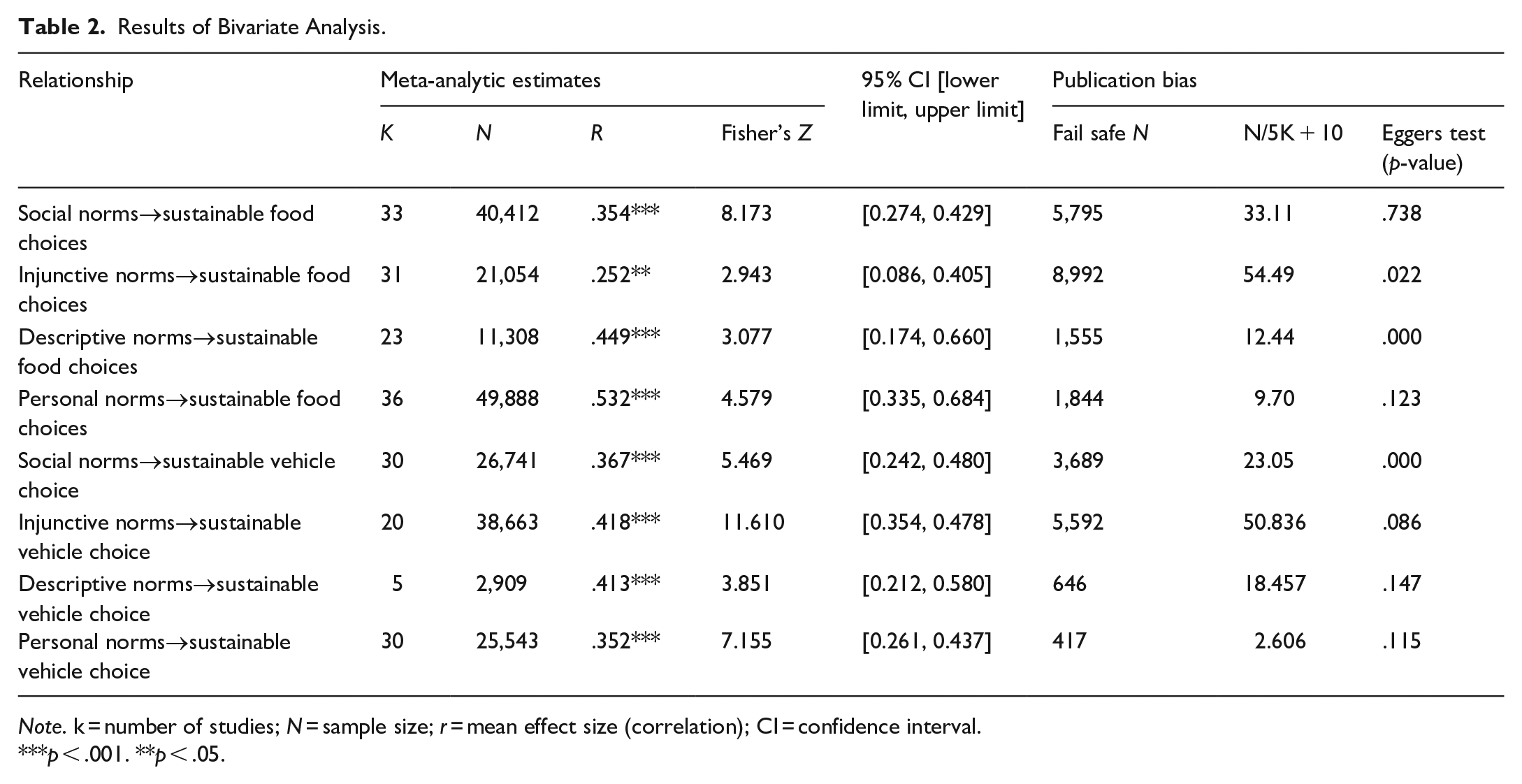
Note. k = number of studies; N = sample size; r = mean effect size (correlation); CI = confidence interval.
p < .001. **p < .05.
Results of Path Analysis and Heterogeneity.
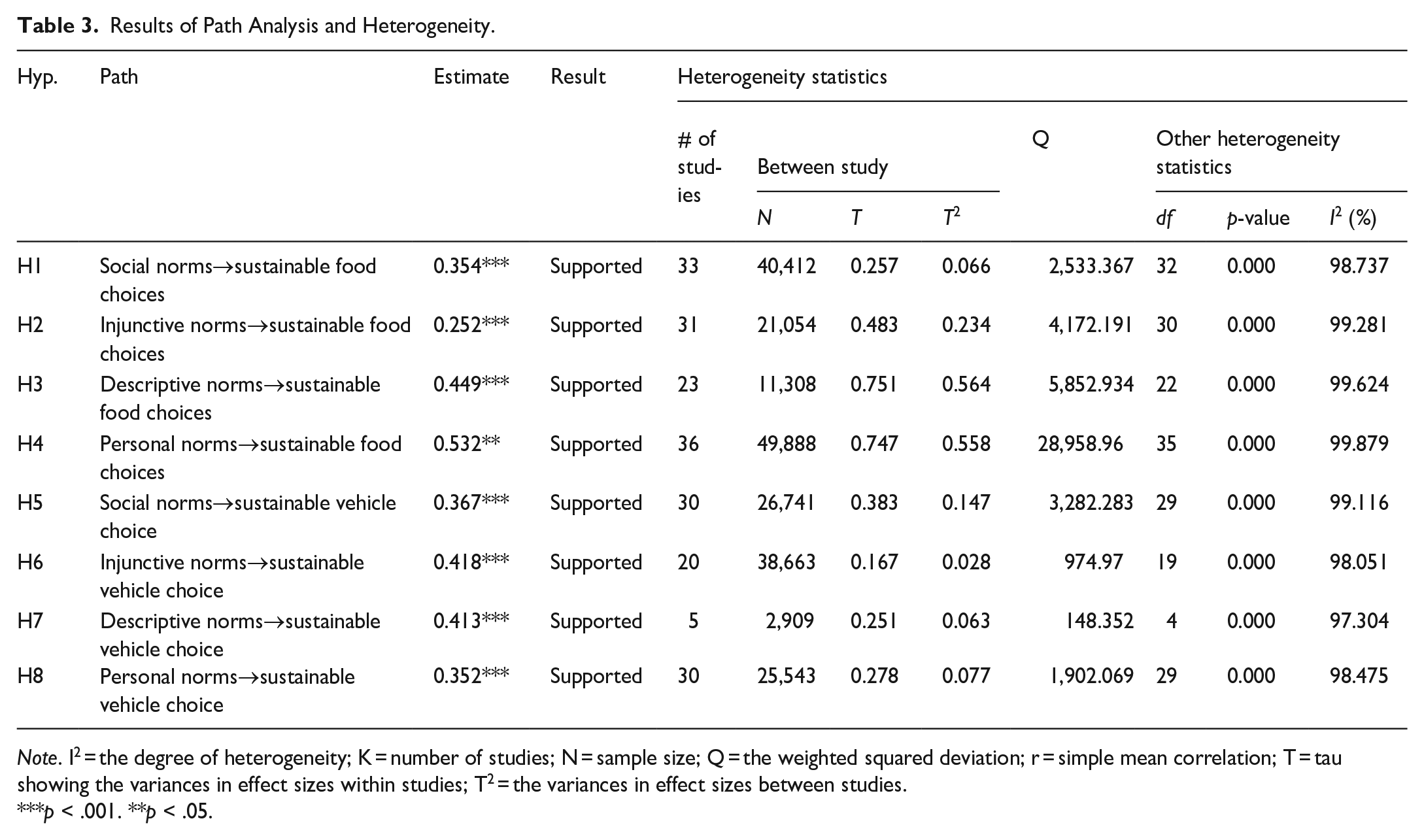
Note. I2 = the degree of heterogeneity; K = number of studies; N = sample size; Q = the weighted squared deviation; r = simple mean correlation; T = tau showing the variances in effect sizes within studies; T2 = the variances in effect sizes between studies.
p < .001. **p < .05.
Applying a random-effects model to analyse the effect sizes of specific studies, we discovered that social, injunctive, descriptive and personal norms all have a positive correlation with sustainable food choices. Among these, personal norms have the most significant impact (r = 0.532, p < .001), followed by descriptive norms (r = 0.449, p < .001), social norms (r = 0.354, p < .001) and injunctive norms (r = 0.252, p < .001). Similarly, for sustainable vehicle choices, all relationships were supported with injunctive norms having the strongest relationship (r = 0.418, p < .001), followed by descriptive norms (r = 0.413, p < .001), social norms (r = 0.367, p < .001) and personal norms (r = 0.352, p < .001). Given the utilisation of the Random-Effects Model for estimation, it may be inferred that the observed effects are applicable for making inferences about the true effects.
Publication bias
Publication bias in meta-analysis refers to the likelihood that some studies relevant to the analysis were either excluded or never published. This can occur for several reasons, such as selection criteria in meta-analysis (e.g. excluding grey literature) or the tendency for studies with non-significant, null or negative results to remain unpublished. As a result, the meta-analysis might overrepresent studies with positive or significant findings, leading to a skewed interpretation of the overall effect size or the strength of relationships between variables (Borenstein, 2019).
Three methods of testing publication bias were employed in this meta-analysis: (1) Classic fail-safe N (Orwin, 1983; Rosenthal, 1979), (2) Egger’s test of the Intercept (Egger et al., 1997) and (3) funnel plots (Harbord et al., 2006). The results reported in Table 2 show that Fail-Safe N to 5K+10 ratio for each of our analysed path remained above 1 for sustainable food choices (social norms: N = 5,795, z-value = 8.173, p < .01, N/5K+ 10 = 33.11; injunctive norms: N = 8,992, z-value = 2.943, p < .05, N/5K+ 10 = 54.49; descriptive norms: N = 1,555, z-value = 3.077, p < .01, N/5K+ 10 = 12.44; personal norms: N = 1844, z-value = 4.579, p < 0.01, N/5K+ 10 = 9.70) and sustainable vehicle choices (social norms: N = 3,689, z-value = 5.469, p < .01, N/5K+ 10 = 23.05; injunctive norms: N = 5,592, z-value = 11.61, p < .01, N/5K+ 10 = 50.836; descriptive norms: N = 646, z-value = 3.85, p < .01, N/5K+ 10 = 18.45; personal norms: N = 417, z-value = 7.15, p < .01, N/5K+ 10 = 2.60). These results confirm that, according to the classic Fail-Safe N criterion, publication bias is not an issue in this meta-analysis.
According to Egger’s test for publication bias, smaller studies must show a significantly larger effect size than larger studies to be included (published), indicating an inverse relationship between study size and effect size. The results of this meta-analysis reveal insignificant relationships for social norms (sustainable food choice), personal norms (sustainable food choice), injunctive norms (sustainable vehicle choice), descriptive norms (sustainable vehicle choice) and personal norms (sustainable vehicle choice) (p > .05). This confirms that study size and effect size are not correlated for these relationships; hence, there is no publication bias. Nevertheless, the correlation remains significant for some relationships, that is, for injunctive norms (sustainable food choice), descriptive norms (sustainable food choice) and social norms (sustainable vehicle choice) (p < .05), suggesting a potential influence of publication bias and the need for further investigation.
The examination of funnel plots with observed and imputed effect size comparison provides further insights regarding publication bias (Duval & Tweedie, 2000; Harbord et al., 2006; Matthias et al., 1997). The test assumes that if all relevant studies have been included in the analysis, the funnel plot of the standardised effect size (on the X-axis) against the standard error (on the Y-axis) should remain symmetric, with a balanced distribution of studies on each side of the plot. This imputes that potentially missing studies should not affect the symmetry of the funnel plot.
Funnel plots were generated based on both imputed and observed studies, as depicted in Figures 3 and 4. Although some variations in imputed effect size compared to observed effect size were observed in various relationships, none of the estimated effect sizes were zero or negative. This indicates that any publication bias would only have a trivial impact on the true effect sizes derived from the observed effect sizes of this meta-analysis (Borenstein, 2019).
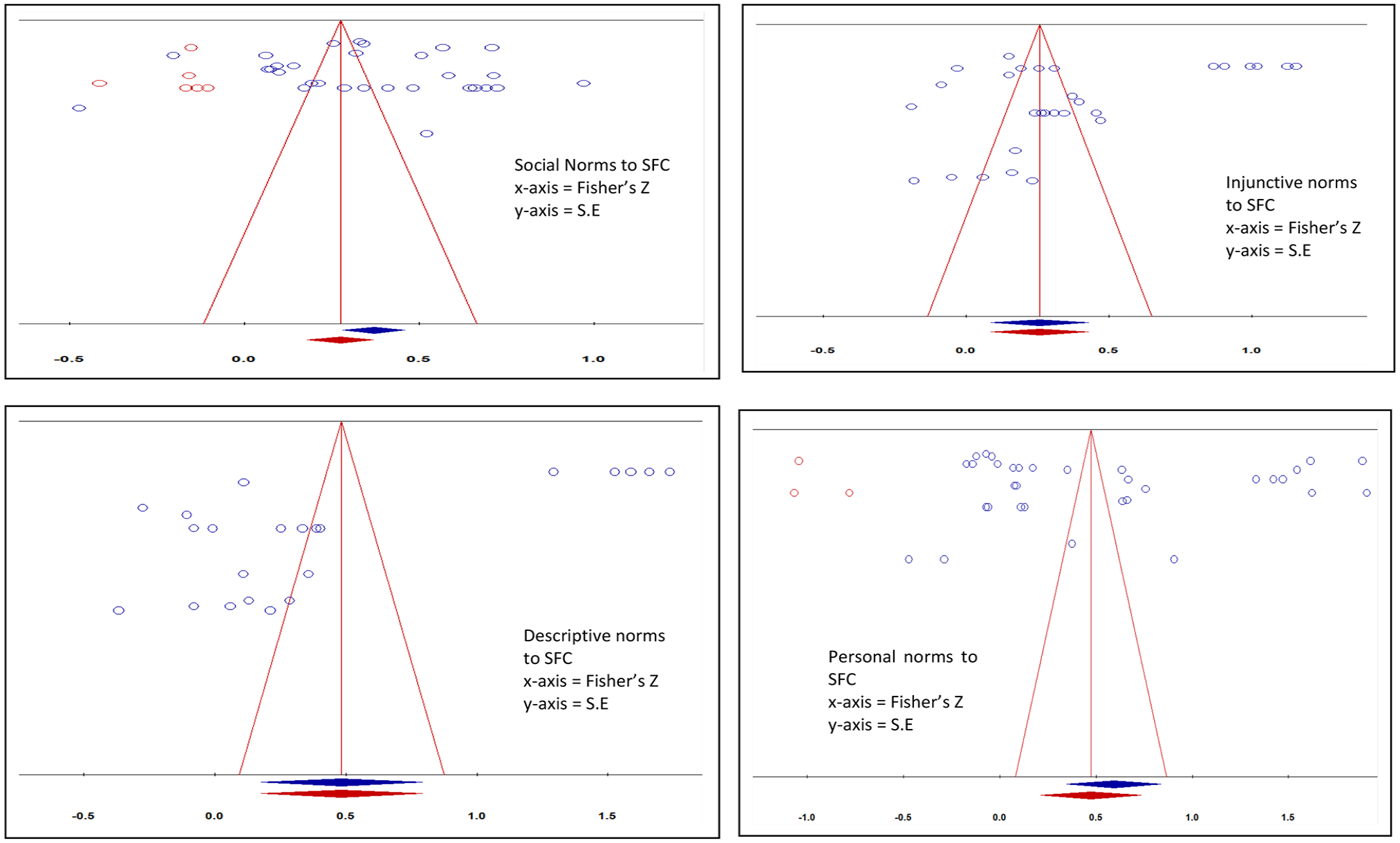
Funnel plots for publication bias suggested by Harbord et al. (2006) – sustainable food choices studies.
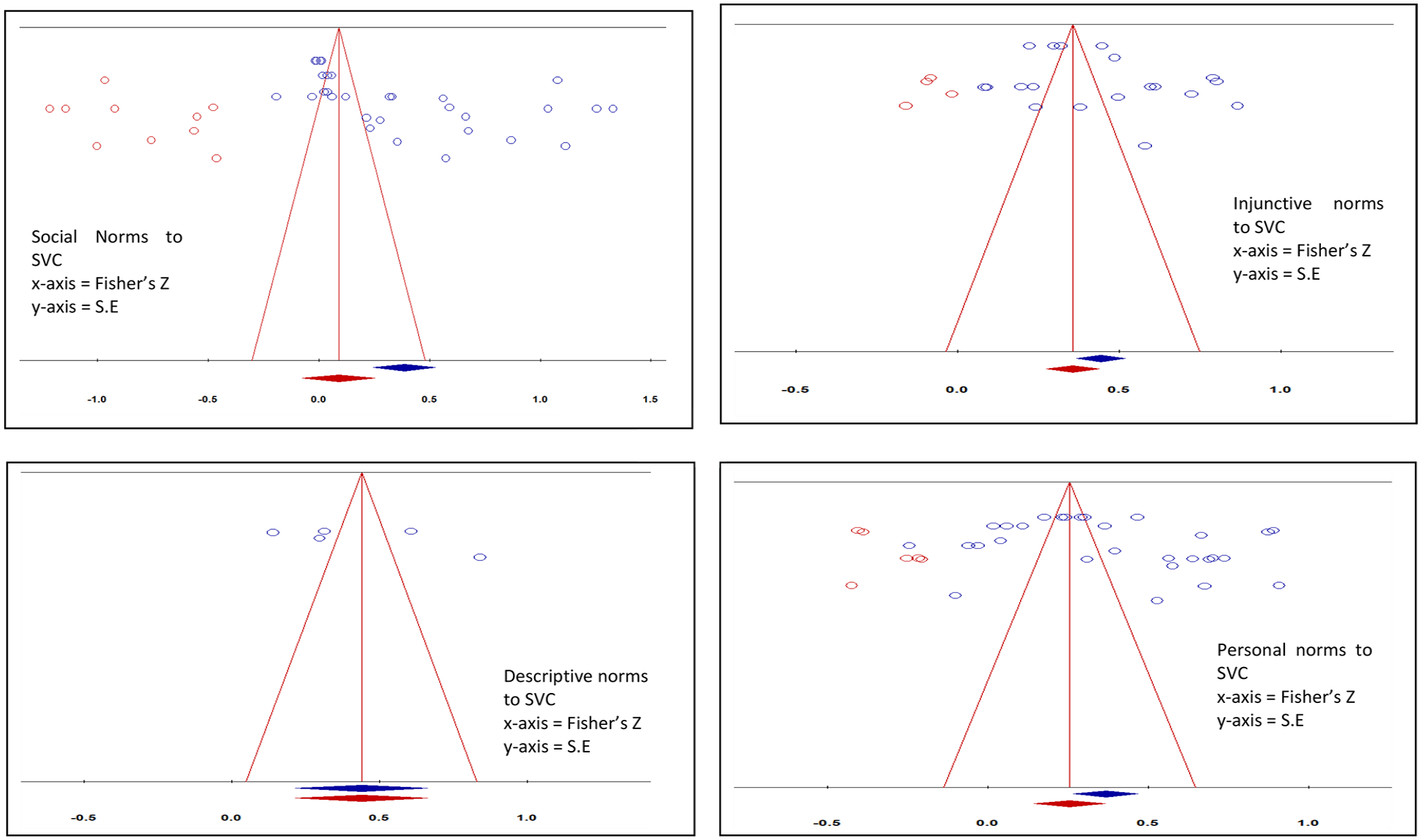
Funnel plots for publication bias suggested by Harbord et al. (2006) – sustainable vehicle choices studies.
Robustness check – sensitivity analysis
The results of sensitivity analysis revealed no significant difference in the computed correlation (r) when one study was removed, nor did they show any sudden shifts in r values in the cumulative analysis. Furthermore, comparing the r values from the cumulative analysis and the ‘one study removed’ scenario with the original meta-analysis correlation values yielded no differences, confirming the robustness of our meta-analysis estimates for all relationships (Borenstein, 2019; Borenstein et al., 2011).
Heterogeneity
Utilising a random-effects model in meta-analysis provides the benefit of treating the average observed effect size as being comparable to the true effect size. This implies that the average effect size derived from the selected studies of the meta-analysis can be utilised to draw conclusions about the larger population from which the studies were randomly sampled (Borenstein, 2019; Borenstein et al., 2011). However, this approach comes with the caveat that the true effect size may vary from study to study, making it necessary to compute this variation, known as heterogeneity. The heterogeneity statistics (Q) for all our hypothesised relationships are significant (p < .01), indicating that the effect sizes vary significantly across the studies. This substantial variation is further reflected in the I2 values, which are consistently over 75% for all our paths (I2: 95%–97%) (Ashaduzzaman et al., 2022; Borenstein, 2019). The significant amount of heterogeneity shown may be attributed to the varying types of sustainable behaviours examined in each study that were included for meta-analysis. However, the significant heterogeneity shown in this meta-analysis calls for caution when deriving true effect size based on the average observed effect sizes of each relationship reported in this study.
Discussion and implications
A deeper understanding of the psychological and social mechanisms driving individual and collective behaviours is crucial for designing effective decarbonisation strategies. This meta-analysis explores both low-involvement behaviours (such as meat curtailment and plant-based food choices) and high-involvement behaviours (such as alternative fuel vehicle or electric vehicle adoption), highlighting the intricate interplay between personal norms, injunctive norms, descriptive norms and social norms in shaping these carbon-reducing actions. By applying the postulates of NCT and NAM to the existing literature, this study sheds light on how personal values, injunctive and descriptive norms, and social dynamics collectively influence sustainable behavioural intentions. These findings underscore that behaviour change extends beyond individual values and is significantly shaped by broader social contexts. Consequently, our study contributes to the growing evidence supporting the need for multi-dimensional decarbonisation approaches that address both individual and social drivers of behaviour. Reinforcing the role of norms is vital in crafting targeted policies that promote the widespread adoption of sustainable practices, with critical implications for achieving decarbonisation goals on both personal and societal levels. Additionally, as outlined in Table 4, this meta-analysis provides precise effect sizes for each variable within both behavioural categories, offering a clearer resolution to the inconsistencies previously noted in the literature.
Summary of Results and Comparison with Literature.
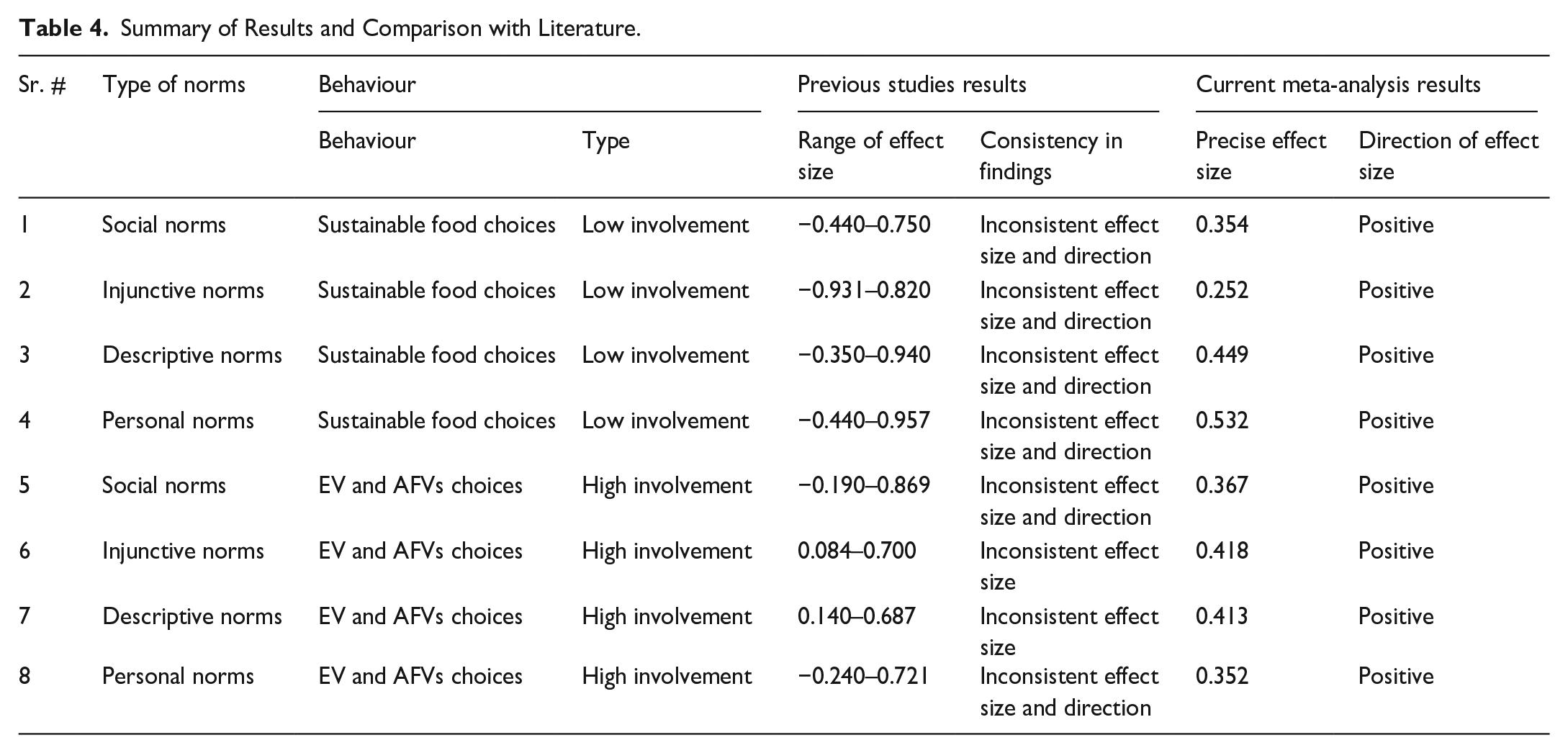
Personal norms, which refer to individuals’ own inclinations and norms towards the environment and carbon reduction, have the greatest impact on low-involvement behaviours, that is, lowering meat consumption and preferring plant-based meals. This finding aligns with existing literature. For instance, a UK study by Wolfswinkel et al. (2024) surveyed over 1,205 meat consumers and found that personal norms have a stronger impact than injunctive and descriptive norms in predetermining meat curtailment behaviours. After personal norms, the second most significant element of Normative Conduct Theory in predicting meat reduction behaviour appears to be descriptive norms. This refers to negative pressure exerted by those who are similarly decreasing their meat consumption and choosing plant-based meals. Understandably, the advice or recommendation of those who are involved in the behaviours they are advocating has a compelling influence on the behaviour change intentions of the individuals receiving such advice. The body of literature that explores the impact of descriptive norms is not considerable, but those who tested this normative pressure did confirm that descriptive norms are second only to personal norms in predicting meat reduction behaviours (De Groot et al., 2021). The subsequent crucial components that are associated with meat curtailment behaviours are found to be social and injunctive norms, respectively.
In contrast, when it comes to high-involvement behaviours such as selecting EVs, injunctive norms emerge as the most influential element. This suggests that individuals feel more compelled to choose environmentally friendly cars when such choices are recommended by their close and important others, a finding adequately supported by existing studies (Barth et al., 2016; Cherchi, 2017). Descriptive norms follow injunctive norms in predicting EV uptake-related behaviours, which indicates that people are further influenced when they observe others they know choosing similar vehicles. Descriptive norms, therefore, act as social proof of sustainable behaviour being a norm and reduce any potential cognitive hurdle in consumers’ intentions to adopt a desired behaviour (Barth et al., 2016). Social norms – opinion leaders who may not be in the same immediate situation as the target subjects – emerge as the next significant predictor of EV uptake, followed by personal norms, which reflect individuals’ own judgments about the environment and its link with choosing EVs. In some studies, social norms are expected to impact personal norms only, which in turn develop favourable dispositions towards the choice of EVS (Higueras-Castillo et al., 2023), however there is also evidence that both social norms and personal norms independently influence EV uptake (Jansson, Pettersson, et al., 2017). These findings emphasise the intricate role of various normative influences in promoting behaviours that result in carbon reduction, offering useful insights for both the advancement of theory and the implementation of practical interventions to encourage sustainable choices.
Theoretical implications
The findings of this meta-analysis have significant theoretical implications for the development of normative frameworks in behaviour change research, particularly within NAM and NCT. Both models are central to understanding pro-environmental behaviours, as they conceptualise how norms – personal, injunctive, descriptive and social – act as primary motivators across various contexts. However, existing applications of these theories often fail to differentiate between high- and low-involvement behaviours, treating normative influences as universally applicable across behavioural domains. Our findings challenge this assumption by revealing distinct patterns of norm influence depending on the level of behavioural involvement, thereby refining and extending NAM and NCT.
By synthesising information through a meta-analysis of studies and applying these models across a diverse range of behaviours, our analysis highlights the complex interplay between normative constructs and sustainable decision-making. Specifically, we provide empirical evidence that NAM’s emphasis on personal moral obligations is more applicable to low-involvement behaviours, while NCT’s focus on external normative pressure is particularly relevant for high-involvement behaviours. This distinction represents a crucial theoretical contribution, suggesting that norm-based interventions must be tailored to behavioural involvement levels to maximise their effectiveness.
One of the key contributions of this meta-analysis is the nuanced differentiation in the relative strength of normative constructs across behavioural categories. For low-involvement behaviours such as meat curtailment and plant-based food choices, personal norms emerged as the most influential factor, followed by descriptive, social and injunctive norms. This aligns with NAM’s core proposition that personal norms serve as key drivers of moral decision-making, as individuals are more likely to alter their consumption patterns when these behaviours align with their internalised values and ethical considerations. Moreover, the significant role of descriptive norms suggests that observing others engaging in similar behaviours reinforces sustainable food choices, creating a self-reinforcing social influence mechanism.
In contrast, for high-involvement behaviours such as EV and AFV adoption, injunctive norms were found to be the strongest predictor of behaviour, followed by descriptive, social and personal norms. This challenges the assumption that internalised moral obligations are equally important across all behavioural contexts. Instead, our findings indicate that high-involvement behaviours, which often involve greater financial investment and perceived risk, are more strongly influenced by external social approval. This supports NCT’s assertion that perceived societal expectations play a crucial role in shaping decision-making, particularly when behaviours require significant commitment or lifestyle change. The observed impact of descriptive norms in this category also suggests that the visibility of peer adoption is a critical driver, reinforcing the idea that individuals look to others when making complex purchasing decisions.
Beyond refining NAM and NCT, our findings offer a broader theoretical contribution by integrating these models with other behavioural theories. The identified distinctions between normative influences in high- and low-involvement behaviours provide a foundation for incorporating NAM and NCT into hybrid frameworks that account for both intrinsic and extrinsic motivators. For instance, the observed differences align with the Theory of Planned Behaviour (TPB), which emphasises the role of attitudes, subjective norms and perceived behavioural control (Etheridge et al., 2023; Hiratsuka et al., 2018). By integrating insights from NAM and NCT, TPB could be expanded to more explicitly differentiate between the roles of personal moral obligation, versus external social pressures, in predicting behaviour across varying levels of involvement.
Similarly, our findings provide a basis for integrating normative theories with broader psychological models, such as the stimulus-organism-response (SOR) framework. The SOR model conceptualises behaviour as a response to external stimuli processed through internal cognitive and emotional mechanisms (Tan, 2023). Our analysis suggests that normative influences could serve as key stimuli within this framework, with personal norms triggering internal moral responses in low-involvement behaviours, while injunctive and descriptive norms act as external reinforcements in high-involvement decisions. This integration could enhance the predictive power of psychological models in sustainability research, offering a more comprehensive understanding of how internal and external factors interact to drive pro-environmental behaviour.
Practical implications
The findings of this meta-analysis provide valuable insights for designing actionable strategies to promote sustainable behaviours, particularly in reducing meat consumption and advancing adoption of EVs and AFVs. By identifying the relative influence of different normative constructs, this study highlights effective pathways for policymakers, marketers and social organisations to drive behaviour change.
One key implication of the findings is the importance of leveraging social and injunctive norms to encourage sustainable behaviours. The results reported in Tables 3 and 4 indicate that social norms significantly influence both sustainable food choices and vehicle adoption, while injunctive norms play an even stronger role in EV adoption compared to food choices. These findings suggest that endorsements from respected figures – such as community and religious leaders, influencers and members of social enterprises – can be particularly effective in shaping behaviours. While developing behaviour change campaigns and communication strategies, marketers should ensure that endorsers are relatable and credible within their target communities. For example, a campaign promoting plant-based diets could feature testimonials from well-known chefs, doctors or athletes who have transitioned to plant-based eating. Similarly, EV adoption campaigns could highlight testimonials from early adopters within specific demographics to demonstrate that the behaviour is socially endorsed and increasing in prevalence.
Another crucial strategy can be reinforcing descriptive norms by showcasing the widespread adoption of sustainable behaviours. According to the results of this study, descriptive norms emerged as a strong predictor of behavioural intentions for both food choices and vehicle adoption, reinforcing the idea that people are more likely to adopt a behaviour when they perceive it as common. These insights can be utilised by publishing adoption statistics, such as the percentage of households reducing meat consumption or the rise in EV ownership in specific regions. Marketing campaigns can also highlight real-world trends, such as featuring everyday people choosing plant-based meals in advertisements or showing neighbourhood-wide EV charging infrastructure. The visibility of these behaviours in public spaces, such as plant-based meal options in school cafeterias or designated parking spots for EVs, can further normalise them and create positive reinforcement loops.
When it comes to personal norms, which had the strongest influence on sustainable food choices and a significant effect on vehicle adoption, communication should emphasise personal responsibility, moral engagement and the tangible impact of individual actions. Policymakers should design targeted educational campaigns that not only inform but also inspire action by highlighting the direct environmental and health benefits of reducing meat consumption and adopting EVs. For instance, awareness initiatives can illustrate how cutting meat consumption directly reduces an individual’s carbon footprint, while EV adoption contributes to cleaner air, lower emissions and improved public health. These messages should be framed in a way that makes the consequences of sustainable choices feel immediate and personally relevant. Additionally, digital platforms and mobile applications can enhance personal engagement by offering customised sustainability tracking tools, allowing individuals to measure their carbon footprint reductions, energy savings or dietary impacts in real-time. By providing personalised feedback and goal-setting features, these tools can reinforce a sense of agency, making sustainable behaviour feel more achievable and rewarding.
Another essential intervention can be tailoring communication to individual values and aspirations to increase personal relevance. Since people are more likely to adopt sustainable behaviours when they align with their personal beliefs and goals, marketing campaigns should highlight benefits that resonate with specific target audiences. For EV adoption, messages emphasising cost savings on fuel and maintenance, improved driving experiences and government incentives can appeal to pragmatic consumers. For plant-based diets, emphasising health benefits, longevity and energy levels can make the behaviour more personally compelling. For instance, public health organisations could launch campaigns framing plant-based eating as a strategy for disease prevention and longevity, while car producers could promote EVs as a smart financial investment with long-term benefits.
Educational programs can further reinforce personal and injunctive norms by fostering a deeper awareness of the broader societal implications of sustainable behaviours. Governments and organisations should implement structured sustainability education programmes through workshops, school curricula and community outreach campaigns. These initiatives should not only inform individuals about the benefits of sustainable choices but also highlight the role of collective action in achieving environmental goals. For example, hosting plant-based cooking classes in schools and community centres can provide hands-on experience and practical knowledge, making behaviour change more accessible. Similarly, EV experience programs, such as test drive events or short-term rental incentives, can help potential buyers overcome scepticism and increase confidence in adopting EV technology.
Finally, integrating findings from this meta-analysis into multi-level interventions can create a more cohesive approach to sustainable behaviour change. While normative influences are powerful drivers, they are most effective when combined with supportive policies and infrastructure. For example, to promote plant-based diets, policymakers can implement pricing incentives on plant-based foods alongside social campaigns promoting their popularity and health benefits. Similarly, expanding charging infrastructure for EVs while running campaigns featuring peer adoption stories can simultaneously reduce barriers and reinforce descriptive norms.
Conclusion and limitations
This meta-analysis provides valuable insights into the factors influencing low-involvement behaviours like meat reduction and high-involvement behaviours such as EV uptake within the realm of social, injunctive, descriptive and personal norms. Our analysis reveals that these relationships are positive and statistically significant, highlighting the crucial role that Normative Conduct Theory plays in shaping pro-environmental behaviours. However, like other studies, this meta-analysis also has limitations that future research might consider addressing.
Firstly, the studies included in this meta-analysis exhibited substantial variation in the specific pro-environmental behaviours assessed. The presence of such variance may have had a role in the notable heterogeneity in effect sizes that was observed, which can influence the precision of the estimated true effects. Identifying the magnitude and reason behind such heterogeneity should be prioritised in future research to accurately predict true effect size. Furthermore, this study did not compute prediction intervals, which are essential in meta-analytic evaluations when there is variability in effect sizes. Prediction intervals offer a range that indicates where the true effect size is likely to be in comparable populations, thereby providing a more detailed comprehension of the observed effects. By using prediction intervals, one may more accurately evaluate the relationship between average observed effect sizes and true effect sizes. This is especially important when considering the impact of different types of normative influences on the studied behaviours. To overcome this methodological limitation, future research should use prediction intervals to more accurately capture the range of heterogeneity and the precision of the observed effect size to predict the true effect size.
This meta-analysis broadly focused on investigating the effects of social norms, injunctive norms, descriptive norms and personal norms on pro-environmental behaviours. However, it does not narrowly explore how various members forming the circle of individuals’ ‘important others’ exert their influence and whose influence is more significant in various cultural contexts. Also, consideration of consumer culture theory (Catulli et al., 2017) and Hofstede’s cultural dimensions (Kang & Mastin, 2008), which broadly elaborate on external influences on consumer decision-making, presents an opportunity for future research. Examining such influences could uncover interesting and insightful findings applicable to a larger population. These wider explorations could result in a more comprehensive understanding of the relevance and strength of normative influence theories in many situations, improving our comprehension of how these norms work to encourage a wide span of positive behaviours.
Finally, the cross-sectional nature of most of the studies included in this analysis restricts our ability to establish a causal relationship. For example, although we can perceive a connection between social norms and the adoption of behaviour, we cannot conclusively ascertain whether these norms are the cause of the behaviour or merely associated with it. Longitudinal research is necessary to gain a deeper understanding of the cause-and-effect linkages between normative notions and pro-environmental behaviours. Subsequent investigations should address this constraint by incorporating longitudinal studies into meta-analyses. This will help establish more definitive cause-and-effect relationships and yield more reliable data regarding the lasting effects of social norms on behaviour modification.
Supplemental Material
sj-docx-1-anz-10.1177_14413582251345550 – Supplemental material for Norms-Driven Behaviour Change for GHG Reduction: A Meta-Analytic Review of High and Low Involvement Behaviours
Supplemental material, sj-docx-1-anz-10.1177_14413582251345550 for Norms-Driven Behaviour Change for GHG Reduction: A Meta-Analytic Review of High and Low Involvement Behaviours by Muhammad A. Saleem, Mercedez Hinchcliff, Mary Papakosmas, Grant Hughes and Troy Heffernan in Australasian Marketing Journal
Footnotes
Declaration of conflicting interests
The author(s) declared no potential conflicts of interest with respect to the research, authorship and/or publication of this article.
Funding
The author(s) received no financial support for the research, authorship and/or publication of this article.

Supplemental Material
Supplemental material for this article is available online.
References
Supplementary Material
Please find the following supplemental material available below.
For Open Access articles published under a Creative Commons License, all supplemental material carries the same license as the article it is associated with.
For non-Open Access articles published, all supplemental material carries a non-exclusive license, and permission requests for re-use of supplemental material or any part of supplemental material shall be sent directly to the copyright owner as specified in the copyright notice associated with the article.
