




Abstract
While academic research on brand trust is extensive, there remains a gap in understanding how commercial researchers measure and operationalise this concept. This study addresses this gap by exploring how industry practitioners are assessing brand trust in the evolving consumer landscape, and how these practices align with academic frameworks. Through in-depth interviews with industry experts, we examine the methods used by commercial researchers to measure brand trust and compare them to academic approaches. Our research is anchored in the trust-as-process framework, originally developed for interpersonal and organisational trust, which offers a multi-faceted view of trust, including disposition to trust and perceived trustworthiness. Rather than defining trust narrowly, this framework helps to clarify various conceptualisations of trust and their roles in fostering trust intentions and behaviours. Our findings highlight that both commercial and academic researchers focus primarily on perceived trustworthiness, emphasising its importance in brand trust measurement. We recommend adopting perceived trustworthiness measures, and advocate for further research into the development of valid single-item scales, a method favoured by commercial researchers, for measuring each dimension of perceived trustworthiness.
Keywords
Introduction
The consumer landscape has undergone significant transformations since brand trust first emerged in the relationship marketing literature over three decades ago. The emergence of global e-retailers such as Amazon and eBay, the proliferation of digital technologies, and the integration of artificial intelligence (AI) and social media into everyday interactions have fundamentally changed the way consumers engage with brands (Kahn et al., 2018; Ki et al., 2023). Correspondingly, there has been growing consumer interest in sustainable and ethical brands (Stoica & Hickman, 2022; Wu et al., 2022), which has further heightened the importance of trust. Yet, despite these shifts, brands face an unprecedented crisis of trust. According to the 2022 Edelman Trust Barometer, distrust has become the default consumer stance, with 59% of respondents stating that ‘my tendency is to distrust until I see evidence that something is trustworthy’ (Edelman Trust Institute, 2022, p. 19). At the same time, 71% believe that trust is more important in their purchasing decisions than ever before (Edelman Trust Institute, 2023). This presents a paradox: trust in brands is declining at a time when it has never been more crucial.
This crisis is driven by changes in consumer behaviour, information sources, and the evolving modes of brand communication. The increasing dominance of digital channels has altered the ways trust is built, as online interactions carry risks that are different from those in face-to-face exchanges (Ha & Perks, 2005; Riegelsberger et al., 2005). Unlike traditional retail environments, digital transactions lack the tangible trust signals that consumers rely on, such as personal interaction or product trial (Thompson et al., 2019). Similarly, services – especially those provided online – are intangible, making it harder for consumers to assess their quality before committing to a purchase (Loureiro & González, 2008).
The rise of new information sources, particularly online reviews and social media influencers have further complicated the trust relationship between consumers and brands. Word-of-mouth, once confined to close social circles, now extends to global audiences through online reviews (Robertson et al., 2021). This amplifies the impact of both positive and negative consumer experiences, increasing the risks that brands face in maintaining trust. Furthermore, while celebrity endorsers have long been a part of marketing strategy, social media influencers have taken on this role in new and often unpredictable ways (Kapitan et al., 2022; D. Y. Kim & Kim, 2021). Trust in these influencers can strongly affect consumer perceptions of a brand, adding another layer of complexity to the way trust is established.
In addition, advancements in technology, particularly the growing prevalence of AI, are reshaping consumer trust. The introduction of AI tools such as ChatGPT, and the increasing use of generative AI in consumer-facing services (e.g. chatbots) and marketing communications (e.g. synthetic advertising), are changing consumer expectations and trust in brands (Campbell et al., 2022; Ferraro et al., 2023; Whittaker et al., 2021). Consumers are becoming increasingly aware of AI’s potential to influence their decisions, but they remain cautious about the implications of these technologies for their privacy and autonomy.
Traditionally, breaches of trust were linked to faulty products, dishonesty, or a lack of transparency. While these remain key factors, the growing risk to consumers’ personal data is now one of the most significant threats to brand trust (Bansal & Warkentin, 2021). As brands collect increasing amounts of personal information, especially in sectors like healthcare and financial services, data security has become paramount (Mazurek & Małagocka, 2019). In this regard, the digital consumer environment is not only exacerbating existing risks; it is also introducing new challenges that necessitate stronger mechanisms for building and maintaining trust. Given these developments, it is timely to reassess how brand trust is conceptualised and measured, particularly in commercial settings. This study provides insights into the goals, methods and challenges faced by commercial researchers when measuring brand trust. By comparing these commercial practices with academic trust frameworks, we offer practical guidance to researchers on clearly specifying the scope of their studies and selecting appropriate measurement tools.
Our research builds on the trust-as-process framework, which considers multiple dimensions of trust – such as disposition to trust and perceived trustworthiness – and how these contribute to trust intentions and behaviour. This framework can help reduce the conflation of trust concepts and clarify how brand trust is defined and measured in both academic and commercial research. We conduct semi-structured interviews with industry experts to identify current commercial practices, compare them with academic theory, and recommend more effective approaches for measuring brand trust. In doing so, we aim to bridge the gap between academia and industry, ensuring that future academic research remains rigorous, relevant and impactful for commercial application.
Conceptual development
Understanding trust: A multifaceted concept
Trust, a central construct across various disciplines, has long been characterised by a lack of consensus around its definition and conceptualisation (PytlikZillig & Kimbrough, 2016). As scholars attempt to unpack the complexity of trust, they define it in diverse ways, using terms such as ‘dispositional trait’, ‘attitude’, ‘expectation’, ‘belief’, ‘intention’ or ‘behaviour’ (Dietz & Den Hartog, 2006; Doney et al., 1998; Isaeva et al., 2020; Marmat, 2023; McKnight & Chervany, 2001). These variations demand that researchers clearly articulate the aspect of trust that they are examining (McEvily et al., 2003). While definitions vary, there is some consensus on certain themes. Trust is typically understood to be a voluntary feeling originating from the trustor, directed toward a trustee, and entails elements of uncertainty, vulnerability, risk and positive expectations (Isaeva et al., 2020; PytlikZillig & Kimbrough, 2016). The broader picture, therefore, emerges as a process in which trust-related beliefs, intentions and behaviours interact, forming different facets of trust (PytlikZillig & Kimbrough, 2016). In the context of brand trust, the trustor refers to the consumer, while the trustee represents the brand.
The trust-as-process framework
To address the conceptual ambiguity surrounding trust, PytlikZillig and Kimbrough (2016) proposed the adoption of a ‘trust-as-process’ framework, a theoretical model that clarifies the various elements of trust without forcing researchers into adopting a single, reductive definition. This framework helps delineate how different components of trust operate in sequence, leading to a more nuanced understanding of the trust-building process (see also Dietz & Den Hartog, 2006; Mayer et al., 1995; McKnight & Chervany, 2001).
The four key elements of the trust-as-process framework are: the trustor’s propensity to trust (Mayer et al., 1995; McKnight & Chervany, 2001), the perceived trustworthiness of the trustee, encompassing aspects such as competence, integrity, benevolence and predictability (Malle & Ullman, 2021; PytlikZillig & Kimbrough, 2016), the trustor’s trusting intentions towards the trustee, or their willingness to rely on the trustee, and the actual trusting behaviour of the trustor (Mayer et al., 1995; PytlikZillig & Kimbrough, 2016). This framework mitigates confusion by clearly distinguishing between the different elements that contribute to the overarching process of trust, thus preventing the conflation of trust facets. However, there is still debate about certain elements of trust. For instance, Mayer et al. (1995) argue that predictability should not be included as a factor of trustworthiness due to its insufficiency – an outcome may be predictable yet negative. However, other scholars incorporate predictability into trustworthiness (Dietz & Den Hartog, 2006; Hegner & Jevons, 2016; Malle & Ullman, 2021; McKnight & Chervany, 2001).
Brand trust: Historical context and importance
Brand trust emerged as a key construct within the relationship marketing paradigm of the 1980s and 1990s. In their influential commitment-trust theory, Morgan and Hunt (1994) argued that successful relationship marketing is underpinned by commitment and trust. Since then, brand trust has been shown to contribute to a range of positive business outcomes, including customer loyalty (Chaudhuri & Holbrook, 2001; Delgado-Ballester et al., 2003), purchase intentions (Hegner & Jevons, 2016), brand affect (Kabadayi & Kocak Alan, 2012), brand attachment (Esch et al., 2006), brand equity (Chaudhuri & Holbrook, 2001), and the ability to command a price premium (R. B. Kim & Chao, 2019).
Given these wide-ranging effects, brand trust is indispensable for maintaining long-term customer relationships (Chen & Quester, 2015; Esch et al., 2006). It also has a ‘halo’ effect, shaping various other aspects of a consumer’s interaction with a brand. For instance, in the early days of e-commerce, brand trust played a crucial role in fostering consumer confidence in online shopping (Corbitt et al., 2003; Delgado-Ballester et al., 2003). Given its importance, it is vital that brand trust is measured reliably, and that commercial researchers and academics alike understand those aspects of trust that their metrics are truly capturing.
Measurement of brand trust: What is actually being captured?
While frameworks such as trust-as-process (Dietz & Den Hartog, 2006; Mayer et al., 1995; McKnight & Chervany, 2001; PytlikZillig & Kimbrough, 2016) have gained significant traction, these concepts are not always reflected in brand trust research. Many brand trust studies employ generalised definitions without clearly specifying which aspects of trust they intend to measure. For example, Chaudhuri and Holbrook’s (2001) widely-cited definition, adapted from organisational trust literature, describes trust as ‘the willingness of the average consumer to rely on the ability of the brand to perform its stated function’ (p. 82). Within the trust-as-process framework, this definition most closely corresponds to the trusting intention element, as it focuses on the consumer’s willingness to rely on the brand. However, the four-item scale developed by Chaudhuri and Holbrook (2001), although reliable and widely used (Hafez, 2021; Konuk, 2021; Leckie et al., 2022), captures a mix of trusting behaviour (e.g. ‘I rely on this brand’) and perceived trustworthiness (e.g. ‘This is an honest brand’, ‘This brand is safe’).
On the other hand, Delgado-Ballester et al. (2003) define brand trust as ‘the confident expectation of the brand’s reliability and intentions in situations entailing risks to the customer’ (p. 37). This definition aligns with the perceived trustworthiness element of the trust-as-process framework. Delgado-Ballester’s et al. (2003) scale includes dimensions related to brand reliability and brand intentions, both of which map onto beliefs about the brand’s trustworthiness. However, in their discussion, the authors suggest that these beliefs imply a willingness to rely on the brand, thereby conflating perceived trustworthiness with trusting intentions.
These examples highlight the ongoing conflation of trust elements within the brand trust literature. While the distinctions between trusting beliefs and intentions are acknowledged, they are not always explicitly considered within a trust-as-process framework, leading to ambiguity in the conceptualisation and measurement of brand trust. By clarifying these distinctions, this research aims to improve both the conceptualisation and measurement of brand trust, thereby providing clearer guidance for future studies.
Methodology
This research adopts the trust-as-process framework to clarify trust-related concepts within the academic brand trust literature and to examine how these insights align with the methods used by commercial researchers in measuring brand trust. Given the limited public availability of commercial methods for brand trust measurement, we employed expert interviews to access specialised industry knowledge and insights. Expert interviews, as noted by Bogner et al. (2009), are an efficient means of gathering high-quality data, particularly when information is not readily available (von Soest, 2023). Considering the exploratory nature of this study, we chose a qualitative approach using semi-structured interviews. This enabled us to explore the nuances of brand trust and its measurement and allowed participants to express their perspectives freely.
Participants and sampling
The study utilised purposive sampling to identify industry experts with deep insights into brand trust research. Five key inclusion criteria were applied to ensure a diverse and knowledgeable sample. Participants were required to have extensive experience in the field, with at least 10 years of relevant professional background. Additionally, we sought participants from service industries where brand trust plays a critical role. We ensured that all participants had direct experience conducting brand trust research and included both client-side and agency-side researchers to capture a wide range of professional perspectives. Finally, participants were drawn from various service industries: charities, credit card services, delivery services, employment services, health insurance, superannuation and telecommunications.
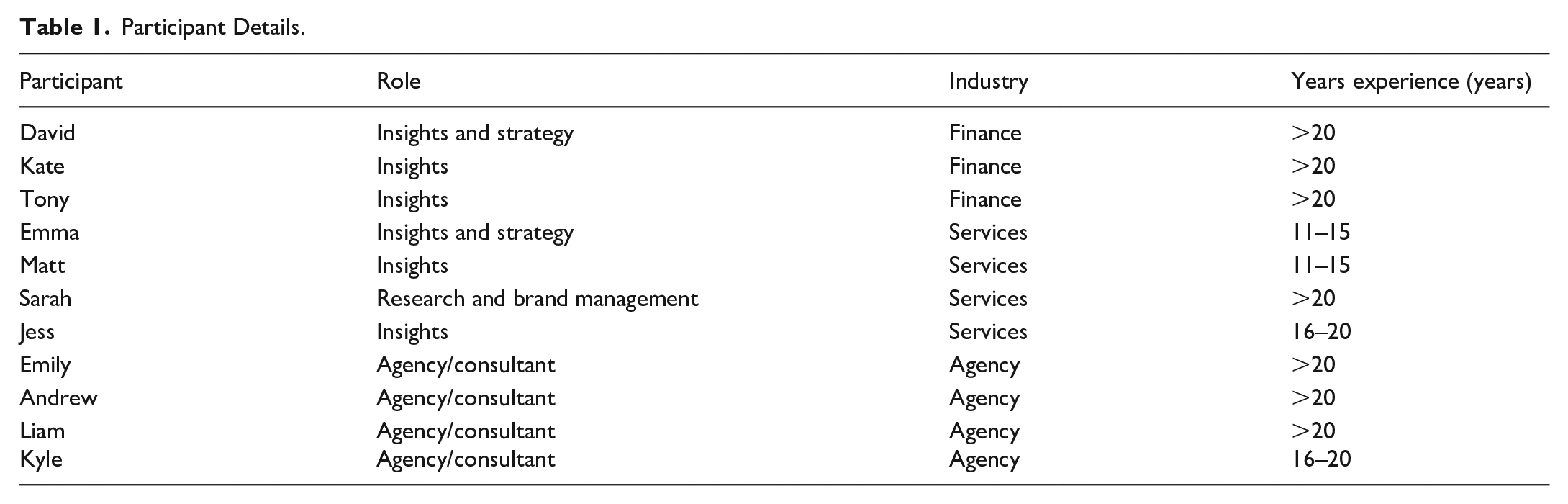
Our sample comprised 11 participants, 4 of whom were consultants from market research agencies with service industry experience, and 7 who were client-side researchers and strategists working in service industries (see Table 1). The agency-side participants held senior roles, including Managing Directors, founders and partners of research agencies. Client-side participants worked as Insights, Research and Strategic Managers in diverse industries. The mix of client- and agency-side researchers ensured a broad range of insights, with agency-side participants offering detailed knowledge of research methods and client-side participants providing perspectives on research application within organisations.
Participant Details.
Data collection
Interviews were conducted via video conferencing (Zoom) and lasted between 45 and 60 min. The semi-structured interviews began with general discussions on brand trust research that participants had conducted, observed or heard about. Key topics included existing research, the objectives and definitions of brand trust, its drivers, the importance and application of brand trust research, limitations of current methods and perceived risks in interacting with various industries and brands. A full list of interview questions is provided in Appendix A.
Data analysis
Thematic analysis was used to identify themes within the interview data (Braun & Clarke, 2006). All interviews were recorded and transcribed, resulting in 245 A4 pages of data. The data was then transferred into Excel for coding and thematic analysis. The first author conducted an initial round of coding, interpreting key comments from each interview and categorising them into emerging themes across participants. The codes were then reviewed and refined by the research team to ensure a comprehensive understanding of the data.
In order to capture the practicalities of current research practices, we focused on semantic rather than theoretical themes (Braun & Clarke, 2006). This grounds our analysis in the explicit meaning of the data, rather than imposing an external theoretical lens. Each interview was revisited, with appropriate themes and codes being allocated to the data. A final check was conducted to ensure that no significant insights or comments were missed. Throughout the analysis, we adhered to best qualitative research practices, such as triangulating interpretations offered by the research team to strengthen the study’s trustworthiness (Wallendorf & Belk, 1989). Pseudonyms were used throughout to protect participant privacy. The final themes provided a comprehensive understanding of the alignment (or lack thereof) between academic and commercial approaches to brand trust measurement and revealed key insights into the perspectives of industry professionals on this issue.
Results and analysis
Our analysis of the interviews with industry experts revealed five key themes related to brand trust (see Figure 1): (1) the importance of brand trust, (2) definitions and conceptualisations, (3) existing measurement methods, (4) comparative analysis for actionable insights and (5) the usage of and barriers to brand trust research. While some topics were directly addressed in the interview questions, others emerged from a range of responses. Participants often discussed brand trust within the context of broader brand research rather than focusing solely on dedicated trust and reputation surveys.
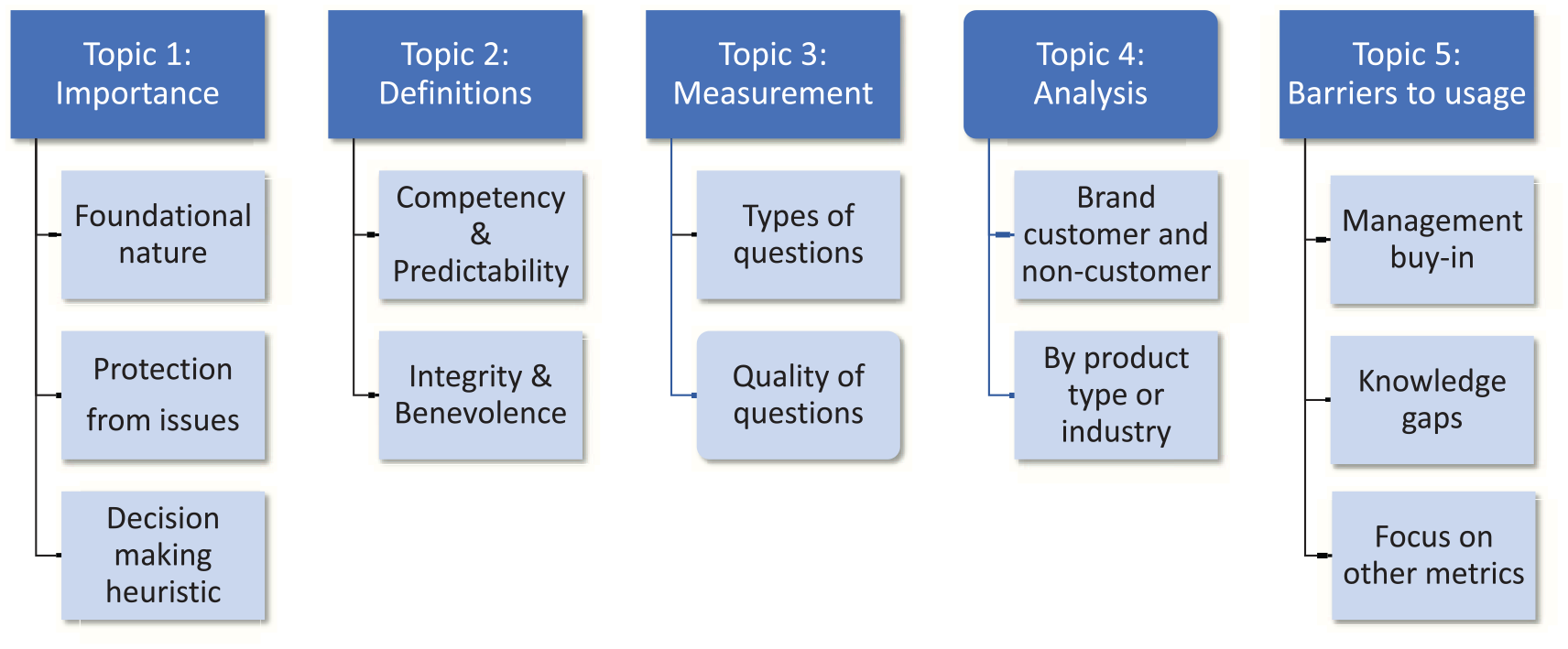
Discussion topics and themes.
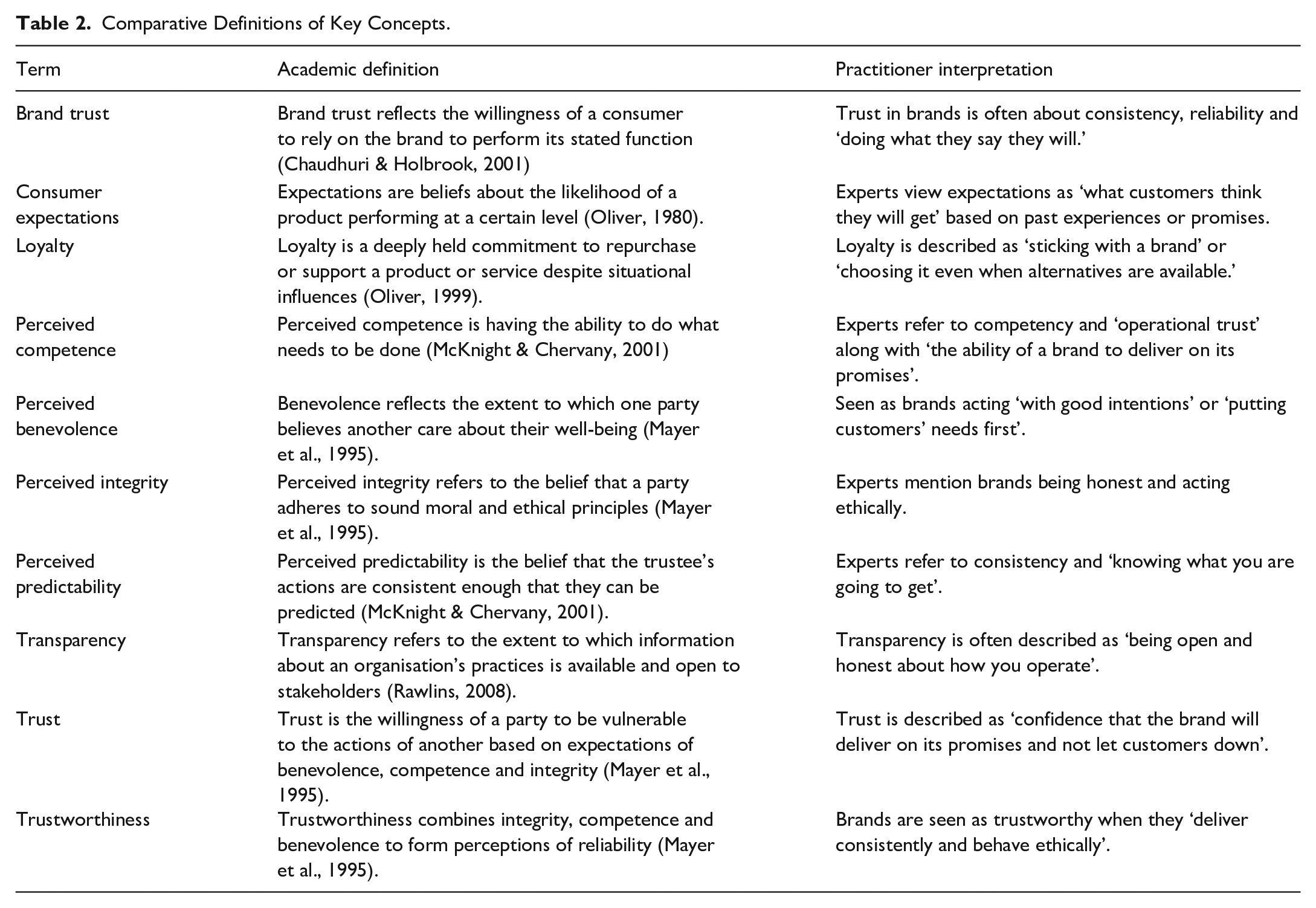
Table 2 clarifies the definitions of key concepts, contrasting academic interpretations with practitioner insights to situate the subsequent analysis. Here, we follow Teas and Palan’s (1997) principles for establishing semantic clarity by outlining the definitions, and comparing established academic interpretations with the expert insights gathered during this study. This comparative approach indicates where alignment exists and where practical nuances differ, offering a richer understanding of these constructs.
Comparative Definitions of Key Concepts.
Theme 1: The Importance of Brand Trust
Practitioners consistently emphasised the critical role of brand trust, with statements like ‘vitally, critically important’ (David) and ‘without trust, you’ve got nothing’ (Sarah). Three key implications of brand trust emerged: (1) its foundational nature that impacts all aspects of a brand, (2) its protective role in times of crisis and (3) its function as a heuristic in consumer decision-making.
First, both academic literature (Chaudhuri & Holbrook, 2001; Kabadayi & Kocak Alan, 2012) and industry participants underscored the foundational nature of brand trust, influencing key business metrics such as recommendation, loyalty, reputation and long-term profitability. Practitioners described brand trust as being ‘at the heart of a brand’ (Kate) and ‘a building block and foundation for everything else’ (Emily), emphasising its centrality in establishing strong consumer-brand relationships.
Second, brand trust is seen as providing a level of protection to a brand in the aftermath of an issue (Hegner et al., 2014). For example, if consumers have an adverse experience, they are more likely to forgive a trusted brand and give it another chance. As Liam explained, ‘Trust is what ensures that, when everything goes pear-shaped. . .your customers will stick with you, even if things aren’t perfect’.
Third, brand trust acts as a heuristic in consumer decision-making, simplifying the decision process in competitive environments. Jess elaborated on this, stating,
And it’s a bit of a shortcut . . . we’re all just people making, how many million decisions a day, and you want to be able to do that easily and simply. And if you have strong brand trust you can do that. You cut through a lot of that noise, and you’re top of mind for people. . . . [when confronted with multiple brands], having that trust and having that connection makes the likelihood of you being selected and chosen in those everyday moments so much greater because it’s a shortcut for people. (Jess)
The role of trust as a decision heuristic is consistent with Lewicki and Brinsfield’s (2011) research which specifically discussed human trust as a heuristic, ‘simplifying the information-processing task’ (p. 14). This is particularly relevant for consumers purchasing complex products or services.
Theme 2: Definitions and conceptualisations of brand trust
Participants found it difficult to define brand trust although it is widely recognised as critical to brand success. Kyle reflected on this challenge: ‘I desperately want to use the word trust in the definition but that defeats the purpose of the question’. Despite these difficulties, participants discussed brand trust in terms of well-established dimensions such as competence, integrity and benevolence, which contribute to a consumer’s perceived trustworthiness of a brand.
Competency and Predictability: Participants highlighted a brand’s ability to deliver on promises, meet expectations and demonstrate consistency as core aspects of competence. David referred to this as ‘operational competence’ while Tony saw it as ‘a product deliverable angle’. Kate also noted the importance of predictability:
I think it’s about knowing what I’m going to get and then the brand delivers that. So, it doesn’t have to be about quality, it doesn’t have to be about being the best, most premium quality. . . . what I’ve been talking about is that consistency.
Integrity and Benevolence: While participants spoke less frequently about integrity and benevolence, these dimensions were nonetheless mentioned. Integrity was often linked to transparency, accountability and ethical behaviour, with Jess stating, ‘I think transparency is a big one, a really, really big one’. Benevolence, meanwhile, related to having the right intentions, treating customers fairly, and contributing to the community. As Liam explained, ‘Are they involved in the community? Do they take the community into consideration?. . . All those kinds of questions are important for trust’.
In the academic literature, the benevolence dimension of brand trust tends to relate to the way a brand treats its customers and deals with customer problems. Similarly, participants talked about brands having the right intentions, treating customers fairly and having customers’ best interests at heart. However, they also related brand trust to concepts such as good corporate citizenship, contribution to the community, sustainability and social impact.
Despite the discussion of these underlying concepts, there was no mention of measuring these aspects of trust. In fact, participants were unsure about the underlying factors that impact trust.
What contributes to trust; what is it that can make an organization shift that dial on trust, ramp up and build trust. That’s often a difficult thing to measure and to understand what it is that are the levers that you can pull to make a difference to trust. (Kate)
Theme 3: Existing measurement methods for brand trust
Research on brand trust spans both academic and commercial domains, with each approach employing different methods for its measurement. In academic research, brand trust is commonly assessed through multi-item scales, offering a nuanced and detailed understanding of the concept. However, in commercial settings, a more simplified approach is often favoured, typically relying on a single-item question. Despite the prevalence of this method in practice, participants in the study highlighted several limitations, expressing concerns about its sufficiency and the lack of actionability derived from such a simplistic measure.
Single item measurement: A key difference between academic and commercial brand trust research is the questions used to measure brand trust. Academic researchers, even when measuring overall brand trust, tend to use multi-item scales, while commercial researchers frequently use a single item such as ‘I trust this brand’.
I suppose the most common way that I’ve seen trust being measured is just as an image dimension in a battery of image statements to try and understand how brand is perceived in market. (Kate)
Despite the commonality of this behaviour, participants believed that a single generic question is not sufficient for a brand trust measure to be useful. To increase actionability, they want to understand the relationship between brand trust, its underlying components such as ‘transparency, fulfilling what your brand promise is, providing the product or service in the way that you say it is going to’ (Tony), and more tangible brand measures.
. . . all of those different measures, they provide context, but then they give a brand the ability to understand where trust is, and is not, coming from. (Liam)
Some participants also discussed the existing dedicated trust research. While these surveys can provide a more detailed understanding of trust, participants noted some limitations. For instance, they did not include all direct competitors with which a brand wants to compare itself. Also, some participants felt this research was often just used to benchmark brands against each other rather than utilising the additional detail.
Shortcomings of current commercial methods: Participants recognised the possibility that questions such as ‘I trust this brand’ could be interpreted differently. For example, one respondent might consider the brand’s competency, while another might evaluate the brand’s honesty, thereby leading to a lack of clarity about what is measured. Such ambiguity in the interpretation of survey items can lead to unreliable results, highlighting the need for an unambiguous and easily understood measure for an accurate assessment of brand trust.
. . . we often don’t get the chance to understand what the consumer actually means by trust. And I think that’s the big shortcoming with some of those straightforward metrics questions that say, on a scale of 0 to 10, How much do you trust this brand? (Liam)
Three other quality issues, each raised by a few participants, were: measures being developed on face value without scientific rigour or the support of empirical evidence; the use of existing imagery statements as brand trust drivers, rather than considering concept-specific components and drivers; and concern about the lack of consideration of trust’s emotional component in the current methods. Furthermore, two participants felt that the standard survey-style questions were not an effective method for collecting the implicit or non-rational component of trust.
. . . I would rather it not be a direct question. I’d much rather see it done in a more implicit system one type of way because I think that, fundamentally, it is a gut feeling and a visceral reaction. (Emily)
While most academic work measures brand trust using rating scale statements, some work has employed an implicit association test to measure trust (e.g. Su et al., 2019).
Theme 4: Comparative analysis for actionable insights
Two areas where additional analysis would provide practitioners with more actionable insights are the comparison of (1) customers and non-customers of a brand and (2) product types or industries. Academic research on brand trust often focuses on existing customers of a brand and the impact of trust on loyalty. However, all participants agreed that brand trust was relevant for both existing and potential customers aware of the brand.
I think trust is a perception that is . . . it applies to customers and non-customers. I think it’s a very important component of whether a customer is prepared to consider or purchase that particular brand. (Kate)
Generally, when customers and non-customers are included in academic research on brand trust, they are analysed together. While participants agreed that trust should be measured for both customers and non-customers, they also acknowledged that the underlying components of trust may differ for each, so it is important to analyse them separately.
. . . yes, there is value in that [collecting brand imagery for non-customers] but it needs to be reported and analysed separately, with a very different angle, the context is completely different. But there is a lot of value talking to non-customers about what they think of us. (Tony)
Participants also emphasised the importance of the context of a product type or industry.
. . . we need to understand the risk factors in different industries and in different categories, because they directly impact likelihood and willingness to trust . . . then it puts, whatever a trust score is, into context. . . . for me, that is probably the most important component of any trust metric is understanding what context looks like. (Liam)
With their focus on services industries, participants recognised the need for higher levels of trust for more complex or higher risk products and services when, for example, consumers are: buying complex products or have little product knowledge; financial risks are involved (e.g. loans and superannuation); consumers are committing to long-term contracts; and personal data is collected.
There is also a heightened need for trust for certain things. So, a low cost, low engagement, low risk product, for example, a very cheap fast-moving consumer good, a grocery, or something like that, trust is not such a big issue. (Kate)
Theme 5: Usage and barriers to the use of brand trust
Despite widespread agreement on the importance of brand trust, organisations do not necessarily measure it or, when they do, they do not fully utilise the findings. For one client, brand trust was a ‘core global brand metric’ while other client-side participants were not measuring it, despite their strong statements about its importance.
. . .It is something that the organisation aspires to in our strategy, the very top level of our strategy is to be the most trusted . . . in Australia. But do we measure trust? Do we report trust? No, we don’t. (Kate)
According to participants, clients are generally satisfied with their current brand trust research despite not utilising its full potential. Brand trust was often seen as the end goal or outcome variable rather than the results being used proactively. For example, it was used for benchmarking, as a key performance indicator, or as an indicator of brand or marketing performance without deeper understanding and analysis of the results.
A lot of it tends to be used for benchmarking and comparison. . . . probably lacking on some of the real driver and understanding of what to do about it. (Emily)
To receive the necessary resources and attention it requires, a brand trust framework must meet commercial needs and buy-in from senior management. Participants identified three key barriers to fully leveraging brand trust research: (1) lack of management buy-in; (2) knowledge gaps and (3) focus on other metrics.
First, while client participants acknowledged the importance of brand trust, they believed it needed management buy-in and support to be fully utilised.
. . .It depends on whether or not you’ve got a marketing Director, General Manager, whoever it might be, who’s really committed to that. Many, many of them are. But if you could get it being used as an exec measure, you’re in a different ballpark. (David)
To achieve this, practitioners must understand the unique value of trust including its potential role in protecting the brand and its alignment with long-term brand building. In addition, the metric should be simple to understand and measure, fit seamlessly within existing brand research ecosystems, and provide actionable insights. Research that connects brand trust measurement with strategies for building and restoring trust will further enhance these efforts. Measuring the factors of perceived trustworthiness and analysing how each factor impacts business outcomes can underpin trust-building strategies.
Second, the interviews revealed knowledge gaps in the interpretation and effective use of brand trust research. Specifically, the lack of understanding of the concept; how it can be integrated into existing brand research frameworks; the value of trust research; and, importantly, how to utilise the results.
. . . from what I’ve seen it’s underutilised because . . . Trust on its own isn’t going to be where the power is, it’s how it’s used alongside other metrics. . . (Matt)
The trust-as-process framework would provide commercial researchers with a clearer understanding of the elements of trust and how each component can be effectively measured for specific objectives.
Third, with limited resources and priority given to other measures, organisations do not always measure brand trust. Where it is not already being measured, practitioners generally believe that improving other brand metrics will simultaneously build brand trust and, therefore, not all participants felt that it was essential to measure. Also, participants acknowledged that building trust is a long-term endeavour requiring patience and sustained effort, while organisations often prioritise tactical measures that can yield more immediate results.
. . . it should be very important, however, when you have limited resources, you concentrate on what you can do short-term. . .so they tend to favour more tactical, more kind of brand health approaches,. . . (Tony)
General discussion
This study aimed to bridge the gap between commercial and academic understandings of brand trust, particularly focusing on its measurement. The findings derived from this study provide actionable insights for practitioners. For example, organisations can foster trust by consistently delivering on their brand promise and clearly demonstrating integrity and benevolence in their actions. Specifically, brands should ensure transparent communication of their values and ethical standards while taking tangible steps to address consumer needs and societal expectations. Through regular measurement of the four components of perceived trustworthiness (competence, integrity, benevolence and predictability), organisations can develop effective strategies for building trust in their brand.
We show that both academic and commercial researchers agree on the significance of brand trust and its foundational role in influencing brand outcomes such as customer loyalty, brand reputation and long-term profitability. In both domains, trust emerges as a critical factor in consumer decision-making, particularly in times of crisis, such as product failures or data breaches (Bansal & Warkentin, 2021). However, despite this consensus, the differentiation between the distinct elements of trust – perceived trustworthiness, trusting intentions and trusting behaviours – remains unclear. Applying the trust-as-process framework, which categorises trust into these distinct elements, can offer much-needed clarity and precision in both academic and commercial contexts.
Our findings revealed a key divergence between academic and commercial approaches regarding the measurement of brand trust. While academics usually rely on multi-dimensional, multi-item scales to capture the complexity of trust, commercial researchers often opt for single-item measures, which they believe to be insufficient. This discrepancy highlights the practical challenges faced by commercial researchers who must balance the need for depth with the realities of space and cost constraints in market research. Another key difference lies in the target samples: academic studies focus primarily on existing customers, whereas commercial researchers emphasise trust among both customers and non-customers. The need to explore trust in both groups reflects a broader understanding of brand trust as a dynamic and evolving construct that influences a brand’s ability to acquire and retain customers. A summary of these converging and diverging perspectives is presented in Figure 2.
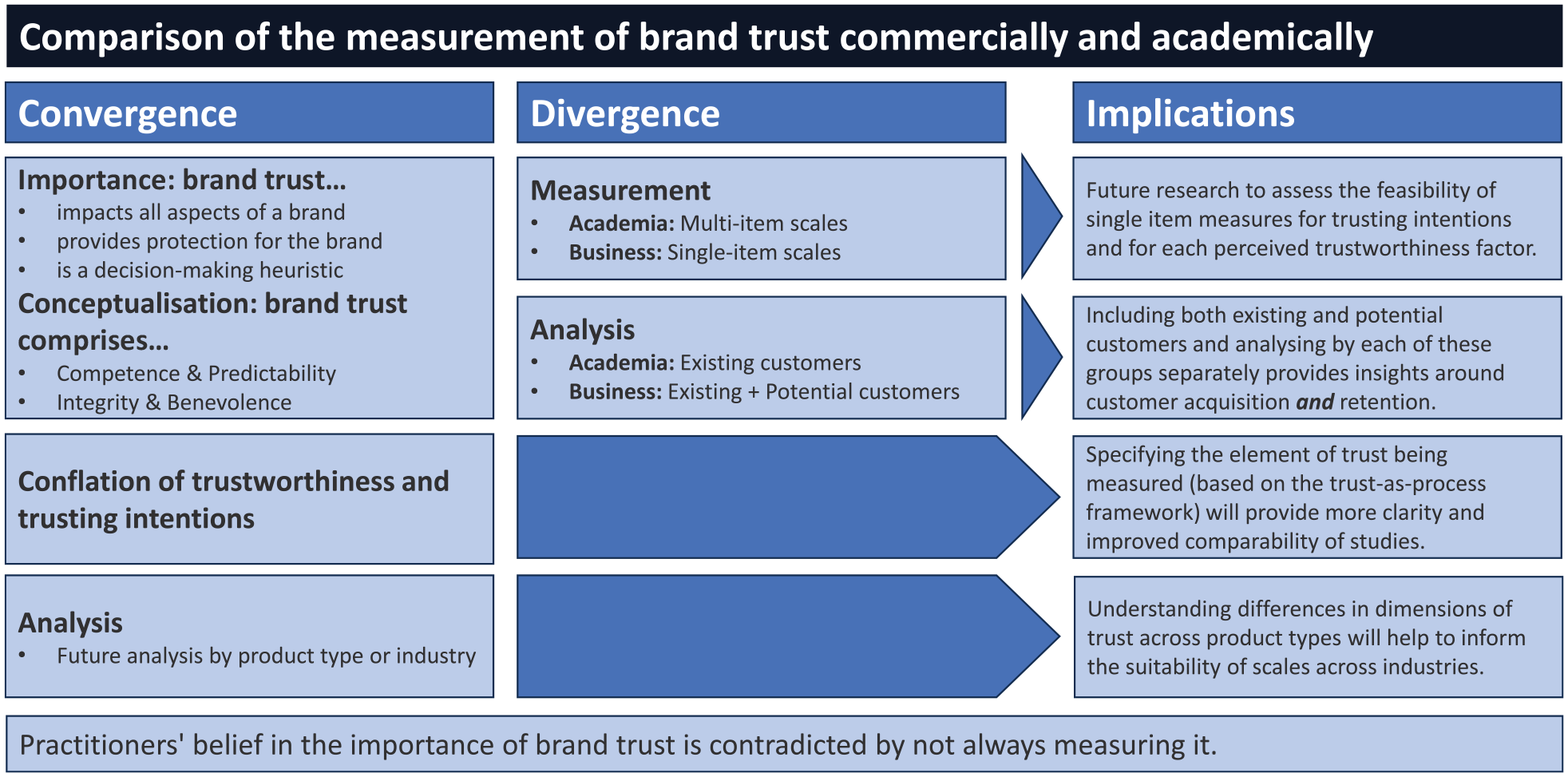
Summary of converging and diverging views.
Implications for practice
Our findings suggest that brands should measure and understand the impact of the four key components of perceived trustworthiness. This knowledge can provide essential insights that enable brands to tailor their marketing and communications to effectively build trust. Understanding the specific impact of each component of trustworthiness on their brand allows organisations to accurately gauge the impact of a brand crisis and implement appropriate strategies to rebuild trust by focussing on the components most affected by the crisis. We propose three key takeaways for managers when considering the measurement of brand trust.
The Challenges of Measuring Brand Trust. Despite the importance of brand trust, it is not always measured in commercial research. This can be attributed to several barriers, including a lack of management buy-in, knowledge gaps and a focus on other metrics. These challenges often stem from the overarching ambiguity surrounding brand trust – what it encompasses and how it should be measured. The trust-as-process framework offers a solution to this problem by distinguishing between the various components of trust and allowing researchers to focus on the aspect most relevant to their objectives. Furthermore, this framework can help researchers understand how trust evolves over time, from consumers perceiving a brand as trustworthy, to forming trusting intentions, and ultimately engaging in trusting behaviours, such as making a purchase.
A key insight acquired from our interviews is the desire for a balance between brevity and depth in measuring trust. While practitioners acknowledge the multi-dimensional nature of trust, they often employ single item measures due to practical constraints, despite recognising the limitations of such an approach. Commercial researchers also identified an emotional component of brand trust, aligning with the concept of affective trust, which is based on feelings of care and concern demonstrated by a brand (Johnson & Grayson, 2005). This indicates that while perceived trustworthiness may dominate the commercial understanding of trust, the emotional aspects should not be overlooked.
The Utility of Single-Item Measures. The widespread use of single-item measures for brand trust in commercial research contrasts sharply with the multi-item scales commonly employed in academic studies. Historically, single-item measures have been criticised for lacking the reliability and depth of multi-item scales (Allen et al., 2022; Mangold, 2024). However, recent research has begun to challenge this assumption, suggesting that single-item measures can, in some cases, be just as valid and reliable as their multi-item counterparts (Bergkvist & Rossiter, 2007, Cheung & Lucas, 2014; Fisher et al, 2016). In fact, a recent journal editorial (Allen et al., 2022) calls for the consideration of single-item measures as they are frequently just as valid and reliable (i.e. based on test-retest reliability), and questions the value of developing and validating multi-item tests when practitioners are typically using single-item measures. This debate is particularly relevant to brand trust, which is a complex and multi-dimensional concept. Given that commercial researchers tend to focus on perceived trustworthiness – specifically the dimensions of competence, benevolence, integrity and predictability – there may be scope for developing more targeted single-item measures that capture these elements.
The complexity of trust suggests that a multi-item scale is often more appropriate. Existing academic scales, such as those developed by Chaudhuri and Holbrook (2001) and Delgado-Ballester et al. (2003), offer reliable and validated ways of measuring brand trust. However, Chaudhuri and Holbrook’s (2001) scale captures different elements of brand trust with the one measure; hence, its place within the overall trust-as-process framework is unclear. On the other hand, Delgado-Ballester et al.’s (2003) eight-item scale may be too lengthy for commercial application. A compromise could be found by employing a single-item measure for each of the dimensions of perceived trustworthiness, although further research is needed to confirm the validity of this approach.
The Need for Comparative Analysis. Our findings also highlight the commercial desire for deeper insights into how trust develops in different contexts, such as various customer segments and product types. Academic research has shown that the dimensions of trustworthiness, such as competence, benevolence and integrity, can vary in importance depending on cultural backgrounds (Park et al., 2012) and product categories (Li et al., 2008). This suggests that a more granular approach to analysing trust – distinguishing between customers and non-customers, for example – could offer valuable insights into how trust develops and influences consumer behaviour. Additionally, exploring how trust varies at different points in the customer journey could inform strategies for building and maintaining trust at critical stages such as customer acquisition and retention.
A related concept that warrants further exploration is the radius of trust (Fukuyama, 2001; Schilke et al., 2021, 2024), which refers to the circle of people or brands that a person trusts. Regarding brand trust, this concept could be used to examine how a consumer’s trust in multiple brands evolves over time and in terms of different product categories. Understanding the factors that influence the radius of trust could help organisations identify strategies for expanding their circle of trusted brands.
Opportunities for future research
The findings of this study point to several opportunities for future research. First, given the practical constraints faced by commercial researchers, there is clearly a need to explore the effectiveness of single-item measures for the different dimensions of perceived trustworthiness. Future research could also investigate the trade-offs between single-item and multi-item measures in terms of their ability to predict brand outcomes such as customer loyalty and purchase intention.
Additionally, there is an opportunity to develop brand trust scales that are tailored to high-risk product categories, such as financial services where trust is particularly critical. Most existing scales were developed for low-risk products, and further research is needed to determine whether these scales are appropriate for industries where the stakes are higher. Furthermore, future research could explore the differences in trust between customers and non-customers, which may provide insights into ways whereby brands can build trust with potential customers and convert them into loyal consumers.
Limitations of the research
This study’s findings are based on qualitative interviews with a limited sample of commercial researchers in Australia, which may limit the generalisability of the results. However, the alignment of our findings with existing academic research suggests the robustness of the identified themes. Another potential limitation is the timing of the interviews, as they were conducted before major data breaches occurred in Australia in 2023. These events could have strengthened the importance of data security in discussions of brand trust, a topic that was mentioned only once in our interviews.
Conclusion
This study underscores the importance of clarifying the concept of brand trust in both academic and commercial contexts. The trust-as-process framework provides a useful lens through which to view brand trust, distinguishing between perceived trustworthiness, trusting intentions and trusting behaviours. By adopting this framework, researchers and practitioners alike can develop more precise measures of trust that align with their specific objectives, ultimately leading to more actionable insights for building and maintaining brand trust.
Footnotes
Appendix A – Discussion guide
Declaration of conflicting interests
The author(s) declared no potential conflicts of interest with respect to the research, authorship and/or publication of this article.
Funding
The author(s) received no financial support for the research, authorship and/or publication of this article.
Declaration of generative AI and AI-assisted technologies in the writing process
During the preparation of this work, the author(s) used AI writing assistant tools, such as WordTune and ChatGPT, to improve readability and language. The author(s) take full responsibility for the content of the publication.
