



Abstract
Only a small portion of entrepreneurs who would like to be their own bosses eventually succeed and maintain their own businesses after the initial startup phase. Building upon self-determination theory, we develop a conceptual model that examines the relationships among harmonious passion, entrepreneurial persistence, time-based resources and career achievement of entrepreneurs. In Study 1, we collected longitudinal survey data using two measurement waves and found that harmonious passion affects career achievement directly and indirectly via entrepreneurial persistence. Time-based resources were found to moderate the impact of entrepreneurial persistence on career achievement. The fuzzy-set qualitative comparative analysis results confirmed that personal resources (harmonious passion, persistence and time-based resources) are needed as prerequisites for career achievement. In Study 2, we conducted an experiment and confirmed the findings in Study 1. Our research extends the existing theory and suggests implications for entrepreneurs.
Keywords
Introduction
Harmonious passion is a psychological feeling experienced when individuals autonomously select the activities they enjoy, feel good about and have a richer experience (Vallerand et al., 2003). Integrated interests, harmoniously absorbed into an individual’s identity, led to strong desires and personal approval for the venture (Liu et al., 2011; Nguyen et al., 2020). Individuals’ harmonious passion is the driving force that makes them voluntarily pursue an endeavour they find fascinating, worthwhile and rich in potential experiences (Vallerand, 2015). In addressing the question of what motivates entrepreneurs to successfully pursue a career path, a growing body of research focusses on the concept of harmonious passion as a potentially distinctive individual characteristic (Riar et al., 2023; Zhao et al., 2023). Recognizing novel information patterns that lead to the discovery of new and promising opportunities and the disposition to exploit them is said to be at the very heart of entrepreneurship (Kraus et al., 2018). The entrepreneur’s shared vision and congruent passion for the venture’s mission serve as a source of emotional contagion and motivate their followers to work hard and keep going (Cui et al., 2018; Newman et al., 2018). It is a mystery why some entrepreneurs, despite having a harmonious passion for their startup, still cannot be successful in their careers (Eklund et al., 2020; Stroe et al., 2020).
In addressing the above problem, we build on the self-determination theory (SDT), which suggests that entrepreneurs are more inclined to embrace activities as an integral aspect of their identity and develop a serene and fervent connection to them when their needs are fulfilled through these activities (Bayraktar & Jiménez, 2022; Ho et al., 2018; Vallerand, 2015). Many individuals would want to be their own bosses and start their own businesses, but unfortunately, only a tiny percentage of these ventures succeed and remain in business after the initial startup phase (Eklund et al., 2020; Stroe et al., 2020). The impact of harmonious passion on career achievement in the realm of new venture creation for entrepreneurs has been the subject of sporadic and incongruous empirical studies until now (Fisher et al., 2018; Newman et al., 2021; Riar et al., 2023). A lack of entrepreneurial persistence may be the factor that helps explain, as it might potentially mediate the effect of harmonious passion on its outcomes. Entrepreneurial persistence is exhibited by an entrepreneur’s ongoing, upbeat maintenance of entrepreneurial zeal and relentlessly renewed energetic effort in a new business endeavour in the face of conflicting demands or alluring alternatives (Ahsan et al., 2021). As Pizzi et al. (2020) point out, new business creation is fraught with risk on many fronts, including the individual, social and psychological levels. Entrepreneurs must also keep going even when things get tough or when the future is uncertain (Kiani et al., 2023). We would only have today’s remarkable Disney universe if Walt Disney had persisted after his second bankruptcy (Wu et al., 2007). We would not have enjoyed the benefit of overnight shipping if Yale professor Fred Smith had been discouraged from pursuing the idea (Wu et al., 2007). The importance of persistence in entrepreneurial endeavours has been highlighted in both academic literature and anecdotal stories (Cardon & Kirk, 2015; Iyortsuun & Shakpande, 2024; Kiani et al., 2023), but there has been a dearth of empirical studies that specifically focus on this factor as a mediator in transforming harmonious passion into career achievement. Past research has indicated that the net effects of entrepreneurial passion on persistence are equivocal (Cardon & Kirk, 2015; Iyortsuun & Shakpande, 2024; Kiani et al., 2023). For example, passion for inventing and developing was positively related to entrepreneurial persistence, while passion for founding was not (Cardon & Kirk, 2015). Kiani et al. (2023) documented that passion for inventing, developing and founding were positively related to entrepreneurial persistence. Iyortsuun and Shakpande (2024) found that harmonious passion enhanced entrepreneurial persistence but failed to enhance business growth. The mixed findings could not be fully explained because most studies used cross-sectional designs with regression-based analysis, so we need more experimental designs with more advanced methods like fuzzy-set qualitative comparative analysis (fsQCA) to explain contrarian case issues and to explore its causality effects (Newman et al., 2021; Pappas & Woodside, 2021). Additionally, time-based resources are another variable that needs to be addressed in entrepreneurship literature. Time-based resources relate to the engagement with creating a venture (Nikolaev et al., 2020). This variable may help explain the variance of failure or success in venture creation and may play a role as a moderator (Burke et al., 2015).
Our research aims to add to the growing body of literature on harmonious passion by investigating its net, configuration and causality impacts on the career achievement of entrepreneurs (Newman et al., 2021; Zhao & Liu, 2023). Following this research stream, we analyse the relationship between harmonious passion and career achievement, emphasizing the mediating effect of entrepreneurial persistence and the moderating effect of time-based resources. Specifically, we conducted two studies. In Study 1, we first test the net effects, use fsQCA to analyse contrarian cases and configure the roles of harmonious passion, persistence and time-based resources in the entrepreneur’s career achievement. To address the limitations of Study 1 findings, Study 2 was conducted through an online experiment to ensure the clarity of causality effects of the relationships.
Our research significantly adds to the existing SDT knowledge body in several ways. First, employing SDT is crucial to comprehending the significance of harmonious passion in an entrepreneurial setting. SDT posits that meeting people’s needs for autonomy, competence and relatedness is the key to facilitating autonomous motivation (Deci & Ryan, 2014). Having a sense of control over an individual’s life and the results of an individual’s actions is referred to as the ‘need for autonomy’, while having confidence in an individual’s ability to accomplish difficult tasks and achieve goals is referred to as the ‘need for competence’ and having a sense of belonging to a social community is referred to as the ‘need for relatedness’ (Deci & Ryan, 2014). When people’s needs are satisfied through activity, they are more likely to accept that activity as an essential part of who they are and to develop a calm, passionate attachment to it (Vallerand, 2015). Second, SDT offered a theoretical lens to explain why entrepreneurs with harmonious passion keep going on to pursue their career paths. Based on this, this research begins to probe the mediation role of entrepreneurial persistence in explaining the success or failure of venture establishment as a way to link entrepreneurs’ harmonious passion and career achievement. Third, time-based resources, which may serve as a moderator, have received surprisingly little attention (Fisher et al., 2018; Nikolaev et al., 2020). As a result, we examine how the interplay between entrepreneurial persistence and time-based resources might affect career achievement. Fourth, the fsQCA results document several configurations of harmonious passion, persistence and time-based resources as sufficient conditions for career achievement. Lastly, the results of Study 2 replicate and confirm the causal effects of the relationships. The findings of this study suggest some implications for entrepreneurs to be successful in their careers.
Literature review and hypotheses development
Self-determination theory and harmonious passion
Over the past decade, there has been a surge in interest in the concept of harmonious passion among academics and managers, given that an emerging research stream highlights the advantages of employing harmoniously passionate entrepreneurs (Perrewé et al., 2014). Passion refers to a powerful attraction towards an activity that individuals enjoy and consider significant and to which they dedicate a substantial amount of time and effort (Vallerand, 2015). This definition of passion extends into the workplace and entrepreneurial context (Vallerand, 2015; Zhao & Liu, 2023). In entrepreneurship literature, entrepreneurs’ passion can be classified based on the specific entrepreneurial activities such as inventing, founding and developing (Cardon et al., 2013) or various domains such as passion for people, products/services, competition, social mission and hobbies (Cardon et al., 2017; Milanesi, 2018). Inspired by Vallerand et al. (2003), passion can generally be classified as harmonious or obsessive. Prior studies have applied harmonious and obsessive passion to entrepreneurship studies (Bayraktar & Jiménez, 2022; Ho & Pollack, 2014; Luu & Nguyen, 2024). However, Ho and Pollack (2014) suggested that only entrepreneurs with harmonious passion can control their desire to engage in entrepreneurship when they choose freely. Harmonious passion encourages constructive workplace behaviours resulting in better individual and organizational outcomes such as eudaimonic well-being (Luu & Nguyen, 2024), subjective well-being, psychological strain (Bayraktar & Jiménez, 2022), burnout (De Mol et al., 2018), success (Fisher et al., 2018), financial performance (Ho & Pollack, 2014), business performance (Feng & Chen, 2020), growth (Iyortsuun & Shakpande, 2024) and the use of effectuation and causation (Stroe et al., 2018). Despite the expanding literature on the topic, our understanding of harmonious passion remains limited and needs further insights into its contribution to enterprising individuals’ career achievement (Perrewé et al., 2014; Riar et al., 2023; see Appendix for the studies examining harmonious passion).
In today’s more turbulent and demanding environment, harmoniously passionate entrepreneurs who can work together with a sense of purpose are valuable assets to any organization. In most cases, they are enthusiastic about their work, adapt to overcoming obstacles and quickly implement changes that boost performance (Johri & Misra, 2014). However, the concept of harmonious passion is under-explored in the literature on career achievement. It has been argued that there is a significant knowledge gap in career achievement due to the lack of study of the concept of harmonious passion in the workplace (Johri & Misra, 2014). Also, the relationship between career achievement and the harmonious passion phenomenon, both of which signify self-determined motivation in career management, is unclear. In particular, there is still no clear answer to what psychosocial motivational career mechanisms connect an entrepreneur’s harmonious passion with their career achievement.
Our closer examination of the extant literature on harmonious passion, as shown in the Appendix, reveals that we need more advanced studies and method designs to elucidate the mixed findings of harmonious passion and its implications (Cardon & Kirk, 2015; Fisher et al., 2018; Iyortsuun & Shakpande, 2024; Kiani et al., 2023). Thus, we design to collect longitudinal survey data using two measurement waves and test the net and configuration effects using the same data set to address contrarian cases (Pappas & Woodside, 2021). We then conduct an experiment to confirm and explore further the causal effects of these relationships. We propose the conceptual framework in Figure 1, and the following sections will present the development of hypotheses.
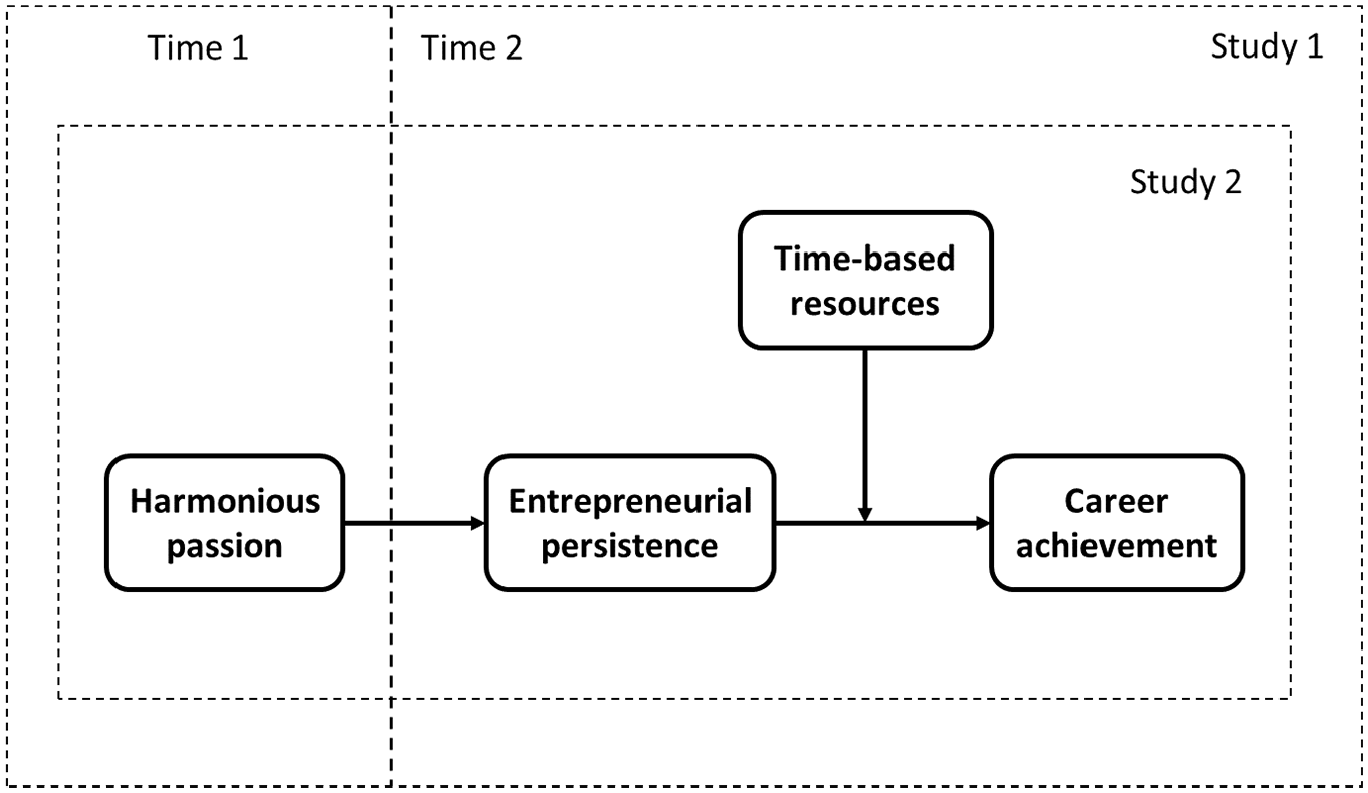
Conceptual model.
Harmonious passion and entrepreneurial persistence
In entrepreneurship, harmonious passion has been demonstrated to support entrepreneurial behaviour, entrepreneurial endeavours and other entrepreneurial behaviours and psychology (Newman et al., 2021; Riar et al., 2023; Vallerand, 2015). Increasing business performance and achieving entrepreneurial success are the objectives of entrepreneurs (Kraus et al., 2018). Since the harmonious passion of the entrepreneur is derived from the positive intrinsic reinforcement of the entrepreneur’s real self, harmonious passion will be related to the career achievement of entrepreneurs (Schellenberg et al., 2016). When harmonious passion is activated, it mobilizes the entrepreneur’s self-regulatory process to embrace the business goals that correspond to it (Dubreuil et al., 2014). In addition, engaging in cognitive tasks affirms this specifically focussed harmonious passion, a quality shared by powerful positive emotions (Dubreuil et al., 2014). Entrepreneurs who believe in the worth of their goal will continue to do so even if they lack the necessary abilities (Carpentier et al., 2012). They have a propensity for acting in an entrepreneurial manner and invest a lot of time and energy into it (Forest et al., 2012). Harmonious passion activates pleasant emotional experiences, showing that things are going well and there is no need to assess and alter personal habits (Liu et al., 2011). Entrepreneurs who have had great experiences decide to continue acting in the same way to keep things in this state, which improves enterprise performance (Kraus et al., 2018).
What determines success in the entrepreneur’s business and career will determine if an entrepreneurial effort is successful (Sullivan & Meek, 2012). Researchers realized that there are significant and useful metrics for measuring success outside monetary gains, such as career achievement outcomes (Sullivan & Meek, 2012). Past research has shown that harmonious passion also indirectly impacts outcomes (e.g. Feng & Chen, 2020). Typically, entrepreneurial persistence has been identified as a crucial quality of successful businesspeople (Feng & Chen, 2020) and may mediate the impact of harmonious passion on career achievement. Entrepreneurs who experience failure find renewed motivation to keep trying until they succeed (Ahsan et al., 2021). This is due to persistence, defined as goal-directed energy sustained throughout time (Cardon & Kirk, 2015). Prior research has demonstrated how harmonious passion influences persistence, and the emotional component of passion as well as identity-related factors, have been theorized (Cardon & Kirk, 2015; Iyortsuun & Shakpande, 2024).
Research shows that individuals with outstanding performance levels must engage in a lengthy active learning process to enhance and refine their skills and talents (Ahsan et al., 2021). Intentional exercise, defined as a highly organized activity with the explicit purpose of enhancing performance, significantly impacts performance (Al Issa, 2021). Harmonious passion maximizes learning and skill development opportunities by providing immediate feedback and awareness of performance-related outcomes (Al Issa, 2021). We propose that harmonious passion is a significant motivating force that supports entrepreneurial tenacity. In addition, harmonious passion is a crucial fuel that helps people endure long, sometimes frustrating workouts and achieve high career performance. Harmonious passion has been linked to sustained engagement in activities that promote skill development and excellence (Schellenberg et al., 2016). Harmonious passion also sets things in motion by providing people with the energy and purpose to practice consciously, and it is believed that entrepreneurial persistence affects career success (Fisher et al., 2018). Entrepreneurial tenacity indicates a substantial investment in activity because the individual feels committed to engaging in the activity competently (Cardon & Kirk, 2015). Entrepreneurial persistence is an excellent indicator of career success, as this construct has been defined as sustained effort over time (Cardon & Kirk, 2015). Drawing from self-determination theory, entrepreneurs who have high control over the situation, confidence and belonging to their venture are more likely to develop a calm, passionate attachment to it (Bayraktar & Jiménez, 2022; Iyortsuun & Shakpande, 2024). Consequently, career achievement was expected to predict commitment to deliberate practice. In other words, harmonious passion is positively correlated with entrepreneurial persistence, and then entrepreneurial persistence affects career achievement. Therefore:
Time-based resources
Time-based resources refer to the duration of time with a level of pleasurable engagement with the environment (Nikolaev et al., 2020). Time-based resources can be a brief, longer-lasting or more stable trait like feelings (Nikolaev et al., 2020). Time-based resources may facilitate the impact of entrepreneurial persistence on career achievement (Saks & Gruman, 2014). Entrepreneurs with time-based resources are more likely to approach interpersonal conflicts and challenges from a problem-solving perspective and devise a solution that maximizes benefits for both parties (Sun & Bunchapattanasakda, 2019). It has also been shown in organizational contexts and has been demonstrated to impact various organizationally essential processes, including management decision-making, dispute resolution, team behaviour and work task perception (Nikolaev et al., 2020). Research demonstrates that time-based resources are characterized by excellent thinking and cognitive elaboration (e.g. Sun & Bunchapattanasakda, 2019). Time-based resources impact how information is organized and thought about, what is seen as connected to what and so on (Nikolaev et al., 2020). Thus, time-based resources can help with coping mechanisms and health-promoting behaviour, making entrepreneurs with entrepreneurial persistence positive and moving forward to improve performance and career achievement (e.g. Nikolaev et al., 2020).
Entrepreneurs must anticipate and engage with more profound and decadent thinking since time-based resources encourage elaboration and inventive thinking (Guest, 2014; O’Cass et al., 2012). Because of impacts like enhanced elaboration and increased thought about various related concepts, time-based resources show the engagement of entrepreneurs (Le et al., 2020; Wu & Wu, 2019), which may help transform persistence into career achievement. Changes in entrepreneurial perseverance have an impact on professional accomplishment. Entrepreneurs in the time-based resource condition tend to be much less confused in their decision-making process, more inclined to go above and beyond the call of duty and more likely to integrate information into their decisions (Byrne, 2014). Entrepreneurs with time-based resources are more inclined to go above and beyond the call of duty than controls (Byrne, 2014). Using time-based resources may help entrepreneurs who, with entrepreneurial persistence, solve problems and make decisions more thoroughly and carefully while advancing their careers (Bal & De Lange, 2015). As a result, entrepreneurs with high time-based resources may make decisions more quickly or efficiently (Nikolaev et al., 2020). Time-based resources seem to make thorough and methodical processing easier (Bal & De Lange, 2015). Therefore:
Overview of studies and methods
Our research design consisted of two studies, where Study 1 was a two-wave survey to validate the proposed hypotheses. Study 2 was an experiment to establish causal relationships, enhance the robustness of the research findings and demonstrate how persistence mediates the harmonious passion and career achievement relationship and when time-based resources moderate the persistence and career achievement link.
Study 1: Two-wave online survey
Design and sample
The data collection process employed a phased methodology by implementing a pilot study and a primary survey. In the pilot study, individual in-depth interviews were conducted with a select group of entrepreneurs and experts specializing in this domain. These interviews aimed to assess the measures’ efficacy and explore how authentic respondents may depict the constructs of harmonious passion, entrepreneurial persistence, time-based resources and career achievement. Subsequently, a final questionnaire was devised for the primary survey. The back translation method ensured linguistic and conceptual congruity between the translated version and the original English rendition (Brislin, 1970).
To collect data for this study, a private incubator was contacted for permission to access its founder database. The private incubator was chosen because entrepreneurial projects in their database were carefully recruited to meet strict requirements from both local and international investment funds. By doing that, we ensured that the survey participants were entrepreneurs doing business in Vietnam. In addition, with the support of the private incubator, entrepreneurs can learn to write their business plans and get financing for their businesses. Prior research has also suggested that entrepreneurs in incubators were suitable participants (Choi & Shepherd, 2004; Stroe et al., 2018).
After getting approval from the incubator management, we sent an invitation to a list of 500 registered emails in their database. At Time 1, we collected information related to the entrepreneurial passion of founders. We received 481 responses, which contributed to the response rate of Time 1 at 96.20%. One month later, in Time 2, the respondents of Time 1 were invited to complete the second questionnaire with items related to entrepreneurial persistence, time-based resources and career achievement. After several reminders, 43.87% (211) of the respondents of Time 1 completed the second questionnaire. The two completed questionnaires were matched based on the founders’ registered email addresses. One question was designed to check respondents’ attention by asking them about the capital of Vietnam. Furthermore, one screening question was used to check whether they were founders. After matching, screening and cleaning data, 33 paired responses were removed. Consequently, a sample of 178 usable paired responses was collected from two waves, so the overall response rate of our study is 35.60%.
Sample characteristics
The final sample size was 178, including 114 (64.04%) females and 64 (35.96%) males. In terms of age, 124 (69.66%) were ‘20 to 29 years old’, 40 (22.47%) were ‘30 to 39 years old’ and 14 (7.87%) were ‘40 to 49 years old’. In terms of education, 86 (48.31%) respondents graduated from a university, college or vocational school, 46 (25.84%) graduated from high school, 24 (13.48%) graduated from a philosophy doctoral programme and 22 (12.37%) graduated from master programme. In terms of significant background, 56 (31.46%) respondents are trained in business and management, 15 (8.43%) in design, 11 (6.18%) in engineering and 96 (53.93%) in humanity, science, medicine and others. Regarding working experience, 90 (50.56%) had equal or less than 1 year at work, and 88 (49.44%) had from 2 to 28 years. In terms of startup intention, 82 (46.07%) say ‘no’, 57 (32.02%) say ‘not available’ and 39 (21.91%) say ‘yes’. In terms of planning to startup, 59 (33.15%) intend to start their business ‘within 3 years’, 45 (25.28%) from ‘3 to 5 years’, 27 (15.17%) after ‘5 years’ and 47 (26.40%) do not intend to do. In terms of family experience in business practice, 98 (55.06%) say ‘yes’, while 88 (40.94%) say ‘no’.
Measures
The focal constructs examined in Study 1 included harmonious passion, entrepreneurial persistence, time-based resources and career achievement. All of the constructs were first-order and measured with a seven-point Likert scale, except time-based resources with a seven-point scale ranging from 1 (very little) to 7 (very much). Harmonious passion was measured by four items suggested by Murnieks et al. (2014). Entrepreneurial persistence was measured using four items adapted from Cardon and Kirk (2015). Career achievement was measured by three items borrowed from Chen et al. (2015). Time-based resources were measured by three items adapted from Nikolaev et al. (2020). This study included respondents’ gender and family experience as control variables. This is because prior research has demonstrated that these individual characteristics affected career achievement (Asante & Affum-Osei, 2019). Dummy coding (1: male; 0: female) was used for respondents’ gender. Dummy coding (1: yes; 0: no) was used for family experience.
Measurement validation
The saturated model (final measurement model) was formed by incorporating the CFA model of the four first-order constructs (harmonious passion, entrepreneurial persistence, time-based resources and career achievement). The final CFA model yielded an acceptable fit to the data: χ2(70) = 98.74 (χ2/df = 1.41), IFI = 0.96, CFI = 0.96 and RMSEA = 0.05. Table 1 documented means, standard deviation and standardized CFA loadings of items. All loadings were higher than 0.5, except for two items of harmonious passion (i.e. ‘For me, becoming an entrepreneur is a passion’ and ‘I am completely taken with becoming an entrepreneur’). We decided to retain the two items to ensure the face validity of the harmonious passion construct (Newman et al., 2021). We rationale that the composite reliability (CR) of each construct was also high after retaining the two items (⩾.69; Table 2). Further, each construct’s average variance extracted (AVE) was lower than .50, except for the AVE of time-based resources (Table 2). However, the CRs of all concepts are higher than the CR acceptable level of .6 (Fornell & Larcker, 1981). Thus, the construct convergent validity of each construct was acceptable (Lam, 2012). Moreover, the correlation between any pair of constructs was always less than the square root of the AVE of each construct in the pair (Table 2), supporting the discriminant validity among harmonious passion, entrepreneurial persistence, time-based resources and career achievement (Fornell & Larcker, 1981).
Means (M), Standard Deviations (SD) and Standardized CFA Loadings (λ) of Items of Study 1.

CR, AVE and Correlations Between Constructs of Study 1.

Note. Bold numbers on the diagonal are square roots of average variances extracted. CR = composite reliability; AVE = average variance extracted; TR = time-based resources; HP = harmonious passion; PER = entrepreneurial persistence; CA = career achievement.
Common method bias
This study used a survey data set collected from a single respondent (i.e. founders), which may raise the problem of common method bias. To lessen this problem, in the design phase, this study employed different scaling methods (i.e. Likert and rating scales) and a random assignment of items to the questionnaire. In addition, this study also collected data at two different times. Further, this study applied an attention check by asking the respondents to read a statement and choose a specific answer (i.e. the number 4). Then, we followed a procedure that Podsakoff et al. (2003) proposed to assess the problem of common method bias. We first conducted a CFA Harman’s single factor model test. Then, we undertook an unmeasured latent variable test (i.e. to allow an unmeasured latent variable to load on all items in the trait model). The results of Harman’s test showed that the CFA Harman’s single-factor model yielded an inferior fit to the data (χ2(76) = 510.55, IFI = 0.39, CFI = 0.37 and RMSEA = 0.18), compared to the trait model. Accordingly, if common method bias existed, it was not a pervasive problem in this study (Podsakoff et al., 2003).
Structural results and hypothesis testing
Path analysis results of the proposed structural model are presented in Table 3. Model 1 and Model 2 were used to test H1, which proposed that harmonious passion indirectly affects career achievement via entrepreneurial persistence. As shown in Table 3, harmonious passion positively influenced career achievement (Model 1, βstandardized = .22, p < .05). In Model 2, harmonious passion positively influenced career achievement (Model 2, βstandardized = .36, p < .001). Furthermore, the results produced by the bias-corrected bootstrap method with 1,000 bootstrap samples demonstrated that the indirect effect of harmonious passion on career achievement via entrepreneurial persistence was positive and significant (βstandardized = .06, p < .05, 95% CI [0.001, 0.17]; Table 3), supporting H1. Therefore, entrepreneurial persistence partially mediated the link between harmonious passion and career achievement. Model 3 was then developed to test whether time-based resources positively moderate the relationship between entrepreneurial persistence and career achievement (H2). As presented in Table 3, entrepreneurial persistence positively influenced career achievement. The interaction of entrepreneurial persistence and time-based resources was also found to impact career achievement positively (Model 3, βstandardized = .19, p < .05), in support of H2. Note that the interaction was calculated using a single-indicator approach suggested by Ping (1995). We also employed mean-centring variables when forming the interaction to avoid multicollinearity (Iacobucci et al., 2016). No improper solution (e.g. a Heywood case) was found in any model.
Path Analysis Results of Study 1 (N = 178).

Note. Standardized regression coefficients are reported. TR = time-based resources; HP = harmonious passion; PER = entrepreneurial persistence; CA = career achievement; BC = bias-corrected bootstrap estimate; LLCI = lower level of the 95% confidence interval; ULCI = upper level of the 95% confidence interval; NS = non-significant.
p < .05. **p < .01. ***p < .001.
Fuzzy-set qualitative comparative analysis results: Configurations for the presence of career achievement
We also applied fsQCA to provide further support and address several imperfections of SEM analysis (Pappas & Woodside, 2021). Although SEM helps researchers explore the net effect between independent and dependent variables, they do not guarantee deciphering the causal complexity of scientific phenomena (Fiss et al., 2013). Accordingly, this study followed an approach offered by Pappas and Woodside (2021) to conduct fsQCA. First, we conducted the contrarian case analysis for the four variables, and the results confirmed the existence of various relationships between the variables, separating from the main effect (Table 4). This signalled the need for configurational analysis (Pappas & Woodside, 2021).
Results From the Contrarian Case Analysis of Study 1.

Note. Cases in bold represent contrarian cases. Cases in italics represent main effect. The sets of contrarian cases are counter to the main effect size (phi2 range from 0.09 to 0.18).
HP (phi2 = 0.18, p < .05); PER (phi2 = 0.18, p < .01); TR (phi2 = 0.09, p > .1).
To analyse the data using fsQCA, we transformed the original values collected from the sample into values ranging from 0 to 1 (Ragin, 2008), setting the threshold for full membership (i.e. 0.95), non-membership (i.e. 0.05) and cross-over point (i.e. 0.5). Table 5 reported the original values that correspond to each threshold. After deciding the thresholds, we conducted the data calibration in the fsQCA 4.1 version, as suggested by Pappas and Woodside (2021). With the consistency threshold of .85 (i.e. above the minimum consistency threshold of .80 suggested by Ragin, 2008), the results produced by the fsQCA 4.1 package demonstrated that the three fsQCA solutions documented the same configurations (Table 5). Accordingly, two configurations of causal conditions (i.e. HP* ~ PER; PER* ~ TR) explained the presence of career achievement with an overall consistency level of .80 and an overall solution coverage of .74. The solution reported acceptable consistency (>.80), and the two identified configurations account for 74% of the membership in the presence of career achievement. Notably, the results documented that none of the causal conditions (i.e. harmonious passion, entrepreneurial persistence and time-based resources) are sufficient conditions for the occurrence of career achievement. However, their combinations are (HP* ~ PER + PER* ~ TR → CA). Thus, the fsQCA findings complemented the SEM results. We also tested for a specific proposition (i.e. Proposition 1 (P1): high HP, high PER and high TR) and examined how many cases the proposition held true in our sample. In other words, entrepreneurs with high harmonious passion, high persistence and high time-based resources will have high career achievement. The findings documented that the proposition is partially supported (Figure 2). By doing that, we identified specific entrepreneurs with high or low career achievement depending on high or low specific antecedent (i.e. harmonious passion, persistence and time-based resources) conditions. Asymmetric analysis indicated that high scores on the configuration of harmonious passion, persistence and time-based resources usually occur for high scores on career achievement (i.e. the outcome condition). Thus, the proposition is helpful for theory advancement but does not predict all cases with high scores on career achievement.
fsQCA Findings.

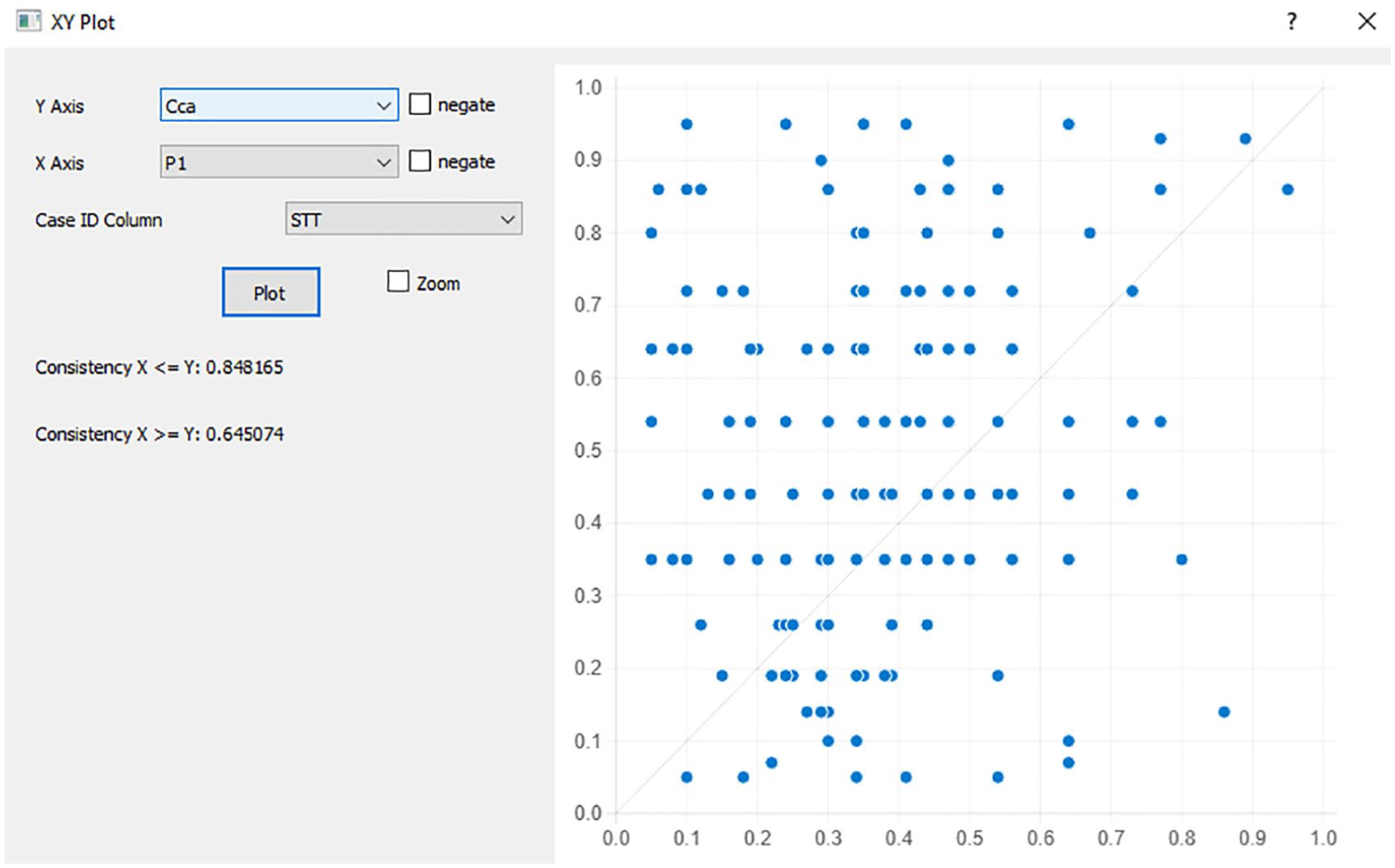
Plotting a specific proposition (Proposition 1: high HP, high PER and high TR will have high CA).
Furthermore, this study examined the predictive validity to explore how well the model predicts career achievement (i.e. the dependent variable) in additional samples. To do this, we randomly split the study sample into sub- and holdout samples, then ran the same analysis for the two samples. Specifically, we ran the fsQCA for the subsample and then used every solution from the sub-sample (see Table 6) to test against the holdout sample. Finally, the new variable was plotted against the outcome of interest (i.e. career achievement) using the holdout sample (Figure 3). We found that 0.864625 indicates high consistency, while 0.569538 indicates the coverage. These findings documented that the data were broadly consistent (86%) with the argument that solution P3 (i.e. HP* ~ PER) is a subset of career achievement, and its coverage of career achievement is 57%. Solution P3 accounted for 57% of the memberships in career achievement.
Solutions From the Subsample.

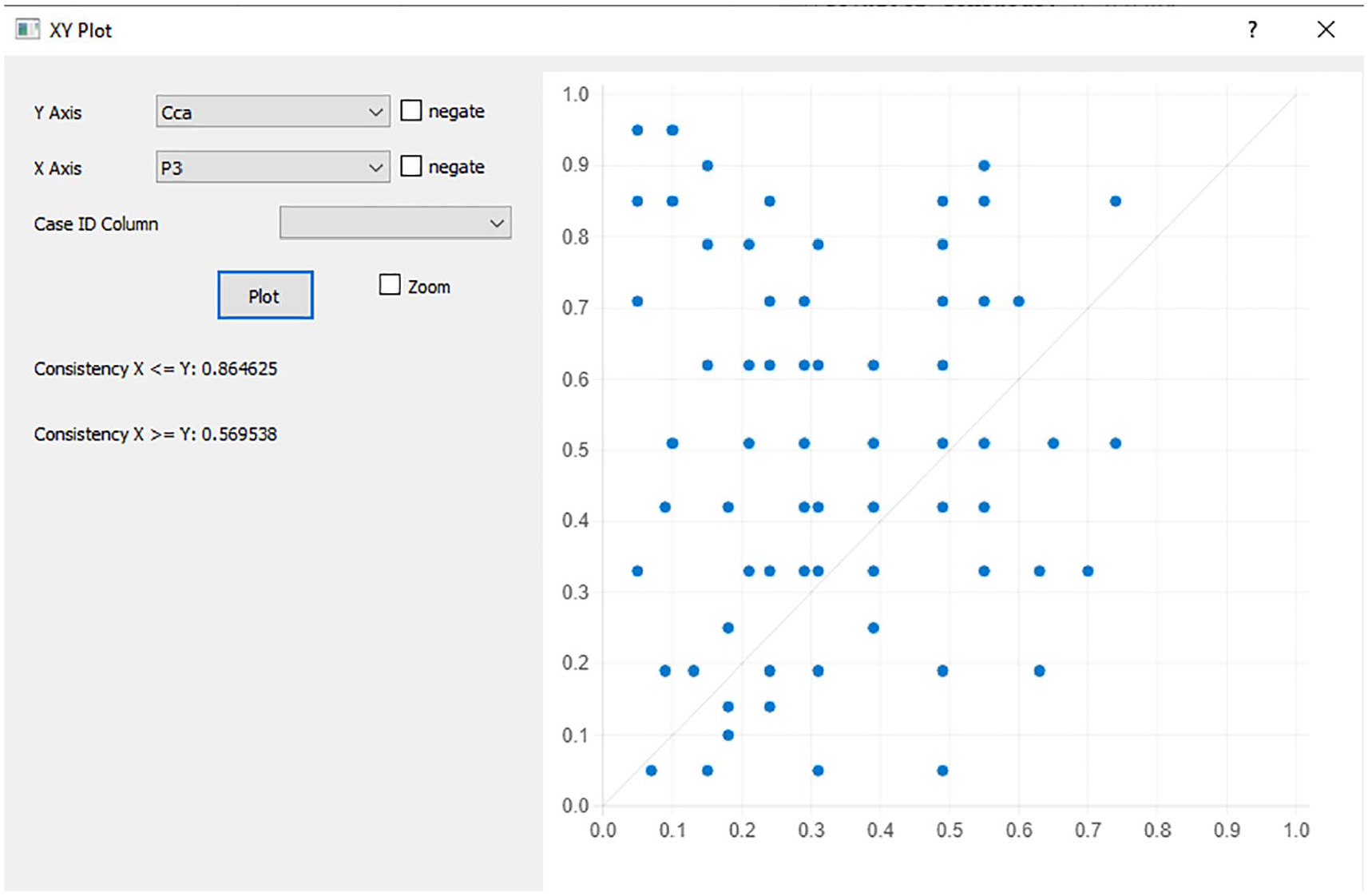
Fuzzy-plot of P3 (HP* ~ PER from Table 6) using data from the holdout sample.
Study 2: Survey experiment
Design and sample
Study 2 is an experiment to triangulate the findings of Study 1 and validate the proposed causal relationship. We recruited 201 participants (60% females, Mage = 38, SD = 11) from Prolific in the U.K. Participants were randomly assigned to a 2 (high vs low harmonious passion) between-subjects design.
In the high harmonious passion condition, participants were required to imagine they were entrepreneurs who started a small tech business. They were deeply passionate about your business and genuinely enjoyed the work they did. They found great joy in solving problems and creating innovative products. Becoming entrepreneurs allowed them to live a variety of experiences, and the new things they discovered every day made them appreciate it even more. They put in significant effort to keep the business running, and they felt deeply connected to it. They felt a deep sense of fulfillment and satisfaction from their entrepreneurial journey. For them, becoming entrepreneurs was a passion, and they were completely taken with it. Their business activities energized them and contributed significantly to their overall happiness.
In the low harmonious condition, participants were required to imagine they were entrepreneurs who started a small tech business. While they were somewhat interested in their business, it did not evoke strong feelings of passion. They viewed it more as a means to an end rather than a source of joy or fulfillment. Becoming an entrepreneur did not allow them to live a variety of experiences, and the new things they discovered did not enhance their appreciation for it. They put in the necessary effort to keep the business running, but they did not feel deeply connected to it. They did not feel a sense of fulfillment and satisfaction from their entrepreneurial journey. For them, becoming an entrepreneur was not a passion, and they were not completely taken with it. Their business activities did not energize them and did not contribute to their overall happiness.
All measures were adapted from established scales, the same as Study 1.
Results
We propose H1 that harmonious passion positively enhances entrepreneurial persistence, which in turn increases career achievement. The t-test result showed that the high harmonious passion group had higher entrepreneurial persistence (high harmonious passion: b = 3.65, low harmonious passion: b = 1.62, t(199) = 3.98, p < .001) and career achievement (high harmonious passion: b = 4.72, low harmonious passion: b = 3.78, t(199) = 12.07, p < .001).
A mediation analysis (Hayes, 2017, Model 4) was conducted. The results supported the mediation (b = −0.06, SE = 0.02, 95% CI [−0.08, −0.01]), thus H1 was supported. We propose H2 that the effect of entrepreneurial persistence on career achievement is moderated by time-based resources. We examined this relationship using Hayes PROCESS Model 14. The moderation was supported (b = 0.18, SE = 0.06, 95% CI [0.05, 0.31]). The moderated mediation was also significant (b = 0.08, SE = 0.05, 95% CI [0.01, 0.19]). Thus, H2 was supported.
Discussion and implications
Drawing upon the self-determination theory, the current research investigates the net, configuration and causality impacts of the harmonious passion of entrepreneurs on their career achievement. Specifically, we examined how entrepreneurial persistence mediates harmonious passion and career achievement. Time-based resources was examined as a moderator of the relationship between entrepreneurial persistence and career achievement. The results, based on a time-lagged dataset collected from 178 entrepreneurs in Vietnam and an online experiment dataset collected from 201 participants in the UK, demonstrated that entrepreneurial persistence fully mediated the harmonious passion-career achievement link. Time-based resources strengthened the effect of entrepreneurial persistence on career achievement. Our findings from two studies have offered some theoretical and practical implications.
Theoretical implications
Harmonious passion provides significant advantages for entrepreneurs and ventures (Newman et al., 2021; Riar et al., 2023; Zhao & Liu, 2023). Examining the concept of harmonious passion concerning other career-related outcomes, such as professional accomplishment, is essential since it might help understand how the phenomenon manifests itself in the startup. Few studies have examined the relationship between entrepreneurs’ harmonious passion for their careers and significant attitudinal and behavioural work outcomes such as well-being, hustle and strain (Bayraktar & Jiménez, 2022; Burnell et al., 2024; Luu & Nguyen, 2024) among which career performance is a crucial one in the contemporary startup context (Fisher et al., 2018). Entrepreneurs and businesses benefit greatly when examining harmonious passion and its outcomes (Cardon & Kirk, 2015). The phenomena of harmonious passion in the star-up setting may be better understood if it is studied concerning career achievement. Career success is a crucial result in the modern startup setting. However, research is scarce connecting entrepreneurs’ harmonious passion and career achievement to get more insights into the success or failure of venture creation (Fisher et al., 2018). Harmonious passion has been shown to influence career success, but it is unknown how harmonious passion helps entrepreneurs achieve their goals and success (Fisher et al., 2018). Fisher et al. (2018) documented that resilience (i.e. including hardiness and persistence) partly mediated harmonious passion and entrepreneurial success, while sustained entrepreneurial action did not lead to entrepreneurial success. Iyortsuun and Shakpande (2024) reported that harmonious passion enhanced entrepreneurial persistence, but both factors failed to enhance firm growth. Cardon and Kirk (2015) and Kiani et al. (2023) confirmed the entrepreneurial passion-persistence link but did not explore its outcomes. These studies’ findings were only drawn based on the survey design, which raised concerns about causal assumptions and interpretations (Curran et al., 2015; Newman et al., 2021).
To address this issue, the present study extends earlier findings on the relationship between harmonious passion and career achievement by providing additional evidence of the mediating role of entrepreneurial persistence. We contribute to the self-determination theory (Deci & Ryan, 2014) by investigating the relationship between harmonious passion and career achievement. We consider our findings more reliable as we used both time-lagged and experimental study designs, which can eliminate retrospective biases plaguing earlier studies and provide causal effect evidence. Another noteworthy contribution of this study is investigating time-based resources as a moderator. This factor has been overlooked in the literature (Fisher et al., 2018; Nikolaev et al., 2020). We argue that time-based resources tend to inflate entrepreneurial persistence to reach their goals and achieve higher career success. The findings of this study also show the moderation effect of time-based resources in the relationship between entrepreneurial persistence and career achievement. Time-based resources reflect a certain amount of engagement and enjoyable interaction with the environment. Since time-based resources foster elaboration and creative thought, entrepreneurs can anticipate and interact with more profound and richer thinking. Therefore, under high time-based resources, entrepreneurs with entrepreneurial persistence will have higher career achievement, be clearer in their decision-making, go above and beyond the call of duty and incorporate knowledge into their judgments. Entrepreneurs who exhibit entrepreneurial persistence may find that using time-based resources may help them solve issues and make decisions more thoughtfully and thoroughly while progressing in their careers. Because of this, entrepreneurs with high time-based resources could act swiftly or effectively. The findings of this study echo those of Nikolaev et al. (2020).
This finding not only validates prior contention that harmonious passion leads to high career achievement but also shows that it holds true that entrepreneurial persistence is the bridge to leverage harmonious passion for reaching goals. Additionally, the fact that the mediating role of entrepreneurial harmonious passion sheds light on the differences in the results on the link between harmonious passion and career achievement in the previous studies (e.g. Schellenberg et al., 2016). Specifically, holding the same harmonious passion, but not all entrepreneurs are equally successful in their careers because they do not share the same entrepreneurial persistence and time-based resources. We conducted a contrarian case analysis to justify this idea and used fsQCA to test our argument. The fsQCA results with a restrictive consistency threshold (i.e. .85); none of the personal resources provide sufficient conditions for career achievement. More importantly, the fsQCA results documented that harmonious passion, entrepreneur persistence and time-based resources form INUS conditions in which their combinations produce sufficient conditions for career achievement. Such findings highlight the importance of the configurations of personal resources to achieve career success when requiring a higher consistency level. The findings also signal that the role of personal resources in career achievement is more complex and that fsQCA is an appropriate method for discovering the complexity of causal relationships among them (Pappas & Woodside, 2021). While previous studies used structural equation modelling and multiple regression analysis to explore the net effects of harmonious passion (see Appendix), our study contributes both the net and causal effects. Regarding the fsQCA methodology, we first performed a configurational analysis based on individual-level data from entrepreneurs. We also examined some propositions using fsQCA. By doing that, we confirm the importance of examining complex causal patterns of harmonious passion, contrarian cases and asymmetric relationships between harmonious passion, entrepreneur persistence, time-based resources and career achievement. Finally, the online experiment results with UK participants confirmed the causality effects of Study 1 relationships. Our studies are among the first to address the limitations of previous research in terms of causal assumptions and interpretations (Curran et al., 2015; Newman et al., 2021).
Practical implications
Our findings offer several practical implications for entrepreneurs in their startups. Our results advise entrepreneurs to carefully examine themselves before they start their own businesses. Entrepreneurs need to have a solid harmonious passion for their venture. With strong harmonious passion, entrepreneurs will have the courage to overcome risks and challenges in setting up their businesses. Entrepreneurs who are harmoniously passionate about their jobs tend to devote much time and effort to them because they believe in their importance. Entrepreneurs with harmonious passion have internalized their work tasks, resulting in a voluntary endorsement of the activity’s significance and the pursuit of the activity for its own sake (e.g. because of the inherent satisfaction it brings). When entrepreneurs are motivated by a sense of harmony in their love for their task, they are more likely to do it and keep doing it persistently. However, harmonious passion is the condition but not sufficient to have high career achievement. Entrepreneurs must persist with their goals, always work hard, and not give up. Developing a business plan can be an essential step, and persist with it. This study identifies the critical role of time-based resources. Entrepreneurs also need to spend time thinking about their business and about what they are doing.
Limitations and directions for future research
There are several limitations to this study. First, the dualistic model of passion proposed by Vallerand (2015) differentiates between harmonious and obsessive passion based on whether or not the urge to participate in the activity is within the individual’s control. Passion may be harmonious or obsessive, depending on the degree of autonomy the individual exercises in their internalization. Since the study focussed on career achievement, it did not examine obsessive passion but focussed on harmonious passion. However, researchers in the future may broaden the scope of the model to include an analysis of both two types of passion. Second, our conceptual model can only investigate harmonious passion and its outcomes rather than its antecedents. The existing model may be expanded upon by considering the antecedents of harmonious passion. For example, given that passion may be fueled by traits like autonomous and controlled personality orientations, a future study can investigate how such personal qualities interact with contextual factors (such as leader, team or organizational features) to foster harmonious passion. Finally, given the possible moderating effects of organizational culture and obstacles that prevent the performance advantages of harmonious passion from emerging, we advise further study in various countries and across other enterprises (Le et al., 2023).
Footnotes
Appendix
Declaration of conflicting interests
The author(s) declared no potential conflicts of interest with respect to the research, authorship, and/or publication of this article.
Funding
The author(s) disclosed receipt of the following financial support for the research, authorship, and/or publication of this article: This work was supported by a grant from the University of Economics HCM City (UEH University) and Western Sydney University Joint Research Program.
