




Abstract
Although there is increasing awareness of hotels’ sustainability efforts, there are gaps in understanding both how and when green practices influence guest evaluations. To address this gap, this study applies the complexity theoretical framework and fsQCA to examine key attributes that influence guest experiences as reflected in online reviews of green hotels. In our study, emotions emerged as a critical attribute, surpassing the impact of sustainability measures. Results indicate specific combinations of hotel characteristics, such as ratings and sustainability practices as well as socio-cultural factors like collectivism and gender, drive positive and negative feedback in hotels. An intervention model for hotel managers to encourage pro-environmental behavior of guests is proposed based on their attribute grouping. Different strategies such as social norm messaging, co-creation with customers, and status signaling, will encourage guests to recognize and highlight sustainability practices in online reviews.
Introduction
The hospitality and tourism sectors significantly contribute to greenhouse gas emissions (Lenzen et al., 2018), expending 35% to 50% of their energy usage on heating, ventilation, and air conditioning (Torres et al., 2020). In response to the growing demand for sustainable travel, many hotel chains have rebranded some of their properties as green hotels, emphasizing sustainability and reducing their carbon footprints (Yusoff et al., 2020). Green hotels are defined by the Global Sustainable Tourism Council (GSTC) (2016) as hotels implementing measures that focus on “effective sustainability planning, maximizing social and economic benefits for the local community, enhancing cultural heritage, and reducing negative impacts to the environment” (p. 2). Initiatives like Marriott’s Serve 360, Hilton’s Travel with Purpose, and Accor’s Planet 21 track sustainability performance through various environmental certifications across their properties, benefiting both the environment and the hotels’ financial standing, reputations, and competitive advantage (Brazytė et al., 2017; Rahman et al., 2023).
Despite these initiatives, communicating sustainability efforts effectively remains challenging for the hotel industry since even significant efforts can go unnoticed without clear, engaging strategies (Bernard et al., 2024). Although there is growing academic interest in green hotels, previous research (primarily survey-based) shows that green practices do not always guarantee positive guest responses (Goh & Balaji, 2016; Teng et al., 2018). Some guests respond more favorably than others, and several factors can enhance or diminish the impact of sustainability initiatives on guest feedback (Bonn et al., 2016). These inconclusive findings suggest that additional, unaccounted-for factors influence the relationship between the hotel’s sustainability initiatives and guest evaluations.
Research suggests that guest recognition of green practices depends largely on their awareness and engagement (Gupta et al., 2019). However, there are gaps in understanding both how green hotel practices influence guest evaluations (the underlying mechanisms) and when they lead to positive or negative guest responses (the boundary conditions; Balaji et al., 2019). Hotels’ sustainability efforts are not always visible to all guests, indicating a need for a better understanding of what prompts guests to acknowledge sustainability in their reviews and under what circumstances sustainability efforts lead to positive or negative reviews (Rahman et al., 2023).
We propose a solution that acknowledges the interaction of several influencing variables. Petty and Briñol (2008) suggest that interrelated factors influence travelers’ experiences in green hotels, which makes it difficult for these hotels to define contexts that consistently result in positive experiences. For example, Bruns-Smith et al. (2015) found that while cognitive and affective factors influence consumer attitudes and behavior, Liu (2022) shows that affective factors like emotional intensity determine the review sentiment. Similarly, D. Kim and Perdue (2013) explain that although emotional reactions are central to hospitality services evaluation, these may vary based on socio-demographic factors like the gender of the consumer (Chen et al., 2017), cultural background (Messner, 2022; Singelis & Brown, 1995) or traveler type (solo, group, etc.). Other influencing factors include the type of sustainability practice (Gerdt et al., 2019) and online rating (Radojevic et al., 2015).
Although cognitive, affective, and socio-demographic factors often interact in the real world, prior studies have mostly studied these variables separately (Pappas et al., 2016; Ruiz-Mafe et al., 2018). However, consumer green values are dynamic and context-driven (D. Kim & Park, 2017). Therefore, exploring how these factors collectively affect experiences in green hotels is essential, as sustainability is increasingly becoming central. White et al. (2019) emphasized that research addressing these complexities remains limited. Therefore, this study draws on complexity theory (Urry, 2005) to create a comprehensive model that integrates cognitive, affective, and socio-demographic factors influencing tourist experiences in green hotels.
This study draws upon the complexity theory (Urry, 2005), expectancy-disconfirmation theory (Oliver, 1980), and appraisal theory of emotions (Arnold, 1960). Complexity theory is used as a baseline to propose that isolated factors do not drive consumer evaluations but emerge from the interactions of cognitive, affective, and socio-demographic factors (Urry, 2005). Consistent with previous research on green hotel experiences (Gerdt et al., 2019; Rahman et al., 2023) and electronic word-of-mouth (J. M. Kim et al., 2018; Radojevic et al., 2015), we included cognitive factors such as hotel ratings and whether guests mention sustainability efforts in their reviews, affective factors reflected in emotions (positive vs. negative), and socio-demographic factors such as traveler type, gender, and national culture.
Unlike prior studies that have relied on surveys or variance-based statistical approaches to examine general hotel attributes such as room rates, recycling programs, proximity to a town, energy, and water efficiency (Brazytė et al., 2017; D’Acunto et al., 2020), this research uses fuzzy-set qualitative comparative analysis (fsQCA) to identify the key cognitive, affective, and socio-demographic factors shaping positive and negative online reviews (electronic word of mouth or “eWOM”) in green hotels as guided by theory. A limitation of the traditional regression-based approaches used by previous studies is the assumption of linear and additive relationships that can lead to similar guest evaluation outcomes (Fiss, 2011; Olya et al., 2018). However, this approach contrasts with that of fsQCA, which can uncover configurational patterns and account for the fact that different combinations of factors (in this case, cognitive, affective, and socio-demographic factors) can interact to shape guest evaluations.
In this study, we use online reviews because they are less prone to social desirability bias and capture tourists’ genuine experiences (Yu et al., 2017). Since our study postulates that guest evaluations are shaped by the interacting conditions of cognitive, affective, and socio-demographic factors, the fsQCA approach was employed. The key questions guiding this research are:
1. How do cognitive, affective, and socio-demographic factors interact to shape travelers’ evaluations of green hotels?
(a) What attributes or combined attributes are associated with positive and negative online reviews for green hotels? and (b) Under what conditions do travelers mention green initiatives in their reviews?
2. How do Eastern and Western cultures differ in the attributes associated with positive and negative online reviews for green hotels?
Our study broadens the field of tourism by making three significant contributions to green hotel research. First, complexity theory (Urry, 2005) was applied to examine the interplay between cognitive, affective, and socio-demographic factors, introducing a broader view of tourist experiences in green hotels. This integrated approach uncovers the dynamic interactions between various variables that lead to diverse guest feedback outcomes and sheds light on the role of the context-dependent and non-linear nature of consumer feedback (Olya et al., 2018; Stylos et al., 2024). The study responds to gaps in the literature that seek to understand both how and when green practices influence guest evaluations (Balaji et al., 2019).
Second, the central role of emotions in online reviews across different cultural contexts is highlighted in our study. Using the appraisal theory of emotions (Arnold, 1960), we set out to show that the same sustainability attribute can evoke different emotional responses based on the mix of guests’ experiences and cultural context. These findings enhance our understanding of the role of emotional tone in online reviews (Sukhu et al., 2019) by emphasizing how travelers emotionally connect with a hotel’s sustainability initiatives based on their profile group.
Finally, we propose a green hotel intervention model that hotel managers can use to engage guests in sustainability initiatives, regardless of their profile grouping. This intervention model matches pro-environmental experiences to the unique attribute combination of each guest group. Our study also provides important insights into enhancing the visibility of a hotel’s green efforts through guest engagement (Rahman et al., 2023; Yadav et al., 2019) and lays the groundwork for future research on responding to the complexities of real-world consumer behavior.
Literature Review
Complexity Theory
The foundation of complexity theory is rooted in chaos theory (Mansour et al., 2023), which provides a nuanced framework for understanding complex social situations by accounting for multiple interacting factors rather than isolating single variables (Stevenson et al., 2009; Urry, 2005). It recognizes the intricate cause-and-effect relationships that emerge from the convergence of diverse elements (Woodside, 2017). A key principle of complexity theory is equifinality, which argues that different combinations of factors can produce the same outcome, emphasizing the importance of contextual variability (Ragin, 2008).
Although this theory has been widely applied in strategic management, marketing, and, more recently, tourism studies, particularly for crisis management and understanding customer behavior (Pappas, 2018; Stevenson et al., 2009; Taheri et al., 2020), our study is one of the few studies to apply complexity theory in the context of green hotels. A significant gap in the literature is the lack of practical application of this theory in social contexts, which is important for informing research methods and enhancing the understanding of complex phenomena (Stevenson et al., 2009; Wattanacharoensil & Stettler, 2019).
Tourism is inherently complex. Unlike traditional approaches that view tourism systems as stable and linear with straightforward cause-and-effect relationships (Speakman, 2017), tourism is increasingly seen as an adaptive system, where interactions are dynamic, nonlinear, and unpredictable due to the unique identities of its components (McKercher, 1999). These components, which range from products and services to customer preferences and the business environment, work together to achieve outcomes based on a convergence of multiple causes, challenging the traditional view of tourism systems as stable and easily manageable (Wattanacharoensil & Stettler, 2019). Tourism studies are further complicated by consumer perceptions. In prior tourism studies, D. Kim and Park (2017) propose that consumers perceive their experiences as a combination of sensory, emotional, and cognitive components. Similarly, Bitner (1990) suggests that a blend of factors influences tourists’ decisions to approach or avoid service organizations such as hotels and restaurants, illustrating the complexity of tourist evaluations. Therefore, complexity theory helps to explain how differences in factors such as national culture, gender, traveler type, and emotions can significantly alter overall tourist experiences in the green hotel context, driving behavioral shifts that may be overlooked if these variables were examined in isolation.
Cognitive Factors Shaping Tourist Experiences in Green Hotels
Cognitive processes, including perception, judgment, and decision-making, influence tourist experiences in green hotels (Brazytė et al., 2017). While tourists who select conventional hotels may prioritize price, location, and functional quality of the amenities (AHLA, 2023), tourists who select green hotels are affected by specific operational challenges that aim to address environmental issues (Galati et al., 2023). This means that tourists’ experiences in green hotels are affected by their interaction with tangible factors, such as eco-friendly facilities, amenities, and room quality, and intangible factors, including staff behavior, sustainable policies, and the overall atmosphere (Guo et al., 2017). In a green hotel context, Barber (2014) found that guests actively seek tangible cues, such as air quality and healthy food options, as these attributes directly influence their experience.
However, previous studies have observed that the importance of attributes varies from one guest to another (Trang et al., 2019; Verma & Chandra, 2016). Some guests argue for green attributes to be classified as basic (Kasim, 2004), suggesting the insignificance of their differentiating appeal. In contrast, others are willing to pay more, regardless of the green attribute, as doing so aligns with their ascribed responsibility to protect the environment (Galati et al., 2023). These differences imply that tourists have different expectations about green hotel experiences. This gap between their expectations and the hotel’s performance could explain the different ratings of their green hotel experience or the underlying reasons why some green practices are noticeable to some guests, while they may not even be visible at all to others (D'Acunto et al., 2023; LeBlanc & Nguyen, 1996).
Building on the expectancy-disconfirmation theory (Oliver, 1980), which describes the incongruity between tourists’ pre-purchase expectations and post-purchase evaluation (Oliver, 1980), this study proposes that tourists’ expectations about the hotel experience may shift during their stay based on a mix of factors (green hotel practices, traveler profile, travel purpose, emotion cultural background) that interact to shape expectation-confirmation processes. When tourists’ experience exceeds their expectations, they are inclined to rate the hotel highly. Alternatively, when their experience falls below their expectations, this will drive them to leave a low rating for the hotel (Banerjee & Chua, 2016). Tourists with high ecological concern expect hotels to engage in green practices and are willing to pay between 4% and 6% more for noticeable green practices if the hotel adheres to its environmental commitment (Manaktola & Jauhari, 2007; Rahman et al., 2015). However, if there is skepticism about the quality of the hotel’s product, service, or greenwashing tendencies, tourists will leave an unfavorable rating if the experience diverges from their expectations (Chen et al., 2017).
Although confirmation-disconfirmation theory is predominantly used to explain consumers’ overall satisfaction levels (Xu, 2018), the theory can be applied to assess the outcome of customer perception of an online service (Szymanski & Hise, 2000; Xu, 2020). The contrast between initial expectations and perceived experience implies that disconfirmation of expectations can be positive or negative (Elkhani & Bakri, 2012). Positive disconfirmation will induce customer satisfaction, whereas negative disconfirmation leads to dissatisfaction regarding the perceived performance of the product or service (Kumar et al., 2023; Yi, 1990).
The study implements a structured approach to identifying green practices in hotels because previous research rarely explores the impact of specific sustainability measures—such as “sustainable management systems” and “reporting and communication” as outlined by the Global Sustainable Tourism Council (GSTC)—on guest evaluations (Gerdt et al., 2019; Yu et al., 2017). To address these gaps and inconsistencies, this study adopts GSTC’s standardized framework, which offers a global benchmark for evaluating a hotel’s sustainability (GSTC, 2017).
We incorporate hotel rating as an influencing variable because it can act as a key signal to help tourists form cognitive judgments about service quality and manage their expectations (Connelly et al., 2011). Ratings also serve as measurable indicators that reduce uncertainty, guiding guest evaluations of a hotel’s overall value and influencing their decision-making processes (Moe & Schweidel, 2012). In this context, ratings reflect the hotel’s general service quality and signify its sustainability practices. Therefore, high hotel ratings can encourage guests to acknowledge and emphasize green practices in their reviews. However, the literature points to a disconnect between a hotel’s sustainability efforts and how tourists perceive or discuss these efforts. For example, Gerdt et al. (2019) identified a link between hotel ratings, sustainability management, and customer satisfaction, suggesting that sustainability practices contribute to the overall tourist experience even when not explicitly mentioned in reviews. This finding suggests that future studies should further explore the role of hotel ratings in the context of green hotels.
Socio-Demographic Factors Shaping Tourists’ Experiences in Green Hotels
Socio-demographic factors—that is, traveler type, national culture, and gender—are included to explain behavioral differences. National culture significantly influences consumer behavior (Chu & Choi, 2011; Pfeil et al., 2006), leading to cross-cultural differences in eWOM (Banerjee & Chai, 2019; J. M. Kim et al., 2018). Previous studies that explore the link between culture and online reviews (J. M. Kim et al., 2018) have predominantly used Hofstede’s cultural dimensions, despite criticisms of irrelevance (Yang et al., 2019) and failing to account for in-group contradictions (Yoo et al., 2011). In a number of these studies, nationality is often used as a proxy for cultural orientation (Huo et al., 2022; Leon, 2019; Yin et al., 2014), with research showing that collectivistic cultures are more tolerant of inconsistencies between values and behavior, with individuals from these cultures more willing to adjust their behavior to social norms (Lin & Kalwani, 2018).
On the other hand, individualistic cultures tend to prioritize personal values and self-expression (Leon, 2019). For example, Sann et al. (2020) found that complaints from Eastern hotel guests focused on general service-oriented issues (e.g., service experience, security, value for money), while Western customers tend to complain about individual experiences such as amenities and cleanliness (Sann et al., 2020). While these findings show differences between individualistic and collectivist cultures, what is less known is the intra-cultural variations in sustainability perception and behaviors (Yoo et al., 2011). To address this inadequacy, we argue that the complexity theory provides a more flexible approach to account for the multiple interconnected variables that can result in non-linear behaviors, even within the same cultural context.
Complementing the role of cultural differences in online reviews, studies have highlighted the importance of understanding traveler preferences and behaviors for strategic planning and service improvement (Li et al., 2013). So far, the influence of socio-demographic factors such as traveler type (Rhee & Yang, 2015) and gender (Wang et al., 2018) remain understudied. Based on social identity theory, an individual’s group affiliation influences how they evaluate and share experiences (Tajfel et al., 1971). For example, men and women process information and evaluate services differently (Lyu & Noh, 2017). Likewise, travelers’ nationality (Luo et al., 2016) and profile orientation (Banerjee & Chua, 2016) have been found to influence their preference and motivation to select one tourism product over the other. Tourists traveling in groups are likely to base their evaluations on shared values and group norms; in comparison, solo travelers tend to be less influenced by group dynamics and evaluate their experiences independently (Zhang et al., 2024).
Many existing studies in an online review context have focused on differences between business and leisure travelers in hotel selection (Lehto et al., 2015; Rohani et al., 2017). However, studies examining the differences between solo and group travelers are limited (Xu, 2018). This study defines group travelers as two or more people traveling together. Since different traveler types have varying needs (Bernard et al., 2022), hotel attributes essential for one kind of traveler group may be insignificant for another. For example, group travelers often prioritize easy access to facilities with minimal interaction with hotel staff (Heo & Hyun, 2015), while solo travelers value more frequent interactions with others and convenient amenities (Xu, 2018).
Gender is another significant socio-demographic variable relevant to understanding green hotel consumption experiences (Navrátil et al., 2016) although findings remain inconsistent (Wang et al., 2018). Its inclusion in this study is grounded in social role theory (Nadeem et al., 2020), which suggests that societal expectations influence an individual’s behavior and attitudes based on gender roles (Eagly & Kite, 1987). While some studies indicate that women are more likely than men to engage in eco-friendly activities (Wang et al., 2018), other research finds the opposite, with men displaying greater environmental responsibility (Kang et al., 2012) or finding no significant effect of gender in sustainability consumption (Sevilla-Sevilla et al., 2019). Exploring gender effects through objective data sources, such as online reviews, may help to resolve these discrepancies and provide a clearer understanding of how gender influences green hotel consumption.
Affective Factors (Emotions) That Shape Tourist Experiences in Green Hotels
Fredrickson (2001) defines emotions as “multicomponent response tendencies that unfold over relatively short periods” (p. 218). These emotions are commonly classified into two main constructs: positive (e.g., joy and love) and negative (e.g., fear, anger, sadness; Shaver et al., 1987). Zablocki et al. (2019) included a third classification, mixed emotion (e.g., fear and joy, anger and joy); however, after testing the differentiating effects across several studies using online review data, found that negative emotion and mixed emotion reviews have a similar pattern in their influence—they decrease overall attitude toward the product (pp. 30, 34). Individuals who experience anger tend to attribute this emotion to the actions of others, believing others are responsible for their anger (Smith & Ellsworth, 1985, p. 828), whereas sadness arises from the loss or absence of a valued object, person, or reward (Lazarus, 1991a; Roseman, 1991). Positive emotions, such as happiness, optimism, and excitement, are often linked to fun and laughter (Chandrasekaran et al., 2021; Panksepp & Burgdorf, 2006).
Due to the cognitive-affective psychological state derived from the travelers’ experience (Bowen & Clarke, 2002), review sentiment is also influenced by tourists’ subjective feelings and emotions (Westbrook & Oliver, 1991; Xu, 2020). Studies on cross-cultural differences have shown that customers from Eastern cultures, influenced by collectivist values, prioritize concern for others (Zablocki et al., 2019) and preserve social harmony within their group (Markus & Kitayama, 1991). As a result, the expression of negative emotions is often viewed as inappropriate in such cultures (Zablocki et al., 2019). Conversely, in individualistic cultures, consumers are more likely to express both positive and negative emotions (pleasure, frustration) regarding their service experiences (J. M. Kim et al., 2018) since self-expression is more socially acceptable (Zablocki et al., 2019). Based on the appraisal theory of emotions, this study classifies emotions as negative or positive (Lazarus, 1991a).
Appraisal theory supports the notion that the emotional tone of online reviews influences behavior simply because the guests assess the emotions expressed in online reviews and ascribe them to their emotional response and decision-making (Tuerlan et al., 2021). Through the lens of the appraisal theory of emotions (Arnold, 1960), we argue that guests appraise their experiences based on their significance, anticipated outcome, and alignment with their goals or interests (Lazarus, 1968). Therefore, since emotions are influenced by how tourists assess whether the [green] hotel experience aligns with their goals, the emotional tone—whether positive or negative—can influence review polarity in online reviews.
To address the critique of emotion intensity and elicitation, scholars later proposed a distinct set of appraisal dimensions, including expectancy, goal relevance, and goal congruence (Ellsworth & Scherer, 2003). Lazarus (1991b) refined the goal congruence dimension to address emotion differentiation, showing that emotions can be classified as positive or negative based on the extent to which the stimulus aligns with the individual’s goal. Extending this notion, Tuerlan et al. (2021) describe emotion as arising from one’s “subjective appraisal of significant situations or events” (p. 2746). Therefore, since emotions are influenced by how tourists appraise whether the [green] hotel experience aligns with their goals, the emotional tone—whether positive or negative—can influence review polarity in online reviews. A positive emotional tone with keywords such as happiness, optimism, and excitement would signal goal alignment and event significance, whereas a negative tone with keywords such as sadness or anger would signal goal misalignment and lack of event significance.
Methodology
Empirical Setting
To identify which combinations of attributes are linked to positive and negative hotel reviews, we analyzed online reviews from four hotel chains, comparing responses from both Eastern (Malaysia) and Western (U.S.) cultures. These hotels share similar sustainability practices, eco-certifications, and operating systems, allowing for a clear comparison of cultural differences in guest feedback. This study focuses on green hotels in Malaysia and the U.S. for several significant reasons. Malaysia, located in Southeast Asia, aims to lead regional efforts in decarbonization (MIT Technology Review, 2022) and is one of the world’s most biodiverse nations, with a rich variety of flora and fauna (Malaysia, 2020). Tourism plays a significant role in Malaysia’s economy as the third-largest contributor (Ling, 2022), and the country is renowned for its natural resources, cultural diversity, and local traditions (Kaur et al., 2016). Kuala Lumpur, Malaysia’s commercial hub and one of the region’s fastest-growing urban centers, has committed to achieving carbon neutrality by 2050 (MIT Technology Review, 2022).
The U.S. ranks among the top three most popular global travel destinations (World Tourism Organization, 2022) and leads Western efforts to reduce greenhouse gas (GHG) emissions (Schandl et al., 2016). According to Green Lodging Trends’ 2022 report, the U.S. is one of the top countries offering hotel guests opportunities to engage in environmental and social initiatives. New York City, the nation’s largest city, has pledged to reduce GHG emissions by 80% by 2050 (NYC.gov, 2021), demonstrating its leadership in combating climate change. The strong commitment of both Malaysia and the U.S. toward achieving environmental, social, and governance (ESG) goals, combined with their customer-driven tourist initiatives, made them ideal locations for data collection in this study.
Booking.com was chosen as the primary source for gathering customers’ reviews. It is one of the top three online travel agencies globally that allows people from diverse cultural backgrounds to share their experiences and communicate about travel, accommodations, and tourism (J. M. Kim et al., 2018). Furthermore, Booking.com has been used in previous studies to categorize reviews by factors such as language, currency, and nationality (Leon, 2019; Xu, 2018), providing credibility and relevance of the data collected for this research (J. M. Kim et al., 2018).
Data Collection
The Melia and Hilton hotel chains, identified as the world’s most sustainable based on the S&P Global Corporate Sustainability Assessment, were chosen for this study (Amusement Logic, 2021). Melia, recognized for three consecutive years (2019, 2021, 2022) as a climate strategy leader, launched the CO2PERATE project in 2017 using artificial intelligence for improved water and energy management (Travel News Daily, 2002). Similarly, Hilton unveiled its Travel with Purpose goals in 2018, emphasizing climate action, destination stewardship, human rights, diversity, equity, inclusion, integrity, and transparency (Hilton.com, n.d).
This study used GSTC indicators to gage customers’ interest in sustainability offerings in green hotels. Considering that green hotels invest in environmental certifications to combat perceptions of greenwashing (Bernard & Nicolau, 2022), placing GSTC indicators among factors influencing online reviews was crucial, given their significance as a key distinguishing attribute. To mitigate the impact of the COVID-19 pandemic, reviews given between March 30, 2021, and July 30, 2024, on Booking.com for two Melia and two Hilton hotels located in New York City, U.S., and Kuala Lumpur, Malaysia, were chosen.
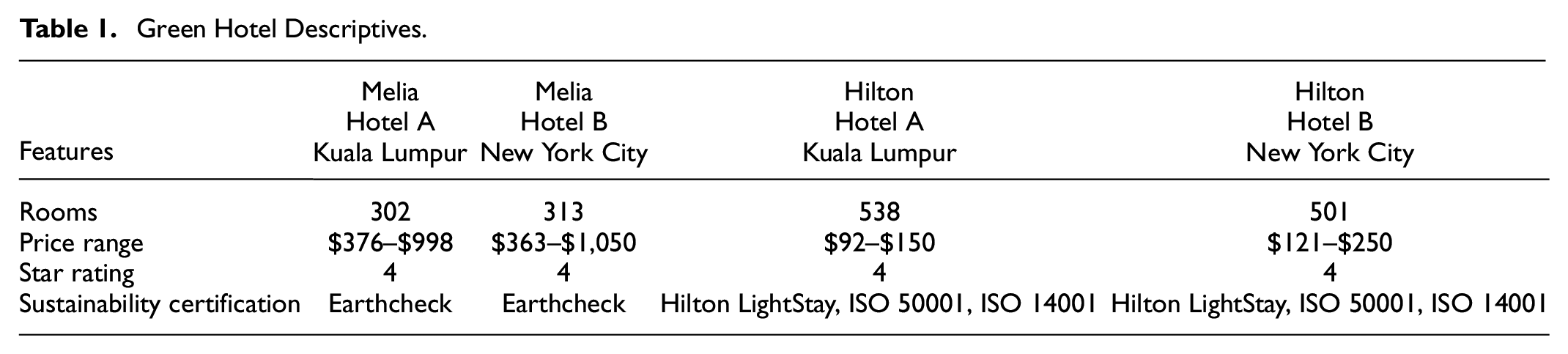
The selected properties, with over 1,000 online reviews each, were controlled for cultural discrepancies, maintaining similarities in price range, location, star rating, room size, and sustainability certification level (Table 1). Only reviews indicating the reviewer’s country of origin (U.S. or Malaysia) were included, along with the reviewer’s name, gender, traveler type, date, length of stay, review rating, and content. In total, 752 reviews were collected (368 from U.S. travelers and 384 from Malaysian travelers), with 694 deemed usable after removing duplicates and incomplete reviews.
Green Hotel Descriptives.
Data Coding and Intercoder Reliability
Two authors, each native to one of the two national cultures under investigation (Malaysia and the U.S.), manually coded the data to capture and interpret the cultural nuances and subtleties unique to each reviewer type’s context. Manual coding was selected over text analytic tools since it is more adept at identifying less common but significant aspects of the data that automated methods might overlook (Xiang et al., 2017). The review data were manually extracted and stored on a shared Google spreadsheet. After collecting the 694 reviews that met the inclusion criteria, we applied a preexisting framework to code their sustainability attributes and emotions expressed in them.
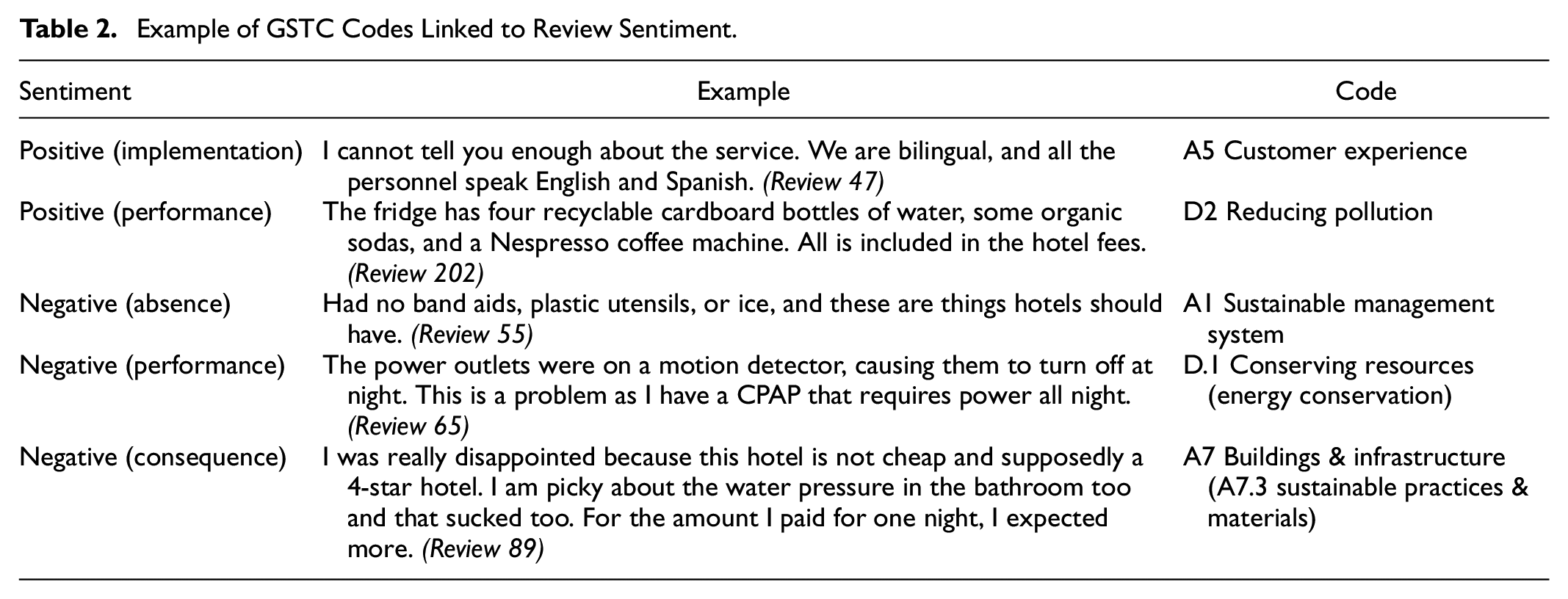
The sustainability attributes were coded using the 27 “Global Sustainable Tourism Criteria for Hotels and Tour Operators” developed by the GSTC (2016). These criteria were generated through a collaborative process involving industry stakeholders and experts to cover various sustainability practices, including environmental protection, cultural preservation, community benefits, and sustainable planning (GSTC, 2016). This framework allowed us to systematically categorize the green practices mentioned in the reviews. Table 2 provides an example of how reviews were categorized based on specific GSTC criteria. Appendix 1 provides the complete list of the 27 GSTC criteria.
Example of GSTC Codes Linked to Review Sentiment.
To enhance coding reliability, the authors followed established inter-coder reliability procedures (Feng, 2015). Both coders were trained on the comprehensive definitions of each GSTC criterion, ensuring a shared understanding of identified sustainability standards within the reviews. Similarly, emotions in the reviews were categorized following Zablocki et al.’s (2019) and Chandrasekaran et al.’s (2021) framework, sorting them into positive (e.g., joy/happy, excited) and negative (e.g., anger, fear, sadness) categories. Appendix 2 provides a list of words associated with each domain.
As part of the coding and validation process, both coders conducted a pilot analysis on the 20 most recent reviews from each cultural context (Malaysia and the U.S.) via Booking.com. We met via Zoom to share our results and align any ambiguities to ensure the consistent application of the coding scheme. Upon coding the full dataset, the coders reviewed each other’s work and clarified any discrepancies. With a 99.05% inter-coder agreement, any remaining differences were discussed and resolved (Feng, 2015). Additionally, we conducted a sentiment analysis using Monkeylearn.com as an added validation layer to confirm the manual coding results (Calheiros et al., 2017).
Sentiment analysis, also known as opinion mining, is one of the most popular natural language processing (NLP) techniques used to break down human language to identify different sentiments and polarities (i.e., positive and negative) and make associations between the input and its corresponding output (Medallia, 2022). The sentiment polarity value ranges from −1 to +1, with zero representing neutral sentiments. Anything less than zero represents negative sentiments, and anything greater than zero is positive (Zizka & Chen, 2024). Further, sentiment analysis provides the confidence level of the text; The closer the confidence level is to 1, the more reliable the result.
The use of sentiment analysis in research continues to increase due to the lower costs, reliability, and accessibility, mainly through free software such as RStudio, KNIME, or Monkeylearn (Zizka & Chen, 2024). Our study employed the Monkeylearn software to classify the reviews through the most common concepts and words and their subsequent sentiments. In our study, the data had already been retrieved, extracted, filtered, and cleaned in the first stage before entering into Monkeylearn. While sentiment analysis is immediate, it depends on research domains and classification accuracy. Further, it is subject to bias toward positive sentences over negative sentiment (Zizka & Chen, 2024). Despite these drawbacks, sentiment analysis remains a significant research venue for future studies. We implemented this rigorous coding process to ensure reliability, reduce the potential for bias, and enhance the robustness of the study’s findings.
Data Analysis
We applied fuzzy-set qualitative comparative analysis (fsQCA) as part of this study’s empirical research. This analysis considers equifinality to test different configurations that can generate the same outcome and asymmetric causality, which evaluates the configurations corresponding to the outcomes’ negation (Olya et al., 2018). Unlike correlation-based techniques in which each variable has an independent effect on the dependent variable, fsQCA focuses on the influence of independent variables on dependent ones as determined by how they are combined. In this study, we determined that gender, emotions, group (two or more persons) versus solo travel, the degree of sustainability standards, and customer hotel rating could be grouped into several configurations to achieve a positive review regarding a visit, as depicted in the Venn diagram in Figure 1. We considered a causal asymmetry, assuming that the combinations for positive reviews were not necessarily the opposite for negative reviews.
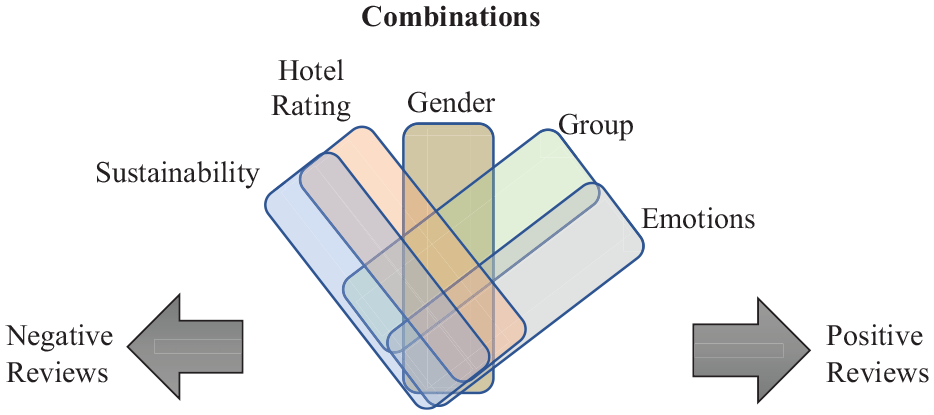
Venn diagram showing a combination of attributes.
Calibration
To calibrate variables that were not fuzzy sets (sustainability, hotel rating, and positive or negative review), we adopted Ragin’s (2008) procedures regarding membership and transformed them into fuzzy sets. Gender, emotions, and group travel are dichotomous variables and require no calibration. As such, the variables were computed according to three anchors, where zero (0) represents total exclusion, and one (1) represents full inclusion, plus a crossover point. Woodside’s (2013) procedures were implemented. Thus, the calibration for full membership was considered for the value corresponding to the 95th percentile of the dataset, the cross-over point was defined at the 50th percentile, and full non-membership corresponded to the fifth percentile of the values.
Results
Descriptive Results
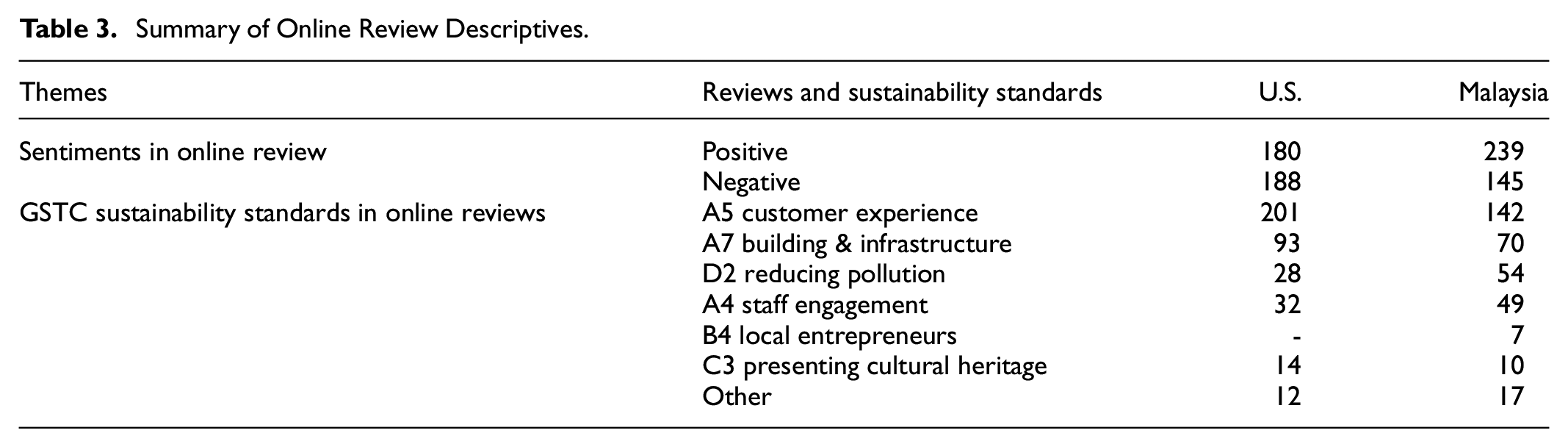
The frequency of positive versus negative reviews and sustainability standards mentioned was calculated to display the overall review direction and narrow down the top five sustainability issues for the U.S. and Malaysian reviews. The results indicated that the U.S. sample had a higher count of negative reviews, whereas the Malaysian sample had a higher count of positive reviews. Although the top four sustainability standards in the reviews were similar across cultural contexts, it was observed that the U.S. reviews placed greater emphasis on services that directly impacted the service experience (e.g., customer experience, building, and infrastructure), while the Malaysian reviews showed more concern for others (e.g., reducing pollution, staff engagement). The descriptives are displayed in Table 3.
Summary of Online Review Descriptives.
fsQCA Results
Following the approach proposed by Rihoux and Ragin (2008), we first assessed the presence of necessary conditions. A condition is considered necessary if its consistency score is 0.9 or higher. In the U.S. sample, no conditions met this threshold. However, in the Malaysian sample, “emotions” achieved a consistency score of 0.93, indicating that it was a necessary condition for a positive review.
Three sequential procedures were undertaken to analyze the sufficiency of conditions for fsQCA analysis (Fiss, 2011; Ragin, 2008). First, we estimated the truth table to identify all possible combinations of the five conditions and the associated number of cases. Second, we reduced the truth table to identify meaningful configurations. Two criteria were applied to reduce the truth table: (1) Frequency Criterion: only configurations with a minimum of three cases were considered for the final analysis (Rihoux & Ragin, 2008) to filter out rare or insignificant combinations; and (2) Consistency Criterion: a minimum threshold of consistency was set at 0.811 for the U.S. sample and 0.801 for the Malaysian sample as recommended by Ragin (2008) to ensure that only configurations with a sufficiently high level of consistency were retained. Additional support for the quality of results includes our estimated proportional reduction in inconsistency (PRI), selecting only configurations with a PRI superior to 0.7. As such, we simultaneously reduced the probability of existing subset relations of attribute combinations (Schneider & Wagemann, 2012).
Third, we adopted Ragin’s (2008) recommendation for Boolean minimization and the Quine–McCluskey algorithm to estimate the simplified configurations of the truth table. The Quine–McCluskey algorithm analyzes counterfactual cases to identify easy and difficult counterfactuals (Fiss, 2011). Three solutions emerged from this process: complex, intermediate, and parsimonious, which represent distinct levels of complexity in the relationships between conditions. We were able to identify which conditions are considered “core” (essential) and which are considered “peripheral” (less vital) in explaining the outcomes being studied (Fiss, 2011) by analyzing the intermediate and parsimonious solutions.
In the context of this study, the fsQCA intermediate solution for both positive and negative review outcomes indicated that all conditions were considered “core” in explaining these outcomes. This suggests that all five conditions contributed significantly to understanding why certain reviews were positive or negative. Tables 4 and 5 provide the fuzzy-set intermediate solution for positive and negative reviews for the U.S. and Malaysia, respectively.
Configurations for Positive and Negative Reviews (U.S.).
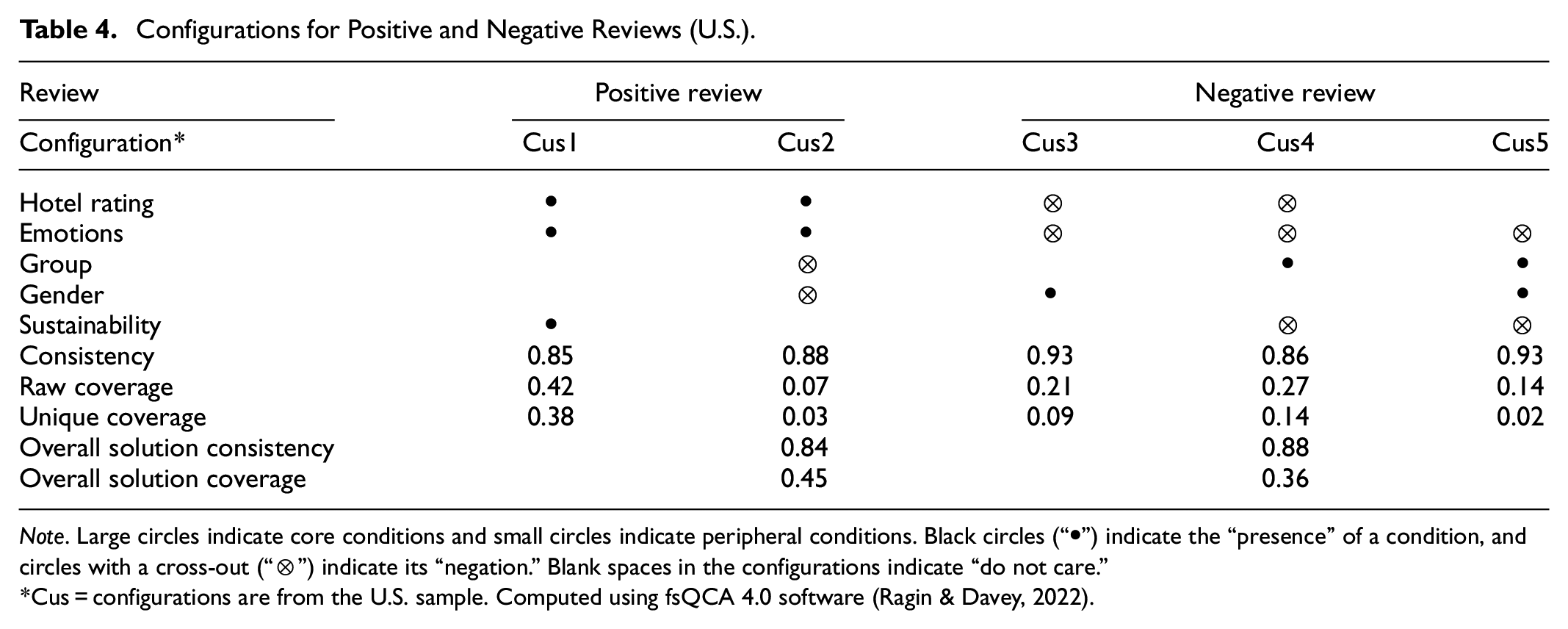
Note. Large circles indicate core conditions and small circles indicate peripheral conditions. Black circles (“•”) indicate the “presence” of a condition, and circles with a cross-out (“⊗”) indicate its “negation.” Blank spaces in the configurations indicate “do not care.”
Cus = configurations are from the U.S. sample. Computed using fsQCA 4.0 software (Ragin & Davey, 2022)
Configurations for Positive and Negative Reviews (Malaysia).
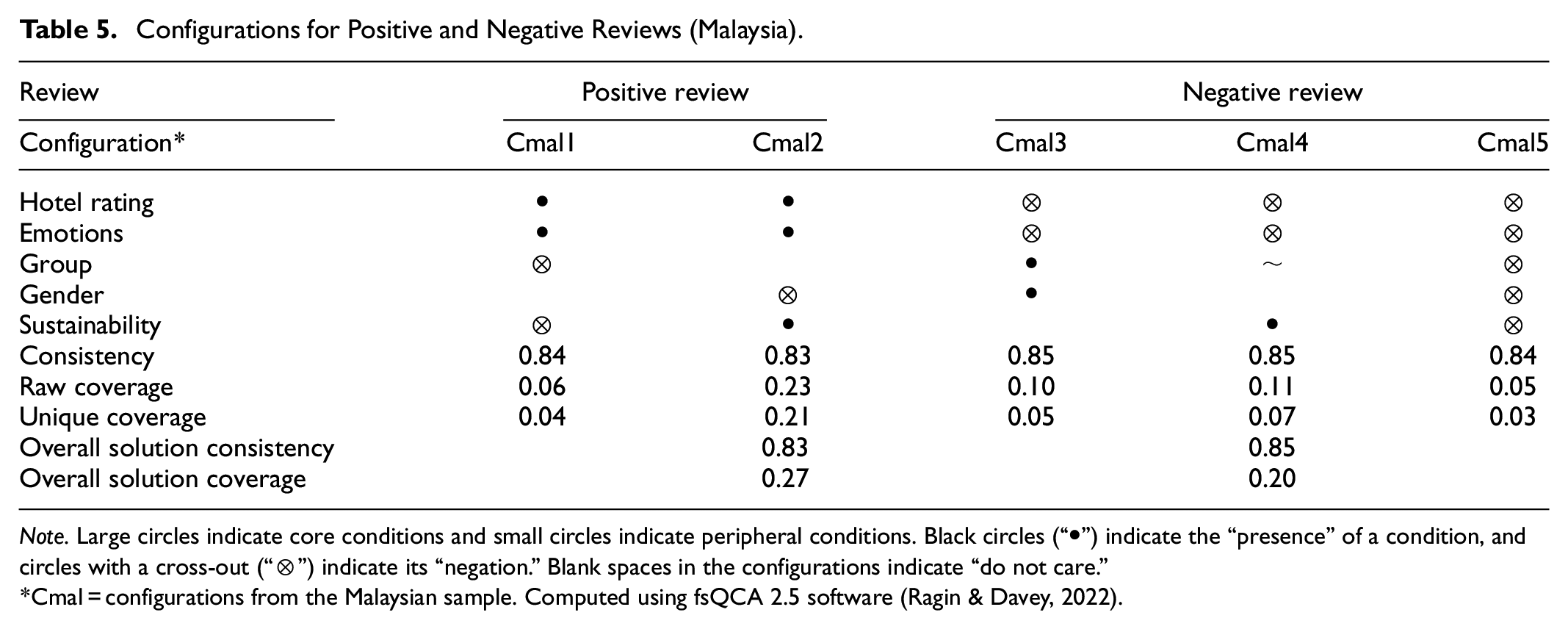
Note. Large circles indicate core conditions and small circles indicate peripheral conditions. Black circles (“•”) indicate the “presence” of a condition, and circles with a cross-out (“⊗”) indicate its “negation.” Blank spaces in the configurations indicate “do not care.”
Cmal = configurations from the Malaysian sample. Computed using fsQCA 2.5 software (Ragin & Davey, 2022).
We also assessed the goodness-of-fit of the solution in both samples using consistency and coverage. The estimation of these indicators confirmed that, in both samples, the consistency scores for all configurations and the overall solution were equal to or greater than 0.8 (Ragin, 2008), supporting that all configurations were sufficient for positive reviews. Regarding coverage, both tables showed that the unique coverage was positive for all configurations (Ragin, 2008). As mentioned, fsQCA considers asymmetrical relationships among the study variables, meaning that configurations predicting a positive review do not necessarily negate configurations associated with a negative review (Fiss, 2011). Based on this assumption, we tested the configurations related to negative reviews. The same analysis for frequency, consistency, and PRI thresholds was conducted, and the quality of the estimations was determined.
Combination of Attributes Associated with Positive (Negative) Reviews
Across both the U.S. and Malaysian samples, the findings reveal several common factors driving positive and negative reviews in green hotels. Regardless of the sample, positive reviews were consistently associated with high hotel ratings and positive emotions. In the U.S. (Cus1) and Malaysian (Cmal2) samples, high sustainability practices also contributed to positive feedback, particularly when paired with positive emotions and high hotel ratings. However, even when sustainability practices were low, as seen in the first Malaysian configuration (Cmal1), high hotel ratings and positive emotions still led to positive reviews, especially among solo travelers. Gender, though influential in some configurations, was not consistently significant across all scenarios. In the case of negative reviews, both samples showed a similar pattern: low hotel ratings, negative emotions, and group travel were the primary drivers. This was evident in U.S. (Cus4) and Malaysian (Cmal3) configurations, where negative feedback was tied to poor hotel experiences, regardless of gender or sustainability practices.
These results suggest that review polarity in green hotels is more influenced by hotel quality, traveler type, and emotional experiences than by sustainability practices alone, extending previous studies proposing the importance of core service attributes across different cultural contexts (D’Acunto et al., 2023; J. M. Kim et al., 2018; Messner, 2022). These findings contribute to the ongoing debate on what drives tourist experiences in green hotels, with previous research showing mixed outcomes. Some studies indicate that green hotel practices may negatively impact review sentiment (Lu & Stepchenkova, 2012; Yu et al., 2017), while others find a positive relationship between these constructs (Prud’homme & Raymond, 2013). Our analysis indicates that the U.S. and Malaysia samples demonstrated that sustainability practices are not always central to guest evaluations. Instead, high hotel ratings and emotional responses are key drivers of review sentiment, though the specific combination of factors varies across cultural contexts.
Conditions that Prompt Travelers to Mention Green Initiatives in Reviews
To further interpret the fsQCA results, a visual representation of the combination of attributes along the spectrum of negative and positive reviews was created to identify specific conditions in which sustainability initiatives were mentioned (see Figure 2). The fsQCA findings suggest that while sustainability practices are not the primary driver of positive reviews in green hotels, they still play an important role. In the U.S. sample, high sustainability practices were highlighted in reviews that combined positive hotel ratings, positive emotions, and positive reviews, regardless of travel type or gender. On the other hand, low sustainability practices were often mentioned in negative reviews, particularly when male travelers in groups expressed negative emotions.
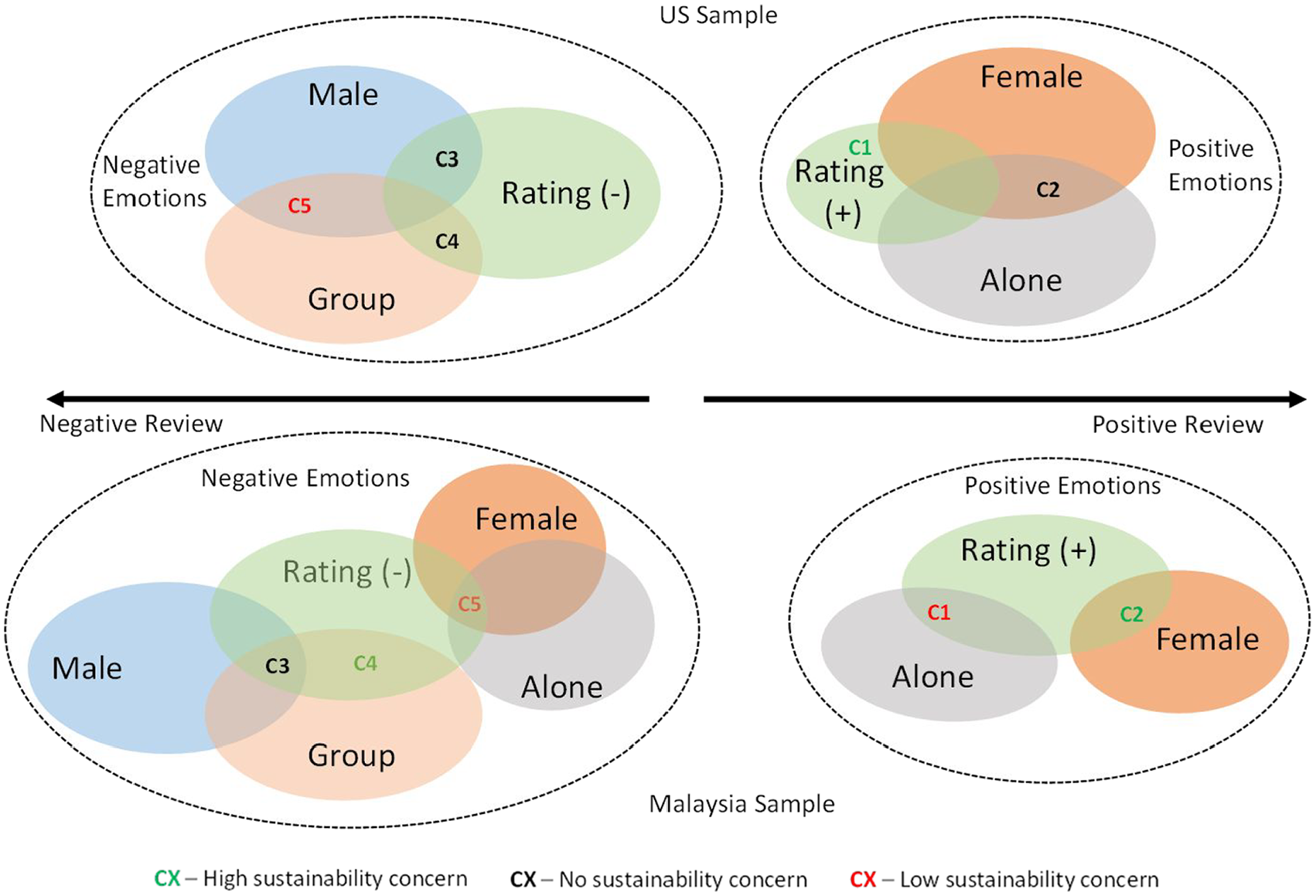
Combination of attributes per Malaysia versus U.S. sample.
In the Malaysian sample, high and low sustainability practices were mentioned in positive reviews, especially when travelers, whether solo/group, or male/female, experienced positive emotions. However, in negative reviews, low sustainability practices were referenced more frequently and often in conjunction with low ratings and negative emotions among group and solo female travelers. These results indicate that sustainability impacts vary based on the emotional and situational contexts in both the U.S. and Malaysian samples. Bruns-Smith et al. (2015) similarly observed that sustainability practices did not negatively affect guest satisfaction if they were absent or not implemented effectively. The findings also suggest that failing to meet basic service expectations (such as hotel quality and emotional experience) leads to negative reviews, regardless of sustainability efforts, thereby highlighting the need for a balanced strategy that combines sustainability with basic hospitality services (Väisänen et al., 2023).
We developed Figure 3 based on our study results, which illustrates how targeted interventions, such as emotion-driven strategies, habit-based approaches, and social norms messaging, can enhance pro-environmental behavior in green hotels. The model segments guests based on their cultural contexts, emotional triggers, and profile grouping, providing a roadmap for hotels to tailor their sustainability initiatives to suit different traveler profiles.
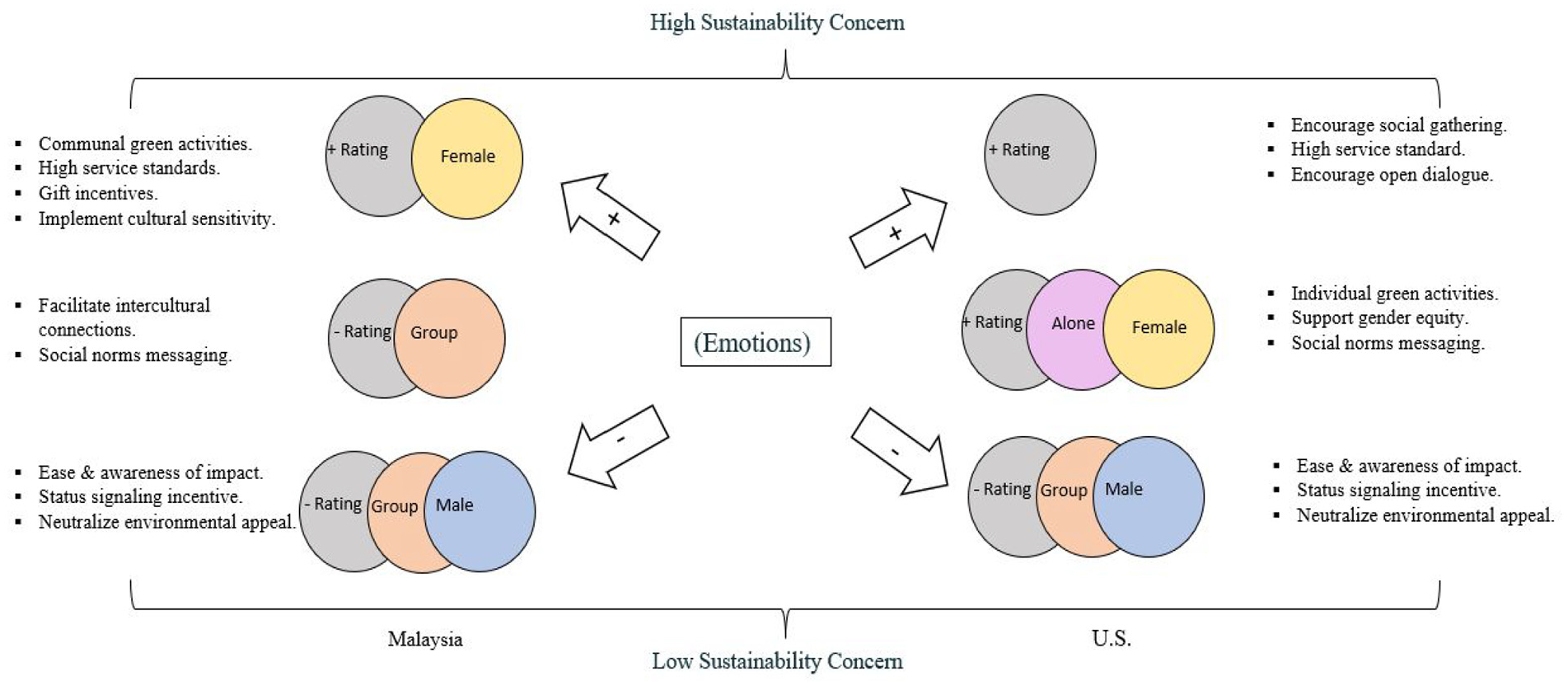
Green hotel intervention model for encouraging pro-environmental behavior.
Based on Figure 3, for high sustainability concern travelers, the model suggests implementing emotion-driven strategies that leverage positive emotions to encourage engagement with green practices. For guests with low sustainability concerns, the model recommends habit-based interventions that simplify sustainable behaviors, such as opting out of room cleaning or default buffet plate sizes. Social norms messaging is also recommended to influence group travelers, particularly in collectivist cultures, by using peer behaviors to encourage sustainable actions.
Combination of Attributes Based on U.S. Versus Malaysian Tourists
The results reveal both similarities and notable differences between U.S. and Malaysian travelers regarding the factors leading to positive and negative hotel reviews. In the U.S. sample, positive reviews were mainly driven by female solo travelers with positive emotions and high hotel ratings (C1), in which sustainability practices played a role. The focus on positive emotions among female guests indicates that this demographic group tends to value emotional experiences in their hotel stays, especially when the hotel is rated positively.
On the other hand, negative reviews were most common when male travelers, especially in groups, experienced negative emotions and rated the hotel poorly (C3, C4, C5). In this context, both high (C3) and low (C5) sustainability practices were mentioned. This suggests that male travelers in group settings are more likely to associate their negative experiences with sustainability practices. However, the emotional response and group dynamics appear to be more influential than sustainability alone.
For the Malaysian sample, positive reviews came from solo and female travelers (C1, C2) who rated the hotel highly and expressed positive emotions. Notably, both high (C1) and low (C2) sustainability practices were mentioned, indicating that for Malaysian guests, positive emotions and the solo travel experience might outweigh the importance of sustainability in forming positive impressions. Negative reviews were associated with male group travelers experiencing negative emotions and giving low ratings (C3, C4, C5). Similar to the U.S. sample, negative emotions among male travelers were prominent, but the sustainability practices (C5) were lower in the Malaysian sample. Female travelers who traveled alone and expressed negative emotions (C5) also contributed to low ratings, suggesting that solo travel and negative feelings in women led to dissatisfaction.
Although gender played a significant role for both nationalities, female solo travelers were key drivers of positive reviews in the U.S. In contrast, both solo and female travelers influenced positive reviews in Malaysian reviews. Emotions had a more pronounced impact on positive reviews in the Malaysian sample, influencing both solo and group travelers, with positive emotions more prevalent among female travelers. In contrast, group travel more often led to negative reviews in the U.S. sample, especially among male travelers, while in the Malaysian sample, solo travelers contributed to both positive and negative feedback. Extending Sann et al.’s (2020) study, highlighting customer concern for service-oriented issues in Eastern cultures versus concern for individual experience in Western cultures, we found that sustainability practices were more significant for positive reviews in the U.S. sample but played a less prominent role in the Malaysian sample.
Evaluation of Complexity Theory
Interpreting the outcomes of our configurable models through the perspective of complexity theory, as outlined by Woodside (2014), reveals a robust alignment with the six tenets of this theoretical framework. As per Tenet 1, positive emotions were revealed to be a necessary condition in the Malaysian sample and present in all the configurations in the U.S. sample. However, this factor alone is insufficient to predict a positive review. This observation highlights the complexity of the relationship between conditions and outcomes, emphasizing that various factors or their combinations also play a role in influencing hotel reviews. For tenet 2, the configurations Cus1 and Cmal2 shed light on the intricate combination of factors required for positive reviews, including positive emotions, sustainability concerns, and gender.
Our results also confirm the equifinality principle in tenet 3, showcasing alternative paths for predicting positive and negative reviews. The distinct configurations for positive and negative reviews (Cus1 and Cus3 or Cmal2 and Cmal5) indicate causal asymmetry, where recipes for positive reviews are unique and do not mirror opposites of recipes for negative outcomes, confirming tenet 4. Additionally, tenet 5 is upheld, revealing that antecedents may contribute positively and negatively to the expected outcomes.
The role of sustainability standards is multifaceted, influencing reviews in various ways: positively (Cus1 and Cmal2), negatively (Cmal4), or having no discernible impact (Cus2, Cus4, Cmal3, and Cmal4). This illustrates the complexity wherein a single antecedent can positively impact one context but might show less significance in another. Moreover, our results align with tenet 6, indicating that a particular recipe applies to some cases but not universally, consistently yielding a coverage of less than 1.00 for any single solution. These findings underscore the intricacies and interdependencies among cognitive, affective, and contextual factors when predicting green hotel reviews, emphasizing the relevance of complexity theory in unraveling nuanced interactions within the tourism context.
Discussion
This study assesses how cognitive, affective, and socio-demographic factors interact to shape travelers’ evaluations of green hotels and whether these evaluations differ across cultures. The results showed guest evaluations were shaped by a complex interplay of the three factors, namely guest emotions, guest service quality perceptions, and guest trip attributes, rather than by a single determinant, that is, the hotel’s sustainability practices. Previous studies have suggested that a hotel’s green practices were sufficient to positively influence guest evaluations (e.g., Gerdt et al., 2019; Quan et al., 2022) or had a negative impact on such evaluations (D’Acunto et al., 2020; Yu et al., 2017). This does not appear to be the case in this study.
Regarding the conditions under which travelers mention green initiatives in their reviews, this study found that such mentions varied according to review polarity and cultural background. In the U.S sample, sustainability initiatives were frequently mentioned in positive reviews by female solo travelers when high hotel ratings and positive emotions were also present. However, sustainability was rarely mentioned unless the hotel failed to meet the service expectations. This contrasted with the Malaysian sample, which mentioned sustainability in positive and negative reviews. However, positive experiences encouraged green mentions across traveler types, while negative sustainability mentions were more common among female and group travelers, which led to low ratings and negative emotions. These findings support the idea that sustainability is not a standalone evaluation criterion but a context-dependent factor that interacts with emotional framing and service perceptions. These results align with those obtained by Gerdt et al. (2019) and Quan et al. (2022), who similarly found that sustainability efforts contribute to guest satisfaction but are embedded within broader service experiences rather than serving as direct evaluation criteria. Further, our study showed that sustainability issues were more likely to be acknowledged when guests experience strong emotions, whether positive or negative. Guests were more likely to mention sustainability practices with positive emotions, while negative emotions had mixed effects. For the U.S. travelers, negative emotions would diminish mentions of green practices, while sustainability issues would be mentioned in a negative context for the Malaysian sample.
We also examined whether Eastern and Western cultures differ in the attributes associated with positive and negative online reviews for green hotels. Comparison of the findings with those of other studies (e.g., Nath et al., 2018; Sann et al., 2020) confirms that cultural differences were evident in how and when sustainability was acknowledged in guest reviews, that is, cultural background led to differences in consumer concerns. In the U.S. sample, sustainability initiatives were only mentioned when their overall experience was positive. This suggests that U.S. travelers perceive sustainability as an added value rather than a core service attribute. On the other hand, the Malaysian sample mentioned sustainability in both positive and negative reviews, indicating that sustainability was integrated into the overall service perception rather than perceived as an added value. Furthermore, emotional experiences were more salient than the hotel’s sustainability practices for the Malaysian sample. These results provide initial evidence that cultural context influences how emotions enhance or diminish guests’ perceptions of hotels’ sustainability practices, complementing those of earlier studies (e.g., J. M. Kim et al., 2018; Zablocki et al., 2019).
Theoretical Implications
This study makes several key theoretical contributions to the literature on green hotels, consumer behavior, and cross-cultural hospitality research. By integrating complexity theory (Urry, 2005), appraisal theory of emotions (Arnold, 1960), expectancy-disconfirmation theory (Oliver, 1980), and Hofstede’s cultural dimensions (Hofstede, 2011), this research extends existing theoretical frameworks in multiple ways.
First, this study contributes to complexity theory by demonstrating that isolated factors do not drive guest evaluations of green hotels but emerge from the interactions of cognitive, affective, and socio-demographic factors. Our findings indicate multiple equifinal routes through which guests evaluate their hotel experiences. Past research in the hospitality field has primarily focused on using linear models such as regression to study customer behavior (Pappas, 2018), which misses the complexity of interactions between various factors that influence customer feedback (Li et al., 2013). The application of fsQCA enables the identification of interconnected relationships between the cognitive, affective, and socio-demographic factors and how their dynamic interactions influence customer evaluations of green hotels, extending previous findings (Mehran & Olya, 2020). This extends complexity theory by demonstrating that sustainability-related evaluations are contingent on broader service expectations rather than standalone environmental efforts, thus providing a more comprehensive view of customer behavior in green hotel literature (Speakman, 2017; Stevenson et al., 2009).
Second, our study refines the appraisal theory of emotions (Arnold, 1960) by illustrating that review polarity is primarily driven by goal congruence and event significance in emotional responses rather than sustainability attributes alone. Our findings also shed new light on the role of identifying the emotional and contextual factors that prompt travelers to mention green initiatives in their hotel reviews. While much of the literature has focused on whether hotels implement green practices, less attention has been given to the conditions that lead guests to mention hotel sustainability efforts in their reviews (D’Acunto et al., 2020; Gerdt et al., 2019; Rahman et al., 2023). Based on the appraisal theory of emotions (Arnold, 1960), our study shows that positive emotions amplify mentions of green practices in positive reviews, whereas negative emotions diminish the likelihood of sustainability being acknowledged in negative reviews, thereby signaling goal alignment and misalignment with the guests’ green hotel experience.
Third, our findings contribute to our understanding of the expectancy-disconfirmation theory by examining how guests’ expectations about the hotel experience may shift during their stay based on a mix of factors that interact to shape expectation-confirmation processes. Previous studies that incorporate the expectancy-disconfirmation theory in their research have primarily focused on the static expectation-confirmation process, which treats expectations as fixed reference points where positive disconfirmation leads to satisfaction, while negative disconfirmation (unmet expectations) results in dissatisfaction (Szymanski & Hise, 2000). Our study extends the expectancy-disconfirmation theory beyond the premise of the static expectation-confirmation process by showing that guest expectations evolve dynamically, shaped by the interplay of cognitive (service expectations from sustainability practices and hotel ratings), affective (emotions), and contextual (socio-demographic) factors. In this study, sustainability efforts are more likely to be noticed and appreciated when guests are already satisfied with the fundamental service dimensions (e.g., hotel quality, service experience), suggesting that sustainability recognition does not occur in isolation but is shaped by their overall experience assessment. When service expectations are unmet, guests will either fail to mention the hotel’s sustainability efforts or rate them negatively. Taken together, our findings provide evidence that while guests may initially expect hotels to engage in green practices (Manaktola & Jauhari, 2007; Rahman et al., 2015), their evaluation of sustainability initiatives changes accordingly if they perceive greenwashing or low service quality (Chen et al., 2017).
Finally, this study increases our understanding of cross-cultural dynamics in guest behavior in green hotels by integrating Hofstede’s (2011) cultural dimensions with complexity theory, illustrating that mentions of hotel green practices vary across cultural backgrounds and are shaped by the interplay of emotions, guests’ expectations of service quality, and guest trip attributes. Although previous studies have found cultural differences in hotel guests’ evaluations (e.g., Gerdt et al., 2019) and online reviews (e.g., Banerjee & Chai, 2019; Leon, 2019), these studies primarily viewed cultural differences as static, failing to address how factors such as emotions, service expectations or travel characteristics might interact with the guests’ cultural background to shape their behaviors. Our study challenges this notion of static conceptualization by revealing that cultural influence on sustainability evaluations is dynamic and context-dependent, where these evaluations emerge from the complex interplay of multiple contextual and individual factors, instead of being homogeneous across all individuals from the same cultural background. Our study revealed that the hotel’s green practices were a more important determinant of positive evaluations for the U.S. sample (individualistic culture) than the Malaysian sample (collectivistic culture). In contrast to the U.S sample, emotions played a more significant role in the Malaysian guests’ positive evaluations. These findings reinstate our argument that cultural influences on guest evaluation of green practices are shaped by multiple intersecting factors, rather than homogeneous differences across cultural groups as previously described in the literature (e.g., J. M. Kim et al., 2018; Nath et al., 2018; Sann et al., 2020). Finally, our study also reinforces the equifinality principle in complexity theory (Mehran & Olya, 2020), where multiple pathways can lead to similar sustainability evaluations.
Practical Implications
This study suggests several actions for green hotel managers, hospitality marketers, and operations teams to enhance guest engagement and satisfaction through tailored sustainability initiatives. The findings highlight key cultural distinctions in how travelers from collectivist versus individualist cultures engage with sustainability, suggesting that sustainability strategies should be tailored to fit travelers’ cultural contexts. For instance, Malaysian female group travelers were more likely to mention sustainability concerns in positive and negative reviews. For this group, high hotel ratings and positive emotions emerged, suggesting that travelers from a collectivist culture tend to value group activities and social cohesion. This suggests that group activities and social cohesion are highly valued for travelers from collectivist societies. Hence, hotels can implement communal sustainability efforts like group tree planting or community clean-ups, which may appeal to the collectivists’ communal identity and increase their positive experiences.
In contrast, U.S. travelers have an individualist culture that prioritizes autonomy, individual choice, and relevance; the hotel’s sustainability practices would be mentioned only when the core service expectations are met. These findings suggest that U.S guests may be more responsive to sustainability initiatives that align with their interests or support social justice causes. This is consistent with the view of Jamal and Higham (2021), who reported that there is now an increasing interest among U.S. travelers in environmental and social justice issues. Our study also found that mentioning sustainability practices was more prevalent among female solo travelers. As such, hotels can tap into this by promoting sustainability programs that advocate fairness, equity, and community well-being, especially connecting with current events like women’s empowerment or environmental advocacy, such as programs that support local women’s initiatives or sponsor community activities related to gender equality.
Additionally, the study reveals that group travelers, particularly males, are increasingly likely to leave negative reviews when they experience negative emotions and poor service, providing support to the social identity theory (Tajfel et al., 1971), which indicates the influence of peer behaviors on those of individuals. To counteract this behavior, hotels can implement social norms messaging that encourage pro-environmental behaviors (Mair & Bergin-Seers, 2010) such as promoting sustainable actions undertaken by previous guests or encouraging participation in eco-friendly activities. This strategy will work well with group travelers, particularly in collectivist cultures where peer behavior strongly influences individual choices (Sann et al., 2020).
In the cases of guests with low sustainability concerns, such as male group travelers or female solo travelers, habit-based interventions might be an effective strategy. These interventions can focus on simplifying sustainable actions that make them easy, convenient, which requires minimal effort from guests. According to the habit theory by Dolnicar et al. (2020), automatic behaviors are more likely to be adopted over time since it requires minimal cognitive effort. These “automatic behaviors” include reducing plate sizes at buffets to minimize food waste (Kallbekken & Saelen, 2013) or offering guests an “opt-out” option for room cleaning services (Knezevic Cvelbar et al., 2021). By drawing on the concepts underlying the habit theory (Dolnicar et al., 2020) which are minimal effort and ease of an action, guests are more likely to accept sustainable actions that are set as default options since such actions would reduce cognitive effort and as such, would result in greater participation in hotels’ eco-friendly practices. Our study also developed an intervention model (see Figure 3) that provides hotels with a practical framework to transition guests from low to high sustainability engagement, ultimately improving both guests’ ability to recognize the hotel’s green initiatives and the hotels’ overall environmental performance.
Another approach is to “co-create” with hotel guests where guests participate in choosing the types of sustainability initiatives or the rewards they prefer. This strategy ties into the status-signaling theory (Rahman et al., 2023) which posits that guests gain social recognition for their eco-friendly actions. Offering personalized incentives like certificates, badges, or points for participating in sustainability efforts can motivate guests to share their achievements on social media or with peers, creating a ripple effect. This type of recognition appeals to individualist cultures, where personal achievement and social status are highly valued. In collectivist cultures, offering group-based rewards that recognize the collective efforts of families or travel groups can encourage shared responsibility for sustainability. Hotel managers and sustainability officers in green hotels can design experiences that resonate with guests’ sustainability values and expectations when they understand the impact of emotional and contextual factors on guest satisfaction. Likewise, marketers, operators, and tourism board members can develop strategies that cater to the unique demographics of each cultural context, ensuring their initiatives effectively resonate with a wider variety of tourists.
This study also introduces a new approach for evaluating attributes that influence consumer behavior, which future scholars can adopt. Scholars can expand the literature on cross-cultural dynamics in eco-tourism, using the complexity theory framework to analyze the interactions between several factors simultaneously. Policymakers and sustainability advocates working to promote sustainable tourism can better understand travelers’ perceptions and responses to green initiatives to further refine guidelines for certifying and promoting sustainable travel options, ultimately enhancing the experiences for eco-conscious travelers.
Conclusion
Tourists’ increased demand for sustainable products and services in the industry has attracted a growing academic interest in green hotels (Rahman et al., 2023). Despite the various initiatives implemented by leading hotel companies to rebrand as green hotels to signal their commitment to various environmental initiatives (Yusoff et al., 2020), there are gaps in understanding how and when hotel practices lead to a positive or negative evaluation of these services. Given that consumer green values are dynamic and context-driven (D. Kim & Park, 2017), this research addresses the limitations of previous studies by using fuzzy-set qualitative comparative analysis (fsQCA) to identify the key cognitive, affective, and socio-demographic factors shaping positive and negative online reviews in green hotels as guided by theory.
We find that guest evaluations are shaped by a complex interplay of the three factors, namely guest emotions, guest service quality perceptions, and guest trip attributes, rather than by a single determinant, that is, the hotel’s sustainability practices. We also find that the conditions for mentioning hotel green practices varied according to review polarity and cultural background. Cultural differences were evident in how and when sustainability was acknowledged in guest reviews, supporting the view that cultural background led to differences in consumer concerns (Kim et al., 2021; Sann et al., 2020). The study also developed an intervention model for encouraging pro-environmental behavior across two cultural contexts.
Although the data analysis and methods are robust, there is a need for research that incorporates more consumer-related variables from multiple review sites for comparative purposes, as data collection was confined to the Booking.com platform involving four hotels across two cultural contexts. Therefore, we caution against overgeneralization. Subsequent studies could incorporate additional influencing variables to capture a more holistic view of factors contributing to positive or negative reviews and broaden their scopes to other platforms to increase sample sizes to feature hotels from African or Caribbean countries, since these samples are rarely explored in the literature.
Finally, the online reviews used in this study were collected over a specific timeframe. Numerous tourism and hospitality companies are committed to ongoing environmental corporate social responsibility endeavors to enhance competitiveness (Han et al., 2019). Given the evolving landscape of hotel management practices and sustainability initiatives, our findings may only partially capture the industry’s dynamic nature. Therefore, conducting longitudinal studies and analyzing data collected across various timeframes could give insights into temporal trends and shifts in tourists’ perceptions of green hotels.
Footnotes
Appendix
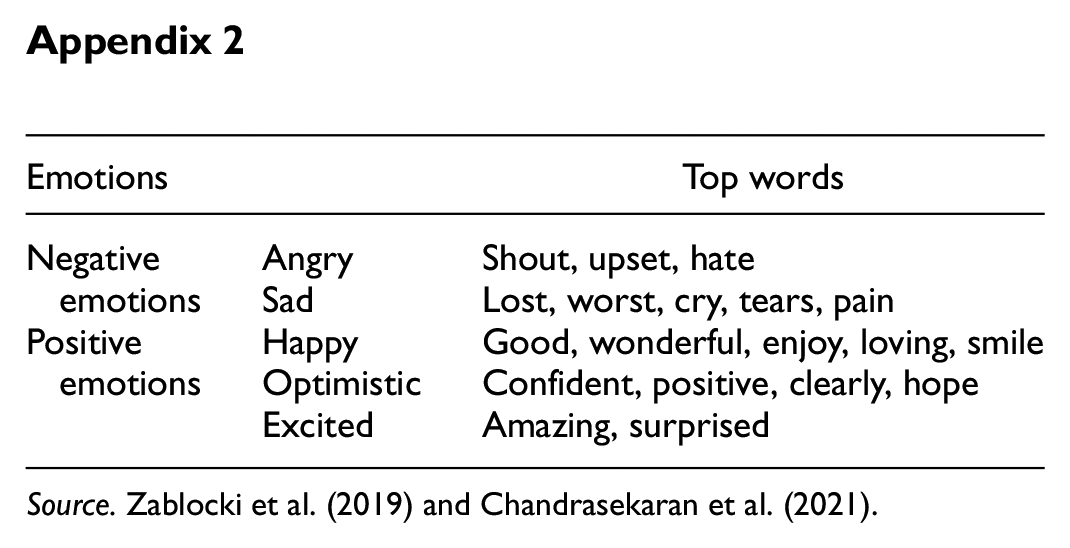
| Emotions | Top words | |
|---|---|---|
| Negative emotions | Angry | Shout, upset, hate |
| Sad | Lost, worst, cry, tears, pain | |
| Positive emotions | Happy | Good, wonderful, enjoy, loving, smile |
| Optimistic | Confident, positive, clearly, hope | |
| Excited | Amazing, surprised | |
Source. Zablocki et al. (2019) and Chandrasekaran et al. (2021).
Author Contributions
Shaniel Bernard: Conceptualization, Data curation, Formal analysis, Investigation, Methodology, Project administration, Resources, Validation, Visualization, Writing - original draft, Writing - review & editing. Jo Ann Ho: Conceptualization, Data curation, Formal analysis, Methodology, Resources, Validation, Writing - original draft, Writing - review & editing. Alvaro Dias: Data curation, Formal analysis, Methodology, Resources, Software, Validation, Writing - original draft, Writing - review & editing. Laura Zizka: Resources, Software, Validation, Writing - original draft, Writing - review & editing. Manisha Singal: Conceptualization, Resources, Visualization, Writing - original draft, Writing - review & editing
Declaration of Conflicting Interests
The author(s) declared no potential conflicts of interest with respect to the research, authorship, and/or publication of this article.
Funding
The author(s) received no financial support for the research, authorship, and/or publication of this article.
