



Abstract
Technological advances allow the development of an omnichannel strategy to create a seamless experience for customers. This study has adopted a systematic literature review approach to examine, synthesise and extend a body of literature in the area of omnichannel retailing and the role of technology, taking into account both retailers’ and customers’ perspectives. We review 499 research papers to highlight the evolution of omnichannel research with a special focus on technology usage. After extracting the key theoretical foundations underpinning technology-empowered omnichannel retailing, we synthesise the empirical findings and identify emerging topics from the customer perspective including customer value, customer experience, showrooming and web rooming and customer privacy concerns as well as the key themes from the retailer perspective consisting of channel integration, personalisation and resource challenges. Based on the knowledge from the theoretical and empirical insights, we develop three important future research areas to inspire further studies in this domain.
Introduction
Omnichannel retailing has emerged to be an important strategy of modern retail (Cai & Lo, 2020). In contrast to multichannel retailing which focuses on optimising individual channels, omnichannel retailing requires the integration of all touchpoints to create a seamless experience for customers (Mishra et al., 2021). Verhoef et al. (2015) define omnichannel management as ‘the synergetic management of the numerous available channels and customer touchpoints, in such a way that the customer experience across channels and the performance over channels are optimised’ (p.176). There has been significant interest in research on omnichannel retailing over the past decade, focussing on the conceptual and strategic aspects of omnichannel retailing (e.g. Bodhani, 2012; Levy et al., 2013; Rigby, 2011) as well as customers’ perceptions and behaviour (Ameen, Tarhini, Shah & Madichie, 2021; Cotarelo et al., 2021; Huré et al., 2017). In spite of the recent leap in omnichannel retailing research, most studies predominantly focus on the perspectives of omnichannel management such as logistics and supply chain (Cai & Lo, 2020; Cummins et al., 2016; J. H. Kembro et al., 2018; Lafkihi et al., 2019; Melacini et al., 2018) and consumer decision making (Mishra et al., 2021) whereas the knowledge regarding the role of technology in facilitating the interactions between firms and customers in omnichannel retailing remains fragmented. Recent research such as Cai and Lo (2020) reveals that there is a gap related to the role of new technologies in omnichannel management and calls for future research to examine how new technologies transform omnichannel retailing.
Omnichannel retailing involves complex technologies such as in-store systems (Alexander & Kent, 2022; Savastano et al., 2019), online stores and mobile apps (Huré et al., 2017) and information technology infrastructure (Cao & Li, 2018). Technological advancements (e.g. artificial intelligence, Internet of Things, augmented reality, virtual reality and blockchain) contribute significantly to the success of omnichannel retailing as they have blurred the boundaries between the offline and online retail environments and are transforming the customer experience (Cai & Lo, 2020). For instance, big data and machine learning can assist retailers in analysing customer preferences and behaviours to create personalised offerings and recommendations across multiple touchpoints, thereby enhancing the customer experience (Nguyen et al., 2021). In addition, augmented and virtual reality technologies can create immersive experiences for customers, for example, Sephora Virtual Artist allows customers to try on various products online (Quach, Thaichon et al., 2022). Though research has attempted to investigate the evolving relationship between technologies and customers (Flavián et al., 2020; Grewal et al., 2020), and retailers’ adoption of technology in omnichannel retailing (Balakrishnan et al., 2018; Hickman et al., 2020; Zhang et al., 2019), little has been done to synthesise the current body of knowledge in relation to omnichannel technology.
This research responds to the call for further research into the types of retail technology and how they contribute to omnichannel experience as research into these relationships remains scarce (Alexander & Kent, 2022). Specifically, it addresses the need for integrated insights into the role of technology in omnichannel retailing from the perspectives of customers and retailers. This study has adopted a systematic literature review approach (Palmatier et al., 2018) to examine, synthetise and extend a body of literature in the area of omnichannel retailing and the role of technology, taking into account both retailers’ and customers’ perspectives. First, we review extensive omnichannel marketing literature including 499 papers to highlight the evolution of this research domain with a special focus on technology usage. Second, after identifying the key theoretical foundations underpinning technology in omnichannel retailing, we synthesise the findings germane to customer experience facilitated by omnichannel technologies as well as benefits and advantages for retailers. These two sections provide a concise summary of current knowledge on the role of technology in omnichannel retailing. Third, we use this foundation to develop future research directions for using technology to improve firm performance and advance knowledge in this domain.
This paper aims to establish a theoretically grounded understanding of omnichannel technology to inform research and business practices, with three main contributions. First, whereas existing reviews exploring omnichannel retailing have focused predominantly on the areas of logistics and supply chain (Cai & Lo, 2020; Cummins et al., 2016; J. H. Kembro et al., 2018; Lafkihi et al., 2019; Melacini et al., 2018) and consumer decision making (Mishra et al., 2021), this is the first attempt to explore the role of technology in omnichannel research from both customer and retailer standpoints. Second, we provide a comprehensive framework explicating the facilitating role of technology in omnichannel retailing. We offer an in-depth understanding of customer attitudes and behaviour in omnichannel retailing enabled by technology that bridges online and offline experiences. Interactive technologies can create customer value and seamless experience but also lead to privacy concerns and showrooming and webrooming behaviour which could be detrimental to both customers and retailers (Alexander & Kent, 2022).
In addition, we identify technological advantages including new opportunities such as channel integration and personalisation, and challenges facing retailers including a lack of resources, extending earlier research such as Mishra et al. (2021), and Cui et al. (2021). Finally, the paper integrates insights from the current knowledge to propose future research directions including the potential of new technologies in omnichannel strategy, customer privacy as the dark side of omnichannel, and value co-destruction in an omnichannel retailing context. The remainder of this paper is organised as follows. In the next section, we describe the evolution of omnichannel retailing and explain the role of technology in these stages. After presenting key trends and important takeaways, we discuss the theoretical and empirical insights and offer a number of fruitful research directions and recommendations to inspire more work in this important domain.
Evolution of omnichannel retailing
First, we conducted a search of the Web of Science database for the articles that mentioned ‘omni-channel’ OR ‘omnichannel’ OR ‘multichannel’ OR ‘multichannel’ OR ‘multiple channels’ OR ‘cross-channel’. In total, 592 papers were found in the search. After removing 93 duplications, 499 papers were stored in the Endnote library for data extraction. All papers were sourced from high-quality journals which were extracted from the Web of Science. As the Web of Science is one of the most prevalent indexed sources on account of its selection of journals based on editorial standards and scientific impact criteria, inclusion in the Web of Science can be considered an indicator of journal quality (Chavarro et al., 2018; Clarivate, 2022). Data were categorised into different years. In order to highlight some relevant technological trends in omnichannel retailing, we map the evolution of omnichannel retailing and provide a snapshot of multichannel and omnichannel research, reflecting the transition from multichannel retailing to omnichannel retailing (Figure 1). The concept of omnichannel has evolved from multichannel and cross-channel research.
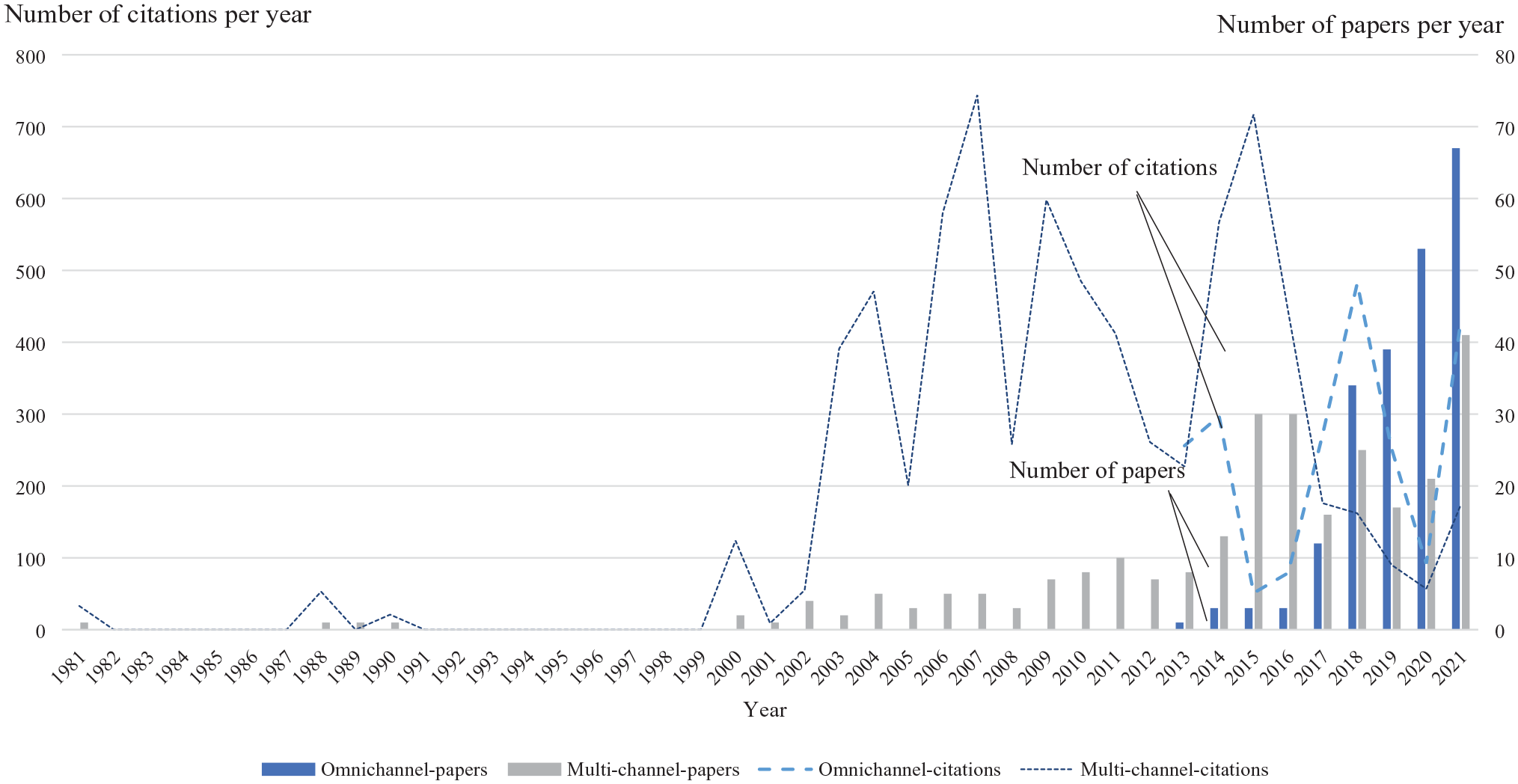
Growth of omnichannel and multichannel research.
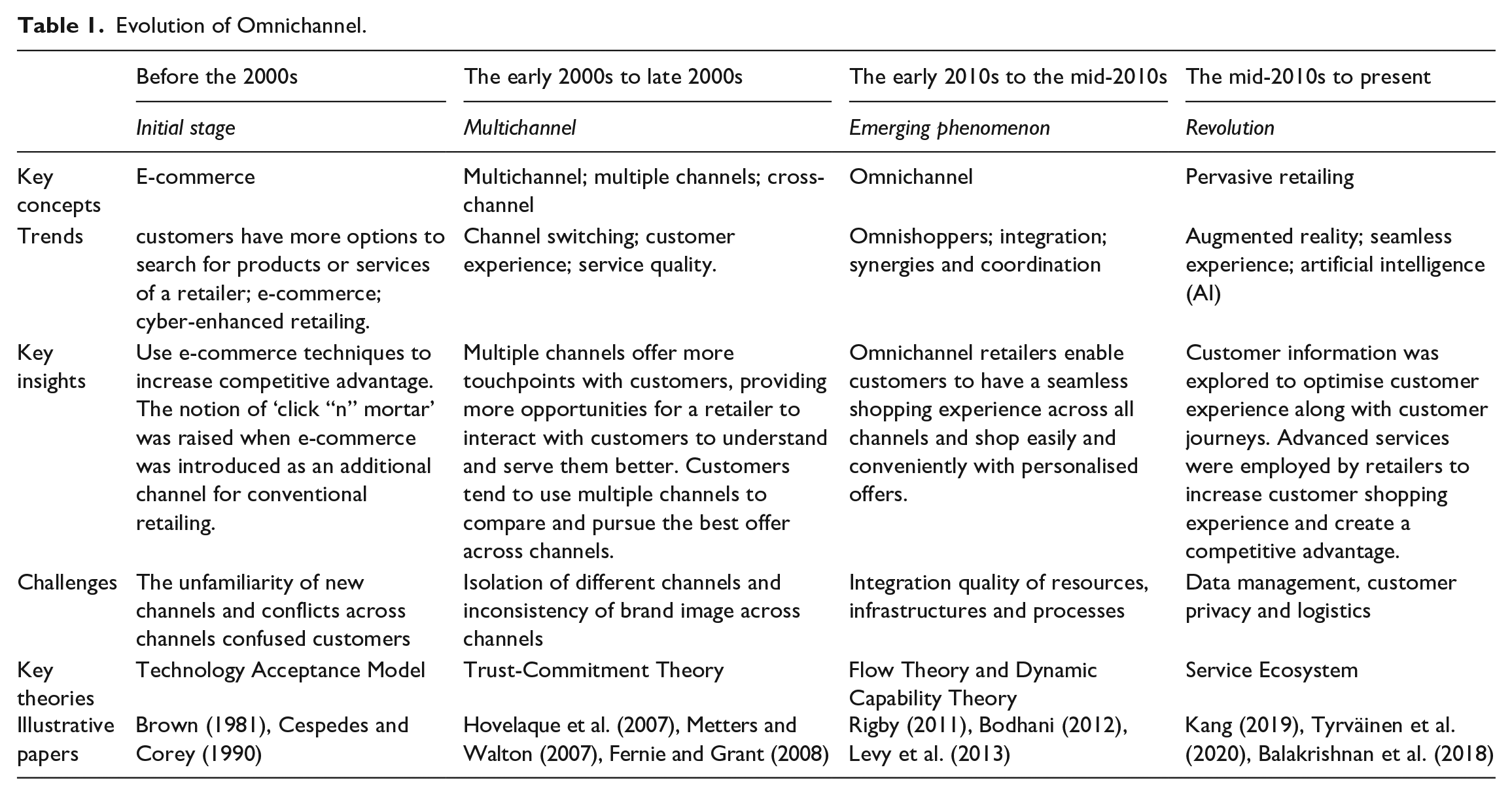
The evolution of omnichannel can be categorised into four main stages: (1) Initial stage: before the 2000s with a few studies on e-commerce; (2) Multi-channel: the early 2000s to 2010 with more focus on multichannel; (3) Emerging phenomenon: the early 2010s to mid-2010s, which is marked as an initial and developing stage of omnichannel; and (4) Revolution: the mid-2010s to present, featuring with a fully integrated ecosystem for omnichannel (Table 1).
Evolution of Omnichannel.
Before the 2000s: Initial stage
Originally, omnichannel stemmed from the notion of ‘click “n” mortar’, a type of business model which has both online and offline operations (Riggins & Rhee, 1998). As more customers used the Internet to search for products or services, many retailers created online channels to complement their physical stores. The appearance of new pure virtual retailers using different online platforms and without physical stores such as Amazon was also highlighted in this period (Steward et al., 1999).
Further, the period before the 2000s was marked as an initial stage of studies examining e-commerce as a new type of business model. The main research stream in this period was the combination of e-commerce practices and traditional physical retailing, which was used to be called ‘cyber-enhanced retailing’, to improve the shopping experience (Brown, 1981). In addition, online channels were added to conventional retailing to create more touchpoints to interact and develop a relationship with customers (Brown, 1981). In this stage, several website building technologies were employed to create an online presence for retailers (Steward et al., 1999). However, in this early stage, multichannel management did not work effectively as many customers were unfamiliar with the new channels. Further, whereas a majority of countries were internet-connected by 1999, ‘getting online’ entailed complex configurations, and dial-up connections were the only option for personal users (Bickart & Schindler, 2001). This resulted in customer confusion and a loss in sales, market share and competitive position, urging the improvement of multichannel marketing efforts (Cespedes & Corey, 1990).
The early 2000s to late 2000s: Multi-channel
In this stage, more focus was placed on the rise of multichannel since retailers realised the importance of developing multichannel systems (Metters & Walton, 2007). In this landscape, the co-existence of different sales channels was recognised. The convenience of e-commerce enables customers to assess several channels to compare and obtain the best deal (Metters & Walton, 2007). To increase competitive advantage, retailers attempted to offer distinctive cross-channel benefits and improve customer relationship management practices (de Koster, 2003). Different channels were treated as separate silos rather than as part of an overall system (Hovelaque et al., 2007). Many retailers introduced a new distribution system only for their online channels, such as drop-shipping (Hovelaque et al., 2007) or new distribution centres designed (de Koster, 2003). Accordingly, retailer structure, inventory and supply chain management changed considerably due to the differences between e-commerce and conventional retailing (Metters & Walton, 2007).
Additionally, different channels can help to increase touchpoints with customers, opening up opportunities for a retailer to interact with customers, to understand and serve them better (Hovelaque et al., 2007). Therefore, there was an increasing number of big-brand retail stores that used multichannel such as Walmart, Best Buy and Nordstrom (Grewal et al., 2008). Effective customer relationship management can result in a stronger and deeper level of brand commitment, increasing switching costs and customer loyalty (Neslin et al., 2006). Thus, channel switching, consumer decision-making and brand loyalty were of the utmost importance to a retailer and were paid significant attention by previous researchers (Kwon & Lennon, 2009). Technology acceptance of customers for the appearance of online channels or brick-and-mortar retailers was also the research focus (Wixom & Todd, 2005).
On the one hand, multichannel offered customers many touchpoints with a retailer; on the other hand, there was also a higher chance of service failures due to the differences across channels (Noble et al., 2005). Hence, multichannel required effort to maintain the consistency of brand image across channels. A number of technology system for multichannel management were used to enable the integration of the production, distribution and marketing elements (Neslin et al., 2006). Therefore, proper high-level planning and access to facilitating technologies were essential for success. At the end of this stage, channel integration was confirmed to be the goal of retailers to provide a seamless shopping experience (Fernie & Grant, 2008).
The early 2010s to mid-2010s: Emerging phenomenon
In this stage, the role of information technology was articulated as a key factor impacting the retailing landscape, blurring the boundaries between physical and online channels (Bell et al., 2014). The proliferation of social media and mobile channels profoundly changed the retail landscape and pushed a movement from multichannel to omnichannel (Verhoef et al., 2015). Different channels and devices provided different touchpoints for customers; thus, retailers needed to consider providing a seamless shopping experience amidst the move from separation to integration of the different channels (Hübner et al., 2015).
Omnichannel was introduced in this period as an evolution of the multichannel in which channels were managed synergistically (Lazaris & Vrechopoulos, 2014). The term omnichannel was coined by Rigby (2011) and Bodhani (2012), who introduced the concept of retailer-shopper connection through all channels of a retailer or brand. Since then, the term omnichannel has been used in conjunction with channel integration, brand strategy and innovation, where the omnichannel strategy was required to adapt to cope with consumer preference and loyalty (Hansen & Sia, 2015). Omnichannel retailers enable customers to have a seamless shopping experience across all channels and shop easily and conveniently with personalised offers based on data analytics (Lazaris & Vrechopoulos, 2014). For instance, Starbucks provides a seamless user experience across all channels (Trout, 2017). Customers can check and reload their Starbucks reward card balance through their phone, the Starbucks website, or Starbuck physical stores. The main streams of research in this stage were mainly touchpoints, price-matching policy aspects and information systems for omnichannel (Lazaris & Vrechopoulos, 2014). During this stage, the technical infrastructure of payment technology systems were integrated into online channels and evolved with greater connectivity, responsiveness, reliability and security to attract more users (Klapdor et al., 2015).
The mid-2010s to present: Revolution
This period has been recorded as the development of omnichannel with full integration and revolution (Z. W. Y. Lee et al., 2019). In an omnichannel environment, the management of channels goes beyond the optimisation of separate touchpoints (Verhoef et al., 2015). Therefore, integration quality becomes a crucial focus in an omnichannel strategy. The breadth of channel choice is no longer a differentiator but rather a norm (Banerjee, 2014). Instead, integration quality of resources, infrastructures and processes is central to differentiating a retailer from another via delivering the optimal value to customers. A retailer needs to achieve the highest level of cooperation across channels to create a seamless experience for its customers (Banerjee, 2014).
In addition, one of the main topics of the research stream in this stage is customer loyalty, satisfaction and engagement (Bu et al., 2021; Tyrväinen et al., 2020). It also explores more options for customer participation in firm-initiated activities via online channels such as social media (Quach et al., 2021). As customers have more choices of retailers due to easy access to different touchpoints, the competition among retailers became fiercer; therefore, increasing customer loyalty and improving customer experience has become the priority (Gao et al., 2021). At this stage, many advanced technologies are available to support sellers and buyers along with the full integration of omnichannel. For example, digital retailers use big data and sophisticated algorithms to identify the desires and needs of their customers, anticipate their purchasing patterns, make product recommendations and manage their inventory to minimise storage costs and delivery delays (Nguyen et al., 2021). Augmented reality technologies allow customers to have a more immersive experience via computer-generated perceptual content. For example, IKEA has developed their augmented reliability app to enable customers to virtually place true-to-scale 3D models of the furniture in their very own space (Nguyen et al., 2021).
Theoretical insights into the role of technology in omnichannel retailing
Several key theories have been used to explain the role of technology in omnichannel retailing (Table 2). Technology Acceptance Model (TAM) is among the most widely used theories underpinning customers’ adoption of new technology. According to TAM, customers’ intention to use a technology (i.e. mobile shopping in omnichannel retailing) is a function of perceived usefulness and perceived ease of use of that technology (Silva et al., 2018). Other contextual and individual factors such as social influence and peer influence might also influence customer perception and intention (Vahdat et al., 2021). Whereas TAM focuses on customers’ perception of the technology itself, trust-commitment theory highlights the importance of relationships in omnichannel usage (Sales-Vivó et al., 2021). As the use of omnichannel retailing involves different technologies which might be associated with some risks such as privacy invasion, trust and commitment become the key factors in establishing customers’ positive attitudes and behaviour related to omnichannel experience (Ameen, Tarhini, Shah & Madichie, 2021).
A Summary of Key Theoretical Underpinnings.
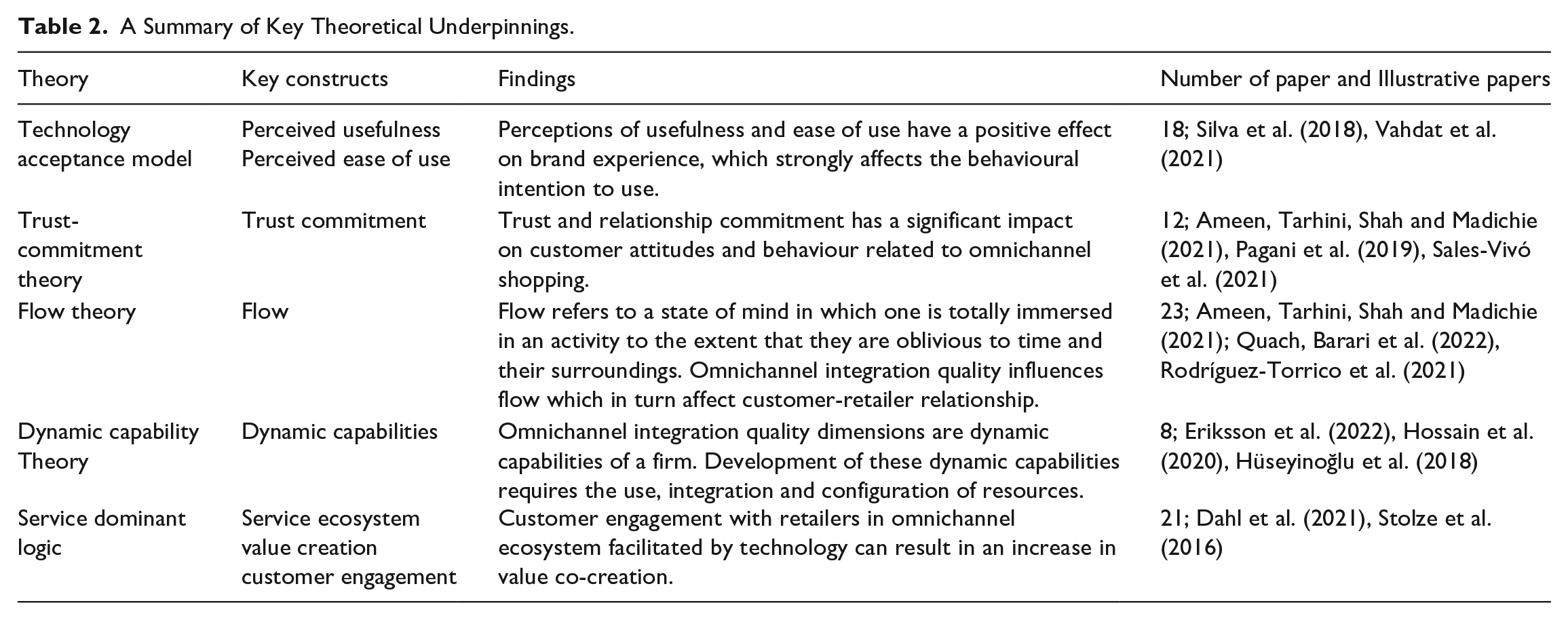
In contrast to TAM and trust-commitment theory, flow theory underscores customer experience which lies at the heart of omnichannel strategy, namely, to create a seamless, unified experience across multiple touchpoints. Flow theory suggests that as new technology such as augmented reality (AR) or virtual reality (VR) allows customers to move freely between different channels, they are more likely to feel an immersion state (i.e. flow) in which they are absorbed in their interaction with the retailer (Quach, Barari et al., 2022). This experience is central to the long-term relationship between customers and the retailer. The importance of flow leads to the need to ensure the quality of channel integration which Hossain et al. (2020) refer to as a dynamic capability. A dynamic capability is defined as ‘the capacity of an organisation to purposefully extend, create, or modify its resource base’ (Helfat et al., 2009, p. 1). Therefore, channel integration requires strategic use of resources including technology.
While the above-discussed theories shed light on different aspects of omnichannel retailing facilitated by technology, ranging from the acceptance of specific technology in retail channels (i.e. TAM), trust and commitment, experience (i.e. flow theory) to channel integration quality (i.e. dynamic capability), an emerging stream of research has adopted service-dominant logic, and in particular, service ecosystem, as a holistic framework integrating perspectives of multiple actors such as customers, retailers and technology (Dahl et al., 2021; Stolze et al., 2016). A service ecosystem is defined as a ‘relatively self-contained, self-adjusting system of resource-integrating actors connected by shared institutional arrangements and mutual value creation through service exchange’ (Vargo & Lusch, 2016, p. 11). This view draws attention to multiple levels of interaction between different actors such as firms, customers and technology (Akaka et al., 2013; Chandler & Vargo, 2011). In omnichannel retailing, technology facilitates the interactions between customers and retailers via various, interconnected touchpoints aiming to create personalised and seamless experiences.
The role of technology in omnichannel retailing empirical insights
This section synthesises and discusses empirical research in omnichannel retailing from a technology perspective. Thematic analysis has been employed to identify the key themes related to the role of technology in omnichannel retailing. Following Lamberton and Stephen’s (2016) approach, in the first step, author thoroughly reviewed all empirical research to identify the main themes in the previous research. Themes refer to a study’s core idea and main focus, which is often reflected in the research conceptual model. In the next step, all papers of similar themes are grouped together. This step helps us to identify the areas which have been studied in previous research. Then, we adopted a service ecosystem view to synthesise and integrate themes in omni-channel retailing technology. The ecosystem perspective allows us to combine all identified themes into a framework to provide an overall view of what is known about the role of technology in omnichannel and areas that may require further attention.
As can be seen from Figure 2, we identified two types of technology in omnichannel retailing, interactive technology and supporting technology. Interactive technology in the front end of our model facilitates the interactions between retailers and customers in both offline and online channels (Blázquez, 2014). Retailers use a wide range of in-store technologies such as service robots, automatic check-out and fitting room technologies to facilitate customer omnichannel experience. Similarly, self check-out and QR codes enable retailers to increase convenience and seamless movement across different channels.
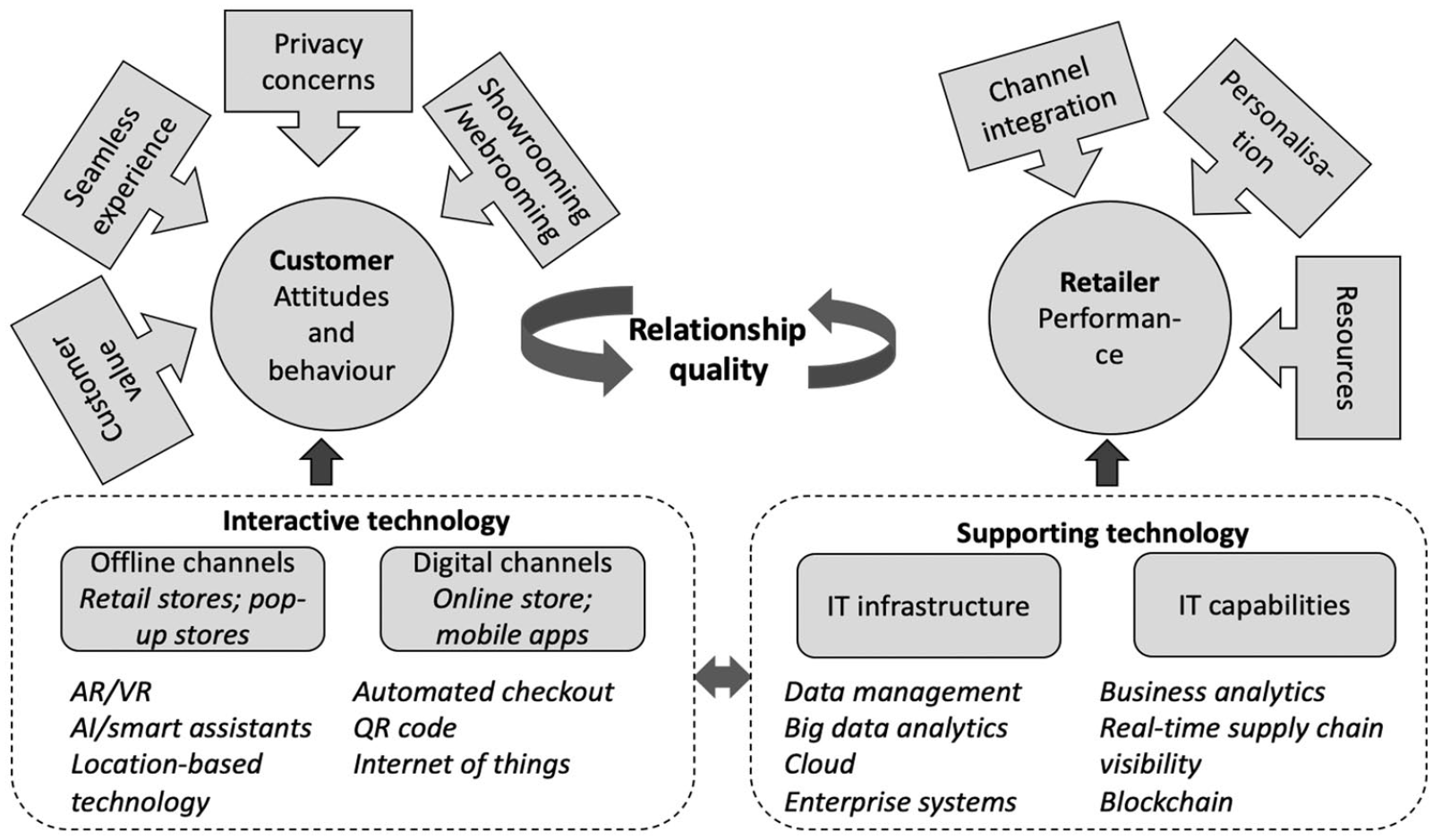
Technology-facilitated omnichannel retailing.
Supporting technology are back-end systems facilitating omnichannel operation and management through IT infrastructure and capabilities (Kaaniche et al., 2020). IT infrastructure includes the set of IT components (i.e. physical equipment and software) required to build omnichannel retailing, such as an enterprise system and cloud. IT capabilities indicate the retailer’s capacity to effectively employ IT infrastructure to manage the omnichannel retailing ecosystem (Blázquez, 2014).
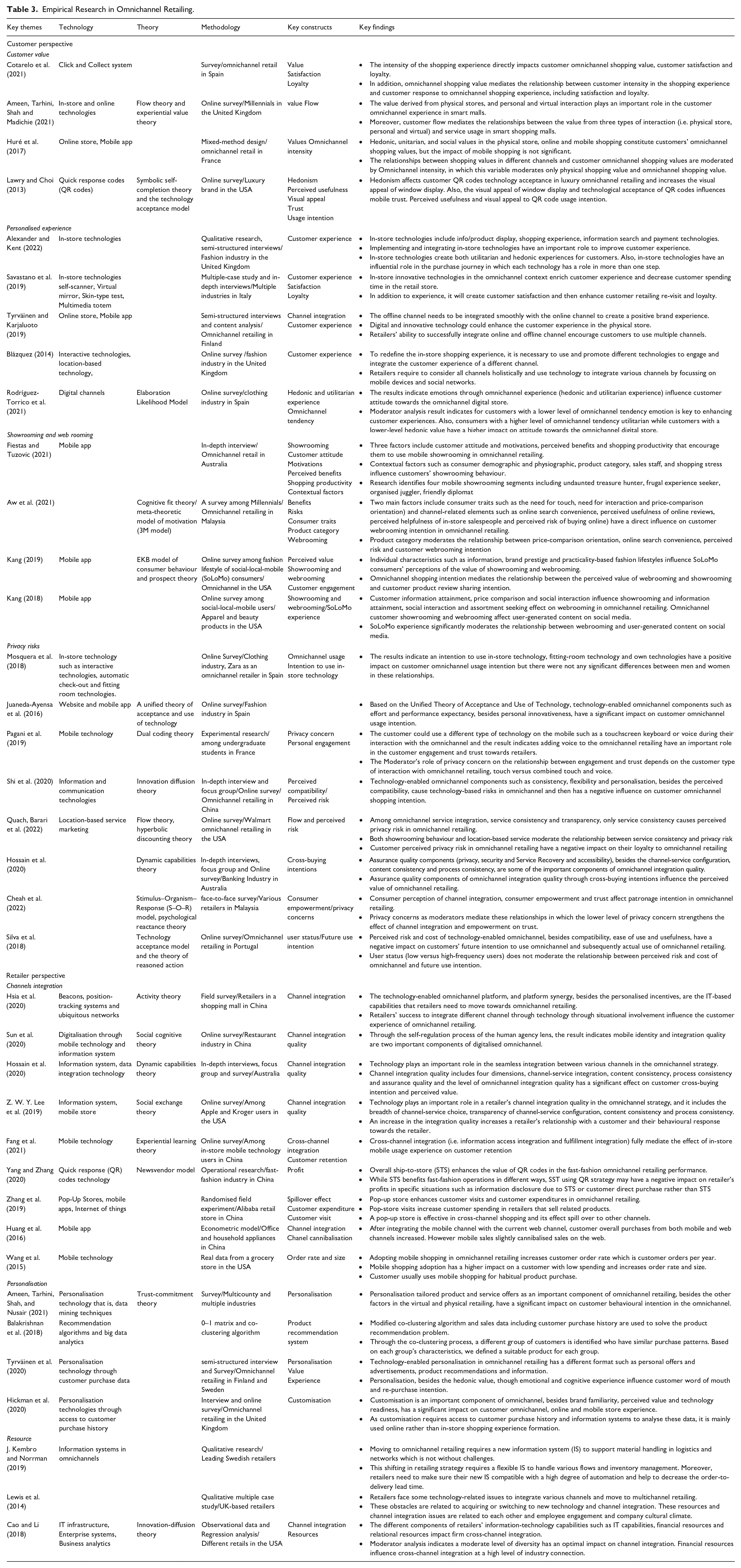
In addition, a review of the empirical research sheds light on the key impact of technology from the customer’s and retailers’ perspectives (Table 3). The details of these two perspectives are discussed in the following section.
Empirical Research in Omnichannel Retailing.
Customer perspective
Omnichannel retailing aims to integrate and coordinate various channels to enhance the customer experience throughout their shopping journey (Quach, Barari et al., 2022). In this process, technology is considered a crucial factor for retailers to create a seamless shopping experience and more importantly, improve relationship quality (Barwitz & Maas, 2018). Relationship quality indicates customers’ overall assessment of the strength of their relationship with a retailer which is based on their satisfaction, trust, commitment, or combination of these factors (Gremler et al., 2020; Thaichon, Liyanaarachchi, Quach, Weaven, & Bu, 2020). Technology facilitates customer interaction with retailers across various touch points which has a significant impact on customer-retailer relationships. A review of empirical research in the omnichannel literature from a technology perspective shows the key themes of customer value, experience, showrooming and web rooming and privacy concerns.
Customer value
Value and value creation are central to the relationship between customers and firms (Ertimur & Venkatesh, 2010; Järvi et al., 2018; Ostrom et al., 2015). Value is what customers extract from their shopping experience (Chitturi et al., 2008; Rintamäki et al., 2006), a comparison between benefits and costs that could have an impact on their well-being (Anker et al., 2015; Gronroos, 2008; Grönroos & Voima, 2013). Value in retailing can be categorised into utilitarian (e.g. task-oriented, functional benefits), hedonic (e.g. pleasure and fun), and social values (e.g. social interactions, status and self-esteem enhancement) (Jones et al., 2006). Technology allows retailers to create value for customers via various retail touchpoints (Ameen, Tarhini, Shah & Madichie, 2021). For example, AR applications such as virtual make-up try-on on online platforms offer hedonic value, whereas in-store self-checkout can provide utilitarian value and mobile shopping with group recommendations can provide social value. This will lead to positive responses towards omnichannel retailing such as satisfaction and loyalty (Cotarelo et al., 2021). In fact, Ameen, Tarhini, Shah, and Madichie (2021) indicate that the value derived from technology-facilitated omnichannel retailing influence customer service usage in smart shopping malls via flow.
Customer experience
Customer experience in retailing is defined as customer cognitive, affective, emotional, social and physical responses to retailers’ touchpoints in their shopping journey (Verhoef et al., 2009). As customers interact with a retailer in different channels, their experience with these channels has a pivotal role in their purchase evaluation (Ailawadi & Farris, 2017). Thus, omnichannel retailing aims to deliver a seamless shopping experience to customers (Mishra et al., 2021).
Technology is considered an important enabler for omnichannel retailing to optimise customer experience (Cui et al., 2021). Advance in new technologies such as self-scanner, virtual mirror, skin-type test, product information display, information search and payment technologies allows retailers to redefine customer in-store and online experiences and create unified movement across integrated channels (Alexander & Kent, 2022; Tyrväinen & Karjaluoto, 2019). These technologies help customers to easily access product information, compare different products and choose a product and pay in a physical store (Savastano et al., 2019). Besides, technologies such as Artificial Intelligence (AI) powered applications allow customers to enjoy a seamless shopping experience in omnichannel via personalised information, recommendations and offerings (Rodriguez-Torrico, San-Martin, San Jose Cabezudo, 2020), enabling retailers to build relationships customers (Quach, Barari et al., 2022; Vahdat et al., 2021).
Showrooming and web rooming
Showrooming indicates the customer’s tendency to gather information about the potential product from physical stores and use this information to purchase a product from an online store (Fiestas & Tuzovic, 2021). In contrast, webrooming involves customers seeking information from online stores and finalising their purchase in a physical store, typically to save shipping costs and reduce waiting time (Aw et al., 2021). As omnichannel retailing facilitates involves the use of various channels, showrooming and webrooming are common behaviours that might have negative effects on retail performance (Verhoef et al., 2015). Advance in technology, especially mobile technology, facilitate this process in which customer uses their mobile to engage in showrooming and webrooming (Kang, 2018; Li et al., 2018). Research in mobile showrooming and webrooming in the omnichannel mainly focused on factors that encourage the customer to involve in these behaviours (Kang, 2018, 2019) such as customer attitude and motivations, showrooming/webrooming benefits, shopping optimisation, customer demographic and physiographic characteristics (Aw et al., 2021; Fiestas & Tuzovic, 2021). Whereas previous research commonly suggests that showrooming can reduce retailers’ profits, there may be an opportunity to engage showrooms by improving the in-store experience (Quach, Barari et al., 2022). Similarly, retailers can address webrooming can be via integrated technology such as click and collect (Cotarelo et al., 2021).
Privacy risks
In the omnichannel retailing strategy, retailers need customers’ data to enhance their experience across different touchpoints (Ameen, Tarhini, Shah, & Nusair, 2021; Tyrväinen et al., 2020). For instance, artificial intelligence use customer transaction history to personalise different aspects of offerings such as price, promotion, product or delivery time and place (Weber & Schütte, 2019). However, access to customer personal data may violate customer privacy and has negative consequences for retailers (Cui et al., 2021). In this regard, research in omnichannel indicates how technology has both positive and negative implications. In particular, privacy risk can diminish the positive outcome of omnichannel retailing for a customer. For instance, Quach, Barari et al.’s (2022) research show that whilst channel integration improves the customer experience of omnichannel retailing, it also increases customer privacy risk which has a negative effect on customer loyalty towards omnichannel retailing. In addition, Shi et al.’s (2020) research findings confirm that the dimensions of channel integration such as consistency, flexibility, personalisation and perceived compatibility increase customer perception of risks. Moreover, their results indicate that perceived risk has a negative influence on customer omnichannel shopping intention (Shi et al., 2020). This is in line with findings from previous research such as Pagani et al. (2019) and Cheah et al. (2022) which highlights that while omnichannel enhance customer-retailers interaction, at the same time, it has a negative role in customer relationship formation with retailers and their subsequent behaviour. Therefore, technology-enabled omnichannel retailing can be considered a double-edged sword that has both a positive and negative impact on customer experience and retailers’ performance (Hossain et al., 2020; Shi et al., 2020; Silva et al., 2018). This leads to a challenge facing a retailer in relation to deciding the level of personalisation while being mindful of customer privacy concerns.
Retailer perspective
Omnichannel retailing aims to enhance the customer’s overall experience of various channels through their journey, and by doing that, helps retailers improve their performance (Verhoef et al., 2015). In this regard, technology is one of the important drivers of omnichannel retailing (Savastano et al., 2019). The key themes from the retailer perspective are channel integration, personalisation and resource challenges.
Channels integration
Multichannel integration is the essence of omnichannel retailing (Verhoef et al., 2015) in which retailers coordinate and integrate various channels such as physical stores with online stores to enhance retailers’ performance through customer shopping experience (Quach, Barari et al., 2022). In this respect, technology plays a vital role for retailers to move from multichannel to omnichannel strategy as an integration enabler (Sun et al., 2020), as it determines the level of channel integration quality (Z. W. Y. Lee et al., 2019).
Coordination among various channels requires various technological capabilities as well as finance, and human resources (Cao & Li, 2018). It is found that information technology infrastructure is the backbone of channel integration quality which includes four dimensions, namely channel-service integration, content consistency, process consistency and assurance quality (Hossain et al., 2020). Hsia et al. (2020) provide further clarification and mention that technology-enabled omnichannel platforms and platform synergy are the IT-based capabilities required in omnichannel retailing in order to create a seamless experience. In addition, Z. W. Y. Lee et al. (2019) indicate that technology plays an important role in a retailer’s channel integration quality, including the breadth of channel-service choice, transparency of channel-service configuration, content consistency, and process consistency, all of which positively influence customer behavioural responses, and hence retailer performance.
Personalisation
Personalisation is defined as any adjustment in the firm’s offering to better meet individual customers’ specific requirements (Ball et al., 2006). Personalisation enables retailers to offer a suitable product in a convenient place and time to a customer (Tyrväinen et al., 2020). Besides, it is one of the important aspects of omnichannel retailing which is fuelled by technology (Ameen, Tarhini, Shah, & Nusair, 2021). New technologies such as artificial intelligence allow retailers to use customer purchase history to get information about different aspects of customer behaviour (Weber & Schütte, 2019), which is then used to personalise their shopping experience (Balakrishnan et al., 2018).
Research in the technology-enabled personalisation in omnichannel retailing shows personalisation can be carried out in many areas such as personalised offers and advertisements (Tyrväinen et al., 2020), and product recommendations and information (Balakrishnan et al., 2018). As personalisation requires access to customer purchase history and information systems to analyse these data, it has been predominantly researched in the online rather than in-store shopping context (Hickman et al., 2020). Ameen et al. (2021) and Tyrväinen et al. (2020) indicate that personalised product and service is an important component of omnichannel retailing which leads to purchase intention and WOM. The challenges associated with personalisation include data management and integration (Cui et al., 2021). Touchpoints with customers may be managed by different entities within and outside the retailer. Hence, it becomes challenging to integrate and match data on the same customer across different touchpoints or diverse information provided by customers or other entities (Cui et al., 2021). In addition, personalisation requires access to a large amount of customer data in order to effectively reach customers at the right time, in the right place and with the right offers (Kaaniche et al., 2020). Therefore, while personalisation can create a competitive advantage for retailers to enhance the customer experience of omnichannel retiling, it can cause privacy issues that attenuate the benefits of personalisation.
Resource challenges
Moving from a multichannel to an omnichannel strategy requires investment in new technological capabilities and a high level of coordination. Cao and Li (2018) highlight that IT capabilities such as hardware and software systems as well as IT processes are central to the facilitation and automation of online purchase and order-fulfillment operations and therefore, have a significant impact on firms’ cross-channel integration. However, many retailers might not have enough resources to handle the operational demand of omnichannel retailing (Ailawadi, 2021; Cui et al., 2021). J. Kembro and Norrman (2019) explore the challenges in omnichannel retailing from an information systems perspective and shows that moving to omnichannel retailing needs a new information system that may be costly and require significant expertise. Logistics models and stock management systems are a challenge for retailers as they require to be synergistically managed (Silva et al., 2018). Thus, the information infrastructure in omnichannel requires to be flexible to overcome these issues (J. Kembro & Norrman, 2019). Moreover, Lewis et al. (2014) reveals that technology-related challenges in omnichannel retailing such as acquiring or switching to new technology to integrate retail channels can vary in different retailers based on their progress towards multichannel integrations; as such, there is no one-size-fits-all approach. Further, while retailers are expected to adopt new technologies to increase the efficiency and effectiveness of their operations such as inventory visibility and order fulfillment integration, it has become more challenging to monitor and understand the relevant technologies which have evolved significantly at a remarkably fast pace (Quach, Thaichon et al., 2022).
Conclusions and research implications
Our review demonstrates the evolving nature of omnichannel research in which technology has a prominent role and provide an integrative framework depicting the inter-relations between customers, retailers and technology. While initial efforts in omnichannel focused on adding more channels, especially online presence, recent development in the omnichannel retailing highlight the importance of channel integration (Alexander & Kent, 2022; Mishra et al., 2021). Information technology helps retailers merge different channels to provide a seamless shopping experience for customers across different channels. However, technology is not limited to a supportive role, it can also bring unique experiences through new advancements such as AR and VR (Thaichon et al., 2022). In addition, we identify technological advantages and challenges facing omnichannel retailers and offer key directions for future research. The review offers important theoretical and managerial implications.
Theoretical contributions
The paper makes several contributions to the current body of knowledge. First, we provide a comprehensive framework for facilitating the role of technology in omnichannel retailing by reviewing empirical research. While prior research has highlighted the role of technology in omnichannel (Verhoef et al., 2015), there is a scarcity of research into how technology transforms omnichannel retailing (Alexander & Kent, 2022). This literature gap is significant because technology has become a crucial factor in retailing success (Barwitz & Maas, 2018), and understanding how it can be leveraged to enhance customer experience and drive retailers’ performance is important (Ameen, Tarhini, Shah, & Madichie, 2021). Building on previous research on omnichannel retailing, this study explored the role of technology from both customer and retailer perspectives. By examining the benefits of technology in omnichannel retailing for both parties, we were able to capture a more nuanced picture of how technology impacts various aspects of omnichannel retailing.
In our analysis of technology-enabled omnichannel retailing, we identified two types of technologies: interactive and supporting. Interactive technologies aim to facilitate retailers’ interactions with customers across offline and online channels, while supporting technologies help retailers to facilitate key omnichannel mechanisms. By distinguishing between these two types of technologies, we offer a more comprehensive understanding of the role of technology in omnichannel retailing, providing a clearer view of this phenomenon. Our findings highlight the importance of both interactive and supporting technologies in successful omnichannel retailing and provide a framework for retailers to consider the use of technology in their omnichannel strategies. This framework can serve as a guide for future research in this area, and can inform the development of effective omnichannel retailing strategies that leverage technology to improve the customer experience and drive retailers’ performance.
Furthermore, by considering technology as the cornerstone of our conceptual model (Z. W. Y. Lee et al., 2019), we are able to reveal both the positive and negative aspects of technology in omnichannel retailing. From the customer’s perspective, interactive technologies have both positive and negative impacts on customer attitudes and behaviours. These findings highlight the importance of understanding the dual role of technology in omnichannel retailing.
On the positive side, interactive technologies in omnichannel retailing create value for the customer in the form of hedonic, utilitarian and social value. They also enhance the customer experience by providing a seamless and consistent interaction with the retailer across different channels, which is one of the key promises of omnichannel retailing. Advances in new technologies, such as augmented reality (AR) and virtual reality (VR), have further facilitated this seamless experience.
However, interactive technologies also enable customer showrooming and webrooming, which can negatively affect retail performance (Fiestas & Tuzovic, 2021). Additionally, the role of technology in omnichannel is not always positive (Aw et al., 2021). Retailers may collect customer data to enhance personalisation, but this may lead to privacy concerns. Therefore, privacy risk is a critical issue in omnichannel retailing that can undermine the positive outcomes of customer interactions in omnichannel retailing (Cui et al., 2021).
Our study sheds light on the critical role of technology in implementing key omnichannel mechanisms. Our findings demonstrate that IT infrastructure and capabilities, including channel integration and personalisation, significantly impact retailers’ performance (Z. W. Y. Lee et al., 2019). However, the lack of resources presents a significant challenge in transitioning from multichannel to omnichannel strategies (Ailawadi, 2021; Cui et al., 2021). Channel integration, a critical element of omnichannel retailing, allows retailers to coordinate and integrate various channels effectively. Additionally, technology empowers retailers to customise their products and services based on customer expectations. While personalisation is effective, it requires access to customer data and may raise privacy concerns (Tyrväinen et al., 2020). Furthermore, moving from a multichannel to an omnichannel approach necessitates significant investment in new technological capabilities and a high level of coordination, which may be costly and beyond the expertise of many retailers (Silva et al., 2018).
Managerial implications
Our review of the role of technology in omnichannel retailing enables us to provide several key insights for managers to consider in their development and implementation of an omnichannel strategy. Firstly, retailers must consider the important role of technology in integrating online and offline platforms. Technologies capacity enables retailers to integrate their physical stores with other channels and enhance the customer experience across all touchpoints. These technologies empower customers during their shopping in different environments and facilitate an enjoyable and exciting shopping experience. Moreover, retailers need to be aware of the impact of mobile technologies such as AI-power apps in moving from a multi to omnichannel strategy. Customers carry their mobile devices almost all the time and it is a big opportunity for retailers to move towards omnichannel. In this regard, research in omnichannel confirms the strategic role of mobile technology for retailers to create a seamless experience for customers (Vahdat et al., 2021).
In addition, the rise of e-commerce and multichannel provides customers with a considerable number of shopping choices. Companies that lag behind in terms of the adoption of new technologies and platforms will be significantly disadvantaged (Kremez et al., 2019). The shift from multichannel to omnichannel is predicted to be indispensable (Thaichon et al., 2022). To stay competitive, retailers need to prepare themselves to integrate and coordinate all channels to offer a seamless experience and provide memorable and personalised services or products in order to improve customer engagement, satisfaction and loyalty. Also, retailers must consider the negative role of technology in omnichannel retailing. While technology helps them personalise different aspects of their value propositions for customers, it may violate customer privacy. Thus, retailers require to be transparent in customer data gathering and usage.
Future research directions
Based on the key insights extracted from our comprehensive review of technology in omnichannel retailing, we identify some key areas that future research could explore as follows.
Innovative technologies and omnichannel strategy
First, a fruitful area is exploring the possibilities of adopting new technologies in an omnichannel strategy. Digital technologies have significantly transformed the retailing landscape and opened endless opportunities to engage customers across multiple touchpoints (Thaichon, Dharmesti et al. 2020; Thaichon, Liyanaarachchi et al. (2020)). Sephora is an example of a cosmetics retailer that not only brings seamless experiences across its channels but also incorporates many advanced technologies in its omnichannel (Gilliland, 2019). The company has a ‘My Beauty Bag’ programme to help customers from any device manage products such as viewing and tracking purchase history, adding items to a shopping list or saving items for future purchases (Trout, 2017). In addition, its app named ‘Virtual Artist’ allows customers to check how some products such as lipstick or eyeshadows look on their faces (Gilliland, 2019).
Artificial intelligence has been widely adopted by retailers such as Amazon to provide tailored recommendations, curate personalised content and predict future customer value (Teradata, 2017). In addition, service robots have been used by retailers to free up human staff for higher-level jobs. This era also marks the move from single, separate devices and realities to mixed, connected devices and realities via the Internet of Things, augmented and virtual realities (Davenport et al., 2020). This allows hyper-personalisation as firms are able to provide one-on-one tailored products, services and experiences (Kunz et al., 2017). It would be interesting to understand how these technologies are used to create a seamless experience, for example, how retailers manage servicer robot-customer interactions along with staff-customer interactions.
Further, mixed realities, AR and VR facilitate physical and virtual convergence. For example, Balenciaga released a collection of virtual clothes in the game Fortnite, allowing them to approach a different group of audience who might not be familiar with the brand. Ralph Lauren is joining the metaverse platform Zepeto and gaming site Roblox, where customers can dress their avatars in Ralph Lauren apparel (Greenwald, 2022). Future research could look into the cross-reality cross-platform experience, that is, metaverse, and the possibility to incorporate blockchain technology such as using non-fungible tokens (NFTs) to create more value for customers.
Omnichannel and customer privacy
While omnichannel retailing brings a positive advantage for both customers and retailers, moving towards omnichannel has its own challenges (Cui et al., 2021). Following the use of digital technologies in retailing, a related research area is omnichannel and customer privacy (Cheah et al., 2022), representing the dark side of omnichannel. Digital technologies exacerbate consumer privacy worries due to the vast availability of data, which have low storage costs and great longevity, are subject to advanced analytics for processing and transformation, and can be shared through networked digital platforms and devices. For example, the use of the Internet of Things, AI, and mixed realities raises serious concerns about privacy and consumer surveillance (Bleier et al., 2020). Privacy researchers have advocated a shift from treating privacy as customers’ sole responsibility to an integrated, collaborative approach to privacy protection encompassing relevant market actors (Pomfret et al., 2020). However, most extant research predominantly focuses on internal privacy mechanisms such as privacy paradoxes (Aguirre et al., 2015; Kaaniche et al., 2020; Mosteller & Poddar, 2017) or dyadic view of privacy demonstrating the impact of firm actions such as transparency and control practices on customer privacy behaviour (Bornschein et al., 2020; Martin et al., 2017). There remains limited understanding of the triadic interplay among customer, firm and regulatory responses to privacy tensions, especially in the context of rising privacy concerns, more stringent data protection framework (e.g. General Data Protection Regulations and California Consumer Privacy Act) and changing privacy practices such as Apple’s release of App Tracking Transparency feature (Mekovec et al., 2020). Therefore, it is critical to understand the privacy tensions as well as retailers’ and customers’ reactions to omnichannel retailing.
Omnichannel strategy and value co-destruction
Although there has been much research in co-creation in the past few years, there lacks a systematic understanding of value co-destruction in an omnichannel retailing context (Quach & Thaichon, 2017). Value co-destruction is defined as ‘an interactional process between service systems that results in the decline in at least one of the service systems’ well-being (which, given the nature of a service system, can be individual or organiszational well-being)’ (Ple & Chumpitaz Cáceres, 2010, p. 431). This is particularly important for the omnichannel retailing business model with a sophisticated ecosystem including various touchpoints and interactions among multiple actions such as employees, customers, technologies, suppliers and logistic partners. The high level of complexity means a wider scope for different types of failures (Nöjd et al., 2020). Whereas technology offers various ways to interact with customers, incorrect use of technology can result in the destruction of value. For instance, failure to invest in the right technology to consistently engage customers across channels can lead to customers’ over-reliance on one channel or channel cannibalisation which has a negative impact on customer experience and firm performance. In addition, misbehaviour of customers or service providers can be contagious and result in co-destruction of value in the service ecosystem (Damali et al., 2020). Value co-destruction is a sophisticated phenomenon as it can be linked to both service failures as well as deliberate actions of customers, oblivious and organised activities of a retailer, or other market entity (Laud et al., 2019). Therefore, understanding the value co-destruction process is critical for facilitating alignment and preventing misalignment throughout the consumer journey (Echeverri & Skålén, 2021). Future research could explore customer manifesting value co-destruction behaviour such as showrooming and webrooming, underlying mechanisms for destruction behaviour and firms’ corresponding strategies.
The paper consolidates existing knowledge from existing literature in order to provide an overview of the current state of research on omnichannel retailing. On this basis, we propose some potential research avenues and directions for future studies to further explore this highly potential field. We hope these research directions inspire more effort in researching omnichannel retailing and produce more thought-provoking insights that can benefit both academics and practitioners.
Footnotes
Declaration of conflicting interests
The author(s) declared no potential conflicts of interest with respect to the research, authorship, and/or publication of this article.
Funding
The author(s) received no financial support for the research, authorship, and/or publication of this article.
