



Abstract
With the increased focus on environmental preservation and consumer well-being, the sale of organic cosmetics across the globe is gradually increasing. However, consumer hesitancy exists due to the nascent stage of the organic cosmetic market. The current study investigates the role of external attribution in increasing pessimistic consumers’ organic purchase behaviour and subjective well-being. It also examines how consumers’ purchase behaviour of organic cosmetics mediates the hypothesised relationships. The proposed conceptual model is grounded in the Conservation of Resources (COR) theory and tested through data from 613 consumers from Amazon MTurk. We found that pessimistic consumers do not purchase organic cosmetics, which, in turn, reduces their subjective well-being. However, external attribution significantly and positively moderates the negative influence of consumers’ pessimism on their purchase behaviour of organic cosmetics and their subjective well-being. In addition, we discovered that pessimistic consumers could conserve their psychological resources through external attribution, helping them reduce their scepticism towards organic cosmetics and adopt such products. Furthermore, the study’s findings highlight the need for managers to develop effective marketing strategies that increase pessimistic consumers’ well-being. Particularly, marketing strategies that emphasise the environmental and health benefits of using organic cosmetics over conventional cosmetics should be devised.
Keywords
Introduction
Rapid environmental deterioration has resulted in rising global temperatures and several other socio-environmental issues (Gómez-Olmedo et al., 2021). Environmental degradation, such as air pollution, causes numerous health problems, including a weak immune system, cold, nausea, respiratory tract inflammation and skin allergies (Mumtaz et al., 2021). Furthermore, water pollution can cause neurological disorders, cancer, diarrhoeal diseases and respiratory ailments, which directly affect well-being (Xiao & Gao, 2021). To resolve environmental degradation and enhance consumer well-being, several organisations are promoting eco-friendly behaviour at a large scale (Kaida & Kaida, 2017; Udall et al., 2020). For instance, Coca Cola collects, recycles and reuses the waste generated from its products with its ‘World Without Waste’ initiative. With its ‘Transparent environmental labelling’ initiative, PepsiCo provides transparent information about its products’ sustainability and encourages proper waste disposal (Sustainability Report, 2020). Consequently, many consumers have begun to shift from non-organic to organic products, but consumer hesitance persists (Kautish et al., 2021). For example, the sale of organic products in the US grew approximately six times between 2013 and 2018 (Whelan & Kronthal-Sacco, 2019). This trend has also been observed in emerging countries, such as India, as approximately 88% of Indian consumers were willing to purchase organic products, according to The Economic Times (2020) When it comes to organic cosmetics, it is noteworthy that globally products worth USD 34.5 billion were sold in 2018, and their sales are expected to increase by approximately USD 20 billion by 2027 (Statisa, 2020). Another interesting facet is that organic cosmetics hold less than 15% of the global cosmetic market share (Sadiq et al., 2021b), indicating that the organic cosmetics market is still nascent. Possibly, it also reflects consumers’ hesitance in procuring organic cosmetics. Thus, numerous studies have called for an extensive analysis to understand consumers’ purchase behaviour of organic cosmetics (Ghazali et al., 2017; Tewary et al., 2021; Zollo et al., 2021).
The current study aims to understand pessimistic consumers’ organic cosmetics purchase behaviour and consumer well-being. Focussing on why consumers tend to resist organic cosmetics, this study provides crucial insights for understanding consumers’ eco-friendly behaviour. Previous studies on consumer behaviour have primarily concentrated on consumers’ dispositional traits to understand their green decision-making in low-involvement contexts, such as organic food purchases (Sadiq et al., 2020, 2021a). Possibly, this study is among the first to analyse pessimistic consumers’ green behaviour, especially in high-involvement situations such as the purchase of cosmetics. To achieve this goal, this study assesses consumers’ eco-friendly consumption behaviour and three new variables from their general behaviour (consumer pessimism, external attribution and subjective well-being). Several researchers have overlooked these three variables in understanding consumers’ eco-friendly purchase behaviour. Recently, Sadiq et al. (2021a) investigated consumer pessimism to understand consumers’ eco-friendly behaviour. However, the concept has not been assessed in the context of organic cosmetics. In contrast, subjective well-being has been widely researched in consumer psychology. Some studies have also assessed this factor in the context of consumers’ eco-friendly behaviour (Apaolaza et al., 2018; Ismael & Ploeger, 2020; Lee, 2019). For example, Apaolaza et al. (2018) studied the association between organic food consumption and consumer well-being. However, to the best of our knowledge, prior studies have not explored the role of subjective well-being in the context of organic cosmetics. External attribution, however, is yet to be studied in relation to consumers’ eco-friendly behaviour. In the psychology field, external attribution is defined as individuals blaming others for their failure in accomplishing a task to reduce stress (Yuan & Wang, 2016). By examining these novel variables, this study proposes the following research questions (RQs) to investigate why consumers tend to resist purchasing organic cosmetics.
To answer these research questions, this study uses the Conservation of Resources (COR) theory (Hobfoll, 1989). It provides crucial insights into how individuals can reduce stress to improve their health and well-being (Yuan & Wang, 2016). Possibly, pessimistic consumers tend to avoid organic cosmetics because of financial stress, which, in turn, results in their ill-being. Therefore, we believe that the COR theory could explain how external attribution can reduce the stress of pessimistic consumers.
This study contributes to the extant literature on organic cosmetics in the following ways. First, it is possibly one of the first studies to investigate consumers’ purchase behaviour of organic cosmetics using the COR theory. Second, to the best of our knowledge, this study is among the first to assess the moderating role of external attribution in the association between consumers’ pessimism and their purchase behaviour of organic cosmetics.
Theoretical background
Organic cosmetics
Previous studies have used various terms to refer to organic products, such as ‘environmentally friendly’, ‘socially responsible consumption’, ‘pro-environmental consumer behaviour’, ‘pro-environmental consumption behaviour’, ‘green purchasing behaviour’ and ‘sustainable’ (Berger, 2019; Johnson & Chattaraman, 2019; Mutum et al., 2021; Paul et al., 2016; Sadiq, 2019; Taufique et al., 2017). Shamdasani et al. (1993) defined organic products as ‘products that will not pollute the earth or deplore natural resources, and [that] can be recycled or conserved’. Peattie (1995, p.181) stated that a product is organic ‘when its environmental and societal performance, in production, use and disposal is significantly improved and improving in comparison to conventional or competitive products offerings’. Ottman (1998, p. 98) stated that organic products ‘are typically durable, non-toxic, made from recycled materials, or minimally packaged’. Joshi and Rahman (2015) explained how organic products benefit the environment at every life cycle stage. Furthermore, Dermody et al. (2021) and Paul et al. (2016) argued that producing organic products is vital because it ensures effective strategies for environmental safety and the marketers’ sustainability. Recently, Mutum et al. (2021) argued that manufacturing organic products mitigate the harm done to the environment. Therefore, organic products are more beneficial than conventional ones, considering the health of the environment and consumer (Dhir, Sadiq et al., 2021; Johnson & Chattaraman, 2019).
Based on the discussion above, we defined organic cosmetics as skincare products that are manufactured using natural ingredients and without inorganic chemicals. Notably, organic cosmetics are produced using naturally grown raw materials instead of chemical-based ingredients to safeguard the health of consumers and the environment (Hsu et al., 2017). However, these cosmetics are generally far more expensive than the traditional ones (Ghazali et al., 2017; Konuk, 2018). Purchasing organic cosmetics is considered an ecologically conscious consumer behaviour (Sadiq et al., 2021b). Roberts (1996, p.222) defined ecologically conscious consumer behaviour as ‘products and services which they perceive to have a positive (or less negative) impact on the environment’. Corresponding to this definition, we explain the organic cosmetics purchase behaviour as consumers purchasing cosmetic products with the perception of reducing the harm done to the environment.
Subjective well-being
Subjective well-being is a well-researched concept in the field of psychology and consumer behaviour (see: Kaida & Kaida, 2019; Purohit et al., 2022). Several studies have stated that it is an important factor in understanding consumers’ satisfaction with a product (Apaolaza et al., 2018; Lee & Ahn, 2016). Different approaches have been used to study subjective well-being, such as measuring ‘satisfaction with life’ (Yuan & Wang, 2016) and ‘happiness’ (Diener, 2000). Moreover, it has been referred to as ‘consumer well-being’ (Lee & Ahn, 2016) and ‘hedonic well-being’ (Jian et al., 2019; Vada et al., 2019). However, most scholars along with this paper have used the term ‘subjective well-being’ (see: Prentice & Loureiro, 2018; Purohit et al., 2022). Neulinger et al. (2020, p.308) defined this concept as ‘a general evaluation of a person’s life and considers happiness and life satisfaction to be components of this concept’. It is also expressed as ‘the degree to which a person judges the overall quality of his or her life as a whole in a favourable way’ (Boujbel & D’Astous, 2012, p. 489). These two definitions indicate that subjective well-being is how consumers evaluate their life in terms of the satisfaction and happiness they gained from performing a certain action.
Conservation of resources theory
The COR theory was propounded by Hobfoll (1989). It explains individuals’ tendency to save their existing resources and gain new ones. Put simply, it states that individuals generally desire to save their existing resources when they feel threatened. Moreover, they seek new resources and use them in the best possible way, effectively driving their actual behaviour (Hobfoll, 2002). Here, individuals’ resources imply ‘entities that people value, including objects, personal characteristics, conditions, or energies’ (Liu, He et al., 2020, p. 364). According to Hobfoll (2002), resources can be categorised as psychological (such as optimism and external attribution) and social (such as pro-social motives).
One of the key principles of COR theory is the significance of recovering existing resources over gaining new ones (Hobfoll, 2001). In this regard, Liu, He et al. (2020) asserted that the stress experienced after losing existing resources is greater than the satisfaction obtained from gaining new and equal resources. Another key principle of COR theory is that individuals tend to engage in resource-investing behaviour to save or gain resources (Hobfoll, 2001). For instance, individuals help their fellows acquire new resources in exchange for receiving help from them, possibly in some other form, similar to an investment (Smith, 2013).
Our rationales for using the COR theory are as follows: first, COR theory explains consumer behaviour as an evolutionary strategy that aims to acquire and conserve resources for survival (e.g. health, wellbeing, self-esteem), which is intrinsic to consumer behaviour (Hobfoll, 2002). Second, according to one of the principles of COR theory, consumers strive to acquire, retain, nurture and protect the things they value most (Hobfoll, 1989). Third, another important tenet of COR theory is that it takes into account both the magnitude of the impact and the length of time to determine the disproportionate difference between the loss and gain of resources. (e.g. self-efficacy, optimism, tools for work, money, knowledge), which results in a multi-dimensional (positive and negative) understanding of the consumers’ behaviour (Smith, 2013; Wang, Xu et al., 2020). Therefore, we assume that the underpinning of COR would be valuable in assessing how pessimistic consumers rely on external attribution to preserve resources and adopt eco-friendly products to improve their well-being.
Hypotheses and model development
Consumer pessimism and organic cosmetics purchase behaviour
Pessimism is ‘a general negative expectation that individuals have about a certain event’ (Dhir, Talwar et al., 2021, p.4). Highly pessimistic consumers are generally considered risk-averse (for instance, averse to financial risk). Moreover, pessimistic consumers are less likely to be socially active because they face difficulty tackling their internal and external challenges to accomplish a task (Arslan & Yıldırım, 2021). In addition, pessimistic consumers are more likely to refrain from accomplishing a risky task because they have weak coping behaviour and are vulnerable to stress, as stated earlier (Scheier et al., 1994). Kaida and Kaida (2017) showed that pessimistic consumers are less motivated to perform eco-friendly actions because they tend to sleep less and are more likely to experience depression. Similarly, consumers with pessimistic trait avoid purchasing organic products because these products are expensive, and they are not motivated enough to take up the financial risk (Sadiq et al., 2021a). Since consumers lose their psychological resources in negative situations, it may be difficult for people with limited resources to engage in environmentally friendly actions based on the COR theory. Thus, we assume that pessimistic consumers would be less likely to purchase organic cosmetics because of the financial risk, thereby displaying withdrawal behaviours. Based on this assumption, we propose the following hypothesis:
Consumer pessimism and subjective well-being
Previous studies have shown that pessimistic consumers experience low well-being because they are more likely to lose their emotional and psychological resources when handling a task’s external and internal challenges (Cnen et al., 2021). For example, highly pessimistic consumers are less likely to engage in eco-friendly actions such as ‘switching off the light when leaving the room’. Therefore, they are often susceptible to experience ill-being (Kaida & Kaida, 2019). Gornik-Durose and Boron (2018) argued that neurotic consumers experience poor well-being, and Zajenkowski and Gignac (2018) stated that neurotic consumers display similar behaviour as pessimistic ones. When we contemplate this situation using the COR theory, pessimism does lead to poor well-being because resources are continuously consumed in a pessimistic state. With a lack of resource investment, resources are not replenished. Consequently, it becomes more difficult for individuals having limited resources to cope with pessimistic situations. Based on this argument, we assume that pessimistic consumers would be more susceptible to low well-being. Hence, we hypothesise:
Organic cosmetics purchase behaviour and subjective well-being
Measuring subjective well-being through consumption is important for assessing the Nation’s quality of life index (Ganglmair-Wooliscroft & Wooliscroft, 2019). Engaging in pro-environmental actions, such as purchasing organic products, is a significant predictor of subjective well-being (Kaida & Kaida, 2019; Lee, 2019). Apaolaza et al. (2018) showed that consumers tend to purchase ‘organic food’ to feel good, indicating the presence of high subjective well-being. Similarly, Kaida and Kaida (2019) found that consumers experience high well-being in adopting pro-environmental behaviour. Such actions make consumers feel satisfied that they contributed to saving the environment and their health. Consequently, their satisfaction is likely to influence their overall well-being (Ismael & Ploeger, 2020). In addition, the COR theory posited that consumers having abundant psychological resources experience positive well-being (Hobfoll, 1989). Therefore, we believe that purchasing organic cosmetics improve consumers’ subjective well-being. Based on this assumption, we propose the following:
Mediating role of the organic cosmetics purchase behaviour
The extant literature on dispositional traits and actual behaviour suggests a negative association between consumers’ pessimism and their eco-friendly behaviour (Kaida & Kaida, 2017, 2019). Since pessimistic consumers tend to exhibit withdrawal behaviours, they are less likely to perform eco-friendly actions (Sadiq et al., 2020). Furthermore, consumers with pessimistic trait may experience low well-being because they face extreme stress and have low coping behaviour, making them prone to depression (Kaida & Kaida, 2019). The negative association between consumers’ pessimism and their subjective well-being could also be because pessimistic consumers exhibit withdrawal behaviours and face difficulty in accomplishing a task. Based on these arguments, we believe that pessimistic consumers experience low subjective well-being because they are unable to perform eco-friendly behaviour, such as purchasing organic cosmetics. Therefore, we hypothesise:
Moderating role of external attribution
External attribution is attributing ‘the cause of negative situations to someone or something else’ (Sanjuán & Magallares, 2014, p. 444). Lau et al. (2015) suggested that an individual’s attribution style (internal versus external) is a vital determinant of their outlook on a given situation. Sadiq (2019) argued that consumers may be segmented on the bases of their external attribution. For example, consumers who failed to exhibit eco-friendly purchase behaviour have attempted to shift the blame to external factors (such as peers and low-quality products), displaying external attribution. Existing literature suggested that external attribution, a sense of optimism (Peterson & Seligman, 1984), is a crucial predictor of actual behaviour (performing eco-friendly actions in this case) (Fang, Ng et al., 2018; Yang et al., 2015). Thus, consumers with high external attribution are more likely to purchase organic cosmetics than conventional ones.
Nurmalita (2019) and Yuan and Wang (2016) posited that external attribution is one of the best coping strategies to help individuals reduce life stress. Consumers who failed to purchase organic products tend to attribute their own failure to others. This external attribution effectively buffers the negative impact of consumers’ pessimism on their subjective well-being and purchase behaviour of organic cosmetics. While negative expectations result in the loss of existing psychological resources, such as cognitive ability, external attribution is the most powerful way of retaining such resources based on the COR theory (Hobfoll, 1989, 2002). We believe that external attribution is likely to stimulate pessimistic consumers by reducing their stress. It would also strengthen their ability to cope with the purchase of organic cosmetics, consequently increasing their subjective well-being. Thus, we hypothesise:
Figure 1 presents our research model.
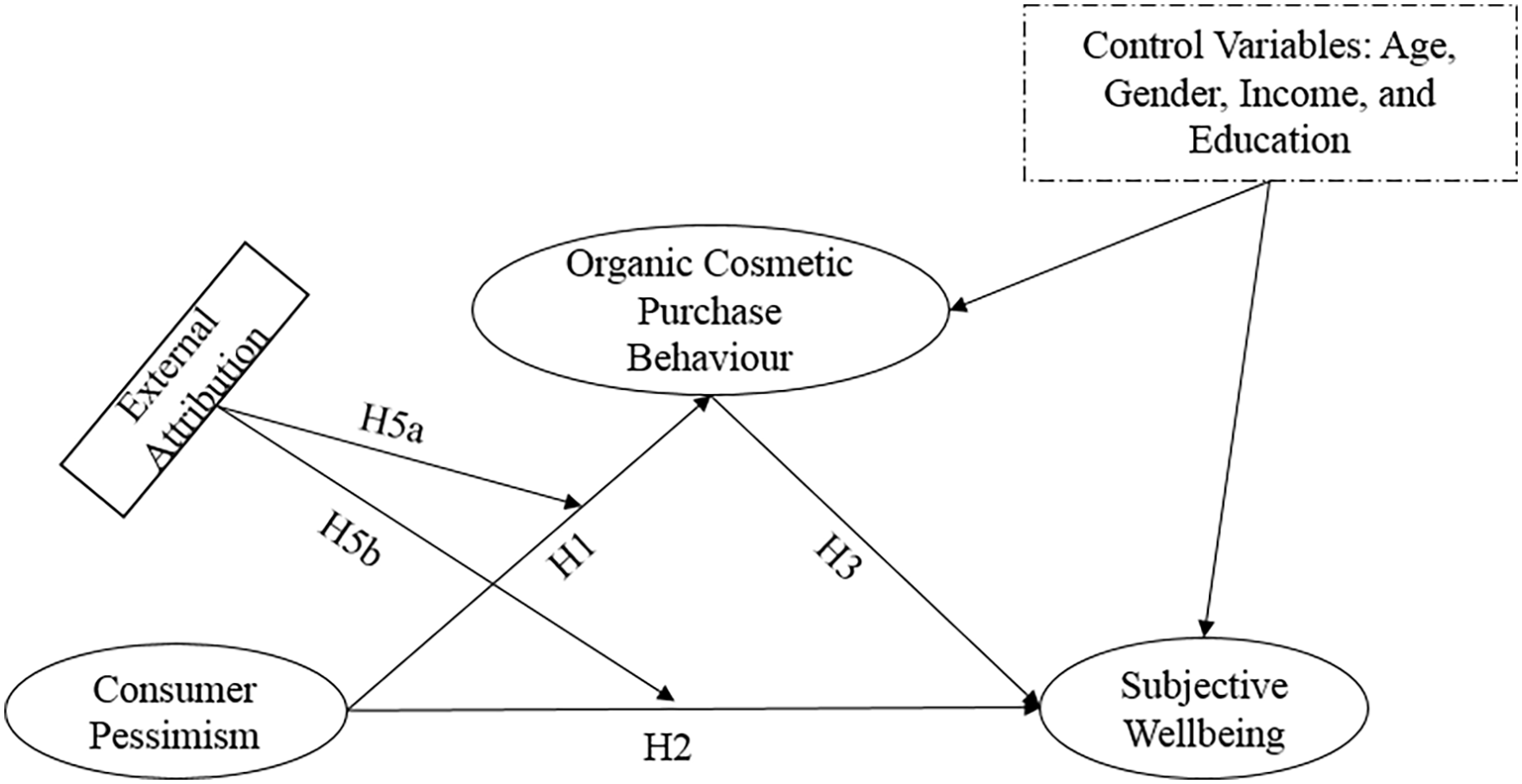
Research model.
Methodology
Measures
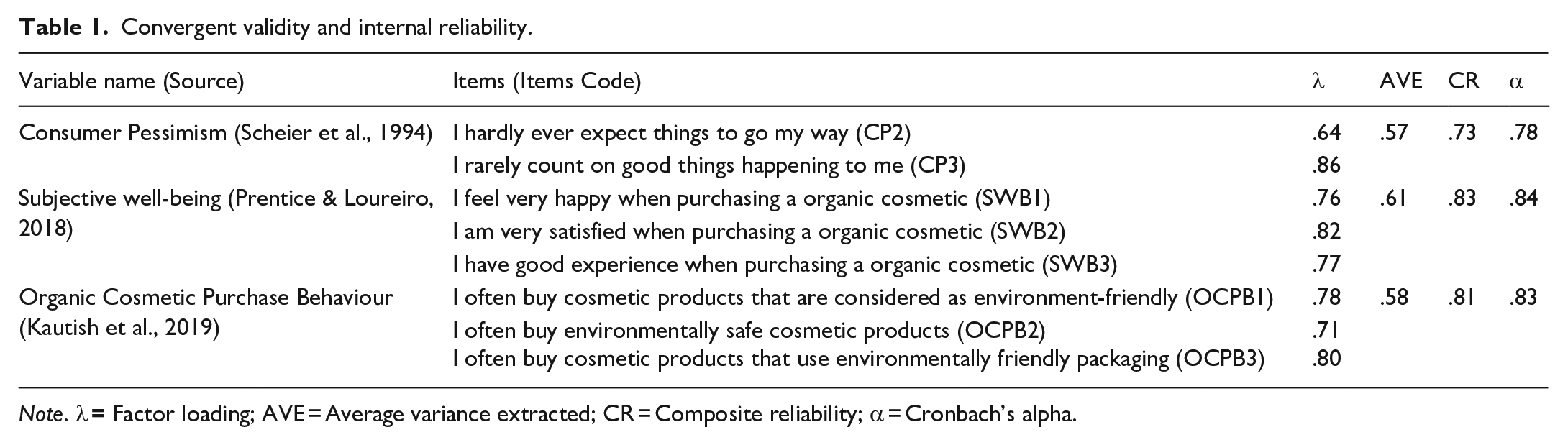
The questionnaire for data collection was created using Qualtrics. We began with drafting a sheet that contained information about the project and the data protection policy. Then, we adopted 13 items to test our four variables. Consumer pessimism was measured using a three-item scale (Scheier et al., 1994). Similarly, a three-item scale was adopted from Kautish et al. (2019) and Prentice and Loureiro (2018) to gauge consumers’ organic cosmetics purchase behaviour and their subjective well-being, respectively (see Table 1). External attribution was measured using a 4-item scale from Lefcourt et al. (1979). A 5-point Likert scale (1 represented Strongly Disagree and 5 expressing Strongly Agree) was adopted for this section. Finally, in the last section of the questionnaire, we included control variables related to respondents’ demographics, such as age, gender, income and education. The given variables were controlled to avoid their intervention in measuring the purchase behaviour of organic cosmetics and subjective well-being. The given variables were also controlled in Cheung and To (2019) and Sadiq et al. (2022).
Convergent validity and internal reliability.
Note.
Data collection
We used Amazon Mechanical Turk (MTurk) to collect single cross-sectional data. To do this, we uploaded our questionnaire on MTurk and offered respondents USD 2 to complete the questionnaire. Numerous studies have used MTurk to collect data (Giroux et al., 2021; Sadiq et al., 2021b). Moreover, many scholars have stated that the data collected from MTurk is reliable (Ang et al., 2018; Braxton & Lau-Gesk, 2020; Kim, 2020). However, the platform has also been criticised for the collection of biased responses (Matherly, 2019; Zack et al., 2019). To ensure both reliability and validity of the data, only individuals who had an acceptance rate higher than 98% in MTurk were invited as a respondent (Peer et al., 2014). We set this cut-off point because extant studies on eco-friendly behaviour suggest that respondents whose acceptance rate exceeds 98% are more likely to provide reliable data (Sadiq et al., 2022). Furthermore, our demographic requirements for respondents were that they must reside in India and be above 18 years. This is because eco-friendliness is a complex concept and difficult for adolescents to understand (Paul et al., 2016). We also set one screening question: Have you purchased non-organic cosmetics in the last 6 months?
The survey was specifically made available for Indian consumers because their tendency to purchase organic products is high according to Kushwah et al. (2019). Statista (2021) reported that approximately 87% of Indians expressed sustainability as the main criterion of product consumption. Another reason the study focuses on Indian consumers is that most studies on organic or eco-friendly products and consumers’ well-being have focused on developed nations (Berger, 2019; Festila & Chrysochou, 2018). Few studies have analysed these concepts in the context of emerging countries, such as India (Kushwah et al., 2019; Singh et al., 2021).
Hair, Black et al. (2019) suggested that the sample size should be 15 to 20 times per item. The minimum necessary sample size was 260 because we had 13 items (that is, 20 × 13). The number of responses we collected was appropriate for an advanced multivariate analysis. Furthermore, empirical studies focussing on organic consumption behaviour have had sample sizes between 400 and 700, and they provide reliable data (see: Khare, 2014; Kushwah et al., 2019; Patel et al., 2020; Paul et al., 2016). Hence, our sample size (n = 650) was appropriate for further analysis. Therefore, it may be affirmed that our sample size accurately represented Indian consumers’ purchase behaviour of organic products.
Respondents profile
The online survey was made available on 20th August 2021, and we removed the survey after 48 hours (on 22nd August 2021) after receiving 650 responses. Of these, we dropped 37 responses because they were incomplete or had the same response for all questions. Finally, 613 responses were found suitable for further analysis. Of these responses, 349 responses (56.9%) were submitted by male respondents and 264 (43.1%) by female respondents. Most of them (63.6%) were between the ages of 28 and 37. Moreover, 79.4% respondents were employed, and 68.03% had a bachelor’s degree. Further, most respondents (51.2%) were married, and most earned between INR 60,001 and INR 80,000 (USD 816.38–USD 1088.48) per month.
Statistical analysis
Before testing the proposed model, we checked for normality, outliers and missing values using the SPSS 26 software. After that, following Anderson and Gerbing (1988), we tested the hypothesised relationships with the two-step mechanism of Structural Equation Modelling (SEM) to assess the proposed research model. We used the AMOS 25 software for this purpose. After testing the proposed model in AMOS 25, we used the Process macro for SPSS to test the mediating and moderating hypotheses.
Results
Data normalcy and common method bias
We tested the data for missing values using a frequency test, which showed that 13 responses had missing values. Therefore, we removed them from our sample. The remaining 637 responses were tested for outliers using Cook’s distance. Resultingly, our data had 24 outliers as the Cook’s distance of these responses effectively exceeded the threshold value of 1. Hence, we excluded these 24 responses from our dataset. Then, we tested the remaining 613 responses for data normalcy based on skewness and kurtosis values. Our data were close to a normal distribution because the values were within the suggested range, between +3 and −3. Further, we tested the data for common method bias (CMB) using three steps to ensure that it was free from social desirability bias, following Dhir, Talwar et al.’s (2021) recommendation. First, along with the questionnaire, we provided a sheet to the respondents to inform them that their identity would not be disclosed and the questions had no right or wrong answers. Respondents were also asked to respond freely and honestly. Second, we checked for CMB through Harman’s single factor test using an exploratory factor analysis. The results showed that a single factor effectively explained 36.51% of the variance. Since this resulting percentage (36.51%) was less than the threshold percentage (50%), the data were considered free from any CMB (Harman, 1967; Podsakoff et al., 2003). To further check for CMB, we used a marker variable technique, and the data was indeed free from CMB concerns based on the results.
Measurement model
We conducted a common factor analysis to test the measurement model, which showed a good fit (χ2/df = 1.57, GFI = 0.94, CFI = 0.95, TLI = 0.97, RMSEA = 0.043). Table 1 shows that both Cronbach’s alpha and composite reliability values were above 0.7, establishing internal reliability (Hair, Black et al., 2019). Further, we checked the average variance extracted (AVE) to test convergent validity. Resultingly, all AVE values were greater than the threshold value of 0.5, establishing convergent validity. We also found that the squared correlation between employed variables was less than the AVE obtained, thereby establishing discriminant validity (see Table 2).
Discriminant validity.
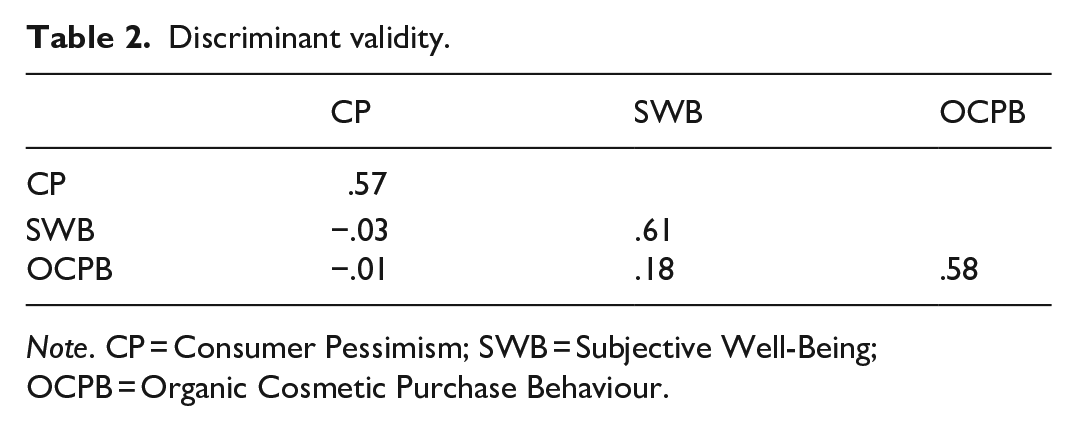
Note. CP = Consumer Pessimism; SWB = Subjective Well-Being; OCPB = Organic Cosmetic Purchase Behaviour.
Structural model
We then tested the structural model to test the proposed hypotheses. The model fit was good (χ2/df = 2.07, GFI = .93, CFI = .94, TLI = .95, RMSEA = .049). We used the results of the structural model to determine whether the proposed hypotheses were supported. Resultingly, consumers’ pessimism negatively influenced their organic cosmetics purchase behaviour (β = −.09; p = < .05) and their subjective well-being (β = −.14; p = < .05), supporting both H1 and H2 (Table 3). Then, we tested H3 to understand the relationship between the organic cosmetics purchase behaviour and subjective well-being. Consumers’ organic cosmetics purchase behaviour positively and significantly influenced their subjective well-being (β = .47; p ⩽ .001), supporting H3. Furthermore, all the control variables had an insignificant influence on consumers’ organic cosmetics purchase behaviour (age: β = .02, p ⩾ .05; gender: β = −.06, p ⩾ .05; income: β = .03, p ⩾ .05; education: β = .02, p ⩾ .05) and their subjective well-being (age: β = −.01, p ⩾ .05; gender: β = −.04, p ⩾ .05; income: β = −.02, p ⩾ .05; education: β = .03, p ⩾ .05). In addition, the results showed that 4.8% of the variance effectively explained consumers’ organic cosmetics purchase behaviour, while 37.1% of the variance explained their subjective well-being (Figure 2).
Hypotheses results.
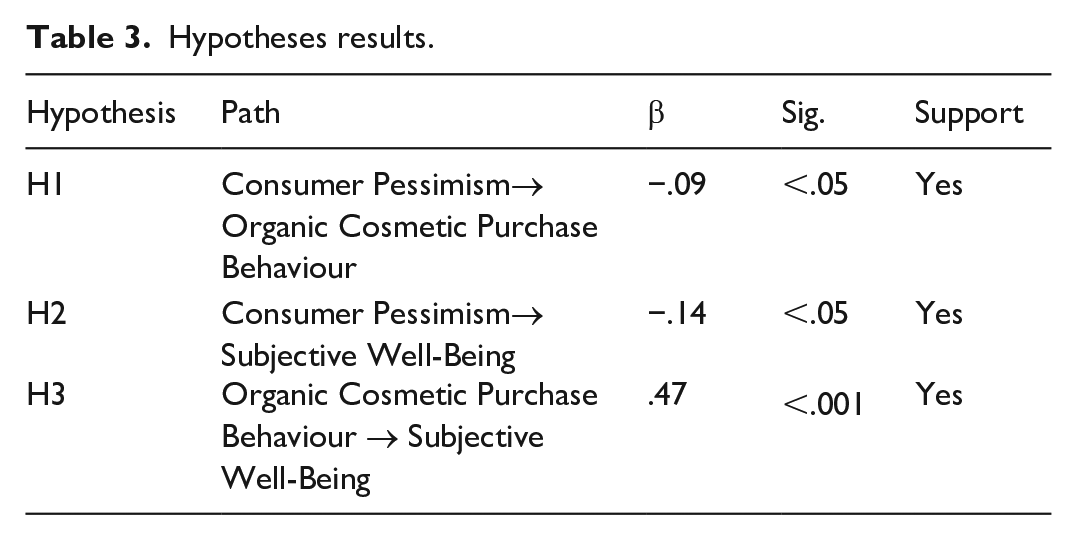
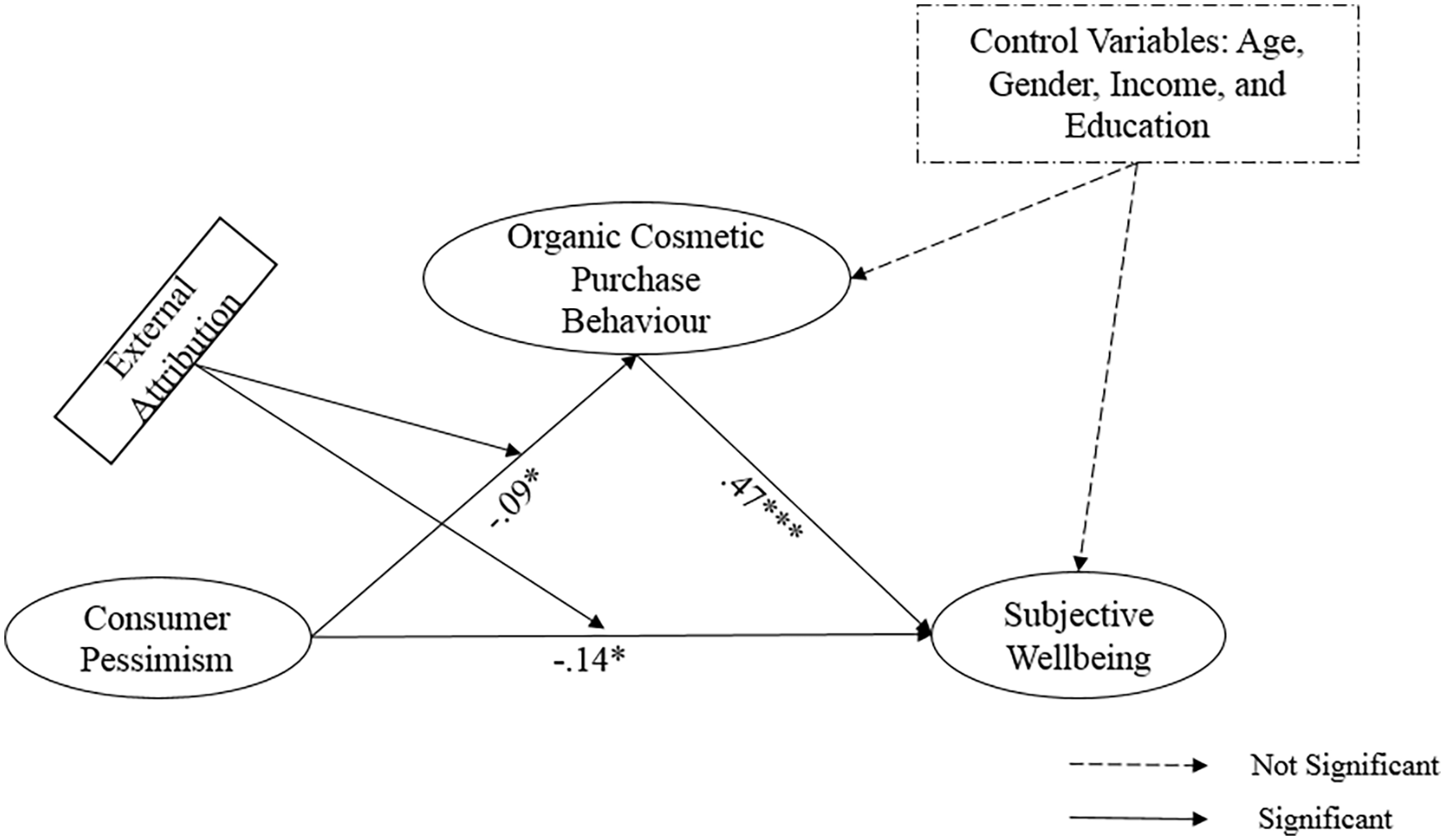
Result of hypotheses testing.
We also tested an alternative model to validate our findings. Adding a path from consumer pessimism to subjective well-being to the organic cosmetics purchase behaviour, we made subjective well-being the mediator and purchase of organic cosmetics the dependent variable. The fit of this alternative model was good (χ2/df = 2.85, GFI = 0.89, CFI = 0.89, TLI = 0.91, RMSEA = 0.062). However, this model’s fit did not improve compared to the fit of the original model. Results showed that the path from consumers’ pessimism to their organic cosmetics purchase behaviour was insignificant (β = −.03; p = .183). Furthermore, consumers’ subjective well-being was significantly associated with their pessimism (β = −.08; p = .048) and organic cosmetics purchase behaviour (β = .16; p = .01). These findings lend support to the study’s original structural model.
Mediation analysis
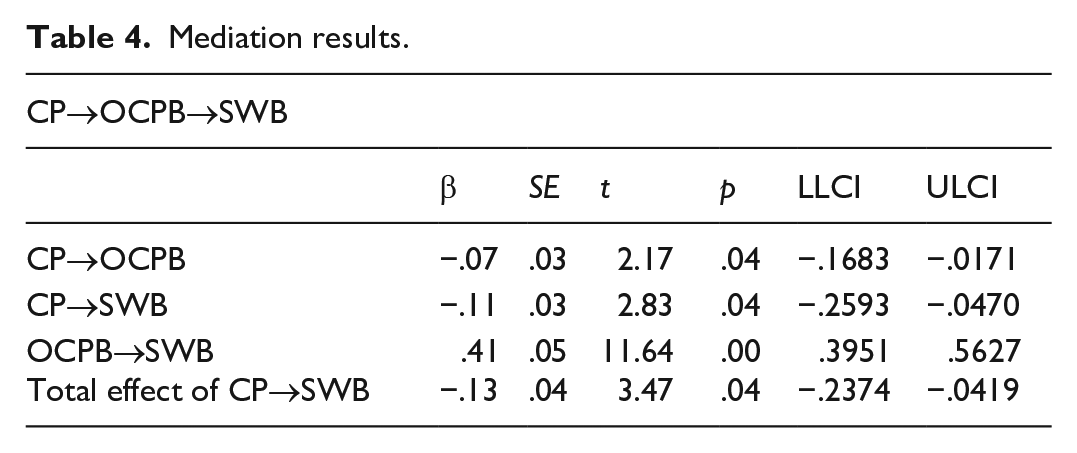
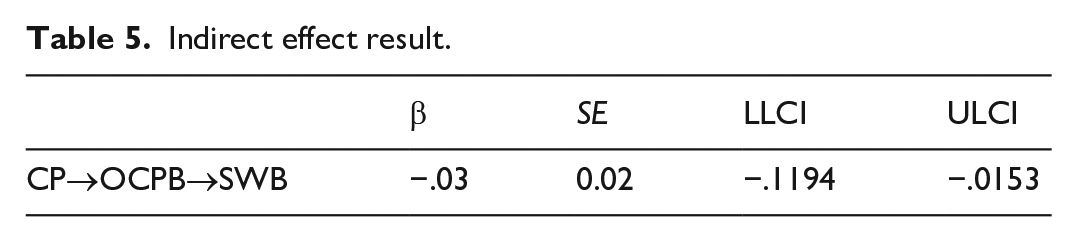
We conducted the mediation analysis using Model 4 of SPSS’s Process macro. Resultingly, consumers’ organic cosmetics purchase behaviour has a significantly partial mediating effect between consumer pessimism and subjective well-being, thereby supporting H4. Both direct and indirect relationships are shown in Tables 4 and 5.
Mediation results.
Indirect effect result.
Moderation analysis
Next, we tested the moderation effect of external attribution using Model 1 of SPSS’s Process macro. The results showed that external attribution positively and significantly moderates the relationship between consumers’ pessimism and their organic cosmetics purchase behaviour (see Figure 3). External attribution also significantly moderates the association between consumers’ pessimism and their subjective well-being (see Figure 4).
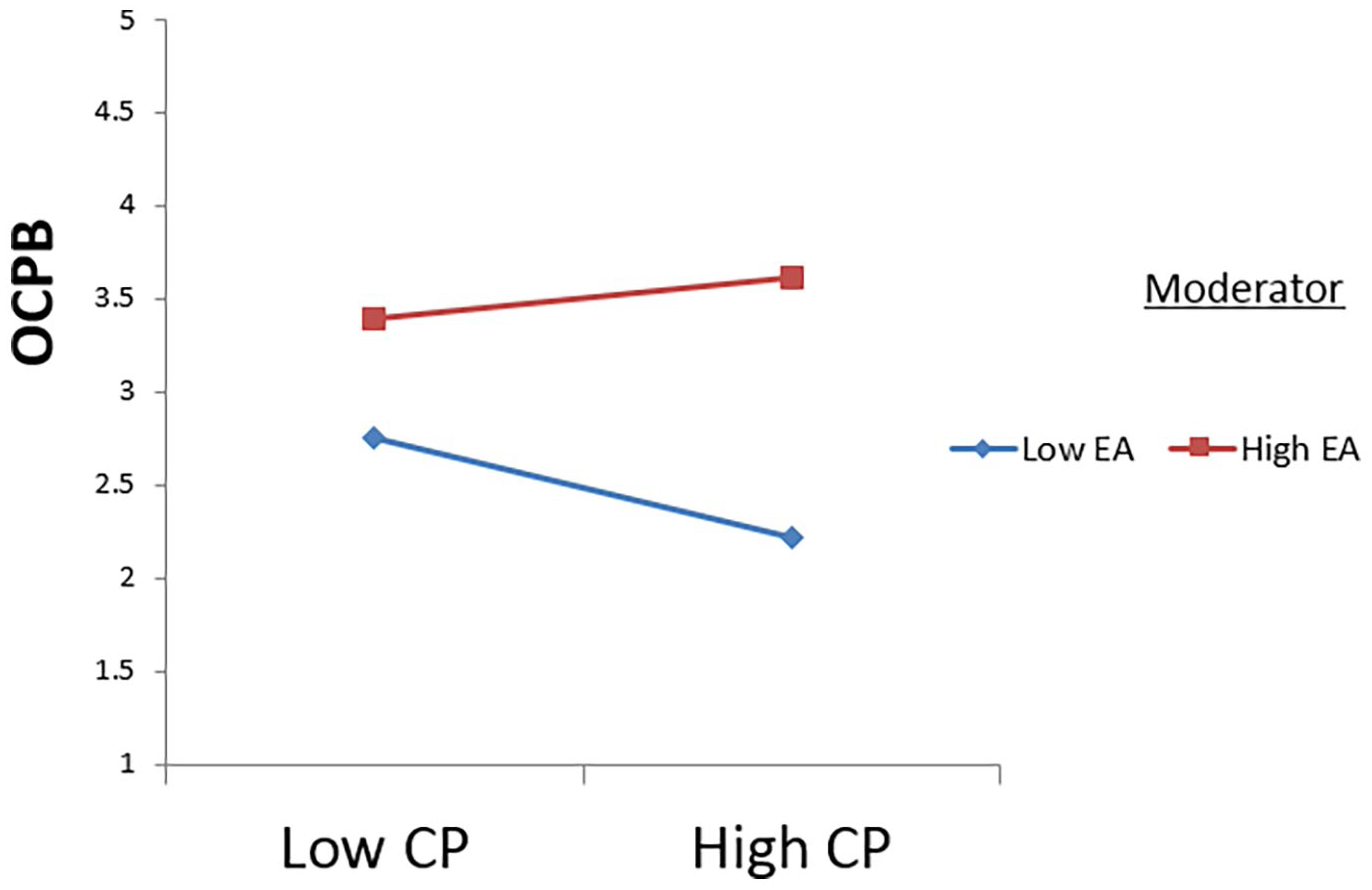
Moderating effect of external attribution (EA) on the association between consumer pessimism (CP) and organic cosmetic purchase behaviour (OCPB).
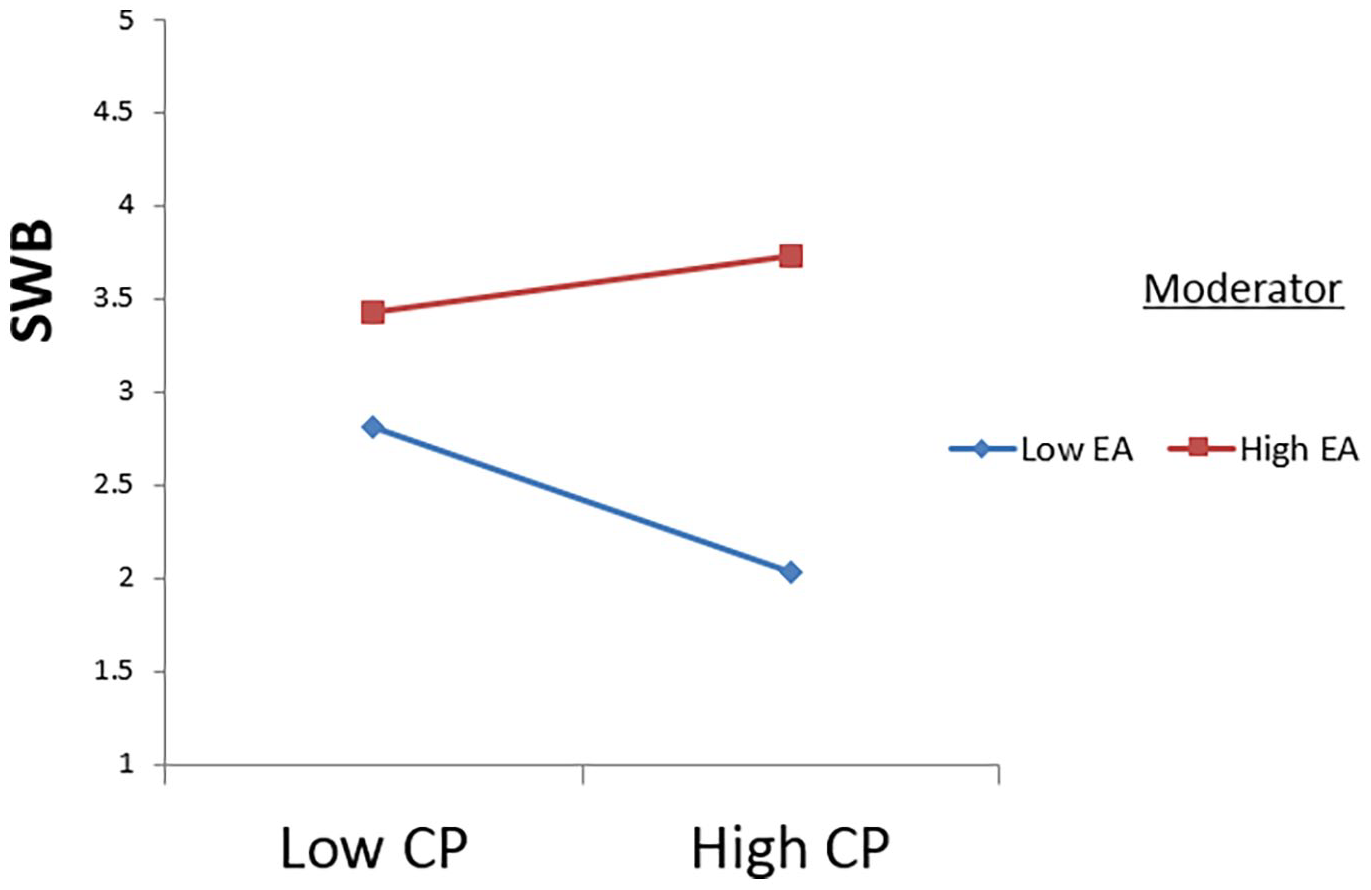
Moderating effect of external attribution (EA) on the association between consumer pessimism (CP) and subjective well-being (SWB).
Further, we conducted a bootstrap analysis to examine the indirect influence of consumers’ pessimism on their subjective well-being with the moderating role of external attribution (see Table 6). This moderation-mediation effect was tested using Model 8 of SPSS’s PROCESS macro (Hayes, 2015). Resultingly, the effect was significant (95% CI [0.012, 0.149]). As the level of external attribution rose from low to high, the indirect effect of consumers’ pessimism on their subjective wellbeing through their purchase behaviour of organic cosmetics attenuated from significant level −0.17 (External Attribution of −1 SD at low level; 95% CI [−0.241, −0.137]) to the significant level −0.04 (External Attribution of +1 SD at the high level; 95% CI [−0.138, −0.049]). Similarly, consumer pessimism’s negative influence on subjective well-being dampened from significant level −0.19 (External Attribution of −1 SD at low level; 95% CI [−0.285, −0.130]) to the significant level −0.07 (External Attribution of +1 SD at the high level; 95% CI [−0.153, −0.062]) with external attribution levels rising from low to high. Therefore, Hypothesis 5 was supported.
Moderated Mediation.
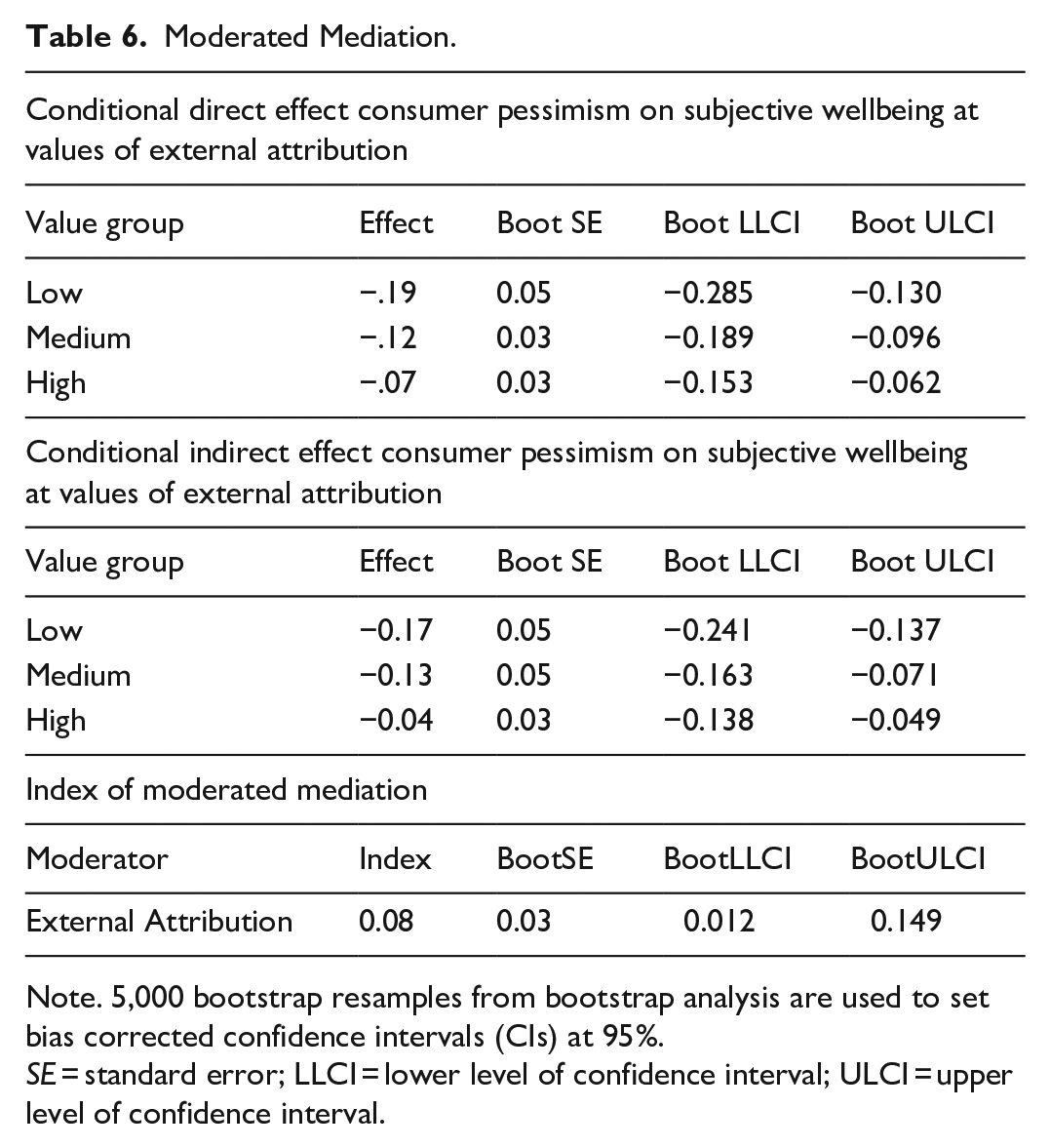
Note. 5,000 bootstrap resamples from bootstrap analysis are used to set bias corrected confidence intervals (CIs) at 95%.
SE = standard error; LLCI = lower level of confidence interval; ULCI = upper level of confidence interval.
Discussion and implications
Corresponding to the findings in Kaida and Kaida (2017), Sadiq et al. (2020) and Sadiq et al. (2021a), H1 was supported. As stated earlier, Zajenkowski and Gignac (2018) stated that neurotic consumers exhibit similar behaviour as pessimistic ones. Given this finding, Kvasova (2015) showed that consumers having high neurotic traits tend to adopt eco-friendly behaviour. However, our findings contradict this result because H1 was supported. This result could arise because pessimistic consumers tend to be more susceptible to the fear of losing their psychological resources, and the fear induces them to exhibit withdrawal behaviours. Moreover, organic cosmetics are costlier than traditional cosmetics (Ghazali et al., 2017). Therefore, pessimistic consumers tend to avoid purchasing organic cosmetics because they have low coping capabilities and are more likely to avoid taking financial risks.
The support for H2 concurs with the findings of Kaida and Kaida (2019) that pessimistic individuals have poorer well-being than optimistic individuals owing to their weak coping behaviour. Recently, Sadiq et al. (2020) suggested that pessimistic consumers are unable to resolve the disparity between the present and expected conditions. Therefore, they are likely to experience stress and are prone to the loss of their psychological resources, such as cognitive abilities. Generally, performing eco-friendly actions, such as purchasing organic cosmetics, reduces feelings of guilt. However, we established that pessimistic consumers do not purchase organic cosmetics, indicating that they would feel guilty for not contributing to protecting the environment.
The results supported H3. This finding aligns with those of Apaolaza et al. (2018) and Lee (2019), who showed that organic product consumption significantly influences consumers’ subjective well-being. One possible justification for our finding is that the consumption of organic products, such as organic cosmetics, enhances subjective well-being as it tends to satisfy consumers’ environmental and health values. Based on our findings, we affirm that doing something for the benefit of the environment (altruistic values) or personal betterment (egoistic values), such as purchasing organic cosmetics, significantly increases consumers’ well-being.
Next, we tested the mediating effect of consumers’ purchase behaviour of organic cosmetics to explain why pessimistic consumers have low well-being. Notably, to the best of our knowledge, this study is possibly the first to test the mediating effect of actual purchase behaviour on the association between consumers’ negative dispositional traits and their well-being in the context of eco-friendly products. The results of testing H4 indicate that consumers’ purchase behaviour of organic cosmetics partially mediates the relationship between consumers’ pessimism and their subjective well-being. These consumers could experience low well-being because they fail to cope with the financial risk associated with purchasing organic cosmetics, becoming unmotivated to adopt them. Moreover, they prefer to withdraw because they are susceptible to losing their psychological resources such as self-efficacy (Dhir, Talwar et al., 2021).
We also tested whether external attribution moderates the influence of consumers’ pessimism on their purchase behaviour of organic cosmetics (H5a) and their subjective well-being (H5b). Both hypotheses were supported, suggesting that external attribution significantly reduces the negative impact of consumers’ pessimism on their purchase behaviour of organic cosmetics and their subjective well-being. The possible reason why H5a was supported could be that pessimistic consumers feel that ‘the cause of negative situations comes from someone or something else’ (Sanjuán & Magallares, 2014, p. 444), and it motivates them to utilise positive resources, such as cognition. Meanwhile, H5b could have been supported because the stress levels of pessimistic consumers fall when they feel that negative events happen because of others, making them experience good well-being to some extent. It is also noteworthy that external attribution is one of the best coping and cognitive strategies that motivate consumers to gain more resources. Furthermore, we showed that at low levels of external attribution, pessimism negatively affects consumers’ purchase behaviour of organic cosmetics and their well-being. However, this effect is attenuated at high levels of external attribution (H5a-b). This finding concurs with that of Yuan and Wang (2016), who theorised that external attribution helps in reducing stress and is one of the best coping strategies to preserve resources. Therefore, we affirm that consumers should consume new resources even during negative events based on the COR theory. This is because external attribution motivates consumers to perceive that such negative incidents happen due to external factors, and thus, they can save their psychological resources. The consumers who embrace this behaviour are more likely to adopt organic products in the long run, such as organic cosmetics, and experience overall well-being.
Theoretical implications
This study has three implications for academia. First, most studies on green consumer psychology focus on why consumers adopt green or organic products (see: Kirmani et al., 2022; Paul et al., 2016; Talwar et al., 2021; Yadav & Pathak, 2016). However, Kushwah et al. (2019) and Sadiq et al. (2021b) highlighted the need to understand why consumers resist organic products and how to remove those barriers. Therefore, this study explains the loss of psychological resources and how to preserve them using the COR theory, shedding light on the resistance to organic products and ways to remove them. Furthermore, the prominence of literature on eco-friendly consumer behaviour has been increasing. Therefore, the use of COR theory facilitates a deeper understanding of consumers’ resistance and ways to cope with it.
Second, as stated earlier, this is one of the first studies to investigate how consumers’ pessimism (dispositional traits) and external attribution influences their purchase behaviour and subjective well-being in the context of eco-friendly products. Thus, researchers can utilise this study’s findings to understand how pessimistic consumers experience subjective well-being when they intend to purchase organic cosmetics and the role of external attribution in this process. Furthermore, researchers in the field of green consumer psychology have mostly focused on psychological factors, such as environmental knowledge and perceived consumer effectiveness, and ignored the role of personality traits (Jaiswal & Kant, 2018; Kumar et al., 2017; Taufique & Vaithianathan, 2018; Taufique et al., 2017). Therefore, this study analysed the role of consumers’ pessimism in their adoption of organic cosmetics and enhancement of subjective well-being, considering the vitality of personality traits in consumer decision-making.
Third, most past studies have limited their focus to behavioural intentions (Ghazali et al., 2017; Hsu et al., 2017; Sadiq et al., 2021b). However, we emphasised actual purchase behaviour, providing elaborate insights into the actual purchase behaviour of organic cosmetics.
Practical implications
This study presents two vital implications for marketers and policymakers. First, pessimistic consumers resist purchasing organic cosmetics, resulting in their low subjective well-being. In this regard, our findings indicate that purchasing organic cosmetics effectively increases consumers’ subjective well-being. Therefore, marketers and policymakers must devise marketing strategies illuminating the environmental and health benefits of using organic cosmetics over conventional ones to increase the well-being of pessimistic consumers. Moreover, they must adopt consumer-centric approaches while creating their promotional strategies, particularly disseminating information that showcases the repercussions of not using organic cosmetics and its impact on consumers’ well-being. This is because pessimistic consumers are more susceptible to focussing on negative information (Sadiq et al., 2021a). Therefore, this strategy would reduce pessimistic consumers’ scepticism towards organic cosmetics and help marketers attract more such consumers.
Second, this study showed how low versus high external attribution helps pessimistic consumers purchase organic cosmetics and improve their subjective wellbeing. We also demonstrate that the negative impact of consumers’ pessimism on their purchase behaviour of organic cosmetics and subjective well-being would reduce significantly, possibly converting into a positive impact, when their external attribution levels are high. These findings highlight that the feeling ‘whatever negative is happening, it is because of the action of others’ motivates pessimistic consumers to purchase organic cosmetics, subsequently improving their subjective well-being. In this regard, marketers and policymakers can provide an environment of external attribution to pessimistic consumers using effective communication strategies. Furthermore, Sadiq et al. (2021a) stated that the adoption rate of organic products could be low because of consumers’ pessimistic outlook. They also suggested that such consumers are in large numbers, and targetting them and reducing their scepticism would benefit the environment, consumers and marketers.
Limitations and future research directions
Although this study presents several insightful findings, it is not free from limitations. This study has following limitations. First, this study surveyed the respondents of India, which is culturally different from developed countries. Therefore, future studies should test the proposed model in a cross-cultural setting to provide a wider range of implications. Second, we collected data using a cross-sectional online survey. This method has been adopted in several studies on eco-friendly behaviour. However, it does not provide insights on behavioural change, which is vital for understanding eco-friendly behaviour. Moreover, the generalisability of our findings is restricted because consumer behaviour tends to change over time. Therefore, we suggest that researchers should conduct their studies using longitudinal data collection methods. Finally, this study used limited variables to explain consumers’ resistance to organic cosmetics. Future studies should utilise different theories of personality traits, such as the Big Five factors, along with different coping strategies such as dispositional optimism. They could also merge COR theory with the attitude-behaviour-contextual theory to explain how existing resources are lost and new ones are gained. Additionally, researchers could adopt an experimental research design to facilitate a deeper understanding of the causal role of external attribution in the proposed research model.
Conclusion
This study investigated the relationship between consumer pessimism, organic purchase behaviour, and subjective well-being in the context of organic cosmetics, which is a rare occurrence. We also investigated the moderating effect of external attribution and used the COR theory to propose a research model. Testing this model based on the responses of 613 consumers through SEM, we obtained results concurring with our expectations. That is, pessimistic consumers do not purchase organic cosmetics, which reduces their subjective well-being. We also found that purchasing organic cosmetics would enhance pessimistic consumers’ subjective well-being. This finding indicates the significance of organic products in improving the subjective well-being. Furthermore, external attribution significantly and positively moderates the influence of consumers’ pessimism on their purchase behaviour of organic cosmetics and subjective well-being. Therefore, it helps pessimistic consumers conserve their psychological resources and motivates them to acquire new ones by purchasing organic cosmetics. Finally, we provided useful insights on consumers’ eco-friendly behaviour for academicians, marketers and policymakers.
Footnotes
Declaration of conflicting interests
The author(s) declared no potential conflicts of interest with respect to the research, authorship, and/or publication of this article.
Funding
The author(s) received no financial support for the research, authorship, and/or publication of this article.
