



Abstract
Australian identity continues to evolve, and remains highly contested, reflecting the socio-cultural and historical tensions of the nation. Understanding which characteristics individuals prefer to define Australian identity is crucial for shaping inclusive national identity constructions and fostering social cohesion. Using Q methodology, this study aimed to examine preferred characteristics of Australian identity by identifying and interpreting shared archetypal viewpoints, highlighting broad commonalities and divergences in how Australian identity is constructed. Forty-six participants ranked a set of statements about Australian identity from most to least preferred. Analysis revealed three distinct viewpoints, reflecting preferences for: (a) prioritising the inclusion of Indigenous Australians and their cultures alongside broader cultural diversity; (b) inclusive civic values reflective of diversity and equity; and (c) social contribution and conditional inclusion. These viewpoints reveal novel constructions of Australian identity, highlighting the need to promote Australian identity in ways that reflect contemporary preferences for inclusion and social cohesion.
Keywords
Introduction
National identity refers to a population connected by shared histories, territory, memory and culture (Smith, 1991), reinforced through education, media, art and public discourse (Bell, 2003; Billig, 1995). These narratives influence how individuals categorise themselves and others as part of the national in-group (Tajfel & Turner, 1979). Australia offers a unique context for exploring national identity, given the coexistence of settler-colonial narratives and multicultural ideals (Austin & Fozdar, 2016; Farrugia & Bullen, 2024). The nation's diverse populations with intersecting social, cultural, ethnic and faith identities have shaped a complex national history and multiple constructions of Australian identity (Farrugia & Bullen, 2024; Farrugia et al., 2018; Phillips, 1998). These tensions contribute to contestation over what Australian identity means and how it is negotiated in everyday life (Farrugia et al., 2018; Phillips, 1998). While existing research utilises frameworks, such as the civic−ethnic distinction (CED), to distinguish the types of Australian identity people may endorse (Larsen, 2017; Leong et al., 2020), emerging evidence suggests that individuals’ understandings of Australian identity are more nuanced and multifaceted than these frameworks can fully capture (Farrugia & Bullen, 2024; Farrugia et al., 2018).
Using Q methodology, this study aimed to examine preferred characteristics of Australian identity by identifying and interpreting shared archetypal viewpoints, highlighting broad commonalities and divergences in how Australian identity is constructed. The research provides deeper insight into the characteristics that individuals prefer to define Australian identity, and offering clearer insights for shaping belonging, social cohesion, and social identity processes. By using Q methodology, this research captures the complexity of Australian identity beyond traditional frameworks by identifying novel archetypal viewpoints that reflect how individuals may prefer and construct Australian identity.
Background
Historical Context of Australian Identity
Historically, government policy and public discourse shaped Australian identity around exclusivist, Anglo-centric ideals grounded in colonialism and Whiteness (McGregor, 2006). Traits such as mateship, toughness and the ‘fair go’ were forged in this period and were often exemplified by White, male, working-class Australians (Mason, 2010; Phillips, 1998). With the introduction of multiculturalism policies in the 1960–1970 s, official framings of Australian identity shifted to recognise cultural diversity and maintenance, shared civic values and social cohesion (Beckett, 1995; Koleth, 2010; Mason, 2010). Despite these shifts, public and political discourse continues to vary; multiculturalism is at times celebrated as central to Australian identity, while at other times it is positioned as a challenge to social cohesion or a threat to traditional national values (Elias et al., 2021; Laughland-Booÿ et al., 2017; Moran, 2011). Subsequently, contemporary understandings of Australian identity reflect both exclusionary characteristics rooted in colonialism and Whiteness and more inclusive, culturally pluralistic ideals, making Australian identity a contested and continually negotiated construct shaped by multiple intersecting identities and histories.
Australian identity continues to exclude Indigenous Australians by centring colonial narratives and perpetuating inequities (Faulkner, 2015). While some research indicates increasing positive attitudes towards Indigenous Australians (O’Donnell et al., 2024), racism, prejudice and rejection of Indigenous cultures remain significant (Elias et al., 2021; Sharples & Blair, 2020). For example, Indigenous Australians criticised the 2023 Voice to Parliament referendum and outcome as a setback to social cohesion, and Australia Day being celebrated on 26 January is argued to perpetuate colonial oppression (Biddle et al., 2023; Busbridge, 2021). Furthermore, Indigenous imagery used in depictions of Australian identity is often framed through a colonial lens, offering superficial inclusion while overlooking ongoing injustices (Scorrano, 2012). Given these tensions, further research is needed to understand how characteristics associated with Indigenous Australians and their cultures are currently constructed in Australian identity to inform strategies aimed at equitable and beneficial outcomes for Indigenous Australians.
Frameworks for Categorising Australian Identity
Social identity theory is often used to understand national identity (Tajfel & Turner, 1979). It posits that social groups assign members a shared identity that shapes beliefs, behaviours and self-concept. Group members see their values and behaviours as the norm and compare their group to others to determine what is acceptable, making membership part of their personal identity and influencing interactions with others. Applied to national identity, this theory clarifies definitions of in-group membership, that is, who is seen as belonging to the nation (Louis et al., 2012). National identity can promote social cohesion and belonging when defined by inclusive characteristics, but when shaped by exclusionary traits, such as ethnicity or historical traditions, it can alienate those who do not meet these criteria, leading to discrimination, diminished belonging and social tensions (Elder, 2020; Jones, 1997; Louis et al., 2012; McAllister, 2016; Sonn et al., 2014).
The CED is a widely used framework in national identity research, both in Australia and internationally (Austin & Fozdar, 2016; Larsen, 2017; Leong et al., 2020). This framework categorises national identity into two broad and distinct concepts: civic and ethnic, and is often constructed, promoted and endorsed in ways that align with one or both these categories (Piwoni & Mußotter, 2023). Ethnic identity is based on ascribed traits such as ancestry, ethnicity, or religion, often linked to exclusionary attitudes, whereas civic identity emphasises achieved traits such as respect for laws, civic participation and shared societal values, frequently associated with multiculturalism and support for immigration (Piwoni & Mußotter, 2023). In the Australian context, ethnic identity is often tied to being White, born in Australia, and connected to national history, while civic identity aligns with democratic values, institutions and social commitments (Austin & Fozdar, 2016; Fozdar & Low, 2015; McAllister, 2016; Phillips, 1998). Despite the traction of civic identity, ethnic preferences persist, highlighting ongoing tensions over what defines Australian identity (Austin & Fozdar, 2016; McAllister, 2016).
Critiques of the CED argue that it oversimplifies national identity and can overlook diverse lived experiences, with civic identity, though intended to be inclusive, still pressures individuals to conform to dominant norms or suppress cultural heritage (Larsen, 2017; Leong et al., 2020; Simonsen & Bonikowski, 2020). Despite these criticisms, many studies continue to find that the CED reliably emerges in empirical investigations of national identity, particularly in cross-national survey research (Larsen, 2017; McAllister, 2016). (Larsen, 2017; McAllister, 2016). Its persistence suggests that, while imperfect, the CED remains a relevant framework while also pointing to the need for approaches that capture the complexity, heterogeneity and nuance of contemporary Australian identity.
Australian Identity Research
Two key reviews have synthesised Australian identity research. Phillips (1998) examined 17 studies from 1981 to 1997, while Austin and Fozdar (2016) reviewed 22 studies from 2000 to 2013. Both reviews found that constructions of Australian identity have become more inclusive over time, although exclusive constructions remain endorsed by some. They also highlighted the dominance of the CED, and the lack of diverse methodologies used to capture the complexity and nuance of people's perspectives. Since these reviews, further empirical work has explored contemporary Australian identity. For example, Farrugia et al. (2018) found young people navigating the tension of identifying as Australian while recognising ongoing discrimination against Indigenous Australians, wherein they seemingly were balancing colonial views while valuing inclusivity. More recently Farrugia and Bullen (2024) showed Australians questioning traditional identity markers such as mateship, the fair go, and larrikinism (a trait characterised by irreverent humourand a playful disregard for social conventions) arguing that these no longer reflect diversity and may exclude those experiencing systemic disadvantage. Despite these insights, research has rarely integrated qualitative and quantitative approaches to identify commonly held viewpoints of Australian identity. There remains limited empirical investigation into the diverse ways Australians prefer national identity to be defined. Capturing these distinct yet widely shared perspectives is crucial for informing more inclusive national narratives, shaping public policy and fostering a stronger sense of social cohesion and belonging.
Methods
Methodology
This study aimed to examine preferred characteristics of Australian identity by identifying and interpreting shared archetypal viewpoints, highlighting commonalities and divergences in how Australian identity is constructed. Q methodology is a widely used exploratory technique which helps to understand subjective viewpoints and personal truths of a phenomenon held by individuals who experience the phenomenon in their everyday life (Brown, 1996; Frank et al., 2024; Watts & Stenner, 2012). Q methodology is often used in sociology research (Frank et al., 2024), including research on the phenomenon of national identity (Haesly, 2005; Hanson & O’Dwyer, 2019; Wong & Sun, 1998).
In Q methodology, a Q sort is the method by which participants (the P set) rank a set of statements (the Q set) according to how well each statement reflects their perspective on the topic. Participants arrange the statements along a forced distribution from least to most representative of their viewpoint, carefully considering and differentiating their preferences. This process captures nuanced perspectives and the relative importance of each statement in a structured, systematic way (Watts & Stenner, 2012). Unlike traditional methodologies, Q methodology treats participants as the variables rather than the statements. Each P set member's pattern of rankings is analysed to identify clusters of individuals who share similar viewpoints. Person-centred factor analysis groups participants with shared perspectives onto factors, which are empirically derived patterns of meaning grounded directly in the P set rather than theoretical models requiring traditional validation (Watts & Stenner, 2012). The factors identified in this study represent the final analytical output and distinct viewpoints on how Australian identity is preferred to be constructed.
Participants and Recruitment
In Q methodology, the P set should include purposefully selected individuals knowledgeable about the research topic to capture and compare meaningful viewpoints (Watts & Stenner, 2012). In this study, participants were over 18, held Australian citizenship, and had experience reflecting on Australian identity. Purposive sampling was used, supplemented by snowball sampling to broaden recruitment and capture additional diverse perspectives. Recruitment targeted community organisations, social media and Australian online forums to ensure varied socio-cultural representation. The literature suggests P sets of around 40–60 participants or, alternatively, smaller P sets as long as they are well-constituted and diverse enough to produce high-quality findings (Brown, 1996; Frank et al., 2024; Watts & Stenner, 2012). In Q methodology, the emphasis is on capturing a broad range of viewpoints rather than achieving a large sample size. This approach allows for detailed comparison of individual perspectives while prioritising the richness, diversity and interpretive depth needed to identify distinct viewpoints (Watts & Stenner, 2012).
Forty-eight participants were initially recruited. Data from two participants were later excluded because their Q sorts did not load on any retained factors, indicating their responses were unique, possibly due to distinctive perspectives or misunderstandings (Watts & Stenner, 2012). Statistical significance of factor loadings was determined using Brown's formula (2.58 / √N, p <0 .01), with N equal to the number of statements in the Q set. No Q sorts were confounded (i.e., loading significantly on more than one factor), and no significant negative loadings were observed. The final P set comprised 46 participants aged between 20 and 55 (mean (M) = 30.28, standard deviation (SD) = 9.5). Of these, 23 identified as women, 22 as men, and one participant identified as both woman and non-binary. Most participants were born in Australia and lived in metropolitan areas, with participants also identifying with a variety of cultural backgrounds. See Table 1 for total demographic statistics and broken down across each factor.
P set Demographic Data (n = 46).
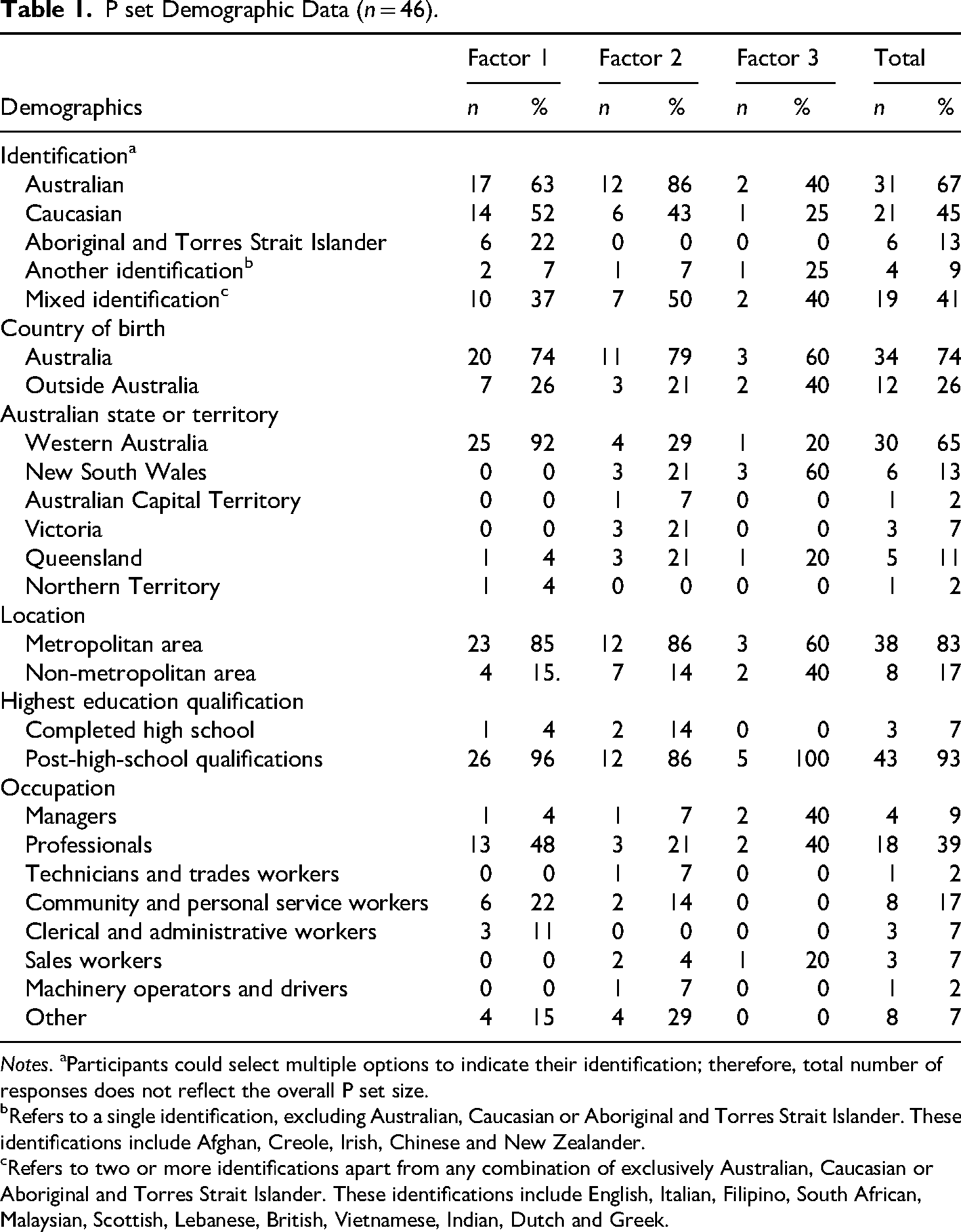
Notes. aParticipants could select multiple options to indicate their identification; therefore, total number of responses does not reflect the overall P set size.
Refers to a single identification, excluding Australian, Caucasian or Aboriginal and Torres Strait Islander. These identifications include Afghan, Creole, Irish, Chinese and New Zealander.
Refers to two or more identifications apart from any combination of exclusively Australian, Caucasian or Aboriginal and Torres Strait Islander. These identifications include English, Italian, Filipino, South African, Malaysian, Scottish, Lebanese, British, Vietnamese, Indian, Dutch and Greek.
Development of the Q set
Recommendations by Watts and Stenner (2012) guided the creation of the Q set. A Q concourse of 103 statements was initially created, which contained all possible statements that captured subjective views held about the topic (Stephenson, 1986). These statements were created from relevant research, scales on Australian identity and media news articles on Australian identity, (Austin & Fozdar, 2016; Crabb, 2019; Falls & Anderson, 2022; Farrugia et al., 2018; McAllister, 2016; Pakulski & Tranter, 2000; Phillips, 1998). These sources were systematically reviewed to extract key points relating to the characteristics that have been, and continue to be, associated with Australian identity. While a Q concourse can never be fully complete, it is intended to provide a representative condensing of perspectives (Watts & Stenner, 2012).
The concourse was systematically reviewed, and statements were extracted, merged, or refined to produce a final Q set of 49 statements (see Table 2). Decisions during reduction were guided by both theoretical and pragmatic considerations: overlapping or conceptually similar statements were merged; statements that were redundant or contributed little unique conceptual value were removed; and all items were assessed to ensure that the final set captured the breadth of perspectives in the concourse while remaining manageable for sorting. Statement length varied from single words to multi-word phrases. While variation in length can influence salience in sorting, statements were phrased in natural, everyday language to ensure clarity, and care was taken during the piloting phase to confirm that all items were interpretable and could be fairly ranked by participants.
Q set With the Statements’ Respective Number and Factor Rankings.
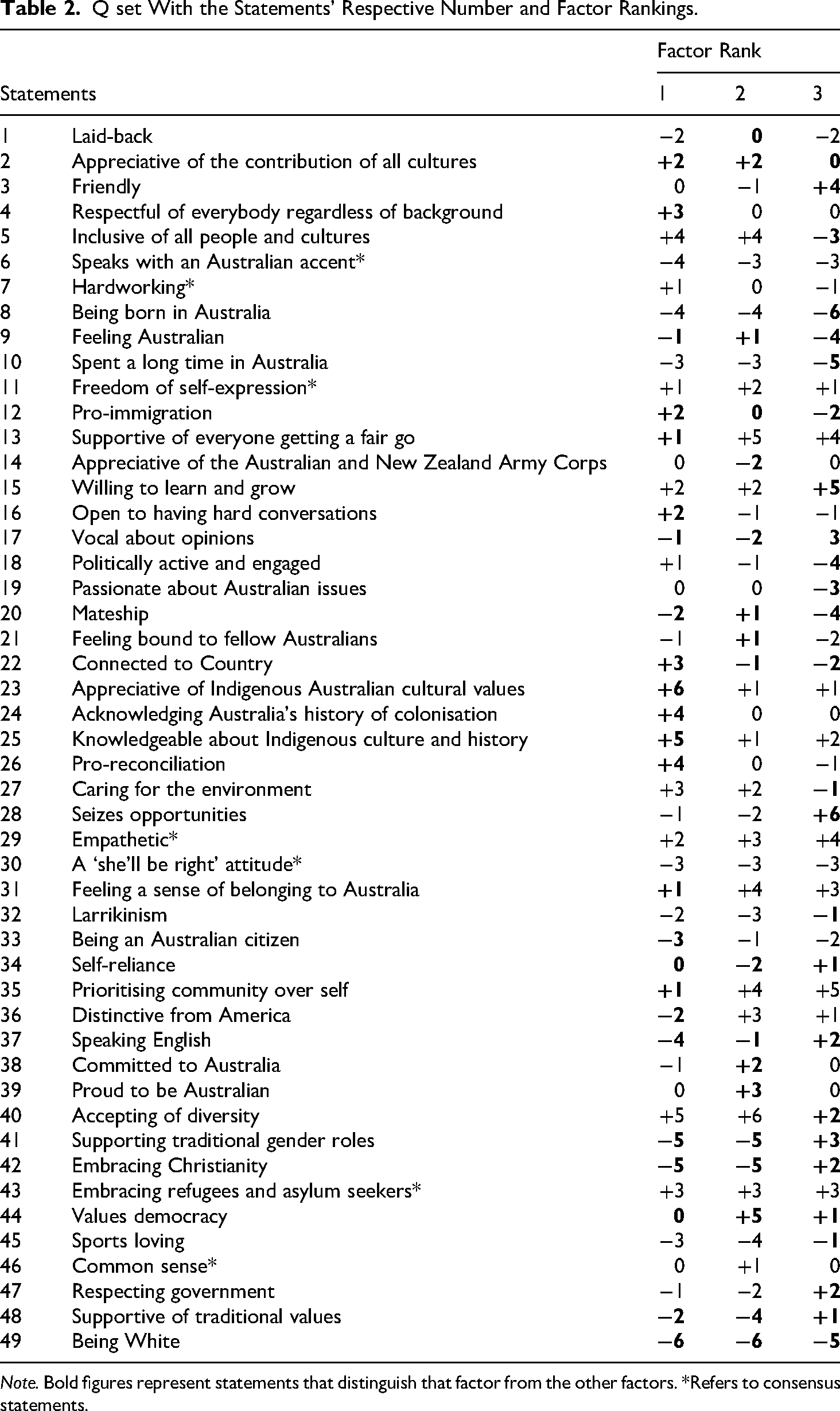
Note. Bold figures represent statements that distinguish that factor from the other factors. *Refers to consensus statements.
Forty-nine statements were determined by the requirements of an evenly balanced 13-point distribution (−6 to +6). A shallow 13-point distribution was chosen because the P set likely had adequate experience and familiarity with Australian identity to be able to make tough decisions at the ends of the distribution (Watts & Stenner 2012). The statements were phrased in everyday language to be natural and easily understood by participants.
Procedure
Ethics approval was obtained from the Curtin University Human Research Ethics Committee (2019-0541). The Q sort was piloted with five convenience-sampled participants who completed the task alongside the researcher. Feedback led to rephrased survey items, added troubleshooting instructions and clearer guidance. Participants received a voucher for their time.
Interested individuals emailed the researcher and received a link to the activity hosted on Online Q Methodology Software (2021), which supports Q methodology data collection and analysis. Participants first reviewed the information sheet and consent form, then completed a demographic questionnaire. They were instructed: ‘What would you like to see as key characteristics of the Australian identity? Please sort each statement from “least preferred” to “most preferred”,’ which remained visible throughout the task. Participants initially completed a pre-sort, categorising statements into least preferred, neutral and most preferred. In the final sort, statements were arranged along a forced quasi-normal distribution from least to most preferred characteristics (see Figure 1).
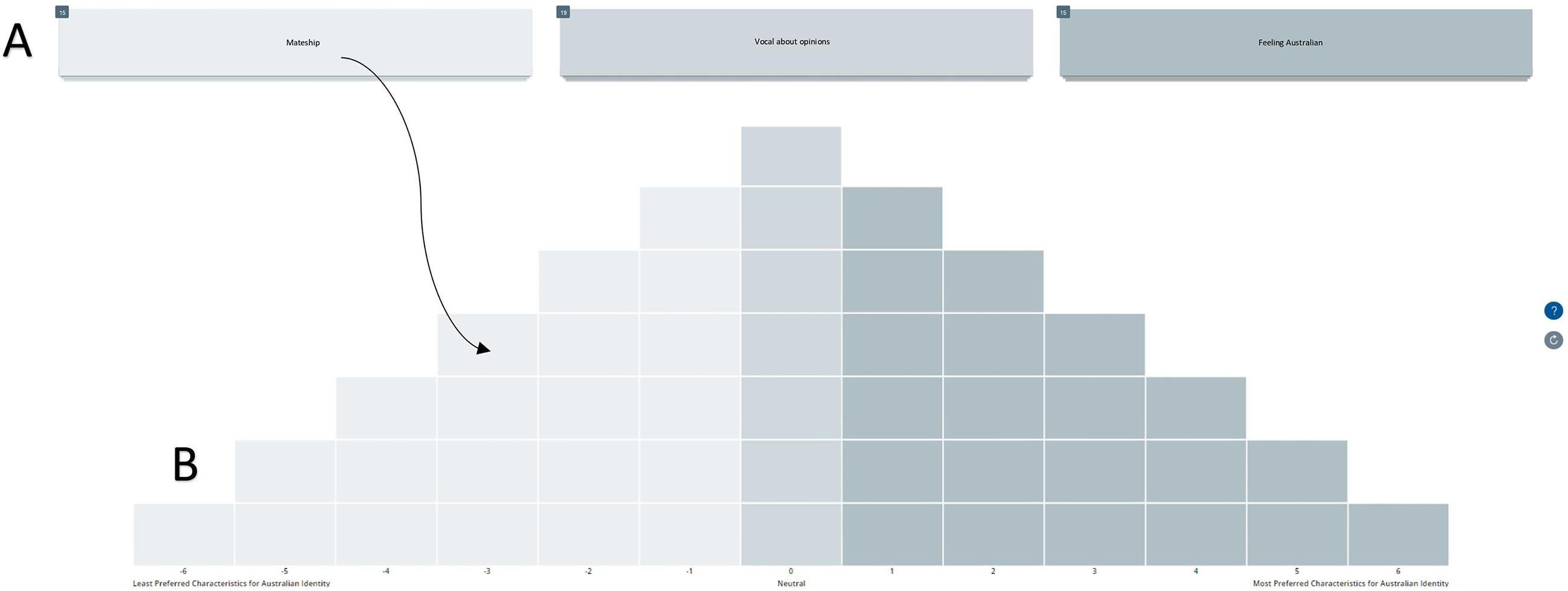
Schematic of the Q sort task.
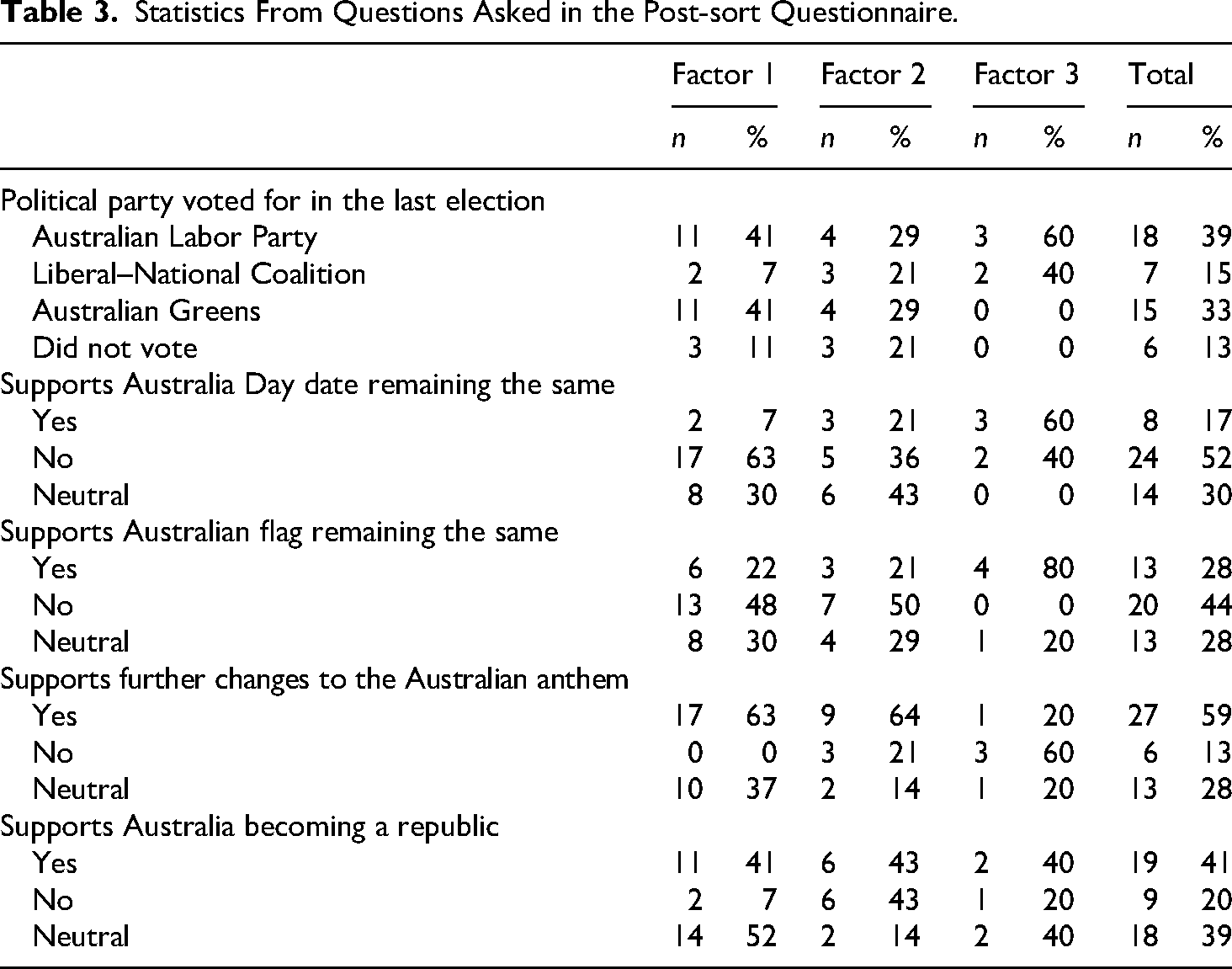
After the Q sort, participants answered post-sort questions (Table 3) to provide context, including items such as support for Australia Day on 26 January, social and political attitudes relevant to Australian identity and open-ended prompts for additional characteristics or comments. Of the 46 participants, 34 provided written responses, which were used illustratively to contextualise interpretations. Finally, participants provided an email to receive their voucher and closed the browser.
Statistics From Questions Asked in the Post-sort Questionnaire.
Data Analysis and Results
Analysis was conducted using Q Method Software (2021). A by-person principal components analysis was used, which is a statistical method used to examine patterns in participants’ Q sorts and identify groups of individuals (factors) who shared similar viewpoints (Watts & Stenner, 2012). Each factor reflects a cluster of participants whose rankings form a shared perspective on preferred characteristics of Australian identity. An eigenvalue indicates the proportion of overall variation in participants’ Q sorts explained by a factor, with larger values capturing more substantial patterns; in this study, eight unrotated components had eigenvalues above 1.
In Q methodology, factor extraction is guided by both statistical and theoretical considerations (McKeown & Thomas, 2013). Statistically, the scree plot, which graphs eigenvalues in descending order to visualise their relative importance, suggested a one-factor solution due to the dominant variance of the first factor, while Humphrey's rule supported extracting three factors, indicating that one to three factors could reasonably be extracted. Theoretically, the study aimed to capture multiple distinct viewpoints rather than assume a single dominant conception of Australian identity. Extracting more than one factor allows for a richer and more inclusive representation of diversity within the P set. Based on this combined rationale, three factors were extracted using varimax rotation to maximise explained variance and clarify distinctions between factors.
Factor 1 accounted for 48% of the variance, Factor 2 for 6% and Factor 3 for 5%. Twenty-seven participants loaded onto Factor 1, 14 onto Factor 2 and five onto Factor 3. Factor loadings were evaluated using Brown's significance criterion (2.58/√N; p <0 .01), which, with 49 statements, produced a loading threshold of ±0.37. Sorts meeting or exceeding this threshold on a single factor were treated as defining sorts and included in factor array construction. No confounded or significant negative loadings met the criterion, and the two non-significant sorts were excluded. Weighted composite Q sorts for each factor, representing the archetypal viewpoint for that factor, are presented in Figures 2–4, and full factor rankings for each statement are shown in Table 2. The raw data that support the findings are available in anonymised format here.
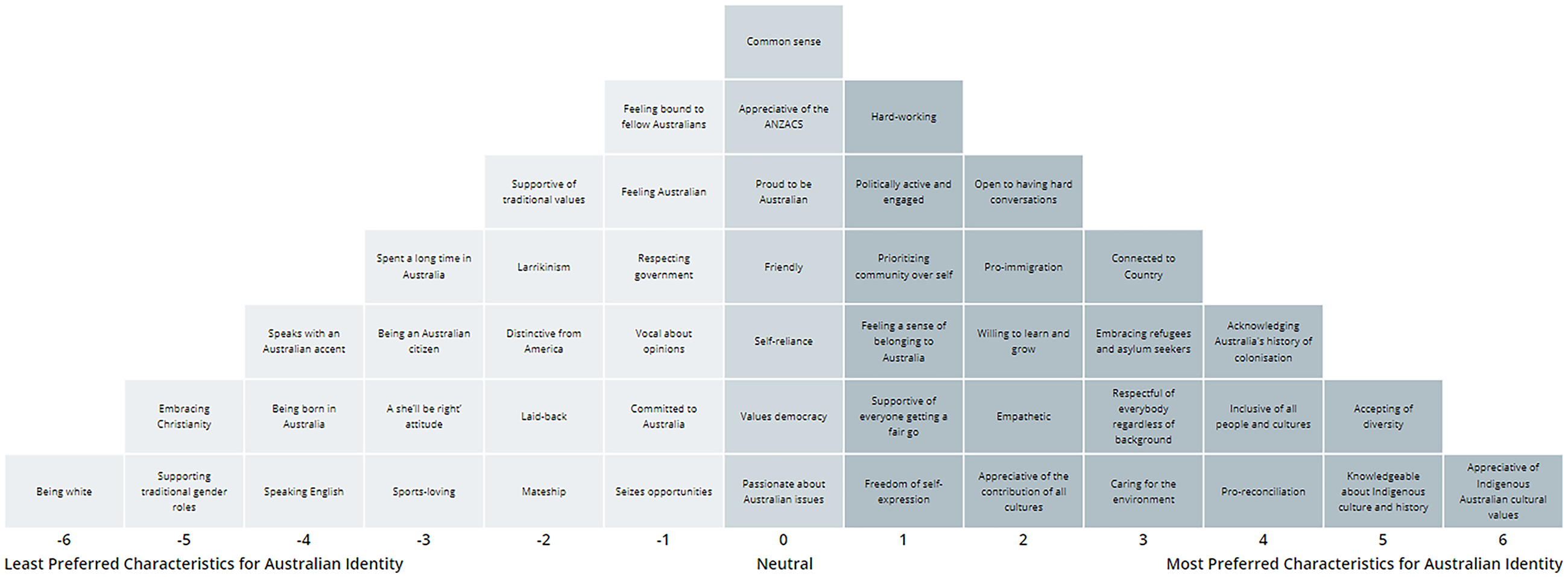
Factor 1 composite Q sort.
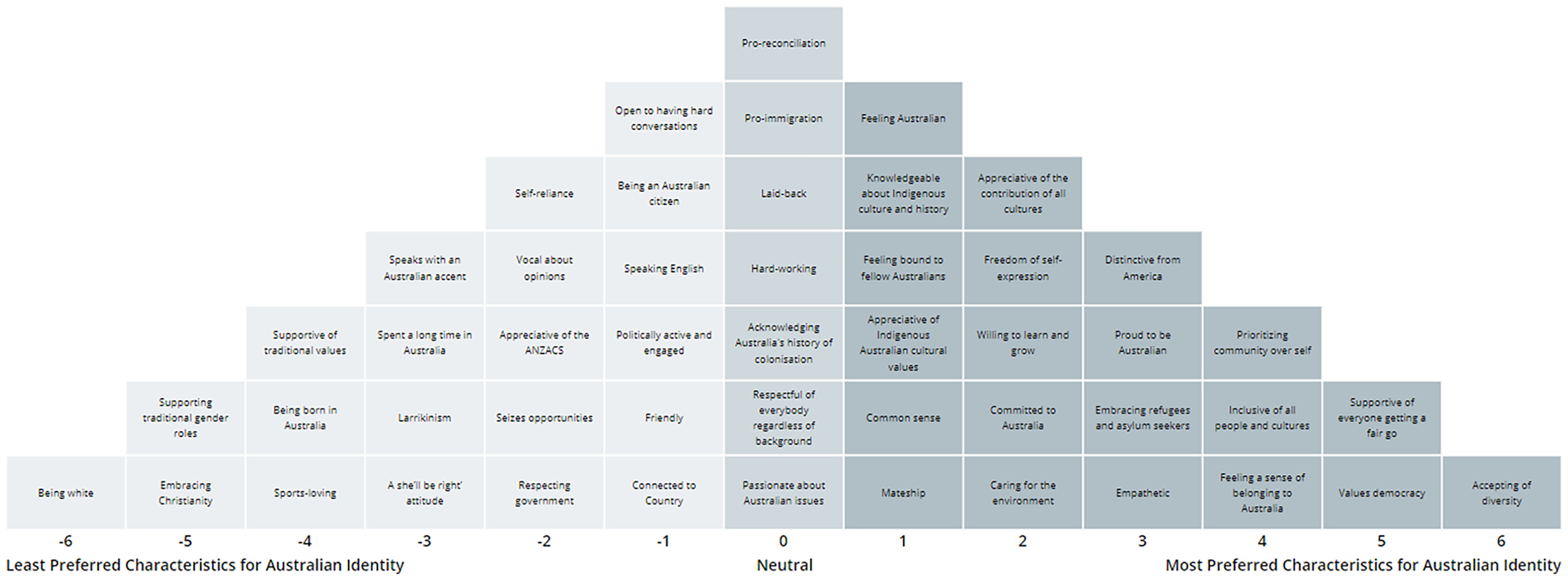
Factor 2 composite Q sort.
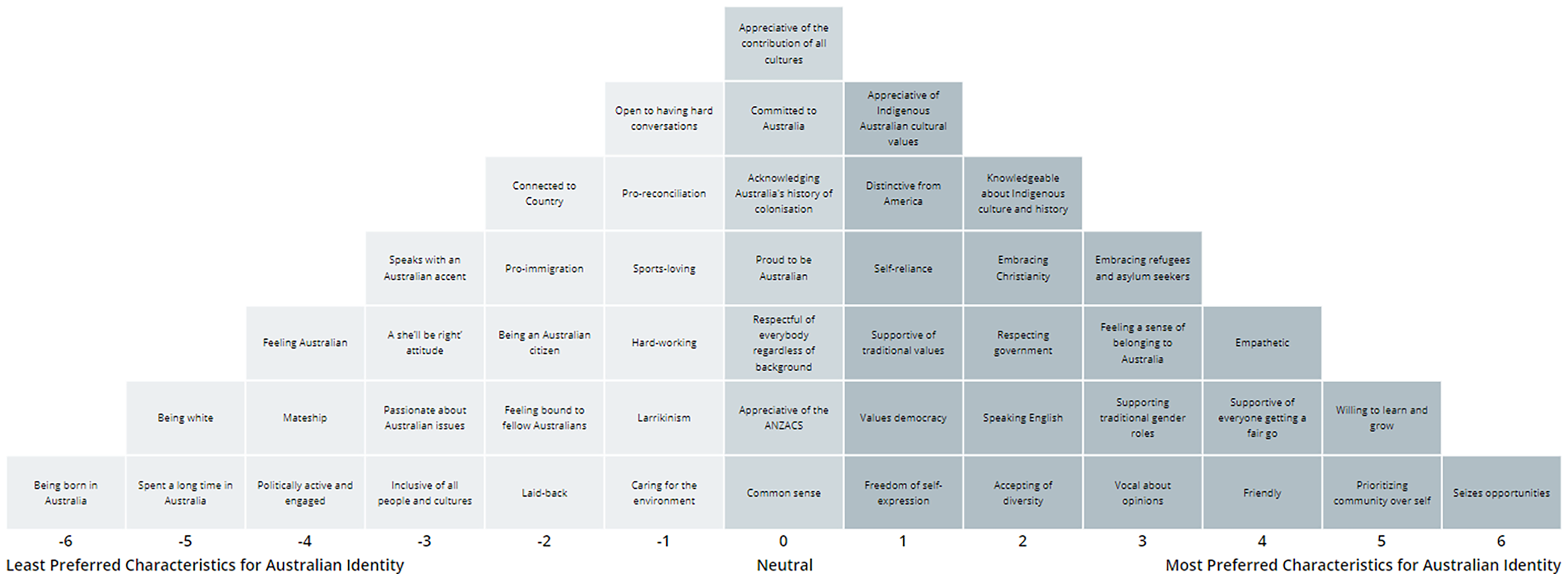
Factor 3 composite Q sort.
Factor interpretation drew on both the ranked statement patterns and participants’ post-sort written comments. The crib-sheet method (Watts & Stenner, 2012) was used to structure interpretation by identifying distinguishing and consensus statements. Distinguishing statements were those showing statistically significant differences in z-scores across factors at p < 0.01 (z-difference ≥ 1.96). Consensus statements showed no significant differences across factors. This approach supported systematic comparison of viewpoints and the identification of the unique meanings represented by each factor. To aid interpretation, factor ranks were grouped into broader categories. Statements ranked from +6 to +4 represented the most preferred characteristics, while those ranked −6 to −4 represented the least preferred. Rankings of +3 to +2 and −3 to −2 indicated moderately preferred or unpreferred characteristics, and ±1 reflected statements considered but less influential. Statements ranked 0 were interpreted as having low salience rather than being neutral or irrelevant (Watts & Stenner, 2012). After identifying distinguishing and consensus patterns, all statements were reviewed a second time to ensure no important interpretations were overlooked. Each factor was then assigned a title that reflected its most prominent defining features. The researcher then developed a narrative account for each viewpoint by integrating the factor arrays with participant comments. These narratives describe how each factor conceptualised preferred characteristics of Australian identity, with statement numbers and factor rankings used in parentheses to support and justify the interpretation.
Factor Interpretations
A factor represents a shared viewpoint on Australian identity preferences. Factor interpretations begin with relevant participant demographics and post-sort survey data, presenting only information that meaningfully contributes to understanding and distinguishing the factor (Brown, 1996; Watts & Stenner, 2012). Open-ended post-sort responses (with anonymous IDs) are integrated to provide context, and statement rankings are paraphrased within the narrative, with statement number and factor rank shown in parentheses (statement number: factor rank).
Factor 1: Inclusivity Grounded in Indigenous Cultures and Diversity
Participants who held this viewpoint preferred that Australian identity is characterised by the inclusion of Indigenous Australians and their cultures, alongside people of diverse backgrounds. The 27 participants who held this viewpoint accounted for 59% of the P set. Of these participants, 17 identified as women, nine identified as men and one identified as a woman and non-binary. Ages ranged between 21 and 55 (M = 31.0, SD = 9.9). It is notable that all participants who identified as Aboriginal or Torres Strait Islander held this viewpoint. Participants who held this viewpoint also tended to express support for progressive social changes; for example, 63% did not support the current date of Australia Day, and 63% supported further changes to the national anthem.
It was most preferred for Australian identity to be characterised as appreciative of Indigenous Australian cultures (23: +6), educated on Indigenous Australian culture and history (25: +5), acknowledging Australia's history of colonisation (24: +4), being pro-reconciliation (26: +4) and being connected to Country (22: +3). These rankings suggest a predominant preference for Australians to be inclusive of Indigenous Australians and consider Indigenous cultures as core to Australian identity. Post-survey responses predominantly reflected these preferences, for example: ‘Aboriginal culture recognised and celebrated as the basis of Australian identity’ (F1-P02).
It was also preferred for Australian identity to be characterised by acceptance of diversity (40: +5) and being inclusive of all people and cultures (5: +4). Furthermore, it was somewhat preferred for Australian identity to be characterised as respectful of everybody regardless of their background (4: +3), willing to embrace refugees and asylum seekers (43: +3), open to people immigrating to Australia (12: +2) and appreciative of the contributions of all cultures (2: +2). These rankings suggest participants who held this viewpoint preferred Australians who are inclusive, accepting and open towards all people of diverse backgrounds. As expressed in a comment by a participant, ‘Australian identity needs to be inclusive, given that it is a nation of Indigenous people and immigrants’ (F1-P15).
Participants who held this viewpoint also explicitly preferred that Australian identity is not characterised by exclusivity. Being White (49: −6), speaking English (37: −4), having an Australian accent (6: −4), being born in Australia (8: −4), having spent a long time living in Australia (10: −3) and having Australian citizenship (33: −3) were ranked as the least preferred characteristics for Australian identity. Similarly, traditional characteristics historically associated with Australian identity were ranked low, including embracing Christianity (42: −5), being supportive of traditional gender roles (41: −5), being supportive of traditional values (48: −2), including a ‘she’ll be right’ attitude (30: −3), sports loving (45: −3), larrikinism (32: −2), being laid-back (1: −2) and demonstrating mateship (20: −2). This viewpoint thereby captures preferences for people of all cultures to be considered Australian, while somewhat rejecting traditional characteristics, as illustrated by one participant ‘Multiculturalism needs to be more embraced as our identity’ (F1-P08).
Factor 2: Civic-minded Inclusivity
The overarching preference of those who held this viewpoint was for an Australian identity characterised by the inclusivity of people from diverse backgrounds. Unlike the first viewpoint, this viewpoint predominately favoured civic characteristics and placed less emphasis on preferences for characteristics associated with Indigenous Australians and their cultures. The 14 participants who held this viewpoint accounted for 30% of the total P set. Of these participants, four identified as women, 10 identified as men, and ages ranged between 20 and 52 (M = 28.7, SD = 9.4). Of these participants, 86% identified as Australian, 43% identified as Caucasian, 7% listed another identification and 50% listed mixed identification. There was a high proportion of mixed ethnic identification and both Australian and overseas-born participants, which aligns with this viewpoint's emphasis on civic inclusivity and a sense of national belonging beyond ethnic identification. Specifically, 79% of participants were born inside Australia and 21% were born outside Australia. Participants who held this viewpoint appeared to hold a range of social and political attitudes. For example, political party preferences were relatively evenly distributed, three participants supported keeping the current date of Australia day the same, five did not and six were neutral.
Participants who held this viewpoint most preferred that Australian identity is characterised as accepting of diversity (40: +6), inclusive of all people and cultures (5: +5) and supportive of all people receiving equal opportunities by way of receiving a fair go (13: +5). This interpretation was further supported by it being somewhat preferred that Australian identity is characterised by empathy towards one another (29: + 3), embracing asylum seekers and refugees (43: +3), appreciating the contributions of all people and cultures (2: +2) and having the right to freedom of self-expression (11: +2). Similarly, participants who held this viewpoint also least preferred that Australian identity is characterised by exclusivity. Being White (49: −6), being supportive of traditional gender roles (41: −5), embracing Christianity (42: −5) being born in Australia (8: −4), to have spent a long time living in Australia (10: −3) and having an Australian accent (6: −3) were ranked as least preferred characteristics of Australian identity. Traditional characteristics historically associated with Australian identity, such as being supportive of traditional values (48: −4), being sports loving (45: −4), having a ‘she’ll be right’ attitude (−3) and being appreciative of the Australian and New Zealand Army Corps (14: −2) were also ranked low. Overall, these rankings indicate that participants preferred an Australian identity grounded in inclusivity, diversity and fairness, over exclusionary or traditionalist constructions.
Participants who held this viewpoint seemed to somewhat prefer an endorsement of civic identity. This is supported by the high rankings of inclusive statements and the lower rankings of exclusive statements, coupled with preferences for an Australian identity characterised by valuing democracy (44: +5), prioritising community (35: +4) and feeling a sense of belonging to Australia (31: +4). When considered holistically, these statements indicate a preference for Australians to embrace the country's democratic systems and community values, while also being accepted and respected in maintaining their diverse cultural and national identities. These civic preferences predominantly reflected in participants comments, for example:
If you live here, you need to accept the way of life. No need to forget your own culture and traditions; that's what makes us who we are. But accepting of others is a great Australian trait and being respectful that not everyone will do it your way. (F2-P01)
In contrast to the first factor, characteristics primarily associated with Indigenous Australians all appeared to be of lower preference compared with other characteristics in this viewpoint (23: +1; 25: +1; 26: 0; 24: 0; 22; −1). It can be interpreted that inclusivity for all people takes priority which inherently encompasses Indigenous Australians. Alternatively, it may reflect a view that Indigenous Australians are less important to Australian identity and are problematically homogenised within the multicultural population.
Factor 3: Progress Through Conformity
This viewpoint somewhat deviates from the first two. Participants preferred an Australian identity defined by self and community advancement through opportunities that Australia provides. It reflects a conditional or assimilationist civic identity, grounded in contribution, fairness and community, which rejects many exclusionary characteristics, but shows limited support for multicultural inclusion. Interpretations are tentative, as only five participants (11%) held this viewpoint: two women, three men, ages 26–49 (M = 28.7, SD = 9.4). More conservative social attitudes appeared to be preferred, for example, 60% supported keeping the current date of Australia Day, 60% opposed further changes to the national anthem and 80% supported retaining the Australian flag as it is.
It was most preferred that Australian identity is characterised by seizing opportunities that Australia offers (28: +6), being open to learning and growing (15: +5) and ensuring that everyone receives a fair go (13: +4). Additionally, it was preferred that Australian identity prioritises community involvement (35: +5) and fosters empathy and friendliness (3: +4; 29: +4), alongside a sense of belonging (31: +3). While participants rejected traditional markers of ethnic identity such as being born in Australia (8: −6), having spent a long time in Australia (10: −5), being White (49: −5) and speaking with an Australian accent (6: −3), there was a modest preference for cultural conformity. This included support for English speaking (37: +2), traditional gender roles (41: +3) and Christianity (42: +2). Participants also expressed lower preference for characteristics such as being inclusive of all people and cultures (5: −3) and pro-immigration (12: −2) and showed ambivalence toward valuing cultural contributions (2: 0) or respecting people regardless of background (4: 0). Overall, these rankings reflect a form of civic identity in which belonging is earned through personal growth and active contribution to the community. While traditional markers of ethnic identity were least preferred, the low preference for inclusive values and the modest support for cultural conformity suggest that inclusion is conditional; individuals are accepted if they demonstrate commitment to shared values and norms first.
Discussion
This study identified three empirically derived, shared archetypal viewpoints that reflect individuals’ preferences for Australian identity. These viewpoints offer nuanced and novel ways for understanding how Australian identity is constructed, particularly in relation to social processes of in-group boundary formation. The first two viewpoints clearly emphasised preferences for inclusivity, through prioritising Indigenous Australians followed by multiculturalism as central to Australian identity constructions, while the third captures preferences for individual and community advancement, with underlying expectations for conformity. Notably, the second and third viewpoints also present nuanced constructions of civic identity.
The first viewpoint prioritised the inclusion of Indigenous Australians and their cultures, representing a clear shift from traditional exclusionary characteristics. Participants who held this viewpoint prioritised characteristics such as appreciation for Indigenous cultures, a desire for education on Indigenous history and support for reconciliation. These preferences indicate a direct resistance to the ongoing denial or erasure of Australia's colonial history, often attributed to collective guilt and reinforced through educational and institutional systems (Falls & Anderson, 2022; Hill & Murray, 2020; Lipscombe et al., 2020; Maddison, 2012; O’Dowd, 2011). This viewpoint also aligns with emerging research suggesting that Australians are increasingly conceptualising Indigenous Australians as central, not peripheral, to Australian identity (Farrugia et al., 2018; O’Donnell et al., 2024). Notably, all Aboriginal and Torres Strait Islander participants in this study held this viewpoint, suggesting that it may offer a more affirming and representative construction of Australian identity. These findings contribute to the evidence base on Australian identity by presenting a structured viewpoint centred on Indigenous recognition and inclusion. Through social identity theory (Tajfel & Turner, 1979), this construction could reshape in-group boundaries by prioritising inclusion and equity, fostering positive intergroup interactions and supporting greater acceptance of Indigenous Australians as core members of the national in-group. Future research should explore how this viewpoint is held across different populations and potentially inform strategies such as updating education curricula, revising national symbols such as Australia Day, and developing policies that strengthen belonging and equity.
Although the CED was not imposed as a framework during analysis, the ranking of characteristics in the second and third viewpoints reflects new and nuanced ways in which the CED may be conceptualised in contemporary constructions of Australian identity. The emergence of the CED across these viewpoints is noteworthy but unsurprising, given its persistence in empirical national identity research globally and in Australia (Larsen, 2017; Leong et al., 2020; McAllister, 2016). However, the way civic identity manifests in these viewpoints highlights ongoing critiques of the distinction. While civic identity is commonly positioned as inclusive and value-driven, scholars have also shown that civic identity can operate in exclusionary ways when belonging is implicitly tied to conforming to dominant cultural norms or assimilating to majoritarian expectations (Larsen, 2017; Leong et al., 2020; Simonsen & Bonikowski, 2020). The second viewpoint challenges this critique by centring inclusivity as a priority, emphasising preferred civic characteristics such as diversity, empathy and equal opportunity, while actively rejecting exclusionary characteristics, such as being White, Christian, or born in Australia. This civic construction suggests an in-group defined by shared values and openness, where acceptance is based on democratic ideals and respect for diversity (Tajfel & Turner, 1979). This aligns with emerging research conceptualising civic identity as dynamic, negotiated and shaped through everyday practices of belonging (Piwoni, 2023; Simonsen & Bonikowski, 2020). In contrast, the third viewpoint, albeit held by a smaller portion of the P set, reflects a civic identity grounded more in merit, self-reliance, social contribution and conformity to dominant norms. Although ethnic characteristics were rejected, inclusion was conditional. This viewpoint reflects a more exclusive in-group, where belonging depends on conforming to specific social norms and contributing to the community, reinforcing boundaries through merit and assimilation rather than cultural acceptance (Tajfel & Turner, 1979).
Together, these viewpoints reaffirm that the CED remains a useful framework for interpreting constructions of Australian identity, particularly in highlighting how participants construct national identity in either more open or more conditional terms (Austin & Fozdar, 2016; McAllister, 2016). However, the use of Q methodology allowed for the emergence of more complex and differentiated viewpoints than the binary logic of the CED typically allows, especially regarding what is prioritised in civic identity constructions, sometimes grounded in inclusion and shared values, and at other times still reliant on conformity and social contribution. This nuance supports the need to, while still considering how the CED continues to emerge in national identity research, reassess its validity in capturing the full complexity of people's preferences for national identity constructions.
Strengths, Limitations and Future Directions
This study is the first to apply Q methodology to explore preferences for Australian identity, demonstrating its value in revealing nuanced and previously underexplored constructions. The findings highlight the utility of Q methodology as an alternative to traditional quantitative or qualitative approaches, as it allows diverse and potentially overlooked perspectives on national identity to emerge. A key strength is the identification of three new archetypal viewpoints for Australian identity preferences. While these viewpoints do not require validation under Q methodology, as they reflect shared meanings grounded in participants’ perspectives (Watts & Stenner, 2012), future research could examine their relevance across diverse sociocultural contexts. This would contextualise the viewpoints, deepen understanding of their origins and assess their implications for policy, public discourse, or education.
Although the study did not aim for a nationally representative P set, participants appeared skewed toward progressive ideals, and some responses may reflect socially desirable responding, particularly regarding preferences for inclusion and multiculturalism. However, participation by several Indigenous Australians, a group often excluded in Australian identity research, is an important strength. Regardless, the P set's overall diversity likely contributed to the prominence of more inclusive constructions. Future research could replicate the study with demographically varied and potentially more conservative populations to determine whether these viewpoints remain relevant or if alternative perspectives emerge.
Conclusion
This research is the first to use Q methodology to explore preferences for Australian identity. The study identified three distinct and novel archetypal viewpoints for understanding how individuals prefer Australian identity to be constructed. Notably, there is an emergent prioritisation of Indigenous recognition and more nuanced forms of civic identity. The findings suggest that many individuals are actively challenging dominant historical constructions of Australian identity rooted in exclusionary ideologies. These viewpoints offer opportunities to inform strategies for reconstructing Australian identity in ways that reflect contemporary values, promote social cohesion and support inclusive national belonging.
Supplemental Material
sj-xlsx-1-jos-10.1177_14407833261425851 - Supplemental material for Exploring Preferences for Australian Identity and Implications for Inclusion: A Q Methodology Study
Supplemental material, sj-xlsx-1-jos-10.1177_14407833261425851 for Exploring Preferences for Australian Identity and Implications for Inclusion: A Q Methodology Study by Jack Farrugia and Jonathan Bullen in Journal of Sociology
Footnotes

Author Note
Jack Farrugia is also affiliated with the Youth Mental Health, The Kids Research Institute Australia, Perth, Western Australia, Australia.
Funding
The authors received no financial support for the research, authorship, and/or publication of this article.
Declaration of Conflicting Interests
The authors declared no potential conflicts of interest with respect to the research, authorship, and/or publication of this article
Supplemental Material
Supplemental material for this article is available online.
Author Biographies
References
Supplementary Material
Please find the following supplemental material available below.
For Open Access articles published under a Creative Commons License, all supplemental material carries the same license as the article it is associated with.
For non-Open Access articles published, all supplemental material carries a non-exclusive license, and permission requests for re-use of supplemental material or any part of supplemental material shall be sent directly to the copyright owner as specified in the copyright notice associated with the article.
