




Abstract
The emphasis in Indigenous photographic scholarship has largely been on Indigenous subjects viewed through a colonial lens. It is often assumed that impoverished communities did not have cameras or photographic archives, given the vulnerability and mobility of their lives. However, cameras, although scarce, were present. This is demonstrated in the photographic legacies of Ngarrindjeri families in south-eastern Australia and Qu’Appelle Valley Métis families in Saskatchewan, Canada, investigated in this article. Both groups share similar histories in marginalised settings – ‘one mile camps’ in Australia and ‘Road Allowance’ communities in Canada. The archives created by generations of Indigenous photographers are both familiar and unique. They depict smiling groups posed in front of cars and homes, although the backdrops are very different to the middle-class and suburban settings typical of vernacular photography more widely. Photographic archives in these communities are comparatively sparse, and thus more precious. Importantly, we see the matriarchs who anchored large, extended families, and evidence of their Indigenous knowledges and the survival skills that provided for them. Working with these photographs in deep engagement with communities and their long-held knowledge reanimates these images in contemporary contexts to facilitate the reclaiming of land, connection and family. We argue that such images represent unparalleled forms of truth-telling, offering a nuanced visual history unavailable from other sources.
Keywords
Introduction
In settler colonial societies such as Australia, Canada, New Zealand and the USA, Indigenous people seized upon the camera as a potent weapon of resistance to racist stereotypes and pictorial absence, recording their own visual histories (Lydon, 2014; Racette, 2011). Often undervalued, Indigenous vernacular photography is only beginning to be appreciated as a critical repository for cultural and historical knowledge, and an evidentiary resource for truth-telling, disrupting and displacing assumed settler narratives with Indigenous ontologies. Photography has become a means of self-documenting Indigenous presence, relationality and land use over time, asserting moral ownership in the face of displacement and removal. 1
Here, we draw on collections from two distinct communities – the Ngarrindjeri people in South Australia and the Qu’Appelle Valley Métis of Saskatchewan, Canada, to explore transnational dialogues across global hemispheres in a similar era, the mid-20th century. We examine how historical photographs, created and controlled by Indigenous peoples in these communities, function as purposeful decolonising tools that vitalise memory and storytelling intergenerationally and record continuums of ancestral ways, resilience, resistance, joy, strength, pride and hope. As Pedri-Spade (2017a) argues, ‘This understanding of photography is imperative within the context of decolonization … [which] … is not about returning to the past, but a process that allows people to move forward from the devastating effects of colonization.’
We write as an interdisciplinary team of three Indigenous scholars and arts practitioners from Ngarrindjeri (Trevorrow) and Kaurna (Richards) lands in south-eastern Australia and from Treaty 4 lands on the Canadian prairies (Racette), and one non-Indigenous scholar (Hughes) who works on Wurundjeri country. Together, we work across the fields of Indigenous knowledge, visual arts, anthropology and history. Hughes, Racette and Trevorrow met at the Indigenous Photographic Histories research symposium held at the National Library of New Zealand, Wellington, on 5 November 2015, where we each presented on community photography. We were struck by the similarities of the photographs, contexts and stories in each community in an equivalent era but hemispheres and oceans apart. Racette was inspired to deepen her work on community photography by Aunty Ellen Trevorrow's work and the work she had achieved with her husband, Tom Trevorrow. Conversations ignited and then continued over emails, Zoom and personal visits, leading to our current research. Taking a comparative approach allows us to better understand the role of community photography in different settler colonial contexts.
Indigenous photography has emerged as a significant field of global scholarship in recent decades. Scholars have emphasised its roots in colonial rule, but, crucially, its ‘re-codability’ as a tool of resistance and reclamation (Edwards, 2015; Lonetree, 2019; Lydon, 2005; Pedri-Spade, 2017a; Racette, 2018a, 2018b). Several key scholars in Australia and Canada have led pioneering work probing new meanings that colonial images hold once copies are returned to Indigenous descendants and enfolded back into community, often to be reworked by younger generations of photographers and artists (Brown & Peers, 2006; Lydon, 2010, 2016; Pedri-Spade, 2017b; Racette, 2011). Aboriginal people's use of archival photographs as evidence in Native Title cases (Aird et al., 2020) and museum exhibitions promoting a revival of traditional crafts, such as making southeastern possum skin cloaks, is a major step in decolonising these works (Edmonds et al., 2012, p. 58). Surviving 19th-century studio photographs that Indigenous peoples commissioned, and through which they asserted control over how they wished to be portrayed, have become family treasures (Aird, 2003; Lonetree, 2019): ‘Aboriginal people look past the stereotypical way in which their relatives and ancestors have been portrayed because they are … happy to be able to see photographs of people who play a part in their family's history’ (Aird, 2003: 25).
Little attention has been given to the efforts of Indigenous photographers who operated from a community, rather than a professional, base in Australia and Canada (during what for both countries was marked as an assimilation era in the early and mid-20th century). This lack of analysis, with rare exception, is because these images created solely for Indigenous circulation lie dispersed and uncatalogued in family collections, subject to deterioration and loss with age (see Hughes & Smith, 2018; Hughes &Trevorrow, 2018; Racette, 2018a; Seesequasis, 2019; Strathman, 2020). A notable exception is Mavis Phillips’ (née Walley; 1921–1982) extraordinary photography collection that provides a rare Ballardong Noongar perspective of daily life in Western Australia's wheatbelt during protectionist and Native Welfare times (Van, 2019: 2). Walley's snapshots survived as negatives precariously stacked in a confectionary tin for 40 years before recently coming to light (Figure 1).
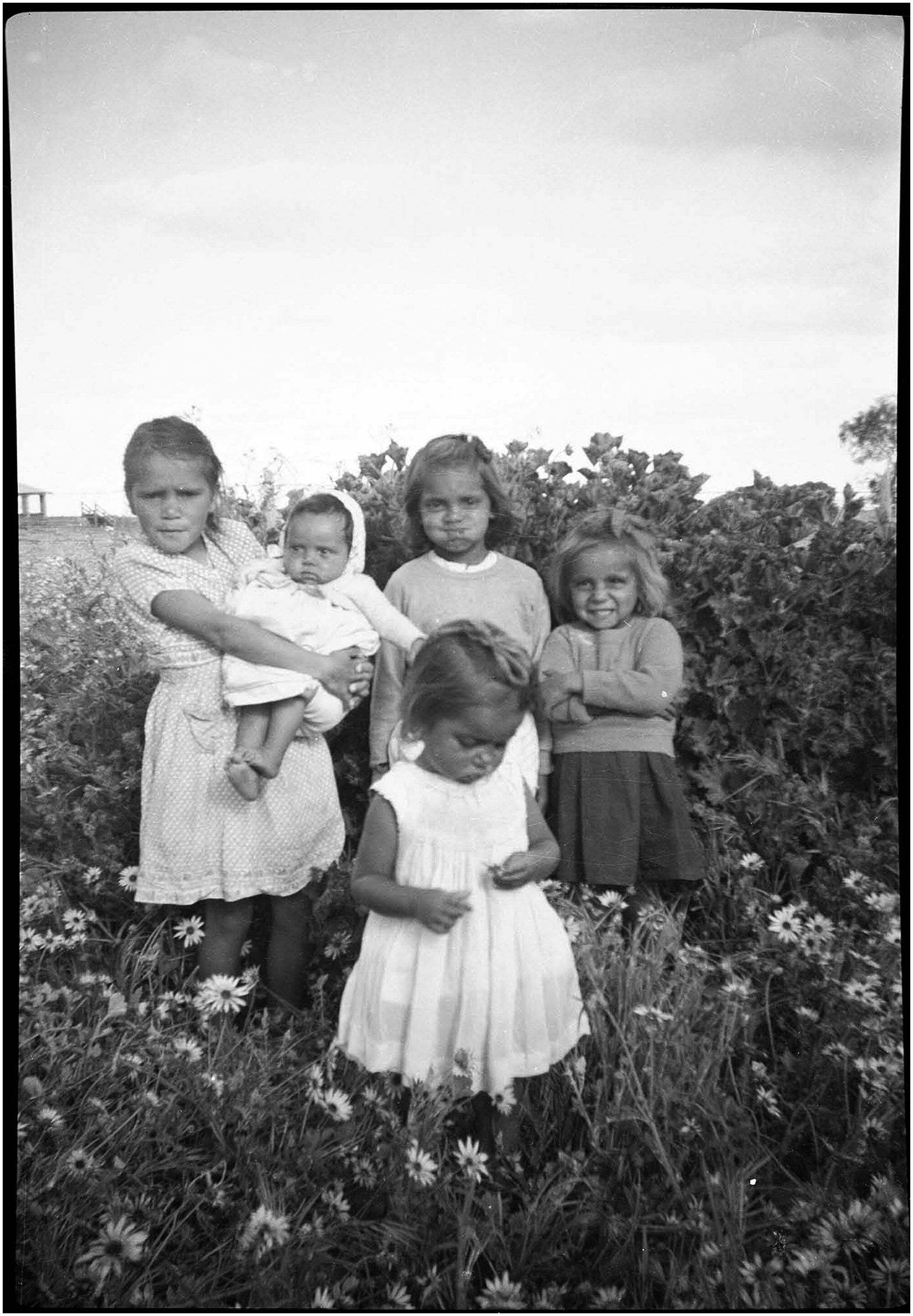
A group of children, including Norma Phillips (middle back) standing in field of cape dandelion, Goomalling, 1958. Digital file from black and white negative. Photo credit: Mavis Walley, State Library of Western Australia.
Although Indigenous people remained a popular and scientific subject of photography, they increasingly obtained the means to use the medium for their own purposes from the early 20th century, when developing technologies made private cameras widely available (Hughes & Trevorrow, 2018; Lonetree, 2019; Racette, 2018a; Seesequasis, 2019; Strathman, 2020).
The Métis relationship with the camera is somewhat different from the typical dehumanising colonial lens that focused on many Indigenous peoples. The Métis were seldom seen as exotic ‘authentic’ subjects, and the kind of ethnographic photography that occurred in other parts of the world was less common in Canada. Photographers were plying their trade in the west by the 1860s, and Métis families were enthusiastic consumers. Such photographs were, and are, prized family possessions. A late-19th-century portrait of three generations of the Klyne-Desjarlais family is typical of the genre (Figure 2).
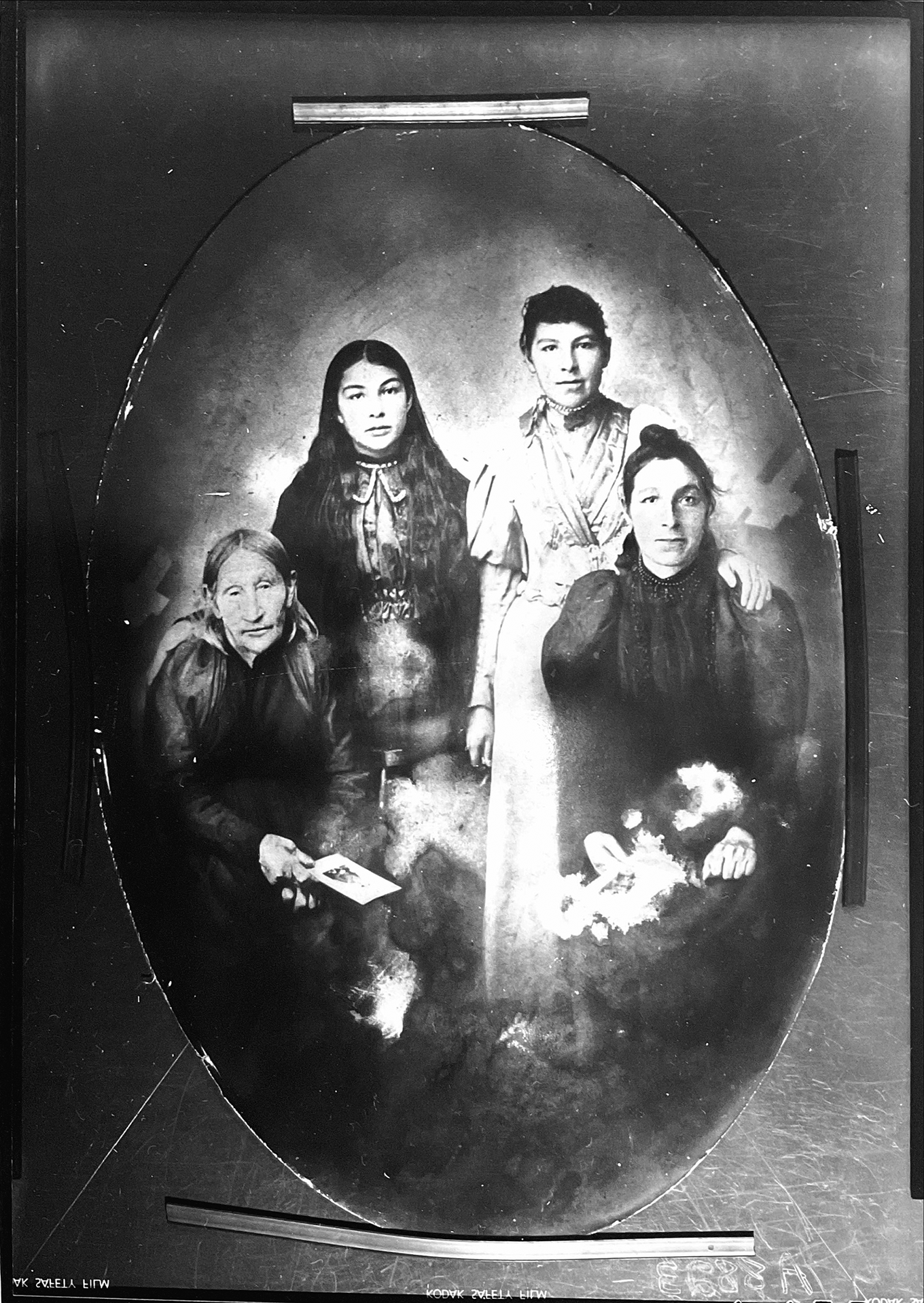
Three generations of the Desjarlais Family, ca. 1890. Collection of the Provincial Archives of Saskatchewan.
Four women (two seated and two standing) reveal generational differences in dress and centre a common theme in Métis photography – the matriarch – the female heart of the family. Taken in the village of Lebret in the 1890s, Madeleine Beauchemin, the widow of Michel Klyne, was born on the plains in 1820 and spent most of her adult life living in buffalo camps. 2 Her daughter, Madeleine Klyne, sits beside her. Madeleine married Thomas Desjarlais in 1879 and settled in the Qu’Appelle Valley. 3 Her daughters Marie Justine and Rosina Desjarlais stand behind them with their hands on the older women's shoulders. Both seated women hold a single photograph, likely images of deceased family members.
People were often included in family portraits after their deaths, with earlier photographs standing in for their physical presence. A reasonable assumption might be that Madeleine Beauchemin holds a photograph of her late husband, while Magdeleine Desjarlais might hold a photograph of a deceased sibling or child. This common practice of photographic ‘remembering’ indicates how deeply photographs were integrated into their daily lives and beliefs. The photographs were almost always held by women.
The advent of the Brownie box camera democratised photography for many, but for Ngarrindjeri and Qu’Appelle Valley Métis with large families, the expense of developing and printing photographs regularly was prohibitive. Beginning in the 1920s, small consumer cameras became locally affordable. Indigenous people with their own cameras became important community documenters. For Ngarrindjeri and Qu’Appelle Valley Métis this began from the 1920s but was rare, becoming more common from the 1930s. 4 Rare Indigenous family vernacular photographic collections flourished in parallel, and in sharp contradistinction, to non-Indigenous representation in the depictions by the scientific academy and popular press.
Methodology/approach
Focusing on community photographs taken by non-professional photographers in the control of Indigenous custodians, we use Rickard's (1996) framework of visual sovereignty to explore modes of truth-telling and decoloniality underpinning research on community photography. Rickard defines visual sovereignty not merely as a self-conscious act of artistic creation, but as self-representation, self-determination and resistance. Indigenous art, including photography, should be contextualised by recognising the centrality of ‘oral tradition, spiritual belief, and sovereignty’ (1996, p. v. see, also, Rickard, 2011). In addition, we consider ‘doing’ and embodying sovereignty as lived experience on our lands. Drawing on Dylan Robinson's (2017) work on public art interventions, we (in each community) exert our sovereign relations to land by walking and photography as a form of resistance and claiming.
The family archives we explore resonate with family and community knowledge. Our work is premised on the understanding that each family is a story bundle, with each family carrying a unique package of history, knowledge and story within a common collective experience. Beginning with the simple act of sharing photographs around tables with Elders and on the land in each community, we take a grounded theory approach of attentive listening to narrative strands, ideas and words that surface, and critical points that conversations circle back to. Grounded theory relies on acute openness to what is said, concerns raised and ideas generated. In each community, the researchers initiate meetings with individuals, families and larger community groups, inviting them to bring family photographs. As our project progressed over three years, we shared photographs, insights and stories over Zoom and in person to discover what common strategies of survivance the photographs narrate and what shared values and aesthetics Indigenous family photos convey, along with environmental and medicinal knowledge.
Beyond community-curated exhibitions of photographs, the Qu’Appelle Valley Métis project is a preservation and documentation initiative for an archive at risk and an expressive memory project for a displaced community or sometimes a series of communities. The original focus on displaced ‘Road Allowance’ communities has shifted somewhat, as has our notion of what constitutes a community photograph. 5 In terms of scope, given the complexity of the Métis diaspora and our position in an urban centre, we determined that any Métis photographic narratives are welcome. Our first session also revealed that state photography can become family photography, as we later discuss in relation to Figure 14. Genealogical research and mapping have emerged as important tasks fundamental for naming individuals in photographs, establishing the complex relationships they document, and mapping locations.
Following the curation of an Elders gallery, Ngarrindjeri families are collating, documenting and digitally preserving their photographs, building a living archive that encompasses genealogies, knowledge of Country and important stories. The archive engenders cross-generational knowledge-sharing of family and community histories. As an Elder pronounced at our first meeting, ‘the nation is the family, and the family is the nation’ (Eunice Aston, personal communication, 2017; Hughes & Trevorrow, 2018). Importantly, the archive supports members of the Stolen Generations and their descendants in connecting to their ancestors.
Photographs have proven to be portals and guides as they trigger memories, raise questions and identify knowledge gaps. As the project progressed, a circular methodology evolved from conversational research or ‘visiting’ with photographs to driving, walking, mapping and returning to kitchen-table conversations.
Ekoshi kiyanaan/Hikkai El Nam/who we are
The Métis are a postcolonial Indigenous people, recognised in the Canadian Constitution as one of the ‘aboriginal peoples of Canada’. 6 Descendants of early fur traders and their Indigenous wives, by the early 19th century in the historic north-west the Métis were a large, culturally distinct Indigenous people politically aligned with the Cree, Saulteaux and Nakota nations. 7 However, they were treated differently during the settlement era. Families with roots in the Qu’Appelle Valley in Saskatchewan provide a lens into the diverse histories within the larger Métis narrative (Adese & Andersen, 2021; Teillet, 2019). They are an important yet under-researched community. In Saskatchewan, they were excluded from Treaty 4, despite the advocacy of First Nations leadership. 8 Where Métis were given land scrip in Manitoba, people in Saskatchewan were given money scrip, and no protection or title to their lands. The corruption around both forms of scrip has been well documented, resulting in profound economic marginalisation. 9
During the early-to-mid-20th century, Métis people found themselves increasingly landless despite their pre-existing communities and the promise of 1.4 million acres in the Manitoba Act of 1870. Excluded collectively from ‘Indian’ treaties, and discouraged from living in growing settler towns, many families created homes on the Road Allowance, where they were vulnerable to further displacement. Reflecting on the 20th-century political movement in Saskatchewan, former leader Jim Sinclair stated: ‘Poverty was the driving force because we were very, very poor. We weren’t recognized by any government … we couldn’t go to school … our people had a struggle of being outside the system’ (Sinclair et al., 2004).
The term ‘Road Allowance’ refers to homes and small communities established on crown land set aside for roads. At one time, a one-mile stretch of the Old Fort Ellice Trail had an estimated population of 150 people. Other communities grew along the outskirts of settler villages, acquiring pejorative names like ‘Little Chicago’ and ‘Dog Town’. Removal was often abrupt, typically followed by the burning of homes. Historic erasure has been a literal wiping out of homes from the landscape and scrubbing the ‘official’ narrative. Métis were harassed by the Ku Klux Klan, and subsequent community and provincial histories ‘began’ with Euro-Canadian settlement. Photographs of houses, extended family and everyday life document the political rebirth of Métis people and the resilience and persistence of Métis communities despite these hardships.
The Ngarrindjeri are a South Australian Aboriginal nation, comprising several peoples with a common language, whose land and waters take in the Lower River Murray, Lake Alexandrina and Lake Albert, the vast Coorong wetlands and the Southern Ocean coast: yarluwar-ruwe (traditional land and sea country). Ngarrindjeri experienced the full cataclysm of British invasion and its dispossession and white settlement in the South Australian colony from its 1836 foundation. Yet from as early as 1802, foreign sealers and whalers had plundered their waters, killed their ngatji's 10 and sometimes abducted, and at other times wed, their women. In 1859, a Congregationalist mission (the Point McLeay Mission) was established at Raukkan, but many Ngarrindjeri found ways to stay on their own specific Country outside mission control, some obtaining farmland in the 1860s and 1870s, others undertaking agricultural work, living independently in fringe camp communities on the edges of rural towns (Bell, 2014; Hughes, 2012). As an Indigenous nation, they have survived, and today flourish and nurture strong cultural connections to their land and waters, and to one another.
Ngarrindjeri people in South Australia and the Qu’Appelle Valley Métis of Saskatchewan, Canada, have similar approaches to sharing photographs, which play a powerful role in reconstructing their histories that reflect and support self-determined mechanisms of community memory. We now discuss vernacular or amateur non-professional photography histories in these communities to explore transnational dialogues, including stories of community resilience in the context of the Stolen Generations (Australia) and ‘The Scoop’ (Canada) as both communities were systematically targeted by state campaigns to remove children from their families (Bomberry & Hubbard, 2023; Haebich, 2000; Stevenson, 2020). 11
For Ngarrindjeri, many of the key photographers, especially those taking photographs in the mid-20th century, were women. Community photographic archives add significantly to knowledge of Indigenous women's lives. Important Ngarrindjeri women photographers include Charlotte Richards, Joyce Kerswell, Charlotte Sumner-Dodd and Agnes Love Senior (Hughes, 2019; Hughes & Trevorrow, 2014). 12 In the Qu’Appelle Valley Métis project, we are in the process of identifying photographers. Thus far, we have identified three key photographers but do not necessarily have a corresponding body of photographs for each. The custodians of community photographs were often small children at the time a photograph was taken, and although they may remember the few adults who had cameras, they do not necessarily remember specific photographic moments.
Emerging themes
Ngarrindjeri photographers have documented their nation's ‘survivance’ (Vizenor, 2008) through everyday resistance and deep relationality in ways usually invisible to the outside world. Their photos celebrate the deep relationality between families and the work of kin in building Australia's infrastructure (see Lydon (2005) for comparison with Coranderrk). Images of families remaining on Country, exerting mobility (troddin’), celebrating milestones, catching fish, labouring on farms, expertly crafting stylish clothing, providing entertainment and defending Country, nation and the British Empire present rich counter-narratives that Indigenise imperial stories.
Similarly, Qu’Appelle Valley Métis worked as farm labourers and domestic workers, building roads and harvesting the valley's natural resources. Photographs tend to show moments of relaxation, play and celebration. The various forms of photographic representation these vernacular Indigenous family collections hold, as we explore below, refute the colonial representation of Indigenous peoples as without context, history, family and modernity.
Vitalising kinship and troddin’ country in Australia
Moving through Country with family is an important way in which many Indigenous epistemologies are learnt and expressed. For Ngarrindjeri, this manifests through the practice of troddin’ or ‘travelling Country’, which is reprised in many of their photographs (Hughes, 2015). Miwi, similarly, is a concept in Ngarrindjeri photography not elucidated elsewhere. Miwi, is ‘the inner spirit … [or] sixth sense, through which important knowledge is gained’ (Tom Trevorrow, as quoted in Hughes & Trevorrow, 2014: 208). Troddin’ activates miwi which encompasses memory, Creation accounts, all times and ancestral presence. Miwi becomes animated as Ngarrindjeri draw together to share and story photographs and name individuals in powerful acts of reclamation. At our first formal community gathering, Ngarrindjeri Elder Aunty Rita Lindsay (nee Trevorrow) drew our attention to the recuperative powers the photos of ancestors carry and their futurity, ‘You can see their spirit in them. They’re looking at us. The nation is coming to life’ (Rita Lindsay, as quoted in Hughes & Trevorrow, 2018, p. 250) (Figure 3).
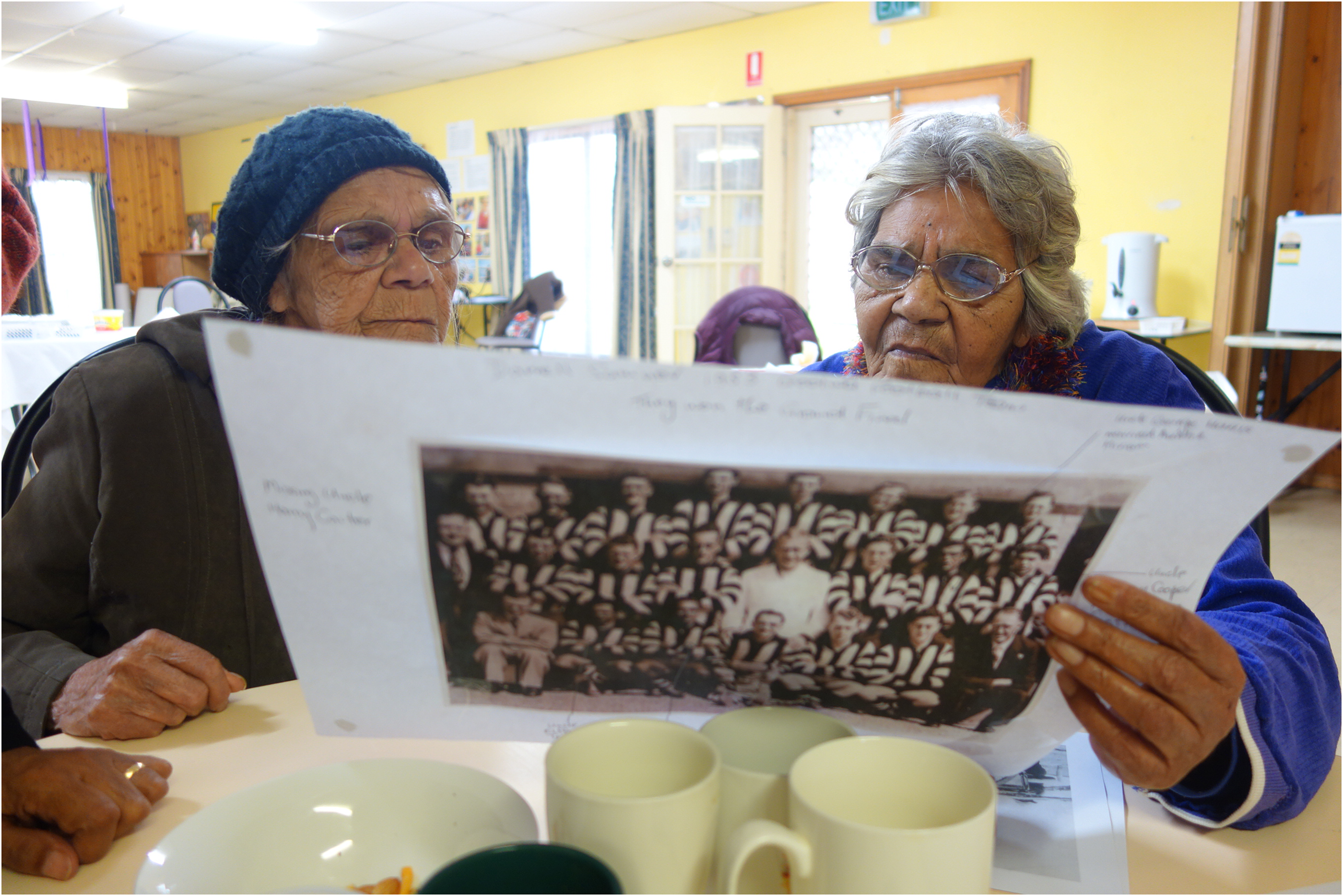
Sisters Rita Lindsay (née Trevorrow) and Alice Abdulla (née Trevorrow) looking through photographs at the Elders’ Workshop, Camp Coorong, Meningie, South Australia. Digital photograph, October 2016. Photo credit: Karen Hughes.
A faded colour photograph from the 1970s (Figure 4) features the respected Ngarrindjeri Elder, Nanna Ellen Brown (nee Sumner). This photograph of her resting against a tree at a well-known Gerard fishing spot provides evidence of the practice of troddin’. Nanna Ellen Brown had travelled from her home in Tailem Bend to visit her brother Hurtle Sumner's family in the summer fruit-picking season. Hurtle Sumner's daughter Aunty Nita Lindsay, now in her 80s, remembered Nanna Ellen Brown wanted to go fishing at the river, so they took her to their favourite spot. Nita took the photo with her box camera there. ‘You had to look down into the camera to take a photo. I was the only one with a camera then’, Nita said. ‘I remember fishing with her there. My family were living in the old house in the middle street in Gerard. I was about thirty then’ (Nita Lindsay, personal communication, April 2024). Bringing this photograph to a scanning workshop enabled Nanna Brown's great-nephew John Lindsay to establish connections and to figure out family relationships with Ellen Trevorrow as she identified this as a photograph of her Grandmother Brown who raised her until she was aged 11.
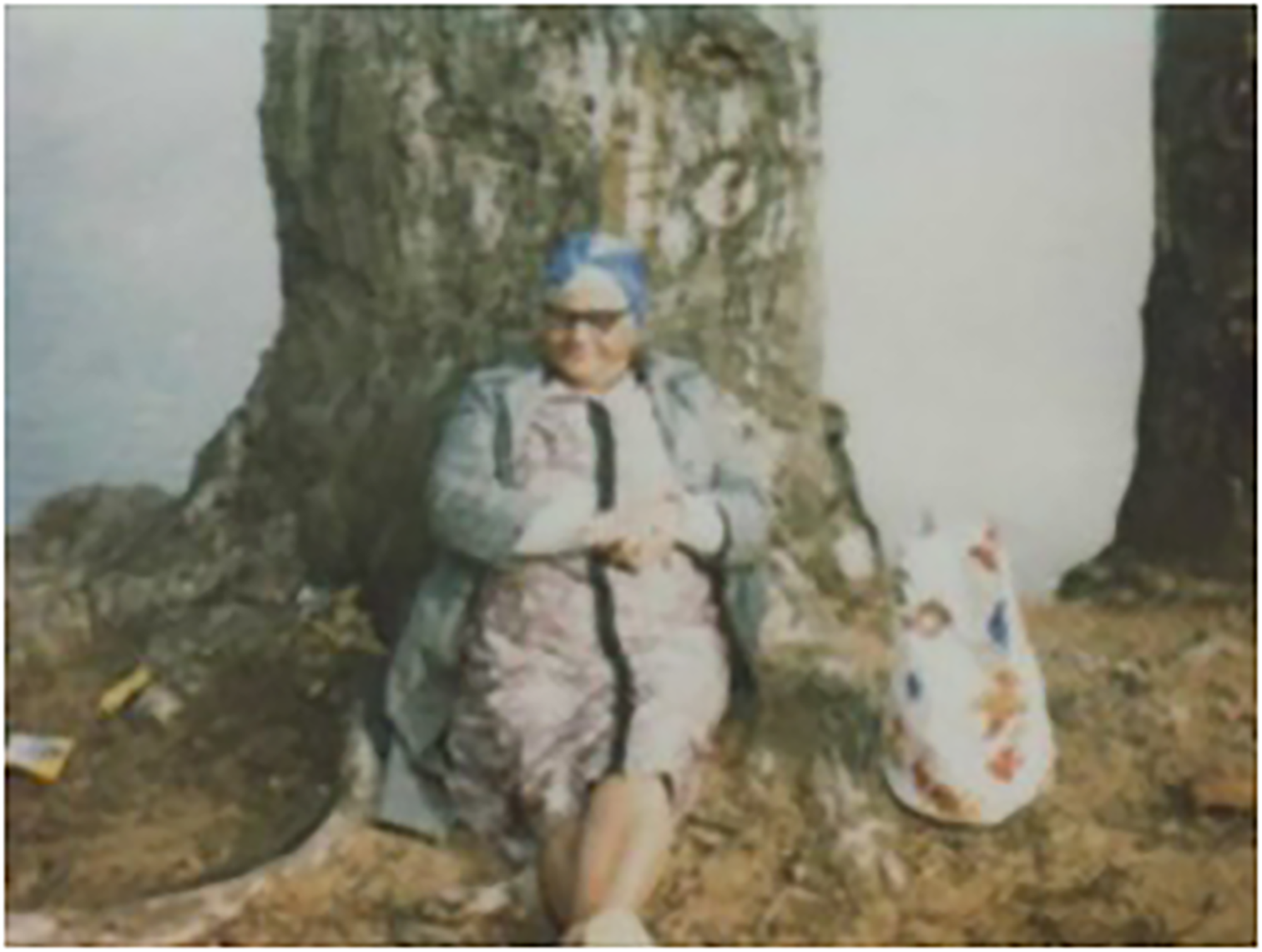
Ellen Brown (née Sumner), Gerard, ca. 1970. Photo credit: Nita Lindsay.
Photographs can help complete the circle of family, sustaining connections between ancestors and living generations, tangibly drawing the past into the present. Continually strengthening bonds of kinship, Ellen Brown would regularly travel to visit extended family hundreds of kilometres apart, all the while troddin’ Country.
A grainy, intimate black and white photo (Figure 5), also from the 1970s, again shows Ellen Brown troddin’, seated on a veranda embracing her smiling grandson Marvyn McKenzie, dogs nestling at their feet. Marvyn lived at Umeewarra, Port Augusta, outside Ngarrindjeri country, with his maternal grandmother, Luritja woman Ruth McKenzie. Umeewarra is hundreds of kilometres from Gerard, shown in the previous image. Within this image, another photograph can be seen; one that the child Marvyn holds towards the camera. Is it to embody a missing family member? Or a photo of a previous visit? Or perhaps a polaroid shot, instantly produced a moment earlier? The graininess of the larger photo obscures its content, yet the image itself clearly references photography's importance to storytelling and enhancing, refracting and amplifying familial relations. Marvyn maintained a lifelong fascination with photographs; he became a celebrated poet, visual artist and photographer, creating collages of family photos and genealogies centred on expressing belonging across worlds fractured by child removal and displacement. 13 Looking at these photographs, Aunty Ellen Trevorrow recalls the significance of travelling with her grandmother across the regions of Ngarrindjeri country and of visits to family further afield. She speaks of this process as troddin’ to describe the purposeful way her grandmother and other Elders lent their support and authority (across distances and generations) to ensure Ngarrindjeri survivance and continuance (see also Figure 6) (Hughes, 2009, 2013). The photographs continue that task.
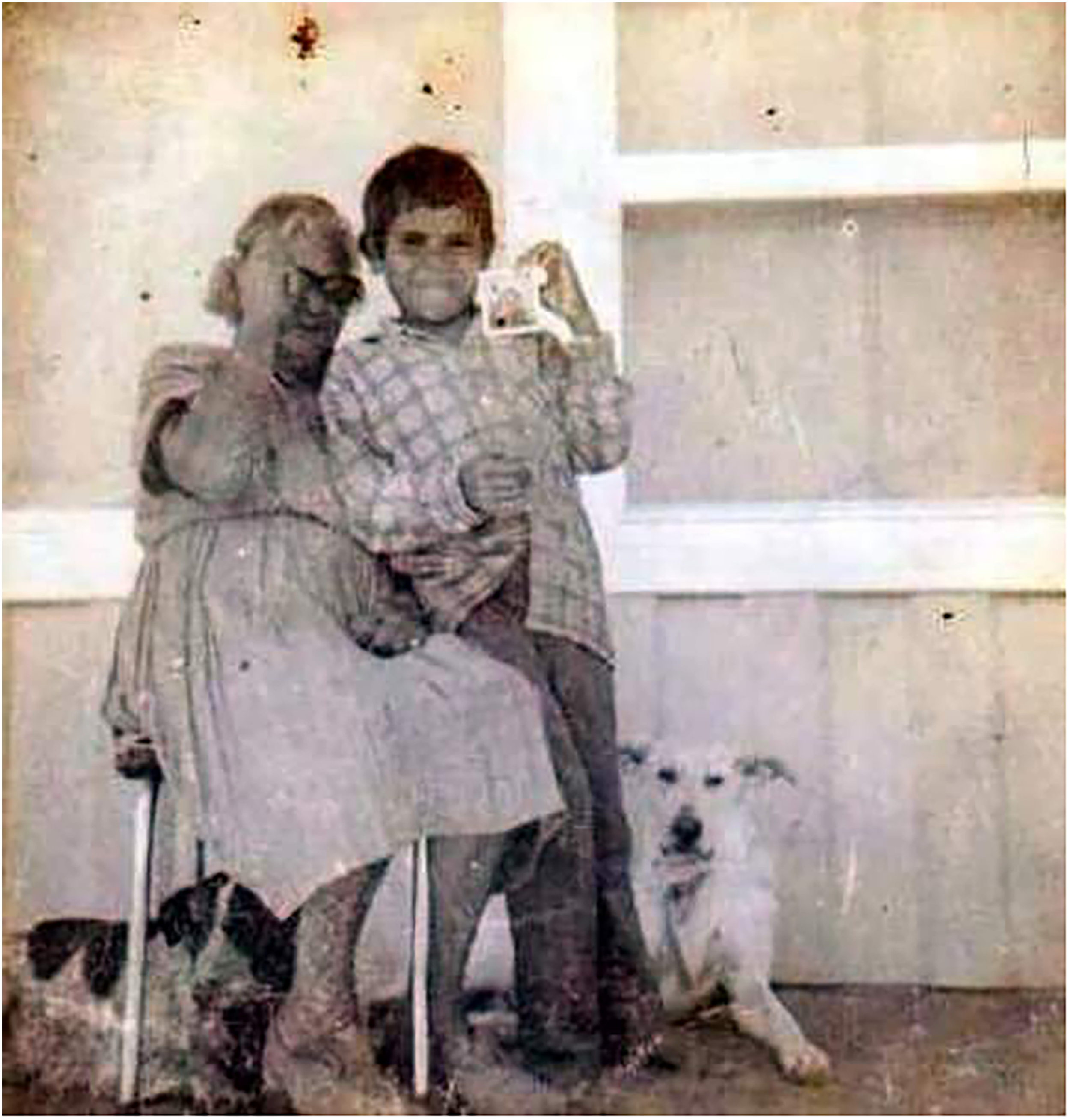
Ellen Brown and Marvyn McKenzie, Umeewarra, Port Augusta, ca. late 1970s. Courtesy of Marvyn McKenzie.
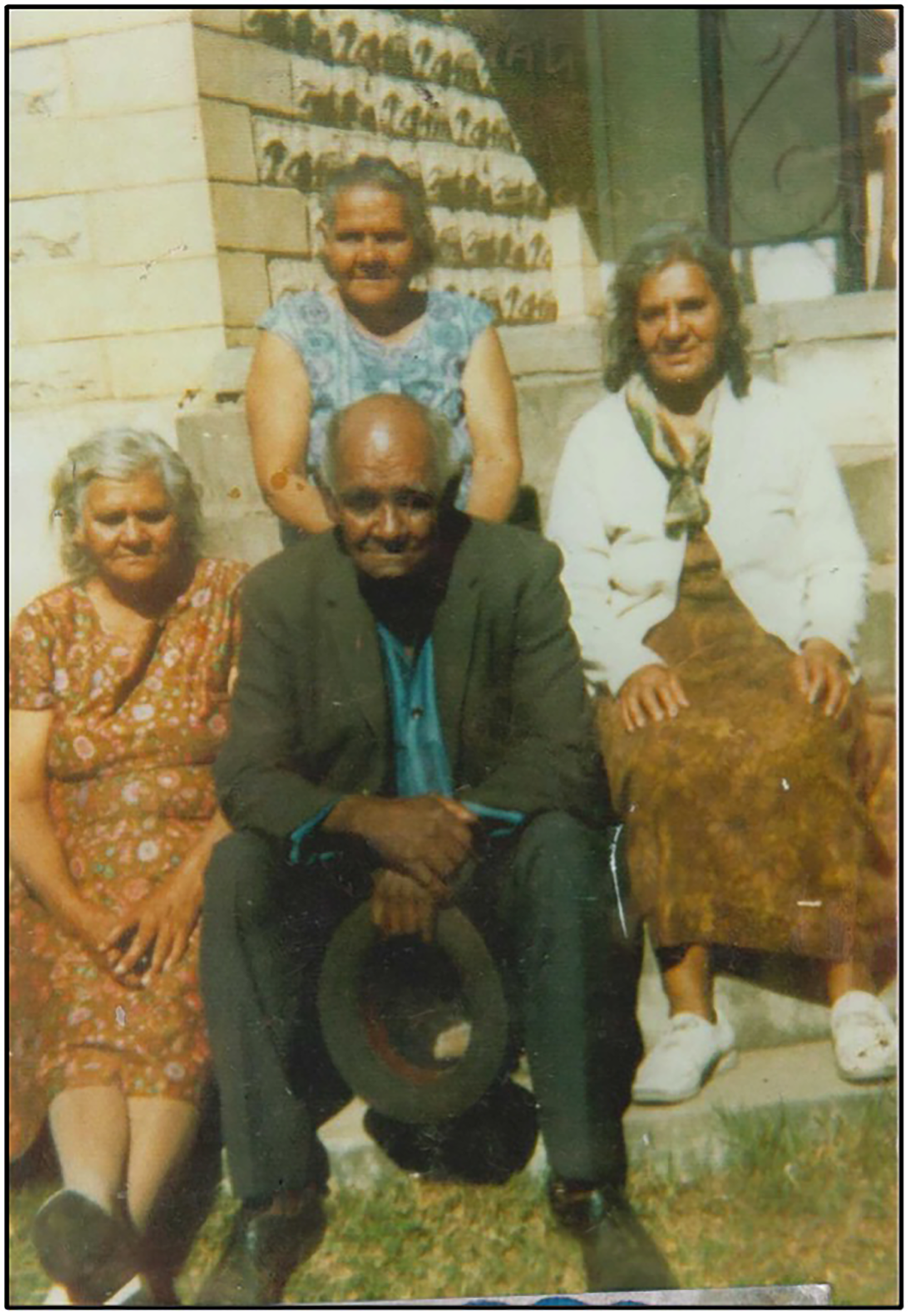
L–R: Ellen Brown (née Sumner), Laura Kartinyeri, Wilhelmina (May) Sumner and Hurtle Sumner (known as Uncle Bigalong) at Railroad Terrace at Murray Bridge, ca. 1970. Photographer Nita Lindsay. Courtesy of Nita Lindsay.
Clothing as performance and self-determination in Indigenous photography
Clothing was, and continues to be, deployed strategically as a performative weapon in the sustained fight for self-determination and equality, aimed to invert power relations and assert agency and individual specificity. People dressed for the camera with flair to express their identity and to counter negative stereotypes pervasive in the media that were used to justify the punitive policies of state Aboriginal administration, such as child removal.
Sisters Aunty Eunice Aston and Aunty Margie Sumner shared a striking hand-tinted portrait of their mother Jessie ‘Betty’ Sumner (née Cameron) as a young woman, holding her firstborn child, John Clarke, ca. 1950 (Figure 7). Betty poses for the photographer while striding across the tidal mudflats of her homelands on Koromarangul (Rabbit Island) in the Coorong, a long stretch of brackish water and coastal hummocks that parallels the Great Southern Ocean. Aunty Ellen Trevorrow exclaims that she is troddin’. Ngarrindjeri families living on Rabbit Island in the 1950s were geographically isolated, although many people moved through and lived there. People had to swim to get to the mainland during high tide and had no electricity or water supply other than through harvesting rainwater. Rabbit Island ‘once sustained farms, but is now overgrown with weeds.… a boy [who] had lived on Rabbit Island … told … of how he had swum to shore – hessian bag on back – to get supplies for his mother’ (Bell, 2014, p. 260) (Figure 7).
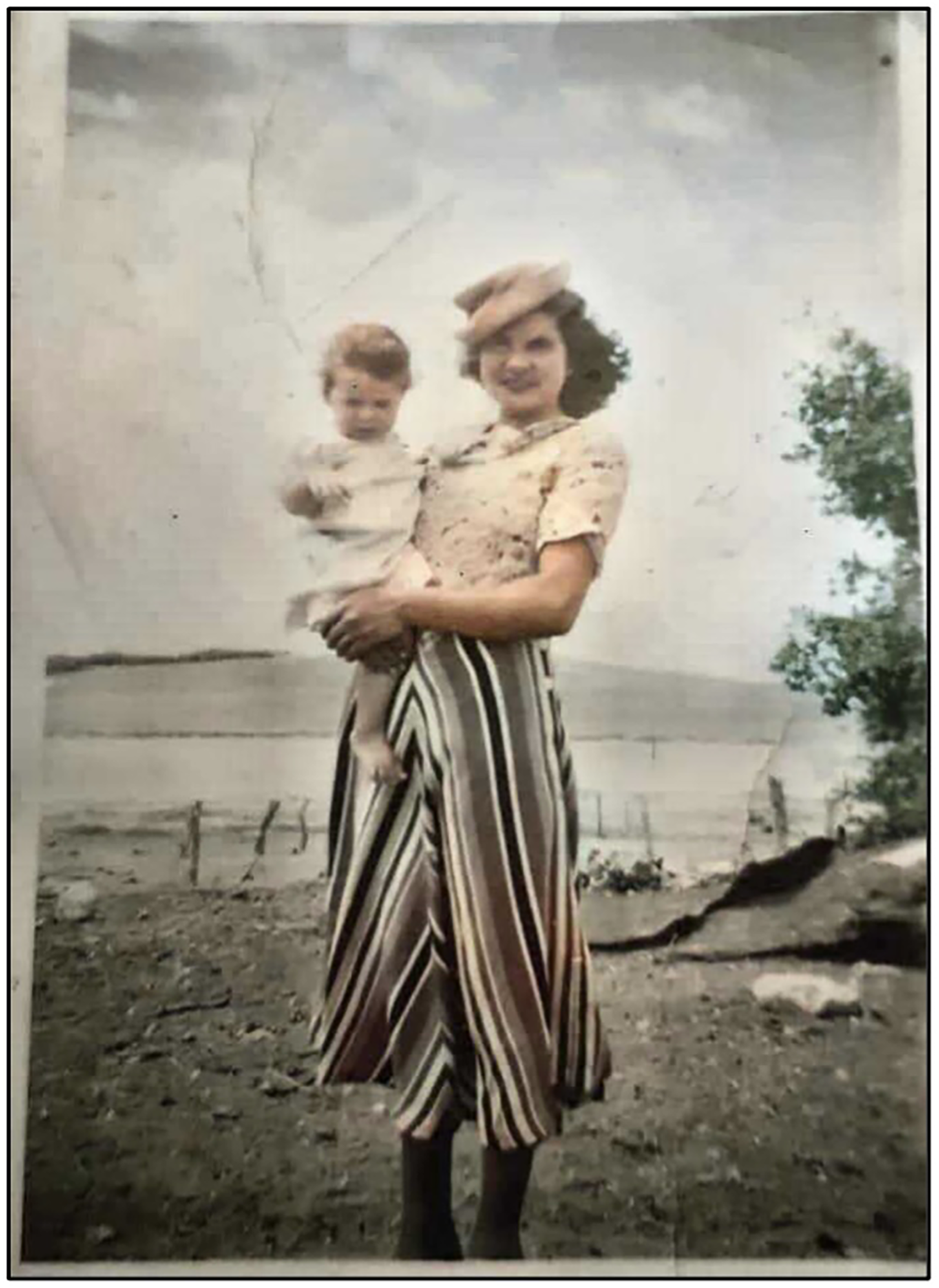
Betty Sumner (Jessie Elizabeth Sumner) with her first-born son, John Clarke, at Rabbit Island, ca. 1950. Photograph courtesy of Margaret Sumner.
Nevertheless, Betty Sumner is stylishly dressed in a striped skirt, dark boots and a jaunty hat. Her daughter explained that her mother was ‘always expected to be upstanding as a Cameron woman. Yet she had to hold her own with the men … working hard on the [Cameron family] farm at Trunkeena, fencing and riding horses’ and was a ‘crack shot’ (Eunice Aston, personal communication, May 2023). Aunty Betty had a large family over two marriages and inspired strong qualities of community service in her children, many of whom contribute to nation-building enterprises within Ngarrindjeri governance today (Rigney et al., 2015).
Rabbit Island, at the time when it was farmed in the early 20th century, features prominently in photographs held by the Ballard family. Blanche Ballard (née Gollan) and her English-born husband William supported their family primarily through harvesting wattle-tree bark for tanning leather and living from the land's resources. Figure 8 portrays their family seated in front of a capacious tree, wearing fine clothing sewn by Blanche. The image appears to be the work of a professional photographer, and the family are taking charge of their representation before consumer cameras were available in this region. Adeline Ballard (pictured in Figure 8) recalled that her mother Blanche's prize possessions were a sewing machine gifted by her eldest child Andrew (not pictured here), using his total savings before he enlisted in the First World War, and a photo of the knowledgeable Ngarrindjeri woman ‘Queen’ Ethel Whympie Watson, in a frame woven from local rushes (Padman, 1990). As Deloria (2004) affirms, ‘engagement with technology – not just cars, but sewing machines, merry-go-rounds, telephones and film cameras … pointed to [how Indigenous] people created modernity in dialogue with others’ (p. 232). Early photos in the Ballard collection have become important markers of identity for descendants, in light of pressures placed on the subsequent generations of the family to assimilate.
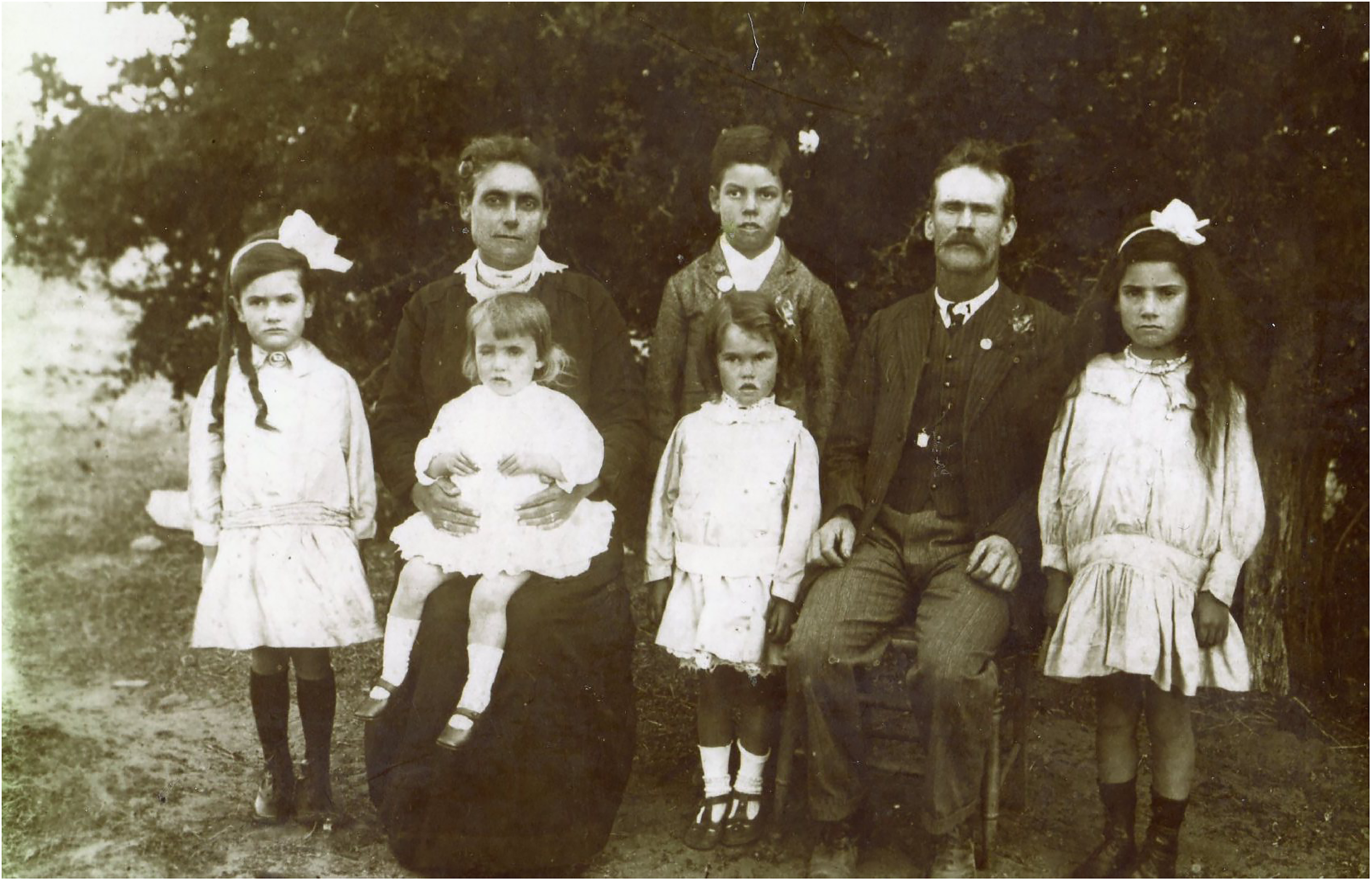
Ballard family. L–R: rear: Charlotte Ballard, Blanche Ballard, William Ballard, William Herbert Ballard, Florence Ballard; front: Theresa Ballard, Adeline Ballard. Rabbit Island, 1918. Courtesy of the Ballard family.
Pictured on the day of her marriage (Figure 9) to Dutch artist Arthur Van der Byl, Muriel Karpany made a conscious choice to use fashion as a means of creative expression and assertion as her mother Mary Karpany had done when she mentored young Aboriginal women working in the fruit blocks and fruit-cutting sheds that lined the River Murray. A fine painter, strong advocate and activist and tireless community worker, Aunty Muriel laboured over a lifetime with other Aboriginal women to support the growing number of families who were moving off government-run missions and reserves into the South Australian capital, Adelaide, in the 1960s and 1970s, contributing to policy formation in the crucial years of change that followed the 1967 Referendum. In Aunty Muriel's case, clothing became part of a self-presentational arsenal for ‘relational autonomy’ (Graham & Brigg, 2023) to effect political change.
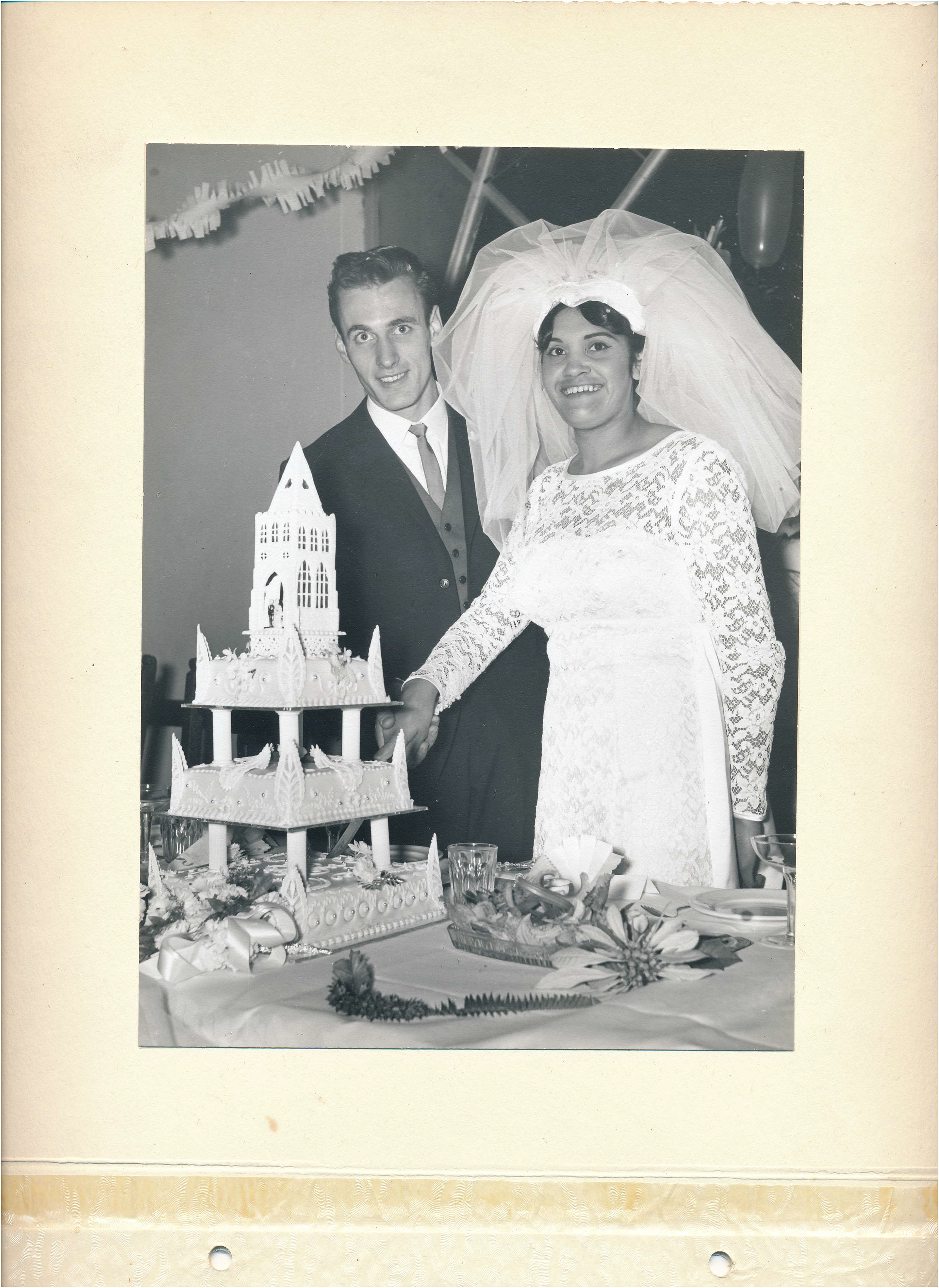
Wedding reception of Muriel and Arthur Van Der Byl, Adelaide. Gelatin silver print, 1964. Photographer unknown. Courtesy of Aunty Muriel Van Der Byl.
Representing survivance and continuance in Ngarrindjeri fringe camps
Fringe camps were crucial places of continuance and survivance. As Aboriginal people were increasingly excluded from the nation-state and forbidden to live in white towns as the 20th century advanced, and as conditions on government reserves declined, living with kin on fringe camps on the outskirts of towns was a strategic way to stay on their lands independently, continue cultural practices, keep languages alive and obtain paid agricultural work on nearby farms. Fringe camps were, however, particularly vulnerable to child removal. (Note that the Walker children pictured were not amongst those separated from their families.) One poignant reason why these photographs are valued today is that they express family ties and witness the presence of children who were later forcibly removed from their families under government policies that led to what is now known as the Stolen Generations in Australia (Haebich, 2000). These Australian policies mirror the 1960s Scoop in Canada (Stevenson, 2020).
Aunty Charlotte Richards (ca. 1930–1987), was a pioneering Indigenous documenter of life in the fringe camps. She was a mid-20th-century Ngarrindjeri woman photographer whose work has attracted wider recognition (Hughes, 2019; Hughes & Trevorrow, 2014; Lydon, 2016). Richards lived in fringe camps along the Coorong and River Murray, making her extended family and the communities there the subjects of a large and important body of work (Figures 10 and 11). Her photographs recur in many family archives. ‘Can I get a photo of your kids?’ she would ask as she circuited Ngarrindjeri Country with her camera (Walter Richards, personal communication, 2012).
L–R: Belle Koolmatrie, Irene Hunter, Poonthie Walker and a magpie, one mile fringe camp, Meningie, South Australia. Photographer: Charlotte Richards. Courtesy of Ellen and Tom Trevorrow. Walker family (Audrey, Fay, Isobel, Rosie and Ron Walker), one mile fringe camp, Meningie, ca. 1965. Photo credit: Charlotte Richards. Courtesy of Hilda Day.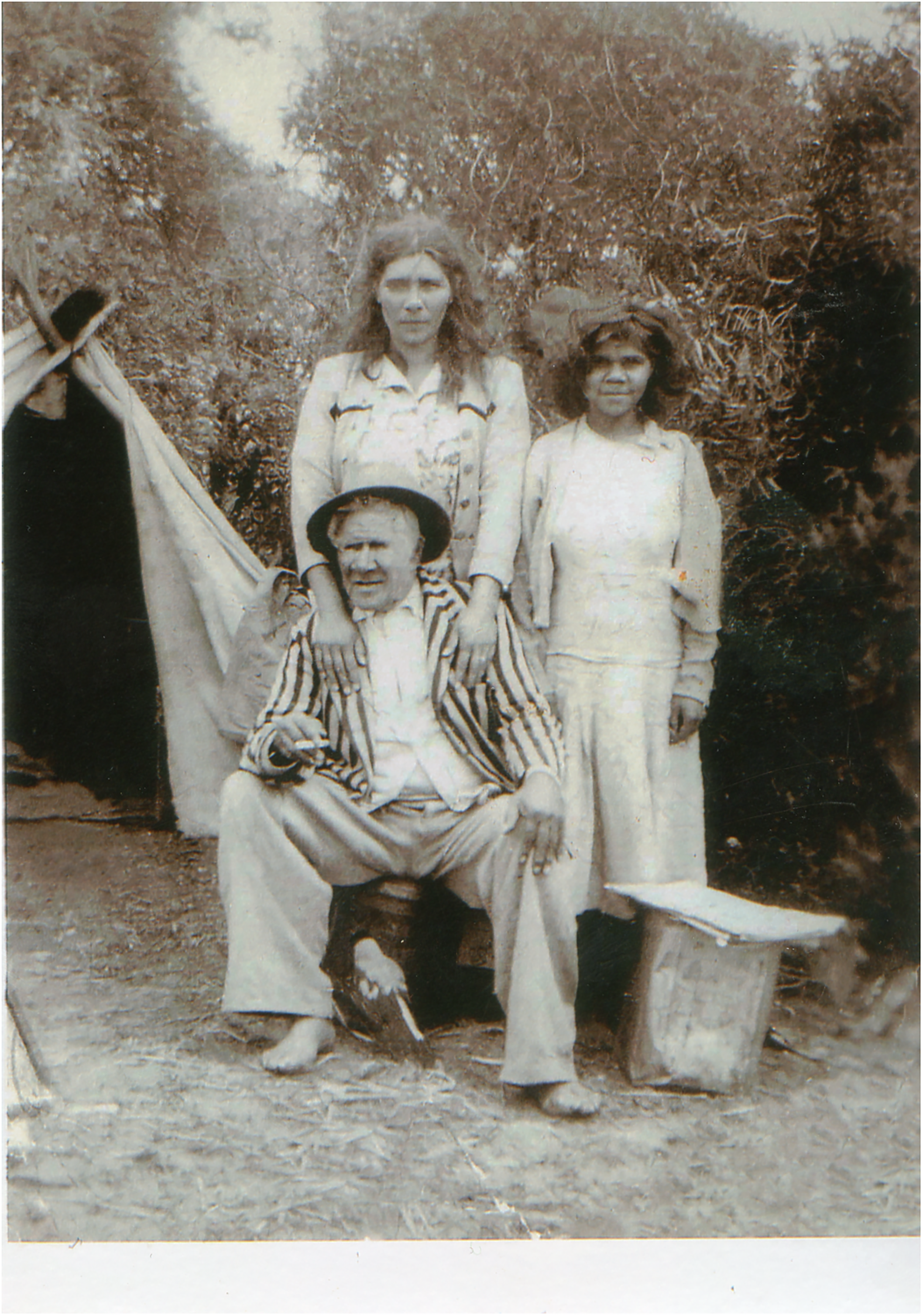
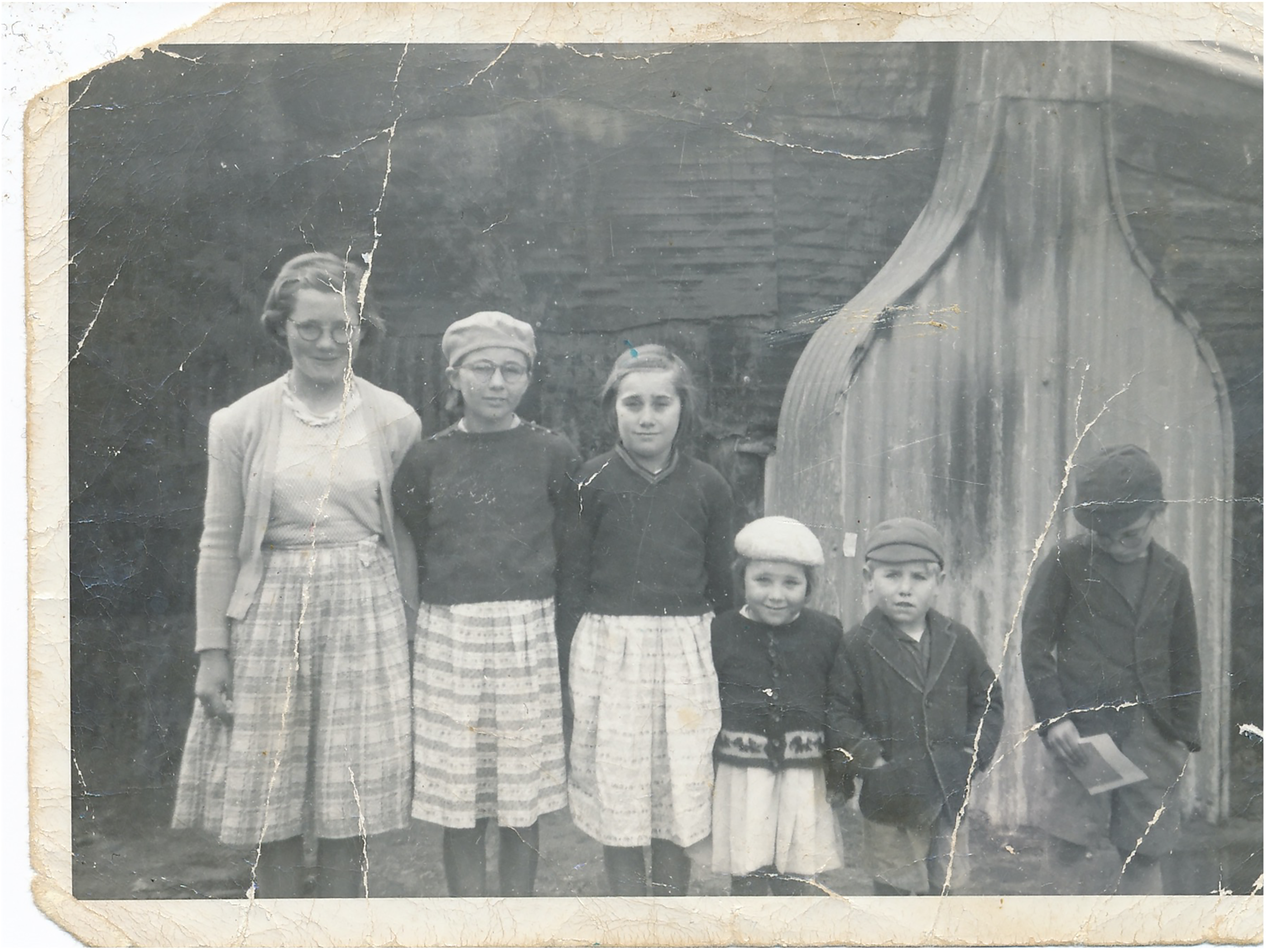
Subsequently, Charlotte Richards’ photographs have aided adult children who were forcibly removed and families who were separated because of these policies to reconnect and reconstruct some of the missing pieces of their lives (Hughes, 2019; Hughes & Trevorrow, 2018). No one lives on the fringe camps anymore, but they are significant places to which young and old return to care for Country and reanimate ancestral stories.
Representing Aboriginal land holding and self-determination
A trove of remarkable photographs shared for this project by the Mansfield-Cameron family bears witness to a little-known history of Aboriginal land holdings and self-determined farming initiatives in South Australia's late colonial period. Alfred and Jessie Cameron (née Forrest) were part of a delegation of Aboriginal families who successfully petitioned for government land-leases from 1868 to 1877, staunchly advocating independence from mission and government control (Jenkin, 1985, pp. 129–132). 14 Through skilful farming, the Cameron family were able to tenaciously hold onto a part of their homelands on the Coorong, firstly at The Needles and later at Trunkeena, which Alfred Cameron purchased in 1901. Placing high value on recording his family and achievements, Alfred Cameron experimented with photography. He acquired an expanding concertina camera (with a bird that popped out of its side) at least a decade before the advent of small consumer cameras in Ngarrindjeri Country.
Our research confirms Alfred Cameron to be one of Australia's earliest Indigenous photographers. A 1907 family portrait attributed to Alfred Cameron features his wife Jessie and their children attending Meningie's first agricultural show (Figure 12). Within a single frame, we experience their expanding family prospering on their lands, the result of generational Indigenous knowledge, especially of medicine plants, the land, waters and seasons. During the Great Depression drought, Peter and Meryl Mansfield-Cameron recalled, Alfred Cameron extended help to neighbouring non-Indigenous families (Peter Mansfield-Cameron, personal communication, July 2019).
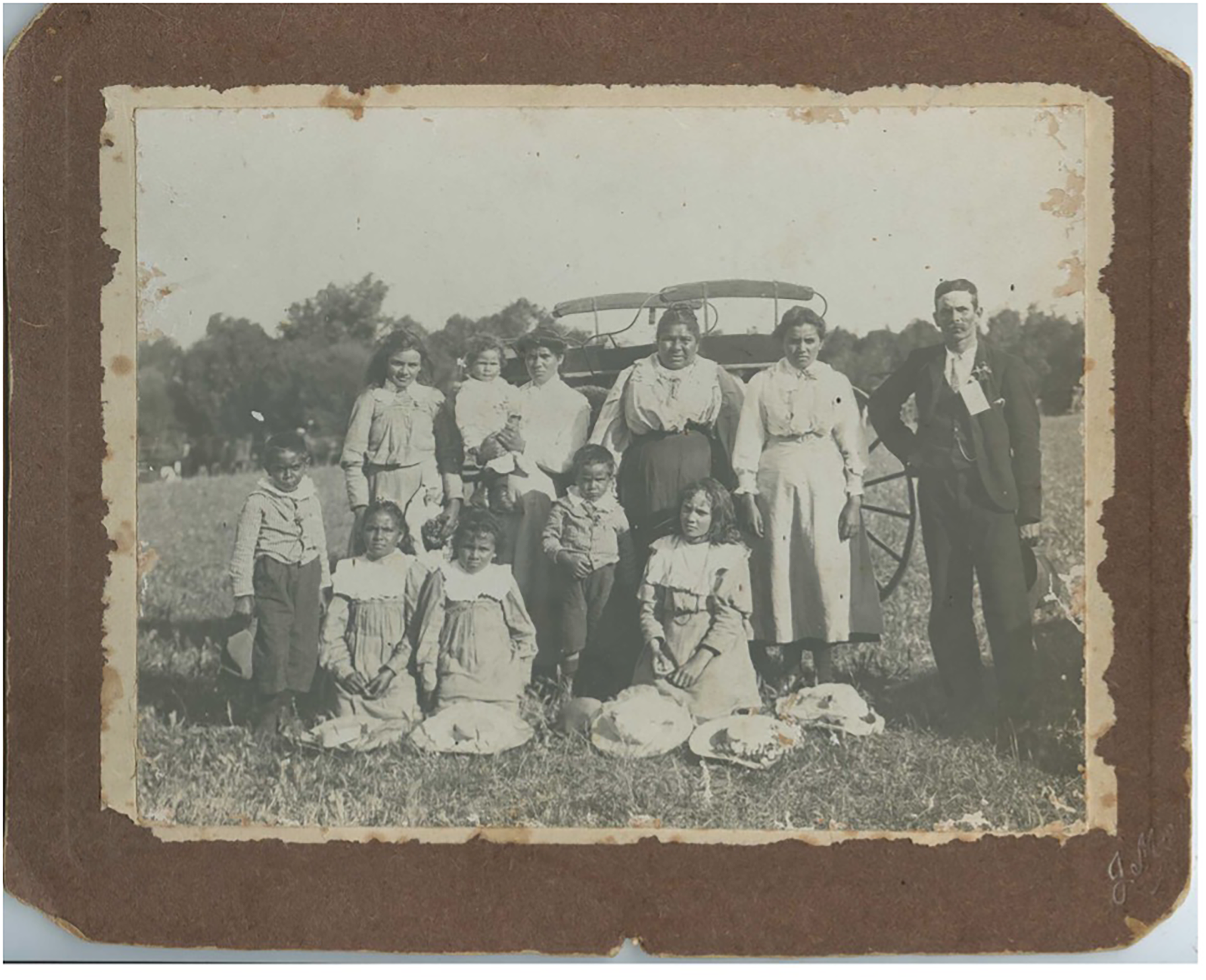
Large group photo at Meningie Agricultural Show, October 1907. L–R: Jessie Cameron, John Cameron, Nellie Cameron, Pearl Cameron, Simpkin Cameron, Amy Cameron, Lillian Cameron, Allan Cameron, Florence Cameron, Violet Cameron, Mary Cameron. Verso: ‘All at the first show ever held in Meningie, South Australia’ written on the back of the photograph by Lola Cameron Bonney. Photograph attributed to Alfred Cameron. Courtesy of the Mansfield-Cameron family.
Jessie Cameron was raised and educated by Agnes Litchfield and her husband George Ezekiel Mason, the sub-protector of Aborigines at Wellington (1842–1879), after her mother, a woman from Tonga, had died. From Agnes, Jessie Cameron developed a fine appreciation for beautiful garments which she later sewed for her family (Figures 12 and 13) and for starched linen napkins that graced her dinner table at Trunkeena (Meryl Mansfield-Cameron, personal communication, January 2023). The ongoing close relationality between the Cameron family and the other independent Ngarrindjeri farming families is evident in Figure 13 which includes Mukeri, Ballard, Walker and Rankine family members. Compellingly, over a century and a quarter later, Trunkeena remains under Cameron family ownership.
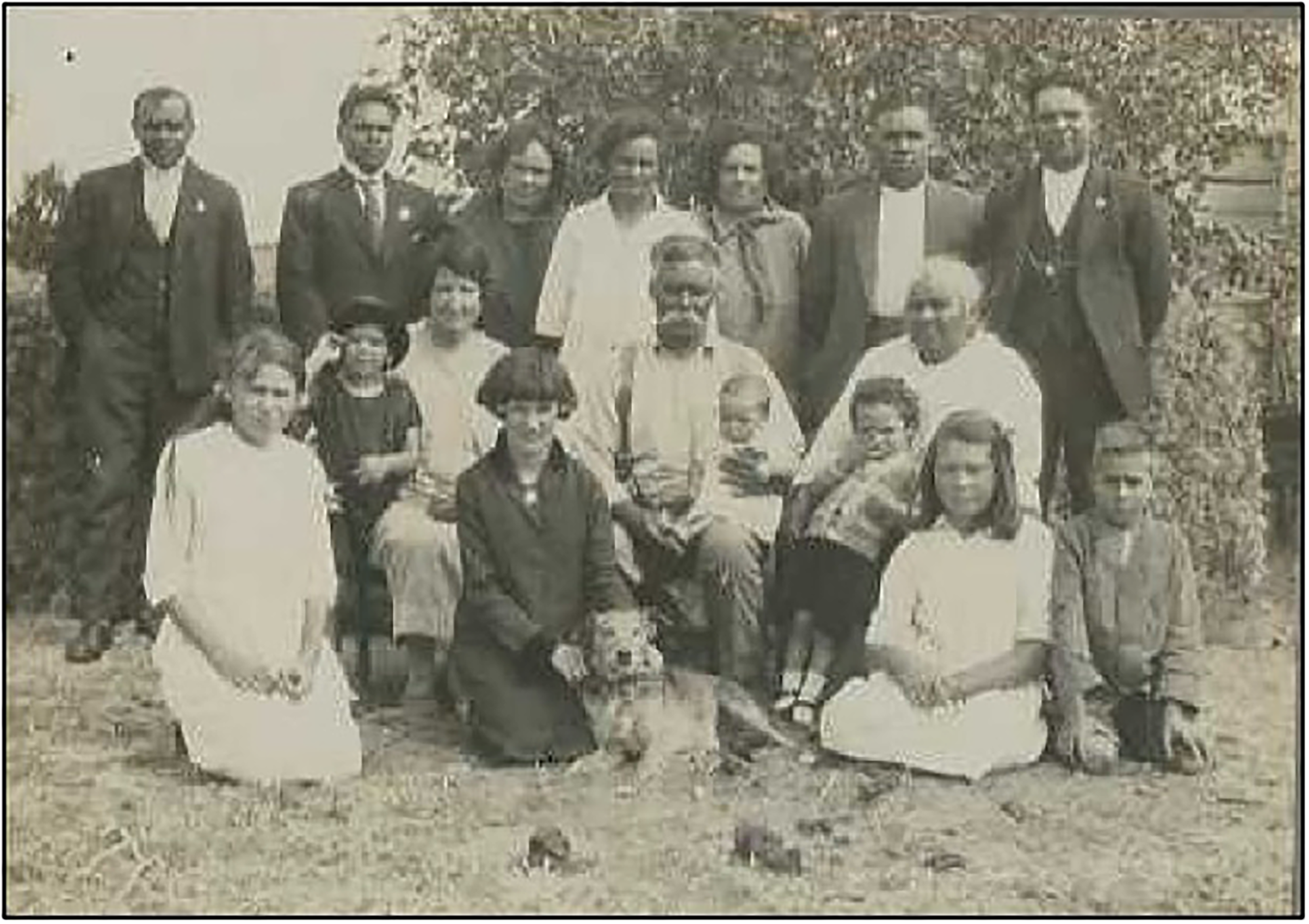
Large family group at Trunkeena. Allan Cameron, Andrew Rankine, Bruce Cameron, Charlotte Ballard Charlotte Mukeri, Alfred Cameron, Jessie Cameron, Charlotte Ballard, Fanny Kernot (née Cameron), George Walker, Lillian Cameron, Mary Jane Rankine (née Cameron), Pearl Cameron, Simpkin Cameron, Ted Rankine and Violet Cameron, the Coorong, ca.1927. Courtesy of the Mansfield-Cameron family.
Placing photographs on the land in the Qu’appelle Valley, Canada
Fayant and Pacholko (2019) show that despite living in diasporic communities because of land loss and forced removals, the Qu’Appelle Valley Métis have a substantial collective body of photographs that, together with oral testimonies, document experiences of community resilience and the importance of maintaining relationships to land and kin. The photographs give visual form to kinscapes, the overlapping geographies of relationships between people and land (Lakomaki, 2014; MacDougall, 2021; Supernant, 2020). Photographs are also powerful mnemonic and narrative objects. Black and white photographs acquire colour quite literally as memory fills in the details.
Expanding the frame
During the first community session with Qu’Appelle Valley Métis, Racette was formally presented with a copy of a photograph (Figure 14) from the Saskatchewan Archives Board as a gift to begin the community archive.
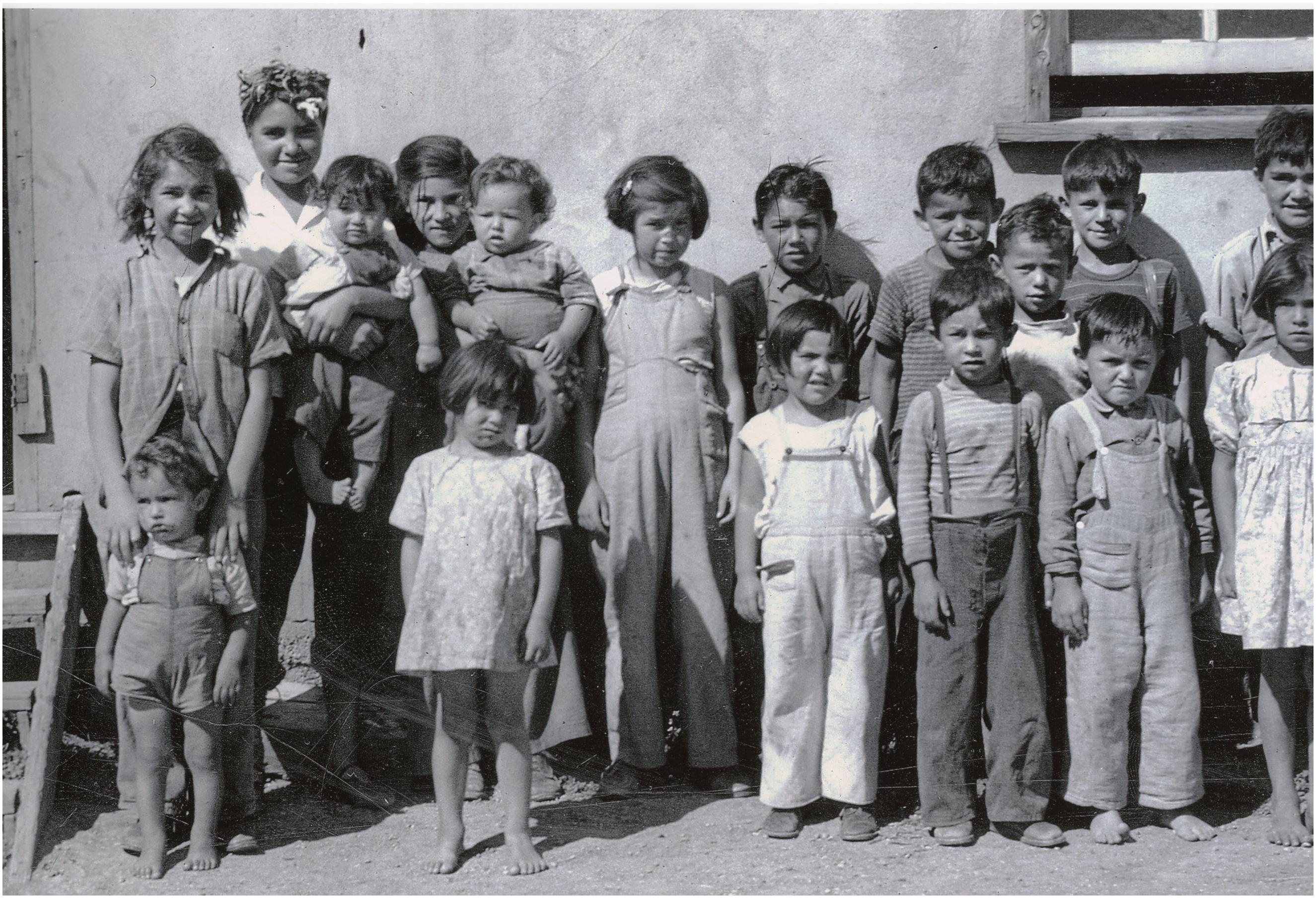
Children on the Lebret Métis Farm, ca. 1945–1950. Saskatchewan Archives Board, R-B12457-19.
The photograph is quite well known. It features children assembled for a group photograph at the Métis Farm in the Qu’Appelle Valley. The late Elder, Roy Poitras, had sold copies of the photograph at his second-hand store in the village of Lebret, and several participants had purchased copies.
In the archives, the undated photograph of nameless children is one of a series taken to affirm the success of a government ‘rehabilitation’ project (1945–1953). Around the project table, it became something entirely different. It sparked an animated ‘naming’ of almost all the individuals in the photograph. Close reading and shared memories revealed layers of story behind the smiling young faces. Community participants recognised themselves and their relatives. They remembered nicknames and adventures, and the table was full of laughter. But for others, the photograph captured evidence of loving care before they were taken from their families. A single photograph launched two research strands: to name all the children in the photograph and to hear the stories of the children who were removed. An archival search has identified additional state photographs and located family photographs that have entered the archives. We can decolonise state images and recover the personal.
Although not initially planned as a project outcome, family genealogies and maps are now critical components of community sessions, as places and names are introduced at a dizzying pace. We are creating a large map to reclaim each home and place each family on the land. It will be enhanced by the strategic placement of photographs related to each site. Driving, walking and remembering Michif place names have been how we have been ‘doing’ sovereignty as we step over barbed wire fences and stand in the locations where the family photographs were taken. 15
We have continued the photographic legacy, layering new photographs alongside the old (Figure 15). One of the younger participants, a professional photographer, accompanied his father and extended family, documenting a field trip as we drove the muddy backroads, stopping at important sites and telling and listening to stories. He contributed 90 new photographs to the project's legacy. The youngest group member, a seven-year-old grandson, brought his camera and captured his laughing ‘Papa’ and the rolling hills. His blurry, overexposed photograph of canola fields planted on top of surviving sites is an apt representation of both erasure and the enduring presence of the stories beneath them (Figure 16).
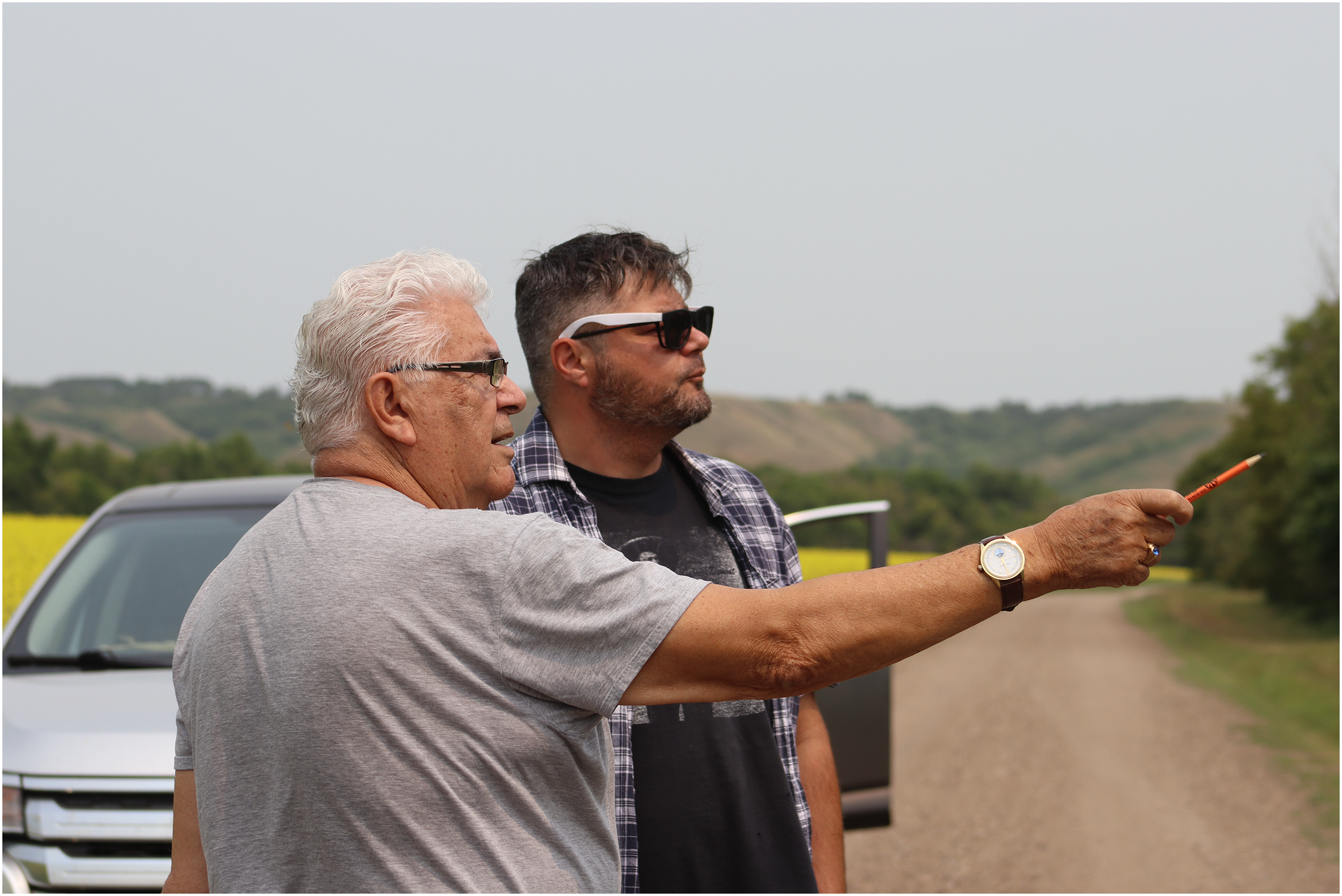
Russell Fayant and his Uncle Larry Fayant, who grew up on the Old Fort Ellice Trail Road Allowance, work on the project map and discuss the rich medicinal resources. Photo credit: Rhyse Cardinal.
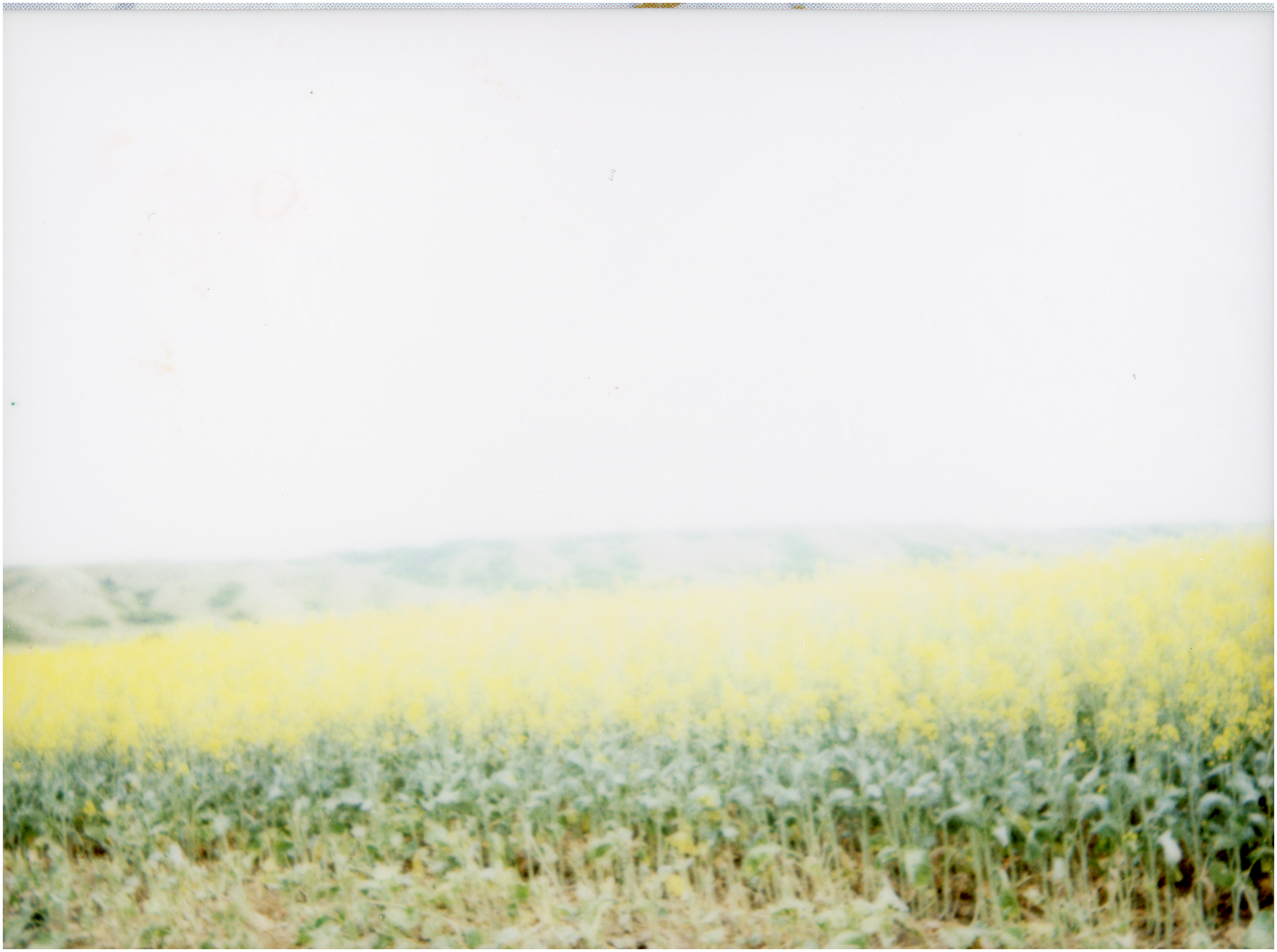
Canola fields over Racette and Cardinal sites, 2023. Photo credit: Gabriel Farrell Racette.
Reclaiming Métis land through photography
The land is always present in the photographs, which makes it possible to locate the sites today. Although people and houses change, landmarks remain the same. Photographs were taken outdoors as cameras did not have flashes and interiors were dim. Whether posing for multi-generational portraits (Figure 20) or dressed to go to church (Figure 17), the soft rolling hills are an ever-present backdrop.
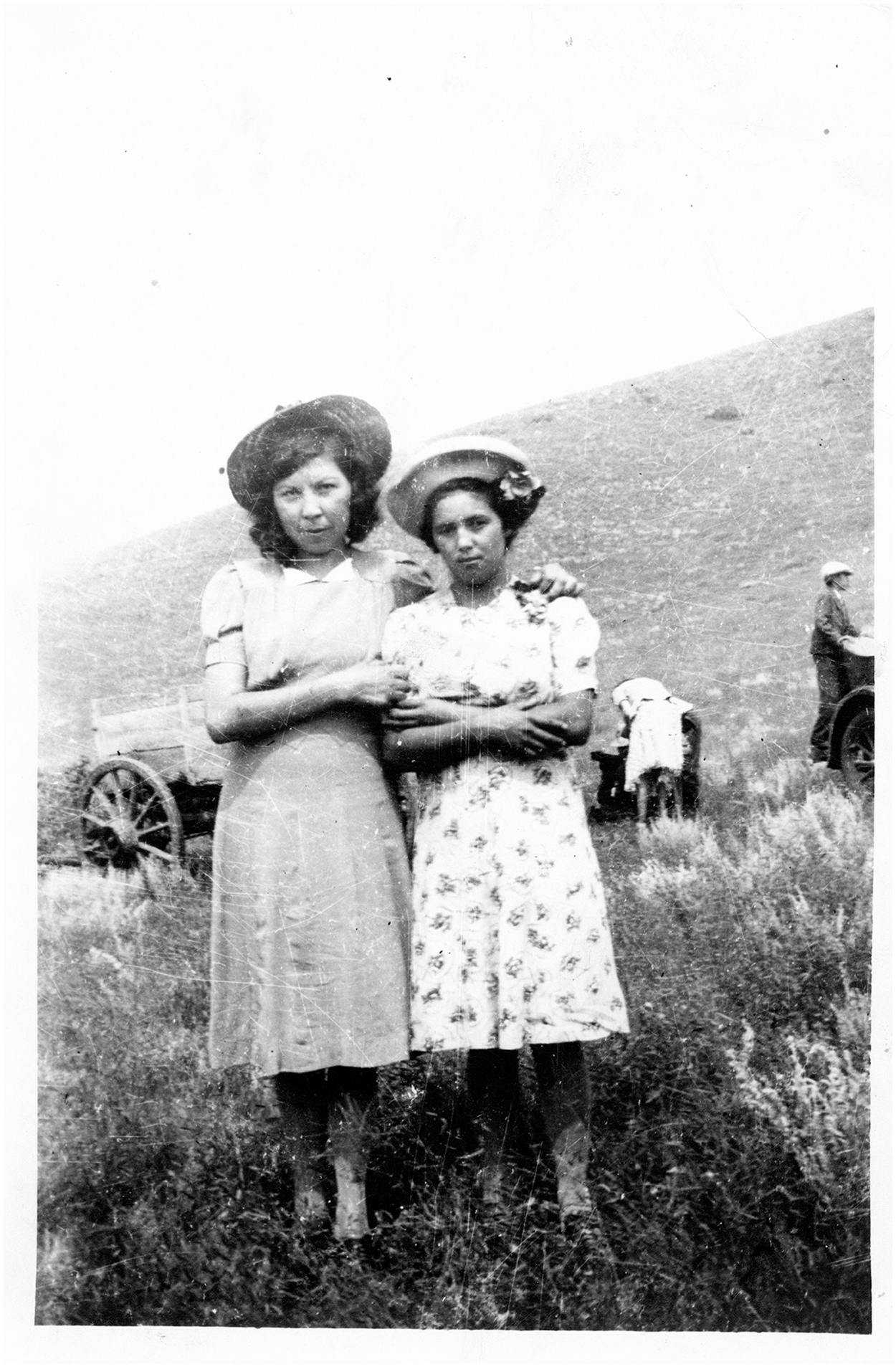
Marianne Racette and Adeline Klyne in their Sunday best (n.d.). Courtesy of Irma Klyne.
Mapping, preserving the surviving houses, reconnecting families and asserting land ownership, however symbolic, underscore this photographic project. The photographs are a story bundle. They document land use, gardens, harvesting, hunting and the array of skills that enabled the community to survive. Classic Métis vernacular architecture is made entirely from local materials and constructed from hand-hewn logs with closely dovetailed corners, as in Figure 18.
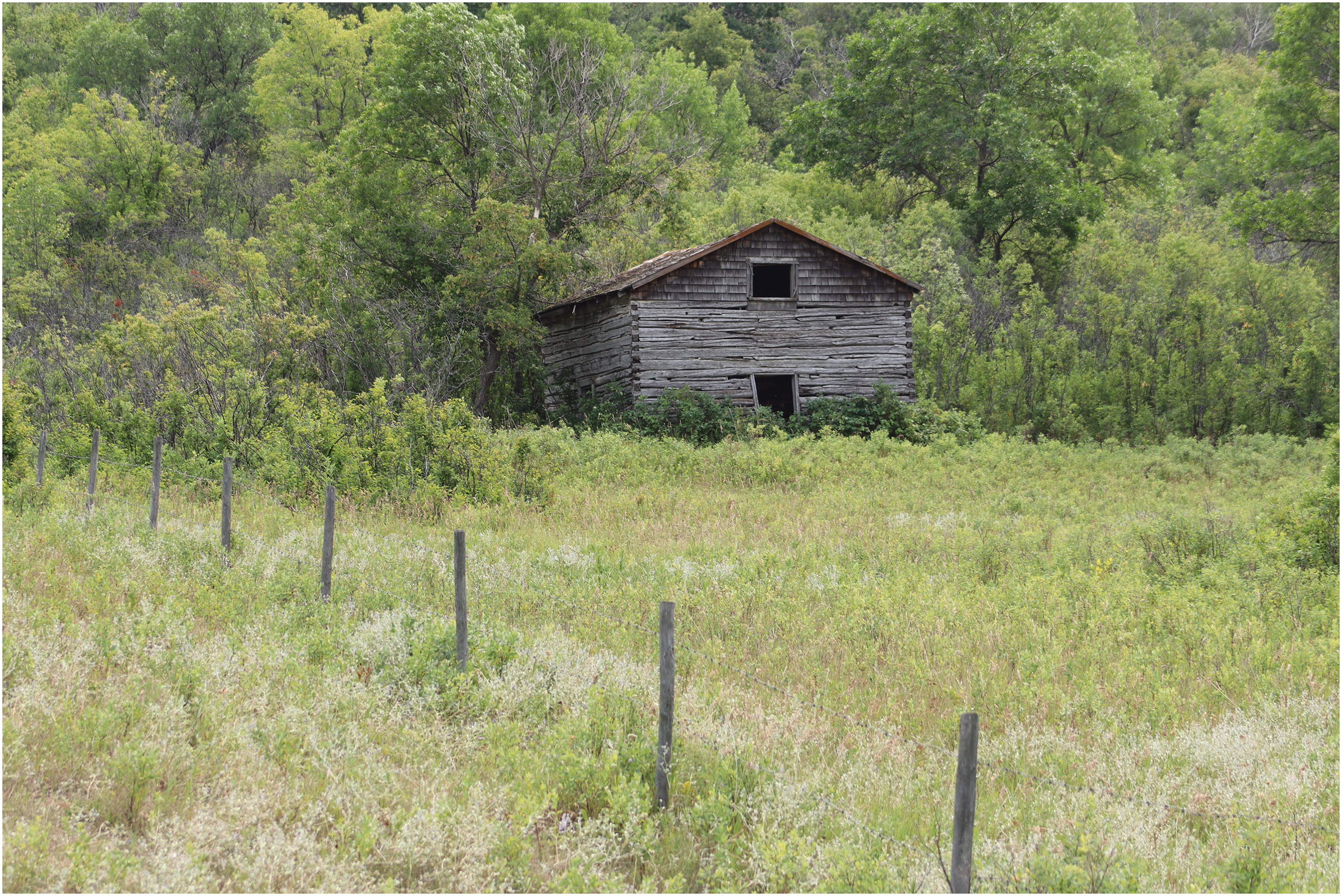
Peter Racette family house on the Qu’appelle Valley Road Allowance. Photo credit: Rhyse Cardinal, 2023.
Wooden pegs were used rather than nails and the white plaster that covered the exterior walls was made from local clay deposits. In the photograph in Figure 19, two sisters, one holding a small child, sit on the ground with the hills in the background. Now in her 80s, one of the women pointed out a distinct area – scarcely visible in the photograph – as the source of the white clay used to cover the log houses.
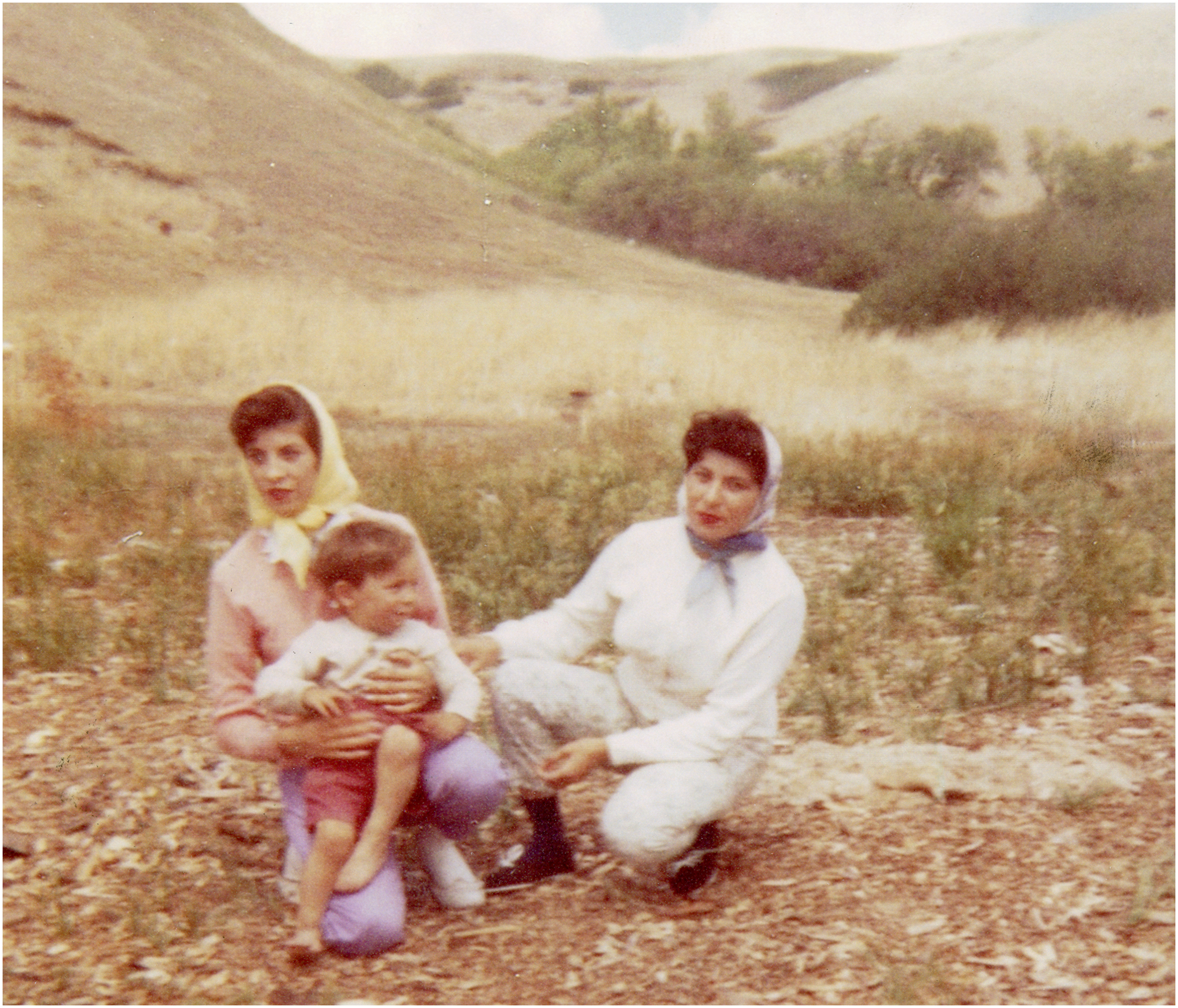
Fayant sisters, Anne holding her son Ronnie, and Lorraine, ‘taken in the backyard Easter Sunday’ (n.d.). Photographer unknown. Courtesy of Lorraine Fayant Bailey.
Although vivid in memory, there are few surviving Road Allowance houses (like Figure 17), with traces of others still present. However, frequent visits and ‘walking’ are acts of reclamation, as are the memories shared in oral tradition, and lives documented through community photography. Nobody lives on the Road Allowance anymore, but families identify strongly with the land, care deeply about the surviving houses and consider themselves the spiritual and moral owners, despite being denied legal ownership. They still know its secrets, and drive, walk, and harvest fish, berries and medicines. Family reunions are annual occurrences. Rickard (2022) recently described this as conceptual land ownership.
Compositions centring older women recur in the Road Allowance archive. Women raised their own large families, with grandchildren often joining the circle of children that surrounded them. Although men travelled to find work, women stayed in the Valley where Saskatoon berries and plant medicines grew wild, and their large gardens and the abundant fish sustained them. The poverty Sinclair (2007) remembered was real, but most adults who grew up on the Road Allowance remember it as a time of security and love.
In a photograph from the Welsh family archive (Figure 20), Veronique Beaulieu Welsh sits on a rocking chair with her two sons behind her. She sits, her warmth almost palpable, with 11 small children clustered around her. A small girl sits securely on her lap, while two small boys rest their hands on the arms of her chair.
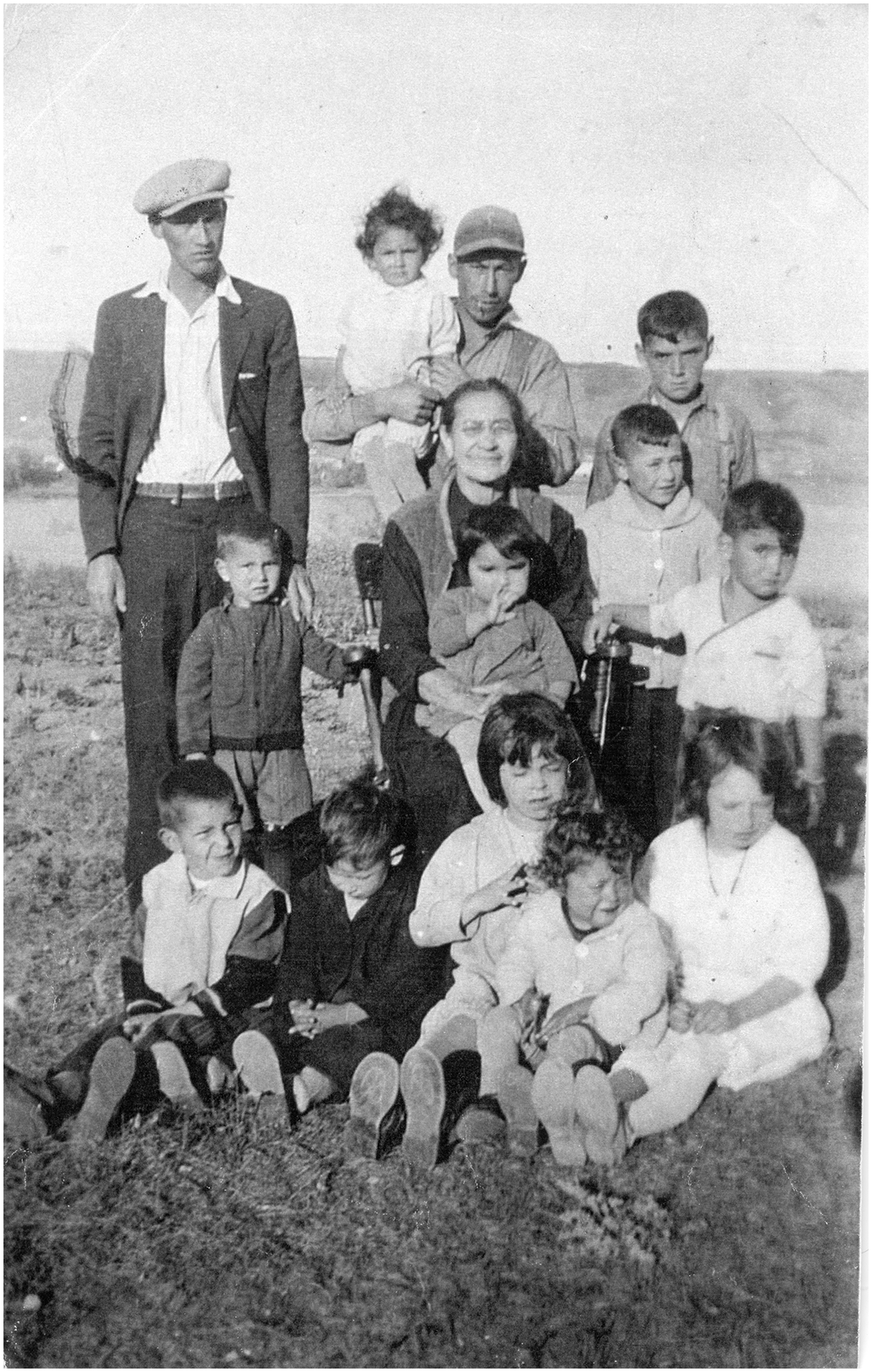
Veronique Welsh, with her two sons Patrice and Joe (holding daughter) (n.d.). Courtesy of Joe Welsh.
The eldest community participant recalled the story around the photograph in Figure 21. In this photograph, Bill Desjarlais is delivering wood to Fred and Jean Fayant. The Fayants had been away for two years, working and living on a large farm to the north. Upon their return, they discovered that the floorboards had been removed to replace the floor in another Road Allowance home. With the help of neighbours, the floors were rebuilt, and their large family rehomed. The photograph also evokes the networks created by large, interconnected families. All the families were (and are) enmeshed in complex kin relations that stretch back to the days of the buffalo camps. Sharing labour, food, childcare and other resources enabled the Qu’Appelle Valley Métis to thrive in difficult conditions for centuries (Figure 21).
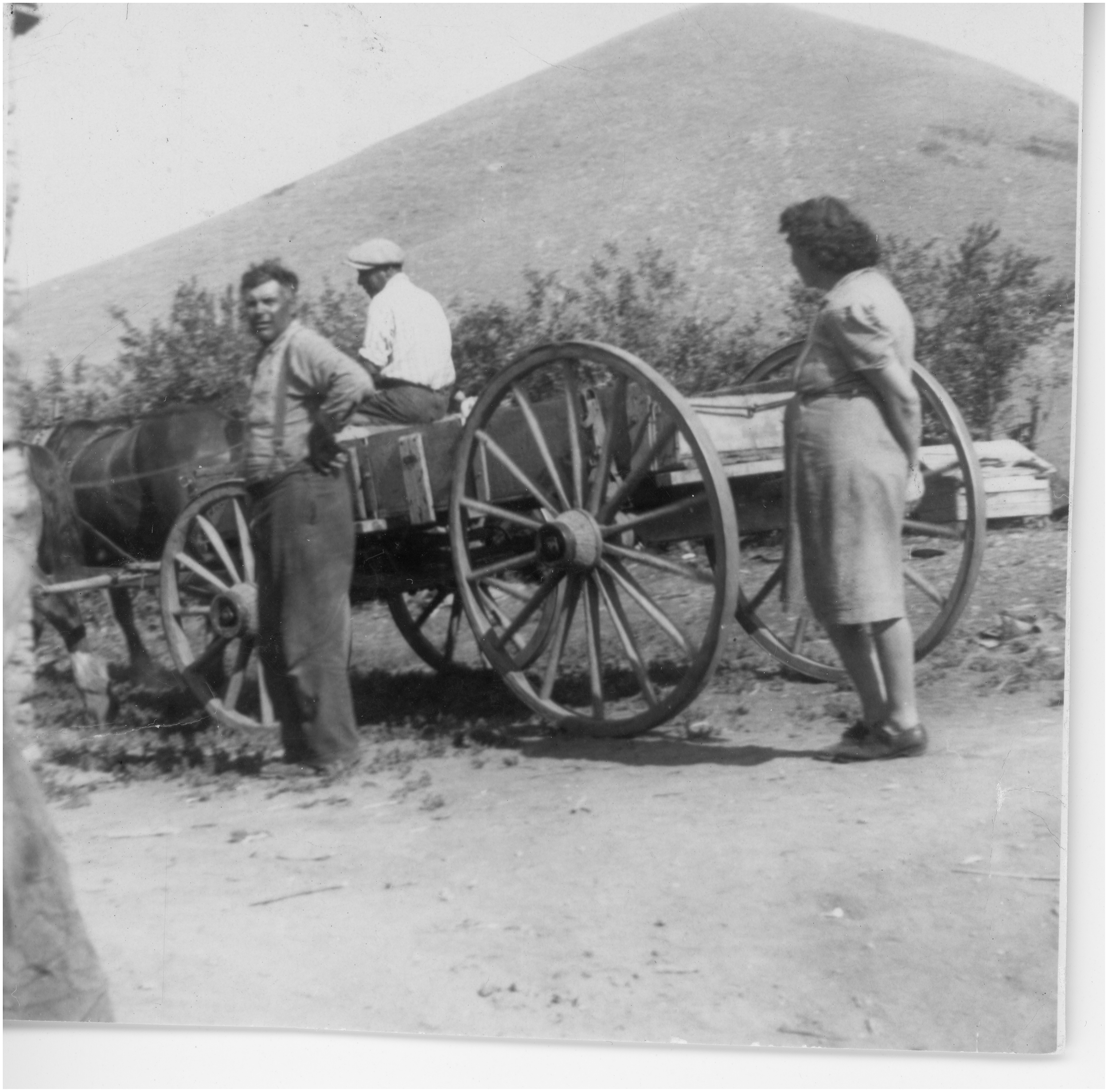
Bill Desjarlais (in the wagon), Fred and Jean Fayant (n.d.). Courtesy of Irma Klyne.
In Figure 22, four rather sombre young people look directly into the camera lens. The young men, in their late teens, were either returning from or departing for a hunt. Wearing overalls, sturdy shoes and rubber boots, they are dressed for hunting, but the girls, in their flounced dresses, are not. Ducks, geese and fish were the foundation of daily diets, supplemented by deer and moose. Although cash-poor, the Valley provided everything required to sustain life. Young people learned those skills as children, and were competent by their mid-to-late teens, as indicated by the confidence in the young hands holding the shotguns.
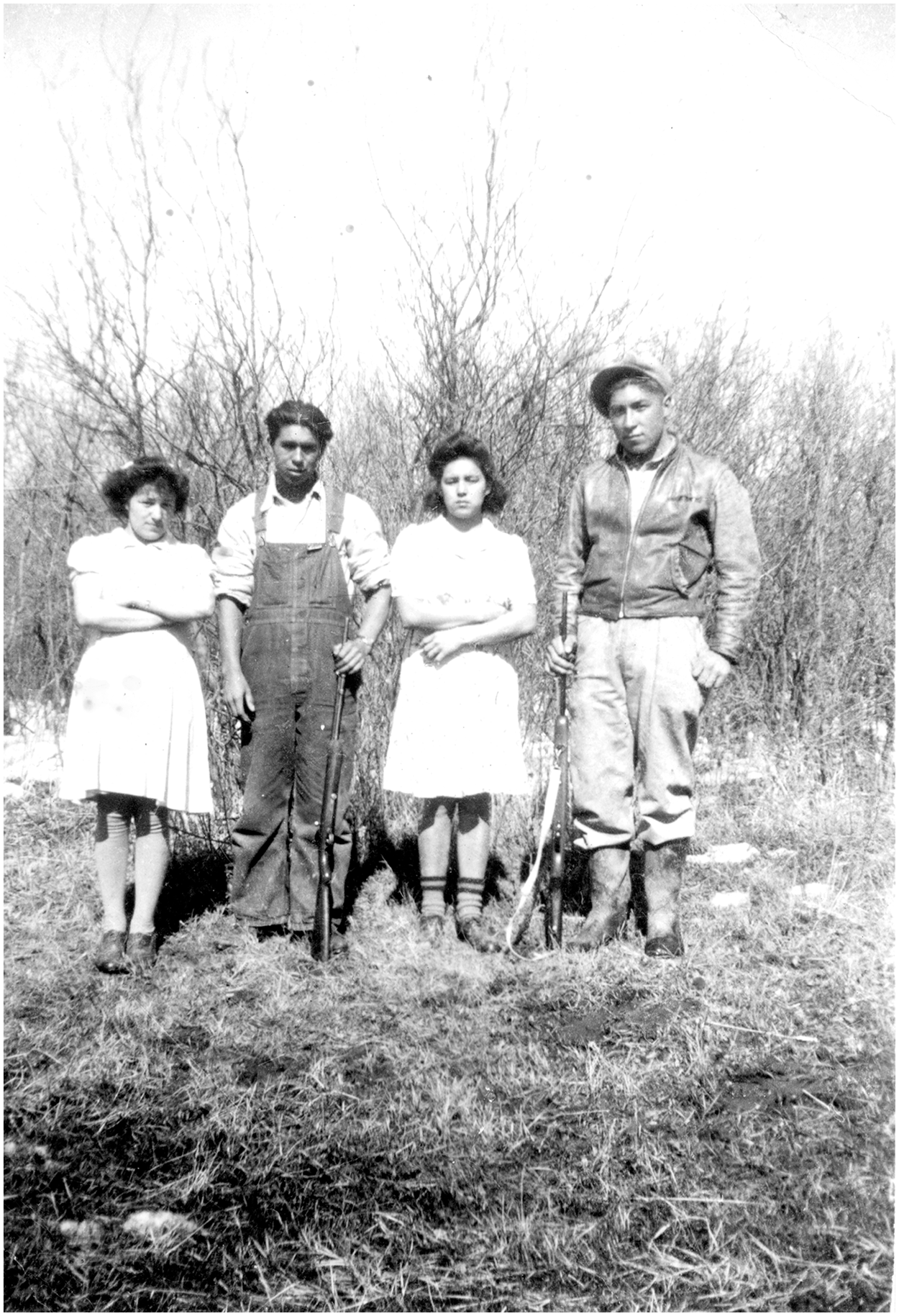
Emily Parisien, ‘Beans’ Klyne, Adeline Klyne and John Racette, ca. 1944. Courtesy of Irma Klyne.
Medicines, harvesting, hunting and fishing sites have all emerged from the process of visiting and remembering through photographs, as have the kin relationships recorded in the images. The placement of homes on the land further reveals networks of support. These were large families, and virtually everybody was related.
As descendants of the buffalo hunters of the northern plains, horses feature prominently in Métis people's memories of the Valley. In the 1930s, several of the old buffalo hunters were still alive, and at least one, Corbett St Denis (1845–1937), was still a horseman. 16 Horses were comrades in war, work and hunting. Mooshom (Grandfather) Norbert Racette had a fine team of horses. A well-worn photograph taken in 1944 shows years of handling (Figure 23). Seven horses stand in a row with the hills in the background. The shadow of a man, possibly the photographer, fills the lower corner. In other photographs, horses pull wagons and serve as family transportation. As we walk the Valley, people remember riding and racing the horses of their childhood.
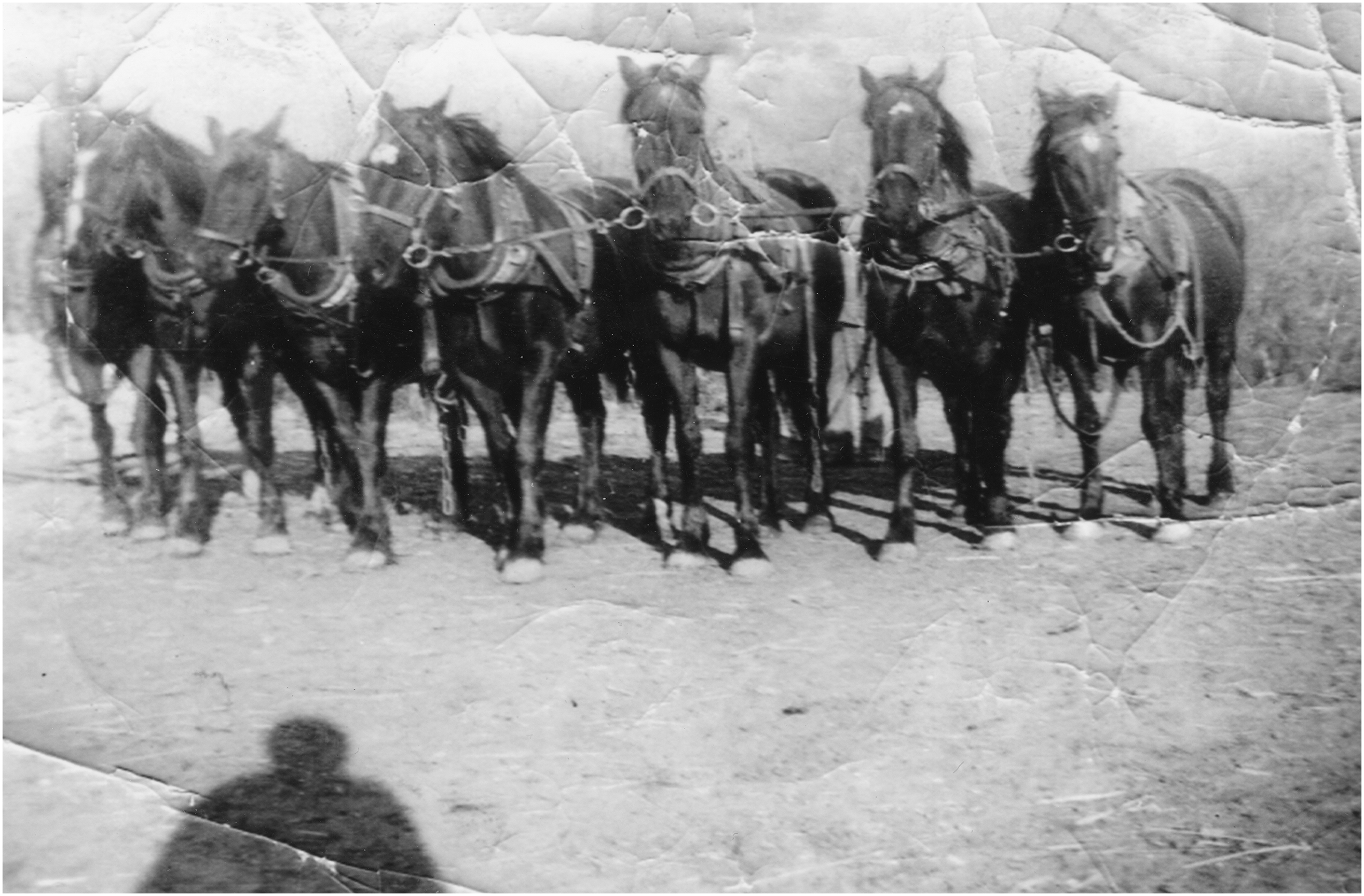
Norbert Racette's team of seven horses. Photo credit: Albert Racette. Courtesy of Lori Fayant Bailey.
Conclusion
The photographs taken by Ngarrindjeri and Qu’Appelle Valley Métis have never been colonial. Their provenance, materiality, modes of knowledge creation, knowledge dissemination, visual aesthetics and narrative content have been explicitly self-governed, reflecting Indigenous ways of relationality, knowing and being. When explored comparatively, community archives advance global understanding of Indigenous vernacular photography and demonstrably offer a rich counter-archive to dominant colonial representations housed in state-controlled institutions, bringing forth new historical perspectives created by Indigenous peoples.
Full of exuberance and vitality, these family photographs offer a unique and treasured glimpse into a world in which Ngarrindjeri and Qu’Appelle Valley Métis led rich and resilient lives, resourcefully evaded institutionalisation and maintained ancestral ways while skilfully embracing chosen aspects of modernity and cared for one another during a challenging period of intensive state intervention. Sharing photographic heritages in a process of early dialogue between these two communities profoundly deepens understanding of the social realities of Indigenous lives outside regulated spaces of government reserves in the early and mid-20th century. As history, they narrate truths invisible to the colonial lens, celebrating both everyday pleasures and a spirit of survival against the pressures of assimilation. Stories of family, place and continuance amplify to become part of a larger narrative of decoloniality.
Such powerful images of everyday life shift the paradigm through which we understand Indigenous visual histories, positioning intimate and local narratives embedded in these photographs within a relational aesthetic and global movement of sovereignty, self-determination and continuance, as well as counter-public Indigenous worlds. The photographs here do not address visual sovereignty as an abstraction; rather, they are witness to the lived experience of sovereignty rooted to place (Racette, 2018a, p. 269).
Footnotes
Acknowledgements
Our grateful thanks to the Meryl Mansfield, Eunice Aston, Jenni McConnell, Sonya Newchurch, Lyn Lovegrove and the other Ngarrindjeri families who have participated in this project and to Lori Fayant Bailey, Bev and Rhyse Cardinal, Larry Fayant, Russell Fayant, Jeanette Fayant Grams, Irma Klyne, Calvin Racette, Joe Welsh, and everyone who loves the Valley.
Declaration of conflicting interests
The authors declared no potential conflicts of interest with respect to the research, authorship, and/or publication of this article.
Funding
The authors disclosed receipt of the following financial support for the research, authorship, and/or publication of this article: This work was supported by the Australian Research Council (grant number DP210100940).
