




Abstract
For people experiencing housing instability, considerable uncertainty and future risks coincide with a lack of affordable housing supply. Housing instability often entails movement across different forms of accommodation while facing the possibility of homelessness. Thinking with anticipation outlined by Adams et al. as a regime of knowledge espousing specific governing principles, this study explores storytelling about the future by people experiencing housing instability. Here, anticipation manifests as agentic future orientation in hopes, practices and social norms geared towards secure housing. Drawing on narrative interviews and participant-produced photographs collected in 2022 in an urban centre in Queensland, Australia, we analyse how participants imagine their futures and what they consider right and actionable. Our findings highlight how such imaginings leaned on and challenged the linearity inscribed in metaphors depicting a predictable progression towards stable housing through appropriate action in the present.
Keywords
Introduction
Homelessness is a social problem that affects a growing number of people in developed countries, including Australia. Escalating prices for private rentals and long waiting lists for social housing (Morris et al., 2023) push more people across different – often transient – forms of accommodation. Being housed temporarily in boarding houses or crisis accommodation, in cars, caravans or couch surfing, while awaiting the allocation of social housing are tangible markers of housing instability.
The risks of housing instability are profound. Opportunities for progress towards a stable home are accompanied by possibilities for housing options to worsen, potentially leading into homelessness. People who have exited homelessness often require ongoing support to sustain tenancies and prevent a return to the streets (Padgett et al., 2016). Past and present experiences of housing instability, thus, imply considerable uncertainties around what the future holds. Yet, how people who experience housing instability imagine their futures as they navigate the contemporary Australian housing landscape is not well understood.
Drawing on conceptualisations of anticipation as a governing logic, we explore what people experiencing housing instability hope for, what guides practices oriented towards realising their hopes, as well as the constraints they face within the Australian housing context. Taking data produced as part of a larger project on the relationship between housing instability and (health) care, we analyse interviews and photographs from 48 participants who lived unhoused, in crisis accommodation, boarding houses, or in permanent supportive and social housing after exiting homelessness. Our findings outline interrelated lines of storytelling that variably foreground hopes, practices and normative dynamics as well as challenges to linear storytelling through the anticipation of non-futures. This highlights the ambiguities inscribed in anticipation as an agentic future orientation when what one can do towards achieving housing stability is severely constrained.
Background
Housing instability in contemporary Australia
Housing instability is a subjective concept comprising both functional stability (i.e. physical shelter, housing quality, affordability and permanence) and experiential stability (i.e. autonomy and independence, connectedness, safety and supportiveness) (Yuan et al., 2023). In Australia, housing instability is rampant and symptomatic of three intertwined domains of crisis: rising housing costs, escalation of homelessness and insufficient social housing supply.
Rising housing costs affect people on low incomes most. According to Anglicare Australia (2022), a private rental listing is considered unaffordable for a person or a family if it exceeds 30% of a household's budget. On 19 March 2022, Anglicare surveyed more than 45,000 rental listings and found between 0% and 1.4% of rental listings would have been affordable for households on different types of government benefits, and only between 0.7% and 15.3% for household types relying on minimum wage. The trend towards housing unaffordability is mirrored in an increase in people experiencing homelessness. Between 2018 and 2022 the homeless population grew at double the rate of the national population (Pawson et al., 2022). Social housing is often the only option for people who cannot afford a rental unit in the private market. Applicants who are eligible for social housing are waitlisted and depending on where they live and their ability to demonstrate need, might not be offered a place to live for years (Morris et al., 2023). Strict vulnerability assessments relying on extensive documentation and application processes effectively act as screening and gatekeeping instruments in the allocation of social housing in the absence of sufficient housing stock to meet demand.
Queensland, where this research was conducted, is among the Australian states experiencing the most severe repercussions of these intertwined problems, with an increase of 22% in Specialist Homelessness Services users in the four years before 2021/22 (Pawson et al., 2022), hence offering an important case study. Against this background we interrogate housing instability as a temporal concept that places significant demands to anticipate risks and prepare for their mitigation on the people who experience it. The concatenation of housing unaffordability, homelessness and social housing supply crises shrouds futurity in considerable uncertainties for the people at their nexus, while presenting formidable constraints on the actions they can take towards a future in which they are stably housed.
Approaching housing instability as a temporal concept
The study of temporalities concerned with what the future holds needs to attend to potential risks alongside favourable opportunities (see e.g., Filiz, 2024 on the experience of Turkish migrants in Germany). To do so, while thinking of housing instability as a temporal concept, we draw on the notion of anticipation. Anticipation studies is a burgeoning field with applications in the natural and computer sciences, philosophy, and the social and human sciences (Poli, 2017). In psychology, anticipation is approached as an ingredient to cognitive processing and decision making premised on the assumption that ‘the cause of our actions lies not so much in the present (in the stimulus), but in the future (in the goal)’ (Kunde et al., 2007, p. 21). In other words, anticipation is considered to precede and engender goal-oriented action. Wetherell (2012) notes that in the social sciences such anticipations are often understood as emotional precursors that become relevant in interactions and enable us to attune to a situational tone. Adams et al.’s (2009) conceptual breakdown of anticipation moves beyond considering the role of anticipation in individual cognitive processes or micro level interactions to situate anticipation as a governing logic that emerged in response to the risks and uncertainties that bear upon how people live their lives as agentic individuals in contemporary Western societies (see Bryant & Ellard, 2015; Cook, 2018).
Adams et al. (2009, p. 254) note that ‘anticipating risk means embodying risk as a sensibility for organising one's life … living at risk’ and map five features of anticipation: injunction, abduction, optimisation, preparation and possibility. Injunction acknowledges that there is a moral imperative to anticipate, while abductive reasoning is the means to identify what courses of action are viable to secure the best possible future (i.e. optimisation). Notably, anticipation is not about preventing risks from materialising in the future, but about preparing for their consequences. Possibility recognises the recursive nature of these features: nothing is impossible and whatever can be anticipated can and should also be managed. In this way, Adams et al. (2009) conceptualise anticipation as situated temporal politics calling for subjects to act upon the future.
As we will demonstrate, people experiencing housing instability are called upon to work on themselves in anticipation of housing risks. We show how anticipation in the context of housing instability occurs at the intersections of housing policy, charity, social work interventions, materiality and social relations, always inflected by a normative logic invested in linear trajectories towards stable housing that prioritise volition and progression – ‘journeys’ out of homelessness.
Methods
Study design and sample
The present study was undertaken in Southeast Queensland, Australia and is part of a larger project investigating the relationship of housing and health. We collaborated with two not-for-profit organisations providing services across domains such as housing, health and domestic violence to people exposed to housing instability. One organisation has a national footprint in the provision of specialist homelessness and emergency relief services, including crisis accommodation. The work of the other organisation is concentrated in the capital city and includes advocacy towards system transformation in addition to supporting people with securing temporary accommodation or tenancies and sustaining tenancies. We took an ethnographic approach to data collection, including overt observations of situated practices, participant-produced photography and interviews (see Miterko & Bruna, 2022).
After ethical approval (HREC 2021/HE002663), we invited people experiencing housing instability in the organisations’ catchment to participate in the study. Service providers facilitated introductions to prospective participants. This allowed us to approach people in different forms of (non)accommodation including: (a) currently living in crisis accommodation or a boarding house; (b) sleeping rough; or (c) supported into housing by the collaborating organisations. After introducing the research, we emphasised the voluntary nature of participation, and that non-participation would not affect the relationship with service providers.
An interview guide was developed with topics covering different domains of health and social care, including a set of questions and probes to gauge participants’ hopes. Interviewing unfolded iteratively; future orientation and practices emerged early as an analytical focus to be probed in later interviews alongside other key issues, such as health care access (Plage, Baker, et al., 2023). We report findings from 46 interviews (44 individual, 2 dyadic) with 48 participants (30 male, 16 female, 1 transgender male, 1 gender diverse). Interviews took on average 45 min (10–105 min) and took place in public places during outreach activities, in private rooms on the premises of a crisis accommodation facility, and in participants’ homes.
Participants were asked after the initial interview if they wanted to take photographs for this study following a strategy combining participant-produced photography with storytelling (Plage, 2023). This approach departs from traditional Photovoice rooted in community-based participatory action (Wang & Burris, 1997) by approaching photography as series of encounters (Azoulay, 2012) to work individually with participants. Cameras engender relationality, for example in possibilities to document or confront injustice, and elicit emotions in others that might move them to act, making photography a political practice of ‘being with others through photography’ (Azoulay, 2012, p. 14). The interest of this study lies in the everydayness of meaning making within social relations. Through photography as a relational practice involving participants, researchers and prospective audiences (Azoulay, 2012), we situate the analysis within its specific socio-material context. We deemed this particularly suitable for the present study interested in the material and spatio-temporal facets of housing instability.
Interested participants received a digital camera and were asked to ‘tell the story of what health looks and feels like and what it means to them’. As expected, there were fewer participants available for this component given the additional burden. The small sample is well compensated for by the richness in visual and narrative data. The photographs were individually discussed and captioned with 14 participants during a photo-elicitation interview (PEI), which took on average 101 min (42–222 min). Participants received a AUD 30 voucher in appreciation of their contributions for each research activity they participated in.
Data analysis
Throughout the process the research team remained conscious of their advantaged epistemological position as academics employed by a higher education institution. We actively produced moments for reflection on our knowledge practices in team discussions and by inviting study participants to contribute to various research outputs, including a photographic exhibition (Plage, Perrier et al., 2023). We also were aware of our lived privileges, including the fact that we could return to a secure home at the end of a day of data collection. Following Fitzpatrick and Olson (2015), we approached the reflexivity called for in encounters with participants as analytical emotion work capable of producing valuable insights. While we sought to centre participant perspectives, we acknowledge that our findings and their interpretations are produced in the context of differential access to material and knowledge resources, some of which at the core of the analyses we present.
Interviews were audiorecorded where consent was forthcoming, professionally transcribed and deidentified. One participant did not wish to be recorded and interview notes were summarised for analysis. Data were analysed combining four types of narrative analysis – thematic, structural, dialogic and visual (Riessman, 2008) – to crystallise insights from interviews and photographs as well as from different study participants (Richardson, 2000). Thematic analysis is focused on a narrative's content; structural analysis explores forms of storytelling (e.g. metaphors); dialogic analysis acknowledges that narratives are co-produced; and visual analysis examines visual content alongside text (Riessman, 2008). Text-based and visual data were given equal importance in the analysis.
Photographs were inserted into transcripts prior to analysis. After reading and rereading all transcripts and notes, annotation and cross-comparison, codes were aggregated into themes using NVivo. Frequent team dialogues served to add depth to themes and reflect on their complexity and conceptual relevance. The analyses allowed for varied foci, questions and conceptual work on experiences with care in the context of housing instability, often beyond the original project focus on health. Specifically, the salience of future orientation became apparent early in the research process. Analyses concluded by applying the conceptual lens of anticipation upon revisiting the coded data and interrogating our findings vis-à-vis the extant literature.
All names are pseudonyms and for context we differentiate between community and social housing, and crisis accommodation, as well as unhoused participants at the time of the interview. ‘Unhoused’ means that participants were not in any position that would reliably ensure their need for secure housing was met (i.e. sleeping outdoors, in cars or couch surfing without enforceable right to stay). Participants’ housing status during the time of data collection was often volatile and many stories related to a previous housing status. It is for this reason that we rely conceptually on the notion of ‘housing instability’ to tease out the nuances in how participants approached their futures.
Results
We present results exploring (1) the scope of hopes, (2) practices oriented towards them, (3) normative expectations to keep moving up/forward, and (4) non-linear narrative fragments that challenge the temporal logic of the hopes–practices–normative axis.
Falling: Hoping in between
Most participants, whether in crisis accommodation, community or social housing, or unhoused, volunteered stories about their hopes for the future, but we also prompted participants to tell us what they hoped for. The stories so elicited were focused on reconnecting with family, going on a holiday or planning a birthday bash, addressing health concerns, obtaining work, furthering study and leisure, or securing income. In other words, participants shared a comprehensive catalogue of things they hoped for, in which a stable, appropriate and safe home often featured as an object of desire and a means to an end. Ines yearned for safety that she could extend to her daughters: I hope that I can live in a place that is comfortable and safe. And if something happens with my daughters I can say, ‘There's always a safe spot here. You can come to stay over and I’ll cook you dinner and you’re safe here.’ That's what I want to say. That's how I’d like to live the rest of my life. (Ines, community housing)
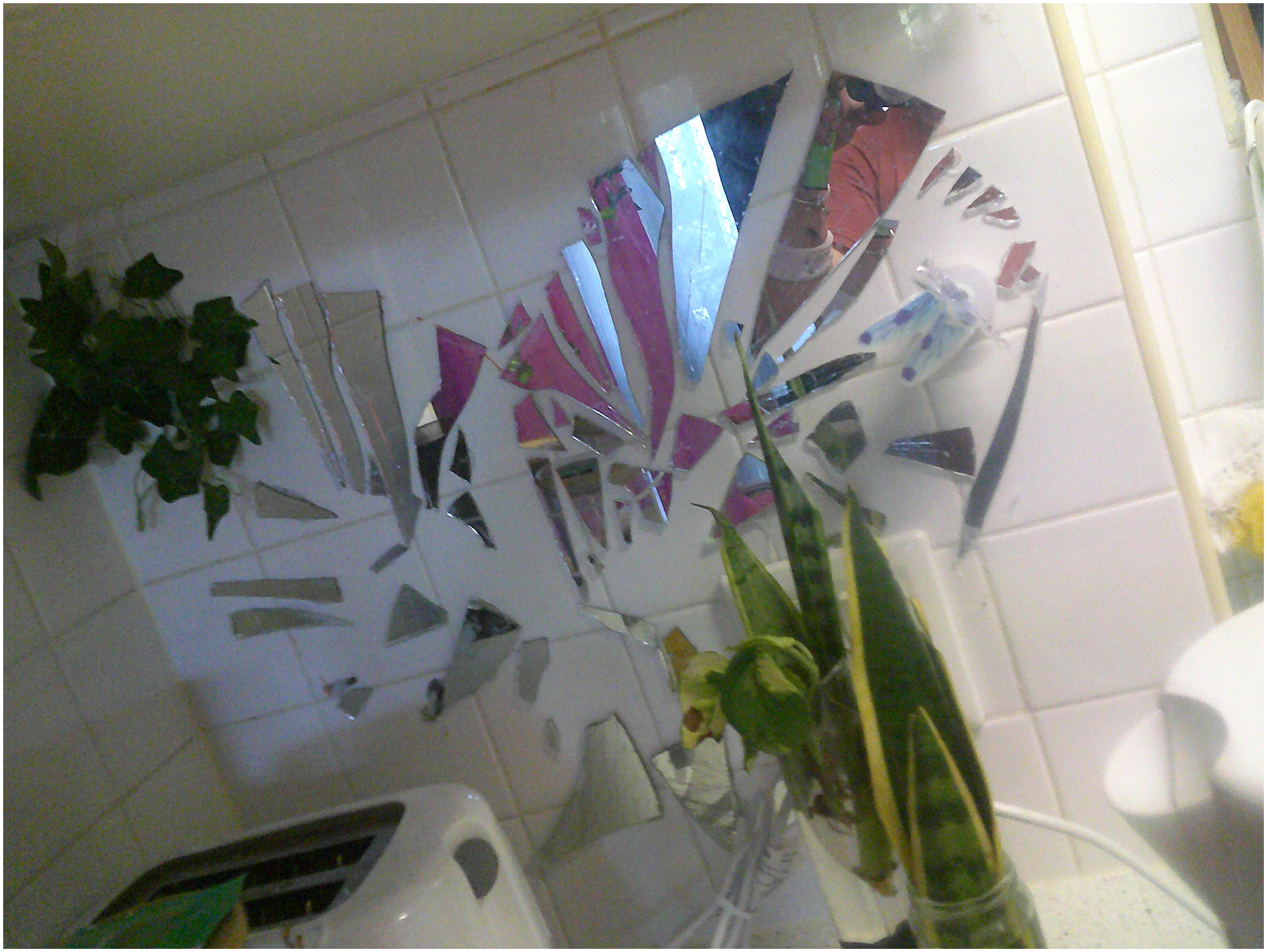
‘broken heart & family: my heart's been shattered ... things can be fixed with support and with love and with care. Anything can be fixed.’ (Ines).
Ines's captioned photograph is an apt representation of the fragmented nature of many stories we heard from participants. Ines related to the tale of Tinkerbell who broke her magic wand into many pieces. Fearing punishment and sadness for having broken something so special, she realises that each shard holds the potential for magic. Rupture and disjuncture and the inability to perfectly restore an imagery of a lost past sat alongside the articulation of the belief that something can be done. It is an image of hope for a better – albeit different – future that embraces its fragmentedness to diffract a multitude of possibilities. Other participants explained: I’d love to be in a house. Yeah. I’d treasure it … I really need a big step up. (Archie, unhoused) Get the house, that's one tick off the list, and get a job … I’ll still get my income and a part-time job. Then I’ve got some routine. And get a psychologist, and somewhere local so I’ve still got routine and build up in the community. Then I’ll start to feel I’m getting somewhere. Have me visits with me daughter. I want them first. Gives me something to look forward to once a week. (Jade, crisis accommodation) You’ve got to try to treat this place as a stepping stone, I guess. But it's hard to sometimes make the first step. You know? Especially when you’re pulled in different directions … the longer I’ll probably stay in here, the more chances I’m going to go downhill. (Toby, crisis accommodation) I did not expect to be kicked out [of crisis accommodation] … I just started seeing my daughter again. Then I started living in the carpark … I was this close to getting my life sorted … I was going to buy a car and things like that. I wanted to do some Uber driving. I just had everything planned out what I was going to do. (Linus, unhoused) Oh, we’re hoping for a place to call home, and hopefully nobody comes and bothers us there. I’m hoping whoever it is that's stalking me and stealing all my shit all the time and sending people to mess with us will disappear. One can only hope. (Simone, unhoused)
Simone, who was interviewed together with her partner, had recently returned to sleeping rough, despite renting a unit. They were at the verge of losing this tenancy due to a complex set of mental health issues and social relations. While facing an immediate deterioration in their circumstances, they continued yearning for ‘a place to call home’, as did other participants in similar circumstances. The hope for an improvement in housing always sat alongside the possibility of ‘going downhill’, as Toby feared. Kylie, whose lease ended abruptly as the unit she rented was sold, faced a sudden return to street homelessness. She reflected on a recent tenancy application in the private rental market: [Rental] was a new beginnings, but it was also really a dream that was too early … [Rental] was about a dream of getting away from the drama that is [city]. (Kylie, unhoused)
Like Kylie, many other participants spoke about their hopes for housing as ‘dreams’. She had been excited about this possibility and shared photographs of the prospective rental with the research team. She did not anticipate the rejection of her application and she made sense of it in terms of timing, implying that one needs to be ready for a new beginning. Through this narrative device, misfortune is explained with reference to one's individual preparedness, while creating scope for future possibilities: when the time is right, dreams can come true. Such stories can also be seen as strategic in managing rejection and the fears of a return to homelessness. These participants’ emphasis on letting go of the past and focusing on the future may be a form of exercising emotional reflexivity (Burkitt, 2012) or emotion work (Patulny, 2021), implicitly acknowledging social context and expected emotional responses.
Our findings demonstrate the widening gap between socio-cultural narratives positioning homeownership as Australian dream within aspirational reach (see e.g. Morris, 2016) and the realities of the contemporary Australian housing context: some participants in our study did not even dare dream of renting. While most participants kept sleeping rough to a minimum by making couch surfing arrangements or being supported into crisis accommodation or community housing, they perceived themselves as ‘semi-homeless’ (Marv, community housing) or ‘semi-homed’ (Damien, community housing). While hoping for ‘a place to call home’, sometimes for months or years, they perpetually had to contemplate the possibility of ‘falling off’ the housing ladder. We explore how participants approached this temporal pattern below.
Stalling: Making the most of time in between
Participants engaged in many practices to further their possibilities to be ready for stable housing should their time come. For participants, housing readiness revolved around a set of techno-legal (e.g., completing housing applications), psychosocial (e.g., fostering a growth mindset) and logistical practices (e.g., managing belongings). William illustrated this in a photograph of his support worker completing forms with him: When you’re homeless, people think that you’re lazy or you’re not doing anything. People don’t realise that having all this paperwork is so overwhelming as well. It is just a constant flow of pressure to fill out forms or to read things … I could not cope with it. That was a shopping bag of paperwork. (William, crisis accommodation) I spent a lot of time in the corporate world … I was just writing stuff and then just putting a line through it throughout the day … I just started adopting those things back in my normal life when I was trying to get off the streets. And it helped, man. Just having it written down and seeing it there, it's like, ‘Shit, this is not a big deal. I only need to do this, this, and this and I’m sweet.’ So, every day I’d chip away at something. (Linus, unhoused) I’ll give myself to the new year … I call it like a holding, like a holding stage … every time I get depressed … try to look on the positive side more, but every so often, when you’re looking out the window and seeing people do stuff, you’re thinking, ‘Oh, I should be doing that too.’ I know they’re not doing much. They’re coming from work, coming back from work, just life … Hard work builds character, it's good for the soul … I think I’ll know when it's right. (Toby, crisis accommodation)
As is evident in these quotes, such practices tapped into the ‘workfare’ narrative emphasising the benefits of routines and the repercussions of being out of employment (Stambe & Marston, 2023), indicating wariness of welfare dependence (Bullen, 2015). However, in the context of awaiting housing allocation, these quotes also demonstrate how temporality was experienced as ‘stalling’. This sense of stalling was pervasive throughout the participants’ narratives and gave important insights into the normative to keep moving, which we elaborate below. In terms of housing readiness, this normative translated into practices participants engaged in despite a perception that these would not significantly expedite housing allocations or could indeed undermine them. As Louisa responded when asked if she had undertaken any steps towards getting housed: Yeah, a heap. Yeah. And looking at rentals all day, oh my god. It is exhausting when you’re back to the start. You do it so many times, ‘Is it available?’ blah, blah, blah. You don’t get responses back. When you do, you go and visit it, it's not like the picture and it is – Wow, it's astronomical to live alone now. (Louisa, crisis accommodation)
Similarly, participants explained how they collected furniture and appliances (e.g., from the curb), saved money or packed up their bags to be ready whenever a unit should become available. William (crisis accommodation) photographed the bed in his room (Figure 2a), commenting, ‘it's something that's personal. So, when I move to my own place, I’ll be able to take with me my bed covers, my doona cover and pillow covers and those little pillows I bought.’ Maurice (crisis accommodation) contributed a photograph of his belongings (Figure 2b), captioned ‘all my stuff that I have ready to move into my next place’. Both photographs were taken many months before either of them was offered a unit in community housing. Maurice explained, ‘it's never felt like home. I’ve always known it was just a temporary thing, and at the drop of a hat that will all change.’
There was a tension between the perceived urgency of having to be ready for housing ‘at the drop of a hat’ that jarred with the uncertainty around when a move would eventuate. The longer this process dragged on, the more acutely participants felt frustrated. As Gough narrated: I’m just waiting to find out about housing, what they’re going to do with me … I don’t know what's happening with it. I’ve got no idea … That just leaves me in the air … You feel stagnant … makes you feel that you’re just stuck in limbo … I’ve got to make sure I don’t go spending too much, because I know I’m going to have to buy things when I get a place … it's there, it is going to happen, but when? (Gough, crisis accommodation)
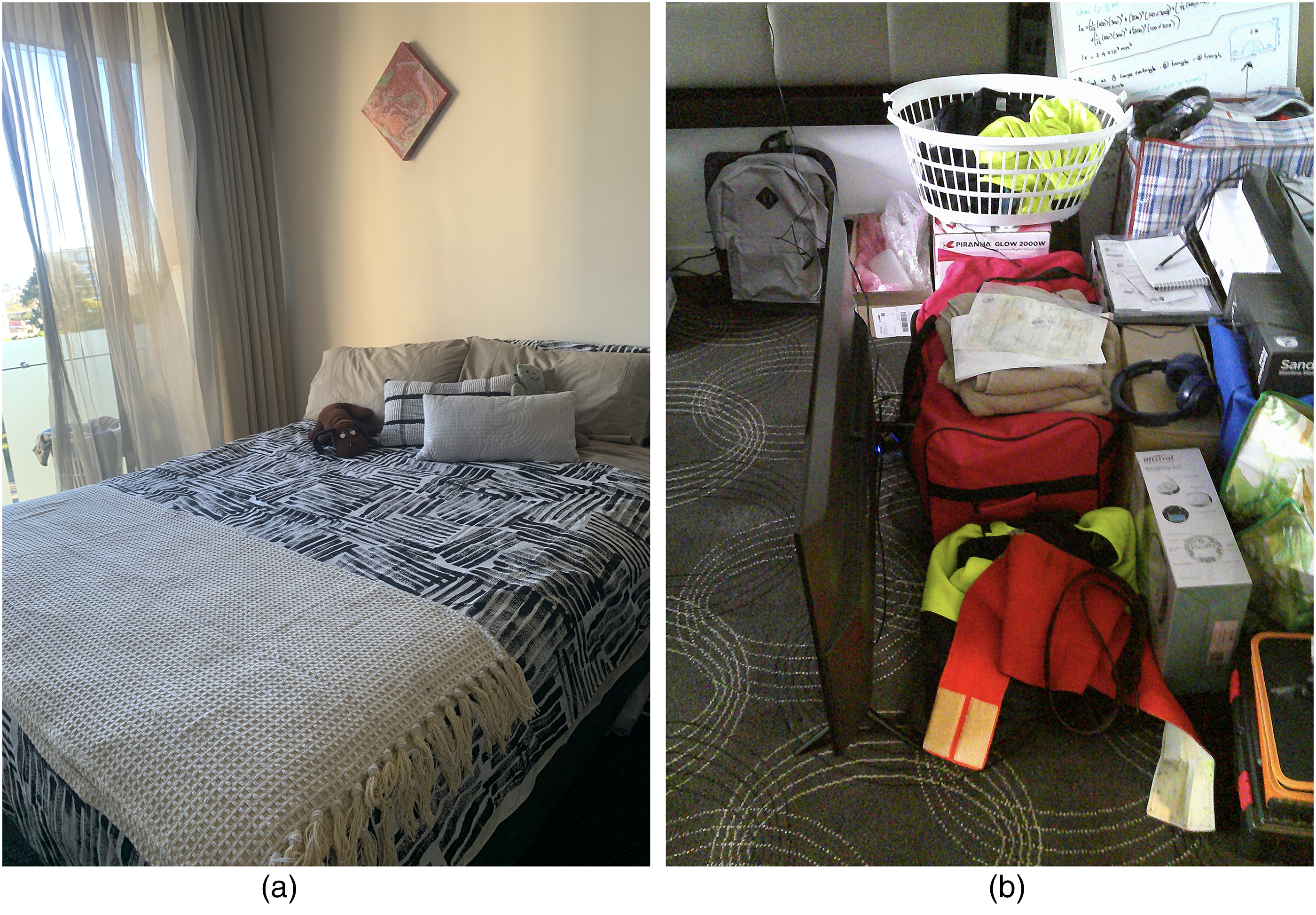
(a) ‘when I move to my own place, I'll be able to take with me my bed covers, my doona cover and pillow covers and those little pillows I bought’ (William). (b) ‘all my stuff that I have ready to move into my next place’ (Maurice).
Adams et al. (2009, p. 249) contrasted ‘anticipation and preparation (tied to hope)’ with ‘surprise, uncertainty, anxiety and unpreparedness (tied to fear)’. In narratives like Gough's, hopeful and fearful affects were co-present, as participants demonstrated their ‘readiness’ for housing while continuing to ‘stall’. By pursuing techno-legal, psychosocial and behavioural, and logistical practices, they actively anticipated futures in which they were housed, often without tangible evidence that these practices were efficacious. This alludes to housing readiness as a normative, which we discuss in the next section.
Climbing: The normative to keep moving
In its most general definition, normativity is based in a culturally shared understanding of expectations and agreed consequences for (not) meeting them. In the context of housing instability, normativity feeds into questions around who merits a timely housing allocation when there is not enough housing to go around. With lives as fragmented as Ines's mirror, what tied participants’ narratives together was often a shared understanding of movement being essential. As Gayle reflected: a lot has happened. Lots and lots and lots. But I know one thing, it doesn’t matter how many times you fall, you need to pick yourself back up. Even if it hurts, you’ve got to keep moving. (Gayle, crisis accommodation)
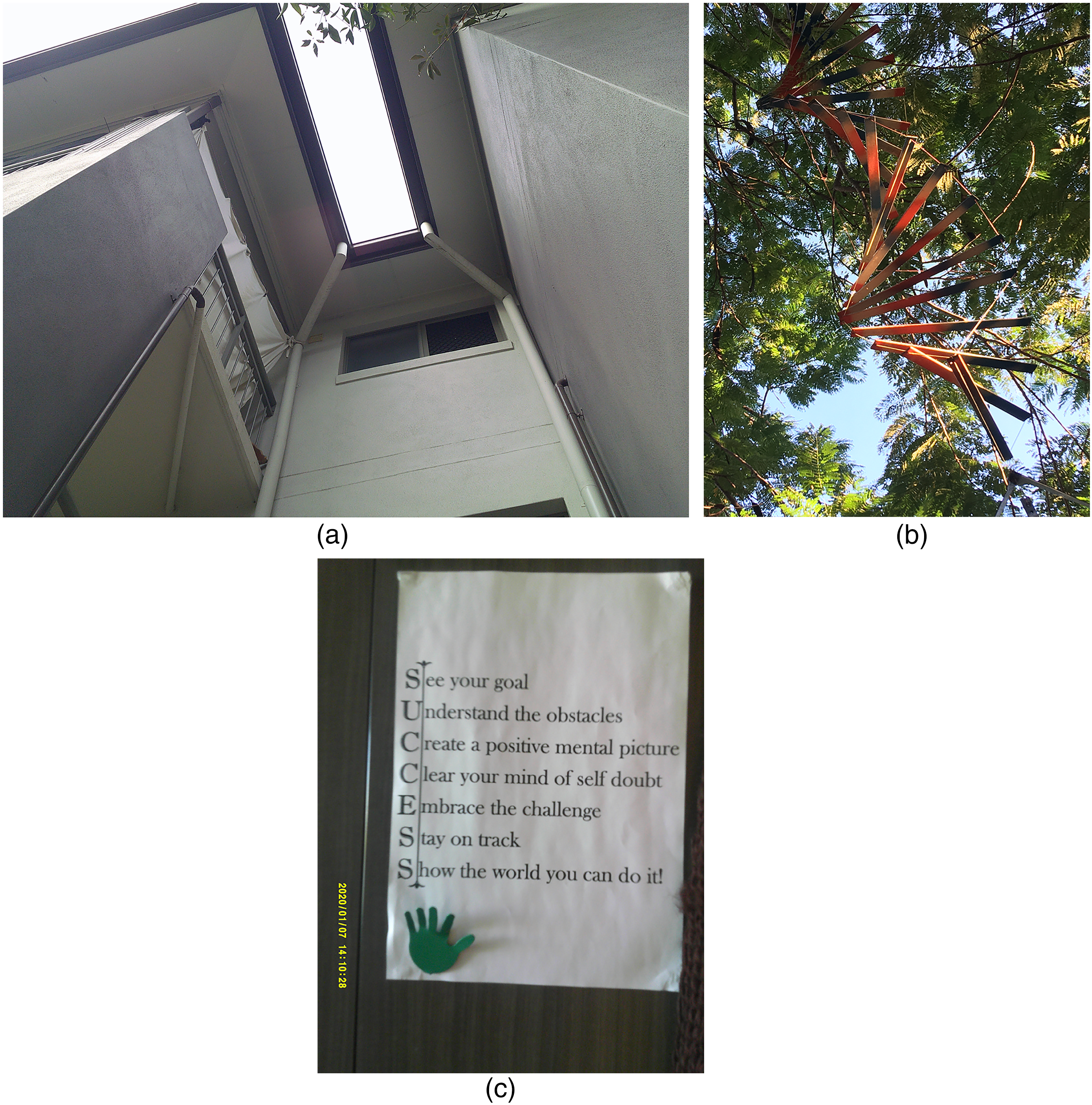
(a) ‘looking up’ (Ines). (b) ‘aspirations to connect heaven and earth’ (Marv). (c) ‘uncaptioned’ (William).
Specifically, participants themselves ordered types of shelter along a trajectory indicating upward/forward mobility, in which sleeping rough appeared at the bottom/beginning, shortly followed by a placement in a boarding house. Being in crisis accommodation, in turn, was considered further along on the imagined pathway into supportive or social housing. As Sean exemplifies: [support worker] put me in the boarding house … it's a roof over your head … I didn’t even know about this [crisis accommodation], and then she goes, ‘Oh, we’ve got even a better place for you and it's a lot bigger’ … I just had to work me head out, being homeless … like forgetting about the past, moving on the future … I’m 100% better because I’m moving forward … you’ll see in the next couple months or even in 12 months, I’ll get there … they’re going to find me a place. (Sean, crisis accommodation) I’m on the waiting list for all them, yeah …. I’m not blaming them or anything. They did give me an opportunity and I blew it … it's sort of my punishment … they gave me a two-bedroom unit. I was on the methadone program and it just made me real angry, real frustrated … I went off at my neighbours and got kicked out … they brang me back up to here and said, ‘Behave yourself and we’ll give you another place.’ (Hugh, community housing)
Hugh's story and framing his return to community housing as punitive reveals the normative dynamics that guide the hopes and practices of participants. Moreover, the normative to keep moving forwards emerged in some interactions with the social care system. As Linus related: [support worker] was so pushy about me going, going, going, going. ‘What are you doing about your housing? What are you doing about this? What are you doing about that?’ Every day, ‘What have you done? What have you done to move forward? What have you done? What have you done?’ (Linus, unhoused)
The understanding of social expectations and anticipated consequences surfaced both in reflections of participants on their own experiences but also in judgments placed upon others: I’m nothing like the people that are living here. You can just look at them and you know they’re not getting nowhere … I’ve still got it in me to get me shit together and get on me feet … There's a lot of lost souls here. (Clark, crisis accommodation) My stuff, I can deal with it. You know what I’m saying? Like these guys have got a mountain to climb. But they don’t think it's a mountain, but it is. (Toby, crisis accommodation)
Such forms of storytelling served to sustain distinctions among people experiencing housing instability, and situating oneself in relation to them. It indicated how participants distinguished ‘lost souls’ from themselves through their own capacities to strive and act on the present to shape their futures. ‘Climbing’ was imagined as intricately linked with individual responsibility to make the most of available support resources: Oh well, no one's going to get nothing unless they want it themselves. But yeah, the processes are all out there, you’ve just got to suss them out … The main responsibility comes down to you can’t help those who won’t help themselves. So if they don’t want help, they’re not going to get it … So the responsibility, I suppose, falls on the individual, I think, to want to get somewhere. (Abraham, social housing) when people push you just to take action, but not to push you out of a place, that is different for me. It's a sort of positive thing to do with the person. It's like if they say, ‘You can’t stay here forever’, it's like with a butterfly, to help them to fly away, to go. You can’t be in a safe place forever. You need to find your own world and your things … I am half the way probably. (Bonnie, crisis accommodation)
Many participants framed their stories of anticipating the future using metaphors and similes referencing forwards or upwards movement, like ‘climbing’, ‘flying’, or ‘getting somewhere’. This aligns with staircase, pathways or career metaphors of housing resonating in social policy and practice approaches (Fopp, 2009; Johnsen & Teixeira, 2010; Sahlin, 2005) and positions anticipation as an agentic governing principle urging individuals to prepare for their future by taking responsibility for risks under conditions of uncertainty. Yet, for many participants, extended periods of waiting, resource constraints and reliance on structural factors beyond their influence were an everyday reality. Below, we explore how some story fragments countered the normative to anticipate when confronted with a lack of viable housing options to move towards.
Non-futures: Not-knowing/not-doing
Most participants held hopes and faced expectations from the social care system, as they engaged in anticipatory practices oriented towards housing readiness and other goals. They also recognised and often intimately felt the social constraints on their capacities to imagine and prepare for an uncertain future. These participants explained: I have considered going to grad school … I thought that I would be working and getting my life back together, like within six months, and it's been two-and-a-half years of hell … It's like the perpetual cycle. (Vivian, crisis accommodation) I’ve been a bit lost on my journey … oblivious to time, I have. It's escaped and got away from me … I’ve been left for the last few years just thinking, thinking too much. If anything, I should have put my effort into studying and got something out of it. But getting into doing some studying is still another attribute on the checklist to get done when you’re bouncing here, there, there, there. (Jade, crisis accommodation) Oh, I don’t even think about that. I thought that I would have my children back by now. So, yeah. What do I think of the future? It just isn’t happening. Yeah. (Annie, unhoused) Before I go to sleep at night I think to myself, ‘Oh, am I going to wake up in the morning?’ Then you wake up in the morning and go, ‘Oh, I woke up. What's in store for me today?’ … To be quite honest, I just take each day as it comes. Some days I take hour by hour … With the way things are, I find it difficult to set goals for myself. (Gough, crisis accommodation)
Hopelessness for recovery or a better life can render the future as nothing to look forward to (Håkanson & Öhlén, 2016). Many participants told stories that defied temporal ordering, in which actions have predictable consequences. Often this dynamic showed in the struggles to set concrete goals. Queries interjected hopeful narratives and challenged the linearity that depicted normative practices as moving along the pathway towards making hopes of housing a reality. Instead, narratives fragmented into a series of questions or collapsed altogether, foregrounding trauma and despair: It's hard to know where you’re going to go or what you’re going to do if you don’t have direction … And I’m thinking, ‘In my room, how am I going to be normal? This is not normal. But how am I going to get through this? How am I going to be okay?’ But I can’t dwell on yesterday's experience today and defy it by the time. I can’t. Okay, three o’clock I’m going be upset. No … it doesn’t have a date, the trauma. (Fleur, crisis accommodation) I’ve put [the transition into housing] on hold … I don’t feel the need for it … Street is my home at the moment … trauma is like, when you first get violated, the trauma is resonating at a very wide angle. But as time goes on, the magnitude or the, what do you call it, the swing of the pendulum gets smaller and smaller. But it's not going to go away. (Sandra, unhoused)
Both Fleur and Sandra identified trauma as a significant factor that inflected their hopes for the future. Sandra specifically resisted a return to being housed as this was where she experienced a violent robbery, making living among other homeless people feel safer by comparison. In some participants’ narrations it was unclear when such traumatic events happened – often covering many years in no particular order and within a few sentences, before returning to the prompt about what comes next for them. Eugene, for example, iterated a long history of institutional abuse since early childhood before stating: but as far as where am I sleeping tonight? I do not know. Probably back under the bridge … I’ve lost all hope in fucking the whole process of going somewhere. It's like a single man with no children … Like back in 2000, I could rent a three bedroom house … for 150 bucks a week. Try and rent a room for that price these days is fucking impossible. (Eugene, unhoused)
A counter-narrative emerged here, turning the logic of anticipation upside down by rejecting the desire for futurity in the context of scarce material resources, a housing affordability crisis, and not meeting standardised assessments of vulnerability and need. Anticipation as a regime of knowledge calling for action (Adams et al., 2009) eventuated as an imagining of non-futures characterised by not-knowing and not-doing: Interviewer: So, what hope do you have for the next thing for you? Archie: I don’t know. I don’t really know. Because it's got to the point where I don’t even know what I like anymore, I don’t even know what I like to eat, I don’t know my favourite food … That's just how it is. Sometimes I don’t even know what I’m doing. Yeah, not like I don’t know what I’m doing, but I don’t know what to do. (Archie, unhoused) Honestly, I don’t see myself in like three years or two years. I don’t have any plans. I don’t really have anything. I can’t think that far ahead. I’m having trouble just thinking day-to-day. I have these big voices talking to me all the time. It's hard for me to even just think about myself, with my own problems, because I’m thinking about bullshit all the time. (Hugh, community housing)
It is important to note that this does not indicate a typology of stories or, by extension, a typology of people who experience housing instability. Indeed, we found that for many participants, chaotic and temporally complex storytelling challenged narrative coherence in how they anticipated their futures. William's photograph of a piece of paper where he jotted down thoughts and song lyrics to confront feelings of hopelessness (Figure 4) contrasts significantly with the affirmations he photographed as well (see Figure 3c).
When do you stop trying? Hope is a pretty powerful thing to carry. Then you have no reason to have hope as well … I do regularly, even if not daily, battle with, ‘What's the point?’ All I’ve done, and literally I’ve just fought to be something and lost everything and they just keep doing the same thing. When is enough? I’m exhausted. (William, crisis accommodation)
Such non-futures were marked by not-knowing and not-doing. Tutton (2023, p. 440) argues that ‘feelings of futurelessness reflect how actors are differently positioned to enact their own desired futures’. Rather than indicating the incapacity to anticipate a future, imaginings such as William's expressed the anticipation of perpetuity in suffering. Beyond a sense of futurelessness as the foreclosure of individual futurity, he and others articulated their dread of a non-future, for which present and past experiences provided the negative dispositive, which once fully developed will reflect only more trauma and despair. In this imagery, temporal dis-ordering superseded hopefulness and, like futurelessness, subverted metaphors of upwards or forwards mobility.
Discussion
We explored how people experiencing housing instability anticipated the future. In contrast to gendered differences in experiences of violence while rough sleeping (Stambe et al., 2024), exposing in particular women to sexual violence, we do not find any clear gendered differences that would explain our findings with respect to how people experiencing housing instability anticipate their futures. Within our analysis, housing instability appeared as a temporally salient concept: participants approached their future housing status as uncertain yet also always on the horizon. Anticipation conceptually implies preparation for what is to come; it is a governing principle that demands action on the future in the present (Adams et al., 2009). Among participants, this comprised a set of techno-legal (e.g. completing housing applications), psychosocial (e.g. fostering a growth mindset) and practical actions (e.g. obtaining furniture and packing bags). Without the certainty of a house to go to, participants anticipated future risks by making themselves ‘housing ready’.
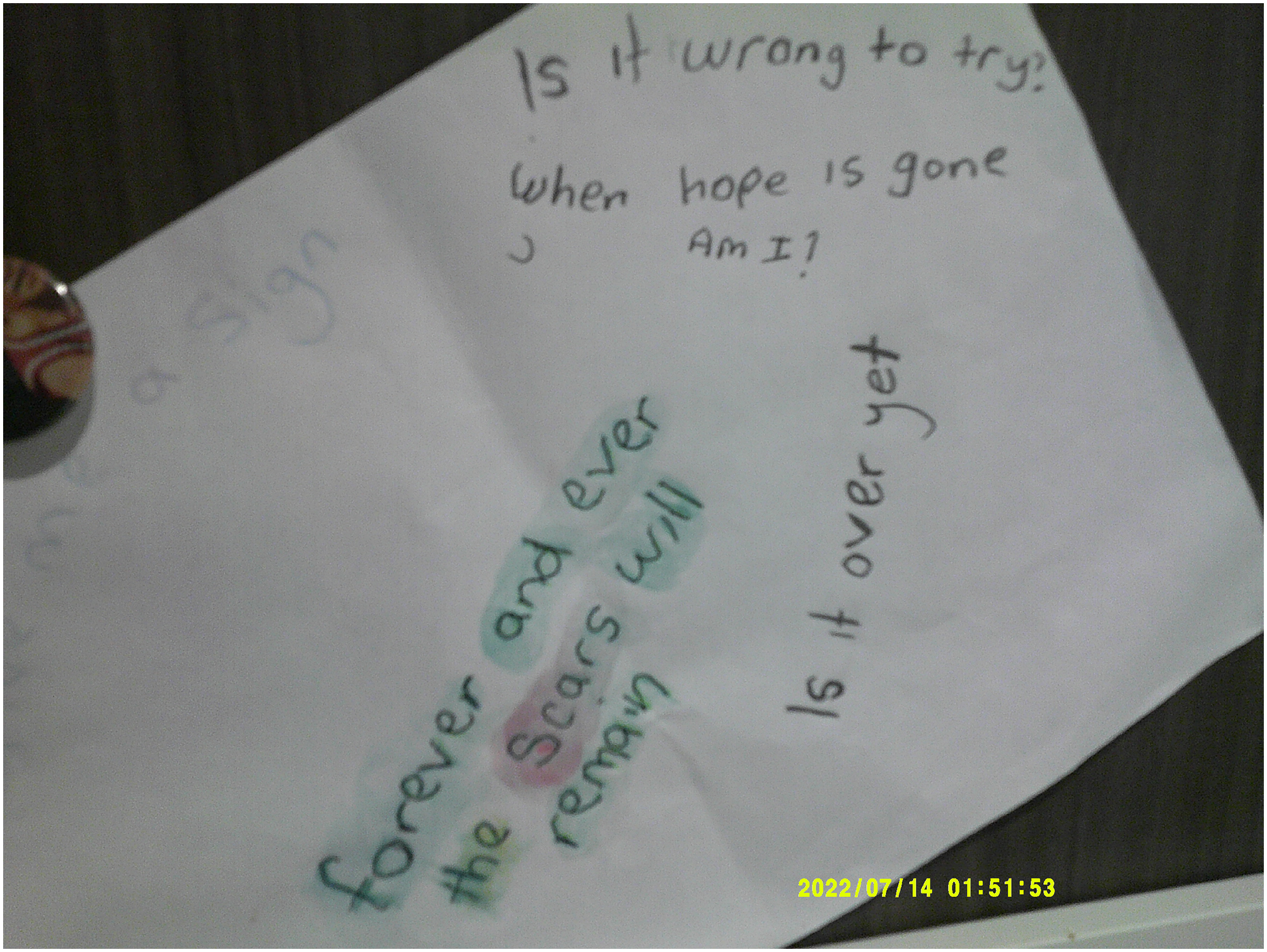
‘Reaching out + state of mind’ (William).
Progress was imagined as movement along a pathway towards stable housing. However, movement also presented risks and encapsulated precarity. Housing instability implied constant change, that is, movement across different forms of accommodation, none of which offer security. There was an understanding that a change in circumstances may as likely be a deterioration as the forwards/upwards movement participants hoped for. Perpetual movement foreclosed the stability of a home in which one is settled in the future. In line with research on long-term housing outcomes (Anderson-Baron & Collins, 2018; see also Plage, Kuskoff et al., 2023), the desired ‘forever home’ remained elusive for many participants. Participants perceived themselves as temporally misaligned as they employed ‘timing’ as explanatory framing for prolonged periods without housing allocation. Practices were oriented towards housing readiness as a governing logic, i.e. working on the subject to demonstrate worthiness, for example by completing housing applications and working on other goals while waiting. This is a temporal logic guided by the normative that there is no time to waste. We see at play anticipation as a regime of optimisation, which Williams Veazey and colleagues (2024) explore in the context of a life-limiting cancer diagnosis in this Special Issue.
We are reminded of Berlant (2011) conceptualising relations of attachment to the ‘good-life-fantasy’ as cruel optimism. Acknowledging that optimism precipitates the absence of what is presently desired, feelings elicited by optimistic attachments include hopefulness, indifference, but also dread. Yet, this emotional rollercoaster is not what renders optimism cruel. Optimism becomes cruel when what is desired becomes an obstacle to one's flourishing, an investment in something that cannot be attained by actions that are permissible within the relation of attachment. In turn, Ahmed (2010) examined the moral imperative tied to optimism in the pursuit of the good life. For our participants, imaginings of a future in which they are securely housed form part of an optimistic attachment and concurrently a normative towards which to strive. However, proactively anticipating a future marked by uncertainties and risks around housing by meaningful anticipatory action in the present faces constraints that not only severely limit a sense of agency but also imaginings of what futures are possible. A tension emerges between anticipation oriented towards limitless futures (i.e. what can be anticipated can also be managed) and the impossibilities gleaned from past and present experience.
Participants used photographs and storytelling to share how they imagined their futures, what they hoped for, and the strategies they used to achieve their goals. These imaginings were complemented and at times challenged by story fragments that prevented hopeful narratives from cohering, or presented alternative futures that held hopes in counter stance. In these counter-narratives temporal ordering all but collapsed, as participants engaged with trauma and structural challenges that resisted resolution. In this way, we address Adams et al.’s (2009, p. 260) questions: ‘What would it mean to not-anticipate? What strategies of refusal might be imagined? What is at stake in disrupting or refusing anticipation?’ While participants went counter to the deeply engrained socio-cultural narrative of individual autonomy and – to some extent – the happiness imperative exposed by Ahmed (2010), its rejection did not have empowering or liberating effects for participants. Instead, what was revealed is the profound despair that comes with the experience of housing instability, when a sense of agency is undermined to the point where secure housing and a better life are no longer deemed viable goals, much less so the culturally inflected aspirations to home ownership encapsulated in the ‘Australian dream’.
This exemplifies Ahmed's (2012) argument that emotions become productive through socio-cultural meanings that are already in place, and circulate with bodies and objects, in turn differentiating and connecting them. By means of non-anticipating and the ensuing hopelessness, people experiencing housing instability become severed from the normative that is ‘to be housed’ and ‘to be positive’ (see also Ehrenreich, 2009), in turn reinforcing their ostracisation from the communities in which they live. The implications for emotion management and regulation for people affected by housing instability entangled with social processes that create conditions of distress (Patulny, 2021) merit further investigation, alongside a focus on how trauma inflects feelings and practices oriented towards the future. We refer conceptually to the ensuing scenario as non-futures marked by not-knowing and not-doing. Contributing to the sociological literature, approaching this perpetuity as futurity's other disrupts the linear temporal logic inscribed into pathways thinking.
Conclusion
Understanding how people experiencing housing instability approach their futures has important implications, for example for supporting health and self-care practices. It has been argued that processes of prioritising immediate needs can prevent behaviours conducive to long-term health benefits (Paudyal et al., 2017, 2020). Such approaches implicitly or explicitly reference a hierarchy along Maslow's conceptualisation that assumes a temporal logic in the ordering of needs (i.e. some needs need to be addressed first before considering more complex needs) (Becker & Foli, 2021). We expand and add nuance to this view by pointing out that for people experiencing housing instability, anticipating the future is not simply a matter of prioritising needs or demands on their time. Findings indicate that participants are aware of a desirable housing trajectory out of street homelessness, into permanent supportive housing or social housing that aligns with findings on the relationship of neoliberalism and subject responsibilisation (Stonehouse et al., 2022). Participants were also cognisant of the normative built into this trajectory urging them to strive upwards and prepare for risks despite uncertainty. They shared with us stories about how they worked on ‘themselves’ to achieve housing readiness. However, this did not change the fact that affordable and appropriate units often were not available when participants were ‘ready’ (see Anglicare, 2022). The perpetual cycle of waiting, applying, rejection, entering and exiting into various types of accommodation – often without ever making it to the top of the housing ladder – disrupted a sense of temporality in which it would make sense to anticipate a future that significantly differed from the present. Participants actively worked to realise an imagined future and recognised that their individual capacities to achieve this future were entangled in social processes well beyond their influence. To mitigate this cruel optimism, it is crucial to work toward a future society where the aspirations of people who are unstably housed are met with a sufficient supply of affordable housing and appropriate support services to enable the realisation of their imagined futures. Future social policy research needs to consider how social position, including class and power relations, inflects opportunities to imagine and bring collective futures into being (Tutton, 2023).
Participants plotted their future as movement in alignment with the socio-cultural imagery of the staircase of housing – that is, climbing the ‘staircase’ from rough sleeping to temporary accommodation with the aim to eventually graduate to permanent housing was considered desirable even among participants who saw themselves as perpetually ‘stalling’ or indeed at risk of ‘falling’. While we found that this narrative was highly individualised, we also identified counter-narratives that rejected housing readiness as (sole) morally viable way of being. In the messiness of lived experience, temporalities rarely cohered to follow a housing career logic.
We conclude that a refusal to anticipate – that is, to deny acting on the present geared towards an improbable outcome in the future – disrupts linear trajectories of housing and its corollary ‘the home’ as a spatio-temporal configuration to strive for. From such disruptions emerge possibilities for radical reimaginings emphasising collective responsibilities in which desirable futures require more-than-individual anticipatory action.
Footnotes
Acknowledgments
We gratefully acknowledge the generous contributions of time and insight of all study participants. We also thank Micah Projects and St Vincent de Paul Society for supporting the implementation of this project.
Funding
The author(s) disclosed receipt of the following financial and in kind support for the research, authorship, and/or publication of this article: This work was supported by St Vincent de Paul Society, Micah Projects, and the ARC Centre of Excellence for Children and Families over the Life Course (grant number CE200100025).

Correction (October 2024):
In the published version of the article, error was noted in the reference details for Filiz, 2024. The correct details have been updated in the article.