



Abstract
Greenhouse gas emissions are causing global average temperatures to rise, and Finland will experience an increase in the frequency and severity of hot weather and heatwaves in the future. Finnish buildings are built for the cold, and there is a need to adapt housing to protect against heat. This study examines how individual and combinations of passive adaptations can reduce overheating in three modern structural timber case study apartments in Jyväskylä, central Finland. The modelling tool IDA Indoor Climate and Energy is used to simulate indoor temperatures and energy consumption under current and predicted typical future (2030, 2050 and 2100) climates. Results show increasing overheating risks in the future, with the effectiveness of passive mitigation strategies varying by type and climate scenario. The most effective individual adaptation is daytime natural ventilation, while the most effective combined solution is natural ventilation and external shutters, which eliminate overheating in Jyväskylä until the 2100s. The effectiveness of occupant-controlled passive measures supports their use to reduce cooling demand, increasing passive survivability and enabling occupant adaptive comfort. Changes to building regulations and overheating modelling standards in Finland may be required to exploit the full potential of passive overheating measures and reduce reliance on active systems.
Introduction
The past decade (2011–2020) marked the warmest decade on record, as global mean temperatures were 0.94–1.03°C warmer relative to the pre-industrial period (1850–1899), and the summer of 2020 was the all-time hottest in the Northern Hemisphere. 1 In Finland, the increase in annual average temperature is almost double the global average, 2 a trend projected to continue into the future. 3 In addition to increased average temperature, heatwaves have become both more severe and frequent over the past decades, with the four longest recorded heatwaves in Finland occurring in 2010, 2014, 2018 and 2021, 4 and projections indicate that heatwaves will only become hotter, longer and more frequent in the future.5–7
Hot weather and heatwaves can have significant impacts on population health. For example, the heatwave from 9 July to 12 August 2018 is estimated to have caused 380 excess deaths in Finland, 8 and between 1991 and 2018 an estimated 42% of heat-related deaths in Finland have been attributed to anthropogenic climate change. 9 The Finnish population may be at higher risk of heat-related health issues, as populations acclimatised to a cooler climate can be more vulnerable to excessive heat.10,11 Older adults and those with pre-existing health issues are more at risk of negative health outcomes,12–14 and the Finnish population – already one of the oldest in Europe – is projected to see the share of over 65-year-olds increase from 22% to 29% by 2060. 15 While the majority of heat-related deaths in Finland occur in health or social care facilities, 14 around 17% occur at home and given that the heat-vulnerable older adults spend the majority (up to 87%) of their time inside their own homes, 16 housing is an important micro-environment for heat exposure.
Overheating in Finnish dwellings
Hot weather presents challenges for the Finnish housing stock. Energy efficiency and thermal comfort in the Nordic region is focused on winter, as yearly heating energy demand is – and will continue to be – higher than cooling energy demand. 17 Consequently, Finnish housing has been constructed for cold winters and mild summers, with highly insulated and airtight building fabric, and often using passive solar architecture to help heat homes. However, highly insulated or airtight buildings may trap heat inside during hot weather,18,19 and passive solar architecture can lead to increased solar gains. 20 During summer, the impact of solar radiation at high latitudes is particularly important compared to more Southern locations, as daylight periods are long, with extended periods of low solar angles during morning and evening. 21 As a result, incident solar radiation on external walls and windows can be significant. The relatively high prevalence of timber construction in Finland also means many buildings have lower thermal mass, which can lead to increased internal daytime temperatures. 22 Despite Finland having one of the coolest climates in Europe, summer-time thermal discomfort levels in Finland are similar to the European average, 23 and two national surveys in 2007 and 2010 indicated that 28.7% and 44.9% of Finns, respectively, considered their homes to be too hot during summer. 24
Overheating has therefore increased awareness in policy and building design, both within the European Union (EU) and Finland. Finnish building regulations require overheating calculations in new buildings, predicting indoor temperatures less than 150-degree hours (°Ch) above 27°C between June and August during a typical Helsinki summer.25,26 New dwellings in Finland are predominantly mechanically ventilated to achieve background ventilation rates, with regulations allowing an increase of 30% in mechanical airflow rates and closed integrated blinds to help achieve summer standards, however without window opening. Outside of institutional housing, such as care homes, Finnish homes are rarely equipped with active cooling systems – although the prevalence of air conditioning, district cooling and ground source heat pumps is currently increasing.
Despite the increased risk from heat, there are a limited number of studies that examine risks under current and future climates in Finland. Most studies focus on changes to active cooling demand energy consumption using dynamic building simulation, and it has been estimated that climate change may increase cooling demand by up to 40%–80% by the end of the century. 17 The use of individual passive and active measures to reduce current and cooling demand has been studied by Pönkä, 27 Tikka 28 and Vesterinen, 29 finding that solar protection measures were the most effective of those tested and that, without adaptation, apartments will overheat under current and future Finnish climates. The overheating risk and energy consumption in a 1960s and modern apartment in Finland were modelled under current and future average and extreme weather (heatwave summer) scenarios, comparing the effectiveness of individual passive measures to active cooling, 30 concluding that active cooling was the only solution able to eliminate overheating risk. Finally, a modelling study evaluated how window form, glazing and shading impacts on heating, cooling and lighting demands in three different locations in Finland, showing the importance of window design on energy consumption. 31 These studies do not, however, consider how combinations of passive solutions can reduce overheating and active cooling demand.
Other studies in similar climates to Finland have also examined overheating risk. In Sweden, studies have modelled the effectiveness of combinations of passive measures and active cooling on reducing overheating and cooling energy consumption.32,33 A study of two different apartment buildings found that solar shading and increased ventilation were able to eliminate overheating in the current climate, and reduce it in the future, 32 while another study found that window shading is able to significantly reduce future cooling demands. 33 A monitoring study in Estonia indicated that passive solar shading and ventilation were able to reduce overheating risk in dwellings without mechanical cooling. 34 Finally, a modelling study in Norway found that overheating under future climates may be somewhat mitigated by reducing the G-values of windows. 35
While active cooling systems are designed to eliminate overheating, they can be energy intensive, and – depending on energy supply – further exacerbate carbon emissions, while exhaust waste heat can contribute to the urban heat island effect. Within the EU, the Energy Performance of Buildings Directive (EPBD) directive states that overheating problems should be reduced, and that passive measures are preferable to active solutions. Relying on active cooling may increase energy bills, potentially leading to summertime energy poverty – or the inability to pay increasing cooling energy bills 36 – or may break and face costly repair bills. Finally, a reliance on active systems requires a resilient energy system, which can be strained during periods of extreme weather, leading to blackouts. As a result, research into the passive survivability of buildings, or the ability of a building to maintain safe indoor temperatures in the absence of mechanical solutions, is increasing. 37
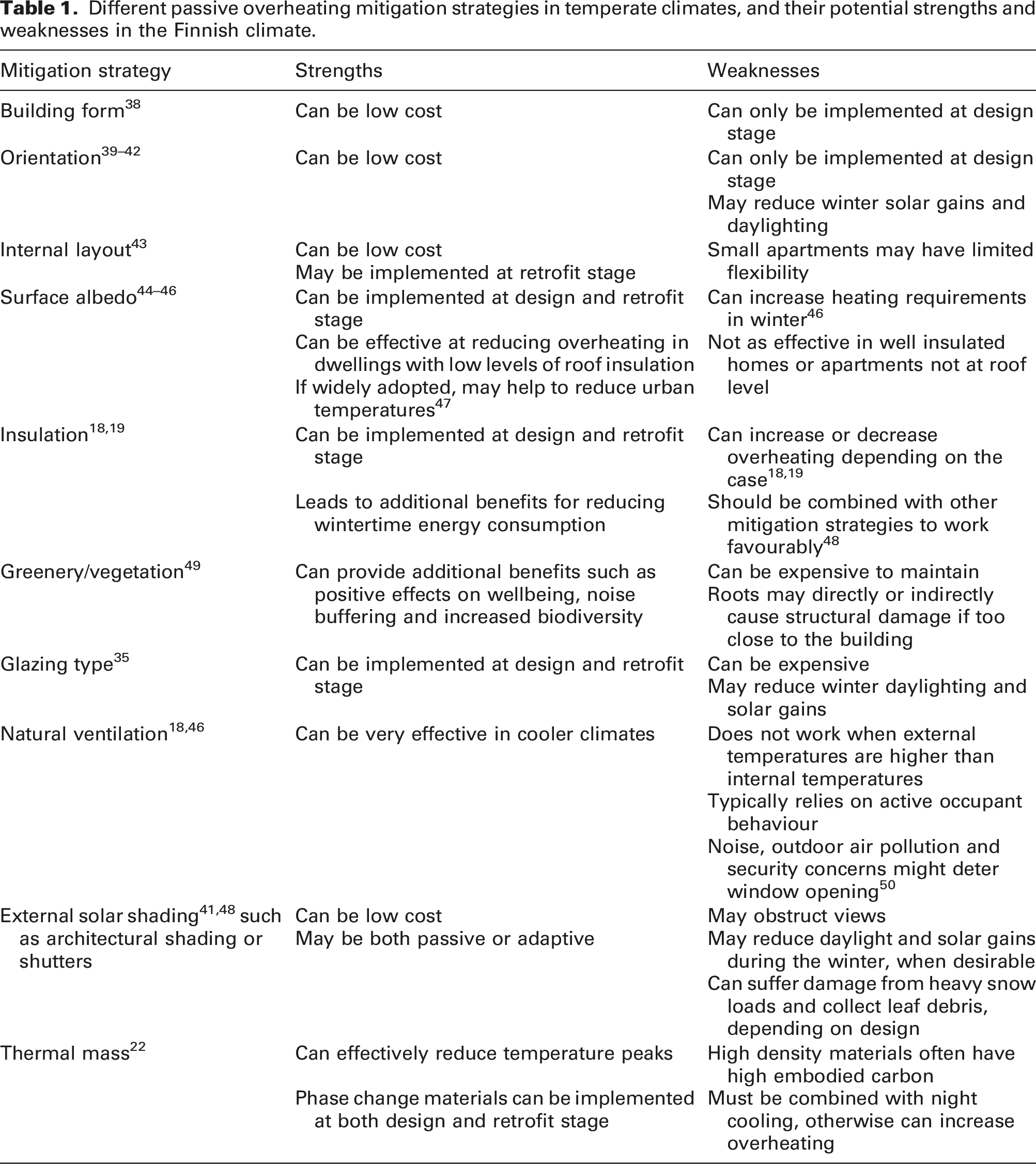
Different passive overheating mitigation strategies in temperate climates, and their potential strengths and weaknesses in the Finnish climate.
Research aims and objectives
Climate change will increasingly impact overheating risk in northern latitudes where it has not previously been seen as an issue. Given the inevitable increases in summertime temperatures, it is critical that effective climate change adaptation measures are implemented throughout the Finnish housing stock without exacerbating carbon emissions. There is, however, a lack of research on the effectiveness of multiple passive adaptations, and in different types of apartments.
This study seeks to understand the degree to which passive measures alone can reduce overheating risks in a contemporary apartment building in Jyväskylä, Finland. To do this, we aim to test the ability of individual and combined passive mitigation strategies to reduce overheating under current and predicted future (2030s, 2050s and 2100s) climates. A case study representing three apartments in a contemporary timber building was modelled using the dynamic energy modelling program IDA Indoor Climate and Energy (IDA-ICE) 51 under different climate scenarios. Models were run with passive measures only, intended to show their potential to reduce indoor overheating and improve passive survivability, as well as evaluate any unintended increases in winter heating energy consumption arising from these strategies.
Methods
Case study buildings
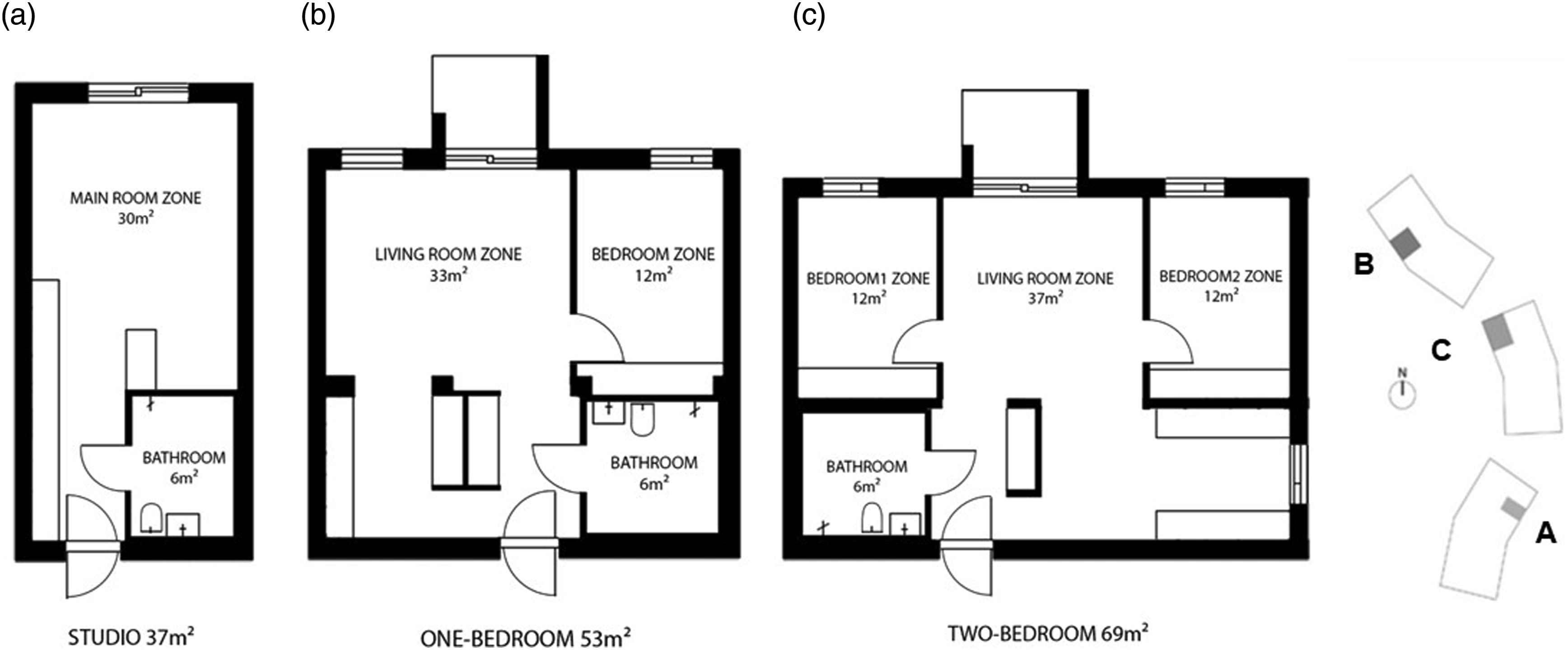
The case study consists of three apartments in an apartment block located in Jyväskylä, Finland. The housing block consists of three Cross Laminated Timber (CLT) structured multi-storey apartment buildings completed in 2015, 2017 and 2018. Together they contain 184 apartments spanning 14,000 m2, including studios, one-, and two-bedroom apartments. Three apartments, one from each building and type, were examined for the purpose of this study (Figure 1). The studied apartments (A–C) include: A. A studio apartment (37 m2), located on the first floor, facing South-East. The apartment is single-aspect with a French balcony and no external shading, measuring 9.5 m deep and 4.7 m wide. B. A one-bedroom apartment (53 m2), located on the fourth floor and facing South-West. The apartment is single-aspect, measures 7.8 m × 8.15 m and has a balcony which provides some shading. C. A two-bedroom apartment (69 m2), located in the North-West corner of the top (sixth) floor. The apartment is double-aspect, measures 7.8 m × 10.8 m, has windows towards North and West, and a balcony on the West side. Floor plan of examined apartments A (studio), B (one bedroom) and C (two bedrooms).
All apartments had a 2.5 m ceiling height. The case study housing block and apartments were selected for three reasons. Firstly, the floorplans represent those of typical apartments in Finland. Secondly, timber construction is increasingly encouraged in Finland, but lower thermal mass may increase daytime overheating risks. Thirdly, residents of apartments are more likely to be included in risk groups such as older people,52,53 those living alone or households with low economic status. 52 Finally, the share of small studio apartments in Finnish cities has risen from 20% to 30% in under 10 years,54,55 but with concerns over their sustainability and habitability 56 and with a potentially higher risk of overheating. 57 Finally, as is typical in Finnish homes, the buildings do not include active cooling.
Model development
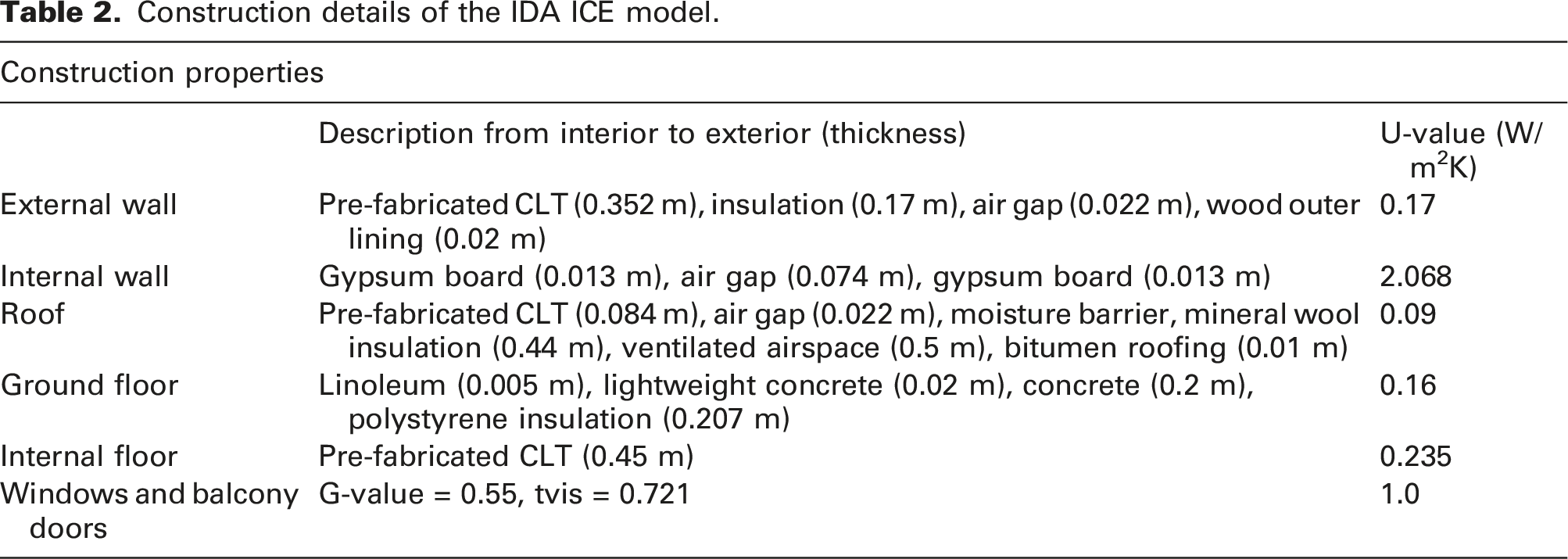
IDA ICE 4.8 was used to simulate the three case study dwellings to assess different passive overheating mitigation strategies. Overheating modelling was conducted in accordance with Finnish building regulations (D3/2012), 25 which was the standard overheating calculation method at the time of construction. IDA ICE uses climate data, and a model of building geometry, fabric, ventilation systems and internal loads such as lighting, equipment and occupant metabolism, and occupant behaviour to estimate indoor climate and energy consumption. It has been extensively validated,51,58,59 and is commonly used for energy-use and overheating assessments in Finland.
Construction details of the IDA ICE model.
Building Systems details of the IDA ICE model.
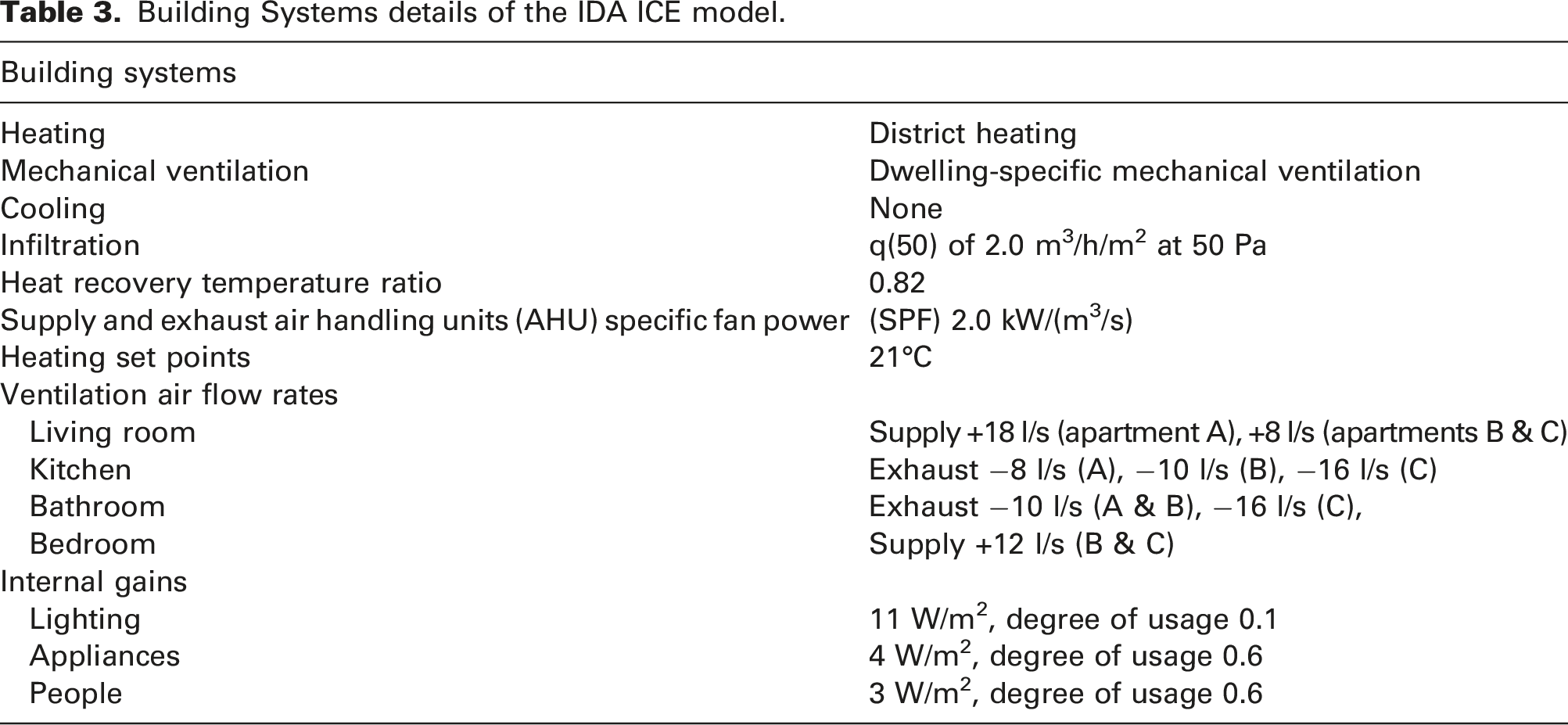
The overheating model differs from the standardised method detailed in D3/2012 in key areas. In the standard, the intensification of mechanical ventilation is allowed up to 30%, while window-opening is not used. However, as the focus of this study was on passive measures only, mechanical ventilation is not intensified, while window opening is included as a passive adaptation. Secondly, the standardised methods allow for the closing of integrated blinds to reduce indoor temperature. In this study, blinds were not closed in the base case, but were evaluated as a passive adaptation.
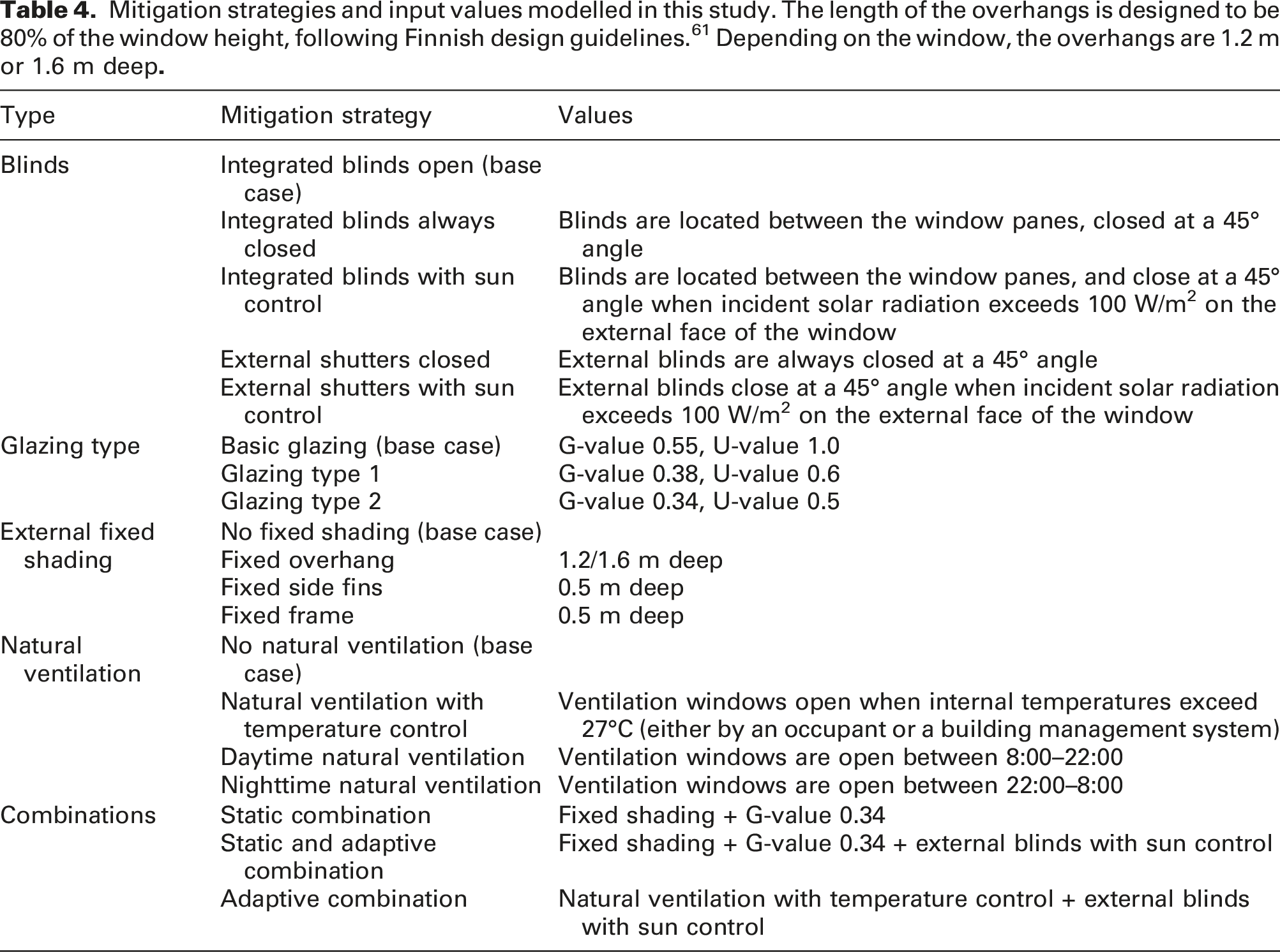
Overheating mitigation strategies
Mitigation strategies and input values modelled in this study. The length of the overhangs is designed to be 80% of the window height, following Finnish design guidelines.
61
Depending on the window, the overhangs are 1.2 m or 1.6 m deep
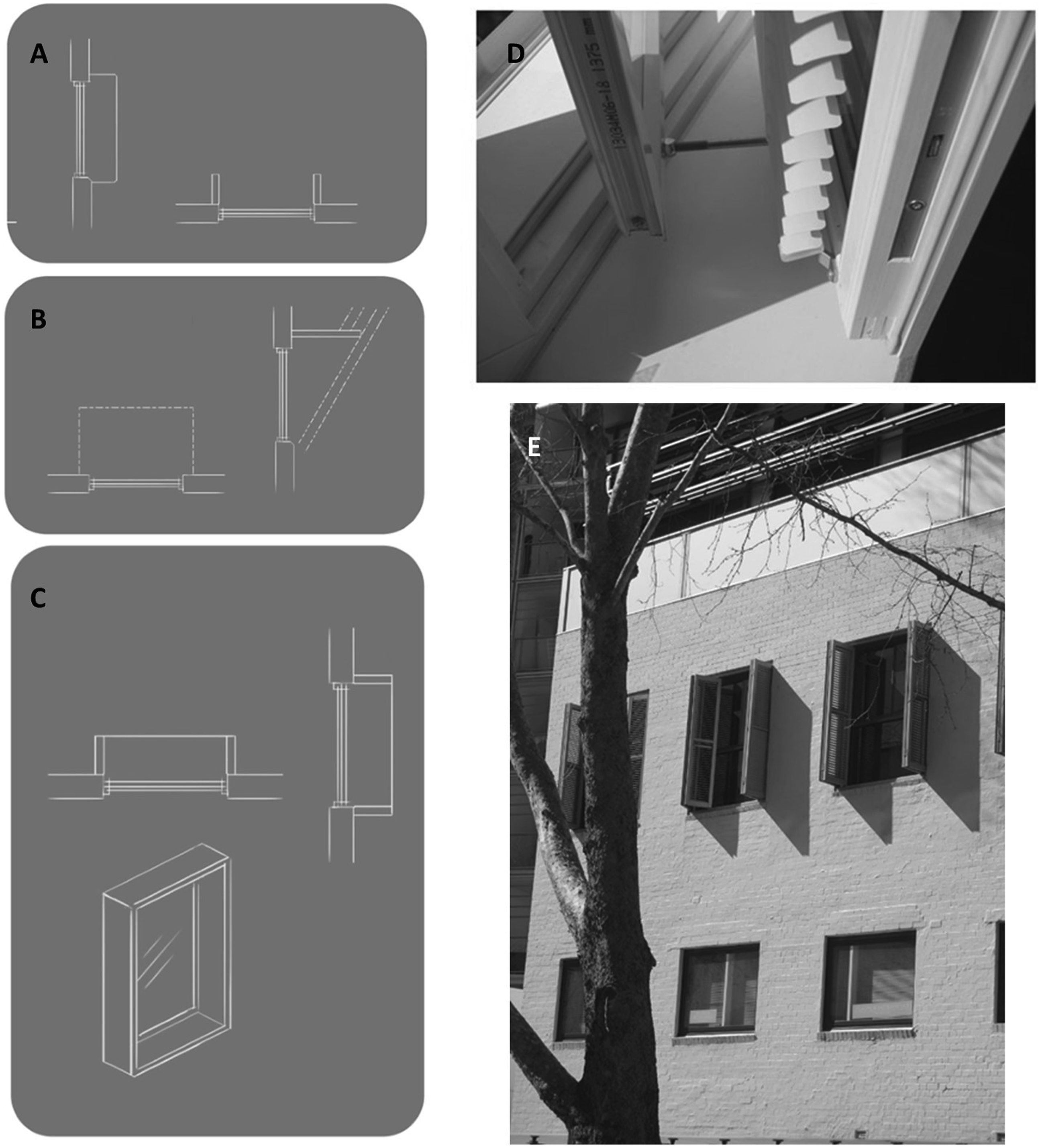
Passive mitigation measures modelled. Static adaptations include (A) fixed fins, 0.5 m deep, (B) fixed overhang, 1.2/1.6 m deep, and (C) a fixed frame, 0.5 m deep. Adaptive measures include (D) integrated blinds and (E) external shutters.
Climate data
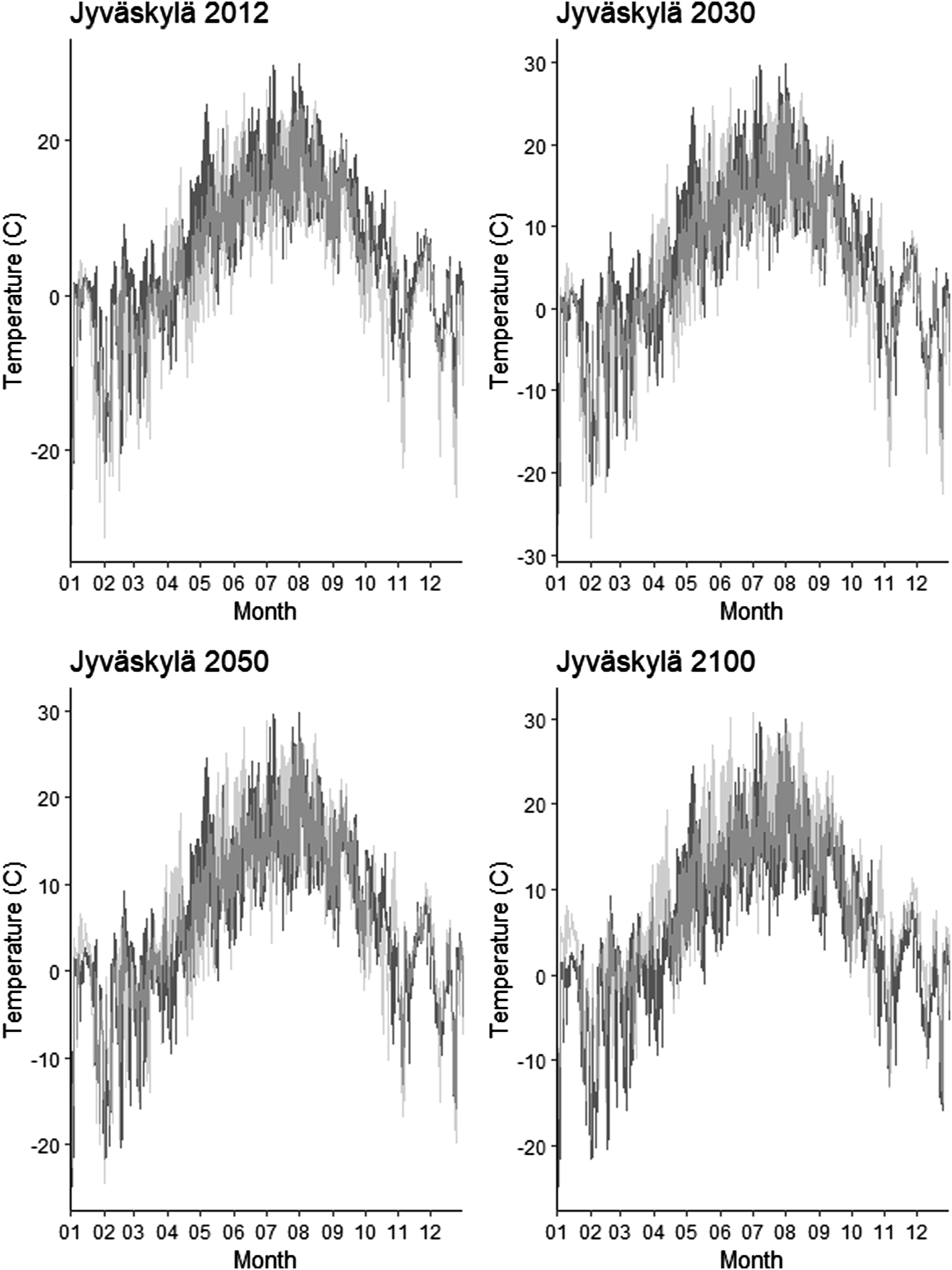
According to D3/2012, summertime room temperature calculations should be performed with current Helsinki (Finnish climate zone I) Test Reference Year (TRY) climate data for the summer months of June-August. In this study, simulations were performed using this current Helsinki climate data, as well as current and 2030s, 2050s and 2100s TRY climate data for Jyväskylä (Climate zone III) where the building is located. The locations of Helsinki and Jyväskylä are shown in Figure 3, while temperature data can be seen in Figure 4. The locations of Helsinki and Jyväskylä. Annual temperature profiles of the Jyväskylä climates (grey) compared to the Helsinki 2012 climate (black).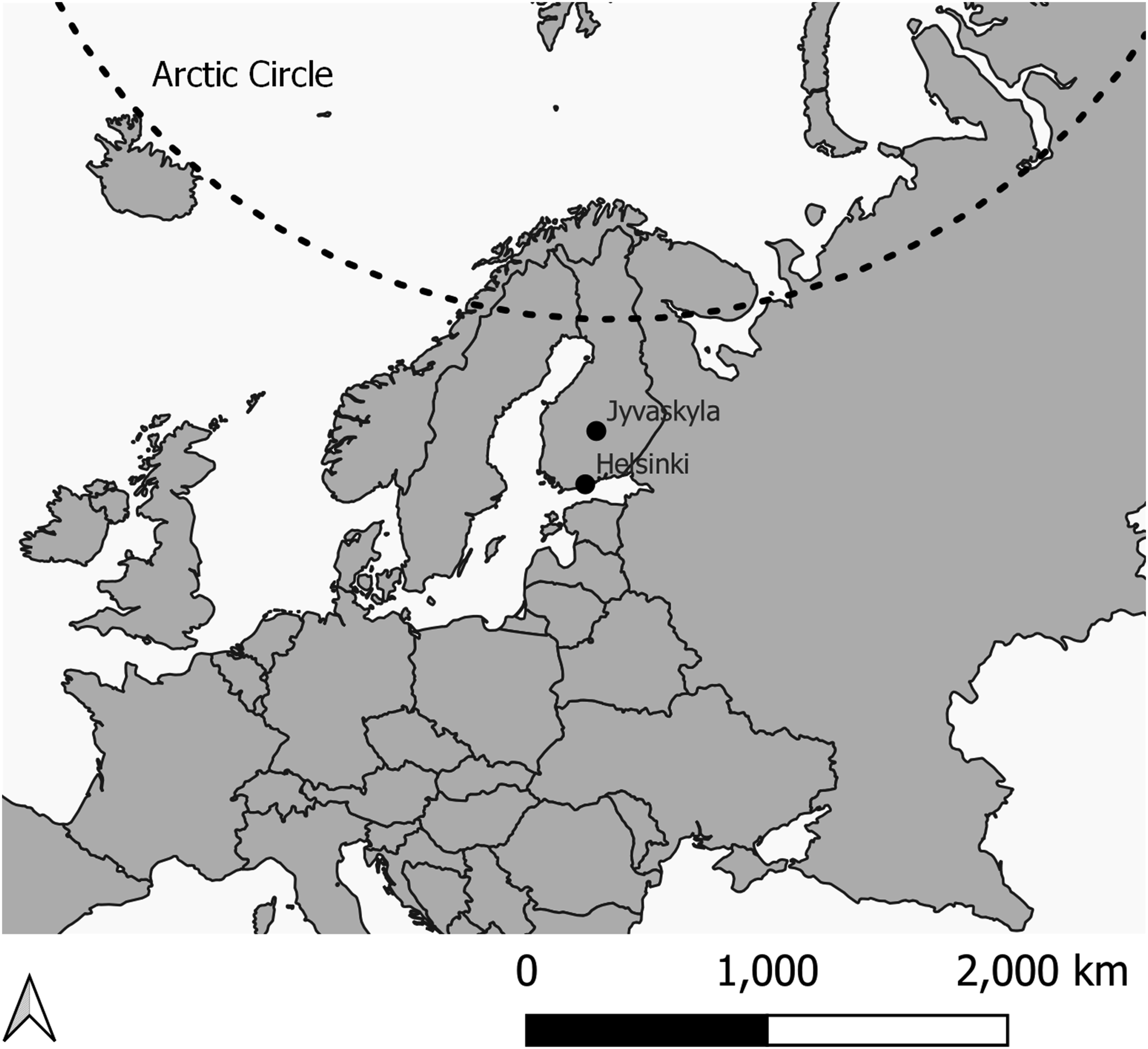
The TRYs were created by the Finnish Meteorological Institute for the main purpose of building energy calculations. More details on the development of the climate files can be found in Jylhä et al., 17 but briefly: the TRY2012 was created from weather observations for the years 1980–2009, where each of the TRY months was chosen from a year where the weather was closest to the average. The future TRY’s for the years 2030, 2050 and 2100 were created from multi-model mean estimates from 719 global climate models, assuming CO2 concentrations in the atmosphere will increase according to the IPCC’s 2001 A2 SRES-scenario, which is the worst-case scenario, and largely equivalent to the IPCC 2010 RCP 8.5 scenario. 62 TRY files represent an average climate and does not include weather extremes such as heatwaves. This presents a limitation of the standard methodology used for assessing building overheating in Finland and of this study and has been noted for further research.
Model outputs
According to D3/2012, summertime temperatures in apartment buildings with apartments on at least three floors are not allowed to exceed a threshold of 27°C by more than 150-degree hours (°Ch) between June and August, with one-degree hour representing 1 h of overheating by one degree. In addition to degree hours, maximum temperatures in residential buildings should not rise above +32°C outside of the heating season. 63
Hourly temperature data was output from IDA ICE, and the performance of the apartments against these overheating metrics was calculated. In addition, the annual energy consumption for space heating was calculated to identify any negative consequences of passive measures for winter energy consumption.
Results
Energy consumption
Yearly energy consumption for all apartments (kWh/m2) for static (not controlled by occupants) overheating adaptations.
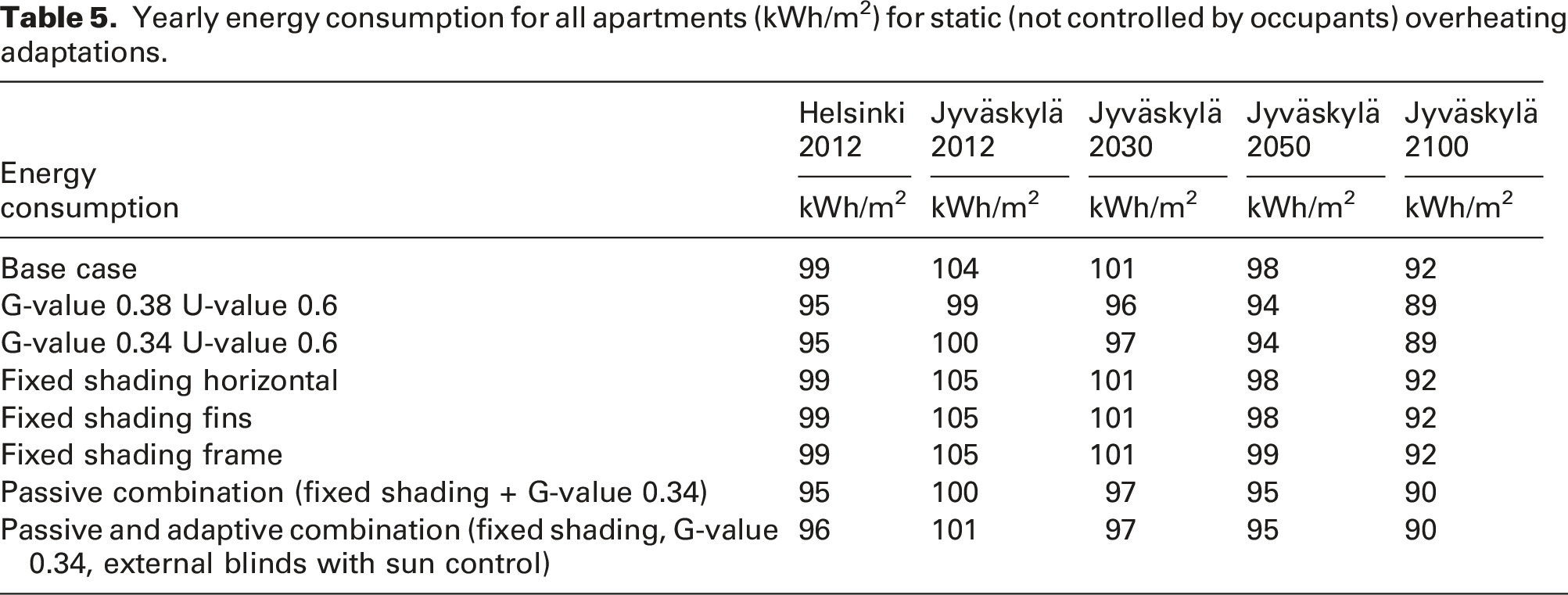
Under the IPCC A2 SRES-scenario, average summertime outdoor temperatures are projected to increase in Jyväskylä by 0.9°C by 2030, 1.5°C by 2050 and 3.4°C by 2100 relative to the baseline climate. Hence annual energy consumption in the base case building was expected to decrease in the future as heating demand decreases as winter temperatures rise. Annual energy consumption increases slightly under all climates with fixed external shading, however, these increases are offset by the natural decreases in energy consumption in future climates. The increase in energy consumption can be attributed to decreased solar gains in winter for some adaptations. All solutions with improved glazing reduce energy consumption, as the improved U-value of the window was able to compensate the possible negative effects of the lower G-value by reducing heat losses in winter.
Overheating
The results of overheating modelling are presented as cooling degree hours (CDH) above the threshold here and as maximum temperatures. The overheating is severe in all base cases, even in the current climate for Helsinki and Jyväskylä, due to the base model not including the increase in mechanical ventilation or the closing of integrated blinds allowed under D3/2012. In the current climate, overheating is slightly lower in Jyväskylä relative to Helsinki due to the cooler climate. Future climate scenarios for Jyväskylä (2030, 2050 and 2100) show an increase in total CDH and maximum temperature for all apartments.
Studio apartment
The results for the south-east facing studio apartment can be seen in Figures 5 and 6. The base case studio apartment is 13,341°Ch over the 27°C threshold in the current Helsinki climate, while in Jyväskylä overheating is slightly lower (12,274°Ch); in both cases, the threshold of 150°Ch is significantly exceeded. In the future, overheating in the base case steadily increases to 15,129°Ch in the 2100s. The CDH (degree hours over 27°C) for the apartment A for different adaptations and climates. The dashed line represents the overheating threshold for Finland (150°Ch). The maximum summertime indoor temperature for apartment A (studio). The dashed line represents the overheating threshold for Finland (32°C).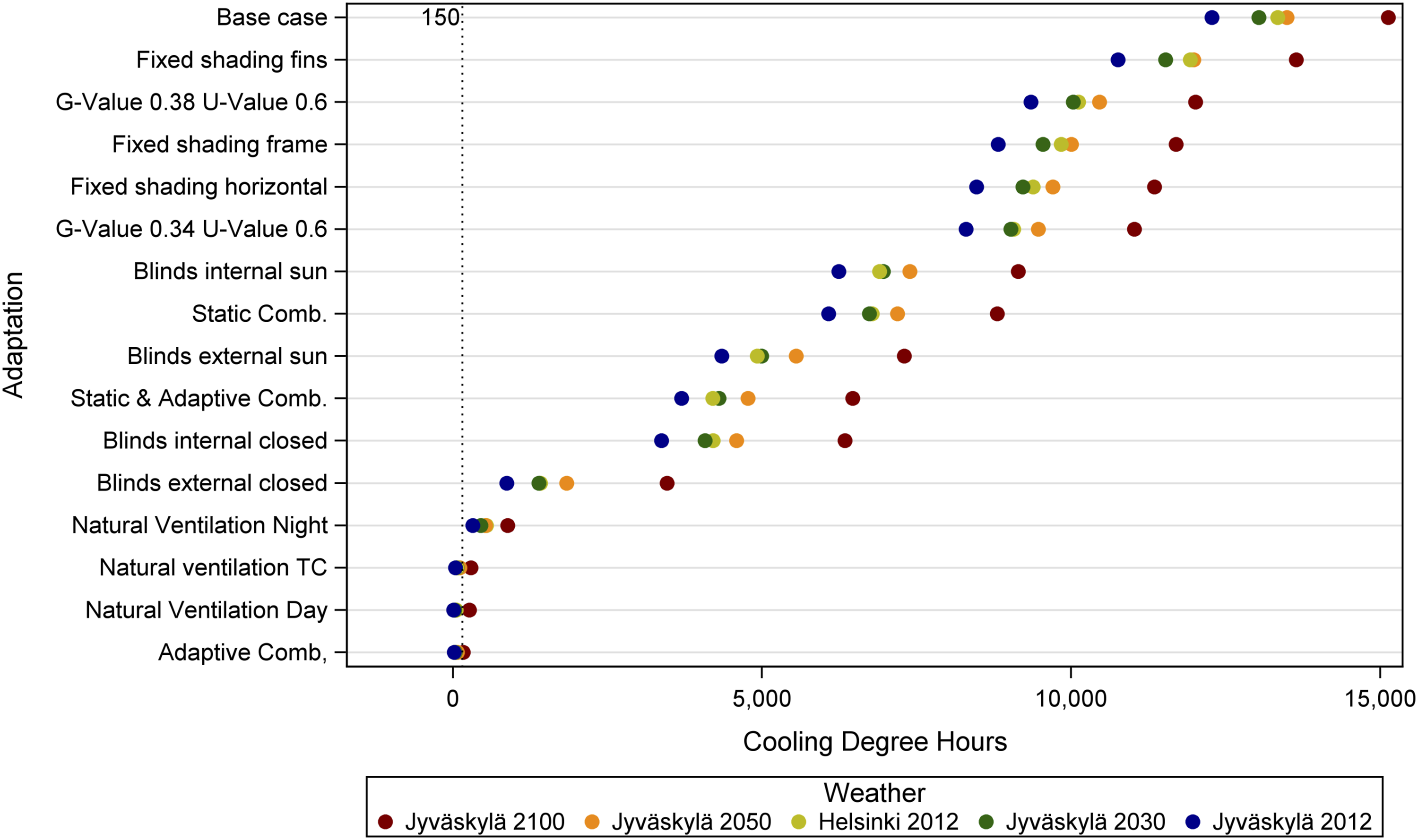
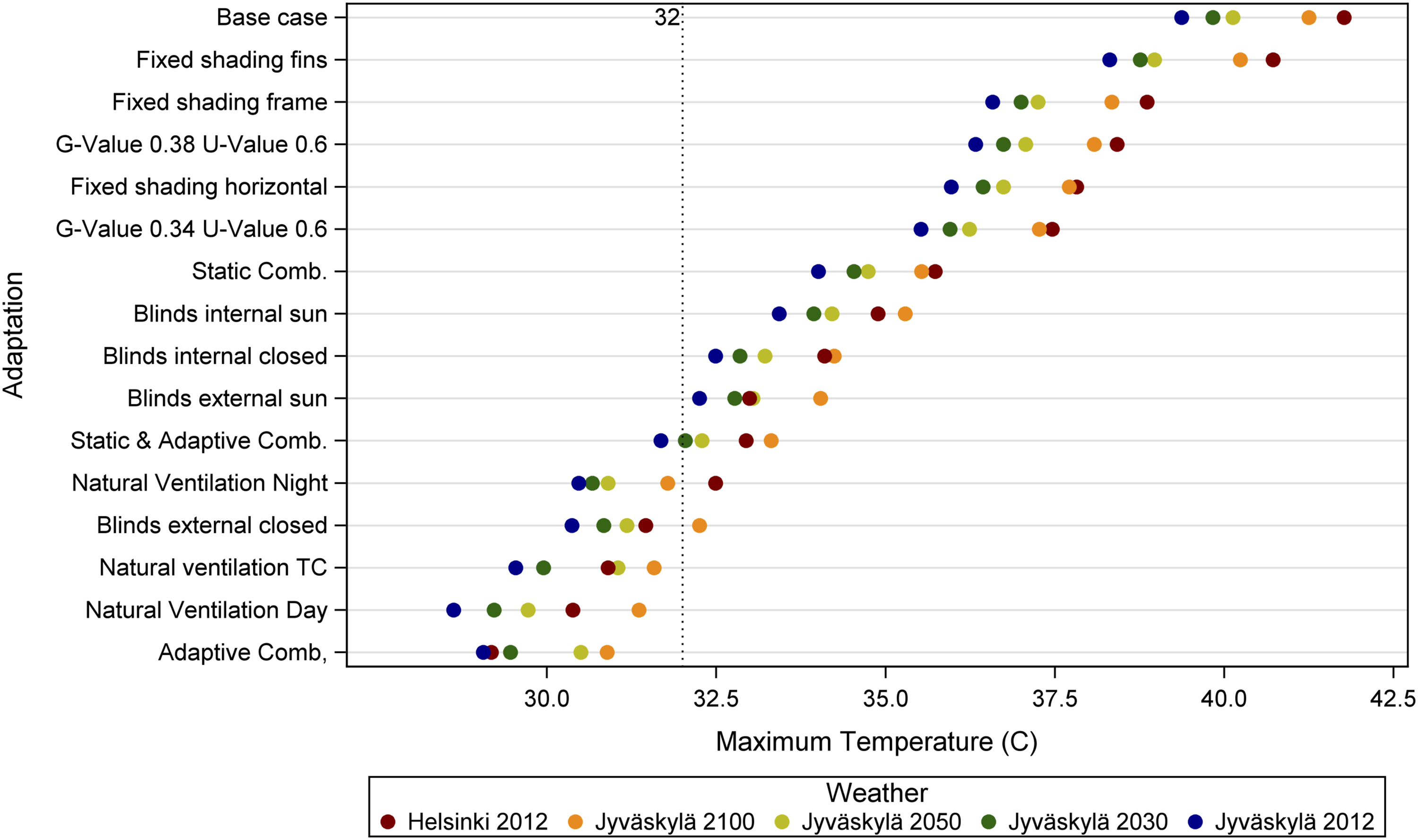
Natural ventilation is the most effective single strategy at reducing overheating in the studio apartment. Ventilating during the day (8:00–22:00), or in response to internal temperature, are the only single solutions able to reduce degree hours to acceptable levels (<150°Ch) and maximum temperatures below 32°C in all climate scenarios aside from the 2100s. Night ventilation is the least effective natural ventilation option and is unable to reduce degree hours to acceptable levels. However, night-time ventilation is still more effective at reducing degree hours than any of the other individual non-ventilative solutions, reducing overheating degree hours by 96% on average. By the 2100s, no natural ventilation options are able to keep degree hours at levels below 150°Ch.
External shutters and internal blinds are the second most effective single measure, reducing overheating degree hours by 40%–93%, depending on the climate scenario but unable to meet CDH criteria alone. External shutters are 12%–21% more effective at reducing degree hours than internal blinds and are able to reduce maximum indoor temperatures below 32°C in all climates except for Jyväskylä in the 2100s. Having shutters or blinds always closed is more effective than those with sun control, which reduces the degree hours over 27°C by half from the base case, but with degree hours remaining significantly over the 150°Ch threshold.
Lowering the window G-value from 0.5 to 0.38 or 0.34 is able to reduce degree hours for the studio apartment by approximately 26% and 36%, respectively, and reduce maximum temperatures by 3–4°C depending on the climate scenario. The use of external fixed shading has a similar effect as reducing G-levels; horizontal overhang shading is the most effective of the different fixed shading options, reducing degree hours by approximately 30%, while side fins only reduce degree hours by 11%. However, no fixed shading or window G-value reductions are able to reduce maximum temperatures under 32°C. Adaptations that reduce solar gains, such as blinds, shading and lower G-values, have larger reductions in overheating in Jyväskylä than in Helsinki.
Out of the three combination types, the adaptive solution (natural ventilation and blinds), is the most effective at reducing degree hours and maximum temperature. This combination manages to reduce maximum temperatures below 32°C for all climate scenarios, while CDH is reduced to acceptable levels for all other climates except Jyväskylä in the 2100s where the 150°Ch threshold is slightly exceeded by 18°Ch. The static (fixed shading and g-value) and static and adaptive (fixed shading, G-value and blinds) solutions are less effective, failing to reduce CDH below the thresholds or maximum temperatures below 32°C in any climate scenario.
One-bedroom apartment
The overheating in the one-bedroom apartment can be seen in Figures 7 and 8. The living room of the one-bedroom single aspect apartment reaches 13,978°Ch over the 27°C threshold in the base case under the current Helsinki climate, while the bedroom overheats much less (8912°Ch). Overheating in all rooms is lower in the current Jyväskylä climate but increases under future scenarios, with the highest number of degree hours observed in the Jyväskylä 2100s climate. The CDH (degree hours over 27°C) for apartment B for different adaptations and climates. The dashed line represents the overheating threshold for Finland (150°Ch). The maximum summertime indoor temperature for apartment B (one bedroom). The dashed line represents the overheating threshold for Finland (32°C).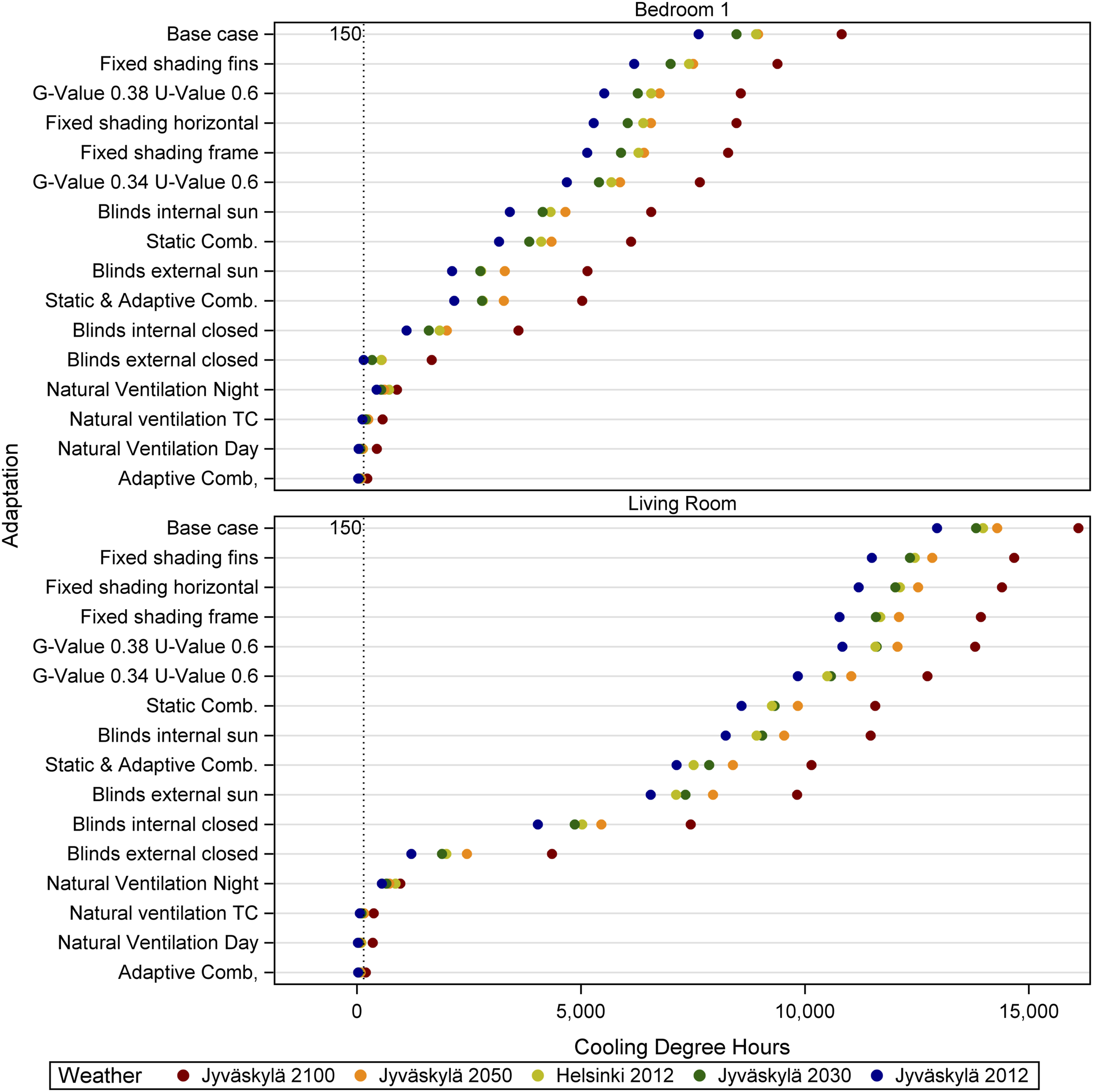
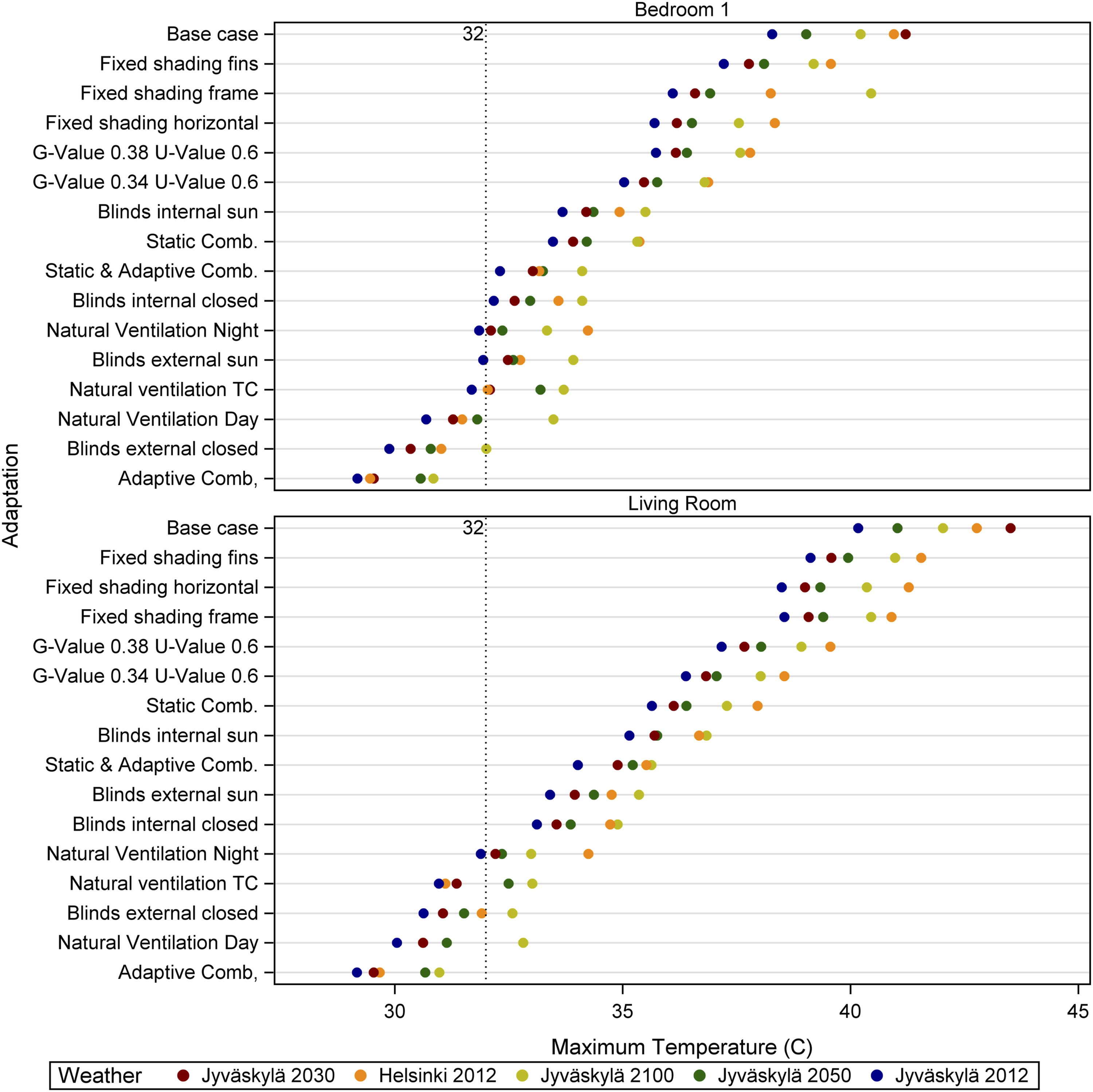
Similar to the studio apartment, natural ventilation is the most effective individual adaptation in the one-bedroom apartment, with daytime ventilation reducing overheating below threshold CDH and maximum temperature levels in Jyväskylä until the 2100s in both the living room and bedroom. Temperature-controlled ventilation is able to reduce living room overheating to below-threshold levels in Jyväskylä until the 2030s, while night ventilation alone is unable to reduce overheating below threshold levels.
As with the studio apartment, shutters and blinds are the second most effective single adaptation. The use of closed external shutters is able to significantly reduce overheating in the bedroom in the current Jyväskylä climate, only exceeding the threshold of 150°Ch by 2.5°Ch and are able to keep maximum temperatures under 32°C in both the living room and bedroom of the one-bedroom apartment. The bedroom overheats significantly less than the living room in the base case scenario and is, therefore, able to reach lower amounts of overheating with the use of shutters.
Reducing window G-value is less effective in the living room of the one-bedroom apartment compared to the studio, with a smaller absolute reduction of degree hours. Horizontal and frame shading are only half as effective in the one-bedroom apartment living room as in the studio apartment, while in the bedroom the effects of the different shading options (in % reduction) are similar to the studio apartment.
Compared to the studio, the static and static and adaptive combinations are less effective at reducing degree hours in the living room of the one-bedroom apartment, which reflects results from the single solutions. The adaptive combination is the most effective overheating measure, reducing maximum temperatures below 32°C for both rooms in all climate scenarios, while reducing degree hours to acceptable levels in both rooms in all climate scenarios except Jyväskylä in the 2100s, where it is exceeded by 82°Ch.
Two-bedroom apartment
The overheating in the dual aspect two-bedroom north-west facing apartment can be seen in Figures 9 and 10. In the base case scenario, the living room overheats the most (9180°Ch), followed by bedroom 1 (6647°Ch) and bedroom 2 (5358°Ch) under the current Helsinki climate. The base case overheating in the two-bedroom apartment is the lowest of all apartments, and therefore acceptable amounts of degree hours are easier to achieve. The CDH (degree hours over 27°C) for apartment C for different adaptations and climates. The dashed line represents the overheating threshold for Finland (150°Ch). The maximum summertime indoor temperature for apartment C (two bedrooms). The dashed line represents the overheating threshold for Finland (32°C).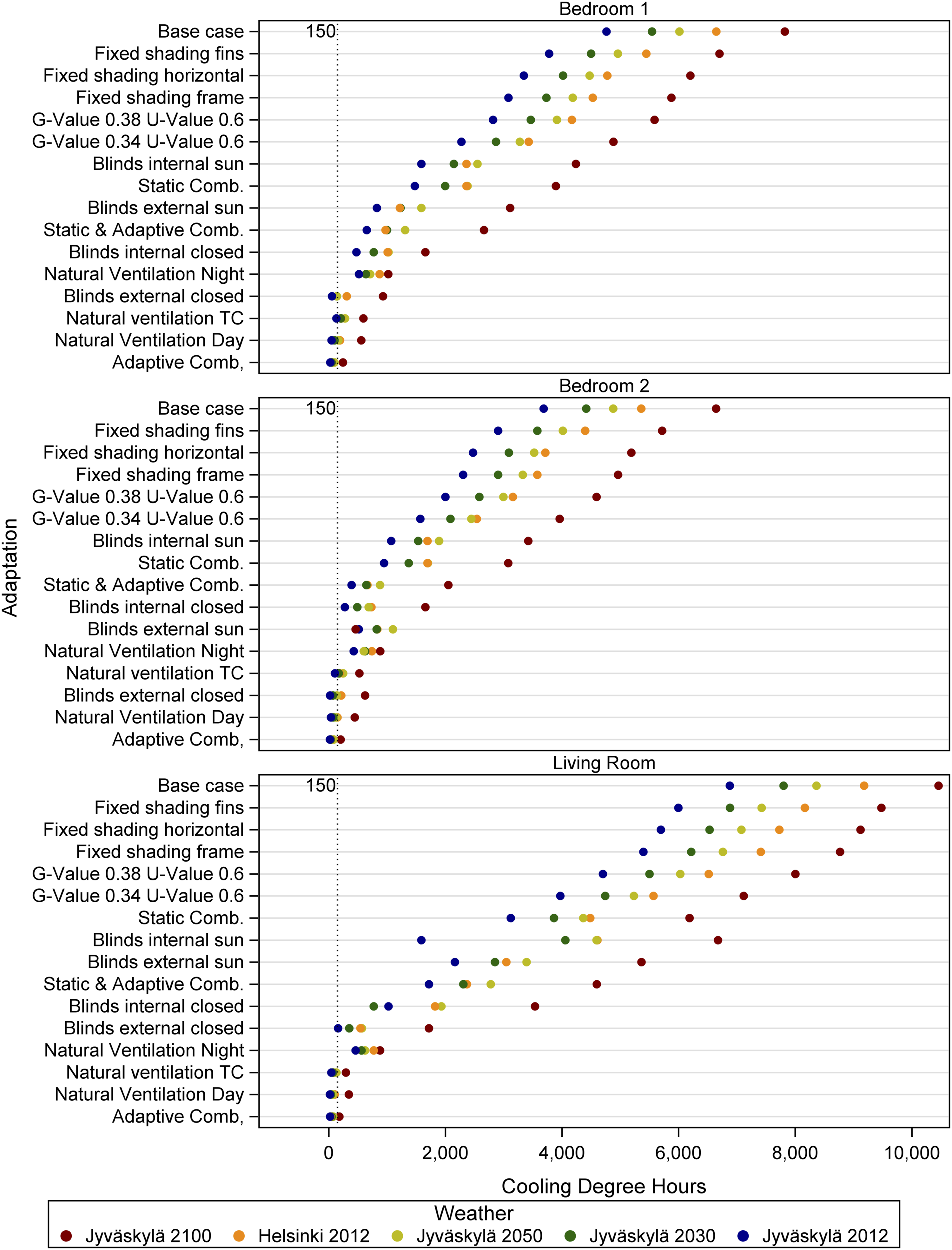
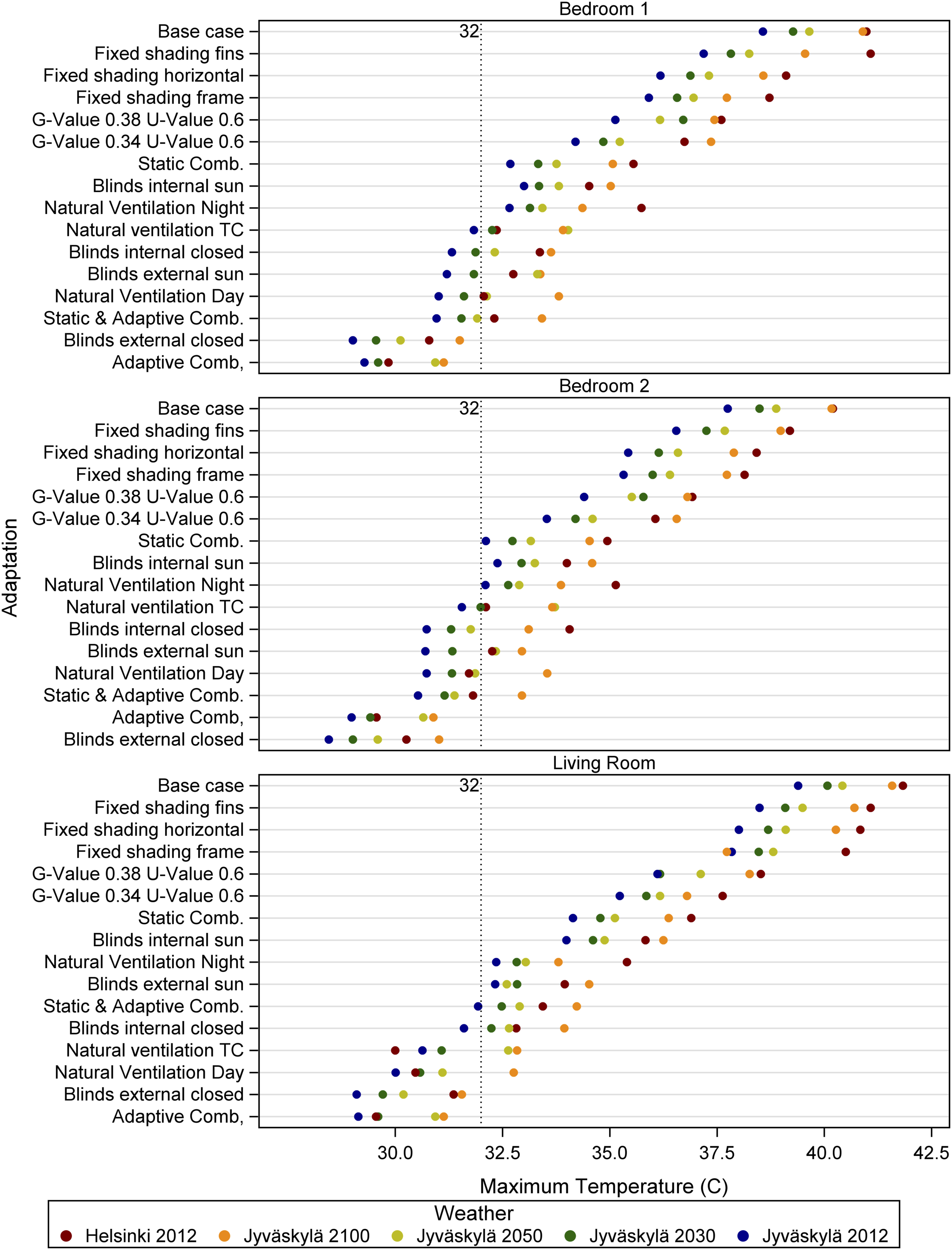
Natural ventilation is the most effective individual adaptation, with temperature-controlled and daytime ventilation reducing overheating to below-threshold levels for the living room and second bedroom under current climates. Natural ventilation is less effective in the bedrooms of the two-bedroom apartment due to the smaller ventilation openings. Maximum temperatures in both the living room and bedroom are also effectively lowered by natural ventilation but exceed the 32°C threshold in all scenarios except the living room under current climates and Jyväskylä in the 2030s.
The use of blinds is relatively more effective in the two-bedroom apartment than in other apartments, with both bedrooms able to reach acceptable levels with the external shutters always closed in the climate scenarios of Jyväskylä 2012, the 2030s and the 2050s, however living rooms still exceed the 150°Ch limit in all cases. The use of closed internal blinds or shutters is also able to reduce maximum temperatures under 32°C in several of the cases.
As with the one-bedroom apartment, the existing balcony structure limits the impact of additional fixed shading in the living room. In the bedrooms, the fixed shading options were better able to reduce degree hours, with the more effective options (horizontal and frame) able to reduce degree hours by approximately a third from the base case. As with the other apartments, the side-fins are the least effective shading adaptation.
Combinations of adaptations are particularly effective in reducing degree hours in the two-bedroom apartment. Static combinations are unable to reduce degree hours to acceptable levels, however, the static and adaptive combination is able to reduce maximum temperatures in the bedrooms until the 2030s in Jyväskylä. The adaptive combination is the only combination able to eliminate overheating in all rooms and climates except Jyväskylä in the 2100s, where the threshold is exceeded by 91°Ch.
Discussion
This study examines the potential of passive-only overheating adaptations in reducing overheating risk through a case study of a contemporary Finnish apartment building. The results show an increased risk of overheating in the future in the base case models, which is supported by previous findings in Finland and other Nordic countries.29,30,32,33,35 Adaptations generally did not have an energy penalty, with the exception of fixed passive shading adaptations which slightly increased wintertime heating demands due to the reduction in solar gains. Under future climates, the increase is offset by reduced heating demands. However, this demonstrates the importance of occupant-controlled or automated measures instead of fixed architectural adaptations. The overheating results stress the need for resilient active systems and passive cooling options, as extreme levels of overheating in the base case dwellings could place the occupants at risk if active systems fail.
Our findings indicate that summer-time natural ventilation is the most effective individual adaptation, significantly reducing or even eliminating overheating, but may not be sufficient in future climates alone. The effect of horizontal natural ventilation on overheating reduction has been widely studied,41,43,46,63–65 and has been found to be an effective way of reducing overheating in buildings in milder climates. The results support previous research that shows natural ventilation to be the most effective passive solution for overheating, although by itself insufficient to eliminate overheating in a 1960s building even in the current climate of Finland. 30 In our study, natural ventilation is still able to eliminate overheating even in Jyväskylä during the 2050s, likely due to the larger openable window areas in the dwellings. This highlights the benefits of large ventilation openings. Like shutters and blinds, the effectiveness of natural ventilation is dependent on occupant’s behaviour, and many people may not be able or willing to open windows for various reasons. The internal temperature threshold for opening windows was set at 27°C to match the threshold for CDH, however, occupants may open the windows at lower internal temperatures. Therefore, our results may underestimate the effectiveness of temperature-controlled natural ventilation.
The results also indicate that shutters are an effective means of reducing overheating risk. External shutters were found to be 12%–21% more effective at reducing CDHs than integrated blinds, supporting previous research. 41 External shutters could give occupants more daylighting and views benefits, as shutters with sun control were approximately as effective at reducing degree hours as integrated blinds that were always closed. Shutters may, however, be more exposed to damage from snow or being obstructed by falling leaves, and for that reason are not widely used in Finland. Reducing G-values is less effective than blinds, supporting the findings of Vesterinen, 29 who found similar effects on internal temperatures with tested G-values of 0.32 and 0.38 in the Finnish climate. An increase in energy consumption has been found to be correlated with lower G-values in some studies, 45 however, in our study the U-values are also lowered from 1.0 to 0.6, compensating for reduced solar gains. In general, adaptations to reduce solar gains lead to larger overheating reductions in the higher latitude of Jyväskylä, which due to the increased sun exposure at low angles. This highlights the importance of the duration of solar exposure on overheating and adaptation effectiveness.
Fixed external shading adaptations are less effective, reducing overheating to a similar degree as lowered G-values, consistent with the findings of Kaasalainen et al. 31 The reduced effectiveness of solar adaptations in the living room of the one-bedroom apartment compared to the studio apartment is likely due to the shading provided by its balcony structure. In this study, horizontal shading is the most effective fixed architectural adaptation, likely due to the large size and width of the windows/balcony doors with their floor-to-ceiling design, and the shading frame or side-fins not being deep enough to sufficiently shade the surface area of the window.
A novelty of this study is the simulation of combinations of passive solutions in three different dwelling geometries. While individual passive measures alone are not always effective, combinations of solutions were able to significantly reduce overheating. Of these, the adaptive combinations (natural ventilation with blinds), are the most effective at reducing degree hours, highlighting the effectiveness of natural ventilation and the role of occupant behaviour. This combination manages to reduce degree hours to acceptable levels for all other climates except Jyväskylä in the 2100s. This emphasises the role that building design plays in reducing or even eliminating overheating risk, which in turn reduces the need for active cooling systems with their associated environmental, financial and social costs.
Our overheating simulations are conducted mainly according to Finnish building code D3 on preventing overheating, but with some key differences. These differences include a lack of increased mechanical ventilation and opened integrated blinds, both of which are options to reduce overheating according to this standard, as well as the newer standard 1010/2017. As a result, the overheating risk in our base case dwelling is extremely high compared to what the building would have achieved to comply with Finnish building regulations. Other options to reduce overheating according to the building regulations include improving G-values, which we have tested here, and decreasing the ventilation supply temperature by 1°C, which we have excluded due to it being an active measure.
All active cooling measures, such as air conditioning, increased mechanical ventilation or district cooling, were purposely excluded from the study as we seek to evaluate the effectiveness of passive measures. This is because passive measures do not themselves increase total energy consumption in a significant way. The primary use of passive overheating mitigation measures can also help to protect the most vulnerable populations, for example, those who cannot afford active systems, as well as improving the passive survivability and resilience of the building stock in case of future climate extremes or even possible power outages. However, active cooling systems are likely to be necessary in buildings with strict thermal comfort requirements, such as hospitals or homes for the elderly, where the risk of heat-related health effects are greatest. 14 Further research should examine overheating risk and mitigation measures in hospitals and long-term care facilities.
Limitations
We acknowledge a number of limitations to this study. Modelling was performed using the older D3/2012 instead of the newer 2010/2017 regulations. Therefore, internal heat gains from lighting were modelled as 11 W/m2 instead of 9 W/m2 but with lower internal gains and energy consumption from domestic hot water. The older standard was selected to be consistent with the regulations at the time of building construction, however, the higher heat gains from lighting will result in a marginally higher overheating risk than if the newer standard was used. The standard assumes that heat gains are evenly distributed throughout the day, although in reality the presence of people as well as the use of appliances and lighting are likely to be skewed towards certain hours.
The standard methods for overheating use TRY weather files, which are representative of an ‘average’ year over the period 1980–2009, and not weather files that represent hot or extreme summers which are generally used for modelling overheating risk in other locations. When this research was conducted there were no Design Summer Year (DSY) or Hot Summer Year (HSY) weather files available for Finland, and future work should examine the resilience of housing during hot and extreme summers. The current summertime temperature calculations require a use of standardised occupancy and internal gains. The way in which different occupants use their homes can, however, vary greatly and has an impact on overheating. 66 Further studies on the impact of occupancy patterns, especially within vulnerable groups, could also give us more detailed understanding of overheating risk. In addition, the models were run using climate data for Helsinki and Jyväskylä, and further work is necessary to generalise the results elsewhere in Finland, particularly at higher latitudes.
The study results are obtained from simulations rather than based on actual measurements, meaning they may be subject to uncertainties in input parameters and systematic errors. Further work is required to validate modelled indoor temperatures with monitored temperatures and understand uncertainties. The results can, however, give an idea of how well the different mitigation strategies work and how they will act in possible future climates. The limitation of adaptive strategies is that their effectiveness is largely up to the occupants (e.g., opening and closing windows and blinds at the right time), meaning that the simulations may give unrealistic results relative to the real world. Therefore, future studies measuring actual temperatures in homes, accompanied by user surveys on how occupants regulate internal temperatures, would give valuable insights on how well adaptive mitigation measures work in reality. Studies into active and passive cooling system designs often neglect occupants’ lifestyle and behavioural traits, and future research should investigate occupant preferences. 67 The choice of modelling tool and/or algorithm can lead to different estimates of indoor temperatures, and building performance models may give a less accurate estimate than computational fluid dynamics, for example.68,69 Other studies have noted that the overheating metric selected may influence the relative risks of overheating across dwelling variants, 66 however in this study we found a reasonable association between CDH and maximum indoor temperature.
We have modelled three apartments in a single unit with the same construction, making it difficult to generalise solutions to different dwelling types. 70 The modelled building has relatively large windows and CLT construction, which is relatively rare in Finnish buildings, although becoming increasingly common. Dwellings may perform very differently during hot weather, depending on their built form and fabric characteristics, 18 and further work is required to understand the relative overheating risks and effectiveness of adaptations in other dwellings. As we have based our modelling on a real case-study building, the apartments are on different floor levels and with different orientations, which will influence their overheating risk. As such, we have avoided direct comparison between the results of the different units. We have tested common passive solutions to overheating used in cold and temperate climates but have not tested more novel solutions such as cool facades 71 or green roofs. 72
Policy implications
While this study was a case study, and results should not be generalised to the wider housing stock, there are potential implications for policy that require further investigation. Increasing temperatures are one of the biggest climate change risks in terms of health impacts and are important to consider in the design of buildings. There is currently debate in Finland about whether new buildings should be highly energy efficient, airtight and mechanically ventilated, versus the degree to which natural ventilation may be employed in summer. New Finnish buildings are predominantly mechanically ventilated, and prior studies have largely focused on active cooling demands in the future.17,29,30 There has been a steady increase in the number of Finnish households investing in air conditioning systems, and housing cooperatives in ground source heat pumps, while district cooling is becoming an option, especially in urban areas such as Helsinki.
However, a reliance on active cooling systems carries a number of risks. In addition to increased energy consumption and potential greenhouse gas (GHG) emissions, active systems are dependent on a climate-resilient energy supply. Active cooling systems may also lead to summer energy poverty, where the costs of installation and operating cooling equipment are unaffordable to certain households, making them unable to keep their homes comfortable during hot weather. This may lead to or exacerbate overheating inequalities; for example, studies in hotter climates have associated low levels of air conditioning to disproportionate levels of heat-related mortality in disadvantaged communities. 61 Policies aimed at reducing cooling needs using passive measures can help to mitigate such risks. In addition to building regulations, there are potential policies which can be employed to reduce heat exposures, such as communal cooling centres and ‘safe zones’, where individuals can visit during hot weather, as already deployed during heatwaves in some cities in the USA.
There are also implications for the standard overheating calculation methods. D3/2012 or the more recent standard 10/10/2017 in Finland does not consider extreme weather or future climates. Calculation methods require the use of a TRY file from a historical baseline, which will not capture the (projected) changing climates during the building lifespan, and regulations should be amended to include future predicted climates instead of merely historical ones. In addition, our results show that adaptations that reduce solar gains lead to a greater relative decrease in overheating in Jyväskylä, Central Finland, than in Helsinki, Southern Finland. This supports previous research that shows that the relative risk of overheating and the effectiveness of different adaptations can vary by latitude and solar exposure;21,31 therefore, overheating mitigation methods could be adapted to include more location-specific weather data.
The current Finnish predisposition towards active systems is evident in official summertime overheating calculations that permit increases to mechanical ventilation, but not natural ventilation despite operable windows being required in all residential living spaces and the effectiveness of natural ventilation at reducing overheating. The existing standardised overheating assessment methodology also defines static temperature and degree-hour thresholds and does not account for occupants’ adaptation to heat. Occupants of naturally ventilated buildings are tolerant of a wider range of indoor temperatures, and adaptive thermal comfort models are better suited to estimate overheating in such buildings. 73 The use of static overheating criteria and inability to model openable windows, means free-running dwellings are unlikely to meet the existing Finnish criteria for overheating when in reality they may be comfortable and provide better opportunity for occupants’ behavioural, physiological and psychological adaptation to heat. In addition, the size of ventilation openings of windows is not regulated in Finnish dwellings, and while increasing the operable area required is a potentially important means to reduce overheating, the efficacy of which would not be captured using current standard overheating calculations. This study has clearly shown the role of building design in reducing overheating risk. However, the regulatory exclusion of operable window areas means that windows may not be designed with sufficient ventilation opening areas, locking in future reliance on active systems. Active and passive solutions are also not mutually exclusive, and passive systems should be employed to reduce active cooling demands as much as possible.
Conclusions
This paper investigates how individual and combinations of passive measures reduce overheating risk in modern Finnish apartments under current and future climates. Using the dynamic energy modelling software IDA ICE, five different passive overheating adaptation strategies were simulated for a case study building in the current Helsinki and Jyväskylä climate, as well as future (2030, 2050, 2100) predicted climates in Jyväskylä. Unique to this study, combinations of adaptations were also tested, while all active overheating mitigations were excluded.
The results show that without closed blinds or increased ventilation, apartments exceed overheating criteria even in the current climate. The most effective individual passive adaptation is natural ventilation, followed by external blinds, while fixed measures to reduce solar gains such as external shading or reduced G-values may cause small increases to winter heating energy consumption and are less effective at reducing overheating. Importantly, combinations of passive natural ventilation and external shutters are able to eliminate overheating in the case study dwellings during typical summers in all climate scenarios except Jyväskylä in the 2100s. Therefore, combinations of passive mitigation strategies may effectively reduce overheating during typical summers but may be insufficient by the end of the century.
Active cooling increases energy consumption and potential GHG emissions, while increasing the reliance on energy systems that may not be resilient during periods of extreme heat and may lead to increased summertime energy poverty. Passive solutions have the potential to reduce reliance on active cooling, and adaptations to reduce overheating risk should therefore prioritise passive measures as much as possible before additional active solutions. Additionally, current official summertime temperature calculations should be amended to allow for the inclusion of natural ventilation and future typical and extreme climate predictions.
Footnotes
Acknowledgements
The authors thank Mika Vuolle from Equa Simulation Finland and Jukka Lehtinen for advice and assistance in creating the IDA ICE simulation model, and the architects of the building for providing building plans and information for modelling.
Authors Contributorship
HS and SP: conceptualisation; HS and JT: writing – original draft preparation; HS, TL, and TK: research and modelling; HS, JT, SP, RC, TL, and TK: writing – review and editing.
Declaration of conflicting interests
The author(s) declared no potential conflicts of interest with respect to the research, authorship, and/or publication of this article.
Funding
The author(s) disclosed receipt of the following financial support for the research, authorship, and/or publication of this article: This research was part-funded by Tampere University and the Academy of Finland through the project Real Estate and Sustainable Crisis management in Urban Environments (RESCUE) (project number 339711). JT is funded by Academy of Finland funded Profiling Action Sustainable Transformation of Urban Environments at Tampere University.
