




Abstract
The experiment was targeted to develop design strategies and methods by testing the complex interplay between the dynamics of daylight and electrical lighting in an office. The double dynamic lighting design concept is based on the idea of adding task lighting, with a directionality referring to the daylight inflow and a variation on direct/diffuse lighting and respective changes in colour temperature respond to sky conditions and daylight levels. The experiment was conducted in an office space at Aalborg University in Copenhagen from September to December 2019. Four participants moved in and worked in the office with four-week periods of respective standard static lighting as a baseline, and dynamic lighting. In a parallel mixed method approach with interviews and questionnaires, the dynamic lighting was compared to the baseline and to a control group. The results indicate that the dynamic lighting periods had a positive effect on visual comfort, perceived atmosphere and work engagement. The studies helped to develop the definition of five dynamic light settings. Seasonal changes, time of day, dynamic sunscreens and individual needs for task lighting can be implemented in future field experiments as additional dynamic parameters to meet individual needs and circadian potentials for double dynamic light.
Introduction
Human perception and vision have evolved in response to the natural variations of daylight patterns created by the reflected diffuse light from changing sky conditions and the direct light from the sun, depending on the altitude and orientation.1–3 This combination of diffuse and direct light, with respective spectral distributions and directionality, creates the perceived qualities of dynamic daylight that we appreciate. 4 This study investigated how new sensor and lighting technologies, responding to the sky and daylight level, can meet the human need for variation and appreciation of a more natural atmosphere in an office environment. Our research question was the following: Can dynamic electrical lighting, complementing and responding to the natural dynamics and qualities of daylight, improve the perceived atmosphere and visual comfort in an office environment and thereby improve work engagement?
Mental health disorders, such as depression, stress and anxiety, are some of the main challenges in our work environments,5,6 with an estimated cost to the global economy of 1 trillion US dollars per year in lost productivity. 6 Research on the psychological effects of light, including window access, has revealed effects of visual qualities on objects and the distribution of light in a space can impact work satisfaction and engagement.7–14 Previous studies reported that office workers who perceive lighting positively also recognize visual comfort and perceive the atmosphere as more attractive.14,15 The positive lighting also led to better mood, higher work satisfaction, and greater overall engagement in their work.14,15
The development of lighting technology, sensors and control systems enables the implementation of dynamic lighting and has increased the awareness of positive effects of dynamic light to support human health and well-being. A previous literature study demonstrated that there have been a lot of studies reflecting interest in the non-image-forming effects of light on health and well-being. 16 Studies of these physiological processes often focus on the effect of a preset protocol, in which time settings adjust only the light level and spectral distribution to synchronize with biological rhythms.17,18 These studies, often carried out in labs, indicated that a high light level and cooler colour temperature can increase alertness and work performance. However, other studies found no significant difference in mental and physical health, but a higher satisfaction with dynamic lighting compared to static lighting in an office environment. 19 Beute and de Kort 20 investigated photographic outdoor scenes manipulated across naturalness, brightness and weather type (sunny and overcast) and found explicit preferences for natural, bright and sunny photographic scenes. Bakker et al. 21 studied luminance distribution preference in relation to the time of day and subjective alertness, and reported that participants preferred varying luminance distributions and they did not always prefer the same lighting, defined according to non-visual effects on increasing alertness and performance. 21 Studies of dynamic lighting have demonstrated a preference for dynamic lighting responding to unpredictable natural variations in weather and light levels.8,22,23 These studies investigated the relationship of the distribution of the light in a space and a combination of daylight inflow from a window and electrical lighting in real space.
Stokkermans et al. 11 investigated the perceived effect of diffuse daylight in a space without a view. They found very little effect on the perceived atmosphere from this diffuse daylight and argued that this may be due to the lack of a direct sun component and a view. They defined this as an interesting topic to investigate in future research. Fleischer 23 pointed out that preferences for different electrical lighting in an office depend on weather-type, intensity and colours of the daylight inflow.
Houser et al. 24 stated that the core of good human-centric lighting is the outcome of good design, stressing that light is still for vision, visibility and visual comfort. They encouraged integrative lighting, comparing the visual and non-visual factors in lighting design. These factors were defined by Houser et al. 24 as follows: temporal pattern, light spectrum, light level and spatial pattern. In particular, the temporal and spatial patterns have potential for understanding the complex interplay between the dynamics of daylight and electrical lighting. This experiment was aimed at integrating all four factors within the visual effect with reference to the daylight dynamics, and thereby developing a lighting design concept to inspire future implementation of the non-visual effects in an integrative design approach.
The qualities of natural light have previously been explored, 16 to provide a better understanding of how these qualities can be translated into indoor lighting criteria for dynamic electrical lighting, complementing the daylight inflow in a space. 16 The qualities of combined diffuse and direct light can be defined through the light’s interaction with three-dimensional objects. In lighting design and architecture, this has been investigated as the qualities of light modelling, which refers to visual characteristics, such as contour, shape and detail distinction, of objects and space.25,26 In a spatial context, especially with side-lit windows, the inflow of daylight can create a light modelling effect, which is also characterized as the flow of light,7,27 creating a light hierarchy and light zones. In lighting research, the combination of direct and diffuse lighting in an office environment has been investigated using uplights and downlights. These studies found that a combination of direct (downlight) and diffuse (uplight) lighting is preferred, compared to only diffuse or only direct illumination.12,15,23,28,29
The dynamic variation in colour appearance of daylight also refers to the components of daylight components, the sky and the sun. The daylight reflected from a clear blue sky is perceived as cool white in appearance, whereas an overcast sky reflects more neutral white daylight.1,7 During transition hours, the light has a warmer colour appearance, as the sun rays are more scattered, due to the low sun elevation angle. These variations can be perceived as having a warm colour temperature between 2000 and 3000 Kelvin (K), neutral between 3000 and 5000 K, and cool as 5000 K and above. 7 Stage lighting designer Stanley McCandless 30 incorporated the ‘sun and sky lighting effect’ into theater, a combination of direct warm and diffuse cold lighting as a combination of colour appearance and distribution. This understanding of the perceived spatial character of dynamic daylight as a flow of light, referring to the ratio of direct sunlight and diffuse skylight to their respective CCTs (correlated colour temperatures), was used as a reference for the double dynamic lighting concept developed for this experiment. 31
The novelty in this proposed design concept is that the daylight and electrical lighting are integrated as one lighting component, by letting the variation of diffuse/direct ratio and the CCT of dynamic electrical lighting complement the dynamics in the sky and daylight level. This integrated lighting concept creates light zones in the workplace through directional electrical light sources. This direct light is not in the form of downlight (with a 90° tilt angle), as is usually used for a combination of direct/diffuse lighting, but a spotlight with a directionality similar to that of the daylight inflow from the window. It thereby complements the light modelling qualities and flow of daylight in the office space. The direct task light has warm and neutral colour temperatures with reference to the direct sunlight, whereas the diffuse ambient light has a neutral or cool colour appearance referring to the skylight. Prior to this experiment, two pilot studies were carried out testing ratio of flow of light and diffuse light and respective warm, neutral and cool colours. Based on these findings, seven light settings were developed to respond to variations of sky type and daylight intensity. The double dynamic lighting environment created by the integrated daylighting and seven responsive light settings was tested in this study. This experiment was targeted to develop integrated lighting design strategies and methods by testing perceptions of the complex interplay of these dynamic lighting parameters on office workers.
Pilot studies
The location for the pilot studies was the same as for this experiment: the office environment at Aalborg University. The aim of the pilot studies was to evaluate the perceived qualities of dynamic lighting through variations of direct/diffuse ratios and colour temperatures, while still meeting the standards for illumination, providing minimum 500 lx on the working area and 300 lx in the space. 32 The traditional diffuse ceiling panels were supplemented with ceiling-mounted spotlights with a beam angle of 36° and tilt angle of 32°, providing a light flow complementing the directionality of the daylight inflow from side windows in the given space. All light sources were dimmable, tunable white LED fixtures. The ambient light from the ceiling panels provided up to 300 lx, whereas the spotlights provided additional task lighting on the work plane of 200 lx, resulting in a total of 500 lx.
In the first pilot study, the ratio of direct/diffuse lighting was evaluated by 30 participants, testing the following ratios: 0/100, 15/85, 30/70 and 45/55. The findings indicated that direct light, provided by the spotlight, should be more than 15% to create the quality of visual appearance of light modelling and less than 45% to avoid uncomfortable contrasts for visual tasks and glare.
In the second pilot study, a direct/diffuse light ratio of 30/70 was evaluated with 15 participants. Different combinations of colour temperatures such as cold/cold, cold/warm, neutral/neutral, warm/cold and warm/warm were tested under two contrasting daylight conditions: overcast and clear sky. The outcome suggested that the combination of direct warm task lighting and diffuse cool ambient lighting was perceived as the most natural. In relation to the different daylight situations, the outcome suggested a warmer light when the sky was overcast and for cooler ambient light (looked more natural) when the sky was clear, and the daylight inflow was cooler. A full description of the pilot tests can be found in the designated paper. 31
The outcome of the two pilot studies suggested the following design criteria for the experimental study: Direct flow of light on task area from ceiling-mounted spotlights (with approximately 36° beam angle and approximately 32° tilt angle as the inflow of daylight) combined with diffuse light from ceiling panels, complementing the inflow of daylight and light modelling qualities. Direct/diffuse ratio between 20/80 and 40/60 to create visual appearance of light modelling effect and to avoid uncomfortable contrasts. Neutral ambient lighting applied (less than 5000 K) with overcast sky condition to compensate for the cool overcast atmosphere. Cooler ambient lighting applied (more than 5000 K) with clear sky condition to complement the cool, natural luminous atmosphere. Direct warm light combined with diffuse cool or neutral CCT to create a natural luminous condition. Light levels meet the standard of minimum of 500 lx on the task area and minimum of 300 lx in the immediate surroundings.
Light settings
Seven light settings for the experimental study were designed to correspond to two parameters: first, the daylight inflow, measured as the daylight intensity on the work plane by a sensor and second, the sky condition, defined as overcast or clear sky/partly cloudy, determined by sky scanner data. The clear sky/partly cloudy sky condition is referred to as clear sky condition in this paper. The seven light settings were defined, with four possible settings for clear and overcast sky condition, created in steps of daylight inflow of 50, 200, 350 and 500 lx. 750 lx was defined to mark the amount of light for which electrical lighting is not needed and would be automatically switched off. The total amount of light on the task area varies based on the four steps, between 500 lx and 750 lx. This affects the direct lighting component with a variation between 26% and 40% of the total luminous condition when electrical lighting is turned on. The colour temperatures of the seven light settings were based on previous findings from the pilot studies and re-evaluated by six lighting professionals in four study sessions in the laboratory under the two sky conditions, which took place at the end of August 2019 (see the defined light settings in Figure 1(a) and (b)).
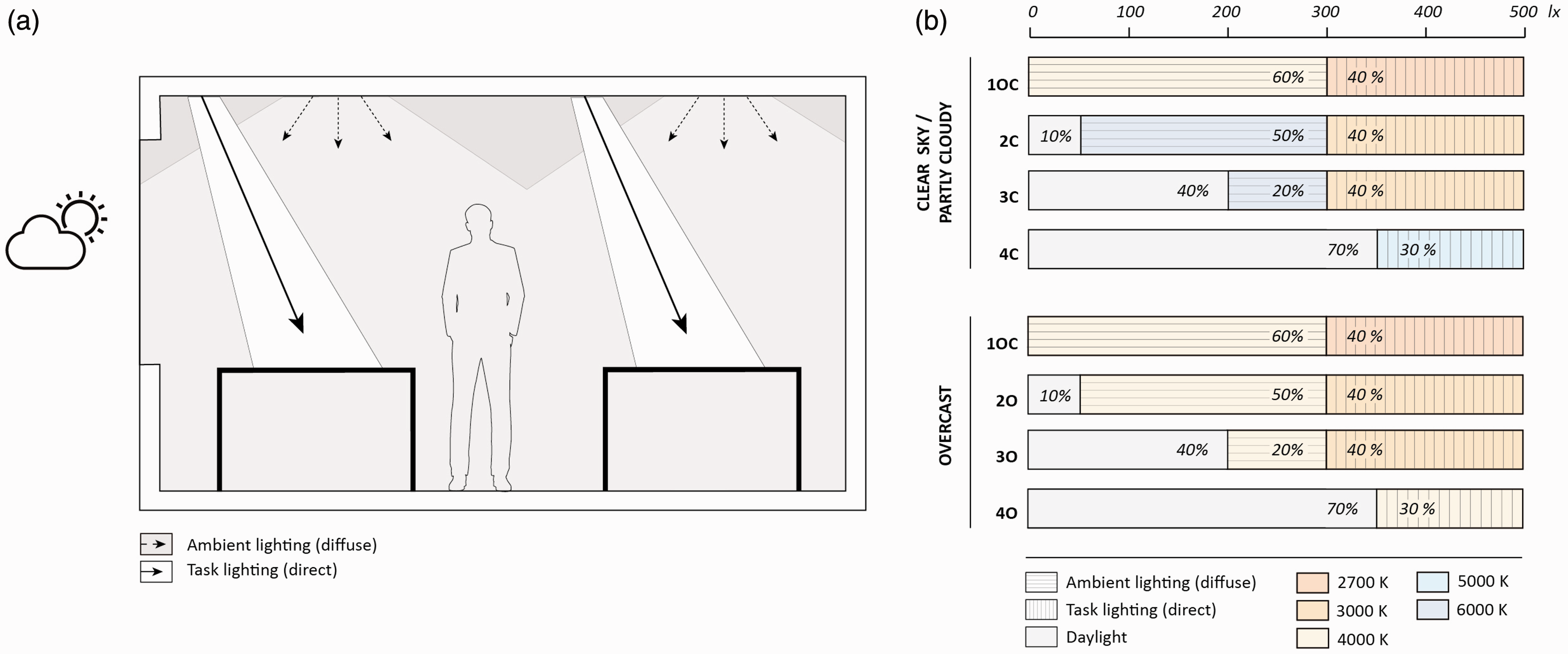
(a) (left) Illustration of the experimental set-up with daylight opening of side windows (uncovered), creating a natural flow of light; electrical lighting components diffuse ambient ceiling panels; and directional task lighting, with similar directionality as the daylight inflow. (b) (right) Seven light settings shown in relation to daylight character (‘O’ overcast or ‘C’ clear sky/partly cloudy) and intake with corresponding CCTs and intensities of electrical lighting components. All settings meet minimum 500 lx on task area.
The 1OC light setting was designed identically for both sky conditions, because this is a luminous condition, where there is only up to 50 lx on a working plane. This setting was designed for working hours, after sunset, and for transition hours in the morning and evening. The direct light component was defined with a warm colour temperature (2700 K) and the diffuse light component with a neutral temperature (4000 K).
The light settings for the clear sky condition (2 C and 3 C) were designed with cool diffuse, ambient lighting (6000 K), referring to the cool skylight on a sunny day, and with a warm direct lighting component, a spotlight (3000 K). The 4 C light setting was designed with only a direct lighting component, a spotlight illuminating the task area with cool lighting (5000 K). The aim of this light setting was to complement the cool daylight inflow. This design is also supported by the findings from Fleisher, 23 who suggests that maximum value for pleasure can be received by the combination of warm white and daylight colour, with a large indirect component.
The light settings for overcast sky conditions (2 O and 3 O) were designed with a neutral ambient lighting (4000 K), supported by a warm direct spotlight (3000 K). According to findings from previous pilot studies, neutral/warm lighting combinations were preferred under overcast sky conditions. The 4 O light setting was designed with a direct lighting component only, providing task lighting with a neutral colour temperature (4000 K).
Experimental setup
The location for the experimental study was an established office on the Copenhagen campus of Aalborg University in Denmark. The space dimensions were 4.4 by 5 m and height of 2.6 m. The walls were painted white. The office was equipped with four tables, chairs and some cabinets. The participants were asked to decorate and bring their computers and work equipment to establish their office space as they preferred it (see Figures 2 and 3(a)). The walls had a measured reflectance of 77% and tables of 18% measured with a Hagner EC1 Luxmeter. The two southwest-facing windows were equipped with manually controllable electric blinds. The glass area of the windows was 0.8 by 1.07 m, equal to 7.7% of the floor area. The office was located on the third floor, and there were no obstructing buildings affecting the daylight inflow. The view from the window can be seen in Figure 2. The building was next to a six-lane road with a heavy traffic. The air temperature was controlled by a central heat and air condition system.
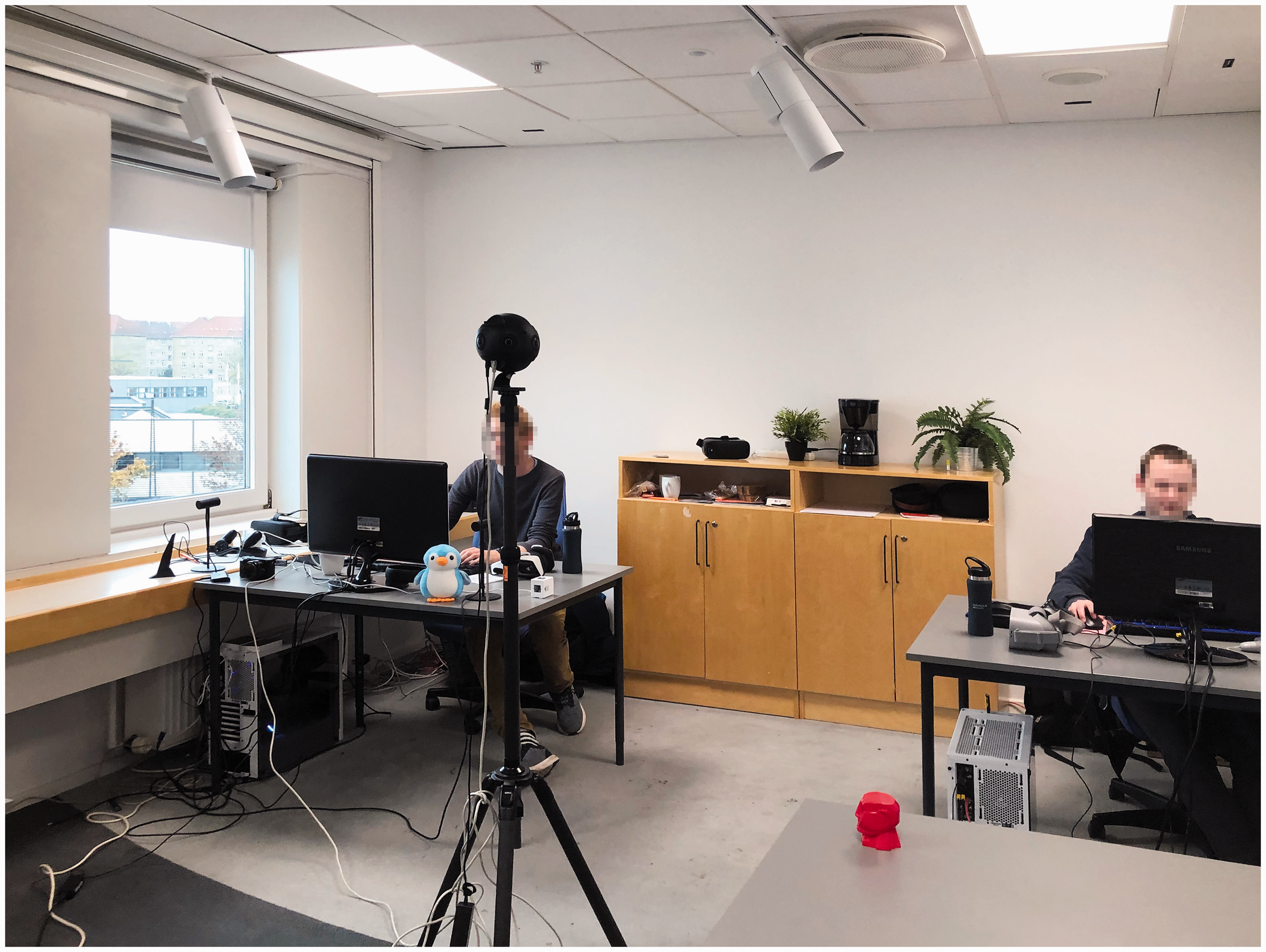
The experimental study space with participants.
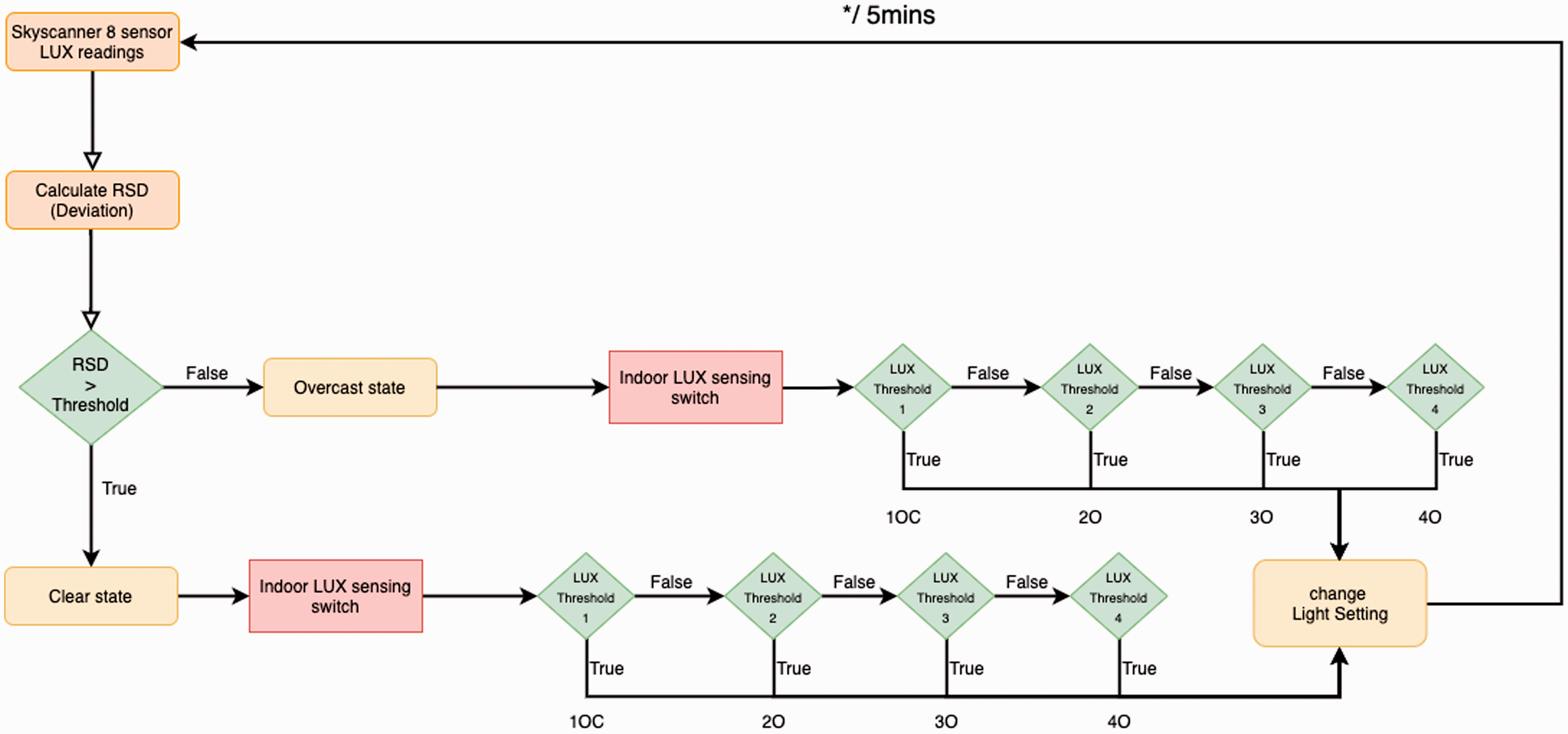
Flowchart showing scheduling process of input data readings to trigger lighting settings.
Four dimmable and tunable ceiling panels (2700–6500 K, Fagerhult Multilume Flat Delta) and four spotlights (2700–6500 K, Zumtobel’s Arcos 3) with a 36° beam angle and 32° tilt angle were installed, see Figure 2.
Daylight and sky sensors
An LM-TLM daylight sensor from Zumtobel 33 was utilized to define the outdoor sky condition. The LM-TLM contains eight sensors, four measuring horizontal and four vertical illuminance, placed relating to the four cardinal directions. The specific sensor placement informs the amount of illuminance at each of the four cardinal directions at any given moment horizontally and vertically. The sky scanner was installed on the roof of Aalborg University Copenhagen, with no obstructing elements. A detailed description of a study designed to determine how the illuminance values were received by the sky scanner change regarding the sky condition is given in Appendix 1.
To measure the indoor illuminance, the ESP8266 microcontroller 34 and TCS34725 light sensor 35 were used to transmit the light data over Wi-Fi. The light sensor provided a digital return of red, green, blue (RGB) values that were converted to illuminance (lux). The accuracy of the light sensor was evaluated by comparing the measured sample value with measures from Hagner EC1 Luxmeter, under both artificial and skylight.
The lighting control system ran on DALI. The lighting management system (LMS) that was responsible for triggering light settings ran on the central control unit (CCD) via restful API. To establish communication with the CCD, and thus exchange light data, HTTP (Hypertext Transfer Protocol) methods had to be established. The utilization of the REQUESTS Python library 36 made it easy to formulate HTTP requests as Python commands. The JSON response content, in case of successful requests, includes all the connected DALI devices states, from switches (True/False regarding their state) to luminaires (intensity: 0–100 and colour temperature for tunable white: 2700–6500 K). These JSON data were stored and accessed via the use of the Pandas Python library.37–39
The Raspberry Pi was utilized as a low-cost solution server for scheduling the execution of the Python scripts. Seven light settings with their corresponding illuminances and colour temperatures were coded to be triggered at different indoor illuminance levels and sky conditions. The scripts were set to execute with a 5-min interval. The flowchart illustrates the sequence of execution of the scripts. Figure 3 presents the flowchart of the scheduling process initiated by receiving the latest reading from the outdoor daylight scanner translated into sky condition. Once this was achieved, the indoor horizontal illuminance was measured, and the threshold of the latest reading was determined. The lighting was chosen to change over a duration of change of 10 s, without further investigations of this variable. This whole process was set to repeat every fifth minute.
Participants
This experimental study was performed by applying an experimental design that occurred in a natural office setting with four male participants, defined as the experimental group (with mean age 25.5 years): employees of a three-man start-up company and one master’s student, working with media production. The participants were recruited through an open call distribution via the campus intranet. The criteria for enrollment were having a desk as a primary work-place, and the ability to work as they normally did without any extraordinary period of absence from the office. The participants were not paid, but they were given two dinners during the test period, as well as a small gift as appreciation for their participation. Prior to participation, all participants completed informed consent, including the right to withdraw at any time, the right to refuse to answer the questions, and a guarantee of participants’ anonymity. All test participants were provided with anonymized ID numbers. The participants’ personal information was kept encrypted in a database that was separated from the other information used in the study. We applied special ethical considerations for this study. Legal access and permission to run the test were provided by the university.
All participants reported on the questionnaires that they had no visual impairments other than myopia or hyperopia, which were corrected by wearing contact lenses or glasses (three out of four participants), and none of the participants reported any colour vision deficiencies. One participant mentioned being light sensitive, and two participants mentioned sometimes getting eye strain when working for long periods of time in front of a screen. The work tasks of the participants were mainly software development, graphic work, video production, 3 D renderings and marketing. The participants in the game company enrolled in this study, did team-based work, with different tasks, and due to that, there may have been individual differences in the effect of the dynamic lightning. Within the control group, the tasks also included group work, and work on computers; instead of games, this group worked on a semester project within the field service system. However, all participants self-reported that they spent more than 70% of their time in front of their computer.
Participants were aware that they were participating in a study related to the potential effects of dynamic lighting, but were unaware of the exact light settings, and in which period there was static or dynamic light.
A control group was established and consisted of four participants, like the experimental group. The control group were students from the Service System Design master’s program at Aalborg University. They were working in a similar office space on the same floor as the experimental participants, with the same window orientation. The electrical lighting condition was identical to the experimental group’s static lighting: ceiling panels with the same light levels and CCT. The control group consisted of three female participants and one male participant (mean age 21.5 years). Two out of three used glasses or lenses to work. None of them had any colour deficiencies. The primary working tasks of the participants were reading articles, researching, brainstorming, writing and visualizations. The data from the control group were collected for three weeks in October 2019 and three weeks in December during the same approximate working hours as the data from the experimental group. The data used for analysis were from weeks 49 and 50, due to alignment of the experimental period.
The experimental period
The experimental period was four months in total, from September to December 2019, covering the Autumn and Winter season. The data were collected for 16 weeks in total, including eight weeks of static and eight weeks of dynamic lighting periods. Each month had a period of static and double dynamic lighting. The monthly time spans were established due to the large seasonal changes in daylight conditions in the northern latitude of 56°, including change in both daylight hours and sunlight hours. All data were collected from Monday to Friday, from 10 am to 6 pm, which was defined according to participants’ show-up time and approximate working hours.
Subjective assessments
Methods to evaluate the subjective response to lighting in an office space are complex and require several criteria. Our criteria for the evaluation were inspired by previous effect evaluation of light on impression, behaviour, perceived atmosphere and work engagement,8,13,14,40,41 as well as engagement evaluations.42,43 The questionnaires and interviews implemented formed a combination of both qualitative and quantitative methods to produce transdisciplinary insights within lighting research methods exploring how different data sources can increase the validity and reliability. Thereby this study was based on a convergent parallel mixed method,53 meaning that qualitative interview data and quantitative questionnaire data were collected and analysed separately but at the same time (in parallel). In this experiment, three focus areas were defined to evaluate how the light and work environment were perceived and affected the users: Visual comfort, validating the way the distribution and intensity of the light affect the perception of the light, the light modeling of objects, and the task performance at a workplace. Perceived atmosphere, defined as the subjective experience of being in the space, also considering the peripheral light and spaciousness in the appearance of the room and the relation to the outside. Work engagement, the long-term affective effect of the light, relating to perceived well-being and motivation.
Questionnaires
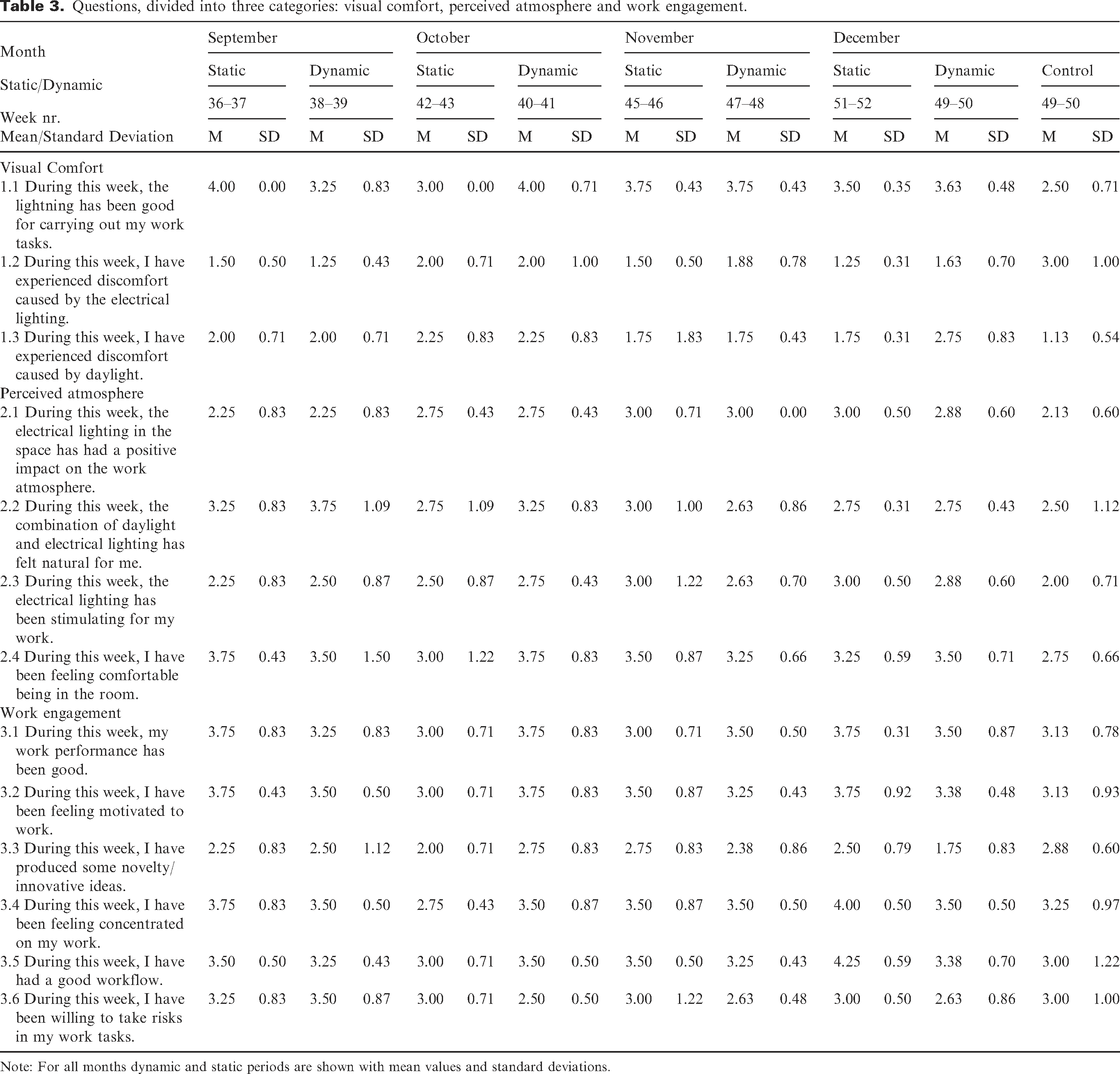
To evaluate the visual comfort, perceived atmosphere and work engagement, data were collected bi-weekly in the form of electronic questionnaires during the first six weeks of the experiment. The frequency of questionnaires was defined to avoid disturbing participants too much and to ensure a high rate of answers and accuracy, so participants would be motivated to take time and to be as precise as possible. However, it was changed to weekly distribution for the last 10 weeks to increase the validity and accuracy. The questionnaires were made in SurveyExact 44 and distributed on Fridays, to be filled out at the end of the working week. The questions included general questions gathering background information (e.g. attendance and health) and specific questions covering the following themes: visual comfort, perceived atmosphere and work engagement. The questions can be found in Table 3.
In the visual comfort theme, three questions were designated for the following purposes: first, to evaluate how frequently the lighting has been good for carrying out work tasks, and second, to gain knowledge of whether visual discomfort has occurred and been caused by electrical lighting or daylight.
In the perceived atmosphere section, four questions were designated to evaluate the following aspects: positive impact on the work atmosphere; naturalness of combination of daylight and electrical lighting; frequency of electrical lighting being stimulating for work; and frequency of feeling comfortable being in the room.
To gain insight on the work engagement evaluated by participants, six questions were designated. These addressed the following: frequency of good work performance; feeling motivated; producing innovative ideas/novelty; feeling concentrated at work; having a good workflow; and willingness to take risks in work tasks.
To analyse the participant data from the Likert scales numerically, the ordinal data were transformed into arithmetic data. The process for computing the mean for the ordinal scale was as follows. First, each of the five Likert answers was given a weight from 1 to 5 (never = 1, rarely = 2, occasionally = 3, frequently = 4, very frequently = 5). Then, for each of the questions, the frequency of the answer chosen was calculated. Lastly, to compute the mean (M), the sum of each of the weights was multiplied by its frequency and divided by the total amount of responses for the present question. Standard deviation (SD) was also calculated.
Two weeks (week 49 and 50) were analysed through a Mann–Whitney U test during the experiment, when the frequency of distributed questionnaires was weekly for both the control and experimental group. The Mann–Whitney U test, a nonparametric rank order test, was used to analyse differences in medians for these two weeks for the experimental group (with double dynamic lightning) and the control group (static lightning), respectively. The hypotheses for the test were as follows:
Interviews
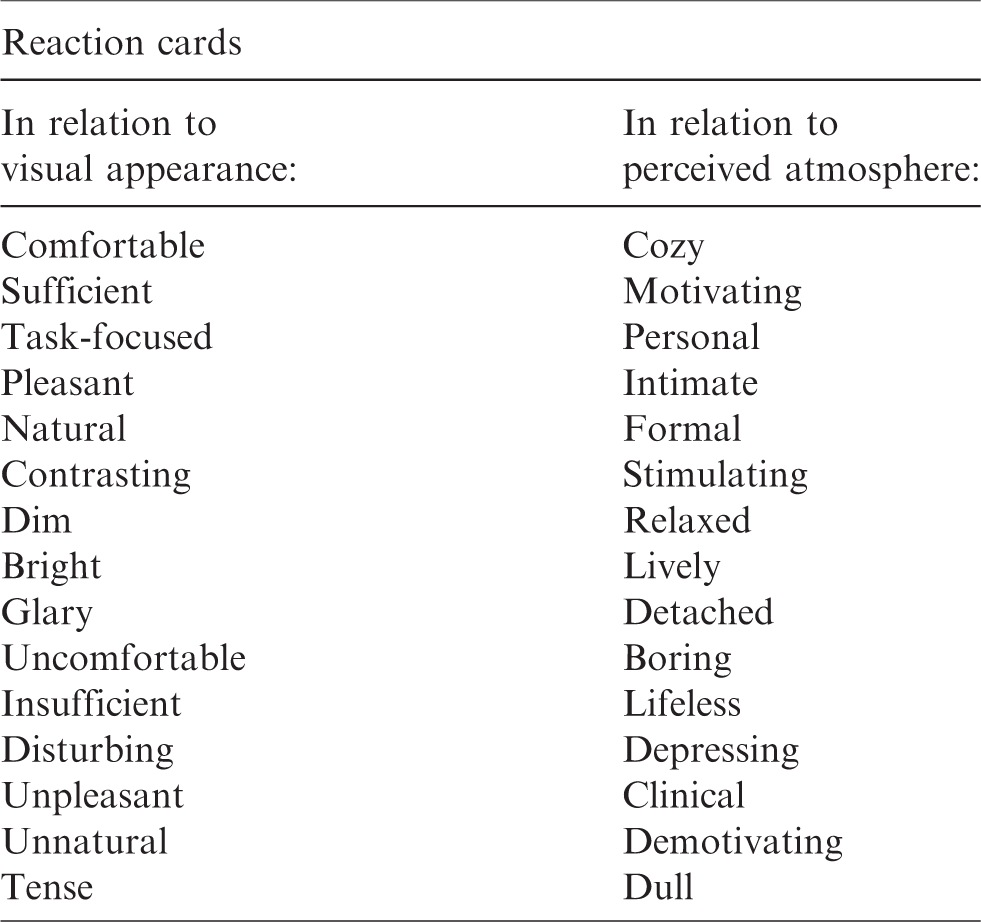
During the study, three sessions of individual in-depth interviews53 with four test participants were conducted. All interviews took place after four continuous weeks of the same lighting condition (see Table 1): two times with dynamic lighting conditions and once with static lighting conditions. The interviews varied in duration between 25 and 45 min. The interviews consisted of sections of questions divided under themes: general lighting experience, visual comfort, work engagement and perceived atmosphere, which was elaborated by participants with the usage of reaction cards, 45 also known as card sorting. 46 The reaction card method was modified from its original, using only 30 adjectives divided into two categories: visual appearance and perceived atmosphere (see Table 2 below). All interviews were recorded and transcribed using Otter.ai. 47 The AI-powered live transcriptions were later corrected in Nvivo12, 48 where the transcripts were read and the nodes’ visual comfort, perceived atmosphere and work engagement were manually detected. The data were analysed through content analysis with defined nodes, negative or positive. In addition, a group interview following the friendship-pair method 46 was conducted in the end of the last static period. The group interview was conducted after a two weeks period and had also the purpose to provide debriefing and final remarks from the participants.
Overview of fourth-month experimental field study period, showing weeks with dynamic and static lighting, weeks when questionnaires were distributed, and when interviews were conducted.

Note: The control group period is only marked with the two weeks when the data were used for analysis.
Overview of reaction cards, in categories of visual appearance and perceived atmosphere.
Questions, divided into three categories: visual comfort, perceived atmosphere and work engagement.
Note: For all months dynamic and static periods are shown with mean values and standard deviations.
Results
The results of the analysis of the questionnaires and interviews are presented within each of the three-focus area: visual comfort, perceived atmosphere and work engagement.
Visual comfort
The weekly questionnaires (distributed 12 times in total, see Table 1) comparing static and dynamic lighting during the four-month period were within mean values of 3.25 and 4 (see Table 3). This demonstrates that the lighting was satisfactory occasionally and frequently throughout the experimental period and regardless of light settings (see Q 1.1 in Table 3). Discomfort caused by the electrical lighting (Q 1.2) was also found never and rarely by the occupants, with numeric values of 1.25 and 2, respectively. Discomfort caused by the daylight (Q 1.3) was found to produce values of 1.25 and 2.75. The most negative value was registered in December, which could be due to the low sun angle and a southwest-oriented daylight opening or due to the exposure of the 1OC light setting as a constant, more than 80% of the time. There were no significant differences or problems detected in the analysis of the questionnaires (see Table 3).
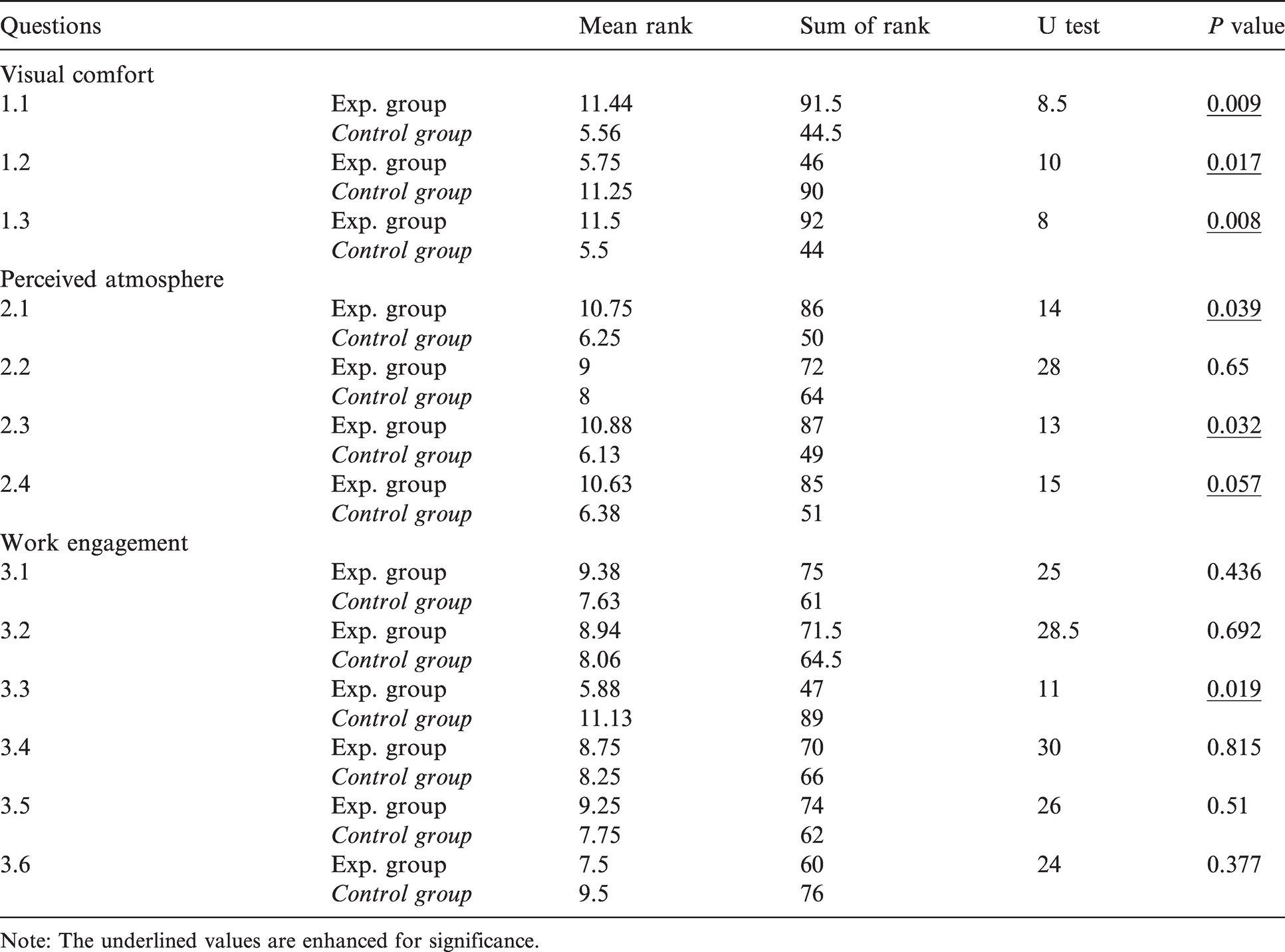
In the questionnaire, three questions were designated to evaluate visual comfort (see Table 5). All of them returned differences between the control and experimental group with a significance of p < 0.05. In Q 1.1, which asked about the suitability of the lighting to carry out work tasks, the test group ranked it with a higher mean value (M = 11.44) than the control group (M = 5.56). They also noted less discomfort from artificial lighting (Q 1.2) compared to the control group (experimental group M = 5.7, control group M = 11.25). In Q 1.3, where the groups noted their discomfort from daylight, the test group evaluated it as significantly higher (M = 11.5) compared to the control group (M = 5.5). For all three questions, the null hypothesis, that there is no difference between the ranks of the experimental and control group, could be rejected. Because the electrical lighting was less dynamic during the comparison period in December than in previous autumn months, the dynamism of lighting could not be evaluated in this section. The design concept components of diffuse and direct lighting still reveal positive results over static lighting for visual comfort.
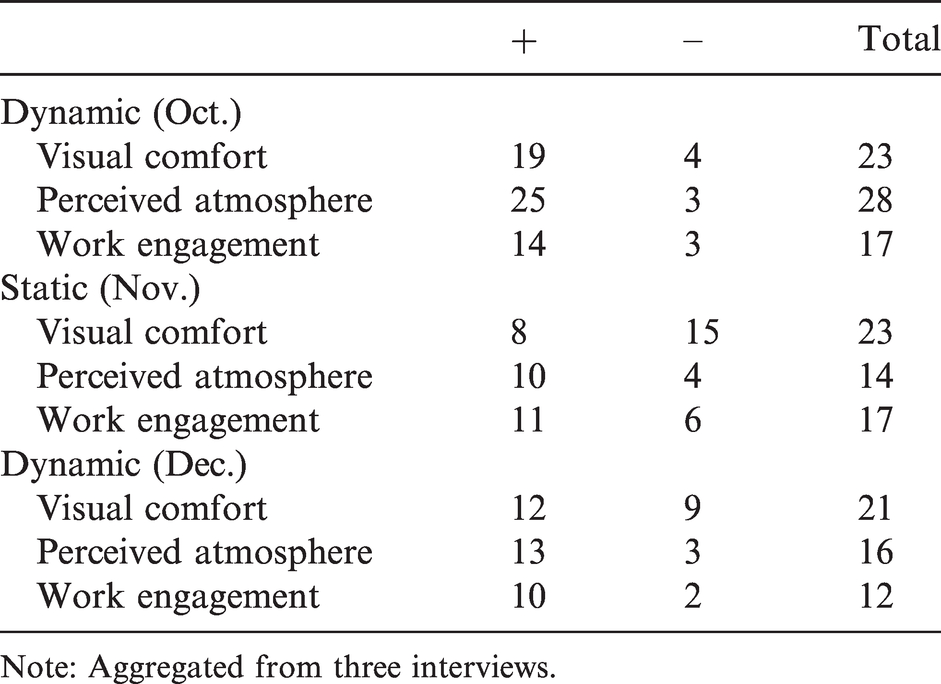
Overview of positive and negative nodes from content analysis.
Note: Aggregated from three interviews.
Mann-Whitney test results of weeks 49 and 50, comparing experimental group with control group.
Note: The underlined values are enhanced for significance.
From the interviews and the content analysis, it can be deducted that the visual comfort during dynamic lighting ranked with 19 out of 23 positive statements (nodes) in the first interview, when the interviewees had been exposed to dynamic lighting over four continuous weeks. In the second period of dynamic lighting, visual comfort ranked 12 out of 21 positive nodes. One participant stated the following during the first interview: The lighting has been sufficient, no matter how the lighting has changed. The lighting has been very pleasant. It hasn’t annoyed me, it hasn’t distracted me, it hasn’t cost me headaches or anything like that. [ID3, 1st int., Dynamic] The electrical lighting is not too bright. And when it gets lower… I’ve seen the adjusting a couple of times. Not noticeably, but sometimes you can see that it changes a bit, but the changes from the lowest to the highest have been within a range that still feels comfortable and natural, even though there’s a noticeable range. [ID3, 1st int., Dynamic] And then we also had like extreme sunlight for a very brief moment, and then all the lights turned off and then they didn’t turn on again for a long period of time. And then I would have liked to turn on the lights again. [ID4, 3rd int., Dynamic]
I had been sitting in the evening. It was very bright. It hurt my eyes. So during the day, the lighting was fine, but when it got night and it was very dark outside. It was just very intense. [ID4, 2nd int., Static]
The analysis of visual comfort, through the questionnaires and the interviews, revealed several findings. First, there was a general favouritism of dynamic lighting. For instance, after changing from dynamic lighting to static lighting, participants preferred the dynamic lighting and referred to it as smart and adjusting, while describing the static lighting period as lacking those qualities. Second, during the static lighting period, visual comfort, especially referring to evening hours, was found to have negative nodes. Several participants described it as too bright and intense. This indicates that working with light zones and ambient and task lighting components can provide a higher visual comfort for participants, still meeting the standard of 500 lx on the work task area. Lastly, it was detected that double dynamic lighting, composed of diffuse and direct lighting components, provided higher visual comfort for participants, compared to the experimental group.
Perceived atmosphere
Four questions were designated for evaluating the perceived atmosphere within the impact on work atmosphere, naturalness of lighting, stimulation and feeling comfortable (see Table 3). During September, November and December, differences between ranked values were insignificant, between 0 and 0.37 for 15 questions out of 16. In October, the naturalness of the combination of daylight and electrical lighting as well as feeling comfortable being in the room were evaluated 0.5 higher during dynamic lighting than during the static period in the same month. This demonstrates little evidence, although it indicates that October should be considered for further analysis.
There were four questions related to the perceived atmosphere in the questionnaire (see Table 5). Three out of four were found significant in their ranking differences (p < 0.05). In Q 2.1, the test group noted a higher positive impact (M = 10.75) of the lighting contributing to the working atmosphere than the control group (M = 6.25). In Q 2.2, where participants were asked to evaluate the combination of natural and electrical lighting, no significant ranking differences were discovered with a p value over 0.05 and close mean rank values, M = 8 for the experimental group and M = 9 for the control group. In Q 2.3, the experimental group found the dynamic lighting more stimulating (M = 10.88) than the control group that found static lighting (M = 6.813), with notable significance and mean rank difference. In Q 2.4 about evaluating the atmosphere as comfortable, the test group ranked it higher (M = 10.63) than the control group (M = 6.38). For three out of four questions, the null hypothesis was rejected.
In the qualitative content analysis, the ratio of positive to negative nodes from the three interviews showed similar results (see Table 4). In October, evaluating dynamic lighting, 25 out of 28 positive nodes for perceived atmosphere were detected, and 13 out of 16 in December. In November, after four weeks of static lighting, 10 out of 14 positive nodes were found.
The perceived atmosphere was characterized with these following positive statements in October regarding dynamic lighting: I feel like when there’s like overcast and the sun isn’t that much out, the lighting is kind of more comforting in the room, because it fills more. [ID2, 1st int., Dynamic] I noticed the light in the room, but it feels like the daylight and the light in the room has blended in together in a way. So, the weather would be like casted into the room, projected. [ID3, 1st int., Dynamic] And then, at some point during the daytime, I don’t notice the lighting at all and it feels very natural. It’s just there complementing the space and task. [ID4, 1st int., Dynamic]
In comparison, under static lighting, participants gave contrasting comments about the perceived atmosphere in the space. For instance, one participant said, ‘When it is bright, I feel awake. I feel focused, anything missing in the horizon. I can do my job. I feel a strong presence in the whole room’ [ID3, 2nd int., Static]. Another participant described the lighting with the following words: The lighting has been static, but the experience has been varying. During the daytime it’s been a natural feeling. So, in that sense, it’s been a natural feeling, but not really in the evenings. It’s been negative. [ID4, 2nd int., Static]
The analysis of perceived atmosphere revealed the following findings. First, the double dynamic lighting, consisting of warm, neutral and cool colour temperatures, was described positively, with several references to the naturalness of the lighting and daylight components, supporting the design concept. Second, on the contrary, the static lighting period, especially during evenings, triggered negative sensations among participants, resulting in clinical and uncomfortable atmospheres. Lastly, the perceived atmosphere, composed of diffuse and direct lighting, was evaluated as more comfortable and stimulating by the experimental group in comparison to the static lighting of the test group. All these findings confirm that the double dynamic lighting performs better than static lighting in evaluation of perceived atmosphere.
Work engagement
Six questions were designated to detect patterns in motivation, concentration, workflow, willingness to take risks, innovative ideas and perceived work performance (see Table 3). The mean results show more significant differences than in the two previous criteria, visual comfort and perceived atmosphere. In October, five out of six questions were answered with positive rankings, and four of them (Q 3.1–3.4) were ranked 0.75 higher during the dynamic lighting period compared to the static. October is also registered with the most diverse light setting distribution (Shannon’s index of 2) and the highest amount of clear sky conditions (44%; see Table 3).
This correlation for the six questions within work engagement showed the least amount of significance in ranking differences between the control and experimental group, with only one out of six with p < 0.05 (see Table 5). In Q 3.3, evaluating novelty and innovative ideas, the results were M = 11.13 for the experimental group and M = 5.88 for the control group. Other questions in this section were all found to have insignificant p values. Only for Q 3.3 could the null hypothesis be rejected.
In the qualitative content analysis, work engagement in relation to lighting showed similar results in all three periods, with 14 out of 17 positive nodes during dynamic lighting in October and 10 out of 12 in December (see Table 4). During static lighting, 11 out of 17 positive nodes were detected in November, performing with a less positive ratio compared to dynamic lighting.
With regard to the dynamic lighting and work engagement in October, one participant described it as follows: I wouldn’t necessarily say concentration or focus. I mean, you do have that, but you’re generally awake, I could say energized, but not like jumping out on my own chest, just energized. I mean I don’t get tired; we can stay there for a long time. We are very motivated for what we are working with, but lighting has supported that quite well. [ID3, 1st int., Dynamic] I just stopped working and went home. Because I knew it was too bright. I wasn’t too motivated to continue finishing up the tasks I had said I had to finish that day. I think maybe some warmer lights during the night will probably motivate me a bit further, during the end of the day. [ID3, 2nd int., Static]
The analysis of work engagement revealed the following findings. First, the questionnaires show that double dynamic lighting in October was found to have the most positive effect for work engagement, hereunder motivation, concentration and workflow. It is implied that larger diversity of exposure to different light settings contributes positively to work engagement. Second, the period with static lighting, on the other hand, shows that subjective experience and personal preferences can vary. Therefore, personalized task lighting could offer individual control over intensity and colour to meet the personal needs of the users and to reinforce work engagement, keeping users motivated and focused on work.
Discussion
This study was targeted to develop design strategies and methods by testing the complex interplay between the dynamics of daylight and electrical lighting. The approach of setting up pre-experiments to inform the lighting design in a complex long-term experiment was shown to be valuable. These responsive design concepts based on the perceived qualities of dynamic light, can now be applied in other lighting designs and developed further within the research methodologies and dynamic parameters, as well as the recommendation for light settings.
Future potential regarding the method
The effect of dynamic light on visual comfort, perceived atmosphere and work engagement is determined by many variables, including differences between participants (e.g., age, gender, mental state, work experience, working hours, attitudes, presence and different task types), context (e.g., social presence, location, exposure duration, time of day and year), and parameters of light (e.g., illuminance level, ratio and distribution, as well as spectral distribution and the weather). This multidimensionality of studying the effect of dynamic light is the reason that many studies prefer to set up tests in controlled labs and to work with only daylight or variables in electrical lighting. However, this experiment with four participants working for four months in a specific space and under specific lighting conditions created specific knowledge: knowledge of the potential and complexity of designing and testing the effect of double dynamic lighting, the interplay of the dynamics of daylight and electrical lighting with the light we all perceive in the built environment. The knowledge gained from this experiment must be considered in relation to other contexts and geographic locations, where weather, seasons, daylight inflow, participants, tasks and space may be different. For future research, the concept is recommended for implementation and evaluation with a greater number of participants, and ideally, with participants who represent a higher average age and are assigned more diverse tasks, as well as in a larger office space. Regarding the methods for testing, we found, in particular, that the qualitative interviews were valuable to evaluate the qualities and impact of the dynamic lighting over time in relation to work engagement. Further, it was revealed that participants sometimes found it difficult to respond to questions regarding their perception of the atmosphere and how it affects their motivation and engagement; this difficulty was reflected in long pauses but resolved with clarifying questions to the interviewer. The method of combining questionnaires with the designed interview guide—structured according to the triangulation of focus areas of visual comfort, perceived atmosphere and work engagement—is recommended for future field experiments. However, the criteria visual appearance and perceived atmosphere may be considered as based on immediate responses, whereas the effect on work engagement is affected over longer periods. Future field investigations can investigate the visual appearances and perceived atmosphere as an immediate response to the space more frequently, and by that, decrease participants’ recall bias effects. In this study, interviews were conducted in a different office space than the experiment office. Tests regarding the visual appearance and perceived atmosphere are recommended and should be conducted in the actual experimental office to have the test-person experience this onsite while answering. Another focus point for improvement is the tasks, as these have an important influence on work engagement. The control group in this study did not work with the exact same subject areas as the experimental group. Future experiments aim at selecting a control group that works in the same field and with same type of project are recommended, to minimize the influence of different tasks and processes on the outcome, particularly of the long-term effects, such as work engagement.
Points of improvement regarding light settings
The results suggest points of improvement for light settings tested in this double dynamic lighting concept. The current seven light settings is suggested to reduce to five settings, consisting of one setting for transition hours and work hours after dark, two settings for overcast sky, and two for clear sky conditions. This is suggested due to the data regarding frequency of triggering. During the dark periods, setting 3 O, 4 O, and 5 O were never triggered due to the daylight inflow being lower than 200 lx under overcast sky. The 4 C and 4 O light settings were the least triggered, with means of only 2.5% and 0.5%, respectively. These light settings were not found to be feasible for future implementations. Second, the minimum threshold of 50 should be lowered (20–30 lx) for triggering scenarios 2 O and 2 C, the daytime settings, to ensure that daytime light settings are triggered more often.
The results show that, especially during transitions hours and dark hours, there is a potential for defining specific settings, with warmer colour temperatures and lower intensities for the ambient lighting. Investigations may be carried out into whether the ambient light during the dark hours can reduce the level of illuminance (300 lx) as defined in current standards. These studies can be combined with an approach supporting circadian stimuli providing low melanotic content during evening.
Potential for developing the lighting design concept
A potential for future development of the double dynamic concept is adjustment to the time of the day by adding a time factor to the data triggering the light settings, and thereby meeting needs for circadian stimuli, which is especially relevant in a Nordic context.
Seasonal changes in light intensity and cloud coverage also had a strong impact on which electrical light settings the occupants were exposed to. During September and October, the distribution between triggered light settings was highest for the 2 O setting, at 33%. During winter months, November and December, the light setting 1OC was triggered 83% and 88% of the time, respectively, which demonstrates potential for designing new dynamic light settings in which the daylight inflow illuminance is defined in relation to seasonal changes, with a summer, autumn and winter setting. It was also possible to validate the time factor, temporal pattern, in relation to non-visual effects, with reference to timing of exposure in relation to daily rhythm, duration of exposure and photic history. 24
The results of this study also point toward the potential of implementing individual settings for the task lighting while the diffuse ambient lighting follows the dynamics of skylight. This opens possibilities to meet individual visual needs for different tasks, as well as needs for higher light intensities, boosting the lighting to stimulate individual circadian entrainment; impacts of light on alertness and sleep have the potential to be integrated in this design concept.3,15,17–19
The experiment also exposed the potential for a new additional setting with the time factor as a pre-programmed script of a built-in dynamic lighting setting, changing automatically in colour temperature and distributions as a pattern when the daylight level and sky are static over a longer period of time. This is especially relevant for the winter period in such locations as Scandinavia with predominantly overcast sky conditions. It was possible to detect dynamic lighting, for instance, when one overcast light setting was present, unchanged for more than an hour, during daylight hours. Thereby, the dynamic direct and diffuse lighting can compensate for the static daylight hours through dynamic light settings, adding visual dynamics, full of change, instability and unpredictability. This could introduce a new approach to the understanding of how transition time between lighting scenarios could be seen as visually interesting and stimulating for an environment.
The switches between the light settings were programmed to happen every tenth minute, when a change in sky-type and/or daylight levels was detected. The switch duration time from one light setting to another was set as 10 s. The interviews confirmed that the change of switches was rarely noticed. This parameter was not a focus area in this study. Future studies can elaborate on this parameter and investigate the balance of possible negative effects of dynamic lighting and the stimulating effects of perceived variations in lighting with reference to the perceived variations of natural light.
The concept also has potential in responding with dynamic sunscreens. This study determined that, when the sunscreen is drawn manually, due to direct sunlight entering a space, it is often not removed when it is not needed anymore. There is a potential to define settings to meet the daylight levels in the space when the sunscreen is drawn. It is possible to trigger the sunscreen and the definition of sky type through the same or a similar illuminance sky scanner to the one used in this project, because this sky scanner registers illuminance from four cardinal directions.
This approach of complementing the qualities of daylight and human perception to create appropriate light level and distribution in the individual workplace and in the space, can be investigated in relation to energy-saving potential. A future study can measure and calculate the electricity used for lighting in larger office spaces to validate the savings associated with reducing lighting to what is actually needed for individual task lighting and ambient lighting, whereas today the standard is an even distribution of a fixed level of illumination in office spaces.
Based on these findings, the double dynamic design concept is recommended for further development in future designs.
Conclusion
This investigation was targeted to develop an integrated lighting design strategy by testing a new dynamic and responsive lighting design concept in an experiment in an office. We examined whether dynamic lighting, complementing and responding to the natural dynamics of daylight, could improve the perceived atmosphere and visual comfort in an office environment and thereby improve work engagement. Despite the low number of participants, the findings from this experiment can inform the definition of future responsive lighting design strategies and validate the potential of the integrated lighting, responding to the dynamics of daylight through a combination of direct and diffuse lighting. We conclude the following: The dynamic light settings, responding to the dynamics of daylight through a combination of direct task lighting and diffuse ambient lighting, have a positive impact on visual comfort, perceived atmosphere and work engagement compared to static lighting. The double dynamic lighting provided a more suitable visual luminous condition and was also found to be more pleasant, with a lower visual discomfort factor. The double dynamic lighting was described with several references to naturalness of lighting and daylight components. Qualitative interviews can contribute to in-depth insights on how light affects the perceived atmosphere and work engagement. It is recommended to develop and validate the design concept responding to sky conditions and daylight levels. Seasonal changes, time of day, dynamic sunscreens and individual needs for task lighting can be implemented in future field experiments as additional dynamic parameters. Visual and non-visual needs can be considered in a single integrative design approach. To implement this on a large scale, an automated system and a user-friendly interface must be developed, as well as a strategy for how this corresponds to an integrated control system of the total building operation.
This design strategy demonstrates a potential in using new sensor and lighting technologies to meet human needs and satisfy a desire for variations and more natural atmospheres in indoor environments. The findings from this experiment advance the understanding of the qualities of integrating the dynamics of daylight and electrical lighting, referring to human sensation of unpredictability, naturalness, flow of light, light modeling effects and light zones. The findings can be adapted to other contexts and facilities, such as educational, housing and the health sector. The core of this approach is to help to form future lighting design guidelines and research experiments exploring how a responsive lighting technology, reacting to and complementing the daylight dynamics, can reconnect man and nature.
Footnotes
Authors' contribution
Ellen Kathrine Hansen was responsible for the design concept, research process and project. Mihkel Pajuste and Emmanouil Xylakis collected and analysed all, respectively, qualitative and quantitative data and wrote the paper together with Ellen Kathrine Hansen. Thomas Bjørner supervised the data collection and analysis and was involved in writing.
Acknowledgements
Thanks to our industrial partners Tridonic, Fagerhult, iGuzzini and Zumtobel as well as the test participants and not least our colleagues from the Lighting Design Research Group at AAU.
Declaration of conflicting interests
The author(s) declared no potential conflicts of interest with respect to the research, authorship, and/or publication of this article.
Funding
The author(s) disclosed receipt of the following financial support forthe research, authorship, and/or publication of this article:This paper represents the final findings from the project “Double Dynamic Lighting” co financed by Aalborg University, Tridonic, Fagerhult, iGuzzini and Zumtobel.
