




Abstract
Promoting resource- and energy-efficient home lighting through technology and behaviour change requires an understanding of how residents currently use lighting and what they want from it. However, users' needs and desires relating to lighting in homes are poorly understood, as research is still limited. This paper aims to provide a fuller picture of residents' experiences with their home lighting. Interviews about how residents perceive the character of lighting and luminaires and lighting use suggest that home lighting has nine capabilities: to enable vision; to facilitate visual tasks; to display objects; to send a message; to support a particular atmosphere; to shape the architectural space; to offer a visual aesthetic experience; to maintain or change rhythmicity; and to evoke memories. Secondary data confirmed five of them. The identified capabilities relate to behavioural goals, psychological wellbeing and social needs. We conclude that seemingly wasted light in people's homes, i.e. lights left on in unoccupied rooms, can serve a purpose for the residents, such as avoiding visual or aesthetic discomfort, making the home inviting, benefitting people outside and providing safety. Findings have implications for the further development of new lighting technologies and design, energy-saving campaigns targeting residents and for urban outdoor environments.
Introduction
The use of indoor electric lighting has consequences for both human wellbeing and the environment. With regard to health, light influences sleep and circadian regulation,1–3 alertness4,5 and mood.6–8 This suggests that indoor lighting technologies, providing the right amount of light with the right spectrum at the right time, have the potential to add health benefits to the image-forming effects of lighting.
Several measures promote resource- and energy-efficient lighting: regulations 9 (e.g. phasing out incandescent lamps from the market), technological advance 10 (e.g. light sources with high luminous efficacy and dimmability) and behaviour change 11 (e.g. avoiding wasted light, caused by illuminating unoccupied rooms or providing more lighting than needed). Nevertheless, energy-efficient lighting technologies and smart homes 12 must respond to users’ needs, such as visual comfort, visual task performance and other context-dependent needs and desires. We argue that lights left on in unoccupied rooms in homes cannot always be regarded as wasted light, because indoor lighting provides more benefits than merely facilitating vision.
Historically, factories and workplaces have received much attention in field research on lighting, because of the impact of lighting on visual task performance, safety and employee satisfaction, 13 but field research on home lighting is limited. Transferring this knowledge to home environments is not that straightforward for several reasons: home environments involve other groups of people (retired people, children, adolescents and sick people) and activities (e.g. sleeping, intimate activities, watching TV, cooking, physical work-out, laundry work and growing plants). Some of these activities may also take place in workplaces but, unlike the situation in homes, they are rarely constantly performed in the same room. Therefore, homes present different lighting challenges to workplaces.
In Sweden, there are no detailed regulations on interior lighting in homes. The National Board of Housing, Building and Planning gives the following general recommendation: ‘Buildings shall be designed to ensure satisfactory light conditions can be achieved without the risk of injury or human health hazards. The light conditions are adequate when sufficient light intensity and the correct brightness (luminance) are reached’. 14
The responsibility to choose, buy and fit most of the luminaires in Swedish homes lies with the resident. When residents move in, either in an existing or newly built home, the only luminaires already present are a few fixed luminaires in the kitchen (above the work surface and in the ceiling), walk-in closet, bathroom and the laundry. New residents bring their own luminaires and take them away when they leave. New residents seldom hire lighting specialists to plan the appropriate lighting, and instead rely on lighting guidance from authorities, 15 lighting associations,16,17 luminaire providers, interior design magazines and practical handbooks. 18 Technical information on lamps is available for domestic consumers in supermarkets, where they mostly buy their lamps and online. 19 Despite these limitations, residents seem to know what kind of lighting they want, but they do not necessarily have what they want in their homes for a variety of reasons, e.g. limitations due to the physical home setting or product availability. 20
There are also culture-specific factors to consider besides differences between workplaces and homes. Swedish residents stand out compared with other countries in the EU in terms of the number of lamps in homes and light-related behaviour. 21 Only about one-third of Swedish residents always turn off lights in unoccupied rooms (see Figure 1), but how the lighting is used and reasons for leaving lights on are so far not fully understood. Another prominent lighting feature in Swedish homes is the frequent use of candlelight in the dark season. 20
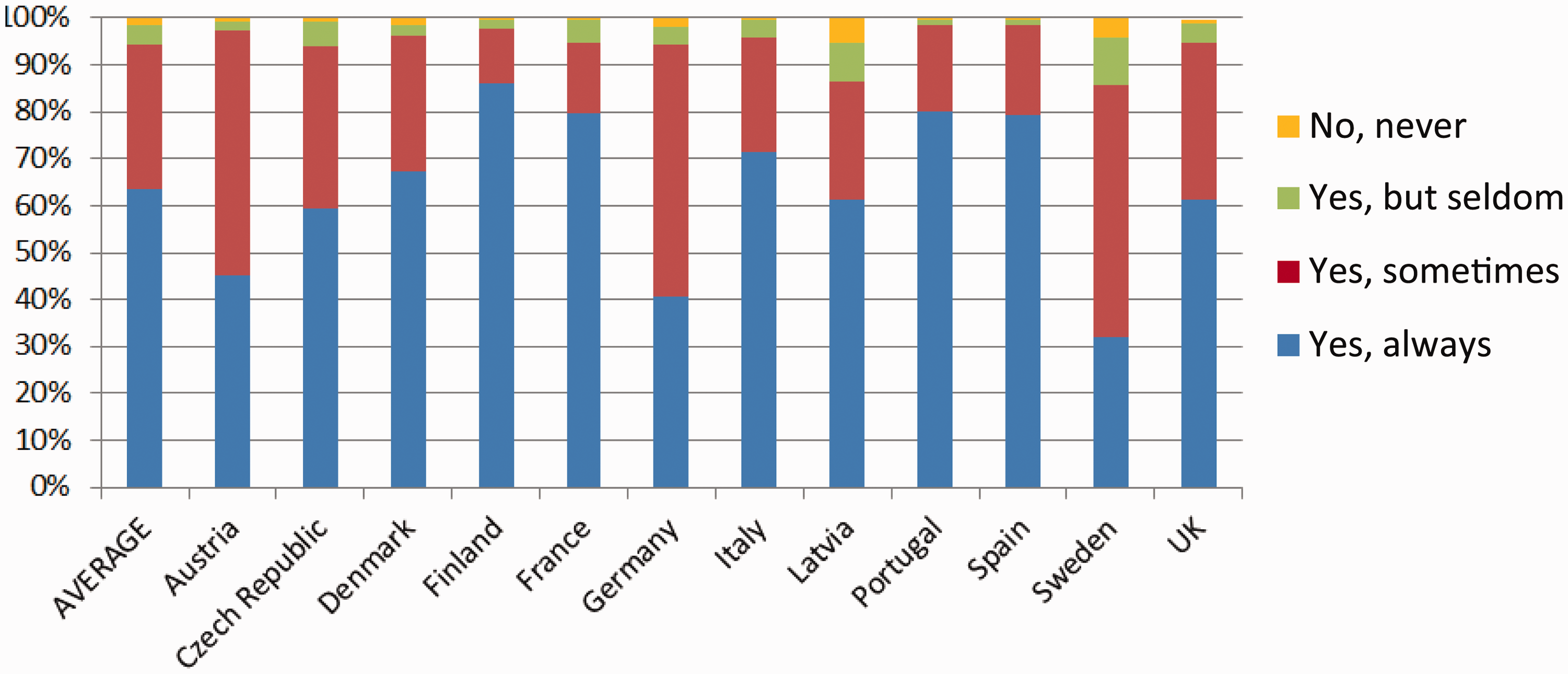
Results from the PremiumLight market survey in 12 EU countries showing the responses to the question: ‘Do you turn off the lighting when nobody is in the room?’ On average, nearly 65% reported they turn off lights when nobody is in the room, while the figure in Sweden is only about one-third (used with the permission of the author). 17
Many studies have investigated people’s lighting preferences concerning the colour tone of the light. A study that simulated residential applications using scale models of a living room and fabricated light sources of the same correlated colour temperature but different chromaticity showed that people prefer ‘white’ or minimally tinted light sources. 22 However, the preferred lighting in laboratory settings does not necessarily transfer to people’s actual choice and use of lighting in their homes. People’s preferences are also influenced by the social context. One survey showed that brightness preferences for romantic partner situations were significantly lower than for preferences for platonic friend or group situations. 23
People’s individual lighting preferences in homes are also affected by culture,24–31 age, 32 the availability of lamps on the market and electricity access 27 and environmental values. 10 Korean female temporary residents visiting the US viewed the interior lighting as the most negative feature in their apartments because of light levels being too low, and the absence of a central, surface-mounted luminaire in each room, which is common in Korea. 33
Only a few research studies have examined the characteristics and use of home lighting in Scandinavia, drawing particular attention to either the features of the lighting, such as the number of lamps and their position in the room, residents’ desired performance factors of lamps 20 or spatial light distribution. 34 The importance of using light to create an atmosphere has been confirmed across several studies.24,34,35 Respondents in one of the studies were asked to evaluate the importance of different factors when arranging their homes; the most important factors were creating a cosy atmosphere and consideration of the purpose of the room and luminous conditions. 35 Bille 24 brought the social dimension of interior home lighting to the fore – the importance of light for staging domestic spaces and for indirectly connecting people, since the interior is visible to others.
The qualitative aspects of lighting are receiving more attention in scientific research, e.g. how lighting is perceived and experienced by users in the lab, hypothetical situations or in the field. When investigating users' experience of home lighting, there are individual, contextual and cultural factors to consider. A few qualitative field studies have focused on one particular use or dimension of home lighting, but still lacking in the scientific literature is a more comprehensive report on the multiple uses of home lighting and different types of needs and wants. Such a report would be beneficial for the further development of new lighting technologies and the design of luminaires directed at domestic consumers.
Taking a user-centred approach, this paper aims to explore residents’ needs, desires and behaviour concerning indoor home lighting in everyday situations in multi-dwelling buildings, based on their experiences with lighting and their choices of luminaires. This paper set out to answer the following research questions:
How do residents perceive and talk about the character of their lighting and luminaires? How do residents use their indoor lighting and luminaires? What are the reasons for leaving lights turned on in unoccupied rooms in Swedish homes?
Our primary focus is on the use of electric lighting in homes, but candlelight is included, as it plays such a central role in Swedish homes.
Theoretical approach to user experience of products and guidance on lighting design
Both theoretical and practical viewpoints are useful when attempting to improve understanding of how residents interact with their luminaires and how they perceive the purpose of their home lighting. The underlying assumption of this paper is that an entirely task-based focus is inadequate in home environments, because of differences between workplaces and homes as identified in the previous section.
The psychological approach to modelling user experience by Hassenzahl 36 is one of several within the field of human factors/ergonomics. 37 According to the model, the designer decides what features to implement in the product and has a particular character in mind (see Figure 2(a)). Even so, the designer cannot know how the user will perceive the product and how it will be used in everyday life. The critical elements involved in the relationship between user and product, in our case, between resident and luminaire, are shown in Figure 2(b). Hassenzahl emphasises that all elements in the model together contribute to the user’s experience when interacting with a product: how the character is perceived by the user (apparent product character) and the emotional and behavioural response in a particular situation (consequences).
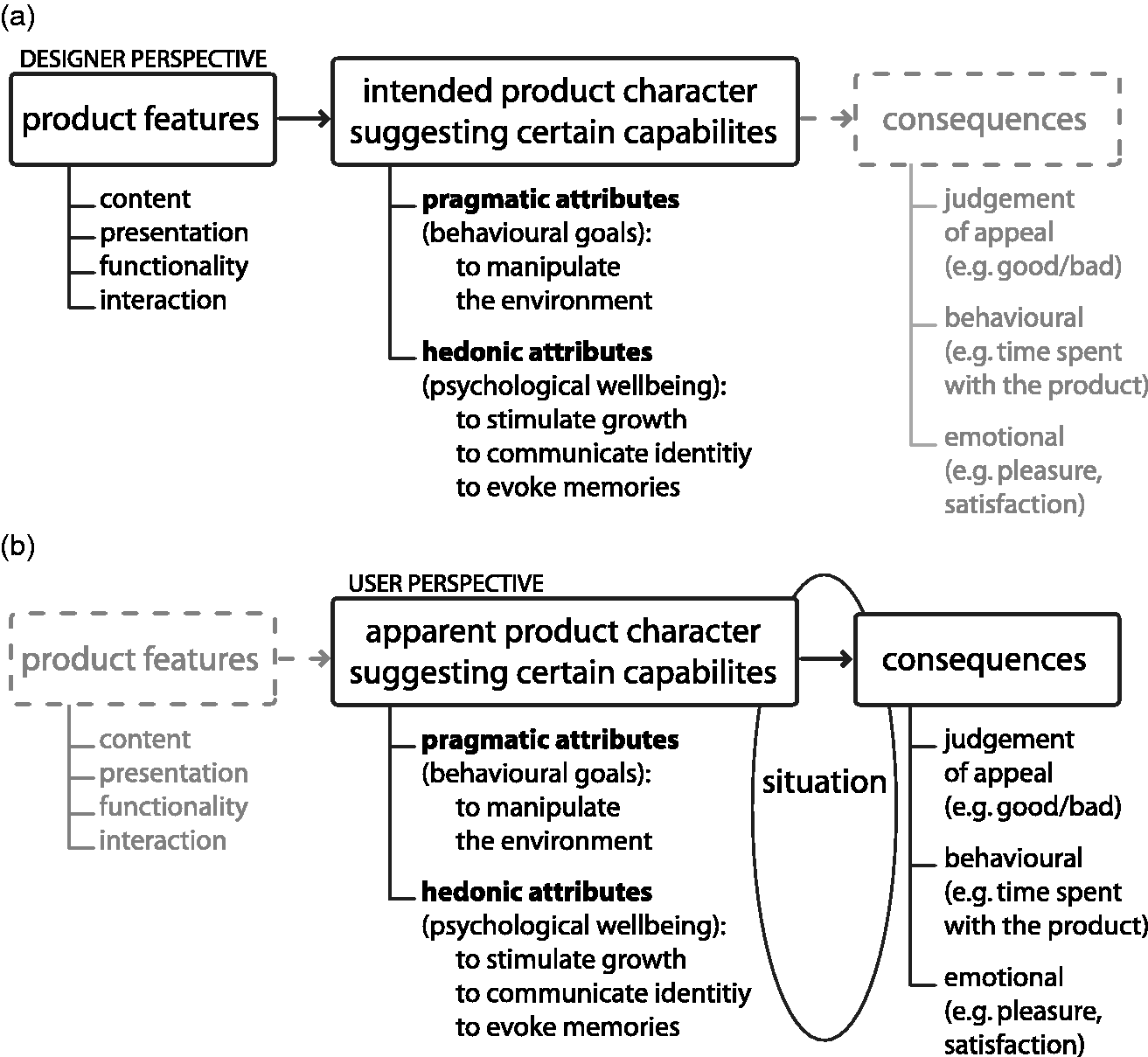
Model of user experience from (a) a designer perspective and (b) a user perspective. This paper focuses only on the user perspective. The apparent character to the user relates to different attributes or goals: pragmatic attributes enable people to manipulate their environment, which requires functionality of the product, while hedonic attributes express potentials for pleasure. Adapted from Hassenzahl. 36
People judge products according to how well they satisfy needs in different situations. The product can cause emotional as well as behavioural responses, e.g. the time a luminaire is turned on when you are present in the room. Hassenzahl distinguishes between two emotional responses. Pleasure is felt when the product offers unexpected capabilities, whereas the user will be satisfied when expectations are met. When assessing whether the product is appealing or not, the user weights their perceptions of product attributes or goals (pragmatic and hedonic) by considering the situation. Typical descriptors of appeal are ‘good’, ‘pleasant’, ‘attractive’, ‘desirable’, ‘motivating’ or ‘inviting’.
The model (see Figure 2(b)) can be used to illustrate residents’ use and experiences with their luminaires and lighting. Imagine you come across a luminaire at a flea market. You first perceive the features and then construct a product character: a simple table luminaire with a moveable shade that can be useful for reading (pragmatic attribute) since the light can be turned on from a seated position and illuminate the pages of the book, i.e. light is used to manipulate the environment. In the home, the luminaire is placed by the bed and you find the luminaire to be good (assessment of whether it is appealing) and it meets your expectations (satisfaction). You spend more time reading in bed (behavioural consequences) than in the armchair. Later in life, the perceived character can change and instead be a reminder of past times.
A more practical perspective on lighting design and what generally is considered to be ‘good’ lighting patterns can be found in publications on lighting design, ranging from poetic descriptions of light and architecture, for example by Kahn, 38 to more comprehensive guiding principles.39–41 Kelly described three basic light effects, one of which is usually dominant, but the interplay of all three kinds is central to ‘visual beauty’: focal glow or highlight which makes it easier to see; ambient luminescence or graded washes that make surroundings safe and reassuring; and play of brilliants or sharp detail which stimulate the spirit. 42 He also distinguished between six ‘qualities of light’: (1) Intensity – light moving toward a surface; (2) Brightness – light reflected from or emitted through a surface or area; (3) Diffusion – produces no shadows because of multiple directions of incidence; (4) Spectral colour – shorter wavelengths toward blue and longer toward red; (5) Direction – of light areas relative to eye level; and (6) Movement.
Marsden compiled five user requirements for both indoor and outdoor lighting that vary in emphasis according to lighting application. 43 First, lighting should enable us to see, i.e. visibility. Second, lighting must avoid producing glare, i.e. to ensure visual comfort. Next, lighting as a form-giver has the role of revealing the environment, i.e. illuminating the surfaces that define the boundary of the environment and objects and people within the space. Another requirement involves communication, which concerns expressing the style and function of the building using the luminaires, lit or unlit. The last requirement is continuity, i.e. technical performance throughout the lifespan, with few maintenance needs.
Material and methods
A qualitative strategy of inquiry was preferred to a quantitative, because (1) theory and research on home lighting is lacking, 44 and qualitative methods are useful for collecting rich, contextual data and (2) a holistic approach is needed to obtain information that might otherwise be missed.45,46 The best way to explore the interaction between users and their environment is to see the users in the environment in question. Qualitative data obtained through interviews are especially useful for exploring the user’s needs and understanding perceptions of individuals. 47
The purpose of the interviews was to provide a rich thematic description of the data set and obtain thick data, i.e. enough data to achieve data saturation.48,49 The sample was intentionally diversified in terms of age, gender and household size to obtain a wide range of experiences. However, only residents living in multi-dwelling buildings were included, ensuring a relatively homogeneous sample and a smaller number of participants since they were analysed as a single group. Structured interviews with open-ended questions were chosen to ensure that questions central to the topic would be the same across all interviews. Face-to-face interviews were held in residents’ homes to enable observations of participants’ home settings.
Interviews with residents served as primary data, while archived comments and images, collected by the Nordic Museum in Stockholm, were used as secondary data. The motivation for using secondary data was to see whether findings of the primary data set could be applied to a broader group of residents in multiple Swedish cities.
Interview study: Participants
The qualitative interview study was carried out in people’s private homes. A convenience sample was recruited consisting of six female and six male residents aged 26–76, with a variety of household size, housing tenure type and dwelling size (see Table 1). Inclusion criteria were speakers of Swedish and adult residents living in apartments located in Lund or the adjacent city of Malmö. People in the researcher’s network were approached and asked to invite contacts in their networks to participate in the study (close friends of the researcher were excluded). This sampling technique was preferred because people can be reluctant to agree to interviews in their private homes. As an incentive, the participants received either three lottery tickets or a movie voucher on completion.
Participants in the interview study.
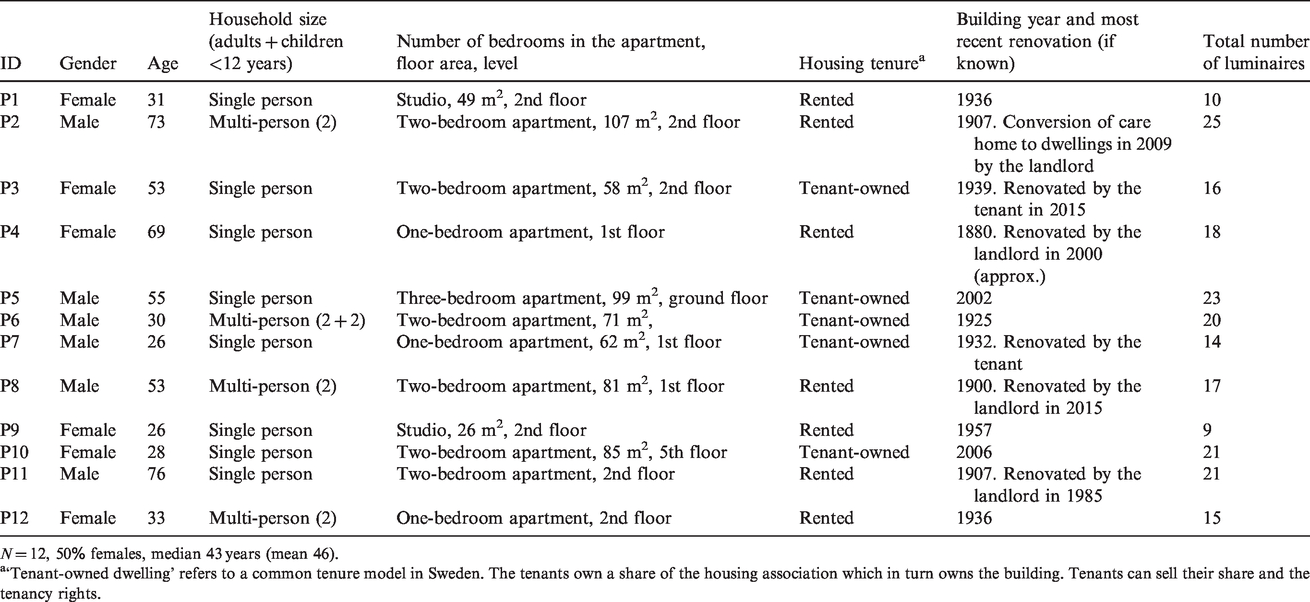
N = 12, 50% females, median 43 years (mean 46).
a‘Tenant-owned dwelling’ refers to a common tenure model in Sweden. The tenants own a share of the housing association which in turn owns the building. Tenants can sell their share and the tenancy rights.
Interview study: Material
The study consisted of 12 qualitative interviews on residents’ experiences with lighting and their choices of luminaires. Participant photography was added to the interviews to encourage participants to talk and reflect. 50 Photos can be especially effective when they involve something that is visual, such as objects or people, compared to less concrete day-to-day phenomena. 51 Information and material obtained were digital recordings of interviews, participant-produced images of residents’ luminaires, floor plans and completed observer-based environmental assessment (OBEA) forms completed in situ by the researcher. The purpose of the initial walk-through and the environmental assessment was to check that the participant had taken photographs of each luminaire and not accidently missed any, to see the luminaires in the actual setting, to record interior features relevant to the lighting situation, and to form an impression of the home lighting before carrying out the interview.
Interview study: Procedure and analysis
Data were produced from October to November 2015. Initially, an invitation e-mail was sent to participants explaining the purpose of the study and providing information about the requirements: a copy of the floor plan, if available, and information that a series of participant-produced photographs of the luminaires were to be taken before the home visit. Participants were given a total limit of 25 images and file size (approximately 1 MB), but distance range and time of day for the photography were unrestricted. Prior to the interview, images were assembled by the researcher in an album (see Figure 3(a)).
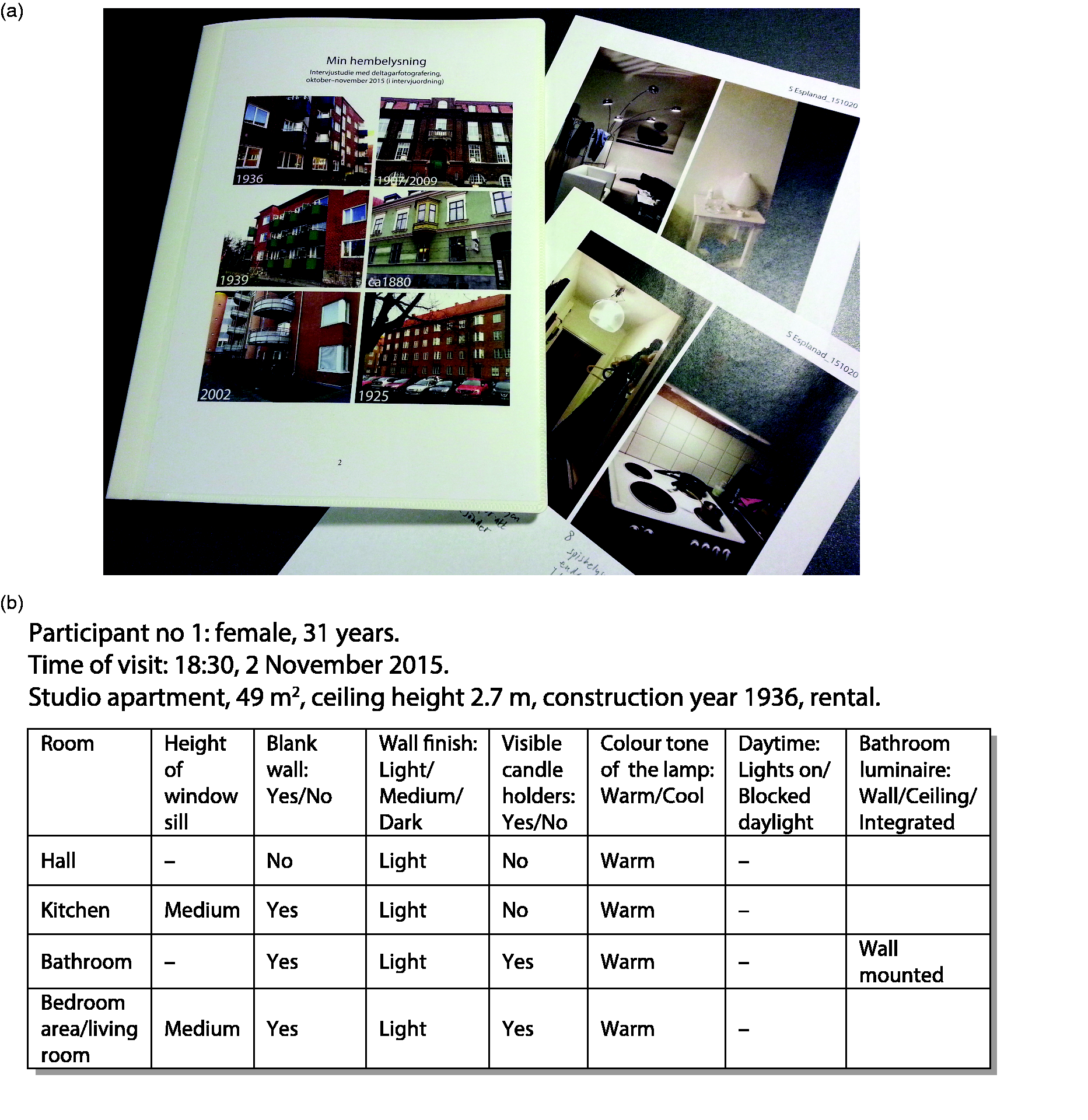
(a) Albums with participant-produced photographs served as facilitators in the interview and (b) OBEA forms were completed in situ by the researcher to supplement the images.
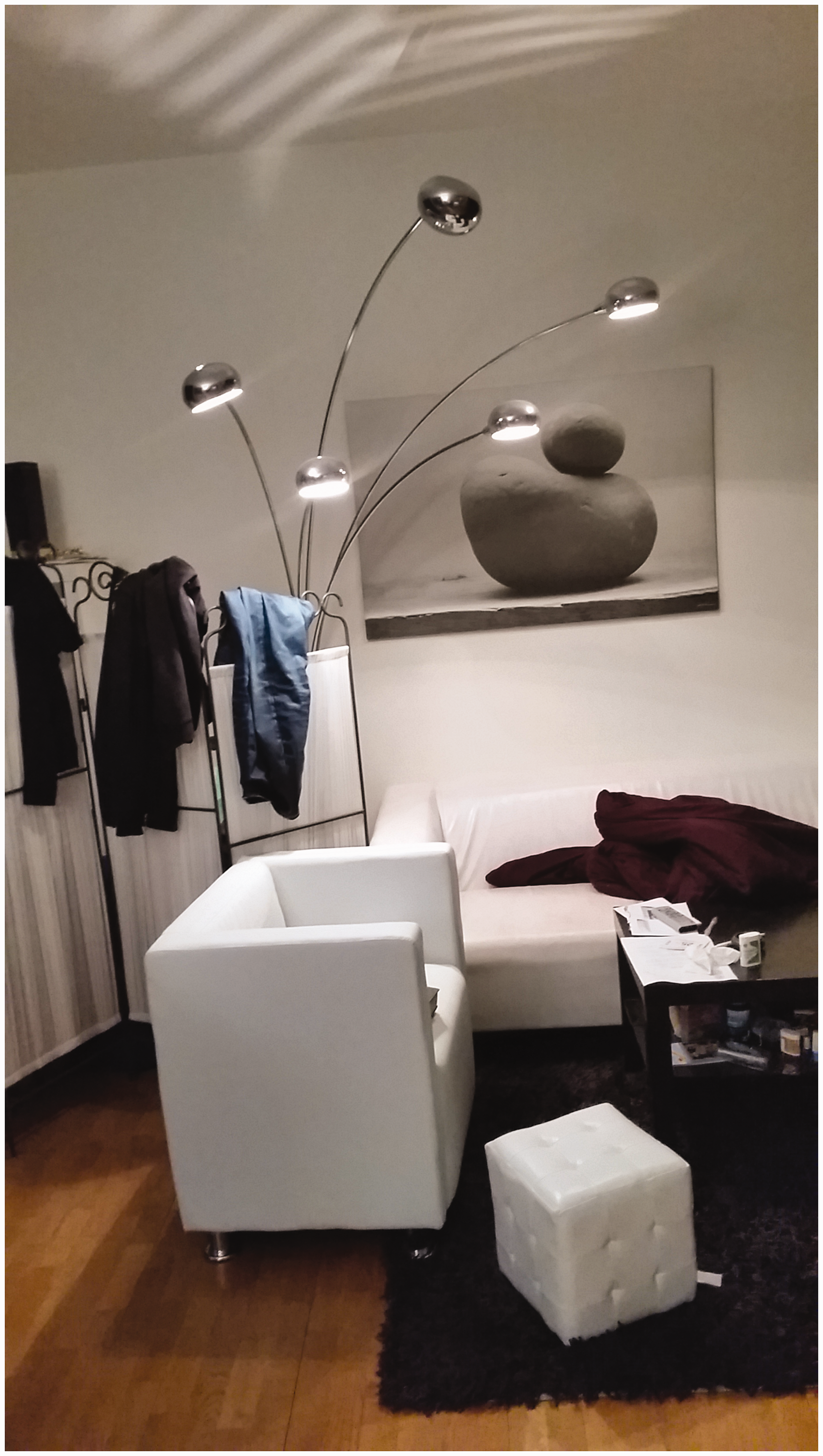
When participants were asked about what changes they would make to their home lighting, all of them could suggest improvements. For example, several participants lacked an appropriately placed ceiling-mounted luminaire in either the kitchen or the living room, as did participant P1, living in a studio apartment.
Home visits began with a walkthrough with the participant, who was asked to turn on any unlit luminaires. During the walkthrough, observations of interior features relevant to the lighting situation were continuously recorded on a prepared form and on the floor plan. Features observed were the colour tone of the light sources (warm or cool), surface colours of flooring and walls (light, medium or dark), window openings and visible candlesticks (see Figure 3(b)). No lighting measurements were taken, as the aim of the inquiry was to obtain participants’ experiences with their home lighting and perceptions of their luminaires.
The interview was structured with open-ended questions (see Appendix 1), and the photo album was used as a facilitator (see Figure 3(a)). Participants were asked to consider one photo at a time and talk about the luminaire – why it had been chosen and how it was used. If not addressed by the participant during the interview, additional follow-up questions were asked regarding lighting controls, lighting preferences of other household members, past changes to their lighting and desired changes, daylight satisfaction, lighting behaviour (turning off the lights when no one is in the room) and the possibilities to make the bedroom darker at night. The recorded interviews varied in length (15–35 min), depending on the number of luminaires and on how much participants elaborated on their answers to the researcher’s questions. The total duration of the home visit, including the walk-through and the interview, was approximately 1 h. Field-notes were recorded by the researcher after the visit, including participant characteristics and reflections.
When all material had been collected, the researcher carried out a thematic analysis of the interviews. The participant-produced images were not analysed, since the purpose of the photos in this case was to encourage participants to talk and reflect on their choices and use of luminaires. The thematic analysis followed a multiple-stage process as proposed by Braun and Clarke, 52 including moving back and forth between steps. Theory-driven coding was applied, which means that data were analysed with specific questions in mind.
First, interviews were summarised, and selected comments, relevant to the research questions, were transcribed. Ideas for a content-based coding were written down in parallel with transcribing: the character of lighting (how lighting was described in the transcripts by the participants) and the use of lighting (how and when luminaires were used).
Secondly, comments and responses to interview questions were labelled in terms of these two categories or themes – ‘perceptions of character of lighting’ and ‘residents’ use of the luminaires’.
Thirdly, re-reading the transcripts, data extracts were coded individually for specific uses of lighting. For example, statements concerning the need for light when opening the cupboard or finding books on the shelf were coded as ‘to see’. Sub-themes were identified either on a semantic level, i.e. explicit in the transcripts, or at a latent level, i.e. interpretative. 52 Sub-themes had to capture something important in relation to the research question. 52 Titles of sub-themes were renamed and the specifics of each theme were refined in an ongoing process, e.g. ‘to see’ was renamed ‘to enable vision’. Two sub-themes were merged into one, and the thematic analysis finally resulted in nine sub-themes that were compared to Hassenzahl’s 36 product attributes (pragmatic and hedonic).
After the second phase and during the third phase, the coding scheme was discussed with a research colleague with similar knowledge of lighting, to reach agreement on the selected sub-themes, i.e. to achieve dialogical intersubjectivity. 53
Archive study: Sample, material and analysis
Archived text comments and images of window luminaires at the Nordic Museum in Stockholm served as secondary data, collected by the museum in November 2015.
The Nordic Museum tells the story of the Nordic region – its people and culture, of the past, present and the future – through exhibitions and archived material. In recent years, to keep the collections updated and to rapidly reach a large number of people, commentaries on and photos of particular objects (e.g. luminaires in homes) have been collected through social media.
One of the community-wide calls on Facebook invited people to ‘take photographs of your window luminaire’. To enable storage and publication of the material, people were asked to complete a form (name, age, gender, country of birth, occupation, e-mail, consent to storage and publication) and to freely comment on the uploaded photo of their window luminaires. The call, which was open for between two and three weeks in November 2015, resulted in 61 volunteers (77% female, M = 52 years, SD = 12.7, range: 24–75 years) who uploaded either text comments (four to 132 words), images of their window luminaires or both. Window luminaires included table luminaires on the windowsill or pendants in the window opening. In the theory-driven thematic analysis, 57 text comments were coded according to the nine sub-themes drawn from the interviews of the primary study.
Findings
This section presents the main findings and extracts of data from the interviews relating to the three research questions: how residents perceive the character of their lighting, residents’ use of their home lighting and luminaires and reasons for leaving lights on in unoccupied rooms.
Interview study: Perceptions of character of lighting
Character words used by participants when describing their lighting were either pragmatic – ‘adequate lighting, ‘watch-TV-lighting’, ‘functional/utility lighting’, ‘general lighting’, ‘point lighting’ or hedonic – e.g. ‘cosy lighting’, ‘dull lighting’, ‘bright and nice’. When participants talked about reasons for choosing their luminaires, they expressed judgements about how appealing they found the luminaires: ‘It’s not good light – too little light’ or ‘We think it’s attractive’. Participant 12 expressed a more emotional response to one of her luminaires – a wake-up light she and her partner had been using the past four years: We bought it because we like to wake up to light./…/It’s fantastic – it slowly starts to brighten half an hour before it rings, so that when you wake up you’ve already got used to the light. And if the light doesn’t wake you up, the ringing does, but your body is kind of prepared for it … (P12)
When lay people talk about lighting and luminaires, they do not use the same vocabulary as lighting experts, but some lay terms are quite similar to those used by experts. All participants were aware of the general principles of good lighting – expressed by the participants as ‘functional/utility lighting’, ‘general lighting’ and ‘point lighting’. These all relate to the three basic light effects formulated by Kelly 42 – ‘focal glow or highlight’, ‘ambient luminescence’, ‘play of brilliants’ – being equivalent to task lighting, ambient lighting and accent lighting. The interviewed residents’ lighting vocabulary can be grouped according to Kelly’s qualities of light (in parentheses): ‘strong’, ‘sharp’ (intensity); ‘bright’, ‘bright enough and not dark’, ‘gloomy’ (brightness); ‘spread of light’, ‘soft’, ‘mild’, ‘hazy’, ‘indirect’ (diffusion), ‘cool’, ‘white’, ‘warm’, ‘cosy-light’ (spectral colour) and ‘indirect’ (direction).
Interview study: Apparent capabilities of home lighting and luminaires
The coding for how residents use their home lighting in different ways in varying situations, and their choices of luminaires, resulted in nine sub-themes (see Table 2) identified by the researchers. The participants’ accounts of how and when they use their lighting suggest that luminaires and home lighting have the following capabilities: to enable vision; to facilitate visual tasks; to display objects; to send a message; to support a particular atmosphere; to shape the architectural space with indirect lighting; to offer a visual aesthetic experience with appealing luminaires, lit or unlit, or with light-dark patterns on surfaces; to maintain or change rhythmicity; and to evoke memories and serve as valuable mementos.
Sub-themes in the thematic analysis: Capabilities of home lighting and luminaires.
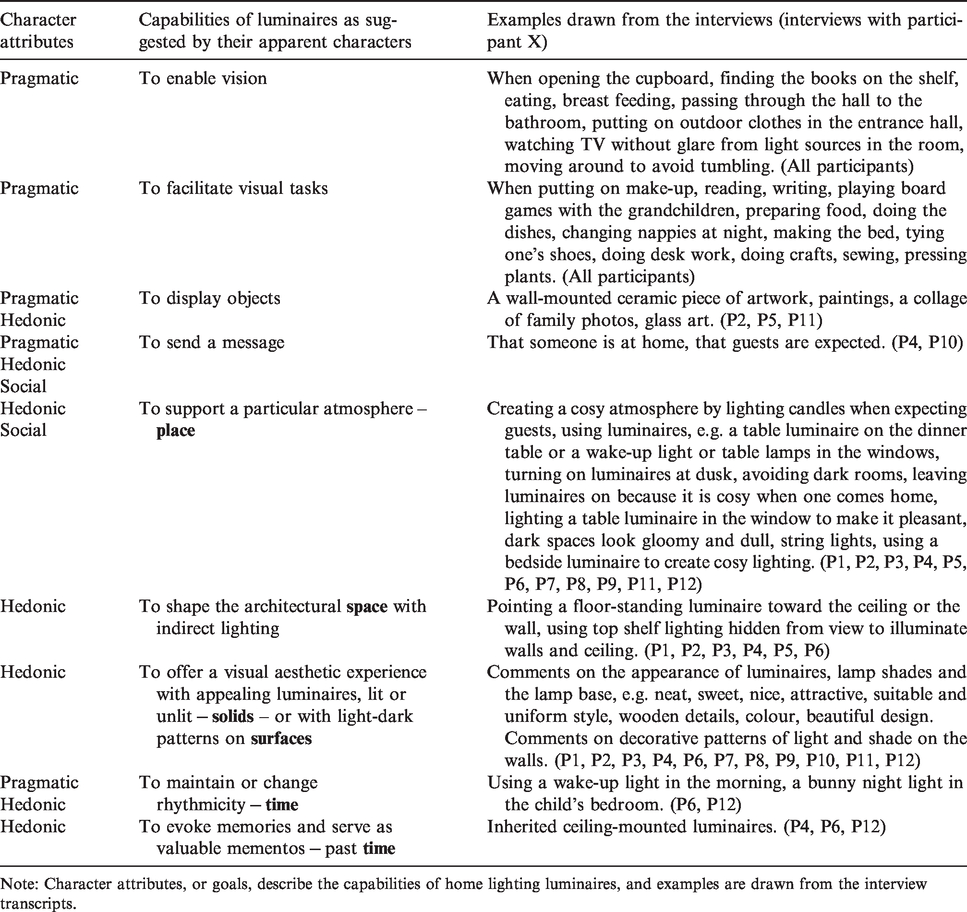
Note: Character attributes, or goals, describe the capabilities of home lighting luminaires, and examples are drawn from the interview transcripts.
Four capabilities of home lighting and luminaires – ‘to enable vision’, ‘to facilitate visual tasks’, ‘to support a particular atmosphere’ and ‘to offer a visual aesthetic experience’ – represented the most common sub-themes and were found in 11 or all 12 interviews. Essential elements for all nine sub-themes were identified within the first seven interview transcripts. The full range of thematic discovery took shape within the first eight transcripts, so after the eighth transcript, no new themes were identified.
The purpose of this reductional analysis, i.e. breaking down the whole experience of home lighting into nine capabilities, is to better understand the different elements of users’ experiences, although residents did not distinguish between them when interviewed about their home lighting and their choices of luminaires.
The following sections describe the specifics of each sub-theme, starting with the most prevalent; some are illustrated by participant quotes. The final section comments on values and identity, since the latter is included in the model of user experience (see Figure 2(b)).
To enable vision
In general, home lighting ‘to enable vision’ was fundamental. Residents were explicit about the importance of seeing, for example, the food on the plate, the clothes in the closet or the drawer, the books on the shelf, the shoes and clothes in the hallway (see Figure 4). Some statements implicitly addressed vision: participant P11 commented on his friend’s practice of turning off all lights in the home except for the lights where he was seated. Unlike his friend, this participant wanted more lights turned on because it made the dwelling homelier. With more lights turned on, this also made it easier to move around without having to turn on several lights on his way to another room, and to avoid tumbling (see Figure 5). In addition, participants expressed the need to see with comfort, for example, without direct or indirect glare from lamps or television screens, or excessively bright light.
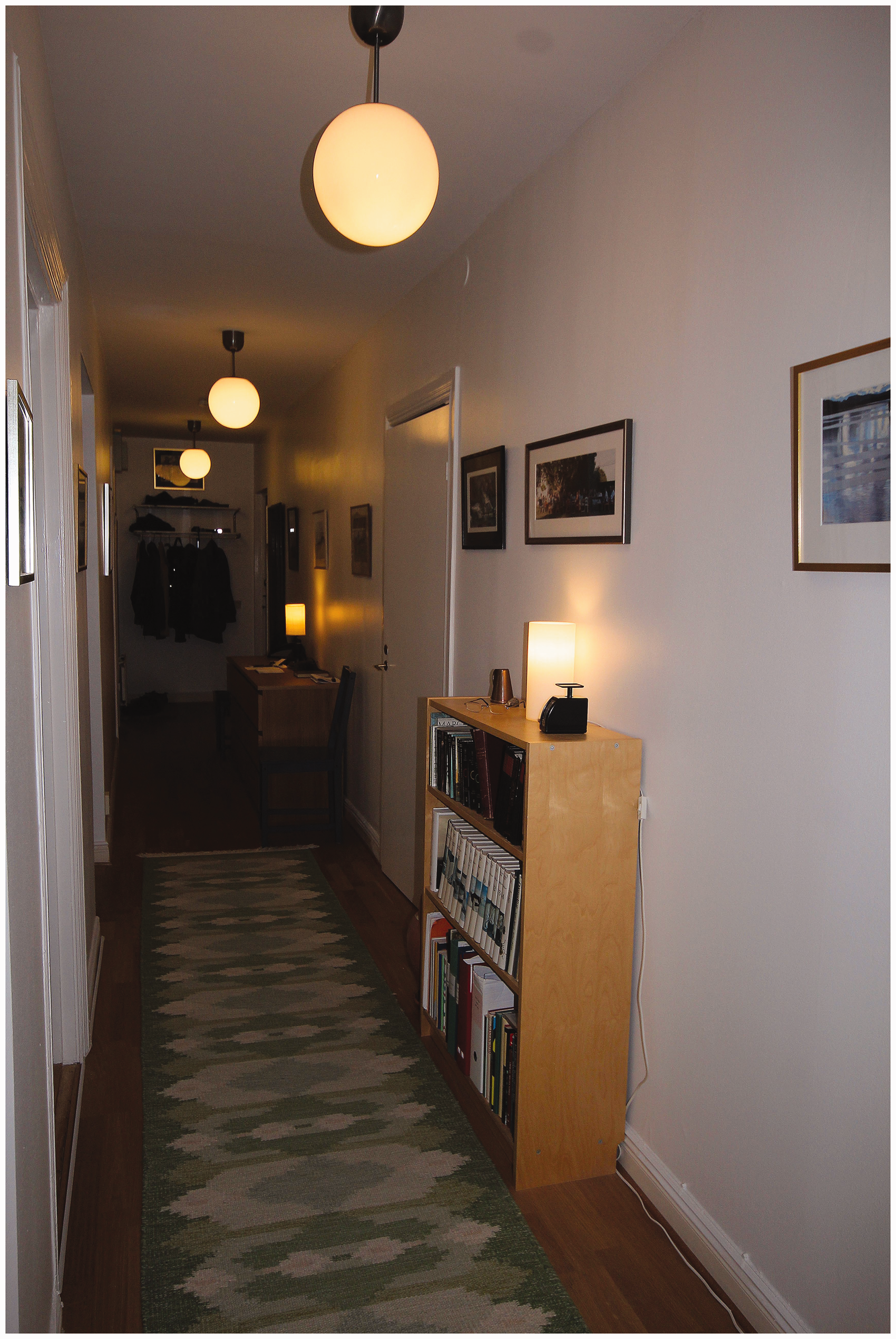
Participant P11 always has the table luminaire lit at the entrance because he finds ‘the lighting quite cosy’. When receiving guests, all luminaires are lit to facilitate movement and removing/putting on the outdoor clothing.
Faces need special attention in lighting applications, for example, skin tone has to appear natural, all parts of the face should be equally visible in the mirror and detection of facial expressions of others is central in the interaction between people. A few participants specifically addressed the visibility of faces: patterns on faces created by perforated lamp shades and the ceiling luminaire in the hallway that lacked wall-mounted luminaires beside the mirror, making it difficult to use the mirror. Participant P1 was not satisfied with the arrangement of the full body wall mirror and the floor-standing luminaire beside it. She complained about the direction of the light from below, causing shadows on her face when putting on her makeup.
Avoiding dark spaces was mentioned by some of the participants. Keeping luminaires lit in the windows was a recurring behaviour among all participants; for example, participant P8 and his partner had a table luminaire in the dining room window that was turned on ‘as soon as we come home even if we aren’t in here. It looks so dull when it’s gloomy or dark’ (see Figure 6).
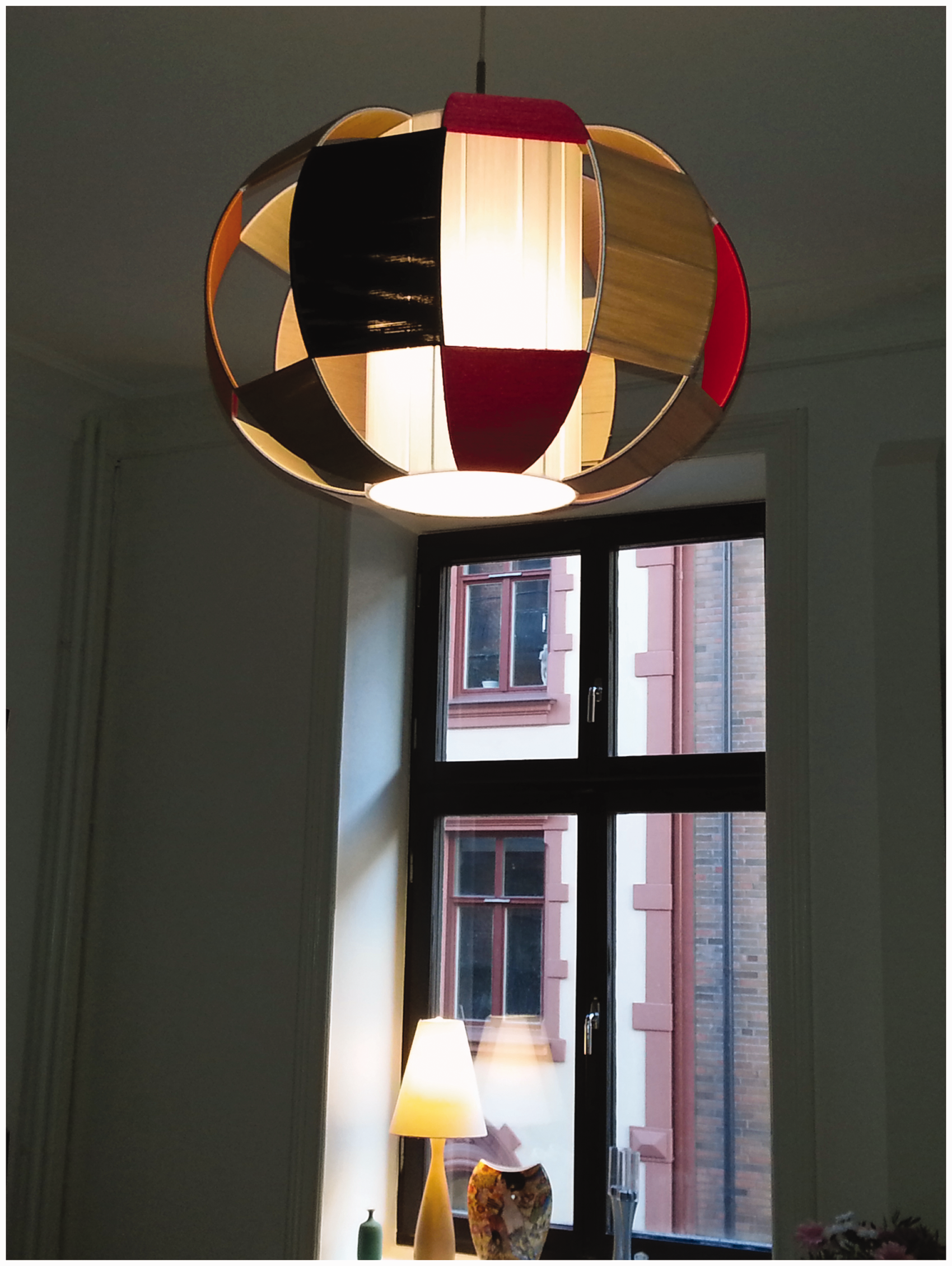
Participant P8 and his wife had bought most of their luminaires shortly after they moved in, three of which produce decorative effects on the walls in different rooms. The window luminaire in the adjoining room is turned on as soon as the residents come home.
To facilitate visual tasks
Participants explicitly mentioned task lighting for reading or cleaning the room. Additional tasks brought up by the participants ranged widely, and included watching TV, playing games, putting on make-up, cleaning, sewing, doing crafts, changing nappies at night, desk work or pressing plants (see Figure 7).
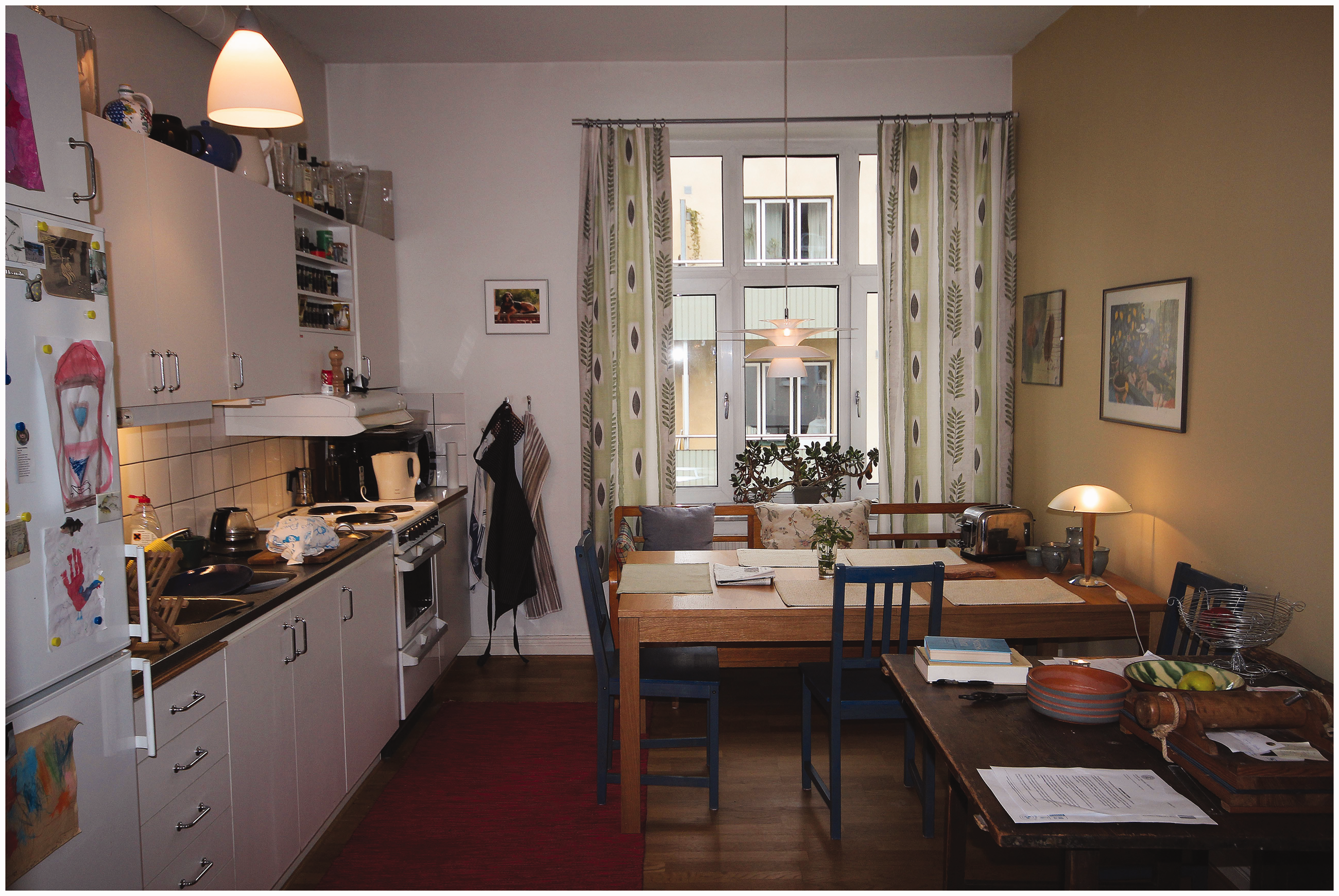
Task lighting in the kitchen of participant P11: under cabinet for cooking, a ceiling-mounted pendant for dining and a table luminaire on the dining table to supplement the ceiling luminaire for pressing plants.
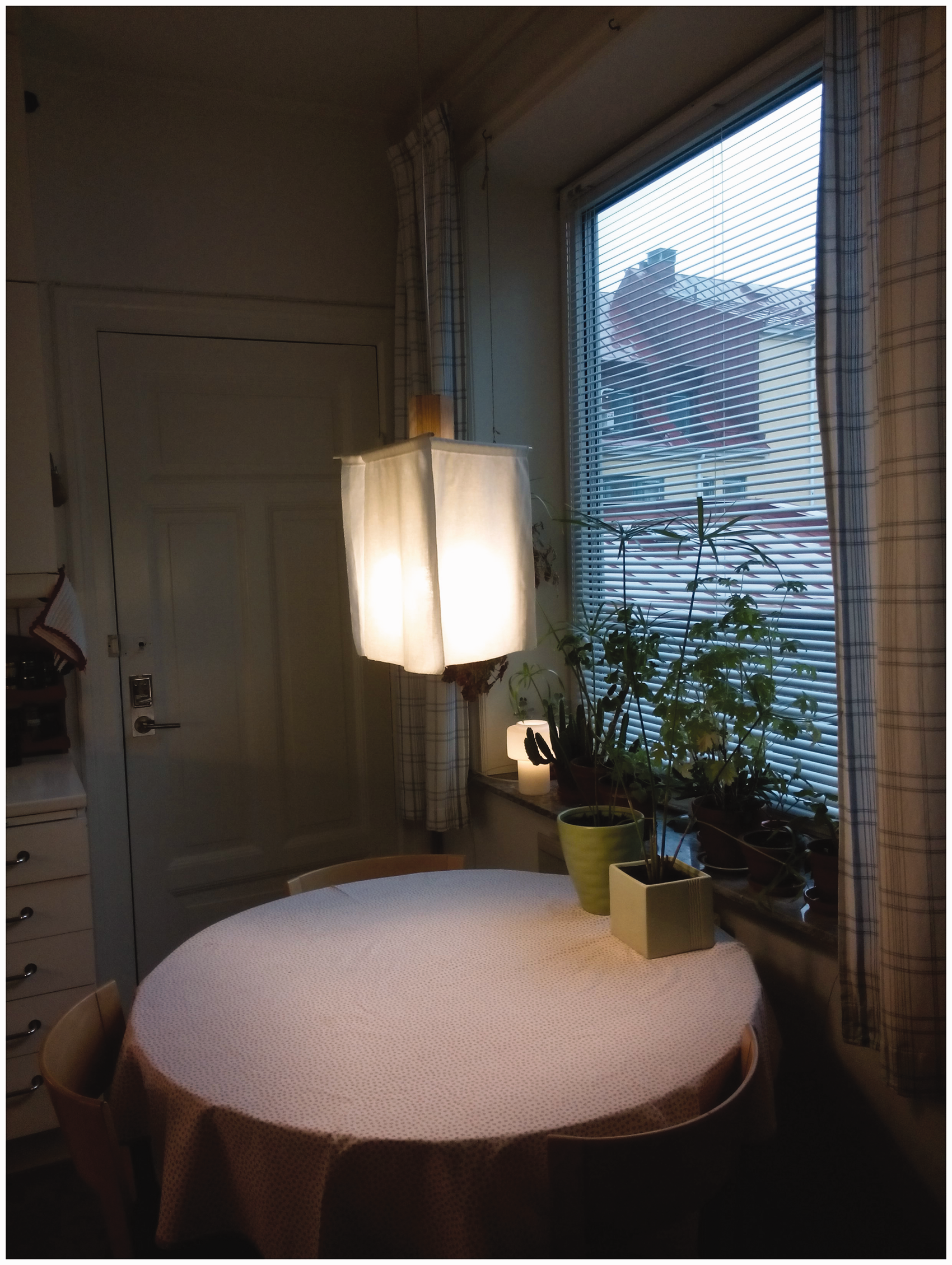
Participant P4 keeps the table luminaire in the window turned on because the backyard is completely dark in the evenings. She prefers fabric lamp shades, which are hard to find.
To support a particular atmosphere
‘Cosy lighting’ is an everyday expression that occurred frequently in the interviews – often in connection with candlelight. In the analysis, ‘cosy lighting’ is a characteristic suggesting the capability ‘to support a particular atmosphere’. Here, the following properties of light are in focus: colour tone and the direction of light, brightness and contrast, heat and smell. Based on the environmental observer-based assessments, candlesticks were observed in at least one room, and frequently in several rooms, of all apartments but one. Reasons for lighting candles were to support a cosy atmosphere, to increase horizontal illumination on the table when electric lighting was insufficient and to make it pleasant for guests, as expressed by participant P10, living in a two-bedroom apartment: You realise that you make a bit more effort when guests are coming. You light loads of tealights. How cosy it becomes. Perhaps we should have it like this more often? But it’s usually like this on normal days – [that you] can’t be bothered. (P10)
To offer a visual aesthetic experience
As respondents talked freely about their luminaires and how they were used, they often covered several characters, either pragmatic or hedonic, suggesting different capabilities in one or two statements, such as ‘to facilitate visual tasks’, ‘to support a particular atmosphere’ and ‘to offer a visual aesthetic experience’. Participant P9, living in a studio apartment, commented on the appearance of her cotton ball string lights on the door frame: ‘I think it’s really nice and it gives a cosy light/…/It doesn’t give lighting that’s useful for reading and such. But above all it’s nice to have it on in the evening’ (P9).
She referred to both the appearance of and the light emitted from the luminaire. To her, the aesthetic dimension of lighting is important, when luminaires as objects are in focus – either lit or unlit. Participant 12 expressed both pragmatic (cleaning task) and hedonic capabilities (visual aesthetics and atmosphere), when she commented on the frosted glass globe table luminaire, placed on the cabinet: ‘We think it's attractive. It gives quite a cosy light – a bit hazy. So, usually in the evening when we're not cleaning, we turn off the ceiling light and have that lit’ (P12).
To shape the architectural space with indirect lighting
Half of the participants reported either using LED light bars on the tops of shelves to illuminate the ceiling or, as in the case of participant P4, living in a one-bedroom apartment: ‘What I actually do is point [the floor lamp] at the white wall to get some general lighting’ (P4).
This behaviour was interpreted as a desire ‘to shape the architectural space’, illuminating walls and the ceiling rather than other interior elements, such as a kitchen sink. Participants’ explicit reasons for preferring general indirect lighting were because they wanted to achieve good lighting, and indirect lighting was considered to be more pleasant. This capability is demonstrated when the three-dimensional space is in focus, modelled by the brightness and contrast of the surfaces, and the uniformity of light.
To display objects
Accent lighting is in focus when luminaires are used ‘to display objects’. In the apartments, there were various examples of highlighted objects, such as artwork with integrated display lighting or a collage of family portraits illuminated by a small spotlight.
To send a message
Lighting can be used for less obvious reasons, such as increasing safety. Participant P4, who spends a lot of time outdoors, reported leaving the light on in the hallway ‘to send a message’: [The ceiling light in the hall] is on quite a lot during the day, and when I go out, I often leave it on so that it’s visible through the pane of glass facing the stairs to give the impression that someone is home – when no one’s at home. (P4)
To maintain or change rhythmicity
Lighting has the capability ‘to maintain or change rhythmicity’; for example, the wake-up light on the low cupboard in one of the apartments, or the bedside night light of the two-year-old child in another home. The benefit, stated by participant P12, of using the wake-up-light was to slowly prepare for the sound of the alarm clock with the help of light gradually increasing from dim warm to bright white. However, the participant did not mention anything about the effect of light on the biological clock and sleep quality.
To evoke memories and serve as valuable mementos
The luminaires not only provide illumination but also evoke memories and serve as valuable mementos. Participant P4 kept a ceiling-mounted luminaire even though she never turned it on. She regarded it as a piece of furniture and had decided to keep it, as she had inherited it. The past can, thereby, be embodied in a mundane everyday object, such as a luminaire.
Values and identity
In product decision making, identity can be central to consumers.36,54 Identity can be defined by social roles or affiliations and involves the expression of self. The analysis did not directly confirm the capability of products to express identity, and no statements could be interpreted as wishing to belong to a particular group. However, personal identity also relates to basic values, and coding of the interview data and archive data showed that the expression of values was noticeable in a number of cases – both aesthetic and environmental. Several participants in the interview study commented on their low-energy light bulbs and found the colour tone to be too cool or the light output too low. Preferring not to replace them because they were still functional expresses environmental values, i.e. avoiding wasteful use of resources.
To test the applicability of the identified capabilities of home lighting in the primary study, archived comments and images, collected by the Nordic Museum in Stockholm, were used as secondary data. The following section presents the main findings, illustrated with a selection of respondents’ text comments to illustrate the findings.
Archive study: Findings confirm five capabilities of home lighting
A window luminaire is a characteristic feature of the Swedish home, which is apparent to people passing any house facing the street in a Swedish city. This was why the Nordic Museum collected images and text comments on window luminaires, described in the following section.
As the secondary data from the Nordic Museum only addressed window luminaires, not all nine capabilities drawn from the interviews of the primary study were relevant in the analysis. As expected, window luminaires were not primarily used by the residents to enable vision or to facilitate visual tasks, to display objects, nor to shape the architectural space with indirect lighting. Two capabilities appeared frequently in the respondents’ comments: ‘to offer a visual aesthetic experience with appealing luminaires’ and/or ‘to evoke memories and serve as valuable mementos’. Three additional capabilities occurred only a few times: ‘to send a message’, ‘to support a particular atmosphere’ or ‘to maintain or change rhythmicity’. Window luminaires seem, therefore, to be strongly linked to aesthetics and memories.
Although not occurring frequently in the data, four text comments were interpreted to be associated with sending a message. One male respondent, 61 years, remarked that the luminaire could be seen from the street outside and looks inviting: ‘Got a bay window, so two lamps, one in each window. Reduces the need for ceiling lighting, and looks welcoming from outside’.
A female respondent, 30 years, commented on the cosy lighting created by the luminaire, which is connected to the atmosphere of a place. As the quote shows, a cosy atmosphere does not necessarily involve aesthetically pleasing luminaires: ‘A small lamp that accompanied my partner in several moves. Perhaps not the most attractive lamp, but it gives a nice glow in the bedroom’.
Frequently, text comments captured two capabilities of a window luminaire, as in this case where both a message and regarding the luminaire as a valuable memento were the reasons for keeping a very simple luminaire (age and gender unknown):
Bought it at a flea market when I was at my poorest ten years ago. Newly divorced and unhappy, I lived as a lodger and needed just a simple lamp. Now it stands at home as a reminder that life, despite everything, can turn a corner.
Interview study: Reasons for leaving lights turned on in unoccupied rooms
There were several reasons for turning on luminaires and leaving them on in un-occupied rooms, connected to behavioural goals, such as safety, or psychological wellbeing or social needs. One participant (P11) leaves at least one luminaire on in the hallway to avoid tumbling. Another reason for leaving the luminaire on in the hallway, which also relates to safety, was given by participant P4: ‘to give the impression that someone is home – when no one’s at home’.
Reasons linked with psychological wellbeing were given by participant P11, who had lights turned on in un-occupied rooms to make the dwelling homelier. Participant P3 reported that when she comes home during the dark season, she turns on luminaires even before taking off her shoes, because she dislikes passing dark rooms. As the Swedish practice is to remove shoes at the entrance, her behaviour emphasises the importance of lighting: ‘It creates a feeling of comfort to turn on some of the lights’. When she leaves the kitchen, the pendant luminaire over the dining table and the light above the stove are left on.
Other comments also related to visual comfort and concerned lighting visible from other rooms. Participant P9 leaves on the ceiling luminaire in the hall of her studio apartment, as it is visible from the main room: Otherwise it's too dark in the hall because there is no daylight. That's why I like to have the light on. You us the hall quite a lot on your way to the bathroom. Also, it makes this main room a bit brighter (P9).
Reasons can also involve social needs – the luminaires are kept on for people outside the home, to make visitors feel welcome or to make people outside feel secure. It can be reassuring to know that there are people inside the buildings. The outdoor environment was a reason given by participant P4 (see Figure 8): ‘[The window light] in the kitchen is often lit when I’m not at home to give some light outside. There are mostly office spaces facing the yard so in the evenings it’s unlit’.
Consequently, lights left on in unoccupied rooms can serve a purpose to residents, such as providing safety, avoiding visual or aesthetic discomfort and making the home inviting or benefitting people outside.
Discussion
This study adds depth to the knowledge, supplementing recent findings, on home lighting. Firstly, social needs seem to be significant to residents, e.g. keeping a window luminaire turned on because it looks inviting for people outside. We, therefore, propose an additional social attribute or goal to be included in the model by Hassenzahl 36 that describes the relationship between product and user: pragmatic (linked with behavioural goals) and hedonic (related to psychological wellbeing) and social needs. Labelling the capabilities as pragmatic, hedonic or social is not always obvious. Illuminating particular objects for display can be for practical reasons, e.g. safety, or for hedonic reasons, e.g. to enhance the features of the object displayed and thereby stimulate the observer. Using light to send a message can be both pragmatic and social, e.g. to avoid break-ins or to make guests feel welcome. The same luminaire will be perceived to have a particular character in one situation and a different in another situation or both, but each capability can be weak or strong: if the user has a behavioural goal and wants to accomplish something, e.g. a visual task, such as reading, this will require focused light, bright enough to see the text. Another person may want to use the same luminaire to create a pleasant atmosphere when expecting guests. In such cases, light intensity will matter less, and if possible, the user would probably prefer dimmed light.
Secondly, residents’ repeated behaviour where lights are left on in unoccupied rooms was guided by intended goals – pragmatic, hedonic or social – providing safety (avoiding tumbling), visual or aesthetic comfort (avoiding dark spaces visible from other rooms), making the dwelling homelier, making visitors feel welcome or to make people outside feel safe knowing that people are inside. These behaviours can be described as habitual, i.e. when the intended goals of action are reached, and the behaviour leads to the intended outcomes, the behaviour will probably be automatically repeated in the next similar situation. 55
Could electricity prices play a role concerning lights left on in unoccupied rooms, given the large differences between countries in the EU (see Figure 1)? Compared to Sweden, more than twice as many residents in the neighbouring country Finland always turn off lights in unoccupied rooms. However, at the time of the Premium Light survey, the electricity price in Purchasing Power Standard and EUR/kWh including all taxes was about the same in both countries (0.15 and 0.12 respectively). 56 In Germany, with a considerably higher price (0.26), the proportion always turning off lights is almost as low as in Sweden. Electricity prices may, therefore, not be involved, but rather cultural habits, as this study suggests, and collective energy memories. 57
Thirdly, we identified nine capabilities of home lighting based on Swedish residents’ perceived characteristics of their luminaires, their reasons for choosing the luminaires and on how they use their home lighting. The identified capabilities of luminaires, several of them common to all participants, can be discussed. Do not all capabilities include the first one – ‘to enable vision’? There are reasons for regarding it as a separate capability. Finding the way, or finding things in the hall or the closet, do not require high illuminance, assuming the eyes have adapted to the low level of light. However, to perform a visual task and distinguish details, e.g. reading, doing needlework or pressing plants, will demand higher intensity and contrast. Visibility can be poor in a room with atmospheric lighting, but other elements come into play instead, such as room brightness, spatial distribution and the colour tone. One reason for separating visual aesthetics from the atmosphere is that a visually pleasing environment with appealing luminaires will not automatically support the desired atmosphere. Another is that the atmosphere of a place can more strongly engage other senses than vision, e.g. the sense of warmth and the smell from candlelight.
The first four capabilities are quite straightforward (‘to enable vision, ‘to facilitate visual tasks’, ‘to display objects’, ‘to send a message’), while the remaining are slightly more complex (‘to support a particular atmosphere’, to shape the architectural space with indirect lighting’, to offer a visual aesthetic experience, ‘to maintain or change rhythmicity’ and ‘to evoke memories’). Even so, each capability relates to key elements that affect users’ experiences of their home environment: the place, space, solids, surfaces and time. All except three of the nine capabilities of home lighting correspond well to the general requirements proposed by Marsden. 43 Marsden does not mention that light can carry a message or support sleep routines and awakening, nor that luminaires, like any product, can serve as valuable mementos. The scope of home lighting is thereby broader than what was previously suggested by Marsden, and includes: (a) the luminaires as objects embedding memories, (b) the temporal dimension in terms of electric lighting supporting awakening and sleep routines and (c) communication (how lighting in the room or the window can send a message that someone is at home or make the home inviting). (Marsden’s understanding of ‘communication’ entailed creating an environment where the lighting units support the style and function of the building.)
The results also confirm previous findings regarding residents’ perceptions of their home lighting. Needs and wants are not universal but rather context-bound and culturally specific, e.g. lighting to support a cosy atmosphere is central to Swedish and Danish residents, as well as homeliness and the colour tone of the light source needed to create it.24,26,34 Although residents often share the same cultural lighting behaviour, such as lighting candles or window luminaires, there are exceptions due to individual preferences. In this study, unlike all other participants, one participant used neither candlelight nor window luminaires. Individual differences were also found by Bille 24 : some of the participants drew their curtains in the evening, while others preferred to be exposed as a sign of openness to neighbours. Individual differences can also depend on age. When people become older, they need increased light on the visual task, 32 and they are more sensitive to, for example, glare and lack of contrast.
At the time of data collection, the interviewees in this study were not aware of the circadian effects of home lighting.
Strengths, limitations and future work
The strength of this study is the combination of interview data and secondary archive data, although the risk of selection bias cannot be overlooked. All interviews addressed interior lighting and were held with residents of multi-dwelling buildings. However, the identified capabilities could be applied in other settings, such as one- or two-dwelling buildings, and they could also be useful in other cultural contexts, even though some capabilities may be weaker and others stronger. The capabilities can also be expressed in different ways, for example, ‘sending a message’ in rural Bihar, India may signify ‘material status of the household’ or ‘hospitality’, i.e. keeping a solar lantern outside the house where it is visible to others means that people are at home and guests are welcome. 27 In Copenhagen, the message may be ‘a sense of community’. 24
The conducted study was limited to electric lighting and candlelight. An extension of our work, helping to further expand the picture of the current lighting situation in homes, is to include windows, which can be looked upon as luminaires admitting daylight into the home during the day and electric light to the outdoors at night. Future research studies on urban planning must consider how interior home lighting through windows contributes to outdoor safety and liveability in urban neighbourhoods.
Practical implications: Versatile lighting products and rephrasing energy saving campaigns
In a previous paper, we drew attention to the need for physical improvements in the home setting to facilitate residents’ desired illumination.20 The results of the present paper point to the need for technological solutions that support current human lighting behaviour. Luminaires for multiple purposes would be beneficial to residents, e.g. adjustable pendant luminaires, movable, steady and adjustable floor standing luminaires and integrated flicker-free dimming functions. Another desirable product feature, relating to the behaviour to leave luminaires on in the window when the resident leaves home, is a light sensor integrated in the table luminaires and pendants for windows, enabling them to switch on automatically when there is no daylight.
Results also serve as recommendations for public agencies and local authorities. Residents use lighting to fulfil pragmatic, hedonic and social goals. Future energy conservation campaigns directed at residents should say ‘turn off the light when it’s not needed’ rather than ‘turn off the light in unoccupied rooms’ or ‘turn off when not in use’ because lighting does more than facilitate visual tasks. Also, the role of interior home lighting for people outside must not be neglected: when interior light is visible from the streets and public places, it may increase the perception of safety.
Conclusions
Taking a user-centred approach to lighting and drawing from Swedish residents’ experiences with lighting and their choices of luminaires, we conclude that the perceived character of indoor home lighting can be described with three attributes or goals – pragmatic, hedonic and social. These explain why seemingly wasted light, such as light left on in unoccupied rooms, can be purposeful to residents in a Swedish context. How residents perceive the character of lighting and luminaires, and lighting use suggests nine capabilities of home lighting that are believed to be applicable to residents in other countries outside Scandinavia. What people currently want from their lighting should be considered and supported by the lighting industry and designers when developing energy-efficient lighting technologies.
Footnotes
Acknowledgements
The authors would like to give their special thanks to the interviewees for their valuable participation and the Nordic Museum.
Authors' contribution
Kiran M. Gerhardsson designed the study, and Thorbjörn Laike and Maria Johansson contributed to the design. Kiran M. Gerhardsson collected and interpreted all data and drafted the article. Thorbjörn Laike and Maria Johansson made critical revisions.
Declaration of conflicting interests
The author(s) declared no potential conflicts of interest with respect to the research, authorship, and/or publication of this article.
Funding
The author(s) disclosed receipt of the following financial support for the research, authorship, and/or publication of this article: The authors thank the Swedish Energy Agency for financial support.

Appendix 1. Interview guide.
Introductory questions:
Can you tell us how old you are and how many people live in your household? Do you work with or have you worked with anything to do with lighting? Do you know approximately when the house was built?
Main question:
Now we’ll turn to the pictures in the album that you have taken. Can you tell us a little bit about why you’ve chosen the luminaires and how they are used? I suggest that we do it room by room, in the same order/sequence you took the pictures.
Follow-up and additional questions:
Do you have any sort of automatic sensor, for example a presence sensor or daylight sensor? Do you have a dimmer in the flat? When is the lamp switched on? When you eat, watch TV, when you spend time with each other (conversation and with guests), during sedentary activities (reading, working at the computer, sewing, doing crafts), when you sleep/rest? Do you agree on how the lighting should look or how bright it should be? If you have different needs, how do you resolve the differences? Have you changed anything in terms of lighting since you moved in? Age can, for example, affect how much light you want. What changes would you make if you got to change your lighting? Which rooms? What stops you from making the changes? Are you satisfied with your daylight? Do you make use of daylight during the day? For example, by not switching on electric lights or keeping blinds up and not drawing dark curtains. Do you turn off the lights when no one is in the room? If you do not do this, why not? Can you black out the bedroom? Do you black out the room every night? Have you thought of anything else about lighting that I haven’t covered?