




Abstract
Both housing structure and occupant use of homes influence health outcomes and carbon emissions. However, it remains unclear how these elements interact. We conducted semi-structured interviews with 13 technical experts in the New Zealand housing and health sectors. We applied the general inductive method for qualitative data analysis and generated frameworks for ‘housing structure’ and ‘occupant behaviour’ including: (i) issues or barriers, (ii) solutions or facilitators and (iii) potential interventions. Addressing the location, aspect and design of the house were seen to offer the greatest gains in energy efficiency, indoor temperature and air quality. Insulation, heating and ventilation were the most critical technologies for promoting health. Raising consumer expectations of housing standards was thought to be critical to boost demand and drive supply for better quality housing. Participants proposed that sharing personal stories, combining information with active strategies (demonstration, skill rehearsal) and providing incentives were promising strategies to realise the full potential of health-enhancing home design. Schools and the local community were identified as suitable settings. We conclude that public health interventions should not only aim to build homes that maximise health and environmental outcomes but must also pay attention to how occupants behave and interface with their houses.
Introduction
New Zealand homes are typically cold, draughty and damp. Almost one third of homes have an indoor temperature during the winter months below the World Health Organization’s (WHO) recommended indoor temperature of 18°C. 1 Many homes underperform in energy efficiency and air quality. Much of the blame for this poor performance can be attributed to structural features, from housing aspect (being incorrectly orientated to maximise sunlight 2 ) to having no or inadequate insulation (it is estimated that 750,000 New Zealand homes built before the year 2000 are uninsulated or under-insulated 3 ). This underperformance persists despite policies that require insulation of all new homes and retrofitted ceiling insulation in rental housing.4,5
Coldness and dampness are linked with maternal depression, asthma6–8 and poor mental health outcomes. 9 Colder houses are more likely to be damp, which increases mould growth and exacerbates respiratory illness.10,11
Households account for 10% of annual greenhouse gas emissions in New Zealand. 12 The New Zealand government plans to create a carbon neutral energy sector by 2025, in which at least 90% electricity will be generated from renewable sources. 13 If energy use practices are not altered from the status quo, these targets will not be met: estimates suggest that without changes, by 2030 the demand for electricity will increase by 40% and energy-related greenhouse gas emissions by 35%. 13 To achieve carbon neutrality, structural and behavioural adaptations in housing will be required. The housing stock will need to change, and individuals and households will be required to reduce the amount of energy used, consume energy in a more efficient way and shift to the use of renewable energy sources. 13
Changing the housing stock – building new energy-efficient homes or retrofitting existing homes, as is planned in New Zealand to curb the housing shortage 14 – can be achieved, over time through changes to building codes, regulations and policies. Changing human behaviour may be far more difficult.
How to do this? Geller et al. 15 present categories of interventions for motivating behaviour change. Antecedent interventions attempt to change people’s perceptions, knowledge, awareness, norms and attitudes with the aim of effecting voluntary behaviour change. 16 Consequence interventions aim to alter the context in which decisions are made, for example, through the provision of financial incentives, regulations, standards or energy-efficient technology. 16
Addressing housing structure and motivating occupant behaviour change have traditionally been viewed as two separate strategies for improving health and reducing carbon emissions. The behaviour of occupants, however, cannot be examined in isolation from the context in which the behaviour is executed, in particular, the built home environment. In this study, we therefore aim to understand how experts view the relationship between physical structure of the house and occupant behaviour. We also aim to understand experts’ views on how interventions in the housing sector can best improve both environmental and health outcomes.
Methods
We carried out semi-structured qualitative face-to-face interviews in 2011 with technical experts working in the fields of housing or health in New Zealand. This approach enabled us to understand experts’ perceptions, insights and knowledge on the subject, which they have gained through their experiences working in housing or health, in the context of their social and cultural values.
Sample selection
We interviewed a total of 13 technical experts deemed to have experience in the fields of housing and health. Interviewees were chosen based on the ‘maximum variation’ sampling strategy described by Patton. 17 Maximum variation sampling ensured that the information we elicited covered a wide range of expertise in the diverse domains that are relevant to housing and health. This sampling strategy ensured that our data was broad in scope and provided opportunities to identify overarching themes across domains that are important for our research aims. As a supplementary approach to this sampling strategy, we employed a ‘snowballing’ approach. We asked the initial heterogeneous group of experts if they could recommend other specialists with expertise in the housing or health sectors that differed from their own. This combination of maximum variation and snowball sampling led to the accumulation of information-rich cases that offered new views 17 on housing structure and occupant behaviour. In the interaction between sampling and analyses, we identified saturation points when specific views were repeatedly mentioned and new information failed to emerge. If the majority of the 13 experts expressed overlapping opinions, we describe these as being the predominant views. We also describe contrasting views – if these were presented – in the Results section.
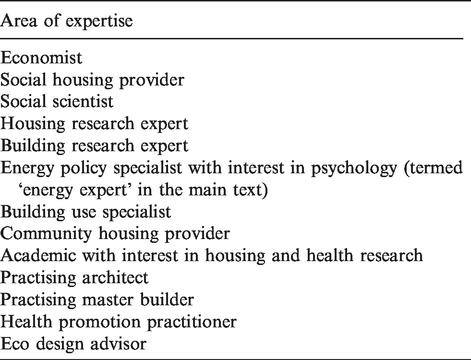
The experts worked in a variety of disciplines within the housing and health sectors, including health and social care, building and construction, architecture, economics, energy, geography and planning. The experts came from a range of private and public organisations, and within particular disciplines, there was also a divergence in the areas of expertise (Table 1). For example, the experts from the health sector ranged in expertise from health promotion to mental health. All 13 participants resided in New Zealand at the time of the interviews. Four of the experts were women and nine were men. Ethics approval was obtained from the University of Auckland Human Participant Ethics Committee (UAHPEC); all experts provided consent for participation.
Study participants’ areas of expertise.
Data collection
The face-to-face in-depth interviews, conducted by AB, lasted between 30 and 90 min in Auckland and Wellington, New Zealand. The interviews were audio taped with the permission of the interviewees and transcribed verbatim for qualitative analysis.
The interview schedule comprised semi-structured and open-ended questions (Supplementary File). The questions were delivered systematically but flexibly to permit the experts to discuss their view on the two areas of interest, the structure of housing and occupants’ behaviour in relation to housing.
Data analysis
The general inductive approach is a “systematic set of procedures”, which facilitates the analysis and summary of qualitative data.18 As described by Thomas, 18 this approach to the data enabled us to organise experts’ responses and identify the thematic categories most relevant to the research aims.
After reading the raw data several times, specific segments of text that were relevant to the study aims were identified and coded at the margins. The coding consisted of short descriptions, created either from the actual phrases in the transcript or from the meaning of longer text segments. The segments of text were labelled, leading to the development of categories. The primary categories captured existing problems with housing structure and occupants’ behaviour and provided practical interventions to address these problems. Sub-categories represented detailed explanations or strategies that were described repeatedly by experts. Where relevant, segments of text were coded into more than one category and redundant data were removed. Further refinement, including the convergence of overlapping categories, led to the formation of 16 categories for structure and 12 categories for behaviour. Links were drawn, resulting in the identification of hierarchies and relationships between the categories. This process was iterative for both the structure and behaviour sections and led to the formation of three primary categories as described in the Results section. The analysis and emerging themes were confirmed by a second reviewer (CB). We sought to achieve transparency, maximise validity and reliability by open coding and cross-checking the developed themes with a senior researcher (CB). We also compared the results between and within cases to ensure comparability as recommended by best practice guidelines for rigorous qualitative research. 19
Results
We organise our findings into two sections comprising frameworks for identifying structural and behavioural interventions.
Structure of housing
Three primary categories concerned with the structure of housing were created from our analysis of the interviews. These were: housing issues – the experts’ account of existing structural housing issues; housing solutions – potential solutions for addressing structural housing issues and sustainability – the meaning of sustainability in the context of housing and health.
The primary categories are presented along with the related subcategories and their descriptions in Table 2.
Categories constructed for housing structure from the expert interviews.
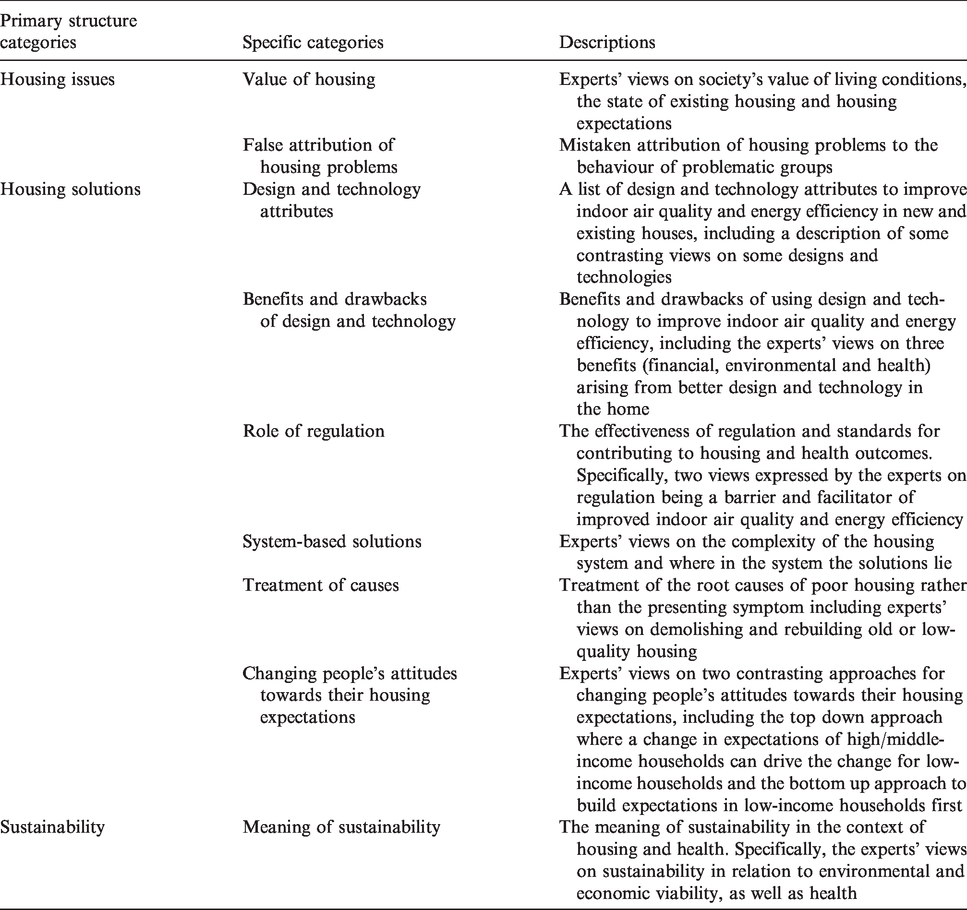
Housing issues: Two specific categories were evident in the experts’ account of existing issues with housing structure.
Value of housing
Some participants (social scientist, housing research expert) expressed that despite housing being a fundamental determinant of health, as well as the primary asset of most New Zealanders, society as a whole did not value living conditions in New Zealand. Irrespective of the occupants’ incomes, they claimed housing was generally of poor quality; damp, cold, mouldy, poorly insulated, poorly oriented for solar gain, located in a ‘limiting’ section and not maintained after construction.
Some experts (community housing provider, energy expert, building research expert, social scientist) reported that the condition of current housing set the standard for people’s housing expectations and that having low expectations limited people’s ability to seek better living conditions. Their reference point is what is currently provided out there, which is pretty poor and pretty shabby. And so that becomes their reference point, their norm. I don’t think they are very aware, particularly at the low socioeconomic end of the market out there, aware of what is good and what is bad (housing). (Community housing provider)
False attribution of housing problems
Many of those interviewed said that poor people were not the cause of poor living conditions. They pointed out that inadequate housing was almost the norm and pervasive in New Zealand, and that the effects were simply exacerbated among the poor, resulting in victim blaming. We tend to treat these things as problematic behaviours of certain groups, or problematic conditions that people find themselves in, which is often associated with being poor, being a problem in New Zealand. But, actually cold, unsustainable, poorly performing houses which are dangerous for your health, are pretty pervasive in New Zealand…We have a cultural problem in New Zealand and until we stop having that cultural problem, what you will end up with is sort of relegating housing problems to problematic individuals. (Social scientist)
Design and technology attributes
The experts reported a range of design attributes that would be beneficial for improving energy efficiency and indoor air quality (Table 3).
List of design attributes chosen by the experts for improving energy efficiency and indoor air quality of a house.
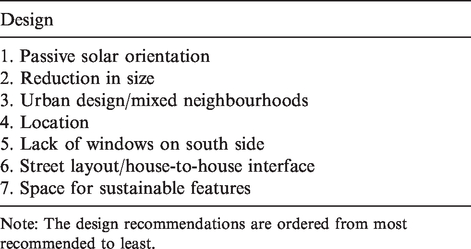
Note: The design recommendations are ordered from most recommended to least.
One expert (community housing provider) reported that a shift from conventional box housing development, (a) towards using the ‘zero lot line’ prototype (b) would enable the house to be built on the boundary of the section to make the biggest gains with space and northwards orientation (Figure 1).
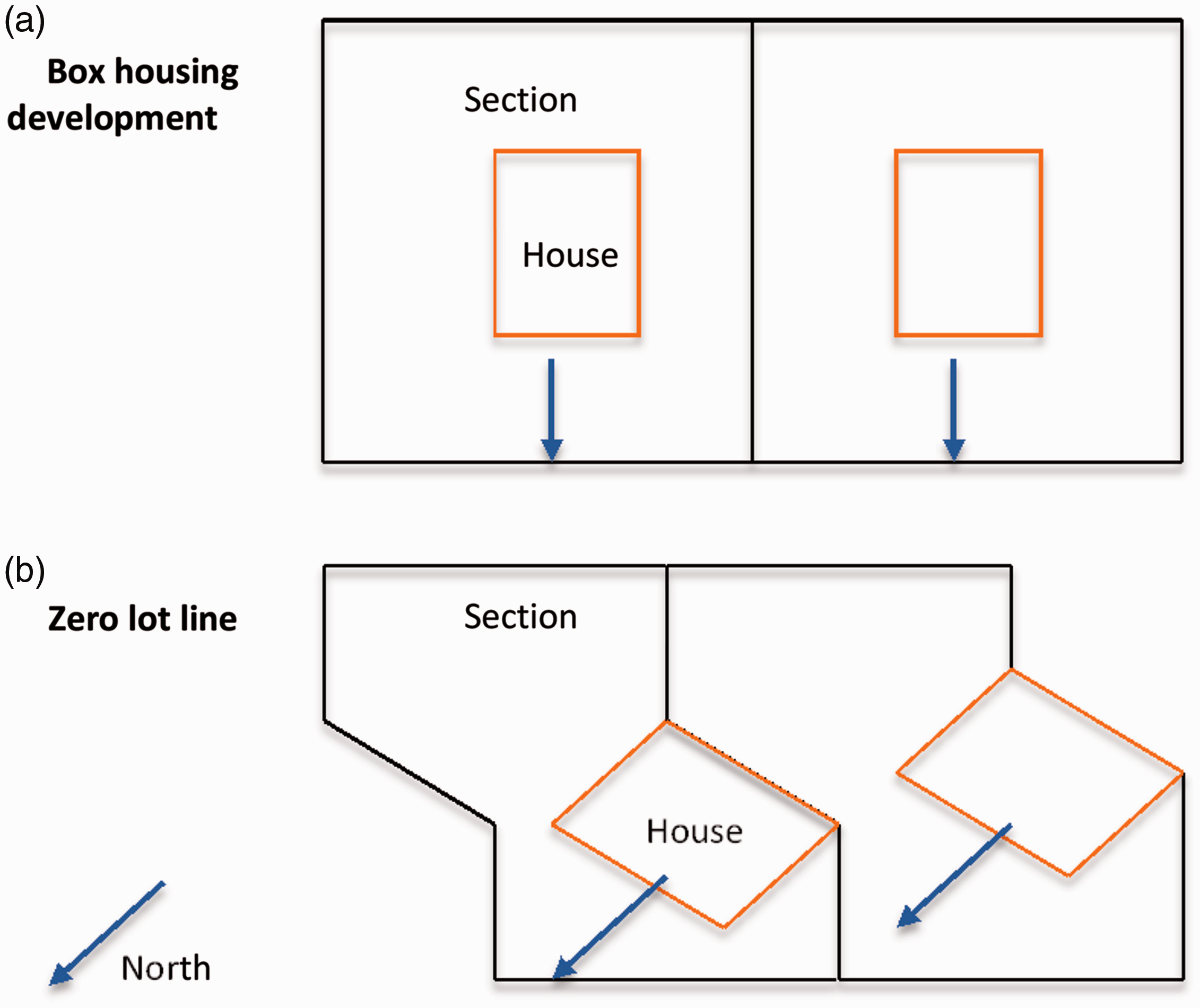
An expert’s description of improving housing design from box housing development. (a) To the use of zero lot lines (b) The blue arrow represents the direction of the front of the house.
The practising builder reported that it was important to have appropriate sized spaces that were positioned correctly relative to each other and to the external influences such as sunlight. An expert (economist) also mentioned that it was important to design a house with adequate space for placing required technologies for improving energy efficiency and indoor air quality. The technologies noted for improving the energy efficiency and indoor air quality are outlined in Table 4, but the architect outlined priorities. ‘Just really good planning, layout is really really important. Insulation, then controlled ventilation, then heating’ (Architect).
List of technologies chosen by the experts for improving energy efficiency and indoor air quality of a house. The technologies are ordered from most recommended to least.
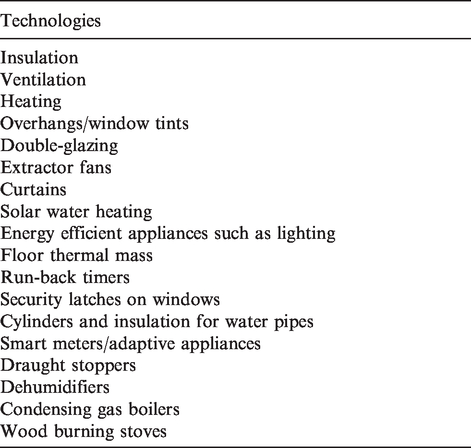
Two experts (an architect and social housing provider) noted good returns on cost and warmth through the use of best practice insulation rather than the minimum. The social housing provider recommended that the government retrofit programme should include wall insulation, not just for ceiling and underfloor insulation. Others reported that more insulation was needed in colder climates. ‘In an existing house I would always start with insulation in the ceiling and underfloor and progressively I would do the stuff in the walls’ (Housing research expert).
The housing research expert found that double-glazing was as critical to the house as the roof, but the social housing provider proposed that thermal drapes with pelmets were a more affordable and cost-effective option.
The building research expert, social housing provider and housing research expert discussed that wood burners as a heating source were unjustifiably being replaced by heat pumps which were financially burdensome and increased electricity demand. The health promotion expert claimed that solar water heaters were an excellent investment to reduce water heating costs in low socioeconomic housing; however, the eco design advisor seldom advocated for solar water heating because the capital cost was often unaffordable.
The building use expert mentioned that technology should be simple with self-evident controls and provide user feedback; run-back timers and thermostats, which reduce and regulate energy use were underused.
Benefits and drawbacks of design and technology
Design
The housing research expert and economist discussed that the largest gains in energy efficiency and indoor air quality were to be made with good housing design, followed by the use of technology. It’s about using the kind of technologies we have to create houses that don’t need to be heated from additional forms of heating that the sun can provide, that don’t need to be loaded with mechanical ventilation if you understand where the prevailing winds are, and designed so that higher up windows can be left open. (Housing research expert)
Technology
Most experts were of the opinion that cost, specifically the upfront cost and payback period were the most significant barriers preventing the uptake of technologies, even if the result was a reduction in operational costs. This was particularly an issue for rental properties where owners did not perceive personal financial benefits from the investment.
Another expert (economist) suggested that the choice of technology was about more than just achieving zero carbon emissions and considering upfront costs. I feel quite strongly that we shouldn’t just be trying to achieve zero. Zero is just a point on a scale. And what I am interested in is; doing the marginal cost of the extra bit and whether that extra bit is worthwhile … you can do a lot for 350 quid, you can do a lot more but, not necessarily with that much more benefits for 3500 quid and above that you are really asking to change the nature of something which is not the home. You are asking to change the nature of how the electricity is generated or change the nature of how you build. And I think, that people’s perception is that it gets too expensive very quickly, but it probably doesn’t get too expensive further down that line. (Economist)
An energy expert noted that technology was sometimes misleadingly perceived to solve energy efficiency and indoor air quality issues because the market and particular sectors, such as building and architecture had an economic imperative to drive technological solutions. Most of the study participants (including the energy expert and health promotion expert) talked about the limitations of ‘nonsensical technologies’, such as unflued gas heaters, which are permitted in New Zealand. They said unflued gas heaters were sold to consumers as a cheap source of space heating, but often without mentioning the unintended consequence of moisture build up in the home. A chain effect was likely to result, leading the consumers to purchase yet another technology, such as an artificial ventilation system to control internal moisture build up. Some said such technologies set up companies (that sell these systems) to make profit, not only by driving strong marketing campaigns to sell individual nonsensical technologies, but also ‘solutions’ to the problems created by technology in the first place. Experts also commented that some technologies (the most common example given was mechanical ventilation systems) were manufactured, available for purchase and promoted as being critical to a healthy home, despite conflicting evidence as to the effectiveness of the technology.
Another expert (building use expert) mentioned that through the rapid development of technology, a limitation was that some were likely to become unsupported and obsolete or lack parts for repair. The economist noted that more technology in the home could promote a sedentary lifestyle, as people were more inclined to spend a greater proportion of time at home.
The experts mentioned other drawbacks associated with the uptake of new technologies including: difficulty for some people to adjust their existing habits or change their lifestyle and behaviours to accommodate the new technology (particularly if the operation requires human interaction); the misuse of technology resulting in it becoming a liability; the ability to purchase the equipment but inability to afford power; a limited understanding of how to best use the technology and the desire to purchase and use a technology without there being a real need (i.e. through peer norms).
Role of regulation
Housing regulations were described as being necessary in any building programme to ensure the structural integrity of housing, specifically of residential housing for improving the energy efficiency and indoor air quality, provided they were enforced. The academic claimed that housing had been left too open to the free market, leading to severe problems in New Zealand, such as the leaky homes crisis. Interestingly, the practising builder agreed that ‘a heavy hand’ was required with developing regulations and standards for the structure of housing, provided a worthy benefit was involved. Through the expert’s experience in the building industry, they specifically noted that there was potential for people to ignore a building regulation because it was perceived to be a nuisance, when in fact it was associated with significant benefits. Regulations were an effective way of assuming the day-to-day responsibility of occupants, particularly for promoting their housing-related health.
A contrasting view was expressed by the community housing provider who perceived housing regulations to be an extra cost. Although they admitted it was an idealistic view, they preferred that industry and consumers understood the benefits of a solution in order to demand it and subsequently create a drive for it in the market. They noted that when left to the free market, the product was likely to be available at the most cost-effective price.
Regulation was reported by experts, for example the academic, as being heavily influenced by political motivations, leading inevitably to the private good versus public good area of debate. The overwhelming majority of experts, however, favoured the use of regulation for improving the structural elements of housing.
Nonetheless we own cars and there is a whole market for private cars and yet there is very, very strict regulation on what’s allowed to be on the roads so why shouldn’t there be strict regulation on what’s allowed to be on the street? (Academic)
It was acknowledged that the performance-based code provided the freedom for people to choose the interventions they preferred (i.e. insulation or a mixture of insulation and double-glazing). An expert (housing research expert), however, described that there was a problem with the performance-based code. ‘The problem is that industry aspires to achieving minimums, and you know, what industry ever set out to do as little as possible for its customers rather than as much as was needed to make them satisfied?’ (Housing research expert)
Systems-based solutions
Improving the structure of housing was regarded as a significant system challenge because housing is a complex system, comprising the neighbourhood and all actors that played a role in that system. One housing research expert gave examples of the different entities in the housing system: central government, local government, developers, those that owned local neighbourhoods, engineers, designers, planners, manufacturers of products and services such as tradesmen, installers, resellers and consumers. They elaborated that a common ‘value’ on the physical housing stock and a synergistic effort was needed by the stakeholders, with identification of levers across the chain of influences to align each entity within the system.
The expert discussed two potential issues that could arise as a consequence of only focusing on one aspect of the housing system. First, there was the potential to create more problems than solutions. For example, while heating is a solution for a cold home, increasing heating would drive poorer people into deeper fuel poverty. Second, consumers were more likely to be presented with mixed messages and advice, because people in different sectors lacked common views on how to best resolve structural issues. We’ve done work with home owners encouraging them to use home insulation and they go down to the reseller and the reseller says ‘you don’t need that level to comply with the building regulation love, you can just use this’. Now, less margin is involved in the standard product that complies with the Building Code, but the merchant will stock the standard product rather than the value add product. I think we need to find a way to appreciate value. (Housing research expert)
Treatment of the causes
A few experts (such as the community housing provider, building use expert) considered that the root causes of poor housing should be addressed, rather than simply ‘patching up’ structural housing issues. Concerning renovations, for example, addressing the source of cold internal temperatures and mould (by insulating, ventilating and managing the source of water vapour) was seen as a better solution than using more heating without insulation or simply painting over the existing mould. These experts argued, however, that old low-quality houses were better off demolished and be replaced with new high-quality buildings. We’re a relatively young country and I suspect that a lot of houses that we are putting extra insulation in and spending money on these days, in 10-15 years time you will want to bulldoze. So, is that really good use of value? And there is a lot of housing that has been built, particularly in the 1970s and 80s, which is what now only 30 years ago, (that) should ultimately be bulldozed and started again. But, it’s going to take a while in the country to get our head around that. It’s not something that people will naturally want to do. So, we are treating the symptom. And the symptom won’t solve the problem. (Community housing provider)
Changing peoples’ attitudes towards their housing expectations
The experts presented differing views on how they would approach changing people’s attitude towards their housing expectations and the value they placed on living conditions. Two experts (housing research expert and eco-design advisor) spoke of using the top down approach to improve housing in high-income groups first. The housing research expert suspected that disparities in health (through people, irrespective of income living in cold, damp housing) were prevalent across all income groups, but manifested to a greater extent in low socioeconomic groups because of poverty. They elaborated that those in high-income groups formed a select group of high-energy users that only accounted for 20% of the population but used 38% of energy. They therefore concluded that more progress was likely to be made by addressing energy efficiency and indoor air quality of housing occupied by people on higher incomes because they would accept that living in cold, damp house is unnecessary, and subsequently drive the change in the market for the remaining population. Most other experts who commented on this subject said that efforts were required to improve the housing envelope of low-income housing occupants to raise the quality of their physical housing environment, their housing expectations and the value that occupants placed on their living conditions.
Sustainability: Only one major point emerged from the experts’ accounts in relation to sustainability: the meaning of the term. Three distinct ideas were evident. The first was the notion of environmental custodianship, that sustainable housing needed to incorporate the principle that humans should not draw on environmental capital beyond the ability of the natural environment to be replenished. Second, sustainability was linked with economic viability. The building expert argued that housing had to be sustainably affordable for the individual and the community in terms of durability, the initial costs and operating costs. Thirdly, sustainability was discussed in relation to health. Two experts stated that poor housing was not sustainable because it led to poor health and the costs of poor health. Other experts focused on the quality of materials and systems used in the house to facilitate or adversely affect health. Several experts proposed that sustainable housing was housing consistent with the WHO definition of health, providing for the comfort of inhabitants, enhancing social connections and supporting family and cultural needs. The building use specialist noted that a shift in attitudes and practice was needed, from supporting consumerism as the norm, to sustainability. A building research specialist considered that sustainable housing decisions should not make things worse for future generations.
Occupants’ behaviour
Three primary categories concerned with occupants’ behaviour in relation to housing were constructed from the inductive analysis of these interviews. These categories were: barriers to behaviour change – factors that created a barrier for housing occupants to change their behaviour; facilitators of behaviour change – factors that facilitated effective behaviour change and strategies for behaviour change – potential strategies for effective behaviour change.
These primary categories are accompanied by their associated subcategories and descriptions (Table 5).
Categories constructed for occupant behaviour from the expert interviews.
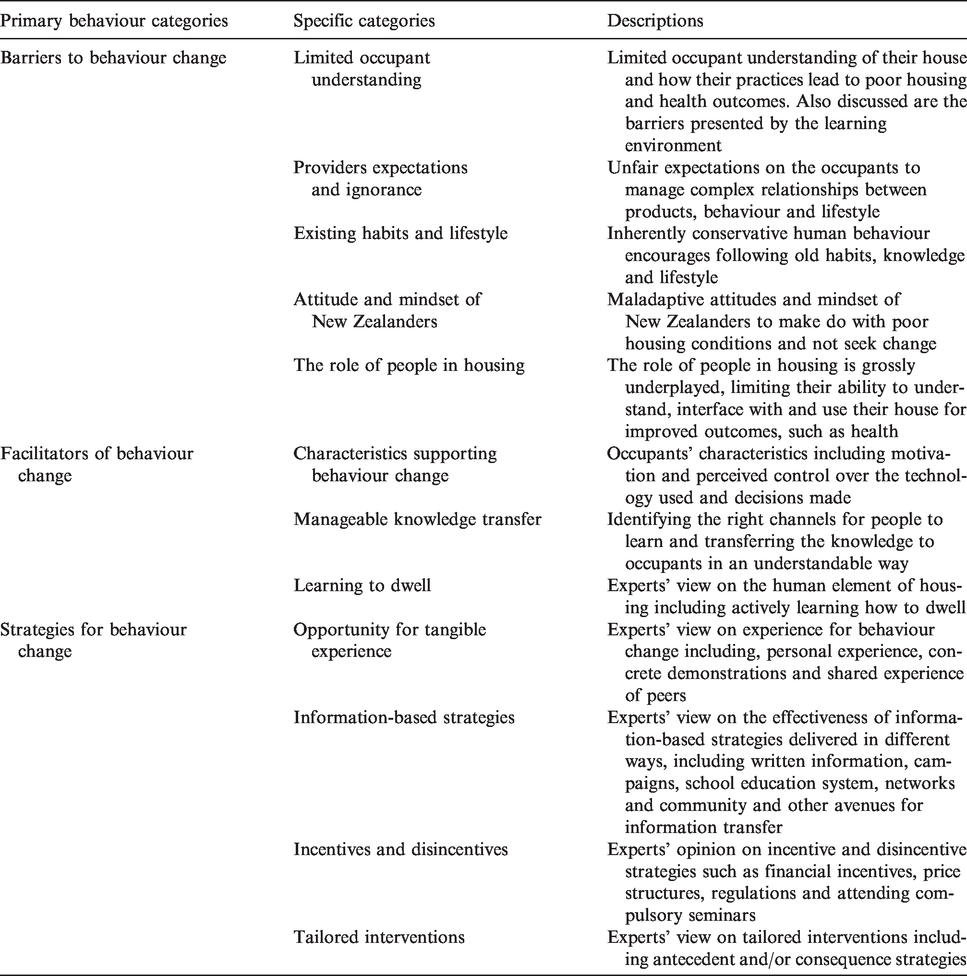
Barriers to behaviour change: Five themes were evident in experts’ views on barriers to behaviour change.
Limited occupant understanding
Several experts indicated that occupants possessed a limited understanding of the structure of their house and how it worked. They argued that occupants therefore found it difficult to find the source of the problem and make a connection between their practices and certain housing and health outcomes. The social scientist elaborated that even if people understood that a problem existed, they often did not know the ramifications of ignoring the problem or indeed, how their behaviour could mitigate the issue. They suggested that it was inappropriate to expect people to modify their behaviour unless they understood why they needed to change and how the change was going to improve their everyday life. So, if you say to someone ‘actually your house is leaking because there is water being sucked up through the ground and coming up through your roof, it’s not to do with your roof, and that’s why it’s leaking and that’s why you’ve got mould everywhere, and that’s why you’ve got stomach bugs’. That helps rather than saying ‘oh, it’d be really good if you got rid of the mould and you need to heat your house’. Immaterial to them, not interested. And why should they be because it has no connection to their real circumstances. (Social scientist)
An expert also discussed the limitations presented by the environment in which people were trying to learn and improve their understanding. It’s not a poor person’s problem and because it’s not a poor person’s problem, it means they can’t be helped by middle class people because we can’t run our houses well either! And so, essentially, you’ve got a whole lot of people uselessly operating their houses, trying to help other people uselessly operate their houses. Except that one group feels like they are the good guys and the other group feels like they are the victims of being told what to do all the time, it’s not a good environment for teaching people how to use their house because they are not treated as equals. (Social scientist)
Providers’ expectations and ignorance
Experts, such as the energy expert, described that trying to elicit the sophisticated management of people’s lifestyle, relationship to the products and behaviour was very complex and that occupants were often expected to manage these complicated relationships on their own. At a household level, it was deemed difficult for people to breakdown and assess parameters that impacted on their behaviour, such as the cost of energy, and reflect on the parameters to assist in behaviour choice. At a population level, changing behaviour without actively engaging with people was seen to constrain uptake of the intervention, limit people’s ability to manage their consumption and behaviour. With issues such as energy use, a greater engagement and dialogue with people were recommended to effect behaviour change across the population. The energy expert described that paradoxically, the conversations for such issues could get esoteric and that conveying the message across people of different cultures, understanding and education would be difficult. Also elaborated was that simply providing people with information and expecting them to come to conclusions based on that information was a barrier. A sense of hopelessness was also conveyed about low socio-economic residents’ ability to understand how to interface with the technologies. Do they have the fundamental skills to recognise things like that (mould) and I mean, this is where you start to get into really dangerous areas, this is where you start to get into a whole lot of perceptions and biases around this particular group of people around not having skill sets perhaps. You may get tenancy managers that say ‘they live like animals in these houses’. (Social housing provider)
Existing habits and lifestyle
Most experts identified that people were inherently conservative and that they followed existing habits and knowledge. The energy expert explained that being emotionally driven, human responses arose from their gut instinct (irrespective of intellectual capability), which was a result of their upbringing, particularly their childhood. Breaking existing habits and the normalisation of new practices was therefore identified as one of the most difficult, yet critical barriers for enabling behaviour change. When behaviour changes were sought across the population, the consideration not only extended to breaking the individual’s habits through their resolve, but also changing the habitual environment to facilitate behaviour change. If you put in smart meters into homes, for example, within four months the effect is completely gone. Because habit, is the most important thing of all, and unless you can really re-educate, it’s a bit like giving up smoking really. You have to completely change the whole habitual environment around you and to do that you’ve got to be determined and most people don’t rate energy and the environment that highly. (Building use expert) When they can see that (smart meter) up on the wall, if the house is currently using a lot of energy, then they might do something about it. But if they don’t see it, they leave switches on and all those sorts of things. (Community housing provider)
Attitudes and mindset of New Zealanders
The experts described that New Zealanders were inclined to portray stoic resignation towards enduring cold temperatures. The energy expert talked about fatalism as a psychological theory and provided linkages to attitudes held by many New Zealanders such as ‘deal with it (the cold)’, or ‘get over it (the cold)’. The expert elaborated that while such attitudes may seem immediately useful to the occupant in the short term, for example, because they cannot afford power for heating, it was actually maladaptive. Occupants were not encouraged to go looking for ways to change their behaviour or live in a healthier home and thrive. The concept of ‘making do’ was expressed as being culturally pervasive, and not just affecting the poor. There is still a mentality of ‘you should be all-right, just put on another jersey’ that kind of thing. And it’s not just the poor, it’s quite pervasive in terms of the cultural context. So in terms of interpreting and adapting to the circumstances that I was talking about, if you don’t perceive it as a problem, because you don’t have the expectation to be comfortable, or think that’s a reasonable thing for you to experience, then you won’t go out of your way to seek solutions or address the problem or to invest in solutions. (Energy expert)
The role of people in housing
Experts described that it was through the embodied presence of people that a house became a home, a place of comfort, safety and pleasure. Some experts said the role of people was significantly underplayed, sometimes to the point where people were unaware that they had a role at all. This was attributed in part to the complex nature of people and multiple influences on their behaviour.
The lack of an initiation process was seen as a barrier for behaviour change, because occupants were not educated on what designs and technologies they would interface with (when they were buying a new house or being introduced to a new rental property) and how to use these. When specifically asked about how HNZC tenants were introduced to housing design or technologies, some experts did not know how the tenants were initiated; many experts claimed that regardless of income group there was no adequate induction or teaching process; the academic noted that it was obviously the tenancy managers or the relevant experts of the intervention that were responsible for the induction; a conflicting view was expressed by the health promotion expert who said there were no clear boundaries on who should bear the responsibility for an induction programme; a few experts mentioned that it was commonly assumed that an education process existed, when in fact, it did not; the social scientist commented that there were no sustainable designs or technologies in social housing for occupants to be introduced to; and finally the housing research expert reported that there were isolated induction or teaching programmes that reached only limited pockets of the population.
Facilitators of behaviour change: Three specific categories were evident in the experts’ account of the facilitators of behaviour change.
Characteristics supporting behaviour change
The experts mentioned a range of characteristics that supported behaviour change, of which the most common attributes were control and motivation of the occupants. The building use specialist described that the healthiest buildings tended to be where occupants perceived a high sense of control not only in materials and inputs, but also in the configuration and operation, so they could make choices and intervene.
Most experts preferred houses that were passive in nature, but two experts (economist and building use expert) reflected on their experience to reveal that passive design and technology could also be an issue, as it was associated with the removal of a sense of agency from occupants. This was particularly an issue with older people who were less comfortable with having lower control and more change.
Motivation was described as an important catalyst of behaviour change. The building use expert noted that while motivated occupants were rare, they also exhibited different behaviours relative to their unmotivated counterparts. Motivation as a characteristic was deemed more important than education for altering behaviour. Reference was made to the importance of a sense of loss for motivating behaviour change. ‘From a psychological point, if there is loss, if you lose something, it’s a much more powerful motivator than if there is a potential to gain anything’ (Energy expert).
Few experts expressed an alternative view that behaviour change was a matter of simple learning or education. One expert (practising builder) described that education was the seed for enabling a new behaviour to become second nature for the occupant. Teaching occupants to associate turning the heater on with closing the curtains at night was cited as an example where education could influence ‘simple’ behaviours that nonetheless made a big difference in promoting energy efficiency.
Manageable knowledge transfer
The experts discussed many methods of knowledge transfer from the provider to occupants, including: person-to-person interaction, self-education, communities, energy companies, industry and government. The eco design advisor specifically talked about effective communication to people who were illiterate. Probably for quite a percentage of the people, we know that illiteracy is somewhere like five or ten percent, but it’s a hidden thing, because most people who are illiterate are ashamed and don’t reveal it, or don’t move in circles where literacy is valued or even needed. We have to find the right channels for people. (Eco design advisor)
Learning to dwell
The housing research expert described that learning comprised two vital components, a willing participant on the occupant side and structured engagement on the provider side. The academic reported that the verb ‘to dwell’ was something that was done too passively; and without occupants having an active understanding of how the house worked and the linkage to their health. Many experts talked about the need to be less conservative with education and expressed that more active teaching and learning of ‘how to dwell’ would be useful for facilitating behaviour change. Maybe schools could play a role in terms of teaching better abilities to dwell in a house. Because I think it is something that has been really lost and there is so much emphasis in New Zealand on housing as a stock really, a set of material features, an economic good, but the actual practice of learning how to dwell is a whole set of cultural practices and you know, technical knowledge that is not necessarily taught really. (Academic)
Strategies for behaviour change: Four themes were evident in experts’ views about strategies for behaviour change.
Opportunity for a tangible experience
Concrete guided demonstrations of operating technology or design features (particularly at the time of installation) were deemed effective for enabling behaviour change.
Most experts, however, talked about providing occupants with more than a demonstration; a personal, tangible experience where their familiarity with the operation of the design or technology would increase.
Depending on how people learn, I think it’s about showing them and then doing it themselves. Often people don’t know how to do things. Like if you put in complicated things, like some people might find a heat pump really complicated. How do you work it? It’s not just showing them, it’s about them doing it themselves and then going through that process, it’s about more than information on how it works. You know, how to use it, you know, when are the best times to put it on and keep it off? Is it best to keep it on constantly at a certain temperature? (Health promotion expert)
Information-based strategies
Experts reported that the information should be relevant or tailored for the recipient (i.e. language) and best supplied through many different avenues to accommodate for people’s different learning styles. Information considering the barriers encountered by the occupants and that conveyed personal benefits to the occupant and their family (specifically children) were deemed to be well received. One expert (building research expert) connected the theory of learning styles with the development of information-based strategies, by commenting on people being diverse and having different learning styles. Well, everyone learns, has better learning styles and for some people it’s ‘show me’, for some people, it’s ‘tell me’ and for some people it’s ‘give it to me to read’, right? Now I think it would be dangerous to generalise …‘there is one way’. (Building research expert)
Written information
The experts discussed a range of methods for delivering written information that included: a house manual, small books on housing principles, academic publications, pamphlets and websites. Most of the experts, however, described that written information had a limited ability for influencing behaviour change alone, specifically referring to material that was delivered in the form of a pamphlet or a piece of paper. A few experts described that information communicated by showing and telling people were more effective than written material for altering occupant behaviour. You can produce any amount of pamphlets translated into different languages, but ultimately I think it’s person-to-person communication and actually maybe seeing and almost people having their hand held and shown how things work that is the important bit really. (Academic)
Campaigns
An expert talked of an organisational initiative to promote the use of energy efficient light bulbs, involving information provision in combination with a change in company standards. The information on the benefits of energy efficient light bulbs was conveyed to the tenants through a monthly newsletter. In addition, standards were altered to ensure that new builds and vacant properties were refitted with energy efficient light bulbs. Unfortunately, this campaign was not evaluated to assess occupant behaviour change in replacing existing light bulbs with energy efficient light bulbs.
The academic suggested that successful public health campaigns involving behaviour change could be translated into housing campaigns but did not elaborate on this.
School education system
The most popular information-based strategy involved utilising the school education system (ranging from pre-school to high school) to provide information to students. Children were deemed to absorb information as well as effectively diffuse it. There is potential for an older generation to learn from the new, younger generation if that younger generation is being introduced to new ways of living and dwelling in a house, through the example of seeing other people’s houses or maybe at school? (Academic)
Networks and community
Most experts argued that knowledge transfer was best done at the community level, where networks already existed, for example through church, sports clubs, marae or on a street-by-street basis. The building research expert recommended that a ‘social centre’ be developed where community members could participate in presentations and discussion mediated by a facilitator on housing issues and occupant behaviours to resolve issues. Informing groups of people, in contrast to individuals, could enable reinforcement of ideas with each other. Bringing people together and talking through issues was likely to be more successful than only providing written information.
The community approach was particularly important because many experts believed that people trusted and learnt best through stories or experiences, particularly those shared by influential peers. People really appreciate stories, because we are a story telling and story receiving organism really, and that really gets through to people, where as you give someone a pamphlet, and it’s usually over the shoulder. (Eco design advisor)
The architect highlighted that educating people on ‘how to use a home and technologies well’ was best done by appealing to parents about their children’s health. To get people to talk about that, you know, when they are worried about their job or their food or something like that would be quite difficult. But if we talk about it in terms of their children’s health, then you probably will get, may get buy in. (Architect)
Other avenues for information transfer
The housing research expert mentioned that ‘official channels’ such as the Department of Building and Housing and EECA were low priorities for occupants, who were recipients of information supplied by these agencies. Furthermore, central government was perceived to be struggling with good governance. In contrast, the energy expert thought central government had significant potential to shift behaviour across the entire population, but this required interventions that engaged with the people and more than simple information provision. The energy expert discussed alternative approaches for information transfer such as energy advice centres and ‘helpful hints’ supplied by power companies did reach out to occupants, but true behaviour change, they claimed, required interventions that tackled lifestyle and lifestyle options.
Regardless of the medium of correspondence, the economist mentioned that information on personal benefits to occupants, their families and particularly their children was likely to be more effective for altering housing-related behaviour, relative to information on the benefits to the environment or ‘planet’. Environmental benefits that did not impact on personal circumstances, particularly of poorer occupants, had little connection to alleviate hardships or priorities in their personal life. The architect noted that benefits, such as those promoting children’s health might not be evident straight away, resulting in the relapse of old behaviours and practices because of their circumstances.
Incentives and disincentives
The energy expert indicated that signals sent to housing occupants through price and tariff structures and financial incentives were critical because people were highly likely to respond to these factors and alter their behaviour, particularly those in low-income groups. The expert mentioned that providing financial cost savings for using off-peak power would be a strategy that people were highly likely to respond to and change their behaviour, particularly when linked with the use of technological energy saving measures such as smart meters, smart grids and adaptive appliances. For example, the expert spoke of future possibilities where an appliance such as a dishwasher could connect back with the energy meter and inform the user to shift the appliance start time to off-peak hours.
The builder was of the opinion that financial incentives were more likely to persuade people to change their behaviour than information on its own. For lower power consumptions you could make an offer that if a household can use five percent less power than they had 12 months earlier, then we’ll give you one month free. You might find that a system like that might be more financially effective than printing up 10,000 brochures and hand delivering them and explaining them and so on. (Practising builder)
In contrast to the range of incentive strategies discussed, only one disincentive strategy was mentioned; the builder reported that occupants could go through an induction process that qualified them with specific skills or knowledge, as a prerequisite for taking up a lease agreement on a rental property. For example, the expert suggested that potential HNZC tenants could be required to attend a one-night seminar on effective house management, as a condition prior to renting a HNZC property.
Tailored interventions
The health promotion specialist thought tailored interventions which considered occupants’ personal household circumstances were likely to elicit behaviour change in contrast to blanket approaches. The energy expert, however, noted that external input was required to optimise solutions for individual homes and this personalisation was likely to increase costs. Some experts noted that the lack of resources, specifically, people trained to deliver the intervention was an issue. The social scientist, however, described that it was not the number of qualified advisors, but the inability of many advisors, such as public health nurses and occupational therapists to identify the root problem and explain behavioural alterations to residents.
Sustainability checks were recommended by the eco design expert where qualified personnel could identify structural improvements to enhance energy efficiency and indoor air quality (i.e. insulation), then provide immediate feedback on behaviour modifications to improve energy efficiency and indoor air quality; i.e. where mould and moisture were evident, the advisor could, for example, assess the possible contributors and provide behavioural recommendations, such as drying the occupants’ wet clothes outside the home and the use of exhaust fans in the bathroom to avoid internal moisture build up.
Experts including the health promotion in the context of state housing, spoke of unclear roles in advocating for behaviour change. I do have to make a distinction to a large extent because it’s not part of my job description to encourage people to change their behaviour. It is part of my job description to encourage people to improve the design of their houses…the built environment, but I do actually in fact encourage people to change their behaviour. (Eco design advisor)
The energy expert described that a decision tree provided a structure for occupants to understand their circumstances and the manner in which they behave. For example, the tree could provide a framework for occupants to feed in their cultural proclivities (that influenced technology use) and financial commitments so they could consider the options and make choices accordingly.
At the other extreme to the tailored interventions, two experts recommended that houses with passive design and technologies were the most appropriate, because they would require least human interaction. Occupants would therefore not be required to actively learn how to interface with or manage their house through their behaviour. At our end of things, you’ve just got to make the house as simple to operate as possible, with all the features needed to give you those key things that make up a healthy place, you know, and hope it works. (Social housing provider)
Structure and behaviour interaction
Three views on the interaction between the structure of housing and occupant behaviour for influencing health (and environmental) outcomes emerged from the expert interviews.
The social scientist, housing research expert and health promotion expert said that priority should be given to fix the built environment first because it did not depend on the arduous task of changing human behaviour. The energy expert commented that although technology and behaviour were intimately related, behaviour change was secondary, relative to advancements in technology. We’ve got to start by sorting out the houses. It doesn’t matter how you change the behaviour of people when they are living in a cold, damp house, they are still going to be cold, damp and susceptible to respiratory or cardiac issues if the house is kind of below ten degrees. So, fix the bloody house first. (Housing research expert) If I give you a nicely insulated house which is warm, dry, got good air quality, indoor environment quality and that sort of thing, I’m giving you the opportunity to thrive. And it comes back to the thing, you’ve got to have a platform, but the platform only gives you 50%. The way that you choose to use your platform can take you to 100% or can leave you somewhere marooned at about 60. (Building research expert)
Discussion
The central finding of our study is that the physical structure of the house and the way in which occupants interface with their house are intimately related: both play an important role in enabling attainment of optimal health and environmental outcomes. According to experts in our study, structural housing deficiencies should be addressed first – but then they should be complemented by behaviour change interventions.
A suite of structural interventions (both design and technology attributes) were identified by experts for improving energy efficiency and indoor air quality. Location, orientation and design were seen to afford the largest potential gains when building new houses, requiring fewer additional technologies. Insulation, ventilation and heating were seen as the three most important technologies for improving the ‘health’ of already existing houses. As a best practice, the experts recommend that insulation should comprise the entire housing envelope, including walls, to ensure less space heating use. Installing wall insulation is rarely included in government programmes for timber framed housing because of the considerable marginal expense relative to roof or underfloor insulation.
Some important differences emerged between the experts’ perspectives and the extant literature. In the literature, double-glazing is identified as the optimal technology for preventing heat loss through windows, whereas some experts suggested that thermal curtains would yield similar benefits at far lower cost. The experts recognised that the impact of thermal curtains depended critically on their correct use, highlighting the difference between active versus passive technologies. Experts commented that passive technologies, which are independent of human interaction and behaviour, may reliably reduce operational costs and energy use and perform consistently. Passive technologies are particularly well suited in rental housing with high tenant turnover, because they will be effective without occupants being trained in their use. Passive technologies, however, cannot be easily reversed, impeding future improvements as new technologies become available. Although passive technologies that require human interaction can be used incorrectly (such as opening skylights, which leads to excess heat loss), active technologies are far more likely to be incorrectly used and typically require regular maintenance (such as air-to-air heat exchangers). Controls such as thermostats and run-back timers were not highlighted in the literature but were seen as important energy conservation measures by several experts. The experts mentioned portable dehumidifiers may be helpful indoors in the New Zealand winter, but these devices are not recommended in the literature as a method of internal moisture control.
The literature has shown that improving the quality of the existing housing stock should be a priority. The current study identified four potential methods for doing so: (i) aligning housing stakeholders to develop a common value on the housing stock, and subsequently articulate clear steps for improving the quality of existing housing; (ii) raising consumer housing expectations to demand higher quality housing; (iii) investing resources with a view to resolve the source of structural housing issues and improve long-term housing conditions; and, (iv) regulating housing structure and technologies to protect (and promote) the health of inhabitants. Care should be taken to assess housing conditions and materials before making decisions to demolish underperforming houses – buildings constructed prior to 1970s may be more durable than those that were constructed more recently, depending on the material used (native timbers, for example, rather than Pinus radiata) and how well the building has been maintained. The experts we interviewed saw strong relationships between three activities that can support sustainable development: boosting the long-term viability of the environment; supporting affordable housing, both in its capital and operational costs; and, promoting occupant health in a holistic sense.
Many antecedent and consequence strategies with their respective strengths and weaknesses have been proposed for influencing human behaviour. Our expert interviews revealed that information transfer was more accepted if it was culturally and linguistically congruent to occupants and when personal benefits, especially to their children, were conveyed. Combinations of information and non-information-based strategies were more likely to change behaviour than information alone. 21 In agreement with the literature, 22 experts noted that forming new community centres and using existing social and religious groups were effective strategies for information diffusion, especially using facilitators or mentors with roots in the community. Examples include stories told by influential peers and information that is passed on by members of a grassroots organisation or community leaders.
Some form of ‘show, explain, skill rehearsal’ 23 and prompts24–27 were important, as were tailored home audits for reducing household energy use 28 and the risk of illness and injury. 29 Experts noted that advisors can use decision trees or budgeting maps to provide tailored home audits through: (i) assessment to identify household issues; (ii) guided discussion with feedback on behaviour changes; and, (iii) follow-up to identify options (for example, with budgeting or decision making) on further behavioural improvements. Feedback can empower occupants to make conscious behavioural decisions and become active rather than passive dwellers to improve health and environmental outcomes. The experts did not explicitly discuss the use of commitments or goal setting for changing occupants’ behaviour, although these have been identified as effective in the literature. 30
The experts talked about the power of children as agents of information transfer to adults in their household. The literature, however, asserts that the home environment needs to be conducive to permit skill rehearsal. 23 It is therefore not only important to target the intervention at children, but also their parents and family.
Mass media campaigns combined with increased regulation 31 and evaluation have proved effective for influencing population-wide behaviour change. The experts thought that it was viable to translate successful public health campaigns and regulations, such as for smoke-free workplaces, into housing campaigns to manipulate the habitual environment 32 and to prompt or deter behaviours. Our study indicates that any strategy for shifting behaviours and consumption patterns across society requires engagement and dialogue with stakeholders from the outset.
Experts discussed that incentives, particularly financial incentives such as cash rebate for early bill payments or vouchers, could drive behaviour change, especially in low-income groups. Taxation is widely used to disincentivise behaviour;32,33 our experts thought a combination of financial incentives, price structures and regulations could provide benefits to the individual (reduced costs) and also to the country (reduced energy use). Unfortunately, lowering the price of ‘off-peak’ electricity may shift energy use patterns from peak to off-peak, but may not actually result in an overall reduction of energy used. 34 One disincentive strategy that does not involve price effects or a financial penalty was discussed by experts: a conditional rental agreement that requires occupants to attend a compulsory housing seminar or induction programme. Monitoring the sustained impact of an intervention on behaviour change 35 is important because occupants may relapse into existing behavioural patterns unless they are very motivated or the incentive is extremely compelling.
Our research is a reminder that the underlying attitudes, knowledge and beliefs of occupants can be barriers to effective operation of energy efficient homes, and interventions should be sensitive to the antecedents of behaviour change. Challenges exist around accommodating strategies for people’s learning style. Using a framework (such as Geller’s DO IT model 36 ) to guide the planning and development of an intervention that can be suited to the target population can be useful.
This study has several strengths; experts were from different sectors and disciplines enabling converging and diverging views to be captured. Best practice guidelines 19 ensured transparency and traceability of study methods and findings. After the initial coding, a second analyst cross-checked the themes and categories that emerged from the research, ensuring robustness of our results. Our study also has a number of limitations. Our findings may not generalise to settings outside New Zealand could drive. The applicability of interventions from other areas of health and environmental behaviour change to housing is unclear. Further research is needed to understand which behaviour change interventions are relevant in the field of housing and health. It is, however, likely that the general categories under antecedent and consequence strategies (as well as the theoretical underpinnings of the strategies) are broadly applicable to this field. Future research should complement the views captured in this paper with those of housing consumers. It should also identify how other groups, such as property developers and local government policy makers, can support the achievement of health and environmental co-benefits. Our findings provide a basis for policy makers and practitioners to consider structural and behaviour change interventions to improve health outcomes and reduce carbon emissions.
Conclusion
The physical state of a dwelling is necessary, but insufficient on its own, for achieving the best health and environmental outcomes. The interaction between occupants and their houses is fundamental for enhancing health and wellbeing. By exploring experts’ views, we identify potential strategies to support occupants in improving the energy efficiency of their homes. Changing occupant behaviour, however, is not straightforward. We conclude that interventions should first aim to mend the physical and technological aspects of housing – to enhance the context of behaviour – and then implement behaviour change interventions to improve the interface between occupants and their houses.
Supplemental Material
IBE897965 Supplemental Material - Supplemental material for Housing structure and occupant behaviour to increase the environmental and health co-benefits of housing: Insights from expert interviews in New Zealand
Supplemental material, IBE897965 Supplemental Material for Housing structure and occupant behaviour to increase the environmental and health co-benefits of housing: Insights from expert interviews in New Zealand by Aditi Bunker, Till Bärnighausen, Alistair Woodward and Chris Bullen in Indoor and Built Environment
Footnotes
Authors’ contribution
Aditi Bunker, Chris Bullen and Alistair Woodward compiled the list of experts to interview and developed and refined the questionnaire for the semi-structured interviews. Aditi Bunker conducted the interviews and undertook the first round of analysis. Chris Bullen cross-checked the themes and categories that emerged from the research. Aditi Bunker wrote the initial article, with editorial input from Till Bärnighausen, Chris Bullen and Alistair Woodward.
Declaration of conflicting interests
The author(s) declared no potential conflicts of interest with respect to the research, authorship, and/or publication of this article.
Funding
The author(s) disclosed receipt of the following financial support for the research, authorship, and/or publication of this article: Aditi Bunker and Till Bärnighausen were supported by the Alexander von Humboldt Foundation through the Alexander von Humboldt Professor award to Till Bärnighausen, funded by the German Federal Ministry of Education and Research. Chris Bullen and Alistair Woodward are employed by the University of Auckland. Funders had no direct role in study design, data collection, data analysis, interpretation or writing of the study.

Supplemental material
Supplemental material for this article is available online.
References
Supplementary Material
Please find the following supplemental material available below.
For Open Access articles published under a Creative Commons License, all supplemental material carries the same license as the article it is associated with.
For non-Open Access articles published, all supplemental material carries a non-exclusive license, and permission requests for re-use of supplemental material or any part of supplemental material shall be sent directly to the copyright owner as specified in the copyright notice associated with the article.
